EP4086352A1 - Glycoproteine zur pseudotypisierung retroviraler vektorpartikel - Google Patents
Glycoproteine zur pseudotypisierung retroviraler vektorpartikel Download PDFInfo
- Publication number
- EP4086352A1 EP4086352A1 EP21172894.4A EP21172894A EP4086352A1 EP 4086352 A1 EP4086352 A1 EP 4086352A1 EP 21172894 A EP21172894 A EP 21172894A EP 4086352 A1 EP4086352 A1 EP 4086352A1
- Authority
- EP
- European Patent Office
- Prior art keywords
- seq
- ctt
- vector particle
- retroviral
- acid sequence
- Prior art date
- Legal status (The legal status is an assumption and is not a legal conclusion. Google has not performed a legal analysis and makes no representation as to the accuracy of the status listed.)
- Withdrawn
Links
Images


Classifications
-
- C—CHEMISTRY; METALLURGY
- C07—ORGANIC CHEMISTRY
- C07K—PEPTIDES
- C07K14/00—Peptides having more than 20 amino acids; Gastrins; Somatostatins; Melanotropins; Derivatives thereof
- C07K14/005—Peptides having more than 20 amino acids; Gastrins; Somatostatins; Melanotropins; Derivatives thereof from viruses
-
- C—CHEMISTRY; METALLURGY
- C12—BIOCHEMISTRY; BEER; SPIRITS; WINE; VINEGAR; MICROBIOLOGY; ENZYMOLOGY; MUTATION OR GENETIC ENGINEERING
- C12N—MICROORGANISMS OR ENZYMES; COMPOSITIONS THEREOF; PROPAGATING, PRESERVING, OR MAINTAINING MICROORGANISMS; MUTATION OR GENETIC ENGINEERING; CULTURE MEDIA
- C12N15/00—Mutation or genetic engineering; DNA or RNA concerning genetic engineering, vectors, e.g. plasmids, or their isolation, preparation or purification; Use of hosts therefor
- C12N15/09—Recombinant DNA-technology
- C12N15/63—Introduction of foreign genetic material using vectors; Vectors; Use of hosts therefor; Regulation of expression
- C12N15/79—Vectors or expression systems specially adapted for eukaryotic hosts
- C12N15/85—Vectors or expression systems specially adapted for eukaryotic hosts for animal cells
- C12N15/86—Viral vectors
-
- C—CHEMISTRY; METALLURGY
- C07—ORGANIC CHEMISTRY
- C07K—PEPTIDES
- C07K2319/00—Fusion polypeptide
- C07K2319/01—Fusion polypeptide containing a localisation/targetting motif
-
- C—CHEMISTRY; METALLURGY
- C07—ORGANIC CHEMISTRY
- C07K—PEPTIDES
- C07K2319/00—Fusion polypeptide
- C07K2319/01—Fusion polypeptide containing a localisation/targetting motif
- C07K2319/02—Fusion polypeptide containing a localisation/targetting motif containing a signal sequence
-
- C—CHEMISTRY; METALLURGY
- C07—ORGANIC CHEMISTRY
- C07K—PEPTIDES
- C07K2319/00—Fusion polypeptide
- C07K2319/01—Fusion polypeptide containing a localisation/targetting motif
- C07K2319/03—Fusion polypeptide containing a localisation/targetting motif containing a transmembrane segment
-
- C—CHEMISTRY; METALLURGY
- C12—BIOCHEMISTRY; BEER; SPIRITS; WINE; VINEGAR; MICROBIOLOGY; ENZYMOLOGY; MUTATION OR GENETIC ENGINEERING
- C12N—MICROORGANISMS OR ENZYMES; COMPOSITIONS THEREOF; PROPAGATING, PRESERVING, OR MAINTAINING MICROORGANISMS; MUTATION OR GENETIC ENGINEERING; CULTURE MEDIA
- C12N2740/00—Reverse transcribing RNA viruses
- C12N2740/00011—Details
- C12N2740/10011—Retroviridae
- C12N2740/11011—Alpharetrovirus, e.g. avian leucosis virus
- C12N2740/11022—New viral proteins or individual genes, new structural or functional aspects of known viral proteins or genes
-
- C—CHEMISTRY; METALLURGY
- C12—BIOCHEMISTRY; BEER; SPIRITS; WINE; VINEGAR; MICROBIOLOGY; ENZYMOLOGY; MUTATION OR GENETIC ENGINEERING
- C12N—MICROORGANISMS OR ENZYMES; COMPOSITIONS THEREOF; PROPAGATING, PRESERVING, OR MAINTAINING MICROORGANISMS; MUTATION OR GENETIC ENGINEERING; CULTURE MEDIA
- C12N2740/00—Reverse transcribing RNA viruses
- C12N2740/00011—Details
- C12N2740/10011—Retroviridae
- C12N2740/11011—Alpharetrovirus, e.g. avian leucosis virus
- C12N2740/11041—Use of virus, viral particle or viral elements as a vector
- C12N2740/11043—Use of virus, viral particle or viral elements as a vector viral genome or elements thereof as genetic vector
-
- C—CHEMISTRY; METALLURGY
- C12—BIOCHEMISTRY; BEER; SPIRITS; WINE; VINEGAR; MICROBIOLOGY; ENZYMOLOGY; MUTATION OR GENETIC ENGINEERING
- C12N—MICROORGANISMS OR ENZYMES; COMPOSITIONS THEREOF; PROPAGATING, PRESERVING, OR MAINTAINING MICROORGANISMS; MUTATION OR GENETIC ENGINEERING; CULTURE MEDIA
- C12N2740/00—Reverse transcribing RNA viruses
- C12N2740/00011—Details
- C12N2740/10011—Retroviridae
- C12N2740/11011—Alpharetrovirus, e.g. avian leucosis virus
- C12N2740/11041—Use of virus, viral particle or viral elements as a vector
- C12N2740/11045—Special targeting system for viral vectors
-
- C—CHEMISTRY; METALLURGY
- C12—BIOCHEMISTRY; BEER; SPIRITS; WINE; VINEGAR; MICROBIOLOGY; ENZYMOLOGY; MUTATION OR GENETIC ENGINEERING
- C12N—MICROORGANISMS OR ENZYMES; COMPOSITIONS THEREOF; PROPAGATING, PRESERVING, OR MAINTAINING MICROORGANISMS; MUTATION OR GENETIC ENGINEERING; CULTURE MEDIA
- C12N2740/00—Reverse transcribing RNA viruses
- C12N2740/00011—Details
- C12N2740/10011—Retroviridae
- C12N2740/11011—Alpharetrovirus, e.g. avian leucosis virus
- C12N2740/11051—Methods of production or purification of viral material
- C12N2740/11052—Methods of production or purification of viral material relating to complementing cells and packaging systems for producing virus or viral particles
-
- C—CHEMISTRY; METALLURGY
- C12—BIOCHEMISTRY; BEER; SPIRITS; WINE; VINEGAR; MICROBIOLOGY; ENZYMOLOGY; MUTATION OR GENETIC ENGINEERING
- C12N—MICROORGANISMS OR ENZYMES; COMPOSITIONS THEREOF; PROPAGATING, PRESERVING, OR MAINTAINING MICROORGANISMS; MUTATION OR GENETIC ENGINEERING; CULTURE MEDIA
- C12N2740/00—Reverse transcribing RNA viruses
- C12N2740/00011—Details
- C12N2740/10011—Retroviridae
- C12N2740/12011—Betaretrovirus, e.g. mouse mammary tumour virus
- C12N2740/12022—New viral proteins or individual genes, new structural or functional aspects of known viral proteins or genes
-
- C—CHEMISTRY; METALLURGY
- C12—BIOCHEMISTRY; BEER; SPIRITS; WINE; VINEGAR; MICROBIOLOGY; ENZYMOLOGY; MUTATION OR GENETIC ENGINEERING
- C12N—MICROORGANISMS OR ENZYMES; COMPOSITIONS THEREOF; PROPAGATING, PRESERVING, OR MAINTAINING MICROORGANISMS; MUTATION OR GENETIC ENGINEERING; CULTURE MEDIA
- C12N2740/00—Reverse transcribing RNA viruses
- C12N2740/00011—Details
- C12N2740/10011—Retroviridae
- C12N2740/13011—Gammaretrovirus, e.g. murine leukeamia virus
- C12N2740/13022—New viral proteins or individual genes, new structural or functional aspects of known viral proteins or genes
-
- C—CHEMISTRY; METALLURGY
- C12—BIOCHEMISTRY; BEER; SPIRITS; WINE; VINEGAR; MICROBIOLOGY; ENZYMOLOGY; MUTATION OR GENETIC ENGINEERING
- C12N—MICROORGANISMS OR ENZYMES; COMPOSITIONS THEREOF; PROPAGATING, PRESERVING, OR MAINTAINING MICROORGANISMS; MUTATION OR GENETIC ENGINEERING; CULTURE MEDIA
- C12N2740/00—Reverse transcribing RNA viruses
- C12N2740/00011—Details
- C12N2740/10011—Retroviridae
- C12N2740/13011—Gammaretrovirus, e.g. murine leukeamia virus
- C12N2740/13041—Use of virus, viral particle or viral elements as a vector
- C12N2740/13043—Use of virus, viral particle or viral elements as a vector viral genome or elements thereof as genetic vector
-
- C—CHEMISTRY; METALLURGY
- C12—BIOCHEMISTRY; BEER; SPIRITS; WINE; VINEGAR; MICROBIOLOGY; ENZYMOLOGY; MUTATION OR GENETIC ENGINEERING
- C12N—MICROORGANISMS OR ENZYMES; COMPOSITIONS THEREOF; PROPAGATING, PRESERVING, OR MAINTAINING MICROORGANISMS; MUTATION OR GENETIC ENGINEERING; CULTURE MEDIA
- C12N2740/00—Reverse transcribing RNA viruses
- C12N2740/00011—Details
- C12N2740/10011—Retroviridae
- C12N2740/13011—Gammaretrovirus, e.g. murine leukeamia virus
- C12N2740/13041—Use of virus, viral particle or viral elements as a vector
- C12N2740/13045—Special targeting system for viral vectors
-
- C—CHEMISTRY; METALLURGY
- C12—BIOCHEMISTRY; BEER; SPIRITS; WINE; VINEGAR; MICROBIOLOGY; ENZYMOLOGY; MUTATION OR GENETIC ENGINEERING
- C12N—MICROORGANISMS OR ENZYMES; COMPOSITIONS THEREOF; PROPAGATING, PRESERVING, OR MAINTAINING MICROORGANISMS; MUTATION OR GENETIC ENGINEERING; CULTURE MEDIA
- C12N2740/00—Reverse transcribing RNA viruses
- C12N2740/00011—Details
- C12N2740/10011—Retroviridae
- C12N2740/15011—Lentivirus, not HIV, e.g. FIV, SIV
- C12N2740/15022—New viral proteins or individual genes, new structural or functional aspects of known viral proteins or genes
-
- C—CHEMISTRY; METALLURGY
- C12—BIOCHEMISTRY; BEER; SPIRITS; WINE; VINEGAR; MICROBIOLOGY; ENZYMOLOGY; MUTATION OR GENETIC ENGINEERING
- C12N—MICROORGANISMS OR ENZYMES; COMPOSITIONS THEREOF; PROPAGATING, PRESERVING, OR MAINTAINING MICROORGANISMS; MUTATION OR GENETIC ENGINEERING; CULTURE MEDIA
- C12N2740/00—Reverse transcribing RNA viruses
- C12N2740/00011—Details
- C12N2740/10011—Retroviridae
- C12N2740/15011—Lentivirus, not HIV, e.g. FIV, SIV
- C12N2740/15041—Use of virus, viral particle or viral elements as a vector
- C12N2740/15043—Use of virus, viral particle or viral elements as a vector viral genome or elements thereof as genetic vector
-
- C—CHEMISTRY; METALLURGY
- C12—BIOCHEMISTRY; BEER; SPIRITS; WINE; VINEGAR; MICROBIOLOGY; ENZYMOLOGY; MUTATION OR GENETIC ENGINEERING
- C12N—MICROORGANISMS OR ENZYMES; COMPOSITIONS THEREOF; PROPAGATING, PRESERVING, OR MAINTAINING MICROORGANISMS; MUTATION OR GENETIC ENGINEERING; CULTURE MEDIA
- C12N2740/00—Reverse transcribing RNA viruses
- C12N2740/00011—Details
- C12N2740/10011—Retroviridae
- C12N2740/15011—Lentivirus, not HIV, e.g. FIV, SIV
- C12N2740/15041—Use of virus, viral particle or viral elements as a vector
- C12N2740/15045—Special targeting system for viral vectors
-
- C—CHEMISTRY; METALLURGY
- C12—BIOCHEMISTRY; BEER; SPIRITS; WINE; VINEGAR; MICROBIOLOGY; ENZYMOLOGY; MUTATION OR GENETIC ENGINEERING
- C12N—MICROORGANISMS OR ENZYMES; COMPOSITIONS THEREOF; PROPAGATING, PRESERVING, OR MAINTAINING MICROORGANISMS; MUTATION OR GENETIC ENGINEERING; CULTURE MEDIA
- C12N2740/00—Reverse transcribing RNA viruses
- C12N2740/00011—Details
- C12N2740/10011—Retroviridae
- C12N2740/15011—Lentivirus, not HIV, e.g. FIV, SIV
- C12N2740/15051—Methods of production or purification of viral material
- C12N2740/15052—Methods of production or purification of viral material relating to complementing cells and packaging systems for producing virus or viral particles
-
- C—CHEMISTRY; METALLURGY
- C12—BIOCHEMISTRY; BEER; SPIRITS; WINE; VINEGAR; MICROBIOLOGY; ENZYMOLOGY; MUTATION OR GENETIC ENGINEERING
- C12N—MICROORGANISMS OR ENZYMES; COMPOSITIONS THEREOF; PROPAGATING, PRESERVING, OR MAINTAINING MICROORGANISMS; MUTATION OR GENETIC ENGINEERING; CULTURE MEDIA
- C12N2740/00—Reverse transcribing RNA viruses
- C12N2740/00011—Details
- C12N2740/10011—Retroviridae
- C12N2740/16011—Human Immunodeficiency Virus, HIV
- C12N2740/16041—Use of virus, viral particle or viral elements as a vector
- C12N2740/16043—Use of virus, viral particle or viral elements as a vector viral genome or elements thereof as genetic vector
-
- C—CHEMISTRY; METALLURGY
- C12—BIOCHEMISTRY; BEER; SPIRITS; WINE; VINEGAR; MICROBIOLOGY; ENZYMOLOGY; MUTATION OR GENETIC ENGINEERING
- C12N—MICROORGANISMS OR ENZYMES; COMPOSITIONS THEREOF; PROPAGATING, PRESERVING, OR MAINTAINING MICROORGANISMS; MUTATION OR GENETIC ENGINEERING; CULTURE MEDIA
- C12N2740/00—Reverse transcribing RNA viruses
- C12N2740/00011—Details
- C12N2740/10011—Retroviridae
- C12N2740/16011—Human Immunodeficiency Virus, HIV
- C12N2740/16041—Use of virus, viral particle or viral elements as a vector
- C12N2740/16045—Special targeting system for viral vectors
Definitions
- the present invention provides pseudotyped retroviral vector particles, especially alpharetroviral vector particles or lentiviral vector particles, having high tropism for human cells, e.g. human blood cells, and having high transduction efficiency for human cells, a process for producing the pseudotyped retroviral vector particles with a high titer from packaging cells, as well as the glycoproteins that are used for pseudotyping.
- the glycoprotein of the invention is incorporated into the envelope lipid bilayer of the retroviral vector particle during its production in packaging cells.
- the invention provides glycoproteins suitable for altering the tropism or improving the delivery or entry of retroviral, especially alpharetroviral and lentiviral, particles using novel glycoproteins or glycoproteins that are artificial hybrids of different viral origin, and which preferably allow for particle production at increased titers when generating the retroviral vector particles in packaging cells, especially in human packaging cells.
- the retroviral envelope glycoproteins provide the vector particles with a high tropism for human cells, and a high efficiency for use in transducing human cells, especially NK cells, T-cells and hematopoietic stem cells
- HEK293T-cells suitable for producing retroviral vector particles.
- EP 1 499 736 B1 claims a chimeric glycoprotein, which is also referred to as RD114/TR, that comprises a cytoplasmic tail domain from MLV-A and a transmembrane and extracellular domain from feline endogenous retrovirus RD114, and describes the glycoprotein as suitable for pseudotyping lentiviral vector particles for tropism towards human hematopoietic stem cells.
- glycoproteins suitable for pseudotyping retroviral vector particles which glycoproteins shall be suitable for gene therapy, e.g. due to a high tropism for human cells, provide a high transduction efficiency of human cells, and which glycoproteins allow for the production of the retroviral vector particles at a high titer in packaging cells.
- the invention achieves the object by the features of the claims, and especially by providing retroviral envelope glycoproteins in which the cytoplasmic C-terminal tail (CTT) from N-terminus to C-terminus comprises or consists of a T-domain and an R-domain, wherein the R-domain is truncated from its C-terminus, and retroviral, especially alpharetroviral, lentiviral or gammaretroviral vector particles containing the glycoprotein.
- CCTT cytoplasmic C-terminal tail
- R-domain is truncated from its C-terminus
- retroviral especially alpharetroviral, lentiviral or gammaretroviral vector particles containing the glycoprotein.
- the motif forming the protease site, at which T and R are separated upon particle maturation is replaced by a heterologous or an artificial sequence motif.
- the CTT has a protease recognition motif that overlaps the C-terminal region of the T-domain and the adjacent N-terminal region of the R-domain.
- the R-domain is cleaved off the T-domain at the protease recognition motif, and this cleavage is needed for efficient cell entry.
- the glycoproteins are hybrids with the ectodomain and the membrane-spanning domain derived from a different retrovirus than the CTT.
- the glycoproteins of the invention were integrated into the retroviral vector particles and provide for tropism towards human cells, especially towards NK cells, T-cells and hematopoietic stem cells, and the vector particles pseudotyped with the glycoproteins having a C-terminally truncated CTT are produced in packaging cells to a high titer.
- the tropism of the glycoproteins of the invention for human cells is believed to be based on the glycoproteins binding to human cell-surface receptors that are expressed on several cells.
- One of the receptors that are assumed to be bound by the glycoproteins is SLC1A5 in the case of glycoproteins containing one of the ectodomains of RD114, BaEV and MPMV.
- the viral vector particles of the invention are suitable for use in the genetic treatment of human NK cells, T-cells and hematopoietic stem cells that have a genetic defect, especially for use in the treatment of the following diseases: Globinopathies, metabolic diseases, infectious diseases, immunodeficiencies. Further, the viral vectors of the invention can be used for treatment by genetic manipulation of tissues and cells, e.g. treatment of liver, neurons, inner ear, retina, or skin.
- glycoprotein domains are given from N-terminus to C-terminus. Glycosylation of the proteins occurs during expression from nucleic acid constructs encoding for the glycoprotein, e.g. during expression in packaging cells.
- the retroviral envelope glycoprotein that contains the CTT from N-terminus to C-terminus is comprised of a surface unit or ectodomain, a transmembrane domain, and a CTT which is composed of the T-domain and the R-domain, which originates from RD114 and is C-terminally truncated, or the R-domain originates from BaEV and can be C-terminally truncated, or which CTT originates from MPMV or MLV-A, or which consists of only the T domain of MLV-A, i.e. without any R domain.
- glycoproteins have been found to be suitable for pseudotyping alpharetroviral vector particles, e.g. based on ASLV, or lentiviral vector particles or gammaretroviral vector particles.
- the CTT originates from RD114 and it is truncated from its C-terminus, especially truncated for 1 C-terminal amino acid, leaving 16 N-terminal amino acids of the R-domain, or truncated for its 8 or for 9 C-terminal amino acids, leaving 9, respectively 8 N-terminal amino acids of the R-domain, wherein the retroviral envelope glycoproteins preferably are present in alpharetroviral vector particles.
- the C-terminal portion of the natural CTT is truncated.
- the R-domain is the C-terminal portion of the CTT, the R-domain is truncated.
- the CTT can be truncated for 9 C-terminal amino acids, leaving 8 N-terminal amino acids of the R-domain, or truncated for its 14 or for 15 C-terminal amino acids, leaving 3, respectively 2 N-terminal amino acids of the CTT, wherein the retroviral envelope glycoproteins preferably are present in lentiviral vector particles.
- the CTT can consist of the T-domain of RD114, corresponding to a complete deletion of the R-domain.
- the ectodomain and membrane spanning domain preferably are from RD114.
- the glycoprotein from N-terminus to C-terminus consists of an ectodomain of SEQ ID NO: 1, a transmembrane domain of SEQ ID NO: 2, and a CTT of one of SEQ ID NO: 3, SEQ ID NO: 4, SEQ ID NO: 11, SEQ ID NO: 12, SEQ ID NO: 17, SEQ ID NO: 18, and SEQ ID NO: 20, wherein for alpharetroviral vector particles a CTT of one of SEQ ID NO: 4, SEQ ID NO: 11, SEQ ID NO: 12, and SEQ ID NO: 20 is preferred, and for lentiviral vector particles a CTT of one of SEQ ID NO: 17, SEQ ID NO: 18, and SEQ ID NO: 12 is preferred.
- the protease motif can be replaced by an artificial or heterologous protease motif, e.g. a protease motif from ASLV replacing the same number of C-terminal amino acids of the T-domain and of N-terminal amino acids of the R-domain as in SEQ ID NO: 41, with the remaining R-domain being joined to the protease motif, or a synthetic protease motif as in SEQ ID NO: 42.
- an artificial or heterologous protease motif e.g. a protease motif from ASLV replacing the same number of C-terminal amino acids of the T-domain and of N-terminal amino acids of the R-domain as in SEQ ID NO: 41, with the remaining R-domain being joined to the protease motif, or a synthetic protease motif as in SEQ ID NO: 42.
- the glycoproteins are derivatives of the envelope glycoprotein of Baboon endogenous retrovirus (BaEV), wherein the C-terminal portion of the natural CTT is truncated.
- This glycoprotein from N-terminus to C-terminus consists of an ectodomain of SEQ ID NO: 21, a transmembrane domain of SEQ ID NO: 22, and a C-terminally truncated CTT.
- This BaEV-derived glycoprotein has a C-terminal truncation of its C-terminal 9 to 17 amino acids, which truncation is in the C-terminal CTT, preferably the truncation extending to the 11 to 16 C-terminal amino acids of the CTT.
- the truncated CTT is one of SEQ ID NO: 34 having a C-terminal truncation of 11 amino acids, SEQ ID NO: 35 having a C-terminal truncation of 12 amino acids, SEQ ID NO: 36 having a C-terminal truncation of 13 amino acids, SEQ ID NO: 37 having a C-terminal truncation of 14 amino acids, SEQ ID NO: 38 having a C-terminal truncation of 15 amino acids, and SEQ ID NO: 39 having a C-terminal truncation of 16 amino acids.
- the C-terminus of the CTT is the R-domain
- the truncation concerns the R-domain of the CTT.
- the glycoproteins have been found suitable for pseudotyping both alpharetroviral vector particles and lentiviral vector particles, and respectively the invention provides alpharetroviral vector particles as well as lentiviral vector particles having the BaEV-derived glycoprotein.
- the invention provides a glycoprotein originating from MPMV having SEQ ID NO: 43, which can be encoded by the wild-type nucleic acid sequence of SEQ ID NO: 44, which at its 5' end contains additional 6 nucleotides in order to form a Kozak sequence with the downstream nucleotides, and preferably be encoded by a codon-optimized nucleic acid sequence according to SEQ ID NO: 45, which at its 5' end contains an additional 6 nucleotides that form a Kozak sequence with the downstream nucleotides.
- the invention provides glycoproteins which are hybrids of domains originating from different retroviruses, namely a glycoprotein consisting of the ectodomain and transmembrane domain originating from MPMV and the CTT originating from MLV-A, the glycoprotein having SEQ ID NO: 46, which can be encoded by the wild-type nucleic acid sequence of SEQ ID NO: 47, which at its 5' end contains additional 6 nucleotides to form a Kozak sequence with the downstream nucleotides, and preferably be encoded by a codon-optimized nucleic acid sequence according to SEQ ID NO: 48, which at its 5' end contains additional 6 nucleotides to form a Kozak sequence with the downstream nucleotides.
- Another hybrid glycoprotein consists of the ectodomain and transmembrane domain originating from RD114 and the CTT originating from MLV-A, which is truncated to its T-domain, the glycoprotein having SEQ ID NO: 49, and preferably is encoded by a codon-optimized nucleic acid sequence according to SEQ ID NO: 50, which at its 5' end contains additional 6 nucleotides forming part of a Kozak sequence with the downstream nucleotides.
- Another hybrid glycoprotein consists of the ectodomain and transmembrane domain originating from RD114 and the CTT originating from MPMV, the glycoprotein having SEQ ID NO: 51, which preferably is encoded by a codon-optimized nucleic acid sequence according to SEQ ID NO: 52, which at its 5' end contains additional 6 nucleotides forming part of a Kozak sequence.
- the nucleic acid sequence encoding the glycoprotein of the invention is directly preceded in 5' by GCCACC in order to form a Kozak sequence with the downstream nucleotides, as it has been found that this enhances transgene expression by improving RNA translatability.
- titers of viral vector particles are determined as titers causing transduction.
- transgene (EGFP) expression implies that the vector entry was efficient and that the vector is stably integrated and functionally active.
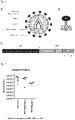
- Fig. 1A schematically shows a retroviral vector particle which in its outer membrane envelope contains retroviral glycoproteins (envelope glycoproteins).
- envelope glycoproteins envelope glycoproteins
- matrix proteins Matrix
- Capsid capsid
- Nucleocapsid nucleocapsid
- Gene retroviral genome
- the retroviral glycoproteins are composed of a surface unit (SU) and a transmembrane (TM) part, which in a packaging cell are initially expressed as a polyprotein and cleaved upon translation within the endoplasmic reticulum.
- the TM part consists of an ectodomain, harbouring a fusogenic region mediating the fusion with target cells, a membrane-spanning domain (MSD) anchoring the protein within the viral particle envelope, and a C-terminal tail (CTT) ( Fig. 1C ).
- the same vector construct was used in the production of alpharetroviral vector particles or of lentiviral vector particles, with the transgene as indicated in the examples.
- Retroviral vector particles were in HEK 293T-packaging cells by the steps of calcium-phosphate-assisted transfection of the cells with plasmids encoding for all required retroviral particle components. The cells are seeded on the day prior to transfection. For transfection, the following plasmids are combined: (I) a transfer vector plasmid encoding for the vector genome, (II) a packaging plasmid encoding for Gag-Pol, and (III) a plasmid encoding for an envelope glycoprotein. In case of the production of lentiviral particles, another plasmid (IV) encoding for Rev is included.
- Transfection is further assisted by 25 ⁇ M chloroquine and performed in the presence of 10-20mM HEPES buffer in standard culture medium.
- the cells are rinsed 6-12h post-transfection, replacing the medium by standard culture medium supplemented with 10-20mM HEPES.
- Viral particles are produced by the cells and harvested twice at 32-40h and 44-52h post-transfection by taking off the supernatant and filtering it through a 0.22 ⁇ m pore size filter. Supernatants are then either directly frozen at -80°C until further usage, or optionally concentrated via ultracentrifugation prior to freezing.
- the titer of functional viral vector particles was tested by transducing HT1080 cells by the steps of replacing the medium on the cells by standard culture medium supplemented with 4 ⁇ g/mL protamine sulphate, followed by addition of the viral particles.
- the viral particles were spin-inoculated by centrifugation for 1h at 711 x g and 32-37 °C. At 6-12h post-transduction, the supernatant was taken off and replaced by standard culture medium.
- Titers of viral particles were calculated based on the number of seeded cells, the applied volume of viral particle preparation, and the percentage of transgene-positive cells as determined by flow cytometry at 5-7 days post-transduction. Accordingly, the titers given here for viral particles represent fully functional viral vector particles that transduce cells.
- RD114/TR The titers obtained in HEK 293T-packaging cells for the chimeric glycoprotein according to EP 1 499 736 B1 , referred to as RD114/TR (RD114TR), were used in parallel as a comparison. As a further comparison, a C-terminally truncated variant of RD114/TR, truncated for its 9 C-terminal amino acids (RD114TR-9), was used.
- the SIN vector was cotransfected together with helper plasmids for structural proteins and replication enzymes (Gag/Pol) and envelope glycoproteins (Env). Additionally, for lentiviral particle production a helper plasmid encoding Rev is added.
- An exemplary packaging plasmid for lentiviral Gag/Pol is SEQ ID NO: 59 (pcDNA3.g/p.4xCTE (11035bp))
- an exemplary packaging plasmid for Rev is SEQ ID NO: 60 (pRSV_Rev (4180bp))
- the encoded Rev protein is given as SEQ ID NO: 61.
- An exemplary lentiviral vector transfer plasmid is given as SEQ ID NO: 62.
- the Examples provide a representative production process by way of exemplary glycoproteins and viral vector particles.
- Example 1 Retroviral envelope glycoproteins based on RD114 having a C-terminally truncated CTT
- a plasmid encoding for the viral vector with viral elements e.g. LTRs, packaging signal
- a transgene expression cassette e.g. a separate expression plasmid for the glycoprotein and an expression plasmid for Gag/Pol
- an expression plasmid encoding one of the glycoproteins Env plasmid
- the nucleic acid sequence of SEQ ID NO: 55 or of SEQ ID NO: 57 was used, containing the coding sequence for MPMVco as the transgene.
- the coding sequence for the retroviral envelope glycoprotein of each of these expression plasmids could be replaced by a coding sequence for the other glycoproteins.
- These expression plasmids could be used for expressing the glycoprotein both for producing alpharetroviral vector particles and lentiviral vector particles as well as for gammaretroviral vector particles. This production process was employed for producing the other viral vector particles of the invention.
- HEK293T cells were kept in complete culture medium at 37°C in the presence of 5% CO 2 , cells were passaged every 2nd - 3rd day, cells could be rinsed with 1xPBS. Cells were detached by treatment with 1x trypsin/EDTA and incubation for 5 minutes at 37°C, and the reaction was stopped by adding standard culture medium. The culture was split at the respective ratio (usually 1:8-1:12).
- HEK293T cells were seeded at day 0 on tissue-culture-grade plastic dishes in standard culture medium. On day 1, transient transfection of the packaging components into HEK293T cells was performed. For this, all packaging components were combined in sterile water.
- the Gag/Pol packaging construct For lentiviral vector particles, the Gag/Pol packaging construct, the Env plasmid, the Rev plasmid and the vector plasmid were combined.
- the Gag/Pol packaging construct, the Env plasmid and the vector plasmid were combined.
- the transfection mix was dropwise added to the cells, the cells were cultured at 37°C and 5% CO 2 , and 6-16 h post-transfection, the medium was replaced by fresh complete culture medium supplemented with 10-20mM HEPES.
- the basic culture medium was Dulbecco's Modified Eagle's medium (DMEM), with 10% v/v heat inactivated (30 min at 56°C) fetal bovine serum, 10000 U penicillin, 10 mg/mL streptomycin, 1% v/v 100mM sodium pyruvate.
- DMEM Dulbecco's Modified Eagle's medium
- 10x trypsin/EDTA 0.5% trypsin/ 0.2% EDTA
- PBS phosphate buffered saline
- the viral vector preparation was loaded into SW28 polyallomer tubes. For concentration, the viral vector particles were spun overnight at 10000rpm (rotor SW32Ti) at 4°C. The supernatant was decanted off and the pellet containing the viral particles resuspended in reconstitution buffer consisting of PBS supplemented with 1-2% HEPES or in culture medium. The volume used for resuspension was usually chosen to concentrate the vector preparation 50- to 300- fold. Aliquots were prepared and stored at -80°C until further usage.
- the CTT of SEQ ID NO: 41 contains a protease site derived from ASLV
- the CTT of SEQ ID NO: 42 contains an artificial protease site.
- the resulting titers are shown in Fig. 2 for the glycoproteins having the CTT of SEQ ID NO: 41 or of SEQ ID NO: 42.
- the symbols each represent results of parallel experiments, each expressing the same transgene EGFP ( ⁇ , ⁇ , ⁇ , ⁇ , *).
- This result shows that the glycoprotein having the CTT of SEQ ID NO: 41 yields titers that are comparable to the titers obtained for the reference RD114/TR(RD114TR), and yields higher titers than the glycoprotein having the CTT of SEQ ID NO: 42.
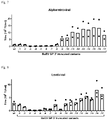
- truncations of the CTT are indicated as -1 (SEQ ID NO: 4) to -16 (SEQ ID NO: 19) of the wild-type RD114 (RD114wt).
- the resulting titers using the glycoproteins having the truncated CTT of one of SEQ ID NO: 4 to SEQ ID NO: 19 are given in Fig. 3 for 1 ⁇ g of plasmid DNA encoding for the respective glycoprotein transfected into packaging cells, showing that for alpharetroviral vector particles, the CTT with a C-terminal truncation of 1 amino acid (CTT of SEQ ID NO: 4), of 8 amino acids (CTT of SEQ ID NO: 11) or of 9 amino acids (CTT of SEQ ID NO: 12) yields higher titers.
- CTT of SEQ ID NO: 4 1 amino acid
- CTT of SEQ ID NO: 11 8 amino acids
- CTT of SEQ ID NO: 12 yields higher titers.
- lentiviral vector particles For lentiviral vector particles, the resulting titers for pseudotypes using the glycoproteins having the truncated CTT of one of SEQ ID NO: 4 to SEQ ID NO: 19 are given in Fig. 4 , showing that for lentiviral vector particles, the CTT with a C-terminal truncation of 9 amino acids (CTT of SEQ ID NO: 12), of 14 amino acids (CTT of SEQ ID NO: 17) or of 15 amino acids (CTT of SEQ ID NO: 18) yields higher titers, also higher than that obtained for the comparative RD 114/TR. It is noted that in Fig.
- the resulting titers using the glycoprotein having the truncated CTT of SEQ ID NO: 20 are given in Fig. 5 , showing that for alpharetroviral vector particles, the CTT with a C-terminal truncation of 17 amino acids (CTT of SEQ ID NO: 20) yields titers comparable to the reference RD114/TR.
- the transgene in each case was EGFP in separate experiments.
- the individual symbols represent productions tested within the same transduction experiments ( ⁇ , ⁇ , ⁇ , ⁇ , ⁇ , *).
- the hybrid retroviral envelope glycoproteins of SEQ ID NO: 43, SEQ ID NO: 46, SEQ ID NO: 49 or SEQ ID NO: 51 were encoded on an expression plasmid as described in Example 1.
- the titers obtained from packaging cells are shown in Fig. 5 and Fig. 6 .
- the titers show that it is optional to produce the glycoprotein of SEQ ID NO: 43 (MPMVco) from a codon-optimized (co) coding sequence of SEQ ID NO: 45, to produce the glycoprotein of SEQ ID NO: 46 (MPMV/TRco) from a codon-optimized (co) coding sequence of SEQ ID NO: 48, to produce the glycoprotein of SEQ ID NO: 49 (RD114 Tco) from a codon-optimized (co) coding sequence of SEQ ID NO: 50, and to produce the glycoprotein of SEQ ID NO: 51 (RD114/MPMVco) from a codon-optimized (co) coding sequence of SEQ ID NO: 52.
- Example 3 Retroviral envelope glycoproteins based on BaEV having a C-terminally truncated CTT
- alpharetroviral vector particles or lentiviral vector particles containing the glycoproteins indicated below a plasmid corresponding to SEQ ID NO: 55 or SEQ ID NO: 57 with the glycoprotein encoding sequence exchanged for a coding sequence encoding these amino acid sequences was used.
- C-terminal truncation ectodomain transmembrane domain CTT no truncation (BaEVwt) SEQ ID NO: 21 SEQ ID NO: 22 C-terminal truncation by 1 amino acid SEQ ID NO: 21 SEQ ID NO: 22 C-terminal truncation by 2 amino acids SEQ ID NO: 21 SEQ ID NO: 22 C-terminal truncation by 3 amino acids SEQ ID NO: 21 SEQ ID NO: 22 C-terminal truncation by 4 amino acids SEQ ID NO: 21 SEQ ID NO: 22 C-terminal truncation by 5 amino acids SEQ ID NO: 21 SEQ ID NO: 22 C-terminal truncation by 6 amino acids SEQ ID NO: 21 SEQ ID NO: 22 C-terminal truncation by 7 amino acids SEQ ID NO: 21 SEQ ID NO: 22 C-terminal truncation by 7 amino acids SEQ ID NO: 21 SEQ ID NO: 22 C-terminal trun
- the resulting titers for the glycoproteins having the truncated CTT of one of SEQ ID NO: 23 to SEQ ID NO: 40 are given in Fig. 7 for 1 ⁇ g plasmid DNA encoding for the respective glycoprotein transfected during production, showing that in alpharetroviral vector particles, the CTT with a C-terminal truncation of 11 amino acids (CTT of SEQ ID NO: 34) to a C-terminal truncation of 16 amino acids (CTT of SEQ ID NO: 39) yields higher titers.
- the resulting titers when using the glycoproteins having the truncated CTT of one of SEQ ID NO: 23 to SEQ ID NO: 40 are given in Fig. 8 for 1 ⁇ g plasmid DNA encoding for the respective glycoprotein transfected during production,
Landscapes
- Life Sciences & Earth Sciences (AREA)
- Health & Medical Sciences (AREA)
- Genetics & Genomics (AREA)
- Chemical & Material Sciences (AREA)
- Engineering & Computer Science (AREA)
- Organic Chemistry (AREA)
- Bioinformatics & Cheminformatics (AREA)
- Biomedical Technology (AREA)
- Biotechnology (AREA)
- General Engineering & Computer Science (AREA)
- Zoology (AREA)
- Wood Science & Technology (AREA)
- Virology (AREA)
- Molecular Biology (AREA)
- Biochemistry (AREA)
- General Health & Medical Sciences (AREA)
- Biophysics (AREA)
- Microbiology (AREA)
- Plant Pathology (AREA)
- Physics & Mathematics (AREA)
- Gastroenterology & Hepatology (AREA)
- Medicinal Chemistry (AREA)
- Proteomics, Peptides & Aminoacids (AREA)
- Peptides Or Proteins (AREA)
- Micro-Organisms Or Cultivation Processes Thereof (AREA)
Priority Applications (4)
| Application Number | Priority Date | Filing Date | Title |
|---|---|---|---|
| EP21172894.4A EP4086352A1 (de) | 2021-05-07 | 2021-05-07 | Glycoproteine zur pseudotypisierung retroviraler vektorpartikel |
| US18/289,787 US20250388924A1 (en) | 2021-05-07 | 2022-05-06 | Glycoproteins for pseudotyping retroviral vector particles |
| EP22727909.8A EP4334465A2 (de) | 2021-05-07 | 2022-05-06 | Glycoproteine zur pseudotypisierung retroviraler vektorpartikel |
| PCT/EP2022/062282 WO2022234085A2 (en) | 2021-05-07 | 2022-05-06 | Glycoproteins for pseudotyping retroviral vector particles |
Applications Claiming Priority (1)
| Application Number | Priority Date | Filing Date | Title |
|---|---|---|---|
| EP21172894.4A EP4086352A1 (de) | 2021-05-07 | 2021-05-07 | Glycoproteine zur pseudotypisierung retroviraler vektorpartikel |
Publications (1)
| Publication Number | Publication Date |
|---|---|
| EP4086352A1 true EP4086352A1 (de) | 2022-11-09 |
Family
ID=75870563
Family Applications (2)
| Application Number | Title | Priority Date | Filing Date |
|---|---|---|---|
| EP21172894.4A Withdrawn EP4086352A1 (de) | 2021-05-07 | 2021-05-07 | Glycoproteine zur pseudotypisierung retroviraler vektorpartikel |
| EP22727909.8A Pending EP4334465A2 (de) | 2021-05-07 | 2022-05-06 | Glycoproteine zur pseudotypisierung retroviraler vektorpartikel |
Family Applications After (1)
| Application Number | Title | Priority Date | Filing Date |
|---|---|---|---|
| EP22727909.8A Pending EP4334465A2 (de) | 2021-05-07 | 2022-05-06 | Glycoproteine zur pseudotypisierung retroviraler vektorpartikel |
Country Status (3)
| Country | Link |
|---|---|
| US (1) | US20250388924A1 (de) |
| EP (2) | EP4086352A1 (de) |
| WO (1) | WO2022234085A2 (de) |
Citations (2)
| Publication number | Priority date | Publication date | Assignee | Title |
|---|---|---|---|---|
| EP1499736A1 (de) | 2002-04-26 | 2005-01-26 | Institut National De La Sante Et De La Recherche Medicale (Inserm) | Verbesserte chimäre glykoproteine und pseudotypisierte lentivirale vektoren |
| US20120172418A1 (en) * | 2009-05-15 | 2012-07-05 | Medizinische Hochscule Hannover | Aslv vector system |
-
2021
- 2021-05-07 EP EP21172894.4A patent/EP4086352A1/de not_active Withdrawn
-
2022
- 2022-05-06 US US18/289,787 patent/US20250388924A1/en active Pending
- 2022-05-06 EP EP22727909.8A patent/EP4334465A2/de active Pending
- 2022-05-06 WO PCT/EP2022/062282 patent/WO2022234085A2/en not_active Ceased
Patent Citations (3)
| Publication number | Priority date | Publication date | Assignee | Title |
|---|---|---|---|---|
| EP1499736A1 (de) | 2002-04-26 | 2005-01-26 | Institut National De La Sante Et De La Recherche Medicale (Inserm) | Verbesserte chimäre glykoproteine und pseudotypisierte lentivirale vektoren |
| EP1499736B1 (de) | 2002-04-26 | 2009-03-04 | Institut National De La Sante Et De La Recherche Medicale (Inserm) | Verbesserte chimäre glykoproteine und pseudotypisierte lentivirale vektoren |
| US20120172418A1 (en) * | 2009-05-15 | 2012-07-05 | Medizinische Hochscule Hannover | Aslv vector system |
Non-Patent Citations (5)
| Title |
|---|
| GRAHAM ET AL., J. GEN. VIROL., vol. 36, 1977, pages 59 - 72 |
| HÉLIO A. TOMÁS ET AL: "Improved GaLV-TR Glycoproteins to Pseudotype Lentiviral Vectors: Impact of Viral Protease Activity in the Production of LV Pseudotypes", MOLECULAR THERAPY- METHODS & CLINICAL DEVELOPMENT, vol. 15, 1 November 2019 (2019-11-01), GB, pages 1 - 8, XP055638588, ISSN: 2329-0501, DOI: 10.1016/j.omtm.2019.08.001 * |
| JANUSZESKI M M ET AL: "Functional analysis of the cytoplasmic tail of Moloney murine leukemia virus envelope protein", JOURNAL OF VIROLOGY, vol. 71, no. 5, 1 May 1997 (1997-05-01), US, pages 3613 - 3619, XP055851375, ISSN: 0022-538X, DOI: 10.1128/jvi.71.5.3613-3619.1997 * |
| PEAR ET AL., PNAS, 1993, pages 8392 - 8396 |
| SANDRIN VIRGINIE ET AL: "Intracellular Trafficking of Gag and Env Proteins and TheirInteractions Modulate Pseudotyping of Retroviruses", JOURNAL OF VIROLOGY, vol. 78, no. 13, 1 July 2004 (2004-07-01), US, pages 7153 - 7164, XP055850811, ISSN: 0022-538X, DOI: 10.1128/JVI.78.13.7153-7164.2004 * |
Also Published As
| Publication number | Publication date |
|---|---|
| US20250388924A1 (en) | 2025-12-25 |
| WO2022234085A2 (en) | 2022-11-10 |
| EP4334465A2 (de) | 2024-03-13 |
| WO2022234085A9 (en) | 2023-11-09 |
| WO2022234085A3 (en) | 2022-12-08 |
Similar Documents
| Publication | Publication Date | Title |
|---|---|---|
| US5643756A (en) | Fusion glycoproteins | |
| Sandrin et al. | Lentiviral vectors pseudotyped with a modified RD114 envelope glycoprotein show increased stability in sera and augmented transduction of primary lymphocytes and CD34+ cells derived from human and nonhuman primates | |
| Kunz et al. | Mechanisms for lymphocytic choriomeningitis virus glycoprotein cleavage, transport, and incorporation into virions | |
| US6416997B1 (en) | Receptor-binding pocket mutants of influenza a virus hemagglutinin for use in targeted gene delivery | |
| EP0710280B1 (de) | Verfahren zur herstellung von hohen virustitern und die hocheffiziente transduktion von säugerzellen durch retroviren | |
| US9090908B2 (en) | Chimeric glycoproteins and pseudotyped lentiviral vectors | |
| Kim et al. | HTLV-1 and-2 envelope SU subdomains and critical determinants in receptor binding | |
| Denesvre et al. | Influence of transmembrane domains on the fusogenic abilities of human and murine leukemia retrovirus envelopes | |
| Haffar et al. | The carboxy terminus of human immunodeficiency virus type 1 gp160 limits its proteolytic processing and transport in transfected cell lines | |
| US20050112096A1 (en) | Methods for producing and using in vivo pseudotyped retroviruses using envelope glycoproteins from lymphocytic choriomeningitis virus (LCMV) | |
| US6132731A (en) | Murine leukemia virus vectors | |
| US6902929B1 (en) | Retroviral vectors, methods for their preparation and their use for gene transfer into CD4-positive cells | |
| EP4086352A1 (de) | Glycoproteine zur pseudotypisierung retroviraler vektorpartikel | |
| US6277601B1 (en) | Expression of a foamy virus envelope protein | |
| AU733948B2 (en) | Expression of a modified foamy virus envelope protein | |
| US8309071B2 (en) | Foamy viral envelope genes | |
| EP2138584A1 (de) | Schaumige Virushüllengene | |
| WO2025247369A1 (zh) | 突变的水泡病毒包膜蛋白及其在慢病毒载体包装中的应用 | |
| KR100361583B1 (ko) | 인체 면역결핍 바이러스(hiv) 1형 표면단백질 도입용벡터 | |
| WO2023150647A1 (en) | Methods of repeat dosing and administration of lipid particles or viral vectors and related systems and uses | |
| Boerger | The use of retroviral vectors preloaded with a retroviral receptor-ligand bridge protein for cell-type-specific viral targeting and as a system for studying avian leukosis virus entry | |
| Nakamura et al. | Postbinding fusion function contributed by a chimeric murine leukemia virus envelope protein | |
| Haynes et al. | Retroviral vector targeting through insertion of epidermal growth factor into receptor binding deficient influenza A hemagglutinin results in fusion defective particles | |
| HK1073479B (en) | Improved chimeric glycoproteins and pseudotyped lentiviral vectors | |
| CA2249987A1 (en) | Packaging cell line based on human 293 cells |
Legal Events
| Date | Code | Title | Description |
|---|---|---|---|
| PUAI | Public reference made under article 153(3) epc to a published international application that has entered the european phase |
Free format text: ORIGINAL CODE: 0009012 |
|
| STAA | Information on the status of an ep patent application or granted ep patent |
Free format text: STATUS: THE APPLICATION HAS BEEN PUBLISHED |
|
| AK | Designated contracting states |
Kind code of ref document: A1 Designated state(s): AL AT BE BG CH CY CZ DE DK EE ES FI FR GB GR HR HU IE IS IT LI LT LU LV MC MK MT NL NO PL PT RO RS SE SI SK SM TR |
|
| STAA | Information on the status of an ep patent application or granted ep patent |
Free format text: STATUS: THE APPLICATION IS DEEMED TO BE WITHDRAWN |
|
| 18D | Application deemed to be withdrawn |
Effective date: 20230510 |