EP4086812A1 - Système et procédé d'identification d'objet - Google Patents
Système et procédé d'identification d'objet Download PDFInfo
- Publication number
- EP4086812A1 EP4086812A1 EP22275052.3A EP22275052A EP4086812A1 EP 4086812 A1 EP4086812 A1 EP 4086812A1 EP 22275052 A EP22275052 A EP 22275052A EP 4086812 A1 EP4086812 A1 EP 4086812A1
- Authority
- EP
- European Patent Office
- Prior art keywords
- image
- images
- dataset
- segmented
- greyscale
- Prior art date
- Legal status (The legal status is an assumption and is not a legal conclusion. Google has not performed a legal analysis and makes no representation as to the accuracy of the status listed.)
- Granted
Links
Images

Classifications
-
- G—PHYSICS
- G06—COMPUTING OR CALCULATING; COUNTING
- G06V—IMAGE OR VIDEO RECOGNITION OR UNDERSTANDING
- G06V20/00—Scenes; Scene-specific elements
- G06V20/50—Context or environment of the image
-
- G—PHYSICS
- G06—COMPUTING OR CALCULATING; COUNTING
- G06T—IMAGE DATA PROCESSING OR GENERATION, IN GENERAL
- G06T7/00—Image analysis
- G06T7/10—Segmentation; Edge detection
- G06T7/136—Segmentation; Edge detection involving thresholding
-
- G—PHYSICS
- G06—COMPUTING OR CALCULATING; COUNTING
- G06V—IMAGE OR VIDEO RECOGNITION OR UNDERSTANDING
- G06V10/00—Arrangements for image or video recognition or understanding
- G06V10/20—Image preprocessing
- G06V10/28—Quantising the image, e.g. histogram thresholding for discrimination between background and foreground patterns
-
- G—PHYSICS
- G06—COMPUTING OR CALCULATING; COUNTING
- G06F—ELECTRIC DIGITAL DATA PROCESSING
- G06F18/00—Pattern recognition
- G06F18/20—Analysing
- G06F18/21—Design or setup of recognition systems or techniques; Extraction of features in feature space; Blind source separation
- G06F18/211—Selection of the most significant subset of features
-
- G—PHYSICS
- G06—COMPUTING OR CALCULATING; COUNTING
- G06T—IMAGE DATA PROCESSING OR GENERATION, IN GENERAL
- G06T3/00—Geometric image transformations in the plane of the image
- G06T3/02—Affine transformations
-
- G—PHYSICS
- G06—COMPUTING OR CALCULATING; COUNTING
- G06T—IMAGE DATA PROCESSING OR GENERATION, IN GENERAL
- G06T7/00—Image analysis
- G06T7/10—Segmentation; Edge detection
-
- G—PHYSICS
- G06—COMPUTING OR CALCULATING; COUNTING
- G06V—IMAGE OR VIDEO RECOGNITION OR UNDERSTANDING
- G06V10/00—Arrangements for image or video recognition or understanding
- G06V10/20—Image preprocessing
- G06V10/255—Detecting or recognising potential candidate objects based on visual cues, e.g. shapes
-
- G—PHYSICS
- G06—COMPUTING OR CALCULATING; COUNTING
- G06V—IMAGE OR VIDEO RECOGNITION OR UNDERSTANDING
- G06V10/00—Arrangements for image or video recognition or understanding
- G06V10/70—Arrangements for image or video recognition or understanding using pattern recognition or machine learning
- G06V10/77—Processing image or video features in feature spaces; using data integration or data reduction, e.g. principal component analysis [PCA] or independent component analysis [ICA] or self-organising maps [SOM]; Blind source separation
- G06V10/774—Generating sets of training patterns; Bootstrap methods, e.g. bagging or boosting
- G06V10/7747—Organisation of the process, e.g. bagging or boosting
-
- G—PHYSICS
- G06—COMPUTING OR CALCULATING; COUNTING
- G06T—IMAGE DATA PROCESSING OR GENERATION, IN GENERAL
- G06T2207/00—Indexing scheme for image analysis or image enhancement
- G06T2207/10—Image acquisition modality
- G06T2207/10072—Tomographic images
- G06T2207/10081—Computed x-ray tomography [CT]
-
- G—PHYSICS
- G06—COMPUTING OR CALCULATING; COUNTING
- G06T—IMAGE DATA PROCESSING OR GENERATION, IN GENERAL
- G06T2207/00—Indexing scheme for image analysis or image enhancement
- G06T2207/10—Image acquisition modality
- G06T2207/10116—X-ray image
-
- G—PHYSICS
- G06—COMPUTING OR CALCULATING; COUNTING
- G06T—IMAGE DATA PROCESSING OR GENERATION, IN GENERAL
- G06T2207/00—Indexing scheme for image analysis or image enhancement
- G06T2207/20—Special algorithmic details
- G06T2207/20081—Training; Learning
-
- G—PHYSICS
- G06—COMPUTING OR CALCULATING; COUNTING
- G06T—IMAGE DATA PROCESSING OR GENERATION, IN GENERAL
- G06T2207/00—Indexing scheme for image analysis or image enhancement
- G06T2207/30—Subject of image; Context of image processing
- G06T2207/30108—Industrial image inspection
- G06T2207/30112—Baggage; Luggage; Suitcase
-
- G—PHYSICS
- G06—COMPUTING OR CALCULATING; COUNTING
- G06V—IMAGE OR VIDEO RECOGNITION OR UNDERSTANDING
- G06V2201/00—Indexing scheme relating to image or video recognition or understanding
- G06V2201/05—Recognition of patterns representing particular kinds of hidden objects, e.g. weapons, explosives, drugs
Definitions
- the present invention relates to an object identification system and method that are particularly applicable for identifying malicious modifications to objects.
- a machine such as an x-ray or CT scanner
- scans carry-on objects, like a bag, laptop, equipment, or a tray containing various items.
- Today's standard scanners across most airports use single-view x-ray technology, through which operators see a top-down view of baggage as it passes through the machine.
- Recent innovations in imaging hardware include multi-view x-rays, multi-spectral x-rays, and CT technology to provide 3-dimensional, or other multi-dimensional views of baggage.
- human screening operators seek to find prohibited items including firearms, knives and other sharps, explosives, liquids, and other prohibited items.
- the device captures an image of the baggage and its density and average atomic number. Based on atomic number, materials of concern are typically color-coded in the image to highlight potential threats and the colour coded image is then displayed on a screen for an operator to review.
- a method for generating an object detection dataset comprising:
- the steps of generating and thresholding may comprise applying an adaptive threshold segmentation algorithm to each image in the training image dataset.
- the adaptive threshold segmentation algorithm may include calculating a value for each pixel in an image in dependence on pixels in a predetermined neighbourhood.
- the neighbourhood may comprise a square of a predetermined size centered at the pixel.
- the training image dataset includes a plurality of images of an object of interest, the method further comprising manipulating each image whereby the orientation and scale of the object is substantially the same across the plurality of images.
- the method may further comprise updating the grayscale image by adding further segmented images of the object and recalculating the average.
- the method may further comprise labelling each segmented image according to its corresponding object and calculating average pixel values from segmented images with the same label.
- a computer implemented object detection method comprising:
- the method may further comprise filtering the thresholded images by applying an alternate recognition algorithm for a filtered thresholded image.
- the method may further comprise storing one or more of the training image dataset and the segmented images in the data repository.
- an object detection method comprising:
- a computer implemented object detection system comprising:
- the computer implemented object detection system may further comprise: computer program code configured to receive a further image comprising pixel values corresponding to an imaged material generated by a penetrating imager; computer program code configured to generate a thresholded image from the pixels of the further image;
- An object detection method is desirable for fast-moving high variety operational environments and in particular for analysis of X-ray and similar images of electronic devices such as laptops and tablets.
- a quick analysis is required to ensure that the key components of the device are within the acceptable inspection rules and demonstrate minimum abnormality.
- Embodiments seek to provide a new and intuitive method of object detection.
- Embodiments of the present invention seek to provide an object identification system and method that is not limited to particular sectors or object types and which can be trained to recognise normal and abnormal objects and in particular normal and abnormal electronic devices based on their components and their component layouts.
- Preferred embodiments are directed to automated, computer-implemented object identification systems and methods that automatically classify objects from their materials, size, shape and sub-component layout, materials, size and shape. Preferred embodiments build and/or reference a library of standard objects and seek to highlight objects that are presented that are non-standard.
- the object identification system can take inputs from many different input systems, a preferred embodiment receives inputs from x-ray or CT scanning systems.
- the object identification system can be operated independently of the x-ray/CT system and can be used alongside existing systems and existing human screening, either to provide guidance to the human operator in terms of additional mark-up/overlay on displayed scan images or else as a background system that is looking at other potential threats than the explosives/blades which are the concerns of the human operator.
- images are received from penetrating imagers (such as X-ray or CT scanners).
- Image pixel intensity corresponds to the density and thickness of the material. This enables embodiments to identify not only the size and shape of objects but also the objects within them (for example, electronic components).
- Multiple source images are each thresholded and segmented before being combined into a single per-object greyscale image. A variety of images from a single source or from multiple sources are combined into the per-object greyscale image.
- Objects detection is based on calculating the correlation coefficient between ATS (Adaptive Threshold Segmentation) binary results and EGI (Entropic Grayscale Image) for each patch of the image. While the dataset could be used to train a neural network or similar, it will be seen that the dataset lends itself to a simple and direct comparison based classification that uses the same approach as preparing the classification dataset but then compares the thresholded segmented images to those from the dataset to determine classification. Furthermore, the dataset can be improved over time by addition of source images to the dataset (by thresholding, segmenting and then updating the averaged greyscale image(s) corresponding to objects they contain).
- ATS Adaptive Threshold Segmentation
- EGI Entropic Grayscale Image
- Entropic grayscale images are preferably used which are generated using adaptive threshold segmentation results of target object from learning datasets.
- Embodiments are based on adaptive threshold segmentation (ATS) which is an extreme variation of analysis adaptation for local image region in terms of the result: the segmentation produces binary results in contrast to background normalization and local contrast methods where each pixel colour is normalized or enhanced.
- ATS adaptive threshold segmentation
- Adaptive threshold determining is often used for background extraction and background normalization procedures.
- ATS results can be used for evaluation of pattern properties, which, then, can serve as an input for decision-making algorithm.
- an adaptive threshold of gaussian blur parameters is used as a pre-processing for SIFT and SURF detectors for normalization of number of features.
- Embodiments use ATS to produce EGI and to calculate the correlation coefficient.
- Embodiments may additionally include parallel off-line deep learning algorithms to adjust and improve the off-line analytics as the image libraries expand in quantity and variety.
- devices such as electronic devices are used as examples of the objects being scanned and identified.
- the approach can also be applied to other objects, with exactly the same technology. It will be appreciated that objects ranging from jewellery and shoes to computer components (hard drives, graphics cards etc), to portable devices and larger complex objects such as bicycles and vehicles could be the subject of scans.
- the system may further comprise a user interface configured to receive a designation of an object from a user, the designation corresponding to one of the pre-classified objects in the classification database, the classifier being configured to match the object to the designated pre-classified object and identify and output differences between the segments of the image and the designated pre-classified object.
- a user interface configured to receive a designation of an object from a user, the designation corresponding to one of the pre-classified objects in the classification database, the classifier being configured to match the object to the designated pre-classified object and identify and output differences between the segments of the image and the designated pre-classified object.
- embodiments preferably also support guided matching. For example, a user may state an object is a certain model of smartphone and the system may confirm whether there is a match to that model's pre-classified object in the database.
- the layout is then compared to reference devices and inconsistencies are flagged.
- SIFT scale-invariant feature transform
- SURF speeded up robust features
- BOVW bag of visual words
- SVM classifier Attempts have also been made to use 3D SIFT descriptors for object detection on 3D CT images.
- DNN Deep Neural Networks
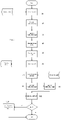
- Figure 1 is a flow diagram of method of generating an object identification dataset according to an embodiment and its subsequent use;.
- the method includes the steps of receiving a training image dataset comprising a plurality of images that include objects of interest (10), generating a thresholded image for each of the plurality of images (20), segmenting each thresholded image into images corresponding to objects (30), for each object, calculating an average pixel value for each pixel of the object from corresponding pixels of the object in the segmented images (40); forming a greyscale image for the object from the averaged pixels (50), and, storing the greyscale images in a data repository as an object detection dataset (60).
- the dataset is created and can be used for object recognition, used as training data for a machine learning system, made available via an API, sold etc.
- an image of interest is received (70) and a thresholded image for the image of interest is generated in step 80. It is then segmented into images corresponding to objects in step 90.
- a correlation coefficient is computed between the segmented image and each greyscale image in the object detection dataset in step 100.
- the object of the segmented image is declared to be a match to the object of the respective greyscale image in step 110.
- steps 20 and 30 are the same as steps 80 and 90 - a common service may be provided that performs the thresholding and segmentation irrespective of whether a training dataset or an image for object detection.
- the method is implemented as a computer implemented system. It may optionally be incorporated into an x-ray scanning system or other security apparatus.
- the system uses a computer implemented method that can be summarized as follows:
- learning can take place separately and in advance.
- the system could be trained and then distributed to multiple users to use.
- the same type of source images is used for the learning process and testing.
- Several adaptive threshold segmentation results are combined into one entropic grayscale image during the learning stage.
- Object detection is based on the calculation of correlation coefficient between ATS binary result and EGI for each patch of the image.
- filters are optionally introduced to improve detection accuracy for some types of objects.
- Example filters include circle detection, circle texture analysis for CPU and GPU fans; line detection for subcomponents of optical disk drives (ODD).
- the imaging method uses input from an X-ray imager, although it will be appreciated that it may be pre-saved images or images from other sources.
- the imaging method uses a method of segmenting an image to regions and evaluating clusters in each region histogram.
- An image of the device to be identified is preferably obtained from a larger x-ray of other source image by cropping and rotating the device subregion from the transformed images as appropriate.
- An Adaptive Threshold Segmentation (ATS) method is applied to image lightness which corresponds to material density and device thickness. Noticeable components are still visible on the binary image produced by the segmentation. As the ATS result is binary, the problem of background density and partially over- lapped objects and material is overcome.
- the image of the reference component called Entropic Grayscale Image (EGI) of the reference component is created. The EGI is then used to calculate the correlation coefficient between each resultant ATS subregion and itself.
- a filter that reduces the number of comparisons by excluding potentially incorrect coordinates, is preferably implemented.
- an input image of the algorithm is a colour image of an electronic device (eg. A laptop or tablet) produced by dual-energy X-ray scanner.
- the colour palette is a standard industrial one or at least pixel intensity should correspond to material density and thickness.
- the device is correctly rotated (devices sides are parallel to the X - and Y - axes) and all geometric distortions were mitigated by image preprocessing procedures.
- a scale of the image should be known because the window size is related on the number of pixels that correspond to one centimeter. It will be appreciated that all of these could be dealt with during pre-processing however.
- Adaptive threshold segmentation is applied to image lightness (from hue-lightness-saturation colour space). Other grayscale components could be used if object features are visible and distinct for a human.
- the mean pixel value of a square window around each pixel is preferably used as a threshold. Median value also can be used but it is less effective in terms of performance. It is possible to add or subtract a predetermined constant to the mean or median value for the purpose of adaptive tuning for detection and evaluation of some types of objects.
- Window size is based on the feature size of the objects. For laptop components (HDD, ODD and fans), it was found that a window with a size of 2.6 cm x 2.6 cm worked well but it will be appreciated that this could be varied.
- the main criteria of ATS parameter assessment are visibility and distinguishability of objects and object feature on a binary result of the segmentation.
- an adaptive threshold segmentation image processing function is used.
- OpenCV https://www.tutorialspoint.com/opencv/opencv_adaptive_threshold.htm
- T is a constant (equal for any x and y).
- coordinates x, y are calculated separately (this gives the method adaptability).
- nx, ny are pixel coordinates of N pixels of pixel neighbourhood of pixel at x, y.
- the pixel neighbourhood of pixel at (x, y) is a square with the center at (x, y). The size of the rectangle depends on the scale of the image.
- Accuracy of detection depends on the quality of entropic grayscale image.
- one ATS binary image is enough to detect objects in simple cases, preferably 20-50 ATS images are used to generate an EGI for each component.
- the more ATS images that are used the more features of objects can be extracted to appear on the generated EGI.
- denser or thicker objects appear darker and thinner and less dense objects become lighter.
- each pixel of an EGI has an average value of ATS pixel values at the same coordinate, it is easy to add new ATS images to EGI to improve its quality.
- the application of EGI results in improved accuracy as number of images are added. This is particularly applicable to objects of interest that have multiple/sophisticated features, such as blades in a fan assembly or a razor blade.
- the method may be used selectively. If an object is plain and does not have multiple/sophisticated visible features it would not be necessary to apply such technique, for example, for batteries other algorithms may be used.
- Objects are labelled in a learning dataset to generate object ATS images for producing EGI.
- the labelling can be automated.
- a synthetic EGI image could also be used for automation.
- To produce a synthetic EGI image for labelling in one embodiment randomly taken ATS images of a device component are used, areas that do not correspond to object features are filled with grey colour and fixed black and white feature borders applied to make them geometrically correct.
- ATS result image series for device component if object width and height are not equal or object features are not symmetrical, image rotation and/or flip are conducted.
- EGI image is also rotated and flipped.
- 8 EGI images are used for component detection
- an EGI reference of the object is obtained or produced (from step 2 above), along with correlation coefficient threshold and an image where the object is, probably, present.
- ATS is first applied to the image. Then, for each subregion of an image a test is performed to detect if it is a target object in the subregion. The size of subregion should be equal to the size of EGI.
- a correlation coefficient (see equation below) is calculated between EGI and ATS result for the subregion. If this coefficient is higher than correlation coefficient threshold, the object is decided to be present in the subregion.
- A ATS image pixel values
- E EGI image pixel values.
- An object is detected if the correlation coefficient value at point (x, y) is higher than a threshold.
- This threshold can be the lowest coefficient value of objects in the training dataset and can be adjusted during testing process.
- a preliminary value of the threshold is lower or equal or slightly larger than 0.5, it means that the object cannot be detected by the produced EGI. The reason for this is either lack of commonly known features or low number of training samples. Note that for any components of interest an EGI or a series of EGI are created, the latter occurs when there is a confidence that features and image alignment is done correctly, but there are little or no common features.
- An object is detected if the correlation coefficient value at point (x; y) is higher than a threshold.
- This threshold can be the lowest coefficient value of objects in the training dataset and can be adjusted during testing process.
- a preliminary value of the threshold is lower or equal or slightly larger than 0.5, it means that the object cannot be detected by the produced EGI. The reason for this is either lack of commonly known features or low number of training samples.
- object detection uses the above method and separate battery detection and these are integrated into a whole device analysis algorithm where device components and layout of the components are used to identify device type or model.
- the database may take various forms including a central or distributed file store, database (such as SQL or other relational or non-relational database types). It may be implemented using storage devices such as hard disks, random access memories, solid state disks or any other forms of storage media. It will also be appreciated that the processor discussed herein may represent a single processor or a collection of processors acting in a synchronised, semi-synchronised or asynchronous manner.
- code e.g., a software algorithm or program
- firmware e.g., a software algorithm or program
- computer useable medium having control logic for enabling execution on a computer system having a computer processor.
- Such a computer system typically includes memory storage configured to provide output from execution of the code which configures a processor in accordance with the execution.
- the code can be arranged as firmware or software, and can be organized as a set of modules such as discrete code modules, function calls, procedure calls or objects in an object-oriented programming environment. If implemented using modules, the code can comprise a single module or a plurality of modules that operate in cooperation with one another.
Landscapes
- Engineering & Computer Science (AREA)
- Theoretical Computer Science (AREA)
- General Physics & Mathematics (AREA)
- Physics & Mathematics (AREA)
- Multimedia (AREA)
- Computer Vision & Pattern Recognition (AREA)
- Evolutionary Computation (AREA)
- Artificial Intelligence (AREA)
- Data Mining & Analysis (AREA)
- Computing Systems (AREA)
- General Health & Medical Sciences (AREA)
- Medical Informatics (AREA)
- Databases & Information Systems (AREA)
- Software Systems (AREA)
- Health & Medical Sciences (AREA)
- Bioinformatics & Computational Biology (AREA)
- General Engineering & Computer Science (AREA)
- Evolutionary Biology (AREA)
- Bioinformatics & Cheminformatics (AREA)
- Life Sciences & Earth Sciences (AREA)
- Image Analysis (AREA)
Applications Claiming Priority (1)
| Application Number | Priority Date | Filing Date | Title |
|---|---|---|---|
| GB2105941.5A GB2606701A (en) | 2021-04-26 | 2021-04-26 | Object identification system and method |
Publications (3)
| Publication Number | Publication Date |
|---|---|
| EP4086812A1 true EP4086812A1 (fr) | 2022-11-09 |
| EP4086812C0 EP4086812C0 (fr) | 2025-10-01 |
| EP4086812B1 EP4086812B1 (fr) | 2025-10-01 |
Family
ID=76193389
Family Applications (1)
| Application Number | Title | Priority Date | Filing Date |
|---|---|---|---|
| EP22275052.3A Active EP4086812B1 (fr) | 2021-04-26 | 2022-04-26 | Système et procédé d'identification d'objet |
Country Status (3)
| Country | Link |
|---|---|
| US (1) | US12592076B2 (fr) |
| EP (1) | EP4086812B1 (fr) |
| GB (1) | GB2606701A (fr) |
Families Citing this family (3)
| Publication number | Priority date | Publication date | Assignee | Title |
|---|---|---|---|---|
| CN116543343B (zh) * | 2023-07-06 | 2023-09-12 | 民航成都物流技术有限公司 | 一种滞留行李检测方法、装置、计算机设备和存储介质 |
| US20250139758A1 (en) * | 2023-10-31 | 2025-05-01 | Motorola Solutions, Inc. | System, device and method for detection of counterfeit electronic products |
| CN119625589B (zh) * | 2024-09-30 | 2025-11-07 | 四川大学 | 一种基于局部数据增强的ViT行李重识别方法 |
Citations (1)
| Publication number | Priority date | Publication date | Assignee | Title |
|---|---|---|---|---|
| WO2021038218A1 (fr) * | 2019-08-29 | 2021-03-04 | Sita Information Networking Computing Uk Limited | Identification et suivi d'article |
Family Cites Families (9)
| Publication number | Priority date | Publication date | Assignee | Title |
|---|---|---|---|---|
| EP0677817B1 (fr) * | 1994-04-15 | 2000-11-08 | Canon Kabushiki Kaisha | Système de segmentation de pages et reconnaissance de caractères |
| US7613316B2 (en) * | 2003-07-22 | 2009-11-03 | L-3 Communications Security and Detection Systems Inc. | Methods and apparatus for detecting objects in baggage |
| US7574028B2 (en) * | 2004-11-23 | 2009-08-11 | Carestream Health, Inc. | Method for recognizing projection views of radiographs |
| US8644578B1 (en) * | 2008-04-25 | 2014-02-04 | Stratovan Corporation | Method and apparatus of identifying objects of interest using imaging scans |
| US10521699B2 (en) * | 2017-10-12 | 2019-12-31 | Lawrence Livermore National Security, Llc | Multi-scale deep learning system |
| CN108182673A (zh) * | 2017-12-07 | 2018-06-19 | 山东省林业科学研究院 | 一种盐碱地的改良和治理方法及系统 |
| US10795048B2 (en) * | 2018-01-09 | 2020-10-06 | Voti Inc. | Methods for extending a range for assigning attributes to an object in an image |
| CN109902578B (zh) * | 2019-01-25 | 2021-01-08 | 南京理工大学 | 一种红外目标检测与跟踪方法 |
| GB202002266D0 (en) * | 2020-02-19 | 2020-04-01 | Nw Pro Ltd | Object identification system and method |
-
2021
- 2021-04-26 GB GB2105941.5A patent/GB2606701A/en active Pending
-
2022
- 2022-04-26 EP EP22275052.3A patent/EP4086812B1/fr active Active
- 2022-04-26 US US17/729,277 patent/US12592076B2/en active Active
Patent Citations (1)
| Publication number | Priority date | Publication date | Assignee | Title |
|---|---|---|---|---|
| WO2021038218A1 (fr) * | 2019-08-29 | 2021-03-04 | Sita Information Networking Computing Uk Limited | Identification et suivi d'article |
Also Published As
| Publication number | Publication date |
|---|---|
| US12592076B2 (en) | 2026-03-31 |
| US20220351517A1 (en) | 2022-11-03 |
| GB2606701A (en) | 2022-11-23 |
| EP4086812C0 (fr) | 2025-10-01 |
| GB202105941D0 (en) | 2021-06-09 |
| EP4086812B1 (fr) | 2025-10-01 |
| GB2606701A8 (en) | 2022-12-14 |
Similar Documents
| Publication | Publication Date | Title |
|---|---|---|
| EP4086812B1 (fr) | Système et procédé d'identification d'objet | |
| Su et al. | Region segmentation in histopathological breast cancer images using deep convolutional neural network | |
| US12423788B2 (en) | Generalized anomaly detection | |
| Jovančević et al. | Automated exterior inspection of an aircraft with a pan-tilt-zoom camera mounted on a mobile robot | |
| Uliyan et al. | Copy move image forgery detection using Hessian and center symmetric local binary pattern | |
| Manu et al. | Detection of copy-move forgery in images using segmentation and SURF | |
| US9042661B2 (en) | Object classification using two-dimensional projection | |
| KR102158967B1 (ko) | 영상 분석 장치, 영상 분석 방법 및 기록 매체 | |
| Mera et al. | Automatic visual inspection: An approach with multi-instance learning | |
| Petrozziello et al. | Automated deep learning for threat detection in luggage from X-ray images | |
| Botero et al. | Automated via detection for PCB reverse engineering | |
| CN118657928B (zh) | 基于人工智能的行李安检危险物品自动识别方法及系统 | |
| Abdolshah et al. | Classification of X-Ray images of shipping containers | |
| Kruthi et al. | Offline signature verification using support vector machine | |
| EP3869400A1 (fr) | Système d'identification d'objet et procédé mis en uvre par ordinateur | |
| Singh et al. | Advancements in machine learning techniques for threat item detection in X-ray images: a comprehensive survey | |
| CN113887652A (zh) | 基于形态和多示例学习的遥感图像弱小目标检测方法 | |
| Vukadinovic et al. | Automated detection of inorganic powders in X-ray images of airport luggage | |
| Tralic et al. | Copy-move forgery detection using cellular automata | |
| US8391600B2 (en) | Histogram-based compound object separation | |
| Maher | Texture Analysis and Classification using Local Binary Patterns and Statistical Features | |
| EP4361971A1 (fr) | Génération d'images d'entraînement pour la détection de documents frauduleux | |
| Singh | Improving threat object recognition for x-ray baggage screening using distraction removal techniques | |
| Menéndez | A Hybrid Framework for Statistical Feature Selection and Image-Based Noise-Defect Detection | |
| KR101992562B1 (ko) | 원자력 시스템 관련 유사설계도 검출시스템 및 그 방법 |
Legal Events
| Date | Code | Title | Description |
|---|---|---|---|
| PUAI | Public reference made under article 153(3) epc to a published international application that has entered the european phase |
Free format text: ORIGINAL CODE: 0009012 |
|
| STAA | Information on the status of an ep patent application or granted ep patent |
Free format text: STATUS: THE APPLICATION HAS BEEN PUBLISHED |
|
| AK | Designated contracting states |
Kind code of ref document: A1 Designated state(s): AL AT BE BG CH CY CZ DE DK EE ES FI FR GB GR HR HU IE IS IT LI LT LU LV MC MK MT NL NO PL PT RO RS SE SI SK SM TR |
|
| STAA | Information on the status of an ep patent application or granted ep patent |
Free format text: STATUS: REQUEST FOR EXAMINATION WAS MADE |
|
| 17P | Request for examination filed |
Effective date: 20230509 |
|
| RBV | Designated contracting states (corrected) |
Designated state(s): AL AT BE BG CH CY CZ DE DK EE ES FI FR GB GR HR HU IE IS IT LI LT LU LV MC MK MT NL NO PL PT RO RS SE SI SK SM TR |
|
| REG | Reference to a national code |
Ref country code: DE Ref legal event code: R079 Free format text: PREVIOUS MAIN CLASS: G06K0009620000 Ref document number: 602022022233 Country of ref document: DE Ipc: G06V0010200000 |
|
| GRAP | Despatch of communication of intention to grant a patent |
Free format text: ORIGINAL CODE: EPIDOSNIGR1 |
|
| STAA | Information on the status of an ep patent application or granted ep patent |
Free format text: STATUS: GRANT OF PATENT IS INTENDED |
|
| RIC1 | Information provided on ipc code assigned before grant |
Ipc: G06F 18/211 20230101ALI20250414BHEP Ipc: G06V 10/28 20220101ALI20250414BHEP Ipc: G06V 10/20 20220101AFI20250414BHEP |
|
| INTG | Intention to grant announced |
Effective date: 20250428 |
|
| GRAS | Grant fee paid |
Free format text: ORIGINAL CODE: EPIDOSNIGR3 |
|
| GRAA | (expected) grant |
Free format text: ORIGINAL CODE: 0009210 |
|
| STAA | Information on the status of an ep patent application or granted ep patent |
Free format text: STATUS: THE PATENT HAS BEEN GRANTED |
|
| AK | Designated contracting states |
Kind code of ref document: B1 Designated state(s): AL AT BE BG CH CY CZ DE DK EE ES FI FR GB GR HR HU IE IS IT LI LT LU LV MC MK MT NL NO PL PT RO RS SE SI SK SM TR |
|
| REG | Reference to a national code |
Ref country code: GB Ref legal event code: FG4D Ref country code: CH Ref legal event code: F10 Free format text: ST27 STATUS EVENT CODE: U-0-0-F10-F00 (AS PROVIDED BY THE NATIONAL OFFICE) Effective date: 20251001 |
|
| REG | Reference to a national code |
Ref country code: IE Ref legal event code: FG4D |
|
| REG | Reference to a national code |
Ref country code: DE Ref legal event code: R096 Ref document number: 602022022233 Country of ref document: DE |
|
| U01 | Request for unitary effect filed |
Effective date: 20251002 |
|
| U07 | Unitary effect registered |
Designated state(s): AT BE BG DE DK EE FI FR IT LT LU LV MT NL PT RO SE SI Effective date: 20251014 |
|
| PG25 | Lapsed in a contracting state [announced via postgrant information from national office to epo] |
Ref country code: ES Free format text: LAPSE BECAUSE OF FAILURE TO SUBMIT A TRANSLATION OF THE DESCRIPTION OR TO PAY THE FEE WITHIN THE PRESCRIBED TIME-LIMIT Effective date: 20251001 |
|
| PG25 | Lapsed in a contracting state [announced via postgrant information from national office to epo] |
Ref country code: NO Free format text: LAPSE BECAUSE OF FAILURE TO SUBMIT A TRANSLATION OF THE DESCRIPTION OR TO PAY THE FEE WITHIN THE PRESCRIBED TIME-LIMIT Effective date: 20260101 |
|
| PG25 | Lapsed in a contracting state [announced via postgrant information from national office to epo] |
Ref country code: HR Free format text: LAPSE BECAUSE OF FAILURE TO SUBMIT A TRANSLATION OF THE DESCRIPTION OR TO PAY THE FEE WITHIN THE PRESCRIBED TIME-LIMIT Effective date: 20251001 |
|
| PG25 | Lapsed in a contracting state [announced via postgrant information from national office to epo] |
Ref country code: RS Free format text: LAPSE BECAUSE OF FAILURE TO SUBMIT A TRANSLATION OF THE DESCRIPTION OR TO PAY THE FEE WITHIN THE PRESCRIBED TIME-LIMIT Effective date: 20260101 |
|
| PG25 | Lapsed in a contracting state [announced via postgrant information from national office to epo] |
Ref country code: IS Free format text: LAPSE BECAUSE OF FAILURE TO SUBMIT A TRANSLATION OF THE DESCRIPTION OR TO PAY THE FEE WITHIN THE PRESCRIBED TIME-LIMIT Effective date: 20260201 |
|
| PG25 | Lapsed in a contracting state [announced via postgrant information from national office to epo] |
Ref country code: CZ Free format text: LAPSE BECAUSE OF FAILURE TO SUBMIT A TRANSLATION OF THE DESCRIPTION OR TO PAY THE FEE WITHIN THE PRESCRIBED TIME-LIMIT Effective date: 20251001 |
|
| PG25 | Lapsed in a contracting state [announced via postgrant information from national office to epo] |
Ref country code: PL Free format text: LAPSE BECAUSE OF FAILURE TO SUBMIT A TRANSLATION OF THE DESCRIPTION OR TO PAY THE FEE WITHIN THE PRESCRIBED TIME-LIMIT Effective date: 20251001 |