EP4087006B1 - Batterie au lithium-ion et appareil électrique la comprenant - Google Patents
Batterie au lithium-ion et appareil électrique la comprenant Download PDFInfo
- Publication number
- EP4087006B1 EP4087006B1 EP22181628.3A EP22181628A EP4087006B1 EP 4087006 B1 EP4087006 B1 EP 4087006B1 EP 22181628 A EP22181628 A EP 22181628A EP 4087006 B1 EP4087006 B1 EP 4087006B1
- Authority
- EP
- European Patent Office
- Prior art keywords
- positive electrode
- electrolytic solution
- lithium ion
- ion battery
- electrode plate
- Prior art date
- Legal status (The legal status is an assumption and is not a legal conclusion. Google has not performed a legal analysis and makes no representation as to the accuracy of the status listed.)
- Active
Links
Images


Classifications
-
- H—ELECTRICITY
- H01—ELECTRIC ELEMENTS
- H01M—PROCESSES OR MEANS, e.g. BATTERIES, FOR THE DIRECT CONVERSION OF CHEMICAL ENERGY INTO ELECTRICAL ENERGY
- H01M10/00—Secondary cells; Manufacture thereof
- H01M10/05—Accumulators with non-aqueous electrolyte
- H01M10/052—Li-accumulators
- H01M10/0525—Rocking-chair batteries, i.e. batteries with lithium insertion or intercalation in both electrodes; Lithium-ion batteries
-
- H—ELECTRICITY
- H01—ELECTRIC ELEMENTS
- H01M—PROCESSES OR MEANS, e.g. BATTERIES, FOR THE DIRECT CONVERSION OF CHEMICAL ENERGY INTO ELECTRICAL ENERGY
- H01M10/00—Secondary cells; Manufacture thereof
- H01M10/05—Accumulators with non-aqueous electrolyte
- H01M10/056—Accumulators with non-aqueous electrolyte characterised by the materials used as electrolytes, e.g. mixed inorganic/organic electrolytes
- H01M10/0564—Accumulators with non-aqueous electrolyte characterised by the materials used as electrolytes, e.g. mixed inorganic/organic electrolytes the electrolyte being constituted of organic materials only
- H01M10/0566—Liquid materials
- H01M10/0567—Liquid materials characterised by the additives
-
- H—ELECTRICITY
- H01—ELECTRIC ELEMENTS
- H01M—PROCESSES OR MEANS, e.g. BATTERIES, FOR THE DIRECT CONVERSION OF CHEMICAL ENERGY INTO ELECTRICAL ENERGY
- H01M10/00—Secondary cells; Manufacture thereof
- H01M10/05—Accumulators with non-aqueous electrolyte
- H01M10/056—Accumulators with non-aqueous electrolyte characterised by the materials used as electrolytes, e.g. mixed inorganic/organic electrolytes
- H01M10/0564—Accumulators with non-aqueous electrolyte characterised by the materials used as electrolytes, e.g. mixed inorganic/organic electrolytes the electrolyte being constituted of organic materials only
- H01M10/0566—Liquid materials
- H01M10/0569—Liquid materials characterised by the solvents
-
- H—ELECTRICITY
- H01—ELECTRIC ELEMENTS
- H01M—PROCESSES OR MEANS, e.g. BATTERIES, FOR THE DIRECT CONVERSION OF CHEMICAL ENERGY INTO ELECTRICAL ENERGY
- H01M10/00—Secondary cells; Manufacture thereof
- H01M10/05—Accumulators with non-aqueous electrolyte
- H01M10/058—Construction or manufacture
- H01M10/0587—Construction or manufacture of accumulators having only wound construction elements, i.e. wound positive electrodes, wound negative electrodes and wound separators
-
- H—ELECTRICITY
- H01—ELECTRIC ELEMENTS
- H01M—PROCESSES OR MEANS, e.g. BATTERIES, FOR THE DIRECT CONVERSION OF CHEMICAL ENERGY INTO ELECTRICAL ENERGY
- H01M10/00—Secondary cells; Manufacture thereof
- H01M10/42—Methods or arrangements for servicing or maintenance of secondary cells or secondary half-cells
- H01M10/4235—Safety or regulating additives or arrangements in electrodes, separators or electrolyte
-
- H—ELECTRICITY
- H01—ELECTRIC ELEMENTS
- H01M—PROCESSES OR MEANS, e.g. BATTERIES, FOR THE DIRECT CONVERSION OF CHEMICAL ENERGY INTO ELECTRICAL ENERGY
- H01M4/00—Electrodes
- H01M4/02—Electrodes composed of, or comprising, active material
- H01M4/13—Electrodes for accumulators with non-aqueous electrolyte, e.g. for lithium-accumulators; Processes of manufacture thereof
- H01M4/131—Electrodes based on mixed oxides or hydroxides, or on mixtures of oxides or hydroxides, e.g. LiCoOx
-
- H—ELECTRICITY
- H01—ELECTRIC ELEMENTS
- H01M—PROCESSES OR MEANS, e.g. BATTERIES, FOR THE DIRECT CONVERSION OF CHEMICAL ENERGY INTO ELECTRICAL ENERGY
- H01M4/00—Electrodes
- H01M4/02—Electrodes composed of, or comprising, active material
- H01M4/36—Selection of substances as active materials, active masses, active liquids
- H01M4/48—Selection of substances as active materials, active masses, active liquids of inorganic oxides or hydroxides
- H01M4/52—Selection of substances as active materials, active masses, active liquids of inorganic oxides or hydroxides of nickel, cobalt or iron
- H01M4/525—Selection of substances as active materials, active masses, active liquids of inorganic oxides or hydroxides of nickel, cobalt or iron of mixed oxides or hydroxides containing iron, cobalt or nickel for inserting or intercalating light metals, e.g. LiNiO2, LiCoO2 or LiCoOxFy
-
- H—ELECTRICITY
- H01—ELECTRIC ELEMENTS
- H01M—PROCESSES OR MEANS, e.g. BATTERIES, FOR THE DIRECT CONVERSION OF CHEMICAL ENERGY INTO ELECTRICAL ENERGY
- H01M4/00—Electrodes
- H01M4/02—Electrodes composed of, or comprising, active material
- H01M4/36—Selection of substances as active materials, active masses, active liquids
- H01M4/58—Selection of substances as active materials, active masses, active liquids of inorganic compounds other than oxides or hydroxides, e.g. sulfides, selenides, tellurides, halogenides or LiCoFy; of polyanionic structures, e.g. phosphates, silicates or borates
- H01M4/583—Carbonaceous material, e.g. graphite-intercalation compounds or CFx
- H01M4/587—Carbonaceous material, e.g. graphite-intercalation compounds or CFx for inserting or intercalating light metals
-
- H—ELECTRICITY
- H01—ELECTRIC ELEMENTS
- H01M—PROCESSES OR MEANS, e.g. BATTERIES, FOR THE DIRECT CONVERSION OF CHEMICAL ENERGY INTO ELECTRICAL ENERGY
- H01M50/00—Constructional details or processes of manufacture of the non-active parts of electrochemical cells other than fuel cells, e.g. hybrid cells
- H01M50/10—Primary casings; Jackets or wrappings
- H01M50/102—Primary casings; Jackets or wrappings characterised by their shape or physical structure
- H01M50/103—Primary casings; Jackets or wrappings characterised by their shape or physical structure prismatic or rectangular
-
- H—ELECTRICITY
- H01—ELECTRIC ELEMENTS
- H01M—PROCESSES OR MEANS, e.g. BATTERIES, FOR THE DIRECT CONVERSION OF CHEMICAL ENERGY INTO ELECTRICAL ENERGY
- H01M50/00—Constructional details or processes of manufacture of the non-active parts of electrochemical cells other than fuel cells, e.g. hybrid cells
- H01M50/10—Primary casings; Jackets or wrappings
- H01M50/102—Primary casings; Jackets or wrappings characterised by their shape or physical structure
- H01M50/105—Pouches or flexible bags
-
- H—ELECTRICITY
- H01—ELECTRIC ELEMENTS
- H01M—PROCESSES OR MEANS, e.g. BATTERIES, FOR THE DIRECT CONVERSION OF CHEMICAL ENERGY INTO ELECTRICAL ENERGY
- H01M50/00—Constructional details or processes of manufacture of the non-active parts of electrochemical cells other than fuel cells, e.g. hybrid cells
- H01M50/10—Primary casings; Jackets or wrappings
- H01M50/147—Lids or covers
- H01M50/148—Lids or covers characterised by their shape
- H01M50/15—Lids or covers characterised by their shape for prismatic or rectangular cells
-
- H—ELECTRICITY
- H01—ELECTRIC ELEMENTS
- H01M—PROCESSES OR MEANS, e.g. BATTERIES, FOR THE DIRECT CONVERSION OF CHEMICAL ENERGY INTO ELECTRICAL ENERGY
- H01M50/00—Constructional details or processes of manufacture of the non-active parts of electrochemical cells other than fuel cells, e.g. hybrid cells
- H01M50/50—Current conducting connections for cells or batteries
- H01M50/528—Fixed electrical connections, i.e. not intended for disconnection
-
- H—ELECTRICITY
- H01—ELECTRIC ELEMENTS
- H01M—PROCESSES OR MEANS, e.g. BATTERIES, FOR THE DIRECT CONVERSION OF CHEMICAL ENERGY INTO ELECTRICAL ENERGY
- H01M50/00—Constructional details or processes of manufacture of the non-active parts of electrochemical cells other than fuel cells, e.g. hybrid cells
- H01M50/50—Current conducting connections for cells or batteries
- H01M50/531—Electrode connections inside a battery casing
-
- H—ELECTRICITY
- H01—ELECTRIC ELEMENTS
- H01M—PROCESSES OR MEANS, e.g. BATTERIES, FOR THE DIRECT CONVERSION OF CHEMICAL ENERGY INTO ELECTRICAL ENERGY
- H01M50/00—Constructional details or processes of manufacture of the non-active parts of electrochemical cells other than fuel cells, e.g. hybrid cells
- H01M50/50—Current conducting connections for cells or batteries
- H01M50/531—Electrode connections inside a battery casing
- H01M50/533—Electrode connections inside a battery casing characterised by the shape of the leads or tabs
-
- H—ELECTRICITY
- H01—ELECTRIC ELEMENTS
- H01M—PROCESSES OR MEANS, e.g. BATTERIES, FOR THE DIRECT CONVERSION OF CHEMICAL ENERGY INTO ELECTRICAL ENERGY
- H01M50/00—Constructional details or processes of manufacture of the non-active parts of electrochemical cells other than fuel cells, e.g. hybrid cells
- H01M50/50—Current conducting connections for cells or batteries
- H01M50/531—Electrode connections inside a battery casing
- H01M50/536—Electrode connections inside a battery casing characterised by the method of fixing the leads to the electrodes, e.g. by welding
-
- H—ELECTRICITY
- H01—ELECTRIC ELEMENTS
- H01M—PROCESSES OR MEANS, e.g. BATTERIES, FOR THE DIRECT CONVERSION OF CHEMICAL ENERGY INTO ELECTRICAL ENERGY
- H01M50/00—Constructional details or processes of manufacture of the non-active parts of electrochemical cells other than fuel cells, e.g. hybrid cells
- H01M50/50—Current conducting connections for cells or batteries
- H01M50/531—Electrode connections inside a battery casing
- H01M50/538—Connection of several leads or tabs of wound or folded electrode stacks
-
- H—ELECTRICITY
- H01—ELECTRIC ELEMENTS
- H01M—PROCESSES OR MEANS, e.g. BATTERIES, FOR THE DIRECT CONVERSION OF CHEMICAL ENERGY INTO ELECTRICAL ENERGY
- H01M50/00—Constructional details or processes of manufacture of the non-active parts of electrochemical cells other than fuel cells, e.g. hybrid cells
- H01M50/50—Current conducting connections for cells or batteries
- H01M50/543—Terminals
- H01M50/547—Terminals characterised by the disposition of the terminals on the cells
- H01M50/548—Terminals characterised by the disposition of the terminals on the cells on opposite sides of the cell
-
- H—ELECTRICITY
- H01—ELECTRIC ELEMENTS
- H01M—PROCESSES OR MEANS, e.g. BATTERIES, FOR THE DIRECT CONVERSION OF CHEMICAL ENERGY INTO ELECTRICAL ENERGY
- H01M50/00—Constructional details or processes of manufacture of the non-active parts of electrochemical cells other than fuel cells, e.g. hybrid cells
- H01M50/50—Current conducting connections for cells or batteries
- H01M50/543—Terminals
- H01M50/547—Terminals characterised by the disposition of the terminals on the cells
- H01M50/55—Terminals characterised by the disposition of the terminals on the cells on the same side of the cell
-
- H—ELECTRICITY
- H01—ELECTRIC ELEMENTS
- H01M—PROCESSES OR MEANS, e.g. BATTERIES, FOR THE DIRECT CONVERSION OF CHEMICAL ENERGY INTO ELECTRICAL ENERGY
- H01M50/00—Constructional details or processes of manufacture of the non-active parts of electrochemical cells other than fuel cells, e.g. hybrid cells
- H01M50/50—Current conducting connections for cells or batteries
- H01M50/543—Terminals
- H01M50/552—Terminals characterised by their shape
- H01M50/553—Terminals adapted for prismatic, pouch or rectangular cells
-
- H—ELECTRICITY
- H01—ELECTRIC ELEMENTS
- H01M—PROCESSES OR MEANS, e.g. BATTERIES, FOR THE DIRECT CONVERSION OF CHEMICAL ENERGY INTO ELECTRICAL ENERGY
- H01M50/00—Constructional details or processes of manufacture of the non-active parts of electrochemical cells other than fuel cells, e.g. hybrid cells
- H01M50/50—Current conducting connections for cells or batteries
- H01M50/543—Terminals
- H01M50/552—Terminals characterised by their shape
- H01M50/553—Terminals adapted for prismatic, pouch or rectangular cells
- H01M50/557—Plate-shaped terminals
-
- H—ELECTRICITY
- H01—ELECTRIC ELEMENTS
- H01M—PROCESSES OR MEANS, e.g. BATTERIES, FOR THE DIRECT CONVERSION OF CHEMICAL ENERGY INTO ELECTRICAL ENERGY
- H01M4/00—Electrodes
- H01M4/02—Electrodes composed of, or comprising, active material
- H01M2004/021—Physical characteristics, e.g. porosity, surface area
-
- H—ELECTRICITY
- H01—ELECTRIC ELEMENTS
- H01M—PROCESSES OR MEANS, e.g. BATTERIES, FOR THE DIRECT CONVERSION OF CHEMICAL ENERGY INTO ELECTRICAL ENERGY
- H01M4/00—Electrodes
- H01M4/02—Electrodes composed of, or comprising, active material
- H01M2004/026—Electrodes composed of, or comprising, active material characterised by the polarity
- H01M2004/027—Negative electrodes
-
- H—ELECTRICITY
- H01—ELECTRIC ELEMENTS
- H01M—PROCESSES OR MEANS, e.g. BATTERIES, FOR THE DIRECT CONVERSION OF CHEMICAL ENERGY INTO ELECTRICAL ENERGY
- H01M4/00—Electrodes
- H01M4/02—Electrodes composed of, or comprising, active material
- H01M2004/026—Electrodes composed of, or comprising, active material characterised by the polarity
- H01M2004/028—Positive electrodes
-
- H—ELECTRICITY
- H01—ELECTRIC ELEMENTS
- H01M—PROCESSES OR MEANS, e.g. BATTERIES, FOR THE DIRECT CONVERSION OF CHEMICAL ENERGY INTO ELECTRICAL ENERGY
- H01M2220/00—Batteries for particular applications
- H01M2220/20—Batteries in motive systems, e.g. vehicle, ship, plane
-
- H—ELECTRICITY
- H01—ELECTRIC ELEMENTS
- H01M—PROCESSES OR MEANS, e.g. BATTERIES, FOR THE DIRECT CONVERSION OF CHEMICAL ENERGY INTO ELECTRICAL ENERGY
- H01M2300/00—Electrolytes
- H01M2300/0017—Non-aqueous electrolytes
- H01M2300/0025—Organic electrolyte
-
- H—ELECTRICITY
- H01—ELECTRIC ELEMENTS
- H01M—PROCESSES OR MEANS, e.g. BATTERIES, FOR THE DIRECT CONVERSION OF CHEMICAL ENERGY INTO ELECTRICAL ENERGY
- H01M4/00—Electrodes
- H01M4/02—Electrodes composed of, or comprising, active material
- H01M4/36—Selection of substances as active materials, active masses, active liquids
- H01M4/48—Selection of substances as active materials, active masses, active liquids of inorganic oxides or hydroxides
- H01M4/50—Selection of substances as active materials, active masses, active liquids of inorganic oxides or hydroxides of manganese
- H01M4/505—Selection of substances as active materials, active masses, active liquids of inorganic oxides or hydroxides of manganese of mixed oxides or hydroxides containing manganese for inserting or intercalating light metals, e.g. LiMn2O4 or LiMn2OxFy
-
- Y—GENERAL TAGGING OF NEW TECHNOLOGICAL DEVELOPMENTS; GENERAL TAGGING OF CROSS-SECTIONAL TECHNOLOGIES SPANNING OVER SEVERAL SECTIONS OF THE IPC; TECHNICAL SUBJECTS COVERED BY FORMER USPC CROSS-REFERENCE ART COLLECTIONS [XRACs] AND DIGESTS
- Y02—TECHNOLOGIES OR APPLICATIONS FOR MITIGATION OR ADAPTATION AGAINST CLIMATE CHANGE
- Y02E—REDUCTION OF GREENHOUSE GAS [GHG] EMISSIONS, RELATED TO ENERGY GENERATION, TRANSMISSION OR DISTRIBUTION
- Y02E60/00—Enabling technologies; Technologies with a potential or indirect contribution to GHG emissions mitigation
- Y02E60/10—Energy storage using batteries
-
- Y—GENERAL TAGGING OF NEW TECHNOLOGICAL DEVELOPMENTS; GENERAL TAGGING OF CROSS-SECTIONAL TECHNOLOGIES SPANNING OVER SEVERAL SECTIONS OF THE IPC; TECHNICAL SUBJECTS COVERED BY FORMER USPC CROSS-REFERENCE ART COLLECTIONS [XRACs] AND DIGESTS
- Y02—TECHNOLOGIES OR APPLICATIONS FOR MITIGATION OR ADAPTATION AGAINST CLIMATE CHANGE
- Y02P—CLIMATE CHANGE MITIGATION TECHNOLOGIES IN THE PRODUCTION OR PROCESSING OF GOODS
- Y02P70/00—Climate change mitigation technologies in the production process for final industrial or consumer products
- Y02P70/50—Manufacturing or production processes characterised by the final manufactured product
Definitions
- the present disclosure relates to the field of batteries, and particularly, to a lithium ion battery and an electrical apparatus including the lithium ion battery.
- Lithium-ion batteries due to their high operating potential, long battery life and environmental friendliness, have become the most popular energy storage system, and are now widely used in the fields of pure electric vehicles, hybrid electric vehicles, smart grids, and the like.
- the current lithium ion batteries which are based on the positive electrode material of LiFePO 4 , cannot meet the higher requirement on endurance. Therefore, it is urgent to develop a lithium ion battery system with higher energy density, in order to eliminate the users' "mileage anxiety" for electric vehicles.
- the energy density can be increased by using positive electrode materials having high-capacity, such as LiNi 0.5 Mn 1.5 O 4 having high voltage, and high-nickel ternary NCM811 (LiNi 0.8 Co 0.1 Mn 0.1 O 2 ) and lithium-rich ternary materials.
- positive electrode materials having high-capacity such as LiNi 0.5 Mn 1.5 O 4 having high voltage, and high-nickel ternary NCM811 (LiNi 0.8 Co 0.1 Mn 0.1 O 2 ) and lithium-rich ternary materials.
- these materials have a high lithium content on the surface and thus intensive side reactions may occur between the surface of particles and the electrolytic solution, which may result in a large amount of high-temperature gas production of the lithium-ion batteries that adopt the above positive electrode materials, thereby causing deterioration of cycle and even a safety risk.
- the existing industrial methods for increasing the energy density is to increase the energy density by improving the space utilization of packaging materials.
- the battery cell is lengthened in a length direction to reduce the space occupied by tabs configured to leading the current of the positive and negative electrode plates.
- the improved space utilization will make it more difficult for the electrolytic solution to enter the wound cell.
- a formation and a consumption of a solid electrolyte interphase (SEI) film on the surface of the positive electrode are both dynamic processes, and thus the volumetric expansioncontraction of the cell may extrude the free electrolytic solution to both ends of the wound cell. If the electrolytic solution cannot be reflowed to the middle of the cell in time, it would lead to a lithium precipitation during the cycle of the wound cell due to insufficient kinetics.
- SEI solid electrolyte interphase
- a first purpose of the present disclosure is to provide a lithium ion battery, in order to solve the problem that the current wound cell cannot have both a high energy density and a good cycle performance.
- a second purpose of the present disclosure is to provide an electrical apparatus including the lithium ion battery according to the present disclosure.
- a lithium ion battery includes: an electrode assembly; and an electrolytic solution configured to infiltrate the electrode assembly, wherein the electrode assembly includes an electrode body, a positive electrode tab, and a negative electrode tab, and the electrode body includes a positive electrode plate, a negative electrode plate, and a separator disposed between the positive electrode plate and the negative electrode plate, which are together wound around an axis; wherein the positive electrode plate includes a positive current collector and a positive electrode material layer provided on at least one surface of the positive electrode current collector, and the positive electrode plate is connected to the positive electrode tab, and the negative electrode plate is connected to the negative electrode tab; wherein in an axial direction (X), the electrode body has two opposite side portions, and the positive electrode tab and the negative electrode tab extend from the two side portions of the electrode body, respectively; wherein the electrolytic solution includes an additive A, and the additive A contains at least one of a phosphate compound containing unsaturation, a cyclic compound containing -SO 2 -, or a cyclic siloxane compound
- An electrical apparatus includes the lithium ion battery according to the present disclosure.
- the lithium ion battery according to the present disclosure is a wound lithium ion battery, in which the positive and negative electrode tabs are respectively disposed at two side portions of the electrode body along the axial direction, thereby effectively improving the internal space utilization of a single cell and increasing the volumetric energy density of the battery.
- an additive A capable of forming a dense SEI film on the surface of the positive electrode plate into the electrolytic solution while matching the wettability of the electrolytic solution with the microstructure of the positive electrode plate and the structure of the electrode body, and controlling the diffusion rate of the electrolytic solution containing the additive A to the electrode body in the range of 0.01 ⁇ g/s to 5 ⁇ g/s, a new SEI film can be formed on the surface of the positive electrode plate timely and the electrolytic solution can quickly infiltrate and reflow into the interior of the wound cell during cycle, thereby improving the cycle performance and safety of the lithium ion battery and suppressing the gas production of the high high-capacity lithium ion battery.
- the lithium ion battery provided by the present disclosure has the characteristics of high energy density, high cycle stability, and high safety. More preferably, the lithium ion battery also has a high storage performance at high temperature.
- the electrical apparatus according to the present disclosure includes the above lithium ion battery and thus has at least the same advantages.
- the present disclosure provides a lithium ion battery.
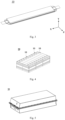
- Fig. 2 illustrates a lithium ion battery 10.
- the lithium ion battery 10 includes an electrode assembly 1 (as shown in Fig. 1 ), and an electrolytic solution for infiltrating the electrode assembly 1.
- the electrode assembly 1 includes an electrode body 11, a positive electrode tab 12, and a negative electrode tab 13.
- the electrode body 11 includes a positive electrode plate, a negative electrode plate, and a separator disposed between the positive electrode plate and the negative electrode plate, which are together wound around an axis.
- the positive electrode plate includes a positive current collector and a positive electrode material layer provided on at least one surface of the positive electrode current collector.
- the positive electrode plate is connected to the positive electrode tab 12, and the negative electrode plate is connected to the negative electrode tab 13.
- the electrode body 11 has two opposite side portions 14. In the lithium ion battery, the positive electrode tab 12 and the negative electrode tab 13 extend from the two side portions 14 of the electrode body 11, respectively.
- the direction X is the axial direction, around which the positive electrode plate, the negative electrode plate, and the separator provided between the positive electrode plate and the negative electrode plate are wound.
- the direction X is also a main diffusion direction, along which the electrolytic solution diffuses in the electrode body.
- a direction Y is a thickness direction of the electrode body 11.
- a direction Z is a width direction of the electrode body 11.
- the positive electrode tab 12 and the negative electrode tab 13 are respectively disposed on the both side portions 14 of the electrode body 11.
- the volume occupancy of the electrode body in the battery case is increased, which is conducive to increasing the content of active substance in the internal space of the battery, thereby effectively increasing the volumetric energy density of the lithium ion battery.
- the electrolytic solution can only diffuse and enter to the middle of the electrode body from the two side portions of the electrode body.
- the active material layers on the positive and negative electrode plates may expand in volume, such that the spacing between the electrode plates is reduced and part of the electrolytic solution in the middle of the cell is squeezed out; and during a discharge process of the battery, the active material layers on the positive and negative electrode plates may shrink, the spacing between the electrode plates is increased, such that the free electrolytic solution has to be replenished between the positive and negative electrode plates.
- the electrolytic solution fails to be replenished in time, the free lithium ions between the positive and negative electrode plates may cause lithium precipitation due to insufficient electrolytic solution and untimely intercalation during the subsequent cycles.
- the SEI film on the surface of the positive electrode plate is completely consumed and cannot forming a new SEI film in time, thereby intensifying the gas production of the battery cell. In this way, the cycle performance of the battery deteriorates and a safety risk may occur.
- the electrolytic solution includes an additive A.
- the additive A contains at least one of a phosphate compound containing unsaturation, a cyclic compound containing -SO 2 -, or a cyclic siloxane compound containing unsaturation, and has a diffusion rate v to the electrode body in a range of 0.01 ⁇ g/s to 5 ⁇ g/s, preferably 0.2 ⁇ g/s to 2 ⁇ g/s.
- a passivation layer which has a dense structure and good stability, is preferentially formed on the surface of the positive electrode, and it can block a direct contact between the positive electrode and the solvent, thereby effectively suppressing the oxidative gas production of the solvent.
- the above film-forming additive is particularly suitable for a high-capacity battery system which has a severe gas generation problem.
- the diffusion rate v of the electrolytic solution to the electrode body is adjusted to 0.01 ⁇ g/s to 5 ⁇ g/s, preferably 0.2 ⁇ g/s to 2 ⁇ g/s, such that the electrolytic solution has a good wettability to the electrode body and thus can quickly enter into the electrode body and timely form a new SEI film on the surface of the positive electrode plate.
- the cycle performance and safety of the lithium ion battery can be improved, and the gas production during the cycle is alleviated.
- the lithium ion battery also has a relatively high storage performance at high temperature.
- the diffusion rate v is calculated by electrolytic solution absorption rate of the positive electrode plate as the main influencing factor, based on the following reasons: the additive A contained in the electrolytic solution mainly acts on the surface of the active material particles of the positive electrode plate to form a dense passivation film, thereby reducing the gas generation of the lithium ion battery; meanwhile, the positive electrode plate generally has a higher compacted density than the negative electrode plate, thus achieving a more compact internal structure, such that the diffusivity of the electrolytic solution to the positive electrode plate has a more significant effect on the cycle performance of the battery.
- the electrolytic solution absorption rate y of the positive electrode plate can be measured by the following method: filling the electrolytic solution in a dropper having a certain inner diameter and a standard scale, where the diameter of a lower part of the dropper is 0.2mm; sufficiently drying the positive electrode plate (for example, drying at 70°C to 90°C for 10h to 15h), then cutting it into 5cm ⁇ 5cm square positive electrode plate; in a dry room with humidity below 2%, contacting the lower part of the dropper with the square positive electrode plate in such a manner that the dropper is perpendicular to the surface of the square positive electrode plate, gradually infiltrating the square positive electrode plate with the electrolytic solution in the dropper; and recording a mass of the electrolytic solution infiltrating in the square positive electrode plate per second, as the electrolytic solution absorption rate of the positive electrode plate.
- H is the maximum length of the side portion in the width direction (Z) of the electrode body, in unit of mm; and L is the length of the electrode body in the axial direction (X), in unit of mm.
- the smaller H can result in a narrower channel through which the electrolytic solution enters the electrode body; and a greater L can result in a longer path along which the electrolytic solution diffuses into the central region of the electrode body.
- the electrode body when the length L of the electrode body is smaller than the width H, the electrode body has a higher volumetric energy density, but it is not conducive to the rapid entrance of the electrolytic solution into the cell, and the diffusion rate v of the electrolytic solution highly depends on the size of the electrode body, i.e., H and L.
- the diffusion rate v of the electrolytic solution to the electrode body can be 0.25 ⁇ g/s, 0.37 ⁇ g/s, 0.58 ⁇ g/s, 0.68 ⁇ g/s, 0.75 ⁇ g/s, 1.08 ⁇ g/s, 1.55 ⁇ g/s, 1.97 ⁇ g/s, 2.5 ⁇ g/s, 3 ⁇ g/s, 4 ⁇ g/s, or 4.97 ⁇ g/s, etc.
- the electrolytic solution absorption rate y of the positive electrode plate can be in a range of 0.15 ⁇ g/s to 7.25 ⁇ g/s, preferably, 0.45 ⁇ g/s to 3.58 ⁇ g/s.
- the electrolytic solution absorption rate y of the positive electrode plate can be 0.71 ⁇ g/s, 0.82 ⁇ g/s, 0.96 ⁇ g/s, 1.08 ⁇ g/s, 2.24 ⁇ g/s, 2.48 ⁇ g/s, 2.57 ⁇ g/s, 3.12 ⁇ g/s, 4 ⁇ g/s, 5 ⁇ g/s, 6 ⁇ g/s, or 6.51 ⁇ g/s etc.
- the maximum length H of the side portion in the width direction (Z) of the electrode body, and the length L of the electrode body in the axial direction (X) satisfy: 0.05 ⁇ H/L ⁇ 0.8.
- the ratio H/L is in a range of 0.1 to 0.6. In some further preferred embodiments of the present disclosure, the ratio H/L is in a range of 0.15 to 0.5. In particular, the ratio H/L can be 0.8, 0.75, 0.7, 0.65, 0.6, 0.55, 0.5, 0.45, 0.4, 0.35, 0.3, 0.25, 0.2, 0.1, or 0.05 etc..
- the structure of the electrode body having a smaller H/L ratio can reduce the proportion of the positive and negative electrode tabs in the positive and negative electrode plates to a maximum extent.
- the space utilization of the lithium ion battery is relatively increased, and thus the energy density of the lithium ion battery is further increased.
- the circuit design during module assembly can be simplified, thereby improving the assembly efficiency and reducing the cost.
- the maximum length H of the side portion in the width direction (Z) of the electrode body can be in a range of 10mm to 280mm, further 30mm to 160mm, more further 45mm to 150mm.
- the maximum length H is 90mm, 91mm, 100mm, 120mm, 150mm, or 160mm etc.
- the length L of the electrode body in the axial direction (X) can be in a range of 50mm to 500mm, further 100mm to 400mm, more further 200mm to 350mm.
- the length L is 200mm, 300mm, 301mm, or350mm, etc.
- the axial direction (X) of the electrode body is a horizontal direction.
- the winding axis direction of the electrode body is substantially parallel to the horizontal direction, and the electrolytic solution can infiltrate from both ends of the electrode body and diffused into the inside of the electrode main body, which is more advantageous for a rapid infiltration of the electrolytic solution.
- the winding axis direction of the electrode assembly is the horizontal direction
- the electrode assembly is placed in a battery case and sealed with a top cover to assemble a lithium ion battery.
- the lithium ion battery can be placed vertically (i.e., the direction Z is parallel to the direction of gravity), or can be placed horizontally (i.e., the direction Y is parallel to the direction of gravity).
- the winding axis direction of the electrode assembly is the horizontal direction
- the electrode assembly is packed by an aluminum plastic film, and the edge of the packaging bag is sealed by hot pressing, glue fixing, or the like, so as to assemble a lithium ion battery, as shown in Fig. 3 .
- the lithium ion battery can be placed vertically (i.e., the direction Z is parallel to the direction of gravity), or can be placed horizontally (i.e., the direction Y is parallel to the direction of gravity).
- a mass percentage w (%) of the additive A in the electrolytic solution and the diffusion rate v ( ⁇ g/s) satisfy: 0.0.01 ⁇ w ⁇ v ⁇ 10, and preferably 0.1 ⁇ w ⁇ v ⁇ 10.
- w ⁇ v can be 0.43, 0.50, 0.65, 0.74, 1.15, 1.35, 1.50, 2.16, 3.11, 3.94, 4.97, 6.74, or 9.84 etc.
- the mass percentage w (%) of the additive A in the electrolytic solution and the diffusion rate v ( ⁇ g/s) satisfy: 0.4 ⁇ w ⁇ 5.
- the relationship between the mass percentage w of the additive A in the electrolytic solution and the diffusion rate v of the electrolytic solution to the electrode body can significantly influence the film formation quality and interface impedance of the positive electrode plate, and further affect the gas production and cycle performance of the battery.
- the mass percentage w of the additive A in the electrolytic solution and the diffusion rate v satisfy the above relationship, it not only can ensure that the electrolyte solution has a high infiltration or reflow rate, but also can ensure that there is enough additive A to form a stable protective film to suppress the gas production.
- the amount of the additive A is moderate, ensuring the good cycle performance of the lithium ion battery.
- a mass percentage of additive A in the electrolytic solution can be 0.1wt% ⁇ Swt%, further 0.1wt% ⁇ 3wt%, more further 1wt% ⁇ 2wt%.
- the phosphate compound containing unsaturation is at least one of compounds represented by Formula (1): in which R 1 , R 2 , and R 3 are each independently selected from the group consisting of C1-C6 alkyl, C2-C6 alkenyl, C2-C6 alkynyl, C1-C6 halogenated alkyl, C2-C6 halogenated alkenyl, C2-C6 halogenated alkynyl, C6-C10 aryl, and C6-C10 halogenated aryl, and at least one of R 1 , R 2 , and R 3 contains a double bond or a triple bond.
- R 1 , R 2 , and R 3 are each independently selected from the group consisting of C1-C6 alkyl, C2-C6 alkenyl, C2-C6 alkynyl, C1-C6 halogenated alkyl, C2-C6 halogenated alkenyl, C2-C6 halogenated alkynyl, C
- R 1 , R 2 , and R 3 are each independently selected from the group consisting of methyl, ethyl, propyl, isopropyl, butyl, vinyl, allyl, 3-butenyl, isobutenyl, 4-pentenyl, ethynyl, propargyl, 3-butynyl, 1-methyl-2-propynyl, and halogenated derivatives thereof; and at least one of R 1 , R 2 , and R 3 contains a double bond or a triple bond.
- the halogenated derivatives include, but are not limited to, monofluoromethyl, difluoromethyl, trifluoromethyl, 2,2,2-trifluoroethyl, 2,2-difluoroethyl, 2,2,2-trifluoroethyl, 3,3-difluoropropyl, 3,3,3-trifluoropropyl and hexafluoroisopropyl.
- R 1 , R 2 , and R 3 can be independently selected from the group consisting of ethyl, propyl, isopropyl, vinyl, allyl, ethynyl, propargyl and halogenated derivatives thereof; and at least one of R 1 , R 2 and R 3 contains a double bond or a triple bond.
- At least one of R 1 , R 2 , and R 3 of the phosphate compound containing unsaturation contains an unsaturated C-C bond at a terminal of the branch ; and more preferably, at least two of R 1 , R 2 , and R 3 of the phosphate compound containing unsaturation contains an unsaturated C-C bond at a terminal of the branch.
- each of R 1 , R 2 , and R 3 of the phosphate compound containing unsaturation contains an unsaturated C-C bond at a terminal of the branch.
- the phosphate compound containing unsaturation represented by Formula (1) is one or more of the following compounds:
- the cyclic compound containing -SO 2 - is at least one of compounds represented by Formula (2) to Formula (4):
- the C1-C4 alkylene is a linear or branched alkylene.
- alkylene include methylene, ethylene, propylene, iso-propylene, butylene, iso-butylene, sec-butylene, 1-methylpropylene, and 2-methylpropylene, and the like.
- the number of fluorine substituent and the position of substitution are not particularly limited, and according to actual requirements, a part or all of hydrogen atoms in the alkylene group can be substituted by fluorine atoms.
- the number of fluorine atoms can be one, two, three, four or more.
- the fluorinated alkylene include 1-fluoromethylene, 1-fluoroethylene, 1,1,2,2-tetrafluoroethylene, 1-fluoropropylene, 2-fluoropropylene, 1,1,1-trifluoropropylene, 1-fluoroisopropylene, 1-fluorobutylene, 1-fluoroisobutylene, 1-fluoro sec-butylene, and the like.
- the C2-C4 alkenylene is a linear or branched alkenylene, preferably the linear alkenylene, and includes one or two double bonds.
- alkenylene examples include ethenylidene, allylidene, isopropenylidene, butenylidene, butadienylidene, 1-methylethenylidene, 1-methylpropenylidene, 2-methylpropenylidene, and the like.
- the number of fluorine substituent and the position of substitution are not particularly limited, and according to actual requirements, a part or all of hydrogen atoms in the alkenylene group can be substituted by fluorine atoms.
- the number of fluorine atoms can be one, two, or more.
- fluorinated alkenylene examples include1-fluoroethenylidene, 1,2-difluoroethenylidene, 1-fluoroallylidene, 1-fluoroisopropenylidene, 1-fluorobutenylidene, 1-fluorobutadienylidene, 1, 2,3,4-tetrafluorobutadienylidene, and the like.
- the aryl group is not particularly limited and can be selected according to actual needs, such as phenylene, naphthylene, or alkylphenylene, and the phenyl group can be linked by other substituent groups, such as alkyl.
- arylene examples include phenylene, benzylidene, 1-naphthylene, 2-naphthylene, o-methylphenylene, m-methylphenylene, p-methylphenylene, p-ethylphenylene, methylphenylene, o-ethylphenylene, 1-tetrahydronaphthylene, 2-tetrahydronaphthylene, 4-ethenylphenylene, 3-isopropylphenylene, 4-isopropylphenylene, 4-butylphenylene, 4-isobutylphenylene, 4-tert-butylphenylene, 2,3-dimethylphenylene, 2,4-dimethylphenylene, 2,5-dimethylphenylene, 2,6-dimethylphenylene, 3,4-dimethylphenylene, 3,5-dimethylphenylene, 2, 4, 5-trimethylphenylene, 2,4,6-trimethylphenylene, and the like
- the number of fluorine substituent and the position of substitution are not particularly limited.
- the number of halogen atoms can be one, two, three, four, five or more.
- fluorinated arylene examples include 2-fluorophenylene, 3-fluorophenylene, 4-fluorophenylene, 2-fluoro-4-methylphenylene, 3-fluoro-4-methylphenylene, 4-fluoro-2-methylphenylene, 2,4-difluorophenylene, 3,4-difluorophenylene, 2,6-difluoro-4-methylphenylene, 2,6-difluoro-3-methylphenylene, 2-fluoronaphthylene, 4-fluoronaphthylene, 2,4,6-trifluorophenylene, 2,3,4,6-tetrafluorophenylene, 4-trifluoromethylphenylene, 2,3,4,5-tetrafluorophenylene, pentafluorophenylene, 3,5-bis(trifluoromethyl)phenylene, and the like.
- the compounds represented by Formula (2) is one or more of the following compounds:
- R 5 , R 6 , R 7 and R 8 are independently selected from the group consisting of H, methyl, ethyl, propyl, isopropyl, butyl, vinyl, allyl, 3-butenyl, isobutenyl, 4-pentenyl, ethynyl, propargyl, 3-butynyl, 1-methyl-2-propynyl, and halogenated derivatives thereof.
- the halogenated derivatives include, but are not limited to, monofluoromethyl, difluoromethyl, trifluoromethyl, 2,2,2-trifluoroethyl, 2,2-difluoroethyl, 2,2,2-trifluoroethyl, 3,3-difluoropropyl, 3,3,3-trifluoropropyl and hexafluoroisopropyl.
- the compound of Formula 3 is one or more of 1,3-propene sultone (PST), 1,4-butene sultone, 1-methyl-1,3-propene sultone, and halogenated derivatives thereof (such as fluorinated derivatives).
- PST 1,3-propene sultone
- 1,4-butene sultone 1,4-butene sultone
- 1-methyl-1,3-propene sultone 1,4-butene sultone
- halogenated derivatives thereof such as fluorinated derivatives
- the cyclic compound containing -SO 2 - includes the compound represented by Formula 4.
- the compound represented by Formula 4 is 1,3-propane sultone (PS).
- the cyclic compound containing -SO 2 - may also be selected from at least one compound represented by Formula 5.
- R 17 and R 18 are each independently selected from the group consisting of C1-C4 alkylene, C1-C4 fluoroalkylene, C2-C4 alkenylene, C2-C4 fluoroalkenylene, C6-C14 arylene, and C6-C10 fluoroarylene.
- C1-C4 alkylene, C1-C4 fluoroalkylene, C2-C4 alkenylene, C2-C4 fluoroalkenylene, C6-C14 arylene, and C6-C10 fluoroarylene are the same as described above.
- R 17 and R 18 are each independently selected from the group consisting of methylene, ethylene, propylene, isopropylidene, vinylidene, allylidene, isopropenylidene, and fluorinated derivatives thereof.
- the compound represented by Formula 5 is methylene methanedisulfonate etc.
- the cyclic compound containing -SO 2 - may include at least one of the compounds represented by Formula 2 to Formula 5.
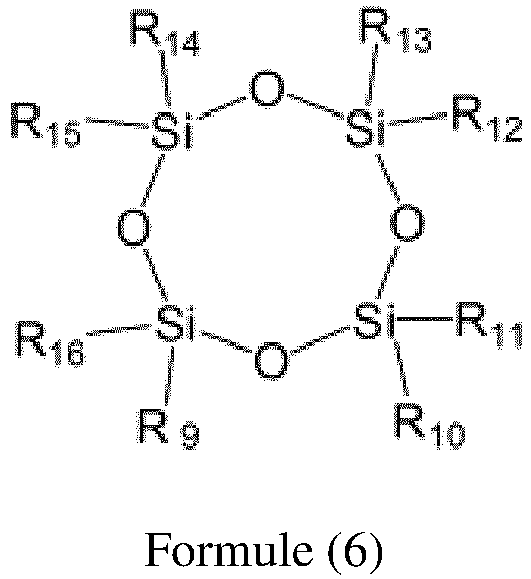
- the cyclic siloxane compound containing unsaturation is at least one of compounds represented by Formula (6):
- R 9 , R 10 , R 11 , R 12 , R 13 , R 14 , R 15 , and R 16 are each independently a substituted or unsubstituted C1-C4 hydrocarbyl, and at least one of R 9 , R 10 , R 11 , R 12 , R 13 , R 14 , R 15 , and R 16 contains a double bond or a triple bond.
- R 9 , R 10 , R 11 , R 12 , R 13 , R 14 , R 15 , and R 16 are each independently selected from methyl, ethyl, propyl, isopropyl, vinyl, allyl, ethynyl, propargyl, and fluorinated derivatives thereof; and at least one of R 9 , R 10 , R 11 , R 12 , R 13 , R 14 , R 15 , and R 16 contains a double bond or a triple bond.
- the compounds represented by Formula (5) is one or more of the following compounds:
- the additive A comprises, but not limited to, 1,3-propane sultone, propylene sultone, methylene methanedisulfonate, triallyl phosphate, tetramethyltetravinyl cyclotetrasiloxane, and combinations thereof.
- the additive A is selected from at least one of methylene methanedisulfonate, triallyl phosphate, and tetramethyltetravinyl cyclotetrasiloxane.
- the electrolytic solution has a viscosity of 0.5 mPa ⁇ s to 5.0 mPa ⁇ s at 25 ⁇ 3°C.
- the electrolytic solution has a relatively high flow rate, which can effectively enhance the infiltration rate of the electrolytic solution in the positive electrode plate and the diffusion rate of the electrolytic solution in the electrode body.
- the electrolyte solution has a viscosity of 1 mPa ⁇ s to 6.0 mPa ⁇ s at 0°C. This ensures that the electrolytic solution has good fluidity at both normal and low temperature conditions, so as to guarantee a good kinetic performance of the battery at high and low temperatures.
- the electrolytic solution includes a low viscous solvent, and optionally include a certain amount of wetting agent.
- the low viscous solvent has a viscosity smaller than and equal to 0.65 mPa ⁇ s at 25 ⁇ 3°C.
- the electrolytic solution can have a specific flow rate, improving the infiltration rate of the electrolytic solution in the positive electrode plate.
- the low viscous solvent comprises, but not limited to, at least one of dimethyl carbonate (DMC), methyl formate (MF), ethyl formate (EF), methyl acetate (MA), ethyl acetate (EA), ethyl propionate (EP), ethyl butyrate (EB), tetrahydrofuran (THF), 2-methyltetrahydrofuran, dioxolane (DOL), 1,2-dimethoxyethane (DME), acetonitrile (AN), methyl nonafluorobutyl ether (MFE), and ethyl nonafluorobutyl ether (EFE).
- DMC dimethyl carbonate
- MF methyl formate
- EF ethyl formate
- MA methyl acetate
- EA ethyl acetate
- EP ethyl propionate
- EB ethyl butyrate
- THF tetrahydrofur
- a mass percentage of the low viscous solvent in the electrolytic solution is in a range of 10wt% to 80wt%, preferably 20wt% to 60wt%.
- the content of the low viscous solvent can be, but not limited to, 10%, 20%, 30%, 40%, 50%, 60%, 70%, or 80%.
- the electrolytic solution further includes a wetting agent.
- the wetting agent comprises, but not limited to, at least one of 1,1,2,2 tetrafluoroethyl-2,2,3,3-tetrafluoropropyl ether, 1H,1H,SH-octafluoropentyl-1,1,2,2 tetrafluoroethyl ether, and 1,1,2,2-tetrafluoroethyl-2,2,2-trifluoroethyl ether.
- a mass percentage of the wetting agent in the electrolytic solution is in a range of 0.1wt% to 10wt%.
- the content of the wetting agent can be 0.1%, 0.5%, 1%, 1.5%, 2%, 3%, 5%, 7%, 9%, or 10%.
- the electrolytic solution may further include other solvents, which may be selected from one or more of ethylene carbonate (EC), propylene carbonate (PC), ethyl methyl carbonate (EMC), diethyl carbonate (DEC), dipropyl carbonate (DPC), methylpropyl carbonate (MPC), ethyl propyl carbonate (EPC), butylene carbonate (BC), fluoroethylene carbonate (FEC), propyl acetate (PA), methyl propionate (MP), propyl propionate (PP), methyl butyrate (MB), 1,4-butyrolactone (GBL), sulfolane (SF), methylsulfonyl methane (MSM), ethyl methyl sulfone (EMS) and ethylsulfonyl ethane(ESE).
- EC ethylene carbonate
- PC propylene carbonate
- EMC diethyl carbonate
- DPC diethyl carbonate
- the electrolyte salt of the electrolytic solution may be selected from one or more of lithium hexafluorophosphate (LiPF 6 ), lithium tetrafluoroborate (LiBF 4 ), lithium perchlorate (LiClO 4 ), lithium hexafluoroarsenate (LiAsF 6 ) , Lithium bisfluorosulfonimide (LiFSI), lithium bistrifluoromethanesulfonimide (LiTFSI), lithium trifluoromethanesulfonate (LiTFS), lithium difluorooxalate borate (LiDFOB), lithium dioxalate borate (LiBOB), lithium difluorophosphate (LiPO 2 F 2 ), lithium difluorodioxalate phosphate (LiDFOP) and lithium tetrafluorooxalate phosphate (LiTFOP).
- LiPF 6 lithium hexafluorophosphate
- LiBF 4 lithium
- the positive electrode active material of the positive electrode material layer of the lithium ion battery according to the present disclosure comprises, but not limited to, lithium-cobalt oxide, lithium-nickel oxide, lithium-manganese oxide, lithium-nickel-manganese oxide, lithium-nickel-cobalt-manganese oxide, lithium-nickel-cobalt-aluminum oxide, and olivine-structured lithium-containing phosphate.
- the positive electrode active material is not limited to the above materials, and other materials that are well known as positive electrode active materials of the lithium ion battery also can be used. These positive electrode active materials may be used individually or in any combination thereof.
- the positive electrode active material includes at least one of compounds represented by General Formula (I) to General Formula (III), Li 1+x Ni a Co b M 1-a-b O 2-y A y General Formula (I) Li 1+x' Ni a' M' 2-a' O 4-y' A y' General Formula (II) c[Li 2 MnO 3 ] ⁇ (1-c)[LiM" 2 O 2-y" A" y" ] General Formula (III)
- the positive electrode active material When the positive electrode active material is selected from the compounds represented by the General Formulas (I) to (III), the positive electrode active material has a high Ni content or a high operating voltage during the charge and discharge cycle, and thus the probability of side reactions between the surface of the positive electrode active material particles and the electrolytic solution increases, such that the gas production problem is more likely to occur.
- the diffusion rate of the electrolytic solution in the electrode body is in a range of 0.01 ⁇ g/s to 5 ⁇ g/s, a SEI film having a good film-forming quality can be timely formed on the surface of the above positive electrode material, thereby effectively alleviating the gas production problem of the lithium ion battery using the above positive electrode material.
- the positive electrode active material can be selected from at least one of LiNi 0.5 Co 0.2 Mn 0.3 O 2 (NCM523), LiNi 0.55 Co 0.05 Mn 0.4 O 2 , LiNi 0.55 Co 0.1 Mn 0.35 O 2 , LiNi 0.55 Co 0.12 Mn 0.33 O 2 , LiNi 0.55 Co 0.15 Mn 0.3 O 2 , LiNi 0.6 Co 0.15 Mn 0.25 O 2 , LiNi 0.6 Co 0.18 Mn 0.22 O 2 , LiNi 0.6 Co 0.2 Mn 0.2 O 2 (NCM622), LiNi 0.65 Co 0.05 Mn 0.3 O 2 , LiNi 0.65 Co 0.09 Mn 0.26 O 2 , LiNi 0.65 Co 0.12 Mn 0.23 O 2 , LiNi 0.65 Co 0.15 Mn 0.2 O 2 , LiNi 0.8 Co 0.1 Mn 0.1 O 2 (NCM811), LiNi 0.85 Co 0.15 Al 0.05 O
- the positive electrode material layer further includes a conductive agent and a binder, which are not specifically limited and can be selected according to actual needs.
- the diffusion rate of the electrolytic solution is also significantly affected by porosity, specific surface area and OI value of the positive electrode material layer.
- the positive electrode plate includes a positive electrode current collector and a positive electrode material layer coated on a surface of the positive electrode current collector.
- the positive electrode material layer has a porosity of 10% to 50%, preferably 20% to 40%. With the increasing of the porosity of the positive electrode material layer, the paths through which the electrolytic solution enters the inside of the positive electrode plate are increased and less obstructive, such that the electrolytic solution can infiltrate the positive electrode plate quickly.
- the electrolytic solution can infiltrate the positive electrode plate in a faster and better manner and the filling amount of the electrolytic solution can be kept within a reasonable range, while the electrode body can have a higher volumetric energy density and mass energy density.
- the positive electrode material layer has a specific surface area of 0.5m 2 /g to 1.5m 2 /g.
- the specific surface area of the positive electrode material layer With the increasing of the specific surface area of the positive electrode material layer, the absorption of the electrolytic solution is facilitated, and the infiltration of the electrolytic solution in the positive electrode plate is accelerated.
- the electrolytic solution can quickly infiltrate the positive electrode plate, and the contact area between the positive electrode material layer and the electrolytic solution can be controlled within a reasonable range, thereby effectively preventing the occurrence of side reactions between the electrolytic solution and the positive electrode plate.
- the specific surface area of the positive electrode material layer is 0.53 m 2 /g, 0.62 m 2 /g, 0.8 m 2 /g, 0.92 m 2 /g, 1 m 2 /g, or 1.2 m 2 /g.
- the positive electrode material layer has a grain orientation OI value of 5 to 120.
- the positive electrode material layer has an OI value of 30 to 70.
- the OI value of the positive electrode material layer is a ratio of a peak area of (003) diffraction peak to a peak area of (110) diffraction peak in an X-ray diffraction pattern of the positive electrode plate.
- the OI value of the positive electrode material layer can reflect a degree of stacking orientation of the lithium-containing compound particles in the layered structure of the positive electrode material layer, and the respective crystal planes of the positive electrode particles in the positive electrode plate have difference surface energies and different affinities for the electrolytic solution.
- the OI value of the positive electrode material layer is 32, 37, 40, 50, 62, 75, 80, 90, or 100.
- the viscosity of the electrolyte has a well-known meaning in the art, and can be tested by a method known in the art.
- a test standard GB/T 10247-2008 an equipment Brookfield DV2T viscometer is used.
- An exemplary test method is as follows: first, sealing the electrolytic solution sample, putting it into a constant temperature water bath, and starting the test after reaching the temperature to be tested ⁇ 0.1°C, wherein 18# rotor is used during the test.
- the porosity of the positive electrode material layer has a well-known meaning in the art, and can be tested by a method known in the art.
- a test standard GB/T24586-2009 an equipment AccuPycII1340 is used, and the measuring range is 0.1 cm 3 ⁇ 3.5 cm 3 .
- the preparation of test sample includes: punching the positive electrode plate into a disc with a diameter of 1.6cm, wherein the number of the samples is greater than 20 pieces (such as 30 pieces), and recording the number and thickness of the loaded samples in detail.
- the specific surface area of the positive electrode material layer has a well-known meaning in the art, and can be tested by methods known in the art.
- an equipment TriStar II 3020 is used, and the measuring range is ⁇ 0.01m 2 /g, and the heating range is 40°C ⁇ 350°C.
- the OI value of the positive electrode material layer is the ratio of the peak area of (003) diffraction peak to the peak area of (110) diffraction peak in the X-ray diffraction pattern of the positive electrode plate.
- the X-ray diffraction pattern of the positive electrode plate can be tested using methods known in the art. For example, referring to JIS K 0131-1996, an equipment BruKer D8 Discover is used, and the area of an electrode plate sample is not less than 30mm*30mm.
- the 2 ⁇ angle corresponding to the 003 crystal plane of the layered lithium transition metal oxide is from 17° to 20°; the 2 ⁇ angle corresponding to the 110 crystal plane of the layered lithium transition metal oxide is from 63° to 67°.
- the negative electrode plate can include a negative electrode current collector and a negative electrode material layer provided on the negative electrode current collector and including the negative electrode active material.
- the type of the negative electrode active material is not specifically limited and can be selected according to actual needs.
- the negative electrode active material is a material capable of reversibly deintercalating lithium, including one or more of graphite, silicon, tin, metal oxide, silicon oxide, tin oxide, silicon alloy, tin alloy, silicon carbon composite, tin carbon composite, or lithium titanate, and the like.
- the negative electrode active material is natural graphite, artificial graphite or a mixture thereof.
- the negative electrode material layer further includes a conductive material and a binder, which are not specifically limited and can be selected according to actual needs.
- a metal lithium sheet can be directly used as the negative electrode plate.
- the material of the separator is not limited and can be selected according to actual needs.
- the present disclosure does not particularly limit a shape of the lithium ion battery, which may be cylindrical, square, or any other shape. As shown in Fig. 2 , for example, the lithium ion battery 10 has a square structure.
- the lithium ion battery 10 further includes an outer packaging for packaging the electrode assembly 1 and the electrolytic solution (not shown).
- the outer packaging of the lithium ion battery may be a hard shell, such as a hard plastic shell, aluminum shell, steel shell, or the like.
- the outer packaging of the lithium ion battery may also be a soft packaging, such as in a form of pouch.
- the soft packaging can be aluminum plastic film packaging or plastic film packaging, which can include one or more of polypropylene (PP), polybutylene terephthalate (PET), and polybutylene succinate (PBS).
- the outer packaging may include a casing 2 and a cover 3.
- the casing 2 may include a bottom plate and a side plate connected to the bottom plate, and the bottom plate and the side plate are enclosed to form a receiving cavity.
- the casing 2 has an opening in communication with the receiving cavity, and the cover plate 3 can cover the opening to close the receiving cavity.
- the electrode assembly 1 is packaged in the receiving cavity.
- One or more electrode assemblies 1 may be included in the lithium ion battery 10, which can be adjusted according to requirements.
- the lithium-ion batteries may be assembled into a battery module, multiple lithium-ion batteries may be contained in the battery module, and the specific number may be adjusted according to the application and capacity of the battery module.
- Fig. 4 illustrates a battery module 20 as an example.
- a plurality of lithium ion batteries 10 is arranged in sequence along the length direction of the battery module 20, which can also be arranged in any other manner. Further, the plurality of lithium ion batteries 10 can be fixed by fasteners.
- the battery module 20 may further include a casing having a receiving space, and the plurality of lithium ion batteries 10 are accommodated in the receiving space.
- the above battery modules can also be assembled into a battery pack, and the number of battery modules contained in the battery pack can be adjusted according to the application and capacity of the battery pack.
- the battery pack 30 may include a battery box and a plurality of battery modules 20 provided in the battery box.
- the battery box includes an upper body 31 and a lower body 32.
- the upper body 31 can be placed on the lower body 32 to form an enclosed space for receiving the battery modules 20.
- the plurality of battery modules 20 may be arranged in the battery box in any manner.
- the present disclosure provides an electrical apparatus including the lithium ion battery according to the present disclosure.
- the lithium ion battery can be served as a power supply or an energy storage unit of the electrical apparatus.
- the electrical apparatus including the lithium ion battery according to the present disclosure also has the above-mentioned advantages, which will not be repeated herein.
- the electrical apparatus can be, for example, a new energy vehicle, an electrical device, an electrical tool, a power storage facility, and the like. Further, the electrical apparatus may be, but not limited to, mobile devices (such as mobile phones, notebook computers, etc.), electric vehicles (such as pure electric vehicles, hybrid electric vehicles, plug-in hybrid electric vehicles, electric bicycles, electric pedal vehicles, electric golf carts, electric trucks, etc.), electric trains, ships and satellites, energy storage systems, etc.
- mobile devices such as mobile phones, notebook computers, etc.
- electric vehicles such as pure electric vehicles, hybrid electric vehicles, plug-in hybrid electric vehicles, electric bicycles, electric pedal vehicles, electric golf carts, electric trucks, etc.
- electric trains ships and satellites, energy storage systems, etc.
- the lithium ion battery, the battery module or the battery pack of the electrical apparatus can be selected according to its applications.
- Fig. 7 illustrates an example of an electrical apparatus.
- the electrical apparatus is a pure electric vehicle, a hybrid electric vehicle, or a plug-in hybrid electric vehicle.
- a battery pack or battery module may be used.
- the current example is a lithium ion battery including an electrode body, a positive electrode tab and a negative electrode tab disposed at both ends of the electrode body, and an electrolytic solution for infiltrating the electrode body; wherein the electrode body is formed by sequentially winding a positive electrode plate, a separator, and a negative electrode plate together around an axis, as the structure shown in Fig. 1 .
- the specific preparation process of the lithium ion battery of the present example is as follows:
- a positive electrode active material LiNi 0.8 Co 0.1 Mn 0.1 O 2 (NCM811)
- a conductive agent Super P
- a binder polyvinylidene fluoride (PVDF)
- NMP N-methylpyrrolidone
- the positive electrode slurry was uniformly coated on an aluminum foil acting as a positive electrode current collector and having a thickness of 14 ⁇ m, dried at 85°C, then subjected to cold pressing, trimming, cutting, and slitting, and finally dried in vacuum at 85°C for 4 h to obtain a positive electrode plate.
- a negative electrode active material (graphite), a conductive agent (Super P), a thickener (sodium carboxymethylcellulose (CMC-Na)), and a binder (styrene-butadiene rubber emulsion (SBR)) were mixed in a mass ratio of 94:2:2:2, added to a solvent of deionized water, stirred uniformly in a vacuum mixer to obtain a negative electrode slurry having a solid content of 54 wt%.
- a conductive agent Super P
- a thickener sodium carboxymethylcellulose (CMC-Na)
- SBR styrene-butadiene rubber emulsion
- the negative electrode slurry was uniformly coated on a copper foil acting as a negative electrode current collector and having a thickness of 8 ⁇ m, dried at 85°C, then subjected to cold pressing, trimming, cutting, and slitting, and finally dried in vacuum at 120°C for 12 h to obtain a negative electrode plate.
- the concentration of LiPF 6 was 1 mol/L.
- a polyethylene film (PE) having a thickness of 16 ⁇ m was used as a base film.
- a coating containing ceramic particles was coated on at least one surface of the PE porous film to form a separator.
- the positive electrode plate, the separator and the negative electrode plate were stacked in an order that the separator isolated the positive and negative electrode plates, and then wound to a square electrode body, following by welding electrode tabs on two ends of the electrode body along the length direction.
- the electrode body was then packed in an aluminum plastic film or steel shell, baked at 80°C to remove water, filled with the electrolytic solution, and sealed.
- a finished lithium ion battery was obtained after being subjected to still-standing, hot/cold pressing , formation, pumping, shaping, capacity testing and other processes.
- Examples 2-18 and Comparative Examples 1-3 were respectively a lithium ion battery that was substantially same as that of Example 1, except the differences from Example 1 listed in Table 1.
- the amounts of solvent and additive A were a mass percentage calculated based on the total mass of the electrolytic solution.
- the positive electrode plates of the respective examples and comparative examples were sufficiently dried, cut into squares of 5 cm ⁇ 5 cm, and fixed on a sample stage.
- the capillary having a diameter d of 0.2 mm was then used to absorb the electrolytic solution described in the examples and the comparative examples to a certain height h.
- the capillary with the electrolytic solution was placed in a vertical contact with the positive electrode plate, and a decline of the liquid level in the capillary was recorded with a stopwatch. Once the decline of the liquid level was finished, the liquid absorption time t was read.
- the lithium ion secondary batteries newly obtained in the respective examples and comparative examples stood at 25°C for 5min, charged with a constant current of 1 C to 4.2 V, then charged with a constant voltage until the current was equal to or lower than 0.05 C, stood for 5min, and then the lithium ion secondary batteries were discharged with a constant current of 1 C to 2.8 V.
- the above obtained discharge capacity was recorded as the discharge capacity of the lithium ion secondary battery in the first cycle.
- 400-cycle charge/discharge test was performed on each of the lithium ion batteries, and the discharge capacity for each cycle was recorded.
- the test results of the respective examples and comparative examples were listed in Table 2.
- the capacity retention ratio % of the lithium ion battery after 400 cycles at 25 ° C and 1C/1C the discharge capacity for the 400 th cycle/the discharge capacity for the 1 st cycle ⁇ 100% .
- the lithium ion battery was charged with a constant current of 1 C to a voltage of 4.2 V, then charged with a constant voltage of 4.2V until the current was 0.05 C, and the volume of the lithium ion battery at this time was measured and recorded as V 2 . Then the full charged lithium ion battery was stored in an incubator at 80°C for 10 days, and after the storage, the volume of the lithium ion battery was measured using a drainage method and recorded as V 3 .
- the volume expansion ratio % of the lithium ion battery after storage at 80 ° C for 10 days V 3 ⁇ V 2 / V 2 ⁇ 100 % .
- Example 1 91.82% 1.13% no lithium precipitation 9.61% 256.2
- Example 2 91.74% 1.21% no lithium precipitation 9.54% 256.2
- Example 3 91.96% 0.97% no lithium precipitation 12.28% 256.2
- Example 4 91.69% 1.21% no lithium precipitation 10.25% 254.6
- Example 5 90.97% 1.29% no lithium precipitation 9.68% 255.4
- Example 6 88.76% 1.59% no lithium precipitation 7.93% 260.6
- Example 7 91.81% 1.02% no lithium precipitation 12.56% 253.1
- Example 8 90.88% 1.37% no lithium precipitation 12.54% 258.5
- Example 9 91.06% 1.35% no lithium precipitation 12.48% 257.3
- Example 10 91.27% 1.26% no lithium precipitation 12.55% 256.2
- Example 11 88.32% 1.44% no lithium precipitation 13.21% 256.2
- Example 12 88.61% 1.51% no lithium precipitation
- Examples 1 to 18 by using the electrolyte solution containing additive A and defining the diffusion rate of the electrolytic solution in the electrode body in the range of 0.01 ⁇ g/s to 5 ⁇ g/s, a positive passivation film having high film-forming quality can be formed and can effectively inhibit the side reactions of the electrolytic solution on the surface of the positive electrode active material. Meanwhile, the electrolytic solution had good infiltrating property, which can effectively reduce the difficulty of the electrolytic solution diffusion caused by the high energy density design, such that the additive A can be timely replenished in the interior of the electrode body during the cycle, and the SEI film consumed on the surface of the positive electrode active material can be quickly repaired. In this way, the cell can have high energy density, high cycle capacity retention rate and low volume expansion rate at the same time. In Examples 1 to 5, when the diffusion rate of the electrolytic solution in the electrode body was in a range of 0.2 ⁇ g/s to 2 ⁇ g/s, the energy density, cycle performance and gas generation of the lithium ion battery can be further optimized.
- Comparative Example 1 the diffusion rate v of the electrolytic solution in the electrode body was significantly smaller than the diffusion rate defined in the present disclosure. It can be seen from the experimental data that a smaller diffusion rate v of the electrolytic solution in the cell cannot achieve the sufficient infiltration rate, which will negatively affect the cycle performance of the lithium ion battery.
- the diffusion rate v of the electrolytic solution in the electrode body was significantly greater than the diffusion rate defined in the present disclosure. It can be seen from the experimental data that a greater diffusion rate v of the electrolytic solution in the cell can lower the cycle performance of the lithium ion battery. The reason was in that, solvents in the electrolytic solution (such as ethylene carbonate EC) and lithium salt may reduce the infiltration rate of the electrolytic solution on the positive electrode plate, but the electrolyte solution required a certain amount of ethylene carbonate EC to dissociate the lithium salt and increase conductivity, and also required a certain amount of lithium salt to provide lithium ions. If the diffusion rate of the electrolytic solution was too high, the dissociation of the lithium salt and conductivity can be negatively affected.
- solvents in the electrolytic solution such as ethylene carbonate EC
- lithium salt may reduce the infiltration rate of the electrolytic solution on the positive electrode plate, but the electrolyte solution required a certain amount of ethylene carbonate EC to dissociate the lithium salt and increase conductivity, and also
- the film-forming quality and the interface impedance of the positive electrode plate are significantly affected by the relationship between the mass percentage of the positive film-forming additive in the electrolytic solution and the diffusion rate v of the electrolytic solution in the electrode body.
- a product of the mass percentage w (%) of the additive A in the electrolytic solution and the diffusion rate v ( ⁇ g/s) was in a range of 0.01 to 10, and particularly in a range of 0.4 to 5, the electrolyte solution had a relatively high infiltration rate and contained sufficient amount of additive A to form a stable protective film for suppressing the gas production, while the amount of additive A was moderate to ensure the good cycle performance of the lithium ion battery.
Landscapes
- Chemical & Material Sciences (AREA)
- Chemical Kinetics & Catalysis (AREA)
- Electrochemistry (AREA)
- General Chemical & Material Sciences (AREA)
- Engineering & Computer Science (AREA)
- Manufacturing & Machinery (AREA)
- Inorganic Chemistry (AREA)
- Physics & Mathematics (AREA)
- Condensed Matter Physics & Semiconductors (AREA)
- General Physics & Mathematics (AREA)
- Materials Engineering (AREA)
- Secondary Cells (AREA)
- Battery Electrode And Active Subsutance (AREA)
Claims (15)
- Batterie au lithium-ion (10), comprenant :un composant d'électrode (1) ; etune solution électrolytique configurée pour infiltrer le composant d'électrode (1),caractérisé en ce que,un composant d'électrode (1) comprend un corps d'électrode (11), une patte d'électrode positive (12) et une patte d'électrode négative (13), etle corps d'électrode (11) comprend une plaque d'électrode positive, une plaque d'électrode négative et un séparateur disposé entre la plaque d'électrode positive et la plaque d'électrode négative, qui s'enroulent autour d'un axe, dans laquelle la plaque d'électrode positive comprend un collecteur de courant d'électrode positive et une couche de matériau d'électrode positive prévue sur au moins une surface du collecteur de courant d'électrode positive, et la plaque d'électrode positive est connectée à la patte d'électrode positive (12), et la plaque d'électrode négative est connectée à la patte d'électrode négative (13), etdans une direction axiale (X), le corps d'électrode (11) a deux parties latérales opposées (14), et la patte d'électrode positive (12) et la patte d'électrode négative (13) s'étendent respectivement depuis les deux parties latérales (14) du corps d'électrode (11), etla solution électrolytique comprend un additif A, et l'additif A contient au moins l'un parmi un composé phosphate contenant une liaison insaturée, un composé cyclique contenant -SO2-, et un composé siloxane cyclique contenant une liaison insaturée, etune vitesse de diffusion v de la solution électrolytique dans le corps d'électrode (11) est dans une plage de 0,01 µg/s à 5 µg/s, qui est mesurée comme décrite dans la description, etla vitesse de diffusion v satisfait : v = y x H/L, où y est une vitesse d'absorption de la solution électrolytique de la plaque d'électrode positive, en µg/s, qui est mesurée comme décrite dans la description ; etH est une longueur maximale de la partie latérale dans la direction de largeur (Z) du corps d'électrode (11), en mm ; etL est une longueur du corps d'électrode (11) dans la direction axiale (X), en mm ;dans laquelle un pourcentage en masse w (%) de l'additif A dans la solution électrolytique et la vitesse de diffusion v (µg/s) satisfont : 0,1≤w×v≤10 ;dans laquelle le composé phosphate contenant une liaison insaturée est au moins l'un des composés ayant Formule (1) :
 dans laquelle R1, R2 et R3 sont chacun indépendamment choisi dans un groupe consistant en alkyle en C1-C6, alkényle en C2-C6, alkynyle en C2-C6, alkyle halogéné en C1-C6, alkényle halogéné en C2-C6, alkynyle halogéné en C2-C6, aryle en C6-C10 et aryle halogéné en C6-C10, et au moins l'un parmi R1, R2, et R3 contient une double liaison ou une triple liaison ;dans laquelle le composé cyclique contenant-SO2- est au moins l'un des composés représentés par Formule (2) à Formule (5) :
 dans lequel,R4 est choisi dans un groupe consistant en alkylène en C1-C4, alkylène fluoré en C1-C4, alkénylène en C2-C4, alkénylène fluoré en C2-C4, arylène en C6-C14 et arylène fluoré en C6-C10 ; etR5, R6, R7 et R8 sont chacun indépendamment choisis dans un groupe consistant en H, alkyle en C1-C6, alkényle en C2-C6, alkynyle en C2-C6, alkyle halogéné en C1-C6, alkényle halogéné en C2-C6, alkynyle halogéné en C2-C6, aryle en C6-C10 et aryle halogéné en C6-C10 ; etR17 et R18 sont chacun indépendamment choisis dans un groupe consistant en alkyle en C1-C4, fluoroalkylène en C1-C4, alkénylène en C2-C4, fluoroalkénylène en C2-C4, arylène en C6-C14 et fluoroarylène en C6-C10 ; etn est égal à 1, 2 ou 3 ;dans laquelle le composé siloxane cyclique contenant une liaison insaturée est au moins l'un des composés représentés par Formule (6) :
 dans laquelle la formule (6), R9, R10, R11, R12, R13, R14, R15 et R16 sont chacun indépendamment choisi dans un groupe consistant en hydrocarbyle en C1-C4, substitué ou non et au moins l'un parmi R9, R10, R11, R12, R13, R14, R15 et R16 contenant une double liaison ou une triple liaison, et le substituant, s'il est présent, est halogène.
 - Batterie au lithium-ion (10) selon la revendication 1, caractérisée en ce que la vitesse de diffusion v de la solution électrolytique dans le corps d'électrode (11) est dans une plage de 0,2 µg/s à 2 µg/s.
- Batterie au lithium-ion (10) selon la revendication 1 ou 2, caractérisée en ce que H et L satisfont : 0,05≤H/L≤0,8, de préférence 0,1≤H/L≤0,6, de plus préférablement 0,15≤H/L≤0,5.
- Batterie au lithium-ion (10) selon l'une quelconque des revendications 1 à 3, caractérisée en ce que la direction axiale (X) du corps d'électrode (11) est une direction horizontale.
- Batterie au lithium-ion (10) selon l'une quelconque des revendications 1 à 4, caractérisée en ce qu'un pourcentage en masse w (%) de l'additif A dans la solution électrolytique et la vitesse de diffusion v (µg/s) satisfont : 0,4≤w×v≤5.
- Batterie au lithium-ion (10) selon l'une quelconque des revendications 1 à 5, caractérisée en ce qu'au moins l'un parmi R1, R2 et R3 du composé phosphate contenant une liaison insaturée contient une liaison C-C insaturée à une extrémité ;
de préférence, chacun de R1, R2 et R3 du composé phosphate contenant une liaison insaturée contient une liaison C-C insaturée à toutes extrémités. - Batterie au lithium-ion (10) selon l'une quelconque des revendications 1 à 6, caractérisée en ce que l'additif A est au moins l'un choisi parmi la 1,3-propane sultone, la propène sultone, le méthanedisulfonate de méthylène, le phosphate de triallyl et le cyclotétrasiloxane de tétraméthyltétravinyl ; et
de préférence, l'additif A est au moins l'un choisi parmi le méthanedisulfonate de méthylène, le phosphate de triallyle et le cyclotétrasiloxane de tétraméthyltétravinyl. - Batterie au lithium-ion (10) selon l'une quelconque des revendications 1 à 7, caractérisée en ce que la solution électrolytique présente une viscosité de 0,5 mPa.s à 5,0 mPa.s à 25 ± 3°C, qui mesurée comme décrite dans la description, et/ou,
la solution électrolytique présente une viscosité de 1 mPa.s à 6,0 mPa.s à 0°C, qui mesurée comme décrite dans la description. - Batterie au lithium-ion (10) selon l'une quelconque des revendications 1 à 8, caractérisée en ce que la solution électrolytique comprend un solvant à faible viscosité, et le solvant à faible viscosité présente une viscosité maximale de 0,65 mPa·s à 25 ± 3°C ; etde préférence, le solvant à faible viscosité est au moins l'un choisi parmi le carbonate de diméthyle (DMC), le formiate de méthyle (MF), le formiate d'éthyle (EF), l'acétate de méthyle (MA), l'acétate d'éthyle (EA), le propionate d'éthyle (EP), le butyrate d'éthyle (EB), le tétrahydrofurane (THF), le 2-méthyltétrahydrofurane, le dioxolane (DOL), le 1,2-diméthoxyéthane (DME), l'acétonitrile (AN), le méthyl nonafluorobutyl éther (MFE) et l'éthyl nonafluorobutyl éther (EFE) ; etde plus préférence, le solvant à faible viscosité représente un pourcentage en masse de 10% à 80% dans la solution électrolytique.
- Batterie au lithium-ion (10) selon l'une quelconque des revendications 1 à 9, caractérisée en ce que la solution électrolytique comprend en outre un agent de mouillage, dans laquelle l'agent de mouillage est au moins l'un choisi parmi 1,1,2,2-tétrafluoroéthyl-2,2,3,3-tétrafluoropropyl éther, 1H,1H,SH-octafluoropentyl-1,1,2,2 tétrafluoroéthyl éther et 1,1,2,2-tétrafluoroéthyl-2,2,2-trifluoroéthyl éther; et
de préférence, l'agent de mouillage représente un pourcentage en masse de 0,1% à 10% dans la solution électrolytique. - Batterie au lithium-ion (10) selon l'une quelconque des revendications 1 à 10, caractérisée en ce que la couche de matériau d'électrode positive présente une porosité de 10% à 50%, de préférence de 20% à 40%, qui est mesurée comme décrite dans la description.
- Batterie au lithium-ion (10) selon l'une quelconque des revendications 1 à 11, caractérisée en ce que la couche de matériau d'électrode positive présente une surface spécifique de 0,5m2/g à 1,5m2/g, qui mesurée comme décrite dans la description.
- Batterie au lithium-ion (10) selon l'une quelconque des revendications 1 à 12, caractérisée en ce que la couche de matériau d'électrode positive a une valeur d'orientation des particules OI de 5 à 120, de préférence de 30 à 70, qui mesurée comme décrite dans la description.
- Batterie au lithium-ion (10) selon l'une quelconque des revendications 1 à 13, caractérisée en ce que la couche de matériau d'électrode positive contient un matériau actif d'électrode positive, et le matériau actif d'électrode positive comprend au moins l'un des composés représentés par Formule Générale (I) à Formule générale (III),
Li1+xNiaCobM1-a-bO2-yAy Formule Générale (I)
Li1+x'Nia'M'2-a'O4-y'Ay' Formule Générale (II)
c[Li2MnO3]·(1-c)[LiM"2O2-y"A"y"] Formule Générale (III)
dans la Formule Générale (I), -0,1≤x≤0,2, 0,5≤a<1, 0,02<b<0,3, 0,55<a+b<1, 0≤y<0,2, M est un ou plusieurs choisis parmi Mn, Fe, Cr, Ti, Zn, V, Al, Zr et Ce ; et A comprend un ou plusieurs parmi S, N, F, Cl, Br et I ;dans la Formule Générale (II), -0,1≤x'≤0,2, 0,4≤a'<0,6, 0≤y'<0,2, M' est Mn, ou comprend Mn et un ou plusieurs parmi Fe, Cr, Ti, Zn, V, Al, Zr, Mg, et Ce ; A' comprend un ou plusieurs parmi S, N, F, Cl, Br, et I ;dans la Formule Générale (III), 0<c<1, 0<y'<0,2, M" est Ni, Co et Mn ; ou Ni, Co, Mn et un ou plusieurs parmi Fe, Cr, Ti, Zn, V, Al, Zr et Ce ; et A" comprend un ou plusieurs parmi S, N, F, Cl, Br et I. - Appareil électrique, caractérisé en ce que l'appareil électrique comprend la batterie au lithium-ion (10) selon l'une quelconque des revendications 1 à 14.
Applications Claiming Priority (3)
| Application Number | Priority Date | Filing Date | Title |
|---|---|---|---|
| CN201910618619.1A CN110323487B (zh) | 2019-07-10 | 2019-07-10 | 锂离子电池及包含其的用电设备 |
| EP20816372.5A EP3793013B1 (fr) | 2019-07-10 | 2020-05-13 | Batterie au lithium-ion et appareil électrique la comprenant |
| PCT/CN2020/090079 WO2021004151A1 (fr) | 2019-07-10 | 2020-05-13 | Batterie au lithium-ion et dispositif alimenté la comprenant |
Related Parent Applications (2)
| Application Number | Title | Priority Date | Filing Date |
|---|---|---|---|
| EP20816372.5A Division EP3793013B1 (fr) | 2019-07-10 | 2020-05-13 | Batterie au lithium-ion et appareil électrique la comprenant |
| EP20816372.5A Division-Into EP3793013B1 (fr) | 2019-07-10 | 2020-05-13 | Batterie au lithium-ion et appareil électrique la comprenant |
Publications (2)
| Publication Number | Publication Date |
|---|---|
| EP4087006A1 EP4087006A1 (fr) | 2022-11-09 |
| EP4087006B1 true EP4087006B1 (fr) | 2023-05-24 |
Family
ID=68121673
Family Applications (2)
| Application Number | Title | Priority Date | Filing Date |
|---|---|---|---|
| EP20816372.5A Active EP3793013B1 (fr) | 2019-07-10 | 2020-05-13 | Batterie au lithium-ion et appareil électrique la comprenant |
| EP22181628.3A Active EP4087006B1 (fr) | 2019-07-10 | 2020-05-13 | Batterie au lithium-ion et appareil électrique la comprenant |
Family Applications Before (1)
| Application Number | Title | Priority Date | Filing Date |
|---|---|---|---|
| EP20816372.5A Active EP3793013B1 (fr) | 2019-07-10 | 2020-05-13 | Batterie au lithium-ion et appareil électrique la comprenant |
Country Status (8)
| Country | Link |
|---|---|
| US (1) | US11329319B2 (fr) |
| EP (2) | EP3793013B1 (fr) |
| JP (1) | JP7047138B2 (fr) |
| KR (1) | KR102471591B1 (fr) |
| CN (2) | CN113690481B (fr) |
| HU (2) | HUE060986T2 (fr) |
| PL (1) | PL3793013T3 (fr) |
| WO (1) | WO2021004151A1 (fr) |
Families Citing this family (28)
| Publication number | Priority date | Publication date | Assignee | Title |
|---|---|---|---|---|
| CN113690481B (zh) | 2019-07-10 | 2022-08-05 | 宁德时代新能源科技股份有限公司 | 锂离子电池及包含其的用电设备 |
| CN110767939B (zh) * | 2019-10-18 | 2021-06-11 | 宁德时代新能源科技股份有限公司 | 用于锂离子电池的电解液、锂离子电池、电池模块、电池包及装置 |
| WO2021108995A1 (fr) | 2019-12-03 | 2021-06-10 | 宁德时代新能源科技股份有限公司 | Batterie secondaire, électrolyte, et dispositif contenant une batterie secondaire |
| EP4020651A4 (fr) * | 2019-12-25 | 2023-05-10 | Ningde Amperex Technology Limited | Dispositif électrochimique et dispositif électronique le comprenant |
| CN111403822B (zh) * | 2020-04-22 | 2024-07-16 | 惠州亿纬锂能股份有限公司 | 一种锂电池及其制作方法 |
| CN111446488B (zh) * | 2020-04-30 | 2025-02-18 | 宁德时代新能源科技股份有限公司 | 一种二次电池及其装置 |
| KR102293034B1 (ko) * | 2020-06-04 | 2021-08-24 | 에스케이이노베이션 주식회사 | 리튬 이차 전지용 양극 활물질 및 이를 포함하는 리튬 이차 전지 |
| CN111816882B (zh) * | 2020-08-26 | 2021-06-04 | 天目湖先进储能技术研究院有限公司 | 一种低温电极片及其制备方法和低温锂电池 |
| CN112768770A (zh) * | 2021-01-19 | 2021-05-07 | 惠州锂威新能源科技有限公司 | 一种电解液及含有该电解液的锂离子电池 |
| DE112021006926T5 (de) * | 2021-01-29 | 2023-11-23 | Gs Yuasa International Ltd. | Energiespeichervorrichtung und Verfahren zur Verwendung der Energiespeichervorrichtung |
| CN113140782B (zh) * | 2021-05-27 | 2024-04-26 | 星恒电源股份有限公司 | 一种高性能、低成本锂离子动力电池及其制备方法 |
| KR102539166B1 (ko) * | 2021-09-17 | 2023-05-31 | 컨템포러리 엠퍼렉스 테크놀로지 씨오., 리미티드 | 급속 충전 장수명 이차 전지, 전지 모듈, 전지 팩, 전기 기기 |
| KR102896570B1 (ko) * | 2021-10-15 | 2025-12-04 | 컨템포러리 엠퍼렉스 테크놀로지 (홍콩) 리미티드 | 배터리 셀 및 그 제조 방법, 제조 장치, 배터리, 전기 장치 |
| KR20230082813A (ko) * | 2021-12-02 | 2023-06-09 | 에스케이온 주식회사 | 리튬 이차 전지 |
| CN118355542A (zh) * | 2021-12-24 | 2024-07-16 | 日本碍子株式会社 | 锂二次电池 |
| CN114614212B (zh) * | 2022-05-11 | 2022-08-19 | 宁德新能源科技有限公司 | 一种电化学装置和电子装置 |
| JP7704873B2 (ja) * | 2022-05-16 | 2025-07-08 | 香港時代新能源科技有限公司 | 二次電池とその電池モジュール、電池パック及び電力消費装置 |
| CN222507674U (zh) * | 2022-07-08 | 2025-02-18 | 宁德时代新能源科技股份有限公司 | 电池单体、电池和用电设备 |
| CN115411419A (zh) * | 2022-09-15 | 2022-11-29 | 广汽埃安新能源汽车有限公司 | 电池单体、电池及用电装置 |
| CN115579507B (zh) * | 2022-10-21 | 2024-10-01 | 江苏正力新能电池技术股份有限公司 | 一种二次电池及其制备方法、电池组、用电装置 |
| JP2025534084A (ja) * | 2022-10-27 | 2025-10-09 | エルジー エナジー ソリューション リミテッド | リチウム二次電池 |
| WO2024148592A1 (fr) * | 2023-01-13 | 2024-07-18 | 宁德时代新能源科技股份有限公司 | Pièce polaire et élément de batterie, batterie et dispositif électrique associés |
| WO2024243903A1 (fr) * | 2023-05-31 | 2024-12-05 | 宁德时代新能源科技股份有限公司 | Élément de batterie, procédé de préparation s'y rapportant, batterie et dispositif électrique |
| CN119230749B (zh) * | 2023-06-29 | 2026-01-16 | 宁德时代新能源科技股份有限公司 | 极片加工系统、处理极片的方法、极片、电池、用电装置 |
| CN116759646B (zh) * | 2023-06-30 | 2024-09-27 | 宁德时代新能源科技股份有限公司 | 二次电池和用电装置 |
| KR20260024438A (ko) * | 2024-08-09 | 2026-02-23 | 삼성에스디아이 주식회사 | 전지셀 및 이를 포함하는 리튬 이차 전지 |
| KR20260023212A (ko) * | 2024-08-09 | 2026-02-20 | 삼성에스디아이 주식회사 | 전지셀 및 이를 포함하는 리튬 이차 전지 |
| CN119133576A (zh) * | 2024-11-12 | 2024-12-13 | 宁德时代新能源科技股份有限公司 | 电池单体、电池装置以及用电装置 |
Family Cites Families (38)
| Publication number | Priority date | Publication date | Assignee | Title |
|---|---|---|---|---|
| JP4190162B2 (ja) * | 2001-03-01 | 2008-12-03 | 三井化学株式会社 | 非水電解液、それを用いた二次電池、および電解液用添加剤 |
| US7129001B2 (en) * | 2001-12-18 | 2006-10-31 | Gs Yuasa Corporation | Cell comprising a power-generating element fastened by sheets |
| JP2006221972A (ja) * | 2005-02-10 | 2006-08-24 | Sony Corp | 電解液および電池 |
| JP2008234988A (ja) * | 2007-03-20 | 2008-10-02 | Sony Corp | 負極およびその製造方法、ならびに電池およびその製造方法 |
| JP5196982B2 (ja) * | 2007-03-28 | 2013-05-15 | 三洋電機株式会社 | 非水電解質電池 |
| JP2010061851A (ja) * | 2008-09-01 | 2010-03-18 | Mitsui Chemicals Inc | ジイソチオシアナート誘導体を含有する非水電解液、及びその二次電池 |
| JP2011060577A (ja) | 2009-09-10 | 2011-03-24 | Sony Corp | 非水電解質電池 |
| JP2011081973A (ja) * | 2009-10-05 | 2011-04-21 | Toyota Motor Corp | リチウムイオン二次電池、車両及び電池搭載機器 |
| US8765297B2 (en) * | 2011-01-04 | 2014-07-01 | Exide Technologies | Advanced graphite additive for enhanced cycle-life of lead-acid batteries |
| WO2014017506A1 (fr) * | 2012-07-24 | 2014-01-30 | 国立大学法人岩手大学 | Électrode négative pour batterie auxiliaire au lithium |
| JP2014120555A (ja) * | 2012-12-14 | 2014-06-30 | Elna Co Ltd | 蓄電デバイス用負極の作製方法 |
| CN103137931B (zh) * | 2013-01-23 | 2015-11-25 | 华南理工大学 | 一种隔膜纸及其制备方法和应用 |
| JP5773226B2 (ja) * | 2013-02-04 | 2015-09-02 | トヨタ自動車株式会社 | リチウムイオン二次電池の製造方法 |
| US20170047581A1 (en) * | 2014-02-11 | 2017-02-16 | Batelle Memorial Institute | Additives to enhance electrode wetting and performance and methods of making electrodes comprising the same |
| CN103825047B (zh) * | 2014-02-19 | 2016-04-13 | 深圳新宙邦科技股份有限公司 | 一种用于锂离子电池的电解液 |
| JP6066213B2 (ja) | 2014-03-14 | 2017-01-25 | トヨタ自動車株式会社 | 二次電池の製造方法および二次電池 |
| CN204243090U (zh) * | 2014-12-18 | 2015-04-01 | 东莞锂威能源科技有限公司 | 一种高性能动力锂离子电池 |
| CN107210490A (zh) * | 2015-02-04 | 2017-09-26 | 3M创新有限公司 | 包含路易斯酸:路易斯碱复合物电解质添加剂的电化学电池 |
| CN106328938A (zh) * | 2015-06-17 | 2017-01-11 | 深圳市沃特玛电池有限公司 | 一种低温磷酸铁锂电池及制备方法 |
| JP6098684B2 (ja) * | 2015-08-12 | 2017-03-22 | セントラル硝子株式会社 | 非水電解液二次電池用電解液及びそれを用いた非水電解液二次電池 |
| CN106099171A (zh) * | 2016-07-13 | 2016-11-09 | 东莞市凯欣电池材料有限公司 | 一种锂离子动力电池电解液及锂离子动力电池 |
| CN106299449B (zh) * | 2016-10-17 | 2019-03-15 | 宁德时代新能源科技股份有限公司 | 二次电池 |
| CN108110311B (zh) | 2016-11-25 | 2021-05-14 | 深圳新宙邦科技股份有限公司 | 一种锂离子电池 |
| JP6814821B2 (ja) * | 2016-11-25 | 2021-01-20 | シェンズェン カプチェム テクノロジー カンパニー リミテッドShenzhen Capchem Technology Co., Ltd. | リチウムイオン電池用非水電解液 |
| CN108110318B (zh) * | 2016-11-25 | 2021-05-14 | 深圳新宙邦科技股份有限公司 | 一种用于锂离子电池的非水电解液及锂离子电池 |
| CN106505249B (zh) * | 2016-12-15 | 2021-01-05 | 东莞市杉杉电池材料有限公司 | 一种锂离子电池电解液及含该电解液的锂离子电池 |
| CN106602015A (zh) * | 2016-12-21 | 2017-04-26 | 湖北金泉新材料有限责任公司 | 一种氟掺杂的镍钴锰系三元正极材料的制备方法及制得的材料 |
| CN106848393B (zh) * | 2017-01-20 | 2018-07-24 | 深圳市沃特玛电池有限公司 | 一种高能量密度锂电池电解液 |
| JP6747312B2 (ja) * | 2017-01-24 | 2020-08-26 | 株式会社Gsユアサ | 非水電解質、蓄電素子及び蓄電素子の製造方法 |
| CN108963336B (zh) * | 2017-05-17 | 2020-03-27 | 深圳新宙邦科技股份有限公司 | 锂离子电池非水电解液及锂离子电池 |
| CN109119688A (zh) * | 2017-06-23 | 2019-01-01 | 宁德时代新能源科技股份有限公司 | 电解液及电化学储能装置 |
| CN107403918A (zh) * | 2017-07-26 | 2017-11-28 | 青岛大学 | 一种包覆氮掺杂石墨烯三元材料的制备方法 |
| CN108110226B (zh) * | 2017-11-14 | 2020-12-22 | 欣旺达电子股份有限公司 | 锂离子电池、锂离子电池正极材料及其制备方法 |
| CN207967188U (zh) * | 2018-03-16 | 2018-10-12 | 宁德时代新能源科技股份有限公司 | 电池 |
| CN108598461B (zh) * | 2018-04-25 | 2020-12-11 | 欣旺达电子股份有限公司 | 电解液以及锂离子电池 |
| CN109286020B (zh) * | 2018-08-21 | 2021-03-30 | 宁德时代新能源科技股份有限公司 | 负极极片及二次电池 |
| JP2020087831A (ja) * | 2018-11-29 | 2020-06-04 | セントラル硝子株式会社 | 非水電解液、非水電解液電池及びそれらの製造方法 |
| CN113690481B (zh) * | 2019-07-10 | 2022-08-05 | 宁德时代新能源科技股份有限公司 | 锂离子电池及包含其的用电设备 |
-
2019
- 2019-07-10 CN CN202111012358.2A patent/CN113690481B/zh active Active
- 2019-07-10 CN CN201910618619.1A patent/CN110323487B/zh active Active
-
2020
- 2020-05-13 PL PL20816372.5T patent/PL3793013T3/pl unknown
- 2020-05-13 WO PCT/CN2020/090079 patent/WO2021004151A1/fr not_active Ceased
- 2020-05-13 HU HUE20816372A patent/HUE060986T2/hu unknown
- 2020-05-13 KR KR1020207033409A patent/KR102471591B1/ko active Active
- 2020-05-13 EP EP20816372.5A patent/EP3793013B1/fr active Active
- 2020-05-13 JP JP2020564740A patent/JP7047138B2/ja active Active
- 2020-05-13 EP EP22181628.3A patent/EP4087006B1/fr active Active
- 2020-05-13 HU HUE22181628A patent/HUE062213T2/hu unknown
- 2020-12-28 US US17/135,600 patent/US11329319B2/en active Active
Also Published As
| Publication number | Publication date |
|---|---|
| EP3793013A1 (fr) | 2021-03-17 |
| PL3793013T3 (pl) | 2023-01-30 |
| KR20210008355A (ko) | 2021-01-21 |
| CN113690481A (zh) | 2021-11-23 |
| JP2021532531A (ja) | 2021-11-25 |
| US20210119258A1 (en) | 2021-04-22 |
| US11329319B2 (en) | 2022-05-10 |
| JP7047138B2 (ja) | 2022-04-04 |
| EP4087006A1 (fr) | 2022-11-09 |
| CN110323487B (zh) | 2021-09-21 |
| HUE060986T2 (hu) | 2023-04-28 |
| WO2021004151A1 (fr) | 2021-01-14 |
| HUE062213T2 (hu) | 2023-10-28 |
| EP3793013A4 (fr) | 2021-09-01 |
| KR102471591B1 (ko) | 2022-11-25 |
| CN113690481B (zh) | 2022-08-05 |
| EP3793013B1 (fr) | 2022-11-23 |
| CN110323487A (zh) | 2019-10-11 |
Similar Documents
| Publication | Publication Date | Title |
|---|---|---|
| EP4087006B1 (fr) | Batterie au lithium-ion et appareil électrique la comprenant | |
| US11522214B2 (en) | Lithium-ion batteries and related battery modules, battery packs and devices | |
| EP3930067B1 (fr) | Batterie secondaire et dispositif la comprenant | |
| JP7773655B2 (ja) | 二次電池、電池モジュール、電池パック及び電力消費装置 | |
| US20240372145A1 (en) | Secondary battery, battery module, battery pack and electrical device | |
| EP3096388B1 (fr) | Batterie secondaire à électrolyte non aqueux et bloc-batterie utilisant celle-ci | |
| EP2876723A1 (fr) | Batterie secondaire au lithium | |
| EP4641736A1 (fr) | Batterie secondaire et dispositif électrique | |
| EP3972030B1 (fr) | Électrolyte, batterie au lithium-ion comprenant ledit électrolyte, module de batterie, bloc-batterie et dispositif | |
| CN113130992B (zh) | 一种非水电解液及锂离子电池 | |
| US20260031350A1 (en) | Positive electrode active material and preparation method therefor, positive electrode plate, battery, and electrical apparatus | |
| CN113964454A (zh) | 一种高能量密度的无负极锂电池 | |
| EP4303979B1 (fr) | Batterie secondaire, ainsi que module de batterie, bloc-batterie et dispositif électrique la comprenant | |
| EP3796451B1 (fr) | Solution électrolytique, batterie au lithium-ion, module de batterie, bloc-batterie et dispositif | |
| EP4421916A1 (fr) | Batterie secondaire au lithium-ion, module de batterie, bloc-batterie et appareil électrique | |
| EP4618222A1 (fr) | Batterie secondaire et appareil électrique | |
| CN109119687B (zh) | 电解液及电化学储能装置 | |
| EP4715896A1 (fr) | Élément de batterie, batterie le comprenant, et appareil électrique | |
| EP4235851A1 (fr) | Batterie au lithium-ion, module de batterie, bloc-batterie et dispositif électrique | |
| JP7821943B2 (ja) | リチウムイオン電池及び電力消費装置 | |
| EP4723282A1 (fr) | Électrolyte, batterie secondaire et appareil électrique | |
| CN111834661A (zh) | 一种非水电解液及二次电池 | |
| EP4718560A1 (fr) | Électrolyte non aqueux pour batterie secondaire, batterie secondaire et dispositif électrique | |
| CN121885532A (zh) | 一种正极极片、锂离子电池和用电装置 | |
| CN119481292A (zh) | 一种电解液及锂电池 |
Legal Events
| Date | Code | Title | Description |
|---|---|---|---|
| PUAI | Public reference made under article 153(3) epc to a published international application that has entered the european phase |
Free format text: ORIGINAL CODE: 0009012 |
|
| STAA | Information on the status of an ep patent application or granted ep patent |
Free format text: STATUS: REQUEST FOR EXAMINATION WAS MADE |
|
| 17P | Request for examination filed |
Effective date: 20220628 |
|
| AC | Divisional application: reference to earlier application |
Ref document number: 3793013 Country of ref document: EP Kind code of ref document: P |
|
| AK | Designated contracting states |
Kind code of ref document: A1 Designated state(s): AL AT BE BG CH CY CZ DE DK EE ES FI FR GB GR HR HU IE IS IT LI LT LU LV MC MK MT NL NO PL PT RO RS SE SI SK SM TR |
|
| GRAP | Despatch of communication of intention to grant a patent |
Free format text: ORIGINAL CODE: EPIDOSNIGR1 |
|
| STAA | Information on the status of an ep patent application or granted ep patent |
Free format text: STATUS: GRANT OF PATENT IS INTENDED |
|
| RIC1 | Information provided on ipc code assigned before grant |
Ipc: H01M 4/505 20100101ALN20230112BHEP Ipc: H01M 50/553 20210101ALI20230112BHEP Ipc: H01M 50/55 20210101ALI20230112BHEP Ipc: H01M 50/548 20210101ALI20230112BHEP Ipc: H01M 50/536 20210101ALI20230112BHEP Ipc: H01M 4/525 20100101ALI20230112BHEP Ipc: H01M 50/557 20210101ALI20230112BHEP Ipc: H01M 50/533 20210101ALI20230112BHEP Ipc: H01M 50/528 20210101ALI20230112BHEP Ipc: H01M 50/15 20210101ALI20230112BHEP Ipc: H01M 50/105 20210101ALI20230112BHEP Ipc: H01M 50/103 20210101ALI20230112BHEP Ipc: H01M 4/587 20100101ALI20230112BHEP Ipc: H01M 10/0569 20100101ALI20230112BHEP Ipc: H01M 10/0587 20100101ALI20230112BHEP Ipc: H01M 10/0525 20100101ALI20230112BHEP Ipc: H01M 10/0567 20100101AFI20230112BHEP |
|
| INTG | Intention to grant announced |
Effective date: 20230126 |
|
| GRAJ | Information related to disapproval of communication of intention to grant by the applicant or resumption of examination proceedings by the epo deleted |
Free format text: ORIGINAL CODE: EPIDOSDIGR1 |
|
| STAA | Information on the status of an ep patent application or granted ep patent |
Free format text: STATUS: REQUEST FOR EXAMINATION WAS MADE |
|
| GRAP | Despatch of communication of intention to grant a patent |
Free format text: ORIGINAL CODE: EPIDOSNIGR1 |
|
| STAA | Information on the status of an ep patent application or granted ep patent |
Free format text: STATUS: GRANT OF PATENT IS INTENDED |
|
| INTC | Intention to grant announced (deleted) | ||
| RIC1 | Information provided on ipc code assigned before grant |
Ipc: H01M 4/505 20100101ALN20230227BHEP Ipc: H01M 50/553 20210101ALI20230227BHEP Ipc: H01M 50/55 20210101ALI20230227BHEP Ipc: H01M 50/548 20210101ALI20230227BHEP Ipc: H01M 50/536 20210101ALI20230227BHEP Ipc: H01M 4/525 20100101ALI20230227BHEP Ipc: H01M 50/557 20210101ALI20230227BHEP Ipc: H01M 50/533 20210101ALI20230227BHEP Ipc: H01M 50/528 20210101ALI20230227BHEP Ipc: H01M 50/15 20210101ALI20230227BHEP Ipc: H01M 50/105 20210101ALI20230227BHEP Ipc: H01M 50/103 20210101ALI20230227BHEP Ipc: H01M 4/587 20100101ALI20230227BHEP Ipc: H01M 10/0569 20100101ALI20230227BHEP Ipc: H01M 10/0587 20100101ALI20230227BHEP Ipc: H01M 10/0525 20100101ALI20230227BHEP Ipc: H01M 10/0567 20100101AFI20230227BHEP |
|
| GRAS | Grant fee paid |
Free format text: ORIGINAL CODE: EPIDOSNIGR3 |
|
| RAP3 | Party data changed (applicant data changed or rights of an application transferred) |
Owner name: CONTEMPORARY AMPEREX TECHNOLOGY CO., LIMITED |
|
| INTG | Intention to grant announced |
Effective date: 20230323 |
|
| RIC1 | Information provided on ipc code assigned before grant |
Ipc: H01M 4/505 20100101ALN20230310BHEP Ipc: H01M 50/553 20210101ALI20230310BHEP Ipc: H01M 50/55 20210101ALI20230310BHEP Ipc: H01M 50/548 20210101ALI20230310BHEP Ipc: H01M 50/536 20210101ALI20230310BHEP Ipc: H01M 4/525 20100101ALI20230310BHEP Ipc: H01M 50/557 20210101ALI20230310BHEP Ipc: H01M 50/533 20210101ALI20230310BHEP Ipc: H01M 50/528 20210101ALI20230310BHEP Ipc: H01M 50/15 20210101ALI20230310BHEP Ipc: H01M 50/105 20210101ALI20230310BHEP Ipc: H01M 50/103 20210101ALI20230310BHEP Ipc: H01M 4/587 20100101ALI20230310BHEP Ipc: H01M 10/0569 20100101ALI20230310BHEP Ipc: H01M 10/0587 20100101ALI20230310BHEP Ipc: H01M 10/0525 20100101ALI20230310BHEP Ipc: H01M 10/0567 20100101AFI20230310BHEP |
|
| RIN1 | Information on inventor provided before grant (corrected) |
Inventor name: ZHANG, CUIPING Inventor name: HAN, CHANGLONG Inventor name: ZHANG, MING Inventor name: ZOU, HAILIN |
|
| GRAA | (expected) grant |
Free format text: ORIGINAL CODE: 0009210 |
|
| STAA | Information on the status of an ep patent application or granted ep patent |
Free format text: STATUS: THE PATENT HAS BEEN GRANTED |
|
| AC | Divisional application: reference to earlier application |
Ref document number: 3793013 Country of ref document: EP Kind code of ref document: P |
|
| AK | Designated contracting states |
Kind code of ref document: B1 Designated state(s): AL AT BE BG CH CY CZ DE DK EE ES FI FR GB GR HR HU IE IS IT LI LT LU LV MC MK MT NL NO PL PT RO RS SE SI SK SM TR |
|
| REG | Reference to a national code |
Ref country code: GB Ref legal event code: FG4D |
|
| REG | Reference to a national code |
Ref country code: CH Ref legal event code: EP |
|
| REG | Reference to a national code |
Ref country code: DE Ref legal event code: R096 Ref document number: 602020011200 Country of ref document: DE |
|
| REG | Reference to a national code |
Ref country code: AT Ref legal event code: REF Ref document number: 1570111 Country of ref document: AT Kind code of ref document: T Effective date: 20230615 |
|
| P01 | Opt-out of the competence of the unified patent court (upc) registered |
Effective date: 20230516 |
|
| REG | Reference to a national code |
Ref country code: IE Ref legal event code: FG4D |
|
| REG | Reference to a national code |
Ref country code: LT Ref legal event code: MG9D |
|
| REG | Reference to a national code |
Ref country code: NL Ref legal event code: MP Effective date: 20230524 |
|
| REG | Reference to a national code |
Ref country code: AT Ref legal event code: MK05 Ref document number: 1570111 Country of ref document: AT Kind code of ref document: T Effective date: 20230524 |
|
| REG | Reference to a national code |
Ref country code: HU Ref legal event code: AG4A Ref document number: E062213 Country of ref document: HU |
|
| PG25 | Lapsed in a contracting state [announced via postgrant information from national office to epo] |
Ref country code: SE Free format text: LAPSE BECAUSE OF FAILURE TO SUBMIT A TRANSLATION OF THE DESCRIPTION OR TO PAY THE FEE WITHIN THE PRESCRIBED TIME-LIMIT Effective date: 20230524 Ref country code: PT Free format text: LAPSE BECAUSE OF FAILURE TO SUBMIT A TRANSLATION OF THE DESCRIPTION OR TO PAY THE FEE WITHIN THE PRESCRIBED TIME-LIMIT Effective date: 20230925 Ref country code: NO Free format text: LAPSE BECAUSE OF FAILURE TO SUBMIT A TRANSLATION OF THE DESCRIPTION OR TO PAY THE FEE WITHIN THE PRESCRIBED TIME-LIMIT Effective date: 20230824 Ref country code: NL Free format text: LAPSE BECAUSE OF FAILURE TO SUBMIT A TRANSLATION OF THE DESCRIPTION OR TO PAY THE FEE WITHIN THE PRESCRIBED TIME-LIMIT Effective date: 20230524 Ref country code: ES Free format text: LAPSE BECAUSE OF FAILURE TO SUBMIT A TRANSLATION OF THE DESCRIPTION OR TO PAY THE FEE WITHIN THE PRESCRIBED TIME-LIMIT Effective date: 20230524 Ref country code: AT Free format text: LAPSE BECAUSE OF FAILURE TO SUBMIT A TRANSLATION OF THE DESCRIPTION OR TO PAY THE FEE WITHIN THE PRESCRIBED TIME-LIMIT Effective date: 20230524 |
|
| PG25 | Lapsed in a contracting state [announced via postgrant information from national office to epo] |
Ref country code: RS Free format text: LAPSE BECAUSE OF FAILURE TO SUBMIT A TRANSLATION OF THE DESCRIPTION OR TO PAY THE FEE WITHIN THE PRESCRIBED TIME-LIMIT Effective date: 20230524 Ref country code: PL Free format text: LAPSE BECAUSE OF FAILURE TO SUBMIT A TRANSLATION OF THE DESCRIPTION OR TO PAY THE FEE WITHIN THE PRESCRIBED TIME-LIMIT Effective date: 20230524 Ref country code: LV Free format text: LAPSE BECAUSE OF FAILURE TO SUBMIT A TRANSLATION OF THE DESCRIPTION OR TO PAY THE FEE WITHIN THE PRESCRIBED TIME-LIMIT Effective date: 20230524 Ref country code: LT Free format text: LAPSE BECAUSE OF FAILURE TO SUBMIT A TRANSLATION OF THE DESCRIPTION OR TO PAY THE FEE WITHIN THE PRESCRIBED TIME-LIMIT Effective date: 20230524 Ref country code: IS Free format text: LAPSE BECAUSE OF FAILURE TO SUBMIT A TRANSLATION OF THE DESCRIPTION OR TO PAY THE FEE WITHIN THE PRESCRIBED TIME-LIMIT Effective date: 20230924 Ref country code: HR Free format text: LAPSE BECAUSE OF FAILURE TO SUBMIT A TRANSLATION OF THE DESCRIPTION OR TO PAY THE FEE WITHIN THE PRESCRIBED TIME-LIMIT Effective date: 20230524 Ref country code: GR Free format text: LAPSE BECAUSE OF FAILURE TO SUBMIT A TRANSLATION OF THE DESCRIPTION OR TO PAY THE FEE WITHIN THE PRESCRIBED TIME-LIMIT Effective date: 20230825 |
|
| PG25 | Lapsed in a contracting state [announced via postgrant information from national office to epo] |
Ref country code: FI Free format text: LAPSE BECAUSE OF FAILURE TO SUBMIT A TRANSLATION OF THE DESCRIPTION OR TO PAY THE FEE WITHIN THE PRESCRIBED TIME-LIMIT Effective date: 20230524 |
|
| PG25 | Lapsed in a contracting state [announced via postgrant information from national office to epo] |
Ref country code: SK Free format text: LAPSE BECAUSE OF FAILURE TO SUBMIT A TRANSLATION OF THE DESCRIPTION OR TO PAY THE FEE WITHIN THE PRESCRIBED TIME-LIMIT Effective date: 20230524 |
|
| PG25 | Lapsed in a contracting state [announced via postgrant information from national office to epo] |
Ref country code: SM Free format text: LAPSE BECAUSE OF FAILURE TO SUBMIT A TRANSLATION OF THE DESCRIPTION OR TO PAY THE FEE WITHIN THE PRESCRIBED TIME-LIMIT Effective date: 20230524 Ref country code: SK Free format text: LAPSE BECAUSE OF FAILURE TO SUBMIT A TRANSLATION OF THE DESCRIPTION OR TO PAY THE FEE WITHIN THE PRESCRIBED TIME-LIMIT Effective date: 20230524 Ref country code: RO Free format text: LAPSE BECAUSE OF FAILURE TO SUBMIT A TRANSLATION OF THE DESCRIPTION OR TO PAY THE FEE WITHIN THE PRESCRIBED TIME-LIMIT Effective date: 20230524 Ref country code: EE Free format text: LAPSE BECAUSE OF FAILURE TO SUBMIT A TRANSLATION OF THE DESCRIPTION OR TO PAY THE FEE WITHIN THE PRESCRIBED TIME-LIMIT Effective date: 20230524 Ref country code: DK Free format text: LAPSE BECAUSE OF FAILURE TO SUBMIT A TRANSLATION OF THE DESCRIPTION OR TO PAY THE FEE WITHIN THE PRESCRIBED TIME-LIMIT Effective date: 20230524 Ref country code: CZ Free format text: LAPSE BECAUSE OF FAILURE TO SUBMIT A TRANSLATION OF THE DESCRIPTION OR TO PAY THE FEE WITHIN THE PRESCRIBED TIME-LIMIT Effective date: 20230524 |
|
| REG | Reference to a national code |
Ref country code: DE Ref legal event code: R097 Ref document number: 602020011200 Country of ref document: DE |
|
| PLBE | No opposition filed within time limit |
Free format text: ORIGINAL CODE: 0009261 |
|
| STAA | Information on the status of an ep patent application or granted ep patent |
Free format text: STATUS: NO OPPOSITION FILED WITHIN TIME LIMIT |
|
| 26N | No opposition filed |
Effective date: 20240227 |
|
| PG25 | Lapsed in a contracting state [announced via postgrant information from national office to epo] |
Ref country code: SI Free format text: LAPSE BECAUSE OF FAILURE TO SUBMIT A TRANSLATION OF THE DESCRIPTION OR TO PAY THE FEE WITHIN THE PRESCRIBED TIME-LIMIT Effective date: 20230524 |
|
| PG25 | Lapsed in a contracting state [announced via postgrant information from national office to epo] |
Ref country code: SI Free format text: LAPSE BECAUSE OF FAILURE TO SUBMIT A TRANSLATION OF THE DESCRIPTION OR TO PAY THE FEE WITHIN THE PRESCRIBED TIME-LIMIT Effective date: 20230524 Ref country code: IT Free format text: LAPSE BECAUSE OF FAILURE TO SUBMIT A TRANSLATION OF THE DESCRIPTION OR TO PAY THE FEE WITHIN THE PRESCRIBED TIME-LIMIT Effective date: 20230524 |
|
| REG | Reference to a national code |
Ref country code: DE Ref legal event code: R081 Ref document number: 602020011200 Country of ref document: DE Owner name: CONTEMPORARY AMPEREX TECHNOLOGY (HONG KONG) LI, HK Free format text: FORMER OWNER: CONTEMPORARY AMPEREX TECHNOLOGY CO., LIMITED, NINGDE CITY, FUJIAN, CN |
|
| REG | Reference to a national code |
Ref country code: GB Ref legal event code: 732E Free format text: REGISTERED BETWEEN 20240829 AND 20240904 |
|
| REG | Reference to a national code |
Ref country code: HU Ref legal event code: GB9C Owner name: CONTEMPORARY AMPEREX TECHNOLOGY (HONG KONG) LIMITED, HK Free format text: FORMER OWNER(S): CONTEMPORARY AMPEREX TECHNOLOGY CO., LIMITED, CN Ref country code: HU Ref legal event code: FH1C Free format text: FORMER REPRESENTATIVE(S): SBGK SZABADALMI UEGYVIVOEI IRODA, HU Representative=s name: DANUBIA SZABADALMI ES JOGI IRODA KFT., HU |
|
| PG25 | Lapsed in a contracting state [announced via postgrant information from national office to epo] |
Ref country code: BG Free format text: LAPSE BECAUSE OF FAILURE TO SUBMIT A TRANSLATION OF THE DESCRIPTION OR TO PAY THE FEE WITHIN THE PRESCRIBED TIME-LIMIT Effective date: 20230524 |
|
| PG25 | Lapsed in a contracting state [announced via postgrant information from national office to epo] |
Ref country code: BG Free format text: LAPSE BECAUSE OF FAILURE TO SUBMIT A TRANSLATION OF THE DESCRIPTION OR TO PAY THE FEE WITHIN THE PRESCRIBED TIME-LIMIT Effective date: 20230524 |
|
| REG | Reference to a national code |
Ref country code: CH Ref legal event code: PL |
|
| PG25 | Lapsed in a contracting state [announced via postgrant information from national office to epo] |
Ref country code: MC Free format text: LAPSE BECAUSE OF FAILURE TO SUBMIT A TRANSLATION OF THE DESCRIPTION OR TO PAY THE FEE WITHIN THE PRESCRIBED TIME-LIMIT Effective date: 20230524 |
|
| PG25 | Lapsed in a contracting state [announced via postgrant information from national office to epo] |
Ref country code: LU Free format text: LAPSE BECAUSE OF NON-PAYMENT OF DUE FEES Effective date: 20240513 |
|
| PG25 | Lapsed in a contracting state [announced via postgrant information from national office to epo] |
Ref country code: MC Free format text: LAPSE BECAUSE OF FAILURE TO SUBMIT A TRANSLATION OF THE DESCRIPTION OR TO PAY THE FEE WITHIN THE PRESCRIBED TIME-LIMIT Effective date: 20230524 Ref country code: LU Free format text: LAPSE BECAUSE OF NON-PAYMENT OF DUE FEES Effective date: 20240513 Ref country code: CH Free format text: LAPSE BECAUSE OF NON-PAYMENT OF DUE FEES Effective date: 20240531 |
|
| REG | Reference to a national code |
Ref country code: BE Ref legal event code: MM Effective date: 20240531 |
|
| PG25 | Lapsed in a contracting state [announced via postgrant information from national office to epo] |
Ref country code: IE Free format text: LAPSE BECAUSE OF NON-PAYMENT OF DUE FEES Effective date: 20240513 |
|
| PG25 | Lapsed in a contracting state [announced via postgrant information from national office to epo] |
Ref country code: BE Free format text: LAPSE BECAUSE OF NON-PAYMENT OF DUE FEES Effective date: 20240531 |
|
| PGFP | Annual fee paid to national office [announced via postgrant information from national office to epo] |
Ref country code: DE Payment date: 20250319 Year of fee payment: 6 |
|
| PGFP | Annual fee paid to national office [announced via postgrant information from national office to epo] |
Ref country code: HU Payment date: 20250415 Year of fee payment: 6 |
|
| PG25 | Lapsed in a contracting state [announced via postgrant information from national office to epo] |
Ref country code: CY Free format text: LAPSE BECAUSE OF FAILURE TO SUBMIT A TRANSLATION OF THE DESCRIPTION OR TO PAY THE FEE WITHIN THE PRESCRIBED TIME-LIMIT; INVALID AB INITIO Effective date: 20200513 |
|
| PGFP | Annual fee paid to national office [announced via postgrant information from national office to epo] |
Ref country code: GB Payment date: 20260310 Year of fee payment: 7 |
|
| PGFP | Annual fee paid to national office [announced via postgrant information from national office to epo] |
Ref country code: FR Payment date: 20260309 Year of fee payment: 7 |