EP4087171A1 - Verfahren und vorrichtung in einem knoten für die drahtlose kommunikation - Google Patents
Verfahren und vorrichtung in einem knoten für die drahtlose kommunikation Download PDFInfo
- Publication number
- EP4087171A1 EP4087171A1 EP21753881.8A EP21753881A EP4087171A1 EP 4087171 A1 EP4087171 A1 EP 4087171A1 EP 21753881 A EP21753881 A EP 21753881A EP 4087171 A1 EP4087171 A1 EP 4087171A1
- Authority
- EP
- European Patent Office
- Prior art keywords
- cell
- characteristic
- comprised
- sub
- control resource
- Prior art date
- Legal status (The legal status is an assumption and is not a legal conclusion. Google has not performed a legal analysis and makes no representation as to the accuracy of the status listed.)
- Pending
Links
Images



Classifications
-
- H—ELECTRICITY
- H04—ELECTRIC COMMUNICATION TECHNIQUE
- H04W—WIRELESS COMMUNICATION NETWORKS
- H04W72/00—Local resource management
- H04W72/12—Wireless traffic scheduling
- H04W72/1263—Mapping of traffic onto schedule, e.g. scheduled allocation or multiplexing of flows
-
- H—ELECTRICITY
- H04—ELECTRIC COMMUNICATION TECHNIQUE
- H04L—TRANSMISSION OF DIGITAL INFORMATION, e.g. TELEGRAPHIC COMMUNICATION
- H04L5/00—Arrangements affording multiple use of the transmission path
- H04L5/003—Arrangements for allocating sub-channels of the transmission path
- H04L5/0053—Allocation of signalling, i.e. of overhead other than pilot signals
-
- H—ELECTRICITY
- H04—ELECTRIC COMMUNICATION TECHNIQUE
- H04L—TRANSMISSION OF DIGITAL INFORMATION, e.g. TELEGRAPHIC COMMUNICATION
- H04L27/00—Modulated-carrier systems
- H04L27/26—Systems using multi-frequency codes
- H04L27/2601—Multicarrier modulation systems
- H04L27/2602—Signal structure
- H04L27/26025—Numerology, i.e. varying one or more of symbol duration, subcarrier spacing, Fourier transform size, sampling rate or down-clocking
-
- H—ELECTRICITY
- H04—ELECTRIC COMMUNICATION TECHNIQUE
- H04L—TRANSMISSION OF DIGITAL INFORMATION, e.g. TELEGRAPHIC COMMUNICATION
- H04L5/00—Arrangements affording multiple use of the transmission path
- H04L5/003—Arrangements for allocating sub-channels of the transmission path
- H04L5/0078—Timing of allocation
- H04L5/0082—Timing of allocation at predetermined intervals
-
- H—ELECTRICITY
- H04—ELECTRIC COMMUNICATION TECHNIQUE
- H04L—TRANSMISSION OF DIGITAL INFORMATION, e.g. TELEGRAPHIC COMMUNICATION
- H04L5/00—Arrangements affording multiple use of the transmission path
- H04L5/0091—Signalling for the administration of the divided path, e.g. signalling of configuration information
- H04L5/0094—Indication of how sub-channels of the path are allocated
-
- H—ELECTRICITY
- H04—ELECTRIC COMMUNICATION TECHNIQUE
- H04W—WIRELESS COMMUNICATION NETWORKS
- H04W24/00—Supervisory, monitoring or testing arrangements
- H04W24/08—Testing, supervising or monitoring using real traffic
-
- H—ELECTRICITY
- H04—ELECTRIC COMMUNICATION TECHNIQUE
- H04W—WIRELESS COMMUNICATION NETWORKS
- H04W72/00—Local resource management
- H04W72/04—Wireless resource allocation
- H04W72/044—Wireless resource allocation based on the type of the allocated resource
- H04W72/0446—Resources in time domain, e.g. slots or frames
-
- H—ELECTRICITY
- H04—ELECTRIC COMMUNICATION TECHNIQUE
- H04L—TRANSMISSION OF DIGITAL INFORMATION, e.g. TELEGRAPHIC COMMUNICATION
- H04L5/00—Arrangements affording multiple use of the transmission path
- H04L5/0001—Arrangements for dividing the transmission path
- H04L5/0003—Two-dimensional division
- H04L5/0005—Time-frequency
- H04L5/0007—Time-frequency the frequencies being orthogonal, e.g. OFDM(A) or DMT
- H04L5/001—Time-frequency the frequencies being orthogonal, e.g. OFDM(A) or DMT the frequencies being arranged in component carriers
-
- H—ELECTRICITY
- H04—ELECTRIC COMMUNICATION TECHNIQUE
- H04L—TRANSMISSION OF DIGITAL INFORMATION, e.g. TELEGRAPHIC COMMUNICATION
- H04L5/00—Arrangements affording multiple use of the transmission path
- H04L5/003—Arrangements for allocating sub-channels of the transmission path
- H04L5/0058—Allocation criteria
- H04L5/0064—Rate requirement of the data, e.g. scalable bandwidth, data priority
-
- H—ELECTRICITY
- H04—ELECTRIC COMMUNICATION TECHNIQUE
- H04L—TRANSMISSION OF DIGITAL INFORMATION, e.g. TELEGRAPHIC COMMUNICATION
- H04L5/00—Arrangements affording multiple use of the transmission path
- H04L5/0091—Signalling for the administration of the divided path, e.g. signalling of configuration information
- H04L5/0096—Indication of changes in allocation
- H04L5/0098—Signalling of the activation or deactivation of component carriers, subcarriers or frequency bands
-
- H—ELECTRICITY
- H04—ELECTRIC COMMUNICATION TECHNIQUE
- H04W—WIRELESS COMMUNICATION NETWORKS
- H04W72/00—Local resource management
- H04W72/04—Wireless resource allocation
- H04W72/044—Wireless resource allocation based on the type of the allocated resource
- H04W72/0453—Resources in frequency domain, e.g. a carrier in FDMA
-
- H—ELECTRICITY
- H04—ELECTRIC COMMUNICATION TECHNIQUE
- H04W—WIRELESS COMMUNICATION NETWORKS
- H04W72/00—Local resource management
- H04W72/20—Control channels or signalling for resource management
- H04W72/27—Control channels or signalling for resource management between access points
Definitions
- the present application relates to transmission methods and devices in wireless communication systems, and in particular to a scheme and a device for multi-carrier transmission in wireless communications.
- 3rd Generation Partner Project (3GPP) Radio Access Network (RAN) #72 plenary decided to conduct the study of New Radio (NR), or what is called fifth Generation (5G).
- NR New Radio
- 5G fifth Generation
- the work Item (WI) of NR was approved at the 3GPP RAN #75 session to standardize the NR.
- the 3GPP RAN #85 Plenary has also approved a Work Item (WI) of Dynamic spectrum sharing (DSS) under NR and a WI of Multi-Radio Dual-Connectivity (MR-DC) enhancement for supporting more flexible and efficient multi-carrier communications.
- WI Work Item
- DSS Dynamic spectrum sharing
- MR-DC Multi-Radio Dual-Connectivity
- the present application provides a solution. It should be noted that the description above only took dynamic spectrum sharing as a typical example or application scenario, but the present application also applies to other scenarios confronting similar problems, such as other multi-carrier transmissions or multi-channel transmissions, or networks having special requirements for data scheduling, where similar technical effects can be achieved. Additionally, the adoption of a unified solution for various scenarios, including but not limited to scenarios of dynamic spectrum sharing and multi-carrier transmissions, contributes to the reduction of hardcore complexity and costs. If no conflict is incurred, embodiments in the first node in the present application and the characteristics of the embodiments are also applicable to a second node, and vice versa. Particularly, for interpretations of the terminology, nouns, functions and variables (unless otherwise specified) in the present application, refer to definitions given in TS36 series, TS38 series and TS37 series of 3GPP specifications.
- the present application provides a method in a first node for wireless communications, comprising:
- At least one of whether the scheduling cell set comprises the target cell or whether the characteristic cell and the target cell are the same is used to determine the first threshold, which thus ensures that the number of Monitored Non-Overlapped Control Channel Elements (CCEs) shall not exceed the maximum channel estimation capability of the UE, when multiple serving cells can be used to schedule one serving cell, thus ensuring correct reception of PDCCH by the UE.
- CCEs Monitored Non-Overlapped Control Channel Elements
- At least one of whether the scheduling cell set comprises the target cell or whether the characteristic cell and the target cell are the same is used to determine the first threshold, which is used for setting the maximum number of Non-Overlapped Control Channel Elements (CCEs) monitored by the UE according to whether there are multiple serving cells scheduling one serving cell.
- the first threshold which is used for setting the maximum number of Non-Overlapped Control Channel Elements (CCEs) monitored by the UE according to whether there are multiple serving cells scheduling one serving cell.
- the above method is characterized in that a first Control Resource Element is one of the M Control Resource Elements, and a second Control Resource Element is one of the M Control Resource Elements other than the first Control Resource Element; the first Control Resource Element and the second Control Resource Element respectively belong to different Control Resource Sets, or control channel candidates respectively occupying the first Control Resource Element and the second Control Resource Element occupy different starting symbols in time domain.
- the above method is characterized in further comprising:
- the above method is characterized in that a target proportional value is used to determine the first threshold, the target proportional value being a positive number no greater than 1; the target proportional value is equal to either a first proportional value or a second proportional value; the first proportional value is equal to a ratio of a first sum value to a first characteristic sum value, while the second proportional value is equal to a ratio of a second sum value to a second characteristic sum value; the first sum value is a positive number, the first characteristic sum value is a positive number no less than the first sum value, while the second sum value is a positive number, the second characteristic sum value is a positive number no less than the second sum value, where the first proportional value and the second proportional value are unequal; at least one of whether the scheduling cell set comprises the target cell or whether the characteristic cell and the target cell are the same is used to determine the target proportional value between the first proportional value and the second proportional value.
- the above method is characterized in further comprising:
- serving cells comprised in the scheduled cell set is divided into serving cell(s) comprised in the first cell subset and serving cell(s) comprised in the second cell subset, thus when there are multiple serving cells scheduling a serving cell, the capability of having multiple Transmit Receive Points (TRPs) or Panels of each serving cell shall be taken into account when setting the maximum value of the number of Non-overlapped CCEs monitored by the UE, which ensures the performance of channel estimation for monitoring PDCCH Candidates when the capability of a serving cell exists for supporting Transmit Receive Points (TRPs) or multiple Panels.
- TRPs Transmit Receive Points
- the above method is characterized in that the second sum value and the first sum value are equal, while the first characteristic sum value and the second characteristic sum value are unequal; a difference between the second characteristic sum value and the first characteristic sum value is pre-defined, or a difference between the second characteristic sum value and the first characteristic sum value is configurable.
- the second sum value and the first sum value are equal and a difference between the second characteristic sum value and the first characteristic sum value is pre-defined or configurable, which enables the UE's distribution of non-overlapped control channel elements under monitoring to change with whether there are multiple serving cells scheduling a serving cell, thus streamlining PDCCH design while guaranteeing the performance of channel estimation by the UE when monitoring PDCCH candidates, and also ensuring a same design to be reused for different application scenarios.
- the above method is characterized in further comprising:
- the above method is characterized in that the fourth information is used to determine a first candidate set and a second candidate set, the first candidate set comprising a positive integer number of control channel candidate(s), the second candidate set comprising a positive integer number of control channel candidate(s); each control channel candidate comprised in the first candidate set is a control channel candidate used for scheduling the characteristic cell on the target cell, while each control channel candidate comprised in the second candidate set is a control channel candidate used for scheduling the characteristic cell; a number of non-overlapped control resource elements occupied by control channel candidate(s) comprised in the first candidate set is equal to a third number, while a number of non-overlapped control resource elements occupied by control channel candidate(s) comprised in the second candidate set is equal to a fourth number; the second factor is linear with a ratio of the third number to the fourth number.
- the second factor by linearly associating the second factor with a ratio of the third number to the fourth number, it can be ensured that the distribution of monitored Non-Overlapped Control Channel Elements (CCEs) matches with the required number of Non-Overlapped Control Channel Elements (CCEs), so that the payload matching of PDCCH can be achieved with the channel estimation performance of monitoring PDCCH candidates being ensured, thus further reducing the PDCCH blocking rate as well as enhancing the PDCCH transmission performance.
- CCEs Non-Overlapped Control Channel Elements
- the above method is characterized in that the first subcarrier spacing is one of X candidate subcarrier spacings, X being a positive integer greater than 1; the X candidate subcarrier spacings respectively correspond to X candidate parameters, each of the X candidate parameters being a positive integer; a first parameter is a candidate parameter corresponding to the first subcarrier spacing among the X candidate parameters, the first threshold is equal to a target value being rounded down to a nearest integer, the first parameter being used to determine the target value.
- the above method is characterized in that the characteristic cell comprises a characteristic sub-band, the characteristic sub-band comprising a positive integer number of subcarrier(s), a subcarrier spacing of any subcarrier comprised in the characteristic sub-band is equal to a second subcarrier spacing, the first subcarrier spacing being unequal to the second subcarrier spacing.
- the above method is characterized in further comprising:
- the present application provides a method in a second node for wireless communications, comprising:
- the above method is characterized in that a first Control Resource Element is one of the M Control Resource Elements, and a second Control Resource Element is one of the M Control Resource Elements other than the first Control Resource Element; the first Control Resource Element and the second Control Resource Element respectively belong to different Control Resource Sets, or control channel candidates respectively occupying the first Control Resource Element and the second Control Resource Element occupy different starting symbols in time domain.
- the above method is characterized in further comprising:
- the above method is characterized in that a target proportional value is used to determine the first threshold, the target proportional value being a positive number no greater than 1; the target proportional value is equal to either a first proportional value or a second proportional value; the first proportional value is equal to a ratio of a first sum value to a first characteristic sum value, while the second proportional value is equal to a ratio of a second sum value to a second characteristic sum value; the first sum value is a positive number, the first characteristic sum value is a positive number no less than the first sum value, while the second sum value is a positive number, the second characteristic sum value is a positive number no less than the second sum value, where the first proportional value and the second proportional value are unequal; at least one of whether the scheduling cell set comprises the target cell or whether the characteristic cell and the target cell are the same is used to determine the target proportional value between the first proportional value and the second proportional value.
- the above method is characterized in further comprising:
- the above method is characterized in that the second sum value and the first sum value are equal, while the first characteristic sum value and the second characteristic sum value are unequal; a difference between the second characteristic sum value and the first characteristic sum value is pre-defined, or a difference between the second characteristic sum value and the first characteristic sum value is configurable.
- the above method is characterized in further comprising:
- the above method is characterized in that the fourth information is used to indicate a first candidate set and a second candidate set, the first candidate set comprising a positive integer number of control channel candidate(s), the second candidate set comprising a positive integer number of control channel candidate(s); each control channel candidate comprised in the first candidate set is a control channel candidate used for scheduling the characteristic cell on the target cell, while each control channel candidate comprised in the second candidate set is a control channel candidate used for scheduling the characteristic cell; a number of non-overlapped control resource elements occupied by control channel candidate(s) comprised in the first candidate set is equal to a third number, while a number of non-overlapped control resource elements occupied by control channel candidate(s) comprised in the second candidate set is equal to a fourth number; the second factor is linear with a ratio of the third number to the fourth number.
- the above method is characterized in that the first subcarrier spacing is one of X candidate subcarrier spacings, X being a positive integer greater than 1; the X candidate subcarrier spacings respectively correspond to X candidate parameters, each of the X candidate parameters being a positive integer; a first parameter is a candidate parameter corresponding to the first subcarrier spacing among the X candidate parameters, the first threshold is equal to a target value being rounded down to a nearest integer, the first parameter being used to determine the target value.
- the above method is characterized in that the characteristic cell comprises a characteristic sub-band, the characteristic sub-band comprising a positive integer number of subcarrier(s), a subcarrier spacing of any subcarrier comprised in the characteristic sub-band is equal to a second subcarrier spacing, the first subcarrier spacing being unequal to the second subcarrier spacing.
- the above method is characterized in further comprising:
- the present application provides a first node for wireless communications, comprising:
- the present application provides a second node for wireless communications, comprising:
- the method in the present application has the following advantages:
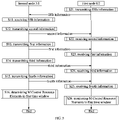
- Embodiment 1 illustrates a flowchart of first information and M Control Resource Elements according to one embodiment of the present application, as shown in FIG. 1 .
- each step represents a step, it should be particularly noted that the sequence order of each box herein does not imply a chronological order of steps marked respectively by these boxes.
- the first node in the present application receives first information in step 101, the first information being used to determine a target cell, the target cell being used to schedule a characteristic cell; the first node in the present application monitors M Control Resource Elements in a first time window in step 102, M being a positive integer greater than 1, any one of the M Control Resource Elements being occupied by a control channel candidate; herein, a sub-band to which any Control Resource Element of the M Control Resource Elements belongs in frequency domain belongs to a first sub-band set, the first sub-band set comprising a positive integer number of sub-band(s); a scheduling cell set comprises a positive integer number of serving cell(s), a serving cell to which any sub-band comprised in the first sub-band set belongs belongs to the scheduling cell set; a subcarrier spacing of a subcarrier comprised in any sub-band comprised in the first sub-band set is equal to a first subcarrier spacing; the first subcarrier spacing is used to determine a time length of the
- the first information is transmitted via an air interface.
- the first information is transmitted via a radio interface.
- the first information comprises all or part of a Higher Layer signaling.
- the first information comprises all or part of a physical layer signaling.
- the first information comprises all or part of a Radio Resource Control (RRC) signaling.
- RRC Radio Resource Control
- the first information comprises all or part of a Medium Access Control (MAC) layer signaling.
- MAC Medium Access Control
- the first information comprises all or part of a System Information Block (SIB).
- SIB System Information Block
- the first information is transmitted through a Downlink Shared Channel (DL-SCH).
- DL-SCH Downlink Shared Channel
- the first information is transmitted through a Physical Downlink Shared Channel (PDSCH).
- PDSCH Physical Downlink Shared Channel
- the first information is UE-Specific.
- the first information is Carrier Specific.
- the first information is configured per carrier.
- the first information is Serving Cell Specific.
- the first information is configured per serving cell.
- the first information comprises all or partial fields in a Downlink Control Information (DCI) signaling.
- DCI Downlink Control Information
- the first information comprises an Information Element (IE) "CrossCarrierSchedulingConfig" in an RRC signaling.
- IE Information Element
- the first information comprises an Information Element (IE) "ServingCellConfig" in an RRC signaling.
- IE Information Element
- the first information comprises an Information Element (IE) "CrossCarrierSchedulingConfig" in an RRC signaling used for configuring a Primary Cell (Pcell).
- IE Information Element
- Cell Primary Cell
- the first information comprises an Information Element (IE) "ServingCellConfig" in an RRC signaling used for configuring a Primary Cell (Pcell).
- IE Information Element
- Pcell Primary Cell
- the first information comprises a field "schedulingCellId” in an Information Element (IE) "CrossCarrierSchedulingConfig” in an RRC signaling.
- IE Information Element
- the first information comprises a field "schedulingCellId” in an Information Element (IE) "CrossCarrierSchedulingConfig” in an RRC signaling for configuring a Primary Cell (Pcell).
- IE Information Element
- Cell Primary Cell
- the first information comprises a CHOICE of "own” or “other” in a field “schedulingCellInfo” in an Information Element (IE) "CrossCarrierSchedulingConfig” in an RRC signaling.
- IE Information Element
- the phrase of "the first information being used to determine a target cell" comprises the meaning that the first information is used by the first node in the present application to determine the target cell.
- the phrase of "the first information being used to determine a target cell" comprises the meaning that the first information is used to explicitly indicate the target cell.
- the phrase of "the first information being used to determine a target cell" comprises the meaning that the first information is used to implicitly indicate the target cell.
- the phrase of "the first information being used to determine a target cell" comprises the meaning that the first information is used to indirectly indicate the target cell.
- the phrase of "the first information being used to determine a target cell” comprises the meaning that the first information is used to indicate a Serving Cell Index (ServCellIndex) of the target cell
- the phrase of "the first information being used to determine a target cell" comprises the meaning that the first information is used to indicate whether the target cell and the characteristic cell are the same.
- the phrase of "the first information being used to determine a target cell" comprises the meaning that the first information is used to indicate whether the target cell is the same as a serving cell to which frequency-domain resources occupied by a signal carrying the first information belong.
- the phrase of "the first information being used to determine a target cell" comprises the meaning that the first information is used to indicate whether the target cell and the characteristic cell are the same; when the target cell and the characteristic cell are different, the first information is also used to indicate a Serving Cell Index of the target cell.
- the phrase of "the first information being used to determine a target cell" comprises the meaning that the first information is used to indicate whether the target cell is the same as a serving cell to which frequency-domain resources occupied by a signal carrying the first information belong; when the target cell is different from the serving cell to which frequency-domain resources occupied by a signal carrying the first information belong, the first information is also used to indicate a Serving Cell Index of the target cell.
- a signal carrying the first information is transmitted on the characteristic cell.
- a signal carrying the first information is transmitted on a cell other than the characteristic cell.
- a serving cell scheduling another serving cell means that a Physical Downlink Control Channel (PDCCH) transmitted on a serving cell schedules a signal on another serving cell.
- PDCCH Physical Downlink Control Channel
- a serving cell scheduling another serving cell means that a Physical Downlink Control Channel (PDCCH) transmitted on a serving cell schedules another serving cell.
- PDCCH Physical Downlink Control Channel
- the target cell is a serving cell.
- the target cell corresponds to a Component Carrier (CC).
- CC Component Carrier
- the target cell is a serving cell in a Master Cell Group (MCG).
- MCG Master Cell Group
- the target cell is a serving cell in a Secondary Cell Group (SCG).
- SCG Secondary Cell Group
- the target cell is a serving cell corresponding to a Primary Component Carrier (PCC).
- PCC Primary Component Carrier
- the target cell is a Primary Cell (Pcell).
- Pcell Primary Cell
- the target cell is a Special Cell (Spcell).
- Spcell Special Cell
- the target cell is a serving cell corresponding to a Secondary Component Carrier (SCC).
- SCC Secondary Component Carrier
- the target cell is a Secondary Cell (Scell).
- Scell Secondary Cell
- the characteristic cell is a serving cell.
- the characteristic cell corresponds to a Component Carrier (CC).
- CC Component Carrier
- the characteristic cell is a serving cell in a Master Cell Group (MCG).
- MCG Master Cell Group
- the characteristic cell is a serving cell in a Secondary Cell Group (SCG).
- SCG Secondary Cell Group
- the characteristic cell is a serving cell corresponding to a Primary Component Carrier (PCC).
- PCC Primary Component Carrier
- the characteristic cell is a Primary Cell (Pcell).
- Pcell Primary Cell
- the characteristic cell is a Special Cell (Spcell).
- the characteristic cell is a Primary Cell (Pcell) in an MCG, or the characteristic cell is a Pcell in an SCG.
- Pcell Primary Cell
- the target cell and the characteristic cell are the same.
- the target cell and the characteristic cell are different.
- the characteristic cell and the target cell belong to a same Cell Group.
- the characteristic cell and the target cell belong to a same MCG.
- the characteristic cell and the target cell belong to a same SCG.
- the phrase of "the target cell being used to schedule a characteristic cell" comprises a meaning that a PDCCH transmitted on the target cell is used to schedule a signal transmitted on the characteristic cell.
- the phrase of "the target cell being used to schedule a characteristic cell” comprises a meaning that when the target cell and the characteristic cell are the same, a PDCCH transmitted on the target cell is used for self-scheduling a signal transmitted on the characteristic cell; when the target cell and the characteristic cell are different, a PDCCH transmitted on the target cell is used for cross-carrier scheduling a signal transmitted on the characteristic cell.
- the phrase of "the target cell being used to schedule a characteristic cell" comprises a meaning that the target cell is a Scheduling Cell for the characteristic cell.
- the phrase of "the target cell being used to schedule a characteristic cell" comprises a meaning that the characteristic cell is a Scheduled Cell for the target cell.
- the first time window is a slot.
- the first time window is a slot corresponding to the first subcarrier spacing.
- the first time window comprises a positive integer number of time-domain consecutive Orthogonal Frequency Division Multiplexing (OFDM) Symbols.
- OFDM Orthogonal Frequency Division Multiplexing
- the first time window comprises a positive integer number of time-domain consecutive Orthogonal Frequency Division Multiplexing (OFDM) Symbols corresponding to the first subcarrier spacing.
- OFDM Orthogonal Frequency Division Multiplexing
- the first time window is a span.
- the first time window is a span corresponding to the first subcarrier spacing.
- the first time window is a time interval with a minimum time interval length between earliest OFDM symbols in two PDCCH Occasions.
- time-domain resources occupied by any Control Resource Element among the M Control Resource Elements belong to the first time window.
- time-domain resources occupied by any Control Resource Element among the M Control Resource Elements are a part of the first time window.
- any Control Resource Element among the M Control Resource Elements is occupied by at least one control channel candidate (i.e., PDCCH Candidate).
- any of M1 control channel candidate(s) occupies one or more of the M Control Resource Elements, M1 being a positive integer.
- the M Control Resource Elements only comprise Control Resource Element(s) occupied by at least one control channel candidate (i.e., PDCCH Candidate).
- each control channel candidate occupying at least one of the M Control Resource Elements is a Physical Downlink Control Channel (PDCCH) Candidate.
- PDCH Physical Downlink Control Channel
- each control channel candidate occupying at least one of the M Control Resource Elements is a Physical Downlink Control Channel (PDCCH) Candidate using a DCI Format.
- PDCCH Physical Downlink Control Channel
- each control channel candidate occupying at least one of the M Control Resource Elements is a Physical Downlink Control Channel (PDCCH) Candidate using one or more given DCI Formats.
- PDCCH Physical Downlink Control Channel
- each control channel candidate occupying at least one of the M Control Resource Elements is a time-frequency resource set that may carry DCI in a specific Format.
- each control channel candidate occupying at least one of the M Control Resource Elements is a radio resource set that may carry DCI in a specific Format, the radio resource set comprising at least time-frequency resources among time-frequency resources, code-domain resources or spatial resources.
- each control channel candidate occupying at least one of the M Control Resource Elements is a Monitored PDCCH Candidate.
- monitoring of the M Control Resource Elements is implemented by means of Channel Estimation of the M Control Resource Elements.
- monitoring of the M Control Resource Elements is implemented by means of Channel Equalization of the M Control Resource Elements.
- monitoring of the M Control Resource Elements is implemented by means of whether an independent Channel Estimation is required for each of the M Control Resource Elements.
- monitoring of the M Control Resource Elements is implemented by means of monitoring of control channel candidates (i.e., PDCCH Candidates) occupying the M Control Resource Elements.
- control channel candidates i.e., PDCCH Candidates
- monitoring of the M Control Resource Elements is implemented by means of monitoring of all control channel candidates (i.e., PDCCH Candidates) occupying one or more of the M Control Resource Elements.
- monitoring of the M Control Resource Elements is implemented by means of decoding control channel candidates (i.e., PDCCH Candidates) occupying the M Control Resource Elements.
- decoding control channel candidates i.e., PDCCH Candidates
- the M Control Resource Elements are occupied by M1 control channel candidate(s), M1 being a positive integer; monitoring of the M Control Resource Elements is implemented by means of decoding the M1 control channel candidate(s).
- any of M1 control channel candidate(s) occupies one or more of the M Control Resource Elements, M1 being a positive integer; monitoring of the M Control Resource Elements is implemented by means of decoding the M1 control channel candidate(s).
- monitoring of the M Control Resource Elements is implemented by means of blind decoding control channel candidates (i.e., PDCCH Candidates) occupying the M Control Resource Elements.
- blind decoding control channel candidates i.e., PDCCH Candidates
- monitoring of the M Control Resource Elements is implemented by means of decoding and CRC of control channel candidates (i.e., PDCCH Candidates) occupying the M Control Resource Elements.
- control channel candidates i.e., PDCCH Candidates
- monitoring of the M Control Resource Elements is implemented by means of decoding control channel candidates (i.e., PDCCH Candidates) occupying the M Control Resource Elements based on monitored one or more Downlink Control Information (DCI) Format(s).
- decoding control channel candidates i.e., PDCCH Candidates
- DCI Downlink Control Information
- two independent Channel Estimations are required for any two Control Resource Elements among the M Control Resource Elements.
- Channel Estimations for any two Control Resource Elements among the M Control Resource Elements cannot be mutually reused.
- two independent Channel Equalizations are required for any two Control Resource Elements among the M Control Resource Elements.
- any Control Resource Element among the M Control Resource Elements is a Control Channel Element (CCE).
- CCE Control Channel Element
- any Control Resource Element among the M Control Resource Elements is a Non-Overlapped Control Channel Element (Non-Overlapped CCE).
- any two Control Resource Elements among the M Control Resource Elements are Non-Overlapped.
- any two Control Resource Elements among the M Control Resource Elements comprise equal numbers of time-frequency resource units.
- any two Control Resource Elements among the M Control Resource Elements comprise equal numbers of Resource Elements (REs).
- any Control Resource Element among the M Control Resource Elements comprises 6 Resource Element Groups (REGs).
- REGs Resource Element Groups
- any Control Resource Element among the M Control Resource Elements comprises 6 Resource Element Groups (REGs), of which each REG comprises 9 Resource Elements (REs) used for transmitting data modulation symbols and 3 REs used for transmitting Reference Signals (RS).
- REGs Resource Element Groups
- RS Reference Signals
- time-frequency resources occupied by any two Control Resource Elements among the M Control Resource Elements are orthogonal.
- any two Control Resource Elements among the M Control Resource Elements occupy different time-frequency resources.
- the first sub-band set only comprises one sub-band.
- the first sub-band set comprises more than one sub-band.
- any sub-band comprised in the first sub-band set is a Bandwidth Part (BWP).
- BWP Bandwidth Part
- any sub-band comprised in the first sub-band set is an Active Downlink Bandwidth Part (Active DL BWP).
- Active DL BWP Active Downlink Bandwidth Part
- any sub-band comprised in the first sub-band set is contiguous frequency-domain resources having a same Numerology in a Carrier Bandwidth.
- any sub-band comprised in the first sub-band set is frequency-domain contiguous subcarriers having a same Numerology in a Carrier Bandwidth.
- any sub-band comprised in the first sub-band set is a subset comprising consecutive Common Resource Blocks (CRBs) for a given Numerology on a given carrier.
- CRBs Common Resource Blocks
- a serving cell to which any sub-band comprised in the first sub-band set belongs is a serving cell corresponding to a carrier to which any sub-band comprised in the first sub-band set belongs.
- any two sub-bands comprised in the first sub-band set respectively belong to two different carriers.
- any two sub-bands comprised in the first sub-band set respectively belong to two different serving cells.
- the first sub-band set comprises multiple sub-bands
- the first sub-band set comprises multiple sub-bands
- the first sub-band set comprises multiple sub-bands
- frequency-domain resources occupied by any Control Resource Element among the M Control Resource Elements belong to a sub-band.
- any two Control Resource Elements among the M Control Resource Elements belong to a same sub-band comprised in the first sub-band set in frequency domain.
- the first sub-band set comprises a sub-band which does not comprise any of the M Control Resource Elements in frequency domain.
- each sub-band comprised in the first sub-band set comprises at least one of the M Control Resource Elements in frequency domain.
- any sub-band comprised in the first sub-band set is configurable.
- any sub-band comprised in the first sub-band set is configured by an Information Element (IE) "BWP-Downlink".
- IE Information Element
- any sub-band comprised in the first sub-band set is a BWP indicated by an Information Element (IE) "downlinkBWP-ToAddModList”.
- IE Information Element
- time-frequency resources occupied by each Control Resource Element among the M Control Resource Elements are configured by a signaling "SearchSpace” and a signaling "ControlResourceSet” .
- the scheduling cell set only comprises one serving cell.
- the scheduling cell set comprises more than one serving cell.
- any serving cell comprised in the scheduling cell set is an activated cell.
- the scheduling cell set comprises a serving cell which is a deactivated cell.
- any serving cell comprised in the scheduling cell set comprises an active BWP.
- the scheduling cell set comprises a serving cell which comprises a non-active BWP.
- a number of serving cells comprised in the scheduling cell set and a number of sub-bands comprised in the first sub-band set are equal.
- a number of serving cells comprised in the scheduling cell set and a number of sub-bands comprised in the first sub-band set are unequal.
- the phrase that "a serving cell to which any sub-band comprised in the first sub-band set belongs belongs to the scheduling cell set" comprises a meaning that the scheduling cell set comprises a serving cell to which any sub-band comprised in the first sub-band set belongs.
- the phrase that "a serving cell to which any sub-band comprised in the first sub-band set belongs belongs to the scheduling cell set" comprises a meaning that the scheduling cell set only comprises serving cell(s) to which each sub-band comprised in the first sub-band set belongs.
- the scheduling cell set also comprises a serving cell other than any serving cell to which a sub-band comprised in the first sub-band set belongs.
- the phrase that "a serving cell to which any sub-band comprised in the first sub-band set belongs belongs to the scheduling cell set" comprises a meaning that the first sub-band set comprises W sub-bands, the scheduling cell set comprises W serving cells, the W serving cells respectively comprising the W sub-bands, where W is a positive integer.
- the phrase that "a serving cell to which any sub-band comprised in the first sub-band set belongs belongs to the scheduling cell set" comprises a meaning that the first sub-band set comprises W sub-bands, the scheduling cell set comprises W serving cells, the W sub-bands respectively being BWPs of the W serving cells, where W is a positive integer.
- the phrase that "a serving cell to which any sub-band comprised in the first sub-band set belongs belongs to the scheduling cell set" comprises a meaning that the first sub-band set comprises W sub-bands, the scheduling cell set comprises W serving cells, the W sub-bands respectively belonging to the W serving cells, where W is a positive integer.
- the phrase that "a serving cell to which any sub-band comprised in the first sub-band set belongs belongs to the scheduling cell set" comprises a meaning that a serving cell corresponding to a carrier to which any sub-band comprised in the first sub-band set belongs is comprised in the scheduling cell set.
- any two sub-bands in the first sub-band set comprise subcarriers with an equal Subcarrier Spacing (SCS).
- SCS Subcarrier Spacing
- a subcarrier spacing of any subcarrier comprised in any sub-band in the first sub-band set is equal to the first Subcarrier Spacing (SCS).
- SCS Subcarrier Spacing
- the first sub-band set comprises multiple subcarriers, any two subcarriers comprised in the first sub-band set have equal Subcarrier Spacings (SCS).
- SCS Subcarrier Spacings
- any sub-band comprised in the first sub-band set comprises a positive integer number of subcarrier(s).
- any sub-band comprised in the first sub-band set comprises a positive integral multiple of 12 subcarriers.
- the first subcarrier spacing is equal to one of 15kHz, 30kHz, 60kHz, 120kHz or 240kHz.
- the phrase that "the first subcarrier spacing is used to determine a time length of the first time window" comprises the meaning that the first subcarrier spacing is used by the first node in the present application to determine a time length of the first time window.
- the phrase that "the first subcarrier spacing is used to determine a time length of the first time window" comprises the meaning that the first time window is a slot, the first subcarrier spacing is used to determine a number of slots comprised in a subframe, a time length of the first time window being equal to a ratio of a length of a subframe to a number of slots comprised in a subframe.
- the phrase that "the first subcarrier spacing is used to determine a time length of the first time window" comprises the meaning that the first subcarrier spacing is used to determine a time length of each OFDM symbol comprised in the first time window.
- the phrase that "the first subcarrier spacing is used to determine a time length of the first time window" comprises the meaning that a Configuration Index of the first subcarrier spacing is used to determine a time length of the first time window.
- the phrase that "the first subcarrier spacing is used to determine a time length of the first time window" comprises the meaning that the first subcarrier spacing is used to determine a time length of the first time window according to a corresponding relation.
- the phrase that "the first subcarrier spacing is used to determine a time length of the first time window" comprises the meaning that the first subcarrier spacing is used to determine a time length of the first time window according to a table-based corresponding relation.
- the first threshold can be equal to 0.
- the first threshold is greater than 0.
- the first node when the first threshold is equal to 0, the first node does not monitor any Control Resource Element in the first time window.
- M is equal to the first threshold.
- M is less than the first threshold.
- the phrase that "at least one of whether the scheduling cell set comprises the target cell or whether the characteristic cell and the target cell are the same is used to determine the first threshold" means that whether the scheduling cell set comprises the target cell and whether the characteristic cell is the same as the target cell are used together to determine the first threshold.
- the phrase that "at least one of whether the scheduling cell set comprises the target cell or whether the characteristic cell and the target cell are the same is used to determine the first threshold" means that whether the scheduling cell set comprises the target cell is used to determine the first threshold.
- the phrase that "at least one of whether the scheduling cell set comprises the target cell or whether the characteristic cell and the target cell are the same is used to determine the first threshold" means that whether the characteristic cell is the same as the target cell is used to determine the first threshold.
- the phrase that "at least one of whether the scheduling cell set comprises the target cell or whether the characteristic cell and the target cell are the same is used to determine the first threshold" means that at least one of whether the scheduling cell set comprises the target cell or whether the characteristic cell is the same as the target cell is used by the first node in the present application to determine the first threshold.
- the phrase that "at least one of whether the scheduling cell set comprises the target cell or whether the characteristic cell and the target cell are the same is used to determine the first threshold" means that at least one of whether the scheduling cell set comprises the target cell or whether the characteristic cell is the same as the target cell is used to determine the first threshold according to conditions of decision.
- the phrase that "at least one of whether the scheduling cell set comprises the target cell or whether the characteristic cell and the target cell are the same is used to determine the first threshold" means that at least one of whether the scheduling cell set comprises the target cell or whether the characteristic cell is the same as the target cell is used to determine a calculation formula for the first threshold.
- the detected control channel candidate is used for scheduling the characteristic cell.
- the detected control channel candidate is used for scheduling a cell other than the characteristic cell.
- the phrase that "whether the scheduling cell set comprises the target cell" means that whether the scheduling cell set is used to schedule the characteristic cell.
- the phrase that "whether the scheduling cell set comprises the target cell" means that whether the scheduling cell set comprises a serving cell used to schedule the characteristic cell.
- the phrase that "whether the scheduling cell set comprises the target cell” means that whether the scheduling cell set is used to cross-carrier schedule the characteristic cell.
- the phrase that "whether the characteristic cell and the target cell are the same" means that whether the characteristic cell and the target cell are a same serving cell.
- the phrase that "whether the characteristic cell and the target cell are the same" means that whether the first node supports cross-carrier scheduling a Primary Cell (PCell).
- PCell Primary Cell
- the phrase that "whether the characteristic cell and the target cell are the same" means that whether the first node supports cross-carrier scheduling a Primary SCG Cell (PSCell) in an SCG.
- PSCell Primary SCG Cell
- the phrase that "whether the characteristic cell and the target cell are the same" means that whether the first node supports cross-carrier scheduling a Special Cell (Spcell).
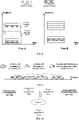
- Embodiment 2 illustrates a schematic diagram of a network architecture according to the present application, as shown in FIG. 2.
- FIG. 2 is a diagram illustrating a network architecture 200 of 5G NR, Long-Term Evolution (LTE) and Long-Term Evolution Advanced (LTE-A) systems.
- the 5G NR or LTE network architecture 200 may be called a 5G System/ Evolved Packet System (5GS/EPS) 200 or other suitable terminology.
- the 5GS/EPS 200 may comprise one or more UEs 201, an NG-RAN 202, a 5G-Core Network/Evolved Packet Core (5GC/EPC) 210, a Home Subscriber Server/ Unified Data Management(HSS/UDM) 220 and an Internet Service 230.
- 5GS/EPS 200 may comprise one or more UEs 201, an NG-RAN 202, a 5G-Core Network/Evolved Packet Core (5GC/EPC) 210, a Home Subscriber Server/ Unified
- the 5GS/EPS 200 may be interconnected with other access networks. For simple description, the entities/interfaces are not shown. As shown in FIG. 2 , the 5GS/EPS 200 provides packet switching services. Those skilled in the art will find it easy to understand that various concepts presented throughout the present application can be extended to networks providing circuit switching services or other cellular networks.
- the NG-RAN comprises an NR/evolved node B (gNB/eNB) 203 and other gNBs (eNBs) 204.
- the gNB(eNB) 203 provides UE 201 oriented user plane and control plane terminations.
- the gNB(eNB) 203 may be connected to other gNBs(eNBs) 204 via an Xn/X2 interface (for example, backhaul).
- the gNB(eNB) 203 may be called a base station, a base transceiver station, a radio base station, a radio transceiver, a transceiver function, a Base Service Set (BSS), an Extended Service Set (ESS), a Transmitter Receiver Point (TRP) or some other applicable terms.
- the gNB(eNB) 203 provides an access point of the 5GC/EPC 210 for the UE 201.
- Examples of UE 201 include cellular phones, smart phones, Session Initiation Protocol (SIP) phones, laptop computers, Personal Digital Assistant (PDA), Satellite Radios, non-terrestrial base station communications, satellite mobile communications, Global Positioning Systems (GPSs), multimedia devices, video devices, digital audio players (for example, MP3 players), cameras, games consoles, unmanned aerial vehicles, air vehicles, narrow-band physical network equipment, machine-type communication equipment, land vehicles, automobiles, wearable equipment, or any other devices having similar functions.
- SIP Session Initiation Protocol
- PDA Personal Digital Assistant
- Satellite Radios non-terrestrial base station communications
- satellite mobile communications Global Positioning Systems
- GPSs Global Positioning Systems
- multimedia devices video devices
- digital audio players for example, MP3 players
- cameras games consoles, unmanned aerial vehicles, air vehicles, narrow-band physical network equipment, machine-type communication equipment, land vehicles, automobiles, wearable equipment, or any other devices having similar functions.
- Those skilled in the art also can call the UE 201 a mobile station, a subscriber station, a mobile unit, a subscriber unit, a wireless unit, a remote unit, a mobile device, a wireless device, a radio communication device, a remote device, a mobile subscriber station, an access terminal, a mobile terminal, a wireless terminal, a remote terminal, a handset, a user proxy, a mobile client, a client or some other appropriate terms.
- the gNB(eNB) 203 is connected to the 5GC/EPC210 via an S1/NG interface.
- the 5GC/EPC 210 comprises a Mobility Management Entity (MME)/ Authentication Management Field (AMF)/ Session Management Function (SMF) 211, other MMEs/AMFs/SMFs 214, a Service Gateway (S-GW)/User Plane Function (UPF) 212 and a Packet Date Network Gateway (P-GW)/UPF 213.
- MME Mobility Management Entity
- AMF Authentication Management Field
- SMF Service Gateway
- UPF User Plane Function
- P-GW Packet Date Network Gateway
- the MME/AMF/SMF 211 is a control node for processing a signaling between the UE 201 and the 5GC/EPC 210.
- the MME/AMF/SMF 211 provides bearer and connection management. All user Internet Protocol (IP) packets are transmitted through the S-GW/UPF 212.
- IP Internet Protocol
- the S-GW/UPF 212 is connected to the P-GW/UPF 213.
- the P-GW 213 provides UE IP address allocation and other functions.
- the P-GW/UPF 213 is connected to the Internet Service 230.
- the Internet Service 230 comprises IP services corresponding to operators, specifically including Internet, Intranet, IP Multimedia Subsystem (IMS) and Packet Switching Streaming (PSS) services.
- IMS IP Multimedia Subsystem
- PSS Packet Switching Streaming
- the UE 201 corresponds to the first node in the present application.
- the UE 201 supports multi-carrier transmission.
- the UE 201 supports transmissions in which an SCC cross-carrier schedules a PCC.
- the gNB(eNB)203 corresponds to the second node in the present application.
- the gNB(eNB)203 supports multi-carrier transmission.
- the gNB(eNB)203 supports transmissions in which an SCC cross-carrier schedules a PCC.
- Embodiment 3 illustrates a schematic diagram of a radio protocol architecture of a user plane and a control plane according to the present application, as shown in FIG. 3.
- FIG. 3 is a schematic diagram illustrating an embodiment of a radio protocol architecture of a user plane 350 and a control plane 300.
- the radio protocol architecture for a control plane 300 between a first node (UE, or gNB) and a second node (gNB, or UE) is represented by three layers, i.e., layer 1 , layer 2 and layer 3.
- the layer 1 (L1) is the lowest layer which performs signal processing functions of various PHY layers.
- the L1 is called PHY 301 in the present application.
- the layer 2 (L2) 305 is above the PHY 301, and is in charge of the link between a first node and a second node via the PHY 301.
- the L2 305 comprises a Medium Access Control (MAC) sublayer 302, a Radio Link Control (RLC) sublayer 303 and a Packet Data Convergence Protocol (PDCP) sublayer 304. All these sublayers terminate at the second nodes.
- the PDCP sublayer 304 provides multiplexing among variable radio bearers and logical channels.
- the PDCP sublayer 304 provides security by encrypting packets and also support for inter-cell handover of the first node between second nodes.
- the RLC sublayer 303 provides segmentation and reassembling of a higher-layer packet, retransmission of a lost packet, and reordering of a packet so as to compensate the disordered receiving caused by Hybrid Automatic Repeat reQuest (HARQ).
- the MAC sublayer 302 provides multiplexing between a logical channel and a transport channel.
- the MAC sublayer 302 is also responsible for allocating between first nodes various radio resources (i.e., resource block) in a cell.
- the MAC sublayer 302 is also in charge of HARQ operation.
- the RRC sublayer 306 in the L3 layer is responsible for acquiring radio resources (i.e., radio bearer) and configuring the lower layer using an RRC signaling between the second node and the first node.
- the radio protocol architecture in the user plane 350 comprises the L1 layer and the L2 layer.
- the radio protocol architecture used for the first node and the second node in a PHY layer 351, a PDCP sublayer 354 of the L2 layer 355, an RLC sublayer 353 of the L2 layer 355 and a MAC sublayer 352 of the L2 layer 355 is almost the same as the radio protocol architecture used for corresponding layers and sublayers in the control plane 300, but the PDCP sublayer 354 also provides header compression used for higher-layer packet to reduce radio transmission overhead.
- the L2 layer 355 in the user plane 350 also comprises a Service Data Adaptation Protocol (SDAP) sublayer 356, which is in charge of the mapping between QoS streams and a Data Radio Bearer (DRB), so as to support diversified traffics.
- SDAP Service Data Adaptation Protocol
- DRB Data Radio Bearer
- the first node may comprise several higher layers above the L2 355, such as a network layer (i.e., IP layer) terminated at a P-GW 213 of the network side and an application layer terminated at the other side of the connection (i.e., a peer UE, a server, etc.).
- a network layer i.e., IP layer
- an application layer terminated at the other side of the connection (i.e., a peer UE, a server, etc.).
- the radio protocol architecture in FIG. 3 is applicable to the first node in the present application.
- the radio protocol architecture in FIG. 3 is applicable to the second node in the present application.
- the first information in the present application is generated by the RRC306.
- the first information in the present application is generate by the MAC302 or the MAC352.
- the first information in the present application is generated by the PHY301 or the PHY351.
- the second information in the present application is generated by the RRC306.
- the second information in the present application is generate by the MAC302 or the MAC352.
- the second information in the present application is generated by the PHY301 or the PHY351.
- the third information in the present application is generated by the RRC306.
- the third information in the present application is generate by the MAC302 or the MAC352.
- the third information in the present application is generated by the PHY301 or the PHY351.
- the fourth information in the present application is generated by the RRC306.
- the fourth information in the present application is generate by the MAC302 or the MAC352.
- the fourth information in the present application is generated by the PHY301 or the PHY351.
- the fifth information in the present application is generated by the RRC306.
- the fifth information in the present application is generate by the MAC302 or the MAC352.
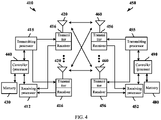
- Embodiment 4 illustrates a schematic diagram of a first node and a second node according to the present application, as shown in FIG. 4 .
- the first node (450) can comprise a controller/processor 490, a data source/buffer 480, a receiving processor 452, a transmitter/receiver 456 and a transmitting processor 455, where the transmitter/receiver 456 comprises an antenna 460.
- the second node (410) can comprise a controller/processor 440, a data source/buffer 430, a receiving processor 412, a transmitter/receiver 416 and a transmitting processor 415, where the transmitter/receiver 416 comprises an antenna 420.
- a higher-layer packet for instance higher-layer information contained in first information, second information, third information, and fourth information in the present application is provided to the controller/processor 440.
- the controller/processor 440 provides functions of the L2 layer and above.
- the controller/processor 440 provides header compression, encryption, packet segmentation and reordering, multiplexing between a logical channel and a transport channel and radio resource allocation of the first node 450 based on various priorities.
- the controller/processor 440 is responsible for HARQ operation, retransmission of a lost packet and a signaling to the first node device 450, for example, all of the first information, second information, third information and fourth information in the present application are generated in the controller/processor 440.
- the transmitting processor 415 performs various signal processing functions used for the L1 (that is, PHY), including coding, interleaving, scrambling, modulation, power control/allocation, precoding and physical layer control signaling generation, for example, the generation of physical layer signals of the first information, second information, third information, and fourth information in the present application are completed in the transmitting processor 415.
- L1 that is, PHY
- precoding and physical layer control signaling generation for example, the generation of physical layer signals of the first information, second information, third information, and fourth information in the present application are completed in the transmitting processor 415.
- the generation of the transmitted control signaling is done in the transmitting processor 415.
- each receiver 456 receives a radio frequency signal via a corresponding antenna 460, resumes baseband information modulated onto the radio frequency carriers and provides the baseband information to the receiving processor 452.
- the receiving processor 452 performs various signal reception processing functions of the L1 layer.
- the signal reception processing functions include receiving physical layer signals of the first information, second information, third information and fourth information in the present application and monitoring M Control Resource Elements in the present application, and demodulating multicarrier symbols in multicarrier symbol flows based on each modulation scheme (e.g., BPSK, QPSK), de-scrambling, decoding and de-interleaving to recover data or control signal transmitted by the second node 410 on a physical channel, and then providing the data and control signal to the controller/processor 490.
- the controller/processor 490 is in charge of L2 and layers above, and interprets the first information, second information, third information, and fourth information in the present application.
- the controller/processor can be associated with a memory 480 that stores program code and data.
- the memory 480 can be called a computer readable medium.
- the data source/buffer 480 can be used to provide higher-layer data to the controller/processor 490.
- the data source/buffer 480 represents the L2 and above protocol layers.
- the controller/processor 490 provides header compression, encryption, packet segmentation and reordering as well as multiplexing between a logical channel and a transport channel based on radio resources allocation of the second node 410, thereby implementing the L2 layer protocols used for the user plane and the control plane.
- the controller/processor 490 is responsible for HARQ operation, retransmission of a lost packet and a signaling to the second node 410, besides the fifth information in the present application is generated in the controller/processor 490.
- the transmitting processor 455 performs various signal transmitting processing functions used for the L1 layer (i.e., PHY), e.g., a physical layer signal carrying fifth information is generated in the transmitting processor 455.
- the signal transmitting processing functions include sequence generation (for signals generated by a sequence), coding and interleaving to ensure a Forward Error Correction (FEC) of the UE 450 as well as modulation of baseband signals (for signals generated by bit blocks) based on each modulation scheme (e.g., BPSK, QPSK), dividing sequence-generated signals and modulation symbols into parallel streams and mapping each stream onto a corresponding multicarrier subcarrier and/or multicarrier symbol, which are then mapped to the antenna 460 by the transmitting processor 455 via the transmitter 456 and transmitted in the form of radio frequency signals.
- FEC Forward Error Correction
- the receiver 416 receives a radio frequency signal via a corresponding antenna 420, each resumes baseband information modulated onto the radio frequency carriers and provides the baseband information to the receiving processor 412.
- the receiving processor 412 performs various signal receiving processing functions used for the L1 layer (i.e., PHY), which include receiving a physical layer signal carrying the fifth information in the present application, and also acquiring multicarrier symbol flows and demodulating multicarrier symbols within relative to sequence decorrelation and based on each modulation scheme (e.g., BPSK, QPSK), de-scrambling and de-interleaving to recover data or control signal originally transmitted by the first node 450 on a physical channel.
- the data and/or control signal are provided to the controller/processor 440.
- the controller/processor 440 provides functions of the L2 layer, including reading the fifth information in the present application.
- the controller/processor can be associated with a buffer 430 that stores program code and data, the buffer 430 may be called a computer readable medium
- the first node 450 comprises at least one processor and at least one memory.
- the at least one memory comprises computer program codes; the at least one memory and the computer program codes are configured to be used in collaboration with the at least one processor.
- the first node 450 at least receives first information, the first information being used to determine a target cell, the target cell being used to schedule a characteristic cell; and monitors M Control Resource Elements in a first time window, M being a positive integer greater than 1, any one of the M Control Resource Elements being occupied by a control channel candidate; herein, a sub-band to which any Control Resource Element of the M Control Resource Elements belongs in frequency domain belongs to a first sub-band set, the first sub-band set comprising a positive integer number of sub-band(s); a scheduling cell set comprises a positive integer number of serving cell(s), a serving cell to which any sub-band comprised in the first sub-band set belongs belongs to the scheduling cell set; a subcarrier spacing of a subcarrier comprised in any sub-band
- the first node 450 comprises a memory that stores computer readable instruction program, the computer readable instruction program generates an action when executed by at least one processor, which includes: receiving first information, the first information being used to determine a target cell, the target cell being used to schedule a characteristic cell; and monitoring M Control Resource Elements in a first time window, M being a positive integer greater than 1, any one of the M Control Resource Elements being occupied by a control channel candidate; herein, a sub-band to which any Control Resource Element of the M Control Resource Elements belongs in frequency domain belongs to a first sub-band set, the first sub-band set comprising a positive integer number of sub-band(s); a scheduling cell set comprises a positive integer number of serving cell(s), a serving cell to which any sub-band comprised in the first sub-band set belongs belongs to the scheduling cell set; a subcarrier spacing of a subcarrier comprised in any sub-band comprised in the first sub-band set is equal to a first subcarrier spacing; the first subcarrier spacing
- the second node 410 comprises at least one processor and at least one memory.
- the at least one memory comprises computer program codes; the at least one memory and the computer program codes are configured to be used in collaboration with the at least one processor.
- the second node 410 at least transmits first information, the first information being used to determine a target cell, the target cell being used to schedule a characteristic cell; and determines M Control Resource Elements in a first time window, M being a positive integer greater than 1, any one of the M Control Resource Elements being occupied by a control channel candidate; herein, a sub-band to which any Control Resource Element of the M Control Resource Elements belongs in frequency domain belongs to a first sub-band set, the first sub-band set comprising a positive integer number of sub-band(s); a scheduling cell set comprises a positive integer number of serving cell(s), a serving cell to which any sub-band comprised in the first sub-band set belongs belongs to the scheduling cell set; a subcarrier spacing of a subcarrier comprised in any sub-band
- the second node 410 comprises a memory that stores computer readable instruction program, the computer readable instruction program generates an action when executed by at least one processor, which includes: transmitting first information, the first information being used to determine a target cell, the target cell being used to schedule a characteristic cell; and determining M Control Resource Elements in a first time window, M being a positive integer greater than 1, any one of the M Control Resource Elements being occupied by a control channel candidate; herein, a sub-band to which any Control Resource Element of the M Control Resource Elements belongs in frequency domain belongs to a first sub-band set, the first sub-band set comprising a positive integer number of sub-band(s); a scheduling cell set comprises a positive integer number of serving cell(s), a serving cell to which any sub-band comprised in the first sub-band set belongs belongs to the scheduling cell set; a subcarrier spacing of a subcarrier comprised in any sub-band comprised in the first sub-band set is equal to a first subcarrier spacing; the
- the first node 450 is a UE.
- the first node 450 is a UE supporting multi-carrier transmissions.
- the first node 450 is a UE supporting an SCC in cross-carrier scheduling a PCC.
- the second node 410 is a base station (gNB/eNB).
- the second node 410 is a base station supporting multi-carrier transmissions.
- the second node 410 is a base station supporting an SCC in cross-carrier scheduling a PCC.
- the receiver 456 (comprising the antenna 460), the receiving processor 452 and the controller/processor 490 are used for receiving the first information in the present application.
- the receiver 456 (comprising the antenna 460) and the receiving processor 452 are used for monitoring the M Control Resource Elements in the present application.
- the receiver 456 (comprising the antenna 460), the receiving processor 452 and the controller/processor 490 are used for receiving the second information in the present application.
- the receiver 456 (comprising the antenna 460), the receiving processor 452 and the controller/processor 490 are used for receiving the third information in the present application.
- the receiver 456 (comprising the antenna 460), the receiving processor 452 and the controller/processor 490 are used for receiving the fourth information in the present application.
- the transmitter 456 (comprising the antenna 460), the transmitting processor 455 and the controller/processor 490 are used for transmitting the fifth information in the present application.
- the transmitter 416 (comprising the antenna 420), the transmitting processor 415 and the controller/processor 440 are used for transmitting the first information in the present application.
- the transmitter 416 (comprising the antenna 420) and the transmitting processor 415 are used for determining the M Control Resource Elements in the present application.
- the transmitter 416 (comprising the antenna 420), the transmitting processor 415 and the controller/processor 440 are used for transmitting the second information in the present application.
- the transmitter 416 (comprising the antenna 420), the transmitting processor 415 and the controller/processor 440 are used for transmitting the third information in the present application.
- the transmitter 416 (comprising the antenna 420), the transmitting processor 415 and the controller/processor 440 are used for transmitting the fourth information in the present application.
- the receiver 416 (comprising the antenna 420), the receiving processor 412 and the controller/processor 440 are used for receiving the fifth information in the present application.
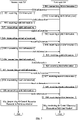
- Embodiment 5 illustrates a flowchart of radio signal transmission according to one embodiment of the present application, as shown in FIG. 5 .
- a second node N1 is a maintenance base station for a serving cell of a first node U2. It should be particularly noted that the sequence illustrated herein does not set any limit to the signal transmission order or implementation order in the present application.
- the second node N1 receives fifth information in step S11, transmits second information in step S12, and transmits first information in step S13, transmits third information in step S14, transmits fourth information in step S15, and determines M Control Resource Elements in a first time window in step S16.
- the first node U2 transmits fifth information in step S21, receives second information in step S22, and receives first information in step S23, receives third information in step S24, receives fourth information in step S25, and monitors M Control Resource Elements in a first time window in step S26.
- the first information is used to determine a target cell, the target cell being used to schedule a characteristic cell; M being a positive integer greater than 1, any one of the M Control Resource Elements being occupied by a control channel candidate; a sub-band to which any Control Resource Element of the M Control Resource Elements belongs in frequency domain belongs to a first sub-band set, the first sub-band set comprising a positive integer number of sub-band(s); a scheduling cell set comprises a positive integer number of serving cell(s), a serving cell to which any sub-band comprised in the first sub-band set belongs belongs to the scheduling cell set; a subcarrier spacing of a subcarrier comprised in any sub-band comprised in the first sub-band set is equal to a first subcarrier spacing; the first subcarrier spacing is used to determine a time length of the first time window; M is no greater than a first threshold, at least one of whether the scheduling cell set comprises the target cell or whether the characteristic cell and the target cell are the same is used to determine the first
- the second information is transmitted via an air interface.
- the second information is transmitted via a radio interface.
- the second information comprises all or part of a Higher Layer signaling.
- the second information comprises all or part of a physical layer signaling.
- the second information comprises all or part of a Radio Resource Control (RRC) signaling.
- RRC Radio Resource Control
- the second information comprises all or part of a Medium Access Control (MAC) layer signaling.
- MAC Medium Access Control
- the second information comprises all or part of a System Information Block (SIB).
- SIB System Information Block
- the second information is transmitted through a Downlink Shared Channel (DL-SCH).
- DL-SCH Downlink Shared Channel
- the second information is transmitted through a Physical Downlink Shared Channel (PDSCH).
- PDSCH Physical Downlink Shared Channel
- the second information is Cell-Specific.
- the second information is UE-Specific.
- the second information is configured per serving cell.
- the second information comprises all or partial fields in a Downlink Control Information (DCI) signaling.
- DCI Downlink Control Information
- the second information and the first information are carried by two different RRC signalings.
- the second information and the first information are carried by two different IEs in a same RRC signaling.
- the second information and the first information are carried by two different fields in a same IE in a same RRC signaling.
- the second information belongs to an Information Element (IE) "CellGroupConfig" in an RRC signaling.
- IE Information Element
- the second information belongs to a field "sCellToAddModList” in an Information Element (IE) "CellGroupConfig" in an RRC signaling.
- IE Information Element
- the second information belongs to a field "sCellToReleaseList” in an Information Element (IE) "CellGroupConfig" in an RRC signaling.
- IE Information Element
- the phrase that "the second information is used to determine a configured cell group" comprises the meaning that the second information is used by the first node in the present application to determine the configured cell group.
- the phrase that "the second information is used to determine a configured cell group" comprises the meaning that the second information is used to explicitly indicate the configured cell group.
- the phrase that "the second information is used to determine a configured cell group" comprises the meaning that the second information is used to implicitly indicate the configured cell group.
- the phrase that "the second information is used to determine a configured cell group" comprises the meaning that the second information is used to indirectly indicate the configured cell group.
- the third information is transmitted via an air interface.
- the third information is transmitted via a radio interface.
- the third information comprises all or part of a Higher Layer signaling.
- the third information comprises all or part of a physical layer signaling.
- the third information comprises all or part of a Radio Resource Control (RRC) signaling.
- RRC Radio Resource Control
- the third information comprises all or part of a Medium Access Control (MAC) layer signaling.
- MAC Medium Access Control
- the third information comprises all or part of a System Information Block (SIB).
- SIB System Information Block
- the third information is transmitted through a Downlink Shared Channel (DL-SCH).
- DL-SCH Downlink Shared Channel
- the third information is transmitted through a Physical Downlink Shared Channel (PDSCH).
- PDSCH Physical Downlink Shared Channel
- the third information is Cell-Specific.
- the third information is UE-Specific.
- the third information is configured per serving cell.
- the third information comprises all or partial fields in a Downlink Control Information (DCI) signaling.
- DCI Downlink Control Information
- the third information comprises a field "CORESETPoolIndex” in an Information Element (IE) "ControlResourceSet” in an IE “PDCCH-Config” in an RRC signaling.
- IE Information Element
- ControlResourceSet in an IE "PDCCH-Config” in an RRC signaling.
- the third information comprises an Information Element (IE) "PDCCH-Config" in an RRC signaling.
- IE Information Element
- the third information comprises an Information Element (IE) "ControlResourceSet” in an IE “PDCCH-Config” in an RRC signaling.
- IE Information Element
- the third information and the first information are carried by two different RRC signalings.
- the third information and the first information are carried by two different IEs in a same RRC signaling.
- the third information and the first information are carried by two different fields in a same IE in a same RRC signaling.
- the second information and the third information are carried by two different RRC signalings.
- the second information and the third information are carried by two different IEs in a same RRC signaling.
- the second information and the third information are carried by two different fields in a same IE in a same RRC signaling.
- the phrase that "the third information is used to determine a first cell subset and a second cell subset" comprises the meaning that the third information is used by the first node in the present application to determine the first cell subset and the second cell subset.
- the phrase that "the third information is used to determine a first cell subset and a second cell subset" comprises the meaning that the third information is used to determine CORESET (i.e., Control Resource Set) Pool Index(es) provided to serving cell(s) comprised in the first cell subset, where each of the CORESET Pool Index(es) provided to the serving cell(s) comprised in the first cell subset is equal to a first set index; the third information is used to determine CORESET Pool Index(es) provided to serving cell(s) comprised in the second cell subset, where each of the CORESET Pool Index(es) provided to the serving cell(s) comprised in the second cell subset is equal to a second set index; the first set index and the second set index are unequal.
- CORESET i.e., Control Resource Set
- the phrase that "the third information is used to determine a first cell subset and a second cell subset” comprises the meaning that the third information is used to determine a number of Control Resource Set(s) (CORESET(s)) provided to serving cell(s) comprised in the first cell subset, where the number of CORESET(s) provided to each serving cell comprised in the first cell subset is equal to a first set number; the third information is used to determine a number of Control Resource Set(s) (CORESET(s)) provided to each serving cell comprised in the second cell subset, where the number of CORESET(s) provided to each serving cell comprised in the second cell subset is equal to a second set number; the first set number and the second set number are unequal.
- the phrase that "the third information is used to determine a first cell subset and a second cell subset” comprises the meaning that the third information comprises P sub-information-blocks, where P is equal to a sum of a number of serving cell(s) comprised in the first cell subset and a number of serving cell(s) comprised in the second cell subset; the P sub-information-blocks are respectively for P serving cells comprised in the first cell subset and the second cell subset; any of the P sub-information-blocks is used to determine a Control Resource Set (CORESET) provided to a corresponding serving cell among the P serving cells; a number of CORESET(s) provided to serving cell(s) comprised in the first cell subset is equal to a first set number, a number of CORESET(s) provided to serving cell(s) comprised in the second cell subset is equal to a second set number, where the first set number and the second set number are unequal.
- CORESET Control Resource Set
- the phrase that "the third information is used to determine a first cell subset and a second cell subset” comprises the meaning that the third information is used to determine P sub-information-blocks, where P is equal to a sum of a number of serving cell(s) comprised in the first cell subset and a number of serving cell(s) comprised in the second cell subset; the P sub-information-blocks are respectively for P serving cells comprised in the first cell subset and the second cell subset; any of the P sub-information-blocks is used to determine a Control Resource Set (CORESET) Pool Index provided to a corresponding serving cell among the P serving cells; a CORESET Pool Index provided to each serving cell comprised in the first cell subset is equal to "0", a CORESET Pool Index provided to each serving cell comprised in the second cell subset is equal to "1".
- CORESET Control Resource Set
- the third information comprises P sub-information-blocks, where P is equal to a sum of a number of serving cell(s) comprised in the first cell subset and a number of serving cell(s) comprised in the second cell subset; the P sub-information-blocks are respectively for P serving cells comprised in the first cell subset and the second cell subset.
- the fourth information is transmitted via an air interface.
- the fourth information is transmitted via a radio interface.
- the fourth information comprises all or part of a Higher Layer signaling.
- the fourth information comprises all or part of a physical layer signaling.
- the fourth information comprises all or part of a Radio Resource Control (RRC) signaling.
- RRC Radio Resource Control
- the fourth information comprises all or part of a Medium Access Control (MAC) layer signaling.
- MAC Medium Access Control
- the fourth information is transmitted through a Downlink Shared Channel (DL-SCH).
- DL-SCH Downlink Shared Channel
- the fourth information is transmitted through a Physical Downlink Shared Channel (PDSCH).
- PDSCH Physical Downlink Shared Channel
- the fourth information is UE-Specific.
- the fourth information is configured per serving cell.
- the fourth information comprises all or partial fields in a Downlink Control Information (DCI) signaling.
- DCI Downlink Control Information
- the third information and the fourth information are carried by two different RRC signalings.
- the third information and the fourth information are carried by two different IEs in a same RRC signaling.
- the third information and the fourth information are carried by two different fields in a same IE in a same RRC signaling.
- the phrase that "the fourth information is used to determine a second factor" comprises the meaning that the fourth information is used by the first node in the present application to determine the second factor.
- the phrase that "the fourth information is used to determine a second factor" comprises the meaning that the fourth information is used for explicitly indicating the second factor.
- the phrase that "the fourth information is used to determine a second factor" comprises the meaning that the fourth information is used for implicitly indicating the second factor.
- the phrase that "the fourth information is used to determine a second factor" comprises the meaning that the fourth information is used for indirectly indicating the second factor.
- the phrase that "the fourth information is used to determine a second factor" is implemented via the Claim 8 in the present application.
- Embodiment 6 illustrates a flowchart of signal transmission according to another embodiment of the present application, as shown in FIG. 6 .
- a second node N3 is a maintenance base station for a serving cell of a first node U4. It should be particularly noted that the sequence illustrated herein does not set any limit to the signal transmission order or implementation order in the present application.
- the second node N3 receives fifth information in step S31, transmits second information in step S32, and transmits first information in step S33, transmits third information in step S34, and transmits fourth information in step S35, determines M Control Resource Elements in a first time window in step S36, and transmits a control signaling in step S37.
- the first node U4 transmits fifth information in step S41, receives second information in step S42, and receives first information in step S43, receives third information in step S44, receives fourth information in step S45, and monitors M Control Resource Elements in a first time window in step S46.
- the first information is used to determine a target cell, the target cell being used to schedule a characteristic cell; M being a positive integer greater than 1, any one of the M Control Resource Elements being occupied by a control channel candidate; a sub-band to which any Control Resource Element of the M Control Resource Elements belongs in frequency domain belongs to a first sub-band set, the first sub-band set comprising a positive integer number of sub-band(s); a scheduling cell set comprises a positive integer number of serving cell(s), a serving cell to which any sub-band comprised in the first sub-band set belongs belongs to the scheduling cell set; a subcarrier spacing of a subcarrier comprised in any sub-band comprised in the first sub-band set is equal to a first subcarrier spacing; the first subcarrier spacing is used to determine a time length of the first time window; M is no greater than a first threshold, at least one of whether the scheduling cell set comprises the target cell or whether the characteristic cell and the target cell are the same is used to determine the first
- the fifth information is transmitted via an air interface.
- the fifth information is transmitted via a radio interface.
- the fifth information comprises all or part of a Higher Layer signaling.
- the fifth information comprises all or part of a physical layer signaling.
- the fifth information comprises all or part of a Radio Resource Control (RRC) signaling.
- RRC Radio Resource Control
- the fifth information comprises all or part of a Medium Access Control (MAC) layer signaling.
- MAC Medium Access Control
- the fifth information is transmitted through an Uplink Shared Channel (UL-SCH).
- UL-SCH Uplink Shared Channel
- the fifth information is transmitted through a Physical Uplink Shared Channel (PUSCH).
- PUSCH Physical Uplink Shared Channel
- the fifth information is UE-Specific.
- the fifth information is Carrier Specific.
- the fifth information is used to indicate a capability of the first node in the present application.
- the fifth information is used to indicate a CA or Dual Connectivity (DC) capability of the first node in the present application.
- DC Dual Connectivity
- the fifth information is used to indicate a blind detecting capability of the first node in the present application.
- the fifth information comprises an IE "Phy-Parameters”.
- the fifth information comprises a field "pdcch-BlindDetectionCA-r16" in an IE "Phy-Parameters”.
- the fifth information comprises a field "pdcch-BlindDetectionCA-r15" in an IE "Phy-Parameters”.
- the fifth information comprises a field "pdcch-BlindDetectionCA-r17" in an IE "Phy-Parameters”.
- the fifth information comprises a field "pdcch-BlindDetectionCA” in an IE “Phy-Parameters”.
- the fifth information comprises a field "pdcch-BlindDetectionNRDC" in an IE “Phy-Parameters”.
- the fifth information comprises a field "pdcch-BlindDetectionMCG-UE” in an IE “Phy-Parameters”.
- the fifth information comprises a field "pdcch-BlindDetectionSCG-UE” in an IE “Phy-Parameters”.
- the phrase that "the fifth information is used to indicate a first capability parameter" comprises the meaning that the fifth information is used by the first node in the present application to determine the first capability parameter.
- the phrase that "the fifth information is used to indicate a first capability parameter" comprises the meaning that the fifth information is used for explicitly indicating the first capability parameter.
- the phrase that "the fifth information is used to indicate a first capability parameter" comprises the meaning that the fifth information is used for implicitly indicating the first capability parameter.
- the phrase that "the fifth information is used to indicate a first capability parameter" comprises the meaning that the fifth information is used for indirectly indicating the first capability parameter.
- the first capability parameter is a number of serving cells on which a maximum number of Blind Decodings (BDs) performed can be supported by the first node.
- BDs Blind Decodings
- the first capability parameter is a number of serving cells on which a maximum number of Blind Decodings (BDs) performed can be supported by the first node in a Cell Group.
- BDs Blind Decodings
- the first capability parameter is a number of serving cells on which a maximum number of Blind Decodings (BDs) performed can be supported by the first node in a Master Cell Group (MCG).
- BDs Blind Decodings
- the first capability parameter is a number of serving cells on which a maximum number of Blind Decodings (BDs) performed can be supported by the first node in a Secondary Cell Group (SCG).
- BDs Blind Decodings
- the first capability parameter is a number of serving cells.
- the phrase that "the first capability parameter is used to determine the first threshold" comprises a meaning that the target value in the present application is directly proportional to the first capability parameter.
- the phrase that "the first capability parameter is used to determine the first threshold" comprises a meaning that the first threshold is directly proportional to the first capability parameter.
- the phrase that "the first capability parameter is used to determine the first threshold" comprises a meaning that the first capability parameter, the target proportional value in the present application and the first parameter in the present application are used together to determine the first threshold.
- the phrase that "the first capability parameter is used to determine the first threshold" comprises a meaning that the first capability parameter, the target proportional value in the present application and the first parameter in the present application are used together to determine the target value in the present application.
- the phrase that "the first capability parameter is used to determine the first threshold" comprises a meaning that a product of the first capability parameter, the target proportional value in the present application and the first parameter in the present application is equal to the target value in the present application.
- ⁇ denotes the first parameter
- P cells DL ⁇ denotes the target proportional value in the present application
- N cells cap denotes the first capability parameter in the present application
- ⁇ denotes an index of the first subcarrier spacing.
- a number of serving cells comprised in the configured cell group in the present application is larger than the first capability parameter.
- a number of serving cells comprised in the configured cell group in the present application is equal to the first capability parameter.
- a number of serving cells comprised in the configured cell group in the present application is smaller than the first capability parameter.
- a number of serving cells comprised in the scheduled cell set in the present application is larger than the first capability parameter.
- a number of serving cells comprised in the scheduled cell set in the present application is equal to the first capability parameter.
- a number of serving cells comprised in the scheduled cell set in the present application is smaller than the first capability parameter.
- a sum of a product of the second number in the present application and the first factor in the present application added by the first number in the present application is larger than the first capability parameter.
- a sum of a product of the second number in the present application and the first factor in the present application added by the first number in the present application is equal to the first capability parameter.
- a sum of a product of the second number in the present application and the first factor in the present application added by the first number in the present application is smaller than the first capability parameter.
- Embodiment 7 illustrates a flowchart of signal transmission according to another embodiment of the present application, as shown in FIG. 7 .
- a second node N5 is a maintenance base station for a serving cell of a first node U6. It should be particularly noted that the sequence illustrated herein does not set any limit to the signal transmission order or implementation order in the present application.
- the second node N5 receives fifth information in step S51, receives ninth information in step S52, and transmits eighth information in step S53, transmits second information in step S54, transmits sixth information in step S55, and transmits third information in step S56, transmits seventh information in step S57, and transmits fourth information in step S58, transmits tenth information in step S59, and determines M Control Resource Elements in a first time window in step S5a.
- the first node U6 transmits fifth information in step S61, transmits ninth information in step S62, and receives eighth information in step S63, receives second information in step S64, receives sixth information in step S65, receives third information in step S66, and receives seventh information in step S67, receives fourth information in step S68, receives tenth information in step S69, and monitors M Control Resource Elements in a first time window in step S6a.
- the sixth information is used to determine each sub-band in the first sub-band set and a subcarrier spacing of subcarriers comprised in each sub-band in the first sub-band set.
- the seventh information is used to determine time-frequency resources occupied by each Control Resource Element among the M Control Resource Elements.
- the seventh information is used to determine Q Control Resource Elements, any Control Resource Element among the M Control Resource Elements is one of the Q Control Resource Elements, where Q is a positive integer no less than the M; M is equal to the first threshold, the first threshold being used to determine the M Control Resource Elements from the Q Control Resource Elements.
- the seventh information is used to determine a sub-band in the first sub-band set to which time-frequency resources occupied by each Control Resource Element among the M Control Resource Elements belong.
- the eighth information is used to determine the first factor in the present application.
- the ninth information is used to indicate the first factor in the present application.
- the tenth information is used to indicate a difference between the second characteristic sum value and the first characteristic sum value in the present application.
- Embodiment 8 illustrates a schematic diagram of a relationship between a first Control Resource Element and a second Control Resource Element according to one embodiment of the present application, as shown in FIG. 8 .
- the horizontal axis represents time while the vertical axis represents frequency.
- Each rectangle represents one of M Control Resource Elements, where the rectangle filled with reticles represents a first Control Resource Element while the rectangle filled with crosses represents a second Control Resource Element; as illustrated in Case A, Control Resource Elements included by dotted-line frame belong to a same Control Resource Set.
- a first Control Resource Element is one of the M Control Resource Elements in the present application
- a second Control Resource Element is one of the M Control Resource Elements other than the first Control Resource Element in the present application
- the first Control Resource Element and the second Control Resource Element respectively belong to different Control Resource Sets, or control channel candidates respectively occupying the first Control Resource Element and the second Control Resource Element occupy different starting symbols in time domain.
- time-frequency resources occupied by the first Control Resource Element are different from those occupied by the second Control Resource Element.
- time-frequency resources occupied by the first Control Resource Element are the same as those occupied by the second Control Resource Element.
- the first Control Resource Element and the second Control Resource Element are Non-Overlapped.
- the phrase that "the first Control Resource Element and the second Control Resource Element respectively belong to different Control Resource Sets" comprises a meaning that the first Control Resource Element belongs to a first Control Resource Set, while the second Control Resource Element belongs to a second Control Resource Set; the first Control Resource Set is a CORESET, and the second Control Resource Set is a CORESET, the first Control Resource Set and the second Control Resource Set being different.
- the phrase that "the first Control Resource Element and the second Control Resource Element respectively belong to different Control Resource Sets" comprises a meaning that the first Control Resource Element and the second Control Resource Element respectively belong to different CORESETs configured with different indexes.
- the phrase that "the first Control Resource Element and the second Control Resource Element respectively belong to different Control Resource Sets" comprises a meaning that the first Control Resource Element belongs to a first Control Resource Set, while the second Control Resource Element belongs to a second Control Resource Set; the first Control Resource Set is a CORESET, and the second Control Resource Set is a CORESET, the first Control Resource Set and the second Control Resource Set comprising different time-frequency resources.
- the phrase that "the first Control Resource Element and the second Control Resource Element respectively belong to different Control Resource Sets" comprises a meaning that the first Control Resource Element belongs to a first Control Resource Set, while the second Control Resource Element belongs to a second Control Resource Set; the first Control Resource Set is a CORESET, and the second Control Resource Set is a CORESET, where an index of the first Control Resource Set and an index of the second Control Resource Set are different.
- the phrase that "the first Control Resource Element and the second Control Resource Element respectively belong to different Control Resource Sets" comprises a meaning that the first Control Resource Element belongs to a first Control Resource Set, while the second Control Resource Element belongs to a second Control Resource Set; the first Control Resource Set is a CORESET, and the second Control Resource Set is a CORESET, where time-frequency resources occupied by the first Control Resource Set and time-frequency resources occupied by the second Control Resource Set are the same, while an index of the first Control Resource Set and an index of the second Control Resource Set are different.
- control channel candidates respectively occupying the first Control Resource Element and the second Control Resource Element occupy different starting symbols in time domain comprises a meaning that a first control channel candidate occupies the first Control Resource Element, while a second control channel candidate occupies the second Control Resource Element, a Starting Symbol/First Symbol occupied by the first control channel candidate in time domain being different from that occupied by the second control channel candidate in time domain.
- control channel candidates respectively occupying the first Control Resource Element and the second Control Resource Element occupy different starting symbols in time domain comprises a meaning that control channel candidates respectively occupying the first Control Resource Element and the second Control Resource Element occupy different time-domain resources.
- control channel candidates respectively occupying the first Control Resource Element and the second Control Resource Element occupy different starting symbols in time domain comprises a meaning that Starting Symbols/First Symbols respectively occupied by control channel candidates respectively occupying the first Control Resource Element and the second Control Resource Element have different indexes in the first time window.
- control channel candidates respectively occupying the first Control Resource Element and the second Control Resource Element occupy different starting symbols in time domain comprises a meaning that Starting Symbols/First Symbols respectively occupied by control channel candidates respectively occupying the first Control Resource Element and the second Control Resource Element have different indexes in slots the said Symbols respectively belong to.
- a Starting Symbol/First Symbol of a control channel candidate occupying the first Control Resource Element is an OFDM symbol
- a Starting Symbol/First Symbol of a control channel candidate occupying the second Control Resource Element is an OFDM symbol
- Embodiment 9 illustrates a schematic diagram of a relationship between a scheduling cell set and a scheduled cell set according to one embodiment of the present application, as shown in FIG. 9 .
- the horizontal axis represents frequency
- each filled block with an arc top represents a serving cell comprised in a configured cell group
- each said block filled with slashes represents a serving cell comprised in a scheduling cell set while each said block filled with back-slashes represents a serving cell comprised in a scheduled cell set
- each said block filled with crosses represents a serving cell belonging to both the scheduling cell set and the scheduled cell set
- a dotted-line curve with an arrowhead denotes the relation of a serving cell which schedules and a serving cell being scheduled.
- the configured cell group in the present application comprises multiple serving cells; the target cell in the present application belongs to the configured cell group, and the characteristic cell in the present application belongs to the configured cell group, with the characteristic cell being a primary cell in the configured cell group; a scheduled cell set comprises serving cell(s) scheduled by the serving cell(s) comprised in the scheduling cell set in the present application, the scheduled cell set comprising a positive integer number of serving cell(s); any serving cell comprised in the scheduling cell set belongs to the configured cell group, while any serving cell comprised in the scheduled cell set belongs to the configured cell group.
- the configured cell group is a Master Cell Group (MCG).
- MCG Master Cell Group
- the configured cell group is a Secondary Cell Group (SCG).
- SCG Secondary Cell Group
- the configured cell group comprises a MAC entity, a set of logical channels associated with RLC entities and a set comprising a Primary Cell (Pcell) and one or more Secondary Cells (Scells).
- Pcell Primary Cell
- Scells Secondary Cells
- the target cell is a Primary Cell (Pcell) comprised in the configured cell group.
- Pcell Primary Cell
- the target cell is a Special Cell (Spcell) comprised in the configured cell group.
- Spcell Special Cell
- the target cell is a Secondary Cell (Scell) comprised in the configured cell group.
- Scell Secondary Cell
- the phrase of "the characteristic cell being a primary cell in the configured cell group” comprises a meaning that when the configured cell group is an MCG, the characteristic cell is a Primary Cell (Pcell) in the configured cell group; when the configured cell group is an SCG, the characteristic cell is a Primary SCG Cell (PSCell) in the configured cell group.
- Pcell Primary Cell
- SCG Primary SCG Cell
- the phrase of "the characteristic cell being a primary cell in the configured cell group” comprises a meaning that the characteristic cell is a Special Cell (Spcell) comprised in the configured cell group.
- Spcell Special Cell
- the phrase of "the characteristic cell being a primary cell in the configured cell group" comprises a meaning that the characteristic cell is a serving cell comprised in the configured cell group to be used by the first node in the present application to perform either an initial connection establishment procedure or a connection re-establishment procedure.
- the phrase of "the characteristic cell being a primary cell in the configured cell group" comprises a meaning that the characteristic cell is a serving cell comprised in the configured cell group to be used by the first node in the present application for Random Access in performing a Reconfiguration with Sync procedure.
- a scheduled cell set comprises serving cell(s) scheduled by the serving cell(s) comprised in the scheduling cell set
- the scheduled cell set comprises all serving cell(s) scheduled by any serving cell comprised in the scheduling cell set.
- a scheduled cell set comprises serving cell(s) scheduled by the serving cell(s) comprised in the scheduling cell set
- the phrase that "a scheduled cell set comprises serving cell(s) scheduled by the serving cell(s) comprised in the scheduling cell set" comprises a meaning that the scheduled cell set only comprises serving cell(s) scheduled by each serving cell comprised in the scheduling cell set.
- a scheduled cell set comprises serving cell(s) scheduled by the serving cell(s) comprised in the scheduling cell set
- a scheduled cell set comprises serving cell(s) scheduled by the serving cell(s) comprised in the scheduling cell set
- a scheduled cell set comprises serving cell(s) scheduled by the serving cell(s) comprised in the scheduling cell set
- the phrase that "a scheduled cell set comprises serving cell(s) scheduled by the serving cell(s) comprised in the scheduling cell set" comprises a meaning that the scheduling cell set comprises a cell scheduling any serving cell comprised in the scheduled cell set.
- the scheduled cell set comprises the characteristic cell.
- the characteristic cell belongs to the scheduled cell set.
- Embodiment 10 illustrates a schematic diagram of a target proportional value according to one embodiment of the present application, as shown in FIG. 10 .
- three rectangular boxes respectively represent a first proportional value, a second proportional value and a target proportional value, with an arrow indicating the procedure of calculation.
- a target proportional value is used to determine the first threshold in the present application, the target proportional value being a positive number no greater than 1; the target proportional value is equal to either a first proportional value or a second proportional value; the first proportional value is equal to a ratio of a first sum value to a first characteristic sum value, while the second proportional value is equal to a ratio of a second sum value to a second characteristic sum value; the first sum value is a positive number, the first characteristic sum value is a positive number no less than the first sum value, while the second sum value is a positive number, the second characteristic sum value is a positive number no less than the second sum value, where the first proportional value and the second proportional value are unequal; at least one of whether the scheduling cell set in the present application comprises the target cell in the present application or whether the characteristic cell and the target cell in the present application are the same is used to determine the target proportional value from the first proportional value and the second proportional value.
- the first proportional value can be equal to 1.
- the first proportional value is greater than 0.
- the first proportional value is less than 1.
- the second proportional value can be equal to 1.
- the second proportional value is greater than 0.
- the second proportional value is less than 1.
- the phrase that "a target proportional value is used to determine the first threshold" comprises a meaning that the target value in the present application is directly proportional to the target proportional value.
- the phrase that "a target proportional value is used to determine the first threshold" comprises the meaning that the target proportional value is used by the first node in the present application to determine the first threshold.
- the phrase that "a target proportional value is used to determine the first threshold" comprises a meaning that the first threshold is directly proportional to the target proportional value.
- the phrase that "a target proportional value is used to determine the first threshold" comprises the meaning that the target proportional value is calculated by an operating function to obtain the first threshold.
- the phrase that "a target proportional value is used to determine the first threshold" comprises the meaning that the target proportional value is used to determine an intermediate value, and the first threshold is a value of the intermediate value being rounded down to a nearest integer.
- the phrase that "a target proportional value is used to determine the first threshold" comprises a meaning that the target proportional value in the present application is used to determine the target value in the present application.
- the phrase that "the target proportional value is equal to either a first proportional value or a second proportional value" comprises a meaning that the target proportional value is equal to the first proportional value, or the target proportional value is equal to the second proportional value.
- the phrase that "the target proportional value is equal to either a first proportional value or a second proportional value" comprises a meaning that the target proportional value may be equal to the first proportional value, or the target proportional value may be equal to the second proportional value.
- the first sum value is equal to the second sum value.
- the first sum value is unequal to the second sum value.
- the first characteristic sum value is equal to the second characteristic sum value.
- the first characteristic sum value is unequal to the second characteristic sum value.
- the first characteristic sum value is greater than the first sum value.
- the first characteristic sum value is equal to the first sum value.
- the second characteristic sum value is greater than the second sum value.
- the second characteristic sum value is equal to the second sum value.
- the first proportional value is greater than the second proportional value.
- the first proportional value is less than the second proportional value.
- the phrase that "at least one of whether the scheduling cell set comprises the target cell or whether the characteristic cell and the target cell are the same is used to determine the target proportional value between the first proportional value and the second proportional value" means that whether the scheduling cell set comprises the target cell and whether the characteristic cell is the same as the target cell are used together to determine the target proportional value between the first proportional value and the second proportional value.
- the phrase that "at least one of whether the scheduling cell set comprises the target cell or whether the characteristic cell and the target cell are the same is used to determine the target proportional value between the first proportional value and the second proportional value" means that whether the scheduling cell set comprises the target cell is used to determine the target proportional value between the first proportional value and the second proportional value.
- the phrase that "at least one of whether the scheduling cell set comprises the target cell or whether the characteristic cell and the target cell are the same is used to determine the target proportional value between the first proportional value and the second proportional value" means that whether the characteristic cell is the same as the target cell is used to determine the target proportional value between the first proportional value and the second proportional value.
- the phrase that "at least one of whether the scheduling cell set comprises the target cell or whether the characteristic cell and the target cell are the same is used to determine the target proportional value between the first proportional value and the second proportional value" means that at least one of whether the scheduling cell set comprises the target cell or whether the characteristic cell is the same as the target cell is used by the first node in the present application to determine the target proportional value between the first proportional value and the second proportional value.
- the phrase that "at least one of whether the scheduling cell set comprises the target cell or whether the characteristic cell and the target cell are the same is used to determine the target proportional value between the first proportional value and the second proportional value" means that at least one of whether the scheduling cell set comprises the target cell or whether the characteristic cell is the same as the target cell is used to determine the target proportional value between the first proportional value and the second proportional value according to conditions of decision.
- the phrase that "at least one of whether the scheduling cell set comprises the target cell or whether the characteristic cell and the target cell are the same is used to determine the target proportional value between the first proportional value and the second proportional value" means that when the characteristic cell and the target cell are the same, the target proportional value is equal to the first proportional value; when the characteristic cell and the target cell are different and the scheduling cell set does not comprise the target cell, the target proportional value is equal to the first proportional value; when the characteristic cell and the target cell are different and the scheduling cell set comprises the target cell, the target proportional value is equal to the second proportional value.
- the phrase that "at least one of whether the scheduling cell set comprises the target cell or whether the characteristic cell and the target cell are the same is used to determine the target proportional value between the first proportional value and the second proportional value" means that when the characteristic cell and the target cell are the same, the target proportional value is equal to the first proportional value; when the characteristic cell and the target cell are different, the target proportional value is equal to the second proportional value.
- the phrase that "at least one of whether the scheduling cell set comprises the target cell or whether the characteristic cell and the target cell are the same is used to determine the target proportional value between the first proportional value and the second proportional value" means that when the scheduling cell set does not comprise the target cell, the target proportional value is equal to the first proportional value; when the scheduling cell set comprises the target cell, the target proportional value is equal to the second proportional value.
- the phrase that "at least one of whether the scheduling cell set comprises the target cell or whether the characteristic cell and the target cell are the same is used to determine the target proportional value between the first proportional value and the second proportional value" means that at least one of whether the scheduling cell set comprises the target cell or whether the characteristic cell is the same as the target cell is used to determine whether the first sum value and the second sum value are equal.
- the phrase that "at least one of whether the scheduling cell set comprises the target cell or whether the characteristic cell and the target cell are the same is used to determine the target proportional value between the first proportional value and the second proportional value" means that at least one of whether the scheduling cell set comprises the target cell or whether the characteristic cell is the same as the target cell is used to determine whether the first characteristic sum value and the second characteristic sum value are equal.
- the first characteristic sum value is unequal to the second characteristic sum value.
- the scheduling cell set comprises the target cell
- the first sum value is unequal to the second sum value
- a number of serving cells comprised in the configured cell group is equal to a number of serving cells comprised in the scheduled cell set.
- a number of serving cells comprised in the configured cell group is unequal to a number of serving cells comprised in the scheduled cell set.
- a number of serving cells comprised in the configured cell group is greater than a number of serving cells comprised in the scheduled cell set.
- the first characteristic sum value is equal to a number of serving cells comprised in the configured cell group; the first characteristic sum value is equal to a number of serving cells comprised in the scheduled cell set.
- Embodiment 11 illustrates a schematic diagram of a relationship between a first cell subset and a second cell subset according to one embodiment of the present application, as shown in FIG. 11 .
- the horizontal axis represents frequency
- each filled block with an arc top represents a serving cell
- each said block filled with crosses represents a serving cell in a first cell subset
- each said block filled with reticles represents a serving cell in a second cell subset.
- the third information in the present application is used to determine a first cell subset and a second cell subset, the first cell subset comprising a positive integer number of serving cell(s), and the second cell subset comprising a positive integer number of serving cell(s); a number of serving cell(s) belonging to the first cell subset comprised in the scheduled cell set in the present application is equal to a first number, while a number of serving cell(s) belonging to the second cell subset comprised in the scheduled cell set in the present application is equal to a second number; the first characteristic sum value in the present application is linear with a product of a number of serving cell(s) comprised in the second cell subset and a first factor, and the first characteristic sum value in the present application is linear with a number of serving cell(s) comprised in the first cell subset; the first sum value in the present application is linear with a product of the second number and the first factor, and the first sum value in the present application is linear with the first number; the first factor is configurable,
- none of serving cell(s) comprised in the first cell subset is provided a CORESET Pool Index.
- each of serving cell(s) comprised in the first cell subset is only provided one CORESET Pool Index.
- the first node in the present application is only provided one CORESET Pool Index for all CORESETs on all BWPs per serving cell comprised in the first cell subset.
- the first node in the present application is only provided one CORESET per BWP per serving cell comprised in the first cell subset.
- the first node in the present application is provided more than one CORESET on any BWP per serving cell comprised in the second cell subset.
- the first node in the present application is provided more than one CORESET Pool Index on any BWP per serving cell comprised in the second cell subset.
- the first node in the present application is provided two CORESETs on any BWP per serving cell comprised in the second cell subset.
- the first node in the present application is provided two CORESET Pool Indexes on any BWP per serving cell comprised in the second cell subset.
- a CORESET Pool Index provided to a CORESET by the first node in the present application is equal to a value of 0, and a CORESET Pool Index provided to another CORESET by the first node in the present application is equal to a value of 1.
- a CORESET Pool Index provided to a first CORESET by the first node in the present application is equal to a value of 0, and a CORESET Pool Index provided to a second CORESET by the first node in the present application is equal to a value of 1, where the first CORESET and the second CORESET are different.
- the first number is a non-negative integer.
- the second number is a non-negative integer.
- the first number can be equal to 0.
- the second number can be equal to 0.
- the first number is greater than 0.
- the second number is greater than 0.
- any serving cell comprised in the scheduled cell set belongs to either of the first cell subset and the second cell subset.
- any serving cell comprised in the scheduled cell set either belongs to the first cell subset or to the second cell subset.
- the scheduled cell set comprises one serving cell that neither belongs to the first cell subset nor to the second cell subset.
- the first factor is equal to 1.
- the first factor is unequal to 1.
- the phrase that "the first factor is configurable" means that the first factor is configured by the second node in the present application.
- the phrase that "the first factor is configurable" means that the first factor is reported by the first node in the present application.
- the phrase that "the first factor is configurable" means that the first processor also receives eighth information, where the eighth information is used for indicating the first factor.
- the phrase that "the first factor is configurable" means that the first processor also transmits ninth information, where the ninth information is used for indicating the first factor.
- the phrase that "the first factor is pre-defined" means that the first factor is equal to a fixed value.
- the phrase that "the first factor is pre-defined" means that the first factor is equal to 1.
- the phrase that "the first factor is pre-defined" means that the first factor is equal to a default value.
- the first factor is a Blind Decoding (BD) Factor.
- BD Blind Decoding
- the first factor is used to determine the possible magnification and minification of scaling a number of Blind Decodings.
- any serving cell comprised in the first cell subset belongs to the configured cell group, and any serving cell comprised in the second cell subset belongs to the configured cell group.
- the phrase that "the first characteristic sum value is linear with a product of a number of serving cell(s) comprised in the second cell subset and a first factor, and the first characteristic sum value is linear with a number of serving cell(s) comprised in the first cell subset” comprises a meaning that the first characteristic sum value is a sum of a product of a number of serving cell(s) comprised in the second cell subset and a first factor added with a number of serving cell(s) comprised in the first cell subset.
- the phrase that "the first characteristic sum value is linear with a product of a number of serving cell(s) comprised in the second cell subset and a first factor, and the first characteristic sum value is linear with a number of serving cell(s) comprised in the first cell subset” comprises a meaning that the first characteristic sum value is positively linear with a product of a number of serving cell(s) comprised in the second cell subset and a first factor and is positively linear with a number of serving cell(s) comprised in the first cell subset.
- the phrase that "the first sum value is linear with a product of the second number and the first factor, and the first sum value is linear with the first number" comprises a meaning that the first sum value is equal to a sum of a product of the second number and the first factor added with the first number.
- the phrase that "the first sum value is linear with a product of the second number and the first factor, and the first sum value is linear with the first number” comprises a meaning that the first sum value is positively linear with a product of the second number and the first factor and is positively linear with the first number.
- Embodiment 12 illustrates a schematic diagram of a relationship between a first characteristic sum value and a second characteristic sum value according to one embodiment of the present application, as shown in FIG. 12 .
- two rectangular boxes respectively represent a first proportional value and a second proportional value, with an arrow indicating the procedure of calculation.
- the second sum value in the present application and the first sum value in the present application are equal, while the first characteristic sum value in the present application and the second characteristic sum value in the present application are unequal; a difference between the second characteristic sum value and the first characteristic sum value is pre-defined, or a difference between the second characteristic sum value and the first characteristic sum value is configurable.
- the phrase that "a difference between the second characteristic sum value and the first characteristic sum value is pre-defined, or a difference between the second characteristic sum value and the first characteristic sum value is configurable" comprises a meaning that a difference between the second characteristic sum value and the first characteristic sum value is pre-defined.
- the phrase that "a difference between the second characteristic sum value and the first characteristic sum value is pre-defined, or a difference between the second characteristic sum value and the first characteristic sum value is configurable" comprises a meaning that a difference between the second characteristic sum value and the first characteristic sum value is configurable.
- the phrase that "a difference between the second characteristic sum value and the first characteristic sum value is pre-defined, or a difference between the second characteristic sum value and the first characteristic sum value is configurable" comprises a meaning that in some cases, a difference between the second characteristic sum value and the first characteristic sum value is pre-defined, or, in other cases, a difference between the second characteristic sum value and the first characteristic sum value is configurable.
- the phrase that "a difference between the second characteristic sum value and the first characteristic sum value is pre-defined" comprises a meaning that a difference between the second characteristic sum value and the first characteristic sum value is fixed.
- the phrase that "a difference between the second characteristic sum value and the first characteristic sum value is pre-defined" comprises a meaning that a difference between the second characteristic sum value and the first characteristic sum value is Hard Coded in the standard protocol.
- the phrase that "a difference between the second characteristic sum value and the first characteristic sum value is pre-defined" comprises a meaning that a difference between the second characteristic sum value and the first characteristic sum value is equal to 1.
- the phrase that "a difference between the second characteristic sum value and the first characteristic sum value is pre-defined" comprises a meaning that the second characteristic sum value is greater than the first characteristic sum value by 1.
- the phrase that "a difference between the second characteristic sum value and the first characteristic sum value is pre-defined" comprises a meaning that a difference between the second characteristic sum value and the first characteristic sum value is equal to a default value.
- the phrase that "a difference between the second characteristic sum value and the first characteristic sum value is configurable" comprises a meaning that a difference between the second characteristic sum value and the first characteristic sum value is configured by the second node in the present application.
- the phrase that "a difference between the second characteristic sum value and the first characteristic sum value is configurable" comprises a meaning that a difference between the second characteristic sum value and the first characteristic sum value is reported by the first node in the present application.
- the phrase that "a difference between the second characteristic sum value and the first characteristic sum value is configurable" comprises a meaning that the first processor in the present application receives tenth information, where the tenth information is used to indicate a difference between the second characteristic sum value and the first characteristic sum value.
- the phrase that "a difference between the second characteristic sum value and the first characteristic sum value is configurable" comprises a meaning that the first processor in the present application transmits eleventh information, where the eleventh information is used to indicate a difference between the second characteristic sum value and the first characteristic sum value.
- Embodiment 13 illustrates a schematic diagram of a relation between a second factor and a second sum value according to one embodiment of the present application, as shown in FIG. 13 .
- three rectangular boxes respectively represent a first proportional value, a second proportional value and a second factor, with an arrow indicating the procedure of calculation.
- the fourth information is used to determine a second factor, the second factor being a positive number less than 1, the second factor is used to determine the second sum value in the present application, the second sum value in the present application being unequal to the first sum value in the present application, the second characteristic sum value in the present application being equal to the first characteristic sum value in the present application.
- the phrase that "the second factor is used to determine the second sum value" comprises the meaning that the second factor is used by the first node in the present application to determine the second sum value.
- the phrase that "the second factor is used to determine the second sum value" comprises the meaning that the second factor is used to calculate the second sum value.
- the phrase that "the second factor is used to determine the second sum value" comprises the meaning that when the first cell subset in the present application comprises the characteristic cell, the second sum value is equal to a difference between the first sum value and the second factor; when the second cell subset in the present application comprises the characteristic cell, the second sum value is equal to a difference between the first sum value and a product of the first factor and the second factor in the present application.
- the phrase that "the second factor is used to determine the second sum value" is implemented by means of the following:
- the phrase that "the second factor is used to determine the second sum value" comprises the meaning that the second sum value is equal to a difference between the first sum value and the second factor.
- Embodiment 14 illustrates a schematic diagram of a second factor according to one embodiment of the present application, as shown in FIG. 14 .
- the horizontal axis represents frequency
- each filled block with an arc top represents a serving cell
- the said block filled with slashes represents a characteristic cell
- the said block filled with reticles represents a target cell
- a dotted-line curve with an arrowhead denotes the relation of a serving cell which schedules and a serving cell being scheduled.
- the fourth information is used to determine a first candidate set and a second candidate set, the first candidate set comprising a positive integer number of control channel candidate(s), the second candidate set comprising a positive integer number of control channel candidate(s); each control channel candidate comprised in the first candidate set is a control channel candidate used for scheduling the characteristic cell of the present application on the target cell in the present application, while each control channel candidate comprised in the second candidate set is a control channel candidate used for scheduling the characteristic cell of the present application; a number of non-overlapped control resource elements occupied by control channel candidate(s) comprised in the first candidate set is equal to a third number, while a number of non-overlapped control resource elements occupied by control channel candidate(s) comprised in the second candidate set is equal to a fourth number; the second factor in the present application is linear with a ratio of the third number to the fourth number.
- the phrase that "the fourth information is used to determine a first candidate set and a second candidate set" comprises the meaning that the fourth information is used by the first node in the present application to determine the first candidate set and the second candidate set.
- the phrase that "the fourth information is used to determine a first candidate set and a second candidate set" comprises the meaning that the fourth information is used for explicitly indicating the first candidate set and the second candidate set.
- the phrase that "the fourth information is used to determine a first candidate set and a second candidate set" comprises the meaning that the fourth information is used for implicitly indicating the first candidate set and the second candidate set.
- the phrase that "the fourth information is used to determine a first candidate set and a second candidate set" comprises the meaning that the fourth information is used for indirectly indicating the first candidate set and the second candidate set.
- the phrase that "the fourth information is used to determine a first candidate set and a second candidate set" comprises the meaning that the fourth information comprises Y sub-information-blocks, Y being a positive integer greater than 1, the Y sub-information-blocks are respectively used to indicate Y candidate sets, the first candidate set is a subset of one of the Y candidate sets, while the second candidate set consists of control channel candidates used for scheduling the characteristic cell comprised in Y1 candidate set(s) of the Y candidate sets, Y1 being a positive integer no greater than Y.
- the fourth information comprises an IE "PDCCH-Config" used for scheduling the characteristic cell.
- the fourth information comprises a field "searchSpace” in an IE “PDCCH-Config” used for scheduling the characteristic cell.
- the fourth information is used to determine each Aggregation Level (AL) control channel candidate used for scheduling the characteristic cell in the target cell, the first candidate set comprising each Aggregation Level (AL) control channel candidate used for scheduling the characteristic cell in the target cell.
- AL Aggregation Level
- the phrase that "the fourth information is used to determine a first candidate set and a second candidate set" comprises the meaning that the fourth information comprises Y sub-information-blocks, Y being a positive integer greater than 1, the Y sub-information-blocks are respectively used to indicate Y candidate sets, the first candidate set consists of control channel candidates used for scheduling the characteristic cell in a candidate set for the target cell among the Y candidate sets, while the second candidate set consists of control channel candidates used for scheduling the characteristic cell comprised in Y1 candidate set(s) of the Y candidate sets, Y1 being a positive integer no greater than Y.
- the first candidate set only comprises one control channel candidate.
- the first candidate set comprises multiple control channel candidates.
- any control channel candidate comprised in the first candidate set occupies a positive integer number of Control Channel Element(s) (CCE).
- the first candidate set comprises one or more control channel candidates occupying at least one of the M Control Resource Elements.
- each control channel candidate comprised in the first candidate set belongs to the second candidate set.
- the second candidate set comprises a control channel candidate other than the first candidate set.
- the second candidate set comprises any control channel candidate in the first candidate set.
- a number of control channel candidates comprised in the second candidate set is greater than a number of control channel candidates comprised in the first candidate set.
- the second candidate set only comprises one control channel candidate.
- the second candidate set comprises multiple control channel candidates.
- any control channel candidate comprised in the second candidate set occupies a positive integer number of Control Channel Element(s) (CCE).
- the second candidate set comprises one or more control channel candidates occupying at least one of the M Control Resource Elements.
- the second candidate set comprises one control channel candidate only occupying Control Resource Element(s) other than the M Control Resource Elements.
- any control channel candidate comprised in the first candidate set occupies time-frequency resources in time-frequency domain.
- any control channel candidate comprised in the second candidate set occupies time-frequency resources in time-frequency domain.
- any control channel candidate comprised in the first candidate set is a Physical Downlink Control Channel (PDCCH) Candidate.
- PDCH Physical Downlink Control Channel
- any control channel candidate comprised in the first candidate set is a Monitored PDCCH Candidate.
- any control channel candidate comprised in the first candidate set is a Physical Downlink Control Channel (PDCCH) Candidate using a DCI Format.
- PDCCH Physical Downlink Control Channel
- any control channel candidate comprised in the first candidate set is a time-frequency resource set that may carry DCI in a specific format.
- the first candidate set comprises multiple control channel candidates
- the first candidate set comprises two control channel candidates occupying same time-frequency resources.
- time-frequency resources occupied by any two control channel candidates comprised in the first candidate set are different.
- any control channel candidate comprised in the second candidate set is a Physical Downlink Control Channel (PDCCH) Candidate.
- PDCH Physical Downlink Control Channel
- any control channel candidate comprised in the second candidate set is a Monitored PDCCH Candidate.
- any control channel candidate comprised in the second candidate set is a Physical Downlink Control Channel (PDCCH) Candidate using a DCI Format.
- PDCCH Physical Downlink Control Channel
- any control channel candidate comprised in the second candidate set is a time-frequency resource set that may carry DCI in a specific format.
- the second candidate set comprises multiple control channel candidates
- the second candidate set comprises two control channel candidates occupying same time-frequency resources.
- time-frequency resources occupied by any two control channel candidates comprised in the second candidate set are different.
- each control channel candidate comprised in the first candidate set belongs to the target cell.
- frequency-domain resources occupied by each control channel candidate comprised in the first candidate set belong to a carrier corresponding to the target cell.
- each control channel candidate comprised in the first candidate set is a control channel candidate on the target cell.
- each control channel candidate comprised in the first candidate set can be used for transmitting a control channel for scheduling the characteristic cell.
- each control channel candidate comprised in the first candidate set can be used for transmitting a control channel for scheduling a signal on the characteristic cell.
- the first candidate set comprises all control channels on the target cell that can be used for transmitting a control channel for scheduling a signal on the characteristic cell.
- control channel candidate in the first candidate set that can be used for scheduling a serving cell other than the characteristic cell.
- control channel candidates comprised in the second candidate set belonging to a cell other than the target cell.
- any control channel candidate in the second candidate set belongs to either of the target cell and the characteristic cell.
- frequency-domain resources occupied by any control channel candidate in the second candidate set belong to either of a carrier corresponding to the target cell and a carrier corresponding to the characteristic cell.
- any control channel candidate in the second candidate set belongs to the target cell or the characteristic cell.
- the second candidate set comprises a control channel candidate belonging to a serving cell other than the target cell and the characteristic cell.
- each control channel candidate comprised in the second candidate set can be used for transmitting a control channel for scheduling the characteristic cell.
- the second candidate set comprises all control channels that can be used for transmitting a control channel for scheduling the characteristic cell.
- each control channel candidate comprised in the second candidate set can be used for transmitting a control channel for scheduling a signal on the characteristic cell.
- control channel candidate in the second candidate set that can be used for scheduling a serving cell other than the characteristic cell.
- time-domain resources occupied by each control channel candidate in the first candidate set belong to the first time window.
- time-domain resources occupied by each control channel candidate in the second candidate set belong to the first time window.
- each control channel candidate comprised in the first candidate set is a control channel candidate used for scheduling the characteristic cell on the target cell
- AL Aggregation Level
- each control channel candidate comprised in the first candidate set is a control channel candidate used for scheduling the characteristic cell on the target cell
- each control channel candidate comprised in the second candidate set is a control channel candidate used for scheduling the characteristic cell
- AL Aggregation Level
- each control channel candidate comprised in the second candidate set is a control channel candidate used for scheduling the characteristic cell
- AL Aggregation Level
- each control channel candidate comprised in the second candidate set is a control channel candidate used for scheduling the characteristic cell
- each control channel candidate comprised in the second candidate set is a control channel candidate used for scheduling the characteristic cell
- the fourth number is no less than the third number.
- the third number is a positive integer.
- the fourth number is a positive integer.
- Non-Overlapped Control Resource Elements refer to Non-Overlapped CCEs.
- two Control Resource Sets being non-overlapped means that two Control Resource Elements respectively belong to different Control Resource Sets, or control channel candidates respectively occupying two Control Resource Elements occupy different starting symbols in time domain.
- the phrase that "the second factor is linear with a ratio of the third number to the fourth number" comprises a meaning that the second factor is negatively linear with a ratio of the third number to the fourth number.
- the phrase that "the second factor is linear with a ratio of the third number to the fourth number" comprises a meaning that the second factor is positively linear with a ratio of the third number to the fourth number.
- the phrase that "the second factor is linear with a ratio of the third number to the fourth number" comprises a meaning that the second factor is equal to 1 being subtracted by a ratio of the third number to the fourth number.
- Embodiment 15 illustrates a schematic diagram of a relation between a first parameter and a first subcarrier spacing according to one embodiment of the present application, as shown in FIG. 15 .
- the first column on the left represents indexes of subcarrier spacings
- the second column on the left represents X candidate parameters
- an index of a subcarrier spacing in black is an index of a first subcarrier spacing
- a candidate parameter in bold is a first parameter.
- the first subcarrier spacing in the present application is one of X candidate subcarrier spacings, X being a positive integer greater than 1; the X candidate subcarrier spacings respectively correspond to X candidate parameters, each of the X candidate parameters being a positive integer; a first parameter is a candidate parameter corresponding to the first subcarrier spacing among the X candidate parameters, the first threshold in the present application is equal to a target value being rounded down to a nearest integer, the first parameter being used to determine the target value.
- any of the X candidate subcarrier spacings is equal to one of 15kHz, 30kHz, 60kHz, or 120kHz.
- any of the X candidate subcarrier spacings is equal to one of 15kHz, 30kHz, 60kHz, 120kHz or 240kHz.
- any of the X candidate subcarrier spacings is equal to 15kHz multiplied by a non-negative integral power of 2.
- X is equal to 4.
- X is greater than 4.
- X is no less than 4.
- the X candidate subcarrier spacings are predefined.
- the X candidate subcarrier spacings are fixed.
- the X candidate subcarrier spacings consist of all subcarrier spacings supported by R17.
- the X candidate subcarrier spacings consist of all subcarrier spacings supported by R16.
- any two candidate subcarrier spacings among the X candidate subcarrier spacings are unequal.
- any of the X candidate parameters is a maximum number of PDCCH Candidate monitorings within a slot on a serving cell.
- any two candidate parameters among the X candidate parameters are unequal.
- X is equal to 4, the X candidate parameters respectively being 56, 56, 48 and 32.
- any of the X candidate parameters is a possible value of C PDCCH max , slot , ⁇ .
- the target value is an integer.
- the target value is a fraction.
- the target value is a rational number.
- the target value is a non-integral rational number.
- the phrase that "the first parameter is used to determine the target value" comprises a meaning that the target value is directly proportional to the first parameter.
- the phrase that "the first parameter is used to determine the target value" comprises the meaning that the first parameter is used by the first node in the present application to determine the target value.
- the phrase that "the first parameter is used to determine the target value" comprises a meaning that the target value is directly proportional to the first parameter, where a scaling coefficient between the target value and the first parameter is related to the target proportional value in the present application.
- the phrase that "the first parameter is used to determine the target value" comprises a meaning that the target value is directly proportional to the first parameter, where a scaling coefficient between the target value and the first parameter is related to the first capability parameter in the present application.
- the phrase that "the first parameter is used to determine the target value" comprises a meaning that the target value is directly proportional to the first parameter, where a scaling coefficient between the target value and the first parameter is equal to a product of the target proportional value and the first capability parameter in the present application.
- the phrase that "the first parameter is used to determine the target value" comprises a meaning that for a given said target proportional value in the present application and a given said first capability parameter in the present application, the target value is linear with the first parameter.
- the phrase that "the first parameter is used to determine the target value" comprises a meaning that the target value is equal to a product of the first parameter, the target proportional value in the present application and the first capability parameter in the present application.
- the phrase that "the first parameter is used to determine the target value" comprises the meaning that the first parameter is used to determine the target value through functional operation.
- the first node in the present application is not required to ensure that a number of Control Resource Elements comprised in the M Control Resource Elements monitored on any sub-band in the first sub-band set in the first time window exceeds a smaller value of the first threshold and the first parameter.
- the first node in the present application is not required to ensure that a number of Control Resource Elements comprised in the M Control Resource Elements monitored on any sub-band in the first sub-band set in the first time window exceeds a smaller value of the first threshold and the first parameter.
- the first node in the present application is not required to ensure that a number of Control Resource Elements comprised in the M Control Resource Elements monitored on any sub-band in the first sub-band set in the first time window exceeds a smaller value of the first threshold and the first parameter.
- the first node in the present application is not required to ensure that a number of Control Resource Elements comprised in the M Control Resource Elements monitored on any sub-band in the first sub-band set in the first time window exceeds a smaller value of the first threshold and a first product, where the first product is equal to a product of the first factor and the first parameter.
- the first node in the present application is not required to ensure that a number of Control Resource Elements comprised in the M Control Resource Elements monitored on any sub-band in the first sub-band set in the first time window exceeds a smaller value of the first threshold and a first product, where the first product is equal to a product of the first factor and the first parameter.
- the first node in the present application is not required to ensure that a number of Control Resource Elements comprised in the M Control Resource Elements monitored on any sub-band in the first sub-band set in the first time window exceeds a smaller value of the first threshold and the first parameter.
- the first node in the present application is not required to ensure that a number of Control Resource Elements comprised in the M Control Resource Elements monitored on any sub-band in the first sub-band set in the first time window exceeds a smaller value of the first threshold and the first parameter.
- the first node in the present application is not required to ensure that a number of Control Resource Elements comprised in the M Control Resource Elements monitored on any sub-band in the first sub-band set in the first time window exceeds a smaller value of the first threshold and a first product, where the first product is equal to a product of the first factor and the first parameter.
- the first node in the present application is not required to ensure that a number of Control Resource Elements comprised in the M Control Resource Elements monitored on any sub-band in the first sub-band set in the first time window exceeds a smaller value of the first threshold and the first parameter.
- Embodiment 16 illustrates a schematic diagram of a relation between a first subcarrier spacing and a second subcarrier spacing according to one embodiment of the present application, as shown in FIG. 16 .
- the horizontal axis represents frequency
- each block with an arc top represents a serving cell
- each bar filled with oblique lines represents a subcarrier in a characteristic sub-band
- each bar filled with cross-lines represents a subcarrier comprised in one sub-band in a first sub-band set.
- the characteristic cell in the present application comprises a characteristic sub-band, the characteristic sub-band comprising a positive integer number of subcarrier(s), a subcarrier spacing of any subcarrier comprised in the characteristic sub-band is equal to a second subcarrier spacing, the first subcarrier spacing being unequal to the second subcarrier spacing in the present application.
- the phrase that "the characteristic cell comprises a characteristic sub-band" means that a carrier corresponding to the characteristic cell comprises the characteristic sub-band.
- the phrase that "the characteristic cell comprises a characteristic sub-band" means that the characteristic sub-band belongs to the characteristic cell.
- the phrase that "the characteristic cell comprises a characteristic sub-band" means that the characteristic sub-band belongs to a carrier corresponding to the characteristic cell.
- the phrase that "the characteristic cell comprises a characteristic sub-band" means that the characteristic sub-band is used for the characteristic cell.
- the characteristic sub-band is an Active BWP of the characteristic cell.
- the characteristic sub-band is an Inactive BWP of the characteristic cell.
- the characteristic sub-band is an Initial BWP of the characteristic cell.
- the characteristic sub-band is a Default BWP of the characteristic cell.
- the characteristic sub-band comprises multiple subcarriers.
- the characteristic sub-band comprises a positive integral multiple of 12 subcarriers.
- the characteristic sub-band comprises multiple subcarriers, any two subcarriers comprised in the characteristic sub-band have equal Subcarrier Spacings (SCS).
- SCS Subcarrier Spacings
- the second subcarrier spacing is equal to 15kHz multiplied by a non-negative integral power of 2.
- the second subcarrier spacing is equal to one of 15kHz, 30kHz, 60kHz, or 120kHz.
- the second subcarrier spacing is larger than the first subcarrier spacing.
- the second subcarrier spacing is smaller than the first subcarrier spacing.
- Embodiment 17 illustrates a structure block diagram of a processing device in a first node in one embodiment, as shown in FIG. 17 .
- a processing device 1700 in the first node is comprised of a first transceiver 1701 and a first receiver 1702.
- the first transceiver 1701 comprises the transmitter/receiver 456 (comprising the antenna 460), the transmitting processor 455, the receiving processor 452 and the controller/processor 490 in FIG. 4 of the present application;
- the first receiver 1702 comprises the transmitter/receiver 456 (comprising the antenna 460), the receiving processor 452 and the controller/processor 490 in FIG. 4 of the present application.
- the first transceiver 1701 receives first information, the first information being used to determine a target cell, the target cell being used to schedule a characteristic cell; the first receiver 1702 monitors M Control Resource Elements in a first time window, M being a positive integer greater than 1, any one of the M Control Resource Elements being occupied by a control channel candidate; herein, a sub-band to which any Control Resource Element of the M Control Resource Elements belongs in frequency domain belongs to a first sub-band set, the first sub-band set comprising a positive integer number of sub-band(s); a scheduling cell set comprises a positive integer number of serving cell(s), a serving cell to which any sub-band comprised in the first sub-band set belongs belongs to the scheduling cell set; a subcarrier spacing of a subcarrier comprised in any sub-band comprised in the first sub-band set is equal to a first subcarrier spacing; the first subcarrier spacing is used to determine a time length of the first time window; M is no greater than
- a first Control Resource Element is one of the M Control Resource Elements
- a second Control Resource Element is one of the M Control Resource Elements other than the first Control Resource Element
- the first Control Resource Element and the second Control Resource Element respectively belong to different Control Resource Sets, or control channel candidates respectively occupying the first Control Resource Element and the second Control Resource Element occupy different starting symbols in time domain.
- the first transceiver 1701 receives second information; herein, the second information is used to determine a configured cell group, the configured cell group comprising multiple serving cells; the target cell belongs to the configured cell group, and the characteristic cell belongs to the configured cell group, with the characteristic cell being a primary cell in the configured cell group; a scheduled cell set comprises serving cell(s) scheduled by the serving cell(s) comprised in the scheduling cell set, the scheduled cell set comprising a positive integer number of serving cell(s); any serving cell comprised in the scheduling cell set belongs to the configured cell group, while any serving cell comprised in the scheduled cell set belongs to the configured cell group.
- a target proportional value is used to determine the first threshold, the target proportional value being a positive number no greater than 1; the target proportional value is equal to either a first proportional value or a second proportional value; the first proportional value is equal to a ratio of a first sum value to a first characteristic sum value, while the second proportional value is equal to a ratio of a second sum value to a second characteristic sum value; the first sum value is a positive number, the first characteristic sum value is a positive number no less than the first sum value, while the second sum value is a positive number, the second characteristic sum value is a positive number no less than the second sum value, where the first proportional value and the second proportional value are unequal; at least one of whether the scheduling cell set comprises the target cell or whether the characteristic cell and the target cell are the same is used to determine the target proportional value between the first proportional value and the second proportional value.
- the first transceiver 1701 receives third information; herein, the third information is used to determine a first cell subset and a second cell subset, the first cell subset comprising a positive integer number of serving cell(s), and the second cell subset comprising a positive integer number of serving cell(s); a number of serving cell(s) belonging to the first cell subset comprised in the scheduled cell set in the present application is equal to a first number, while a number of serving cell(s) belonging to the second cell subset comprised in the scheduled cell set in the present application is equal to a second number; the first characteristic sum value in the present application is linear with a product of a number of serving cell(s) comprised in the second cell subset and a first factor, and the first characteristic sum value in the present application is linear with a number of serving cell(s) comprised in the first cell subset; the first sum value in the present application is linear with a product of the second number and the first factor, and the first sum value in the present application is linear with the
- the second sum value in the present application and the first sum value in the present application are equal, while the first characteristic sum value in the present application and the second characteristic sum value in the present application are unequal; a difference between the second characteristic sum value and the first characteristic sum value in the present application is pre-defined, or a difference between the second characteristic sum value and the first characteristic sum value in the present application is configurable.
- the first transceiver 1701 receives fourth information; herein, the fourth information is used to determine a second factor, the second factor being a positive number less than 1, the second factor is used to determine the second sum value in the present application, the second sum value in the present application being unequal to the first sum value in the present application, the second characteristic sum value in the present application being equal to the first characteristic sum value in the present application.
- the fourth information is used to determine a first candidate set and a second candidate set, the first candidate set comprising a positive integer number of control channel candidate(s), the second candidate set comprising a positive integer number of control channel candidate(s); each control channel candidate comprised in the first candidate set is a control channel candidate used for scheduling the characteristic cell of the present application on the target cell in the present application, while each control channel candidate comprised in the second candidate set is a control channel candidate used for scheduling the characteristic cell of the present application; a number of non-overlapped control resource elements occupied by control channel candidate(s) comprised in the first candidate set is equal to a third number, while a number of non-overlapped control resource elements occupied by control channel candidate(s) comprised in the second candidate set is equal to a fourth number; the second factor in the present application is linear with a ratio of the third number to the fourth number.
- the first subcarrier spacing is one of X candidate subcarrier spacings, X being a positive integer greater than 1; the X candidate subcarrier spacings respectively correspond to X candidate parameters, each of the X candidate parameters being a positive integer; a first parameter is a candidate parameter corresponding to the first subcarrier spacing among the X candidate parameters, the first threshold is equal to a target value being rounded down to a nearest integer, the first parameter being used to determine the target value.
- the characteristic cell comprises a characteristic sub-band, the characteristic sub-band comprising a positive integer number of subcarrier(s), a subcarrier spacing of any subcarrier comprised in the characteristic sub-band is equal to a second subcarrier spacing, the first subcarrier spacing being unequal to the second subcarrier spacing.
- the first transceiver 1701 transmits fifth information; herein, the fifth information is used to indicate a first capability parameter, the first capability parameter being a positive integer; the first capability parameter is used to determine the first threshold.
- Embodiment 18 illustrates a structure block diagram of a processing device in a second node in one embodiment, as shown in FIG. 18 .
- a processing device 1800 in the second node is comprised of a second transceiver 1801 and a first transmitter 1802.
- the second transceiver 1801 comprises the transmitter/receiver 416 (comprising the antenna 460), the receiving processor 412, the transmitting processor 415 and the controller/processor 440 in FIG. 4 of the present application;
- the first transmitter 1802 comprises the transmitter/receiver 416 (comprising the antenna 460), the transmitting processor 415 and the controller/processor 440 in FIG. 4 of the present application.
- the second transceiver 1801 transmits first information, the first information being used to determine a target cell, the target cell being used to schedule a characteristic cell; the first transmitter 1802 determines M Control Resource Elements in a first time window, M being a positive integer greater than 1, any one of the M Control Resource Elements being occupied by a control channel candidate; herein, a sub-band to which any Control Resource Element of the M Control Resource Elements belongs in frequency domain belongs to a first sub-band set, the first sub-band set comprising a positive integer number of sub-band(s); a scheduling cell set comprises a positive integer number of serving cell(s), a serving cell to which any sub-band comprised in the first sub-band set belongs belongs to the scheduling cell set; a subcarrier spacing of a subcarrier comprised in any sub-band comprised in the first sub-band set is equal to a first subcarrier spacing; the first subcarrier spacing is used to determine a time length of the first time window; M is no greater than
- a first Control Resource Element is one of the M Control Resource Elements
- a second Control Resource Element is one of the M Control Resource Elements other than the first Control Resource Element
- the first Control Resource Element and the second Control Resource Element respectively belong to different Control Resource Sets, or control channel candidates respectively occupying the first Control Resource Element and the second Control Resource Element occupy different starting symbols in time domain.
- the second transceiver 1801 transmits second information; herein, the second information is used to indicate a configured cell group, the configured cell group comprising multiple serving cells; the target cell belongs to the configured cell group, and the characteristic cell belongs to the configured cell group, with the characteristic cell being a primary cell in the configured cell group; a scheduled cell set comprises serving cell(s) scheduled by the serving cell(s) comprised in the scheduling cell set, the scheduled cell set comprising a positive integer number of serving cell(s); any serving cell comprised in the scheduling cell set belongs to the configured cell group, while any serving cell comprised in the scheduled cell set belongs to the configured cell group.
- a target proportional value is used to determine the first threshold, the target proportional value being a positive number no greater than 1; the target proportional value is equal to either a first proportional value or a second proportional value; the first proportional value is equal to a ratio of a first sum value to a first characteristic sum value, while the second proportional value is equal to a ratio of a second sum value to a second characteristic sum value; the first sum value is a positive number, the first characteristic sum value is a positive number no less than the first sum value, while the second sum value is a positive number, the second characteristic sum value is a positive number no less than the second sum value, where the first proportional value and the second proportional value are unequal; at least one of whether the scheduling cell set comprises the target cell or whether the characteristic cell and the target cell are the same is used to determine the target proportional value between the first proportional value and the second proportional value.
- the second transceiver 1801 transmits third information; herein, the third information is used to indicate a first cell subset and a second cell subset, the first cell subset comprising a positive integer number of serving cell(s), and the second cell subset comprising a positive integer number of serving cell(s); a number of serving cell(s) belonging to the first cell subset comprised in the scheduled cell set in the present application is equal to a first number, while a number of serving cell(s) belonging to the second cell subset comprised in the scheduled cell set in the present application is equal to a second number; the first characteristic sum value in the present application is linear with a product of a number of serving cell(s) comprised in the second cell subset and a first factor, and the first characteristic sum value in the present application is linear with a number of serving cell(s) comprised in the first cell subset; the first sum value in the present application is linear with a product of the second number and the first factor, and the first sum value in the present application is linear with the
- the second sum value in the present application and the first sum value in the present application are equal, while the first characteristic sum value in the present application and the second characteristic sum value in the present application are unequal; a difference between the second characteristic sum value and the first characteristic sum value in the present application is pre-defined, or a difference between the second characteristic sum value and the first characteristic sum value in the present application is configurable.
- the second transceiver 1801 transmits fourth information; herein, the fourth information is used to indicate a second factor, the second factor being a positive number less than 1, the second factor is used to determine the second sum value in the present application, the second sum value in the present application being unequal to the first sum value in the present application, the second characteristic sum value in the present application being equal to the first characteristic sum value in the present application.
- the fourth information is used to indicate a first candidate set and a second candidate set, the first candidate set comprising a positive integer number of control channel candidate(s), the second candidate set comprising a positive integer number of control channel candidate(s); each control channel candidate comprised in the first candidate set is a control channel candidate used for scheduling the characteristic cell of the present application on the target cell in the present application, while each control channel candidate comprised in the second candidate set is a control channel candidate used for scheduling the characteristic cell of the present application; a number of non-overlapped control resource elements occupied by control channel candidate(s) comprised in the first candidate set is equal to a third number, while a number of non-overlapped control resource elements occupied by control channel candidate(s) comprised in the second candidate set is equal to a fourth number; the second factor in the present application is linear with a ratio of the third number to the fourth number.
- the first subcarrier spacing is one of X candidate subcarrier spacings, X being a positive integer greater than 1; the X candidate subcarrier spacings respectively correspond to X candidate parameters, each of the X candidate parameters being a positive integer; a first parameter is a candidate parameter corresponding to the first subcarrier spacing among the X candidate parameters, the first threshold is equal to a target value being rounded down to a nearest integer, the first parameter being used to determine the target value.
- the characteristic cell comprises a characteristic sub-band, the characteristic sub-band comprising a positive integer number of subcarrier(s), a subcarrier spacing of any subcarrier comprised in the characteristic sub-band is equal to a second subcarrier spacing, the first subcarrier spacing being unequal to the second subcarrier spacing.
- the second transceiver 1801 receives fifth information; herein, the fifth information is used to determine a first capability parameter, the first capability parameter being a positive integer; the first capability parameter is used to determine the first threshold.
- each module unit in the above embodiment may be realized in the form of hardware, or in the form of software function modules.
- the present application is not limited to any combination of hardware and software in specific forms.
- the first node or the second node, or UE or terminal includes but is not limited to mobile phones, tablet computers, notebooks, network cards, low-consumption equipment, enhanced MTC (eMTC) terminals, NB-IOT terminals, vehicle-mounted communication equipment, aircrafts, diminutive airplanes, unmanned aerial vehicles, telecontrolled aircrafts, etc.
- the base station or network equipment in the present application includes but is not limited to macro-cellular base stations, micro-cellular base stations, home base stations, relay base station, eNB, gNB, Transmitter Receiver Point (TRP), relay satellite, satellite base station, airborne base station and other radio communication equipment.
- TRP Transmitter Receiver Point
Landscapes
- Engineering & Computer Science (AREA)
- Signal Processing (AREA)
- Computer Networks & Wireless Communication (AREA)
- Physics & Mathematics (AREA)
- Mathematical Physics (AREA)
- Mobile Radio Communication Systems (AREA)
Applications Claiming Priority (2)
| Application Number | Priority Date | Filing Date | Title |
|---|---|---|---|
| CN202010092986.5A CN113271185B (zh) | 2020-02-14 | 2020-02-14 | 一种被用于无线通信的节点中的方法和装置 |
| PCT/CN2021/075170 WO2021160007A1 (zh) | 2020-02-14 | 2021-02-04 | 一种被用于无线通信的节点中的方法和装置 |
Publications (2)
| Publication Number | Publication Date |
|---|---|
| EP4087171A1 true EP4087171A1 (de) | 2022-11-09 |
| EP4087171A4 EP4087171A4 (de) | 2023-07-19 |
Family
ID=77227250
Family Applications (1)
| Application Number | Title | Priority Date | Filing Date |
|---|---|---|---|
| EP21753881.8A Pending EP4087171A4 (de) | 2020-02-14 | 2021-02-04 | Verfahren und vorrichtung in einem knoten für die drahtlose kommunikation |
Country Status (4)
| Country | Link |
|---|---|
| US (1) | US20220386334A1 (de) |
| EP (1) | EP4087171A4 (de) |
| CN (3) | CN115664608A (de) |
| WO (1) | WO2021160007A1 (de) |
Families Citing this family (2)
| Publication number | Priority date | Publication date | Assignee | Title |
|---|---|---|---|---|
| US12531707B2 (en) * | 2020-10-23 | 2026-01-20 | Telefonaktiebolaget Lm Ericsson (Publ) | Physical downlink control channel limit handling for enhanced cross-carrier scheduling |
| CN116261221B (zh) * | 2021-12-08 | 2025-08-08 | 上海朗帛通信技术有限公司 | 一种用于无线通信的节点中的方法和装置 |
Family Cites Families (31)
| Publication number | Priority date | Publication date | Assignee | Title |
|---|---|---|---|---|
| KR101790523B1 (ko) * | 2010-04-22 | 2017-10-26 | 엘지전자 주식회사 | 무선 통신 시스템에서 제어 정보의 전송 방법 및 장치 |
| US8588797B2 (en) * | 2010-06-17 | 2013-11-19 | Nokia Siemens Networks Oy | Optimizing control channel performance with virtual inter-cell coordination |
| CN104937865B (zh) * | 2012-10-21 | 2017-12-12 | Lg电子株式会社 | 监测无线通信系统中的下行链路控制信道的方法和装置 |
| US9185716B2 (en) * | 2013-01-03 | 2015-11-10 | Samsung Electronics Co., Ltd. | Obtaining control channel elements of physical downlink control channels for cross-carrier scheduling |
| US10117265B2 (en) * | 2013-01-14 | 2018-10-30 | Telefonaktiebolaget Lm Ericsson (Publ) | Resource scheduling in a wireless communication network |
| EP3675566B1 (de) * | 2014-01-29 | 2022-07-06 | InterDigital Patent Holdings, Inc. | Verfahren und vorrichtung zur zugangs- und verbindungsanpassung für reichweitenverbesserte drahtlose übertragungen |
| EP3522642B1 (de) * | 2016-09-29 | 2023-09-06 | LG Electronics Inc. | Verfahren für eine vielzahl von verarbeitungszeiten oder eine vielzahl von übertragungszeitintervallen in einem drahtloskommunikationssystem und vorrichtung dafür |
| CN108243508A (zh) * | 2016-12-23 | 2018-07-03 | 北京佰才邦技术有限公司 | 一种资源配置方法、信息发送方法、基站及终端 |
| EP3557922B1 (de) * | 2016-12-26 | 2021-03-17 | Guangdong Oppo Mobile Telecommunications Corp., Ltd. | Frequenzbereichsressourcenanzeigesystem und endgerätevorrichtung |
| KR102164967B1 (ko) * | 2017-01-06 | 2020-10-13 | 한국전자통신연구원 | 통신 시스템에서 제어 채널의 송수신 방법 및 장치 |
| CN108282302B (zh) * | 2017-01-06 | 2021-01-01 | 华为技术有限公司 | 一种参考信号发送方法、接收方法及装置 |
| CN108633047B (zh) * | 2017-03-24 | 2023-10-03 | 华为技术有限公司 | 一种信道传输方法及网络设备 |
| US20180368116A1 (en) * | 2017-06-16 | 2018-12-20 | Mediatek Inc. | Design of coreset configurations |
| CN109152072B (zh) * | 2017-06-16 | 2020-08-07 | 华为技术有限公司 | 一种调度信息传输方法及装置 |
| CN111108730B (zh) * | 2017-06-21 | 2023-09-19 | 苹果公司 | 同步信号(ss)块的冲突处理 |
| JP2019047466A (ja) * | 2017-09-07 | 2019-03-22 | シャープ株式会社 | 端末装置、基地局装置、および、通信方法 |
| JP7079583B2 (ja) * | 2017-09-15 | 2022-06-02 | シャープ株式会社 | 端末装置、および、通信方法 |
| JP6910621B2 (ja) * | 2017-11-09 | 2021-07-28 | オフィノ, エルエルシー | 無線デバイスの機能に基づいた通信 |
| CN114374419B (zh) * | 2018-02-09 | 2024-07-12 | 上海朗帛通信技术有限公司 | 一种被用于无线通信的用户设备、基站中的方法和装置 |
| JP7085868B2 (ja) * | 2018-03-15 | 2022-06-17 | シャープ株式会社 | 端末装置、基地局装置、および、通信方法 |
| JP2019169918A (ja) * | 2018-03-26 | 2019-10-03 | シャープ株式会社 | 端末装置、基地局装置、および、通信方法 |
| CN112020848B (zh) * | 2018-05-04 | 2021-11-23 | 上海朗帛通信技术有限公司 | 一种被用于无线通信的通信节点中的方法和装置 |
| CN110474737B (zh) * | 2018-05-11 | 2020-11-17 | 华为技术有限公司 | 参数确定的方法、监控方法、通信装置 |
| MY204737A (en) * | 2018-05-11 | 2024-09-11 | Ntt Docomo Inc | User terminal and radio base station |
| CN116017718A (zh) * | 2018-05-16 | 2023-04-25 | 上海朗帛通信技术有限公司 | 一种被用于无线通信的通信节点中的方法和装置 |
| CN113316258B (zh) * | 2018-07-20 | 2023-11-07 | 维沃移动通信有限公司 | 一种用于监听pdcch的方法、终端及网络设备 |
| CN110740514B (zh) * | 2018-07-20 | 2021-11-23 | 维沃移动通信有限公司 | 一种监听方法及终端设备 |
| CN110620645B (zh) * | 2019-09-30 | 2024-08-20 | 中兴通讯股份有限公司 | 信息确定、调整方法、门限值使用方法、终端及存储介质 |
| US11800518B2 (en) * | 2020-01-22 | 2023-10-24 | Qualcomm Incorporated | Techniques for physical downlink control channel (PDCCH) limits for multiple cells scheduling one cell in a wireless communication system |
| CN113498181B (zh) * | 2020-04-03 | 2022-07-15 | 上海朗帛通信技术有限公司 | 一种被用于无线通信的节点中的方法和装置 |
| US12089203B2 (en) * | 2020-08-11 | 2024-09-10 | Samsung Electronics Co., Ltd. | Adaptive cross-carrier scheduling and flexible PUCCH groups |
-
2020
- 2020-02-14 CN CN202211218361.4A patent/CN115664608A/zh active Pending
- 2020-02-14 CN CN202010092986.5A patent/CN113271185B/zh active Active
- 2020-02-14 CN CN202211188499.4A patent/CN115603883B/zh active Active
-
2021
- 2021-02-04 WO PCT/CN2021/075170 patent/WO2021160007A1/zh not_active Ceased
- 2021-02-04 EP EP21753881.8A patent/EP4087171A4/de active Pending
-
2022
- 2022-08-03 US US17/880,609 patent/US20220386334A1/en active Pending
Also Published As
| Publication number | Publication date |
|---|---|
| CN115603883B (zh) | 2024-11-26 |
| CN115603883A (zh) | 2023-01-13 |
| CN113271185A (zh) | 2021-08-17 |
| EP4087171A4 (de) | 2023-07-19 |
| CN115664608A (zh) | 2023-01-31 |
| CN113271185B (zh) | 2022-10-28 |
| WO2021160007A1 (zh) | 2021-08-19 |
| US20220386334A1 (en) | 2022-12-01 |
Similar Documents
| Publication | Publication Date | Title |
|---|---|---|
| US11805535B2 (en) | Method and device in nodes used for wireless communication | |
| US12342340B2 (en) | Method and device for node used for wireless communication | |
| US11696166B2 (en) | Method and device in a node used for wireless communication | |
| EP4486037A1 (de) | Verfahren und vorrichtung für drahtloskommunikationsknoten | |
| US20210345333A1 (en) | Method and device in a node used for wireless communication | |
| US20230007657A1 (en) | Method and device in nodes used for wireless communication | |
| US20220368500A1 (en) | Method and device in nodes used for wireless communication | |
| US20250220684A1 (en) | Method and device in nodes used for wireless communication | |
| US12592803B2 (en) | User equipment and method thereof for wireless communication | |
| US20220386334A1 (en) | Method and device in nodes used for wireless communication | |
| US20240322978A1 (en) | Method and device in nodes used for wireless communication | |
| US20240155639A1 (en) | Method and device in nodes used for wireless communication | |
| CN113498066B (zh) | 一种被用于无线通信的节点中的方法和装置 | |
| CN113572713B (zh) | 一种用于无线通信的节点中的方法和装置 | |
| EP4478671A1 (de) | Verfahren und vorrichtung zur verwendung in einem knoten zur drahtlosen kommunikation |
Legal Events
| Date | Code | Title | Description |
|---|---|---|---|
| STAA | Information on the status of an ep patent application or granted ep patent |
Free format text: STATUS: THE INTERNATIONAL PUBLICATION HAS BEEN MADE |
|
| PUAI | Public reference made under article 153(3) epc to a published international application that has entered the european phase |
Free format text: ORIGINAL CODE: 0009012 |
|
| STAA | Information on the status of an ep patent application or granted ep patent |
Free format text: STATUS: REQUEST FOR EXAMINATION WAS MADE |
|
| 17P | Request for examination filed |
Effective date: 20220805 |
|
| AK | Designated contracting states |
Kind code of ref document: A1 Designated state(s): AL AT BE BG CH CY CZ DE DK EE ES FI FR GB GR HR HU IE IS IT LI LT LU LV MC MK MT NL NO PL PT RO RS SE SI SK SM TR |
|
| RAP3 | Party data changed (applicant data changed or rights of an application transferred) |
Owner name: SHANGHAI LANGBO COMMUNICATION TECHNOLOGY COMPANY LIMITED |
|
| DAV | Request for validation of the european patent (deleted) | ||
| DAX | Request for extension of the european patent (deleted) | ||
| A4 | Supplementary search report drawn up and despatched |
Effective date: 20230615 |
|
| RIC1 | Information provided on ipc code assigned before grant |
Ipc: H04W 72/0453 20230101ALI20230609BHEP Ipc: H04W 72/12 20090101ALI20230609BHEP Ipc: H04W 72/04 20090101ALI20230609BHEP Ipc: H04L 5/00 20060101AFI20230609BHEP |
|
| RAP1 | Party data changed (applicant data changed or rights of an application transferred) |
Owner name: APOGEE NETWORKS, LLC |