EP4089055A2 - Ternäres positives material aus grossen monokristallähnlichen partikeln, verfahren zur herstellung desselben und lithium-ionen-batterie mit denselben - Google Patents
Ternäres positives material aus grossen monokristallähnlichen partikeln, verfahren zur herstellung desselben und lithium-ionen-batterie mit denselben Download PDFInfo
- Publication number
- EP4089055A2 EP4089055A2 EP22193720.4A EP22193720A EP4089055A2 EP 4089055 A2 EP4089055 A2 EP 4089055A2 EP 22193720 A EP22193720 A EP 22193720A EP 4089055 A2 EP4089055 A2 EP 4089055A2
- Authority
- EP
- European Patent Office
- Prior art keywords
- precursor
- lithium
- cobalt
- salt
- nickel
- Prior art date
- Legal status (The legal status is an assumption and is not a legal conclusion. Google has not performed a legal analysis and makes no representation as to the accuracy of the status listed.)
- Pending
Links
Images





Classifications
-
- C—CHEMISTRY; METALLURGY
- C01—INORGANIC CHEMISTRY
- C01G—COMPOUNDS CONTAINING METALS NOT COVERED BY SUBCLASSES C01D OR C01F
- C01G53/00—Compounds of nickel
- C01G53/40—Complex oxides containing nickel and at least one other metal element
- C01G53/42—Complex oxides containing nickel and at least one other metal element containing alkali metals, e.g. LiNiO2
- C01G53/44—Complex oxides containing nickel and at least one other metal element containing alkali metals, e.g. LiNiO2 containing manganese
-
- C—CHEMISTRY; METALLURGY
- C01—INORGANIC CHEMISTRY
- C01G—COMPOUNDS CONTAINING METALS NOT COVERED BY SUBCLASSES C01D OR C01F
- C01G53/00—Compounds of nickel
- C01G53/40—Complex oxides containing nickel and at least one other metal element
- C01G53/42—Complex oxides containing nickel and at least one other metal element containing alkali metals, e.g. LiNiO2
- C01G53/44—Complex oxides containing nickel and at least one other metal element containing alkali metals, e.g. LiNiO2 containing manganese
- C01G53/50—Complex oxides containing nickel and at least one other metal element containing alkali metals, e.g. LiNiO2 containing manganese of the type (MnO2)n-, e.g. Li(NixMn1-x)O2 or Li(MyNixMn1-x-y)O2
-
- H—ELECTRICITY
- H01—ELECTRIC ELEMENTS
- H01M—PROCESSES OR MEANS, e.g. BATTERIES, FOR THE DIRECT CONVERSION OF CHEMICAL ENERGY INTO ELECTRICAL ENERGY
- H01M4/00—Electrodes
- H01M4/02—Electrodes composed of, or comprising, active material
- H01M4/36—Selection of substances as active materials, active masses, active liquids
- H01M4/48—Selection of substances as active materials, active masses, active liquids of inorganic oxides or hydroxides
- H01M4/52—Selection of substances as active materials, active masses, active liquids of inorganic oxides or hydroxides of nickel, cobalt or iron
- H01M4/525—Selection of substances as active materials, active masses, active liquids of inorganic oxides or hydroxides of nickel, cobalt or iron of mixed oxides or hydroxides containing iron, cobalt or nickel for inserting or intercalating light metals, e.g. LiNiO2, LiCoO2 or LiCoOxFy
-
- C—CHEMISTRY; METALLURGY
- C01—INORGANIC CHEMISTRY
- C01G—COMPOUNDS CONTAINING METALS NOT COVERED BY SUBCLASSES C01D OR C01F
- C01G53/00—Compounds of nickel
- C01G53/80—Compounds containing nickel, with or without oxygen or hydrogen, and containing one or more other elements
- C01G53/82—Compounds containing nickel, with or without oxygen or hydrogen, and containing two or more other elements
-
- H—ELECTRICITY
- H01—ELECTRIC ELEMENTS
- H01B—CABLES; CONDUCTORS; INSULATORS; SELECTION OF MATERIALS FOR THEIR CONDUCTIVE, INSULATING OR DIELECTRIC PROPERTIES
- H01B1/00—Conductors or conductive bodies characterised by the conductive materials; Selection of materials as conductors
- H01B1/06—Conductors or conductive bodies characterised by the conductive materials; Selection of materials as conductors mainly consisting of other non-metallic substances
- H01B1/08—Conductors or conductive bodies characterised by the conductive materials; Selection of materials as conductors mainly consisting of other non-metallic substances oxides
-
- H—ELECTRICITY
- H01—ELECTRIC ELEMENTS
- H01M—PROCESSES OR MEANS, e.g. BATTERIES, FOR THE DIRECT CONVERSION OF CHEMICAL ENERGY INTO ELECTRICAL ENERGY
- H01M10/00—Secondary cells; Manufacture thereof
- H01M10/05—Accumulators with non-aqueous electrolyte
- H01M10/052—Li-accumulators
-
- H—ELECTRICITY
- H01—ELECTRIC ELEMENTS
- H01M—PROCESSES OR MEANS, e.g. BATTERIES, FOR THE DIRECT CONVERSION OF CHEMICAL ENERGY INTO ELECTRICAL ENERGY
- H01M10/00—Secondary cells; Manufacture thereof
- H01M10/05—Accumulators with non-aqueous electrolyte
- H01M10/052—Li-accumulators
- H01M10/0525—Rocking-chair batteries, i.e. batteries with lithium insertion or intercalation in both electrodes; Lithium-ion batteries
-
- H—ELECTRICITY
- H01—ELECTRIC ELEMENTS
- H01M—PROCESSES OR MEANS, e.g. BATTERIES, FOR THE DIRECT CONVERSION OF CHEMICAL ENERGY INTO ELECTRICAL ENERGY
- H01M4/00—Electrodes
- H01M4/02—Electrodes composed of, or comprising, active material
- H01M4/13—Electrodes for accumulators with non-aqueous electrolyte, e.g. for lithium-accumulators; Processes of manufacture thereof
- H01M4/131—Electrodes based on mixed oxides or hydroxides, or on mixtures of oxides or hydroxides, e.g. LiCoOx
-
- H—ELECTRICITY
- H01—ELECTRIC ELEMENTS
- H01M—PROCESSES OR MEANS, e.g. BATTERIES, FOR THE DIRECT CONVERSION OF CHEMICAL ENERGY INTO ELECTRICAL ENERGY
- H01M4/00—Electrodes
- H01M4/02—Electrodes composed of, or comprising, active material
- H01M4/13—Electrodes for accumulators with non-aqueous electrolyte, e.g. for lithium-accumulators; Processes of manufacture thereof
- H01M4/139—Processes of manufacture
- H01M4/1391—Processes of manufacture of electrodes based on mixed oxides or hydroxides, or on mixtures of oxides or hydroxides, e.g. LiCoOx
-
- H—ELECTRICITY
- H01—ELECTRIC ELEMENTS
- H01M—PROCESSES OR MEANS, e.g. BATTERIES, FOR THE DIRECT CONVERSION OF CHEMICAL ENERGY INTO ELECTRICAL ENERGY
- H01M4/00—Electrodes
- H01M4/02—Electrodes composed of, or comprising, active material
- H01M4/36—Selection of substances as active materials, active masses, active liquids
-
- H—ELECTRICITY
- H01—ELECTRIC ELEMENTS
- H01M—PROCESSES OR MEANS, e.g. BATTERIES, FOR THE DIRECT CONVERSION OF CHEMICAL ENERGY INTO ELECTRICAL ENERGY
- H01M4/00—Electrodes
- H01M4/02—Electrodes composed of, or comprising, active material
- H01M4/36—Selection of substances as active materials, active masses, active liquids
- H01M4/48—Selection of substances as active materials, active masses, active liquids of inorganic oxides or hydroxides
- H01M4/50—Selection of substances as active materials, active masses, active liquids of inorganic oxides or hydroxides of manganese
- H01M4/505—Selection of substances as active materials, active masses, active liquids of inorganic oxides or hydroxides of manganese of mixed oxides or hydroxides containing manganese for inserting or intercalating light metals, e.g. LiMn2O4 or LiMn2OxFy
-
- C—CHEMISTRY; METALLURGY
- C01—INORGANIC CHEMISTRY
- C01P—INDEXING SCHEME RELATING TO STRUCTURAL AND PHYSICAL ASPECTS OF SOLID INORGANIC COMPOUNDS
- C01P2002/00—Crystal-structural characteristics
- C01P2002/50—Solid solutions
-
- C—CHEMISTRY; METALLURGY
- C01—INORGANIC CHEMISTRY
- C01P—INDEXING SCHEME RELATING TO STRUCTURAL AND PHYSICAL ASPECTS OF SOLID INORGANIC COMPOUNDS
- C01P2004/00—Particle morphology
- C01P2004/01—Particle morphology depicted by an image
- C01P2004/03—Particle morphology depicted by an image obtained by SEM
-
- C—CHEMISTRY; METALLURGY
- C01—INORGANIC CHEMISTRY
- C01P—INDEXING SCHEME RELATING TO STRUCTURAL AND PHYSICAL ASPECTS OF SOLID INORGANIC COMPOUNDS
- C01P2004/00—Particle morphology
- C01P2004/51—Particles with a specific particle size distribution
-
- C—CHEMISTRY; METALLURGY
- C01—INORGANIC CHEMISTRY
- C01P—INDEXING SCHEME RELATING TO STRUCTURAL AND PHYSICAL ASPECTS OF SOLID INORGANIC COMPOUNDS
- C01P2004/00—Particle morphology
- C01P2004/60—Particles characterised by their size
- C01P2004/61—Micrometer sized, i.e. from 1-100 micrometer
-
- C—CHEMISTRY; METALLURGY
- C01—INORGANIC CHEMISTRY
- C01P—INDEXING SCHEME RELATING TO STRUCTURAL AND PHYSICAL ASPECTS OF SOLID INORGANIC COMPOUNDS
- C01P2004/00—Particle morphology
- C01P2004/60—Particles characterised by their size
- C01P2004/62—Submicrometer sized, i.e. from 0.1-1 micrometer
-
- C—CHEMISTRY; METALLURGY
- C01—INORGANIC CHEMISTRY
- C01P—INDEXING SCHEME RELATING TO STRUCTURAL AND PHYSICAL ASPECTS OF SOLID INORGANIC COMPOUNDS
- C01P2006/00—Physical properties of inorganic compounds
- C01P2006/40—Electric properties
-
- H—ELECTRICITY
- H01—ELECTRIC ELEMENTS
- H01M—PROCESSES OR MEANS, e.g. BATTERIES, FOR THE DIRECT CONVERSION OF CHEMICAL ENERGY INTO ELECTRICAL ENERGY
- H01M4/00—Electrodes
- H01M4/02—Electrodes composed of, or comprising, active material
- H01M2004/026—Electrodes composed of, or comprising, active material characterised by the polarity
- H01M2004/028—Positive electrodes
-
- Y—GENERAL TAGGING OF NEW TECHNOLOGICAL DEVELOPMENTS; GENERAL TAGGING OF CROSS-SECTIONAL TECHNOLOGIES SPANNING OVER SEVERAL SECTIONS OF THE IPC; TECHNICAL SUBJECTS COVERED BY FORMER USPC CROSS-REFERENCE ART COLLECTIONS [XRACs] AND DIGESTS
- Y02—TECHNOLOGIES OR APPLICATIONS FOR MITIGATION OR ADAPTATION AGAINST CLIMATE CHANGE
- Y02E—REDUCTION OF GREENHOUSE GAS [GHG] EMISSIONS, RELATED TO ENERGY GENERATION, TRANSMISSION OR DISTRIBUTION
- Y02E60/00—Enabling technologies; Technologies with a potential or indirect contribution to GHG emissions mitigation
- Y02E60/10—Energy storage using batteries
Definitions
- the subject matter herein generally relates to lithium-ion batteries, and more particularly, to a ternary positive material of large monocrystal-like particles, a method for preparing the ternary positive material, and a lithium-ion battery having the ternary positive material.
- Lithium-ion batteries have high specific capacitances and high cycle performances and are very portable and environmentally friendly.
- the lithium-ion batteries are used in notebook computers, mobile phones, electric vehicles, and energy storage power supplies.
- Positive active materials are important in a lithium-ion battery.
- the positive active materials include lithium cobalt oxide, lithium manganate, lithium iron phosphate, and ternary materials.
- the ternary materials are becoming mainstream positive materials for the lithium-ion batteries.
- ternary materials may be spherical or spherical-like secondary particles gathered by small primary particles. Such ternary material needs to be crushed when in use, which may cause damage to coating layers on the ternary material. Furthermore, the ternary material may be broken during a rolling process. Thus, the reaction between the positive material and electrolyte are intensified, resulting in poor stability and short cycle life of the positive materials.
- a ternary positive material prepared by the above method and a lithium-ion battery having the ternary positive material are also needed.
- the present disclosure provides a method for preparing a ternary positive material of large monocrystal-like particles, including: mixing a nickel salt, a cobalt salt, and a manganese salt to form a mixed solution; adding a precipitant and a complexing agent into the mixed solution, thereby adjusting a pH value of the mixed solution to a range of 10.5 to 12 and obtaining a precursor A; grinding the precursor A and a lithium salt by a ball mill to obtain a precursor B; and sintering the precursor B in an air or oxygen atmosphere, the sintering including heating a sintering furnace to a first temperature of 400 to 800 °C at a first speed of 5 to 15 °C/min and sintering the precursor B at the first temperature for 1 to 6 hours, and then heating the sintering furnace to a second temperature of 900 to 980 °C at a second speed of 1 to 10 °C/min and sintering the precursor B at the second temperature for 8 to 10 hours , cooling the precursor
- a mole number of lithium in the lithium salt is M
- a sum of mole numbers of nickel in the nickel salt, cobalt in the cobalt salt, and manganese in the manganese salt is N
- M:N is 1.05 to 1.2.
- an average particle size D50 of the precursor A is less than or equal to 9 ⁇ m.
- the precipitant is selected from a group consisting of sodium hydroxide, potassium hydroxide, sodium carbonate, potassium carbonate, ammonium bicarbonate, lithium hydroxide, and any combination thereof.
- the complexing agent is selected from a group consisting of ethylenediamine tetraacetic acid, ammonia, ammonium citrate, ethylenediamine, ammonium acetate, and any combination thereof.
- the precipitant and the complexing agent are added to the mixed solution when the mixed solution is stirring, and a stirring speed is 100 to 800 rpm.
- the lithium salt is selected from a group consisting of lithium carbonate, lithium hydroxide, lithium acetate, and any combination thereof.
- the nickel salt is selected from a group consisting of nickel sulfate, nickel chloride, nickel acetate, nickel nitrate, and any combination thereof.
- the cobalt salt is selected from a group consisting of cobalt sulfate, cobalt chloride, cobalt acetate, cobalt nitrate, and any combination thereof.
- the manganese salt is selected from a group consisting of manganese sulfate, manganese chloride, manganese acetate, manganese nitrate, and any combination thereof.
- the present disclosure further provides a ternary positive material of large monocrystal-like particles.
- the ternary positive material is prepared by the above method.
- the present disclosure further provides a lithium-ion battery including a positive electrode sheet.
- the positive electrode sheet includes a binder, a conductive agent, and the above ternary positive electrode material of large monocrystal-like particles.
- the precursor A is obtained by a co-precipitation reaction, which are then mixed with the lithium salt to obtain the precursor B. Then, the precursor B is subjected to the sintering process having two sintering stages to obtain the lithium nickel cobalt manganate compound. During the first sintering stage, the particles in precursor B starts to grow to a larger size at a lower temperature. During the second sintering stage, the sintering temperature is increased, which improves the morphological and structural stability of the particles and reduces mixing of cations. Thus, stable particles having a monocrystalline-like morphology are formed. The particles are the final ternary positive material. The cycle performance and the storage performance of the ternary positive material is improved.
- a method for preparing a ternary positive material of large monocrystal-like particles is provided by way of example, as there are a variety of ways to carry out the method.
- Each block shown in the figure represents one or more processes, methods, or subroutines, carried out in the example method.
- the illustrated order of blocks is illustrative only and the order of the blocks can change. Additional blocks can be added, or fewer blocks may be utilized, or the order of the blocks may be changed, without departing from this disclosure.
- the method can begin at S1.
- nickel salt, cobalt salt, and manganese salt are mixed into a solution. Then, the mixed solution is stirred with a stirring speed of 100 to 800 rpm. During stirring, a precipitant and a complexing agent are added into the mixed solution for initiating a co-precipitation reaction. A pH value of the mixed solution is adjusted to 10.5 to 12. Then, a precursor A is obtained after the co-precipitation reaction.
- an average particle size D50 of the precursor A is less than or equal to 9 ⁇ m (D50 ⁇ 9 ⁇ m).
- the average particle size of the precursor A is greater than 9 ⁇ m, during the subsequent sintering process, lithium ions in lithium salt do not easily diffuse in the precursor A, and this inhibits the growth of particles.
- the nickel salt is selected from a group consisting of nickel sulfate, nickel chloride, nickel acetate, nickel nitrate, and any combination thereof.
- the cobalt salt is selected from a group consisting of cobalt sulfate, cobalt chloride, cobalt acetate, cobalt nitrate, and any combination thereof.
- the manganese salt is selected from a group consisting of manganese sulfate, manganese chloride, manganese acetate, manganese nitrate, and any combination thereof.
- the precipitant is selected from a group consisting of sodium hydroxide, potassium hydroxide, sodium carbonate, potassium carbonate, ammonium bicarbonate, lithium hydroxide, and any combination thereof.
- the complexing agent is selected from a group consisting of ethylenediamine tetraacetic acid, ammonia, ammonium citrate, ethylenediamine, ammonium acetate, and any combination thereof.
- the precursor A is washed to remove anions on the precursor A.
- the washed precursor A and the lithium salt are mixed and ground by a ball mill to obtain a precursor B.
- a mole number of lithium in the lithium salt is defined as M.
- a sum of mole numbers of nickel in the nickel salt, cobalt in the cobalt salt, and manganese in the manganese salt is defined as N.
- the final ternary positive material still has a surface morphology of spherical or spherical-like secondary particles.
- the particle size of the final ternary positive material may increase to 4 to 5 ⁇ m, and the amount of impurities on the surface of the particles also increases.
- the particles of the final ternary positive material appear to agglomerate and harden, and the hardening phenomenon is more obvious with an increased ratio of M to N.
- the lithium salt is selected from a group consisting of lithium carbonate, lithium hydroxide, lithium acetate, and any combination thereof.
- the precursor B is sintered in an air or an oxygen atmosphere.
- the sintering process includes a first sintering stage and a second sintering stage.
- the first sintering stage is heating to a first temperature of 400 to 800 °C at a first heating rate of 5 to 15 °C /min, and sintering the precursor B at the first temperature for a first period of 1 to 6 h.
- the second sintering stage is heating to a second temperature of 900 to 980 °C at a second heating rate of 1 to 10 °C /min, and sintering the precursor B at the second temperature for a second period of 8 to 10 h.
- the ternary positive material is obtained.
- the particles in precursor B starts to grow to a larger size at the first temperature of 400 to 800 °C. Then, the first temperature is increased to the second temperature of 900 to 980 °C, which improves the morphological and structural stability of the particles and reduces mixing of cations. Thus, stable particles having a monocrystalline-like morphology are formed.
- the particles are the final ternary positive material. When the ternary positive material is used, the crushing and pulverizing processes are not needed, reducing the production cost, and avoiding poor stability of the ternary positive material after crushing. Thus, the cycle performance of the ternary positive material is improved.
- a ternary positive material prepared by the above method is also provided according to the present disclosure.
- An average particle size of the lithium nickel cobalt manganese compound is defined as D50, where 1 ⁇ m ⁇ D50 ⁇ 2.5 ⁇ m. When the average particle size D50 is greater than 2.5 ⁇ m, specific surface area of the lithium nickel cobalt manganese compound is small, which reduces the rate performance of the lithium-ion battery. When the average particle size D50 is less than 1 ⁇ m, the specific surface area of the lithium nickel cobalt manganese compound would be too large, reducing the cycle life of the lithium-ion battery.
- the lithium-ion battery 100 includes a shell 10 and an electrode assembly 30 received in the shell 10.
- the electrode assembly 30 comprises a positive electrode plate 301, a negative electrode plate 302, and a separator 303 sandwiched between the positive electrode plate 301 and the negative electrode plate 302.
- the positive electrode plate 301 includes a binder, a conductive agent, and the ternary positive material.
- Nickel sulfate, cobalt sulfate, and manganese sulfate with a molar ratio of 0.533:0.199:0.268 were mixed to obtain a mixed solution.
- the mixed solution was stirred at 200 r/min.
- Sodium hydroxide solution and ammonia water were added into the above mixed solution, and the pH value of the mixed solution was adjusted to 12.
- precursor A having a particle size D50 of 5 ⁇ m was obtained after precipitation.
- the molar ratio of nickel, cobalt, and manganese in the precursor A was 0.533:0.199:0.268.
- Lithium carbonate and the precursor A were mixed and ground by a ball mill to obtain precursor B, where a molar ratio of Li/(Ni+Co+Mn) was 1.09. Then, the precursor B was loaded into a sintering furnace. The sintering furnace was heated to 750 °C at a rate of 3.5 °C/min, and the precursor B was sintered at such temperature for 4 h. Then, the sintering furnace was heated to 930 °C at a rate of 2 °C/min, and the precursor B was sintered at such temperature for 8 h. The sintering furnace was naturally cooled to room temperature to obtain the ternary positive material LiNi 0.533 Co 0.199 Mn 0.268 O 2 .
- Nickel sulfate, cobalt sulfate, and manganese sulfate with a molar ratio of 0.524:0.203:0.273 were mixed to obtain a mixed solution.
- the mixed solution was stirred at 200 r/min.
- Sodium hydroxide solution and ammonia water were added into the above mixed solution, and the pH value of the mixed solution was adjusted to 11.5.
- precursor A having a particle size D50 of 5 ⁇ m was obtained after precipitation.
- the molar ratio of nickel, cobalt, and manganese in the precursor A was 0.524:0.203:0.273.
- Lithium carbonate and the precursor A were mixed and ground by a ball mill to obtain precursor B, where a molar ratio of Li/(Ni+Co+Mn) was 1.09. Then, the precursor B was loaded into a sintering furnace. The sintering furnace was heated to 780 °C at a rate of 3.5 °C/min, and the precursor B was sintered at such temperature for 3 h. Then, the sintering furnace was heated to 970 °C at a rate of 2 °C/min, and the precursor B was sintered at such temperature for 10 h. The sintering furnace was naturally cooled to room temperature to obtain the ternary positive material LiNi 0.524 Co 0.203 Mn 0.273 O 2 .
- Nickel sulfate, cobalt sulfate, and manganese sulfate with a molar ratio of 0.522:0.203:0.275 were mixed to obtain a mixed solution.
- the mixed solution was stirred at 200 r/min.
- Sodium hydroxide solution and ammonia water were added into the above mixed solution, and the pH value of the mixed solution was adjusted to 11.5.
- precursor A having a particle size D50 of 5 ⁇ m was obtained after precipitation.
- the molar ratio of nickel, cobalt, and manganese in the precursor A was 0.522:0.203:0.275.
- Lithium carbonate and the precursor A were mixed and ground by a ball mill to obtain precursor B, where a molar ratio of Li/(Ni+Co+Mn) was 1.09. Then, the precursor B was loaded into a sintering furnace. The sintering furnace was heated to 700 °C at a rate of 3.5 °C/min, and the precursor B was sintered at such temperature for 1 h. Then, the sintering furnace was heated to 900 °C at 2 °C/min, and the precursor B was sintered at such temperature for 8 h. The sintering furnace was naturally cooled to room temperature to obtain the ternary positive material LiNi 0.522 Co 0.203 Mn 0.275 O 2 .
- Nickel sulfate, cobalt sulfate, and manganese sulfate with a molar ratio of 0.61:0.195:0.195 were mixed to obtain a mixed solution.
- the mixed solution was stirred at 200 r/min.
- Sodium hydroxide solution and ammonia water were added into the above mixed solution, and the pH value of the mixed solution was adjusted to 12.
- precursor A having a particle size D50 of 5 ⁇ m was obtained after precipitation.
- the molar ratio of nickel, cobalt, and manganese in the precursor A was 0.61:0.195:0.195.
- Lithium carbonate and the precursor A were mixed and ground by a ball mill to obtain precursor B, where a molar ratio of Li/(Ni+Co+Mn) was 1.08. Then, the precursor B was loaded into a sintering furnace. The sintering furnace was heated to 740 °C at a rate of 3.5 °C/min, and the precursor B was sintered at such temperature for 2h. Then, the sintering furnace was heated to 930 °C at a rate of 2 °C/min, and the precursor B was sintered at such temperature for 8 h. The sintering furnace was naturally cooled to room temperature to obtain the ternary positive material LiNi 0.610 Co 0 ⁇ 195 Mn 0.195 O 2 .
- Nickel sulfate, cobalt chloride, and manganese chloride with a molar ratio of 0.532:0.202:0.266 were mixed to obtain a mixed solution.
- the mixed solution was stirred at 250 r/min.
- Sodium hydroxide solution and ammonia water were added into the above mixed solution, and the pH value of the mixed solution was adjusted to 12.
- precursor A having a particle size D50 of 5 ⁇ m was obtained after precipitation.
- the molar ratio of nickel, cobalt, and manganese in the precursor A was 0.532:0.202:0.266.
- Lithium carbonate and the precursor A were mixed and ground by a ball mill to obtain precursor B, where a molar ratio of Li/(Ni+Co+Mn) was 1.06. Then, the precursor B was loaded into a sintering furnace. The sintering furnace was heated to 720 °C at a rate of 3.5 °C/min, and the precursor B was sintered at such temperature for 2 h. Then, the sintering furnace was heated to 930 °C at a rate of 2 °C/min, and the precursor B was sintered at such temperature for 8 h. The sintering furnace was naturally cooled to room temperature to obtain the ternary positive material LiNi 0.532 Co 0.202 Mn 0.266 O 2 .
- Nickel sulfate, cobalt chloride, and manganese chloride with a molar ratio of 0.516:0.254:0.23 were mixed to obtain a mixed solution.
- the mixed solution was stirred at 250 r/min. Potassium hydroxide solution and ammonium citrate were added into the above mixed solution, and the pH value of the mixed solution was adjusted to 11.5. Then, precursor A having a particle size D50 of 5 ⁇ m was obtained after precipitation.
- the molar ratio of nickel, cobalt, and manganese in the precursor A was 0.516:0.254:0.23.
- Lithium carbonate and the precursor A were mixed and ground by a ball mill to obtain precursor B, where a molar ratio of Li/(Ni+Co+Mn) was 1.06. Then, the precursor B was loaded into a sintering furnace. The sintering furnace was heated to 800 °C at a rate of 3.5 °C/min, and the precursor B was sintered at such temperature for 6 h. Then, the sintering furnace was heated to 980 °C at a rate of 2 °C /min, and the precursor B was sintered at such temperature for 10 h. The sintering furnace was naturally cooled to room temperature to obtain the ternary positive material LiNi 0.516 Co 0.254 Mn 0.230 O 2 .
- Nickel nitrate, cobalt nitrate, and manganese nitrate with a molar ratio of 0.606:0.195:0.199 were mixed to obtain a mixed solution.
- the mixed solution was stirred at 250 r/min.
- Sodium carbonate solution and ammonium citrate were added into the above mixed solution, and the pH value of the mixed solution was adjusted to 11.5.
- precursor A having a particle size D50 of 5 ⁇ m was obtained after precipitation.
- the molar ratio of nickel, cobalt, and manganese in the precursor A was 0.606:0.195:0.199.
- Lithium carbonate and the precursor A were mixed and ground by a ball mill to obtain precursor B, where a molar ratio of Li/(Ni+Co+Mn) was 1.06. Then, the precursor B was loaded into a sintering furnace. The sintering furnace was heated to 780 °C at a rate of 3 °C/min, and the precursor B was sintered at such temperature for 3 h. Then, the sintering furnace was heated to 960 °C at a rate of 2 °C/min, and the precursor B was sintered at such temperature for 10 h. The sintering furnace was naturally cooled to room temperature to obtain the ternary positive material LiNi 0.606 Co 0.195 Mn 0.199 O 2 .
- Nickel nitrate, cobalt nitrate, and manganese nitrate with a molar ratio of 0.607:0.195:0.198 were mixed to obtain a mixed solution.
- the mixed solution was stirred at 200 r/min.
- Lithium hydroxide solution and ammonia water were added into the above mixed solution, and the pH value of the mixed solution was adjusted to 12.
- precursor A having a particle size D50 of 5 ⁇ m was obtained after precipitation.
- the molar ratio of nickel, cobalt, and manganese in the precursor A was 0.607:0.195:0.198.
- Lithium carbonate and the precursor A were mixed and ground by a ball mill to obtain precursor B, where a molar ratio of Li/(Ni+Co+Mn) was 1.09. Then, the precursor B was loaded into a sintering furnace. The sintering furnace was heated to 780 °C at a rate of 3 °C/min, and the precursor B was sintered at such temperature for 3 h. Then, the sintering furnace was heated to 960 °C at a rate of 2 °C/min, and the precursor B was sintered at such temperature for 8 h. The sintering furnace was naturally cooled to room temperature to obtain the ternary positive material LiNi 0.607 Co 0.195 Mn 0.198 O 2 .
- Nickel nitrate, cobalt nitrate, and manganese nitrate with a molar ratio of 0.607:0.195:0.198 were mixed to obtain a mixed solution.
- the mixed solution was stirred at 200 r/min.
- Lithium hydroxide solution and ammonia water were added into the above mixed solution, and the pH value of the mixed solution was adjusted to 12.
- precursor A having a particle size D50 of 5 ⁇ m was obtained after precipitation.
- the molar ratio of nickel, cobalt, and manganese in the precursor A was 0.607:0.195:0.198.
- Lithium carbonate and the precursor A were mixed and ground by a ball mill to obtain precursor B, where a molar ratio of Li/(Ni+Co+Mn) was 1.09. Then, the precursor B was loaded into a sintering furnace. The sintering furnace was heated to 1020 °C at a rate of 2°C /min, and the precursor B was sintered at such temperature for 12 h. The sintering furnace was naturally cooled to room temperature to obtain the ternary positive material LiNi 0.607 Co 0.195 Mn 0.198 O 2 .
- Nickel nitrate, cobalt nitrate, and manganese nitrate with a molar ratio of 0.607:0.195:0.198 were mixed to obtain a mixed solution.
- the mixed solution was stirred at 200 r/min.
- Lithium hydroxide solution and ammonia water were added into the above mixed solution, and the pH value of the mixed solution was adjusted to 12.
- precursor A having a particle size D50 of 5 ⁇ m was obtained after precipitation.
- the molar ratio of nickel, cobalt, and manganese in the precursor A was 0.607:0.195:0.198.
- Lithium carbonate and the precursor A were mixed and ground by a ball mill to obtain precursor B, where a molar ratio of Li/(Ni+Co+Mn) was of 1.09. Then, the precursor B was loaded into a sintering furnace. The sintering furnace was heated to 650 °C at a rate of 3.5 °C/min, and the precursor B was sintered at such temperature for 2h. Then, the sintering furnace was heated to 850 °C at a rate of 2 °C/min, and the precursor B was sintered at such temperature for 8 h. The sintering furnace was naturally cooled to room temperature. After crushing the precursor B, the crushed precursor B was sintered again.
- the sintering furnace was heated to 400 °C at a rate of 3 °C/min, and the precursor B was sintered at such temperature for 8 h.
- the sintering furnace was naturally cooled to room temperature. After a repeated crushing, the precursor B was passed through 200-mesh sieve to obtain ternary positive material LiNi 0.607 Co 0.195 Mn 0.198 O 2 .
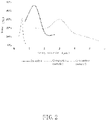
- the particle size in comparative example 1 is distributed from 3 to 4 ⁇ m. This is because the particles in precursor B in comparative example 1 grow at an accelerated rate at a high temperature to form large monocrystal particles.
- the particle size in comparative example 1 is less than 1 ⁇ m, and this is because that the material has been subjected to multiple times of sintering and crushing.
- Each of the ternary positive materials in examples 1-8 and 1-2 was further mixed with a conductive agent and a binder to prepare a slurry of a positive electrode plate.
- the ternary positive material, the conductive agent, and the binder were in a ratio of 92:5:3.
- the positive electrode plate, a separator, and a negative electrode plate made of carbon were laminated to obtain an electrode assembly.
- the electrode assembly was put into a shell, and an electrolyte was injected into the shell. The shell is then encapsulated to obtain a soft-packed battery.
- the first discharge specific capacity (1C, 20 °C), the cycle performance (300 weeks, 20 °C), and the storage performance (60 °C, 7 days) of the soft-packed battery were tested with a battery tester, the test results being shown in Table 2.
- the storage performance was tested by measuring a change of thickness of the soft-packed battery after 7 days.
- Table 2 shows that the first discharge capacity and the cycle performance of the soft-packed batteries in examples 1-8 are relatively high, and the change of thickness is small. This is because the particles are not subjected to crushing, allowing the positive material to have good stability and no pulverization at the particle interface.
- the particle size is too large, and the grains agglomerate and harden. Thus, mixing of cations in the ternary positive material becomes serious, resulting in reduction of the first discharge capacity of the soft-packed battery.
- comparative example 2 due to repeated crushing processes, the stability of the ternary positive material is poor, and the cycle performance of the soft-packed battery is reduced. There is large change of thickness of the positive electrode plate, indicating that the ternary positive material in the present disclosure improves the strength and the compacted density of the particles.
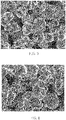
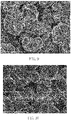
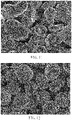
- Hitachi SEM is used to test the surface morphology of the ternary positive material, and the results are shown in FIGS. 3 to 12 .
- the ternary positive material in FIGS. 3 to 10 includes monocrystal-like particles.
- the ternary positive material in FIG. 11 includes large particles.
- the ternary positive material in FIG. 12 includes spherical secondary particles having a particle size of 0.5 ⁇ m.
Landscapes
- Chemical & Material Sciences (AREA)
- Chemical Kinetics & Catalysis (AREA)
- Electrochemistry (AREA)
- General Chemical & Material Sciences (AREA)
- Engineering & Computer Science (AREA)
- Inorganic Chemistry (AREA)
- Organic Chemistry (AREA)
- Materials Engineering (AREA)
- Manufacturing & Machinery (AREA)
- Battery Electrode And Active Subsutance (AREA)
- Inorganic Compounds Of Heavy Metals (AREA)
Applications Claiming Priority (1)
| Application Number | Priority Date | Filing Date | Title |
|---|---|---|---|
| CN202111026877.4A CN113716625B (zh) | 2021-09-02 | 2021-09-02 | 大晶粒聚集体三元正极材料、其制备方法及锂离子电池 |
Publications (2)
| Publication Number | Publication Date |
|---|---|
| EP4089055A2 true EP4089055A2 (de) | 2022-11-16 |
| EP4089055A3 EP4089055A3 (de) | 2023-03-08 |
Family
ID=78681000
Family Applications (1)
| Application Number | Title | Priority Date | Filing Date |
|---|---|---|---|
| EP22193720.4A Pending EP4089055A3 (de) | 2021-09-02 | 2022-09-02 | Ternäres positives material aus grossen monokristallähnlichen partikeln, verfahren zur herstellung desselben und lithium-ionen-batterie mit denselben |
Country Status (5)
| Country | Link |
|---|---|
| US (2) | US11996558B2 (de) |
| EP (1) | EP4089055A3 (de) |
| JP (1) | JP7464666B2 (de) |
| KR (1) | KR102787334B1 (de) |
| CN (1) | CN113716625B (de) |
Families Citing this family (7)
| Publication number | Priority date | Publication date | Assignee | Title |
|---|---|---|---|---|
| CN115275186B (zh) * | 2022-08-16 | 2025-02-25 | 宁波容百新能源科技股份有限公司 | 普鲁士蓝类化合物的正极浆料及其制备方法、正极极片 |
| CN115215388A (zh) * | 2022-08-19 | 2022-10-21 | 宁波容百新能源科技股份有限公司 | 一种三元正极材料的制备方法及三元正极材料 |
| WO2025024957A1 (zh) * | 2023-07-28 | 2025-02-06 | 青美邦新能源材料有限公司 | 一种正极前驱体及其制备方法、正极材料和电池 |
| CN117397066A (zh) * | 2023-08-25 | 2024-01-12 | 广东邦普循环科技有限公司 | 一种锂钴氧化物及其制备方法和应用 |
| CN117613214A (zh) * | 2023-10-31 | 2024-02-27 | 华友新能源科技(衢州)有限公司 | 镍钴锰三元前驱体及其制备方法和应用 |
| CN119133429B (zh) * | 2024-11-07 | 2025-02-07 | 北京当升材料科技股份有限公司 | 正极材料及其制备方法、锂离子电池和用电装置 |
| CN120328634A (zh) * | 2025-06-20 | 2025-07-18 | 湖南汇帮环保科技有限公司 | 一种钴蓝颜料的制备方法 |
Family Cites Families (15)
| Publication number | Priority date | Publication date | Assignee | Title |
|---|---|---|---|---|
| JP4996117B2 (ja) * | 2006-03-23 | 2012-08-08 | 住友金属鉱山株式会社 | 非水系電解質二次電池用正極活物質およびその製造方法とそれを用いた非水系電解質二次電池 |
| JP5730676B2 (ja) | 2011-06-06 | 2015-06-10 | 住友金属鉱山株式会社 | 非水系電解質二次電池用正極活物質とその製造方法、ならびに、ニッケルコバルトマンガン複合水酸化物とその製造方法 |
| KR101568468B1 (ko) * | 2013-07-04 | 2015-11-11 | 한국생산기술연구원 | 전고체 리튬이차전지용 고체 전해질 및 그 제조방법 |
| CN104409716A (zh) * | 2014-10-30 | 2015-03-11 | 中国科学院过程工程研究所 | 一种具有浓度梯度的镍锂离子电池正极材料及其制备方法 |
| WO2018021453A1 (ja) | 2016-07-28 | 2018-02-01 | 住友化学株式会社 | リチウムニッケル複合酸化物の製造方法 |
| KR101918719B1 (ko) | 2016-12-12 | 2018-11-14 | 주식회사 포스코 | 리튬 이차전지용 양극 활물질, 이의 제조 방법, 및 이를 포함하는 리튬 이차전지 |
| CN106784686A (zh) | 2016-12-21 | 2017-05-31 | 烟台卓能电池材料股份有限公司 | 一种掺杂型锂离子电池类单晶多元材料及其制备方法 |
| CN107528064A (zh) | 2017-08-10 | 2017-12-29 | 广东邦普循环科技有限公司 | 一种高电压型类单晶三元正极材料及其制备方法 |
| CN108946827B (zh) | 2018-07-03 | 2020-09-29 | 华友新能源科技(衢州)有限公司 | 一种超小粒径镍钴锰氢氧化物及其制备方法 |
| CN110863245B (zh) | 2018-08-28 | 2021-07-09 | 比亚迪股份有限公司 | 三元正极材料及其制备方法、锂离子电池和电动汽车 |
| CN110867575A (zh) | 2018-08-28 | 2020-03-06 | 比亚迪股份有限公司 | 三元正极材料及其制备方法、锂离子电池和电动汽车 |
| CN109524662A (zh) * | 2018-11-09 | 2019-03-26 | 浙江德升新能源科技有限公司 | 一种结晶性良好的镍钴锰酸锂正极材料的制备方法 |
| CN110330060B (zh) * | 2019-07-31 | 2022-07-19 | 海南大学 | 一种放射状结构球形ncm811型三元正极材料的制备方法 |
| CN110492096A (zh) * | 2019-08-26 | 2019-11-22 | 贵州大学 | 一种高结晶亚微米级镍钴锰三元正极材料及其制备方法 |
| US12030789B2 (en) * | 2020-05-06 | 2024-07-09 | Battelle Memorial Institute | Cost effective synthesis of oxide materials for lithium ion batteries |
-
2021
- 2021-09-02 CN CN202111026877.4A patent/CN113716625B/zh active Active
-
2022
- 2022-08-08 US US17/882,825 patent/US11996558B2/en active Active
- 2022-09-02 EP EP22193720.4A patent/EP4089055A3/de active Pending
- 2022-09-02 JP JP2022140262A patent/JP7464666B2/ja active Active
- 2022-09-02 KR KR1020220111253A patent/KR102787334B1/ko active Active
-
2024
- 2024-04-22 US US18/641,979 patent/US20240274816A1/en not_active Abandoned
Also Published As
| Publication number | Publication date |
|---|---|
| KR20220136293A (ko) | 2022-10-07 |
| US20240274816A1 (en) | 2024-08-15 |
| CN113716625A (zh) | 2021-11-30 |
| EP4089055A3 (de) | 2023-03-08 |
| CN113716625B (zh) | 2023-11-21 |
| US20230080488A1 (en) | 2023-03-16 |
| JP7464666B2 (ja) | 2024-04-09 |
| JP2023036570A (ja) | 2023-03-14 |
| KR102787334B1 (ko) | 2025-03-31 |
| US11996558B2 (en) | 2024-05-28 |
Similar Documents
| Publication | Publication Date | Title |
|---|---|---|
| EP4089055A2 (de) | Ternäres positives material aus grossen monokristallähnlichen partikeln, verfahren zur herstellung desselben und lithium-ionen-batterie mit denselben | |
| CN109461925B (zh) | 一种单晶镍钴锰酸锂正极材料、前驱体及其制备方法 | |
| US20230122382A1 (en) | Positive electrode material for lithium ion battery and preparation method therefor, and lithium ion battery | |
| KR20220127277A (ko) | 양극 재료, 이의 제조 방법 및 리튬 이온 전지 | |
| CN110931772A (zh) | 一种高功率型的锂离子电池用正极材料的制备方法 | |
| EP3998659A1 (de) | Kobaltfreies geschichtetes positives elektrodenmaterial und verfahren zu seiner herstellung, positive elektrodenplatte und lithium-ionen-batterie | |
| CN114335547A (zh) | 一种高倍率三元正极材料及制备方法和应用 | |
| EP4322257B1 (de) | Kobaltfreies positivelektrodenmaterial, herstellungsverfahren dafür und anwendung davon | |
| WO2024109564A1 (zh) | 一种高容量长循环的低钴单晶正极材料及其制备方法 | |
| CN114824196A (zh) | 一种高功率长循环镍钴锰三元正极材料及其制备方法 | |
| CN115632118B (zh) | 镍钴锰酸锂系正极材料、及其制备方法和应用 | |
| CN114068911A (zh) | 一种改性高镍正极材料及其制备方法 | |
| CN115663139B (zh) | 镍钴锰多元正极材料及其制备方法与应用、锂离子电池 | |
| EP4206142A1 (de) | Geschichtetes positivelektrodenmaterial und herstellungsverfahren dafür und verwendung davon | |
| CN114204011A (zh) | 一种镍钴锰酸锂三元正极材料的制备方法 | |
| CN117712356A (zh) | 一种核壳型钠离子电池正极材料及其制备方法 | |
| EP4629326A1 (de) | Positivelektrodenmaterial und herstellungsverfahren dafür und verwendung davon | |
| CN111933929B (zh) | 一种f掺杂的正极材料及其制备方法 | |
| CN117208977B (zh) | 高容量正极材料的前驱体及其制备方法和应用 | |
| CN114560510B (zh) | 一种改性7系三元正极材料及其制备方法和应用 | |
| CN118387850A (zh) | 一种通过包覆提升磷酸铁锂正极材料电性能的方法 | |
| CN113353993A (zh) | 一种复合高镍三元材料的制备方法及应用 | |
| CN118054008B (zh) | 一种子母球形貌的复合型锂离子电池正极材料及其制备方法 | |
| CN121307000A (zh) | 一种钴酸锂镍锰酸锂复合正极材料及其制备方法 | |
| CN118553881A (zh) | 单晶核壳结构镍锰酸锂正极材料及其制备方法、正极和电池 |
Legal Events
| Date | Code | Title | Description |
|---|---|---|---|
| PUAI | Public reference made under article 153(3) epc to a published international application that has entered the european phase |
Free format text: ORIGINAL CODE: 0009012 |
|
| STAA | Information on the status of an ep patent application or granted ep patent |
Free format text: STATUS: REQUEST FOR EXAMINATION WAS MADE |
|
| 17P | Request for examination filed |
Effective date: 20220906 |
|
| AK | Designated contracting states |
Kind code of ref document: A2 Designated state(s): AL AT BE BG CH CY CZ DE DK EE ES FI FR GB GR HR HU IE IS IT LI LT LU LV MC MK MT NL NO PL PT RO RS SE SI SK SM TR |
|
| PUAL | Search report despatched |
Free format text: ORIGINAL CODE: 0009013 |
|
| AK | Designated contracting states |
Kind code of ref document: A3 Designated state(s): AL AT BE BG CH CY CZ DE DK EE ES FI FR GB GR HR HU IE IS IT LI LT LU LV MC MK MT NL NO PL PT RO RS SE SI SK SM TR |
|
| RIC1 | Information provided on ipc code assigned before grant |
Ipc: C01G 53/00 20060101AFI20230201BHEP |