EP4089622A1 - Système de réseau social d'appariement sur la base du génome d'un animal de compagnie et procédé de fourniture d'informations d'appariement sur la base du génome d'un animal de compagnie - Google Patents
Système de réseau social d'appariement sur la base du génome d'un animal de compagnie et procédé de fourniture d'informations d'appariement sur la base du génome d'un animal de compagnie Download PDFInfo
- Publication number
- EP4089622A1 EP4089622A1 EP20911547.6A EP20911547A EP4089622A1 EP 4089622 A1 EP4089622 A1 EP 4089622A1 EP 20911547 A EP20911547 A EP 20911547A EP 4089622 A1 EP4089622 A1 EP 4089622A1
- Authority
- EP
- European Patent Office
- Prior art keywords
- information
- pet
- genetic
- matching
- genome
- Prior art date
- Legal status (The legal status is an assumption and is not a legal conclusion. Google has not performed a legal analysis and makes no representation as to the accuracy of the status listed.)
- Withdrawn
Links
Images



Classifications
-
- G—PHYSICS
- G06—COMPUTING OR CALCULATING; COUNTING
- G06Q—INFORMATION AND COMMUNICATION TECHNOLOGY [ICT] SPECIALLY ADAPTED FOR ADMINISTRATIVE, COMMERCIAL, FINANCIAL, MANAGERIAL OR SUPERVISORY PURPOSES; SYSTEMS OR METHODS SPECIALLY ADAPTED FOR ADMINISTRATIVE, COMMERCIAL, FINANCIAL, MANAGERIAL OR SUPERVISORY PURPOSES, NOT OTHERWISE PROVIDED FOR
- G06Q50/00—Information and communication technology [ICT] specially adapted for implementation of business processes of specific business sectors, e.g. utilities or tourism
- G06Q50/10—Services
- G06Q50/22—Social work or social welfare, e.g. community support activities or counselling services
-
- G—PHYSICS
- G16—INFORMATION AND COMMUNICATION TECHNOLOGY [ICT] SPECIALLY ADAPTED FOR SPECIFIC APPLICATION FIELDS
- G16B—BIOINFORMATICS, i.e. INFORMATION AND COMMUNICATION TECHNOLOGY [ICT] SPECIALLY ADAPTED FOR GENETIC OR PROTEIN-RELATED DATA PROCESSING IN COMPUTATIONAL MOLECULAR BIOLOGY
- G16B20/00—ICT specially adapted for functional genomics or proteomics, e.g. genotype-phenotype associations
-
- C—CHEMISTRY; METALLURGY
- C12—BIOCHEMISTRY; BEER; SPIRITS; WINE; VINEGAR; MICROBIOLOGY; ENZYMOLOGY; MUTATION OR GENETIC ENGINEERING
- C12Q—MEASURING OR TESTING PROCESSES INVOLVING ENZYMES, NUCLEIC ACIDS OR MICROORGANISMS; COMPOSITIONS OR TEST PAPERS THEREFOR; PROCESSES OF PREPARING SUCH COMPOSITIONS; CONDITION-RESPONSIVE CONTROL IN MICROBIOLOGICAL OR ENZYMOLOGICAL PROCESSES
- C12Q1/00—Measuring or testing processes involving enzymes, nucleic acids or microorganisms; Compositions therefor; Processes of preparing such compositions
- C12Q1/68—Measuring or testing processes involving enzymes, nucleic acids or microorganisms; Compositions therefor; Processes of preparing such compositions involving nucleic acids
- C12Q1/6813—Hybridisation assays
- C12Q1/6827—Hybridisation assays for detection of mutation or polymorphism
-
- G—PHYSICS
- G06—COMPUTING OR CALCULATING; COUNTING
- G06Q—INFORMATION AND COMMUNICATION TECHNOLOGY [ICT] SPECIALLY ADAPTED FOR ADMINISTRATIVE, COMMERCIAL, FINANCIAL, MANAGERIAL OR SUPERVISORY PURPOSES; SYSTEMS OR METHODS SPECIALLY ADAPTED FOR ADMINISTRATIVE, COMMERCIAL, FINANCIAL, MANAGERIAL OR SUPERVISORY PURPOSES, NOT OTHERWISE PROVIDED FOR
- G06Q10/00—Administration; Management
- G06Q10/40—Business processes related to social networking or social networking services
-
- G—PHYSICS
- G06—COMPUTING OR CALCULATING; COUNTING
- G06Q—INFORMATION AND COMMUNICATION TECHNOLOGY [ICT] SPECIALLY ADAPTED FOR ADMINISTRATIVE, COMMERCIAL, FINANCIAL, MANAGERIAL OR SUPERVISORY PURPOSES; SYSTEMS OR METHODS SPECIALLY ADAPTED FOR ADMINISTRATIVE, COMMERCIAL, FINANCIAL, MANAGERIAL OR SUPERVISORY PURPOSES, NOT OTHERWISE PROVIDED FOR
- G06Q30/00—Commerce
- G06Q30/06—Buying, selling or leasing transactions
- G06Q30/08—Auctions
-
- G—PHYSICS
- G06—COMPUTING OR CALCULATING; COUNTING
- G06Q—INFORMATION AND COMMUNICATION TECHNOLOGY [ICT] SPECIALLY ADAPTED FOR ADMINISTRATIVE, COMMERCIAL, FINANCIAL, MANAGERIAL OR SUPERVISORY PURPOSES; SYSTEMS OR METHODS SPECIALLY ADAPTED FOR ADMINISTRATIVE, COMMERCIAL, FINANCIAL, MANAGERIAL OR SUPERVISORY PURPOSES, NOT OTHERWISE PROVIDED FOR
- G06Q50/00—Information and communication technology [ICT] specially adapted for implementation of business processes of specific business sectors, e.g. utilities or tourism
- G06Q50/02—Agriculture; Fishing; Forestry; Mining
-
- G—PHYSICS
- G06—COMPUTING OR CALCULATING; COUNTING
- G06Q—INFORMATION AND COMMUNICATION TECHNOLOGY [ICT] SPECIALLY ADAPTED FOR ADMINISTRATIVE, COMMERCIAL, FINANCIAL, MANAGERIAL OR SUPERVISORY PURPOSES; SYSTEMS OR METHODS SPECIALLY ADAPTED FOR ADMINISTRATIVE, COMMERCIAL, FINANCIAL, MANAGERIAL OR SUPERVISORY PURPOSES, NOT OTHERWISE PROVIDED FOR
- G06Q50/00—Information and communication technology [ICT] specially adapted for implementation of business processes of specific business sectors, e.g. utilities or tourism
- G06Q50/10—Services
-
- G—PHYSICS
- G16—INFORMATION AND COMMUNICATION TECHNOLOGY [ICT] SPECIALLY ADAPTED FOR SPECIFIC APPLICATION FIELDS
- G16B—BIOINFORMATICS, i.e. INFORMATION AND COMMUNICATION TECHNOLOGY [ICT] SPECIALLY ADAPTED FOR GENETIC OR PROTEIN-RELATED DATA PROCESSING IN COMPUTATIONAL MOLECULAR BIOLOGY
- G16B40/00—ICT specially adapted for biostatistics; ICT specially adapted for bioinformatics-related machine learning or data mining, e.g. knowledge discovery or pattern finding
- G16B40/20—Supervised data analysis
-
- C—CHEMISTRY; METALLURGY
- C12—BIOCHEMISTRY; BEER; SPIRITS; WINE; VINEGAR; MICROBIOLOGY; ENZYMOLOGY; MUTATION OR GENETIC ENGINEERING
- C12Q—MEASURING OR TESTING PROCESSES INVOLVING ENZYMES, NUCLEIC ACIDS OR MICROORGANISMS; COMPOSITIONS OR TEST PAPERS THEREFOR; PROCESSES OF PREPARING SUCH COMPOSITIONS; CONDITION-RESPONSIVE CONTROL IN MICROBIOLOGICAL OR ENZYMOLOGICAL PROCESSES
- C12Q1/00—Measuring or testing processes involving enzymes, nucleic acids or microorganisms; Compositions therefor; Processes of preparing such compositions
- C12Q1/68—Measuring or testing processes involving enzymes, nucleic acids or microorganisms; Compositions therefor; Processes of preparing such compositions involving nucleic acids
- C12Q1/6876—Nucleic acid products used in the analysis of nucleic acids, e.g. primers or probes
- C12Q1/6883—Nucleic acid products used in the analysis of nucleic acids, e.g. primers or probes for diseases caused by alterations of genetic material
-
- C—CHEMISTRY; METALLURGY
- C12—BIOCHEMISTRY; BEER; SPIRITS; WINE; VINEGAR; MICROBIOLOGY; ENZYMOLOGY; MUTATION OR GENETIC ENGINEERING
- C12Q—MEASURING OR TESTING PROCESSES INVOLVING ENZYMES, NUCLEIC ACIDS OR MICROORGANISMS; COMPOSITIONS OR TEST PAPERS THEREFOR; PROCESSES OF PREPARING SUCH COMPOSITIONS; CONDITION-RESPONSIVE CONTROL IN MICROBIOLOGICAL OR ENZYMOLOGICAL PROCESSES
- C12Q2600/00—Oligonucleotides characterized by their use
- C12Q2600/124—Animal traits, i.e. production traits, including athletic performance or the like
-
- C—CHEMISTRY; METALLURGY
- C12—BIOCHEMISTRY; BEER; SPIRITS; WINE; VINEGAR; MICROBIOLOGY; ENZYMOLOGY; MUTATION OR GENETIC ENGINEERING
- C12Q—MEASURING OR TESTING PROCESSES INVOLVING ENZYMES, NUCLEIC ACIDS OR MICROORGANISMS; COMPOSITIONS OR TEST PAPERS THEREFOR; PROCESSES OF PREPARING SUCH COMPOSITIONS; CONDITION-RESPONSIVE CONTROL IN MICROBIOLOGICAL OR ENZYMOLOGICAL PROCESSES
- C12Q2600/00—Oligonucleotides characterized by their use
- C12Q2600/154—Methylation markers
Definitions
- Embodiments of the present invention relate to a genome-based matchmaking social network system for pets and a method for providing genome-based matchmaking information for pets.
- Embodiments of the present invention provide a genome-based matchmaking information providing system for pets and genome-based matchmaking information providing method for pets, which may obtain genetically, externally, introvertedly, and physically specific breeding results based on genetic information, non-genetic information, epigenetic information about the pet and basic information about the pet owner and enables matching with a pet that has a low genetic risk and has a high chance of obtaining healthy offspring by breeding.
- a pet genome-based matchmaking social network system comprises a gene analyzer that provides gene analysis information through gene analysis using a specimen collected from a pet; a bioinformatics information analyzer that provides at least one of genetic variation feature information, external feature information, and introverted feature information that appears upon breeding through bioinformatic analysis based on the gene analysis information; a basic information input unit that receives user basic information about an owner of the pet and genetic feature information and non-genetic feature information about the pet from the owner of the pet; a database unit that collects and stores information obtained and inputted through the gene analyzer, the bioinformatics information analyzer, and the basic information input unit; and a pet matching recommendation unit that receives a matching request from a matching applicant, receives at least one condition information among genetic condition information, non-genetic condition information, external condition information, and introverted condition information about a desired matching target to recommend a pet with a highest degree of matching with the condition information among the information stored in the database unit or obtains analysis information through the genetic analyze
- the pet genome-based matchmaking social network system further comprise an epigenetic analyzer that provides growth and physiological expression feature information about the pet through epigenetic analysis using the specimen collected from the pet, wherein the database unit additionally collects and stores the growth and physiological expression feature information.
- the growth and physiological expression feature information may include information according to a result of a structural change in chromatin due to DNA methylation or histone protein modification.
- the pet matching recommendation unit may analyze, predict, and additionally provide at least one of genetic disease risk information for each pet based on the information stored in the database unit and virtual external feature information, introverted feature information, health feature information, physical feature information, genetic disease risk information, and growth and physiological expression feature information for offspring resultant from breeding with a recommended pet.
- the pet matching recommendation unit may calculate a breeding fitness between pets according to a heterogeneity of a major histocompatibility complex (MHC) gene and include and provide the breeding fitness in the virtual genetic disease risk information for the offspring resultant from breeding.
- MHC major histocompatibility complex
- a pet genome-based matchmaking information providing method may comprise a gene analysis step that provides gene analysis information through gene analysis using a specimen collected from a pet, by a gene analyzer; a bioinformatics information analysis step that provides at least one of genetic variation feature information, external feature information, and introverted feature information that appears upon breeding through bioinformatic analysis based on the gene analysis information, by a biogenetics information analyzer; a basic information input step that receives user basic information about an owner of the pet and genetic feature information and non-genetic feature information about the pet from the owner of the pet, by a basic information input unit; an information collection and storage step that collects and stores information obtained and inputted through the gene analyzer, the bioinformatics information analyzer, and the basic information input unit, by a database unit; and a pet matching recommendation step that, by a pet matching recommendation unit, receives a matching request from a matching applicant, receives at least one condition information among genetic condition information, non-genetic condition information, external condition information,
- the pet genome-based matchmaking information providing method may further comprise an epigenetic analysis step that provides growth and physiological expression feature information about the pet through epigenetic analysis using the specimen collected from the pet, by an epigenetic analyzer, wherein the information collection and storage step additionally collects and stores the growth and physiological expression feature information.
- the growth and physiological expression feature information may include information according to a result of a structural change in chromatin due to DNA methylation or histone protein modification.
- the pet matching recommendation step may analyze, predict, and additionally provide at least one of genetic disease risk information for each pet based on the information stored in the database unit and virtual external feature information, introverted feature information, health feature information, physical feature information, genetic disease risk information, and growth and physiological expression feature information for offspring resultant from breeding with a recommended pet.
- the pet matching recommendation step may calculate a breeding fitness between pets according to a heterogeneity of a major histocompatibility complex (MHC) gene and include and provide the breeding fitness in the virtual genetic disease risk information for the offspring resultant from breeding.
- MHC major histocompatibility complex
- a genome-based matchmaking information providing system for pets and genome-based matchmaking information providing method for pets which may obtain genetically, externally, introvertedly, and physically specific breeding results based on genetic information, non-genetic information, epigenetic information about the pet and basic information about the pet owner and enables matching with a pet that has a low genetic risk and has a high chance of obtaining healthy offspring by breeding.
- the element may further include the other element, rather excluding the other element, unless particularly stated otherwise.
- the terms "unit,” “module,” or “part” as used herein denote a unit processing at least one function or operation, and a unit, module, or part may be implemented in hardware, software, or a combination thereof.
- a or B may include all possible combinations of A and B.
- “A or B,” “at least one of A and B,” “at least one of A or B” may indicate all of (1) including at least one A, (2) including at least one B, or (3) including at least one A and at least one B.
- FIG. 1 is a schematic diagram illustrating an overall configuration of a pet genome-based matchmaking social network system according to an embodiment of the present invention.
- FIG. 2 is a block diagram illustrating an overall configuration of a pet genome-based matchmaking social network system according to an embodiment of the present invention.
- FIG. 3 is a view illustrating a phenotype visualization image of an offspring according to a virtual breeding matching result, according to an embodiment of the present invention.
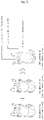
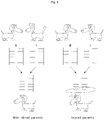
- FIGS. 4 and 5 are views illustrating a genetic result of breeding according to the genetic distance.
- FIG. 6 is a view illustrating a matching result according to a genetic risk degree and a desired condition fitness according to an embodiment of the present invention.
- a pet genome-based matchmaking social network system 100 may include a gene analyzer 110, a bioinformatics information analyzer 120, an epigenetic analyzer 130, a basic information input unit 140, a database unit 150, and a pet matching recommendation unit 160.
- the gene analyzer 110 may provide gene analysis information through gene analysis using specimens collected from a pet.
- the types of specimens collected from the pet may include samples from which genetic information may be obtained, such as pet blood, saliva, defecation, and hair follicles (hair).
- the gene analyzer 110 may perform gene sequencing/genotyping and genetic information analysis on each pet using the samples, and as some specific methods, well-known gene analysis methods, such as WGS, Chip, BWA mapping, or GATK calling, may be carried out.
- the gene analyzer 110 may compare the genetic information about other pets stored in the database unit 150, which is described below, through a known technique, such as Identical By Descendent, thereby calculating the genetic distance or degree of kinship between the pets.
- the bioinformatics information analyzer 120 may provide at least one of genetic variation feature information, external feature information, and introverted feature information that may appear during breeding through bioinformatics analysis based on the gene analysis information.
- the epigenetic analyzer 130 may provide information about the growth and physiological expression feature of the pet through epigenetics analysis using the specimen collected from the pet.
- growth and physiological expression feature information that is, epigenetic information
- epigenetic information may be information about a gene regulatory mechanism including information according to a result of a structural change in chromatin by DNA methylation or histone protein modification, as separate from pet DNA information.
- the pet's disposition or physiological expression may be epigenetically more diversified (regulation of gene expression) by changes in the chromatin structure due to DNA methylation or modification of histone proteins although the base sequence of DNA is not changed because it is not genetically inherited from the parents
- information about the results of structural changes in chromatin by DNA methylation or histone protein modification may be stored in the database unit 150 as described above. Further, all information about the pet may be recorded based on the fact that traits or characteristics obtained by the environment and training may be inherited.
- mice that were frequently licked by their parents when they were young will have a relaxed character and strong stress-resistance traits when they grow up.
- the ER ⁇ gene regulatory mechanism variation changes, the GR gene increases, and stress is reduced, leading to different results from the beginning.
- Pups born from the parents that have been trained to bark less as compared with their species traits will develop the same less barking traits.
- the basic information input unit 140 may receive, from the pet owner, genetic feature information and non-genetic feature information about the pet, and user basic information about the pet owner.
- the genetic feature information may include the type and breed of the pet.
- the non-genetic feature information may include photos of the pet, weight, presence of disease, physical characteristics, personality characteristics, the environment in which it was raised, training to learn, eating habits, sleeping habits, specific behaviors, and the like.
- the user basic information may include the name, identity, and residence of the pet owner.
- the database unit 150 may collect and store the information obtained and input through the gene analyzer 110, the bioinformatics information analyzer 120, and the basic information input unit 130 and may additionally collect and store the growth and physiological expression feature information provided through the epigenetic analyzer 130.
- the database unit 150 may continuously collect and add corresponding information by using theses published through a DB containing generally known genomic variation data for each pet type and related phenotypic information.
- the information stored in the database unit 150 may be compared with secured genetic variation information (bioinformatic information) about the pet, and pre-secured genetic variation information and potential phenotype may be added to the secured animal information list. Further, the database unit 150 may store and share the secured, added, and analyzed pet information in a pet genome matchmaker database unit 10 connected to a publicly available social network.
- the pet matching recommendation unit 160 may receive a matching request from a matching applicant, receive at least one of genetic condition information, non-genetic condition information, external condition information, and introverted condition information about the desired matching target, and recommend a pet having the highest degree of matching with each condition information among the information stored in the database unit 150. In other words, it is possible to find and provide a pet that matches the conditions of the matching applicant in such a manner as to perform manual filtering according to the conditions or criteria desired by the matching applicant.
- the pet matching recommendation unit 160 may score the matching fitness between the conditions desired by the matching applicant, that is, genetic information, non-genetic information, external condition information, and introverted condition information, such as the type, breed, age, presence of disease, physical characteristics, and personality characteristics about the pet desired for matching, and the genetic information, non-genetic information, external condition information, and introverted condition information about each pet stored in the database unit 150, thereby providing information about the fittest pets.
- the pet matching recommendation unit 160 may obtain analysis information through the genetic analyzer 110 and the bioinformatics information analyzer 120 using the specimens collected from the pet of the matching applicant and recommend the pet with the highest degree of matching with the analysis information among the information stored in the database unit 150 or an appropriate number of pets in order from the highest matching degree. In other words, the pet matching recommendation unit 160 may automatically filter and provide a list of a few highest pets with a high degree of fitness based on various analysis information and input information.
- the basis for judging the matching fitness it is possible to search, filter, and provide information about the pet suitable for breeding with the matching applicant's pet through the process of scoring the matching fitness for the above-described epigenetic information (traits or characteristics obtained by environment and training) and bioinformatics information (information, such as genetic variation, physical characteristics, and characters that may appear during breeding).
- the pet matching recommendation unit 160 may analyze, predict, and additionally provide at least one of genetic disease risk information about each pet based on the information stored in the database unit 150, and virtual appearance feature information, introverted feature information, health feature information (longevity potential), physical feature information (intelligence, body mass index, body hair thickness), and genetic disease risk information about the offspring from breeding with the recommended pet.
- genetic disease risk information about each pet based on the information stored in the database unit 150
- virtual appearance feature information introverted feature information
- health feature information longevity potential
- physical feature information intelligence, body mass index, body hair thickness
- genetic disease risk information about the offspring from breeding with the recommended pet.
- the pet matching recommendation unit 160 may provide a visualization service for predicting the shape of the offspring based on the genetic information about the mating target. As shown in FIG. 3 , it is possible to predict, visualize, and provide external information about the offspring of the second generation that are born when two first-generation cats virtually breed. More specifically, it is possible to provide a visualization service (providing photos or images) for the phenotype of the second generation that may appear by breeding, based on the shape of the ears, the color of the hair, and the shape of the nose. Such visual information may be provided by predicting the health, character, and physical characteristics of the offspring to be born at the time of breeding.
- the pet matching recommendation unit 160 may also provide a visualization system for predicting the shape of the offspring based on the non-genetic information about the mating target. For example, the appearance of the offspring to be born by breeding between a Chihuahua and a Jindo may be provided in a non-genetic photosynthesis scheme. If pet owners register two photos, the visualization service may predict and show an intermediate (mixed) face through a face synthesis algorithm based on the registered photo information.
- the pet matching recommendation unit 160 may calculate the degree of breeding fitness between pets according to heterogeneity of the major histocompatibility complex (MHC) gene and include and provide it in the virtual genetic disease risk information for the offspring to be born by breeding of the pets.
- MHC major histocompatibility complex
- the major histocompatibility complex is a polymorphic gene, so it may have a very large number of alleles. Almost all humans as well as animals have different MHC alleles.
- MHC genes perform the function of controlling the immune system to recognize and defend against foreign invaders, such as viruses or bacteria. It is possible to determine the risk of a genetic disease to the offspring by calculating the fitness of breeding according to the heterogeneity of the MHC gene and provide information thereabout. In other words, it is to predict the risk of genetic diseases of the offspring. It is possible to quantify the genetic risk inferred from the polymorphisms of genetic diseases and general diseases that occur in pets and humans. More specifically, it is possible to calculate and provide the predictive genetic risk used in human genetic testing and the heritable risk through mutation derived from a rare disease, separately and in combination.
- the pet matching recommendation unit 160 may minimize the genetic disease according to the degree of kinship and the genetic disease probability score (carrier test), while maintaining the optimal pure blood breed.
- the pet matching recommendation unit 160 may interwork with a system implemented in the form of an application or website that matches a pet breeding target online, so that the consumer (pet owner) may easily check the genome/gene analysis result through reports or various media.
- the pet matching recommendation unit 160 may prevent genetic disease by examining the genetic information and non-genetic information based on the desired conditions for the fitness of breeding with a specific pet when breeding with the specific pet is desired and provide information about the risk of genetic diseases of current pets and the risk of future offspring (carrier test) according to the genotype of the future mating partner and may be used in various fields, such as breeding grounds, pet shops, and veterinary hospitals.
- the genome-based matchmaking social network system 100 for pets may provide owners with a function of securing and authenticating data for proof of pedigree relationship (authentication) of the pet that has been sold and provide a portal function through which the pet owner may easily manage information about his/her pet through the database unit 150 that is a pet genealogy DB. In other words, it is possible to manage the information even after the death of the pet.
- the range of the degree of difference in pet genetic variation may be previously defined for each species (e.g., distance between breeds of dogs, distance between breeds of cats), and the distance of animals falling in the range may be provided as the concept of degree of kinship of pets.
- the genome-based matchmaking social network system 100 for pets is able to genetically prove and manage the genealogy (or pedigree) of animals with the most certainty and, If genomic information is stored when a pet dies, provide information related to the pet so that the animal closest to the pet may be adopted in the future.
- the genetic information may be stored in a storage medium, such as USB drive, to be easily identified online or on computer when the pet dies in the future.
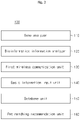
- FIG. 7 is a flowchart illustrating a pet genome-based matchmaking information providing method according to another embodiment of the present invention.
- a genome-based matchmaking information providing method S100 for pets includes a gene analysis step S110, a bioinformatics information analysis step S120, an epigenetic analysis step S130, a basic information input step S140, an information collection and storage step S150, and a pet matching recommendation step S160.
- the gene analysis step S110 may provide gene analysis information through gene analysis using specimens collected from a pet.
- the types of specimens collected from the pet may include samples from which genetic information may be obtained, such as pet blood, saliva, defecation, and hair follicles (hair).
- the gene analysis step S110 may perform gene sequencing/genotyping and genetic information analysis on each pet using the samples, and as some specific methods, well-known gene analysis methods, such as WGS, Chip, BWA mapping, or GATK calling, may be carried out.
- the gene analysis S110 may compare the genetic information about other pets stored in the information collection and storage step S150, which is described below, through a known technique, such as Identical By Descendent, thereby calculating the genetic distance or degree of kinship between the pets.
- the bioinformatics information analysis step S120 may provide at least one of genetic variation feature information, external feature information, and introverted feature information that may appear during breeding through bioinformatics analysis based on the gene analysis information.
- the epigenetic analysis step S130 may provide information about the growth and physiological expression feature of the pet through epigenetics analysis using the specimen collected from the pet.
- growth and physiological expression feature information that is, epigenetic information
- epigenetic information may be information about a gene regulatory mechanism including information according to a result of a structural change in chromatin by DNA methylation or histone protein modification, as separate from pet DNA information.
- the pet's disposition or physiological expression may be epigenetically more diversified (regulation of gene expression) by changes in the chromatin structure due to DNA methylation or modification of histone proteins although the base sequence of DNA is not changed because it is not genetically inherited from the parents
- information about the results of structural changes in chromatin by DNA methylation or histone protein modification may be stored in the information collection and storage step S150 as described above. Further, all information about the pet may be recorded based on the fact that traits or characteristics obtained by the environment and training may be inherited.
- mice that were frequently licked by their parents when they were young will have a relaxed character and strong stress-resistance traits when they grow up.
- the ER ⁇ gene regulatory mechanism variation changes, the GR gene increases, and stress is reduced, leading to different results from the beginning.
- Pups born from the parents that have been trained to bark less as compared with their species traits will develop the same less barking traits.
- the basic information input step S140 may receive, from the pet owner, genetic feature information and non-genetic feature information about the pet, and user basic information about the pet owner.
- the genetic feature information may include the type and breed of the pet.
- the non-genetic feature information may include photos of the pet, weight, presence of disease, physical characteristics, personality characteristics, the environment in which it was raised, training to learn, eating habits, sleeping habits, specific behaviors, and the like.
- the user basic information may include the name, identity, and residence of the pet owner.
- the information collection and storage step S150 may collect and store the information obtained and input through the gene analysis step S110, the bioinformatics information analysis step S120, and the basic information input step 130 and may additionally collect and store the growth and physiological expression feature information provided through the epigenetic analysis step S130.
- the information collection and storage step S150 may continuously collect and add corresponding information by using theses published through a DB containing generally known genomic variation data for each pet type and related phenotypic information.
- the information stored in the information collection and storage step S150 may be compared with secured genetic variation information (bioinformatic information) about the pet, and pre-secured genetic variation information and potential phenotype may be added to the secured animal information list. Further, the information collection and storage step S150 may store and share the secured, added, and analyzed pet information in a pet genome matchmaker database unit 10 connected to a publicly available social network.
- the pet matching recommendation step S160 may receive a matching request from a matching applicant, receive at least one of genetic condition information, non-genetic condition information, external condition information, and introverted condition information about the desired matching target, and recommend a pet having the highest degree of matching with each condition information among the information stored in the information collection and storage step S150. In other words, it is possible to find and provide a pet that matches the conditions of the matching applicant in such a manner as to perform manual filtering according to the conditions or criteria desired by the matching applicant.
- the pet matching recommendation step S160 may score the matching fitness between the conditions desired by the matching applicant, that is, genetic information, non-genetic information, external condition information, and introverted condition information, such as the type, breed, age, presence of disease, physical characteristics, and personality characteristics about the pet desired for matching, and the genetic information, non-genetic information, external condition information, and introverted condition information about each pet stored in the information collection and storage step S150, thereby providing information about the fittest pets.
- the pet matching recommendation step S160 may obtain analysis information through the gene analysis step S110 and the bioinformatics information analysis step S120 using the specimens collected from the pet of the matching applicant and recommend the pet with the highest degree of matching with the analysis information among the information stored in the information collection and storage step S150 or an appropriate number of pets in order from the highest matching degree.
- the pet matching recommendation unit 160 may automatically filter and provide a list of a few highest pets with a high degree of fitness based on various analysis information and input information.
- the basis for judging the matching fitness it is possible to search, filter, and provide information about the pet suitable for breeding with the matching applicant's pet through the process of scoring the matching fitness for the above-described epigenetic information (traits or characteristics obtained by environment and training) and bioinformatics information (information, such as genetic variation, physical characteristics, and characters that may appear during breeding).
- the pet matching recommendation step S160 may analyze, predict, and additionally provide at least one of genetic disease risk information about each pet based on the information stored in the information collection and storage step S150, and virtual appearance feature information, introverted feature information, health feature information (longevity potential), physical feature information (intelligence, body mass index, body hair thickness), and genetic disease risk information about the offspring from breeding with the recommended pet.
- genetic disease risk information about each pet based on the information stored in the information collection and storage step S150, and virtual appearance feature information, introverted feature information, health feature information (longevity potential), physical feature information (intelligence, body mass index, body hair thickness), and genetic disease risk information about the offspring from breeding with the recommended pet.
- the pet matching recommendation step S160 may provide a visualization service for predicting the shape of the offspring based on the genetic information about the mating target. As shown in FIG. 3 , it is possible to predict, visualize, and provide external information about the offspring of the second generation that are born when two first-generation cats virtually breed. More specifically, it is possible to provide a visualization service (providing photos or images) for the phenotype of the second generation that may appear by breeding, based on the shape of the ears, the color of the hair, and the shape of the nose. Such visual information may be provided by predicting the health, character, and physical characteristics of the offspring to be born at the time of breeding.
- the pet matching recommendation step S160 may also provide a visualization system for predicting the shape of the offspring based on the non-genetic information about the mating target. For example, the appearance of the offspring to be born by crossbreeding with a Chihuahua and a Jindo may be provided in a non-genetic photosynthesis scheme. If pet owners register two photos, the visualization service may predict and show an intermediate (mixed) face through a face synthesis algorithm based on the registered photo information.
- the pet matching recommendation step S160 may calculate the degree of breeding fitness between pets according to heterogeneity of the major histocompatibility complex (MHC) gene and include and provide it in the virtual genetic disease risk information for the offspring to be born by breeding of the pets.
- MHC major histocompatibility complex
- the major histocompatibility complex is a polymorphic gene, so it may have a very large number of alleles. Almost all humans as well as animals have different MHC alleles.
- MHC genes perform the function of controlling the immune system to recognize and defend against foreign invaders, such as viruses or bacteria. It is possible to determine the risk of a genetic disease to the offspring by calculating the fitness of breeding according to the heterogeneity of the MHC gene and provide information thereabout. In other words, it is to predict the risk of genetic diseases of the offspring. It is possible to quantify the genetic risk inferred from the polymorphisms of genetic diseases and general diseases that occur in pets and humans. More specifically, it is possible to calculate and provide the predictive genetic risk used in human genetic testing and the heritable risk through mutation derived from a rare disease, separately and in combination.
- the pet matching recommendation step S160 may minimize the genetic disease according to the degree of kinship and the genetic disease probability score (carrier test), while maintaining the optimal pure blood breed.
- the pet matching recommendation step S160 may interwork with a system implemented in the form of an application or website that matches a pet breeding target online, so that the consumer (pet owner) may easily check the genome/gene analysis result through reports or various media.
- the pet matching recommendation step S160 may prevent genetic disease by examining the genetic information and non-genetic information based on the desired conditions for the fitness of breeding with a specific pet when breeding with the specific pet is desired and provide information about the risk of genetic diseases of current pets and the risk of future offspring (carrier test) according to the genotype of the future mating partner and may be used in various fields, such as breeding grounds, pet shops, and veterinary hospitals.
- the genome-based matchmaking information providing method S100 for pets may provide owners with a function of securing and authenticating data for proof of pedigree relationship (authentication) of the pet that has been sold and provide a portal function through which the pet owner may easily manage information about his/her pet through the information collection and storage step S150 that is a pet genealogy DB. In other words, it is possible to manage the information even after the death of the pet.
- the range of the degree of difference in pet genetic variation may be previously defined for each species (e.g., distance between breeds of dogs, distance between breeds of cats), and the distance of animals falling in the range may be provided as the concept of degree of kinship of pets.
- the genome-based matchmaking information providing method S100 for pets is able to genetically prove and manage the genealogy (or pedigree) of animals with the most certainty and, If genomic information is stored when a pet dies, provide information related to the pet so that the animal closest to the pet may be adopted in the future.
- the genetic information may be stored in a storage medium, such as USB drive, to be easily identified online or on computer when the pet dies in the future.
Landscapes
- Engineering & Computer Science (AREA)
- Business, Economics & Management (AREA)
- Physics & Mathematics (AREA)
- Health & Medical Sciences (AREA)
- Life Sciences & Earth Sciences (AREA)
- Theoretical Computer Science (AREA)
- Tourism & Hospitality (AREA)
- General Health & Medical Sciences (AREA)
- Bioinformatics & Cheminformatics (AREA)
- General Business, Economics & Management (AREA)
- Marketing (AREA)
- General Physics & Mathematics (AREA)
- Strategic Management (AREA)
- Economics (AREA)
- Chemical & Material Sciences (AREA)
- Medical Informatics (AREA)
- Human Resources & Organizations (AREA)
- Biotechnology (AREA)
- Biophysics (AREA)
- Proteomics, Peptides & Aminoacids (AREA)
- Spectroscopy & Molecular Physics (AREA)
- Bioinformatics & Computational Biology (AREA)
- Data Mining & Analysis (AREA)
- Evolutionary Biology (AREA)
- Entrepreneurship & Innovation (AREA)
- Organic Chemistry (AREA)
- Primary Health Care (AREA)
- Molecular Biology (AREA)
- Analytical Chemistry (AREA)
- Genetics & Genomics (AREA)
- Operations Research (AREA)
- Quality & Reliability (AREA)
- Zoology (AREA)
- Wood Science & Technology (AREA)
- Finance (AREA)
- Accounting & Taxation (AREA)
- Evolutionary Computation (AREA)
- Bioethics (AREA)
- Public Health (AREA)
- Software Systems (AREA)
Applications Claiming Priority (2)
| Application Number | Priority Date | Filing Date | Title |
|---|---|---|---|
| KR1020200003218A KR20210089974A (ko) | 2020-01-09 | 2020-01-09 | 애완동물의 게놈 기반 중매 소셜 네트워크 시스템 및 애완동물의 게놈 기반 중매 정보 제공 방법 |
| PCT/KR2020/019385 WO2021141316A1 (fr) | 2020-01-09 | 2020-12-30 | Système de réseau social d'appariement sur la base du génome d'un animal de compagnie et procédé de fourniture d'informations d'appariement sur la base du génome d'un animal de compagnie |
Publications (2)
| Publication Number | Publication Date |
|---|---|
| EP4089622A1 true EP4089622A1 (fr) | 2022-11-16 |
| EP4089622A4 EP4089622A4 (fr) | 2024-02-07 |
Family
ID=76788780
Family Applications (1)
| Application Number | Title | Priority Date | Filing Date |
|---|---|---|---|
| EP20911547.6A Withdrawn EP4089622A4 (fr) | 2020-01-09 | 2020-12-30 | Système de réseau social d'appariement sur la base du génome d'un animal de compagnie et procédé de fourniture d'informations d'appariement sur la base du génome d'un animal de compagnie |
Country Status (4)
| Country | Link |
|---|---|
| US (1) | US20220344007A1 (fr) |
| EP (1) | EP4089622A4 (fr) |
| KR (1) | KR20210089974A (fr) |
| WO (1) | WO2021141316A1 (fr) |
Families Citing this family (4)
| Publication number | Priority date | Publication date | Assignee | Title |
|---|---|---|---|---|
| KR102419423B1 (ko) * | 2021-11-25 | 2022-07-11 | 주식회사 케이펫 | 유전자 정보를 이용한 반려동물 입양 매칭 시스템 |
| US20230252582A1 (en) * | 2022-02-07 | 2023-08-10 | Neighborhood Bullies LLC | Method for Integrating a Network of Household Pet Owners into a Pet Supply Chain |
| JPWO2024161871A1 (fr) * | 2023-02-01 | 2024-08-08 | ||
| JP7698354B1 (ja) * | 2024-08-28 | 2025-06-25 | 株式会社seeDNA | 疾患リスクスコア及びマッチングスコアの演算方法並びにマッチングシステム |
Family Cites Families (5)
| Publication number | Priority date | Publication date | Assignee | Title |
|---|---|---|---|---|
| JP2002230318A (ja) * | 2001-01-31 | 2002-08-16 | Sunrise:Kk | ペットの交配情報提供方法及び当該方法を実行可能なサーバ並びにペットの交配情報提供方法を実行可能なプログラムが記憶された記憶媒体 |
| KR20040027593A (ko) | 2004-02-16 | 2004-04-01 | 주식회사 개선문 | 애완동물의 가상 교배 시스템 및 그 서비스 방법 |
| KR20050110260A (ko) | 2004-05-18 | 2005-11-23 | (주)유니원커뮤니케이션즈 | 유전자 정보에 근거한 사이버 애완동물 시스템 |
| WO2007064935A2 (fr) * | 2005-12-01 | 2007-06-07 | Bioarts & Research Corp. | Place de marche en ligne destinee a la genetique animale |
| KR101733917B1 (ko) * | 2016-03-31 | 2017-05-08 | 홍병환 | 관리 효율화를 위한 애완동물 관계망 인프라 시스템 및 이의 구축과 활용 방법 |
-
2020
- 2020-01-09 KR KR1020200003218A patent/KR20210089974A/ko active Pending
- 2020-12-30 EP EP20911547.6A patent/EP4089622A4/fr not_active Withdrawn
- 2020-12-30 WO PCT/KR2020/019385 patent/WO2021141316A1/fr not_active Ceased
-
2022
- 2022-07-08 US US17/860,169 patent/US20220344007A1/en active Pending
Also Published As
| Publication number | Publication date |
|---|---|
| WO2021141316A1 (fr) | 2021-07-15 |
| KR20210089974A (ko) | 2021-07-19 |
| US20220344007A1 (en) | 2022-10-27 |
| EP4089622A4 (fr) | 2024-02-07 |
Similar Documents
| Publication | Publication Date | Title |
|---|---|---|
| US20220344007A1 (en) | Pet genome-based matchmaking social network system and method for providing pet genome-based matchmaking information | |
| Bendesky et al. | The genetic basis of parental care evolution in monogamous mice | |
| Luikart et al. | Population genomics: advancing understanding of nature | |
| Spady et al. | Canine behavioral genetics: pointing out the phenotypes and herding up the genes | |
| Sorenson et al. | Molecular genetic perspectives on avian brood parasitism | |
| Hill | Applications of population genetics to animal breeding, from Wright, Fisher and Lush to genomic prediction | |
| Jones et al. | Progress and opportunities through use of genomics in animal production | |
| Johnsson et al. | Feralisation targets different genomic loci to domestication in the chicken | |
| Kalbfleisch et al. | The ruminant telomere-to-telomere (RT2T) consortium | |
| Chessari et al. | Characterization of heterozygosity-rich regions in Italian and worldwide goat breeds | |
| Liu et al. | Genetic parameters and genome-wide association for milk production traits and somatic cell score in different lactation stages of Shanghai Holstein population | |
| JP2019096340A (ja) | 哺乳類の形態を決定するための方法及びアレンジメント | |
| Mota et al. | Genetic evaluation for birth and conformation traits in dual-purpose Belgian Blue cattle using a mixed inheritance model | |
| Eyre et al. | Genome scanning of behavioral selection in a canine olfactory detection breeding cohort | |
| US20250384955A1 (en) | Systems and methods for improving livestock production | |
| Wolf et al. | Disentangling prenatal and postnatal maternal genetic effects reveals persistent prenatal effects on offspring growth in mice | |
| Garamszegi et al. | The role of common ancestry and gene flow in the evolution of human‐directed play behaviour in dogs | |
| Burgio et al. | Nasal bone shape is under complex epistatic genetic control in mouse interspecific recombinant congenic strains | |
| Villumsen et al. | Genomic selection in American mink (Neovison vison) using a single-step genomic best linear unbiased prediction model for size and quality traits graded on live mink | |
| JP2011520198A (ja) | Dnaマーカーおよび量的形質データを採用する遺伝的予測値を生じさせる方法 | |
| Pandey et al. | Inherited Instincts: Unravelling the Genetic Tapestry of Cattle Behaviour. | |
| Robertson et al. | The genetic and morphological basis of local adaptation to elevational extremes in an alpine finch | |
| US20260105984A1 (en) | Systems and methods for improving livestock production | |
| Freebern | The genetic architecture of complex traits and diseases in dairy cattle | |
| JP7698354B1 (ja) | 疾患リスクスコア及びマッチングスコアの演算方法並びにマッチングシステム |
Legal Events
| Date | Code | Title | Description |
|---|---|---|---|
| STAA | Information on the status of an ep patent application or granted ep patent |
Free format text: STATUS: THE INTERNATIONAL PUBLICATION HAS BEEN MADE |
|
| PUAI | Public reference made under article 153(3) epc to a published international application that has entered the european phase |
Free format text: ORIGINAL CODE: 0009012 |
|
| STAA | Information on the status of an ep patent application or granted ep patent |
Free format text: STATUS: REQUEST FOR EXAMINATION WAS MADE |
|
| 17P | Request for examination filed |
Effective date: 20220720 |
|
| AK | Designated contracting states |
Kind code of ref document: A1 Designated state(s): AL AT BE BG CH CY CZ DE DK EE ES FI FR GB GR HR HU IE IS IT LI LT LU LV MC MK MT NL NO PL PT RO RS SE SI SK SM TR |
|
| DAV | Request for validation of the european patent (deleted) | ||
| DAX | Request for extension of the european patent (deleted) | ||
| A4 | Supplementary search report drawn up and despatched |
Effective date: 20240108 |
|
| RIC1 | Information provided on ipc code assigned before grant |
Ipc: C12Q 1/6827 20180101ALI20240109BHEP Ipc: G06Q 50/00 20120101ALI20240109BHEP Ipc: G06Q 30/08 20120101ALI20240109BHEP Ipc: G06Q 50/10 20120101ALI20240109BHEP Ipc: G06Q 50/22 20180101AFI20240109BHEP |
|
| STAA | Information on the status of an ep patent application or granted ep patent |
Free format text: STATUS: THE APPLICATION IS DEEMED TO BE WITHDRAWN |
|
| 18D | Application deemed to be withdrawn |
Effective date: 20240702 |