EP4089940A1 - Informationsverarbeitungsverfahren und -vorrichtung - Google Patents
Informationsverarbeitungsverfahren und -vorrichtung Download PDFInfo
- Publication number
- EP4089940A1 EP4089940A1 EP21768665.8A EP21768665A EP4089940A1 EP 4089940 A1 EP4089940 A1 EP 4089940A1 EP 21768665 A EP21768665 A EP 21768665A EP 4089940 A1 EP4089940 A1 EP 4089940A1
- Authority
- EP
- European Patent Office
- Prior art keywords
- service data
- unit length
- error correction
- codeword
- error
- Prior art date
- Legal status (The legal status is an assumption and is not a legal conclusion. Google has not performed a legal analysis and makes no representation as to the accuracy of the status listed.)
- Granted
Links
Images



Classifications
-
- H—ELECTRICITY
- H04—ELECTRIC COMMUNICATION TECHNIQUE
- H04L—TRANSMISSION OF DIGITAL INFORMATION, e.g. TELEGRAPHIC COMMUNICATION
- H04L1/00—Arrangements for detecting or preventing errors in the information received
- H04L1/004—Arrangements for detecting or preventing errors in the information received by using forward error control
-
- H—ELECTRICITY
- H03—ELECTRONIC CIRCUITRY
- H03M—CODING; DECODING; CODE CONVERSION IN GENERAL
- H03M13/00—Coding, decoding or code conversion, for error detection or error correction; Coding theory basic assumptions; Coding bounds; Error probability evaluation methods; Channel models; Simulation or testing of codes
- H03M13/03—Error detection or forward error correction by redundancy in data representation, i.e. code words containing more digits than the source words
- H03M13/05—Error detection or forward error correction by redundancy in data representation, i.e. code words containing more digits than the source words using block codes, i.e. a predetermined number of check bits joined to a predetermined number of information bits
- H03M13/21—Non-linear codes, e.g. m-bit data word to n-bit code word [mBnB] conversion with error detection or error correction
-
- H—ELECTRICITY
- H03—ELECTRONIC CIRCUITRY
- H03M—CODING; DECODING; CODE CONVERSION IN GENERAL
- H03M13/00—Coding, decoding or code conversion, for error detection or error correction; Coding theory basic assumptions; Coding bounds; Error probability evaluation methods; Channel models; Simulation or testing of codes
- H03M13/61—Aspects and characteristics of methods and arrangements for error correction or error detection, not provided for otherwise
- H03M13/613—Use of the dual code
-
- H—ELECTRICITY
- H04—ELECTRIC COMMUNICATION TECHNIQUE
- H04J—MULTIPLEX COMMUNICATION
- H04J3/00—Time-division multiplex systems
- H04J3/16—Time-division multiplex systems in which the time allocation to individual channels within a transmission cycle is variable, e.g. to accommodate varying complexity of signals, to vary number of channels transmitted
- H04J3/1605—Fixed allocated frame structures
- H04J3/1652—Optical Transport Network [OTN]
- H04J3/1664—Optical Transport Network [OTN] carrying hybrid payloads, e.g. different types of packets or carrying frames and packets in the paylaod
-
- H—ELECTRICITY
- H04—ELECTRIC COMMUNICATION TECHNIQUE
- H04L—TRANSMISSION OF DIGITAL INFORMATION, e.g. TELEGRAPHIC COMMUNICATION
- H04L1/00—Arrangements for detecting or preventing errors in the information received
- H04L1/004—Arrangements for detecting or preventing errors in the information received by using forward error control
- H04L1/0045—Arrangements at the receiver end
-
- H—ELECTRICITY
- H04—ELECTRIC COMMUNICATION TECHNIQUE
- H04L—TRANSMISSION OF DIGITAL INFORMATION, e.g. TELEGRAPHIC COMMUNICATION
- H04L1/00—Arrangements for detecting or preventing errors in the information received
- H04L1/004—Arrangements for detecting or preventing errors in the information received by using forward error control
- H04L1/0056—Systems characterized by the type of code used
- H04L1/0057—Block codes
-
- H—ELECTRICITY
- H04—ELECTRIC COMMUNICATION TECHNIQUE
- H04L—TRANSMISSION OF DIGITAL INFORMATION, e.g. TELEGRAPHIC COMMUNICATION
- H04L1/00—Arrangements for detecting or preventing errors in the information received
- H04L1/20—Arrangements for detecting or preventing errors in the information received using signal quality detector
- H04L1/203—Details of error rate determination, e.g. BER, FER or WER
Definitions
- This application relates to the field of communication technologies, and in particular, to an information processing method and apparatus.
- a signal received by a receiving device is distorted due to factors such as noise and crosstalk introduced in a transmission channel, and further, a system bit error is caused.
- forward error correction forward error correction
- FEC forward error correction
- the receiving device cannot determine error correction information corresponding to service data of each peer device. Consequently, transmission efficiency of the error correction information is affected, and data processing efficiency is low.
- An embodiment of this application provides an information processing apparatus, to improve transmission efficiency of error correction information and improve data processing efficiency.
- an embodiment of this application provides an information processing apparatus.
- the apparatus includes a decoding module and a classification and statistics collection module.
- the decoding module is configured to receive M first codewords from at least one peer device, where each first codeword includes first service data with a K-unit length and an error correction code with an R-unit length, and M, K, and R are all integers greater than or equal to 1.
- the decoding module is further configured to decode the M first codewords to obtain M second codewords, where a length of each second codeword is a sum of the K-unit length and the R-unit length, each second codeword includes second service data with the K-unit length and error correction information, the second service data is error-corrected first service data, and the error correction information is error statistics information obtained after error correction is performed on the first service data with the K-unit length based on the error correction code with the R-unit length.
- the classification and statistics collection module is configured to determine a bit error rate of the first service data based on the error correction information.
- the decoding module when the decoding module and the classification and statistics collection module are two independent components, the decoding module combines the decoded service data and the error correction information into a second codeword and transmits the second codeword to the classification and statistics collection module, so that the classification and statistics collection module can perform classification and statistics collection on the error correction information and the service data corresponding to the error correction information. Therefore, in a transmission process, no processing needs to be performed on the error correction information. This not only improves transmission efficiency of the error correction information, but also improves data processing efficiency.
- a valid length of the error correction information is less than or equal to the R-unit length. Therefore, it is ensured that all the error correction information can be written into the codeword without changing the length of the codeword.
- the classification and statistics collection module is further configured to collect statistics on second codewords of a same peer device among the M second codewords based on a peer device corresponding to each second codeword. Classification and statistics collection are performed on second codewords of each peer device, so that classification and calculation are performed on the service data of each peer device. Therefore, transmission efficiency of the service data is ensured for each peer device.
- the classification and statistics collection module is further configured to perform classification processing on each second codeword to separately obtain the second service data with the K-unit length and the error correction information. Classification and statistics collection are performed on the second service data and the error correction information, and further, a transmission status of the service data is determined by using the error correction information. Therefore, transmission efficiency of the service data is ensured.
- the error correction information includes a first quantity of error data in the first service data with the K-unit length in each first codeword; and the classification and statistics collection module is further configured to determine the bit error rate of the first service data with the K-unit length based on the first quantity and the K-unit length. Because a bit error rate of each codeword is calculated, a transmission status of the codeword is determined, and service data transmission efficiency is ensured.
- the error correction information includes a first quantity of error data in the first service data with the K-unit length in each first codeword; and the classification and statistics collection module is further configured to count a second quantity of error data in the M first codewords based on the first quantity of error data in each first codeword, and determine a bit error rate of all service data in the M first codewords based on the second quantity, the K-unit length, and M. Because the bit error rate of all the codewords is calculated, a transmission status of all the codewords is determined, and service data transmission efficiency is ensured.
- an embodiment of this application provides an information processing method.
- the information processing method is completed by the foregoing decoding module, to perform the method and function performed by the decoding module in the first aspect.
- an embodiment of this application provides an information processing method.
- the information processing method is completed by the foregoing classification and statistics collection module, to perform the method and function performed by the classification and statistics collection module in the first aspect.
- an embodiment of this application provides an information processing apparatus.
- the information processing apparatus is configured to implement the method and function performed by the decoding module in the second aspect.
- the information processing apparatus is implemented by hardware/software, and the hardware/software of the information processing apparatus includes a unit corresponding to the foregoing function.
- an embodiment of this application provides an information processing apparatus.
- the information processing apparatus is configured to implement the method and function performed by the classification and statistics collection module in the third aspect.
- the information processing apparatus is implemented by hardware/software, and the hardware/software of the information processing apparatus includes a unit corresponding to the foregoing function.
- an embodiment of this application provides a receiving device, including a processor and a communication interface.
- the receiving device may further include a memory.
- the communication interface is configured to implement connection and communication between the processor and the memory.
- the processor executes a program stored in the memory, to implement the steps performed by the information processing apparatus in the first aspect.
- the receiving device provided in this application may include a module corresponding to a behavior of the receiving device in the foregoing method design.
- the module may be software and/or hardware.
- this application provides a computer-readable storage medium.
- the computer-readable storage medium stores instructions, and when the instructions are run on a computer, the computer is enabled to perform the method according to the foregoing aspects.
- this application provides a computer program product including instructions.
- the computer program product runs on a computer, the computer is enabled to perform the method according to the foregoing aspects.
- an embodiment of this application provides a chip.
- the chip includes a processor and a communication interface.
- the processor is coupled to the communication interface, and configured to implement the methods provided in the foregoing aspects.
- the chip may further include a memory.
- the processor may read and execute a software program stored in the memory, to implement the methods provided in the foregoing aspects.
- the memory may not be included in the chip, but may be located outside the chip. This means that the processor can read and execute a software program stored in an external memory, to implement the methods provided in the foregoing aspects.
- FIG. 1 is a schematic diagram of a communication system model according to an embodiment of this application.
- the communication system model includes the following: First, a peer device performs FEC encoding, scrambling, and the like on a source signal, and then sends encoded data to a receiving device through channel transmission. The receiving device obtains decoded data by performing descrambling and decoding.
- the decoded data includes error correction information and service data. Error statistics collection and service processing are performed on the error correction information and the service data respectively.
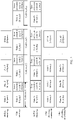
- FIG. 2 is a schematic diagram of a data stream before and after FEC encoding and decoding according to an embodiment of this application.
- the service data Before FEC encoding is performed on service data, the service data includes service data 1, service data 2, service data 3, ..., and service data m, and a length of each piece of service data is k bytes.
- an error correction code is added after each piece of service data, where the error correction code may also be referred to as a redundancy code or a check code, and a length of each error correction code is r bytes.
- the error correction code may also be referred to as a redundancy code or a check code
- a length of each error correction code is r bytes.
- the error correction code is used to check the service data. If it is determined that an error exists in the service data, error data in the service data is corrected, the error correction code is removed, and the service data with a length of k bytes is restored. In some cases, service data in a last codeword may not have a length of k bytes, and a length of restored service data may be less than k bytes. If the error data in the service data exceeds a preset threshold, an error correction capability is exceeded. In this case, error correction does not need to be performed, and the r-byte error correction code is separated, to keep the k-byte service data unchanged.
- the m codewords need to separately pass through an FEC decoding module and a classification and statistics collection module.
- the FEC decoding module is configured to decode the m codewords, and after decoding is completed, obtain error correction information of each of the m codewords, where the error correction information may include a quantity of error data in service data in each codeword or a quantity of corrected error data.
- the classification and statistics collection module may be configured to accumulate the quantity of error data based on the error correction information, for example, error data in a plurality of codewords or a plurality of bit streams, or collect statistics on service data based on different services.
- error correction information statistics are simple and can be continuously accumulated.
- TDM time division multiplexing
- PON passive optical network
- the TDM PON may include a gigabit passive optical network (gigabit-capable passive optical network, GPON), an Ethernet passive optical network (ethernet passive optical networks, EPON), a 10-gigabit passive optical network (10-gigabit-capable passive optical networks, XG-PON), a 10-gigabit symmetric passive optical network (10-gigabit-capable symmetric passive optical network, XGS-PON), an Ethernet passive optical network (10 Gbit/s Ethernet passive optical network, 10G EPON), or the like.
- FIG. 3 is a schematic diagram of a TDM PON transmission system according to an embodiment of this application.
- the system includes a plurality of optical network terminals (optical network terminal, ONT), an optical line terminal (optical line terminal, OLT), and an optical splitter.
- the ONT may also be an optical network unit (optical network unit, ONU).
- the plurality of ONTs for example, an ONT 1, an ONT 2, an ONT 3, ..., and an ONT n
- the OLT sends data to the plurality of ONTs by using the optical splitter.
- Each ONT receives data sent by the OLT and extracts data that belongs to the ONT.
- the OLT needs to collect statistics on error correction information based on different ONTs.
- a plurality of codewords may be sent in different timeslots. Therefore, it is necessary to collect cumulative statistics on error correction information in the plurality of codewords in different timeslots.
- FIG. 4 is a schematic diagram of an OLT hardware system according to an embodiment of this application.
- An OLT internally includes an FEC decoding module, a classification and statistics collection module, and a service processing module.
- the FEC decoding module is configured to decode a plurality of received codewords.
- the classification and statistics collection module is configured to separately collect statistics on error correction information based on different ONTs.
- the service processing module is configured to process service data in the plurality of received codewords.
- the FEC decoding module, the classification and statistics collection module, and the service processing module are all in a same chip, information is transmitted within the chip, there is a correspondence between the error correction information collected by the classification and statistics collection module and the service data processed by the service processing module, and statistics collection performed on error correction information for service data in each codeword may be relatively simple. If the FEC decoding module and the classification and statistics collection module are two different components (which may be understood as different boards or modules in a device, or may be understood as different devices), because the error correction information is based on the codewords, the FEC decoding module cannot determine a specific ONT to which each codeword belongs, and there is no correspondence between the error correction information obtained through decoding by the FEC decoding module and the service data. If error correction information of each ONT needs to be collected, the error correction information needs to be processed. This is relatively complex, affects transmission efficiency of the error correction information, and causes low data processing efficiency. To resolve the foregoing technical problems, embodiments of this application provide the following solutions.
- FIG. 5 is a schematic flowchart of an information processing method according to an embodiment of this application.
- a receiving device includes a decoding module and a classification and statistics collection module, and the method includes but is not limited to the following steps.
- a decoding module receives M first codewords from at least one peer device, where each first codeword includes first service data with a K-unit length and an error correction code with an R-unit length, and M, K, and R are all integers greater than or equal to 1.
- the unit length may be a byte, a bit, or the like.
- each peer device may first encode service data.
- service data before encoding by the peer device includes service data 1, service data 2, service data 3, ..., and service data M, and a length of each piece of service data is K bytes.
- M codewords are obtained after the service data is encoded.
- a codeword 1 includes service data 1 and an error correction code 1
- a codeword 2 includes service data 2 and an error correction code 2
- a codeword M includes service data M and an error correction code M.
- Each codeword includes K-byte service data and an R-byte error correction code.
- the error correction code may also be referred to as a redundancy code or a check code.
- the peer device sends the encoded M codewords to the receiving device.
- M first codewords received by the receiving device are different from the M codewords sent by the peer device.
- a first codeword 1 includes service data 1b and a check code 1b
- a first codeword 2 includes service data 2b and a check code 2b
- a last first codeword includes service data Mb and a check code Mb.
- the first codewords are different from the M codewords sent by the peer device.
- the decoding module decodes the M first codewords to obtain M second codewords, where a length of each second codeword is a sum of the K-unit length and the R-unit length, each second codeword includes second service data with the K-unit length and error correction information, the second service data is error-corrected first service data, and the error correction information is error statistics information obtained after error correction is performed on the first service data with the K-unit length based on the error correction code with the R-unit length.
- the decoding module performs error correction on the first service data in the first codeword to obtain second service data, and counts a quantity of error data in the first service data or a quantity of corrected data in the first service data in the first codeword, to generate error correction information, where the error correction information includes at least one of the quantity of error data or the quantity of corrected data. If the quantity of error data in the first service data in the first codeword exceeds a preset threshold, an error correction capability of the decoding module is exceeded. In this case, the first service data in each first codeword is kept unchanged.
- the error correction information may be identification information, and the identification information is used to indicate that the error correction capability is exceeded.
- the error correction information and the second service data are obtained by decoding each first codeword, the error correction information and the second service data are not separated, but the error correction information and the second service data are combined to form a second codeword.
- a length of the second codeword is the same as a length of the first codeword, and both are a (K+R)-unit length.
- a length of the second service data in the second codeword and a length of the first service data in the first codeword are the same, and both are a K-unit length.
- a valid length of the error correction information is less than or equal to the R-unit length.
- the valid length of the error correction information is equal to the R-unit length, the error correction information is written into all spatial locations of remaining R bytes in the second codeword. If the valid length of the error correction information is less than the R-unit length, the error correction information needs to occupy only a part of spatial locations of the remaining R-unit length in the second codeword. Therefore, an invalid padding code may be written into another part of spatial locations of the remaining R-unit length, and a part other than the second service data with the K-unit length and the error correction information in each second codeword is an invalid padding code.
- the invalid padding code may be 0, 1, 1010, or another agreed invalid bit stream.
- locations of the second service data, the error correction information, and the invalid padding code in the second codeword are not fixed.
- the second codeword may sequentially include the second service data, the error correction information, and the invalid padding code, or may sequentially include the second service data, the invalid padding code, and the error correction information. Other cases are similar and are not described herein.
- the receiving device decodes the M first codewords to obtain the M second codewords, where a second codeword 1 after decoding includes K-byte service data 1 and error correction information, a second codeword 2 after decoding includes K-byte service data 2 and error correction information, ..., and a last second codeword after decoding includes K-byte service data M and error correction information.
- the service data in each first codeword is kept unchanged, and after decoding, the service data in the second codeword is still the service data 1b, the service data 2b, ..., and the service data Mb.
- the service data is the same as that in the first codeword.
- the error correction information may be identification information used to identify excessive errors.
- the service data in the last codeword among the M first codewords may not have a K-unit length. Therefore, a length of the service data in the last codeword among the M second codewords obtained through decoding is less than or equal to the K-unit length.
- the decoding module sends the M second codewords to a classification and statistics collection module.
- FIG. 7 is a schematic diagram of a structure of a receiving device according to an embodiment of this application.
- the receiving device includes a decoding module and a classification and statistics collection module.
- the decoding module and the classification and statistics collection module are two independent components.
- the decoding module decodes the M first codewords to obtain the M second codewords, and then transmits the M second codewords to the classification and statistics collection module that is mutually independent of the decoding module.
- the classification and statistics collection module After receiving the M second codewords, performs classification processing on each second codeword to separately obtain second service data with the K-unit length and error correction information.
- the second service data with the K-unit length and the error correction information with the R-unit length may be obtained separately after the classification processing. Because the second service data with the K-unit length and the error correction information with the R-unit length in the second codeword are classified within a same component, after the second service data with the K-unit length and the error correction information with the R-unit length are transmitted by using different channels, a correspondence exists, and cumulative calculation of the error correction information is performed based on the correspondence.
- the classification and statistics collection module determines a bit error rate of the first service data based on the error correction information.
- a bit error rate of the service data is determined for each first codeword.
- the error correction information includes a first quantity of error data in the first service data with the K-unit length in each first codeword; and the classification and statistics collection module may determine the bit error rate of the first service data with the K-unit length based on the first quantity and the K-unit length. Further, the first quantity is divided by the K-unit length to obtain the bit error rate.
- a bit error rate of the service data is determined for all the M first codewords.
- the error correction information includes a first quantity of error data in the first service data with the K-unit length in each first codeword; and the classification and statistics collection module counts a second quantity of error data in the M first codewords based on the first quantity of error data in each first codeword, and then determines a bit error rate of all service data in the M first codewords based on the second quantity, the K-unit length, and M. Further, a product of the K-unit length and M may be calculated, and then the second quantity is divided by the product to obtain the bit error rate of all the service data in the M first codewords.
- a bit error rate of the service data is determined for first codewords sent by a same peer device.
- the M first codewords include first codewords sent by N target peer devices.
- the classification and statistics collection module counts a second quantity of error data in the N first codewords based on a first quantity of error data in each of the N first codewords, and then determines a bit error rate of all service data in the N first codewords based on the second quantity, the K-unit length, and N. Further, a product of the K-unit length and N may be calculated, and then the second data is divided by the product to obtain the bit error rate of all the service data in the N first codewords.
- a manner of collecting statistics on the bit error rate includes but is not limited to the foregoing manner. Alternatively, another manner may be used to collect statistics on the bit error rate of the service data.
- the classification and statistics collection module may collect statistics on second codewords of a same peer device among the M second codewords based on a peer device corresponding to each second codeword.
- the M second codewords include a codeword 1, a codeword 2, ..., and a codeword 6, and peer devices include a device 1 and a device 2.
- the codeword 1, the codeword 2, and the codeword 6 belong to the device 1.
- the codeword 3, the codeword 4, and the codeword 5 belong to the device 2.
- a downlink frame includes a payload (payload) part, the payload part includes a plurality of general encapsulation methods (general encapsulation methods, GEM) frames, and each GEM frame includes a GEM header (GEM header).
- GEM header includes a port identifier (port ID), and the port ID corresponds to a service stream of each ONT.
- An uplink frame includes a physical control frame header (PLOu) field and a payload field.
- the PLOu field includes an ONU ID, and the ONU ID is used to indicate an ONT to which a first codeword belongs.
- the payload field also includes a GEM header, the GEM header includes a port identifier (port ID), and the port ID corresponds to a service stream of each ONT. Therefore, the second codewords of the same peer device among the M second codewords may be counted based on the port ID or the ONU ID.
- a media access control (media access control, MAC) address, or a serial number (serial number, SN), or a virtual local area network (virtual local area network, VLAN) identifier (ID) may be used to collect statistics on the second codewords of the same peer device among the M second codewords.
- MAC media access control
- serial number serial number, SN
- VLAN virtual local area network
- this embodiment of this application may be applied not only to the PON system, but also to another system.
- the method is applied not only to uplink transmission but also to downlink transmission.
- the decoding module when the decoding module and the classification and statistics collection module are two independent components, the decoding module combines the decoded service data and the error correction information into a second codeword and transmits the second codeword to the classification and statistics collection module, so that the classification and statistics collection module can perform classification and statistics collection on the error correction information and the service data corresponding to the error correction information. Therefore, in a transmission process, no processing needs to be performed on the error correction information. This not only improves transmission efficiency of the error correction information, but also improves data processing efficiency.
- FIG. 8 is a schematic diagram of a structure of an information processing apparatus according to an embodiment of this application.
- the information processing apparatus may include a decoding module 801 and a classification and statistics collection module 802. Detailed descriptions of the modules are as follows.
- the decoding module 801 is configured to receive M first codewords from at least one peer device, where each first codeword includes first service data with a K-unit length and an error correction code with an R-unit length, and M, K, and R are all integers greater than or equal to 1.
- the decoding module 801 is further configured to decode the M first codewords to obtain M second codewords, where a length of each second codeword is a sum of the K-unit length and the R-unit length, each second codeword includes second service data with the K-unit length and error correction information, the second service data is error-corrected first service data, and the error correction information is error statistics information obtained after error correction is performed on the first service data with the K-unit length based on the error correction code with the R-unit length.
- the classification and statistics collection module 802 is configured to determine a bit error rate of the first service data based on the error correction information.
- a valid length of the error correction information is less than or equal to the R-unit length.
- a part other than the second service data with the K-unit length and the error correction information in each second codeword is an invalid padding code.
- the classification and statistics collection module 802 is further configured to collect statistics on second codewords of a same peer device among the M second codewords based on a peer device corresponding to each second codeword.
- the classification and statistics collection module 802 is further configured to perform classification processing on each second codeword to separately obtain the second service data with the K-unit length and the error correction information.
- the error correction information includes a first quantity of error data in the first service data with the K-unit length in each first codeword; and the classification and statistics collection module 802 is further configured to determine the bit error rate of the first service data with the K-unit length based on the first quantity and the K-unit length.
- the error correction information includes a first quantity of error data in the first service data with the K-unit length in each first codeword; and the classification and statistics collection module 802 is further configured to count a second quantity of error data in the M first codewords based on the first quantity of error data in each first codeword, and determine a bit error rate of all service data in the M first codewords based on the second quantity, the K-unit length, and M.
- each module performs the method and function performed by the receiving device in the foregoing embodiment.
- FIG. 9 is a schematic diagram of a structure of another information processing apparatus according to an embodiment of this application.
- the information processing apparatus is, for example, the foregoing decoding module.
- the decoding module may include a receiving unit 901, a processing unit 902, and a sending unit 903. Detailed descriptions of the units are as follows.
- the receiving unit 901 is configured to receive M first codewords from at least one peer device, where each first codeword includes first service data with a K-unit length and an error correction code with an R-unit length, and M, K, and R are all integers greater than or equal to 1.
- the processing unit 902 is configured to decode the M first codewords to obtain M second codewords, where a length of each second codeword is a sum of the K-unit length and the R-unit length, each second codeword includes second service data with the K-unit length and error correction information, the second service data is error-corrected first service data, and the error correction information is error statistics information obtained after error correction is performed on the first service data with the K-unit length based on the error correction code with the R-unit length.
- a valid length of the error correction information is less than or equal to the R-unit length.
- the sending unit 903 is configured to send the M second codewords to a second information processing apparatus.
- each module performs the method and function performed by the decoding module in the foregoing embodiment.
- FIG. 10 is a schematic diagram of a structure of another information processing apparatus according to an embodiment of this application.
- the information processing apparatus is, for example, the classification and statistics collection module.
- the classification and statistics collection module may include a receiving unit 1001 and a processing unit 1002. Detailed descriptions of the units are as follows.
- the receiving unit 1001 is configured to receive M second codewords sent by a first information processing apparatus, where a length of each second codeword is a sum of a K-unit length and an R-unit length, each second codeword includes second service data with the K-unit length and error correction information, the second service data is error-corrected first service data, the error correction information is error statistics information obtained after error correction is performed on first service data with the K-unit length based on an error correction code with the R-unit length in each of M first codewords, and M, K, and R are all integers greater than or equal to 1.
- the processing unit 1002 is configured to determine a bit error rate of the first service data based on the error correction information.
- the processing unit 1002 is further configured to perform classification processing on each second codeword to separately obtain the second service data with the K-unit length and the error correction information.
- the error correction information includes a first quantity of error data in the first service data with the K-unit length in each first codeword; and the processing unit 1002 determines the bit error rate of the first service data with the K-unit length based on the first quantity and the K-unit length.
- the error correction information includes a first quantity of error data in the first service data with the K-unit length in each first codeword; and the processing unit 1002 is further configured to count a second quantity of error data in the M first codewords based on the first quantity of error data in each first codeword, and determine a bit error rate of all service data in the M first codewords based on the second quantity, the K-unit length, and M.
- the processing unit 1002 is further configured to collect statistics on second codewords of a same peer device among the M second codewords based on a peer device corresponding to each second codeword.
- each module performs the method and function performed by the classification and statistics collection module in the foregoing embodiment.
- FIG. 11 is a schematic diagram of a structure of another receiving device according to an embodiment of this application.
- the receiving device may include at least one processor 1101 and at least one communication interface 1102.
- the receiving device may further include at least one memory 1103 and at least one communication bus 1104.
- the processor 1101 may include the foregoing decoding module and the foregoing classification and statistics collection module to separately perform the methods and functions performed by the decoding module and the classification and statistics collection module in the foregoing embodiments.
- the processor 1101 may be a central processing unit, a general-purpose processor, a digital signal processor, an application-specific integrated circuit, a field programmable gate array or another programmable logic device, a transistor logic device, a hardware component, or any combination thereof.
- the processor may implement or execute various example logical blocks, modules, and circuits described with reference to content disclosed in this application.
- the processor may be a combination of processors implementing a computing function, for example, a combination including one or more microprocessors, or a combination of a digital signal processor and a microprocessor.
- the communication bus 1104 may be a peripheral component interconnect standard PCI bus, an extended industry standard architecture EISA bus, or the like.
- the bus may be classified into an address bus, a data bus, a control bus, and the like. For ease of representation, only one thick line is used for representation in FIG. 11 , but it does not mean that there is only one bus or one type of bus.
- the communication bus 1104 is configured to implement connection and communication between these components.
- the communication interface 1102 of the device in this embodiment of this application is configured to perform signaling or data communication with another node device.
- the memory 1103 may include a volatile memory, a phase change random access memory (phase change RAM, PRAM), or a magnetoresistive random access memory (magnetoresistive RAM, MRAM), and may further include a nonvolatile memory, for example, at least one magnetic disk storage device, an electronically erasable programmable read-only memory (electrically erasable programmable read-only memory, EEPROM), a flash memory device, for example, an NOR flash memory (NOR flash memory), or a NAND flash memory (NAND flash memory), or a semiconductor device, such as a solid-state drive (solid-state drive, SSD).
- the memory 1103 may be at least one storage apparatus located away from the processor 1101.
- the memory 1103 may further store a group of program code, and optionally, the processor 1101 may further execute the program stored in the memory 1103 to perform the following:
- a valid length of the error correction information is less than or equal to the R-unit length.
- statistics collection is performed on second codewords of a same peer device among the M second codewords based on a peer device corresponding to each second codeword.
- classification processing is performed on each second codeword to separately obtain the second service data with the K-unit length and the error correction information.
- the error correction information includes a first quantity of error data in the first service data with the K-unit length in each first codeword; and the bit error rate of the first service data with the K-unit length is determined based on the first quantity and the K-unit length.
- the error correction information includes a first quantity of error data in the first service data with the K-unit length in each first codeword; and a second quantity of error data in the M first codewords is counted based on the first quantity of error data in each first codeword, and a bit error rate of all service data in the M first codewords is determined based on the second quantity, the K-unit length, and M.
- processor may further cooperate with the memory and the communication interface to perform operations of the receiving device in the foregoing embodiments of this application.
- All or some of the foregoing embodiments may be implemented by using software, hardware, firmware, or any combination thereof.
- software is used to implement embodiments, all or some of embodiments may be implemented in a form of a computer program product.
- the computer program product includes one or more computer instructions.
- the computer may be a general-purpose computer, a dedicated computer, a computer network, or another programmable apparatus.
- the computer instructions may be stored in a computer-readable storage medium, or may be transmitted from a computer-readable storage medium to another computer-readable storage medium.
- the computer instructions may be transmitted from a website, computer, server, or data center to another website, computer, server, or data center in a wired (for example, a coaxial cable, an optical fiber, or a digital subscriber line (DSL)) or wireless (for example, infrared, radio, microwave, or the like) manner.
- the computer-readable storage medium may be any usable medium accessible by a computer, or a data storage device, such as a server or a data center, integrating one or more usable media.
- the usable medium may be a magnetic medium (for example, a floppy disk, a hard disk, or a magnetic tape), an optical medium (for example, a DVD), a semiconductor medium (for example, a solid-state drive solid-state drive (SSD)), or the like.
- a magnetic medium for example, a floppy disk, a hard disk, or a magnetic tape
- an optical medium for example, a DVD
- a semiconductor medium for example, a solid-state drive solid-state drive (SSD)
Landscapes
- Engineering & Computer Science (AREA)
- Computer Networks & Wireless Communication (AREA)
- Signal Processing (AREA)
- Physics & Mathematics (AREA)
- Probability & Statistics with Applications (AREA)
- Theoretical Computer Science (AREA)
- Nonlinear Science (AREA)
- Quality & Reliability (AREA)
- Detection And Prevention Of Errors In Transmission (AREA)
Applications Claiming Priority (2)
| Application Number | Priority Date | Filing Date | Title |
|---|---|---|---|
| CN202010161558.3A CN113381840B (zh) | 2020-03-10 | 2020-03-10 | 一种信息处理方法及装置 |
| PCT/CN2021/077772 WO2021179909A1 (zh) | 2020-03-10 | 2021-02-25 | 一种信息处理方法及装置 |
Publications (4)
| Publication Number | Publication Date |
|---|---|
| EP4089940A1 true EP4089940A1 (de) | 2022-11-16 |
| EP4089940A4 EP4089940A4 (de) | 2023-07-26 |
| EP4089940B1 EP4089940B1 (de) | 2024-06-12 |
| EP4089940C0 EP4089940C0 (de) | 2024-06-12 |
Family
ID=77568710
Family Applications (1)
| Application Number | Title | Priority Date | Filing Date |
|---|---|---|---|
| EP21768665.8A Active EP4089940B1 (de) | 2020-03-10 | 2021-02-25 | Informationsverarbeitungsverfahren und -vorrichtung |
Country Status (5)
| Country | Link |
|---|---|
| US (1) | US11764809B2 (de) |
| EP (1) | EP4089940B1 (de) |
| CN (2) | CN113381840B (de) |
| ES (1) | ES2986120T3 (de) |
| WO (1) | WO2021179909A1 (de) |
Families Citing this family (3)
| Publication number | Priority date | Publication date | Assignee | Title |
|---|---|---|---|---|
| CN119420461B (zh) * | 2022-03-08 | 2025-08-19 | 华为技术有限公司 | 一种数据处理方法及第二通信装置 |
| CN120357996A (zh) * | 2024-01-19 | 2025-07-22 | 华为技术有限公司 | 一种数据处理方法及装置 |
| CN118802652B (zh) * | 2024-09-10 | 2024-12-20 | 芯潮流(珠海)科技有限公司 | 高精度误码率统计的方法和接收装置 |
Family Cites Families (21)
| Publication number | Priority date | Publication date | Assignee | Title |
|---|---|---|---|---|
| US7818648B2 (en) * | 2005-12-18 | 2010-10-19 | Pmc-Sierra Israel Ltd. | GPON rogue-ONU detection based on error counts |
| US8381047B2 (en) * | 2005-11-30 | 2013-02-19 | Microsoft Corporation | Predicting degradation of a communication channel below a threshold based on data transmission errors |
| CN101183913B (zh) * | 2007-11-21 | 2010-12-08 | 烽火通信科技股份有限公司 | 一种波分复用光传输系统中精确调整色散补偿的方法 |
| JP2010028629A (ja) * | 2008-07-23 | 2010-02-04 | Nec Corp | 局側終端装置、加入者側終端装置、光通信システム、通信方法、装置のプログラム |
| US8442398B2 (en) * | 2008-10-21 | 2013-05-14 | Broadcom Corporation | Performance monitoring in passive optical networks |
| US8442021B2 (en) * | 2008-11-07 | 2013-05-14 | Motorola Mobility Llc | Radio link performance prediction in wireless communication terminal |
| CN101739306A (zh) * | 2008-11-12 | 2010-06-16 | 成都市华为赛门铁克科技有限公司 | 数据错误处理方法、数据错误检查和纠正装置及系统 |
| WO2011022886A1 (zh) * | 2009-08-27 | 2011-03-03 | 华为技术有限公司 | 一种改善信号质量的方法、装置及设备 |
| JP5696604B2 (ja) * | 2011-06-30 | 2015-04-08 | 富士通株式会社 | 誤り訂正符号の復号装置、誤り訂正符号の復号方法及び基地局装置ならびに移動局装置 |
| US8806295B2 (en) * | 2012-05-24 | 2014-08-12 | International Business Machines Corporation | Mis-correction and no-correction rates for error control |
| JP5835108B2 (ja) * | 2012-05-31 | 2015-12-24 | ソニー株式会社 | 受信装置および受信方法 |
| US20160299844A1 (en) * | 2015-04-08 | 2016-10-13 | Sandisk Enterprise Ip Llc | Mapping Logical Groups of Data to Physical Locations In Memory |
| US11515897B2 (en) * | 2015-05-29 | 2022-11-29 | SK Hynix Inc. | Data storage device |
| KR102621627B1 (ko) * | 2016-06-01 | 2024-01-08 | 삼성전자주식회사 | 순환 중복 검사와 극 부호를 이용하는 부호화를 위한 장치 및 방법 |
| WO2018108247A1 (en) * | 2016-12-13 | 2018-06-21 | Nokia Technologies Oy | Polar codes for downlink control channels for wireless networks |
| US10547332B2 (en) * | 2017-02-01 | 2020-01-28 | Tsofun Algorithm Ltd. | Device, system and method of implementing product error correction codes for fast encoding and decoding |
| US10312945B2 (en) * | 2017-02-13 | 2019-06-04 | Lg Electronics Inc. | Channel coding method using concatenated code structure and apparatus therefor |
| US10756846B2 (en) * | 2017-03-16 | 2020-08-25 | Qualcomm Incorporated | Distributed feedback architecture for polar decoding |
| US10153785B1 (en) * | 2017-05-26 | 2018-12-11 | SK Hynix Inc. | Generalized low-density parity-check (GLDPC) code with variable length constituents |
| US10417088B2 (en) * | 2017-11-09 | 2019-09-17 | International Business Machines Corporation | Data protection techniques for a non-volatile memory array |
| US11569845B2 (en) * | 2017-12-29 | 2023-01-31 | Intel Corporation | Polar encoding and polar decoding systems and methods |
-
2020
- 2020-03-10 CN CN202010161558.3A patent/CN113381840B/zh active Active
- 2020-03-10 CN CN202210623589.5A patent/CN115102665A/zh active Pending
-
2021
- 2021-02-25 EP EP21768665.8A patent/EP4089940B1/de active Active
- 2021-02-25 WO PCT/CN2021/077772 patent/WO2021179909A1/zh not_active Ceased
- 2021-02-25 ES ES21768665T patent/ES2986120T3/es active Active
-
2022
- 2022-09-08 US US17/930,523 patent/US11764809B2/en active Active
Also Published As
| Publication number | Publication date |
|---|---|
| CN115102665A (zh) | 2022-09-23 |
| WO2021179909A1 (zh) | 2021-09-16 |
| CN113381840B (zh) | 2022-06-10 |
| ES2986120T3 (es) | 2024-11-08 |
| EP4089940B1 (de) | 2024-06-12 |
| EP4089940C0 (de) | 2024-06-12 |
| CN113381840A (zh) | 2021-09-10 |
| US20230006698A1 (en) | 2023-01-05 |
| US11764809B2 (en) | 2023-09-19 |
| EP4089940A4 (de) | 2023-07-26 |
Similar Documents
| Publication | Publication Date | Title |
|---|---|---|
| US11764809B2 (en) | Information processing method and apparatus | |
| US8122325B2 (en) | Forward error correction for 64b66b coded systems | |
| CN110086541B (zh) | 一种无源光网络成帧的方法、装置及系统 | |
| JP5006351B2 (ja) | データエラー報告を実現するための方法およびデバイス | |
| CN113395613A (zh) | 一种业务承载的方法、装置和系统 | |
| CN109478947B (zh) | 一种下行数据帧的传输方法和设备 | |
| US12170571B2 (en) | Data sending and receiving method and device | |
| EP3496308A1 (de) | Kommunikationsverfahren und -vorrichtung für passives optisches ethernet-netzwerk | |
| US11329910B2 (en) | Transmission apparatus including a plurality of switches and output circuits for transmitting data and transmission method | |
| CN101729194B (zh) | 数据编码、数据解码的方法、装置和系统 | |
| CN113542936A (zh) | 一种用于点对多点通信网络的源装置和目的地装置的概念 | |
| CN116582219B (zh) | 一种光传送网中的数据帧的处理方法、装置和系统 | |
| EP4340232A1 (de) | Codierungsverfahren, decodierungsverfahren und optisches modul | |
| CN1968036B (zh) | 一种前向纠错解码装置及控制方法 | |
| CN101977092B (zh) | 前向纠错映射和去映射技术 | |
| US20260074829A1 (en) | Methods, apparatuses, and optical network devices for uplink fec encoding and decoding | |
| CN102075296B (zh) | 一种光传送网背板实现前向纠错的方法、系统及装置 | |
| US11895448B2 (en) | Communication apparatus and communication method | |
| CN100558027C (zh) | 简化千兆无源光网络下行前向纠错处理的方法和系统 | |
| US12549279B2 (en) | Method for adjusting transmission rate, processor, network device, and network system | |
| CN118353575A (zh) | 传输数据的方法、装置、设备、系统及存储介质 | |
| WO2022218048A1 (zh) | 无源光网络传输方法、装置和系统 | |
| JP3173713B2 (ja) | エラー訂正符号化方法および送受信装置 | |
| US20140341559A1 (en) | Communication device, communication system, and communication method | |
| WO2018076672A1 (zh) | 一种光传送网络业务接入方法及装置、计算机存储介质 |
Legal Events
| Date | Code | Title | Description |
|---|---|---|---|
| STAA | Information on the status of an ep patent application or granted ep patent |
Free format text: STATUS: THE INTERNATIONAL PUBLICATION HAS BEEN MADE |
|
| PUAI | Public reference made under article 153(3) epc to a published international application that has entered the european phase |
Free format text: ORIGINAL CODE: 0009012 |
|
| STAA | Information on the status of an ep patent application or granted ep patent |
Free format text: STATUS: REQUEST FOR EXAMINATION WAS MADE |
|
| 17P | Request for examination filed |
Effective date: 20220812 |
|
| AK | Designated contracting states |
Kind code of ref document: A1 Designated state(s): AL AT BE BG CH CY CZ DE DK EE ES FI FR GB GR HR HU IE IS IT LI LT LU LV MC MK MT NL NO PL PT RO RS SE SI SK SM TR |
|
| DAV | Request for validation of the european patent (deleted) | ||
| DAX | Request for extension of the european patent (deleted) | ||
| A4 | Supplementary search report drawn up and despatched |
Effective date: 20230626 |
|
| RIC1 | Information provided on ipc code assigned before grant |
Ipc: H04L 1/20 20060101ALI20230620BHEP Ipc: H04L 1/00 20060101AFI20230620BHEP |
|
| GRAP | Despatch of communication of intention to grant a patent |
Free format text: ORIGINAL CODE: EPIDOSNIGR1 |
|
| STAA | Information on the status of an ep patent application or granted ep patent |
Free format text: STATUS: GRANT OF PATENT IS INTENDED |
|
| INTG | Intention to grant announced |
Effective date: 20240214 |
|
| GRAS | Grant fee paid |
Free format text: ORIGINAL CODE: EPIDOSNIGR3 |
|
| GRAA | (expected) grant |
Free format text: ORIGINAL CODE: 0009210 |
|
| STAA | Information on the status of an ep patent application or granted ep patent |
Free format text: STATUS: THE PATENT HAS BEEN GRANTED |
|
| AK | Designated contracting states |
Kind code of ref document: B1 Designated state(s): AL AT BE BG CH CY CZ DE DK EE ES FI FR GB GR HR HU IE IS IT LI LT LU LV MC MK MT NL NO PL PT RO RS SE SI SK SM TR |
|
| REG | Reference to a national code |
Ref country code: GB Ref legal event code: FG4D |
|
| REG | Reference to a national code |
Ref country code: CH Ref legal event code: EP |
|
| REG | Reference to a national code |
Ref country code: IE Ref legal event code: FG4D |
|
| REG | Reference to a national code |
Ref country code: DE Ref legal event code: R096 Ref document number: 602021014433 Country of ref document: DE |
|
| U01 | Request for unitary effect filed |
Effective date: 20240612 |
|
| U07 | Unitary effect registered |
Designated state(s): AT BE BG DE DK EE FI FR IT LT LU LV MT NL PT SE SI Effective date: 20240619 |
|
| PG25 | Lapsed in a contracting state [announced via postgrant information from national office to epo] |
Ref country code: HR Free format text: LAPSE BECAUSE OF FAILURE TO SUBMIT A TRANSLATION OF THE DESCRIPTION OR TO PAY THE FEE WITHIN THE PRESCRIBED TIME-LIMIT Effective date: 20240612 |
|
| PG25 | Lapsed in a contracting state [announced via postgrant information from national office to epo] |
Ref country code: GR Free format text: LAPSE BECAUSE OF FAILURE TO SUBMIT A TRANSLATION OF THE DESCRIPTION OR TO PAY THE FEE WITHIN THE PRESCRIBED TIME-LIMIT Effective date: 20240913 |
|
| PG25 | Lapsed in a contracting state [announced via postgrant information from national office to epo] |
Ref country code: NO Free format text: LAPSE BECAUSE OF FAILURE TO SUBMIT A TRANSLATION OF THE DESCRIPTION OR TO PAY THE FEE WITHIN THE PRESCRIBED TIME-LIMIT Effective date: 20240912 Ref country code: HR Free format text: LAPSE BECAUSE OF FAILURE TO SUBMIT A TRANSLATION OF THE DESCRIPTION OR TO PAY THE FEE WITHIN THE PRESCRIBED TIME-LIMIT Effective date: 20240612 Ref country code: GR Free format text: LAPSE BECAUSE OF FAILURE TO SUBMIT A TRANSLATION OF THE DESCRIPTION OR TO PAY THE FEE WITHIN THE PRESCRIBED TIME-LIMIT Effective date: 20240913 Ref country code: RS Free format text: LAPSE BECAUSE OF FAILURE TO SUBMIT A TRANSLATION OF THE DESCRIPTION OR TO PAY THE FEE WITHIN THE PRESCRIBED TIME-LIMIT Effective date: 20240912 |
|
| REG | Reference to a national code |
Ref country code: ES Ref legal event code: FG2A Ref document number: 2986120 Country of ref document: ES Kind code of ref document: T3 Effective date: 20241108 |
|
| PG25 | Lapsed in a contracting state [announced via postgrant information from national office to epo] |
Ref country code: PL Free format text: LAPSE BECAUSE OF FAILURE TO SUBMIT A TRANSLATION OF THE DESCRIPTION OR TO PAY THE FEE WITHIN THE PRESCRIBED TIME-LIMIT Effective date: 20240612 |
|
| PG25 | Lapsed in a contracting state [announced via postgrant information from national office to epo] |
Ref country code: IS Free format text: LAPSE BECAUSE OF FAILURE TO SUBMIT A TRANSLATION OF THE DESCRIPTION OR TO PAY THE FEE WITHIN THE PRESCRIBED TIME-LIMIT Effective date: 20241012 |
|
| PG25 | Lapsed in a contracting state [announced via postgrant information from national office to epo] |
Ref country code: CZ Free format text: LAPSE BECAUSE OF FAILURE TO SUBMIT A TRANSLATION OF THE DESCRIPTION OR TO PAY THE FEE WITHIN THE PRESCRIBED TIME-LIMIT Effective date: 20240612 |
|
| PG25 | Lapsed in a contracting state [announced via postgrant information from national office to epo] |
Ref country code: RO Free format text: LAPSE BECAUSE OF FAILURE TO SUBMIT A TRANSLATION OF THE DESCRIPTION OR TO PAY THE FEE WITHIN THE PRESCRIBED TIME-LIMIT Effective date: 20240612 Ref country code: SK Free format text: LAPSE BECAUSE OF FAILURE TO SUBMIT A TRANSLATION OF THE DESCRIPTION OR TO PAY THE FEE WITHIN THE PRESCRIBED TIME-LIMIT Effective date: 20240612 |
|
| PG25 | Lapsed in a contracting state [announced via postgrant information from national office to epo] |
Ref country code: SM Free format text: LAPSE BECAUSE OF FAILURE TO SUBMIT A TRANSLATION OF THE DESCRIPTION OR TO PAY THE FEE WITHIN THE PRESCRIBED TIME-LIMIT Effective date: 20240612 |
|
| PG25 | Lapsed in a contracting state [announced via postgrant information from national office to epo] |
Ref country code: SM Free format text: LAPSE BECAUSE OF FAILURE TO SUBMIT A TRANSLATION OF THE DESCRIPTION OR TO PAY THE FEE WITHIN THE PRESCRIBED TIME-LIMIT Effective date: 20240612 Ref country code: SK Free format text: LAPSE BECAUSE OF FAILURE TO SUBMIT A TRANSLATION OF THE DESCRIPTION OR TO PAY THE FEE WITHIN THE PRESCRIBED TIME-LIMIT Effective date: 20240612 Ref country code: RO Free format text: LAPSE BECAUSE OF FAILURE TO SUBMIT A TRANSLATION OF THE DESCRIPTION OR TO PAY THE FEE WITHIN THE PRESCRIBED TIME-LIMIT Effective date: 20240612 Ref country code: PL Free format text: LAPSE BECAUSE OF FAILURE TO SUBMIT A TRANSLATION OF THE DESCRIPTION OR TO PAY THE FEE WITHIN THE PRESCRIBED TIME-LIMIT Effective date: 20240612 Ref country code: IS Free format text: LAPSE BECAUSE OF FAILURE TO SUBMIT A TRANSLATION OF THE DESCRIPTION OR TO PAY THE FEE WITHIN THE PRESCRIBED TIME-LIMIT Effective date: 20241012 Ref country code: CZ Free format text: LAPSE BECAUSE OF FAILURE TO SUBMIT A TRANSLATION OF THE DESCRIPTION OR TO PAY THE FEE WITHIN THE PRESCRIBED TIME-LIMIT Effective date: 20240612 |
|
| U20 | Renewal fee for the european patent with unitary effect paid |
Year of fee payment: 5 Effective date: 20250228 |
|
| PLBE | No opposition filed within time limit |
Free format text: ORIGINAL CODE: 0009261 |
|
| STAA | Information on the status of an ep patent application or granted ep patent |
Free format text: STATUS: NO OPPOSITION FILED WITHIN TIME LIMIT |
|
| 26N | No opposition filed |
Effective date: 20250313 |
|
| PG25 | Lapsed in a contracting state [announced via postgrant information from national office to epo] |
Ref country code: MC Free format text: LAPSE BECAUSE OF FAILURE TO SUBMIT A TRANSLATION OF THE DESCRIPTION OR TO PAY THE FEE WITHIN THE PRESCRIBED TIME-LIMIT Effective date: 20240612 |
|
| REG | Reference to a national code |
Ref country code: CH Ref legal event code: PL |
|
| PG25 | Lapsed in a contracting state [announced via postgrant information from national office to epo] |
Ref country code: CH Free format text: LAPSE BECAUSE OF NON-PAYMENT OF DUE FEES Effective date: 20250228 |
|
| PG25 | Lapsed in a contracting state [announced via postgrant information from national office to epo] |
Ref country code: IE Free format text: LAPSE BECAUSE OF NON-PAYMENT OF DUE FEES Effective date: 20250225 |
|
| U20 | Renewal fee for the european patent with unitary effect paid |
Year of fee payment: 6 Effective date: 20260302 |
|
| PGFP | Annual fee paid to national office [announced via postgrant information from national office to epo] |
Ref country code: GB Payment date: 20260106 Year of fee payment: 6 |
|
| PGFP | Annual fee paid to national office [announced via postgrant information from national office to epo] |
Ref country code: ES Payment date: 20260305 Year of fee payment: 6 |