EP4090124A1 - Procédé et appareil permettant de transmettre un msg3 - Google Patents
Procédé et appareil permettant de transmettre un msg3 Download PDFInfo
- Publication number
- EP4090124A1 EP4090124A1 EP21738875.0A EP21738875A EP4090124A1 EP 4090124 A1 EP4090124 A1 EP 4090124A1 EP 21738875 A EP21738875 A EP 21738875A EP 4090124 A1 EP4090124 A1 EP 4090124A1
- Authority
- EP
- European Patent Office
- Prior art keywords
- msg3
- pusch resources
- terminal device
- target
- repeatedly
- Prior art date
- Legal status (The legal status is an assumption and is not a legal conclusion. Google has not performed a legal analysis and makes no representation as to the accuracy of the status listed.)
- Pending
Links
Images

Classifications
-
- H—ELECTRICITY
- H04—ELECTRIC COMMUNICATION TECHNIQUE
- H04W—WIRELESS COMMUNICATION NETWORKS
- H04W74/00—Wireless channel access
- H04W74/002—Transmission of channel access control information
- H04W74/004—Transmission of channel access control information in the uplink, i.e. towards network
-
- H—ELECTRICITY
- H04—ELECTRIC COMMUNICATION TECHNIQUE
- H04L—TRANSMISSION OF DIGITAL INFORMATION, e.g. TELEGRAPHIC COMMUNICATION
- H04L1/00—Arrangements for detecting or preventing errors in the information received
- H04L1/0001—Systems modifying transmission characteristics according to link quality, e.g. power backoff
- H04L1/0023—Systems modifying transmission characteristics according to link quality, e.g. power backoff characterised by the signalling
-
- H—ELECTRICITY
- H04—ELECTRIC COMMUNICATION TECHNIQUE
- H04L—TRANSMISSION OF DIGITAL INFORMATION, e.g. TELEGRAPHIC COMMUNICATION
- H04L1/00—Arrangements for detecting or preventing errors in the information received
- H04L1/004—Arrangements for detecting or preventing errors in the information received by using forward error control
- H04L1/0072—Error control for data other than payload data, e.g. control data
-
- H—ELECTRICITY
- H04—ELECTRIC COMMUNICATION TECHNIQUE
- H04L—TRANSMISSION OF DIGITAL INFORMATION, e.g. TELEGRAPHIC COMMUNICATION
- H04L1/00—Arrangements for detecting or preventing errors in the information received
- H04L1/08—Arrangements for detecting or preventing errors in the information received by repeating transmission, e.g. Verdan system
-
- H—ELECTRICITY
- H04—ELECTRIC COMMUNICATION TECHNIQUE
- H04L—TRANSMISSION OF DIGITAL INFORMATION, e.g. TELEGRAPHIC COMMUNICATION
- H04L1/00—Arrangements for detecting or preventing errors in the information received
- H04L1/12—Arrangements for detecting or preventing errors in the information received by using return channel
- H04L1/16—Arrangements for detecting or preventing errors in the information received by using return channel in which the return channel carries supervisory signals, e.g. repetition request signals
- H04L1/18—Automatic repetition systems, e.g. Van Duuren systems
- H04L1/1812—Hybrid protocols; Hybrid automatic repeat request [HARQ]
-
- H—ELECTRICITY
- H04—ELECTRIC COMMUNICATION TECHNIQUE
- H04L—TRANSMISSION OF DIGITAL INFORMATION, e.g. TELEGRAPHIC COMMUNICATION
- H04L1/00—Arrangements for detecting or preventing errors in the information received
- H04L1/12—Arrangements for detecting or preventing errors in the information received by using return channel
- H04L1/16—Arrangements for detecting or preventing errors in the information received by using return channel in which the return channel carries supervisory signals, e.g. repetition request signals
- H04L1/18—Automatic repetition systems, e.g. Van Duuren systems
- H04L1/1812—Hybrid protocols; Hybrid automatic repeat request [HARQ]
- H04L1/1819—Hybrid protocols; Hybrid automatic repeat request [HARQ] with retransmission of additional or different redundancy
-
- H—ELECTRICITY
- H04—ELECTRIC COMMUNICATION TECHNIQUE
- H04L—TRANSMISSION OF DIGITAL INFORMATION, e.g. TELEGRAPHIC COMMUNICATION
- H04L1/00—Arrangements for detecting or preventing errors in the information received
- H04L1/12—Arrangements for detecting or preventing errors in the information received by using return channel
- H04L1/16—Arrangements for detecting or preventing errors in the information received by using return channel in which the return channel carries supervisory signals, e.g. repetition request signals
- H04L1/18—Automatic repetition systems, e.g. Van Duuren systems
- H04L1/1822—Automatic repetition systems, e.g. Van Duuren systems involving configuration of automatic repeat request [ARQ] with parallel processes
-
- H—ELECTRICITY
- H04—ELECTRIC COMMUNICATION TECHNIQUE
- H04L—TRANSMISSION OF DIGITAL INFORMATION, e.g. TELEGRAPHIC COMMUNICATION
- H04L1/00—Arrangements for detecting or preventing errors in the information received
- H04L1/12—Arrangements for detecting or preventing errors in the information received by using return channel
- H04L1/16—Arrangements for detecting or preventing errors in the information received by using return channel in which the return channel carries supervisory signals, e.g. repetition request signals
- H04L1/18—Automatic repetition systems, e.g. Van Duuren systems
- H04L1/1829—Arrangements specially adapted for the receiver end
- H04L1/1864—ARQ related signaling
-
- H—ELECTRICITY
- H04—ELECTRIC COMMUNICATION TECHNIQUE
- H04L—TRANSMISSION OF DIGITAL INFORMATION, e.g. TELEGRAPHIC COMMUNICATION
- H04L1/00—Arrangements for detecting or preventing errors in the information received
- H04L1/12—Arrangements for detecting or preventing errors in the information received by using return channel
- H04L1/16—Arrangements for detecting or preventing errors in the information received by using return channel in which the return channel carries supervisory signals, e.g. repetition request signals
- H04L1/18—Automatic repetition systems, e.g. Van Duuren systems
- H04L1/1867—Arrangements specially adapted for the transmitter end
- H04L1/189—Transmission or retransmission of more than one copy of a message
-
- H—ELECTRICITY
- H04—ELECTRIC COMMUNICATION TECHNIQUE
- H04W—WIRELESS COMMUNICATION NETWORKS
- H04W72/00—Local resource management
- H04W72/12—Wireless traffic scheduling
- H04W72/1263—Mapping of traffic onto schedule, e.g. scheduled allocation or multiplexing of flows
- H04W72/1268—Mapping of traffic onto schedule, e.g. scheduled allocation or multiplexing of flows of uplink data flows
-
- H—ELECTRICITY
- H04—ELECTRIC COMMUNICATION TECHNIQUE
- H04W—WIRELESS COMMUNICATION NETWORKS
- H04W72/00—Local resource management
- H04W72/20—Control channels or signalling for resource management
- H04W72/21—Control channels or signalling for resource management in the uplink direction of a wireless link, i.e. towards the network
-
- H—ELECTRICITY
- H04—ELECTRIC COMMUNICATION TECHNIQUE
- H04W—WIRELESS COMMUNICATION NETWORKS
- H04W74/00—Wireless channel access
- H04W74/08—Non-scheduled access, e.g. ALOHA
- H04W74/0833—Random access procedures, e.g. with 4-step access
-
- H—ELECTRICITY
- H04—ELECTRIC COMMUNICATION TECHNIQUE
- H04W—WIRELESS COMMUNICATION NETWORKS
- H04W74/00—Wireless channel access
- H04W74/08—Non-scheduled access, e.g. ALOHA
- H04W74/0833—Random access procedures, e.g. with 4-step access
- H04W74/0841—Random access procedures, e.g. with 4-step access with collision treatment
- H04W74/085—Random access procedures, e.g. with 4-step access with collision treatment collision avoidance
Definitions
- Embodiments of the present invention relate to the communications field, and in particular, to a method and device for transmitting MSG3.
- Contention-based random access can be used by a terminal device to achieve the following purposes: initial access; Radio Resource Control (Radio Resource Control, RRC) connection re-establishment; handover; arrival of downlink data in an RRC connected mode in an asynchronous state; arrival of uplink data in the RRC connected mode; positioning in the RRC connected mode, etc.
- RRC Radio Resource Control
- the terminal device sends MSG3 on uplink scheduling grant specified by MSG2. If the sending fails, MSG3 may further be retransmitted on a resource scheduled by a physical downlink control channel (Physical Downlink Control Channel, PDCCH) scrambled by a temporary cell-radio network temporary identifier (Temporary Cell-Radio Network Temporary Identifier, TC-RNTI), resulting in limited MSG3 transmission performance.
- PDCCH Physical Downlink Control Channel
- TC-RNTI Temporary Cell-Radio Network Temporary Identifier
- An objective of embodiments of the present invention is to provide a method and device for transmitting MSG3, so as to solve the problem of limited MSG3 transmission performance in the related art.
- a method for transmitting MSG3 is provided.
- the method is performed by a terminal device.
- the method includes: repeatedly transmitting MSG3 on multiple PUSCH resources.
- a method for transmitting MSG3 is provided.
- the method is performed by a network device.
- the method includes: receiving MSG3 that is repeatedly transmitted on multiple PUSCH resources.
- a terminal device includes: a transmission module, configured to repeatedly transmit MSG3 on multiple PUSCH resources.
- a network device includes: a receiving module, configured to receive MSG3 that is repeatedly transmitted on multiple PUSCH resources.
- a terminal device includes a processor, a memory, and a computer program stored in the memory and executable on the processor.
- the computer program is executed by the processor, the steps of the method for transmitting MSG3 according to the first aspect are implemented.
- a network device includes a processor, a memory, and a computer program stored in the memory and executable on the processor.
- the computer program is executed by the processor, the steps of the method for transmitting MSG3 according to the second aspect are implemented.
- a computer-readable storage medium stores a computer program.
- the computer program is executed by a processor, the steps of the methods for transmitting MSG3 according to the first aspect and the second aspect are implemented.
- the MSG3 transmission performance is improved, the coverage performance of MSG3 is improved, and the delay of random access process is reduced.
- the technical solutions in the embodiments of the present invention can be applied to various communication systems, such as a long term evolution (Long Term Evolution, LTE) system, an LTE frequency division duplex (Frequency Division Duplex, FDD) system, an LTE time division duplex (Time Division Duplex, TDD) system, a universal mobile telecommunication system (Universal Mobile Telecommunication System, UMTS), a worldwide interoperability for microwave access (Worldwide Interoperability for Microwave Access, WiMAX) communication system, a 5G system, a new radio (New Radio, NR) system, or a subsequent evolved communication system.
- LTE Long Term Evolution
- FDD Frequency Division Duplex
- TDD Time Division Duplex
- UMTS Universal Mobile Telecommunication System
- WiMAX worldwide interoperability for microwave access
- 5G system a new radio (New Radio, NR) system
- New Radio, NR New Radio
- the terminal device may include, but not limited to, a mobile station (Mobile Station, MS), a mobile terminal (Mobile Terminal), a mobile telephone (Mobile Telephone), a user equipment (User Equipment, UE), a handset (handset), a portable equipment (portable equipment), a vehicle (vehicle), or the like.
- the terminal device may communicate with one or more core networks through a radio access network (RAN).
- RAN radio access network
- the terminal device may be a mobile phone (or referred to as a "cellular" phone) or a computer with a wireless communication function, or the terminal device may be a portable, pocket-sized, handheld, computer built-in, or in-vehicle mobile apparatus.
- a network device is a device deployed in a wireless access network and configured to provide the wireless communication function for the terminal device.
- the network device may be a base station, and the base station may include various forms of macro base station, micro base station, relay station, access point, and the like.
- the names of devices with base station functions may vary.
- the device is referred to as an evolved NodeB (Evolved NodeB, eNB or eNodeB) in an LTE network
- the device is referred to as a Node B (Node B) in a third-generation (third-Generation, 3G) network
- the device is referred to as a network equipment in a subsequent evolved communication system.
- Node B evolved NodeB
- 3G third-Generation
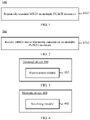
- an embodiment of the present invention provides a method for transmitting MSG3 100.
- the method may be performed by a terminal device.
- the method may be executed by software or hardware installed on the terminal device.
- the method 100 includes the following steps:
- S102 Repeatedly transmit MSG3 on multiple physical uplink shared channel (Physical Uplink Shared Channel, PUSCH) resources.
- Physical Uplink Shared Channel Physical Uplink Shared Channel
- the terminal device sends a random access preamble (preamble) to the network device to initiate a random access procedure.
- the preamble is also referred to as MSG1 of the random access procedure.
- the network device If the network device successfully detects the preamble, the network device sends a random access response (Random Access Response, RAR) corresponding to the preamble.
- RAR may include an identifier of the preamble, a timing advance (Timing Advance, TA), an uplink grant (UL grant), and a temporary cell-radio network temporary identifier (Temporary Cell-Radio Network Temporary Identifier, TC-RNTI).
- Timing Advance Timing Advance
- UL grant uplink grant
- TC-RNTI Temporary Cell-Radio Network Temporary Identifier
- the RAR is also referred to as MSG2 of the random access procedure.
- the terminal device may repeatedly sending the MSG3 on multiple PUSCH resources scheduled by the UL grant.
- the multiple PUSCH resources mentioned in S 102 are scheduled by the uplink grant UL grant in the RAR.
- the terminal device may send the MSG3 on one PUSCH resource scheduled by the UL grant in the RAR, where the UL grant may schedule multiple PUSCH resources; if the sending of the MSG3 fails, the terminal device may repeatedly sending the MSG3 on multiple PUSCH resources scheduled by a physical downlink control channel (Physical Downlink Control Channel, PDCCH) scrambled by a temporary cell-radio network temporary identifier (Temporary Cell-Radio Network Temporary Identifier, TC-RNTI).
- PDCCH Physical Downlink Control Channel
- TC-RNTI Temporary Cell-Radio Network Temporary Identifier
- This embodiment improves the transmission performance and coverage performance of MSG3 by repeatedly sending the MSG3 on multiple PUSCH resources.
- the network device may send a contention resolution message after receiving the MSG3.
- the terminal device repeatedly transmits MSG3 on multiple PUSCH resources, so that the MSG3 transmission performance is improved, the coverage performance of MSG3 is improved, and the delay of random access process is reduced.
- the terminal device may further receive indication information, where the indication information is used for instructing the terminal device to repeatedly transmit the MSG3 on the multiple PUSCH resources.
- the network device instructs, by using a PDCCH scrambled by a random access-radio network temporary identifier (Random Access-Radio Network Temporary Identifier, RA-RNTI), the terminal device to repeatedly transmit the MSG3 on the multiple PUSCH resources.
- RA-RNTI Random Access-Radio Network Temporary Identifier
- the network device instructs, in an RAR, the terminal device to repeatedly transmit the MSG3.
- the network device instructs, by using a PDCCH scrambled by a TC-RNTI, the terminal device to repeatedly transmit the MSG3 on the multiple PUSCH resources.
- This example is applicable to a scenario where an initial transmission of the MSG3 fails.
- the initial transmission of the MSG3 mentioned here refers to that the terminal device sends the MSG3 on a PUSCH resource scheduled by the UL grant in the RAR, and includes two cases as follows: the terminal device sends the MSG3 on one PUSCH resource scheduled by the UL grant in the RAR; or the terminal device repeatedly sends the MSG3 on multiple PUSCH resources scheduled by the UL grant in the RAR.
- the indication information for instructing the terminal device to repeatedly transmit the MSG3 is included in the PDCCH scrambled by the TC-RNTI, and an indication field occupied by the indication information may include at least one of: a new data indicator (New Data Indicator, NDI) field; and a hybrid automatic repeat request (Hybrid Automatic Repeat request, HARQ) process number field.
- a new data indicator New Data Indicator, NDI
- HARQ Hybrid Automatic Repeat request
- the NDI field and/or the HARQ process number field in the PDCCH scrambled by the TC-RNTI may be redefined to indicate whether the terminal device needs to repeatedly transmit the MSG3.
- the indication information mentioned in the above examples may be used for at least one of:
- the terminal device may further receive configuration information, and perform configuration according to the configuration information.
- the configuration information is used for configuring the MSG3 repetition for at least one of:
- the MSG3 repeatedly transmitted on the multiple PUSCH resources in each of the foregoing embodiments corresponds to at least one of:
- the repeatedly transmitting MSG3 on multiple PUSCH resources in each of the foregoing embodiments includes at least one of:
- the network device may further indicate some preambles. After the terminal device sends these preambles, the network device instructs the terminal device to repeatedly transmit the MSG3 on the multiple PUSCH resources. In some other examples, after the terminal device sends these preambles, the network device does not need to instruct (the terminal device to repeatedly transmit the MSG3 on the multiple PUSCH resources), and the terminal device repeatedly transmits the MSG3 on the multiple PUSCH resources according to a number of repeated transmissions configured in system information.
- the method before the repeatedly transmitting MSG3 on multiple PUSCH resources S102, the method further includes the following step: sending, by the terminal device, a target preamble, where the target preamble is used for a network device to instruct the terminal device to repeatedly transmit the MSG3 on the multiple PUSCH resources in a case that the target preamble has been received by the network device.
- the network device may further indicate some random access channel (Random Access Channel, RACH) resources.
- RACH Random Access Channel
- the network device instructs the terminal device to repeatedly transmit the MSG3 on the multiple PUSCH resources.
- the network device does not need to instruct (the terminal device to repeatedly transmit the MSG3 on the multiple PUSCH resources), and the terminal device repeatedly transmits the MSG3 on the multiple PUSCH resources according to a number of repeated transmissions configured in system information.
- S102 before the repeatedly transmitting MSG3 on multiple PUSCH resources, includes the following step: sending a preamble through a target RACH resource, where the target RACH resource is used for the network device to instruct the terminal device to repeatedly transmit the MSG3 on the multiple PUSCH resources in a case that the preamble has been received by the network device on the target RACH resource.
- the network device instructs, by using a bit in a PDCCH scrambled by an RA-RNTI, the terminal device to repeatedly transmit the MSG3 on the multiple PUSCHs.
- the terminal device may further determine a transmission parameter of the PUSCH based on the UL grant in the RAR.
- the UL grant in the RAR may indicate information such as time-frequency locations of multiple PUSCH resources, an MCS level, power control, etc.; and the PDCCH scrambled by the RA-RNTI may further indicate at least one of: whether to repeatedly transmit the MSG3; a number of times the MSG3 is to be repeatedly transmitted; whether to perform frequency hopping transmission between slots; and a number of frequency locations for frequency hopping transmission.
- the PDCCH scrambled by the RA-RNTI instructs the terminal device to perform frequency hopping transmission of the MSG3 at 2 or 4 frequency positions.
- the terminal device may repeatedly send the MSG3 on the multiple PUSCH resources according to the indication in the PDCCH scrambled by the RA-RNTI and an indication of the UL grant in the RAR.
- the network device instructs, by using a bit in a PDCCH scrambled by a TC-RNTI, the terminal device to repeatedly transmit the MSG3 on the multiple PUSCHs.
- the PDCCH scrambled by the TC-RNTI may further include information such as an MCS level, time-frequency domain resource allocation of the multiple PUSCHs, and the like.
- the PDCCH scrambled by the TC-RNTI may further indicate at least one of: whether to repeatedly transmit the MSG3; a number of times the MSG3 is to be repeatedly transmitted; whether to perform frequency hopping transmission between slots; and a number of frequency locations for frequency hopping transmission.
- the PDCCH scrambled by the TC-RNTI instructs the terminal device to perform frequency hopping transmission of the MSG3 at 2 or 4 frequency positions.
- the terminal device may repeatedly send the MSG3 on the multiple PUSCH resources according to the indication in the PDCCH scrambled by the TC-RNTI.
- the MSG3 is firstly transmitted through the scheduling of the UL grant in the RAR, and the PUSCH transmission scheduled by the PDCCH scrambled by the TC-RNTI is a retransmission for the MSG3.
- Embodiment 1 is mainly applied to a scenario of initial transmission of the MSG3.
- Embodiment 2 is mainly applied to a scenario of retransmission of the MSG3.
- whether or not to support repeated transmission of the MSG3 in Embodiment 1 and Embodiment 2 may be independent, for example, may be configured independently. Other frequency hopping parameters, the number of repeated transmissions, and the like may also be configured independently.
- the network device may further instruct the terminal device to adopt the solution of Embodiment 1 or Embodiment 2.
- a PDCCH (which may be the PDCCH scrambled by the RA-RNTI in Embodiment 1 or the PDCCH scrambled by the TC-RNTI in Embodiment 2) indicates whether the terminal device repeatedly transmits the MSG3 or performs frequency hopping transmission between slots.
- the specific number of repeated transmissions of the MSG3, frequency location information of frequency hopping, and the like may be configured in advance through system information (such as SIB1).
- the terminal device after receiving the indication information, the terminal device repeatedly transmits the MSG3 for a corresponding number of times according to a manner configured in the system information, or performs frequency hopping transmission between slots at frequency domain locations configured in the system information.
- the terminal device whether the terminal device repeatedly transmits the MSG3 or performs frequency hopping transmission between slots, or the specific number of repeated transmissions, or the frequency location information of frequency hopping, are all indicated in the PDCCH (which may be the PDCCH scrambled by the RA-RNTI in Embodiment 1 or the PDCCH scrambled by the TC-RNTI in Embodiment 2).
- the terminal device after receiving the PDCCH, the terminal device repeatedly transmits the MSG3 for a corresponding number of times according to a manner indicated in downlink control information (Downlink Control Information, DCI) in the PDCCH, or performs frequency hopping transmission between slots at frequency domain locations indicated in the downlink control information.
- DCI Downlink Control Information
- the network device may also indicate, in system information, whether to support repeated transmission of the MSG3, or frequency hopping transmission between slots.
- the number of repeated transmissions indicated in the DCI shall be less than or equal to a maximum number of repeated transmissions of the MSG3 indicated by the network device through the system information.
- the network device may further configure RV version information for multiple repeated transmissions of the MSG3 through system information.
- the MSG3 needs to be transmitted for a total of four times, and the system information may indicate RV version information of each transmission of the MSG3, e.g., ⁇ 0, 3, 0, 3 ⁇ , ⁇ 0, 0, 0, 0 ⁇ , ⁇ 0, 3, 2, 1 ⁇ etc.
- the network device may further indicate a starting RV version number of the multiple transmissions of the MSG3 through the PDCCH (which may be the PDCCH scrambled by the RA-RNTI in Embodiment 1 or the PDCCH scrambled by the TC-RNTI in Embodiment 2) or the UL grant in the RAR.
- the PDCCH which may be the PDCCH scrambled by the RA-RNTI in Embodiment 1 or the PDCCH scrambled by the TC-RNTI in Embodiment 2
- the UL grant in the RAR For example, if the MSG3 needs to be transmitted for a total of four times, and the starting version number is 0, RV version numbers of the subsequent three transmissions are 3, 2, and 1, respectively.
- multiple repeated transmission processes of the MSG3 may be considered as repeated transmissions of the MSG3, regardless of whether RV versions of the multiple transmissions of the MSG3 are the same.
- the network device may configure a target preamble through system information.
- a preamble configured by the network device to support repeated transmission of the MSG3 (referred to as a target preamble) is different from a preamble configured by the network device not to support repeated transmission of the MSG3.
- the network device configures that a part of a maximum number of preambles in a cell (for example, the first 48 preambles) do not support repeated transmission of the MSG3, and configures the remaining (e.g., 16) target preambles to support repeated transmission of the MSG3.
- the network device may configure a target RACH resource through system information.
- a RACH resource configuration configured by the network to support repeated transmission of the MSG3 (referred to as a target RACH resource configuration) is different from a RACH resource configuration configured by the network not to support repeated transmission of the MSG3.
- the system information is extended based on an existing RACH resource configuration, to additionally configure a RACH resource supporting repeated transmission of the MSG3.
- This embodiment introduces the distinguishing by the network device whether a PRACH process of the terminal device supports repeated transmission of the MSG3.
- the following describes a method for the network device to further trigger the terminal device to repeatedly transmit the MSG3 under a condition that repeated transmission of the MSG3 is supported.
- the terminal device after the terminal device sends a target preamble, if the PDCCH scrambled by the RA-RNTI received by the terminal device includes indication information (used for instructing the terminal device to perform multiple repeated transmissions of the MSG3, where indication information described below has a similar effect), or the UL grant in the RAR includes indication information, or the PDCCH scrambled by the TC-RNTI includes indication information, the terminal device performs multiple repeated transmissions of the MSG3 on the multiple PUSCH resources. If the terminal device sends a preamble other than the target preamble, the network device does not instruct the terminal device to perform multiple repeated transmissions of the MSG3.
- indication information used for instructing the terminal device to perform multiple repeated transmissions of the MSG3, where indication information described below has a similar effect
- the UL grant in the RAR includes indication information
- the PDCCH scrambled by the TC-RNTI includes indication information
- none of the PDCCH scrambled by the RA-RNTI received by the terminal device, the UL grant in the RAR, and the PDCCH scrambled by the TC-RNTI includes indication information.
- the terminal device when receiving corresponding scheduling information, performs repeated transmission of the MSG3 on the multiple PUSCH resources.
- the number of times the MSG3 is repeatedly transmitted, frequency hopping information, and RV version information may be configured in advance by system information.
- the PDCCH scrambled by the RAR-RNTI or the PDCCH scrambled by the TC-RNTI includes indication information.
- the terminal device may receive the indication information, the number of times the MSG3 is repeatedly transmitted, the frequency hopping information, and the like.
- the network device may also choose not to instruct the terminal device to perform repeated transmission of the MSG3, that is, the terminal device may still receive indication information indicating that the terminal device does not perform repeated transmission of the MSG3.
- the network device may also use information in the RAR other than the UL grant, for example, information in a media access control-control element (Media Access Control-Control Element, MAC-CE), to indicate the terminal device of the related information of repeated transmission of the MSG3.
- a media access control-control element Media Access Control-Control Element, MAC-CE
- the multiple repeated transmission of the MSG3 by the terminal device may be performed using the same or different antennas, and using the same or different spatial transmitting filters.
- a random access occasion (Rach Occasion, RO) resource on which the terminal device sends a PRACH is associated with multiple synchronization signal blocks (Synchronization Signal Block, SSB), and the terminal device may use the same spatial receive filters as those of these SSBs to perform repeated transmission of the MSG3.
- Rach Occasion, RO Send Occasion
- SSB Synchronization Signal Block
- slots in which the terminal device performs multiple MSG3 transmissions may be consecutive or not.
- the multiple PUSCH resources for repeated transmission of the MSG3 may be in the same slot or in different slots.
- the terminal device may:
- the method for transmitting MSG3 according to the embodiments of the present invention has been described in detail above with reference to FIG. 1 and the several embodiments.
- a method for transmitting MSG3 according to another embodiment of the present invention will be described below with reference to FIG. 2 . It may be understood that an interaction between the network device and the terminal device described from a network device side is the same as that described from a terminal device side in the method shown in FIG. 1 , and related descriptions are appropriately omitted to avoid repetition.
- FIG. 2 is a schematic flowchart of a method for transmitting MSG3 according to an embodiment of the present invention, which may be applied to the network device side. As shown in FIG. 2 , the method 200 includes the following step.
- S202 Receive MSG3 that is repeatedly transmitted on multiple PUSCH resources.
- the MSG3 transmission performance is improved, the coverage performance of MSG3 is improved, and the delay of random access process is reduced.
- the method before the receiving MSG3 that is repeatedly transmitted on multiple PUSCH resources, the method further includes: sending indication information, where the indication information is used for instructing a terminal device to repeatedly transmit the MSG3 on the multiple PUSCH resources; and the indication information is included in at least one of: a PDCCH scrambled by an RA-RNTI; and a PDCCH scrambled by a TC-RNTI.
- the indication information is included in the PDCCH scrambled by the TC-RNTI, and an indication field occupied by the indication information includes at least one of: an NDI field; and a HARQ process number field.
- the indication information is further used for at least one of: indicating a number of times the MSG3 is to be repeatedly transmitted; instructing the terminal device to repeatedly transmit the MSG3; and indicating whether to perform frequency hopping transmission and/or frequency location information of frequency hopping.
- the method before the receiving MSG3 that is repeatedly transmitted on multiple PUSCH resources, the method further includes: sending configuration information, where the configuration information is used for configuring the MSG3 repetition for at least one of: the number of times the MSG3 is to be repeatedly transmitted or a maximum number of times the MSG3 is to be repeatedly transmitted; whether to perform frequency hopping transmission and/or frequency location information of frequency hopping; RV information; and an MCS table configuration.
- the MSG3 repeatedly transmitted on the multiple PUSCH resources corresponds to at least one of: multiple different slots; multiple different slots; multiple different frequency domain resources; different RV information; different transmission antennas; and different spatial transmitting filters.
- the receiving MSG3 that is repeatedly transmitted on multiple PUSCH resources includes at least one of: skipping receiving the MSG3 on the target PUSCH resource; skipping receiving the MSG3 on the target PUSCH resource and subsequent PUSCH resources; and delaying the receiving of the MSG3 on the target PUSCH resource until a preset, configured, or indicated repeated transmission times is completed, where the target PUSCH resource is one of the multiple PUSCH resources.
- the method before the receiving MSG3 that is repeatedly transmitted on multiple PUSCH resources, the method further includes: receiving a target preamble; and instructing the terminal device to repeatedly transmit the MSG3 on the multiple PUSCH resources.
- the method before the receiving MSG3 that is repeatedly transmitted on multiple PUSCH resources, the method further includes: receiving a preamble through a target RACH resource; and instructing the terminal device to repeatedly transmit the MSG3 on the multiple PUSCH resources.
- FIG. 3 is a schematic structural diagram of a terminal device according to an embodiment of the present invention.
- a terminal device 300 includes: a transmission module 302, which may be configured to repeatedly transmit MSG3 on multiple PUSCH resources.
- the MSG3 transmission performance is improved, the coverage performance of MSG3 is improved, and the delay of random access process is reduced.
- the transmission module 302 may further be configured to receive indication information, where the indication information is used for instructing the terminal device to repeatedly transmit the MSG3 on the multiple PUSCH resources; and the indication information is included in at least one of: a PDCCH scrambled by an RA-RNTI; and a PDCCH scrambled by a TC-RNTI.
- the indication information is included in the PDCCH scrambled by the TC-RNTI, and an indication field occupied by the indication information includes at least one of: an NDI field; and a HARQ process number field.
- the indication information is further used for at least one of: indicating a number of times the MSG3 is to be repeatedly transmitted; instructing the terminal device to repeatedly transmit the MSG3; and indicating whether to perform frequency hopping transmission and/or frequency location information of frequency hopping.
- the transmission module 302 may further be configured to receive configuration information, where the configuration information is used for configuring the MSG3 repetition for at least one of: the number of times the MSG3 is to be repeatedly transmitted or a maximum number of times the MSG3 is to be repeatedly transmitted; whether to perform frequency hopping transmission and/or frequency location information of frequency hopping; RV information; and an MCS table configuration.
- the MSG3 repeatedly transmitted on the multiple PUSCH resources corresponds to at least one of: multiple different slots; multiple different slots; multiple different frequency domain resources; different RV information; different transmission antennas; and different spatial transmitting filters.
- the transmission module 302 may be configured to perform at least one of: skipping transmitting the MSG3 on the target PUSCH resource; skipping transmitting the MSG3 on the target PUSCH resource and subsequent PUSCH resources; and delaying the transmission of the MSG3 on the target PUSCH resource until a preset, configured, or indicated repeated transmission times is completed, where the target PUSCH resource is one of the multiple PUSCH resources.
- the transmission module 302 may further be configured to send a target preamble, where the target preamble is used for a network device to instruct the terminal device to repeatedly transmit the MSG3 on the multiple PUSCH resources in a case that the target preamble has been received by the network device.
- the transmission module 302 may further be configured to send a preamble through a target RACH resource, where the target RACH resource is used for a network device to instruct the terminal device to repeatedly transmit the MSG3 on the multiple PUSCH resources in a case that the preamble has been received by the network device on the target RACH resource.
- the terminal device 300 For the terminal device 300 according to this embodiment of the present invention, reference may be made to the process of the corresponding method 100 of the embodiments of the present invention.
- the units/modules in the terminal device 300 and the above-mentioned other operations and/or functions are respectively for the purpose of realizing the corresponding processes in the method 100, and can achieve the same or equivalent technical effects as the method 100, which will not be repeated here for brevity.
- FIG. 4 is a schematic structural diagram of a network device according to an embodiment of the present invention.
- a network device 400 includes: a receiving module 402, which may be configured to receive MSG3 that is repeatedly transmitted on multiple PUSCH resources.
- the MSG3 transmission performance is improved, the coverage performance of MSG3 is improved, and the delay of random access process is reduced.
- the network device 400 further includes: a sending module, which may be configured to send indication information, where the indication information is used for instructing a terminal device to repeatedly transmit the MSG3 on the multiple PUSCH resources; and the indication information is included in at least one of: a PDCCH scrambled by an RA-RNTI; and a PDCCH scrambled by a TC-RNTI.
- a sending module which may be configured to send indication information, where the indication information is used for instructing a terminal device to repeatedly transmit the MSG3 on the multiple PUSCH resources; and the indication information is included in at least one of: a PDCCH scrambled by an RA-RNTI; and a PDCCH scrambled by a TC-RNTI.
- the indication information is included in the PDCCH scrambled by the TC-RNTI, and an indication field occupied by the indication information includes at least one of: an NDI field; and a HARQ process number field.
- the indication information is further used for at least one of: indicating a number of times the MSG3 is to be repeatedly transmitted; instructing the terminal device to repeatedly transmit the MSG3; and indicating whether to perform frequency hopping transmission and/or frequency location information of frequency hopping.
- the network device 400 further includes: the sending module may be configured to send configuration information, where the configuration information is used for configuring the MSG3 repetition for at least one of: the number of times the MSG3 is to be repeatedly transmitted or a maximum number of times the MSG3 is to be repeatedly transmitted; whether to perform frequency hopping transmission and/or frequency location information of frequency hopping; RV information; and an MCS table configuration.
- the sending module may be configured to send configuration information, where the configuration information is used for configuring the MSG3 repetition for at least one of: the number of times the MSG3 is to be repeatedly transmitted or a maximum number of times the MSG3 is to be repeatedly transmitted; whether to perform frequency hopping transmission and/or frequency location information of frequency hopping; RV information; and an MCS table configuration.
- the MSG3 repeatedly transmitted on the multiple PUSCH resources corresponds to at least one of: multiple different slots; multiple different slots; multiple different frequency domain resources; different RV information; different transmission antennas; and different spatial transmitting filters.
- the receiving module 402 may be configured to perform at least one of: skipping receiving the MSG3 on the target PUSCH resource; skipping receiving the MSG3 on the target PUSCH resource and subsequent PUSCH resources; and delaying the receiving of the MSG3 on the target PUSCH resource until a preset, configured, or indicated repeated transmission times is completed, where the target PUSCH resource is one of the multiple PUSCH resources.
- the receiving module 402 may further be configured to receive a target random access preamble; and instruct the terminal device to repeatedly transmit the MSG3 on the multiple PUSCH resources.
- the receiving module 402 may further be configured to receive a preamble through a target RACH resource; and instruct the terminal device to repeatedly transmit the MSG3 on the multiple PUSCH resources.
- the units/modules in the network device 400 and the above-mentioned other operations and/or functions are respectively for the purpose of realizing the corresponding processes in the method 200, and can achieve the same or equivalent technical effects as the method 100, which will not be repeated here for brevity.
- FIG. 5 is a block diagram of a terminal device according to another embodiment of the present invention.
- a terminal device 500 shown in FIG. 5 includes at least one processor 501, a memory 502, at least one network interface 504, and a user interface 503. All components in the terminal device 500 are coupled together by a bus system 505.It may be understood that the bus system 505 is configured to implement connection and communication between the components.
- the bus system 505 further includes a power bus, a control bus, and a status signal bus. However, for ease of clear description, all types of buses are marked as the bus system 505 in FIG. 5 .
- the user interface 503 may include a display, a keyboard, a click/tap device (such as a mouse, a trackball, a touch panel, or a touchscreen).
- a click/tap device such as a mouse, a trackball, a touch panel, or a touchscreen.
- the memory 502 in the embodiments of the present invention may be a volatile memory or a non-volatile memory, or may include both a volatile memory and a non-volatile memory.
- the non-volatile memory may be a read-only memory (read-only memory, ROM), a programmable ROM (programmable ROM, PROM), an erasable programmable read-only memory (erasable PROM, EPROM), an electrically EPROM (electrically EPROM, EEPROM), or a flash memory.
- the volatile memory may be a random access memory (random access memory, RAM), used as an external cache.
- RAMs may be used, for example, a static random access memory (Static RAM, SRAM), a dynamic random access memory (Dynamic RAM, DRAM), a synchronous dynamic random access memory (Synchronous DRAM, SDRAM), a double data rate synchronous dynamic random access memory (Double Data Rate SDRAM, DDRSDRAM), an enhanced synchronous dynamic random access memory (Enhanced SDRAM, ESDRAM), a synchlink dynamic random access memory (Synchlink DRAM, SLDRAM), and a direct rambus random access memory (Direct Rambus RAM, DRRAM).
- Static RAM, SRAM static random access memory
- DRAM dynamic random access memory
- DRAM synchronous dynamic random access memory
- SDRAM double data rate synchronous dynamic random access memory
- Double Data Rate SDRAM DDRSDRAM
- Enhanced SDRAM ESDRAM
- Synchlink DRAM synchlink dynamic random access memory
- SLDRAM direct rambus random access memory
- Direct Rambus RAM Direct Rambus RAM
- the memory 502 stores the following elements: an executable module or a data structure, or a subset thereof, or an extension set thereof: an operating system 5021 and an application program 5022.
- the operating system 5021 includes various system programs, for example, a framework layer, a core library layer, a driver layer, and the like, which are used for implementing various basic services and processing a task based on hardware.
- the application program 5022 may include various application programs such as a media player (Media Player), a browser (Browser), and the like, used for implementing various application services.
- a program for implementing the method in the embodiments of the present invention may be included in the application program 5022.
- the terminal device 500 further includes: a computer program stored in the memory 502 and executable on the processor 501, when the computer program is executed by the processor 501, the following steps of a method embodiment 100 are implemented.
- the method disclosed in the embodiments of the present invention may be applied to the processor 501 or implemented by the processor 501.
- the processor 501 may be an integrated circuit chip having a capability of processing a signal.
- steps in the foregoing methods can be implemented by using a hardware integrated logical circuit in the processor 501, or by using instructions in a form of software.
- the foregoing processor 501 may be a general-purpose processor, a digital signal processor (Digital Signal Processor, DSP), an application-specific integrated circuit (Application Specific Integrated Circuit, ASIC), a field-programmable gate array (Field Programmable Gate Array, FPGA) or another programmable logic device, a discrete gate or a transistor logic device, or a discrete hardware component, and may implement or perform the methods, the steps, and logic block diagrams that are disclosed in the embodiments of the present invention.
- the general-purpose processor may be a microprocessor, or the processor may be any conventional processor or the like.
- the steps of the methods disclosed with reference to the embodiments of the present invention may be directly performed and completed by using a hardware decoding processor, or may be performed and completed by using a combination of hardware and software modules in the decoding processor.
- the software module may be stored in a computer-readable storage medium that is mature in the art, such as a RAM, a flash memory, a ROM, a programmable ROM, an electrically erasable programmable memory, or a register.
- the computer-readable storage medium is located in the memory 502, and the processor 501 reads information in the memory 502, and completes the steps in the foregoing methods in combination with hardware thereof.
- the computer-readable storage medium stores a computer program.
- the computer program when executed by the processor 501, causes the processor to perform the steps of the foregoing method embodiment 100.
- the embodiments described in the embodiments of the present invention may be implemented by using software, hardware, firmware, middleware, microcode, or a combination thereof.
- the processing unit may be implemented by one or more application-specific integrated circuits (Application Specific Integrated Circuits, ASIC), digital signal processors (Digital Signal Processor, DSP), digital signal processor devices (DSP Device, DSPD), programmable logic devices (PLDs), field programmable gate arrays (Field-Programmable Gate Array, FPGA), general-purpose processors, controllers, microcontrollers, microprocessors, other electronic components configured to implement the functions of this application, or a combination thereof.
- ASIC Application Specific Integrated Circuits
- DSP Digital Signal Processor
- DSP Device digital signal processor devices
- PLDs programmable logic devices
- FPGA field programmable gate array
- general-purpose processors controllers, microcontrollers, microprocessors, other electronic components configured to implement the functions of this application, or a combination thereof.
- the technology described in the embodiments of the present invention may be implemented by using modules (for example, processes and functions) implementing the functions of the embodiments of the present invention.
- Software code may be stored in a memory and executed by a processor.
- the memory may be implemented inside or outside the processor.
- the terminal device 500 can implement the processes implemented by the terminal device in the foregoing embodiments and can achieve the same or equivalent technical effects. To avoid repetition, details are not described herein again.
- FIG. 6 is a structural diagram of a network device to which the embodiment of the present disclosure is applied, which can implement details of a method embodiment 200, and can achieve the same technical effects.
- a network device 600 includes: a processor 601, a transceiver 602, a memory 603, and a bus interface.
- the network device 600 further includes: a computer program stored in the memory 603 and executable on the processor 601, when the computer program is executed by the processor 601, the following steps of the method embodiment 200 are implemented.
- a bus architecture may include any quantity of interconnected buses and bridges, and specifically connects with circuits that are of one or more processors represented by the processor 601 and of a memory represented by the memory 603.
- the bus architecture may further connect various other circuits of a peripheral, a voltage regulator, a power management circuit, and the like. This is well known in the art, and therefore, no further description is provided in this specification.
- the bus interface provides an interface.
- the transceiver 602 may be a plurality of components, including a transmitter and a receiver, and providing units for communicating with various other apparatuses on a transmission medium.
- the processor 601 is responsible for the management of the bus architecture and normal processing, and the memory 603 may be configured to store data used when the processor 601 performs an operation.
- An embodiment of the present invention further provides a computer-readable storage medium, storing a computer program, where when the computer program is executed by a processor, each process of any one of the foregoing method embodiment 100 and the method embodiment 200 is implemented, and the same technical effect can be achieved. To avoid repetition, details are not repeated herein.
- the computer-readable storage medium is, for example, a read-only memory (Read-Only Memory, ROM for short), a random access memory (Random Access Memory, RAM for short), a magnetic disk, or an optical disc.
- the foregoing embodiment methods may be implemented by using software in combination with a necessary universal hardware platform.
- the embodiment methods may also be implemented by using hardware, but the former is a better implementation in many cases.
- the technical solutions of the present invention essentially or the part contributing to the prior art may be implemented in a form of a software product.
- the computer software product is stored in a storage medium (such as a ROM/RAM, a magnetic disk, or an optical disc) and includes several instructions for instructing a terminal (which may be a mobile phone, a computer, a server, an air conditioner, a network device, or the like) to perform the methods described in the embodiments of the present invention.
- the technical solutions of the present invention essentially or the part contributing to the prior art may be implemented in a form of a software product.
- the computer software product is stored in a storage medium (such as a ROM/RAM, a magnetic disk, or an optical disc) and includes several instructions for instructing a terminal (which may be a mobile phone, a computer, a server, an air conditioner, a network device, or the like) to perform the methods described in the embodiments of the present invention.
Landscapes
- Engineering & Computer Science (AREA)
- Signal Processing (AREA)
- Computer Networks & Wireless Communication (AREA)
- Quality & Reliability (AREA)
- Mobile Radio Communication Systems (AREA)
Applications Claiming Priority (2)
| Application Number | Priority Date | Filing Date | Title |
|---|---|---|---|
| CN202010022694.4A CN113099547B (zh) | 2020-01-09 | 2020-01-09 | Msg3的传输方法和设备 |
| PCT/CN2021/070357 WO2021139655A1 (fr) | 2020-01-09 | 2021-01-05 | Procédé et appareil permettant de transmettre un msg3 |
Publications (2)
| Publication Number | Publication Date |
|---|---|
| EP4090124A1 true EP4090124A1 (fr) | 2022-11-16 |
| EP4090124A4 EP4090124A4 (fr) | 2023-01-18 |
Family
ID=76664063
Family Applications (1)
| Application Number | Title | Priority Date | Filing Date |
|---|---|---|---|
| EP21738875.0A Pending EP4090124A4 (fr) | 2020-01-09 | 2021-01-05 | Procédé et appareil permettant de transmettre un msg3 |
Country Status (5)
| Country | Link |
|---|---|
| US (2) | US12349144B2 (fr) |
| EP (1) | EP4090124A4 (fr) |
| KR (1) | KR102888647B1 (fr) |
| CN (1) | CN113099547B (fr) |
| WO (1) | WO2021139655A1 (fr) |
Cited By (1)
| Publication number | Priority date | Publication date | Assignee | Title |
|---|---|---|---|---|
| EP4537624A4 (fr) * | 2023-01-18 | 2025-07-09 | Zte Corp | Systèmes et procédés d'amélioration de couverture dans un réseau non terrestre (ntn) |
Families Citing this family (20)
| Publication number | Priority date | Publication date | Assignee | Title |
|---|---|---|---|---|
| CN115399051A (zh) * | 2020-04-14 | 2022-11-25 | Oppo广东移动通信有限公司 | 资源确定方法、装置、设备及存储介质 |
| KR20230047385A (ko) * | 2020-08-05 | 2023-04-07 | 삼성전자주식회사 | 상향 링크 전송 방법 및 장치 |
| WO2022075828A1 (fr) | 2020-10-11 | 2022-04-14 | 주식회사 윌러스표준기술연구소 | Procédé de transmission de canal de liaison montante dans un système de communication sans fil et appareil associé |
| US20240048275A1 (en) * | 2020-12-25 | 2024-02-08 | Sharp Kabushiki Kaisha | User equipments, base stations, and methods |
| WO2022151318A1 (fr) * | 2021-01-15 | 2022-07-21 | Qualcomm Incorporated | Considérations de relation de transmission dans le domaine spatial pour des répétitions de canaux partagés |
| WO2022151427A1 (fr) * | 2021-01-15 | 2022-07-21 | Oppo广东移动通信有限公司 | Procédé de transmission, dispositif terminal et dispositif de réseau |
| WO2022151350A1 (fr) * | 2021-01-15 | 2022-07-21 | Qualcomm Incorporated | Informations de contrôle de liaison montante (uci) multiplexées dans un message de liaison montante avec répétition de message de liaison montante |
| CN115334657B (zh) * | 2021-05-11 | 2025-09-23 | 大唐移动通信设备有限公司 | 重复传输的确定方法、装置、终端及网络侧设备 |
| CN115696619A (zh) * | 2021-07-23 | 2023-02-03 | 维沃移动通信有限公司 | 随机接入过程的竞争解决方法、终端及网络侧设备 |
| CN121815441A (zh) * | 2021-07-30 | 2026-04-07 | 中国电信股份有限公司 | 数据传输方法、基站、终端、设备及存储介质 |
| WO2023077313A1 (fr) * | 2021-11-03 | 2023-05-11 | Oppo广东移动通信有限公司 | Procédé et appareil de transmission basés sur une amélioration de couverture de liaison montante, et procédé et appareil de configuration de seuil |
| WO2023082081A1 (fr) * | 2021-11-10 | 2023-05-19 | Qualcomm Incorporated | Indication de quantité de répétition de msg3 |
| CN116133150B (zh) * | 2021-11-12 | 2025-11-11 | 维沃移动通信有限公司 | 随机接入的方法、终端及网络侧设备 |
| WO2023102689A1 (fr) * | 2021-12-06 | 2023-06-15 | 北京小米移动软件有限公司 | Procédé à base d'accès aléatoire à quatre étapes pour l'amélioration de la couverture au moyen d'une répétition de troisième message |
| CN116266958A (zh) * | 2021-12-14 | 2023-06-20 | 大唐移动通信设备有限公司 | 随机接入方法、装置、终端及网络侧设备 |
| CN116436493A (zh) * | 2021-12-31 | 2023-07-14 | 维沃移动通信有限公司 | 上行传输的跳频、指示方法、装置、终端及网络侧设备 |
| US20250240131A1 (en) * | 2022-08-11 | 2025-07-24 | Qualcomm Incorporated | Frequency hopping for repetitions of an uplink message transmission in a bandwidth limited user equipment |
| CN120224122A (zh) * | 2023-12-26 | 2025-06-27 | 维沃移动通信有限公司 | 消息传输方法、信息传输方法、用户设备ue及网络侧设备 |
| CN119893730A (zh) * | 2025-01-13 | 2025-04-25 | 深圳传音控股股份有限公司 | 处理方法、通信设备及存储介质 |
| CN119893729A (zh) * | 2025-01-13 | 2025-04-25 | 深圳传音控股股份有限公司 | 处理方法、通信设备及存储介质 |
Family Cites Families (13)
| Publication number | Priority date | Publication date | Assignee | Title |
|---|---|---|---|---|
| CN104581925B (zh) * | 2013-10-29 | 2019-01-08 | 电信科学技术研究院 | 一种覆盖增强机制下的定时维护方法及装置 |
| US11057921B2 (en) * | 2014-10-01 | 2021-07-06 | Samsung Electronics Co., Ltd. | System and method for improving spectral efficiency and coverage for user equipments |
| US20160270038A1 (en) * | 2015-03-11 | 2016-09-15 | Samsung Electronics Co., Ltd | Transmissions of downlink control channels for low cost ues |
| MX376676B (es) * | 2015-09-25 | 2025-03-04 | Ericsson Telefon Ab L M | Métodos que proveen concesiones de enlace ascendente, incluyendo la configuración de dominio de tiempo y las terminales inalámbricas y redes de nodos relacionados. |
| KR101953969B1 (ko) * | 2016-04-01 | 2019-03-04 | 아서스테크 컴퓨터 인코포레이션 | 무선 통신 시스템에서 설정된 리소스를 이용하여 전송을 향상시키는 방법 및 장치 |
| CN107466113B (zh) * | 2016-06-03 | 2020-04-21 | 北京佰才邦技术有限公司 | 一种Msg3传输方法、装置和相关设备 |
| EP3689086B1 (fr) * | 2017-09-28 | 2026-01-07 | Telefonaktiebolaget LM Ericsson (Publ) | Procédure d'accès aléatoire multi-faisceau dans l'exécution d'un transfert |
| WO2019098713A1 (fr) * | 2017-11-15 | 2019-05-23 | 엘지전자 주식회사 | Procédé permettant d'effectuer une transmission précoce de données pendant d'une procédure d'accès aléatoire dans un système de communication sans fil, et appareil pour cela |
| CN110167185B (zh) * | 2018-02-14 | 2022-05-17 | 华为技术有限公司 | 随机接入过程中传输数据的方法和装置 |
| AR114402A1 (es) * | 2018-03-02 | 2020-09-02 | Ericsson Telefon Ab L M | Asignación de recursos del dominio de tiempo para la transmisión por el canal físico compartido de enlace ascendente |
| CN110278616B (zh) * | 2018-03-13 | 2021-04-06 | 华硕电脑股份有限公司 | 无线通信系统中随机接入过程期间处置传送的方法和设备 |
| US11871332B2 (en) * | 2018-11-01 | 2024-01-09 | Telefonaktiebolaget Lm Ericsson (Publ) | Methods for tracking area management for moving RAN |
| US12022529B2 (en) * | 2018-12-21 | 2024-06-25 | Telefonaktiebolaget Lm Ericsson (Publ) | Random access in a wireless communication system |
-
2020
- 2020-01-09 CN CN202010022694.4A patent/CN113099547B/zh active Active
-
2021
- 2021-01-05 EP EP21738875.0A patent/EP4090124A4/fr active Pending
- 2021-01-05 KR KR1020227023831A patent/KR102888647B1/ko active Active
- 2021-01-05 WO PCT/CN2021/070357 patent/WO2021139655A1/fr not_active Ceased
-
2022
- 2022-07-07 US US17/859,843 patent/US12349144B2/en active Active
-
2025
- 2025-06-06 US US19/230,842 patent/US20250301473A1/en active Pending
Cited By (1)
| Publication number | Priority date | Publication date | Assignee | Title |
|---|---|---|---|---|
| EP4537624A4 (fr) * | 2023-01-18 | 2025-07-09 | Zte Corp | Systèmes et procédés d'amélioration de couverture dans un réseau non terrestre (ntn) |
Also Published As
| Publication number | Publication date |
|---|---|
| CN113099547B (zh) | 2023-04-25 |
| WO2021139655A1 (fr) | 2021-07-15 |
| US20220345271A1 (en) | 2022-10-27 |
| EP4090124A4 (fr) | 2023-01-18 |
| US12349144B2 (en) | 2025-07-01 |
| KR102888647B1 (ko) | 2025-11-21 |
| US20250301473A1 (en) | 2025-09-25 |
| KR20220108820A (ko) | 2022-08-03 |
| CN113099547A (zh) | 2021-07-09 |
Similar Documents
| Publication | Publication Date | Title |
|---|---|---|
| US12349144B2 (en) | Method and device for transmitting MSG3 | |
| EP3355614B1 (fr) | Procédé et dispositif de planification de ressources de transmission en liaison montante, et procédé et dispositif de transmission en liaison montante | |
| EP4102898A1 (fr) | Procédé et dispositif de transmission de signaux de synchronisation | |
| US12464571B2 (en) | Information transmission method and terminal device | |
| CN113950161B (zh) | 无线通信的方法、终端设备和网络设备 | |
| EP4401334B1 (fr) | Procédé de communication sans fil, dispositif terminal et dispositif de réseau | |
| CN111800799B (zh) | 非授权频段的2步随机接入方法和设备 | |
| US12507283B2 (en) | Channel transmission method, electronic device, and storage medium | |
| US12568524B2 (en) | Random access method, and electronic device and storage medium | |
| US20230017114A1 (en) | Random access method and device | |
| CN113301660A (zh) | 竞争解决定时器的确定 | |
| EP3550925A1 (fr) | Procédé et dispositif d'accès aléatoire | |
| WO2020215330A1 (fr) | Procédé de transmission de données dans un processus d'accès aléatoire, dispositif terminal, et dispositif de réseau | |
| US11202322B2 (en) | Random access method and terminal device | |
| US20230209614A1 (en) | Random access method and device, terminal, and storage medium | |
| CN112970219A (zh) | 一种资源确定方法及装置、终端 | |
| CN113613256A (zh) | 竞争窗口大小的确定方法及相关产品 | |
| EP3998835B1 (fr) | Procédé et dispositif d'envoi de données edt | |
| JP2023506685A (ja) | ランダムアクセス問題の報告方法、端末デバイス及び記憶媒体 | |
| RU2795935C1 (ru) | Способ беспроводной связи, терминальное устройство и сетевое устройство | |
| HK40065171B (en) | Edt data sending method and device |
Legal Events
| Date | Code | Title | Description |
|---|---|---|---|
| STAA | Information on the status of an ep patent application or granted ep patent |
Free format text: STATUS: THE INTERNATIONAL PUBLICATION HAS BEEN MADE |
|
| PUAI | Public reference made under article 153(3) epc to a published international application that has entered the european phase |
Free format text: ORIGINAL CODE: 0009012 |
|
| STAA | Information on the status of an ep patent application or granted ep patent |
Free format text: STATUS: REQUEST FOR EXAMINATION WAS MADE |
|
| 17P | Request for examination filed |
Effective date: 20220803 |
|
| AK | Designated contracting states |
Kind code of ref document: A1 Designated state(s): AL AT BE BG CH CY CZ DE DK EE ES FI FR GB GR HR HU IE IS IT LI LT LU LV MC MK MT NL NO PL PT RO RS SE SI SK SM TR |
|
| A4 | Supplementary search report drawn up and despatched |
Effective date: 20221221 |
|
| RIC1 | Information provided on ipc code assigned before grant |
Ipc: H04W 74/08 20090101AFI20221215BHEP |
|
| DAV | Request for validation of the european patent (deleted) | ||
| DAX | Request for extension of the european patent (deleted) | ||
| STAA | Information on the status of an ep patent application or granted ep patent |
Free format text: STATUS: EXAMINATION IS IN PROGRESS |
|
| 17Q | First examination report despatched |
Effective date: 20241104 |