EP4091084B1 - Endpunktsicherheit unter verwendung eines aktionsvorhersagemodells - Google Patents
Endpunktsicherheit unter verwendung eines aktionsvorhersagemodells Download PDFInfo
- Publication number
- EP4091084B1 EP4091084B1 EP21795686.1A EP21795686A EP4091084B1 EP 4091084 B1 EP4091084 B1 EP 4091084B1 EP 21795686 A EP21795686 A EP 21795686A EP 4091084 B1 EP4091084 B1 EP 4091084B1
- Authority
- EP
- European Patent Office
- Prior art keywords
- security
- events
- actions
- data model
- security events
- Prior art date
- Legal status (The legal status is an assumption and is not a legal conclusion. Google has not performed a legal analysis and makes no representation as to the accuracy of the status listed.)
- Active
Links
Images


Classifications
-
- G—PHYSICS
- G06—COMPUTING OR CALCULATING; COUNTING
- G06F—ELECTRIC DIGITAL DATA PROCESSING
- G06F21/00—Security arrangements for protecting computers, components thereof, programs or data against unauthorised activity
- G06F21/50—Monitoring users, programs or devices to maintain the integrity of platforms, e.g. of processors, firmware or operating systems
- G06F21/55—Detecting local intrusion or implementing counter-measures
- G06F21/554—Detecting local intrusion or implementing counter-measures involving event detection and direct action
-
- G—PHYSICS
- G06—COMPUTING OR CALCULATING; COUNTING
- G06F—ELECTRIC DIGITAL DATA PROCESSING
- G06F21/00—Security arrangements for protecting computers, components thereof, programs or data against unauthorised activity
- G06F21/60—Protecting data
- G06F21/606—Protecting data by securing the transmission between two devices or processes
-
- G—PHYSICS
- G06—COMPUTING OR CALCULATING; COUNTING
- G06N—COMPUTING ARRANGEMENTS BASED ON SPECIFIC COMPUTATIONAL MODELS
- G06N20/00—Machine learning
-
- H—ELECTRICITY
- H04—ELECTRIC COMMUNICATION TECHNIQUE
- H04L—TRANSMISSION OF DIGITAL INFORMATION, e.g. TELEGRAPHIC COMMUNICATION
- H04L63/00—Network architectures or network communication protocols for network security
- H04L63/14—Network architectures or network communication protocols for network security for detecting or protecting against malicious traffic
- H04L63/1408—Network architectures or network communication protocols for network security for detecting or protecting against malicious traffic by monitoring network traffic
- H04L63/1416—Event detection, e.g. attack signature detection
-
- H—ELECTRICITY
- H04—ELECTRIC COMMUNICATION TECHNIQUE
- H04L—TRANSMISSION OF DIGITAL INFORMATION, e.g. TELEGRAPHIC COMMUNICATION
- H04L63/00—Network architectures or network communication protocols for network security
- H04L63/14—Network architectures or network communication protocols for network security for detecting or protecting against malicious traffic
- H04L63/1441—Countermeasures against malicious traffic
Definitions
- the present disclosure relates to the protection of electronic devices.
- it relates to real-time endpoint security protection using a data model that predicts security actions in response to security events.
- US10542017B1 discloses a computer-implemented method for personalizing security incident reports may include (i) generating, within a training dataset, a feature vector for each of a group of security incidents, the feature vector including features that describe the security incidents and the features including response codes that a set of clients previously assigned to the security incidents as labels, (ii) training a supervised machine learning function on the training dataset using the response codes that the set of clients previously assigned to the security incidents, (iii) applying the supervised machine learning function to a feature vector that describes a new security incident on the set of clients to predict that the set of clients will ignore the new security incident, and (iv) personalizing a list of security incidents that is electronically reported to the set of clients by deprioritizing the new security incident.
- US10341377B1 discloses a computer-implemented method for categorizing security incidents may include (i) generating, within a training dataset, a feature vector for each of a group of security incidents, the feature vector including features that describe the security incidents and the features including categories that were previously assigned to the security incidents as labels to describe the security incidents, (ii) training a supervised machine learning function on the training dataset such that the supervised machine learning function learns how to predict an assignment of future categories to future security incidents, (iii) assigning a category to a new security incident by applying the supervised machine learning function to a new feature vector that describes the new security incident, and (iv) notifying a client of the new security incident and the category assigned to the new security incident.
- An Al data model directly predicts remedial actions to take in response to detected security events, bypassing the intermediate step of determining the risk or threat level of the events.
- the data model is trained with security events and corresponding security actions.
- the data model is trained with the data from multiple users' actions, which may result in the action the data model predicts being considered to be best practice.
- the data model Once the data model is mature, i.e. after a machine learning technique has been used with enough data to train the data model, the data model has the ability to predict what to do if similar security event patterns later occur on an endpoint. The result of the prediction is the security action or actions that need to be applied to the endpoint. In cases where the data model is present in the endpoint, the endpoint can be protected in real time.
- the specific Al model disclosed is a multi-label classification of sets of events directly into sets of actions, omitting the step of determining the threat level. By omitting the step of determining the threat level, greater efficiency may be obtained.
- the strategy used in the disclosed solution is facts based. Given that a particular security issue results in a common or near common set of security events, and that a majority of administrative users will apply the same, specific security response when a particular group of security events occur, then this specific security response will be deemed best practice for fixing the particular security issue.
- the specific security response involves applying one or more security actions to the endpoint.
- Security actions may have different levels of impact on the endpoint, with the higher impact security actions in general being the response required for correspondingly greater threats.
- Some examples of security actions are shown in TABLE 2, together with their impact level. However, it is not necessary to determine the level of the threat, not determine the level of action required in response to the threat. This is because the security events are labelled directly with the actions in the data model, which is therefore able to predict security actions directly from security events.
- Whether something represents abnormal behavior is based on a comparison of the endpoint's current behavior with normal behavior.
- Normal behavior is defined based on normal usage of the device on an ongoing basis, or on usage over a period of time when the device is known to be secure, or based on usage of similar devices by similar users, etc.
- Abnormal behavior is determined from an analysis of current behavior using the normal behavior as a baseline.
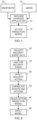
- FIG. 1 is an overview of the interaction between the various entities that allow for security actions to be predicted directly from detected security events.
- the presently disclosed solution takes input from or occurring on endpoints 10, such as security events.
- the solution also takes inputs from users 12, such as administrative users or computer security personnel, who decide which security actions to apply to endpoints in response to detected security events occurring on the endpoints.
- step 20 data representing security events is collected from multiple endpoints.
- step 22 administrative users responsible for the endpoints analyze the security events.
- step 24 the administrative users apply security actions to the endpoints as a result of their analysis and in response to the security events.
- the security actions are collected and correlated with the corresponding security events in step 25.
- machine learning is used to build the action prediction model in step 26 using the collected security events and security actions.
- the action prediction model may be created and trained under the guidance of a data scientist, for example. After the action prediction model has been trained, it may then be applied for the protection of endpoints, in step 28.
- the action prediction model 16 which is a multi-label classification data model, may use the definitions of security events listed in TABLE 3, for example.
- An event scenario which may include one or more security events that are detected in a predetermined period of time, may be described by these attributes.
- the attributes, or their IDs may be used in both the machine learning process as well as during operation of the action prediction model 16 after it has been trained.
- the examples of attributes that are given are non-limiting, and other attributes may also be included in the list.
- the attributes listed may also be modified.
- the time period may be set to less than 1 day or more than one day depending on the particular embodiment. Different attributes may have different time periods. Some of the attributes may be combined into a single attribute, for example using the OR disjunction.
- Attribute Name Attribute ID Hardware change in last 1 day 1 IP change in last 1 day 2 Device name change in last 1 day 3 Domain name change in last 1 day 4 WiFi TM name change in last 1 day 5 Geolocation change in last 1 day 6 Logged on user change in last 1 day 7 Uninstall anti-virus application case in last 1 day 8 Install banned application case in last 1 day 9 Uninstall software case in last 1 day 10 Abnormal device usage case in last 1 day 11 Log on failure case in last 1 day 12 Abnormal resource (CPU/memory/IO) usage case in last 1 day 13 Abnormal plug in device usage case in last 1 day 14 Abnormal internet usage case in last 1 day 15 Abnormal network usage case in last 1 day 16 Abnormal WiFi TM usage case in last 1 day 17 Preferred browser change in last 1 day 18 Abnormal browser usage case in last 1 day 19 Common used software change in last 1 day 20 Abnormal storage application usage case in last 1 day 21 Abnormal sensitive data file access case in last 1 day 22
- Each line represents the detection of one or more security events. As such, each line may be said to represent a security event scenario. Each scenario may represent a particular time period over which one or more security events are detected. In some lines, the individual security events, i.e. the attributes, are shown to have been detected 0, 1 or 3 times.
- TABLE 5 Attribute Label ID1 ID2 ID3 ID4 ID5 ... ID22 ID1 ID2 ID3 ID4 ID5 ID6 ID7 ID8 ID9 1 1 0 0 0 0 0 0 0 0 0 0 1 1 0 0 0 0 0 1 0 1 0 0 ... 0 0 0 0 1 0 0 0 0 0 0 0 0 1 3 ... 0 0 0 0 0 0 0 0 0 0 0 0 0 0 1 1
- the action prediction model 16 is not mature enough, which may be to not initially deploy the action prediction model 16 to the endpoint to predict security actions, but instead collect security events from the endpoint and send them to the server side for analysis and selection of the most appropriate security action or actions. After the action prediction model 16 has been trained, it can then be deployed on the endpoint and used to predict security actions. This may be, however, in an initial mode in which the action prediction model suggests to the administrative user which of the security actions should be applied to the endpoint, rather than automatically applying the security actions to the endpoint. This is a semi-automatic solution in which verification of the predicted action(s) is requested of an administrator before they are implemented.
- FIG. 3 is an example of the components of the system, including an endpoint 30 and server 50.
- the action prediction model 16 is present in the server 50, and, optionally, there may be a copy or another version of the action prediction model 16A in the endpoint 30.
- the endpoint 30 has an endpoint side application 36 to monitor and collect security events and report the events to the server 50 on the server side of the system.
- the endpoint 30 also has a set of one or more endpoint side applications 38 to apply the security actions determined by the action prediction model 16 or 16A when security events occur.
- the endpoint 30, and other similar endpoints 40, 42 are connected via a network 44 such as the internet to the server 50.
- the server 50 has a set of server side applications 56 to receive and process events from the endpoints 30, 40, 42.
- the server 50 also hosts the machine learning application 14 for processing the security event data and the security action data, analyzing the security events and the corresponding security actions taken by both the endpoints autonomously and the administrators, and using machine learning to build the action prediction model 16.
- an administrator's computer 60 connected via the network 44 to the endpoints 30, 40, 42.
- the administrator's computer 60 has a set of applications to display the security events and security actions and allow the administrators to analyze the security events and choose security actions that are applied or to be applied to the endpoints 30, 40, 42.
- the display screen 66 of the administrator's computer 60 may display a user interface with a tabulated list of event scenarios (or incidents) 70, where each scenario may be caused by a different security issue, or multiple similar or dissimilar scenarios may be caused by the same security issue.
- Also displayed in the user interface is a series of one or more security events 72 that make up each scenario, a series of one or more predicted security actions 74 for each scenario, and a list of other optional security actions 76 that may be taken to potentially help resolve the security issue.
- the predicted security actions 74 and the other security actions 76 may be individually deleted by the administrator, or further security actions may be added to the list of other security actions.
- a selection box 80 in the selection column 78 may then be checked and an "Implement" button 82 clicked.
- the user interface may take in order to permit the administrator to observe the predicted actions, implement the predicted actions and amend the list of security actions to be applied to the endpoint.
- FIG. 4 is a flowchart of an exemplary process for the system when in use. Firstly, a security event is detected in step 86 and a corresponding security action is applied in step 88 by, for example, an administrative user 90. These are then analyzed in step 92 by another administrative user 91 (or the same administrative user 90). In step 94, the result of the analysis 92 is used to build the action prediction model in step 94. The result of the analysis 92 may be, for example, to include the detected event 86 and the applied action 88 in the action prediction model 94. These initial steps are repeated numerous times to train the data model 94.
- the predicted actions taken on an ongoing basis by the application when running on the individual endpoints may be used to continually train, evolve and reinforce the action prediction model.
- the actions taken by the administrators may also be used to continually train, evolve and reinforce the action prediction model. For example, whenever a new security issue arises, the administrators may be given the opportunity to either approve the security action(s) predicted by the action prediction model, or suggest a more appropriate set of security action(s).
- the predicted action made by the action prediction model and applied in real time may in some cases not be optimum, but it is expected to be close to optimum. If a security action automatically taken in response to a set of one or more new security events is not optimum, an administrator may be more likely to analyze the problem and choose appropriate action(s), via the verification step 98, before a centralized security provider may decide upon the most appropriate action. This is because it is likely that several different administrators around the globe may exposed to the same, brand new issue, whereas an existing security provider may have limited staff/hours and an existing workload, and may not be able to get to dealing with the new issue as quickly. As the predicted action is reinforced by multiple administrators, or as it is modified and then invoked by multiple administrators, then it may effectively become the optimum action.
- the data model includes groups 100, 102, 104 of security events, each group labeled with one or more security action labels 110, 112, 114, and 116.
- a group of security events may be considered to be a security event scenario.
- event group 1 (100) is labeled with security actions 1 and 2 (110, 112).
- Event group 2 (102) is labeled with security actions 1, 2 and M (110, 112, 116).
- Event group N (104) is labeled with security action 3 (114).
- Event groups 120, 122 that are similar to event group 1 (100) are also labeled with the same actions as event group 1.
- Event groups 100, 120, 122 can be said to belong to pattern 1 (124) of security events.
- Event groups 130, 132 that are similar to event group 2 (102) are labeled with the same actions as event group 2.
- Event groups 102, 130, 132 can be said to belong to pattern 2 (134) of security events.
- Event groups 140, 142 that are similar to event group N (104) are labeled with the same actions as event group N.
- Event groups 104, 140, 142 can be said to belong to pattern N (144) of security events.
- abnormal internet usage may be defined as being above a threshold number of gigabytes.
- the order in which two or more security events occur may be defined as a separate security event, to which an attribute can be ascribed.
- the time period during which security events are captured may be changed in other embodiments, and the time period may be variable.
- the interval of time between two security events may in itself be a security event to which an attribute can be ascribed.
- a confidence level may be attached to each set of security events that are detected, the confidence level being indicative of how sure the data model is that the detected set of security events lies within a known pattern of events. If the confidence level is high, then it may be assumed that the detected set of events closely matches a known pattern of events for which the labels (i.e. security actions) are well defined, and have stood the test of time. If the confidence level is high, then the set of actions may be implemented automatically, without necessarily alerting an administrator.
- the data model is less certain as to which of at least two patterns the detected set of security actions belongs to. In this situation, an administrator may be alerted and a decision of the administrator requested.
- the data model may default to choose the safest set of security actions to apply. Alternately, the data model may automatically invoke all actions that would be predicted if the set of security events could fall within two or more known patterns. This would mean that the data model is acting on the side of caution. If the administrator is prompted for a response, but does not reply within a set time, then the data model may automatically invoke all the predicted actions.
- An administrator may set a rule to instruct the data model how to behave if the confidence level is below a threshold value.
- the administrator may set the level of the threshold. For example, the threshold may be set relatively high during the initial deployment of the data model, and, after the data model has matured and the administrator has developed confidence in it, then the threshold may be set to a relatively lower level. Administrators may instead set a percentage defining how many of the predicted security actions they are to receive notifications for during a set time period.
- each action there is a score created for each action.
- the score represents a probability that relates to the suitability of each action, and its value may range, for example, from 0 to 1.
- the confidence level may be defined from this score. If there are multiple actions predicted, each action will have its own score and the overall confidence level for the set of actions may be the average of the individual scores. The threshold value may then be based on the overall confidence level.
- the data model may be trained or reinforced with simulated events and replicated historical events as well as actual, current or real-time events.
- the application may include a bot, for example for communication with an administrator, learning what security actions the administrator applies, and learning how the administrator verifies sets of predicted security actions.
- a bot for example for communication with an administrator, learning what security actions the administrator applies, and learning how the administrator verifies sets of predicted security actions.
Landscapes
- Engineering & Computer Science (AREA)
- Computer Security & Cryptography (AREA)
- Theoretical Computer Science (AREA)
- Software Systems (AREA)
- General Engineering & Computer Science (AREA)
- Computer Hardware Design (AREA)
- Physics & Mathematics (AREA)
- General Physics & Mathematics (AREA)
- Computing Systems (AREA)
- Computer Networks & Wireless Communication (AREA)
- Signal Processing (AREA)
- Bioethics (AREA)
- General Health & Medical Sciences (AREA)
- Health & Medical Sciences (AREA)
- Medical Informatics (AREA)
- Computer Vision & Pattern Recognition (AREA)
- Evolutionary Computation (AREA)
- Mathematical Physics (AREA)
- Data Mining & Analysis (AREA)
- Artificial Intelligence (AREA)
- Management, Administration, Business Operations System, And Electronic Commerce (AREA)
- Debugging And Monitoring (AREA)
- Data Exchanges In Wide-Area Networks (AREA)
- Measurement And Recording Of Electrical Phenomena And Electrical Characteristics Of The Living Body (AREA)
- Forging (AREA)
Claims (7)
- Verfahren zum Schutz einer elektronischen Vorrichtung, das die folgenden Schritte umfasst:Erzeugen eines Multilabel-Klassifizierungsdatenmodells, das Sicherheitsereignisgruppen umfasst, die mit Sicherheitsmaßnahmen beschriftet sind, wobei jede Gruppe Sicherheitsereignisse umfasst und ein Sicherheitsereignisszenario repräsentiert;Erkennung eines oder mehrerer Sicherheitsereignisse, die ein Sicherheitsereignisszenario repräsentieren;Vorhersage, unter Verwendung des Multi-Label-Klassifizierungsdatenmodells, einer oder mehrerer Sicherheitsmaßnahmen basierend auf dem Sicherheitsereignisszenario; undUmsetzung der vorhergesagten einen oder mehreren Sicherheitsmaßnahmen auf dem elektronischen Gerät, wobei den erkannten Sicherheitsereignissen ein Konfidenzniveau zugewiesen wird;wenn das Konfidenzniveau über einem Schwellenwert liegt, automatisch mit dem Durchführungsschritt fortfahren;wenn das Vertrauensniveau unter dem Schwellenwert liegt, benachrichtigen eines Administrators und weitergehen zum Implementierungsschritt auf Anweisung des Administrators.
- Verfahren nach Anspruch 1, wobei der Implementierungsschritt in Echtzeit durchgeführt wird.
- Verfahren nach Anspruch 1, wobei das eine oder die mehreren Sicherheitsereignisse innerhalb eines festgelegten Zeitraums auftreten.
- Verfahren nach Anspruch 1, wobei mindestens eines der Sicherheitsereignisse mehrere konstituierende Sicherheitsereignisse umfasst.
- Verfahren nach Anspruch 1 umfasst das Trainieren des Multilabel-Klassifizierungsdatenmodells mit Sicherheitsereignissen und Sicherheitsmaßnahmen von mehreren elektronischen Geräten.
- Verfahren nach Anspruch 1 umfasst das Verstärken des Multilabel-Klassifizierungsdatenmodells mit Sicherheitsereignissen und Sicherheitsmaßnahmen von mehreren elektronischen Geräten.
- System mit einem Prozessor und einem computerlesbaren Speicher, der computerlesbare Befehle speichert, die, wenn sie vom Prozessor ausgeführt werden, den Prozessor veranlassen, Schritte des in einem der Ansprüche 1 bis 6 definierten Verfahrens auszuführen.
Applications Claiming Priority (2)
| Application Number | Priority Date | Filing Date | Title |
|---|---|---|---|
| US202063016454P | 2020-04-28 | 2020-04-28 | |
| PCT/CA2021/050393 WO2021217239A1 (en) | 2020-04-28 | 2021-03-25 | Endpoint security using an action prediction model |
Publications (3)
| Publication Number | Publication Date |
|---|---|
| EP4091084A1 EP4091084A1 (de) | 2022-11-23 |
| EP4091084A4 EP4091084A4 (de) | 2023-08-09 |
| EP4091084B1 true EP4091084B1 (de) | 2025-07-09 |
Family
ID=78373123
Family Applications (1)
| Application Number | Title | Priority Date | Filing Date |
|---|---|---|---|
| EP21795686.1A Active EP4091084B1 (de) | 2020-04-28 | 2021-03-25 | Endpunktsicherheit unter verwendung eines aktionsvorhersagemodells |
Country Status (6)
| Country | Link |
|---|---|
| US (1) | US20220309171A1 (de) |
| EP (1) | EP4091084B1 (de) |
| JP (1) | JP7731904B2 (de) |
| AU (1) | AU2021262231A1 (de) |
| CA (1) | CA3172788A1 (de) |
| WO (1) | WO2021217239A1 (de) |
Families Citing this family (5)
| Publication number | Priority date | Publication date | Assignee | Title |
|---|---|---|---|---|
| US20220400127A1 (en) * | 2021-06-09 | 2022-12-15 | Microsoft Technology Licensing, Llc | Anomalous user activity timing determinations |
| US12086250B1 (en) | 2021-12-10 | 2024-09-10 | Amazon Technologies, Inc. | Detecting anomalous I/O patterns indicative of ransomware attacks |
| US12058169B1 (en) * | 2021-12-10 | 2024-08-06 | Amazon Technologies, Inc. | Automated ransomware recovery using log-structured storage |
| US12197578B1 (en) | 2021-12-10 | 2025-01-14 | Amazon Technologies, Inc. | Automated virtualized storage snapshotting responsive to ransomware detection |
| TW202518293A (zh) * | 2023-10-26 | 2025-05-01 | 財團法人資訊工業策進會 | 資安威脅判斷方法和資安威脅判斷裝置 |
Family Cites Families (30)
| Publication number | Priority date | Publication date | Assignee | Title |
|---|---|---|---|---|
| US20070192863A1 (en) * | 2005-07-01 | 2007-08-16 | Harsh Kapoor | Systems and methods for processing data flows |
| US7295831B2 (en) * | 2003-08-12 | 2007-11-13 | 3E Technologies International, Inc. | Method and system for wireless intrusion detection prevention and security management |
| EP1828902A4 (de) * | 2004-10-26 | 2009-07-01 | Rudra Technologies Pte Ltd | System und verfahren zum identifizieren und entfernen von malware auf einem computersystem |
| US9565204B2 (en) * | 2014-07-18 | 2017-02-07 | Empow Cyber Security Ltd. | Cyber-security system and methods thereof |
| US20160162576A1 (en) * | 2014-12-05 | 2016-06-09 | Lightning Source Inc. | Automated content classification/filtering |
| US10249069B1 (en) * | 2015-03-12 | 2019-04-02 | Alarm.Com Incorporated | Monitoring system analytics |
| US10320813B1 (en) * | 2015-04-30 | 2019-06-11 | Amazon Technologies, Inc. | Threat detection and mitigation in a virtualized computing environment |
| US9699205B2 (en) | 2015-08-31 | 2017-07-04 | Splunk Inc. | Network security system |
| US9888024B2 (en) * | 2015-09-30 | 2018-02-06 | Symantec Corporation | Detection of security incidents with low confidence security events |
| US10200389B2 (en) | 2016-02-29 | 2019-02-05 | Palo Alto Networks, Inc. | Malware analysis platform for threat intelligence made actionable |
| US10091231B1 (en) * | 2016-09-15 | 2018-10-02 | Symantec Corporation | Systems and methods for detecting security blind spots |
| US10341377B1 (en) | 2016-10-13 | 2019-07-02 | Symantec Corporation | Systems and methods for categorizing security incidents |
| US10242201B1 (en) * | 2016-10-13 | 2019-03-26 | Symantec Corporation | Systems and methods for predicting security incidents triggered by security software |
| US10542017B1 (en) * | 2016-10-13 | 2020-01-21 | Symantec Corporation | Systems and methods for personalizing security incident reports |
| EP3355547B1 (de) * | 2017-01-27 | 2020-04-15 | Vectra AI, Inc. | Verfahren und system zum erlernen der darstellung von netzwerkverkehr |
| US10313379B1 (en) * | 2017-06-09 | 2019-06-04 | Symantec Corporation | Systems and methods for making security-related predictions |
| PL3642714T3 (pl) * | 2017-06-23 | 2023-08-07 | Jpmorgan Chase Bank, N.A. | Sposób oraz system predykcyjnej redukcji zdarzeń technologicznych |
| US11165800B2 (en) | 2017-08-28 | 2021-11-02 | Oracle International Corporation | Cloud based security monitoring using unsupervised pattern recognition and deep learning |
| CN107733921A (zh) * | 2017-11-14 | 2018-02-23 | 深圳中兴网信科技有限公司 | 网络流量异常检测方法、装置、计算机设备和存储介质 |
| US11831658B2 (en) | 2018-01-22 | 2023-11-28 | Nuix Limited | Endpoint security architecture with programmable logic engine |
| EP3528461B8 (de) | 2018-02-20 | 2022-06-22 | Darktrace Holdings Limited | Cyberbedrohungverteidigungssystem zum schutz von e-mail-netzwerken mit modellen des maschinellen lernens |
| US11245726B1 (en) * | 2018-04-04 | 2022-02-08 | NortonLifeLock Inc. | Systems and methods for customizing security alert reports |
| US10911479B2 (en) | 2018-08-06 | 2021-02-02 | Microsoft Technology Licensing, Llc | Real-time mitigations for unfamiliar threat scenarios |
| KR102189829B1 (ko) * | 2018-09-19 | 2020-12-11 | 주식회사 맥데이타 | 네트워크 보안 모니터링 방법, 네트워크 보안 모니터링 장치 및 시스템 |
| US10943009B2 (en) * | 2018-11-14 | 2021-03-09 | Microsoft Technology Licensing, Llc | System and method to infer investigation steps for security alerts using crowd sourcing |
| US11048979B1 (en) * | 2018-11-23 | 2021-06-29 | Amazon Technologies, Inc. | Active learning loop-based data labeling service |
| US20200204571A1 (en) * | 2018-12-19 | 2020-06-25 | AVAST Software s.r.o. | Malware detection in network traffic time series |
| US11030492B2 (en) * | 2019-01-16 | 2021-06-08 | Clarifai, Inc. | Systems, techniques, and interfaces for obtaining and annotating training instances |
| US11106789B2 (en) * | 2019-03-05 | 2021-08-31 | Microsoft Technology Licensing, Llc | Dynamic cybersecurity detection of sequence anomalies |
| US11308211B2 (en) * | 2019-06-18 | 2022-04-19 | International Business Machines Corporation | Security incident disposition predictions based on cognitive evaluation of security knowledge graphs |
-
2021
- 2021-03-25 CA CA3172788A patent/CA3172788A1/en active Pending
- 2021-03-25 US US17/441,648 patent/US20220309171A1/en not_active Abandoned
- 2021-03-25 EP EP21795686.1A patent/EP4091084B1/de active Active
- 2021-03-25 AU AU2021262231A patent/AU2021262231A1/en active Pending
- 2021-03-25 WO PCT/CA2021/050393 patent/WO2021217239A1/en not_active Ceased
- 2021-03-25 JP JP2022565944A patent/JP7731904B2/ja active Active
Also Published As
| Publication number | Publication date |
|---|---|
| JP7731904B2 (ja) | 2025-09-01 |
| JP2023523079A (ja) | 2023-06-01 |
| EP4091084A4 (de) | 2023-08-09 |
| WO2021217239A1 (en) | 2021-11-04 |
| AU2021262231A1 (en) | 2022-09-15 |
| EP4091084A1 (de) | 2022-11-23 |
| CA3172788A1 (en) | 2021-11-04 |
| US20220309171A1 (en) | 2022-09-29 |
Similar Documents
| Publication | Publication Date | Title |
|---|---|---|
| US12225042B2 (en) | System and method for user and entity behavioral analysis using network topology information | |
| US11757920B2 (en) | User and entity behavioral analysis with network topology enhancements | |
| US12506754B2 (en) | System and methods for cybersecurity analysis using UEBA and network topology data and trigger-based network remediation | |
| EP4091084B1 (de) | Endpunktsicherheit unter verwendung eines aktionsvorhersagemodells | |
| US10594714B2 (en) | User and entity behavioral analysis using an advanced cyber decision platform | |
| JP6863969B2 (ja) | 低信頼度のセキュリティイベントによるセキュリティインシデントの検出 | |
| US10003606B2 (en) | Systems and methods for detecting security threats | |
| CN119276602B (zh) | 一种基于人工智能的变电站网络安全防御系统 | |
| CN112567367A (zh) | 用于聚类和加速多个事故调查的基于相似性的方法 | |
| US20120047581A1 (en) | Event-driven auto-restoration of websites | |
| US20180367553A1 (en) | Cyber warning receiver | |
| EP3455770B1 (de) | Systeme und verfahren zur bestimmung von sicherheitsrisikoprofilen | |
| US11765189B2 (en) | Building and maintaining cyber security threat detection models | |
| CN112534432A (zh) | 不熟悉威胁场景的实时缓解 | |
| JP2024536226A (ja) | 機械学習を介して悪意のあるハンズオンキーボード活動を検出するためのシステムおよび方法 | |
| US20240095350A1 (en) | Threat management system for identifying and performing actions on cybersecurity top threats | |
| EP3657371A1 (de) | Informationsverarbeitungsvorrichtung, informationsverarbeitungsverfahren und informationsverarbeitungsprogramm | |
| US12580948B2 (en) | Cybersecurity operations mitigation management | |
| US20250023909A1 (en) | Protecting backup systems against security threats using artificial intellegence | |
| US9558346B1 (en) | Information processing systems with security-related feedback | |
| CN116662112A (zh) | 一种使用全自动扫描和系统状态评估的数字监控平台 | |
| US20240098114A1 (en) | System and Method for Identifying and Managing Cybersecurity Top Threats | |
| CN119182545A (zh) | 自动确定数字身份网络风险的优先级 | |
| KR102311997B1 (ko) | 인공지능 행위분석 기반의 edr 장치 및 방법 | |
| CN117370701A (zh) | 浏览器风险检测方法、装置、计算机设备和存储介质 |
Legal Events
| Date | Code | Title | Description |
|---|---|---|---|
| STAA | Information on the status of an ep patent application or granted ep patent |
Free format text: STATUS: THE INTERNATIONAL PUBLICATION HAS BEEN MADE |
|
| PUAI | Public reference made under article 153(3) epc to a published international application that has entered the european phase |
Free format text: ORIGINAL CODE: 0009012 |
|
| STAA | Information on the status of an ep patent application or granted ep patent |
Free format text: STATUS: REQUEST FOR EXAMINATION WAS MADE |
|
| 17P | Request for examination filed |
Effective date: 20220819 |
|
| AK | Designated contracting states |
Kind code of ref document: A1 Designated state(s): AL AT BE BG CH CY CZ DE DK EE ES FI FR GB GR HR HU IE IS IT LI LT LU LV MC MK MT NL NO PL PT RO RS SE SI SK SM TR |
|
| P01 | Opt-out of the competence of the unified patent court (upc) registered |
Effective date: 20230530 |
|
| DAV | Request for validation of the european patent (deleted) | ||
| DAX | Request for extension of the european patent (deleted) | ||
| A4 | Supplementary search report drawn up and despatched |
Effective date: 20230707 |
|
| RIC1 | Information provided on ipc code assigned before grant |
Ipc: H04L 9/40 20220101ALI20230703BHEP Ipc: G06N 20/00 20190101ALI20230703BHEP Ipc: G06F 21/55 20130101AFI20230703BHEP |
|
| GRAP | Despatch of communication of intention to grant a patent |
Free format text: ORIGINAL CODE: EPIDOSNIGR1 |
|
| STAA | Information on the status of an ep patent application or granted ep patent |
Free format text: STATUS: GRANT OF PATENT IS INTENDED |
|
| INTG | Intention to grant announced |
Effective date: 20250212 |
|
| GRAS | Grant fee paid |
Free format text: ORIGINAL CODE: EPIDOSNIGR3 |
|
| GRAA | (expected) grant |
Free format text: ORIGINAL CODE: 0009210 |
|
| STAA | Information on the status of an ep patent application or granted ep patent |
Free format text: STATUS: THE PATENT HAS BEEN GRANTED |
|
| AK | Designated contracting states |
Kind code of ref document: B1 Designated state(s): AL AT BE BG CH CY CZ DE DK EE ES FI FR GB GR HR HU IE IS IT LI LT LU LV MC MK MT NL NO PL PT RO RS SE SI SK SM TR |
|
| REG | Reference to a national code |
Ref country code: GB Ref legal event code: FG4D |
|
| REG | Reference to a national code |
Ref country code: CH Ref legal event code: EP |
|
| REG | Reference to a national code |
Ref country code: IE Ref legal event code: FG4D |
|
| REG | Reference to a national code |
Ref country code: DE Ref legal event code: R096 Ref document number: 602021033881 Country of ref document: DE |
|
| REG | Reference to a national code |
Ref country code: NL Ref legal event code: MP Effective date: 20250709 |
|
| PG25 | Lapsed in a contracting state [announced via postgrant information from national office to epo] |
Ref country code: PT Free format text: LAPSE BECAUSE OF FAILURE TO SUBMIT A TRANSLATION OF THE DESCRIPTION OR TO PAY THE FEE WITHIN THE PRESCRIBED TIME-LIMIT Effective date: 20251110 |
|
| PG25 | Lapsed in a contracting state [announced via postgrant information from national office to epo] |
Ref country code: NL Free format text: LAPSE BECAUSE OF FAILURE TO SUBMIT A TRANSLATION OF THE DESCRIPTION OR TO PAY THE FEE WITHIN THE PRESCRIBED TIME-LIMIT Effective date: 20250709 |
|
| REG | Reference to a national code |
Ref country code: AT Ref legal event code: MK05 Ref document number: 1812508 Country of ref document: AT Kind code of ref document: T Effective date: 20250709 |
|
| PG25 | Lapsed in a contracting state [announced via postgrant information from national office to epo] |
Ref country code: IS Free format text: LAPSE BECAUSE OF FAILURE TO SUBMIT A TRANSLATION OF THE DESCRIPTION OR TO PAY THE FEE WITHIN THE PRESCRIBED TIME-LIMIT Effective date: 20251109 |
|
| PG25 | Lapsed in a contracting state [announced via postgrant information from national office to epo] |
Ref country code: NO Free format text: LAPSE BECAUSE OF FAILURE TO SUBMIT A TRANSLATION OF THE DESCRIPTION OR TO PAY THE FEE WITHIN THE PRESCRIBED TIME-LIMIT Effective date: 20251009 |
|
| REG | Reference to a national code |
Ref country code: LT Ref legal event code: MG9D |
|
| PG25 | Lapsed in a contracting state [announced via postgrant information from national office to epo] |
Ref country code: AT Free format text: LAPSE BECAUSE OF FAILURE TO SUBMIT A TRANSLATION OF THE DESCRIPTION OR TO PAY THE FEE WITHIN THE PRESCRIBED TIME-LIMIT Effective date: 20250709 |
|
| PG25 | Lapsed in a contracting state [announced via postgrant information from national office to epo] |
Ref country code: FI Free format text: LAPSE BECAUSE OF FAILURE TO SUBMIT A TRANSLATION OF THE DESCRIPTION OR TO PAY THE FEE WITHIN THE PRESCRIBED TIME-LIMIT Effective date: 20250709 |
|
| PG25 | Lapsed in a contracting state [announced via postgrant information from national office to epo] |
Ref country code: HR Free format text: LAPSE BECAUSE OF FAILURE TO SUBMIT A TRANSLATION OF THE DESCRIPTION OR TO PAY THE FEE WITHIN THE PRESCRIBED TIME-LIMIT Effective date: 20250709 |
|
| PG25 | Lapsed in a contracting state [announced via postgrant information from national office to epo] |
Ref country code: GR Free format text: LAPSE BECAUSE OF FAILURE TO SUBMIT A TRANSLATION OF THE DESCRIPTION OR TO PAY THE FEE WITHIN THE PRESCRIBED TIME-LIMIT Effective date: 20251010 |
|
| PG25 | Lapsed in a contracting state [announced via postgrant information from national office to epo] |
Ref country code: SE Free format text: LAPSE BECAUSE OF FAILURE TO SUBMIT A TRANSLATION OF THE DESCRIPTION OR TO PAY THE FEE WITHIN THE PRESCRIBED TIME-LIMIT Effective date: 20250709 |
|
| PG25 | Lapsed in a contracting state [announced via postgrant information from national office to epo] |
Ref country code: LV Free format text: LAPSE BECAUSE OF FAILURE TO SUBMIT A TRANSLATION OF THE DESCRIPTION OR TO PAY THE FEE WITHIN THE PRESCRIBED TIME-LIMIT Effective date: 20250709 |
|
| PG25 | Lapsed in a contracting state [announced via postgrant information from national office to epo] |
Ref country code: BG Free format text: LAPSE BECAUSE OF FAILURE TO SUBMIT A TRANSLATION OF THE DESCRIPTION OR TO PAY THE FEE WITHIN THE PRESCRIBED TIME-LIMIT Effective date: 20250709 Ref country code: PL Free format text: LAPSE BECAUSE OF FAILURE TO SUBMIT A TRANSLATION OF THE DESCRIPTION OR TO PAY THE FEE WITHIN THE PRESCRIBED TIME-LIMIT Effective date: 20250709 |
|
| PG25 | Lapsed in a contracting state [announced via postgrant information from national office to epo] |
Ref country code: RS Free format text: LAPSE BECAUSE OF FAILURE TO SUBMIT A TRANSLATION OF THE DESCRIPTION OR TO PAY THE FEE WITHIN THE PRESCRIBED TIME-LIMIT Effective date: 20251009 |
|
| PG25 | Lapsed in a contracting state [announced via postgrant information from national office to epo] |
Ref country code: ES Free format text: LAPSE BECAUSE OF FAILURE TO SUBMIT A TRANSLATION OF THE DESCRIPTION OR TO PAY THE FEE WITHIN THE PRESCRIBED TIME-LIMIT Effective date: 20250709 |
|
| PG25 | Lapsed in a contracting state [announced via postgrant information from national office to epo] |
Ref country code: SM Free format text: LAPSE BECAUSE OF FAILURE TO SUBMIT A TRANSLATION OF THE DESCRIPTION OR TO PAY THE FEE WITHIN THE PRESCRIBED TIME-LIMIT Effective date: 20250709 |
|
| PGFP | Annual fee paid to national office [announced via postgrant information from national office to epo] |
Ref country code: GB Payment date: 20260327 Year of fee payment: 6 |
|
| PG25 | Lapsed in a contracting state [announced via postgrant information from national office to epo] |
Ref country code: DK Free format text: LAPSE BECAUSE OF FAILURE TO SUBMIT A TRANSLATION OF THE DESCRIPTION OR TO PAY THE FEE WITHIN THE PRESCRIBED TIME-LIMIT Effective date: 20250709 |
|
| PGFP | Annual fee paid to national office [announced via postgrant information from national office to epo] |
Ref country code: DE Payment date: 20260327 Year of fee payment: 6 |
|
| PG25 | Lapsed in a contracting state [announced via postgrant information from national office to epo] |
Ref country code: IT Free format text: LAPSE BECAUSE OF FAILURE TO SUBMIT A TRANSLATION OF THE DESCRIPTION OR TO PAY THE FEE WITHIN THE PRESCRIBED TIME-LIMIT Effective date: 20250709 |
|
| PGFP | Annual fee paid to national office [announced via postgrant information from national office to epo] |
Ref country code: FR Payment date: 20260325 Year of fee payment: 6 |