EP4092069A1 - Microparticules de polyoxyméthylène et leurs procédés de production et d'utilisation - Google Patents
Microparticules de polyoxyméthylène et leurs procédés de production et d'utilisation Download PDFInfo
- Publication number
- EP4092069A1 EP4092069A1 EP22171219.3A EP22171219A EP4092069A1 EP 4092069 A1 EP4092069 A1 EP 4092069A1 EP 22171219 A EP22171219 A EP 22171219A EP 4092069 A1 EP4092069 A1 EP 4092069A1
- Authority
- EP
- European Patent Office
- Prior art keywords
- pom
- particle composition
- range
- copolymer
- particle
- Prior art date
- Legal status (The legal status is an assumption and is not a legal conclusion. Google has not performed a legal analysis and makes no representation as to the accuracy of the status listed.)
- Withdrawn
Links
Images







Classifications
-
- C—CHEMISTRY; METALLURGY
- C08—ORGANIC MACROMOLECULAR COMPOUNDS; THEIR PREPARATION OR CHEMICAL WORKING-UP; COMPOSITIONS BASED THEREON
- C08J—WORKING-UP; GENERAL PROCESSES OF COMPOUNDING; AFTER-TREATMENT NOT COVERED BY SUBCLASSES C08B, C08C, C08F, C08G or C08H
- C08J3/00—Processes of treating or compounding macromolecular substances
- C08J3/12—Powdering or granulating
- C08J3/14—Powdering or granulating by precipitation from solutions
-
- C—CHEMISTRY; METALLURGY
- C08—ORGANIC MACROMOLECULAR COMPOUNDS; THEIR PREPARATION OR CHEMICAL WORKING-UP; COMPOSITIONS BASED THEREON
- C08J—WORKING-UP; GENERAL PROCESSES OF COMPOUNDING; AFTER-TREATMENT NOT COVERED BY SUBCLASSES C08B, C08C, C08F, C08G or C08H
- C08J3/00—Processes of treating or compounding macromolecular substances
- C08J3/12—Powdering or granulating
-
- B—PERFORMING OPERATIONS; TRANSPORTING
- B33—ADDITIVE MANUFACTURING TECHNOLOGY
- B33Y—ADDITIVE MANUFACTURING, i.e. MANUFACTURING OF THREE-DIMENSIONAL [3D] OBJECTS BY ADDITIVE DEPOSITION, ADDITIVE AGGLOMERATION OR ADDITIVE LAYERING, e.g. BY 3D PRINTING, STEREOLITHOGRAPHY OR SELECTIVE LASER SINTERING
- B33Y70/00—Materials specially adapted for additive manufacturing
-
- C—CHEMISTRY; METALLURGY
- C08—ORGANIC MACROMOLECULAR COMPOUNDS; THEIR PREPARATION OR CHEMICAL WORKING-UP; COMPOSITIONS BASED THEREON
- C08L—COMPOSITIONS OF MACROMOLECULAR COMPOUNDS
- C08L59/00—Compositions of polyacetals; Compositions of derivatives of polyacetals
-
- C—CHEMISTRY; METALLURGY
- C08—ORGANIC MACROMOLECULAR COMPOUNDS; THEIR PREPARATION OR CHEMICAL WORKING-UP; COMPOSITIONS BASED THEREON
- C08L—COMPOSITIONS OF MACROMOLECULAR COMPOUNDS
- C08L59/00—Compositions of polyacetals; Compositions of derivatives of polyacetals
- C08L59/04—Copolyoxymethylenes
-
- B—PERFORMING OPERATIONS; TRANSPORTING
- B29—WORKING OF PLASTICS; WORKING OF SUBSTANCES IN A PLASTIC STATE IN GENERAL
- B29C—SHAPING OR JOINING OF PLASTICS; SHAPING OF MATERIAL IN A PLASTIC STATE, NOT OTHERWISE PROVIDED FOR; AFTER-TREATMENT OF THE SHAPED PRODUCTS, e.g. REPAIRING
- B29C64/00—Additive manufacturing, i.e. manufacturing of three-dimensional [3D] objects by additive deposition, additive agglomeration or additive layering, e.g. by 3D printing, stereolithography or selective laser sintering
- B29C64/10—Processes of additive manufacturing
- B29C64/141—Processes of additive manufacturing using only solid materials
- B29C64/153—Processes of additive manufacturing using only solid materials using layers of powder being selectively joined, e.g. by selective laser sintering or melting
-
- B—PERFORMING OPERATIONS; TRANSPORTING
- B29—WORKING OF PLASTICS; WORKING OF SUBSTANCES IN A PLASTIC STATE IN GENERAL
- B29C—SHAPING OR JOINING OF PLASTICS; SHAPING OF MATERIAL IN A PLASTIC STATE, NOT OTHERWISE PROVIDED FOR; AFTER-TREATMENT OF THE SHAPED PRODUCTS, e.g. REPAIRING
- B29C64/00—Additive manufacturing, i.e. manufacturing of three-dimensional [3D] objects by additive deposition, additive agglomeration or additive layering, e.g. by 3D printing, stereolithography or selective laser sintering
- B29C64/10—Processes of additive manufacturing
- B29C64/165—Processes of additive manufacturing using a combination of solid and fluid materials, e.g. a powder selectively bound by a liquid binder, catalyst, inhibitor or energy absorber
-
- B—PERFORMING OPERATIONS; TRANSPORTING
- B29—WORKING OF PLASTICS; WORKING OF SUBSTANCES IN A PLASTIC STATE IN GENERAL
- B29K—INDEXING SCHEME ASSOCIATED WITH SUBCLASSES B29B, B29C OR B29D, RELATING TO MOULDING MATERIALS OR TO MATERIALS FOR MOULDS, REINFORCEMENTS, FILLERS OR PREFORMED PARTS, e.g. INSERTS
- B29K2059/00—Use of polyacetals, e.g. POM, i.e. polyoxymethylene or derivatives thereof, as moulding material
-
- B—PERFORMING OPERATIONS; TRANSPORTING
- B33—ADDITIVE MANUFACTURING TECHNOLOGY
- B33Y—ADDITIVE MANUFACTURING, i.e. MANUFACTURING OF THREE-DIMENSIONAL [3D] OBJECTS BY ADDITIVE DEPOSITION, ADDITIVE AGGLOMERATION OR ADDITIVE LAYERING, e.g. BY 3D PRINTING, STEREOLITHOGRAPHY OR SELECTIVE LASER SINTERING
- B33Y10/00—Processes of additive manufacturing
-
- C—CHEMISTRY; METALLURGY
- C08—ORGANIC MACROMOLECULAR COMPOUNDS; THEIR PREPARATION OR CHEMICAL WORKING-UP; COMPOSITIONS BASED THEREON
- C08J—WORKING-UP; GENERAL PROCESSES OF COMPOUNDING; AFTER-TREATMENT NOT COVERED BY SUBCLASSES C08B, C08C, C08F, C08G or C08H
- C08J2359/00—Characterised by the use of polyacetals containing polyoxymethylene sequences only
- C08J2359/02—Copolyoxymethylenes
-
- C—CHEMISTRY; METALLURGY
- C08—ORGANIC MACROMOLECULAR COMPOUNDS; THEIR PREPARATION OR CHEMICAL WORKING-UP; COMPOSITIONS BASED THEREON
- C08J—WORKING-UP; GENERAL PROCESSES OF COMPOUNDING; AFTER-TREATMENT NOT COVERED BY SUBCLASSES C08B, C08C, C08F, C08G or C08H
- C08J2371/00—Characterised by the use of polyethers obtained by reactions forming an ether link in the main chain; Derivatives of such polymers
- C08J2371/02—Polyalkylene oxides
Definitions
- thermoplastic polyoxymethylene particles and methods of making such particles.
- Such particles especially the highly spherical thermoplastic polyoxymethylene particles, may be useful, among other things, as starting material for additive manufacturing.
- Three-dimensional (3-D) printing also known as additive manufacturing, is a rapidly growing technology area. Although three-dimensional printing has traditionally been used for rapid prototyping activities, this technique is being increasingly employed for producing commercial and industrial objects, which may have entirely different structural and mechanical tolerances than do rapid prototypes.
- Three-dimensional printing operates by depositing either 1) small droplets or streams of a melted or solidifiable material or 2) powder particles in precise deposition locations for subsequent consolidation into a larger object (a "consolidated body") that can have any number of complex shapes.
- Deposition and consolidation processes typically occur under the control of a computer to afford layer-by-layer buildup of the larger object.
- selective laser sintering involves a three-dimensional printing system using a laser to promote the consolidation of polymer particles.
- the nature of the polymer particles becomes important as particles having irregular shapes and poor flow characteristics can lead to inconsistent layer deposition, poor packing, and the formation of defects, voids, and other structural weak points.
- polymer particles are often selected that exhibit good flow properties in the solid state.
- Flow properties may be evaluated, for example, by measuring the fraction of powder particles from a sample that are able to pass through a standard sieve of a specified size and/or measuring of the angle of repose. In general, the higher the circularity of the particles and the narrower the particle size distribution, the higher the powder flow performance.
- the present disclosure generally relates to POM particle compositions and methods producing the same.
- methods include dissolving a polyoxymethylene (POM) homopolymer or copolymer in one or more solvents at an elevated temperature to form a polymer mixture, wherein a difference in total Hansen solubility parameters ( ⁇ t ) for the POM homopolymer or copolymer and the one or more solvents is 6 or less; cooling the polymer mixture to form a POM particle composition; and isolating the POM particle composition.
- POM polyoxymethylene
- compositions include a polyoxymethylene (POM) particle composition having a sintering window that is within 5°C of a sintering window of a polyoxymethylene starting material used in producing the POM particle composition.
- POM polyoxymethylene
- the present disclosure generally relates to methods for preparing polyoxymethylene (POM) particle compositions having high surface area and narrow size distributions.
- Methods include the formation of POM particle compositions using temperature based crystallization and precipitation techniques.
- POM particle compositions generated include particles that are highly faceted with hierarchically structured features and having high circularity that are suitable for a variety of applications including additive manufacturing.
- thermoplastic polymer refers to a plastic polymer material that softens/melts and hardens/solidifies reversibly on heating and cooling.
- Thermoplastic polymers encompass thermoplastic elastomers.
- the term “elastomer” refers to a copolymer comprising a crystalline "hard” section and an amorphous "soft" section.
- the crystalline section may include a portion of the polyurethane comprising the urethane functionality and optional chain extender group, and the soft section may include the polyol, for instance.
- ambient pressure refers to pressures in a range of about 0.1 MPa to about 0.2 MPa.
- D10, D50, D90, and diameter span are primarily used herein to describe particle sizes.
- D10 refers to a diameter below which 10% (on a volume-based distribution, unless otherwise specified) of the particle population is found.
- D50 average particle diameter
- average particle size refers to a diameter below which 50% (on a volume-based median average, unless otherwise specified) of the particle population is found.
- D90 refers to a diameter below which 90% (on a volume-based distribution, unless otherwise specified) of the particle population is found.
- the terms “diameter span” and “span” and “span size” when referring to diameter provides an indication of the breadth of the particle size distribution and is calculated as (D90-D10)/D50.
- Particle diameters and particle size distributions are determined by light scattering techniques using a Malvern MASTERSIZER TM 3000.
- the control samples were glass beads with a diameter within the range of 15 ⁇ m to 150 ⁇ m under the tradename Quality Audit Standards QAS4002 TM obtained from Malvern Analytical Ltd. Samples were analyzed as dry powders, unless otherwise indicated. The particles analyzed were dispersed in air and analyzed using the AERO S TM dry powder dispersion module with the MASTERSIZER TM 3000. The particle sizes were derived using instrument software from a plot of volume density as a function of size.
- Particle size measurement and diameter span can also be determined by optical digital microscopy.
- the optical images are obtained using a Keyence VHX-2000 digital microscope using version 2.3.5.1 software for particle size analysis (system version 1.93).
- the terms "circularity" relative to the particles refers to how close the particle is to a perfect sphere.
- optical microscopy images using flow particle imaging are taken of the particles.
- the perimeter (P) and area (A) of the particle in the plane of the microscopy image is calculated (e.g., using a SYSMEX FPIA 3000 particle shape and particle size analyzer, available from Malvern Instruments).
- the circularity of the particle is C EA /P, where C EA is the circumference of a circle having the area equivalent to the area (A) of the actual particle.
- the circularity is based on three runs through a SYSMEX FPIA 3000 particle shape and particle size analyzer, where 6,000 to 10,000 particles are analyzed per run.
- the reported circularity is the median average circularity based on particle number.
- a threshold for distinguishing the grayscale levels between the background pixels and the particle pixels was set at 90% of the background modal value.
- the term "sintering window” refers to the difference between the melting temperature (Tm) onset and the crystallization temperature (Tc) onset, or (Tm-Tc)onset.
- Tm, Tm (onset), Tc, and Tc (onset) are determined by differential scanning calorimetry per ASTM E794-06(2018) with a 10 °C/min ramp rate and a 10 °C/min cool rate.
- the melting point of a polymer is determined by ASTM E794-06(2018) with 10°C/min ramping and cooling rates.
- the softening temperature or softening point of a polymer is determined by ASTM D6090-17.
- the softening temperature can be measured by using a cup and ball apparatus available from Mettler-Toledo using a 0.50 gram sample with a heating rate of 1°C/min.
- Angle of repose is a measure of the flowability of a powder. Angle of repose measurements were determined using a Hosokawa Micron Powder Characteristics Tester PT-R using ASTM D6393-14 "Standard Test Method for Bulk Solids" characterized by Carr Indices.
- viscosity of carrier fluids are the kinematic viscosity at 25 °C, unless otherwise specified, measured per ASTMD445-19.
- carrier fluids e.g., PDMS oil
- the kinematic viscosity data cited herein was provided by the manufacturer, whether measured according to the foregoing ASTM or another standard measurement technique.
- Hansen solubility parameters are determined per Hansen Solubility Parameters: A User's Handbook. Charles M. Hansen. CRC Press, Boca Raton, FL. 2007. 2nd Ed . Further, the Hansen solubility parameters for a mixture can be calculated by the volume-weighted average of the Hansen solubility parameters for each component in the mixture.
- the total Hansen solubility parameter is the geometric mean of the three Hansen solubility components: ⁇ D (from dispersion interactions), ⁇ P (from polar attraction), and ⁇ (from hydrogen bonding).
- additive manufacturing is growing in importance beyond prototype objects to shortrun or one-off functional parts as the printable materials expand in number and quality.
- additive manufacturing is growing in importance beyond prototype objects to shortrun or one-off functional parts as the printable materials expand in number and quality.
- thermoplastic polymer types suitable for AM and available in appropriate sizes.
- polymer stocks tend to be distributed as large particles or aggregates that are incompatible with AM. While particle sizes can be reduced, methods often involve milling techniques that produce irregular particle shapes and wide particle size distributions that affect particle flow and deposition, or involve the use of high temperature high pressure conditions that can be difficult to scale effectively.
- POM particle compositions having high circularity and narrow particle size distributions by polymer dissolution and precipitation at ambient pressure and relatively low temperatures.
- POM is a formaldehyde-based semi-crystalline engineering thermoplastic, which is also known by equivalent names polyacetal, polyformaldehyde, polymethylene glycol, and polyoxymethylene glycol.
- POM particulate compositions may also include POM copolymers having one or more ethylene oxide and/or dioxolane comonomers introduced by cyclic ethers and/or cyclic acetal comonomers, containing, e.g., cycles having 5 to 11 members.
- POM copolymer compositions disclosed herein may include one or more comonomers loaded as a percent by weight of total monomers in a range of about 2 wt% to about 50 wt%.
- Table 1 Comparison of Crystalline Polymer Types Polymer Elastic modulus [N/mm 2 ] Yield Stress: ⁇ yield [N/mm 2 ] Elongation at break [%] Melt Temperature: T melt [°C] Polyoxymethylene 2600 to 3200 60 to 75 20 to >50 [homo] 15 to 40 [copolymer] 175 [homopolymer] 164 to 172 [copolymer] Polyamide 12 1400 50 ⁇ 200 170 to 180 Polypropylene 1400 to 1800 25 to 40 >50 160 to 165 High-density polyethylene 600 to 1400 18 to 30 >50 125 to 135 Polyetheretherketone 3700 100 >50 335
- thermoplastics such as POM in layered deposition AM techniques such as powder bed fusion (PBF) or selective laser sintering (SLS), but most native (as synthesized) polymer particle compositions must be processed by pulverization or milling to place the particles within the a workable range of about 50 ⁇ m to about 70 ⁇ m for many deposition and consolidation techniques.
- standard size reduction methods often include cryogenic milling, spray drying, and wet grinding followed by thermal rounding, such as in a heated downer reactor.
- milling and pulverization often produces particles having wide particle size distributions that are irregular in shape and exhibit poor flow characteristics.
- POM particle compositions disclosed herein have enhanced particle uniformity and particle flow rates, particularly when compared to standard techniques used to produce particle compositions.
- POM particle compositions produced may exhibit good particle flow and deposition, which may reduce the formation of voids upon heating and consolidation, leading to increased mechanical properties of printed objects, such as elastic modulus and yield stress.
- POM particle compositions disclosed herein exhibit enhanced surface area and morphology, which may increase utility for the materials for other applications including filtration and formulation in catalyst compositions.
- the morphology of the particles exhibit increased void space and effective surface area that increase the applicability of the particles for other applications such as purification and as a catalytic substrate.
- Complex particle shapes can also increase sintering performance during consolidation under localized heating during AM, and may lead to the formation of consolidated articles having increased porosity, pore connectivity, texture, and layering.
- the morphology of the POM polymer compositions described herein may be characterized by one or more of: wrinkled, hierarchical structures (platelets or sheets adhered together to form the particle), and porous.
- particles and consolidated articles formed therefrom may exhibit irregular surfaces and shapes, including platelet-like layers, pleated structures, fractal-like aggregates, flower-like particles, exfoliated particles, , and particles having microstructure, facets, and features throughout their volume.
- FIG. 1 is a flow chart of a non-limiting example method 100 for producing polymer microspheres in accordance with the present disclosure. As shown, POM polymer102 and solvent 104 are combined 106 to produce mixture 108.
- Mixture 108 can be formulated with a percent by weight of the POM polymer 102 (wt%) in a range of about 5 wt% to about 50 wt%, about 8 wt% to about 25 wt%, or about 10 wt% to about 20 wt%. While “102" is used with reference to POM polymer, methods disclosed herein can also be applied to POM copolymers and polymer blends.
- Suitable solvents 104 for use in methods disclosed herein include solvents capable of dissolving POM polymers and copolymers, and may be selected using Hansen Solubility Parameters (HSP) describing solvent/polymer interactions for optimization of polymer dissolution in solvents.
- HSP Hansen Solubility Parameters
- HSP depends on entropy and on the nature of the interaction between the solvent and material molecule, particularly whether the interactions are polar, dispersive, or based on hydrogen bonding.
- These interaction strengths are quantified and tabulated for many polymers and solvents as the polar ( ⁇ p ), dispersive ( ⁇ d ), and hydrogen bonding ( ⁇ h ) components of the Hansen solubility parameters in units of MPa 1/2 .
- the total Hansen solubility parameter ( ⁇ t ) can also be obtained according to Eq. 1.
- ⁇ t 2 ⁇ p 2 + ⁇ d 2 + ⁇ h 2
- the difference in total Hansen solubility parameters ( ⁇ t ), calculated as the absolute value of the difference between the ⁇ t of the POM homopolymer or copolymer and the ⁇ t of the respective solvent, may be a useful metric for describing polymer solubility.
- ⁇ t higher than about 2 contribute to the enhancement of surface roughness, faceting, and platelet or flake formation.
- solvents having higher ⁇ H than the respective polymer being solubilized tend to form irregular aggregates, due to the preferential hydrogen bonding of the polymer with the solvent.
- Table 2 lists a number of selected solvents and their associated HSPs using POM solubility as a reference. Table 2: Hansen Solubility Parameters for selected solvents.
- Suitable solvents useful in the methods disclosed herein include solvents (or solvent mixtures) having a ⁇ t with respect tothe POM homopolymer or copolymer being solubilized of about 6 or less, about 5.5 or less, or about 5 or less. Additionally, suitable solvents useful in the methods disclosed herein include solvents (or solvent mixtures) having a ⁇ t with respect to the POM homopolymer or copolymer being solubilized in a range of about 2 to about 6, or about 2.5 to about 6, or about 2.5 to about 5.5.
- Suitable solvents include C1 to C8 acid amides, such as formamide and dimethyl formamide; C4 to C8 cyclic ethers; C4 to C8 cyclic amides, such as N-methyl pyrrolidone; C4 to C8 cyclic esters, such as gamma butyrolactone; C4 to C8 carbonate esters such as ethylene carbonate; alcohols such as propanol, phenol, cyclohexanol, and benzyl alcohol; nitrobenzene; aromatics such as amine-containing aromatics including aniline, halogenated aromatics including bromobenzene, chlorophenols; and the like; and malorinitrile.
- C1 to C8 acid amides such as formamide and dimethyl formamide
- C4 to C8 cyclic ethers such as N-methyl pyrrolidone
- C4 to C8 cyclic esters such as gamma butyrolactone
- the POM polymer 102 and solvent (or solvent mixture) 104 may independently be heated before, during, and/or after the process of being combined at 106 to a temperature in a range of about 100 °C to about 220 °C, about 120 °C to about 190 °C, or about 150 °C to about 190 °C.
- the temperature to which the POM polymer 102, solvent 104, and/or mixture 108 is heated may vary on the boiling point of the particular solvent or solvent mixture 104 used. Generally, heating may be to a boiling point+10°C of the solvent or solvent mixture (T BP+10C of the solvent or solvent mixture).
- the boiling point of DMF is about 153°C at ambient pressure, so a mixture with DMF as the only solvent may be heated to about 163°C at ambient pressure.
- the mixture may include a mixture of solvents where the mixture may then be heated up to the boiling point of the mixture of solvents +10°C.
- the boiling point changes with pressure and composition and will recognize how to determine the boiling point of a solvent or mixture of solvents for a given temperature.
- significant evaporation of the solvent or solvent mixture is avoided so that the solids concentrations is maintained at the desired level.
- Mixture 108 can then be cooled at 110 to form mixture 112 containing precipitated POM polymer particles.
- a precipitating solvent 116 can be added to mixture 112 to initiate precipitation and/or to wash the formed POM particles.
- Precipitating solvent 116 may be miscible with the solvent 104 and nonreactive (e.g., non-swelling and non-dissolving) with the precipitated POM particles.
- Precipitating solvent 116 can include a solvent (or solvent mixture) having a ⁇ t with respect to the POM homopolymer or copolymer of about 7 or more.
- Precipitating solvents may include alcohols such as methanol, ethanol, and the like, water, polyols such as ethylene glycol, propylene glycol, butanediol, and the like.
- Precipitating solvent 116 can be added at a ratio of solvent 104 to precipitating solvent in a range of about 2:1 to about 1:2, about 1.5:1 to about 1:1, or about 1.5:1 to about 1:1.5.
- mixture 112 can be separated at 118 to yield POM particle composition 120.
- Separation processes at 118 can include a number of separation techniques including filtration, decantation, settling, and the like.
- additional precipitating solvent 116 can be added to wash POM particle composition 120.
- POM particle composition 120 can be processed further at 122 to remove traces of solvent 104 and/or precipitating solvent 116, such as by drying under ambient conditions or vacuum, with or without the application of heat.
- POM polymer compositions 120 disclosed herein can exhibit rough, faceted surface morphology that introduce void space at the surface.
- the void space generally does not contain polymer, rather, the voids may contain, for example, residual solvent 104, air, or be void.
- the POM particle compositions 120 can include a percentage of void space in a range of about 0.5% to about 10%, about 0.5% to about 5%, or about 1% to about 5%.
- the POM particle compositions 120 may include residual solvent 104 and/or precipitating solvent 116 of the POM particle compositions 120 at about 5 wt% or less (or about 0.001 wt% to about 5 wt%, or about 0.001 wt% to about 0.1 wt%, or about 0.01 wt% to about 0.5 wt%, or about 0.1 wt% to about 2 wt%, or about 1 wt% to about 5 wt%).
- the POM polymer composition 120 may optionally be further purified at 122 to produce purified polymer particles 124.
- the polymer particles 120 can be passed through a sieve having a pore size of about 10 ⁇ m to about 250 ⁇ m (or about 10 ⁇ m to about 100 ⁇ m, or about 50 ⁇ m to about 200 ⁇ m, or about 150 ⁇ m to about 250 ⁇ m).
- the POM particle compositions 124 may be blended with additives at 126 to achieve supplemented POM particle composition 128.
- additives include antioxidants, acid trapping agents, stabilizer additives, flow aids, fillers or other substances intended to tailor the properties of the POM particle compositions for an intended application.
- Mixing of the additional components may be conducted by dry blending techniques.
- Suitable examples of flow aids e.g., carbon black, graphite, silica, and the like
- similar substances will be familiar to one having ordinary skill in the art.
- POM particle compositions 120 disclosed herein may be further processed based on the intended application.
- POM particle compositions 120 may be passed through a sieve or similar structure to remove larger particles and agglomerated particles that may have poor flow characteristics.
- POM particle compositions 120 may also function as a support for catalysts and other particles using a number of physical mixing approaches.
- a catalyst may be dispersed in a suitable solvent such as methanol by homogenization and combined with a solution containing a POM particle composition 120 already wetted with a compatible solvent. The solvent mixture may then be evaporated to obtain catalyst-doped POM particles that may then be 3D-printed into a matrix or other support.
- the same techniques may similarly be applied to POM particle compositions 124 and 128.
- the POM particle composition 120 may have a D10 of about 5 ⁇ m to about 50 ⁇ m (or about 10 ⁇ m to about 50 ⁇ m, about 10 ⁇ m to about 40 ⁇ m, about 15 ⁇ m to about 35 ⁇ m, or about 15 ⁇ m to about 25 ⁇ m), a D50 of about 20 ⁇ m to about 90 ⁇ m (or about 20 ⁇ m to about 80 ⁇ m, or about 25 ⁇ m to about 75 ⁇ m, or about 30 ⁇ m to about 75 ⁇ m, or about 40 ⁇ m to about 70 ⁇ m), and a D90 of about 70 ⁇ m to about 180 ⁇ m (or about 75 ⁇ m to about 170 ⁇ m, or about 80 ⁇ m to about 165 ⁇ m, or about 90 ⁇ m to about 155 ⁇ m), wherein D10 ⁇ D50 ⁇ D90.
- POM particle compositions 120 may also have a diameter span of about 0.4 to about 3 (or about 0.6 to about 2, or about 0.4 to about 1.5, or about 1 to about 3). Without limitation, diameter span values of 1.0 or greater are considered broad, and diameter spans values of 0.75 or less are considered narrow. The same ranges may similarly apply to POM particle compositions 124 and 128. Particle size measurements may be made using any suitable testing device, including a Malvern MASTERSIZER 3000.
- the POM particle composition 120 may have a circularity of about 0.6 or greater (or about 0.6 to about 1.0, or about 0.65 to about 0.95, or about 0.7 to about 0.95, or about 0.75 to about 0.99, or about 0.77 to about 0.99, or about 0.8 to 0.99). The same ranges may similarly apply to POM particle compositions 124 and 128.
- the POM particle composition 120 may have an angle of repose determined according to ASTM D6393-14 of about 20° to about 50° (or about 20° to about 45°, or about 25° to about 45°, or about 30° to about 45°, or about 35° to about 45°). The same ranges may similarly apply to POM particle compositions 124 and 128.
- the POM particle composition 120 may have a Hausner ratio of about 1.0 to about 1.5 (or about 1.0 to about 1.2, or about 1.1 to about 1.3, or about 1.2 to about 1.35, or about 1.3 to about 1.5). The same ranges may similarly apply to POM particle compositions 124 and 128.
- the POM particle composition 120 may have a bulk density of about 0.3 g/cm 3 to about 1.3 g/cm 3 (or about 0.3 g/cm 3 to about 1.3 g/cm 3 , or about 0.4 g/cm 3 to about 1.25 g/cm 3 , or about 0.5 g/cm 3 to about 1.2 g/cm 3 , or about 0.5 g/cm 3 to about 1.1 g/cm 3 ).
- the same ranges may similarly apply to POM particle compositions 124 and 128.
- POM particle compositions 120 disclosed herein may have a sintering window in a range of about 14 °C to about 30 °C, about 15 °C to about 25 °C, or about 15 °C to about 20 °C.
- the sintering window for POM particle composition 120 may be within 10°C, preferably within 5°C, of the sintering window of the POM polymer 102.
- the same ranges may similarly apply to POM particle compositions 124 and 128.
- POM particle compositions 120 disclosed herein may have a bulk density of about 0.3 g/cm 3 to about 1.3 g/cm 3 (or about 0.3 g/cm 3 to about 1.3 g/cm 3 , or about 0.4 g/cm 3 to about 1.25 g/cm 3 , or about 0.5 g/cm 3 to about 1.2 g/cm 3 , or about 0.5 g/cm 3 to about 1.1 g/cm 3 ).
- the same ranges may similarly apply to POM particle compositions 124 and 128.
- POM particle compositions 120 disclosed herein may have a BET surface area as determined according to ASTM D3663-20 of about 10 m 2 /g to about 350 m 2 /g, about 10 m 2 /g to about 300 m 2 /g, about 15 m 2 /g to about 250 m 2 /g, or about 20 m 2 /g to about 200 m 2 /g.
- the same ranges may similarly apply to POM particle compositions 124 and 128.
- POM particle compositions 120 disclosed herein may have a decomposition temperature in a range of about 180 °C to about 400 °C, about 180 °C to about 380 °C, or about 180 °C to about 350 °C. The same ranges may similarly apply to POM particle compositions 124 and 128.
- POM particle compositions 120 may have a melting point or softening temperature of about 150°C to about 200 °C, about 160°C to about 200 °C, or about 170°C to about 190 °C. The same ranges may similarly apply to POM particle compositions 124 and 128.
- compositions disclosed herein may be utilized in threedimension printing processes, particularly those employing selective laser sintering to promote particle consolidation.
- the POM particle compositions of the present disclosure may exhibit advantageous properties over elastomeric particles having irregular shapes or wider particulate distributions, such as those available commercially.
- POM particle compositions may also be printed using AM techniques to prepare articles, lightweight composites, doped with catalyst and printed into supports, or incorporated into membranes or matrices for oil absorption.
- AM techniques may utilize heating and consolidation of the POM particle composition, and may include Powder Bed Fusion (PBF), Selective Laser Sintering (SLS), Selective Heat Sintering (SHS), Selective Laser Melting (SLM), Electron Beam Melting (EBM), Binder Jetting, and Multi Jet Fusion (MJF).
- PPF Powder Bed Fusion
- SLS Selective Laser Sintering
- SHS Selective Heat Sintering
- SLM Selective Laser Melting
- EBM Electron Beam Melting
- Binder Jetting Binder Jetting
- Multi Jet Fusion MJF
- the POM particle compositions of the present disclosure may undergo consolidation at lower laser powers and afford a decreased extent of void formation in an object produced by three-dimensional printing.
- AM processes of the present disclosure may comprise: depositing a POM particle composition 120 (similarly, 124 or 128) of the present disclosure upon a surface in a specified shape and/or layers, and once deposited, heating at least a portion of the polymer particles to promote consolidation thereof and form a consolidated body (object), such that the consolidated body has a void percentage of about 1% or more (e.g., 1% to about 5%, or about 1.5% to about 5%, or about 2.5% to about 5%, or about 3% to about 5%) after being consolidated.
- heating and consolidation of the POM particle composition particles 120 may take place in an AM apparatus employing a laser, such that heating and consolidation take place by selective laser sintering.
- POM particle compositions disclosed herein can be used to prepare articles having enhanced elastic modulus and yield stress when compared to alternative thermoplastics such as nylon.
- objects formable using AM include containers (e.g., for food, beverages, cosmetics, personal care compositions, medicine, and the like), shoe soles, toys, furniture parts, decorative home goods, plastic gears, screws, nuts, bolts, cable ties, medical items, prosthetics, orthopedic implants, production of artifacts that aid learning in education, 3D anatomy models to aid in surgeries, robotics, biomedical devices (orthotics), home appliances, dentistry, automotive and airplane/aerospace parts, electronics, sporting goods, and the like.
- Other applications for POM particle compositions of the present disclosure may include, but are not limited to, use as a filler in paints and powder coatings, inkjet materials and electrophotographic toners, and the like.
- Element 1 wherein the one or more solvents comprise one or more selected from a group consisting of C1 to C8 acid amides, C4 to C8 cyclic ethers, C4 to C8 carbonate esters, C4 to C8 cyclic amides, C4 to C8 cyclic esters, propanol, phenol, cyclohexanol, benzyl alcohol, nitrobenzene, aniline, bromobenzene, chlorophenols, malorinitrile; Element 2: wherein the one or more solvents has a ⁇ t in a range of 2 to 6; Element 3: wherein the elevated temperature is in a range of about 120 °C to about 190 °C; Element 4: wherein dissolving is performed under ambient pressure; Element 5: wherein the POM homopolymer or copolymer percent by weight of the polymer mixture (wt%) is
- exemplary combinations applicable to A, B and C include, but are not limited to, 1 and any one or more of 2 to 25; 2 and any one or more of 1, 3 to 25; 3 and any one or more of 1 to 2 and 4 to 25; 4 and any one or more of 1 to 3 and 5 to 25; 5 and any one or more of 1 to 4 and 6 to 25; 6 and any one or more of 1 to 5 and 7 to 25; 7 and any one or more of 1 to 6 and 8 to 25; 8 and any one or more of 1 to 7 and 9 to 25; 9 and any one or more of 1 to 8 and 10 to 25; 10 and any one or more of 1 to 9 and 11 to 25; 11 and any one or more of 1 to 10 and 12 to 25; 12 and any one or more of 1 to 11 and 13 to 25; 13 and any one or more of 1 to 12 and 14 to 25; 14 and any one or more of 1 to 13 and 15 to 25; 15 and any one or more of 1 to 14 and 16 to 25; 16 and any one or more of 1 to 15 and
- a POM powder was generated by cryogenic grinding of pellets to a particle size less than 80 ⁇ m and then mixed with 0.2 wt% of AEROSIL ® silica additive to improve the flow of the particles.
- AEROSIL ® silica additive 0.2 wt%
- a sample of POM pellets was cooled down to -50 °C and milled with a counter-rotating pinned disc mill. After milling, the powder was classified and screened down to an average particle diameter of 80 ⁇ m, where 97.5% is ⁇ 250 ⁇ m, 88% is ⁇ 125 ⁇ m and53.5% is ⁇ 63 ⁇ m. SEM micrographs of the resulting powder are shown in FIG. 1 in which irregular particle shapes having poor circularity were observed.
- a POM particle composition is prepared by a dissolution and precipitation method in accordance with the present disclosure.
- 1 gram of granular POM (Goodfellow OX316300 Delrin Tenac (Delta Scientific)) was combined with 9 mL dimethylformamide (DMF).
- a magnetic stir bar was added to the vial, and the vial was submerged to 135°C in an oil bath while stirring at 300 rpm. At 15 minutes, the temperature reached 140°C and the solution became turbid without dissolution, and developed turbidity with some bubbling by 55 minutes.
- the POM was fully dissolved by 1.75 hours, and the polymer mixture was cooled to room temperature to form a gel.
- the POM homopolymer and copolymer gels from Example 1 were transferred to individual 100 mL beakers. To each beaker was added 20 mL of methanol, and the gels were stirred with a spatula triturating the large aggregates. The resulting particles were collected on separate WHATMAN ® Grade 1 filter papers and rinsed with 20 mL methanol, while supported on the filter paper. The samples were collected and dried overnight in an oven set at about 65 °C.
- the POM homopolymer (Sample 1) resulted in 0.958 g (96% yield) of white powder
- the POM copolymer (Sample 2) resulted in 0.970 g (97% yield) of white powder.
- Samples 1 and 2 were analyzed by differential scanning calorimetry (DSC). Samples 1 and 2 both show a decrease in their sintering window (calculated as the difference between the melting point and the recrystallization point) of about 29% to 35%, but both remain within useful ranges.
- Inductively coupled plasma analysis was also conducted on the unprocessed pellets and Samples 1 and 2, as shown in Table 4.
- the elemental analysis indicates that no boron (B) and antimony (Sb) were detected, while calcium (Ca) and silicon (Si) increased to some extent.
- Table 5 Inductively coupled plasma (ICP) data of POM pellets before and after being processed into precipitated particles B / ppm Ca / ppm Mg / ppm Sb / ppm Si / ppm Homopolymer Unprocessed pellets 0 0.3 0.1 0 135.3 Sample 1 0 11.6 5.7 0 230.2 Copolymer Unprocessed pellets 0 5.8 170.5 0 64.5 Sample 2 0 19.2 170.6 0 161.5
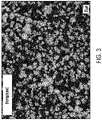
- FIG. 2 is an optical micrograph of Sample 1, which was then used to construct the particle size distribution shown in FIG. 3 , which indicates a D50 of around 53 microns with a wide distribution due to both fine particles and agglomerates.
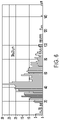
- FIG. 4 is an optical micrograph of Sample 2, which was then used to construct the particle size distribution shown in FIG. 5 , which indicates a D50 of around 50 microns with a wide distribution due to both fine particles and agglomerates.
- FIGS. 7A and 7B are SEM micrographs of particles from Sample 1 at various magnifications.
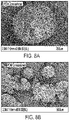
- FIGS. 8A and 8B are SEM micrographs of particles from Sample 2 at various magnifications. Both Samples pictured exhibit enhanced and faceted surface areas characteristic of the dissolution and precipitation.
- Example 3 POM Particles Produced by Additional Solvents.
- FIG. 9 is an SEM micrograph of POM homopolymer particles precipitated using benzyl alcohol as a solvent.
- FIG. 10 is an SEM micrograph of POM copolymer particles precipitated using benzyl alcohol as a solvent.
- FIG. 11 is an SEM micrograph of POM homopolymer particles precipitated using gamma-butyrolactone as a solvent.
- FIG. 12 is an SEM micrograph of POM copolymer particles precipitated using gamma-butyrolactone as a solvent.
- compositions described herein may be free of any component, or composition not expressly recited or disclosed herein. Any method may lack any step not recited or disclosed herein.
- compositions, element or group of elements are preceded with the transitional phrase “comprising,” it is understood that we also contemplate the same composition or group of elements with transitional phrases “consisting essentially of,” “consisting of,” “selected from the group of consisting of,” or “is” preceding the recitation of the composition, element, or elements and vice versa.
Landscapes
- Chemical & Material Sciences (AREA)
- Health & Medical Sciences (AREA)
- Chemical Kinetics & Catalysis (AREA)
- Medicinal Chemistry (AREA)
- Polymers & Plastics (AREA)
- Organic Chemistry (AREA)
- Engineering & Computer Science (AREA)
- Manufacturing & Machinery (AREA)
- Materials Engineering (AREA)
- Processes Of Treating Macromolecular Substances (AREA)
Applications Claiming Priority (1)
| Application Number | Priority Date | Filing Date | Title |
|---|---|---|---|
| US17/325,296 US20220380557A1 (en) | 2021-05-20 | 2021-05-20 | Polyoxymethylene microparticles and methods of production and use thereof |
Publications (1)
| Publication Number | Publication Date |
|---|---|
| EP4092069A1 true EP4092069A1 (fr) | 2022-11-23 |
Family
ID=82218443
Family Applications (1)
| Application Number | Title | Priority Date | Filing Date |
|---|---|---|---|
| EP22171219.3A Withdrawn EP4092069A1 (fr) | 2021-05-20 | 2022-05-02 | Microparticules de polyoxyméthylène et leurs procédés de production et d'utilisation |
Country Status (6)
| Country | Link |
|---|---|
| US (1) | US20220380557A1 (fr) |
| EP (1) | EP4092069A1 (fr) |
| JP (1) | JP2022179365A (fr) |
| KR (1) | KR20220157307A (fr) |
| CN (1) | CN115368705A (fr) |
| CA (1) | CA3158232A1 (fr) |
Families Citing this family (1)
| Publication number | Priority date | Publication date | Assignee | Title |
|---|---|---|---|---|
| CN116477612B (zh) * | 2023-03-14 | 2024-07-19 | 广东墨睿科技有限公司 | 一种石墨烯微球的制备方法 |
Citations (4)
| Publication number | Priority date | Publication date | Assignee | Title |
|---|---|---|---|---|
| GB748835A (en) * | 1952-08-30 | 1956-05-09 | Du Pont | Improvements in or relating to solutions of formaldehyde polymers |
| US3384621A (en) * | 1964-02-11 | 1968-05-21 | Denki Kagaku Kogyo Kk | Method for preparing polyoxymethylene of improved thermal stability |
| CN106674552A (zh) * | 2015-11-06 | 2017-05-17 | 中国石油化工股份有限公司 | 用于选择性激光烧结的聚甲醛树脂粉末及其制备和应用 |
| CN107304249A (zh) * | 2016-04-22 | 2017-10-31 | 中国石油化工股份有限公司 | 用于选择性激光烧结的聚甲醛树脂粉末及其制备方法 |
Family Cites Families (8)
| Publication number | Priority date | Publication date | Assignee | Title |
|---|---|---|---|---|
| CH606179A5 (fr) * | 1971-12-27 | 1978-10-31 | Sir Soc Italiana Resine Spa | |
| US3991033A (en) * | 1975-01-30 | 1976-11-09 | E. I. Du Pont De Nemours & Company | Photosensitive and degradable polyoxymethylene polymers and their application in imaging |
| US4012461A (en) * | 1975-08-06 | 1977-03-15 | Exxon Research And Engineering Company | Process for preparing polymer powders |
| US5098787A (en) * | 1987-10-30 | 1992-03-24 | Asahi Kasei Kogyo Kabushiki Kaisha | Modified oriented polyacetal product |
| US4975525A (en) * | 1988-03-21 | 1990-12-04 | Arco Chemical Technology, Inc. | Formation of discrete polyalkylene carbonate particles by solvent/non-solvent precipitation |
| WO2013076289A1 (fr) * | 2011-11-24 | 2013-05-30 | Ticona Gmbh | Procédé de recyclage d'une source de formaldéhyde durant un processus de polymérisation |
| US20160272807A1 (en) * | 2015-03-20 | 2016-09-22 | Ticona Gmbh | Polyoxymethylene Nanoparticles |
| IL272943B2 (en) * | 2017-09-03 | 2024-07-01 | Evonik Operations Gmbh | Biocompatible polymer powders for additive manufacturing |
-
2021
- 2021-05-20 US US17/325,296 patent/US20220380557A1/en not_active Abandoned
-
2022
- 2022-04-22 JP JP2022070760A patent/JP2022179365A/ja active Pending
- 2022-04-29 CN CN202210478075.5A patent/CN115368705A/zh active Pending
- 2022-05-02 EP EP22171219.3A patent/EP4092069A1/fr not_active Withdrawn
- 2022-05-10 CA CA3158232A patent/CA3158232A1/fr active Pending
- 2022-05-13 KR KR1020220058668A patent/KR20220157307A/ko active Pending
Patent Citations (4)
| Publication number | Priority date | Publication date | Assignee | Title |
|---|---|---|---|---|
| GB748835A (en) * | 1952-08-30 | 1956-05-09 | Du Pont | Improvements in or relating to solutions of formaldehyde polymers |
| US3384621A (en) * | 1964-02-11 | 1968-05-21 | Denki Kagaku Kogyo Kk | Method for preparing polyoxymethylene of improved thermal stability |
| CN106674552A (zh) * | 2015-11-06 | 2017-05-17 | 中国石油化工股份有限公司 | 用于选择性激光烧结的聚甲醛树脂粉末及其制备和应用 |
| CN107304249A (zh) * | 2016-04-22 | 2017-10-31 | 中国石油化工股份有限公司 | 用于选择性激光烧结的聚甲醛树脂粉末及其制备方法 |
Non-Patent Citations (1)
| Title |
|---|
| DECHET MAXIMILIAN A. ET AL: "Development of Polyoxymethylene Particles via the Solution-Dissolution Process and Application to the Powder Bed Fusion of Polymers", MATERIALS, vol. 13, no. 7, 27 March 2020 (2020-03-27), pages 1535, XP055964232, DOI: 10.3390/ma13071535 * |
Also Published As
| Publication number | Publication date |
|---|---|
| US20220380557A1 (en) | 2022-12-01 |
| CN115368705A (zh) | 2022-11-22 |
| KR20220157307A (ko) | 2022-11-29 |
| CA3158232A1 (fr) | 2022-11-20 |
| JP2022179365A (ja) | 2022-12-02 |
Similar Documents
| Publication | Publication Date | Title |
|---|---|---|
| KR102709130B1 (ko) | 나노입자-코팅된 탄성중합체성 미립자 및 이의 제조 및 사용을 위한 계면활성제 촉진 방법 | |
| JP5185540B2 (ja) | 形状付与方法において分散物から製造されるポリマー粉末の使用、及び前記ポリマー粉末から製造される成形体 | |
| US11866562B2 (en) | Nanoparticle-coated elastomeric particulates and methods for production and use thereof | |
| JP2009226952A (ja) | コポリアミド粉末及びその製造、コポリアミド粉末を成形法で用いる使用並びに前記コポリアミド粉末から製造される成形体 | |
| US20240400821A1 (en) | Biodegradable polymer particulates and methods for production and use thereof | |
| KR102764951B1 (ko) | 고도로 구형인 폴리아미드 미세입자 및 이와 관련된 합성 방법 | |
| EP4092069A1 (fr) | Microparticules de polyoxyméthylène et leurs procédés de production et d'utilisation | |
| CN115678050A (zh) | 包含纳米粘土填充的聚合物的球形颗粒及其生产方法和用途 | |
| EP4265354A1 (fr) | Compositions particulaires enrobées de polymère et procédés et applications associés | |
| KR20220050055A (ko) | 카르복실산계 소결 보조제를 포함하는 열가소성 미립자 및 이를 이용한 적층 제조 | |
| US20250011620A1 (en) | Composition for an additive manufacturing process | |
| EP4166598A1 (fr) | Particules polymères et procédés de fabrication additive associés | |
| KR100783310B1 (ko) | 입자크기분포가 균일하고, 벌크밀도가 높은 레이저 소결용고분자 분말 |
Legal Events
| Date | Code | Title | Description |
|---|---|---|---|
| PUAI | Public reference made under article 153(3) epc to a published international application that has entered the european phase |
Free format text: ORIGINAL CODE: 0009012 |
|
| STAA | Information on the status of an ep patent application or granted ep patent |
Free format text: STATUS: THE APPLICATION HAS BEEN PUBLISHED |
|
| AK | Designated contracting states |
Kind code of ref document: A1 Designated state(s): AL AT BE BG CH CY CZ DE DK EE ES FI FR GB GR HR HU IE IS IT LI LT LU LV MC MK MT NL NO PL PT RO RS SE SI SK SM TR |
|
| STAA | Information on the status of an ep patent application or granted ep patent |
Free format text: STATUS: REQUEST FOR EXAMINATION WAS MADE |
|
| 17P | Request for examination filed |
Effective date: 20230523 |
|
| RBV | Designated contracting states (corrected) |
Designated state(s): AL AT BE BG CH CY CZ DE DK EE ES FI FR GB GR HR HU IE IS IT LI LT LU LV MC MK MT NL NO PL PT RO RS SE SI SK SM TR |
|
| STAA | Information on the status of an ep patent application or granted ep patent |
Free format text: STATUS: THE APPLICATION IS DEEMED TO BE WITHDRAWN |
|
| 18D | Application deemed to be withdrawn |
Effective date: 20241203 |