EP4092963B1 - Procédé et système de maintenance de dispositif de réseau de centre de données - Google Patents
Procédé et système de maintenance de dispositif de réseau de centre de données Download PDFInfo
- Publication number
- EP4092963B1 EP4092963B1 EP21305662.5A EP21305662A EP4092963B1 EP 4092963 B1 EP4092963 B1 EP 4092963B1 EP 21305662 A EP21305662 A EP 21305662A EP 4092963 B1 EP4092963 B1 EP 4092963B1
- Authority
- EP
- European Patent Office
- Prior art keywords
- network
- network devices
- datacenter
- clusters
- cluster
- Prior art date
- Legal status (The legal status is an assumption and is not a legal conclusion. Google has not performed a legal analysis and makes no representation as to the accuracy of the status listed.)
- Active
Links
Images



Classifications
-
- H—ELECTRICITY
- H04—ELECTRIC COMMUNICATION TECHNIQUE
- H04L—TRANSMISSION OF DIGITAL INFORMATION, e.g. TELEGRAPHIC COMMUNICATION
- H04L41/00—Arrangements for maintenance, administration or management of data switching networks, e.g. of packet switching networks
- H04L41/12—Discovery or management of network topologies
-
- H—ELECTRICITY
- H04—ELECTRIC COMMUNICATION TECHNIQUE
- H04L—TRANSMISSION OF DIGITAL INFORMATION, e.g. TELEGRAPHIC COMMUNICATION
- H04L41/00—Arrangements for maintenance, administration or management of data switching networks, e.g. of packet switching networks
- H04L41/08—Configuration management of networks or network elements
- H04L41/0803—Configuration setting
- H04L41/0813—Configuration setting characterised by the conditions triggering a change of settings
- H04L41/082—Configuration setting characterised by the conditions triggering a change of settings the condition being updates or upgrades of network functionality
-
- H—ELECTRICITY
- H04—ELECTRIC COMMUNICATION TECHNIQUE
- H04L—TRANSMISSION OF DIGITAL INFORMATION, e.g. TELEGRAPHIC COMMUNICATION
- H04L41/00—Arrangements for maintenance, administration or management of data switching networks, e.g. of packet switching networks
- H04L41/08—Configuration management of networks or network elements
- H04L41/0803—Configuration setting
- H04L41/0823—Configuration setting characterised by the purposes of a change of settings, e.g. optimising configuration for enhancing reliability
- H04L41/0836—Configuration setting characterised by the purposes of a change of settings, e.g. optimising configuration for enhancing reliability to enhance reliability, e.g. reduce downtime
-
- G—PHYSICS
- G06—COMPUTING OR CALCULATING; COUNTING
- G06F—ELECTRIC DIGITAL DATA PROCESSING
- G06F8/00—Arrangements for software engineering
- G06F8/60—Software deployment
- G06F8/65—Updates
-
- H—ELECTRICITY
- H04—ELECTRIC COMMUNICATION TECHNIQUE
- H04L—TRANSMISSION OF DIGITAL INFORMATION, e.g. TELEGRAPHIC COMMUNICATION
- H04L41/00—Arrangements for maintenance, administration or management of data switching networks, e.g. of packet switching networks
- H04L41/06—Management of faults, events, alarms or notifications
- H04L41/0654—Management of faults, events, alarms or notifications using network fault recovery
-
- H—ELECTRICITY
- H04—ELECTRIC COMMUNICATION TECHNIQUE
- H04L—TRANSMISSION OF DIGITAL INFORMATION, e.g. TELEGRAPHIC COMMUNICATION
- H04L41/00—Arrangements for maintenance, administration or management of data switching networks, e.g. of packet switching networks
- H04L41/08—Configuration management of networks or network elements
- H04L41/0866—Checking the configuration
-
- H—ELECTRICITY
- H04—ELECTRIC COMMUNICATION TECHNIQUE
- H04L—TRANSMISSION OF DIGITAL INFORMATION, e.g. TELEGRAPHIC COMMUNICATION
- H04L41/00—Arrangements for maintenance, administration or management of data switching networks, e.g. of packet switching networks
- H04L41/08—Configuration management of networks or network elements
- H04L41/0876—Aspects of the degree of configuration automation
- H04L41/0886—Fully automatic configuration
-
- H—ELECTRICITY
- H04—ELECTRIC COMMUNICATION TECHNIQUE
- H04L—TRANSMISSION OF DIGITAL INFORMATION, e.g. TELEGRAPHIC COMMUNICATION
- H04L41/00—Arrangements for maintenance, administration or management of data switching networks, e.g. of packet switching networks
- H04L41/08—Configuration management of networks or network elements
- H04L41/0893—Assignment of logical groups to network elements
-
- H—ELECTRICITY
- H04—ELECTRIC COMMUNICATION TECHNIQUE
- H04L—TRANSMISSION OF DIGITAL INFORMATION, e.g. TELEGRAPHIC COMMUNICATION
- H04L61/00—Network arrangements, protocols or services for addressing or naming
- H04L61/30—Managing network names, e.g. use of aliases or nicknames
Definitions
- the present technology relates to information technology, more particularly to a method and system for automated maintenance of network devices in a datacenter.
- a datacenter network may be composed of different architectures working side by side to offer connectivity and services, with each of those architectures having been designed with and for specific properties, hardware models, enabled features and/or levels of redundancy, and all those parallel architectures having been connected to a more central architecture or core network.
- the present technology aims at automating maintenance of network devices in a datacenter, by removing from automated maintenance those network devices with a higher risk of failed automated maintenance, and exploiting redundancy of the remaining network devices so as to limit downtime in the datacenter owing to maintenance operations.
- Embodiments of the present technology have been developed based on developers' appreciation of shortcomings associated with the prior art.
- the invention is defined in the independent claims. Particular embodiments are set out in the dependent claims.
- the present technology offers a method and system that will execute the exact same maintenance process when network devices conform to the same parameters (architecture, role, hardware model, running software release, and/or enabled features, etc.), so that risks of human error may be removed.
- An adjusted amount of parallel execution will limit the impact with unavailability of the datacenter.
- Disruption of the network connectivity services provided to clients will be minimized through identification of redundancy in the infrastructure of network devices that share certain parameters or characteristics, and non-simultaneous maintenance of such network devices, so as to possibly downgrade the service, yet not interrupt it entirely. Further, such method and system will allow the datacenter operator to easily account for new device hardware or new architectures between devices.
- a system may refer, but is not limited to, an "electronic device”, an “operation system”, a “computing system”, a “computer-based system”, a “controller unit”, a “monitoring device”, a “control device” and/or any combination thereof appropriate to the relevant task at hand.
- the functional steps shown in the figures may be provided through use of dedicated hardware, as well as hardware capable of executing software in association with appropriate software.
- the functions of the various functional blocks shown in the figures such as labeled « network device » « tool » « configurator » etc. may be provided through the use of dedicated hardware as well as hardware capable of executing software in association with appropriate software.
- the functions may be provided by a single dedicated processor, by a single shared processor, or by a plurality of individual processors, some of which may be shared.
- the processor may be a general purpose processor, such as a central processing unit (CPU) or a processor dedicated to a specific purpose, such as a digital signal processor (DSP).
- CPU central processing unit
- DSP digital signal processor
- explicit use of the term a « processor » should not be construed to refer exclusively to hardware capable of executing software, and may implicitly include, without limitation, application specific integrated circuit (ASIC), field programmable gate array (FPGA), read-only memory (ROM) for storing software, random access memory (RAM), and non-volatile storage.
- ASIC application specific integrated circuit
- FPGA field programmable gate array
- ROM read-only memory
- RAM random access memory
- non-volatile storage non-volatile storage.
- Tag is intended to represent a key-value tuple associated with each datacenter network device, and stored in a database, for example a Configuration Management Database (CMDB).
- CMDB Configuration Management Database
- the key uniquely identifies a data element, and the value is the actual data or a pointer to the data as the case may be.
- the Tag is an access key to certain characteristics of the datacenter network device.
- BU for Business Unit
- the business or product offering may be that of the organization that deploys, controls and maintains the infrastructure, or of its clients'.
- a BU may be server, cloud, hosting, etc. and depends on the granularity, diversity and complexity of a catalogue of business or product offerings.
- ROLE is intended to represent, as part of the Tag of a datacenter network device, a characteristic in relation to the place and function the datacenter network device occupies in the datacenter network infrastructure.
- ROLE may be without limitation: “aggregation”, “Top of Rack” (ToR), “End of Row” (EoR), “spine”, “megaspine” etc.
- IFRA is intended to represent, as part of the Tag of a datacenter network device, a characteristic in relation to the version or generation of the infrastructure, which may be evolving over time with enhancements and evolution, in which the datacenter network device is meant to operate.
- LOCATION is intended to represent, as part of information associated with a datacenter network device, a characteristic in relation to the actual physical location of the datacenter network device in the datacenter.
- LOCATION may be without limitation: the name of a datacenter building, a particular datacenter room, etc.
- MANAGEMENT IP is intended to represent, as part of information associated with a datacenter network device, a virtual identification, such as for example an IP address, uniquely associated with a datacenter network device, and allowing, through the use of for example an automation tool, to reach the datacenter network device and perform with it operations such as for example retrieving information, changing configuration, upgrading etc.
- a computer-readable medium and “the” computer-readable medium should not be construed as being the same computer-readable medium. To the contrary, and whenever appropriate, “a” computer-readable medium and “the” computer-readable medium may also be construed as a first computer-readable medium and a second computer-readable medium.
- Implementations of the present technology each have at least one of the above-mentioned object and/or aspects, but do not necessarily have all of them. It should be understood that some aspects of the present technology that have resulted from attempting to attain the above-mentioned object may not satisfy this object and/or may satisfy other objects not specifically recited herein.
- modules may be represented herein as any combination of flowchart elements or other elements indicating performance of process steps and/or textual description. Such modules may be executed by hardware that is expressly or implicitly shown. Moreover, it should be understood that module may include for example, but without being limitative, computer program logic, computer program instructions, software, stack, firmware, hardware circuitry or a combination thereof which provides the required capabilities.
- FIG. 1 depicts a datacenter environment in which the present technology may be used.
- a Network Upgrade Tool 100 provides a datacenter operator 101 with an input/output interface allowing it to enter inputs and options toward automation of a network device maintenance campaign, and receive status and results about such campaign.
- Network Upgrade Tool 100 may be developed using the YAQL language (Yet Another Query Language) and may be interpreted as workflows inside an open-source software orchestrator that is used to launch and organize tasks, subtasks and standalone actions.
- YAQL language Yet Another Query Language
- Network Upgrade Tool 100 may be part of a software stack 102 such as Mistral, which is one of the components of the OpenStack project: https://docs.openstack.org/mistral/latest/ . It will be apparent to the person skilled in the art that other language, software and software framework may be used still within the teachings of the present disclosure.
- Mistral is one of the components of the OpenStack project: https://docs.openstack.org/mistral/latest/ .
- Network Upgrade Tool 100 may further interface with a Network Configurator 105, as an abstractive and unified Application Programming Interface (API) system that gives the ability to interact with network devices in the datacenter, regardless of diversity of their hardware models or network operating systems.
- Network Configurator 105 may have an interface 106 with the datacenter network devices.
- Network Upgrade Tool 100 may further be coupled, and interface with a CMDB 103 that may reference network devices in the datacenter, and store for example Tags and MANAGEMENT IP in association with each of such referenced network devices, that Network Upgrade Tool 100 may retrieve. For example, upon deployment of each new network device in the datacenter, it may be given, for example by datacenter operator 101, a unique network device ID, and such network device ID may be used to retrieve from CMDB 103 the Tags and MANAGEMENT IP associated with the deployed network device.
- Network Upgrade Tool 100 may further interface with an Upgrade Path DB 104 that may reference network devices in the datacenter, and store in association with each of such referenced network devices, or groups of such network devices as the case may be, a path to a targeted network operating system level (ie: all necessary intermediate operating system levels between the current level, and the targeted level) that Network Upgrade Tool 100 may retrieve and use for the automated maintenance.
- an Upgrade Path DB 104 may reference network devices in the datacenter, and store in association with each of such referenced network devices, or groups of such network devices as the case may be, a path to a targeted network operating system level (ie: all necessary intermediate operating system levels between the current level, and the targeted level) that Network Upgrade Tool 100 may retrieve and use for the automated maintenance.
- Network Upgrade Tool 100 may further interface with a Rules DB 112 that may store rules that Network Upgrade Tool 100 may retrieve and use for the automated maintenance.
- Network Upgrade Tool 100 may check conformity of certain network devices with certain rules.
- rules may detail the expected redundancy of network devices in the datacenter sharing an identical INFRA Tag value.
- rules may be applicable to network devices sharing an identical combination of BU - ROLE - INFRA Tag values.
- CMDB 103 may, in all or in part, form part of the same physical and/or logical database, or be physically part of the Network Upgrade Tool 100, without affecting the generality of the teachings herein.
- Rules DB 112 may not even be a separate database, and rules may be hardcoded, for example in the Network Upgrade Tool 100.
- the datacenter may comprise a plurality of network devices 109 interconnected through connections 110 in an infrastructure as seen, merely as a simplified example, on Figure 1 .
- Each network device 109 may have associated with it, as part of its Tag(s):
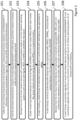
- FIG. 2 presents a broad overview of the method according to the present technology.
- certain parameters of network devices 109 to be maintained that may be present in a list of devices to be maintained) in the datacenter may be collected/fetched.
- step 203 may be removed from the maintenance list those network devices 109 with either hardware and software characteristics that are not supported (such as unsupported hardware model or current network operating system), ie that are not susceptible of automated maintenance by the present technology, or with an error with their BU, ROLE, INFRA Tag, or LOCATION information.
- their network operating system level may not be a supported level, or their hardware model may be outdated or unrecognized.
- their Tag(s) may not have a value recognized by the automated maintenance system of the present technology, or have (strictly) more or less than one single value for any of BU, ROLE, or INFRA Tag, etc.
- the remaining network devices 109 on the list may be clustered as follows:
- redundancy between network devices 109 may be identified. This redundancy may be defined at INFRA k level, in redundancy rules that the automated system of the present technology may apply to group redundant network devices 109 in Groups within each Cluster ijk .
- a Group may include 1 (no redundancy for this network device), or 2 or more network devices 109.
- conformity of the network devices 109 present in that Group may be checked with specific size rules applicable to the particular combination of BU; - ROLE j - INFRA k .
- a size rule may indicate that all Groups in a cluster Cluster ijk must include 3 network devices 109. All network devices 109 that belong to a Group that includes (strictly) more of less than 3 network devices 109 are non conform. Further, a check may be performed that all network devices 109 in the Group share the same LOCATION information.
- step 207 may be removed from the maintenance list those network devices 109 not having been clustered or grouped at steps 204 and 205, non-conformity to redundancy or size rules, or not sharing the same LOCATION information when present in the same Group, after steps 205 and 206.
- the automated process according to the present technology may upgrade successively all remaining network devices 109 in a Group. Since such network devices 109 are redundant ones, disruption to the functioning of the datacenter, and to the network connectivity service provided to clients of the organization that deploys, controls and maintains the datacenter, is minimized, and the technical unavailability of part or all of the datacenter owing to the maintenance of network devices is as limited as possible. The same may be performed for all created Groups in a Cluster ijk , and for all formed Clusters ijk clusters.
- Clusters ijk clusters adjusted to increase the speed of the maintenance process, while minimizing the overall downtime of the datacenter and disruption of the service to clients of the organization that deploys, controls and maintains the datacenter. Further, the order in which Clusters ijk clusters are handled may also be adjusted to optimize the continuation of services to clients of the organization.
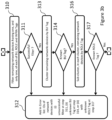
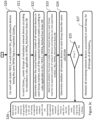
- FIGS. 3a-3c provide a more detailed view of the method according to the present technology.
- fetching of the information of the level of current network operating system and of the hardware model may be attempted with network devices to be maintained in the datacenter. These network devices may be listed through a list of IDs on a Maintenance list.
- this may for example be performed by: (i) providing (by the datacenter operator 101 or otherwise) to Network Upgrade Tool 100 a Maintenance list of network device IDs, (ii) Network Upgrade Tool 100 collecting the corresponding MANAGEMENT IPs from CMDB 103, and (iii) Network Upgrade Tool 100 using the retrieved corresponding MANAGEMENT IPs to query the network devices to be maintained for information of the level of current network operating system and of the hardware model.
- the collecting/fetching is not necessarily successful, and IDs of network devices for which it was unsuccessful may be added to an Error list at steps 302 with 307 and be removed from the Maintenance list.
- a determination may be made, for remaining network devices on the Maintenance list (ie: those network devices for which the ID was not added to the Error list after steps 301/302), whether the hardware model fetched at step 301, is a supported one.
- "Supported hardware model” as used herein, means a hardware model that maintenance operations of the datacenter are capable of handling. Referring back to Figure 1 , this may for example be performed by: (i) storing (by the datacenter operator 101 or otherwise) in the Rules DB 112 the supported hardware models, (ii) Network Upgrade Tool 100 retrieving those supported hardware models from Rules DB 112, and (iii) Network Upgrade Tool 100 comparing the retrieved supported hardware models with the hardware models fetched at step 301. If the determination is unsuccessful or the hardware model is not a supported one, IDs of corresponding network devices may be added to the Error list at steps 304 with 307 and be removed from the Maintenance list.
- step 305 collecting of the information of the Tags, and LOCATION and MANAGEMENT IP information, may be attempted with remaining network devices on the Maintenance list to be maintained in the datacenter. This may be performed by the Network Upgrade Tool 100 collecting that information from CMDB 103. The collecting is not necessarily successful, and IDs of network devices for which it was unsuccessful may be added to the Error list at steps 306 with 307 and be removed from the Maintenance list.
- step 310 determination may be made, for remaining network devices on the Maintenance list, whether such network devices have one, and only one, value for Tags BU, ROLE and INFRA respectively (as fetched at step 305). IDs of network devices having no value in any of BU, ROLE or INFRA Tag, or more than one value, may be added to the Error list at steps 311 with 312, and be removed from the Maintenance list.
- remaining network devices on the Maintenance list may be grouped in clusters sharing the same BU Tag. IDs of network devices having a not known/recognized value in BU, may be added to the Error list at steps 314 with 312, and be removed from the Maintenance list.
- remaining network devices on the Maintenance list may be grouped, in each BU cluster, in sub-clusters sharing the same ROLE Tag. IDs of network devices having a not known/recognized value in ROLE, may be added to the Error list at steps 317 with 312, and be removed from the Maintenance list.
- FIG 4 provides a logical illustration of a clustering/sub-clustering of network devices in a datacenter according to steps 313 and 316 in Figure 3b .
- Only a portion of the datacenter network devices 401 is represented.
- Network devices 401 each possess a unique ID that has been illustrated as "NDxx”.
- network devices 401 have been clustered each in a BU cluster 402, illustrated as BU01 and BU11.
- network devices 401 have been sub-clustered each in a ROLE sub-cluster 403, illustrated as ROLE01, ROLE07, ROLE13, etc.
- network devices may further be grouped in sub-sub-clusters Cluster ijk that are sharing the same INFRA Tag k (INFRA k ).
- network devices that appear to be redundant in each Cluster ijk may further be grouped yet in Groups of redundant network devices.
- this may for example be performed by: (i) storing (by the datacenter operator 101 or otherwise) in the Rules DB 112 redundancy rules particular to INFRA k , (ii) Network Upgrade Tool 100 retrieving those redundancy rules from Rules DB 112, and (iii) Network Upgrade Tool 100 grouping network devices in Groups in each Cluster ijk according to those redundancy rules.
- the rules may for example be a normalization of IDs of network devices, that will inherently carry the redundancy information. For example, rules may be that IDs of redundant network devices in an INFRA k , end with the same chain of characters specific to that INFRA k .
- network devices present in each Group may be checked for their hardware model being one of one or several expected hardware models, according to rules applicable to the corresponding combination BU i - ROLE j - INFRA k .
- this may for example be performed by: (i) storing (by the datacenter operator 101 or otherwise) in the Rules DB 112 hardware model expectancy rules particular to BU i - ROLE j - INFRA k , (ii) Network Upgrade Tool 100 retrieving those hardware model expectancy rules from Rules DB 112, and (iii) Network Upgrade Tool 100 checking network devices in Groups in each Cluster ijk against those hardware model expectancy rules.
- the actual number of network devices present in each Group may be checked, according to size rules applicable to the corresponding combination BU i - ROLE j - INFRA k .
- this may for example be performed by: (i) storing (by the datacenter operator 101 or otherwise) in the Rules DB 112 size (number of network devices expectancy) rules particular to BU i - ROLE j - INFRA k , (ii) Network Upgrade Tool 100 retrieving those size rules from Rules DB 112, and (iii) Network Upgrade Tool 100 checking the number of network devices in Groups in each Cluster ijk against those size rules.
- step 324 it may be verified that all network devices present in each Group share the same LOCATION information. This LOCATION information was available to the Network Upgrade Tool 100 from step 305.
- the remaining network devices on the Maintenance list may be maintained: this is performed successively for all network devices in a Group, for all Cluster ijk .
- this may for example be performed by: (i) storing (by the datacenter operator 101 or otherwise) in the Upgrade Path DB 104 upgrade rules to take a network device from a current network operating system level to the targeted network operating system level, (ii) Network Upgrade Tool 100 retrieving those upgrade rules from Upgrade Path DB 104, and (iii) Network Upgrade Tool 100 applying the upgrades through Network Configurator 105.
- network devices involved in providing identical service to identical clients of the datacenter have been identified and grouped together, and maintenance has been performed successively through all network devices belonging in a group, after removal of those network devices that did not conform and for which automated maintenance is too risky.
- the service is not completely interrupted, merely downgraded as the case may.
- the granularity of the Error list referred to at steps 307, 312 and 326 may be higher, by keeping track of the cause for error.
- the Error list may be broken down in sub-lists allowing to distinguish between (i) errors that the datacenter operator 101 may be able to correct, such as Tags, classification, identification, and (ii) errors that are linked to a faulty network device such as through its network operating system level, etc.
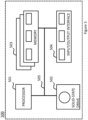
- FIG. 5 illustrates a computing system that may be used in the present technology.
- An example of implementation of computing system 500 that may be used for the Network Upgrade Tool 100 and/or the Network Configurator 105 is presented.
- such computing system may be implemented in any other suitable hardware, software, and/or firmware, or a combination thereof, and may be a single physical entity, or several separate physical entities with a distributed functionality.
- the Computing System 500 may comprise various hardware components including one or more single or multi-core processors collectively represented by a processor 501, a solid-state drive 502, a memory 503 and an input/output interface 504.
- the processor 501 may or may not be included in a FPGA.
- the Computing System 500 may be an "off the shelf' generic computing system.
- the Computing System 500 may also be distributed amongst multiple systems.
- the Computing System 500 may also be specifically dedicated to the implementation of the present technology. As a person in the art of the present technology may appreciate, multiple variations as to how the Computing System 500 is implemented may be envisioned without departing from the scope of the present technology.
- Communication between the various components of the Computing System 500 may be enabled by one or more internal and/or external buses 505 (e.g. a PCI bus, universal serial bus, IEEE 1394 "Firewire” bus, SCSI bus, Serial-ATA bus, ARINC bus, etc.), to which the various hardware components are electronically coupled.
- internal and/or external buses 505 e.g. a PCI bus, universal serial bus, IEEE 1394 "Firewire” bus, SCSI bus, Serial-ATA bus, ARINC bus, etc.
- the input/output interface 504 may allow enabling networking capabilities such as wire or wireless access.
- the input/output interface 504 may comprise a networking interface such as, but not limited to, a network port, a network socket, a network interface controller and the like. Multiple examples of how the networking interface may be implemented will become apparent to the person skilled in the art of the present technology.
- the solid-state drive 502 may store program instructions, such as those part of, for example, a library, an application, etc. suitable for being loaded into the memory 503 and executed by the processor 501 for the method and process steps according to the present technology.
Landscapes
- Engineering & Computer Science (AREA)
- Computer Networks & Wireless Communication (AREA)
- Signal Processing (AREA)
- Software Systems (AREA)
- General Engineering & Computer Science (AREA)
- Theoretical Computer Science (AREA)
- Automation & Control Theory (AREA)
- Computer Security & Cryptography (AREA)
- Physics & Mathematics (AREA)
- General Physics & Mathematics (AREA)
- Data Exchanges In Wide-Area Networks (AREA)
Claims (15)
- Procédé de maintenance de dispositifs de réseau dans un centre de données, comprenant :- la collecte (201) pour chacun des dispositifs de réseau d'une liste de Maintenance :- une identification virtuelle associée de manière unique au dispositif de réseau, IP de GESTION ;- une information représentative de l'emplacement physique réel du dispositif de réseau, EMPLACEMENT ; et- des tuples clé-valeur associés au dispositif de réseau, Balises, dans lesquels la clé est l'une :- d'une information représentative d'une entreprise ou d'un produit offrant le dispositif de réseau qui est utilisée dans le centre de données, BU ;- d'une information représentative d'une place et d'une fonction que le dispositif de réseau occupe dans le centre de données, ROLE ; et- d'une information représentative d'une version ou d'une génération du centre de données dans lequel le dispositif de réseau fonctionne, INFRA ; et dans lequel la valeur est une donnée réelle ou un pointeur vers les données pour la clé ;- l'extraction (202) pour chacun des dispositifs de réseau de la liste de Maintenance, à l'aide de l'IP de GESTION respective, d'un modèle matériel et d'un niveau de système d'exploitation réseau actuel du dispositif de réseau ;- la suppression (203) de la liste de Maintenance des dispositifs de réseau avec un modèle matériel ou un niveau de système d'exploitation réseau actuel non pris en charge, ou avec une erreur dans l'une de leurs Balises BU, ROLE et INFRA associées respectives, ou dans l'un quelconque de leur EMPLACEMENT ;- le regroupement (204) des dispositifs de réseau restants sur la liste de Maintenance, en i clusters BUi de ces dispositifs de réseau ayant la même valeur de clé BU dans l'une de leurs Balises associées, en j clusters ROLEj au sein des clusters BUi, de ces dispositifs de réseau ayant la même valeur de clé ROLE dans l'une de leurs Balises associées, et en k clusters Clusterijk au sein des clusters ROLEj de ces dispositifs de réseau ayant la même valeur de clé INFRA dans l'une de leurs Balises associées ;- la création (205) au sein de chaque cluster Clusterijk, de Groupes de dispositifs de réseau redondants, et :- la vérification (205) que le nombre de dispositifs de réseau redondants dans chaque Groupe créé correspond à une première quantité applicable, selon les règles de redondance, à INFRAk ;- la vérification (206) que le nombre de dispositifs de réseau dans chaque Groupe créé correspond à une seconde quantité applicable, selon les règles de taille, à une combinaison BUi - ROLEj - INFRAk ; et- la vérification (206) que tous les dispositifs de réseau de chaque Groupe créé partagent le même EMPLACEMENT ;- la suppression (207) de la liste de Maintenance des dispositifs de réseau présents et redondants dans un Groupe en une quantité qui ne correspond pas à la première quantité, présents dans un Groupe en une quantité qui ne correspond pas à la seconde quantité, ou présents dans un Groupe et ne partageant pas le même EMPLACEMENT ; et- la mise à niveau successive (208), à l'aide de règles de mise à niveau et de l'IP de GESTION respective, des dispositifs de réseau restants dans chaque Groupe créé, pour tous les Groupes au sein de tous les clusters Clusterijk, depuis la version actuelle du système d'exploitation réseau vers une version ciblée du système d'exploitation.
- Procédé selon la revendication 1, dans lequel la collecte et l'extraction sont réalisées à l'aide d'un identifiant unique attribué par un opérateur de centre de données lors du déploiement du centre de données à chacun des dispositifs de réseau de la liste de Maintenance, et associé à l'une quelconque de ses Balises associées, et l'IP de GESTION et l'EMPLACEMENT.
- Procédé selon la revendication 1 ou 2, dans lequel la suppression de la liste de Maintenance comprend également la suppression des dispositifs de réseau n'ayant pas exactement une valeur pour chacune des Balises BU, ROLE et INFRA.
- Procédé selon la revendication 2, ou 3 lorsqu'elle dépend de la revendication 2, dans lequel la suppression de la liste de Maintenance comprend également la création d'une liste d'Erreurs remplie avec les identifiants uniques des dispositifs de réseau supprimés.
- Procédé selon la revendication 4, dans lequel la liste d'Erreurs comprend également des sous-listes d'erreurs susceptibles d'être corrigées par l'opérateur du centre de données, et d'erreurs liées à un dispositif de réseau défaillant.
- Procédé selon l'une quelconque des revendications 1 à 5, dans lequel la mise à niveau successive comprend également l'ajustement du nombre de clusters Clusterijk gérés en parallèle pour minimiser le temps d'arrêt du centre de données.
- Procédé selon l'une quelconque des revendications 1 à 6, dans lequel la mise à niveau successive comprend également l'ajustement de l'ordre dans lequel les clusters Clusterijk sont gérés pour optimiser la continuité des services aux clients d'une organisation qui déploie, contrôle et entretient le centre de données.
- Système de maintenance de dispositifs de réseau dans un centre de données, le système comprenant un Outil de mise à niveau de réseau (100) couplé à une CMDB (103), une Base de données de règles (112), une Base de données de chemins de mise à niveau (104) et un Configurateur de réseau (105), l'Outil de mise à niveau du réseau étant configuré pour :- collecter (201) à partir de la CMDB pour chacun des dispositifs de réseau d'une liste de Maintenance :- une identification virtuelle associée de manière unique au dispositif de réseau, IP de GESTION ;- une information représentative de l'emplacement physique réel du dispositif de réseau, EMPLACEMENT ; et- des tuples clé-valeur associés au dispositif de réseau, Balises, dans lesquels la clé est l'une :- d'une information représentative d'une entreprise ou d'un produit offrant le dispositif de réseau qui est utilisée dans le centre de données, BU ;- d'une information représentative d'une place et d'une fonction que le dispositif de réseau occupe dans le centre de données, ROLE ; et- d'une information représentative d'une version ou d'une génération du centre de données dans lequel le dispositif de réseau fonctionne, INFRA ; et dans lequel la valeur est une donnée réelle ou un pointeur vers les données pour la clé ;- extraire (202) pour chacun des dispositifs de réseau de la liste de Maintenance, à l'aide de l'IP de GESTION respective, un modèle matériel et un niveau de système d'exploitation réseau actuel du dispositif de réseau ;- supprimer (203) de la liste de Maintenance des dispositifs de réseau avec un modèle matériel ou un niveau de système d'exploitation réseau actuel non pris en charge, ou avec une erreur dans l'une quelconque de leurs Balises BU, ROLE et INFRA associées respectives, ou dans l'un quelconque de leur EMPLACEMENT ;- regrouper (204) les dispositifs de réseau restants sur la liste de maintenance, en i clusters BUi de ces dispositifs de réseau ayant la même valeur de clé BU dans l'une de leurs balises associées, en j clusters ROLEj au sein des clusters BUi, de ces dispositifs de réseau ayant la même valeur de clé ROLE dans l'une de leurs Balises associées, et en k clusters Clusterijk au sein des clusters ROLEj de ces dispositifs de réseau ayant la même valeur de clé INFRA dans l'une de leurs Balises associées ;- créer (205) au sein de chaque cluster Clusterijk, des Groupes de dispositifs de réseau redondants selon les règles de redondance collectées à partir de la Base de données de règles applicables à INFRAk ; et- vérifier (205) que le nombre de dispositifs de réseau redondants dans chaque Groupe créé correspond à une première quantité applicable, selon les règles de redondance, à INFRAk ;- vérifier (206) que le nombre de dispositifs de réseau dans chaque Groupe créé correspond à une seconde quantité applicable, selon les règles de taille, à une combinaison BUi - ROLEj - INFRAk ; et- vérifier (206) que tous les dispositifs de réseau de chaque Groupe créé partagent le même EMPLACEMENT ;- supprimer (207) de la liste de Maintenance des dispositifs de réseau présents et redondants dans un Groupe en une quantité qui ne correspond pas à la première quantité, présents dans un Groupe en une quantité qui ne correspond pas à la seconde quantité, ou présents dans un Groupe et ne partageant pas le même EMPLACEMENT ; et- mettre successivement à niveau (208), par l'intermédiaire du Configurateur de Réseau, à l'aide de règles de mise à niveau collectées dans la Base de données des Chemins de Mise à niveau et de l'IP de GESTION respective, les dispositifs de réseau restants dans chaque Groupe créé, pour tous les Groupes au sein de tous les clusters Clusterijk, depuis la version actuelle du système d'exploitation réseau vers une version ciblée du système d'exploitation.
- Système selon la revendication 8, dans lequel l'Outil de mise à niveau du réseau est en outre configuré pour collecter et extraire à l'aide d'un identifiant unique attribué par un opérateur de centre de données lors du déploiement du centre de données à chacun des dispositifs de réseau de la liste de Maintenance, et associé à l'un quelconque de ses Balises associées, ainsi que l'IP de GESTION et l'EMPLACEMENT.
- Système selon la revendication 8, ou 9 lorsqu'elle dépend de la revendication 8, dans lequel l'Outil de mise à niveau du réseau est en outre configuré pour créer une liste d'Erreurs remplie avec les identifiants uniques des dispositifs de réseau supprimés de la liste de Maintenance.
- Système selon la revendication 10, dans lequel la liste d'Erreurs comprend également des sous-listes d'erreurs susceptibles d'être corrigées par l'opérateur du centre de données, et d'erreurs liées à un dispositif de réseau défaillant.
- Système selon l'une quelconque des revendications 8 à 11, dans lequel l'Outil de mise à niveau du réseau est en outre configuré pour ajuster le nombre de clusters Clustersijk gérés en parallèle afin de minimiser le temps d'arrêt du centre de données.
- Système selon l'une quelconque des revendications 8 à 12, dans lequel l'Outil de mise à niveau du réseau est en outre configuré pour ajuster l'ordre dans lequel les clusters Clustersijk sont gérés afin d'optimiser la continuité des services aux clients d'une organisation qui déploie, contrôle et entretient le centre de données.
- Système selon l'une quelconque des revendications 8 à 13, dans lequel les règles de redondance et de taille sont codées en dur dans l'Outil de mise à niveau de réseau.
- Support lisible par ordinateur comprenant des instructions permettant à un système informatique de réaliser le procédé selon l'une quelconque des revendications 1 à 7.
Priority Applications (4)
| Application Number | Priority Date | Filing Date | Title |
|---|---|---|---|
| EP21305662.5A EP4092963B1 (fr) | 2021-05-20 | 2021-05-20 | Procédé et système de maintenance de dispositif de réseau de centre de données |
| US17/748,002 US20220376985A1 (en) | 2021-05-20 | 2022-05-18 | Method and system for datacenter network device maintenance |
| CA3159474A CA3159474A1 (fr) | 2021-05-20 | 2022-05-19 | Methode et systeme de maintenance de dispositif reseau de centre informatique |
| CN202210553546.4A CN115378812B (zh) | 2021-05-20 | 2022-05-20 | 用于数据中心网络设备维护的方法和系统 |
Applications Claiming Priority (1)
| Application Number | Priority Date | Filing Date | Title |
|---|---|---|---|
| EP21305662.5A EP4092963B1 (fr) | 2021-05-20 | 2021-05-20 | Procédé et système de maintenance de dispositif de réseau de centre de données |
Publications (2)
| Publication Number | Publication Date |
|---|---|
| EP4092963A1 EP4092963A1 (fr) | 2022-11-23 |
| EP4092963B1 true EP4092963B1 (fr) | 2024-05-08 |
Family
ID=76325461
Family Applications (1)
| Application Number | Title | Priority Date | Filing Date |
|---|---|---|---|
| EP21305662.5A Active EP4092963B1 (fr) | 2021-05-20 | 2021-05-20 | Procédé et système de maintenance de dispositif de réseau de centre de données |
Country Status (4)
| Country | Link |
|---|---|
| US (1) | US20220376985A1 (fr) |
| EP (1) | EP4092963B1 (fr) |
| CN (1) | CN115378812B (fr) |
| CA (1) | CA3159474A1 (fr) |
Families Citing this family (1)
| Publication number | Priority date | Publication date | Assignee | Title |
|---|---|---|---|---|
| CN116684303B (zh) * | 2023-08-01 | 2023-10-27 | 聪育智能科技(苏州)有限公司 | 一种基于数字孪生的数据中心运维方法及系统 |
Family Cites Families (38)
| Publication number | Priority date | Publication date | Assignee | Title |
|---|---|---|---|---|
| US8346897B2 (en) * | 2008-02-25 | 2013-01-01 | Jon Jaroker | System and method for deploying and maintaining software applications |
| US8108734B2 (en) * | 2009-11-02 | 2012-01-31 | International Business Machines Corporation | Intelligent rolling upgrade for data storage systems |
| US8407689B2 (en) * | 2010-06-25 | 2013-03-26 | Microsoft Corporation | Updating nodes considering service model constraints |
| US20120102543A1 (en) * | 2010-10-26 | 2012-04-26 | 360 GRC, Inc. | Audit Management System |
| US10326645B2 (en) * | 2011-11-11 | 2019-06-18 | Level 3 Communications, Llc | System and methods for configuration management |
| US8935375B2 (en) * | 2011-12-12 | 2015-01-13 | Microsoft Corporation | Increasing availability of stateful applications |
| US9201933B2 (en) * | 2014-04-01 | 2015-12-01 | BizDox, LLC | Systems and methods for documenting, analyzing, and supporting information technology infrastructure |
| US10044795B2 (en) * | 2014-07-11 | 2018-08-07 | Vmware Inc. | Methods and apparatus for rack deployments for virtual computing environments |
| US9893940B1 (en) * | 2015-05-26 | 2018-02-13 | Amazon Technologies, Inc. | Topologically aware network device configuration |
| WO2017111828A1 (fr) * | 2015-12-26 | 2017-06-29 | Intel Corporation | Cadriciel distribué pour une gestion de système de machine à machine souple |
| SG11201802860SA (en) * | 2016-01-11 | 2018-07-30 | Equinix Inc | Architecture for data center infrastructure monitoring |
| US10089178B2 (en) * | 2016-02-29 | 2018-10-02 | International Business Machines Corporation | Developing an accurate dispersed storage network memory performance model through training |
| US11941279B2 (en) * | 2017-03-10 | 2024-03-26 | Pure Storage, Inc. | Data path virtualization |
| US20190018729A1 (en) * | 2017-04-14 | 2019-01-17 | Microsoft Technology Licensing, Llc | Anomaly remediation using device analytics |
| US10498608B2 (en) * | 2017-06-16 | 2019-12-03 | Cisco Technology, Inc. | Topology explorer |
| US10862749B1 (en) * | 2017-07-21 | 2020-12-08 | Vmware, Inc. | Systems for and methods of network management and verification using intent inference |
| US11089113B2 (en) * | 2017-08-07 | 2021-08-10 | Citrix Systems, Inc. | Systems and methods to retain existing connections so that there is no connection loss when nodes are added to a cluster for capacity or when a node is taken out from the cluster for maintenance |
| US11082296B2 (en) * | 2017-10-27 | 2021-08-03 | Palo Alto Networks, Inc. | IoT device grouping and labeling |
| WO2019113308A1 (fr) * | 2017-12-05 | 2019-06-13 | Franchitti Jean Claude | Adaptation active de dispositifs informatiques en réseau à l'aide de composants logiciels réutilisables vérifiés |
| US10698674B2 (en) * | 2018-02-06 | 2020-06-30 | Smartshift Technologies, Inc. | Systems and methods for entry point-based code analysis and transformation |
| US10740075B2 (en) * | 2018-02-06 | 2020-08-11 | Smartshift Technologies, Inc. | Systems and methods for code clustering analysis and transformation |
| US10528343B2 (en) * | 2018-02-06 | 2020-01-07 | Smartshift Technologies, Inc. | Systems and methods for code analysis heat map interfaces |
| CN110169040B (zh) * | 2018-07-10 | 2021-09-28 | 深圳花儿数据技术有限公司 | 基于多层一致性哈希的分布式数据存储方法与系统 |
| DK3617875T3 (da) * | 2018-08-27 | 2021-07-19 | Ovh | Fremgangsmåde til forbedret automatiseret softwareopdatering ved anvendelse af et netværksapparat |
| US10742501B1 (en) * | 2018-12-21 | 2020-08-11 | Juniper Networks, Inc. | Automation of maintenance mode operations for network devices |
| US10938660B1 (en) * | 2018-12-21 | 2021-03-02 | Juniper Networks, Inc. | Automation of maintenance mode operations for network devices |
| US10958517B2 (en) * | 2019-02-15 | 2021-03-23 | At&T Intellectual Property I, L.P. | Conflict-free change deployment |
| US11246045B2 (en) * | 2019-02-20 | 2022-02-08 | Level 3 Communications, Llc | Systems and methods for communications node upgrade and selection |
| US11799888B2 (en) * | 2019-06-07 | 2023-10-24 | Hewlett Packard Enterprise Development Lp | Automatic identification of roles and connection anomalies |
| US20210012239A1 (en) * | 2019-07-12 | 2021-01-14 | Microsoft Technology Licensing, Llc | Automated generation of machine learning models for network evaluation |
| US10996938B2 (en) * | 2019-07-15 | 2021-05-04 | Juniper Networks, Inc. | Automated selection of software images for network devices |
| US11140035B2 (en) * | 2019-12-11 | 2021-10-05 | Oracle International Corporation | System and method for automating zero touch provisioning of cloud networks |
| EP3926891B1 (fr) * | 2020-06-19 | 2024-05-08 | Accenture Global Solutions Limited | Plateforme d'exploitation de réseau intelligent pour l'atténuation de pannes de réseau |
| US20210405902A1 (en) * | 2020-06-30 | 2021-12-30 | Portworx, Inc. | Rule-based provisioning for heterogeneous distributed systems |
| US11520673B2 (en) * | 2020-07-21 | 2022-12-06 | Hewlett Packard Enterprise Development Lp | Maintenance operations based on analysis of collected data |
| US20220057947A1 (en) * | 2020-08-20 | 2022-02-24 | Portworx, Inc. | Application aware provisioning for distributed systems |
| US12155657B2 (en) * | 2020-10-16 | 2024-11-26 | Somos, Inc. | Systems and methods for an internet of things device registry display |
| US12321951B2 (en) * | 2021-04-16 | 2025-06-03 | Somos, Inc. | Systems and methods for fraudulent activity detection |
-
2021
- 2021-05-20 EP EP21305662.5A patent/EP4092963B1/fr active Active
-
2022
- 2022-05-18 US US17/748,002 patent/US20220376985A1/en not_active Abandoned
- 2022-05-19 CA CA3159474A patent/CA3159474A1/fr active Pending
- 2022-05-20 CN CN202210553546.4A patent/CN115378812B/zh active Active
Also Published As
| Publication number | Publication date |
|---|---|
| US20220376985A1 (en) | 2022-11-24 |
| CA3159474A1 (fr) | 2022-11-20 |
| EP4092963A1 (fr) | 2022-11-23 |
| CN115378812B (zh) | 2025-04-25 |
| CN115378812A (zh) | 2022-11-22 |
Similar Documents
| Publication | Publication Date | Title |
|---|---|---|
| US9354961B2 (en) | Method and system for supporting event root cause analysis | |
| US10091138B2 (en) | In service upgrades for a hypervisor or hardware manager hosting virtual traffic managers | |
| US20130047026A1 (en) | Upgrading network traffic management devices while maintaining availability | |
| CN115484164B (zh) | 用于在虚拟化环境中部署生产系统的方法和系统 | |
| WO2021003677A1 (fr) | Procédé et appareil de mise à niveau de services dans un système distribué, et système distribué | |
| CN103455346B (zh) | 应用程序部署方法、部署主控机、部署客户端和集群 | |
| US20150120640A1 (en) | Hierarchical probability model generation system, hierarchical probability model generation method, and program | |
| CN111259376A (zh) | 权限配置方法、装置、服务器及存储介质 | |
| CN108737499A (zh) | 服务器配置方法和装置 | |
| US9098392B1 (en) | Systems and methods for changing fencing modes in clusters | |
| EP4092963B1 (fr) | Procédé et système de maintenance de dispositif de réseau de centre de données | |
| CN112448842A (zh) | 将新机架推送到数据中心中进入运行模式的方法和系统 | |
| US20240362078A1 (en) | Predictive resource measurement for operator process upgrades | |
| EP3837807B1 (fr) | Cadriciel de système modulaire pour automatisation de fonction de réseau de logiciel | |
| CN117742931A (zh) | 大数据集群部署方案的确定方法、装置、集群和存储介质 | |
| KR102344992B1 (ko) | 서버 초기화 정보의 중앙 집중화를 위한 시스템 및 방법 | |
| US20240248701A1 (en) | Full stack in-place declarative upgrades of a kubernetes cluster | |
| JP7683679B2 (ja) | ネットワークシステム構築装置及びネットワークシステム構築方法 | |
| US20250124401A1 (en) | Declarative instantaneous inventory collection | |
| CN117608595A (zh) | 基于大数据平台容器化自动并行部署方法及装置 | |
| US12563435B2 (en) | Methods for profile based management of infrastructure of a cloud used for ran applications | |
| US20240111579A1 (en) | Termination of sidecar containers | |
| CN118502788A (zh) | 一种固件升级方法、装置、电子设备及存储介质 | |
| US20240095092A1 (en) | Ring architecture-based workload distribution in a microservice computing environment | |
| CN117591134A (zh) | 一种数据库部署方法、装置、电子设备和存储介质 |
Legal Events
| Date | Code | Title | Description |
|---|---|---|---|
| PUAI | Public reference made under article 153(3) epc to a published international application that has entered the european phase |
Free format text: ORIGINAL CODE: 0009012 |
|
| STAA | Information on the status of an ep patent application or granted ep patent |
Free format text: STATUS: REQUEST FOR EXAMINATION WAS MADE |
|
| 17P | Request for examination filed |
Effective date: 20211021 |
|
| AK | Designated contracting states |
Kind code of ref document: A1 Designated state(s): AL AT BE BG CH CY CZ DE DK EE ES FI FR GB GR HR HU IE IS IT LI LT LU LV MC MK MT NL NO PL PT RO RS SE SI SK SM TR |
|
| REG | Reference to a national code |
Ref country code: DE Ref legal event code: R079 Free format text: PREVIOUS MAIN CLASS: H04L0012240000 Ipc: H04L0041082000 Ref document number: 602021013023 Country of ref document: DE |
|
| GRAP | Despatch of communication of intention to grant a patent |
Free format text: ORIGINAL CODE: EPIDOSNIGR1 |
|
| STAA | Information on the status of an ep patent application or granted ep patent |
Free format text: STATUS: GRANT OF PATENT IS INTENDED |
|
| RIC1 | Information provided on ipc code assigned before grant |
Ipc: H04L 41/0893 20220101ALI20240206BHEP Ipc: H04L 41/082 20220101AFI20240206BHEP |
|
| GRAS | Grant fee paid |
Free format text: ORIGINAL CODE: EPIDOSNIGR3 |
|
| INTG | Intention to grant announced |
Effective date: 20240306 |
|
| GRAA | (expected) grant |
Free format text: ORIGINAL CODE: 0009210 |
|
| STAA | Information on the status of an ep patent application or granted ep patent |
Free format text: STATUS: THE PATENT HAS BEEN GRANTED |
|
| AK | Designated contracting states |
Kind code of ref document: B1 Designated state(s): AL AT BE BG CH CY CZ DE DK EE ES FI FR GB GR HR HU IE IS IT LI LT LU LV MC MK MT NL NO PL PT RO RS SE SI SK SM TR |
|
| REG | Reference to a national code |
Ref country code: GB Ref legal event code: FG4D |
|
| REG | Reference to a national code |
Ref country code: CH Ref legal event code: EP |
|
| P01 | Opt-out of the competence of the unified patent court (upc) registered |
Effective date: 20240423 |
|
| REG | Reference to a national code |
Ref country code: DE Ref legal event code: R096 Ref document number: 602021013023 Country of ref document: DE |
|
| REG | Reference to a national code |
Ref country code: IE Ref legal event code: FG4D |
|
| REG | Reference to a national code |
Ref country code: LT Ref legal event code: MG9D |
|
| REG | Reference to a national code |
Ref country code: NL Ref legal event code: MP Effective date: 20240508 |
|
| PG25 | Lapsed in a contracting state [announced via postgrant information from national office to epo] |
Ref country code: IS Free format text: LAPSE BECAUSE OF FAILURE TO SUBMIT A TRANSLATION OF THE DESCRIPTION OR TO PAY THE FEE WITHIN THE PRESCRIBED TIME-LIMIT Effective date: 20240908 |
|
| PG25 | Lapsed in a contracting state [announced via postgrant information from national office to epo] |
Ref country code: BG Free format text: LAPSE BECAUSE OF FAILURE TO SUBMIT A TRANSLATION OF THE DESCRIPTION OR TO PAY THE FEE WITHIN THE PRESCRIBED TIME-LIMIT Effective date: 20240508 |
|
| PG25 | Lapsed in a contracting state [announced via postgrant information from national office to epo] |
Ref country code: HR Free format text: LAPSE BECAUSE OF FAILURE TO SUBMIT A TRANSLATION OF THE DESCRIPTION OR TO PAY THE FEE WITHIN THE PRESCRIBED TIME-LIMIT Effective date: 20240508 Ref country code: FI Free format text: LAPSE BECAUSE OF FAILURE TO SUBMIT A TRANSLATION OF THE DESCRIPTION OR TO PAY THE FEE WITHIN THE PRESCRIBED TIME-LIMIT Effective date: 20240508 |
|
| PG25 | Lapsed in a contracting state [announced via postgrant information from national office to epo] |
Ref country code: GR Free format text: LAPSE BECAUSE OF FAILURE TO SUBMIT A TRANSLATION OF THE DESCRIPTION OR TO PAY THE FEE WITHIN THE PRESCRIBED TIME-LIMIT Effective date: 20240809 |
|
| PG25 | Lapsed in a contracting state [announced via postgrant information from national office to epo] |
Ref country code: PT Free format text: LAPSE BECAUSE OF FAILURE TO SUBMIT A TRANSLATION OF THE DESCRIPTION OR TO PAY THE FEE WITHIN THE PRESCRIBED TIME-LIMIT Effective date: 20240909 |
|
| REG | Reference to a national code |
Ref country code: AT Ref legal event code: MK05 Ref document number: 1685910 Country of ref document: AT Kind code of ref document: T Effective date: 20240508 |
|
| PG25 | Lapsed in a contracting state [announced via postgrant information from national office to epo] |
Ref country code: NL Free format text: LAPSE BECAUSE OF FAILURE TO SUBMIT A TRANSLATION OF THE DESCRIPTION OR TO PAY THE FEE WITHIN THE PRESCRIBED TIME-LIMIT Effective date: 20240508 |
|
| PG25 | Lapsed in a contracting state [announced via postgrant information from national office to epo] |
Ref country code: ES Free format text: LAPSE BECAUSE OF FAILURE TO SUBMIT A TRANSLATION OF THE DESCRIPTION OR TO PAY THE FEE WITHIN THE PRESCRIBED TIME-LIMIT Effective date: 20240508 |
|
| PG25 | Lapsed in a contracting state [announced via postgrant information from national office to epo] |
Ref country code: AT Free format text: LAPSE BECAUSE OF FAILURE TO SUBMIT A TRANSLATION OF THE DESCRIPTION OR TO PAY THE FEE WITHIN THE PRESCRIBED TIME-LIMIT Effective date: 20240508 |
|
| PG25 | Lapsed in a contracting state [announced via postgrant information from national office to epo] |
Ref country code: PL Free format text: LAPSE BECAUSE OF FAILURE TO SUBMIT A TRANSLATION OF THE DESCRIPTION OR TO PAY THE FEE WITHIN THE PRESCRIBED TIME-LIMIT Effective date: 20240508 |
|
| PG25 | Lapsed in a contracting state [announced via postgrant information from national office to epo] |
Ref country code: LV Free format text: LAPSE BECAUSE OF FAILURE TO SUBMIT A TRANSLATION OF THE DESCRIPTION OR TO PAY THE FEE WITHIN THE PRESCRIBED TIME-LIMIT Effective date: 20240508 |
|
| PG25 | Lapsed in a contracting state [announced via postgrant information from national office to epo] |
Ref country code: PT Free format text: LAPSE BECAUSE OF FAILURE TO SUBMIT A TRANSLATION OF THE DESCRIPTION OR TO PAY THE FEE WITHIN THE PRESCRIBED TIME-LIMIT Effective date: 20240909 Ref country code: PL Free format text: LAPSE BECAUSE OF FAILURE TO SUBMIT A TRANSLATION OF THE DESCRIPTION OR TO PAY THE FEE WITHIN THE PRESCRIBED TIME-LIMIT Effective date: 20240508 Ref country code: NO Free format text: LAPSE BECAUSE OF FAILURE TO SUBMIT A TRANSLATION OF THE DESCRIPTION OR TO PAY THE FEE WITHIN THE PRESCRIBED TIME-LIMIT Effective date: 20240808 Ref country code: NL Free format text: LAPSE BECAUSE OF FAILURE TO SUBMIT A TRANSLATION OF THE DESCRIPTION OR TO PAY THE FEE WITHIN THE PRESCRIBED TIME-LIMIT Effective date: 20240508 Ref country code: LV Free format text: LAPSE BECAUSE OF FAILURE TO SUBMIT A TRANSLATION OF THE DESCRIPTION OR TO PAY THE FEE WITHIN THE PRESCRIBED TIME-LIMIT Effective date: 20240508 Ref country code: IS Free format text: LAPSE BECAUSE OF FAILURE TO SUBMIT A TRANSLATION OF THE DESCRIPTION OR TO PAY THE FEE WITHIN THE PRESCRIBED TIME-LIMIT Effective date: 20240908 Ref country code: HR Free format text: LAPSE BECAUSE OF FAILURE TO SUBMIT A TRANSLATION OF THE DESCRIPTION OR TO PAY THE FEE WITHIN THE PRESCRIBED TIME-LIMIT Effective date: 20240508 Ref country code: GR Free format text: LAPSE BECAUSE OF FAILURE TO SUBMIT A TRANSLATION OF THE DESCRIPTION OR TO PAY THE FEE WITHIN THE PRESCRIBED TIME-LIMIT Effective date: 20240809 Ref country code: FI Free format text: LAPSE BECAUSE OF FAILURE TO SUBMIT A TRANSLATION OF THE DESCRIPTION OR TO PAY THE FEE WITHIN THE PRESCRIBED TIME-LIMIT Effective date: 20240508 Ref country code: ES Free format text: LAPSE BECAUSE OF FAILURE TO SUBMIT A TRANSLATION OF THE DESCRIPTION OR TO PAY THE FEE WITHIN THE PRESCRIBED TIME-LIMIT Effective date: 20240508 Ref country code: BG Free format text: LAPSE BECAUSE OF FAILURE TO SUBMIT A TRANSLATION OF THE DESCRIPTION OR TO PAY THE FEE WITHIN THE PRESCRIBED TIME-LIMIT Effective date: 20240508 Ref country code: AT Free format text: LAPSE BECAUSE OF FAILURE TO SUBMIT A TRANSLATION OF THE DESCRIPTION OR TO PAY THE FEE WITHIN THE PRESCRIBED TIME-LIMIT Effective date: 20240508 Ref country code: RS Free format text: LAPSE BECAUSE OF FAILURE TO SUBMIT A TRANSLATION OF THE DESCRIPTION OR TO PAY THE FEE WITHIN THE PRESCRIBED TIME-LIMIT Effective date: 20240808 |
|
| REG | Reference to a national code |
Ref country code: CH Ref legal event code: PL |
|
| PG25 | Lapsed in a contracting state [announced via postgrant information from national office to epo] |
Ref country code: DK Free format text: LAPSE BECAUSE OF FAILURE TO SUBMIT A TRANSLATION OF THE DESCRIPTION OR TO PAY THE FEE WITHIN THE PRESCRIBED TIME-LIMIT Effective date: 20240508 |
|
| PG25 | Lapsed in a contracting state [announced via postgrant information from national office to epo] |
Ref country code: LU Free format text: LAPSE BECAUSE OF NON-PAYMENT OF DUE FEES Effective date: 20240520 |
|
| PG25 | Lapsed in a contracting state [announced via postgrant information from national office to epo] |
Ref country code: EE Free format text: LAPSE BECAUSE OF FAILURE TO SUBMIT A TRANSLATION OF THE DESCRIPTION OR TO PAY THE FEE WITHIN THE PRESCRIBED TIME-LIMIT Effective date: 20240508 |
|
| PG25 | Lapsed in a contracting state [announced via postgrant information from national office to epo] |
Ref country code: CZ Free format text: LAPSE BECAUSE OF FAILURE TO SUBMIT A TRANSLATION OF THE DESCRIPTION OR TO PAY THE FEE WITHIN THE PRESCRIBED TIME-LIMIT Effective date: 20240508 |
|
| PG25 | Lapsed in a contracting state [announced via postgrant information from national office to epo] |
Ref country code: SK Free format text: LAPSE BECAUSE OF FAILURE TO SUBMIT A TRANSLATION OF THE DESCRIPTION OR TO PAY THE FEE WITHIN THE PRESCRIBED TIME-LIMIT Effective date: 20240508 Ref country code: RO Free format text: LAPSE BECAUSE OF FAILURE TO SUBMIT A TRANSLATION OF THE DESCRIPTION OR TO PAY THE FEE WITHIN THE PRESCRIBED TIME-LIMIT Effective date: 20240508 |
|
| PG25 | Lapsed in a contracting state [announced via postgrant information from national office to epo] |
Ref country code: SM Free format text: LAPSE BECAUSE OF FAILURE TO SUBMIT A TRANSLATION OF THE DESCRIPTION OR TO PAY THE FEE WITHIN THE PRESCRIBED TIME-LIMIT Effective date: 20240508 |
|
| PG25 | Lapsed in a contracting state [announced via postgrant information from national office to epo] |
Ref country code: SM Free format text: LAPSE BECAUSE OF FAILURE TO SUBMIT A TRANSLATION OF THE DESCRIPTION OR TO PAY THE FEE WITHIN THE PRESCRIBED TIME-LIMIT Effective date: 20240508 Ref country code: SK Free format text: LAPSE BECAUSE OF FAILURE TO SUBMIT A TRANSLATION OF THE DESCRIPTION OR TO PAY THE FEE WITHIN THE PRESCRIBED TIME-LIMIT Effective date: 20240508 Ref country code: RO Free format text: LAPSE BECAUSE OF FAILURE TO SUBMIT A TRANSLATION OF THE DESCRIPTION OR TO PAY THE FEE WITHIN THE PRESCRIBED TIME-LIMIT Effective date: 20240508 Ref country code: LU Free format text: LAPSE BECAUSE OF NON-PAYMENT OF DUE FEES Effective date: 20240520 Ref country code: EE Free format text: LAPSE BECAUSE OF FAILURE TO SUBMIT A TRANSLATION OF THE DESCRIPTION OR TO PAY THE FEE WITHIN THE PRESCRIBED TIME-LIMIT Effective date: 20240508 Ref country code: DK Free format text: LAPSE BECAUSE OF FAILURE TO SUBMIT A TRANSLATION OF THE DESCRIPTION OR TO PAY THE FEE WITHIN THE PRESCRIBED TIME-LIMIT Effective date: 20240508 Ref country code: CZ Free format text: LAPSE BECAUSE OF FAILURE TO SUBMIT A TRANSLATION OF THE DESCRIPTION OR TO PAY THE FEE WITHIN THE PRESCRIBED TIME-LIMIT Effective date: 20240508 Ref country code: CH Free format text: LAPSE BECAUSE OF NON-PAYMENT OF DUE FEES Effective date: 20240531 |
|
| PG25 | Lapsed in a contracting state [announced via postgrant information from national office to epo] |
Ref country code: MC Free format text: LAPSE BECAUSE OF FAILURE TO SUBMIT A TRANSLATION OF THE DESCRIPTION OR TO PAY THE FEE WITHIN THE PRESCRIBED TIME-LIMIT Effective date: 20240508 Ref country code: IT Free format text: LAPSE BECAUSE OF FAILURE TO SUBMIT A TRANSLATION OF THE DESCRIPTION OR TO PAY THE FEE WITHIN THE PRESCRIBED TIME-LIMIT Effective date: 20240508 |
|
| REG | Reference to a national code |
Ref country code: DE Ref legal event code: R097 Ref document number: 602021013023 Country of ref document: DE |
|
| REG | Reference to a national code |
Ref country code: BE Ref legal event code: MM Effective date: 20240531 |
|
| PLBE | No opposition filed within time limit |
Free format text: ORIGINAL CODE: 0009261 |
|
| STAA | Information on the status of an ep patent application or granted ep patent |
Free format text: STATUS: NO OPPOSITION FILED WITHIN TIME LIMIT |
|
| 26N | No opposition filed |
Effective date: 20250211 |
|
| PG25 | Lapsed in a contracting state [announced via postgrant information from national office to epo] |
Ref country code: IE Free format text: LAPSE BECAUSE OF NON-PAYMENT OF DUE FEES Effective date: 20240520 |
|
| PG25 | Lapsed in a contracting state [announced via postgrant information from national office to epo] |
Ref country code: BE Free format text: LAPSE BECAUSE OF NON-PAYMENT OF DUE FEES Effective date: 20240531 Ref country code: SI Free format text: LAPSE BECAUSE OF FAILURE TO SUBMIT A TRANSLATION OF THE DESCRIPTION OR TO PAY THE FEE WITHIN THE PRESCRIBED TIME-LIMIT Effective date: 20240508 |
|
| PGFP | Annual fee paid to national office [announced via postgrant information from national office to epo] |
Ref country code: DE Payment date: 20250520 Year of fee payment: 5 |
|
| PGFP | Annual fee paid to national office [announced via postgrant information from national office to epo] |
Ref country code: GB Payment date: 20250520 Year of fee payment: 5 |
|
| PGFP | Annual fee paid to national office [announced via postgrant information from national office to epo] |
Ref country code: FR Payment date: 20250520 Year of fee payment: 5 |
|
| PG25 | Lapsed in a contracting state [announced via postgrant information from national office to epo] |
Ref country code: CY Free format text: LAPSE BECAUSE OF FAILURE TO SUBMIT A TRANSLATION OF THE DESCRIPTION OR TO PAY THE FEE WITHIN THE PRESCRIBED TIME-LIMIT; INVALID AB INITIO Effective date: 20210520 |
|
| PG25 | Lapsed in a contracting state [announced via postgrant information from national office to epo] |
Ref country code: HU Free format text: LAPSE BECAUSE OF FAILURE TO SUBMIT A TRANSLATION OF THE DESCRIPTION OR TO PAY THE FEE WITHIN THE PRESCRIBED TIME-LIMIT; INVALID AB INITIO Effective date: 20210520 |
|
| PG25 | Lapsed in a contracting state [announced via postgrant information from national office to epo] |
Ref country code: SE Free format text: LAPSE BECAUSE OF FAILURE TO SUBMIT A TRANSLATION OF THE DESCRIPTION OR TO PAY THE FEE WITHIN THE PRESCRIBED TIME-LIMIT Effective date: 20240508 |