EP4093140A1 - Procédé et appareil de sélection de type d'accès aléatoire - Google Patents
Procédé et appareil de sélection de type d'accès aléatoire Download PDFInfo
- Publication number
- EP4093140A1 EP4093140A1 EP20915216.4A EP20915216A EP4093140A1 EP 4093140 A1 EP4093140 A1 EP 4093140A1 EP 20915216 A EP20915216 A EP 20915216A EP 4093140 A1 EP4093140 A1 EP 4093140A1
- Authority
- EP
- European Patent Office
- Prior art keywords
- random access
- threshold
- contention
- rsrp
- rtt
- Prior art date
- Legal status (The legal status is an assumption and is not a legal conclusion. Google has not performed a legal analysis and makes no representation as to the accuracy of the status listed.)
- Withdrawn
Links
Images



Classifications
-
- H—ELECTRICITY
- H04—ELECTRIC COMMUNICATION TECHNIQUE
- H04W—WIRELESS COMMUNICATION NETWORKS
- H04W74/00—Wireless channel access
- H04W74/02—Hybrid access
-
- H—ELECTRICITY
- H04—ELECTRIC COMMUNICATION TECHNIQUE
- H04W—WIRELESS COMMUNICATION NETWORKS
- H04W74/00—Wireless channel access
- H04W74/08—Non-scheduled access, e.g. ALOHA
- H04W74/0833—Random access procedures, e.g. with 4-step access
-
- H—ELECTRICITY
- H04—ELECTRIC COMMUNICATION TECHNIQUE
- H04W—WIRELESS COMMUNICATION NETWORKS
- H04W74/00—Wireless channel access
- H04W74/08—Non-scheduled access, e.g. ALOHA
- H04W74/0833—Random access procedures, e.g. with 4-step access
- H04W74/0841—Random access procedures, e.g. with 4-step access with collision treatment
-
- H—ELECTRICITY
- H04—ELECTRIC COMMUNICATION TECHNIQUE
- H04W—WIRELESS COMMUNICATION NETWORKS
- H04W74/00—Wireless channel access
- H04W74/08—Non-scheduled access, e.g. ALOHA
- H04W74/0866—Non-scheduled access, e.g. ALOHA using a dedicated channel for access
-
- H—ELECTRICITY
- H04—ELECTRIC COMMUNICATION TECHNIQUE
- H04W—WIRELESS COMMUNICATION NETWORKS
- H04W74/00—Wireless channel access
- H04W74/002—Transmission of channel access control information
- H04W74/006—Transmission of channel access control information in the downlink, i.e. towards the terminal
-
- H—ELECTRICITY
- H04—ELECTRIC COMMUNICATION TECHNIQUE
- H04W—WIRELESS COMMUNICATION NETWORKS
- H04W74/00—Wireless channel access
- H04W74/08—Non-scheduled access, e.g. ALOHA
- H04W74/0833—Random access procedures, e.g. with 4-step access
- H04W74/0836—Random access procedures, e.g. with 4-step access with 2-step access
-
- H—ELECTRICITY
- H04—ELECTRIC COMMUNICATION TECHNIQUE
- H04W—WIRELESS COMMUNICATION NETWORKS
- H04W74/00—Wireless channel access
- H04W74/08—Non-scheduled access, e.g. ALOHA
- H04W74/0833—Random access procedures, e.g. with 4-step access
- H04W74/0838—Random access procedures, e.g. with 4-step access using contention-free random access [CFRA]
Definitions
- This application relates to the field of communication technology, and specifically to a method and apparatus for random access type selection.
- a network device configures for a terminal device both a resource used for the 2-step random access and a resource used for the 4-step random access, the terminal device needs to select a random access type before random access. Therefore, how to select the random access type is a technical problem to be solved.
- Implementations of the disclosure provide a method and apparatus for random access type selection.
- a method for random access type selection is provided in implementations of the disclosure.
- the method is applicable to a terminal device.
- the method includes the following.
- a random access type is selected according to target information, where the target information includes at least one of a round trip time (RTT) of signal propagation between the terminal device and a network device, a timing advance (TA) estimated by the terminal device, or a reference signal received power (RSRP) measured by the terminal device.
- RTT round trip time
- TA timing advance
- RSRP reference signal received power
- an information transmission method is provided in implementations of the disclosure.
- the method is applicable to a network device.
- the method includes the following.
- Configuration information is broadcast, where the configuration information includes a first random access channel (RACH) resource configuration used for a contention-based 4-step random access and a message A (msgA) resource configuration used for a contention-based 2-step random access, the configuration information further includes at least one of an RTT threshold or a TA threshold, and the msgA resource configuration includes a second RACH resource configuration and a physical uplink shared channel (PUSCH) resource configuration.
- RACH random access channel
- msgA message A
- an apparatus for random access type selection is provided in implementations of the disclosure.
- the apparatus is applicable to a terminal device.
- the apparatus includes a selecting unit.
- the selecting unit is configured to select a random access type according to target information, where the target information includes at least one of an RTT of signal propagation between the terminal device and a network device, a TA estimated by the terminal device, or an RSRP measured by the terminal device.
- an information transmission apparatus in implementations of the disclosure.
- the apparatus is applicable to a network device.
- the apparatus includes a communicating unit.
- the communicating unit is configured to broadcast configuration information, where the configuration information includes a first RACH resource configuration used for a contention-based 4-step random access and a msgA resource configuration used for a contention-based 2-step random access, the configuration information further includes at least one of an RTT threshold or a TA threshold, and the msgA resource configuration includes a second RACH resource configuration and a PUSCH resource configuration.
- a computer device in implementations of the disclosure.
- the computer device includes a processor, a memory, a communication interface, and one or more programs.
- the one or more programs are stored in the memory and configured to be executed by the processor.
- the programs include instructions for performing steps in the method described in the first aspect or the second aspect of implementations of the disclosure.
- a computer readable storage medium in implementations of the disclosure.
- the computer readable storage medium is configured to store computer programs used for electronic data interchange (EDI) which are operable with a computer to perform some or all operations described in the method in the first aspect or the second aspect of implementations of the disclosure.
- EDI electronic data interchange
- a computer program product in implementations of the disclosure.
- the computer program product includes a non-transitory computer readable storage medium storing computer programs.
- the computer programs are operable with a computer to perform some or all operations described in the method in the first aspect or the second aspect of implementations of the disclosure.
- the computer program product may be a software installation package.
- the random access type is selected based on at least one of RTT, TA, or RSRP, which can effectively ensure random access performance of the terminal device.
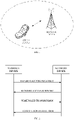
- the communication system includes a network device and a terminal device. As illustrated in FIG. 1 , the network device can communicate with the terminal device.
- the communication system may be a global system of mobile communication (GSM), a code division multiple access (CDMA) system, a wideband code division multiple access (WCDMA) system, a worldwide interoperability for microwave access (WiMAX) system, a long term evolution (LTE) system, a 5 th generation (5G) communication system (such as new radio (NR)), a communication system that integrates multiple communication technologies (such as communication system that integrates LTE technology and NR technology), or a future evolved communication system.
- GSM global system of mobile communication
- CDMA code division multiple access
- WCDMA wideband code division multiple access
- WiMAX worldwide interoperability for microwave access
- LTE long term evolution
- 5G 5 th generation
- NR new radio
- the form and quantity of the network device and the terminal device illustrated in FIG. 1 are merely intended for illustration, and do not constitute limitation on
- the terminal device in the disclosure is a device with wireless communication functions.
- the terminal device can be deployed on land, which includes indoor or outdoor, handheld, wearable, or in-vehicle.
- the terminal device can also be deployed on water (such as ships, etc.).
- the terminal device can also be deployed in the air (such as airplanes, balloons, satellites, etc.).
- the terminal device can be a mobile phone, a pad, a computer with wireless transceiver functions, a virtual reality (VR) terminal device, an augmented reality (AR) terminal device, a wireless terminal in industrial control, a wireless terminal in self driving, a wireless terminal in remote medicine, a wireless terminal in smart grid, a wireless terminal in smart home, etc.
- VR virtual reality
- AR augmented reality
- the terminal device may also be a handheld device with wireless communication functions, an in-vehicle device, a wearable device, a computer device, or other processing devices coupled with a wireless modem, etc.
- Terminal devices in different networks may be called different names, for example, terminal device, access terminal, subscriber unit, subscriber station, mobile station, remote station, remote terminal, mobile device, user terminal, terminal, wireless communication device, user agent or user device, cellular radio telephone, cordless telephone, session initiation protocol (SIP) telephone, wireless local loop (WLL) station, personal digital assistant (PDA), terminal device in a 5G network or in a future evolved network, etc.
- SIP session initiation protocol
- WLL wireless local loop
- PDA personal digital assistant
- the network device in the disclosure is a device that is deployed in a radio access network (RAN) to provide wireless communication functions.
- the network device may be a RAN device at an access-network side in a cellular network.
- the RAN device is a device for access of the terminal device to a radio network, which includes but is not limited to: an evolved Node B (eNB), a radio network controller (RNC), a Node B (NB), a base station controller (BSC), a base transceiver station (BTS), a home base station (such as home evolved Node B, or home Node B (HNB)), a base band unit (BBU), and a mobility management entity (MME).
- eNB evolved Node B
- RNC radio network controller
- NB Node B
- BSC base station controller
- BTS base transceiver station
- HNB home evolved Node B
- BBU base band unit
- MME mobility management entity
- the network device may also be a node device in a wireless local area network (WLAN), such as access controller (AC), gateway, or wireless fidelity (WIFI) access point (AP).
- WLAN wireless local area network
- the network device may also be a transmission node or transmission reception point (TRP or TP) in an NR system, etc.
- NTN non-terrestrial network
- satellite communication is not constrained by areas of users. For example, terrestrial communication is unable to cover areas without communication coverage like sparsely populated areas as well as areas where communication devices cannot be set up, such as oceans, mountains, and deserts.
- one satellite can cover a large ground and the satellite can orbit the earth. Therefore, in theory, every corner on the earth can be covered for satellite communication.
- satellite communication has greater social value.
- Satellite communication Remote mountainous areas and poverty-stricken and underdeveloped countries or regions can be covered for satellite communication at a low cost, so that people in these areas can enjoy advanced voice communication and mobile internet technologies, thereby narrowing a digital gap with developed areas and thus promoting development of these areas.
- a satellite has a long communication distance, and increase in communication distance will not lead to substantial increase in communication cost.
- satellite communication has high stability and is not constrained by natural disasters.
- Communication satellites are classified into low-earth orbit (LEO) satellites, medium-earth orbit (MEO) satellites, geostationary earth orbit (GEO) satellites, high elliptical orbit (HEO) satellites, and the like according to different orbital altitudes.
- LEO low-earth orbit
- MEO medium-earth orbit
- GEO geostationary earth orbit
- HEO high elliptical orbit
- the orbital altitude thereof ranges from 500km (kilometer) to 1500km, an orbital period is about 1.5 hours to 2 hours, and a signal propagation delay of single-hop communication between users is generally less than 20ms (millisecond).
- a satellite has a maximum visibility time of 20 minutes, a short signal propagation distance, and a less link loss, and does not have high requirements on transmission power for the terminal device.
- the orbital altitude thereof is 35786km
- an orbital period is 24 hours
- a signal propagation delay of single-hop communication between users is generally 250ms.
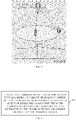
- the satellite uses multi-beams to cover the ground.
- One satellite can provide tens of or even hundreds of beams for ground coverage, and one satellite beam can cover a ground area with a diameter of tens to hundreds of kilometers.
- a random access procedure may be triggered mainly by at least one of the following events: (1) The terminal device establishes a wireless connection in initial access when the terminal device transitions from radio resource control (RRC)_IDLE to RRC_CONNECTED; (2) RRC connection re-establishment procedure, so that the terminal device re-establishes a wireless connection after radio link failure; (3) Handover: The terminal device needs to establish uplink (UL) synchronization with a new cell; (4) Downlink data arrival during RRC_CONNECTED when UL synchronization status is "non-synchronized”; (5) UL data arrival during RRC_CONNECTED when UL synchronization status is "non-synchronized” or there is no available physical uplink control channel (PUCCH) resource for transmission of scheduling request (SR); (6) SR failure; (7) Request by RRC upon synchronous reconfiguration; (8) The terminal device transitions from RRC_INACTIVE to RRC_CONNECTED; (9) To establish time alignment upon secondary cell (SC
- NR release (Rel)-15 two types of random access are supported: a contention-based random access (as illustrated in FIG. 2 ) and a contention-free random access (as illustrated in FIG. 3 ). As illustrated in FIG. 2 and FIG. 3 :
- the terminal selects a physical random access channel (PRACH) resource, and transmits a selected preamble on the selected PRACH.
- PRACH physical random access channel
- the PRACH resource and the preamble may be specified by a network device.
- the network device can estimate a UL timing and a size of a grant required by the terminal device for transmission of msg3.
- the network device transmits msg2 to the terminal device, where the msg2 is a random access response (RAR).
- RAR random access response
- the terminal device After transmitting the msg1, the terminal device starts a random access response window, and monitors a random access radio network temporary identifier (RA-RNTI) scrambled physical downlink control channel (PDCCH) in the random access response window.
- RA-RNTI random access radio network temporary identifier
- PDCCH physical downlink control channel
- the terminal device can obtain a physical downlink shared channel (PDSCH) scheduled by the PDCCH, where the PDSCH includes an RAR.
- PDSCH physical downlink shared channel
- the RAR specifically contains the following information:
- the terminal device If an RAR-RNTI scrambled PDCCH is received by the terminal device, and the RAR contains a preamble index transmitted by the terminal device, the terminal device considers that the RAR is successfully received.
- the terminal device For a contention-free random access, once the msg2 is successfully received by the terminal device, the random access procedure is completed. For a contention-based random access, after the msg2 is successfully received by the terminal device, the terminal device still needs to transmit msg3 and receive msg4.
- the terminal device transmits msg3 on a resource scheduled by the network device, where the msg3 is scheduled transmission.
- the msg3 is mainly used for notifying the network device which event has triggered the random access procedure. For example, in case of a random access procedure for initial access, an identity (ID) of the terminal device and an establishment cause are carried in the msg3. In case of RRC reestablishment, an identifier of the terminal device in a connected mode and an establishment cause are carried.
- the network device transmits msg4 to the terminal device, where the msg4 is a contention resolution.
- the msg4 is used for contention resolution; and on the other hand, the msg4 is used by the network device to transmit an RRC configuration message to the terminal device.
- Contention resolution may be in the following two manners: i) if a C-RNTI is carried in the msg3 by the terminal device, the msg4 is scheduled by a C-RNTI scrambled PDCCH; ii) if no C-RNTI is carried in the msg3 by the terminal device, for example, in initial access, the msg4 is scheduled by a TC-RNTI scrambled PDCCH.
- the terminal device receives a PDSCH of the msg4, and matches a common control channel (CCCH) service data unit (SDU) in the PDSCH.
- CCCH common control channel
- SDU service data unit
- a 2-step random access procedure is introduced in NR Rel-16, which can reduce signaling overhead while reducing delay.
- MsgA in a 2-step random access contains a preamble transmitted on a PRACH and load information transmitted on a physical uplink shared channel (PUSCH).
- PUSCH physical uplink shared channel
- the terminal device monitors a response of the network device in a configured window. If an indication of success in contention resolution issued by the network device is received, the terminal device ends the random access procedure, as illustrated in FIG. 4 . If a BI is received in msgB, the terminal device transmits msg3 and monitors a contention resolution result, as illustrated in FIG. 5 . If contention resolution is still not successful after transmission of the msg3, the terminal device continues transmitting the msgA, where the msgA is random access preamble + PUSCH payload, and the msgB is RAR + contention resolution.
- the terminal device After introduction of the 2-step random access, if the network device configures for the terminal device both a msgA resource used for the 2-step random access and a RACH resource used for a 4-step random access, for a contention-based random access, the terminal device first needs to select a random access type before random access.
- a conclusion of the current NR standardization is that the terminal device selects the random access type based on reference signal receiving power (RSRP) measurement. If an RSRP measured by the terminal device is greater than an RSRP threshold configured by the network device, the terminal device adopts the 2-step random access; otherwise, the terminal device adopts the 4-step random access.
- RSRP reference signal receiving power
- an RSRP when a terminal device is at the center of a cell is significantly higher than an RSRP when the terminal device is at the edge of the cell. Due to "near-far effect", it is possible to select the random access type based on RSRP measurement, that is, the terminal device can determine, through RSRP measurement, whether its channel state is good enough such that the terminal device can adopt a 2-step random access to reduce delay of an access network.
- a difference between an RSRP of a terminal device at the center of a cell and an RSRP of the terminal device at the edge of the cell is small. If the random access type is selected based on RSRP measurement, on one hand, it is hard to set an RSRP threshold for random access type selection, and on the other hand, the terminal device is likely to select an improper random access type due to errors in RSRP measurement. An RSRP measured by the terminal device at the center of the cell is undermeasured and as a result, the terminal device selects a 4-step random access, thus increasing delay of random access. An RSRP measured by the terminal device at the edge of the cell is overmeasured and as a result, a 2-step random access is selected. However, the 2-step random access will fail despite multiple attempts, and as a result, the terminal device has to back off to a 4-step random access or the random access directly fails, thus seriously affecting communication efficiency.
- FIG. 8 is a schematic flowchart of a method for random access type selection provided in implementations of the disclosure. The method includes the following.
- Step 801 a terminal device selects a random access type according to target information, where the target information includes at least one of a round trip time (RTT) of signal propagation between the terminal device and a network device, a timing advance (TA) estimated by the terminal device, or an RSRP measured by the terminal device.
- target information includes at least one of a round trip time (RTT) of signal propagation between the terminal device and a network device, a timing advance (TA) estimated by the terminal device, or an RSRP measured by the terminal device.
- RTT round trip time
- TA timing advance
- the terminal device may determine the RTT of signal propagation between the terminal device and the network device as follows.
- the terminal device calculates a distance between the terminal device and the network device according to a position of the terminal device and a position of the network device, and divides the obtained distance by a speed of light to obtain the RTT.
- the manner of estimating the TA by the terminal device is the same as the manner of determining the RTT by the terminal device, which will not be elaborated again herein.
- the method for random access type selection is applicable to an NTN system.
- the method before the terminal device selects the random access type according to the target information, the method further includes the following.
- the network device broadcasts configuration information, where the configuration information includes a first random access channel (RACH) resource configuration used for a contention-based 4-step random access and a msgA resource configuration used for a contention-based 2-step random access, the configuration information further includes at least one of an RTT threshold or a TA threshold, and the msgA resource configuration includes a second RACH resource configuration and a PUSCH resource configuration.
- RACH random access channel
- msgA resource configuration includes a second RACH resource configuration and a PUSCH resource configuration.
- the configuration information further includes an RSRP threshold.
- the configuration information is carried by a system message, such as system information block (SIB) 1, SIB 2, SIB 3, etc.
- SIB system information block
- the terminal device if the network device configures for the terminal device a msgA resource used for a contention-free 2-step random access, the terminal device initiates the contention-free 2-step random access. If the network device configures for the terminal device a RACH resource used for a contention-free 4-step random access, the terminal device initiates the contention-free 4-step random access. If the network device does not configure for the terminal device the msgA resource used for a contention-free 2-step random access and does not configure for the terminal device the RACH resource used for a contention-free 4-step random access either, the terminal device adopts a contention-based random access.
- the method includes the following. If the contention-based 2-step random access is selected, the terminal device transmits msgA on a first resource, where the first resource includes one RACH resource selected from the second RACH resource configuration and one PUSCH resource selected from the PUSCH resource configuration. If the contention-based 4-step random access is selected, the terminal device transmits msg1 on a second resource, where the second resource includes one RACH resource selected from the first RACH resource configuration. The network device receives the msgA or the msg1 transmitted by the terminal device.
- the terminal device selects the random access type according to the target information as follows. If the RTT is less than the RTT threshold, the terminal device selects the contention-based 2-step random access. If the RTT is greater than or equal to the RTT threshold, the terminal device selects the contention-based 4-step random access.
- the RTT can accurately reflect a channel state or channel condition of the terminal device, by selecting the random access type according to the RTT, it is possible to effectively ensure random access performance of the terminal device.
- the terminal device selects the random access type according to the target information as follows.
- the terminal device determines a first value according to the RTT and the RSRP. If the first value is greater than a first threshold, the terminal device selects the contention-based 2-step random access. If the first value is less than or equal to the first threshold, the terminal device selects the contention-based 4-step random access.
- the terminal device determines the first value according to the RTT and the RSRP as follows.
- the terminal device determines the first value according to a reference RTT, the RTT, and the RSRP.
- the reference RTT and the first threshold may be broadcast by the network device, or may be specified in a protocol, which is not limited herein.
- the terminal device determines the first value according to the reference RTT, the RTT, and the RSRP as follows.
- the terminal device determines the first value according to a first formula, the reference RTT, the RTT, and the RSRP.
- the RTT and the RSRP both can reflect a channel state of the terminal device, by selecting the random access type according to both the RTT and the RSRP, it is possible to effectively ensure random access performance of the terminal device.
- the terminal device selects the random access type according to the target information as follows. If the RTT is less than the RTT threshold and the RSRP is greater than or equal to the RSRP threshold, the terminal device selects the contention-based 2-step random access. If the RTT is greater than or equal to the RTT threshold and/or the RSRP is less than the RSRP threshold, the terminal device selects the contention-based 4-step random access.
- the RTT and the RSRP both can reflect a channel state of the terminal device, by selecting the random access type according to both the RTT and the RSRP, it is possible to effectively ensure random access performance of the terminal device.
- the terminal device selects the random access type according to the target information as follows. If the TA is less than the TA threshold, the terminal device selects the contention-based 2-step random access. If the TA is greater than or equal to the TA threshold, the terminal device selects the contention-based 4-step random access.
- the TA can accurately reflect a channel state of the terminal device, by selecting the random access type according to the TA, it is possible to effectively ensure random access performance of the terminal device.
- the terminal device selects the random access type according to the target information as follows.
- the terminal device determines a second value according to the TA and the RSRP. If the second value is greater than a second threshold, the terminal device selects the contention-based 2-step random access. If the second value is less than or equal to the second threshold, the terminal device selects the contention-based 4-step random access.
- the terminal device determines the second value according to the TA and the RSRP as follows.
- the terminal device determines the second value according to a reference TA, the TA, and the RSRP.
- the reference TA and the second threshold may be broadcast by the network device, or may be specified in a protocol, which is not limited herein.
- the terminal device determines the second value according to the reference TA, the TA, and the RSRP as follows.
- the terminal device determines the second value according to a second formula, the reference TA, the TA, and the RSRP.
- the TA and the RSRP both can reflect a channel state of the terminal device, by selecting the random access type according to both the TA and the RSRP, it is possible to effectively ensure random access performance of the terminal device.
- the terminal device selects the random access type according to the target information as follows. If the TA is less than the TA threshold and the RSRP is greater than or equal to the RSRP threshold, the terminal device selects the contention-based 2-step random access. If the TA is greater than or equal to the TA threshold and/or the RSRP is less than the RSRP threshold, the terminal device selects the contention-based 4-step random access.
- the TA and the RSRP both can reflect a channel state of the terminal device, by selecting the random access type according to both the TA and the RSRP, it is possible to effectively ensure random access performance of the terminal device.
- FIG. 9 is a schematic structural diagram of a computer device provided in implementations of the disclosure.
- the computer device includes one or more processors, one or more memories, one or more communication interfaces, and one or more programs.
- the one or more programs are stored in the memory and configured to be executed by the one or more processors.
- the computer device is a terminal device.
- the programs include instructions used for performing the following steps.
- a random access type is selected according to target information, where the target information includes at least one of an RTT of signal propagation between the terminal device and a network device, a TA estimated by the terminal device, or an RSRP measured by the terminal device.
- the programs before selecting the random access type according to the target information, include instructions further used for performing the following steps.
- Configuration information broadcast by the network device is received, where the configuration information includes a first RACH resource configuration used for a contention-based 4-step random access and a msgA resource configuration used for a contention-based 2-step random access, the configuration information further includes at least one of an RTT threshold or a TA threshold, and the msgA resource configuration includes a second RACH resource configuration and a PUSCH resource configuration.
- the programs include instructions specifically used for performing the following steps.
- the contention-based 2-step random access is selected if the RTT is less than the RTT threshold.
- the contention-based 4-step random access is selected if the RTT is greater than or equal to the RTT threshold.
- the programs include instructions specifically used for performing the following steps.
- a first value is determined according to the RTT and the RSRP.
- a contention-based 2-step random access is selected if the first value is greater than a first threshold.
- a contention-based 4-step random access is selected if the first value is less than or equal to the first threshold.
- the programs include instructions specifically used for performing the following steps.
- the first value is determined according to a reference RTT, the RTT, and the RSRP.
- the configuration information further includes an RSRP threshold.
- the programs include instructions specifically used for performing the following steps.
- the contention-based 2-step random access is selected if the RTT is less than the RTT threshold and the RSRP is greater than or equal to the RSRP threshold.
- the contention-based 4-step random access is selected if the RTT is greater than or equal to the RTT threshold and/or the RSRP is less than the RSRP threshold.
- the programs include instructions specifically used for performing the following steps.
- the contention-based 2-step random access is selected if the TA is less than the TA threshold.
- the contention-based 4-step random access is selected if the TA is greater than or equal to the TA threshold.
- the programs include instructions specifically used for performing the following steps.
- a second value is determined according to the TA and the RSRP.
- a contention-based 2-step random access is selected if the second value is greater than a second threshold.
- a contention-based 4-step random access is selected if the second value is less than or equal to the second threshold.
- the programs include instructions specifically used for performing the following steps.
- the second value is determined according to a reference TA, the TA, and the RSRP.
- the configuration information further includes an RSRP threshold.
- the programs include instructions specifically used for performing the following steps.
- the contention-based 2-step random access is selected if the TA is less than the TA threshold and the RSRP is greater than or equal to the RSRP threshold.
- the contention-based 4-step random access is selected if the TA is greater than or equal to the TA threshold and/or the RSRP is less than the RSRP threshold.
- the programs include instructions further used for performing the following steps.
- MsgA is transmitted on a first resource if the contention-based 2-step random access is selected, where the first resource includes one RACH resource selected from the second RACH resource configuration and one PUSCH resource selected from the PUSCH resource configuration.
- Msg1 is transmitted on a second resource when the contention-based 4-step random access is selected, where the second resource includes one RACH resource selected from the first RACH resource configuration.
- the computer device is a network device.
- the programs include instructions used for performing the following steps.
- Configuration information is broadcast, where the configuration information includes a first RACH resource configuration used for a contention-based 4-step random access and a msgA resource configuration used for a contention-based 2-step random access, the configuration information further includes at least one of an RTT threshold or a TA threshold, and the msgA resource configuration includes a second RACH resource configuration and a PUSCH resource configuration.
- the configuration information further includes an RSRP threshold.
- the programs include instructions further used for performing the following steps.
- MsgA or msg1 transmitted by a terminal device is received.
- the msgA is transmitted on a first resource by the terminal device if the contention-based 2-step random access is selected, where the first resource includes one RACH resource selected from the second RACH resource configuration and one PUSCH resource selected from the PUSCH resource configuration.
- the msg1 is transmitted on a second resource by the terminal device if the contention-based 4-step random access is selected, where the second resource includes one RACH resource selected from the first RACH resource configuration.
- FIG. 10 is a schematic structural diagram of an apparatus for random access type selection provided in implementations of the disclosure.
- the apparatus is applicable to a terminal device.
- the apparatus includes a selecting unit 1001.
- the selecting unit 1001 is configured to select a random access type according to target information, where the target information includes at least one of an RTT of signal propagation between the terminal device and a network device, a TA estimated by the terminal device, or an RSRP measured by the terminal device.
- the apparatus further includes a communicating unit 1002.
- the communicating unit 1002 is configured to receive configuration information broadcast by the network device before the selecting unit 1001 selects the random access type according to the target information, where the configuration information includes a first RACH resource configuration used for a contention-based 4-step random access and a msgA resource configuration used for a contention-based 2-step random access, the configuration information further includes at least one of an RTT threshold or a TA threshold, and the msgA resource configuration includes a second RACH resource configuration and a PUSCH resource configuration.
- the selecting unit 1001 is specifically configured to select the contention-based 2-step random access if the RTT is less than the RTT threshold, and select the contention-based 4-step random access if the RTT is greater than or equal to the RTT threshold.
- the selecting unit 1001 is specifically configured to determine a first value according to the RTT and the RSRP, and select a contention-based 2-step random access if the first value is greater than a first threshold or select a contention-based 4-step random access if the first value is less than or equal to the first threshold.
- the selecting unit 1001 is specifically configured to determine the first value according to a reference RTT, the RTT, and the RSRP.
- the configuration information further includes an RSRP threshold.
- the selecting unit 1001 is specifically configured to select the contention-based 2-step random access if the RTT is less than the RTT threshold and the RSRP is greater than or equal to the RSRP threshold, and select the contention-based 4-step random access if the RTT is greater than or equal to the RTT threshold and/or the RSRP is less than the RSRP threshold.
- the selecting unit 1001 is specifically configured to select the contention-based 2-step random access if the TA is less than the TA threshold, and select the contention-based 4-step random access if the TA is greater than or equal to the TA threshold.
- the selecting unit 1001 is specifically configured to determine a second value according to the TA and the RSRP, and select a contention-based 2-step random access if the second value is greater than a second threshold or select a contention-based 4-step random access if the second value is less than or equal to the second threshold.
- the selecting unit 1001 is specifically configured to determine the second value according to a reference TA, the TA, and the RSRP.
- the configuration information further includes an RSRP threshold.
- the selecting unit 1001 is specifically configured to select the contention-based 2-step random access if the TA is less than the TA threshold and the RSRP is greater than or equal to the RSRP threshold, and select the contention-based 4-step random access if the TA is greater than or equal to the TA threshold and/or the RSRP is less than the RSRP threshold.
- the communicating unit 1002 is further configured to transmit msgA on a first resource if the contention-based 2-step random access is selected, where the first resource includes one RACH resource selected from the second RACH resource configuration and one PUSCH resource selected from the PUSCH resource configuration.
- the communicating unit 1002 is further configured to transmit msg1 on a second resource if the contention-based 4-step random access is selected, where the second resource includes one RACH resource selected from the first RACH resource configuration.
- the selecting unit 1001 may be implemented by a processor, and the communicating unit 1002 may be implemented by a communication interface.
- the apparatus is applicable to a network device.
- the apparatus includes a communicating unit 1101.
- the communicating unit 1101 is configured to broadcast configuration information, where the configuration information includes a first RACH resource configuration used for a contention-based 4-step random access and a msgA resource configuration used for a contention-based 2-step random access, the configuration information further includes at least one of an RTT threshold or a TA threshold, and the msgA resource configuration includes a second RACH resource configuration and a PUSCH resource configuration.
- the configuration information further includes an RSRP threshold.
- the communicating unit 1101 is further configured to receive msgA or msg1 transmitted by a terminal device.
- the msgA is transmitted on a first resource by the terminal device if the contention-based 2-step random access is selected, where the first resource includes one RACH resource selected from the second RACH resource configuration and one PUSCH resource selected from the PUSCH resource configuration.
- the msg1 is transmitted on a second resource by the terminal device if the contention-based 4-step random access is selected, where the second resource includes one RACH resource selected from the first RACH resource configuration.
- the communicating unit 1101 may be implemented by a communication interface.
- Implementations of the disclosure further provide a computer storage medium.
- the computer storage medium is configured to store computer programs used for electronic data interchange (EDI) which are operable with a computer to perform any method described in the foregoing method implementations.
- EDI electronic data interchange
- the computer described above includes a terminal device or a network device.
- Implementations of the disclosure further provide a computer program product.
- the computer program product includes computer program instructions.
- the computer program instructions are operable with a computer to perform any method described in the foregoing method implementations.
- the computer program product may be a software installation package.
- the computer described above includes a terminal device or a network device.
- Implementations of the disclosure further provide a chip.
- the chip includes computer program instructions.
- the computer program instructions are operable with a computer to perform any method described in the foregoing method implementations.
- the computer described above includes a user equipment (UE).
- UE user equipment
- Implementations of the disclosure further provide a computer program.
- the computer program is operable with a computer to perform any method described in the foregoing method implementations.
- the computer described above includes a UE.
- the apparatuses disclosed in implementations of the disclosure may also be implemented in various other manners.
- the above apparatus implementations are merely illustrative, e.g., the division of units is only a division of logical functions, and other manners of division may also be available in practice, e.g., multiple units or assemblies may be combined or may be integrated into another system, or some features may be ignored or omitted.
- the coupling or direct coupling or communication connection as illustrated or discussed may be an indirect coupling or communication connection through some interface, device or unit, and may be electrical or otherwise.
- Units illustrated as separated components may or may not be physically separated.
- Components displayed as units may or may not be physical units, and may reside at one location or may be distributed to multiple networked units. Some or all of the units may be selectively adopted according to practical needs to achieve desired objectives of the solutions of implementations.
- various functional units described in various implementations of the disclosure may be integrated into one processing unit or may be present as a number of physically separated units, and two or more units may be integrated into one.
- the integrated unit may take the form of hardware or a software functional unit.
- the integrated unit may be stored in a computer readable memory.
- the computer software products can be stored in a memory and may include multiple instructions that, when executed, can cause a computer device, e.g., a personal computer, a server, a network device, etc., to execute some or all operations of the methods described in various implementations of the disclosure.
- the above memory may include various kinds of media that can store program codes, such as a universal serial bus (USB) flash disk, a read-only memory (ROM), a random access memory (RAM), a mobile hard drive, a magnetic disk, an optical disk, etc.
- USB universal serial bus
- ROM read-only memory
- RAM random access memory
- mobile hard drive a magnetic disk, an optical disk, etc.
- the program can be stored in a computer-readable memory.
- the memory can include a flash disk, a ROM, a RAM, a magnetic disk, an optical disk, etc.
Landscapes
- Engineering & Computer Science (AREA)
- Computer Networks & Wireless Communication (AREA)
- Signal Processing (AREA)
- Mobile Radio Communication Systems (AREA)
Applications Claiming Priority (1)
| Application Number | Priority Date | Filing Date | Title |
|---|---|---|---|
| PCT/CN2020/073206 WO2021146836A1 (fr) | 2020-01-20 | 2020-01-20 | Procédé et appareil de sélection de type d'accès aléatoire |
Publications (2)
| Publication Number | Publication Date |
|---|---|
| EP4093140A1 true EP4093140A1 (fr) | 2022-11-23 |
| EP4093140A4 EP4093140A4 (fr) | 2023-01-18 |
Family
ID=76991665
Family Applications (1)
| Application Number | Title | Priority Date | Filing Date |
|---|---|---|---|
| EP20915216.4A Withdrawn EP4093140A4 (fr) | 2020-01-20 | 2020-01-20 | Procédé et appareil de sélection de type d'accès aléatoire |
Country Status (4)
| Country | Link |
|---|---|
| US (1) | US12408195B2 (fr) |
| EP (1) | EP4093140A4 (fr) |
| CN (1) | CN114902785A (fr) |
| WO (1) | WO2021146836A1 (fr) |
Families Citing this family (4)
| Publication number | Priority date | Publication date | Assignee | Title |
|---|---|---|---|---|
| KR102881443B1 (ko) * | 2020-04-01 | 2025-11-06 | 삼성전자 주식회사 | 무선 통신 시스템에서 유휴 모드 동작을 위한 방법 및 장치 |
| US12426096B2 (en) * | 2022-09-30 | 2025-09-23 | Nokia Technologies Oy | Enhanced time alignment timer at transmission configuration indicator state switch |
| GB2627491A (en) * | 2023-02-24 | 2024-08-28 | Airspan Ip Holdco Llc | Timing advance calculation |
| CN117859403A (zh) * | 2023-11-27 | 2024-04-09 | 北京小米移动软件有限公司 | 通信方法、终端、网络设备及存储介质 |
Family Cites Families (17)
| Publication number | Priority date | Publication date | Assignee | Title |
|---|---|---|---|---|
| KR20020030367A (ko) * | 2000-10-17 | 2002-04-25 | 오길록 | 이동통신시스템에서 임의접속채널의 전송방법 |
| US7613829B2 (en) * | 2006-05-22 | 2009-11-03 | Nokia Corporation | Proximity enforcement in heterogeneous network environments |
| US9553953B2 (en) * | 2009-04-15 | 2017-01-24 | Dell Products L.P. | Method and apparatus for extending capabilities of a virtualization domain to support features available in a normal desktop application |
| CN103167594B (zh) * | 2011-12-19 | 2015-05-27 | 华为技术有限公司 | 一种上行发射功率控制方法及用户设备 |
| IL222709A (en) * | 2012-10-25 | 2016-02-29 | Intucell Ltd | A method and mechanism for coordinating interference between communications cells in solar systems |
| CN106165517B (zh) * | 2014-03-28 | 2020-03-03 | Lg 电子株式会社 | 在支持设备对设备通信的无线通信系统中发送和接收信号的方法及其装置 |
| KR102505734B1 (ko) * | 2017-01-13 | 2023-03-03 | 모토로라 모빌리티 엘엘씨 | 캐리어 주파수에서 경합 기반 랜덤 액세스를 수행하기 위한 방법 및 장치 |
| US10568007B2 (en) * | 2017-03-22 | 2020-02-18 | Comcast Cable Communications, Llc | Handover random access |
| CN108738134A (zh) | 2017-04-13 | 2018-11-02 | 普天信息技术有限公司 | 一种时分复用随机接入资源选择方法 |
| WO2019211667A2 (fr) * | 2018-05-04 | 2019-11-07 | Lenovo (Singapore) Pte. Ltd. | Transmission pusch à l'aide d'un facteur d'agrégation |
| WO2020071698A1 (fr) * | 2018-10-05 | 2020-04-09 | 주식회사 케이티 | Procédé pour la réalisation d'une communication à l'aide d'un réseau non terrestre et appareil correspondant |
| EP3911102B1 (fr) * | 2019-01-16 | 2024-08-07 | Beijing Xiaomi Mobile Software Co., Ltd. | Procédé et appareil concernant un accès aléatoire |
| MX2021007961A (es) * | 2019-01-30 | 2021-08-11 | Ericsson Telefon Ab L M | Metodo y aparato para acceso aleatorio. |
| US12016051B2 (en) * | 2019-02-05 | 2024-06-18 | Qualcomm Incorporated | Techniques for configuring random access transmissions |
| EP4401500B1 (fr) * | 2019-02-15 | 2025-10-22 | Sony Group Corporation | Dispositif de communication, procédé et circuit pour un dispositif de communication |
| WO2020202121A1 (fr) * | 2019-04-05 | 2020-10-08 | Telefonaktiebolaget Lm Ericsson (Publ) | Sélection d'un réseau mobile terrestre public basé sur un réseau non terrestre |
| EP4017198A4 (fr) * | 2019-08-16 | 2022-09-07 | Huawei Technologies Co., Ltd. | Procédé d'accès aléatoire, dispositif terminal et dispositif de réseau |
-
2020
- 2020-01-20 CN CN202080092095.8A patent/CN114902785A/zh active Pending
- 2020-01-20 WO PCT/CN2020/073206 patent/WO2021146836A1/fr not_active Ceased
- 2020-01-20 EP EP20915216.4A patent/EP4093140A4/fr not_active Withdrawn
-
2022
- 2022-07-13 US US17/812,323 patent/US12408195B2/en active Active
Also Published As
| Publication number | Publication date |
|---|---|
| US20220353907A1 (en) | 2022-11-03 |
| US12408195B2 (en) | 2025-09-02 |
| CN114902785A (zh) | 2022-08-12 |
| EP4093140A4 (fr) | 2023-01-18 |
| WO2021146836A1 (fr) | 2021-07-29 |
Similar Documents
| Publication | Publication Date | Title |
|---|---|---|
| US12408195B2 (en) | Method and apparatus for random access type selection | |
| US12177904B2 (en) | Random access method and device | |
| US20250184835A1 (en) | Method for satellite handover between non-terrestrial networks, terminal device, and network device | |
| US12439458B2 (en) | Method for 2-step random access message a resource configuration and terminal device | |
| US12309844B2 (en) | Random access method and apparatus | |
| US12309841B2 (en) | Method for random access and communication device | |
| CN114222374A (zh) | 一种通信方法及装置 | |
| US12382436B2 (en) | Communication method and apparatus, and device | |
| EP4598064A1 (fr) | Procédé de mesure de position, procédé de maintenance de temporisateur et dispositif | |
| US20240155692A1 (en) | Communication method, terminal device and network device | |
| US20230042104A1 (en) | Wireless communication method, terminal device, and network device | |
| WO2022040867A1 (fr) | Procédé d'accès aléatoire, dispositif terminal et dispositif réseau | |
| US20240284517A1 (en) | Communication method, terminal device, and network device | |
| CN115136645B (zh) | 数据传输方法及装置 | |
| US12526756B2 (en) | Cell switching method, terminal device, and storage medium | |
| CN115997450B (zh) | 无线通信方法和设备 | |
| CN117882460A (zh) | 信息上报方法、装置、设备、存储介质及程序产品 | |
| WO2023004552A1 (fr) | Procédé et appareil d'accès aléatoire, et dispositif et support d'enregistrement | |
| CN118216177A (zh) | 重复传输请求方法、装置、设备、系统、芯片及存储介质 |
Legal Events
| Date | Code | Title | Description |
|---|---|---|---|
| STAA | Information on the status of an ep patent application or granted ep patent |
Free format text: STATUS: THE INTERNATIONAL PUBLICATION HAS BEEN MADE |
|
| PUAI | Public reference made under article 153(3) epc to a published international application that has entered the european phase |
Free format text: ORIGINAL CODE: 0009012 |
|
| STAA | Information on the status of an ep patent application or granted ep patent |
Free format text: STATUS: REQUEST FOR EXAMINATION WAS MADE |
|
| 17P | Request for examination filed |
Effective date: 20220815 |
|
| AK | Designated contracting states |
Kind code of ref document: A1 Designated state(s): AL AT BE BG CH CY CZ DE DK EE ES FI FR GB GR HR HU IE IS IT LI LT LU LV MC MK MT NL NO PL PT RO RS SE SI SK SM TR |
|
| A4 | Supplementary search report drawn up and despatched |
Effective date: 20221219 |
|
| RIC1 | Information provided on ipc code assigned before grant |
Ipc: H04W 74/00 20090101ALN20221213BHEP Ipc: H04W 74/08 20090101AFI20221213BHEP |
|
| DAV | Request for validation of the european patent (deleted) | ||
| DAX | Request for extension of the european patent (deleted) | ||
| STAA | Information on the status of an ep patent application or granted ep patent |
Free format text: STATUS: THE APPLICATION HAS BEEN WITHDRAWN |
|
| 18W | Application withdrawn |
Effective date: 20230825 |