EP4093837B1 - Flüssigkristallmedium - Google Patents
Flüssigkristallmedium Download PDFInfo
- Publication number
- EP4093837B1 EP4093837B1 EP21711178.0A EP21711178A EP4093837B1 EP 4093837 B1 EP4093837 B1 EP 4093837B1 EP 21711178 A EP21711178 A EP 21711178A EP 4093837 B1 EP4093837 B1 EP 4093837B1
- Authority
- EP
- European Patent Office
- Prior art keywords
- compounds
- formula
- denote
- independently
- formulae
- Prior art date
- Legal status (The legal status is an assumption and is not a legal conclusion. Google has not performed a legal analysis and makes no representation as to the accuracy of the status listed.)
- Active
Links
Classifications
-
- C—CHEMISTRY; METALLURGY
- C09—DYES; PAINTS; POLISHES; NATURAL RESINS; ADHESIVES; COMPOSITIONS NOT OTHERWISE PROVIDED FOR; APPLICATIONS OF MATERIALS NOT OTHERWISE PROVIDED FOR
- C09K—MATERIALS FOR MISCELLANEOUS APPLICATIONS, NOT PROVIDED FOR ELSEWHERE
- C09K19/00—Liquid crystal materials
- C09K19/04—Liquid crystal materials characterised by the chemical structure of the liquid crystal components, e.g. by a specific unit
- C09K19/06—Non-steroidal liquid crystal compounds
- C09K19/08—Non-steroidal liquid crystal compounds containing at least two non-condensed rings
- C09K19/30—Non-steroidal liquid crystal compounds containing at least two non-condensed rings containing saturated or unsaturated non-aromatic rings, e.g. cyclohexane rings
- C09K19/3001—Cyclohexane rings
- C09K19/3003—Compounds containing at least two rings in which the different rings are directly linked (covalent bond)
-
- C—CHEMISTRY; METALLURGY
- C09—DYES; PAINTS; POLISHES; NATURAL RESINS; ADHESIVES; COMPOSITIONS NOT OTHERWISE PROVIDED FOR; APPLICATIONS OF MATERIALS NOT OTHERWISE PROVIDED FOR
- C09K—MATERIALS FOR MISCELLANEOUS APPLICATIONS, NOT PROVIDED FOR ELSEWHERE
- C09K19/00—Liquid crystal materials
- C09K19/04—Liquid crystal materials characterised by the chemical structure of the liquid crystal components, e.g. by a specific unit
- C09K19/06—Non-steroidal liquid crystal compounds
- C09K19/062—Non-steroidal liquid crystal compounds containing one non-condensed benzene ring
-
- C—CHEMISTRY; METALLURGY
- C09—DYES; PAINTS; POLISHES; NATURAL RESINS; ADHESIVES; COMPOSITIONS NOT OTHERWISE PROVIDED FOR; APPLICATIONS OF MATERIALS NOT OTHERWISE PROVIDED FOR
- C09K—MATERIALS FOR MISCELLANEOUS APPLICATIONS, NOT PROVIDED FOR ELSEWHERE
- C09K19/00—Liquid crystal materials
- C09K19/04—Liquid crystal materials characterised by the chemical structure of the liquid crystal components, e.g. by a specific unit
- C09K19/06—Non-steroidal liquid crystal compounds
- C09K19/08—Non-steroidal liquid crystal compounds containing at least two non-condensed rings
- C09K19/30—Non-steroidal liquid crystal compounds containing at least two non-condensed rings containing saturated or unsaturated non-aromatic rings, e.g. cyclohexane rings
- C09K19/3098—Unsaturated non-aromatic rings, e.g. cyclohexene rings
-
- C—CHEMISTRY; METALLURGY
- C09—DYES; PAINTS; POLISHES; NATURAL RESINS; ADHESIVES; COMPOSITIONS NOT OTHERWISE PROVIDED FOR; APPLICATIONS OF MATERIALS NOT OTHERWISE PROVIDED FOR
- C09K—MATERIALS FOR MISCELLANEOUS APPLICATIONS, NOT PROVIDED FOR ELSEWHERE
- C09K19/00—Liquid crystal materials
- C09K19/04—Liquid crystal materials characterised by the chemical structure of the liquid crystal components, e.g. by a specific unit
- C09K19/06—Non-steroidal liquid crystal compounds
- C09K19/34—Non-steroidal liquid crystal compounds containing at least one heterocyclic ring
- C09K19/3491—Non-steroidal liquid crystal compounds containing at least one heterocyclic ring having sulfur as hetero atom
-
- C—CHEMISTRY; METALLURGY
- C09—DYES; PAINTS; POLISHES; NATURAL RESINS; ADHESIVES; COMPOSITIONS NOT OTHERWISE PROVIDED FOR; APPLICATIONS OF MATERIALS NOT OTHERWISE PROVIDED FOR
- C09K—MATERIALS FOR MISCELLANEOUS APPLICATIONS, NOT PROVIDED FOR ELSEWHERE
- C09K19/00—Liquid crystal materials
- C09K19/04—Liquid crystal materials characterised by the chemical structure of the liquid crystal components, e.g. by a specific unit
- C09K2019/0444—Liquid crystal materials characterised by the chemical structure of the liquid crystal components, e.g. by a specific unit characterized by a linking chain between rings or ring systems, a bridging chain between extensive mesogenic moieties or an end chain group
- C09K2019/0466—Liquid crystal materials characterised by the chemical structure of the liquid crystal components, e.g. by a specific unit characterized by a linking chain between rings or ring systems, a bridging chain between extensive mesogenic moieties or an end chain group the linking chain being a -CF2O- chain
-
- C—CHEMISTRY; METALLURGY
- C09—DYES; PAINTS; POLISHES; NATURAL RESINS; ADHESIVES; COMPOSITIONS NOT OTHERWISE PROVIDED FOR; APPLICATIONS OF MATERIALS NOT OTHERWISE PROVIDED FOR
- C09K—MATERIALS FOR MISCELLANEOUS APPLICATIONS, NOT PROVIDED FOR ELSEWHERE
- C09K19/00—Liquid crystal materials
- C09K19/04—Liquid crystal materials characterised by the chemical structure of the liquid crystal components, e.g. by a specific unit
- C09K19/06—Non-steroidal liquid crystal compounds
- C09K19/08—Non-steroidal liquid crystal compounds containing at least two non-condensed rings
- C09K19/10—Non-steroidal liquid crystal compounds containing at least two non-condensed rings containing at least two benzene rings
- C09K19/12—Non-steroidal liquid crystal compounds containing at least two non-condensed rings containing at least two benzene rings at least two benzene rings directly linked, e.g. biphenyls
- C09K2019/121—Compounds containing phenylene-1,4-diyl (-Ph-)
- C09K2019/122—Ph-Ph
-
- C—CHEMISTRY; METALLURGY
- C09—DYES; PAINTS; POLISHES; NATURAL RESINS; ADHESIVES; COMPOSITIONS NOT OTHERWISE PROVIDED FOR; APPLICATIONS OF MATERIALS NOT OTHERWISE PROVIDED FOR
- C09K—MATERIALS FOR MISCELLANEOUS APPLICATIONS, NOT PROVIDED FOR ELSEWHERE
- C09K19/00—Liquid crystal materials
- C09K19/04—Liquid crystal materials characterised by the chemical structure of the liquid crystal components, e.g. by a specific unit
- C09K19/06—Non-steroidal liquid crystal compounds
- C09K19/08—Non-steroidal liquid crystal compounds containing at least two non-condensed rings
- C09K19/10—Non-steroidal liquid crystal compounds containing at least two non-condensed rings containing at least two benzene rings
- C09K19/12—Non-steroidal liquid crystal compounds containing at least two non-condensed rings containing at least two benzene rings at least two benzene rings directly linked, e.g. biphenyls
- C09K2019/121—Compounds containing phenylene-1,4-diyl (-Ph-)
- C09K2019/123—Ph-Ph-Ph
-
- C—CHEMISTRY; METALLURGY
- C09—DYES; PAINTS; POLISHES; NATURAL RESINS; ADHESIVES; COMPOSITIONS NOT OTHERWISE PROVIDED FOR; APPLICATIONS OF MATERIALS NOT OTHERWISE PROVIDED FOR
- C09K—MATERIALS FOR MISCELLANEOUS APPLICATIONS, NOT PROVIDED FOR ELSEWHERE
- C09K19/00—Liquid crystal materials
- C09K19/04—Liquid crystal materials characterised by the chemical structure of the liquid crystal components, e.g. by a specific unit
- C09K19/06—Non-steroidal liquid crystal compounds
- C09K19/08—Non-steroidal liquid crystal compounds containing at least two non-condensed rings
- C09K19/10—Non-steroidal liquid crystal compounds containing at least two non-condensed rings containing at least two benzene rings
- C09K19/12—Non-steroidal liquid crystal compounds containing at least two non-condensed rings containing at least two benzene rings at least two benzene rings directly linked, e.g. biphenyls
- C09K2019/121—Compounds containing phenylene-1,4-diyl (-Ph-)
- C09K2019/124—Ph-Ph-Ph-Ph
-
- C—CHEMISTRY; METALLURGY
- C09—DYES; PAINTS; POLISHES; NATURAL RESINS; ADHESIVES; COMPOSITIONS NOT OTHERWISE PROVIDED FOR; APPLICATIONS OF MATERIALS NOT OTHERWISE PROVIDED FOR
- C09K—MATERIALS FOR MISCELLANEOUS APPLICATIONS, NOT PROVIDED FOR ELSEWHERE
- C09K19/00—Liquid crystal materials
- C09K19/04—Liquid crystal materials characterised by the chemical structure of the liquid crystal components, e.g. by a specific unit
- C09K19/06—Non-steroidal liquid crystal compounds
- C09K19/08—Non-steroidal liquid crystal compounds containing at least two non-condensed rings
- C09K19/30—Non-steroidal liquid crystal compounds containing at least two non-condensed rings containing saturated or unsaturated non-aromatic rings, e.g. cyclohexane rings
- C09K19/3001—Cyclohexane rings
- C09K19/3003—Compounds containing at least two rings in which the different rings are directly linked (covalent bond)
- C09K2019/3004—Cy-Cy
-
- C—CHEMISTRY; METALLURGY
- C09—DYES; PAINTS; POLISHES; NATURAL RESINS; ADHESIVES; COMPOSITIONS NOT OTHERWISE PROVIDED FOR; APPLICATIONS OF MATERIALS NOT OTHERWISE PROVIDED FOR
- C09K—MATERIALS FOR MISCELLANEOUS APPLICATIONS, NOT PROVIDED FOR ELSEWHERE
- C09K19/00—Liquid crystal materials
- C09K19/04—Liquid crystal materials characterised by the chemical structure of the liquid crystal components, e.g. by a specific unit
- C09K19/06—Non-steroidal liquid crystal compounds
- C09K19/08—Non-steroidal liquid crystal compounds containing at least two non-condensed rings
- C09K19/30—Non-steroidal liquid crystal compounds containing at least two non-condensed rings containing saturated or unsaturated non-aromatic rings, e.g. cyclohexane rings
- C09K19/3001—Cyclohexane rings
- C09K19/3003—Compounds containing at least two rings in which the different rings are directly linked (covalent bond)
- C09K2019/301—Cy-Cy-Ph
-
- C—CHEMISTRY; METALLURGY
- C09—DYES; PAINTS; POLISHES; NATURAL RESINS; ADHESIVES; COMPOSITIONS NOT OTHERWISE PROVIDED FOR; APPLICATIONS OF MATERIALS NOT OTHERWISE PROVIDED FOR
- C09K—MATERIALS FOR MISCELLANEOUS APPLICATIONS, NOT PROVIDED FOR ELSEWHERE
- C09K19/00—Liquid crystal materials
- C09K19/04—Liquid crystal materials characterised by the chemical structure of the liquid crystal components, e.g. by a specific unit
- C09K19/06—Non-steroidal liquid crystal compounds
- C09K19/08—Non-steroidal liquid crystal compounds containing at least two non-condensed rings
- C09K19/30—Non-steroidal liquid crystal compounds containing at least two non-condensed rings containing saturated or unsaturated non-aromatic rings, e.g. cyclohexane rings
- C09K19/3001—Cyclohexane rings
- C09K19/3003—Compounds containing at least two rings in which the different rings are directly linked (covalent bond)
- C09K2019/3016—Cy-Ph-Ph
-
- C—CHEMISTRY; METALLURGY
- C09—DYES; PAINTS; POLISHES; NATURAL RESINS; ADHESIVES; COMPOSITIONS NOT OTHERWISE PROVIDED FOR; APPLICATIONS OF MATERIALS NOT OTHERWISE PROVIDED FOR
- C09K—MATERIALS FOR MISCELLANEOUS APPLICATIONS, NOT PROVIDED FOR ELSEWHERE
- C09K19/00—Liquid crystal materials
- C09K19/04—Liquid crystal materials characterised by the chemical structure of the liquid crystal components, e.g. by a specific unit
- C09K19/06—Non-steroidal liquid crystal compounds
- C09K19/08—Non-steroidal liquid crystal compounds containing at least two non-condensed rings
- C09K19/30—Non-steroidal liquid crystal compounds containing at least two non-condensed rings containing saturated or unsaturated non-aromatic rings, e.g. cyclohexane rings
- C09K19/3001—Cyclohexane rings
- C09K19/3003—Compounds containing at least two rings in which the different rings are directly linked (covalent bond)
- C09K2019/3019—Cy-Cy-Ph-Ph
-
- C—CHEMISTRY; METALLURGY
- C09—DYES; PAINTS; POLISHES; NATURAL RESINS; ADHESIVES; COMPOSITIONS NOT OTHERWISE PROVIDED FOR; APPLICATIONS OF MATERIALS NOT OTHERWISE PROVIDED FOR
- C09K—MATERIALS FOR MISCELLANEOUS APPLICATIONS, NOT PROVIDED FOR ELSEWHERE
- C09K19/00—Liquid crystal materials
- C09K19/04—Liquid crystal materials characterised by the chemical structure of the liquid crystal components, e.g. by a specific unit
- C09K19/06—Non-steroidal liquid crystal compounds
- C09K19/08—Non-steroidal liquid crystal compounds containing at least two non-condensed rings
- C09K19/30—Non-steroidal liquid crystal compounds containing at least two non-condensed rings containing saturated or unsaturated non-aromatic rings, e.g. cyclohexane rings
- C09K19/3001—Cyclohexane rings
- C09K19/3003—Compounds containing at least two rings in which the different rings are directly linked (covalent bond)
- C09K2019/3021—Cy-Ph-Ph-Cy
-
- C—CHEMISTRY; METALLURGY
- C09—DYES; PAINTS; POLISHES; NATURAL RESINS; ADHESIVES; COMPOSITIONS NOT OTHERWISE PROVIDED FOR; APPLICATIONS OF MATERIALS NOT OTHERWISE PROVIDED FOR
- C09K—MATERIALS FOR MISCELLANEOUS APPLICATIONS, NOT PROVIDED FOR ELSEWHERE
- C09K19/00—Liquid crystal materials
- C09K19/04—Liquid crystal materials characterised by the chemical structure of the liquid crystal components, e.g. by a specific unit
- C09K19/06—Non-steroidal liquid crystal compounds
- C09K19/08—Non-steroidal liquid crystal compounds containing at least two non-condensed rings
- C09K19/30—Non-steroidal liquid crystal compounds containing at least two non-condensed rings containing saturated or unsaturated non-aromatic rings, e.g. cyclohexane rings
- C09K19/3001—Cyclohexane rings
- C09K19/3003—Compounds containing at least two rings in which the different rings are directly linked (covalent bond)
- C09K2019/3027—Compounds comprising 1,4-cyclohexylene and 2,3-difluoro-1,4-phenylene
-
- C—CHEMISTRY; METALLURGY
- C09—DYES; PAINTS; POLISHES; NATURAL RESINS; ADHESIVES; COMPOSITIONS NOT OTHERWISE PROVIDED FOR; APPLICATIONS OF MATERIALS NOT OTHERWISE PROVIDED FOR
- C09K—MATERIALS FOR MISCELLANEOUS APPLICATIONS, NOT PROVIDED FOR ELSEWHERE
- C09K19/00—Liquid crystal materials
- C09K19/04—Liquid crystal materials characterised by the chemical structure of the liquid crystal components, e.g. by a specific unit
- C09K19/06—Non-steroidal liquid crystal compounds
- C09K19/34—Non-steroidal liquid crystal compounds containing at least one heterocyclic ring
- C09K19/3402—Non-steroidal liquid crystal compounds containing at least one heterocyclic ring having oxygen as hetero atom
- C09K2019/3422—Non-steroidal liquid crystal compounds containing at least one heterocyclic ring having oxygen as hetero atom the heterocyclic ring being a six-membered ring
Definitions
- the present invention relates to liquid-crystalline (LC) media having positive dielectric anisotropy and to liquid-crystal displays (LCDs) containing these media, especially to displays addressed by an active matrix and in particular to LC displays of the HB-FFS or XB-FFS type.
- LC liquid-crystalline
- LCDs liquid-crystal displays
- LCDs Liquid-crystal displays
- LCDs are used in many areas for the display of information. LCDs are used both for direct-view displays and for projection-type displays.
- the electro-optical modes used are, for example, the t wisted n ematic (TN), s uper t wisted n ematic (STN), o ptically c ompensated b end (OCB) and e lectrically c ontrolled b irefringence (ECB) modes together with their various modifications, as well as others. All these modes utilise an electric field which is generated substantially perpendicular to the substrates and the liquid-crystal layer.
- TN t wisted n ematic
- STN s uper t wisted n ematic
- OCB o ptically c ompensated b end
- EBC e lectrically c ontrolled b irefringence
- WO 91/10936 discloses a liquid-crystal display in which the electric signals are generated in such a way that the electric fields have a significant component parallel to the liquid-crystal layer, and which has since then become known as i n- p lane s witching IPS) display.
- the principles of operating such a display are descried, for example, by R.A. Soref in Journal of Applied Physics, Vol. 45, No. 12, pp. 5466-5468 (1974 ).
- IPS displays contain an LC layer between two substrates with planar orientation, where the two electrodes are arranged on only one of the two substrates and preferably have interdigitated, comb-shaped structures. On application of a voltage to the electrodes an electric field with a significant component parallel to the LC layer is generated between them. This causes realignment of the LC molecules in the layer plane.
- EP 0 588 568 discloses various possibilities for the design of the electrodes and for addressing an IPS display.
- DE 198 24 137 likewise describes various embodiments of such IPS displays.
- Liquid-crystalline materials for IPS displays of this type are described, for example, in DE 195 28 104 .
- FFS f ringe- f ield switching
- FFS displays have been reported (see, inter alia, S.H. Jung et al., Jpn. J. Appl. Phys., Volume 43, No. 3, 2004 , 1028), which contain two electrodes on the same substrate, one of which is structured in a comb-shaped manner and the other is unstructured.
- a strong, so-called “fringe field” is thereby generated, i.e. a strong electric field close to the edge of the electrodes, and, throughout the cell, an electric field which has both a strong vertical component and also a strong horizontal component.
- FFS displays have a low viewing-angle dependence of the contrast.
- FFS displays usually contain an LC medium with positive dielectric anisotropy, and an alignment layer, usually of polyimide, which provides planar alignment to the molecules of the LC medium.
- Liquid-crystal displays of the IPS and FFS electro-optical mode are in particular suitable for use in modern desktop monitors, TV sets and multimedia applications.
- the liquid-crystalline media according to the present invention are preferably used in displays of this type.
- dielectrically positive liquid-crystalline media having rather lower values of the dielectric anisotropy are used in FFS displays, but in some cases liquid-crystalline media having a dielectric anisotropy of only about 3 or even less are also used in IPS displays.
- HB-FFS mode A further improvement has been achieved by the so-called HB-FFS mode.
- One of the unique features of the HB-FFS mode in contrast to the traditional FFS technology is that it enables higher transmittance which allows operation of the panel with less energy consumption.
- Liquid-crystal compositions which are suitable for LCDs and especially for FFS and IPS displays are known in prior art, for example, from EP 3 460 025 A1 , EP 3 489 329 A1 , JP 07-181 439 (A ), EP 0 667 555 , EP 0 673 986 , DE 195 09 410 , DE 195 28 106 , DE 195 28 107 , WO 96/23 851 and WO 96/28 521 .
- these compositions have certain disadvantages. Amongst other deficiencies, most of them result in disadvantageously long addressing times, have inadequate values of the resistivity and/or require excessively high operating voltages. Both an improvement in the operating properties and also in the shelf life are necessary here.
- FFS and IPS displays can be operated as a ctive- m atrix d isplays (AMD) or p assive- m atrix d isplays (PMD).
- AMD ctive- m atrix d isplays
- PMD p assive- m atrix d isplays
- active-matrix displays individual pixels are usually addressed by integrated, non-linear active elements such as, for example, t hin- f ilm t ransistors (TFTs), while in the case of passive-matrix displays individual pixels are usually addressed by the multiplex method as known from the prior art.
- TFTs t hin- f ilm t ransistors
- the displays according to the present invention are preferably addressed by an active matrix, preferably by a matrix of TFT.
- the liquid crystals according to the invention can also advantageously be used in displays having other known addressing means.
- IPS in-plane switching
- FFS fringe field switching
- Both the IPS and the FFS technology have certain advantages over other LCD technologies, such as, for example, the vertical alignment (VA) technology, e.g. a broad viewing angle dependency of the contrast.
- VA vertical alignment
- the invention has the object of providing liquid-crystalline media, in particular for FFS and IPS displays, and in particular for active-matrix displays like those addressed by TFTs, which do not exhibit the disadvantages indicated above or only do so to a lesser extent and preferably have high specific resistance, low threshold voltage, high dielectric anisotropy, a good low temperature stability (LTS), fast response times and low rotational viscosities, and enable high brightness.
- liquid-crystalline media in particular for FFS and IPS displays, and in particular for active-matrix displays like those addressed by TFTs, which do not exhibit the disadvantages indicated above or only do so to a lesser extent and preferably have high specific resistance, low threshold voltage, high dielectric anisotropy, a good low temperature stability (LTS), fast response times and low rotational viscosities, and enable high brightness.
- LTS low temperature stability
- a high brightness in displays like those of the HB-FFS mode can be achieved by using liquid-crystalline media having positive dielectric anisotropy and also having an increased dielectric constant ⁇ ⁇ perpendicular to the longitudinal axes of the liquid-crystalline molecules.
- This can be achieved by adding a limited amount of liquid-crystalline compounds with negative dielectric anisotropy, which have high ⁇ ⁇ properties, to the liquid-crystalline medium whilst maintaining a positive dielectric anisotropy of the entire medium.
- the addition of compounds with high ⁇ ⁇ have some drawbacks.
- VHR reliability of HB-FFS mixtures
- LTS low-temperature stability
- the present invention provides a liquid-crystalline medium according to claim 1.
- the invention relates to an LC medium with positive dielectric anisotropy comprising
- the media according to the invention show extremely high LTS while having advantageously high value of ⁇ ⁇ and at the same time low rotational viscosity and low ratios of ⁇ 1 /K 22 and ⁇ 1 /K 11 , which enable fast response times in displays using liquid-crystalline media as described and claimed herein.
- Displays that make use of the media according to the invention are further distinguished by a particularly high contrast and very high reliability.
- the combination of compounds of formula I with compounds of formula II and/or III, and additionally with compounds selected from formulae B and/or Y or their sub-formulae shown below leads to liquid-crystalline media which show a moderately positive dielectric anisotropy and at the same time an increased dielectric constant ⁇ ⁇ perpendicular to the longitudinal axes of the liquid-crystalline molecules, while maintaining a low rotational viscosity and a low value of the ratio ⁇ 1 /K 11 .
- This enables liquid-crystalline displays, especially of the HB-FFS, FFS and IPS mode, with high brightness and transmission and low response times.
- liquid-crystalline media according to the invention are suitable for mobile applications and TFT applications, such as, for example, mobile telephones and PDAs. Furthermore, the liquid-crystalline media according to the invention are particularly suitably for use in FFS, HB-FFS and IPS displays based on dielectrically positive liquid crystals.
- liquid-crystal media according to the present invention are especially suitable for use in liquid-crystal displays of the FFS, HB-FFS and IPS mode, based on dielectrically positive liquid crystals, and polymer stabilised variants thereof, in particular for large size TV applications.
- the invention further relates to the use of a liquid-crystalline medium as described above and below for electro-optical purposes, in particular for the use in liquid-crystal displays, shutter glasses, LC windows or for 3D applications.
- the invention further relates to an electro-optical liquid-crystal display containing a liquid-crystalline medium as described above and below, in particular a HB-FFS display.
- all atoms also include their isotopes.
- one or more hydrogen atoms (H) may be replaced by deuterium (D), which is particularly preferred in some embodiments; a high degree of deuteration enables or simplifies analytical determination of compounds, in particular in the case of low concentrations.
- an alkyl radical and/or an alkoxy radical is taken to mean straight-chain or branched alkyl. It is preferably straight-chain, has 2, 3, 4, 5, 6 or 7 C atoms and accordingly preferably denotes ethyl, propyl, butyl, pentyl, hexyl, heptyl, ethoxy, propoxy, butoxy, pentoxy, hexyloxy or heptyloxy, furthermore methyl, octyl, nonyl, decyl, undecyl, dodecyl, tridecyl, tetradecyl, pentadecyl, methoxy, octyloxy, nonyloxy, decyloxy, undecyloxy, dodecyloxy, tridecyloxy or tetradecyloxy; it may further denote cyclopropylmethyl, cyclopropylethyl, cyclopropylpropylprop
- branched alkyl preferably denotes an alky radical substituted by one or two, preferably one, methyl or ethyl group, very preferably selected from isopropyl, 1-methylpropyl, 1-methylbutyl, 2-ethylhexyl.
- alkenyl may be straight-chain or branched. It is preferably straight-chain and has 2 to 10 C atoms. Accordingly, it denotes, in particular, vinyl, prop-1- or -2-enyl, but-1-, -2- or -3-enyl, pent-1-, -2-, -3- or -4-enyl, hex-1-, -2-, -3-, -4- or -5-enyl, hept-1-, -2-, -3-, -4-, -5- or -6-enyl, oct-1-, -2-, -3-, -4-, -5-, -6- or -7-enyl, non-1-, -2-, -3-, -4-, -5-, -6-, -7- or -8-enyl, dec-1-, -2-,
- an alkyl or alkenyl radical which is at least monosubstituted by halogen is preferably straight-chain, and halogen is preferably F or CI.
- halogen is preferably F.
- the resultant radicals also include perfluorinated radicals.
- the fluorine or chlorine substituent may be in any desired position, but is preferably in the ⁇ -position.
- all polar compounds for example compounds of formula B, are optionally methylated in any position which may improve miscibility with other mesogenic cocomponents.
- Halogen is F, Cl or Br, preferably Cl or F, very preferably F.
- halogenated alkyl or alkyloxy is mono- or polyhalogenated alkyl or alkyloxy, which are preferably mono- or polyfluorinated.
- the compounds of formula I are preferably selected from the compounds of the formula I-1 in which R 11 and R 12 , identically or differently, denote H, CH 3 , or C 2 H 5 .
- the medium comprises one or more compounds of formula II, preferably selected from the group of compounds of formulae II-1 to II-3, very preferably from the group of compounds of formulae II-1 and II-2 in which the occurring groups have the respective meanings given under formula II above and in formula II-1 the radicals L 23 and L 24 denote, independently of each other and of the other parameters, H or F and in formula II-2 preferably and denote, independently of each other,
- L 21 and L 22 or L 23 and L 24 are preferably both F.
- the compounds of formula II-1 are selected from the group of compounds of formulae II-1a to II-1h in which the occurring groups have the respective meanings given above.
- the medium comprises one or more compounds selected from the group of compounds of the formulae II-1a to II-1 h wherein L 21 and L 22 , and/or L 23 and L 24 are both F, respectively.
- the medium comprises compounds selected from the group of compounds of formulae II-1a to II-1h, wherein L 21 , L 22 , L 23 and L 24 all are F.
- the compounds of formula II-2 are selected from the group of compounds of formulae II-2a to II-2c in which the occurring groups have the respective meanings given above and preferably L 21 and L 22 are both F.
- the compounds of formula II-3 are selected from the group of compounds of formulae II-3a to II-3e
- compounds of formula III are selected from the group of formulae III-1 and III-2, preferably III-2 wherein the occurring groups and parameters have the respective meanings given under formula III above.
- the compounds of formula III-1 are selected from the group of compounds of formulae III-1a and III-1b wherein the parameters have the respective meanings given above and the parameters L 33 and L 34 , independently of each other and of the other parameters, denote H or F.
- the compounds of formula III-2 are selected from the group of compounds of formulae III-2a to III-2I in which parameters have the respective meanings given above and L 35 and L 36 , independently of one another, denote H or F.
- the compounds of formula III-1a are preferably selected from the group of compounds of formulae III-1a-1 to III-1a-6 in which R 3 has the meaning given above.
- the compounds of formula II-2a are selected from the group of compounds of formulae III-2a-1 to III-2a-4 in which R 3 has the meaning given above.
- the compounds of formula III-2b are preferably selected from the group of compounds of formulae III-2b-1 and III-2b-2, preferably III-2b-2 in which R 3 has the meaning given above.
- the compounds of formula II-2c are preferably selected from the group of compounds of formulae III-2c-1 to III-2c-5 in which R 3 has the meaning given above.
- the compounds of formulae III-2d and III-2e are preferably selected from the group of compounds of formulae III-2d-1 and III-2e-1 in which R 3 has the meaning given above.
- the compounds of formula III-2f are preferably selected from the group of compounds of formulae III-2f-1 to III-2f-7
- the compounds of formula III-2g are preferably selected from the group of compounds of formulae III-2g-1 to III-2g-7 in which R 3 has the meaning given above.
- the compounds of formula III-2h are preferably selected from the group of compounds of formulae III-2h-1 to III-2h-5 in which R 3 has the meaning given above.
- the compounds of formula III-2i are preferably selected from the group of compounds of formulae III-2i-1 to III-2i-3 in which R 3 has the meaning given above.
- the compounds of formula III-2j are preferably selected from the group of compounds of formulae III-2j-1 to III-2j-3 in which R 3 has the meaning given above.
- the compounds of formula III-2k are preferably selected from the group of compounds of formulae III-2k-1 to III-2k-6 in which R 3 has the meaning given above.
- the compounds of formula III-2I are preferably selected from the compounds of formula III-2I-1
- the media according to the present invention may comprise one or more compounds of formula III-3,
- the medium according to the invention comprises one or more compounds of formula IV in which
- the liquid crystalline media according to the present invention comprise one or more compounds of formula IV preferably selected from the group of compounds of formulae IV-1 to IV-6 in which R 41 and R 42 have the respective meanings given under formula IV above and in formulae IV-1, IV-4, IV-5 and IV-6
- R 41 preferably is alkyl or alkenyl, preferably alkenyl and R 42 preferably is alkyl or alkenyl, preferably alkyl
- R 41 and R 42 preferably are alkyl and in formula IV-3
- R 41 preferably is alkyl or alkenyl, preferably alkyl and R 42 preferably is alkyl or alkoxy, preferably alkoxy.
- the medium according to the invention comprises one or more compounds of formula IV-1 and one or more compounds of formula IV-4 and/or IV-5.
- the medium further comprises one or more compounds of formula IV selected from the group of compounds of formulae IV-7 to IV-14 in which
- the media according to the present invention may comprise one or more compounds of formula V in which R 5 has the meaning defined above for R2 under formula II and preferably
- the media according to the present invention comprises one or more compounds of formula V, preferably selected from the group of compounds of formulae V-1 and V-2 in which the parameters have the respective meanings given above and the parameters L 53 and L 54 are, independently of each other and of the other parameters, H or F and preferably Z 5 is -CH 2 -CH 2 -.
- the compounds of formula V-1 are selected from the group of compounds of formulae V-1a and V-1b in which the R 5 has the meaning given above.
- the compounds of formula V-2 are selected from the group of compounds of formulae V-2a to V-2d in which the R 5 has the meaning given above.
- liquid crystalline media according to the present invention additionally comprise one or more compounds of formula VI in which
- the compounds of formula VI are selected from the group of compounds of formulae VI-1 to VI-4
- the compounds of the formulae Y and B and their sub-formulae preferably have negative dielectric anisotropy.
- R 11 and R 12 preferably denote straight-chain alkyl or alkoxy having 1 to 6 C atoms, furthermore alkenyl having 2 to 6 C atoms, in particular vinyl, 1 E-propenyl, 1 E-butenyl, 3-butenyl, 1 E-pentenyl, 3E-pentenyl or 4-pentenyl.
- both radicals L 1 and L 2 denote F.
- one of the radicals L 1 and L 2 denotes F and the other denotes Cl.
- the medium comprises one or more compounds of formula Y and/or B in which the group R 12 denotes F or fluorinated alkyl or fluorinated alkoxy each having 1 to 3 C atoms, preferably F, CF 3 or OCF 3 .
- the medium contains one or more compounds of formula Y that are selected from the following subformulae in which R 11 , R 12 , Z x , Z y , L 1 and L 2 have one of the meanings given in formula Y or one of the preferred meanings as given above and below,
- both L 1 and L 2 denote F or one of L 1 and L 2 denotes F and the other denotes Cl
- both L 3 and L 4 denote F or one of L 3 and L 4 denotes F and the other denotes Cl.
- the medium comprises one or more compounds of the formula Y1 selected from the group consisting of the following subformulae in which a denotes 1 or 2, alkyl and alkyl* each, independently of one another, denote a straight-chain alkyl radical having 1-6 C atoms, and alkenyl denotes a straight-chain alkenyl radical having 2-6 C atoms, and (O) denotes an oxygen atom or a single bond.
- the medium contains one or more compounds of formula Y1 selected from formulae Y1-2 and Y1-10.
- the medium comprises one or more compounds of the formula Y2 selected from the group consisting of the following subformulae: in which alkyl and alkyl* each, independently of one another, denote a straight-chain alkyl radical having 1-6 C atoms, and alkenyl denotes a straight-chain alkenyl radical having 2-6 C atoms, and (O) denotes an oxygen atom or a single bond.
- the medium contains one or more compounds of formula Y2 selected from formulae Y2-2 and Y2-10.
- the proportion of the compounds of formula Y1 or its subformulae in the medium is preferably from 1 to 10% by weight.
- the proportion of the compounds of formula Y2 or its subformulae in the medium is preferably from 1 to 10% by weight.
- the total proportion of the compounds of formula Y1 and Y2 or their subformulae in the medium is preferably from 1 to 20%, very preferably from 3 to 15%, most preferably from 5 to 10% by weight.
- the medium contains 1, 2 or 3 compounds of formula Y1 and Y2 or their subformulae, very preferably selected from formulae Y1-2, Y1-10, Y2-2 and Y2-10.
- the medium comprises one or more compounds of formula Y selected from the following subformula in which R 1 , R 2 , L 1 , L 2 , X, x and Z x have the meanings given in formula Y, in which at least one of the rings X is cyclohexenylene. If x is 2, preferably, one ring X is cyclohexylene-1,4-diyl and the other ring X is cyclohexylene-1,4-diyl or cyclohexane-1,4-diyl.
- both radicals L 1 and L 2 denote F. Further preferably one of the radicals L 1 and L 2 denotes F and the other denotes CI.
- the compounds of the formula LY are preferably selected from the group consisting of the following sub-formulae: in which R 1 has the meaning indicated above, (O) denotes an oxygen atom or a single bond, and v denotes an integer from 1 to 6.
- the medium contains 1, 2 or 3 compounds of formula LY, very preferably of formula LY4.
- the proportion of the compounds of formula LY or its subformulae in the medium is preferably from 1 to 10% by weight.
- the medium according to the invention comprises one or more compounds of formula Y selected from the following subformula in which R 1 , R 2 , L 1 , L 2 , Y, y and Z y have the meanings given in formula Y, in which at least one of the rings Y is tetrahydropyran.
- the compounds of the formula AY are preferably selected from the group consisting of the following sub-formulae: in which R 1 has the meaning indicated above, (O) denotes an oxygen atom or a single bond, and v denotes an integer from 1 to 6.
- the medium contains one or more compounds of formula Y selected from the following subformula in which L 1 , L 2 , R 1 and R 2 have one of the meanings given in formula Y or one of the preferred meanings as given above and below.
- Preferred compounds of the formula Y3 are selected from the group consisting of the following subformulae in which, Alkyl and Alkyl* each, independently of one another, denote a straight-chain alkyl radical having 1-6 C atoms, Alkoxy denotes a straight-chain alkoxy radical having 1-6 C atoms, Alkenyl and Alkenyl* each, independently of one another, denote a straight-chain alkenyl radical having 2-6 C atoms, and O denotes an oxygen atom or a single bond.
- Particularly preferred compounds of the formula Y3 are selected from the group consisting of following subformulae: in which Alkoxy preferably denotes straight-chain alkoxy with 3, 4, or 5 C atoms.
- both L 1 and L 2 denote F.
- one of the radicals L 1 and L 2 denotes F and the other denotes CI.
- the proportion of the compounds of formula Y3 or its subformulae in the medium is preferably from 1 to 10%, very preferably from 1 to 6% by weight.
- the medium contains 1, 2 or 3 compounds of formula Y3 or its subformulae, preferably of formula Y3-6, very preferably of formula Y3-6A.
- R preferably denotes methyl, ethyl, propyl, butyl, pentyl, hexyl, methoxy, ethoxy, propoxy, butoxy, pentoxy.
- the medium according to the invention preferably comprises the terphenyls of the formulae Y-4-1 to Y-4-19 in amounts of 2 to 30 % by weight, in particular 5 to 20 % by weight.
- R preferably denotes alkyl, furthermore alkoxy, each having 1 to 5 C atoms.
- the terphenyls of the formulae Y-4-1 to Y-4-19 are preferably employed in the mixtures according to the invention if the ⁇ n value of the mixture is to be ⁇ 0.12.
- Preferred mixtures comprise 2 to 20 % by weight of one or more terphenyl compounds selected from the group of the compounds Y-4-1 to Y-4-19.
- R 5 in these compounds is particularly preferably C 1-6 -alkyl or -alkoxy or C 2-6 -alkenyl, d is preferably 1.
- X in these compounds is particularly preferably F.
- the LC medium according to the invention preferably comprises one or more compounds of the above-mentioned formulae in amounts of >_ 5% by weight.
- R 1 and R 2 preferably denote straight-chain alkyl or alkoxy having 1 to 6 C atoms, in particular methoxy, ethoxy, propoxy or butoxy. furthermore alkenyl having 2 to 6 C atoms, in particular vinvl. 1E-propenyl, 1E-butenyl, 3-butenyl, 1E-pentenyl, 3E-pentenyl or 4-pentenyl.
- the medium comprises one or more compounds of formula B selected from the compounds of formula B-1 and/or B-2 in which the occurring groups have the same meanings as given under formula B above and preferably
- the media comprise one or more compounds of the formula B-1 selected from the group of compounds of formulae B-1-1 to B-1-10, preferably of formula B-1-6, in which alkyl and alkyl* each, independently of one another, denote a straight-chain alkyl radical having 1-6 C atoms, alkenyl and alkenyl* each, independently of one another, denote a straight-chain alkenyl radical having 2-6 C atoms, alkoxy and alkoxy* each, independently of one another, denote a straight-chain alkoxy radical having 1-6 C atoms, and L 11 and L 12 each, independently of one another, denote F or CI, preferably both F.
- the media comprise one or more compounds of the formula B-2 selected from the group of compounds of formulae B-2-1 to B-2-10, preferably of formula B-2-6, in which alkyl and alkyl* each, independently of one another, denote a straight-chain alkyl radical having 1-6 C atoms, alkenyl and alkenyl* each, independently of one another, denote a straight-chain alkenyl radical having 2-6 C atoms, alkoxy and alkoxy* each, independently of one another, denote a straight-chain alkoxy radical having 1-6 C atoms, and L 1 and L 2 each, independently of one another, denote F or CI, preferably both F.
- the medium comprises one or more compounds of the formula BA-1 and/or BA-2
- the compounds of formula BA-1 and/or BA-2 are contained in the medium either alternatively or additionally to the compounds of formula B, preferably additionally.
- Very preferred compounds of the formulae BA-1 and BA-2 are the following: in which alkoxy denotes a straight-chain alkoxy radical having 1-6 C atoms.
- the medium comprises one or more compounds of formula B-3 in which
- the compounds of formula B-3 are preferably selected from the group of compounds of the formulae B-3-1 to B-3-10: in which R 12 denotes alkyl having 1 to 7 C-atoms, preferably ethyl, n-propyl or n-butyl.
- the medium comprises one or more compounds of the formulae B-4 to B-6, preferably of formula B-5, in which the occurring groups have the meanings given above for formula B, R 11 preferably denotes straight-chain alkyl having 1 to 7 C atoms and R 12 preferably denotes alkoxy having 1 to 7 C atoms.
- R 12 denotes F, CF 3 , OCF 3 .
- the media comprise one or more compounds of the formula I selected from the group of compounds of formulae B-7 to B-9, preferably of formula B-8, in which the occurring groups have the meanings given above for formula B, R 11 preferably denotes straight-chain alkyl having 1 to 7 C atoms and R 12 preferably denotes alkoxy having 1 to 7 C atoms. In another preferred embodiment R 12 denotes F, CF 3 , OCF 3 .
- the liquid crystalline medium comprises one or more compounds of formula T, preferably in a concentration in the range of from 1 % to 60 %, more preferably from 5 % to 40 %, particularly preferably from 8 % to 35 %, in which denotes one of on each occurrence, identically or differently, denotes preferably more preferably and, in case n is 2, one of alternatively denotes preferably in which the rings, and preferably the phenylene rings, optionally may each be substituted by one or two alkyl groups, preferably by methyl and/or ethyl groups, preferably by one methyl group,
- 1,3-Cyclopentenylene is a moiety selected from the group of the formulae preferably most preferably and
- the compounds of formula T are selected from the group of compounds of the formulae T-1 to T-4: in which
- Especially preferred compounds of formulae T-1, T-2, T-3 and T-4 are selected from the group of compounds of the following formulae T-1-1, T-2-1, T-3-1 to T-3-4 and T-4-1 to T4-4: in which R S and X S have the meanings given above and preferably R S denotes alkyl having 1 to 7 C atoms and X S denotes CF 3 .
- the liquid-crystal mixture preferably has a nematic phase range having a width of at least 70 K.
- the liquid-crystal media according to the invention preferably have a nematic phase from at least -10°C to 70°C, preferably from -20°C to 72°C, particularly preferably from -30°C to 73°C and most preferably from -40°C to 75°C.
- the medium according to the invention preferably has a clearing temperature of 70°C or more, preferably of 75°C or more.
- the expression "to have a nematic phase” here means on the one hand that no smectic phase and no crystallisation is observed at low temperatures.
- the upper limit of the nematic phase is the clearing temperature, at which the medium is transformed into the isotropic state.
- the investigation at low temperatures is carried out in a flow viscometer at the corresponding temperature and checked by storage in test cells having a cell thickness corresponding to the electro-optical application for at least 100 hours. If the storage stability at a temperature of -20°C in a corresponding test cell is 1,000 h or more, the medium is regarded as stable at this temperature. At temperatures of -30°C and -40°C, the corresponding times are 500 h and 250 h respectively. At high temperatures, the clearing point is measured in capillaries by conventional methods.
- the medium according to the invention has a birefringence ⁇ n in the range of from 0.080 to 0.155, more preferably from 0.090 to 0.1450, and in particular from 0.095 to 0.135.
- the medium according to the invention has positive dielectric anisotropy ⁇ , preferably in the range of from 1.5 to 20.0, more preferably from 1.7 to 16.0, very preferably from 1.8 to 12.0 and in particular from 2.0 to 9.0.
- the rotational viscosity ⁇ 1 is preferably 75 mPa ⁇ s or less, more preferably 70 mPa ⁇ s or less, very preferably 65 mPa ⁇ s or less and, in particular, 60 mPa ⁇ s or less.
- the medium according to the invention comprises
- the medium comprises one or more compounds of formula I-1 and one or more compounds of formula II-1 and one or more compounds of formula B-2.
- alkyl or "alkyl*" in this application encompasses straight-chain and branched alkyl groups having 1-6 carbon atoms, in particular the straight-chain groups methyl, ethyl, propyl, butyl, pentyl and hexyl. Groups having 2-5 carbon atoms are generally preferred.
- alkenyl or “alkenyl*” encompasses straight-chain and branched alkenyl groups having 2-6 carbon atoms, in particular the straight-chain groups.
- Preferred alkenyl groups are C 2 -C 7 -1E-alkenyl, C 4 -C 6 -3E-alkenyl, in particular C 2 -C 6 -1E-alkenyl.
- alkenyl groups are vinyl, 1E-propenyl, 1E-butenyl, 1E-pentenyl, 1E-hexenyl, 3-butenyl, 3E-pentenyl, 3E-hexenyl, 4-pentenyl, 4Z-hexenyl, 4E-hexenyl and 5-hexenyl.
- fluoroalkyl preferably encompasses straight-chain groups having a terminal fluorine, i.e. fluoromethyl, 2-fluoroethyl, 3-fluoropropyl, 4-fluorobutyl, 5-fluoropentyl, 6-fluorohexyl and 7-fluoroheptyl.
- fluorine i.e. fluoromethyl, 2-fluoroethyl, 3-fluoropropyl, 4-fluorobutyl, 5-fluoropentyl, 6-fluorohexyl and 7-fluoroheptyl.
- other positions of the fluorine are not excluded.
- R° and X 0 Through a suitable choice of the meanings of R° and X 0 , the addressing times, the threshold voltage, the steepness of the transmission characteristic lines, etc., can be modified in the desired manner.
- 1E-alkenyl radicals, 3E-alkenyl radicals, 2E-alkenyloxy radicals and the like generally result in shorter addressing times, improved nematic tendencies and a higher ratio between the elastic constants k 33 (bend) and k 11 (splay) compared with alkyl and alkoxy radicals.
- 4-Alkenyl radicals, 3-alkenyl radicals and the like generally give lower threshold voltages and lower values of k 33 /k 11 compared with alkyl and alkoxy radicals.
- the mixtures according to the invention are distinguished, in particular, by high ⁇ values and thus have significantly faster response times than the mixtures from the prior art.
- the optimum mixing ratio of the compounds of the above-mentioned formulae depends substantially on the desired properties, on the choice of the components of the above-mentioned formulae and on the choice of any further components that may be present.
- the total amount of compounds of the above-mentioned formulae in the liquid-crystalline media according to the invention is not crucial.
- the mixtures can therefore comprise one or more further components for the purposes of optimisation of various properties.
- the observed effect on the desired improvement in the properties of the medium is generally greater, the higher the total concentration of compounds of the above-mentioned formulae.
- liquid-crystalline media contain one or more further stabilisers, preferably selected from Table D, very preferably of the following formulae in which n is an integer from 1 to 6, preferably 3.
- the proportion of stabilisers, like those of formula S1 or S2, in the liquid-crystalline medium is from 10 to 500 ppm, very preferably from 20 to 100 ppm.
- the LC medium according to the present invention contains a self-aligning (SA) additive, preferably in a concentration of 0.1 to 2.5 %.
- SA self-aligning
- An LC medium according to this preferred embodiment is especially suitable for use in polymer stabilised SA-FFS or SA-HB-FFS displays.
- the SA-FFS or SA-HB-FFS display according to the present invention does not contain a polyimide alignment layer. In another preferred embodiment the SA-FFS or SA-HB-FFS display according to preferred embodiment contains a polyimide alignment layer.
- Preferred SA additives for use in this preferred embodiment are selected from compounds comprising a mesogenic group and a straight-chain or branched alkyl side chain that is terminated with one or more polar anchor groups selected from hydroxy, carboxy, amino or thiol groups.
- SA additives contain one or more polymerisable groups which are attached, optionally via spacer groups, to the mesogenic group.
- These polymerisable SA additives can be polymerised in the LC medium under similar conditions as applied for the RMs in the PSA process.
- Suitable SA additives to induce homeotropic alignment are disclosed for example in US 2013/0182202 A1 , US 2014/0838581 A1 , US 2015/0166890 A1 and US 2015/0252265 A1 .
- an LC medium or a polymer stabilised SA-FFS or SA-HB-FFS display according to the present invention contains one or more self-aligning additives selected from Table F below.
- liquid-crystalline media for example, 0 to 15% by weight of pleochroic dyes, furthermore nanoparticles, conductive salts, preferably ethyldimethyldodecylammonium 4-hexoxybenzoate, tetrabutylammonium tetraphenylborate or complex salts of crown ethers (cf., for example, Haller et al., Mol. Cryst. Liq. Cryst. 24, 249-258 (1973 )), for improving the conductivity, or substances for modifying the dielectric anisotropy, the viscosity and/or the alignment of the nematic phases. Substances of this type are described, for example, in DE-A 22 09 127 , 22 40 864 , 23 21 632 , 23 38 281 , 24 50 088 , 26 37 430 and 28 53 728 .
- conductive salts preferably ethyldimethyldodecylammonium 4-hexoxy
- dielectrically positive compounds means compounds having a ⁇ of > 1.5
- the expression “dielectrically neutral compounds” means compounds having -1.5 ⁇ ⁇ ⁇ 1.5
- the expression “dielectrically negative compounds” means compounds having ⁇ ⁇ -1.5.
- the dielectric anisotropy of the compounds is determined here by dissolving 10% of the compounds in a liquid-crystalline host and determining the capacitance of the resultant mixture in each case in at least one test cell having a cell thickness of 20 ⁇ m with homeotropic and with homogeneous surface alignment at 1 kHz.
- the measurement voltage is typically 0.5 V to 1.0 V, but is always lower than the capacitive threshold of the respective liquid-crystal mixture investigated.
- the host mixture used for dielectrically positive and dielectrically neutral compounds is ZLI-4792 and that used for dielectrically negative compounds is ZLI-2857, both from Merck KGaA, Germany.
- the values for the respective compounds to be investigated are obtained from the change in the dielectric constant of the host mixture after addition of the compound to be investigated and extrapolation to 100% of the compound employed.
- the compound to be investigated is dissolved in the host mixture in an amount of 10%. If the solubility of the substance is too low for this purpose, the concentration is halved in steps until the investigation can be carried out at the desired temperature.
- the liquid-crystal media according to the invention may, if necessary, also comprise further additives, such as, for example, stabilisers and/or pleochroitic, e.g. dichroitic, dyes and/or chiral dopants in the usual amounts.
- the amount of these additives employed is preferably in total 0 % or more to 10 % or less, based on the amount of the entire mixture, particularly preferably 0.1 % or more to 6 % or less.
- the concentration of the individual compounds employed is preferably 0.1 % or more to 3 % or less. The concentration of these and similar additives is generally not taken into account when specifying the concentrations and concentration ranges of the liquid-crystal compounds in the liquid-crystal media.
- the liquid-crystal media according to the invention comprise a polymer precursor which comprises one or more reactive compounds, preferably reactive mesogens, and, if necessary, also further additives, such as, for example, polymerisation initiators and/or polymerisation moderators, in the usual amounts.
- the amount of these additives employed is in total 0 % or more to 10 % or less, based on the amount of the entire mixture, preferably 0.1 % or more to 2 % or less.
- concentration of these and similar additives is not taken into account when specifying the concentrations and concentration ranges of the liquid-crystal compounds in the liquid-crystal media.
- compositions consist of a plurality of compounds, preferably 3 or more to 30 or fewer, particularly preferably 6 or more to 20 or fewer and very particularly preferably 10 or more to 16 or fewer compounds, which are mixed in a conventional manner.
- the desired amount of the compounds used in lesser amount is dissolved in the compounds making up the principal constituent of the mixture. This is advantageously carried out at elevated temperature. If the selected temperature is above the clearing point of the principal constituent, completion of the dissolution operation is particularly easy to observe.
- Table A lists the codes used for the ring elements of the core structures of the compounds, while Table B shows the linking groups.
- Table C gives the meanings of the codes for the left-hand or right-hand end groups.
- Table D shows illustrative structures of compounds with their respective abbreviations.
- Table D Illustrative structures The illustrative structures show compounds which are particularly preferably employed.
- Table E indicates chiral dopants which can generally added to the liquid-crystalline media according to the invention.
- the liquid-crystalline media preferably comprise 0-10% by weight, in particular 0.01-5% by weight and particularly preferably 0.1-3% by weight of dopants.
- Table F shows stabilisers which can preferably be employed in the mixtures according to the invention in addition to the compounds of formula I.
- the parameter n here denotes an integer in the range from 1 to 12.
- Table F shows stabilisers which can be added to the LC media according to the invention. (n here denotes an integer from 1 to 12, preferably 1, 2, 3, 4, 5, 6, 7 or 8, terminal methyl groups are not shown).
- the LC media preferably comprise 0 to 10% by weight, in particular 1 ppm to 5% by weight, particularly preferably 1 ppm to 1% by weight, of stabilisers, preferably selected from the group of compounds of Table F.
- the storage stability in the bulk of the media according to the invention at a given low temperature T is determined by visual inspection.
- 2 g of the media of interest are filled into a closed glass vessel (bottle) of appropriate size and placed in a refrigerator at a predetermined temperature.
- the bottles are checked at defined time intervals of typically 24 h for the occurrence of smectic phases or crystallisation.
- For every material and at each temperature two bottles are stored. If crystallisation or the appearance of a smectic phase is observed in at least one of the two correspondent bottles the test is terminated and the time of the last inspection before the one at which the occurrence of a higher ordered phase is observed is recorded as the respective storage stability.
- After 1000 h the test is terminated. If after 1000 h no change is observed, an LTS value of ">1000 h" is given.
- the electro-optical properties for example the threshold voltage (V 0 ) (capacitive measurement), are, as is the switching behaviour, determined in test cells produced at Merck Japan.
- the measurement cells have soda-lime glass substrates and are constructed in an ECB or VA configuration with polyimide alignment layers (SE-1211 with diluent **26 (mixing ratio 1:1), both from Nissan Chemicals, Japan), which have been rubbed perpendicularly to one another and effect homeotropic alignment of the liquid crystals.
- the surface area of the transparent, virtually square ITO electrodes is 1 cm 2 .
- a chiral dopant is not added to the liquid-crystal mixtures used, but the latter are also particularly suitable for applications in which doping of this type is necessary.
- the rotational viscosity is determined using the transient current method and the flow viscosity in a modified Ubbelohde viscometer.
- the rotational viscosity values determined at 20°C are 161 mPa s, 133 mPa ⁇ s and 186 mPa ⁇ s respectively, and the flow viscosity values (v) are 21 mm 2 ⁇ s -1 , 14 mm 2 ⁇ s -1 and 27 mm 2 ⁇ s -1 , respectively.
- the comparative Mixture C-1 and the nematic mixtures N-1 to N-22 are prepared as follows:
- B(S)-2O-O4 4.0 Clearing point [°C]: 79.5
- B(S)-2O-O4 4.0 Clearing point [°C]: 70.5 B(S)-2O-O5 4.0 ⁇ n [589 nm, 20°C]: 0.0987 CC-2V-V2 20.0 n e [589 nm, 20°C]: 1.5818 CC-3-V 38.0 n o [589 nm, 20°C]: 1.4831 CCP-V-1 3.0 ⁇ [1 kHz, 20°C]: 1.8 CDUQU-3-F 7.5 ⁇ ⁇ [1 kHz, 20°C]: 7.2 COB(S)-2-O4 5.5 ⁇ ⁇ [1 kHz, 20°C]: 5.4 CPY-2-O2 4.0 ⁇ 1 [mPa s, 20°C]: 61 PGUQU-4-F 6.5 K 1 [pN, 20°C]: 13.1 PY-3-O2 7.5 K 3 [pN, 20°C]: 12.4 ⁇ 100.0 LTS bulk
- B(S)-2O-O4 4.0 Clearing point [°C]: 81.5 B(S)-2O-O5 4.0 ⁇ n [589 nm, 20°C]: 0.1010 CC-3-V 30.0 n e [589 nm, 20°C]: 1.5842 CC-V-V1 20.0 n o [589 nm, 20°C]: 1.4832 CCP-V-1 4.5 ⁇ [1 kHz, 20°C]: 2.2 CDUQU-3-F 10.0 ⁇ ⁇ [1 kHz, 20°C]: 7.9 CLY-3-O2 9.0 ⁇ ⁇ [1 kHz, 20°C]: 5.7 C LY-3-03 5.0 K 1 [pN, 20°C]: 14.1 COB(S)-2-O4 2.0 K 3 [pN, 20°C]: 15.8 CPY-2-O2 1.0 PGUQU-4-F 6.0 PP-1-2V1 2.5 Y-4O-O4 2.0 ⁇
- the media according to the invention show excellent low-temperature stability.
Landscapes
- Chemical & Material Sciences (AREA)
- Crystallography & Structural Chemistry (AREA)
- Engineering & Computer Science (AREA)
- Materials Engineering (AREA)
- Organic Chemistry (AREA)
- Liquid Crystal Substances (AREA)
Claims (14)
- Flüssigkristallines Medium mit positiver dielektrischer Anisotropie, enthaltenda) eine oder mehrere Verbindungen der Formel I

alkenyl und alkenyl' gleich oder verschieden einen Alkenylrest mit 2 bis 5 C-Atomen bedeuten,
undb) eine oder mehrere Verbindungen, die ausgewählt sind aus der Gruppe der Verbindungen der Formeln II und III
 R2 und R3 unabhängig voneinander einen geradkettigen oder verzweigten Alkyl- oder Alkoxyrest bedeuten, der unsubstituiert oder halogeniert ist und 1 bis 15 C-Atome aufweist, wobei in diesen Resten eine oder mehrere CH2-Gruppen jeweils unabhängig voneinander so durch


 L21, L22, L31 und L32 unabhängig voneinander H oder F, vorzugsweise F bedeuten,Y2, Y3 gleich oder verschieden H oder CH3 bedeuten,X2 und X3 unabhängig voneinander Halogen, halogeniertes Alkyl oder Alkoxy mit 1 bis 3 C-Atomen oder halogeniertes Alkenyl oder Alkenyloxy mit 2 bis 3 C-Atomen, vorzugsweise F, CI, OCF3 oder CF3, am stärksten bevorzugt F, CF3 oder OCF3, bedeuten,Z3 -CH2CH2-, -CF2CF2-, -COO-, trans--CH=CH-, trans-CF=CF-, -CH2O- oder eine Einfachbindung bedeutet undI, m, n und o unabhängig voneinander 0 oder 1 sind,undc) eine oder mehrere Verbindungen, die ausgewählt sind aus den Verbindungen der Formeln Y und B


 R11, R12 unabhängig voneinander einen geradkettigen oder verzweigten Alkyl- oder Alkoxyrest, der unsubstituiert oder halogeniert ist und 1 bis 15 C-Atome aufweist, wobei in diesen Resten eine oder mehrere CH2-Gruppen jeweils unabhängig voneinander so durch
 Zx, Zy -CH2CH2-, -CH=CH-, -CF2O-, -OCF2-, -CH2O-, -OCH2-, -CO-O-, -O-CO-, -C2F4-, -CF=CF-, -CH=CH-CH2O- oder eine Einfachbindung,Z1 -CH2CH2-, -CH=CH-, -CF2O-, -OCF2-, -CH2O-, -OCH2-, -CO-O-, -O-CO-, -C2F4-, -CF=CF-, -CH=CH-CH2O- oder eine Einfachbindung,W O oder S,L1, L2, L11, L12 gleich oder verschieden F oder CI,L3, L4 gleich oder verschieden H, F, CI oder CH3,Y H, F, CI, CF3, CHF2 oder CH3,x, y 0, 1 oder 2, wobei x+y ≤3,n bedeutet 0 oder 1,bei dem das Medium eine oder mehrere Verbindungen enthält, die ausgewählt sind aus den Verbindungen der Formeln B-1 und B-2
 worin R11, R12, L11 und L12 die unter Formel B genannten Bedeutungen besitzen,mit der Maßgabe, dass die Medien X-1, X-2, X-3 und X-4 mit den folgenden Zusammensetzungen ausgeschlossen sind:X-1
B(S)-2O-O4 4,0 % B(S)-2O-O5 4,0 % CC-3-V 36,0 % CC-V-V1 20,0 % CCP-V-1 3,5 % CDUQU-3-F 5,5 % CLY-3-O2 5,0 % COB(S)-2-O4 4,0 % CPY-2-O2 8,5 % DGUQU-4-F 3,5 % PGUQU-4-F 5,5 % Y-4O-O4 0,5 % Σ 100,0 % X-2B(S)-2O-O4 4,0 % B(S)-2O-O5 4,0 % CC-3-V 36,0 % CC-V-V1 20,0 % CCP-V-1 5,0 % CDUQU-3-F 5,0 % CLY-3-O2 5,0 % COB(S)-2-O4 5,0 % CPY-2-O2 6,5 % DGUQU-4-F 4,0 % PGUQU-4-F 4,5 % PY-3-O2 1,0 % Σ 100,0 % X-3B(S)-2O-O4 4,0 % B(S)-2O-O5 4,0 % CC-2V-V2 20,0 % CC-3-V 38,0 % CCP-V-1 3,0 % CDUQU-3-F 7,5 % COB(S)-2-O4 5,5 % CPY-2-O2 4,0 % PGUQU-4-F 6,5 % PY-3-O2 7,5 % Σ 100,0 % X-4B(S)-2O-O4 3,0 % B(S)-2O-O5 4,0 % CC-3-V 36,5 % CC-V-V1 20,0 % CCP-V-1 2,5 % CDUQU-3-F 4,0 % CLY-3-O2 4,0 % COB(S)-2-O4 5,5 % DGUQU-4-F 4,0 % PGUQU-4-F 6,5 % CPY-3-O2 8,0 % CY-3-O2 2,0 % Σ 100,0 % - Medium nach Anspruch 1, bei dem die eine oder mehreren Verbindungen der Formel I ausgewählt sind aus den Verbindungen der Formel I-1

R11 und R12 gleich oder verschieden H, CH3 oder C2H5 bedeuten. - Medium nach Anspruch 1 oder 2, bei dem die Gesamtkonzentration der einen oder mehreren Verbindungen der Formel I im Bereich von 2% bis 65% liegt.
- Medium nach einem oder mehreren der Ansprüche 1 bis 3, bei dem das Medium eine oder mehrere Verbindungen der Formel II enthält, die ausgewählt sind aus den Verbindungen der Formeln II-1, II-2 und II-3


 L23 und L24 H oder F bedeuten,und die restlichen Gruppen die unter Formel II in Anspruch 1 genannten Bedeutungen besitzen.
 - Medium nach einem oder mehreren der Ansprüche 1 bis 4, bei dem das Medium eine oder mehrere Verbindungen der Formel III enthält, die ausgewählt sind aus den Verbindungen der Formeln III-1 und III-2


- Medium nach einem oder mehreren der Ansprüche 1 bis 5, bei dem das Medium eine oder mehrere Verbindungen der Formel Y-3

- Medium nach einem oder mehreren der Ansprüche 1 bis 6, bei dem das Medium eine oder mehrere Verbindungen der Formel Y und/oder B des Anspruchs 1 enthält, worin die Gruppe R12 F oder fluoriertes Alkyl oder fluoriertes Alkoxy mit jeweils 1 bis 3 C-Atomen bedeutet.
- Medium nach einem oder mehreren der Ansprüche 1 bis 7, bei dem das Medium eine oder mehrere Verbindungen enthält, die ausgewählt sind aus den Verbindungen der Formeln IV und V:

 R41, R42 unabhängig voneinander die in Anspruch 1 für R2 unter Formel II angegebene Bedeutung besitzen,
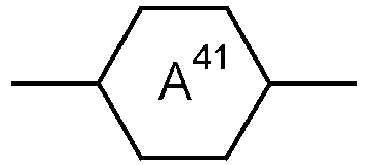


 Z41 und Z42 unabhängig voneinander und, wenn Z41 zweimal auftritt, auch diese unabhängig voneinander -CH2CH2-, -COO-, trans-CH=CH-, trans-CF=CF-, -CH2O-, -CF2O-, -C=C- oder eine Einfachbindung bedeuten,p 0, 1 oder 2 bedeutet,R51 und R52 unabhängig voneinander eine der für R41 und R42 genannten Bedeutungen besitzen,


 Z51 bis Z53 jeweils unabhängig voneinander -CH2-CH2-, -CH2-O-, -CH=CH-, -C=C-, -COO- oder eine Einfachbindung bedeuten, undi und j jeweils unabhängig voneinander 0 oder 1 bedeuten.
 - Medium nach einem oder mehreren der Ansprüche 1 bis 8, wobei das Medium zusätzlich eine oder mehrere chirale Verbindungen und/oder Stabilisatoren enthält.
- Elektrooptische Anzeige oder elektrooptische Komponente, dadurch gekennzeichnet, dass sie ein flüssigkristallines Medium nach einem oder mehreren der Ansprüche 1 bis 9 enthält.
- Anzeige nach Anspruch 10, ausgelegt und konfiguriert dafür, im IPS- oder FFS-Modus zu arbeiten.
- Anzeige nach Anspruch 10 oder 11, bei der die Anzeige eine Aktivmatrix-Adressierungsvorrichtung enthält.
- Verwendung eines Mediums nach einem oder mehreren der Ansprüche 1 bis 9 in einer elektrooptischen Anzeige oder in einer elektrooptischen Komponente.
- Verfahren zur Herstellung eines flüssigkristallinen Mediums nach einem oder mehreren der Ansprüche 1 bis 9, dadurch gekennzeichnet, dass man eine oder mehrere Verbindungen der Formel I mit einer oder mehreren Verbindungen der Formeln II und/oder III und mit einer oder mehreren Verbindungen der Formeln B und/oder Y mischt, bei dem eine oder mehrere aus den Verbindungen der Formeln B-1 und B-2 ausgewählte Verbindungen zugegeben werden.
Applications Claiming Priority (2)
| Application Number | Priority Date | Filing Date | Title |
|---|---|---|---|
| EP20153383 | 2020-01-23 | ||
| PCT/EP2021/051097 WO2021148421A1 (en) | 2020-01-23 | 2021-01-20 | Liquid-crystal medium |
Publications (2)
| Publication Number | Publication Date |
|---|---|
| EP4093837A1 EP4093837A1 (de) | 2022-11-30 |
| EP4093837B1 true EP4093837B1 (de) | 2025-01-01 |
Family
ID=69190687
Family Applications (1)
| Application Number | Title | Priority Date | Filing Date |
|---|---|---|---|
| EP21711178.0A Active EP4093837B1 (de) | 2020-01-23 | 2021-01-20 | Flüssigkristallmedium |
Country Status (4)
| Country | Link |
|---|---|
| EP (1) | EP4093837B1 (de) |
| CN (1) | CN115003779B (de) |
| TW (1) | TWI887336B (de) |
| WO (1) | WO2021148421A1 (de) |
Families Citing this family (4)
| Publication number | Priority date | Publication date | Assignee | Title |
|---|---|---|---|---|
| CN116162469B (zh) * | 2021-11-24 | 2024-10-25 | 江苏和成显示科技有限公司 | 一种液晶组合物及其液晶显示器件 |
| CN116162466B (zh) * | 2021-11-24 | 2025-02-07 | 安庆飞凯新材料有限公司 | 一种液晶组合物及包含其的液晶显示器件 |
| CN119256066A (zh) * | 2022-04-22 | 2025-01-03 | 默克专利股份有限公司 | 液晶介质 |
| US20260028530A1 (en) * | 2022-07-20 | 2026-01-29 | Merck Patent Gmbh | Liquid crystalline medium |
Family Cites Families (25)
| Publication number | Priority date | Publication date | Assignee | Title |
|---|---|---|---|---|
| BE795849A (fr) | 1972-02-26 | 1973-08-23 | Merck Patent Gmbh | Phases nematiques modifiees |
| US3814700A (en) | 1972-08-03 | 1974-06-04 | Ibm | Method for controllably varying the electrical properties of nematic liquids and dopants therefor |
| DE2450088A1 (de) | 1974-10-22 | 1976-04-29 | Merck Patent Gmbh | Biphenylester |
| DE2637430A1 (de) | 1976-08-20 | 1978-02-23 | Merck Patent Gmbh | Fluessigkristallines dielektrikum |
| DE2853728A1 (de) | 1978-12-13 | 1980-07-17 | Merck Patent Gmbh | Fluessigkristalline carbonsaeureester, verfahren zu ihrer herstellung, diese enthaltende dielektrika und elektrooptisches anzeigeelement |
| DE4042747B4 (de) | 1990-01-09 | 2009-10-08 | Merck Patent Gmbh | Elektrooptisches Flüssigkristallschaltelement |
| EP0588568B1 (de) | 1992-09-18 | 2002-12-18 | Hitachi, Ltd. | Flüssigkristall-Anzeigevorrichtung |
| JPH07181439A (ja) | 1993-12-24 | 1995-07-21 | Hitachi Ltd | アクティブマトリクス型液晶表示装置 |
| JP3543351B2 (ja) | 1994-02-14 | 2004-07-14 | 株式会社日立製作所 | アクティブマトリクス型液晶表示装置 |
| TW262553B (de) | 1994-03-17 | 1995-11-11 | Hitachi Seisakusyo Kk | |
| DE19528106A1 (de) | 1995-02-03 | 1996-08-08 | Merck Patent Gmbh | Elektrooptische Flüssigkristallanzeige |
| US5993691A (en) | 1995-02-03 | 1999-11-30 | Merck Patent Gesellschaft Mit | Electro-optical liquid crystal display |
| DE19528107B4 (de) | 1995-03-17 | 2010-01-21 | Merck Patent Gmbh | Flüssigkristallines Medium und seine Verwendung in einer elektrooptischen Flüssigkristallanzeige |
| DE19528104B4 (de) | 1995-08-01 | 2008-05-15 | Merck Patent Gmbh | Elektrooptisches Flüssigkristallmedium |
| DE19509410A1 (de) | 1995-03-15 | 1996-09-19 | Merck Patent Gmbh | Elektrooptische Flüssigkristallanzeige |
| TW387997B (en) | 1997-12-29 | 2000-04-21 | Hyundai Electronics Ind | Liquid crystal display and fabrication method |
| DE102011108708A1 (de) | 2010-09-25 | 2012-03-29 | Merck Patent Gmbh | Flüssigkristallanzeigen und flüssigkristalline Medien mit homöotroper Ausrichtung |
| US9674945B2 (en) | 2012-09-21 | 2017-06-06 | Intel Corporation | Heterogeneous integration of microfluidic devices in package structures |
| US10131841B2 (en) | 2013-12-16 | 2018-11-20 | Merck Patent Gmbh | Liquid-crystalline medium |
| EP3730590B1 (de) | 2014-03-10 | 2025-12-24 | Merck Patent GmbH | Flüssigkristalline medien mit homöotroper ausrichtung |
| EP3228681B1 (de) * | 2016-04-07 | 2018-11-14 | Merck Patent GmbH | Flüssigkristallines medium und flüssigkristallanzeige damit |
| KR102512438B1 (ko) * | 2016-11-18 | 2023-03-21 | 메르크 파텐트 게엠베하 | 액정 매질 및 이를 포함하는 액정 디스플레이 |
| KR102677218B1 (ko) * | 2017-09-26 | 2024-06-21 | 메르크 파텐트 게엠베하 | 액정 매질 및 이를 포함하는 액정 디스플레이 |
| US11008515B2 (en) * | 2017-11-24 | 2021-05-18 | Merck Patent Gmbh | Liquid-crystalline medium |
| EP3666853B1 (de) * | 2018-12-10 | 2021-06-16 | Merck Patent GmbH | Flüssigkristallmedium |
-
2021
- 2021-01-20 EP EP21711178.0A patent/EP4093837B1/de active Active
- 2021-01-20 WO PCT/EP2021/051097 patent/WO2021148421A1/en not_active Ceased
- 2021-01-20 CN CN202180009834.7A patent/CN115003779B/zh active Active
- 2021-01-22 TW TW110102414A patent/TWI887336B/zh active
Also Published As
| Publication number | Publication date |
|---|---|
| TWI887336B (zh) | 2025-06-21 |
| WO2021148421A1 (en) | 2021-07-29 |
| TW202132543A (zh) | 2021-09-01 |
| EP4093837A1 (de) | 2022-11-30 |
| CN115003779B (zh) | 2024-08-02 |
| CN115003779A (zh) | 2022-09-02 |
Similar Documents
| Publication | Publication Date | Title |
|---|---|---|
| EP3666853B1 (de) | Flüssigkristallmedium | |
| US8871952B2 (en) | Thiophene compounds for liquid-crystalline media | |
| US7563491B2 (en) | Liquid crystalline medium and liquid crystal display | |
| CN115003779B (zh) | 液晶介质 | |
| US10351771B2 (en) | Liquid-crystalline medium | |
| KR20090097806A (ko) | 액정 매질 및 액정 디스플레이 | |
| KR102512438B1 (ko) | 액정 매질 및 이를 포함하는 액정 디스플레이 | |
| KR20100017148A (ko) | 액정 매질 및 액정 디스플레이 | |
| EP3985085B1 (de) | Flüssigkristallmedium | |
| JPH1129771A (ja) | 電気光学液晶ディスプレイ | |
| US6613401B2 (en) | Liquid-crystalline medium | |
| US8821757B2 (en) | Liquid-crystalline medium | |
| EP3870671B1 (de) | Flüssigkristallines medium | |
| KR20120125255A (ko) | 액정 매질 및 액정 디스플레이 | |
| KR20110002460A (ko) | 액정 매질 및 액정 디스플레이 | |
| US6602562B2 (en) | Electro-optical liquid-crystal display | |
| EP1835010B1 (de) | Flüssigkristallines Medium und Flüssigkristallanzeige | |
| EP4578928A1 (de) | Flüssigkristallines medium | |
| US20030224125A1 (en) | Electro-optical liquid-crystal display and liquid-crystal medium | |
| EP3617293B1 (de) | Flüssigkristallines medium und flüssigkristallanzeige | |
| EP3551722B1 (de) | Flüssigkristallines medium | |
| KR102591161B1 (ko) | 액정 매질 |
Legal Events
| Date | Code | Title | Description |
|---|---|---|---|
| STAA | Information on the status of an ep patent application or granted ep patent |
Free format text: STATUS: UNKNOWN |
|
| STAA | Information on the status of an ep patent application or granted ep patent |
Free format text: STATUS: THE INTERNATIONAL PUBLICATION HAS BEEN MADE |
|
| PUAI | Public reference made under article 153(3) epc to a published international application that has entered the european phase |
Free format text: ORIGINAL CODE: 0009012 |
|
| STAA | Information on the status of an ep patent application or granted ep patent |
Free format text: STATUS: REQUEST FOR EXAMINATION WAS MADE |
|
| 17P | Request for examination filed |
Effective date: 20220721 |
|
| AK | Designated contracting states |
Kind code of ref document: A1 Designated state(s): AL AT BE BG CH CY CZ DE DK EE ES FI FR GB GR HR HU IE IS IT LI LT LU LV MC MK MT NL NO PL PT RO RS SE SI SK SM TR |
|
| DAV | Request for validation of the european patent (deleted) | ||
| DAX | Request for extension of the european patent (deleted) | ||
| P01 | Opt-out of the competence of the unified patent court (upc) registered |
Effective date: 20230519 |
|
| GRAP | Despatch of communication of intention to grant a patent |
Free format text: ORIGINAL CODE: EPIDOSNIGR1 |
|
| STAA | Information on the status of an ep patent application or granted ep patent |
Free format text: STATUS: GRANT OF PATENT IS INTENDED |
|
| INTG | Intention to grant announced |
Effective date: 20241025 |
|
| GRAS | Grant fee paid |
Free format text: ORIGINAL CODE: EPIDOSNIGR3 |
|
| GRAA | (expected) grant |
Free format text: ORIGINAL CODE: 0009210 |
|
| STAA | Information on the status of an ep patent application or granted ep patent |
Free format text: STATUS: THE PATENT HAS BEEN GRANTED |
|
| AK | Designated contracting states |
Kind code of ref document: B1 Designated state(s): AL AT BE BG CH CY CZ DE DK EE ES FI FR GB GR HR HU IE IS IT LI LT LU LV MC MK MT NL NO PL PT RO RS SE SI SK SM TR |
|
| REG | Reference to a national code |
Ref country code: GB Ref legal event code: FG4D |
|
| REG | Reference to a national code |
Ref country code: CH Ref legal event code: EP |
|
| REG | Reference to a national code |
Ref country code: DE Ref legal event code: R096 Ref document number: 602021024236 Country of ref document: DE |
|
| REG | Reference to a national code |
Ref country code: IE Ref legal event code: FG4D |
|
| PGFP | Annual fee paid to national office [announced via postgrant information from national office to epo] |
Ref country code: AT Payment date: 20250417 Year of fee payment: 5 |
|
| REG | Reference to a national code |
Ref country code: LT Ref legal event code: MG9D |
|
| REG | Reference to a national code |
Ref country code: NL Ref legal event code: MP Effective date: 20250101 |
|
| REG | Reference to a national code |
Ref country code: AT Ref legal event code: MK05 Ref document number: 1756229 Country of ref document: AT Kind code of ref document: T Effective date: 20250101 |
|
| PG25 | Lapsed in a contracting state [announced via postgrant information from national office to epo] |
Ref country code: NL Free format text: LAPSE BECAUSE OF FAILURE TO SUBMIT A TRANSLATION OF THE DESCRIPTION OR TO PAY THE FEE WITHIN THE PRESCRIBED TIME-LIMIT Effective date: 20250101 |
|
| PG25 | Lapsed in a contracting state [announced via postgrant information from national office to epo] |
Ref country code: FI Free format text: LAPSE BECAUSE OF FAILURE TO SUBMIT A TRANSLATION OF THE DESCRIPTION OR TO PAY THE FEE WITHIN THE PRESCRIBED TIME-LIMIT Effective date: 20250101 |
|
| PG25 | Lapsed in a contracting state [announced via postgrant information from national office to epo] |
Ref country code: PL Free format text: LAPSE BECAUSE OF FAILURE TO SUBMIT A TRANSLATION OF THE DESCRIPTION OR TO PAY THE FEE WITHIN THE PRESCRIBED TIME-LIMIT Effective date: 20250101 |
|
| PG25 | Lapsed in a contracting state [announced via postgrant information from national office to epo] |
Ref country code: ES Free format text: LAPSE BECAUSE OF FAILURE TO SUBMIT A TRANSLATION OF THE DESCRIPTION OR TO PAY THE FEE WITHIN THE PRESCRIBED TIME-LIMIT Effective date: 20250101 |
|
| PG25 | Lapsed in a contracting state [announced via postgrant information from national office to epo] |
Ref country code: IS Free format text: LAPSE BECAUSE OF FAILURE TO SUBMIT A TRANSLATION OF THE DESCRIPTION OR TO PAY THE FEE WITHIN THE PRESCRIBED TIME-LIMIT Effective date: 20250501 Ref country code: NO Free format text: LAPSE BECAUSE OF FAILURE TO SUBMIT A TRANSLATION OF THE DESCRIPTION OR TO PAY THE FEE WITHIN THE PRESCRIBED TIME-LIMIT Effective date: 20250401 |
|
| PG25 | Lapsed in a contracting state [announced via postgrant information from national office to epo] |
Ref country code: HR Free format text: LAPSE BECAUSE OF FAILURE TO SUBMIT A TRANSLATION OF THE DESCRIPTION OR TO PAY THE FEE WITHIN THE PRESCRIBED TIME-LIMIT Effective date: 20250101 |
|
| PG25 | Lapsed in a contracting state [announced via postgrant information from national office to epo] |
Ref country code: LV Free format text: LAPSE BECAUSE OF FAILURE TO SUBMIT A TRANSLATION OF THE DESCRIPTION OR TO PAY THE FEE WITHIN THE PRESCRIBED TIME-LIMIT Effective date: 20250101 Ref country code: PT Free format text: LAPSE BECAUSE OF FAILURE TO SUBMIT A TRANSLATION OF THE DESCRIPTION OR TO PAY THE FEE WITHIN THE PRESCRIBED TIME-LIMIT Effective date: 20250502 |
|
| PG25 | Lapsed in a contracting state [announced via postgrant information from national office to epo] |
Ref country code: BG Free format text: LAPSE BECAUSE OF FAILURE TO SUBMIT A TRANSLATION OF THE DESCRIPTION OR TO PAY THE FEE WITHIN THE PRESCRIBED TIME-LIMIT Effective date: 20250101 Ref country code: GR Free format text: LAPSE BECAUSE OF FAILURE TO SUBMIT A TRANSLATION OF THE DESCRIPTION OR TO PAY THE FEE WITHIN THE PRESCRIBED TIME-LIMIT Effective date: 20250402 |
|
| PG25 | Lapsed in a contracting state [announced via postgrant information from national office to epo] |
Ref country code: AT Free format text: LAPSE BECAUSE OF FAILURE TO SUBMIT A TRANSLATION OF THE DESCRIPTION OR TO PAY THE FEE WITHIN THE PRESCRIBED TIME-LIMIT Effective date: 20250101 |
|
| PG25 | Lapsed in a contracting state [announced via postgrant information from national office to epo] |
Ref country code: CZ Free format text: LAPSE BECAUSE OF FAILURE TO SUBMIT A TRANSLATION OF THE DESCRIPTION OR TO PAY THE FEE WITHIN THE PRESCRIBED TIME-LIMIT Effective date: 20250101 |
|
| REG | Reference to a national code |
Ref country code: CH Ref legal event code: PL |
|
| PG25 | Lapsed in a contracting state [announced via postgrant information from national office to epo] |
Ref country code: SE Free format text: LAPSE BECAUSE OF FAILURE TO SUBMIT A TRANSLATION OF THE DESCRIPTION OR TO PAY THE FEE WITHIN THE PRESCRIBED TIME-LIMIT Effective date: 20250101 |
|
| PG25 | Lapsed in a contracting state [announced via postgrant information from national office to epo] |
Ref country code: LU Free format text: LAPSE BECAUSE OF NON-PAYMENT OF DUE FEES Effective date: 20250120 |
|
| REG | Reference to a national code |
Ref country code: DE Ref legal event code: R097 Ref document number: 602021024236 Country of ref document: DE |
|
| PG25 | Lapsed in a contracting state [announced via postgrant information from national office to epo] |
Ref country code: SM Free format text: LAPSE BECAUSE OF FAILURE TO SUBMIT A TRANSLATION OF THE DESCRIPTION OR TO PAY THE FEE WITHIN THE PRESCRIBED TIME-LIMIT Effective date: 20250101 |
|
| PG25 | Lapsed in a contracting state [announced via postgrant information from national office to epo] |
Ref country code: DK Free format text: LAPSE BECAUSE OF FAILURE TO SUBMIT A TRANSLATION OF THE DESCRIPTION OR TO PAY THE FEE WITHIN THE PRESCRIBED TIME-LIMIT Effective date: 20250101 |
|
| PG25 | Lapsed in a contracting state [announced via postgrant information from national office to epo] |
Ref country code: MC Free format text: LAPSE BECAUSE OF FAILURE TO SUBMIT A TRANSLATION OF THE DESCRIPTION OR TO PAY THE FEE WITHIN THE PRESCRIBED TIME-LIMIT Effective date: 20250101 |
|
| PG25 | Lapsed in a contracting state [announced via postgrant information from national office to epo] |
Ref country code: IT Free format text: LAPSE BECAUSE OF FAILURE TO SUBMIT A TRANSLATION OF THE DESCRIPTION OR TO PAY THE FEE WITHIN THE PRESCRIBED TIME-LIMIT Effective date: 20250101 |
|
| PG25 | Lapsed in a contracting state [announced via postgrant information from national office to epo] |
Ref country code: BE Free format text: LAPSE BECAUSE OF NON-PAYMENT OF DUE FEES Effective date: 20250131 |
|
| PG25 | Lapsed in a contracting state [announced via postgrant information from national office to epo] |
Ref country code: CH Free format text: LAPSE BECAUSE OF NON-PAYMENT OF DUE FEES Effective date: 20250131 |
|
| PG25 | Lapsed in a contracting state [announced via postgrant information from national office to epo] |
Ref country code: EE Free format text: LAPSE BECAUSE OF FAILURE TO SUBMIT A TRANSLATION OF THE DESCRIPTION OR TO PAY THE FEE WITHIN THE PRESCRIBED TIME-LIMIT Effective date: 20250101 |
|
| REG | Reference to a national code |
Ref country code: BE Ref legal event code: MM Effective date: 20250131 |
|
| PG25 | Lapsed in a contracting state [announced via postgrant information from national office to epo] |
Ref country code: RO Free format text: LAPSE BECAUSE OF FAILURE TO SUBMIT A TRANSLATION OF THE DESCRIPTION OR TO PAY THE FEE WITHIN THE PRESCRIBED TIME-LIMIT Effective date: 20250101 |
|
| PG25 | Lapsed in a contracting state [announced via postgrant information from national office to epo] |
Ref country code: SK Free format text: LAPSE BECAUSE OF FAILURE TO SUBMIT A TRANSLATION OF THE DESCRIPTION OR TO PAY THE FEE WITHIN THE PRESCRIBED TIME-LIMIT Effective date: 20250101 |
|
| PLBE | No opposition filed within time limit |
Free format text: ORIGINAL CODE: 0009261 |
|
| STAA | Information on the status of an ep patent application or granted ep patent |
Free format text: STATUS: NO OPPOSITION FILED WITHIN TIME LIMIT |
|
| 26N | No opposition filed |
Effective date: 20251002 |
|
| GBPC | Gb: european patent ceased through non-payment of renewal fee |
Effective date: 20250401 |
|
| PG25 | Lapsed in a contracting state [announced via postgrant information from national office to epo] |
Ref country code: GB Free format text: LAPSE BECAUSE OF NON-PAYMENT OF DUE FEES Effective date: 20250401 |
|
| PG25 | Lapsed in a contracting state [announced via postgrant information from national office to epo] |
Ref country code: FR Free format text: LAPSE BECAUSE OF NON-PAYMENT OF DUE FEES Effective date: 20250301 |
|
| PG25 | Lapsed in a contracting state [announced via postgrant information from national office to epo] |
Ref country code: IE Free format text: LAPSE BECAUSE OF NON-PAYMENT OF DUE FEES Effective date: 20250120 |
|
| PGFP | Annual fee paid to national office [announced via postgrant information from national office to epo] |
Ref country code: DE Payment date: 20251217 Year of fee payment: 6 |