EP4095107A1 - Procédé thermochimique intégré pour la récupération de matières premières inorganiques à partir de matrices résiduelles - Google Patents
Procédé thermochimique intégré pour la récupération de matières premières inorganiques à partir de matrices résiduelles Download PDFInfo
- Publication number
- EP4095107A1 EP4095107A1 EP22175075.5A EP22175075A EP4095107A1 EP 4095107 A1 EP4095107 A1 EP 4095107A1 EP 22175075 A EP22175075 A EP 22175075A EP 4095107 A1 EP4095107 A1 EP 4095107A1
- Authority
- EP
- European Patent Office
- Prior art keywords
- leaching
- char
- pyrolysis
- temperature
- mixture
- Prior art date
- Legal status (The legal status is an assumption and is not a legal conclusion. Google has not performed a legal analysis and makes no representation as to the accuracy of the status listed.)
- Granted
Links
Images

Classifications
-
- C—CHEMISTRY; METALLURGY
- C10—PETROLEUM, GAS OR COKE INDUSTRIES; TECHNICAL GASES CONTAINING CARBON MONOXIDE; FUELS; LUBRICANTS; PEAT
- C10B—DESTRUCTIVE DISTILLATION OF CARBONACEOUS MATERIALS FOR PRODUCTION OF GAS, COKE, TAR, OR SIMILAR MATERIALS
- C10B53/00—Destructive distillation, specially adapted for particular solid raw materials or solid raw materials in special form
-
- C—CHEMISTRY; METALLURGY
- C01—INORGANIC CHEMISTRY
- C01B—NON-METALLIC ELEMENTS; COMPOUNDS THEREOF; METALLOIDS OR COMPOUNDS THEREOF NOT COVERED BY SUBCLASS C01C
- C01B25/00—Phosphorus; Compounds thereof
- C01B25/01—Treating phosphate ores or other raw phosphate materials to obtain phosphorus or phosphorus compounds
-
- C—CHEMISTRY; METALLURGY
- C02—TREATMENT OF WATER, WASTE WATER, SEWAGE, OR SLUDGE
- C02F—TREATMENT OF WATER, WASTE WATER, SEWAGE, OR SLUDGE
- C02F11/00—Treatment of sludge; Devices therefor
- C02F11/10—Treatment of sludge; Devices therefor by pyrolysis
-
- C—CHEMISTRY; METALLURGY
- C10—PETROLEUM, GAS OR COKE INDUSTRIES; TECHNICAL GASES CONTAINING CARBON MONOXIDE; FUELS; LUBRICANTS; PEAT
- C10B—DESTRUCTIVE DISTILLATION OF CARBONACEOUS MATERIALS FOR PRODUCTION OF GAS, COKE, TAR, OR SIMILAR MATERIALS
- C10B47/00—Destructive distillation of solid carbonaceous materials with indirect heating, e.g. by external combustion
- C10B47/18—Destructive distillation of solid carbonaceous materials with indirect heating, e.g. by external combustion with moving charge
-
- C—CHEMISTRY; METALLURGY
- C10—PETROLEUM, GAS OR COKE INDUSTRIES; TECHNICAL GASES CONTAINING CARBON MONOXIDE; FUELS; LUBRICANTS; PEAT
- C10B—DESTRUCTIVE DISTILLATION OF CARBONACEOUS MATERIALS FOR PRODUCTION OF GAS, COKE, TAR, OR SIMILAR MATERIALS
- C10B57/00—Other carbonising or coking processes; Features of destructive distillation processes in general
- C10B57/005—After-treatment of coke, e.g. calcination desulfurization
-
- C—CHEMISTRY; METALLURGY
- C22—METALLURGY; FERROUS OR NON-FERROUS ALLOYS; TREATMENT OF ALLOYS OR NON-FERROUS METALS
- C22B—PRODUCTION AND REFINING OF METALS; PRETREATMENT OF RAW MATERIALS
- C22B21/00—Obtaining aluminium
- C22B21/0015—Obtaining aluminium by wet processes
- C22B21/0023—Obtaining aluminium by wet processes from waste materials
-
- C—CHEMISTRY; METALLURGY
- C22—METALLURGY; FERROUS OR NON-FERROUS ALLOYS; TREATMENT OF ALLOYS OR NON-FERROUS METALS
- C22B—PRODUCTION AND REFINING OF METALS; PRETREATMENT OF RAW MATERIALS
- C22B26/00—Obtaining alkali, alkaline earth metals or magnesium
- C22B26/20—Obtaining alkaline earth metals or magnesium
-
- C—CHEMISTRY; METALLURGY
- C22—METALLURGY; FERROUS OR NON-FERROUS ALLOYS; TREATMENT OF ALLOYS OR NON-FERROUS METALS
- C22B—PRODUCTION AND REFINING OF METALS; PRETREATMENT OF RAW MATERIALS
- C22B3/00—Extraction of metal compounds from ores or concentrates by wet processes
- C22B3/04—Extraction of metal compounds from ores or concentrates by wet processes by leaching
- C22B3/06—Extraction of metal compounds from ores or concentrates by wet processes by leaching in inorganic acid solutions, e.g. with acids generated in situ; in inorganic salt solutions other than ammonium salt solutions
- C22B3/065—Nitric acids or salts thereof
-
- C—CHEMISTRY; METALLURGY
- C22—METALLURGY; FERROUS OR NON-FERROUS ALLOYS; TREATMENT OF ALLOYS OR NON-FERROUS METALS
- C22B—PRODUCTION AND REFINING OF METALS; PRETREATMENT OF RAW MATERIALS
- C22B3/00—Extraction of metal compounds from ores or concentrates by wet processes
- C22B3/04—Extraction of metal compounds from ores or concentrates by wet processes by leaching
- C22B3/06—Extraction of metal compounds from ores or concentrates by wet processes by leaching in inorganic acid solutions, e.g. with acids generated in situ; in inorganic salt solutions other than ammonium salt solutions
- C22B3/08—Sulfuric acid, other sulfurated acids or salts thereof
-
- C—CHEMISTRY; METALLURGY
- C22—METALLURGY; FERROUS OR NON-FERROUS ALLOYS; TREATMENT OF ALLOYS OR NON-FERROUS METALS
- C22B—PRODUCTION AND REFINING OF METALS; PRETREATMENT OF RAW MATERIALS
- C22B3/00—Extraction of metal compounds from ores or concentrates by wet processes
- C22B3/04—Extraction of metal compounds from ores or concentrates by wet processes by leaching
- C22B3/06—Extraction of metal compounds from ores or concentrates by wet processes by leaching in inorganic acid solutions, e.g. with acids generated in situ; in inorganic salt solutions other than ammonium salt solutions
- C22B3/10—Hydrochloric acid, other halogenated acids or salts thereof
-
- C—CHEMISTRY; METALLURGY
- C22—METALLURGY; FERROUS OR NON-FERROUS ALLOYS; TREATMENT OF ALLOYS OR NON-FERROUS METALS
- C22B—PRODUCTION AND REFINING OF METALS; PRETREATMENT OF RAW MATERIALS
- C22B3/00—Extraction of metal compounds from ores or concentrates by wet processes
- C22B3/04—Extraction of metal compounds from ores or concentrates by wet processes by leaching
- C22B3/12—Extraction of metal compounds from ores or concentrates by wet processes by leaching in inorganic alkaline solutions
-
- C—CHEMISTRY; METALLURGY
- C22—METALLURGY; FERROUS OR NON-FERROUS ALLOYS; TREATMENT OF ALLOYS OR NON-FERROUS METALS
- C22B—PRODUCTION AND REFINING OF METALS; PRETREATMENT OF RAW MATERIALS
- C22B7/00—Working up raw materials other than ores, e.g. scrap, to produce non-ferrous metals and compounds thereof; Methods of a general interest or applied to the winning of more than two metals
- C22B7/001—Dry processes
-
- C—CHEMISTRY; METALLURGY
- C22—METALLURGY; FERROUS OR NON-FERROUS ALLOYS; TREATMENT OF ALLOYS OR NON-FERROUS METALS
- C22B—PRODUCTION AND REFINING OF METALS; PRETREATMENT OF RAW MATERIALS
- C22B7/00—Working up raw materials other than ores, e.g. scrap, to produce non-ferrous metals and compounds thereof; Methods of a general interest or applied to the winning of more than two metals
- C22B7/006—Wet processes
- C22B7/007—Wet processes by acid leaching
-
- C—CHEMISTRY; METALLURGY
- C22—METALLURGY; FERROUS OR NON-FERROUS ALLOYS; TREATMENT OF ALLOYS OR NON-FERROUS METALS
- C22B—PRODUCTION AND REFINING OF METALS; PRETREATMENT OF RAW MATERIALS
- C22B7/00—Working up raw materials other than ores, e.g. scrap, to produce non-ferrous metals and compounds thereof; Methods of a general interest or applied to the winning of more than two metals
- C22B7/006—Wet processes
- C22B7/008—Wet processes by an alkaline or ammoniacal leaching
-
- C—CHEMISTRY; METALLURGY
- C10—PETROLEUM, GAS OR COKE INDUSTRIES; TECHNICAL GASES CONTAINING CARBON MONOXIDE; FUELS; LUBRICANTS; PEAT
- C10B—DESTRUCTIVE DISTILLATION OF CARBONACEOUS MATERIALS FOR PRODUCTION OF GAS, COKE, TAR, OR SIMILAR MATERIALS
- C10B57/00—Other carbonising or coking processes; Features of destructive distillation processes in general
- C10B57/08—Non-mechanical pretreatment of the charge, e.g. desulfurization
- C10B57/10—Drying
Definitions
- the finding relates to the field of thermochemical processes for the recovery of carbon and materials of potential interest from predominantly organic residual matrices, in particular from civil or industrial waste.
- the invention relates to the field of integrated thermochemical processes, designed to enhance both organic and inorganic fractions, which constitute waste, such as by way of example sewage sludge and municipal solid waste.
- thermochemical process due to the lack of an effective interaction between the two main process steps, pyrolysis and leaching, which, in the case of processes with pyrolysis at reduced temperatures ( ⁇ 400°C), in particular determines the production of a highly volatile solid biochar, with consequent high oxidation and low effectiveness as an industrial product and, in the case of processes with pyrolysis at high temperatures (>550°C), a biochar with reduced solubility of inorganic compounds and therefore low effectiveness of the reagents used in leaching and low extraction efficiency for elements of significant interest such as magnesium, phosphorus downstream of the char leaching step.
- a pyrolysis process is described in the previous document CN111943474 in which the biochar from pollen and animal manure is processed and subsequently subjected to leaching with the use of only sulphuric acid.
- Sulphuric acid which allows the extraction of phosphorus, does not however allow calcium to be extracted with high efficiency, leaving the solid with a high inorganic content and therefore unsuitable for application in the steel industry, at least if applied to waste such as sewage sludge object of this invention.
- thermochemical process for the treatment of residual matrices in particular residual organic matrices from waste, which allows an effective combined recovery of inorganic raw materials of significant economic value (such as phosphorus, calcium, silicon, magnesium, potassium, aluminium) and of the carbon contained in the treated residual matrices, even when the composition thereof varies.
- the present invention aims to overcome the known drawbacks and to propose an integrated process of thermochemical degradation and chemical cleavage of materials, or residual matrices which allows to recover downstream of the process, in a combined manner, carbon of biological and recycled origin of such quality (in particular high carbon content (>60%) and low ash value, indicatively less than 20%) to be used as an alternative to fossil coal in sectors such as metallurgy, energy, active carbon and biomaterials, and a precipitated compound containing inorganic raw materials with high concentrations of elements such as phosphorus, magnesium, calcium, potassium, aluminium and other elements (variable with the type of residual matrix processed) transformable to become a finished product of technical and/or economic value.
- thermochemical process includes the application of a first step of pyrolysis, or thermochemical degradation in the absence of oxygen, as a pre-treatment system of the residual matrix carried out at temperatures between approximately 400°C and 550-600°C selected based on the composition of the treated matrix, and capable of concentrating both the stable carbon present in the residual matrix, and the inorganic elements in an intermediate solid with characteristics suitable for the next treatment step
- the process includes a subsequent integrated leaching step, in one or more phases, in which the solid resulting from the pyrolysis step is treated by hot leaching at temperatures preferably between 50 and 90°C, selected based at least on the pyrolysis temperature set upstream, mixing the char produced with demineralized water and a mixture of leaching reagents selected based on the inorganic substances present in the treated residual matrix and the inorganic recovery products obtainable at the end of the process.
- a first advantage is that the inorganic elements of greater interest (e.g., phosphorus, potassium, magnesium, calcium, aluminium) are available downstream of the integrated process, while the organic carbon from pyrolysis is made available with a quality comparable or higher than that of a fossil coal, with ash percentages less than 20% and even between 8% and 15%, therefore suitable for use in the steel industry.
- the inorganic elements of greater interest e.g., phosphorus, potassium, magnesium, calcium, aluminium
- thermochemical process of the invention is integrated within a single processing system which allows in an industrially convenient manner to obtain high extraction efficiencies (by way of example > 85%) for fertilizing elements such as Ca, P, K, Mg, AI and to produce a biochar with a high carbon content (for example >65%) and reduced volatile content (for example ⁇ 25%) thus compatible with fossil coals used in different industrial sectors.
- a further advantage is that with the process of the invention a reduced volatility of the pyrolysis solid obtained and therefore an improved ability to recover and enhance the same in multiple industrial sectors has been observed.
- a further advantage is that with the process of the invention an organic carbon from pyrolysis is obtained which is substantially free of alkali, calcium, sulphur and phosphorus products, therefore suitable for use in metallurgy
- a further advantage is that the process of the invention is self-sufficient from the energy point of view allowing the exploitation in the hot leaching step of the heat produced in the previous pyrolysis step.
- thermochemical process for the recovery of raw materials from mainly organic waste matrices such as industrial waste or sludge.
- the process comprises feeding a residual matrix, or material, Mres which is mainly organic and containing inorganic materials to be recovered with a percentage of initial ash Ain.
- the process can also include a preliminary step of composition analysis.
- the residual matrix is fed to a pyrolysis reactor to perform a slow pyrolysis treatment and obtain a solid char.
- the pyrolysis occurs in a single reactor downstream of a pre-drying step of the matrix to a temperature below 200°C, followed by thermochemical degradation at process temperatures in a range between 400°C and 550°C, with a heating rate not exceeding approximately 40°C/minute, with a residence time between 30min and 2h, preferably between 30min and 1h30min.
- the obtained char is optionally ground to obtain ground char of average size preferably less than 1 mm and then cooled upon exit from the auger by a gravity discharge into the mixing tank with water at a temperature less than 100°C.
- the ground wet char is then dropped, mixed with water to obtain a water-char mixture, for example by discharging into a reactor, mixing the char with preferably demineralized water at a process temperature in a range between 50°C and 90°C with a water-char ratio of 4:1 to 20:1 by weight.
- the process includes a step of hot leaching the mixture by further mixing with leaching reagents.
- HNO3 ensures the removal of calcium, which is always present within the waste in question.
- HNO3 can be combined with H2SO4.
- H2SO4 is not envisaged, as it leads to the production of calcium sulphate (CaSO 4 ), an insoluble compound and therefore no longer separable from the carbonaceous solid.
- the acid leaching step can be supplemented with a possible second phase with a basic reagent, e.g.,NaOH, for removing silicates and aluminates and obtaining separate leaching products.
- a basic reagent e.g.,NaOH
- HCI is adopted exclusively as a second step after a first leaching in nitric acid, as it allows to recover the aluminium and, subsequently, process the liquid with a base to precipitate aluminium chloride.
- the process conditions are controlled so that:
- these adjustments are made in order to simultaneously obtain a high quality organic recovery carbon or low ash content (indicatively less than 20%) and low volatility (indicatively less than 25%), and inorganic products of economic or industrial interest.
- the pyrolysis temperature is adjusted to maintain a higher relative value T PH preferably between 450°C and 550°C and the leaching temperature TL is maintained at a lower relative value T LL preferably between 50°C and 80°C, while the quantity of leaching reagents RL is adjusted to a higher relative value RLH preferably between 50% and 70% by weight of the biochar produced in pyrolysis.
- the leaching reagents are dosed to consist exclusively of HNO3 while for initial values of Calcium and Phosphorus lower than the threshold value CaPinx, the leaching reagents are dosed to have a relative percentage of H2SO4, HCI between 20 and 50%; furthermore
- the leaching of the water-char mixture occurs for a time between 1 and 2 hours, at a temperature approximately between 50°C and 90°C, with a weight percentage of the leaching reagents between 40% and 70% by weight, preferably 0.5 and a solid-liquid ratio between 1:5 and 1:20 by weight.
- the leaching mixture Downstream of the leaching reactor, the leaching mixture is then subjected to separation of the solid phase containing leached char from the liquid phase containing the inorganic leaching liquid.
- the obtained solid char is washed in water, e.g., at 25°C-60°C, and dried to obtain a solid organic carbon while the leaching liquid is treated in a basic reagent precipitation reactor, e.g., CaO, Ca(OH)2, NaOH, KOH, obtaining inorganic recovery material.
- a basic reagent precipitation reactor e.g., CaO, Ca(OH)2, NaOH, KOH, obtaining inorganic recovery material.
- the process comprises a further step of activating the produced organic carbon.
- a process consists of a physical activation, without the need for chemical reagents, carried out by means of CO2 insufflation in a tubular reactor at a temperature of 900°C, for a residence time of 2 hours.
- the residual matrix consists of civil or industrial sewage sludge, or urban organic waste with an initial percentage ash content of 20%, a total content of Calcium and Phosphorus oxides of 30%, a content of Silicon Oxide (Silica) of 2%, and a content of heavy metals of 5%.
- a residual matrix mass equal to one ton was subjected to pyrolysis for two hours at temperatures maintained in the range 400°C-450°C, and the obtained pyrolysis char is ground and mixed with 3000-4000 litres of water to be subjected to leaching with 300-370kg of HNO3 at a leaching temperature of 60°C.
- the liquid phase of the leaching mixture was treated with 60kg of CaOH2 in a precipitation tank and subjected to solid-liquid separation to obtain 190kg of inorganic recovery liquid comprising: P 7-9% N 2-4% Ca 12-15% Mg 0.7-1% K 0.5-0.7%
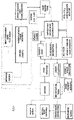
- Fig. 3 shows a representation of a decision-making algorithm related to a preferred solution for the control of the main parameters of the process, highlighting the ways in which the system will modulate the process characteristics, in particular the pyrolysis temperature, type and quantity of leaching reagent (grams of reagent per gram of char) and leaching temperature, based on the type and composition of the input matrices.
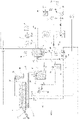
- thermochemical process of the invention With reference to figure 2 , an embodiment example of a plant for the actuation of the integrated thermochemical process of the invention is schematically illustrated.
- the plant comprises a pyrolysis reactor 1 provided with heaters 22 for the thermochemical treatment by pyrolysis of the residual matrix fed by a loading auger 28 and discharged from the reactor 1 by means of a discharge auger 29.
- the pyrolysis reactor 1 also comprises a cyclone 24 for recovering the char dust produced by the reactor 1 provided with an aspiration duct 25 of the dust from the reactor and a discharge 26.
- a mill 2 Downstream of the discharge 29 and the possible discharge 26, a mill 2 is arranged which receives the pyrolysis char and the recovery dust by means of pipes 3 and performs the grinding of the char received.
- the mill 2 comprises a spray chilling system 27 which cools the char exiting the reactor 1 from a temperature of about 100°C or higher with water to a temperature close to the process temperature of 50-90°C which at the same time contributes with the char coming from the mill to form a liquid solid mixture formed by water and char contained in a mixing tank 4.
- a spray chilling system 27 which cools the char exiting the reactor 1 from a temperature of about 100°C or higher with water to a temperature close to the process temperature of 50-90°C which at the same time contributes with the char coming from the mill to form a liquid solid mixture formed by water and char contained in a mixing tank 4.
- the liquid solid mixture is in turn sent out, by means of a pump p1 and pipe 6, to a leaching reactor 5 heated and maintained at the process temperature by a heater 23, provided with a stirrer and/or a fluid recirculation system 38.
- the hot leaching of the mixture takes place in the reactor 5 with leaching reagents, for example acid reagents, which are introduced into the reactor 5 in a quantity dosed by a pump p2 which withdraws them from one or more dosing tanks 7 according to the leaching phases actuated, and possibly with water coming from a pump p9 from a further tank 44, so as to obtain a leaching mixture.
- leaching reagents for example acid reagents
- the leaching mixture is then sent via pipes 9 and a pump p3 to a liquid-solid separator 8 which separates it into a solid phase containing organic recovery carbon and a liquid phase containing inorganic recovery liquid, intended for respective outlets 10, 11.
- the separator 8 comprises a filter press 40 associated with a washing water container 36 provided with a stirrer 39 and operates in two distinct steps.
- the pump p3 feeds the filter press 40 and from the outlet of the liquid phase 11 the organic recovery liquid is sent via a valve v1 and pipes 16 into a precipitation reactor 13 connected to a tank 17 of a basic reagent.
- the leaching mixture prior to reaching the precipitation reactor 13 is accumulated in one or more liquid tanks 33 which introduce the liquid into the reactor 13 by means of a pump p5.
- the leaching mixture is subjected to precipitation obtaining solid inorganic material in the mixture which is sent through ducts 31 and a pump p4 to a liquid solid filter 32 connected to a tank 34 of the filtered water and to a collection container 35 of the inorganic precipitate.
- the organic carbon separated from the inorganics is sent from the outlet of the solid phase 10 to the washing tank 36 where it is washed in water.
- the pump p3 feeds the filter press 40 with the organic carbon mixed with water contained in the washing tank 36 and sent to a dryer 12 in heat exchange with the combustion gases 19 exiting the pyrolysis reactor 1 to then be collected in a container 43 of recovered dry organic carbon.
- the washing water separated from the organic carbon is circulated by the valve v1 and a pump p6 to reach a heat exchanger 18 in heat exchange with the flue gases 19 emitted by the pyrolysis reactor and be returned to the tank 36 by means of a pump p7 and a three-way valve v2.
- valve v2 is also connected to the mixing tank 4 to supply part of the water recirculated by the pump p7 and heated by the exchanger 18.
- the system further comprises an electrical control panel 41 connected to the heater 22 of the reactor 1 to the heater 23 of the leaching reactor and to the dosing tanks 7 as well as preferably to the pumps and valves used for the execution of the process.
- the invention achieves important advantages related to the complete recovery at the end of the process of both organic and inorganic materials contained in the residual matrix and of technical and/or economic value.
- the process has proven to be flexible and adaptable to different purposes, since it allows to vary the pyrolysis and leaching conditions (in particular the temperature) in a combined manner to optimize the final object to be obtained in relation to the organic materials contained in the matrix and the reagents used for the leaching step, which can be selected based on the inorganic content of the specific residual matrix treated and the obtainable inorganic recovery products.
Landscapes
- Chemical & Material Sciences (AREA)
- Engineering & Computer Science (AREA)
- Organic Chemistry (AREA)
- Materials Engineering (AREA)
- Environmental & Geological Engineering (AREA)
- Life Sciences & Earth Sciences (AREA)
- Manufacturing & Machinery (AREA)
- Mechanical Engineering (AREA)
- Metallurgy (AREA)
- General Life Sciences & Earth Sciences (AREA)
- Geology (AREA)
- Inorganic Chemistry (AREA)
- Geochemistry & Mineralogy (AREA)
- Oil, Petroleum & Natural Gas (AREA)
- Combustion & Propulsion (AREA)
- Hydrology & Water Resources (AREA)
- Water Supply & Treatment (AREA)
- Processing Of Solid Wastes (AREA)
- Compounds Of Alkaline-Earth Elements, Aluminum Or Rare-Earth Metals (AREA)
- Organic Low-Molecular-Weight Compounds And Preparation Thereof (AREA)
Applications Claiming Priority (1)
| Application Number | Priority Date | Filing Date | Title |
|---|---|---|---|
| IT102021000013496A IT202100013496A1 (it) | 2021-05-25 | 2021-05-25 | Processo termochimico integrato per il recupero di materie prime inorganiche da matrici residuali |
Publications (3)
| Publication Number | Publication Date |
|---|---|
| EP4095107A1 true EP4095107A1 (fr) | 2022-11-30 |
| EP4095107B1 EP4095107B1 (fr) | 2024-06-19 |
| EP4095107C0 EP4095107C0 (fr) | 2024-06-19 |
Family
ID=77412127
Family Applications (1)
| Application Number | Title | Priority Date | Filing Date |
|---|---|---|---|
| EP22175075.5A Active EP4095107B1 (fr) | 2021-05-25 | 2022-05-24 | Procédé thermochimique intégré pour la récupération de matières premières inorganiques à partir de matrices résiduelles |
Country Status (4)
| Country | Link |
|---|---|
| EP (1) | EP4095107B1 (fr) |
| ES (1) | ES2988424T3 (fr) |
| IT (1) | IT202100013496A1 (fr) |
| PL (1) | PL4095107T3 (fr) |
Citations (2)
| Publication number | Priority date | Publication date | Assignee | Title |
|---|---|---|---|---|
| GB1468875A (fr) * | 1974-04-17 | 1977-03-30 | ||
| CN111943474A (zh) | 2020-06-12 | 2020-11-17 | 中国科学院城市环境研究所 | 一种畜禽粪污热解残渣分级利用的方法和装置 |
-
2021
- 2021-05-25 IT IT102021000013496A patent/IT202100013496A1/it unknown
-
2022
- 2022-05-24 PL PL22175075.5T patent/PL4095107T3/pl unknown
- 2022-05-24 EP EP22175075.5A patent/EP4095107B1/fr active Active
- 2022-05-24 ES ES22175075T patent/ES2988424T3/es active Active
Patent Citations (2)
| Publication number | Priority date | Publication date | Assignee | Title |
|---|---|---|---|---|
| GB1468875A (fr) * | 1974-04-17 | 1977-03-30 | ||
| CN111943474A (zh) | 2020-06-12 | 2020-11-17 | 中国科学院城市环境研究所 | 一种畜禽粪污热解残渣分级利用的方法和装置 |
Non-Patent Citations (3)
| Title |
|---|
| 100RES 2020 - APPLIED ENERGY SYMPOSIUM (ICAE) 100% RENEWABLE: STRATEGIES, TECHNOLOGIES AND CHALLENGES FOR A FOSSIL FREE FUTURE |
| BORJA OLIVER-TOMASMARTIN HITZLMIKOTAJ OWSIANIAKMICHAEL RENZ: "Evaluation of hydrothermal carbonization in urban mining for the recovery of phosphorus from the organic fraction of municipal solid waste", RESOURCES, CONSERVATION AND RECYCLING, vol. 147, 2019, pages 111 - 118, XP085689606, DOI: 10.1016/j.resconrec.2019.04.023 |
| PORTER JOHN ET AL: "Chromium recovery from tanning wastes by pyrolysis and sulfuric acid leaching", 1 June 1987 (1987-06-01), pages 1 - 135, XP055874940, Retrieved from the Internet <URL:https://www.worldcat.org/title/chromium-recovery-from-tanning-wastes-by-pyrolysis-and-sulfuric-acid-leaching/oclc/11060083> [retrieved on 20220214] * |
Also Published As
| Publication number | Publication date |
|---|---|
| ES2988424T3 (es) | 2024-11-20 |
| EP4095107B1 (fr) | 2024-06-19 |
| PL4095107T3 (pl) | 2024-10-21 |
| EP4095107C0 (fr) | 2024-06-19 |
| IT202100013496A1 (it) | 2022-11-25 |
Similar Documents
| Publication | Publication Date | Title |
|---|---|---|
| AU593017B2 (en) | Process for recovering gas byproducts from refuse | |
| CN107185948B (zh) | 一种工业废盐系统及方法 | |
| CN111925087A (zh) | 一种油泥无害化、资源化集成处理方法和系统 | |
| CN101759339B (zh) | 一种油田罐底油泥资源化处理方法 | |
| KR101925418B1 (ko) | 인산비료의 제조 방법 | |
| CN110759626A (zh) | 污泥调理脱水耦合碳化减量化处理方法及系统 | |
| CN106669962B (zh) | 一种针对钙质或钙硅质磷矿的选矿方法、选矿系统及选矿系统的应用方法 | |
| CN109423558A (zh) | 一种市政及冶金难处理固废协同资源化利用的工艺 | |
| CN107512857B (zh) | 采用磷石膏制备建筑石膏的方法及装置 | |
| EP3154920B1 (fr) | Production de phosphates solubles dans du citrate par calcination de sources de phosphate secondaires avec un composé de sulfurique sodique | |
| CN113913618A (zh) | 一种利用无害化二次铝灰再生铝酸钙方法及系统 | |
| CN114054469A (zh) | 一种铝灰无害化处理并资源再生利用方法及系统 | |
| CN101875486A (zh) | 一种硫铁矿制酸清洁生产工艺 | |
| CN116267511B (zh) | 高钙镁磷基固废耦合生物质煅烧制备营养土的装置及方法 | |
| CN103936048B (zh) | 一种粉煤灰酸法提取氧化铝技术污水的回收利用方法 | |
| EP4095107A1 (fr) | Procédé thermochimique intégré pour la récupération de matières premières inorganiques à partir de matrices résiduelles | |
| CN106583426A (zh) | 一种造纸废渣能源化利用方法 | |
| CN114230119A (zh) | 一种芬顿污泥与废生物炭协同资源化处置方法及系统 | |
| CN112028081B (zh) | 一种等离子综合回收处理磷石膏的装置及其方法 | |
| CN106006643A (zh) | 一种利用黄磷尾气和磷石膏制备电石的方法 | |
| KR101782709B1 (ko) | 인함유 출발 물질로부터 중금속들을 분리하는 방법 및 플랜트 | |
| CN204039334U (zh) | 煤气循环煤炭全粒径分级热解耦合活性焦制备系统 | |
| CN114602934A (zh) | 一种餐厨垃圾综合处理的方法和装置 | |
| CN215479774U (zh) | 一种铝灰制备聚合氯化铝的系统 | |
| CN110563081A (zh) | 一种热解与电熔融协同的危废处理工艺 |
Legal Events
| Date | Code | Title | Description |
|---|---|---|---|
| PUAI | Public reference made under article 153(3) epc to a published international application that has entered the european phase |
Free format text: ORIGINAL CODE: 0009012 |
|
| STAA | Information on the status of an ep patent application or granted ep patent |
Free format text: STATUS: THE APPLICATION HAS BEEN PUBLISHED |
|
| AK | Designated contracting states |
Kind code of ref document: A1 Designated state(s): AL AT BE BG CH CY CZ DE DK EE ES FI FR GB GR HR HU IE IS IT LI LT LU LV MC MK MT NL NO PL PT RO RS SE SI SK SM TR |
|
| STAA | Information on the status of an ep patent application or granted ep patent |
Free format text: STATUS: REQUEST FOR EXAMINATION WAS MADE |
|
| 17P | Request for examination filed |
Effective date: 20230215 |
|
| RBV | Designated contracting states (corrected) |
Designated state(s): AL AT BE BG CH CY CZ DE DK EE ES FI FR GB GR HR HU IE IS IT LI LT LU LV MC MK MT NL NO PL PT RO RS SE SI SK SM TR |
|
| STAA | Information on the status of an ep patent application or granted ep patent |
Free format text: STATUS: EXAMINATION IS IN PROGRESS |
|
| 17Q | First examination report despatched |
Effective date: 20230626 |
|
| GRAP | Despatch of communication of intention to grant a patent |
Free format text: ORIGINAL CODE: EPIDOSNIGR1 |
|
| STAA | Information on the status of an ep patent application or granted ep patent |
Free format text: STATUS: GRANT OF PATENT IS INTENDED |
|
| INTG | Intention to grant announced |
Effective date: 20240105 |
|
| GRAS | Grant fee paid |
Free format text: ORIGINAL CODE: EPIDOSNIGR3 |
|
| GRAA | (expected) grant |
Free format text: ORIGINAL CODE: 0009210 |
|
| STAA | Information on the status of an ep patent application or granted ep patent |
Free format text: STATUS: THE PATENT HAS BEEN GRANTED |
|
| AK | Designated contracting states |
Kind code of ref document: B1 Designated state(s): AL AT BE BG CH CY CZ DE DK EE ES FI FR GB GR HR HU IE IS IT LI LT LU LV MC MK MT NL NO PL PT RO RS SE SI SK SM TR |
|
| REG | Reference to a national code |
Ref country code: GB Ref legal event code: FG4D |
|
| REG | Reference to a national code |
Ref country code: CH Ref legal event code: EP |
|
| REG | Reference to a national code |
Ref country code: DE Ref legal event code: R096 Ref document number: 602022003991 Country of ref document: DE |
|
| U01 | Request for unitary effect filed |
Effective date: 20240712 |
|
| U07 | Unitary effect registered |
Designated state(s): AT BE BG DE DK EE FI FR IT LT LU LV MT NL PT RO SE SI Effective date: 20240902 |
|
| PG25 | Lapsed in a contracting state [announced via postgrant information from national office to epo] |
Ref country code: HR Free format text: LAPSE BECAUSE OF FAILURE TO SUBMIT A TRANSLATION OF THE DESCRIPTION OR TO PAY THE FEE WITHIN THE PRESCRIBED TIME-LIMIT Effective date: 20240619 |
|
| PG25 | Lapsed in a contracting state [announced via postgrant information from national office to epo] |
Ref country code: GR Free format text: LAPSE BECAUSE OF FAILURE TO SUBMIT A TRANSLATION OF THE DESCRIPTION OR TO PAY THE FEE WITHIN THE PRESCRIBED TIME-LIMIT Effective date: 20240920 |
|
| PG25 | Lapsed in a contracting state [announced via postgrant information from national office to epo] |
Ref country code: HR Free format text: LAPSE BECAUSE OF FAILURE TO SUBMIT A TRANSLATION OF THE DESCRIPTION OR TO PAY THE FEE WITHIN THE PRESCRIBED TIME-LIMIT Effective date: 20240619 Ref country code: GR Free format text: LAPSE BECAUSE OF FAILURE TO SUBMIT A TRANSLATION OF THE DESCRIPTION OR TO PAY THE FEE WITHIN THE PRESCRIBED TIME-LIMIT Effective date: 20240920 Ref country code: RS Free format text: LAPSE BECAUSE OF FAILURE TO SUBMIT A TRANSLATION OF THE DESCRIPTION OR TO PAY THE FEE WITHIN THE PRESCRIBED TIME-LIMIT Effective date: 20240919 |
|
| REG | Reference to a national code |
Ref country code: ES Ref legal event code: FG2A Ref document number: 2988424 Country of ref document: ES Kind code of ref document: T3 Effective date: 20241120 |
|
| U1N | Appointed representative for the unitary patent procedure changed after the registration of the unitary effect |
Representative=s name: SARPI, MAURIZIO; IT |
|
| U1N | Appointed representative for the unitary patent procedure changed after the registration of the unitary effect |
Representative=s name: MOLA, EDOARDO; IT |
|
| PG25 | Lapsed in a contracting state [announced via postgrant information from national office to epo] |
Ref country code: IS Free format text: LAPSE BECAUSE OF FAILURE TO SUBMIT A TRANSLATION OF THE DESCRIPTION OR TO PAY THE FEE WITHIN THE PRESCRIBED TIME-LIMIT Effective date: 20241019 |
|
| PG25 | Lapsed in a contracting state [announced via postgrant information from national office to epo] |
Ref country code: SK Free format text: LAPSE BECAUSE OF FAILURE TO SUBMIT A TRANSLATION OF THE DESCRIPTION OR TO PAY THE FEE WITHIN THE PRESCRIBED TIME-LIMIT Effective date: 20240619 |
|
| PG25 | Lapsed in a contracting state [announced via postgrant information from national office to epo] |
Ref country code: SM Free format text: LAPSE BECAUSE OF FAILURE TO SUBMIT A TRANSLATION OF THE DESCRIPTION OR TO PAY THE FEE WITHIN THE PRESCRIBED TIME-LIMIT Effective date: 20240619 |
|
| PG25 | Lapsed in a contracting state [announced via postgrant information from national office to epo] |
Ref country code: SM Free format text: LAPSE BECAUSE OF FAILURE TO SUBMIT A TRANSLATION OF THE DESCRIPTION OR TO PAY THE FEE WITHIN THE PRESCRIBED TIME-LIMIT Effective date: 20240619 Ref country code: SK Free format text: LAPSE BECAUSE OF FAILURE TO SUBMIT A TRANSLATION OF THE DESCRIPTION OR TO PAY THE FEE WITHIN THE PRESCRIBED TIME-LIMIT Effective date: 20240619 Ref country code: IS Free format text: LAPSE BECAUSE OF FAILURE TO SUBMIT A TRANSLATION OF THE DESCRIPTION OR TO PAY THE FEE WITHIN THE PRESCRIBED TIME-LIMIT Effective date: 20241019 |
|
| U1N | Appointed representative for the unitary patent procedure changed after the registration of the unitary effect |
Representative=s name: NESTI, ANTONIO; IT |
|
| PLBE | No opposition filed within time limit |
Free format text: ORIGINAL CODE: 0009261 |
|
| STAA | Information on the status of an ep patent application or granted ep patent |
Free format text: STATUS: NO OPPOSITION FILED WITHIN TIME LIMIT |
|
| 26N | No opposition filed |
Effective date: 20250320 |
|
| U20 | Renewal fee for the european patent with unitary effect paid |
Year of fee payment: 4 Effective date: 20250520 |
|
| PGFP | Annual fee paid to national office [announced via postgrant information from national office to epo] |
Ref country code: PL Payment date: 20250526 Year of fee payment: 4 |
|
| PGFP | Annual fee paid to national office [announced via postgrant information from national office to epo] |
Ref country code: ES Payment date: 20250602 Year of fee payment: 4 |
|
| PGFP | Annual fee paid to national office [announced via postgrant information from national office to epo] |
Ref country code: NO Payment date: 20250527 Year of fee payment: 4 |
|
| PGFP | Annual fee paid to national office [announced via postgrant information from national office to epo] |
Ref country code: CH Payment date: 20250601 Year of fee payment: 4 |
|
| PGFP | Annual fee paid to national office [announced via postgrant information from national office to epo] |
Ref country code: TR Payment date: 20250520 Year of fee payment: 4 |
|
| PGFP | Annual fee paid to national office [announced via postgrant information from national office to epo] |
Ref country code: CZ Payment date: 20250514 Year of fee payment: 4 |
|
| PGFP | Annual fee paid to national office [announced via postgrant information from national office to epo] |
Ref country code: IE Payment date: 20250521 Year of fee payment: 4 |
|
| PG25 | Lapsed in a contracting state [announced via postgrant information from national office to epo] |
Ref country code: MC Free format text: LAPSE BECAUSE OF FAILURE TO SUBMIT A TRANSLATION OF THE DESCRIPTION OR TO PAY THE FEE WITHIN THE PRESCRIBED TIME-LIMIT Effective date: 20240619 |