EP4095246A1 - Neuartige crispr-grnas - Google Patents
Neuartige crispr-grnas Download PDFInfo
- Publication number
- EP4095246A1 EP4095246A1 EP21176366.9A EP21176366A EP4095246A1 EP 4095246 A1 EP4095246 A1 EP 4095246A1 EP 21176366 A EP21176366 A EP 21176366A EP 4095246 A1 EP4095246 A1 EP 4095246A1
- Authority
- EP
- European Patent Office
- Prior art keywords
- grna
- hairpin
- sequence
- nucleotide
- locked
- Prior art date
- Legal status (The legal status is an assumption and is not a legal conclusion. Google has not performed a legal analysis and makes no representation as to the accuracy of the status listed.)
- Ceased
Links
Images







Classifications
-
- C—CHEMISTRY; METALLURGY
- C12—BIOCHEMISTRY; BEER; SPIRITS; WINE; VINEGAR; MICROBIOLOGY; ENZYMOLOGY; MUTATION OR GENETIC ENGINEERING
- C12N—MICROORGANISMS OR ENZYMES; COMPOSITIONS THEREOF; PROPAGATING, PRESERVING, OR MAINTAINING MICROORGANISMS; MUTATION OR GENETIC ENGINEERING; CULTURE MEDIA
- C12N15/00—Mutation or genetic engineering; DNA or RNA concerning genetic engineering, vectors, e.g. plasmids, or their isolation, preparation or purification; Use of hosts therefor
- C12N15/09—Recombinant DNA-technology
- C12N15/11—DNA or RNA fragments; Modified forms thereof; Non-coding nucleic acids having a biological activity
-
- C—CHEMISTRY; METALLURGY
- C12—BIOCHEMISTRY; BEER; SPIRITS; WINE; VINEGAR; MICROBIOLOGY; ENZYMOLOGY; MUTATION OR GENETIC ENGINEERING
- C12N—MICROORGANISMS OR ENZYMES; COMPOSITIONS THEREOF; PROPAGATING, PRESERVING, OR MAINTAINING MICROORGANISMS; MUTATION OR GENETIC ENGINEERING; CULTURE MEDIA
- C12N15/00—Mutation or genetic engineering; DNA or RNA concerning genetic engineering, vectors, e.g. plasmids, or their isolation, preparation or purification; Use of hosts therefor
- C12N15/09—Recombinant DNA-technology
- C12N15/11—DNA or RNA fragments; Modified forms thereof; Non-coding nucleic acids having a biological activity
- C12N15/113—Non-coding nucleic acids modulating the expression of genes, e.g. antisense oligonucleotides; Antisense DNA or RNA; Triplex- forming oligonucleotides; Catalytic nucleic acids, e.g. ribozymes; Nucleic acids used in co-suppression or gene silencing
-
- C—CHEMISTRY; METALLURGY
- C12—BIOCHEMISTRY; BEER; SPIRITS; WINE; VINEGAR; MICROBIOLOGY; ENZYMOLOGY; MUTATION OR GENETIC ENGINEERING
- C12N—MICROORGANISMS OR ENZYMES; COMPOSITIONS THEREOF; PROPAGATING, PRESERVING, OR MAINTAINING MICROORGANISMS; MUTATION OR GENETIC ENGINEERING; CULTURE MEDIA
- C12N15/00—Mutation or genetic engineering; DNA or RNA concerning genetic engineering, vectors, e.g. plasmids, or their isolation, preparation or purification; Use of hosts therefor
- C12N15/09—Recombinant DNA-technology
- C12N15/87—Introduction of foreign genetic material using processes not otherwise provided for, e.g. co-transformation
- C12N15/90—Stable introduction of foreign DNA into chromosome
- C12N15/902—Stable introduction of foreign DNA into chromosome using homologous recombination
- C12N15/907—Stable introduction of foreign DNA into chromosome using homologous recombination in mammalian cells
-
- C—CHEMISTRY; METALLURGY
- C12—BIOCHEMISTRY; BEER; SPIRITS; WINE; VINEGAR; MICROBIOLOGY; ENZYMOLOGY; MUTATION OR GENETIC ENGINEERING
- C12N—MICROORGANISMS OR ENZYMES; COMPOSITIONS THEREOF; PROPAGATING, PRESERVING, OR MAINTAINING MICROORGANISMS; MUTATION OR GENETIC ENGINEERING; CULTURE MEDIA
- C12N9/00—Enzymes; Proenzymes; Compositions thereof; Processes for preparing, activating, inhibiting, separating or purifying enzymes
- C12N9/14—Hydrolases (3)
- C12N9/16—Hydrolases (3) acting on ester bonds (3.1)
- C12N9/22—Ribonucleases [RNase]; Deoxyribonucleases [DNase]
- C12N9/222—Clustered regularly interspaced short palindromic repeats [CRISPR]-associated [CAS] enzymes
- C12N9/226—Class 2 CAS enzyme complex, e.g. single CAS protein
-
- C—CHEMISTRY; METALLURGY
- C12—BIOCHEMISTRY; BEER; SPIRITS; WINE; VINEGAR; MICROBIOLOGY; ENZYMOLOGY; MUTATION OR GENETIC ENGINEERING
- C12N—MICROORGANISMS OR ENZYMES; COMPOSITIONS THEREOF; PROPAGATING, PRESERVING, OR MAINTAINING MICROORGANISMS; MUTATION OR GENETIC ENGINEERING; CULTURE MEDIA
- C12N2310/00—Structure or type of the nucleic acid
- C12N2310/10—Type of nucleic acid
- C12N2310/20—Type of nucleic acid involving clustered regularly interspaced short palindromic repeats [CRISPR]
-
- C—CHEMISTRY; METALLURGY
- C12—BIOCHEMISTRY; BEER; SPIRITS; WINE; VINEGAR; MICROBIOLOGY; ENZYMOLOGY; MUTATION OR GENETIC ENGINEERING
- C12N—MICROORGANISMS OR ENZYMES; COMPOSITIONS THEREOF; PROPAGATING, PRESERVING, OR MAINTAINING MICROORGANISMS; MUTATION OR GENETIC ENGINEERING; CULTURE MEDIA
- C12N2310/00—Structure or type of the nucleic acid
- C12N2310/30—Chemical structure
- C12N2310/31—Chemical structure of the backbone
- C12N2310/315—Phosphorothioates
-
- C—CHEMISTRY; METALLURGY
- C12—BIOCHEMISTRY; BEER; SPIRITS; WINE; VINEGAR; MICROBIOLOGY; ENZYMOLOGY; MUTATION OR GENETIC ENGINEERING
- C12N—MICROORGANISMS OR ENZYMES; COMPOSITIONS THEREOF; PROPAGATING, PRESERVING, OR MAINTAINING MICROORGANISMS; MUTATION OR GENETIC ENGINEERING; CULTURE MEDIA
- C12N2310/00—Structure or type of the nucleic acid
- C12N2310/30—Chemical structure
- C12N2310/32—Chemical structure of the sugar
- C12N2310/321—2'-O-R Modification
-
- C—CHEMISTRY; METALLURGY
- C12—BIOCHEMISTRY; BEER; SPIRITS; WINE; VINEGAR; MICROBIOLOGY; ENZYMOLOGY; MUTATION OR GENETIC ENGINEERING
- C12N—MICROORGANISMS OR ENZYMES; COMPOSITIONS THEREOF; PROPAGATING, PRESERVING, OR MAINTAINING MICROORGANISMS; MUTATION OR GENETIC ENGINEERING; CULTURE MEDIA
- C12N2310/00—Structure or type of the nucleic acid
- C12N2310/30—Chemical structure
- C12N2310/32—Chemical structure of the sugar
- C12N2310/323—Chemical structure of the sugar modified ring structure
- C12N2310/3231—Chemical structure of the sugar modified ring structure having an additional ring, e.g. LNA, ENA
-
- C—CHEMISTRY; METALLURGY
- C12—BIOCHEMISTRY; BEER; SPIRITS; WINE; VINEGAR; MICROBIOLOGY; ENZYMOLOGY; MUTATION OR GENETIC ENGINEERING
- C12N—MICROORGANISMS OR ENZYMES; COMPOSITIONS THEREOF; PROPAGATING, PRESERVING, OR MAINTAINING MICROORGANISMS; MUTATION OR GENETIC ENGINEERING; CULTURE MEDIA
- C12N2310/00—Structure or type of the nucleic acid
- C12N2310/50—Physical structure
- C12N2310/53—Physical structure partially self-complementary or closed
- C12N2310/531—Stem-loop; Hairpin
-
- C—CHEMISTRY; METALLURGY
- C12—BIOCHEMISTRY; BEER; SPIRITS; WINE; VINEGAR; MICROBIOLOGY; ENZYMOLOGY; MUTATION OR GENETIC ENGINEERING
- C12N—MICROORGANISMS OR ENZYMES; COMPOSITIONS THEREOF; PROPAGATING, PRESERVING, OR MAINTAINING MICROORGANISMS; MUTATION OR GENETIC ENGINEERING; CULTURE MEDIA
- C12N2320/00—Applications; Uses
- C12N2320/50—Methods for regulating/modulating their activity
- C12N2320/52—Methods for regulating/modulating their activity modulating the physical stability, e.g. GC-content
Definitions
- the present invention relates to a guide RNA (gRNA) suitable for CRISPR-mediated oligonucleotide binding and/or editing comprising at least one hairpin that does not interact with a Cas enzyme wherein said hairpin forms a locked secondary structure.
- gRNA guide RNA
- the CRISPR-Cas system in particular the CRISPR-Cas9 system is an invaluable tool for genome modification.
- a Cas nuclease such as Cas9 can introduce a DNA double-strand break (DSB) in a sequence target that is complementary to a 20-nt spacer sequence of its bound guide RNA (gRNA) when a protospacer adjacent motif (PAM) is present.
- the gRNA can be provided as duplex of spacer containing CRISPR RNA (crRNA) and trans-activating crRNA (tracrRNA) or as a single gRNA (sgRNA) where crRNA and tracrRNA are fused by an artificial loop (Jinek et al., 2012).
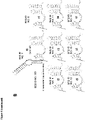
- a gRNA consists of the target-specific spacer and a constant part typically comprised of distinct motifs including the nexus, and a first and second hairpin (Briner et al., 2014) ( Fig. 1A ).
- Cellular repair of targeted DNA DSBs by error-prone end-joining pathways often lead to frameshift mutations that enable knockout studies of genes of interest and DNA donor enabled homology-directed repair (HDR) allows precise control of the inserted mutation.
- HDR homology-directed repair
- gRNA cleavage and thus genome editing efficiency is the use of chemical modifications in synthesized gRNA, preferably 5'- and 3'-end protection using phosphorothioate bonds and internal 2'-OMe residues, to improve its stability against degradation by nucleases (Hendel et al., 2015; Yin et al., 2017).
- Genome editing efficiencies can be further increased by providing the cell with external non-homologous DNA and it is speculated that this non-homologous oligonucleotide enhancement (NOE) diverts cells towards error-prone instead of error-free repair pathways (Richardson et al., 2016).
- NOE non-homologous oligonucleotide enhancement
- genome editing efficiencies vary strongly from target to target and some targets are totally intractable to genome editing even when chemically stabilized gRNAs, HEAT gRNAs, and NOE are employed. This results in a need to pre-screen several gRNAs to find an efficient one, which is worsened by frequent discrepancy of in-vitro cleavage efficiency and in-vivo genome editing efficiency (Briner et al., 2014). Numerous gRNA efficiency algorithms have been employed to allow in-silico pre-screening, but their accuracy is far from satisfying (Wilson et al., 2018). Also, investigation of certain biological questions or repair of disease alleles can be limited to the use of a potentially inefficient single target site.
- gRNAs can be inactive due to internal misfolding and that they can compete with active gRNAs for binding to Cas9 (Thyme et al., 2016).
- a deep machine-learning model trained on activity data of over 50.000 gRNAs revealed that self-folding free energy strongly influences cleavage efficiency and can have the strongest impact of 1031 tested features on the model output (Wang et al., 2019a).
- low terminal melting temperature in spacer residues 1-4 and 16-20
- PAM-proximal TT- or GCC-motifs have been described to block editing (Graf et al., 2019).
- It is an objective of the present invention solve the problem of low or absent genome editing by providing a modified gRNA, particularly a modified tracrRNA, which allows robust genome editing regardless of spacer sequence composition.
- the present inventors have solved the problem of low or absent genome editing by providing a modified gRNA, particularly a modified tracrRNA with an unusually stable hairpin, which prevents misfolding of the gRNA, and optionally comprises at least one modified nucleotide building block.
- This novel genome editing optimized locked design (GOLD) - gRNA allows robust genome editing regardless of spacer sequence composition.
- the gRNA may be a single guide RNA (sgRNA) molecule or plurality of RNA molecules, particularly comprising a spacer-containing CRISPR RNA (crRNA) molecule and a trans-activating CRISPR RNA (tracrRNA) molecule.
- sgRNA single guide RNA
- crRNA spacer-containing CRISPR RNA
- tracrRNA trans-activating CRISPR RNA
- a first aspect of the present invention relates to a guide RNA (gRNA) suitable for CRISPR-mediated Oligonucleotide binding and/or editing, comprising:
- a further aspect of the present invention relates to a gRNA suitable for CRISPR-mediated Oligonucleotide binding and/or editing comprising:
- a further aspect of the present invention relates to a gRNA suitable for CRISPR/Cas9-mediated Oligonucleotide binding and/or editing comprising in 5' to 3' direction:
- a further aspect of the present invention relates to a gRNA suitable for CRISPR-mediated Oligonucleotide binding and/or editing comprising a locked hairpin structure comprising the nucleotide sequence SEQ ID NO. 1: 5'-X 1 -X n GGAC(N) r GUCCX n+1 -X 2n -3'
- a further aspect of the present invention relates to a gRNA suitable for CRISPR-mediated oligonucleotide binding and/or editing comprising a locked hairpin secondary structure comprising the nucleotide sequence SEQ ID NO. 2: 5'-ACUUGGAC(N)rGUCCAAGU-3' wherein N r is the loop of the locked hairpin, N is any nucleotide particularly selected from A, C, G, or U, and r is 3, 4, 5 or 6, particularly 4 or 5, and more particularly 4.
- a further aspect of the present invention relates to a gRNA suitable for CRISPR-mediated oligonucleotide binding and/or editing comprising a locked hairpin secondary structure comprising the nucleotide sequence SEQ ID NO. 3: 5'-ACUUGGACUUCGGUCCAAGU-3'.
- a further aspect of the present invention relates to a gRNA suitable for CRISPR-mediated Oligonucleotide binding and/or editing, which comprises the nucleotide sequence SEQ ID NO. 4: wherein A, C, G, and U are nucleotide building blocks including modified nucleotide building blocks.
- a further aspect of the present invention relates to a gRNA suitable for CRISPR-mediated Oligonucleotide binding and/or editing, which comprises the nucleotide sequence SEQ ID NO. 5: wherein A, C, G, and U are non-modified nucleotide building blocks, mA, mC, mG, and mU are sugar-modified nucleotide building blocks, particularly 2'-O-methyl-modified building blocks and * denotes a modified internucleosidic linkage, particularly a phosphorothioate linkage.
- a further aspect of the present invention relates to a trans-activating CRISPR RNA (tracrRNA) suitable for CRISPR-mediated Oligonucleotide binding and/or editing comprising a constant gRNA sequence comprising at least one locked hairpin secondary structure at a position that does not interfere with Oligonucleotide binding and/or editing.
- tracrRNA trans-activating CRISPR RNA
- a further aspect of the present invention relates to a trans-activating CRISPR RNA (tracrRNA) suitable for CRISPR-mediated Oligonucleotide binding and/or editing comprising:
- a further aspect of the present invention relates to a trans-activating CRISPR RNA (tracrRNA) suitable for CRISPR-mediated Oligonucleotide binding and/or editing comprising:
- a further aspect of the present invention relates to a nucleic acid molecule encoding a gRNA or a tracrRNA as described above optionally in operative linkage with an expression control sequence.
- a further aspect of the present invention relates to a library comprising a plurality of gRNAs as described above comprising different target-specific spacer sequences and a constant gRNA sequence, particularly a common constant gRNA sequence comprising at least one locked hairpin secondary structure at a position that does not interfere with Oligonucleotide binding and/or editing.
- a further aspect of the present invention relates to a complex comprising a Cas enzyme and a gRNA or a tracrRNA as indicated above.
- a further aspect of the present invention relates to an in vitro or ex vivo use of a gRNA, a tracrRNA, a gRNA- or tracrRNA-encoding nucleic acid, a library or a complex as described above for CRISPR-mediated Oligonucleotide binding and/or editing, particularly for genome editing in a eukaryotic cell.
- a further aspect of the present invention relates to a preparation comprising a gRNA, a tracrRNA, a gRNA- or tracrRNA-encoding nucleic acid, a library or a complex as described above for use in medicine including human medicine and veterinary medicine.
- a further aspect of the present invention relates to a use of a gRNA, a tracrRNA, a gRNA- or tracrRNA-encoding nucleic acid, a library or a complex as described above as described above for genome editing in a plant cell or plant organism.
- the present inventors have provided means for increasing the efficacy of CRISPR-mediated Oligonucleotide binding and/or editing including genome editing by designing a gRNA capable of targeting substantially any DNA sequence including sequences that have previously been refractory to CRISPR-mediated genome editing.
- the inventors have engineered a trans-activating crRNA (tracrRNA) with an unusually stable hairpin lock and optionally further enhanced chemically modifications.
- the engineered genome editing optimized locked design (GOLD)-tracR increases genome editing efficiency in a multitude of tested targets and can efficiently edit targets, which were refractory to standard CRISPR-Cas9 cleavage.
- the GOLD-tracR can increase genome editing up to 28-fold (from 3.2% to 89%), while the mean increase across tested targets is 6-fold. This improved gRNA will allow efficient editing regardless of spacer sequence composition and will be especially useful if a desired DNA site is difficult to edit.
- the gRNA of the invention may be combined with other means of improving CRISPR-mediated Oligonucleotide binding and/or editing including the use of a gRNA comprising at least one modified, e.g. chemically stabilized nucleotide building block, a Hybridization extended A-T inversion (HEAT) of the repeat/anti-repeat-structure, non-homologous oligonucleotide enhancement (NOE), and/or use of the further enhancers of CRISPR-mediated Oligonucleotide binding and/or editing,
- HEAT Hybridization extended A-T inversion
- NOE non-homologous oligonucleotide enhancement
- a gRNA suitable for CRISPR-mediated Oligonucleotide binding and/or editing comprises a locked hairpin secondary structure that does not interfere with Oligonucleotide binding and/or editing.
- the locked hairpin secondary structure is present in at least one position of the constant gRNA part other than a CRISPR repeat/anti-repeat duplex.
- the gRNA of the invention is particularly suitable for CRISPR/Cas-mediated Oligonucleotide binding and/or editing, wherein Oligonucleotide binding and/or editing is mediated by a complex comprising a gRNA of the invention and a Cas enzyme, which may be selected from any suitable Cas enzyme, e.g. as described by Makarova et al. (2020), the content of which is herein incorporated by reference.
- the Cas enzyme is selected from Cas9, Cas12a, Cas12e, Cas12b, Cas12i, Cas12h, Cas12c, Cas12d, Cas12f, Cas12g, Cas12k, Cas12j, Cas13a, Cas13b, Cas13c, Cas13d, and Cas14 including any recombinant variant thereof and particularly from Cas9 including any recombinant variant thereof.
- the Cas9 enzyme may be a Streptococcus, e.g. a S. pyogenes or Lactobacillus Cas9 enzyme as described by Briner et al.
- Cas enzyme includes optimized Cas enzymes, e.g. Cas enzymes resulting in less off-target events such as R691A Cas9-Hifi and/or having a higher catalytic efficacy such as K918N SpyCECas9.
- Cas enzyme as used herein includes a catalytically fully active Cas nuclease capable of creating a double-strand break in a DNA template, a catalytically partially active Cas nickase capable of creating a single-strand break in a double stranded DNA template, e.g.
- Cas9 D10A or Cas9 H840A and a catalytically inactive Cas enzyme, e.g. dCas9.
- Cas enzyme includes split-fusion versions of the above enzymes, e.g. split-fusion versions of Cas9 or Cas9 D10A.
- CRISPR-mediated Oligonucleotide binding and/or editing includes binding and optionally cleaving of any DNA or RNA template, particularly a double-stranded DNA template or a single-stranded DNA template or a single-stranded RNA template, e.g. an oligonucleotide, a plasmid, a chromosome in vitro and in vivo.
- the term includes activation and/or repression, e.g. dCas9 gene activation and/or repression, base editing, genome editing, epigenome editing and/or prime editing.
- the gRNA of the invention comprises a plurality of modules depending from the structural requirements of the enzyme, e.g. the Cas enzyme, with which it forms a ribonucleoprotein complex that is capable of Oligonucleotide binding and/or editing.
- a gRNA of the invention comprises a target-specific spacer sequence, i.e. a sequence capable of specifically binding to a given target oligonucleotide sequence.
- the target-specific spacer sequence is positioned at the 5'-end of the gRNA.
- the target-specific spacer is positioned at the 3'-end of the gRNA.
- the target-specific spacer has a length of about 12-30 nt, particularly 15-27 nt and more particularly about 17-24 nt.
- a gRNA of the invention further comprises constant gRNA sequence, i.e. a sequence portion, which is independent from a given target oligonucleotide sequence.
- the constant gRNA sequence of the invention comprises at least one locked hairpin secondary structure at a position that does not interfere with Oligonucleotide binding and/or editing.
- locked hairpin secondary structure in any gRNA of the invention means that the hairpin has a high stability, particularly a high thermostability.
- the locked hairpin of a gRNA of the present invention has a secondary structure comprising a contiguous stem.
- contiguous stem means an uninterrupted sequence of base pairs in the stem, i.e. without any bulge formed of unpaired nucleotides.
- the locked hairpin of a gRNA of the present invention has a secondary structure comprising a contiguous stem having a length of at least about 5 nt, e.g. about 6 nt to about 12 nt.
- the locked hairpin has a secondary structure comprising a contiguous stem having a length of 6, 7, 8, 9 or 10 nt, more particularly of 8 nt.
- the "term" length in "nt" corresponds to the number of contiguous base pairs of the stem.
- the locked hairpin of a gRNA of the present invention has a secondary structure comprising a contiguous stem comprising at least 2 C-G base pairs, e.g. about 3 C-G base pairs to about 6 C-G base pairs.
- the locked hairpin forms a secondary structure comprising a contiguous stem comprising 2, 3, 4 or 5 C-G base pairs, more particularly 4 C-G base pairs.
- C-G base pair encompasses any base pair formed by a G nucleotide and a C nucleotide irrespectively from their orientation within the stem.
- the locked hairpin of a gRNA of the present invention forms a secondary structure comprising a contiguous stem having a melting temperature of at least about 60°C, e.g. at least about 65°C or at least about 70°C and up to about 90°C as determined by e.g. differential scanning calorimetry and UV absorbance spectroscopy.
- locked hairpin secondary structure in any gRNA of invention means that the hairpin has a high stability, particularly a high thermostability e.g. compared to an unlocked hairpin of a standard gRNA.
- an unlocked hairpin of a standard CRISPR/Cas9-gRNA forms a stem-loop structure having a contiguous stem with a length of 4 nt and a loop of 4 nt.
- a first hairpin of a standard gRNA as shown in Fig. 1A has the nucleotide sequence of SEQ ID NO. 6: 5'-ACUUGAAAAAGU-3'
- locked secondary structure further means that the secondary structure of the first hairpin comprises a contiguous stem of base-paired nucleotide building blocks and particularly a contiguous stem of base-paired nucleotide building blocks structure connected by a loop of unpaired nucleotide building blocks.
- contiguous stem excludes the presence of a bulge with a directional kink with the stem.
- base-paired refers to base pairs formed by a purine nucleobase such as A or G to a pyrimidine nucleobase such as U or C.
- base pair refers to the base pairs A-U, U-A, G-C and C-G, but also includes G-U, and A-C.
- the locked hairpin secondary structure does not interfere with oligonucleotide binding and/or editing.
- the locked hairpin secondary structure does not disrupt interactions of gRNA bases with amino acids, e.g. interactions selected from hydrogen-bonding, formation of salt bridges, and/or stacking/hydrophobic interactions of an oligonucleotide binding and/or editing enzyme, e.g. Cas enzyme, which are necessary for oligonucleotide binding and/or editing.
- a potential disruptive effect of a gRNA modification may be determined by a crystal structure analysis of a gRNA-enzyme complex whereby amino acids interacting with gRNA bases can be identified and optionally confirmed by an oligonucleotide binding and/or editing assay comparing wild-type gRNA without a locked hairpin secondary structure and modified gRNA with a locked hairpin secondary structure, in particular by gel-electrophoresis of an enzyme complexed with gRNA and target oligonucleotide.
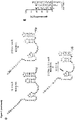
- the locked hairpin secondary structure does not comprise a base pair that interacts with the Oligonucleotide binding and/or editing enzyme, e.g. the Cas enzyme, wherein the locked hairpin secondary structure does not comprise a base pair where the 2'OH groups of both nucleotides forming the base pair interact with an Oligonucleotide binding and/or editing enzyme (cf. Fig. 3A ).
- a repeat/anti-repeat structure of a gRNA comprises a lower stem, optionally a bulge with a directional kink and optionally an upper stem.
- a repeat/anti-repeat structure of a gRNA comprises at least one base pair, e.g. 2 or 3 base pairs that interact with an Oligonucleotide binding and/or editing enzyme wherein the repeat/anti-repeat structure comprises at least one base pair, e.g.
- a locked hairpin secondary structure as defined herein typically has an uninterrupted stem. Further, it does not interact an Oligonucleotide binding and/or editing Cas enzyme.
- the gRNA of the invention consists of a single RNA molecule, e.g. a single guide RNA (sgRNA) molecule.
- the gRNA of the invention comprises at least two separate RNA molecules, e.g. a spacer-containing CRISPR RNA (crRNA) molecule and a trans-activating CRISPR RNA (tracrRNA) molecule.
- the gRNA of the invention comprises three or more separate RNA molecules, e.g. a spacer-containing CRISPR RNA (crRNA) molecule, and a trans-activating CRISPR RNA (tracrRNA) molecule comprised of two separate RNA molecules.
- the gRNA comprises
- a gRNA of the invention is suitable for CRISPR/Cas-mediated Oligonucleotide binding and/or editing wherein the Oligonucleotide binding and/or editing enzyme is selected from one of the Cas enzymes as listed below.
- a gRNA adapted for such an enzyme may comprise the following structural modules in the 5'-3' direction: Cas9 spacer - CRISPR repeat/anti-repeat- hairpin(s) Cas12a CRISPR repeat/hairpin - spacer Cas12b hairpin(s) - CRISPR repeat/anti-repeat - spacer Cas12c hairpin(s) - CRISPR repeat/anti-repeat - spacer Cas12e hairpin(s) - CRISPR repeat/anti-repeat - spacer Cas12f hairpin(s) - CRISPR repeat/anti-repeat - spacer Cas12g hairpin(s) - CRISPR repeat/anti-repeat - spacer Cas12h CRISPR repeat/hairpin - spacer Cas12i CRISPR repeat/hairpin - spacer Cas12j CRISPR repeat/hairpin - spacer Cas12k hairpin(s) - CRISPR repeat/anti-repeat
- CRISPR repeat/hairpin as used above relates to a CRISPR hairpin structure present in a single RNA molecule.
- CRISPR repeat/anti-repeat refers to a CRISPR hairpin structure present in two separate RNA molecules forming the gRNA, e.g. a crRNA molecule and a tracrRNA molecule.
- hairpin(s) as used above refers to a non-CRISPR repeat or repeat/anti-repeat structure.
- a hairpin having a locked secondary structure according to the present invention may be an extension of an already present non-CRISPR hairpin or a newly introduced hairpin, e.g. 5' or 3' to a "CRISPR repeat/hairpin” or "CRISPR repeat/anti-repeat” structure.
- the gRNA is suitable for CRISPR/Cas9-mediated Oligonucleotide binding and/or editing and comprises in 5' to 3' direction:
- gRNA of the invention Preferred structural elements of a gRNA of the invention are outlined in the following in detail in in particular reference to a gRNA of the invention suitable for CRISPR/Cas9-mediated Oligonucleotide binding and/or editing. It should be noted, however, that certain of the described structural elements may also be present in other types of gRNAs.
- a gRNA of the invention suitable for CRISPR/Cas9-mediated Oligonucleotide binding and/or editing may comprise in 5' to 3' direction: (i) a target-specific spacer sequence, (ii) a repeat/anti-repeat structure comprising a lower stem, optionally a bulge with a directional kink and optionally an upper stem, (iii) optionally a nexus sequence and (iv) a hairpin sequence comprising at least one locked hairpin secondary structure.
- the hairpin sequence (iv) of the gRNA may include in 5' to 3' direction a first hairpin and optionally a second hairpin wherein at least the first hairpin has a locked secondary structure.
- the gRNA of the invention comprises in 5' to 3' direction (i) a target-specific spacer sequence, (ii) a repeat/anti-repeat structure comprising a lower stem, a bulge with a directional kink and an upper stem, (iii) a nexus sequence and (iv) a hairpin sequence comprising in 5' to 3' direction a first hairpin and a second hairpin wherein at least the first hairpin has a locked secondary structure.
- the gRNA of the invention consists of a single RNA molecule.
- the gRNA may be a single guide RNA (sgRNA) molecule wherein the repeat/anti-repeat structure comprises a non-contiguous hairpin structure comprising a lower stem, a bulge with a directional kink, an upper stem and a fusion loop.
- sgRNA single guide RNA
- the gRNA of the invention comprises at least two separate RNA molecules.
- the gRNA consists of two separate RNA molecules, e.g. a first RNA molecule comprising in 5' to 3' direction a target-specific spacer sequence and a repeat portion of a repeat/anti-repeat structure and a second RNA molecule comprising in 5' to 3' direction an anti-repeat portion of a repeat/anti-repeat structure, optionally a nexus sequence, and a hairpin sequence comprising at least one locked hairpin secondary structure, e.g. a first hairpin and optionally a second hairpin wherein at least the first hairpin has a locked secondary structure.
- the first RNA molecule is a spacer-containing CRISPR RNA (crRNA) molecule and the second RNA molecule is a trans-activating CRISPR RNA (tracrRNA) molecule.
- the gRNA of the invention comprises three or more separate RNA molecules.
- the gRNA may comprise three RNA molecules, e.g. a spacer-containing CRISPR RNA (crRNA) molecule, and a trans-activating CRISPR RNA (tracrRNA) molecule comprised of two separate RNA molecules separated at the stem region of a hairpin within the hairpin sequence, e.g. in the stem region of a hairpin, e.g. in the stem region of a hairpin having a locked secondary structure.
- crRNA spacer-containing CRISPR RNA
- tracrRNA trans-activating CRISPR RNA
- the gRNA comprises a crRNA molecule and a tracrRNA comprising at least two separate RNA molecules including a tracrRNA-A molecule and a tracrRNA-B molecule.
- the tracrRNA-A molecule comprises an anti-repeat sequence, optionally a nexus sequence and a first 5'-portion of the hairpin sequence and the tracrRNA-B molecule comprises a second 3'-portion of the hairpin sequence.
- the 3'-end of the tracrRNA-A molecule and the 5'-end of the tracrRNA-B molecule form a hairpin, particularly a hairpin, which forms a locked secondary structure comprising a contiguous stem as herein described infra without a loop.
- a gRNA suitable for Cas9-mediated Oligonucleotide binding and/or editing comprises at its 5'-end a target-specific spacer sequence, i.e. a sequence capable of binding to a target oligonucleotide sequence.
- the target-specific spacer sequence has a length of about 15-27 nt, particularly about 17-24 nt.
- An example of a spacer sequence specific for the SSH2 gene is shown in Fig. 1A , i.e. the 5'-part of the crRNA.
- the gRNA comprises a repeat sequence, i.e. a sequence, which is capable of forming a secondary structure with an anti-repeat sequence.
- the repeat/anti-repeat secondary structure comprises a lower stem, optionally a bulge with a directional kink, and optionally an upper stem.
- the lower stem and the upper stem are formed by base-paired nucleotide building blocks from the repeat sequence and the anti-repeat sequence respectively interrupted by a bulge consisting of one or more unpaired building blocks.
- the bulge comprises a directional kink, i.e. the stretches of unpaired nucleotide building blocks in the repeat sequence and in the anti-repeat sequence have different lengths.
- the upper stem may be removed and the bulge replaced by a loop as described by Briner et al. (2014) the content of which is herein incorporated by reference.
- the repeat sequence typically has a length of about 8 to about 30 nt including the lower stem, and - if present - the bulge and the upper stem sequences.
- the sequence forming the lower stem has a length of about 5 to about 7 nt
- the sequence forming the bulge has a length of about 1 to about 5 nt, e.g. 2 nt
- the sequence forming the upper stem has a length of about 4 to about 20 nt.
- the sequence forming the upper stem is elongated compared to a standard gRNA and has a length of about 7 to about 20 nt, e.g. 8 nt as described by Chen et al., 2013.
- a preferred example of a repeat sequence having an elongated upper stem is shown in Fig. 1A , i.e. the 3'-part of the crRNA.
- a gRNA of the invention may consist of a single RNA molecule, e.g. a sgRNA.
- a repeat/anti-repeat secondary structure formed between the repeat sequence and the anti-repeat sequence may comprise a lower stem, optionally a bulge with a directional kink, and optionally an upper stem and additionally a loop, which connects the 3'-end of the repeat and the 5'-end of the anti-repeat.
- the loop of the repeat/anti-repeat secondary structure comprises a sequence of unpaired nucleotide building blocks, e.g. consisting of about 3 to about 10 nt and particularly of 4 nt.
- the gRNA may be comprised of two or more separate RNA molecules.
- the first RNA molecule may comprise the target-specific spacer and the repeat sequence having a free 3'-end after the repeat sequence, particularly after the upper stem sequence as shown in Fig. 1A .
- the repeat sequence and the anti-repeat sequence form an interrupted repeat/anti-repeat secondary structure without being connected via a loop.
- the gRNA comprises an anti-repeat sequence i.e. a sequence, which is capable of forming a repeat/anti-repeat secondary structure with the repeat sequence.
- the anti-repeat sequence has a different length compared to the repeat sequence resulting in a bulge with a directional kink.
- the anti-repeat sequence is longer, e.g. about 2 nucleotides longer than the repeat sequence.
- the anti-repeat-sequence may be shorter, e.g. about 2 nt shorter than the repeat sequence as described by Briner et al. (2014).
- the anti-repeat sequence has a length of about 10 to about 32 nt including the lower stem, and - if present - the bulge and the upper stem sequences.
- the sequence forming the lower stem has a length of about 5 to about 7 nt
- the sequence forming the bulge has a length of about 1 to about 5 nt, e.g. 4 nt
- the sequence forming the upper stem has a length of about 4 to about 20 nt.
- the sequence forming the upper stem is elongated compared to a standard gRNA and has a length of about 7 to about 20 nt, e.g. 8 nt, as described by Chen et al., 2013.
- a preferred example of an anti-repeat sequence having an elongated upper stem is shown in Fig. 1A , i.e. the 5'-part of the tracR.
- the 5'-end of the anti-repeat sequence may be covalently linked to the 3'-end of the repeat sequence via a loop as described above.
- the gRNA optionally comprises a nexus sequence, i.e. a sequence capable of forming a secondary structure and interacting with a Cas enzyme.
- a nexus sequence comprises two conserved A residues followed by a stem-loop structure having a bulge, particularly a single unpaired U in the 3'-stem sequence, particularly a nexus sequence as shown in Fig. 1A .
- the length of the nexus sequence is typically about 9 to about 12 nt.
- a CRISPR/Cas9 gRNA comprises a hairpin sequence comprising at least one hairpin.
- the hairpin sequence comprises a first hairpin, which is the first, i.e. most 5'-positioned hairpin after the repeat/anti-repeat structure or - if present - the nexus sequence.
- the first hairpin is a sequence, which forms a non-interrupted stem-loop structure.
- the first hairpin typically forms a contiguous secondary structure of paired nucleotide building blocks, i.e. a stem, with a length of 4 nt and a loop consisting of 4 nt.
- An example of a first hairpin is shown in Fig. 1A .
- the hairpin structure may comprise a second hairpin sequence, i.e. a sequence, which is positioned 3'- to the first hairpin and forms a further non-interrupted stem-loop structure.
- the second hairpin typically forms typically forms a stem with a stem length of 6 nt and a loop consisting of 3 nt.
- An example of a second hairpin is shown in Fig. 1A .
- a CRISPR/Cas9-gRNA typically comprises a stretch of U nucleotide building blocks, e.g. about 2 to about 10 U building blocks.
- a gRNA of the invention may comprise additional sequence elements, e.g. a 3'- prime binding sequence for prime editing, e.g. as described by Bhagwat et. (2020) the content of which is herein incorporated by reference.
- additional sequence elements e.g. a 3'- prime binding sequence for prime editing, e.g. as described by Bhagwat et. (2020) the content of which is herein incorporated by reference.
- the nucleotide sequence of a hairpin is altered compared to a standard gRNA and forms a locked secondary structure.
- a CRISPR/Cas9-gRNA typically comprises a hairpin sequence comprising a first hairpin and a second hairpin.
- the term "first hairpin” relates to the most 5'-positioned hairpin in the hairpin sequence.
- the hairpin sequence including the first hairpin does not substantially interact with a Cas enzyme, particularly a Cas9 enzyme.
- the hairpin having a locking secondary structure does not comprise a base pair where the 2'OH groups of both nucleotides forming the base pair interact with an Oligonucleotide binding and/or editing enzyme.
- the hairpin sequence including the first hairpin is distinct from the repeat/anti-repeat secondary structure of the gRNA, which - as outlined above - typically comprises a lower stem, a bulge with a directional kink and an upper stem. Further, the hairpin sequence including the first hairpin is distinct from the nexus as outlined above. The hairpin sequence including the first hairpin is positioned 3' to the repeat/anti-repeat secondary structure and to the nexus, if present.
- the locked hairpin of a gRNA of the present invention comprises the nucleotide sequence SEQ ID NO. 1: 5'-X 1 -X n GGAC(N) r GUCCX n+1 -X 2n -3'
- A as used herein particularly denotes a nucleotide building block comprising an adenine nucleobase, a ribose a phosphate group or internucleosidic linkage. In some embodiments, the term specifies an unmodified nucleotide building block. In some embodiments, the term also includes a modified nucleotide building block as described herein infra.
- G as used herein particularly denotes a nucleotide building block comprising a guanine nucleobase, a ribose a phosphate group or internucleosidic linkage. In some embodiments, the term specifies an unmodified nucleotide building block. In some embodiments, the term also includes a modified nucleotide building block as described herein infra.
- C particularly denotes a nucleotide building block comprising a cytosine nucleobase, a ribose a phosphate group or internucleosidic linkage. In some embodiments, the term specifies an unmodified nucleotide building block. In some embodiments, the term also includes a modified nucleotide building block as described herein infra.
- U as used herein particularly denotes a nucleotide building block comprising an uracil nucleobase, a ribose a phosphate group or internucleosidic linkage.
- the term specifies an unmodified nucleotide building block.
- the term also includes a modified nucleotide building block, e.g. a nucleotide building block including a thymine nucleobase as described herein infra.
- deoxyribonucleotide building blocks may be present, as described by Rueda et al. (2017), the content of which is herein incorporated by reference.
- the locked hairpin comprises the nucleotide sequence SEQ ID NO. 2: 5'-ACUUGGAC(N)rGUCCAAGU-3'.
- N r is the loop of the locked hairpin
- N is any nucleotide particularly selected from A, C, G, or U
- r is 3, 4, 5 or 6, particularly 4 or 5, and more particularly 4.
- the locked hairpin comprises a loop having a nucleotide sequence selected from:
- the locked hairpin comprises a loop having a nucleotide sequence selected from:
- the locked hairpin comprises the nucleotide sequence SEQ ID NO. 3: 5'-ACUUGGACUUCGGUCCAAGU-3'
- the gRNA or tracrRNA of the invention comprises the nucleotide sequence SEQ ID NO. 4: wherein A, C, G, and U are nucleotide building blocks including modified nucleotide building blocks as described infra.
- the gRNA comprises at least one modified nucleotide building block. In alternative embodiments, the gRNA does not comprise any modified nucleotide building block.
- modified nucleotide building block relates to a nucleotide building block, which differs from a naturally occurring RNA building block.
- the term includes (a) a nucleobase-modified building block, (b) a sugar-modified building block, (c) a backbone-modified building block, (d) a modified nucleotide building block having attached thereto a heterologous moiety, and (e) any combination thereof.
- a nucleobase-modified building block comprises a non-RNA nucleobase, i.e. a nucleobase different from a naturally occurring RNA nucleobase, i.e. adenine, guanine, cytosine and uracil.
- a non-RNA nucleobase is thymine.
- a sugar-modified building block comprises a non-ribose sugar moiety, i.e. sugar moiety different from ribose.
- sugar-modified building block may be selected from:
- the sugar-modified nucleotide building block may be a 2'-O Methyl ribose wherein the substituent at the 2'-position of the ribose moiety is 2'-OCH 3 .
- the sugar-modified nucleotide building block may be a locked nucleic acid (LNA) building block having a 2'-O-CH 2 -4' bridge.
- LNA locked nucleic acid
- a backbone-modified building block may comprise a modified internucleosidic linkage, i.e. an internucleosidic linkage different from a phosphate group.
- the backbone-modified building block may comprise a phosphorothioate linkage.
- the modified nucleotide building block may have attached thereto, e.g. attached to the nucleobase, a heterologous moiety, e.g. a lipid moiety or a polyethylene glycol moiety.
- a heterologous moiety e.g. a lipid moiety or a polyethylene glycol moiety.
- the gRNA may comprise a plurality of modified nucleotide building blocks, e.g. at least about 10, at least about 15, at least about 20, at least about 30 or more modified nucleotide building blocks.
- modified building blocks are typically present at positions, where they not negatively interact with a Cas enzyme, i.e. where they do not or do not substantially inhibit Cas activity.
- at least one modified nucleotide building block e.g. a sugar-modified building block is present in a portion of the gRNA selected from the repeat sequence, e.g. the 5'-part thereof, the anti-repeat-sequence, e.g. the 3'-part thereof, and the hairpin structure, e.g. the first hairpin and, if present, the second hairpin.
- At least one backbone-modified building block may be present at a 5'-end and/or at a 3'-end of the gRNA, and particularly at least two backbone-modified building blocks may be present at a 5'-end and/or at a 3'-end of the gRNA.
- the nexus loop sequence does not comprise a modified nucleotide building block.
- the locked hairpin comprises at least one modified nucleotide building block, e.g. at least one sugar-modified nucleotide building block as described above.
- the locked hairpin comprises at least one modified nucleotide building block, particularly at least one sugar-modified building block in one or more or all of the nucleotides X 1 -X n and X n+1 -X 2n according to SEQ ID NO: 1 and/or the locked hairpin does not comprise a modified nucleotide building block in one or more or all of the nucleotides GGAC(N) r GUCC according to SEQ ID NO: 1.
- the gRNA comprises the nucleotide sequence SEQ ID NO. 5: wherein A, C, G, and U are non-modified nucleotide building blocks, mA, mC, mG, and mU are sugar-modified building blocks, particularly 2'-O-Methyl-modified building blocks and * denotes a modified internucleosidic linkage, particularly a phosphorothioate linkage.
- the gRNA of the invention may be a single RNA molecule, i.e. a sgRNA or comprise at least two separate RNA molecules, e.g. a crRNA and a tracrRNA.
- a further aspect of the present is a tracrRNA suitable for CRISPR-mediated Oligonucleotide binding and/or editing comprising a constant gRNA sequence comprising at least one hairpin having a locked secondary structure that does not interfere with Oligonucleotide binding and/or editing and wherein the locked hairpin secondary structure does comprise a base pair that interacts with an Oligonucleotide binding and/or editing enzyme.
- the tracrRNA of the invention is capable of forming a gRNA with a separate crRNA. Further, the tracrRNA may comprise eat least one of the features as described above for the gRNA.
- the tracrRNA consists of the nucleotide sequence SEQ ID NO. 5: wherein A, C, G, and U are non-modified nucleotide building blocks, mA, mC, mG, and mU are sugar-modified building blocks, particularly 2'-O-Methyl-modified building blocks and * denotes a modified internucleosidic linkage, particularly a phosphorothioate linkage.
- a tracrRNA molecule of SEQ ID NO. 5 comprising phosphorothioate bonds at positions:1, 2, 73, and 74 and 2'OMe modifications at positions 1-10, 14, 16, 20, 21, 29, 34, 35, 38-40, 53-56, 58-75 is designated as GOLD-tracR in the present Examples.
- the gRNA or tracrRNA of the present invention may be prepared by known methods including chemical synthesis, or transcription in vitro or in vivo. Chemical synthesis, e.g. solid phase synthesis, is particularly suitable for the preparation of RNA molecules comprising at least one modified nucleotide building block.
- the gRNA or tracrRNA of the invention may be prepared by transcription from a nucleic acid template molecule, e.g. from a DNA template comprising an expression control sequence in operative linkage with a sequence encoding the gRNA or tracrRNA.
- In vitro transcription may be performed with a suitable RNA polymerase, e.g. a bacteriophage RNA polymerase such as T7 or SP6 RNA polymerase.
- In vivo transcription may be performed by introducing a nucleic acid template, e.g. a DNA molecule encoding the gRNA or tracrRNA into a cell and expressing it therein.
- the nucleic acid template may be introduced as an expression vector such as a plasmid in operative linkage with appropriate expression control elements for transient or stable expression in a cell.
- Suitable transfection techniques for introducing proteins or nucleic acids into cells, e.g. eukaryotic cells are well known in the art and include lipofection, electroporation, e.g. nucleofection, Ca-phosphate or virus-based methods.
- Still a further aspect of the present invention is a gRNA- or tracrRNA-encoding nucleic acid molecule, e.g. a DNA molecule comprising an expression control sequence, e.g. a transcriptional promoter and optionally further elements in operative linkage with a sequence encoding a gRNA or tracrRNA of the invention.
- an expression control sequence e.g. a transcriptional promoter and optionally further elements in operative linkage with a sequence encoding a gRNA or tracrRNA of the invention.
- a further aspect of the present invention is a library comprising a plurality of gRNAs as described above comprising different target-specific spacer sequences and a constant gRNA sequence, particularly a common constant gRNA sequence comprising at least one locked hairpin secondary structure at a position that does not interfere with Oligonucleotide binding and/or editing.
- the target-specific spacer sequences of individual gRNAs may be directed against different portions of a single target oligonucleotide sequence, e.g. a single gene, against different target sequences, e.g. different genes or any combination thereof.
- the library comprises at least two gRNAs, e.g. about 10 to about 10 6 or even more.
- the library may comprise different sgRNAs comprising individual target-specific spacer sequences and common constant gRNA sequences, particularly a common locked hairpin secondary structure, optionally a common repeat/anti-repeat structure, and/or a common nexus sequences.
- the library may comprise different gRNAs composed of crRNAs comprising individual target-specific spacer sequences and a common tracrRNAs.
- Still a further aspect of the invention is a complex, particularly a non-covalent ribonucleoprotein complex comprising a Cas enzyme and a gRNA as described above, or a complex, particularly a non-covalent ribonucleoprotein complex comprising a Cas enzyme and a tracrRNA as described above.
- the invention further relates to the use of the gRNA, the tracrRNA, the gRNA- or tracrRNA-encoding nucleic acid molecule, the library, or the complex as described above for CRISPR-mediated Oligonucleotide binding and/or editing, particularly for CRISPR/Cas-mediated Oligonucleotide binding and/or editing in vitro, ex vivo or in vivo, e.g. in a cell-free system, in an isolated cell, in an organ or in an organism.
- the use includes non-medical applications, e.g. as research tool or medical applications, e.g. for in vivo or ex vivo use.
- a library may be used in screening applications, e.g. in unbiased screening applications, in order to identify target sequences suitable for CRISPR-mediated Oligonucleotide binding and/or editing.
- the invention relates to the use of the gRNA, the tracrRNA, the gRNA- or tracrRNA-encoding nucleic acid molecule and the complex as described above for CRISPR-mediated Oligonucleotide binding and/or editing in a eukaryotic cell or a eukaryotic organism or a part, e.g. organ of a eukaryotic organism.
- the eukaryotic cell may be selected from an animal cell, e.g. a mammalian cell including a human cell, or a plant cell.
- the cell is a stem cell including a pluripotent stem cell, e.g. a human pluripotent stem cell, or an immortalized cell, e.g. a tumor cell.
- the eukaryotic organism may be selected from an animal, e.g. a mammal including a non-human mammal and a human being.
- Still a further aspect of the present invention relates to a preparation comprising a gRNA, a tracrRNA, a gRNA- or tracrRNA-encoding nucleic acid molecule or a complex as described above for use in medicine including human medicine and veterinary medicine.
- the preparation may comprise a pharmaceutically acceptable excipient, e.g. a polycationic compound such as a polycationic lipid.
- the preparation may be administered by known routes, e.g. by injection or infusion.
- Still a further aspect of the present invention relates to the use of a gRNA, a tracrRNA, a gRNA- or tracrRNA-encoding nucleic acid molecule or a complex as described above for genome editing in a plant cell, plant organism or part thereof.
- the gRNA, tracrRNA, gRNA- or tracrRNA-encoding nucleic acid molecule or complex as described above may be used alone or in combination with a further agent, e.g. an agent suitable for enhancing CRISPR-mediated Oligonucleotide binding and/or editing.
- the further agent may be selected from an inhibitor of histone deacetylase (HDAC) an inhibitor of NEDD8 activating enzyme (NAE), an inhibitor of DNA-dependent Protein Kinase (DNA-PK) in particular of its catalytic subunit (DNA-PKcs), and an inhibitor of replication protein A (RPA) and any combination of compounds selected from these different classes of inhibitors.
- HDAC histone deacetylase
- NAE NEDD8 activating enzyme
- DNA-PK DNA-dependent Protein Kinase
- DNA-PKcs DNA-dependent Protein Kinase
- RPA replication protein A
- Suitable inhibitors and combinations are described in WO2018/189186 the content of which is herein incorporated by reference.
- a particularly preferred DNA-PK inhibitor is M3814 (nedisertib) as described in WO2020/127738 the content of which is herein incorporated by reference.
- the further agent may be a mutated and catalytically inactive DNA-PK, particularly a mutated and catalytically inactive DNA-PKcs subunit as described in WO2018/189186 .
- adherent cells were dissociated using EDTA (VWR, 437012C) and split 1:6 to 1:10 in medium supplemented with 10 ⁇ M Rho-associated protein kinase (ROCK) inhibitor Y-27632 (Calbiochem, 688000) for one day after replating.
- ROCK Rho-associated protein kinase
- Cells were grown at 37°C in a humidified incubator with 5% CO 2 .
- Fig. 1B For generation of single cell derived cellular colonies ( Fig. 1B ), cells were dissociated and thoroughly separated using TrypLE Express (ThermoFisher, 12605036) and seeded in different dilutions.
- This template was used for IVT according to the manufacturer's protocol of the T7 High Yield RNA synthesis kit (NEB, E2040S). The IVT reaction mix was incubated overnight at 37°C before 2 ⁇ L of TURBO DNase (Invitrogen, AM2238) was added and incubation continued for 30 additional minutes. IVT products were purified with the MEGAclear Transcription clean-up kit (Invitrogen, AM1908). For experiments in which sgRNAs are expressed in the cell, dsDNA fragments with a U6 promoter sequence in front of the sgRNA coding sequence were designed. Custom synthesized dsDNA fragments were amplified using Phusion HF MasterMix (Thermo Scientific, F-531L).
- the thermal cycling profile of the PCR was: 98 °C 30 s; 35 ⁇ (98° 10s, 61 °C 20s, 72 °C 25s); 72 °C 5 min.
- Successful amplifications was verified by size separating gel electrophoresis using EX agarose gels (Invitrogen, G4010-11) and PCR products were purified using Solid Phase Reversible Immobilization (SPRI) beads (Meyer and Kircher, 2010).
- SPRI Solid Phase Reversible Immobilization
- the custom synthesized dsDNA target carrying cleavage sites for both gRNAs of interest was amplified using Phusion HF MasterMix (Thermo Scientific, F-531L) and purified using Solid Phase Reversible Immobilization (SPRI) beads (Meyer and Kircher, 2010).
- the thermal cycling profile of the PCR was: 98°C 30sec; 30x (98° 15sec, 60°C 30sec, 72°C 60sec); 72°C 5min.
- crRNAs were hybridized with tracR variants for 2 min at 95° and let cool down for 10 min at 20°C.
- RNP complex solution 0.1 nmol gRNA was mixed with 63 pmol Cas9 (IDT) in 1x NEB 3.1 buffer (NEB, B7203S) and incubated for 20 min at 20°C. 5 ⁇ l of a 20 times diluted RNP complex solution was then added to 15 ⁇ l of a DNA target solution that contains 50 ng dsDNA target (Supplementary Table 1) in 1x NEB 3.1 buffer. After incubation at 37°C for 1 h or 1 6h the reaction was split in half, with one half being subjected to digestion with 0.3 ⁇ l of proteinase K (NEB, P8107S) for 30 min at 20°C.
- IDT 1x NEB 3.1 buffer
- 5 ⁇ l of a 20 times diluted RNP complex solution was then added to 15 ⁇ l of a DNA target solution that contains 50 ng dsDNA target (Supplementary Table 1) in 1x NEB 3.1 buffer. After incubation at 37°C for 1 h
- uncleaved target DNA and cleavage products were separated using size-separating gel electrophoresis in 4% EX agarose gels (ThermoFisher, G401004) and imaged with a Gel Jet Imager (Intas). Band intensities were quantified with ImageJ software.
- RNAiMAX (Invitrogen, 13778075) and the respective gRNAs were separately diluted in 25 ⁇ l OPTI-MEM (Gibco, 1985-062) each and incubated at 20°C for 5 min. Both dilutions were mixed to yield 50 ⁇ l of OPTI-MEM including RNAiMAX and gRNAs. The lipofection mix was incubated for 20-30 min at 20°C.
- Electroporation of oligonucleotides was done using the B-16 program of the Nucleofector 2b Device (Lonza) in cuvettes for 100 ⁇ l Human Stem Cell nucleofection buffer (Lonza, VVPH-5022), containing 1 million cells, 78 pmol electroporation enhancer and 320 pmol of gRNA.
- Fig. 4B Human Stem Cell nucleofection buffer
- Fig. 4D 200 pmol of single stranded DNA donor
- IDT 252 pmol Cas9
- PCR was done in a T100 Thermal Cycler (Bio-Rad) using the KAPA2G Robust PCR Kit (SIGMA, KK5024) with buffer B and 3 ⁇ l of cell extract in a total volume of 25 ⁇ l.
- the thermal cycling profile of the PCR was: 95°C 3 min; 34x (95° 15 sec, 65°C 15 sec, 72°C 15 sec); 72°C 60 sec.
- P5 and P7 Illumina adapters with sample specific indices were added in a subsequent PCR reaction (Kircher et al., 2012) using Phusion HF MasterMix (Thermo Scientific, F-531L) and 0.3 ⁇ l of the first PCR product.
- the thermal cycling profile of the second PCR was: 98°C 30 sec; 25x (98° 10 sec, 58°C 10 sec, 72°C 20 sec); 72°C 5 min. Amplifications were verified by size separating agarose gel electrophoresis using 2% EX gels (Invitrogen, G4010-11). The indexed amplicons were purified using Solid Phase Reversible Immobilization (SPRI) beads (Meyer and Kircher, 2010). Double-indexed libraries were sequenced on a MiSeq (Illumina) giving paired-end sequences of 2 x 150 bp (+7 bp index). After base calling using Bustard (Illumina) adapters were trimmed using leeHom (Renaud et al., 2014).
- SPRI Solid Phase Reversible Immobilization
- CRISPResso (Pinello et al., 2016) was used to analyse fastq files for percentage of wildtype and indel sequences. For analysis of precise insertion frequency of 'worst-case' targets in single cell derived cellular clones, the expected amplicon was provided to CRISPResso to call the HDR event. Analysis was restricted to amplicons with a minimum of 70% similarity to the wild-type sequence and to a window of 20 bp from each gRNA. Unexpected substitutions were ignored as putative sequencing errors.
- Thyme et al. could activate an inactive sgRNA in-vitro by breaking the predicted unwanted non-canonical interaction with a base substitution in the sgRNA backbone (Thyme et al., 2016).
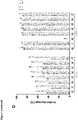
- Fig. 1C can reduce cleavage, and totally abrogated cleavage for one experimental condition, while a tracR with original nexus and two nucleotide swaps in each the 1 st and 2 nd hairpin increased cleavage of the low cleavage crRNA and had no effect on cleavage of the high cleavage gRNA ( Fig. 1D ).
- a complete nucleotide swap of the 1 st hairpin, and both the 1 st and 2 nd hairpins similarly increase cleavage of the low cleavage crRNA and are not detrimental to cleavage of the high cleavage crRNA ( Fig. 1A and D ).
- the unusually stable hairpin would serve a nucleation site for RNA folding and thus acts as molecular spring that can disentangle misfolded gRNA regardless of the spacers sequence composition.
- hiPSC human induced pluripotent stem cell
- iCRISPR-Cas9 Riesenberg and Maricic, 2018
- Cas9 expressing cells were lipofected with chemically synthesized gRNAs for 24 h, DNA was extracted after two additional days, followed by target amplification PCR, and subsequent Illumina sequencing to determine genome editing efficiencies.
- nexus modification reduces genome editing efficiency in-vivo, but in-vivo data lacks a clear causal effect of nucleotide swaps that would break in-silico predicted (Bellaousov et al., 2013) non-canonical interactions, and nucleotide swap modifications could only increase genome editing efficiencies in few cases.
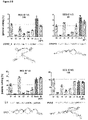
- the locked tracR increased genome editing efficiency for eight of ten targets irrespective of the position of the predicted non-canonical interaction ( Fig. 2B ).
- the mean relative cleavage efficiency across targets increased to 169% (ranging from 75% to 262%) with respect to use of the normal tracR ( Fig. 2C ).
- Elongation of the 1 st hairpin with the hairpin lock increased relative cleavage efficiency for chemically synthesized crRNA/tracR duplex gRNA, IVT sgRNA, and in-vivo transcribed sgRNA (Supplementary Fig. 1B ).
- Addition of a hairpin lock in the artificial sgRNA fusion loop did not change cleavage efficiency.
- Even further addition of a locked hairpin at both the 3' and 5' almost abrogated cleavage, while addition at the 3' end only decreased efficiency of IVT sgRNA.
- the spacers target was not intractable with standard CRISPR-Cas9 editing using chemically synthesized gRNA in our hands, and terminal LNAs moderately increased absolute genome editing efficiency from 42% to 55% when using a normal tracR and the GOLD-tracR further increased efficiency to 73% ( Fig. 3H ).
- inactive gRNAs can contain hairpins in the spacer portion or interactions between the spacer portion and the backbone of the gRNA (Thyme et al., 2016).
- the same study showed that the predicted unwanted interaction can be broken by a base substitution in the interacting backbone sequence and allow in-vitro cleavage, and that heating and refolding can increase efficiency of misfolded gRNAs.
- sequence context dependent base substitutions require a different custom gRNA backbone change for every spacer sequence of interest, and refolding by heating is not applicable for CRISPR screens where gRNAs are expressed in cells.
- nucleotide-swaps in gRNA regions that do not interact with the Cas9 protein. While a completely swapped first and second hairpin can increase cleavage efficiency of a gRNA in-vitro, this is not the case in-vivo ( Fig. 1 and 2 ). Some nucleotide-swaps increase in-vivo editing efficiency for certain gRNAs. Unfortunately, the occasional beneficial effect of nucleotide-swaps cannot be inferred from the respective in-silico predicted interactions, which could be due to inaccuracy of RNA-folding prediction (Wang et al., 2019b).
- Cas9 can tolerate elongation of the 1 st hairpin and also the sgRNA fusion loop, while modification of the 2 nd hairpin is detrimental for cleavage (Mullally et al., 2020).
- the 'locked hairpin' tracR increases in-vivo genome editing efficiencies for eight of ten tested targets irrespective of the position of the predicted non-canonical interaction ( FIG. 2 ). It increases efficiency irrespective of gRNA origin (chemically synthesized, in-vitro transcribed, in-vivo transcribed) and delivery method of oligonucleotides (lipofection, electroporation) ( Fig. 2 , Supplementary Fig. 1 ). Different superstable RNA tetraloops can be used to increase genome editing efficiency (Supplementary Fig. 2 ).
- the 'locked hairpin' is thus a gRNA modification that robustly increases genome editing efficiency irrespective of spacer sequence composition.
- the commercially available tracR also increased in-vivo genome editing efficiency for the majority of targets, albeit not as strong as the 'locked hairpin' tracR ( Fig. 2 ).
- the nucleotide sequence of the commercial tracR is identical to the normal tracR, but it also carries proprietary chemical modifications. We thus sought to combine the 'locked hairpin' design with terminal phosphorothioate and internal 2'OMe modifications to further increase genome editing efficiency.
- the nexus has the highest level of conservation in the gRNAs of 41 Streptococcus and Lactobacillus genomes (Briner et al., 2014).
- the GOLD-tracR did not increase the moderate genome editing efficiency, which could be due to the inability of the superstable hairpin in the tracR to influence self-folding of the independent crRNA molecule.
- a GOLD-sgRNA with a covalent fusion loop between crRNA and GOLD-tracR might help to increase genome editing efficiency.
- the single case in which no genome editing efficiency could be achieved even when the GOLD-tracR was applied occurred when the spacer sequence is fully self-complementary. Fortunately, this constitutes an extremely rare case underlined by the fact that we had to insert this target in a cell line as it did not exist in the human genome. Nevertheless, such a target might be editable if the spacer is designed to carry deliberate mismatches that prevent self-folding but still allow some cleavage.
Landscapes
- Life Sciences & Earth Sciences (AREA)
- Health & Medical Sciences (AREA)
- Genetics & Genomics (AREA)
- Engineering & Computer Science (AREA)
- Biomedical Technology (AREA)
- Chemical & Material Sciences (AREA)
- Molecular Biology (AREA)
- Organic Chemistry (AREA)
- Zoology (AREA)
- Bioinformatics & Cheminformatics (AREA)
- Wood Science & Technology (AREA)
- Biotechnology (AREA)
- General Engineering & Computer Science (AREA)
- General Health & Medical Sciences (AREA)
- Biochemistry (AREA)
- Microbiology (AREA)
- Physics & Mathematics (AREA)
- Plant Pathology (AREA)
- Biophysics (AREA)
- Mycology (AREA)
- Cell Biology (AREA)
- Medicinal Chemistry (AREA)
- Micro-Organisms Or Cultivation Processes Thereof (AREA)
- Fats And Perfumes (AREA)
- Food Preservation Except Freezing, Refrigeration, And Drying (AREA)
- Pharmaceuticals Containing Other Organic And Inorganic Compounds (AREA)
- Saccharide Compounds (AREA)
Priority Applications (7)
| Application Number | Priority Date | Filing Date | Title |
|---|---|---|---|
| EP21176366.9A EP4095246A1 (de) | 2021-05-27 | 2021-05-27 | Neuartige crispr-grnas |
| US18/563,512 US20250277210A1 (en) | 2021-05-27 | 2022-05-24 | Novel CRISPR gRNAs |
| EP22731129.7A EP4347817A1 (de) | 2021-05-27 | 2022-05-24 | Neuartige crispr-grnas |
| PCT/EP2022/064019 WO2022248454A1 (en) | 2021-05-27 | 2022-05-24 | Novel crispr grnas |
| AU2022283550A AU2022283550A1 (en) | 2021-05-27 | 2022-05-24 | Novel crispr grnas |
| CN202280037242.0A CN117377762A (zh) | 2021-05-27 | 2022-05-24 | 新型CRISPR gRNA |
| CA3218010A CA3218010A1 (en) | 2021-05-27 | 2022-05-24 | Novel crispr grnas |
Applications Claiming Priority (1)
| Application Number | Priority Date | Filing Date | Title |
|---|---|---|---|
| EP21176366.9A EP4095246A1 (de) | 2021-05-27 | 2021-05-27 | Neuartige crispr-grnas |
Publications (1)
| Publication Number | Publication Date |
|---|---|
| EP4095246A1 true EP4095246A1 (de) | 2022-11-30 |
Family
ID=76159403
Family Applications (2)
| Application Number | Title | Priority Date | Filing Date |
|---|---|---|---|
| EP21176366.9A Ceased EP4095246A1 (de) | 2021-05-27 | 2021-05-27 | Neuartige crispr-grnas |
| EP22731129.7A Pending EP4347817A1 (de) | 2021-05-27 | 2022-05-24 | Neuartige crispr-grnas |
Family Applications After (1)
| Application Number | Title | Priority Date | Filing Date |
|---|---|---|---|
| EP22731129.7A Pending EP4347817A1 (de) | 2021-05-27 | 2022-05-24 | Neuartige crispr-grnas |
Country Status (6)
| Country | Link |
|---|---|
| US (1) | US20250277210A1 (de) |
| EP (2) | EP4095246A1 (de) |
| CN (1) | CN117377762A (de) |
| AU (1) | AU2022283550A1 (de) |
| CA (1) | CA3218010A1 (de) |
| WO (1) | WO2022248454A1 (de) |
Cited By (1)
| Publication number | Priority date | Publication date | Assignee | Title |
|---|---|---|---|---|
| US12390538B2 (en) | 2023-05-15 | 2025-08-19 | Nchroma Bio, Inc. | Compositions and methods for epigenetic regulation of HBV gene expression |
Families Citing this family (2)
| Publication number | Priority date | Publication date | Assignee | Title |
|---|---|---|---|---|
| CN121079412A (zh) * | 2023-04-28 | 2025-12-05 | 比姆医疗股份有限公司 | 经修饰的指导rna |
| GB202306981D0 (en) * | 2023-05-11 | 2023-06-28 | Evox Therapeutics Ltd | Improved guide RNA (gRNA) |
Citations (8)
| Publication number | Priority date | Publication date | Assignee | Title |
|---|---|---|---|---|
| WO2015089473A1 (en) * | 2013-12-12 | 2015-06-18 | The Broad Institute Inc. | Engineering of systems, methods and optimized guide compositions with new architectures for sequence manipulation |
| WO2015089486A2 (en) * | 2013-12-12 | 2015-06-18 | The Broad Institute Inc. | Systems, methods and compositions for sequence manipulation with optimized functional crispr-cas systems |
| WO2017044776A1 (en) * | 2015-09-10 | 2017-03-16 | Texas Tech University System | Single-guide rna (sgrna) with improved knockout efficiency |
| US20180179523A1 (en) * | 2014-12-18 | 2018-06-28 | Integrated Dna Technologies, Inc. | Crispr-based compositions and methods of use |
| WO2018189186A1 (en) | 2017-04-10 | 2018-10-18 | MAX-PLANCK-Gesellschaft zur Förderung der Wissenschaften e.V. | Compounds for increasing genome editing efficiency |
| WO2018232114A1 (en) * | 2017-06-14 | 2018-12-20 | Wisconsin Alumni Research Foundation | Modified guide rnas, crispr-ribonucleotprotein complexes and methods of use |
| WO2019126037A1 (en) * | 2017-12-19 | 2019-06-27 | City Of Hope | Modified tracrrnas grnas, and uses thereof |
| WO2020127738A1 (en) | 2018-12-21 | 2020-06-25 | MAX-PLANCK-Gesellschaft zur Förderung der Wissenschaften e.V. | Dna-pkcs inhibitors for increasing genome editing efficiency |
-
2021
- 2021-05-27 EP EP21176366.9A patent/EP4095246A1/de not_active Ceased
-
2022
- 2022-05-24 WO PCT/EP2022/064019 patent/WO2022248454A1/en not_active Ceased
- 2022-05-24 CN CN202280037242.0A patent/CN117377762A/zh active Pending
- 2022-05-24 US US18/563,512 patent/US20250277210A1/en active Pending
- 2022-05-24 CA CA3218010A patent/CA3218010A1/en active Pending
- 2022-05-24 AU AU2022283550A patent/AU2022283550A1/en active Pending
- 2022-05-24 EP EP22731129.7A patent/EP4347817A1/de active Pending
Patent Citations (8)
| Publication number | Priority date | Publication date | Assignee | Title |
|---|---|---|---|---|
| WO2015089473A1 (en) * | 2013-12-12 | 2015-06-18 | The Broad Institute Inc. | Engineering of systems, methods and optimized guide compositions with new architectures for sequence manipulation |
| WO2015089486A2 (en) * | 2013-12-12 | 2015-06-18 | The Broad Institute Inc. | Systems, methods and compositions for sequence manipulation with optimized functional crispr-cas systems |
| US20180179523A1 (en) * | 2014-12-18 | 2018-06-28 | Integrated Dna Technologies, Inc. | Crispr-based compositions and methods of use |
| WO2017044776A1 (en) * | 2015-09-10 | 2017-03-16 | Texas Tech University System | Single-guide rna (sgrna) with improved knockout efficiency |
| WO2018189186A1 (en) | 2017-04-10 | 2018-10-18 | MAX-PLANCK-Gesellschaft zur Förderung der Wissenschaften e.V. | Compounds for increasing genome editing efficiency |
| WO2018232114A1 (en) * | 2017-06-14 | 2018-12-20 | Wisconsin Alumni Research Foundation | Modified guide rnas, crispr-ribonucleotprotein complexes and methods of use |
| WO2019126037A1 (en) * | 2017-12-19 | 2019-06-27 | City Of Hope | Modified tracrrnas grnas, and uses thereof |
| WO2020127738A1 (en) | 2018-12-21 | 2020-06-25 | MAX-PLANCK-Gesellschaft zur Förderung der Wissenschaften e.V. | Dna-pkcs inhibitors for increasing genome editing efficiency |
Non-Patent Citations (38)
| Title |
|---|
| ADLI, M.: "The CRISPR tool kit for genome editing and beyond", NAT COMMUN, vol. 9, 2018, pages 1911, XP055690910, DOI: 10.1038/s41467-018-04252-2 |
| ANDERSON EMMCCLELLAND SMAKSIMOVA ESTREZOSKA ZBASILA MBRINER AE ET AL.: "Lactobacillus gasseri CRISPR-Cas9 characterization In Vitro reveals a flexible mode of protospacer-adjacent motif recognition", PLOS ONE, vol. 13, no. 2, 2018, pages e0192181, XP055666375, Retrieved from the Internet <URL:https://doi.org/10.1371/journal.pone.0192181> DOI: 10.1371/journal.pone.0192181 |
| BABU, K.AMRANI, N.JIANG, W.YOGESHA, S.D.NGUYEN, R.QIN, P.Z.RAJAN, R.: "Bridge Helix of Cas9 Modulates Target DNA Cleavage and Mismatch Tolerance", BIOCHEMISTRY, vol. 58, 2019, pages 1905 - 1917 |
| BELLAOUSOV, S.REUTER, J.S.SEETIN, M.G.MATHEWS, D.H.: "RNAstructure: Web servers for RNA secondary structure prediction and analysis", NUCLEIC ACIDS RES, vol. 41, 2013, pages W471 - 474 |
| BHAGWAT, A.M.GRAUMANN, J.WIEGANDT, R.BENTSEN, M.WELKER, J.KUENNE, C.PREUSSNER, J.BRAUN, T.LOOSO, M: "multicrispr: gRNA design for prime editing and parallel targeting of thousands of targets", LIFE SCI ALLIANCE, vol. 9, no. 11, 2020, pages e202000757 |
| BRINER, A.E.DONOHOUE, P.D.GOMAA, A.A.SELLE, K.SLORACH, E.M.NYE, C.H.HAURWITZ, R.E.BEISEL, C.L.MAY, A.P.BARRANGOU, R.: "Guide RNA functional modules direct Cas9 activity and orthogonality", MOL CELL, vol. 56, 2014, pages 333 - 339, XP055376599, DOI: 10.1016/j.molcel.2014.09.019 |
| CHEN, A.A.GARCIA, A.E.: "High-resolution reversible folding of hyperstable RNA tetraloops using molecular dynamics simulations", PROC NATL ACAD SCI U S A, vol. 110, 2013, pages 16820 - 16825 |
| CHEN, B.GILBERT, L.A.CIMINI, B.A.SCHNITZBAUER, J.ZHANG, W.LI, G.W.PARK, J.BLACKBURN, E.H.WEISSMAN, J.S.QI, L.S. ET AL.: "Dynamic imaging of genomic loci in living human cells by an optimized CRISPR/Cas system", CELL, vol. 155, 2013, pages 1479 - 1491, XP028806611, DOI: 10.1016/j.cell.2013.12.001 |
| DOENCH, J.G.FUSI, N.SULLENDER, M.HEGDE, M.VAIMBERG, E.W.DONOVAN, K.F.SMITH, I.TOTHOVA, Z.WILEN, C.ORCHARD, R. ET AL.: "Optimized sgRNA design to maximize activity and minimize off-target effects of CRISPR-Cas9", NAT BIOTECHNOL, vol. 34, 2016, pages 184 - 191 |
| GRAF, R.LI, X.CHU, V.T.RAJEWSKY, K.: "sgRNA Sequence Motifs Blocking Efficient CRISPR/Cas9-Mediated Gene Editing", CELL REP, vol. 26, 2019, pages 1098 - 1103 |
| HAO YIN ET AL: "Structure-guided chemical modification of guide RNA enables potent non-viral in vivo genome editing", NATURE BIOTECHNOLOGY, vol. 35, no. 12, 13 November 2017 (2017-11-13), New York, pages 1179 - 1187, XP055484407, ISSN: 1087-0156, DOI: 10.1038/nbt.4005 * |
| HENDEL, A.BAK, R.O.CLARK, J.T.KENNEDY, A.B.RYAN, D.E.ROY, S.STEINFELD, I.LUNSTAD, B.D.KAISER, R.J.WILKENS, A.B. ET AL.: "Chemically modified guide RNAs enhance CRISPR-Cas genome editing in human primary cells", NAT BIOTECHNOL, vol. 33, 2015, pages 985 - 989, XP055548372, DOI: 10.1038/nbt.3290 |
| JIANG, F.TAYLOR, D.W.CHEN, J.S.KORNFELD, J.E.ZHOU, K.THOMPSON, A.J.NOGALES, E.DOUDNA, J.A.: "Structures of a CRISPR-Cas9 R-loop complex primed for DNA cleavage", SCIENCE, vol. 351, 2016, pages 867 - 871, XP055519565, DOI: 10.1126/science.aad8282 |
| JINEK, M.CHYLINSKI, K.FONFARA, I.HAUER, M.DOUDNA, J.A.CHARPENTIER, E.: "A programmable dual-RNA-guided DNA endonuclease in adaptive bacterial immunity", SCIENCE, vol. 337, 2012, pages 816 - 821, XP055229606, DOI: 10.1126/science.1225829 |
| KIRCHER, M.SAWYER, S.MEYER, M.: "Double indexing overcomes inaccuracies in multiplex sequencing on the Illumina platform", NUCLEIC ACIDS RES, vol. 40, 2012, pages e3, XP055500017, DOI: 10.1093/nar/gkr771 |
| LANDRUM, M.J.LEE, J.M.BENSON, M.BROWN, G.R.CHAO, C.CHITIPIRALLA, S.GU, B.HART, J.HOFFMAN, D.JANG, W. ET AL.: "ClinVar: improving access to variant interpretations and supporting evidence", NUCLEIC ACIDS RES, vol. 46, 2018, pages D1062 - D1067 |
| LI, H.HANDSAKER, B.WYSOKER, A.FENNELL, T.RUAN, J.HOMER, N.MARTH, G.ABECASIS, G.DURBIN, R.: "Genome Project Data Processing, S. (2009). The Sequence Alignment/Map format and SAMtools", BIOINFORMATICS, vol. 25, pages 2078 - 2079 |
| MAKAROVA, K.S.WOLF, Y.I.KOONIN E.V. ET AL.: "Evolutionry classification of CRISPR-Cas systems: a burst of class 2 and derived variants", NATURE REVIEWS MICROBIOL, vol. 18, 2020, pages 67 - 83, XP036990744, DOI: 10.1038/s41579-019-0299-x |
| MEYER, M.KIRCHER, M.: "Illumina sequencing library preparation for highly multiplexed target capture and sequencing", COLD SPRING HARB PROTOC 2010, 2010 |
| MORENO-MATEOS, M.A.VEJNAR, C.E.BEAUDOIN, J.D.FERNANDEZ, J.P.MIS, E.K.KHOKHA, M.K.GIRALDEZ, A.J.: "CRISPRscan: designing highly efficient sgRNAs for CRISPR-Cas9 targeting in vivo", NAT METHODS, vol. 12, 2015, pages 982 - 988, XP055284090, DOI: 10.1038/nmeth.3543 |
| MULLALLY, G.VAN AELST, K.NAQVI, M.M.DIFFIN, F.M.KARVELIS, T.GASIUNAS, G.SIKSNYS, V.SZCZELKUN, M.D.: "5' modifications to CRISPR-Cas9 gRNA can change the dynamics and size of R-loops and inhibit DNA cleavage", NUCLEIC ACIDS RES, vol. 48, 2020, pages 6811 - 6823 |
| NISHIMASU, H.RAN, F.A.HSU, P.D.KONERMANN, S.SHEHATA, S.I.DOHMAE, N.ISHITANI, R.ZHANG, F.NUREKI, O.: "Crystal structure of Cas9 in complex with guide RNA and target DNA", CELL, vol. 156, 2014, pages 935 - 949, XP028667665, DOI: 10.1016/j.cell.2014.02.001 |
| PINELLO, L.CANVER, M.C.HOBAN, M.D.ORKIN, S.H.KOHN, D.B.BAUER, D.E.YUAN, G.C.: "Analyzing CRISPR genome-editing experiments with CRISPResso", NAT BIOTECHNOL, vol. 34, 2016, pages 695 - 697 |
| RENAUD, G.STENZEL, U.KELSO, J.: "leeHom: adaptor trimming and merging for Illumina sequencing reads", NUCLEIC ACIDS RES, vol. 42, 2014, pages e141, XP055603253, DOI: 10.1093/nar/gku699 |
| RICHARDSON, C.D.RAY, G.J.BRAY, N.L.CORN, J.E.: "Non-homologous DNA increases gene disruption efficiency by altering DNA repair outcomes", NAT COMMUN, vol. 7, 2016, pages 12463, XP055767499, DOI: 10.1038/ncomms12463 |
| RIESENBERG, S.CHINTALAPATI, M.MACAK, D.KANIS, P.MARICIC, T.PAABO, S.: "Simultaneous precise editing of multiple genes in human cells", NUCLEIC ACIDS RES, vol. 47, 2019, pages e116 |
| RIESENBERG, S.MARICIC, T.: "Targeting repair pathways with small molecules increases precise genome editing in pluripotent stem cells", NAT COMMUN, vol. 9, 2018, pages 2164 |
| RUEDA, F.O.BISTA, M.NEWTON, M.D ET AL.: "Mapping the sugar dependency for rational generation of a DNA-RNA hybrid-guided Cas9 endonuclease", NAT COMMUN, vol. 8, 2017, pages 1610, XP055729468, Retrieved from the Internet <URL:https:/Idoi.org/10.1038/s41467-017-01732-9> DOI: 10.1038/s41467-017-01732-9 |
| SCOTT, T.URAK, R.SOEMARDY, C.MORRIS, K.V.: "Improved Cas9 activity by specific modifications of the tracrRNA", SCIENTIFIC REPORTS, vol. 9, 2019, pages 16104, XP055719440, DOI: 10.1038/s41598-019-52616-5 |
| TALAS, A.HUSZAR, K.KULCSAR, P.I.VARGA, J.K.VARGA, E.TOTH, E.WELKER, Z.ERDOS, G.PACH, P.F.WELKER, A. ET AL.: "A method for characterizing Cas9 variants via a one-million target sequence library of self-targeting sgRNAs", NUCLEIC ACIDS RES., 2021 |
| THYME, S.B.AKHMETOVA, L.MONTAGUE, T.G.VALEN, E.SCHIER, A.F.: "Internal guide RNA interactions interfere with Cas9-mediated cleavage", NAT COMMUN, vol. 7, 2016, pages 11750, XP055757243, DOI: 10.1038/ncomms11750 |
| TUERK, C.GAUSS, P.THERMES, C.GROEBE, D.R.GAYLE, M.GUILD, N.STORMO, G.D'AUBENTON-CARAFA, Y.UHLENBECK, O.C.TINOCO, I., JR. ET AL.: "CUUCGG hairpins: extraordinarily stable RNA secondary structures associated with various biochemical processes", PROC NATL ACAD SCI U S A, vol. 85, 1988, pages 1364 - 1368, XP002031184, DOI: 10.1073/pnas.85.5.1364 |
| VARANI GABRIELE ET AL: "Structure of an Unusually Stable RNA Hairpin", BIOCHEMISTRY, vol. 30, no. 13, 2 April 1991 (1991-04-02), pages 3280 - 3289, XP055855614 * |
| VARANI, G.CHEONG, C.TINOCO, I., JR.: "Structure of an unusually stable RNA hairpin", BIOCHEMISTRY, vol. 30, 1991, pages 3280 - 3289 |
| WANG, D.ZHANG, C.WANG, B.LI, B.WANG, Q.LIU, D.WANG, H.ZHOU, Y.SHI, L.LAN, F. ET AL.: "Optimized CRISPR guide RNA design for two high-fidelity Cas9 variants by deep learning", NAT COMMUN, vol. 10, 2019, pages 4284 |
| WANG, J.WILLIAMS, B.CHIRASANI, V.R.KROKHOTIN, A.DAS, R.DOKHOLYAN, N.V.: "Limits in accuracy and a strategy of RNA structure prediction using experimental information", NUCLEIC ACIDS RES, vol. 47, 2019, pages 5563 - 5572 |
| YEH, C.D.RICHARDSON, C.D.CORN, J.E.: "Advances in genome editing through control of DNA repair pathways", NAT CELL BIOL, vol. 21, 2019, pages 1468 - 1478, XP036953099, DOI: 10.1038/s41556-019-0425-z |
| YIN, H.SONG, C.Q.SURESH, S.WU, Q.WALSH, S.RHYM, L.H.MINTZER, E.BOLUKBASI, M.F.ZHU, L.J.KAUFFMAN, K. ET AL.: "Structure-guided chemical modification of guide RNA enables potent non-viral in vivo genome editing", NAT BIOTECHNOL, vol. 35, 2017, pages 1179 - 1187, XP055484407, DOI: 10.1038/nbt.4005 |
Cited By (1)
| Publication number | Priority date | Publication date | Assignee | Title |
|---|---|---|---|---|
| US12390538B2 (en) | 2023-05-15 | 2025-08-19 | Nchroma Bio, Inc. | Compositions and methods for epigenetic regulation of HBV gene expression |
Also Published As
| Publication number | Publication date |
|---|---|
| EP4347817A1 (de) | 2024-04-10 |
| WO2022248454A1 (en) | 2022-12-01 |
| CA3218010A1 (en) | 2022-12-01 |
| US20250277210A1 (en) | 2025-09-04 |
| CN117377762A (zh) | 2024-01-09 |
| AU2022283550A1 (en) | 2023-11-02 |
| AU2022283550A9 (en) | 2023-11-16 |
Similar Documents
| Publication | Publication Date | Title |
|---|---|---|
| US20230272373A1 (en) | Methods and Compositions for the Single Tube Preparation of Sequencing Libraries Using Cas9 | |
| CN110734908B (zh) | 高通量测序文库的构建方法以及用于文库构建的试剂盒 | |
| Cho et al. | Targeted A-to-G base editing in human mitochondrial DNA with programmable deaminases | |
| Moon et al. | Improving CRISPR genome editing by engineering guide RNAs | |
| US20220033858A1 (en) | Crispr oligoncleotides and gene editing | |
| US20250277210A1 (en) | Novel CRISPR gRNAs | |
| US10538750B2 (en) | Methods and compositions for blocking off-target nucleic acids from cleavage by CRISPR proteins | |
| EP3485032B1 (de) | Zusammensetzungen und verfahren zur detektion von nukleinsäureregionen | |
| US9932566B2 (en) | CIS-blocked guide RNA | |
| US20220195415A1 (en) | Nucleic Acid Constructs and Methods for Their Manufacture | |
| EP3386550B1 (de) | Verfahren zur herstellung und verwendung von leitnukleinsäuren | |
| WO2019168953A1 (en) | Evolved cas9 variants and uses thereof | |
| US20130046083A1 (en) | Oligonucleotide ligation | |
| US20130123117A1 (en) | Capture probe and assay for analysis of fragmented nucleic acids | |
| Liu et al. | Engineered FnCas12a with enhanced activity through directional evolution in human cells | |
| KR20150089987A (ko) | 염기 특이 반응성 프라이머를 이용한 핵산 증폭방법 | |
| Liu et al. | Lb2Cas12a and its engineered variants mediate genome editing in human cells | |
| Koblan et al. | Development of a set of C• G-to-G• C transversion base editors from CRISPRi screens, target-library analysis, and machine learning | |
| US12492397B2 (en) | Engineered sgRNA design and preparation method | |
| EP4417697A1 (de) | Modulares konjugationssystem | |
| Tran | Development of Tools for Mammalian Genome Editing | |
| HK40058153A (en) | Compositions and methods for detecting nucleic acid regions | |
| CN119913623A (zh) | 文库构建方法、通用接头及试剂盒 | |
| CN118355129A (zh) | 捕获crispr核酸内切酶切割产物的方法 | |
| Anzalone et al. | Efficient C• G-to-G• C base editors developed using CRISPRi screens, target-library analysis, and machine learning |
Legal Events
| Date | Code | Title | Description |
|---|---|---|---|
| PUAI | Public reference made under article 153(3) epc to a published international application that has entered the european phase |
Free format text: ORIGINAL CODE: 0009012 |
|
| STAA | Information on the status of an ep patent application or granted ep patent |
Free format text: STATUS: THE APPLICATION HAS BEEN PUBLISHED |
|
| AK | Designated contracting states |
Kind code of ref document: A1 Designated state(s): AL AT BE BG CH CY CZ DE DK EE ES FI FR GB GR HR HU IE IS IT LI LT LU LV MC MK MT NL NO PL PT RO RS SE SI SK SM TR |
|
| STAA | Information on the status of an ep patent application or granted ep patent |
Free format text: STATUS: THE APPLICATION HAS BEEN REFUSED |
|
| 18R | Application refused |
Effective date: 20221219 |