EP4095551A1 - Procédé et appareil pour évaluer des images radar et dispositif radar - Google Patents
Procédé et appareil pour évaluer des images radar et dispositif radar Download PDFInfo
- Publication number
- EP4095551A1 EP4095551A1 EP21176504.5A EP21176504A EP4095551A1 EP 4095551 A1 EP4095551 A1 EP 4095551A1 EP 21176504 A EP21176504 A EP 21176504A EP 4095551 A1 EP4095551 A1 EP 4095551A1
- Authority
- EP
- European Patent Office
- Prior art keywords
- neural network
- radar
- raw
- radar image
- fulfilled
- Prior art date
- Legal status (The legal status is an assumption and is not a legal conclusion. Google has not performed a legal analysis and makes no representation as to the accuracy of the status listed.)
- Pending
Links
Images



Classifications
-
- G—PHYSICS
- G06—COMPUTING OR CALCULATING; COUNTING
- G06T—IMAGE DATA PROCESSING OR GENERATION, IN GENERAL
- G06T7/00—Image analysis
- G06T7/70—Determining position or orientation of objects or cameras
-
- G—PHYSICS
- G01—MEASURING; TESTING
- G01S—RADIO DIRECTION-FINDING; RADIO NAVIGATION; DETERMINING DISTANCE OR VELOCITY BY USE OF RADIO WAVES; LOCATING OR PRESENCE-DETECTING BY USE OF THE REFLECTION OR RERADIATION OF RADIO WAVES; ANALOGOUS ARRANGEMENTS USING OTHER WAVES
- G01S13/00—Systems using the reflection or reradiation of radio waves, e.g. radar systems; Analogous systems using reflection or reradiation of waves whose nature or wavelength is irrelevant or unspecified
- G01S13/88—Radar or analogous systems specially adapted for specific applications
- G01S13/89—Radar or analogous systems specially adapted for specific applications for mapping or imaging
-
- G—PHYSICS
- G01—MEASURING; TESTING
- G01S—RADIO DIRECTION-FINDING; RADIO NAVIGATION; DETERMINING DISTANCE OR VELOCITY BY USE OF RADIO WAVES; LOCATING OR PRESENCE-DETECTING BY USE OF THE REFLECTION OR RERADIATION OF RADIO WAVES; ANALOGOUS ARRANGEMENTS USING OTHER WAVES
- G01S7/00—Details of systems according to groups G01S13/00, G01S15/00, G01S17/00
- G01S7/02—Details of systems according to groups G01S13/00, G01S15/00, G01S17/00 of systems according to group G01S13/00
- G01S7/41—Details of systems according to groups G01S13/00, G01S15/00, G01S17/00 of systems according to group G01S13/00 using analysis of echo signal for target characterisation; Target signature; Target cross-section
- G01S7/417—Details of systems according to groups G01S13/00, G01S15/00, G01S17/00 of systems according to group G01S13/00 using analysis of echo signal for target characterisation; Target signature; Target cross-section involving the use of neural networks
-
- G—PHYSICS
- G01—MEASURING; TESTING
- G01S—RADIO DIRECTION-FINDING; RADIO NAVIGATION; DETERMINING DISTANCE OR VELOCITY BY USE OF RADIO WAVES; LOCATING OR PRESENCE-DETECTING BY USE OF THE REFLECTION OR RERADIATION OF RADIO WAVES; ANALOGOUS ARRANGEMENTS USING OTHER WAVES
- G01S13/00—Systems using the reflection or reradiation of radio waves, e.g. radar systems; Analogous systems using reflection or reradiation of waves whose nature or wavelength is irrelevant or unspecified
- G01S13/02—Systems using reflection of radio waves, e.g. primary radar systems; Analogous systems
- G01S13/50—Systems of measurement based on relative movement of target
- G01S13/58—Velocity or trajectory determination systems; Sense-of-movement determination systems
- G01S13/583—Velocity or trajectory determination systems; Sense-of-movement determination systems using transmission of continuous unmodulated waves, amplitude-, frequency-, or phase-modulated waves and based upon the Doppler effect resulting from movement of targets
- G01S13/584—Velocity or trajectory determination systems; Sense-of-movement determination systems using transmission of continuous unmodulated waves, amplitude-, frequency-, or phase-modulated waves and based upon the Doppler effect resulting from movement of targets adapted for simultaneous range and velocity measurements
-
- G—PHYSICS
- G01—MEASURING; TESTING
- G01S—RADIO DIRECTION-FINDING; RADIO NAVIGATION; DETERMINING DISTANCE OR VELOCITY BY USE OF RADIO WAVES; LOCATING OR PRESENCE-DETECTING BY USE OF THE REFLECTION OR RERADIATION OF RADIO WAVES; ANALOGOUS ARRANGEMENTS USING OTHER WAVES
- G01S13/00—Systems using the reflection or reradiation of radio waves, e.g. radar systems; Analogous systems using reflection or reradiation of waves whose nature or wavelength is irrelevant or unspecified
- G01S13/88—Radar or analogous systems specially adapted for specific applications
- G01S13/93—Radar or analogous systems specially adapted for specific applications for anti-collision purposes
-
- G—PHYSICS
- G06—COMPUTING OR CALCULATING; COUNTING
- G06F—ELECTRIC DIGITAL DATA PROCESSING
- G06F11/00—Error detection; Error correction; Monitoring
- G06F11/008—Reliability or availability analysis
-
- G—PHYSICS
- G06—COMPUTING OR CALCULATING; COUNTING
- G06F—ELECTRIC DIGITAL DATA PROCESSING
- G06F11/00—Error detection; Error correction; Monitoring
- G06F11/07—Responding to the occurrence of a fault, e.g. fault tolerance
- G06F11/0703—Error or fault processing not based on redundancy, i.e. by taking additional measures to deal with the error or fault not making use of redundancy in operation, in hardware, or in data representation
- G06F11/0751—Error or fault detection not based on redundancy
- G06F11/0754—Error or fault detection not based on redundancy by exceeding limits
-
- G—PHYSICS
- G06—COMPUTING OR CALCULATING; COUNTING
- G06F—ELECTRIC DIGITAL DATA PROCESSING
- G06F11/00—Error detection; Error correction; Monitoring
- G06F11/07—Responding to the occurrence of a fault, e.g. fault tolerance
- G06F11/0703—Error or fault processing not based on redundancy, i.e. by taking additional measures to deal with the error or fault not making use of redundancy in operation, in hardware, or in data representation
- G06F11/0793—Remedial or corrective actions
-
- G—PHYSICS
- G06—COMPUTING OR CALCULATING; COUNTING
- G06F—ELECTRIC DIGITAL DATA PROCESSING
- G06F18/00—Pattern recognition
- G06F18/20—Analysing
- G06F18/21—Design or setup of recognition systems or techniques; Extraction of features in feature space; Blind source separation
- G06F18/217—Validation; Performance evaluation; Active pattern learning techniques
-
- G—PHYSICS
- G06—COMPUTING OR CALCULATING; COUNTING
- G06N—COMPUTING ARRANGEMENTS BASED ON SPECIFIC COMPUTATIONAL MODELS
- G06N3/00—Computing arrangements based on biological models
- G06N3/02—Neural networks
- G06N3/04—Architecture, e.g. interconnection topology
- G06N3/0464—Convolutional networks [CNN, ConvNet]
-
- G—PHYSICS
- G06—COMPUTING OR CALCULATING; COUNTING
- G06N—COMPUTING ARRANGEMENTS BASED ON SPECIFIC COMPUTATIONAL MODELS
- G06N3/00—Computing arrangements based on biological models
- G06N3/02—Neural networks
- G06N3/08—Learning methods
-
- G—PHYSICS
- G06—COMPUTING OR CALCULATING; COUNTING
- G06N—COMPUTING ARRANGEMENTS BASED ON SPECIFIC COMPUTATIONAL MODELS
- G06N3/00—Computing arrangements based on biological models
- G06N3/02—Neural networks
- G06N3/08—Learning methods
- G06N3/09—Supervised learning
-
- G—PHYSICS
- G06—COMPUTING OR CALCULATING; COUNTING
- G06N—COMPUTING ARRANGEMENTS BASED ON SPECIFIC COMPUTATIONAL MODELS
- G06N3/00—Computing arrangements based on biological models
- G06N3/02—Neural networks
- G06N3/08—Learning methods
- G06N3/098—Distributed learning, e.g. federated learning
-
- G—PHYSICS
- G06—COMPUTING OR CALCULATING; COUNTING
- G06N—COMPUTING ARRANGEMENTS BASED ON SPECIFIC COMPUTATIONAL MODELS
- G06N3/00—Computing arrangements based on biological models
- G06N3/02—Neural networks
- G06N3/08—Learning methods
- G06N3/0985—Hyperparameter optimisation; Meta-learning; Learning-to-learn
-
- G—PHYSICS
- G06—COMPUTING OR CALCULATING; COUNTING
- G06T—IMAGE DATA PROCESSING OR GENERATION, IN GENERAL
- G06T3/00—Geometric image transformations in the plane of the image
- G06T3/10—Selection of transformation methods according to the characteristics of the input images
-
- G—PHYSICS
- G06—COMPUTING OR CALCULATING; COUNTING
- G06T—IMAGE DATA PROCESSING OR GENERATION, IN GENERAL
- G06T7/00—Image analysis
- G06T7/20—Analysis of motion
- G06T7/277—Analysis of motion involving stochastic approaches, e.g. using Kalman filters
-
- G—PHYSICS
- G06—COMPUTING OR CALCULATING; COUNTING
- G06T—IMAGE DATA PROCESSING OR GENERATION, IN GENERAL
- G06T7/00—Image analysis
- G06T7/70—Determining position or orientation of objects or cameras
- G06T7/73—Determining position or orientation of objects or cameras using feature-based methods
-
- G—PHYSICS
- G06—COMPUTING OR CALCULATING; COUNTING
- G06V—IMAGE OR VIDEO RECOGNITION OR UNDERSTANDING
- G06V10/00—Arrangements for image or video recognition or understanding
- G06V10/98—Detection or correction of errors, e.g. by rescanning the pattern or by human intervention; Evaluation of the quality of the acquired patterns
-
- G—PHYSICS
- G06—COMPUTING OR CALCULATING; COUNTING
- G06V—IMAGE OR VIDEO RECOGNITION OR UNDERSTANDING
- G06V20/00—Scenes; Scene-specific elements
- G06V20/10—Terrestrial scenes
- G06V20/13—Satellite images
-
- G—PHYSICS
- G06—COMPUTING OR CALCULATING; COUNTING
- G06V—IMAGE OR VIDEO RECOGNITION OR UNDERSTANDING
- G06V20/00—Scenes; Scene-specific elements
- G06V20/50—Context or environment of the image
- G06V20/56—Context or environment of the image exterior to a vehicle by using sensors mounted on the vehicle
- G06V20/58—Recognition of moving objects or obstacles, e.g. vehicles or pedestrians; Recognition of traffic objects, e.g. traffic signs, traffic lights or roads
-
- G—PHYSICS
- G01—MEASURING; TESTING
- G01S—RADIO DIRECTION-FINDING; RADIO NAVIGATION; DETERMINING DISTANCE OR VELOCITY BY USE OF RADIO WAVES; LOCATING OR PRESENCE-DETECTING BY USE OF THE REFLECTION OR RERADIATION OF RADIO WAVES; ANALOGOUS ARRANGEMENTS USING OTHER WAVES
- G01S13/00—Systems using the reflection or reradiation of radio waves, e.g. radar systems; Analogous systems using reflection or reradiation of waves whose nature or wavelength is irrelevant or unspecified
- G01S13/88—Radar or analogous systems specially adapted for specific applications
- G01S13/93—Radar or analogous systems specially adapted for specific applications for anti-collision purposes
- G01S13/931—Radar or analogous systems specially adapted for specific applications for anti-collision purposes of land vehicles
-
- G—PHYSICS
- G06—COMPUTING OR CALCULATING; COUNTING
- G06T—IMAGE DATA PROCESSING OR GENERATION, IN GENERAL
- G06T2207/00—Indexing scheme for image analysis or image enhancement
- G06T2207/10—Image acquisition modality
- G06T2207/10028—Range image; Depth image; 3D point clouds
-
- G—PHYSICS
- G06—COMPUTING OR CALCULATING; COUNTING
- G06T—IMAGE DATA PROCESSING OR GENERATION, IN GENERAL
- G06T2207/00—Indexing scheme for image analysis or image enhancement
- G06T2207/20—Special algorithmic details
- G06T2207/20081—Training; Learning
-
- G—PHYSICS
- G06—COMPUTING OR CALCULATING; COUNTING
- G06T—IMAGE DATA PROCESSING OR GENERATION, IN GENERAL
- G06T2207/00—Indexing scheme for image analysis or image enhancement
- G06T2207/20—Special algorithmic details
- G06T2207/20084—Artificial neural networks [ANN]
Definitions
- Examples relate to a method and an apparatus to evaluate radar images and to radar devices.
- Radar images are in many applications analyzed to determine the position and further kinematic parameters of objects within the field of view of a radar sensor.
- a signal processing pipeline involving multiple subsequent processing steps can be used to determine the position of objects within multiple subsequent radar images to, for example, track the object.
- the computations within those signal processing pipelines are computationally challenging, which often results in increased processing latency if energy efficient hardware is required or in abundant energy consumption when low latency is to be achieved. Both tradeoffs may be undesirable, for example in mobile or vehicle safety applications.
- An embodiment relates to a method to evaluate radar images.
- the method comprises providing at least a first raw radar image and a second raw radar image and determining, whether a reliability criterion is fulfilled.
- the method further comprises using a first coordinate and a second coordinate output by a trained neural network as an estimate of a position of an object if the reliability criterion is fulfilled, the trained neural network using the first raw radar image and the second raw radar image as an input.
- the method comprises using a third coordinate and a fourth coordinate output by another radar processing pipeline as the estimate of the position of the object if the reliability criterion is not fulfilled, the radar processing pipeline using the first raw radar image and the second raw radar image as an input.
- position estimates for objects can be determined with low latency and low energy consumption if the reliability criterion is fulfilled.
- the reliability criterion may, for example, impose minimum requirements of the quality of the position estimate by the trained neural network.
- a further radar processing pipeline which may be more time or energy consuming, may only be used in circumstances when the reliability criterium so requires, possibly resulting in an overall lower energy consumption and higher processing speed as compared to an approach using, for example, only the further radar processing pipeline.
- an apparatus for evaluating radar images comprises an input interface for receiving at least a first raw radar image and a second raw radar image.
- the apparatus further comprises circuitry configured to determine, whether a reliability criterion is fulfilled and to use a first coordinate and a second coordinate output by a trained neural network as an estimate of a position of an object if the reliability criterion is fulfilled, the trained neural network using the first raw radar image and the second raw radar image as an input.
- the circuit is configured to use a third coordinate and a fourth coordinate output by another radar processing pipeline as the estimate of the position of the object if the reliability criterion is not fulfilled, the radar processing pipeline using the first raw radar image and the second raw radar image as an input.
- Position estimates for objects can be determined with low latency and energy consumption if the reliability criterion is fulfilled. A more time and energy consuming further radar processing pipeline may only be required in rare circumstance when the reliability criterium so requires.
- Fig. 1 illustrates a flowchart of an embodiment of a method to evaluate radar images.
- At least a first raw radar image and a second raw radar image are provided 110. According to the method, it is determined, whether a reliability criterion is fulfilled in 120.
- a trained neural network is used to estimate the position of an object 130 by outputting a first coordinate and a second coordinate.
- a third coordinate and a fourth coordinate output by another radar processing pipeline is used as the estimate of the position of the object 140.
- position estimates for objects can be determined with low latency and energy consumption if the reliability criterion is fulfilled. Depending on the reliability criterion, this may be the case in most of the attempts to estimate positions of objects. A more time and/or energy consuming further radar processing pipeline may only be required in rare circumstance when the reliability criterium so requires. Using an embodiment as illustrated in fig. 1 may, therefore, result in position estimation using based on raw radar images with an overall lower energy consumption and higher processing speed as compared to an approach using, for example, only the further radar processing pipeline.
- Low energy consumption at high processing speeds may be a key aspect for implementing position estimation based on radar images in various applications, as for example in automotive applications, monitoring of movement of people or monitoring of hand and/or body movement for gesture based user interfaces.
- Low energy consumption may also be highly beneficial Internet of Things (IoT) applications or in consumer electronics applications.
- IoT devices may be controlled using an embodiment of a method to evaluate radar images, which may, in turn, enable to dispense with conventional user interfaces.
- consumer electronic devices like personal digital assistants, TV sets and all kind of home appliances may be controlled in an energy efficient manner, allowing to also implement the control in battery powered devices.
- fig. 1 illustrates a deep learning based radar localization solution having the possibility to fall back to a conventional radar processing pipeline if the deep learning approach is not productive or delivering the desirable results.
- Fig. 2 shows one example in which the position estimation using the trained neural network is always performed and the position estimation by the trained neural network is evaluated afterwards, to determine, whether the output is reliable or not.
- the trained neural network continuously performs position estimation.
- Evaluating the reliability criterion 220 is performed by comparing the position estimation performed by the trained neural network with an estimation of a track of the object.
- the track of the object can be predicted based on preceding position estimates.
- a Kalman filter can be used, for example.
- the reliability criterion is not fulfilled, if a deviation of the position estimation of the trained neural network and an estimated track of the object is higher than a threshold.
- the threshold may, for example, be based on a normalized innovation square (NIS) as a metric.
- NIS normalized innovation square
- the position estimation of the trained neural network is used (230) if the reliability criterion is fulfilled while the position estimation of the further imaging processing pipeline is used (240) if the reliability criterion is not fulfilled.
- some embodiments use normalized innovation square (NIS) as a metric to determine if a switch from the trained neural network to a further signal processing pipeline should happen.
- NIS normalized innovation square
- a neural network is trained and deployed.
- a threshold may be determined as a reliability criterion according to the requirements of, e.g., an algorithm designer.
- the first step is always using the deep learning pipeline, i.e. the rained neural network.
- To discover the reliability of the output we retrieve the result provided by the DL pipeline in terms of NIS. If something is found to not work properly, the system falls back gracefully to a standard signal processing algorithm, e.g. to a further radar processing pipeline. This allows smoothness in the application itself.
- reinforcement learning may be used to determine when the trained neural network and when the further signal processing pipeline should be used.
- a separate additional neural network may be trained upfront to decide, whether the trained neural network or the further signal processing pipeline are to be used for the given input data, comprising the first raw radar image and the second drawer radar image. Using the additional neural network enables the decision before the trained neural network itself is used, saving execution time and speeding up the position estimation process.
- Further embodiments may use an output of the trained neural network itself to determine, whether the output is reliable or not.
- a neural network can learn when training data is out of the distribution of the input data to be expected. In such an event the trained neural network learns to give a respective note, indicating an out of distribution error. In case the trained neural network indicates an out of distribution error, one may, therefore, conclude, that the reliability criterion is not fulfilled and that the output of the trained neural network is not reliable to fall back to the further radar processing pipeline.
- One particular example for robust out of distribution detection is an algorithm called ALOE, which performs robust training by exposing the model to both adversarially crafted inlier examples and outlier examples.
- An inlier example is training data based on a sample of the distribution of data D in train the neural network is to train on. However, the sample is artificially altered to make the neural network (e.g. a classifier) to output a low likelihood that the inlier example belongs to the distribution.
- an outlier example is training data based on a sample outside of the distribution of data the neural network is to train on (from a distribution of outliers D out OE ), artificially altered to make the neural network (e.g. a classifier) to output a high likelihood that the outlier example belongs to the distribution (e.g. by means of a softmax output).
- a training objective may be defined to be: mini mize ⁇ E x y ⁇ D in train max ⁇ ⁇ B x ⁇ ⁇ log F ⁇ x + ⁇ y + ⁇ ⁇ E x ⁇ D out OE max ⁇ ⁇ B x ⁇ L CE F ⁇ x + ⁇ , U ⁇ , with F ⁇ ( x ) being the softmax output of the neural network.
- the reliability criterion is not fulfilled if an output of the trained neural network itself indicates an out of distribution error.
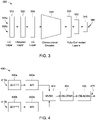
- Fig. 3 illustrates an example of a topology of a trained neural network 300 used in some embodiments.
- Neural network topologies can be described by multiple interconnected layers. Alternative network topologies having modified or different layers in a like or different order may likewise be used for the same purpose in further embodiments.
- An input to the trained neural network 300 is a first raw data image 305a second raw data image 305b.
- the trained neural network 300 comprises a Fully Connected (FC) layer 310 as an input layer, a subsequent transpose layer 320 and a further fully connected layer 330 downstream the transpose layer 320. Downstream the FC layer 330 follows a convolutional encoder 340, followed by three subsequent FC layers 350, 360, and 370.
- FC Fully Connected
- a first coordinate and a second coordinate are provided as an estimate of a position of every object in the field of view of the associated radar sensor(s) generating the first raw data image 305a and the second raw data image 305b.
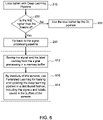
- Fig. 4 illustrates an example of a further and conventional radar processing pipeline 400 which may be used as a fallback in some embodiments.
- a conventional radar processing pipeline uses multiple subsequent radar processing steps to localize radar targets (objects within the field of view of a radar device).
- Alternative radar processing pipelines having modified or different imaging processing steps in a like or modified order may likewise be used for the same purpose.
- the illustration of fig. 4 shall only be understood as one example for a conventional imaging processing pipeline which may serve as a fallback for a trained neural network.
- a first raw radar image 410a is input into a first two-dimensional Fourier transform 420a to transform the raw radar image 410a into a range/doppler representation.
- raw radar images are, for example, a two-dimensional representation of responses to multiple subsequent radar-sweeps, one dimension being the frequency, the other dimension being the number of the sweep.
- a raw radar image may be converted into a two-dimensional range/Doppler representation, in which one dimension is the distance and the other dimension is the relative velocity with respect to the radar sensor.
- MTI Moving target indication
- a second raw data image 410b is input into a second two-dimensional Fourier transform 420b and subsequently subject to MTI 430b.
- MVDR Minimum Variance Distortionless Response
- a first coordinate and a second coordinate for objects within the field of view of a radar sensor can principally be derived.
- the coordinate system may be chosen to the user's preference. For example, the coordinates may be given as X, Y in a Cartesian coordinate system, or, as distance r and an angle ⁇ in a polar coordinate system.
- antenna arrays having multiple receiver antennas are often used and, hence, multiple raw data images are pre- processed by the previously illustrated steps of two-dimension Fourier transform and MTI. While more antennas may increase the resolution of the system, the pre- processing of only two raw data images 410a and 410b is illustrated in fig. 4 for reasons of simplicity.
- OS-CFAR Ordered Statistics Constant False Alarm Rate
- CFAR Constant False Alarm Rate
- CFAR Constant false alarm rate
- DBSCAN Density-Based Spatial Clustering of Applications with Noise
- DBSCAN is a density-based clustering non-parametric algorithm that groups together points that are closely packed together (points with many nearby neighbors), marking also outlier points that lie alone in low-density regions.
- clusters of pixels are formed within an image, each cluster corresponding to an observed real physical object. Consequently, at least two coordinates can be provided as an estimate of the position of every object in the field of view of the associated radar sensor(s) at an output 470 of the radar processing pipeline 400.
- figs. 5 and 6 subsequently illustrate two different approaches to further increase the quality of the trained neural network during operation. Both approaches mainly differ in the location, where the model of the trained neural network is enhanced. Both embodiments are based on the embodiment illustrated in fig. 2 and, hence, the aspects relating to the fallback mechanism itself, which are associated with reference numerals 210, 220, 230, and 240 are not repeated. Instead, the discussion will focus on the aspects related to the possibility to enhance the model of the trained neural network during operation.
- Fig. 5 illustrates a flowchart of an embodiment of a method to evaluate radar images further using continual learning to increase the quality of the model of the trained neural network.
- Continual learning as described by means of the flowchart of fig. 5 increases the quality of a jointly used model using and merging data from multiple entities employing the model, even if the entities use the model independently from one another.
- data can be considered as a stream, where learning from each new sample would impact minimally or improving the prediction on previous samples.
- the first raw radar image, the second raw radar image, and the conventional estimate of the position of the object must be used to further train the neural network by computing updated neural network parameters.
- an entity implementing an embodiment of a method to evaluate radar images saves the conventional estimate of the position as well as the corresponding first and second raw radar images (512) if the reliability criterion was not fulfilled. If position estimation is not performed such that the associated resources can be used differently, said stored data is submitted to a central entity, e.g. to a central server or system, on which the further training of the model of the neural network is performed.
- the submitted data i.e., the first raw radar image, the second raw radar image and the conventional estimate of the position of the object are added to the already existent training data on the central entity.
- the model of the neural network is trained (516) and the best model having updated neural network parameters is chosen (518).
- the updated newsletter parameters are redistributed (520) to all entities implementing the trained neural network.
- associated entities need to support the transfer of the stored raw radar images and their associated conventional estimates of object positions to the central entity and, likewise, support receiving updated neural network parameters from said central entity.
- Fig. 6 illustrates a flowchart of an embodiment of a method to evaluate radar images further using federated learning to increase the quality of the model of the trained neural network.
- the updated neural parameters are computed on each individual entity independently from other entities using the same neural network and a new common model is periodically generated based on multiple slightly different updated neural network parameters.
- an entity implementing an embodiment of a method to evaluate radar images saves the conventional estimate of the position as well as the corresponding first and second raw radar images (614) if the reliability criterion was not fulfilled.
- the model of the neural network is trained (614) and each entity itself, generating updated neural network parameters at every entity (edge device). If multiple independent entities or radar sensors perform federated learning, every radar sensor will so result with slightly different updated neural network parameters.
- every participating entity periodically provides its updated neural network parameters to a central entity that computes an updated model from that input.
- One particularly simple example would be averaging the corresponding parameters of every participating entity.
- the updated model is redistributed to the participating entities by means of common updated neural network parameters.
- a copy of a centrally trained model is deployed on a series of edge devices.
- Each edge device might have to fallback to the signal processing system for different events.
- Such inputs on the failed signals are stored in a buffer, and edge devices are trained on those when there are resources available.
- Periodically, parameters of different edge devices are uploaded into a central model, and statistics over them are taken (e.g. averaging parameters out). The parameters are then redeployed on each edge device.
- An entity supporting federated learning needs to have the capability to transmit updated network parameters to a central entity as well as to receive updated parameters to a central entity.
- Fig. 7 illustrates a block diagram of an embodiment of an apparatus 700 for evaluating radar images.
- the apparatus comprises an input interface 710 for receiving at least a first raw radar image and a second raw radar image. Further, the apparatus needs to have the capability to implement an embodiment of the previously described methods.
- an embodiment of a and apparatus 700 comprises circuitry 720 configured to determine, whether a reliability criterion is fulfilled.
- the circuitry is further configured to use a first coordinate and a second coordinate output by a trained neural network as an estimate of a position of an object if the reliability criterion is fulfilled, the trained neural network using the first raw radar image and the second raw radar image as an input.
- the circuit is configured to use a third coordinate and a fourth coordinate output by another radar processing pipeline as the estimate of the position of the object if the reliability criterion is not fulfilled, the radar processing pipeline using the first raw radar image and the second raw radar image as an input.
- Apparatus 700 as illustrated in fig. 7 may, for example, be implemented within a radar sensor or as an additional device to be combined with radar sensors generating the raw radar images. To this end, an embodiment of an apparatus 700 may be combined with an already existent radar sensor to decrease energy consumption or to increase performance of the resulting system. According to other implementations, apparatus 700 may be implemented within a radar sensor to form a single device with enhanced capabilities.
- the circuitry 720 may be implemented in the same semiconductor die or processor used by other signal processing algorithms of the radar sensor. Alternatively, the circuitry implementing the apparatus 700 may be implemented as a separate chip within a radar sensor comprising multiple chips within a single housing.
- some embodiments also comprise an input/output interface 730 configured to send or receive updated neural network parameters.
- apparatus 700 optionally comprise circuitry 720 that is further configured to determine an estimation of a track of an object.
- Further embodiments may additionally comprise an output interface 740 for transmitting at least one of the estimates of the position of the object or the track of the object to provide the position estimates generated by apparatus 700 to further processing entities, for example to an electrical control unit (ECU) cooperating multiple apparatuses 700 in parallel.
- ECU electrical control unit
- Fig. 8 illustrates a block diagram of a system comprising at least two apparatuses 700a and 700b as illustrated in fig. 7 and a central entity 810 to illustrate a system using continual learning as illustrated in fig. 5 or federated learning as illustrated in fig. 6 .
- the input/output interfaces 730a and 730b transmit stored raw radar images and their associated position estimates of the radar processing pipeline to the central entity 810 to enable the central entity 810 to compute updated neural network parameters by further training the model of the neural network. Further, the input/output interfaces 700a and 700b serve to receive the updated model by means of commonly used updated neural network parameters from the central entity 810.
- the input/output interfaces 730a and 730b transmit individually updated neural network parameters to the central entity 810.
- the central entity 810 combines the received updated neural network parameters to generate commonly used updated neural network parameters for redistributing them to the apparatuses700a and 700b via their input/output interfaces 700a and 700b.
- Examples may further be or relate to a (computer) program including a program code to execute one or more of the above methods when the program is executed on a computer, processor or other programmable hardware component.
- steps, operations or processes of different ones of the methods described above may also be executed by programmed computers, processors or other programmable hardware components.
- Examples may also cover program storage devices, such as digital data storage media, which are machine-, processor- or computer-readable and encode and/or contain machine-executable, processor-executable or computer-executable programs and instructions.
- Program storage devices may include or be digital storage devices, magnetic storage media such as magnetic disks and magnetic tapes, hard disk drives, or optically readable digital data storage media, for example.
- Other examples may also include computers, processors, control units, (field) programmable logic arrays ((F)PLAs), (field) programmable gate arrays ((F)PGAs), graphics processor units (GPU), application-specific integrated circuits (ASICs), integrated circuits (ICs) or system-on-a-chip (SoCs) systems programmed to execute the steps of the methods described above.
- FPLAs field programmable logic arrays
- F field) programmable gate arrays
- GPU graphics processor units
- ASICs application-specific integrated circuits
- ICs integrated circuits
- SoCs system-on-a-chip
- aspects described in relation to a device or system should also be understood as a description of the corresponding method.
- a block, device or functional aspect of the device or system may correspond to a feature, such as a method step, of the corresponding method.
- aspects described in relation to a method shall also be understood as a description of a corresponding block, a corresponding element, a property or a functional feature of a corresponding device or a corresponding system.
Landscapes
- Engineering & Computer Science (AREA)
- Physics & Mathematics (AREA)
- Theoretical Computer Science (AREA)
- General Physics & Mathematics (AREA)
- Remote Sensing (AREA)
- Radar, Positioning & Navigation (AREA)
- General Engineering & Computer Science (AREA)
- Evolutionary Computation (AREA)
- Data Mining & Analysis (AREA)
- Artificial Intelligence (AREA)
- Life Sciences & Earth Sciences (AREA)
- Computer Networks & Wireless Communication (AREA)
- Computing Systems (AREA)
- General Health & Medical Sciences (AREA)
- Software Systems (AREA)
- Mathematical Physics (AREA)
- Molecular Biology (AREA)
- Health & Medical Sciences (AREA)
- Biomedical Technology (AREA)
- Biophysics (AREA)
- Computational Linguistics (AREA)
- Computer Vision & Pattern Recognition (AREA)
- Quality & Reliability (AREA)
- Electromagnetism (AREA)
- Multimedia (AREA)
- Evolutionary Biology (AREA)
- Bioinformatics & Cheminformatics (AREA)
- Bioinformatics & Computational Biology (AREA)
- Astronomy & Astrophysics (AREA)
- Radar Systems Or Details Thereof (AREA)
- Image Analysis (AREA)
Priority Applications (3)
| Application Number | Priority Date | Filing Date | Title |
|---|---|---|---|
| EP21176504.5A EP4095551A1 (fr) | 2021-05-28 | 2021-05-28 | Procédé et appareil pour évaluer des images radar et dispositif radar |
| US17/827,340 US12380589B2 (en) | 2021-05-28 | 2022-05-27 | Method and apparatus to evaluate radar images and radar device |
| CN202210594617.5A CN115421116A (zh) | 2021-05-28 | 2022-05-27 | 用于评估雷达图像的方法和器件 |
Applications Claiming Priority (1)
| Application Number | Priority Date | Filing Date | Title |
|---|---|---|---|
| EP21176504.5A EP4095551A1 (fr) | 2021-05-28 | 2021-05-28 | Procédé et appareil pour évaluer des images radar et dispositif radar |
Publications (1)
| Publication Number | Publication Date |
|---|---|
| EP4095551A1 true EP4095551A1 (fr) | 2022-11-30 |
Family
ID=76197242
Family Applications (1)
| Application Number | Title | Priority Date | Filing Date |
|---|---|---|---|
| EP21176504.5A Pending EP4095551A1 (fr) | 2021-05-28 | 2021-05-28 | Procédé et appareil pour évaluer des images radar et dispositif radar |
Country Status (3)
| Country | Link |
|---|---|
| US (1) | US12380589B2 (fr) |
| EP (1) | EP4095551A1 (fr) |
| CN (1) | CN115421116A (fr) |
Cited By (1)
| Publication number | Priority date | Publication date | Assignee | Title |
|---|---|---|---|---|
| DE102023101976A1 (de) | 2023-01-27 | 2024-08-01 | Valeo Schalter Und Sensoren Gmbh | Verfahren zum Überprüfen eines künstlichen neuronalen Netzwerks zum Auswerten von mittels eines Sensors erfassten Echos für ein Kraftfahrzeug |
Families Citing this family (1)
| Publication number | Priority date | Publication date | Assignee | Title |
|---|---|---|---|---|
| WO2024180149A1 (fr) * | 2023-02-28 | 2024-09-06 | Terma A/S | Procédé d'extraction d'ensembles de données à partir de données vidéo radar |
Family Cites Families (9)
| Publication number | Priority date | Publication date | Assignee | Title |
|---|---|---|---|---|
| USH1720H (en) * | 1997-03-31 | 1998-04-07 | Chen; Victor C. | Time frequency processor for radar imaging of moving targets |
| US6710743B2 (en) * | 2001-05-04 | 2004-03-23 | Lockheed Martin Corporation | System and method for central association and tracking in passive coherent location applications |
| FR3045195B1 (fr) * | 2015-12-10 | 2018-06-01 | Commissariat A L'energie Atomique Et Aux Energies Alternatives | Detection et suivi de rails dans un flux video |
| LU100528B1 (en) * | 2017-12-01 | 2019-06-12 | Iee Sa | Radar System Operating Method and Radar System Having Improved Range Resolution by Mutually Delayed Orthogonal Codes |
| CN108921879A (zh) * | 2018-05-16 | 2018-11-30 | 中国地质大学(武汉) | 基于区域选择的CNN和Kalman滤波的运动目标跟踪方法及系统 |
| US11531088B2 (en) * | 2019-11-21 | 2022-12-20 | Nvidia Corporation | Deep neural network for detecting obstacle instances using radar sensors in autonomous machine applications |
| EP4189632A4 (fr) * | 2020-08-25 | 2023-07-05 | Huawei Technologies Co., Ltd. | Distances entre distributions pour la mesure d'appartenance à la distribution de l'image |
| EP3968013B1 (fr) * | 2020-09-15 | 2024-07-24 | Fraunhofer-Gesellschaft zur Förderung der angewandten Forschung e.V. | Appareil et procédé pour générer une image d'un objet observé et système d'imagerie d'un objet |
| JP7614330B2 (ja) * | 2021-03-25 | 2025-01-15 | 株式会社日立ハイテク | 位置座標検出装置、試料加工装置および試料検査装置 |
-
2021
- 2021-05-28 EP EP21176504.5A patent/EP4095551A1/fr active Pending
-
2022
- 2022-05-27 US US17/827,340 patent/US12380589B2/en active Active
- 2022-05-27 CN CN202210594617.5A patent/CN115421116A/zh active Pending
Non-Patent Citations (3)
| Title |
|---|
| ANDREW J LOHN: "Estimating the Brittleness of AI: Safety Integrity Levels and the Need for Testing Out-Of-Distribution Performance", ARXIV.ORG, CORNELL UNIVERSITY LIBRARY, 201 OLIN LIBRARY CORNELL UNIVERSITY ITHACA, NY 14853, 2 September 2020 (2020-09-02), XP081753580 * |
| BULUSU SAIKIRAN ET AL: "ANOMALOUS INSTANCE DETECTION IN DEEP LEARNING: A SURVEY", 19 February 2021 (2021-02-19), XP093324381, Retrieved from the Internet <URL:https://arxiv.org/pdf/2003.06979> [retrieved on 20251010] * |
| STEPHAN MICHAEL ET AL: "Radar Image Reconstruction from Raw ADC Data using Parametric Variational Autoencoder with Domain Adaptation", 2020 25TH INTERNATIONAL CONFERENCE ON PATTERN RECOGNITION (ICPR), IEEE, 10 January 2021 (2021-01-10), pages 9529 - 9536, XP033908834, DOI: 10.1109/ICPR48806.2021.9412858 * |
Cited By (2)
| Publication number | Priority date | Publication date | Assignee | Title |
|---|---|---|---|---|
| DE102023101976A1 (de) | 2023-01-27 | 2024-08-01 | Valeo Schalter Und Sensoren Gmbh | Verfahren zum Überprüfen eines künstlichen neuronalen Netzwerks zum Auswerten von mittels eines Sensors erfassten Echos für ein Kraftfahrzeug |
| WO2024156560A1 (fr) * | 2023-01-27 | 2024-08-02 | Valeo Schalter Und Sensoren Gmbh | Procédé de vérification de réseau neuronal artificiel pour analyse d'échos, détectés par capteur, pour véhicule à moteur |
Also Published As
| Publication number | Publication date |
|---|---|
| US20220383537A1 (en) | 2022-12-01 |
| CN115421116A (zh) | 2022-12-02 |
| US12380589B2 (en) | 2025-08-05 |
Similar Documents
| Publication | Publication Date | Title |
|---|---|---|
| US11448746B2 (en) | Method of estimating a velocity magnitude of a moving target in a horizontal plane and radar detection system | |
| US20240404273A1 (en) | Method and System for Indoor Multipath Ghosts Recognition | |
| CN112240999B (zh) | 处理雷达反射的方法和系统 | |
| US20190369228A1 (en) | Method for robust estimation of the velosity of a target using a host vehicle | |
| US12380589B2 (en) | Method and apparatus to evaluate radar images and radar device | |
| CN106778610A (zh) | 一种基于时频图像特征的脉内调制识别方法 | |
| EP4372405B1 (fr) | Appareil et procédé mis en uvre par ordinateur pour la détection de gestes, système radar et dispositif électronique | |
| CN106872958A (zh) | 基于线性融合的雷达目标自适应检测方法 | |
| KR20200071289A (ko) | Fmcw 레이다의 신호를 활용하여 표적의 형상을 추정하는 장치 및 그 방법 | |
| CN112116019A (zh) | 一种多传感器Vine Copula异构信息决策融合方法 | |
| CN105445732A (zh) | 在密集杂波条件下利用多径观测的目标航迹初始化方法 | |
| EP4677389A1 (fr) | Appareil de détermination d'égo-mouvement | |
| Wang et al. | mPCT-LSTM: A lightweight human activity recognition model for 3D point clouds in millimeter-wave radar | |
| KR101817011B1 (ko) | 군집화 특성 기반의 능동소나 클러터 제거 방법 및 장치 | |
| JP2010256079A (ja) | レーダ装置 | |
| CN106228132A (zh) | 目标识别方法和目标识别装置 | |
| US20240255633A1 (en) | Apparatus and method for tracking objects | |
| Hanusa et al. | Clutter rejection by clustering likelihood-based similarities | |
| Du et al. | ADOS-CFAR algorithm for multibeam seafloor terrain detection | |
| Gheorghiu et al. | Lightweight graph transformers for clutter and target classification in automotive radar | |
| WO2019021459A1 (fr) | Dispositif de détection d'ondes radio | |
| Brekke et al. | Target tracking in heavy-tailed clutter using amplitude information | |
| Pulford | Relative performance of single-scan algorithms for passive sonar tracking | |
| Hanusa et al. | Contact clustering and fusion for preprocessing multistatic active sonar data | |
| Wang et al. | Fast double selectivity index-CFAR detection method for the multi-beam echo sounder |
Legal Events
| Date | Code | Title | Description |
|---|---|---|---|
| PUAI | Public reference made under article 153(3) epc to a published international application that has entered the european phase |
Free format text: ORIGINAL CODE: 0009012 |
|
| STAA | Information on the status of an ep patent application or granted ep patent |
Free format text: STATUS: REQUEST FOR EXAMINATION WAS MADE |
|
| 17P | Request for examination filed |
Effective date: 20220406 |
|
| AK | Designated contracting states |
Kind code of ref document: A1 Designated state(s): AL AT BE BG CH CY CZ DE DK EE ES FI FR GB GR HR HU IE IS IT LI LT LU LV MC MK MT NL NO PL PT RO RS SE SI SK SM TR |
|
| STAA | Information on the status of an ep patent application or granted ep patent |
Free format text: STATUS: EXAMINATION IS IN PROGRESS |
|
| 17Q | First examination report despatched |
Effective date: 20230818 |