EP4096150A1 - Computerimplementiertes verfahren zur verbesserung der sicherheit einer kommunikation zwischen einem dlt-netzwerkknoten und einem externen computersystem - Google Patents
Computerimplementiertes verfahren zur verbesserung der sicherheit einer kommunikation zwischen einem dlt-netzwerkknoten und einem externen computersystem Download PDFInfo
- Publication number
- EP4096150A1 EP4096150A1 EP21175564.0A EP21175564A EP4096150A1 EP 4096150 A1 EP4096150 A1 EP 4096150A1 EP 21175564 A EP21175564 A EP 21175564A EP 4096150 A1 EP4096150 A1 EP 4096150A1
- Authority
- EP
- European Patent Office
- Prior art keywords
- verification
- message
- hash
- node
- communication
- Prior art date
- Legal status (The legal status is an assumption and is not a legal conclusion. Google has not performed a legal analysis and makes no representation as to the accuracy of the status listed.)
- Withdrawn
Links
Images




Classifications
-
- H—ELECTRICITY
- H04—ELECTRIC COMMUNICATION TECHNIQUE
- H04L—TRANSMISSION OF DIGITAL INFORMATION, e.g. TELEGRAPHIC COMMUNICATION
- H04L9/00—Cryptographic mechanisms or cryptographic arrangements for secret or secure communications; Network security protocols
- H04L9/32—Cryptographic mechanisms or cryptographic arrangements for secret or secure communications; Network security protocols including means for verifying the identity or authority of a user of the system or for message authentication, e.g. authorization, entity authentication, data integrity or data verification, non-repudiation, key authentication or verification of credentials
- H04L9/3236—Cryptographic mechanisms or cryptographic arrangements for secret or secure communications; Network security protocols including means for verifying the identity or authority of a user of the system or for message authentication, e.g. authorization, entity authentication, data integrity or data verification, non-repudiation, key authentication or verification of credentials using cryptographic hash functions
- H04L9/3242—Cryptographic mechanisms or cryptographic arrangements for secret or secure communications; Network security protocols including means for verifying the identity or authority of a user of the system or for message authentication, e.g. authorization, entity authentication, data integrity or data verification, non-repudiation, key authentication or verification of credentials using cryptographic hash functions involving keyed hash functions, e.g. message authentication codes [MACs], CBC-MAC or HMAC
-
- H—ELECTRICITY
- H04—ELECTRIC COMMUNICATION TECHNIQUE
- H04L—TRANSMISSION OF DIGITAL INFORMATION, e.g. TELEGRAPHIC COMMUNICATION
- H04L9/00—Cryptographic mechanisms or cryptographic arrangements for secret or secure communications; Network security protocols
- H04L9/32—Cryptographic mechanisms or cryptographic arrangements for secret or secure communications; Network security protocols including means for verifying the identity or authority of a user of the system or for message authentication, e.g. authorization, entity authentication, data integrity or data verification, non-repudiation, key authentication or verification of credentials
- H04L9/3236—Cryptographic mechanisms or cryptographic arrangements for secret or secure communications; Network security protocols including means for verifying the identity or authority of a user of the system or for message authentication, e.g. authorization, entity authentication, data integrity or data verification, non-repudiation, key authentication or verification of credentials using cryptographic hash functions
- H04L9/3239—Cryptographic mechanisms or cryptographic arrangements for secret or secure communications; Network security protocols including means for verifying the identity or authority of a user of the system or for message authentication, e.g. authorization, entity authentication, data integrity or data verification, non-repudiation, key authentication or verification of credentials using cryptographic hash functions involving non-keyed hash functions, e.g. modification detection codes [MDCs], MD5, SHA or RIPEMD
-
- H—ELECTRICITY
- H04—ELECTRIC COMMUNICATION TECHNIQUE
- H04L—TRANSMISSION OF DIGITAL INFORMATION, e.g. TELEGRAPHIC COMMUNICATION
- H04L9/00—Cryptographic mechanisms or cryptographic arrangements for secret or secure communications; Network security protocols
- H04L9/08—Key distribution or management, e.g. generation, sharing or updating, of cryptographic keys or passwords
- H04L9/088—Usage controlling of secret information, e.g. techniques for restricting cryptographic keys to pre-authorized uses, different access levels, validity of crypto-period, different key- or password length, or different strong and weak cryptographic algorithms
-
- H—ELECTRICITY
- H04—ELECTRIC COMMUNICATION TECHNIQUE
- H04L—TRANSMISSION OF DIGITAL INFORMATION, e.g. TELEGRAPHIC COMMUNICATION
- H04L9/00—Cryptographic mechanisms or cryptographic arrangements for secret or secure communications; Network security protocols
- H04L9/32—Cryptographic mechanisms or cryptographic arrangements for secret or secure communications; Network security protocols including means for verifying the identity or authority of a user of the system or for message authentication, e.g. authorization, entity authentication, data integrity or data verification, non-repudiation, key authentication or verification of credentials
- H04L9/3247—Cryptographic mechanisms or cryptographic arrangements for secret or secure communications; Network security protocols including means for verifying the identity or authority of a user of the system or for message authentication, e.g. authorization, entity authentication, data integrity or data verification, non-repudiation, key authentication or verification of credentials involving digital signatures
-
- H—ELECTRICITY
- H04—ELECTRIC COMMUNICATION TECHNIQUE
- H04L—TRANSMISSION OF DIGITAL INFORMATION, e.g. TELEGRAPHIC COMMUNICATION
- H04L9/00—Cryptographic mechanisms or cryptographic arrangements for secret or secure communications; Network security protocols
- H04L9/50—Cryptographic mechanisms or cryptographic arrangements for secret or secure communications; Network security protocols using hash chains, e.g. blockchains or hash trees
-
- H—ELECTRICITY
- H04—ELECTRIC COMMUNICATION TECHNIQUE
- H04L—TRANSMISSION OF DIGITAL INFORMATION, e.g. TELEGRAPHIC COMMUNICATION
- H04L2209/00—Additional information or applications relating to cryptographic mechanisms or cryptographic arrangements for secret or secure communication H04L9/00
- H04L2209/80—Wireless
Definitions
- This invention relates to a computer-implemented method for improving security of a communication between a DLT network node and an external computer system, as well as to the computer program product including instructions recorded on a non-transitory computer readable storage medium and configured, when executed by at least one processor, to cause the at least one processor to perform a method according to the invention.
- DLT network is a distributed ledger (also called a shared ledger or distributed ledger technology or DLT) is a consensus of replicated, shared, and synchronized digital data geographically spread across multiple sites, countries, or institutions. Unlike with a distributed database, there is no central administrator.
- the distributed ledger database is spread across several nodes (devices) on a peer-to-peer network, where each replicates and saves a copy of the ledger and updates itself independently.
- the primary advantage is the lack of central authority.
- Blockchain systems depend heavily on an effective cryptography.
- the well-known text books provide a full scope of disclosure regarding the algorithms used in cryptography, for example Introduction to Modern Cryptography: Third Edition (Chapman & Hall/CRC Cryptography and Network Security Series) by Jonathan Katz and Yehuda Lindell, Chapman and Hall/CRC; 3rd edition (December 21, 2020) ISBN-13 : 978-0815354369 .
- a hash-value of the message (often called the message digest) is calculated by applying some cryptographic hashing algorithm (for example, MD2, MD4, MD5, SHA1, or other).
- the calculated hash-value of a message is a sequence of bits, usually with a fixed length, extracted in some manner from the message.
- the information obtained in the first step hash-value of the message (the message digest) is encrypted with the private key of the person who signs the message and thus an encrypted hash-value, also called digital signature, is obtained.
- an encrypted hash-value also called digital signature
- some mathematical cryptographic encrypting algorithm for calculating digital signatures from given message digest is used.
- the most often used algorithms are RSA (based on the number theory), DSA (based on the theory of the discrete logarithms), and ECDSA (based on the elliptic curves theory).
- the obtained digital signature is attached to the message in a special format to be verified later if it is necessary.
- Digital signature technology allows the recipient of given signed message to verify its real origin and its integrity.
- the process of digital signature verification is purposed to ascertain if a given message has been signed by the private key that corresponds to a given public key.
- the digital signature verification cannot ascertain whether the given message has been signed by a given person. If we need to check whether some person has signed a given message, we need to obtain his real public key in some manner. This is possible either by getting the public key in a secure way (for example, on a floppy disk or CD) or with the help of the Public Key Infrastructure by means of a digital certificate. Without having a secure way to obtain the real public key of given person, we don't have a possibility to check whether the given message is really signed by this person.
- a hash-value of the signed message is calculated.
- the same hashing algorithm is used as was used during the signing process.
- the obtained hash-value is called the current hash-value because it is calculated from the current state of the message.
- the digital signature is decrypted with the same encryption algorithm that was used during the signing process.
- the decryption is done by the public key that corresponds to the private key used during the signing of the message.
- the original hash-value that was calculated from the original message during the first step of the signing process (the original message digests).
- the third step we compare the current hash-value obtained in the first step with the original hash-value obtained in the second step. If the two values are identical, the verification if successful and proves that the message has been signed with the private key that corresponds to the public key used in the verification process. If the two values differ from one another, this means that the digital signature is invalid and the verification is unsuccessful.
- an information verification system includes a first node group including a plurality of nodes, and a second node group including at least one node, and the at least one of nodes included in the second node group includes a request means configured to transmit a request signal for requesting information, the request signal including verification information that is information for use in verification to be generated each time the request signal is transmitted, to at least any node of the first node group, and a verification means configured to verify response information that is information transmitted from any one of the nodes included in the first node group in response to the request signal, the verification means determining, regarding the response information, whether or not desired information that is information requested by the request signal or a digest thereof is included, whether or not correct verification information is included, whether or not a value obtained by applying a one-way function to the response information satisfies a predetermined rule defined for common use between the first node group and the second node group, and a response time that is a time taken between the transmission of the request signal
- every node is a standalone independent application, and in described above approach, focused on securing a transmission channel, would be impossible to use, because such connections should be established separately with every node (e.g. in case of mobile application, there could be hundreds of thousands of them), and the number of nodes in DLT network could change (grow) over time.
- the object of the invention is a computer-implemented method according to claim 1. It is a computer implemented method for improving security of a communication between a DLT network node and an external computer system, comprising steps of: receiving from a node of DLT network the first communication message comprising: a digitally signed message with a request for communication with an external computer system, a security hash for the digitally signed message, and an identifier assigned to a digital signature used for signing the digitally signed message, calculating a first verification hash from the signed message and the security hash, sending the second communication message comprising the digitally signed message, the security hash, the identifier and the first verification hash to the verification node in the DLT network for verification, sending the message to the external system when the verification node confirms that the security hash is correct hash for the secure message, and the signed message is signed by a private key assigned to the identifier, the first verification hash matches the second verification hash calculated by the verification node based on the secure message and the security hash.
- the message with a request for communication is signed with a private key related to the assigned identifier.
- the verification node is a member of the same DLT network and applies the same verification method of verification of a signature as the node sending a request for communication.
- the method for verification of signature is selected from a group comprising: ECDSA, RSA, or DSA.
- the verification node is different from the node sending a request for communication.
- the DLT network node is running on a personal device of the user, in particular a mobile device.
- an object of the invention is a computer program comprising instructions which, when the program is executed by a computer in a DLT network, cause the computer to carry out steps of the method of claim 1 to 6.
- the advantage of the present invention is that it provides increased security to the communication from a DLT network directed to the external system, in a situation the DLT network is having no central administration node.
- Fig. 1 shows the preferred implementation of a method a computer-implemented method for improving security of a communication between a DLT network node n and an external computer system S.
- the method according to the invention implements an interface between a DLT network and external systems, and is typically run on a dedicated proxy computer system p that is able to communicate with nodes n of the DLT network and external computer systems S.
- the method according to the invention is run on the proxy system p.
- the method according to the invention requires at least one proxy system p, however it is preferable to provide a number of proxy systems p 0 to p n .
- Proxy systems may also implement functionality of the DLT network node, however preferably proxy systems are external to the DLT network.
- the main function of the proxy systems p is to provide a secure and trusted communication between nodes n of the DLT network and external services S, when the DLT network does not have any central or administration node. This can be achieved by introduction of verification nodes v of DLT network.
- the method according to the present invention is preferably applied in the environment when the DLT network node n is running on a personal device of the user (e.g. a smart TV, or an loT device), in particular a mobile device (e.g. a mobile phone, or a tablet).
- Fig. 2 shows a block diagram of the method according to the invention depicting major steps of the method and their order.
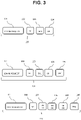
- Fig. 3 shows schematically content of communication messages exchanged according to the invention.
- the method according to the invention comprises a first step 200 of receiving from the node n of DLT network a first communication message 100.
- the first communication message 100 comprises a message 101 with a request for communication with an external computer system S, a security hash 102 or SH1 for the digitally signed message i.e. a combined request for communication 101 and digital signature 102, and an user hash UH. Details of the creating of the first communication message 100 are described in more detail in relation to Fig. 4 .
- the next step 205 of the method according to the invention is calculating a first verification hash VH1 from the signed message 101, 102 and the security hash SH. Details of the creating of the second communication message 105 are described in more detail in relation to Fig. 5 .
- the proxy system p is sending a second communication message 105 comprising the digitally signed message 101, 102, the security hash SH, the identifier UH and the first verification hash VH1 to a verification node v in the DLT network for verification.
- the verification node v is selected.
- a verification step 215 is handled at the verification v node of the DLT network. Details of the verification step 215 and a way of composing a third communication message 110 are described in relation to Fig. 6 .
- a final step 220 of the method is sending the secure message to the external system S when the verification node v confirms by setting appropriate flags 107, 108 and 109 in the third communication message 110 to the values to OK which means the security hash SH1 is correct hash for the secure message, the signed message is signed by a private key assigned to the identifier UH, and the first verification hash VH1 matches the second verification hash VH2 calculated by the verification node v based on the secure message and the security hash SH1. If the verification node v indicates the secure message does not comply with all of the above indicated verification criteria the secure message is rejected in step 225.
- the communication message 115 sent to external system S is a regular API formatted request for communication to system or service S.
- the first communication message 100 comprises a communication request 101, digital signature 102 or SG. that is generated with a private key assigned to the user of the sending node n, a security hash 103 or SH1 that is generated based on the communication request 101 and the digital signature 102. Further the communication message comprises a user hash 104 or UH.
- the communication request 101 is formulated.
- the communication request 101 is a request formulated in accordance to rules established by the API of the external system or service S.
- the node n applies to the communication request 101 a digital signature 102 under the scheme of the private key cryptography. This operation is done according to the known algorithms used in the DLT networks as it is described in the prior art above.
- the private key is assigned to the user_id of the user operating the node n in the DLT network.
- the node n of DLT network calculates the security hash 103 or SH1 based on the communication request 101 and digital signature 102.
- the function of the security hash 103 is to provide an evidence the communication message and digital signature has not been modified during transmission.
- a user hash 104 or UH is added to the communication message 100.
- the user hash 104 that is generated for the user_id of the user that is assigned to the private key used for signing the communication request 101.
- all elements of the communication message 100 are combined together for transmission to the proxy system p.
- Fig. 5 shows a block diagram of the process handled at proxy system p when the first communication message 100 is received in order to compose the second communication message 105 to be sent to verification node v.
- the proxy system p calculates the verification hash 106 or VH1 from the signed message and the security hash SH.
- the step of calculating the first verification hash VH1 provides an evidence of invariance of the message sent from the proxy system p to the verification node v and an evidence the message sent to verification nodes v is indeed the message to be verified.
- the verification hash VH1 is calculated according to algorithms known in the art.
- the proxy system p is selecting verification node v.
- the verification node v is selected from the pool of nodes of the DLT network, that are capable to verify digital signature, with maintaining the condition that the verification node v is not the node n requesting communication with the external service S. Due to the nature of the DLT networks, any of nodes of the DLT network has a capabilities to perform verification of digital signature. Selection of verification node v can be done by proxy system p in many different ways, preferably randomly among nodes n of the same DLT network. However other methods of selecting verification node v may be applied and being still within the scope of the invention, e.g. the verification node v is randomly selected form nodes of a different DLT network, or based on latency in communication within the same DLT network.
- the proxy system p is composing the second communication message 105 by combining the request for communication 101, signed with signature 102 with the security hash 103 or SH1 and the verification hash 106 or VH1.
- Fig. 6 shows a block diagram of the verification process handled at the verification node v.
- the result of the verification process is used by the proxy system p to decide whether the request for communication 101 shall be sent to the external system S or not.
- the verification node v is a member of the same DLT network as the node n, and applies the same verification method of verification of a digital signature SG, as the node n sending a request for communication.
- the verification node v receives the second communication message 105 and next in the step 405 the node v extracts or decomposes the second communication message 105 into its constituents.
- step 410 the verification node v of the DLT network independently recalculates security hash SH2 and verification hash VH2.
- node v compares SH1 with SH2 and VH1 with VH2, if the respective hashes matches each other this is an evidence the communication request as signed was not modified by the third party. If there is no match between hashes SH1 and SH2 then verification node v sets the flag 108 to NOT OK. If there is no match between hashes VH1 and VH2 then verification node v sets the flag 109 to NOT OK. Setting negative values to the flags 108, 109 is handled in step 416.
- the control flow of the process is directed to the step 420 where the respective flags 108 and 109 are set to OK. Flags 108 and 109 are used to signal the proxy system p that the request for communication 101 and attached digital signature SG 102, reached the verification node v unaltered.
- the verification node v checks if the request for communication 101 is authentic by verification of the digital signature SG 102 applied to the request for communication 101. It is often the case that all nodes of the DLT network are capable of verification of signature according to the scheme applied in this particular network. However this not need to be the case, then the selected pool of nodes of the DLT network is provided with a verification functionality.
- the method for verification of signature is selected from a group comprising: ECDSA, RSA, or DSA. This verification provides an evidence that the request for communication is signed by a private key assigned used to generate digital signature SG attached. If the SG is correct signature the verification node v sets the flag 107 to OK in the step 435, if this is not the case then the verification node v sets the flag 107 to NOT OK in the step 432.
- Fig. 6 shows a detail block diagram of the third and final step of the method according to the invention that is sending the secure message to the external system when the verification node confirms that the security hash is correct hash for the secure message, and the signed message is signed by a private key assigned to the identifier, the first verification hash matches the a second verification hash calculated by the verification node based on the secure message and the security hash.
Landscapes
- Engineering & Computer Science (AREA)
- Computer Security & Cryptography (AREA)
- Computer Networks & Wireless Communication (AREA)
- Signal Processing (AREA)
- Power Engineering (AREA)
- Data Exchanges In Wide-Area Networks (AREA)
- Storage Device Security (AREA)
Priority Applications (3)
| Application Number | Priority Date | Filing Date | Title |
|---|---|---|---|
| EP21175564.0A EP4096150A1 (de) | 2021-05-24 | 2021-05-24 | Computerimplementiertes verfahren zur verbesserung der sicherheit einer kommunikation zwischen einem dlt-netzwerkknoten und einem externen computersystem |
| US18/563,576 US20240223379A1 (en) | 2021-05-24 | 2022-05-24 | A Computer-Implemented Method For Improving Security Of A Communication Between A DLT Network Nodes And An External Computer System |
| PCT/EP2022/063979 WO2022248437A1 (en) | 2021-05-24 | 2022-05-24 | A computer-implemented method for improving security of a communication between a dlt network nodes and an external computer system |
Applications Claiming Priority (1)
| Application Number | Priority Date | Filing Date | Title |
|---|---|---|---|
| EP21175564.0A EP4096150A1 (de) | 2021-05-24 | 2021-05-24 | Computerimplementiertes verfahren zur verbesserung der sicherheit einer kommunikation zwischen einem dlt-netzwerkknoten und einem externen computersystem |
Publications (1)
| Publication Number | Publication Date |
|---|---|
| EP4096150A1 true EP4096150A1 (de) | 2022-11-30 |
Family
ID=76098801
Family Applications (1)
| Application Number | Title | Priority Date | Filing Date |
|---|---|---|---|
| EP21175564.0A Withdrawn EP4096150A1 (de) | 2021-05-24 | 2021-05-24 | Computerimplementiertes verfahren zur verbesserung der sicherheit einer kommunikation zwischen einem dlt-netzwerkknoten und einem externen computersystem |
Country Status (3)
| Country | Link |
|---|---|
| US (1) | US20240223379A1 (de) |
| EP (1) | EP4096150A1 (de) |
| WO (1) | WO2022248437A1 (de) |
Citations (2)
| Publication number | Priority date | Publication date | Assignee | Title |
|---|---|---|---|---|
| US20200007558A1 (en) | 2017-02-24 | 2020-01-02 | Nec Corporation | Information verification system, information verification device, method and program |
| US20200403799A1 (en) | 2019-06-20 | 2020-12-24 | Telefonica Digital España, S.L.U. | Method and system for inter-dlt networks trust enhancement |
Family Cites Families (20)
| Publication number | Priority date | Publication date | Assignee | Title |
|---|---|---|---|---|
| AU2018278351A1 (en) * | 2017-06-01 | 2020-01-23 | Schvey, Inc. d/b/a/ Axoni | Distributed privately subspaced blockchain data structures with secure access restriction management |
| US10361870B2 (en) * | 2017-09-14 | 2019-07-23 | The Toronto-Dominion Bank | Management of cryptographically secure exchanges of data using permissioned distributed ledgers |
| US10699493B2 (en) * | 2017-12-09 | 2020-06-30 | Hausman Properties, Llc | System and method for toll transactions utilizing a distributed ledger |
| US10250390B1 (en) * | 2018-03-16 | 2019-04-02 | Booz Allen Hamilton Inc. | Data health assurance using private proof of authority |
| US11120434B2 (en) * | 2018-06-08 | 2021-09-14 | AnApp Technologies Limited | System and method for securing transaction in a blockchain network |
| US11281796B2 (en) * | 2018-06-13 | 2022-03-22 | At&T Intellectual Property I, L.P. | Blockchain based information management |
| US11063760B2 (en) * | 2018-08-22 | 2021-07-13 | Sasken Technologies Ltd | Method for ensuring security of an internet of things network |
| US10970717B2 (en) * | 2018-10-12 | 2021-04-06 | Dish Network L.L.C. | Distributed ledger for encrypted digital identity |
| US10735464B2 (en) * | 2018-12-29 | 2020-08-04 | Alibaba Group Holding Limited | System and method for detecting replay attack |
| WO2020161662A1 (en) * | 2019-02-07 | 2020-08-13 | Financial & Risk Organisation Limited | Authentication, authorization and audit of digital assets using the blockchain |
| EP3673617B1 (de) * | 2019-03-27 | 2021-11-17 | Advanced New Technologies Co., Ltd. | Abrufen von öffentlichen daten für blockchain-netzwerke unter verwendung von sicheren ausführungsumgebungen |
| ES2872101T3 (es) * | 2019-04-26 | 2021-11-02 | Advanced New Technologies Co Ltd | Gestión de claves distribuidas para entornos de ejecución confiables |
| US11494767B1 (en) * | 2019-05-21 | 2022-11-08 | United Services Automobile Association (Usaa) | Electronic transaction verification system |
| CN110493008B (zh) * | 2019-09-19 | 2021-09-21 | 腾讯科技(深圳)有限公司 | 一种区块链认证方法、装置、设备及介质 |
| CN110855688B (zh) * | 2019-11-18 | 2021-06-25 | 腾讯科技(深圳)有限公司 | 一种区块链信息处理方法及相关设备 |
| US20210336789A1 (en) * | 2020-03-30 | 2021-10-28 | Facebook, Inc. | Deterministic sparse-tree based cryptographic proof of liabilities |
| CN112073479A (zh) * | 2020-08-26 | 2020-12-11 | 重庆邮电大学 | 一种基于区块链的去中心数据访问控制方法及系统 |
| US11621858B2 (en) * | 2020-12-12 | 2023-04-04 | International Business Machines Corporation | Anonymity mechanisms in permissioned blockchain networks |
| CN112637298B (zh) * | 2020-12-15 | 2022-03-04 | 中国联合网络通信集团有限公司 | 认证方法和成员节点 |
| EP4084429A1 (de) * | 2021-04-26 | 2022-11-02 | Alessandro Semi Toumi | System und verfahren zur verteilten transaktionsausbreitung und -verifizierung |
-
2021
- 2021-05-24 EP EP21175564.0A patent/EP4096150A1/de not_active Withdrawn
-
2022
- 2022-05-24 US US18/563,576 patent/US20240223379A1/en active Pending
- 2022-05-24 WO PCT/EP2022/063979 patent/WO2022248437A1/en not_active Ceased
Patent Citations (2)
| Publication number | Priority date | Publication date | Assignee | Title |
|---|---|---|---|---|
| US20200007558A1 (en) | 2017-02-24 | 2020-01-02 | Nec Corporation | Information verification system, information verification device, method and program |
| US20200403799A1 (en) | 2019-06-20 | 2020-12-24 | Telefonica Digital España, S.L.U. | Method and system for inter-dlt networks trust enhancement |
Non-Patent Citations (6)
| Title |
|---|
| ANDREAS M. ANTONOPOULOS: "Mastering Bitcoin: Programming the Open Blockchain", 11 July 2017, O'REILLY MEDIA |
| ELLUL JOSHUA ET AL: "Towards External Calls for Blockchain and Distributed Ledger Technology", 13 May 2021 (2021-05-13), XP055852387, Retrieved from the Internet <URL:https://arxiv.org/pdf/2105.10399.pdf> [retrieved on 20211018] * |
| IMRAN BASHIR: "Mastering Blockchain: A deep dive into distributed ledgers, consensus protocols, smart contracts, DApps, cryptocurrencies, Ethereum, and more", 31 August 2020, PACKT PUBLISHING |
| ISLAM MD AZHARUL ET AL: "A Permissioned Blockchain Based Access Control System for IOT", 2019 IEEE INTERNATIONAL CONFERENCE ON BLOCKCHAIN (BLOCKCHAIN), IEEE, 14 July 2019 (2019-07-14), pages 469 - 476, XP033682675, [retrieved on 20191230], DOI: 10.1109/BLOCKCHAIN.2019.00071 * |
| JONATHAN KATZYEHUDA LINDELL: "Chapman & Hall/CRC Cryptography and Network Security Series", 21 December 2020, CHAPMAN AND HALL/CRC, article "Introduction to Modern Cryptography: Third Edition" |
| SAIFEDEAN AMMOUS: "The Bitcoin Standard: The Decentralized Alternative to Central Banking", 24 April 2018, WILEY |
Also Published As
| Publication number | Publication date |
|---|---|
| US20240223379A1 (en) | 2024-07-04 |
| WO2022248437A1 (en) | 2022-12-01 |
Similar Documents
| Publication | Publication Date | Title |
|---|---|---|
| US11283627B2 (en) | Method and apparatus for generating blockchain transaction | |
| US10911231B2 (en) | Method for restoring public key based on SM2 signature | |
| US11698840B2 (en) | Transaction consensus processing method and apparatus for blockchain and electronic device | |
| CN111095899B (zh) | 针对可信执行环境的分布式密钥管理 | |
| EP3673617B1 (de) | Abrufen von öffentlichen daten für blockchain-netzwerke unter verwendung von sicheren ausführungsumgebungen | |
| US20200357005A1 (en) | Blockchain ledger-based evidence acquisition method and system | |
| JP2020522034A (ja) | 複数の鍵ペア署名を使用したプログラム実行およびデータ証明スキーム | |
| US10887110B2 (en) | Method for digital signing with multiple devices operating multiparty computation with a split key | |
| US10824744B2 (en) | Secure client-server communication | |
| KR20170057549A (ko) | 해시함수 기반의 대규모 동시 전자서명 서비스 시스템 및 그 방법 | |
| JP2023520859A (ja) | ブロックチェーンのより高速なビュー変更 | |
| CN111786812A (zh) | 节点管理方法、装置、计算机设备和存储介质 | |
| CN115604014A (zh) | 一种数据完整性审计方法、设备及存储介质 | |
| Isirova et al. | Decentralized public key infrastructure development principles | |
| US20200357086A1 (en) | Method and apparatus for determining evidence authenticity based on blockchain ledger | |
| CN116318654B (zh) | 融合量子密钥分发的sm2算法协同签名系统、方法及设备 | |
| CN108306737A (zh) | 一种以太坊密码算法国产化的方法 | |
| CN119814334A (zh) | 一种基于物联网设备身份信息的身份验证方法 | |
| US20240163118A1 (en) | Blockchain-based data processing method, device, and readable storage medium | |
| CN116232578B (zh) | 一种融合量子密钥分发的多方协同签名系统、方法及设备 | |
| CN110827034B (zh) | 用于发起区块链交易的方法及装置 | |
| US20240223379A1 (en) | A Computer-Implemented Method For Improving Security Of A Communication Between A DLT Network Nodes And An External Computer System | |
| CN110784318B (zh) | 群密钥更新方法、装置、电子设备、存储介质及通信系统 | |
| Patel et al. | Secure digital academic certificate verification system using blockchain | |
| WO2024234595A1 (zh) | 区块链网络的业务处理方法、装置、产品、设备及介质 |
Legal Events
| Date | Code | Title | Description |
|---|---|---|---|
| PUAI | Public reference made under article 153(3) epc to a published international application that has entered the european phase |
Free format text: ORIGINAL CODE: 0009012 |
|
| STAA | Information on the status of an ep patent application or granted ep patent |
Free format text: STATUS: THE APPLICATION HAS BEEN PUBLISHED |
|
| AK | Designated contracting states |
Kind code of ref document: A1 Designated state(s): AL AT BE BG CH CY CZ DE DK EE ES FI FR GB GR HR HU IE IS IT LI LT LU LV MC MK MT NL NO PL PT RO RS SE SI SK SM TR |
|
| STAA | Information on the status of an ep patent application or granted ep patent |
Free format text: STATUS: REQUEST FOR EXAMINATION WAS MADE |
|
| 17P | Request for examination filed |
Effective date: 20230530 |
|
| RBV | Designated contracting states (corrected) |
Designated state(s): AL AT BE BG CH CY CZ DE DK EE ES FI FR GB GR HR HU IE IS IT LI LT LU LV MC MK MT NL NO PL PT RO RS SE SI SK SM TR |
|
| STAA | Information on the status of an ep patent application or granted ep patent |
Free format text: STATUS: EXAMINATION IS IN PROGRESS |
|
| 17Q | First examination report despatched |
Effective date: 20250404 |
|
| STAA | Information on the status of an ep patent application or granted ep patent |
Free format text: STATUS: THE APPLICATION IS DEEMED TO BE WITHDRAWN |
|
| 18D | Application deemed to be withdrawn |
Effective date: 20251007 |