EP4096184A1 - Procédé et système de contrôle parental dans un réseau d'accès convergé - Google Patents
Procédé et système de contrôle parental dans un réseau d'accès convergé Download PDFInfo
- Publication number
- EP4096184A1 EP4096184A1 EP21176546.6A EP21176546A EP4096184A1 EP 4096184 A1 EP4096184 A1 EP 4096184A1 EP 21176546 A EP21176546 A EP 21176546A EP 4096184 A1 EP4096184 A1 EP 4096184A1
- Authority
- EP
- European Patent Office
- Prior art keywords
- content
- user
- information
- parental
- access
- Prior art date
- Legal status (The legal status is an assumption and is not a legal conclusion. Google has not performed a legal analysis and makes no representation as to the accuracy of the status listed.)
- Granted
Links
Images

Classifications
-
- H—ELECTRICITY
- H04—ELECTRIC COMMUNICATION TECHNIQUE
- H04L—TRANSMISSION OF DIGITAL INFORMATION, e.g. TELEGRAPHIC COMMUNICATION
- H04L63/00—Network architectures or network communication protocols for network security
- H04L63/10—Network architectures or network communication protocols for network security for controlling access to devices or network resources
-
- H—ELECTRICITY
- H04—ELECTRIC COMMUNICATION TECHNIQUE
- H04L—TRANSMISSION OF DIGITAL INFORMATION, e.g. TELEGRAPHIC COMMUNICATION
- H04L67/00—Network arrangements or protocols for supporting network services or applications
- H04L67/50—Network services
- H04L67/56—Provisioning of proxy services
Definitions
- the present invention relates to a method and system for a centralized parental control.
- Existing content filtering technologies are either content provider-specific (e.g., a password protection in an application such as Netflix) or limited to a home gateway (e.g., a router) which requires a manual configuration and maintenance effort of the parents. In such a manual configuration, an explicit and manual allowance/prohibition to access specific contents is often required, e.g. by focusing on an end-device recognition, a password setting for a specific application or on an IP address blacklisting.
- the existing technologies mostly focus on one access network which cannot protect underage users from accessing violent and sexual contents when they are connecting to the Internet through other access networks.
- the conventional parent control system can cover only a certain network environment (i.e., a specific access network such as a home network or specific service applications such as Netflix).
- a specific access network such as a home network or specific service applications such as Netflix.
- Netflix specific service applications
- a method of controlling an access to a content comprising: receiving, at parental controlling means, a request for an access to a content from a user equipment through an access network, wherein the parental controlling means is configured in a network element of a mobile communication network; determining, at the parental controlling means, whether an identifier of the user equipment matches with an identifier of a user equipment registered in the parental controlling means for controlling an access; if the identifier of the user equipment matches with the identifier registered in the parental controlling means, determining, at the parental controlling means, whether the access to the content is allowable; and blocking, at the parental controlling means, the access to the content, if the access is not allowable.
- a request for a content may be centrally processed regardless of the user's location (e.g. a base station through which the request is sent).
- a user verification for a registered user may be performed using a database for storing identifiers of registered users with user-specific information.
- the access network can be any one of Home WiFi, a cellular network and a private/public hotspot.
- the network element can be a converged network core.
- a user equipment can send a request for an access to a content over a private or public router, a base station or another user equipment providing a hotspot according to the corresponding access network.
- All network accesses can be converged within a core network, e.g. within a user plane function (UPF) in 5G core.
- UPF user plane function
- a parental control may be performed by parental controlling means configured in the network element.
- the determining whether the access to the content is allowable comprises comparing content information with user-specific information.
- Content information may comprise any of service identification information, content identification information and content restriction information such as a minimum user age set for the content.
- the content information comprises information retrievable from the request.
- the content information may also comprise information retrievable from a content database configured in the parental controlling means.
- the content information comprises information retrievable from the request and information retrievable from a content database configured in the parental controlling means.
- User-specific information may be any information specific to the user associated with the user equipment, for example, the user's age or an exception list to be applied to the user in which contents exceptionally allowed or prohibited for the user are listed.
- the information retrievable from the request comprises service identification information.
- the information retrievable from the request may comprise content identification information.
- the service identification information may comprise a service provider identifier such as a domain name or a service name.
- the content identification information may comprise one or more service-specific parameters and/or a URL. A content may be identified by the one or more service-specific parameters and/or URL.
- the information retrievable from a content database comprises user-restriction information for content.
- the user-specific information is retrievable from a user database configured in the parental controlling means.
- the user-specific information may also be receivable from at least one further user equipment.
- the at least one further user equipment may be related to the user equipment which sent the request. For instance, the user of the at least one further user equipment may be a parent of the registered user.
- the user-specific information comprises an age of the user of the user equipment and/or content allowance information.
- Content allowance information may comprise one or more lists of contents that are allowed or prohibited for the user. Such an exception list may be made by the parent in advance.
- the method further comprises creating, if user-restriction information is not stored for a/the content in a/the content database, at least one entry in the content database comprising user-restriction information.
- the creating at least one entry in the content database comprises collecting user-restriction related information from at least one database; determining the user-restriction information based on the user-restriction related information; and storing the user-restriction information in the content database.
- User-restriction related information is any information based on which the user-restriction information is determined and may comprise any of the following or a combination thereof: information stored in a database, a blacklist/whitelist for specific contents, information provided by a content provider (e.g. a keyword), and parent's voting.
- the creating at least one entry in the content database comprises receiving user-restriction related information from at least one further user equipment; determining the user-restriction information based on the user-restriction related information; and storing the user-restriction information in the content database.
- parents may influence on a user-restriction level for a content.
- the method further comprises updating, if user-restriction information is stored for a/the content in a/the content database, at least one entry in the content database comprising user-restriction information.
- the updating at least one entry in the content database comprises collecting user-restriction related information from at least one database; determining the user-restriction information based on the user-restriction related information; and storing the user-restriction information in the content database.
- User-restriction related information is any information based on which the user-restriction information is determined and may comprise any of the following or a combination thereof: information stored in a database, a blacklist/whitelist for specific contents, information provided by a content provider (e.g. a keyword), and parent's voting.
- the updating at least one entry in the content database comprises receiving user-restriction related information from at least one further user equipment; determining the user-restriction information based on the user-restriction related information; and storing the user-restriction information in the content database.
- parents may influence on a user-restriction level for a content.
- the steps of creating at least one entry in the content database and updating at least one entry in the content database may be carried out also in parallel; for instance, one entry for first user-restriction information is created while another entry for second user-restriction information is updated.
- the content database may be updated dynamically, e.g. using available databases and/or algorithms.
- the blocking the access to the content comprises sending an error message to the user equipment.
- the blocking the access to the content may comprise sending a notification to at least one further user equipment.
- a parental controlling means for controlling an access to a content according to the method of any of preceding aspects.
- a system comprising a parental controlling means for controlling an access to a content according to the method of any of preceding aspects and at least one user equipment, wherein the user equipment is configured to carry out one of the following or any combination thereof: i) to send a request for an access to a content to the parent controlling means, ii) to receive a notification from the parental controlling means, iii) to send user-specific information to the parent controlling means, iv) to send user-restriction related information to the parent controlling means.
- the present invention relates to universal parental controlling means that can be used in a converged network system where all access network connections are converged within a common network core.
- the present invention aims at content filtering of unsound contents (e.g. violent and sexual contents) for the purpose of a parental control.
- the invention may be implemented by a fully converged network environment where all different access networks are operated by a common central core.
- Such a converged network concept is currently under standardization with different names such as FMC (Fixed Mobile Convergence) or WWC (Wireline and Wireless Convergence).
- FMC Fixed Mobile Convergence
- WWC Wireless Convergence
- an Internet service subscriber a.k.a., a user
- Devices connected to the Internet may be identifiable by the common network core. This may enable that parents register certain devices as their children's devices. In case that children have their own data subscription, their identities may be related with their parent's subscription.
- the core network recognizes a subscriber to control children's content consumption.
- a user does not need to set the parental control for every single device and service. Once the user registers their children's devices to the operator's database, the parental control system will take care of the parental control regardless of the access technology (e.g., Home WiFi, a cellular network, a private/public hotspot, etc.) that the child is using.
- the access technology e.g., Home WiFi, a cellular network, a private/public hotspot, etc.
- a method of controlling an access to a content comprising: receiving, at parental controlling means, a request for an access to a content from a user equipment through an access network, wherein the parental controlling means is configured in a network element of a mobile communication network; determining, at the parental controlling means, whether an identifier of the user equipment matches with an identifier of a user equipment registered in the parental controlling means for controlling an access; if the identifier of the user equipment matches with the identifier registered in the parental controlling means, determining, at the parental controlling means, whether the access to the content is allowable; and blocking, at the parental controlling means, the access to the content, if the access is not allowable.
- the access network can be any one of Home WiFi, a cellular network and a public/privite hotspot and/or the network element can be a converged network core.
- a user equipment can send a request for an access to a content over a router, a base station or another user equipment providing a hotspot according to the corresponding access network. All network accesses can be converged within the core network, e.g. within a user plane function (UPF) in 5G core.
- UPF user plane function
- the determining whether the access to the content is allowable comprises comparing content information with user-specific information.
- Content information may comprise any of service identification information, content identification information and content restriction information such as a minimum user age set for the content. Content information may be either included in the request or retrieved from a database.
- User-specific information may be any information specific to the user associated with the user equipment, for example, the user's age or an exception list to be applied to the user. In an exception list, contents exceptionally allowed or prohibited for the user may be listed.
- the content information comprises information retrievable from the request and/or information retrievable from a content database configured in the parental controlling means.
- the information retrievable from the request comprises service identification information and/or content identification information, the service identification information comprising a service provider identifier and the content identification information comprising one or more service-specific parameters and/or a URL.
- the information retrievable from a content database comprises user-restriction information for content.
- the user-specific information is retrievable from a user database configured in the parental controlling means and/or receivable from at least one further user equipment.
- the user-specific information comprises an age of the user of the user equipment and/or content allowance information.
- the method further comprises creating, if user-restriction information is not stored for a/the content in a/the content database, at least one entry in the content database comprising user-restriction information; and/or updating, if user-restriction information is stored for a/the content in a/the content database, at least one entry in the content database comprising user-restriction information.
- the creating and/or the updating comprises collecting user-restriction related information from at least one database; determining the user-restriction information based on the user-restriction related information; and storing the user-restriction information in the content database.
- the creating and/or the updating comprises receiving user-restriction related information from at least one further user equipment; determining the user-restriction information based on the user-restriction related information; and storing the user-restriction information in the content database.
- User-restriction related information is any information based on which the user-restriction information is determined and can comprise information stored in a database, and/or a blacklist or a whitelist for specific contents and/or content providers, and/or parent's voting.
- the blocking the access to the content comprises sending an error message to the user equipment and/or sending a notification to at least one further user equipment.
- a parental controlling means for controlling an access to a content according to the method of any of preceding aspects.
- a system comprising a parental controlling means for controlling an access to a content according to the method of any of preceding aspects and at least one user equipment, wherein the user equipment is configured to send a request for an access to a content and/or to receive a notification from the parental controlling means and/or to send user-specific information and/or user-restriction related information to the parent controlling means.
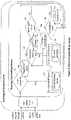
- Fig. 1 shows an overview of the system according to an embodiment of the invention.
- a parental controlling means 1 may be implemented within a core network 3 where all network accesses are converged (e.g., within the User Plane Function (UPF) in 5G Core).
- UPF User Plane Function
- the present invention is not limited to any specific network core technology.
- a user's request for a digital content on Internet may be sent by a user equipment 5 (e.g. of a child) through any access network such as Home WiFi, a cellular network or a public/private hotspot.
- the request may be sent over a router, another user equipment providing a private hotspot or a base station providing an access to a cellular network.
- the request passes through the parental controlling means within a network core, when network accesses are converged within a core network.
- the core network 3 (converged network core) may be provided e.g. within a User Plane Function (UPF) in 5G core.
- UPF User Plane Function
- the parental controlling means 1 determines whether an identifier of the user equipment 5 matches with an identifier of a user equipment registered in the parental controlling means 1 for controlling an access. If the identifier of the user equipment 5 matches with the identifier registered in the parental controlling means 1, the parental controlling means 1 determines whether the access to the content is allowable. If the access is allowable, the access is forwarded towards the content requested (target content). If the access is not allowable, the access is blocked and a notification is sent to further user equipment 7 related to the user equipment 5 which sent the request, e.g. a parent's UE. The parent may send control information e.g. for registering their children or for approving/denying the content access request from their children upon notifications. Parents may vote for or against a restriction level of a specific content.
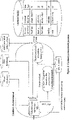
- Fig. 2 shows a block diagram of the method for parental control according to an embodiment of the invention.
- a user equipment may be identified at the User Identification by an identifier stored in the user equipment such as an IMSI (International Mobile Subscriber Identity).
- IMSI International Mobile Subscriber Identity
- the parental controlling means determines in step 10 whether the identifier of the UE which requested a content matches with an identifier of a UE associated with registered users in the parental controlling means. The determination may be carried out with an algorithm which enables a fast matching using a hash function.
- the parental controlling means may manage a list of UEs associated with registered users whose access for a content should be controlled.
- the registered users may be underage users registered by their parents.
- the parental controlling means carries out a user verification by determining whether the user associated with the UE that sent a request for a content is a user registered as a child at the parental controlling means.
- the parental controlling means may store user-specific information such as the registered user's age or content allowance information such as a list of contents that are allowed for the user (i.e. an exception list).
- the user-specific information may be stored in advance and/or requested from another user equipment (e.g. a parent's UE) on the fly.
- the request is forwarded to a further network element, e.g. to a data network, towards the content requested without being processed further at the parental controlling means.
- the request is further processed at the parental controlling means for determining whether the access to the content requested is allowable.
- a request for an access to a content may include a URL (Unified Resource Locator).
- URLs are commonly used to reference web pages or media contents.
- content information can be obtained.
- Content information may comprise service identification information (e.g. the service/domain name) and/or content identification information (e.g. one or more service specific parameters that correspond to an exact content).
- service identification information e.g. the service/domain name
- content identification information e.g. one or more service specific parameters that correspond to an exact content.
- a high-level domain name i.e. "youtube.com” in this example, suggests that the service provider is YouTube.
- a service or a service provider (such as www, Netflix, YouTube, etc.) is identified by matching the requested URL's high-level domain name with information for identifying a service provider or a service.
- the information for identifying a service provider or a service may be stored in a service/domain database at the parental controlling means.
- the service/domain database may store mapping information between known domain names and service names.
- the identified service or service provider may be used to determine whether the request for an access to a content is allowable. For instance, if a specific service provider is identified from the URL of the request, the request may be determined as not allowable.
- a content (e.g. a film name, a web page, etc.) is identified by matching the requested URL's service-specific parameter(s) with information for identifying a content.
- the information for identifying a content may be stored in a content identifier database.
- the service-specific parameter i.e. "7Smrw-BYe1l” in this example, may be used to identify the exact content.
- the information stored in the content identifier database may comprise one or more service specific parameters. Any mapping information for mapping between contents and patterns of URL which can be used to extract content identifier may be stored in the content identified database.
- the identified content may be used to determine whether the request for an access to a content is allowable. For instance, if a specific content is identified from the URL of the request, the request may be determined as not allowable.
- step 40 it is determined whether the content is in the content list(s).
- a size reduction operation may be applied for reducing the size of the content list. For example, an operator can decide whether the list contains only age-restricted contents or any contents. Alternatively or additionally, multiple contents can be presented as a single item on the list by using wild card characters (?, *) or pattern matching.
- a size reduction operation may be implemented in any other way of in any combination thereof and the invention is not limited to any of them.
- the request and/or a URL extracted from the request may be forwarded to the content assessment process (step 42).
- the content assessment process will be described in reference to Fig. 3 .
- an operator may implement the content assessment process in such a way that the assessment process runs in parallel with a content delivery.
- a content may be presented to the user for few seconds (while the assessment is on-going), but as soon as the process finds out that the user's age does not meet the age level of the content according to age restriction information, the system stops the delivery of the content and sends an error/warning message back to the user equipment
- the user-restriction information may be used to determine whether the content is allowable for the user in steps 44 and 46.
- step 44 age restriction information for the content is compared with the user's age.
- the user's age may form user-specific information which may be stored or requested to another user equipment (e.g. the parent's UE) on-the-fly. If the user's age is equal or greater than the content's minimum age according to age restriction information for the content, it is determined that the content is allowable. Thus, the request is forwarded to the further network element, e.g. a data network, towards the content requested. If the user's age is less than the content's minimum age, the request may proceed to step 46. Alternatively, in this case, the request may be determined not allowable and blocked without proceeding to step 46.
- the further network element e.g. a data network
- step 46 it is determined whether the content is allowed using content allowance information.
- Content allowance information may form user-specific information which may be stored or requested to another user equipment (e.g. the parent's UE) on-the-fly.
- the content allowance information may comprise an exception list in which contents that are allowed for the user are stored. If the content is included in the exception list, the request is allowable. Thus, the request is forwarded to the further network element, e.g. to a data network, towards the content requested. If the content is not included in the exception list, the request may be determined not allowable and blocked.
- step 44 and step 46 are carried out in sequence.
- each of step 44 and step 46 may be carried out alone, i.e. without step 46 and step 44, respectively.
- step 46 may be carried out first and the age restriction information for the content is compared with the user's age if the content is not included in the exception list.
- the content allowance information may alternatively and additionally comprise a (further) exception list in which contents that are prohibited for the user are stored.
- a request for an access to a content is determined not allowable, the access to the content is blocked. As described above, blocking may take place before or during a content delivery. In this event, an error message may be sent to the UE which sent the request for the content. Alternatively or additionally, a notification may be sent to at least one further UE(s), for example, UE(s) of parents.
- Fig. 3 shows a content assessment process according to an embodiment of the invention.
- the parental controlling means may gather information related to content restriction from one or more public database(s) and/or from content provider's website(s)/database(s) and/or using operator-implemented mechanisms on contents (e.g., a photo recognition based on A.I. or a keyword blacklisting).
- the information related to content restriction may comprise user-restriction related information for the content, i.e. any information based on which user-restriction information can be determined.
- the user-restriction related information may comprise user-restriction information itself such as age restriction.
- the one or more public database(s) may comprise a URL blacklist/whitelist and/or database(s) of contents (music, film, user-generated video, etc.) in which metadata about contents, in particular, content restriction information, are stored together with the contents.
- the result comprising content restriction information such as an age restriction can be stored in a content list.
- content restriction information such as an age restriction
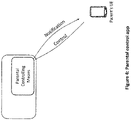
- Fig. 4 shows a parental control app according to an embodiment of the invention.
- Parents may install an app on their smartphones or tablets (i.e. UE) that communicate with parental controlling means.
- a parental control system may comprise parental controlling means and parental control app.
- parents can register their children. Parents can be notified when their children attempt to access a content that is not allowable for the children. Parents may approve or deny the content access request from their children upon notifications. Parents may vote for or against a restriction level of a specific content. The votes made by the parents' community can be taken into consideration to adjust a user restriction level of a content in a content assessment process. If a specific content is not in the content list, parents may request for a content assessment process for setting age restriction for that specific content by providing the URL.
- the parental controlling means may inform the parents through the app by sending a notification.
- the parents can then decide whether or not the content should be allowed for their child.
- Parents may participate in a content assessment process through the app by voting for or against a specific content.
- the parent control system may take the voting result into account for adjusting the content's age restriction. If a specific content does not exist within the content list, parents can request for a prior assessment of the content. Alternatively, the age restriction of the content may be assessed when it is requested for the first time.
Landscapes
- Engineering & Computer Science (AREA)
- Computer Networks & Wireless Communication (AREA)
- Signal Processing (AREA)
- Computer Hardware Design (AREA)
- Computer Security & Cryptography (AREA)
- Computing Systems (AREA)
- General Engineering & Computer Science (AREA)
- Information Transfer Between Computers (AREA)
Priority Applications (1)
| Application Number | Priority Date | Filing Date | Title |
|---|---|---|---|
| EP21176546.6A EP4096184B1 (fr) | 2021-05-28 | 2021-05-28 | Procédé et système de contrôle parental dans un réseau d'accès convergé |
Applications Claiming Priority (1)
| Application Number | Priority Date | Filing Date | Title |
|---|---|---|---|
| EP21176546.6A EP4096184B1 (fr) | 2021-05-28 | 2021-05-28 | Procédé et système de contrôle parental dans un réseau d'accès convergé |
Publications (2)
| Publication Number | Publication Date |
|---|---|
| EP4096184A1 true EP4096184A1 (fr) | 2022-11-30 |
| EP4096184B1 EP4096184B1 (fr) | 2024-09-25 |
Family
ID=76180964
Family Applications (1)
| Application Number | Title | Priority Date | Filing Date |
|---|---|---|---|
| EP21176546.6A Active EP4096184B1 (fr) | 2021-05-28 | 2021-05-28 | Procédé et système de contrôle parental dans un réseau d'accès convergé |
Country Status (1)
| Country | Link |
|---|---|
| EP (1) | EP4096184B1 (fr) |
Citations (2)
| Publication number | Priority date | Publication date | Assignee | Title |
|---|---|---|---|---|
| US20160080322A1 (en) * | 2014-09-12 | 2016-03-17 | Verizon Patent And Licensing Inc. | Parental control management and enforcement based on hardware identifiers |
| US20190190820A1 (en) * | 2015-01-12 | 2019-06-20 | Telefonaktiebolaget Lm Ericsson (Publ) | Methods and Modules for Managing Packets in a Software Defined Network |
-
2021
- 2021-05-28 EP EP21176546.6A patent/EP4096184B1/fr active Active
Patent Citations (2)
| Publication number | Priority date | Publication date | Assignee | Title |
|---|---|---|---|---|
| US20160080322A1 (en) * | 2014-09-12 | 2016-03-17 | Verizon Patent And Licensing Inc. | Parental control management and enforcement based on hardware identifiers |
| US20190190820A1 (en) * | 2015-01-12 | 2019-06-20 | Telefonaktiebolaget Lm Ericsson (Publ) | Methods and Modules for Managing Packets in a Software Defined Network |
Non-Patent Citations (1)
| Title |
|---|
| "3 Generation Partnership Project; Technical Specification Group Services and System Aspects; Service aspects; Service principles (Release 18)", vol. SA WG1, no. V18.1.0, 2 April 2021 (2021-04-02), pages 1 - 104, XP052000375, Retrieved from the Internet <URL:https://ftp.3gpp.org/Specs/archive/22_series/22.101/22101-i10.zip 22101-i10.doc> [retrieved on 20210402] * |
Also Published As
| Publication number | Publication date |
|---|---|
| EP4096184B1 (fr) | 2024-09-25 |
Similar Documents
| Publication | Publication Date | Title |
|---|---|---|
| CA3010378C (fr) | Systeme et procede pour fournir des messages de reponse personnalises sur la base du site web demande | |
| EP2020796A1 (fr) | Procédé pour accéder à des données d'utilisateurs et serveur de gestion de profils d'utilisateurs | |
| US10063377B2 (en) | Network-based authentication for third party content | |
| US20170230350A1 (en) | Network element and method for improved user authentication in communication networks | |
| US12022296B2 (en) | Network cyber-security platform | |
| US10284504B2 (en) | Address couplet communication filtering | |
| EP3930361A1 (fr) | Système et procédé pour faire fonctionner un dispositif utilisateur avec des profils de module d'identité personnalisés | |
| US11829508B2 (en) | User consent service utilizing mobile device identifiers | |
| US12302100B2 (en) | Identity authentication using mobile carrier account information and credit bureau information | |
| CN111385274B (zh) | 跨网服务调用方法、装置、特征网关及身份识别系统 | |
| US9215594B2 (en) | Subscriber data management | |
| EP4096184B1 (fr) | Procédé et système de contrôle parental dans un réseau d'accès convergé | |
| KR20120044381A (ko) | 신원과 위치 정보가 분리된 네트워크에서 사용자가 icp 웹사이트에 로그인 하는 방법, 시스템 및 로그인 장치 | |
| WO2013082793A1 (fr) | Procédé, dispositif et système de commande de transmission de service | |
| KR102251705B1 (ko) | 시간의 경과에 따라 콘텐츠로의 접근을 제한하는 콘텐츠 제공 서버의 동작 방법과 이를 이용한 서비스 제공 방법 | |
| KR102322236B1 (ko) | 콘텐츠 제공 서버의 동작 방법과 이를 수행할 수 있는 컴퓨터 프로그램 | |
| CA3276774A1 (en) | Network based id for user tracking | |
| KR20190054409A (ko) | 보안 검색 서버 및 이를 이용하는 보안 강화 방법 |
Legal Events
| Date | Code | Title | Description |
|---|---|---|---|
| PUAI | Public reference made under article 153(3) epc to a published international application that has entered the european phase |
Free format text: ORIGINAL CODE: 0009012 |
|
| STAA | Information on the status of an ep patent application or granted ep patent |
Free format text: STATUS: REQUEST FOR EXAMINATION WAS MADE |
|
| 17P | Request for examination filed |
Effective date: 20220105 |
|
| AK | Designated contracting states |
Kind code of ref document: A1 Designated state(s): AL AT BE BG CH CY CZ DE DK EE ES FI FR GB GR HR HU IE IS IT LI LT LU LV MC MK MT NL NO PL PT RO RS SE SI SK SM TR |
|
| STAA | Information on the status of an ep patent application or granted ep patent |
Free format text: STATUS: EXAMINATION IS IN PROGRESS |
|
| 17Q | First examination report despatched |
Effective date: 20240222 |
|
| REG | Reference to a national code |
Ref country code: DE Ref legal event code: R079 Free format text: PREVIOUS MAIN CLASS: H04L0029060000 Ipc: H04L0009400000 Ref country code: DE Ref legal event code: R079 Ref document number: 602021019180 Country of ref document: DE Free format text: PREVIOUS MAIN CLASS: H04L0029060000 Ipc: H04L0009400000 |
|
| GRAP | Despatch of communication of intention to grant a patent |
Free format text: ORIGINAL CODE: EPIDOSNIGR1 |
|
| STAA | Information on the status of an ep patent application or granted ep patent |
Free format text: STATUS: GRANT OF PATENT IS INTENDED |
|
| RIC1 | Information provided on ipc code assigned before grant |
Ipc: H04L 67/56 20220101ALI20240620BHEP Ipc: H04L 9/40 20220101AFI20240620BHEP |
|
| INTG | Intention to grant announced |
Effective date: 20240704 |
|
| GRAS | Grant fee paid |
Free format text: ORIGINAL CODE: EPIDOSNIGR3 |
|
| GRAA | (expected) grant |
Free format text: ORIGINAL CODE: 0009210 |
|
| STAA | Information on the status of an ep patent application or granted ep patent |
Free format text: STATUS: THE PATENT HAS BEEN GRANTED |
|
| AK | Designated contracting states |
Kind code of ref document: B1 Designated state(s): AL AT BE BG CH CY CZ DE DK EE ES FI FR GB GR HR HU IE IS IT LI LT LU LV MC MK MT NL NO PL PT RO RS SE SI SK SM TR |
|
| REG | Reference to a national code |
Ref country code: GB Ref legal event code: FG4D |
|
| REG | Reference to a national code |
Ref country code: CH Ref legal event code: EP |
|
| REG | Reference to a national code |
Ref country code: DE Ref legal event code: R096 Ref document number: 602021019180 Country of ref document: DE |
|
| REG | Reference to a national code |
Ref country code: IE Ref legal event code: FG4D |
|
| REG | Reference to a national code |
Ref country code: LT Ref legal event code: MG9D |
|
| PG25 | Lapsed in a contracting state [announced via postgrant information from national office to epo] |
Ref country code: NO Free format text: LAPSE BECAUSE OF FAILURE TO SUBMIT A TRANSLATION OF THE DESCRIPTION OR TO PAY THE FEE WITHIN THE PRESCRIBED TIME-LIMIT Effective date: 20241225 |
|
| PG25 | Lapsed in a contracting state [announced via postgrant information from national office to epo] |
Ref country code: GR Free format text: LAPSE BECAUSE OF FAILURE TO SUBMIT A TRANSLATION OF THE DESCRIPTION OR TO PAY THE FEE WITHIN THE PRESCRIBED TIME-LIMIT Effective date: 20241226 Ref country code: FI Free format text: LAPSE BECAUSE OF FAILURE TO SUBMIT A TRANSLATION OF THE DESCRIPTION OR TO PAY THE FEE WITHIN THE PRESCRIBED TIME-LIMIT Effective date: 20240925 |
|
| PG25 | Lapsed in a contracting state [announced via postgrant information from national office to epo] |
Ref country code: BG Free format text: LAPSE BECAUSE OF FAILURE TO SUBMIT A TRANSLATION OF THE DESCRIPTION OR TO PAY THE FEE WITHIN THE PRESCRIBED TIME-LIMIT Effective date: 20240925 |
|
| PGFP | Annual fee paid to national office [announced via postgrant information from national office to epo] |
Ref country code: FR Payment date: 20241220 Year of fee payment: 5 |
|
| PG25 | Lapsed in a contracting state [announced via postgrant information from national office to epo] |
Ref country code: LV Free format text: LAPSE BECAUSE OF FAILURE TO SUBMIT A TRANSLATION OF THE DESCRIPTION OR TO PAY THE FEE WITHIN THE PRESCRIBED TIME-LIMIT Effective date: 20240925 |
|
| PG25 | Lapsed in a contracting state [announced via postgrant information from national office to epo] |
Ref country code: RS Free format text: LAPSE BECAUSE OF FAILURE TO SUBMIT A TRANSLATION OF THE DESCRIPTION OR TO PAY THE FEE WITHIN THE PRESCRIBED TIME-LIMIT Effective date: 20241225 |
|
| REG | Reference to a national code |
Ref country code: NL Ref legal event code: MP Effective date: 20240925 |
|
| PG25 | Lapsed in a contracting state [announced via postgrant information from national office to epo] |
Ref country code: RS Free format text: LAPSE BECAUSE OF FAILURE TO SUBMIT A TRANSLATION OF THE DESCRIPTION OR TO PAY THE FEE WITHIN THE PRESCRIBED TIME-LIMIT Effective date: 20241225 Ref country code: NO Free format text: LAPSE BECAUSE OF FAILURE TO SUBMIT A TRANSLATION OF THE DESCRIPTION OR TO PAY THE FEE WITHIN THE PRESCRIBED TIME-LIMIT Effective date: 20241225 Ref country code: LV Free format text: LAPSE BECAUSE OF FAILURE TO SUBMIT A TRANSLATION OF THE DESCRIPTION OR TO PAY THE FEE WITHIN THE PRESCRIBED TIME-LIMIT Effective date: 20240925 Ref country code: GR Free format text: LAPSE BECAUSE OF FAILURE TO SUBMIT A TRANSLATION OF THE DESCRIPTION OR TO PAY THE FEE WITHIN THE PRESCRIBED TIME-LIMIT Effective date: 20241226 Ref country code: FI Free format text: LAPSE BECAUSE OF FAILURE TO SUBMIT A TRANSLATION OF THE DESCRIPTION OR TO PAY THE FEE WITHIN THE PRESCRIBED TIME-LIMIT Effective date: 20240925 Ref country code: BG Free format text: LAPSE BECAUSE OF FAILURE TO SUBMIT A TRANSLATION OF THE DESCRIPTION OR TO PAY THE FEE WITHIN THE PRESCRIBED TIME-LIMIT Effective date: 20240925 |
|
| REG | Reference to a national code |
Ref country code: AT Ref legal event code: MK05 Ref document number: 1727576 Country of ref document: AT Kind code of ref document: T Effective date: 20240925 |
|
| PG25 | Lapsed in a contracting state [announced via postgrant information from national office to epo] |
Ref country code: NL Free format text: LAPSE BECAUSE OF FAILURE TO SUBMIT A TRANSLATION OF THE DESCRIPTION OR TO PAY THE FEE WITHIN THE PRESCRIBED TIME-LIMIT Effective date: 20240925 |
|
| PG25 | Lapsed in a contracting state [announced via postgrant information from national office to epo] |
Ref country code: IS Free format text: LAPSE BECAUSE OF FAILURE TO SUBMIT A TRANSLATION OF THE DESCRIPTION OR TO PAY THE FEE WITHIN THE PRESCRIBED TIME-LIMIT Effective date: 20250125 Ref country code: PT Free format text: LAPSE BECAUSE OF FAILURE TO SUBMIT A TRANSLATION OF THE DESCRIPTION OR TO PAY THE FEE WITHIN THE PRESCRIBED TIME-LIMIT Effective date: 20250127 |
|
| PG25 | Lapsed in a contracting state [announced via postgrant information from national office to epo] |
Ref country code: RO Free format text: LAPSE BECAUSE OF FAILURE TO SUBMIT A TRANSLATION OF THE DESCRIPTION OR TO PAY THE FEE WITHIN THE PRESCRIBED TIME-LIMIT Effective date: 20240925 Ref country code: SM Free format text: LAPSE BECAUSE OF FAILURE TO SUBMIT A TRANSLATION OF THE DESCRIPTION OR TO PAY THE FEE WITHIN THE PRESCRIBED TIME-LIMIT Effective date: 20240925 |
|
| PG25 | Lapsed in a contracting state [announced via postgrant information from national office to epo] |
Ref country code: ES Free format text: LAPSE BECAUSE OF FAILURE TO SUBMIT A TRANSLATION OF THE DESCRIPTION OR TO PAY THE FEE WITHIN THE PRESCRIBED TIME-LIMIT Effective date: 20240925 |
|
| PG25 | Lapsed in a contracting state [announced via postgrant information from national office to epo] |
Ref country code: EE Free format text: LAPSE BECAUSE OF FAILURE TO SUBMIT A TRANSLATION OF THE DESCRIPTION OR TO PAY THE FEE WITHIN THE PRESCRIBED TIME-LIMIT Effective date: 20240925 Ref country code: AT Free format text: LAPSE BECAUSE OF FAILURE TO SUBMIT A TRANSLATION OF THE DESCRIPTION OR TO PAY THE FEE WITHIN THE PRESCRIBED TIME-LIMIT Effective date: 20240925 |
|
| PG25 | Lapsed in a contracting state [announced via postgrant information from national office to epo] |
Ref country code: PL Free format text: LAPSE BECAUSE OF FAILURE TO SUBMIT A TRANSLATION OF THE DESCRIPTION OR TO PAY THE FEE WITHIN THE PRESCRIBED TIME-LIMIT Effective date: 20240925 Ref country code: CZ Free format text: LAPSE BECAUSE OF FAILURE TO SUBMIT A TRANSLATION OF THE DESCRIPTION OR TO PAY THE FEE WITHIN THE PRESCRIBED TIME-LIMIT Effective date: 20240925 |
|
| PG25 | Lapsed in a contracting state [announced via postgrant information from national office to epo] |
Ref country code: SK Free format text: LAPSE BECAUSE OF FAILURE TO SUBMIT A TRANSLATION OF THE DESCRIPTION OR TO PAY THE FEE WITHIN THE PRESCRIBED TIME-LIMIT Effective date: 20240925 Ref country code: IT Free format text: LAPSE BECAUSE OF FAILURE TO SUBMIT A TRANSLATION OF THE DESCRIPTION OR TO PAY THE FEE WITHIN THE PRESCRIBED TIME-LIMIT Effective date: 20240925 |
|
| REG | Reference to a national code |
Ref country code: DE Ref legal event code: R097 Ref document number: 602021019180 Country of ref document: DE |
|
| PGFP | Annual fee paid to national office [announced via postgrant information from national office to epo] |
Ref country code: DE Payment date: 20241212 Year of fee payment: 5 |
|
| PG25 | Lapsed in a contracting state [announced via postgrant information from national office to epo] |
Ref country code: DK Free format text: LAPSE BECAUSE OF FAILURE TO SUBMIT A TRANSLATION OF THE DESCRIPTION OR TO PAY THE FEE WITHIN THE PRESCRIBED TIME-LIMIT Effective date: 20240925 |
|
| PGFP | Annual fee paid to national office [announced via postgrant information from national office to epo] |
Ref country code: GB Payment date: 20250522 Year of fee payment: 5 |
|
| PLBE | No opposition filed within time limit |
Free format text: ORIGINAL CODE: 0009261 |
|
| STAA | Information on the status of an ep patent application or granted ep patent |
Free format text: STATUS: NO OPPOSITION FILED WITHIN TIME LIMIT |
|
| 26N | No opposition filed |
Effective date: 20250626 |
|
| PG25 | Lapsed in a contracting state [announced via postgrant information from national office to epo] |
Ref country code: SE Free format text: LAPSE BECAUSE OF FAILURE TO SUBMIT A TRANSLATION OF THE DESCRIPTION OR TO PAY THE FEE WITHIN THE PRESCRIBED TIME-LIMIT Effective date: 20240925 |
|
| REG | Reference to a national code |
Ref country code: CH Ref legal event code: H13 Free format text: ST27 STATUS EVENT CODE: U-0-0-H10-H13 (AS PROVIDED BY THE NATIONAL OFFICE) Effective date: 20251223 |
|
| PG25 | Lapsed in a contracting state [announced via postgrant information from national office to epo] |
Ref country code: HR Free format text: LAPSE BECAUSE OF FAILURE TO SUBMIT A TRANSLATION OF THE DESCRIPTION OR TO PAY THE FEE WITHIN THE PRESCRIBED TIME-LIMIT Effective date: 20240925 Ref country code: LU Free format text: LAPSE BECAUSE OF NON-PAYMENT OF DUE FEES Effective date: 20250528 |
|
| PG25 | Lapsed in a contracting state [announced via postgrant information from national office to epo] |
Ref country code: CH Free format text: LAPSE BECAUSE OF NON-PAYMENT OF DUE FEES Effective date: 20250531 |
|
| REG | Reference to a national code |
Ref country code: BE Ref legal event code: MM Effective date: 20250531 |
|
| PG25 | Lapsed in a contracting state [announced via postgrant information from national office to epo] |
Ref country code: MC Free format text: LAPSE BECAUSE OF FAILURE TO SUBMIT A TRANSLATION OF THE DESCRIPTION OR TO PAY THE FEE WITHIN THE PRESCRIBED TIME-LIMIT Effective date: 20240925 |
|
| PG25 | Lapsed in a contracting state [announced via postgrant information from national office to epo] |
Ref country code: IE Free format text: LAPSE BECAUSE OF NON-PAYMENT OF DUE FEES Effective date: 20250528 |
|
| PG25 | Lapsed in a contracting state [announced via postgrant information from national office to epo] |
Ref country code: BE Free format text: LAPSE BECAUSE OF NON-PAYMENT OF DUE FEES Effective date: 20250531 |