EP4096336A1 - Procédé de détermination d'informations de rétroaction de liaison latérale, et dispositif de communication - Google Patents
Procédé de détermination d'informations de rétroaction de liaison latérale, et dispositif de communication Download PDFInfo
- Publication number
- EP4096336A1 EP4096336A1 EP21744963.6A EP21744963A EP4096336A1 EP 4096336 A1 EP4096336 A1 EP 4096336A1 EP 21744963 A EP21744963 A EP 21744963A EP 4096336 A1 EP4096336 A1 EP 4096336A1
- Authority
- EP
- European Patent Office
- Prior art keywords
- resource
- target
- psfch
- sidelink
- channel
- Prior art date
- Legal status (The legal status is an assumption and is not a legal conclusion. Google has not performed a legal analysis and makes no representation as to the accuracy of the status listed.)
- Pending
Links
Images
Classifications
-
- H—ELECTRICITY
- H04—ELECTRIC COMMUNICATION TECHNIQUE
- H04W—WIRELESS COMMUNICATION NETWORKS
- H04W72/00—Local resource management
- H04W72/02—Selection of wireless resources by user or terminal
-
- H—ELECTRICITY
- H04—ELECTRIC COMMUNICATION TECHNIQUE
- H04L—TRANSMISSION OF DIGITAL INFORMATION, e.g. TELEGRAPHIC COMMUNICATION
- H04L5/00—Arrangements affording multiple use of the transmission path
- H04L5/003—Arrangements for allocating sub-channels of the transmission path
- H04L5/0053—Allocation of signalling, i.e. of overhead other than pilot signals
- H04L5/0055—Physical resource allocation for ACK/NACK
-
- H—ELECTRICITY
- H04—ELECTRIC COMMUNICATION TECHNIQUE
- H04L—TRANSMISSION OF DIGITAL INFORMATION, e.g. TELEGRAPHIC COMMUNICATION
- H04L1/00—Arrangements for detecting or preventing errors in the information received
- H04L1/12—Arrangements for detecting or preventing errors in the information received by using return channel
- H04L1/16—Arrangements for detecting or preventing errors in the information received by using return channel in which the return channel carries supervisory signals, e.g. repetition request signals
- H04L1/18—Automatic repetition systems, e.g. Van Duuren systems
- H04L1/1812—Hybrid protocols; Hybrid automatic repeat request [HARQ]
-
- H—ELECTRICITY
- H04—ELECTRIC COMMUNICATION TECHNIQUE
- H04L—TRANSMISSION OF DIGITAL INFORMATION, e.g. TELEGRAPHIC COMMUNICATION
- H04L1/00—Arrangements for detecting or preventing errors in the information received
- H04L1/12—Arrangements for detecting or preventing errors in the information received by using return channel
- H04L1/16—Arrangements for detecting or preventing errors in the information received by using return channel in which the return channel carries supervisory signals, e.g. repetition request signals
- H04L1/18—Automatic repetition systems, e.g. Van Duuren systems
- H04L1/1829—Arrangements specially adapted for the receiver end
- H04L1/1854—Scheduling and prioritising arrangements
-
- H—ELECTRICITY
- H04—ELECTRIC COMMUNICATION TECHNIQUE
- H04L—TRANSMISSION OF DIGITAL INFORMATION, e.g. TELEGRAPHIC COMMUNICATION
- H04L1/00—Arrangements for detecting or preventing errors in the information received
- H04L1/12—Arrangements for detecting or preventing errors in the information received by using return channel
- H04L1/16—Arrangements for detecting or preventing errors in the information received by using return channel in which the return channel carries supervisory signals, e.g. repetition request signals
- H04L1/18—Automatic repetition systems, e.g. Van Duuren systems
- H04L1/1829—Arrangements specially adapted for the receiver end
- H04L1/1861—Physical mapping arrangements
-
- H—ELECTRICITY
- H04—ELECTRIC COMMUNICATION TECHNIQUE
- H04L—TRANSMISSION OF DIGITAL INFORMATION, e.g. TELEGRAPHIC COMMUNICATION
- H04L5/00—Arrangements affording multiple use of the transmission path
- H04L5/0001—Arrangements for dividing the transmission path
- H04L5/0003—Two-dimensional division
- H04L5/0005—Time-frequency
- H04L5/0007—Time-frequency the frequencies being orthogonal, e.g. OFDM(A) or DMT
-
- H—ELECTRICITY
- H04—ELECTRIC COMMUNICATION TECHNIQUE
- H04W—WIRELESS COMMUNICATION NETWORKS
- H04W4/00—Services specially adapted for wireless communication networks; Facilities therefor
- H04W4/30—Services specially adapted for particular environments, situations or purposes
- H04W4/40—Services specially adapted for particular environments, situations or purposes for vehicles, e.g. vehicle-to-pedestrians [V2P]
-
- H—ELECTRICITY
- H04—ELECTRIC COMMUNICATION TECHNIQUE
- H04W—WIRELESS COMMUNICATION NETWORKS
- H04W72/00—Local resource management
- H04W72/04—Wireless resource allocation
- H04W72/044—Wireless resource allocation based on the type of the allocated resource
- H04W72/0446—Resources in time domain, e.g. slots or frames
-
- H—ELECTRICITY
- H04—ELECTRIC COMMUNICATION TECHNIQUE
- H04W—WIRELESS COMMUNICATION NETWORKS
- H04W72/00—Local resource management
- H04W72/04—Wireless resource allocation
- H04W72/044—Wireless resource allocation based on the type of the allocated resource
- H04W72/0453—Resources in frequency domain, e.g. a carrier in FDMA
-
- H—ELECTRICITY
- H04—ELECTRIC COMMUNICATION TECHNIQUE
- H04W—WIRELESS COMMUNICATION NETWORKS
- H04W72/00—Local resource management
- H04W72/20—Control channels or signalling for resource management
-
- H—ELECTRICITY
- H04—ELECTRIC COMMUNICATION TECHNIQUE
- H04L—TRANSMISSION OF DIGITAL INFORMATION, e.g. TELEGRAPHIC COMMUNICATION
- H04L1/00—Arrangements for detecting or preventing errors in the information received
- H04L1/12—Arrangements for detecting or preventing errors in the information received by using return channel
- H04L1/16—Arrangements for detecting or preventing errors in the information received by using return channel in which the return channel carries supervisory signals, e.g. repetition request signals
- H04L1/1607—Details of the supervisory signal
- H04L1/1614—Details of the supervisory signal using bitmaps
-
- H—ELECTRICITY
- H04—ELECTRIC COMMUNICATION TECHNIQUE
- H04L—TRANSMISSION OF DIGITAL INFORMATION, e.g. TELEGRAPHIC COMMUNICATION
- H04L1/00—Arrangements for detecting or preventing errors in the information received
- H04L2001/0092—Error control systems characterised by the topology of the transmission link
-
- H—ELECTRICITY
- H04—ELECTRIC COMMUNICATION TECHNIQUE
- H04L—TRANSMISSION OF DIGITAL INFORMATION, e.g. TELEGRAPHIC COMMUNICATION
- H04L5/00—Arrangements affording multiple use of the transmission path
- H04L5/0001—Arrangements for dividing the transmission path
- H04L5/0003—Two-dimensional division
- H04L5/0005—Time-frequency
- H04L5/0007—Time-frequency the frequencies being orthogonal, e.g. OFDM(A) or DMT
- H04L5/001—Time-frequency the frequencies being orthogonal, e.g. OFDM(A) or DMT the frequencies being arranged in component carriers
-
- H—ELECTRICITY
- H04—ELECTRIC COMMUNICATION TECHNIQUE
- H04L—TRANSMISSION OF DIGITAL INFORMATION, e.g. TELEGRAPHIC COMMUNICATION
- H04L5/00—Arrangements affording multiple use of the transmission path
- H04L5/003—Arrangements for allocating sub-channels of the transmission path
- H04L5/0078—Timing of allocation
Definitions
- the present invention relates to the field of communication, and in particular, to a method for determining sidelink feedback information and a communication device.
- the new radio (New Radio, NR) mobile communication system (NR system for short) supports sidelink (Sidelink, SL, which may also be referred to as a direct link or the like) transmission.
- Sidelink Sidelink, SL, which may also be referred to as a direct link or the like
- HARQ Hybrid Automatic Repeat Request
- the process of the SL HARQ feedback mechanism may include that: After receiving SL data, an SL receiving user feeds back SL HARQ feedback information to indicate whether SL transmission succeeds or fails. After receiving the SL HARQ feedback information on an SL, an SL sending user can learn whether the previous SL transmission succeeds.
- An SL user may be a sending user or a receiving user, that is, the same user can perform receiving or sending separately in different time or frequency domains.
- the SL HARQ feedback information includes acknowledgment (Acknowledgment, ACK) information and negative acknowledgment (Negative Acknowledgment, NACK) information.
- transmission of an SL data packet may be performed on an SL between a user and a user. Therefore, it is likely that a control node cannot directly learn whether the transmission of the SL data packet succeeds, and the user is required to send SL HARQ feedback information to the control node, so that the control node can further determine whether the transmission on the SL succeeds.
- One of the technical problems to be resolved by embodiments of the present invention is how to implement efficient and reliable HARQ feedback on a sidelink.
- an embodiment of the present invention provides a method for determining sidelink feedback information, applied to a communication device, the method including: determining sidelink hybrid automatic repeat request SL HARQ feedback information based on a target physical sidelink feedback channel PSFCH resource set associated with a target uplink channel, where the target PSFCH resource set is determined based on a target time interval, where the target time interval is a spacing between the target uplink channel and a PSFCH.
- an embodiment of the present invention provides a communication device, including: a determining module, configured to determine sidelink hybrid automatic repeat request SL HARQ feedback information based on a target physical sidelink feedback channel PSFCH resource set associated with a target uplink channel, where the target PSFCH resource set is determined based on a target time interval, where the target time interval is a spacing between the target uplink channel and a PSFCH.
- an embodiment of the present invention provides a communication device, including: a memory, a processor, and a computer program stored in the memory and executable on the processor, where when executed by the processor, the computer program implements the steps of the method according to the first aspect.
- an embodiment of the present invention further provides a computer-readable storage medium, storing a computer program, where when executed by a processor, the computer program performs the steps of the method according to the first aspect.
- a target PSFCH resource set associated with a target uplink channel can be accurately derived from a target time interval between the target uplink channel and a physical sidelink feedback channel PSFCH, to establish a mapping relationship between the target uplink channel and the target PSFCH resource set, so that based on this, SL HARQ feedback information corresponding to the target PSFCH resource set may be mapped to the target uplink channel for reporting.
- efficient and reliable HARQ feedback on the sidelink is achieved, so that a receiving party of the SL HARQ feedback information can accurately learn whether data transmission on the sidelink succeeds, thereby improving the reliability and the resource utilization of the data transmission on the SL.
- the technical solutions of the present invention may be applied to various communication systems, for example, a Global System for Mobile Communications (Global System for Mobile communications, GSM), a Code Division Multiple Access (Code Division Multiple Access, CDMA) system, Wideband Code Division Multiple Access (Wideband Code Division Multiple Access Wireless, WCDMA), a general packet radio service (General Packet Radio Service, GPRS), Long Term Evolution/Long Term Evolution Advanced (Long Term Evolution Advanced, LTE-A), and NR
- GSM Global System for Mobile Communications
- CDMA Code Division Multiple Access
- WCDMA Wideband Code Division Multiple Access Wireless
- GPRS General Packet Radio Service
- LTE-A Long Term Evolution Advanced
- NR Universal Terrestriality
- Client UE also referred to as a terminal device (Mobile Terminal), mobile user equipment, or the like, may communicate with one or more core networks through a radio access network (RAN, Radio Access Network).
- the user equipment may be a terminal device, such as a mobile phone (also referred to as a "cellular" phone) and a computer with a mobile terminal.
- the user equipment may be a portable, pocket-sized, handheld, computer built-in, or in-vehicle mobile apparatus, which exchanges languages and/or data with the radio access network.
- a network device also referred to as a base station, may be a base station (Base Transceiver Station, BTS) in GSM or CDMA, may be a base station (NodeB) in WCDMA, or may be an evolved base station (evolved NodeB, eNB, or e-NodeB) in LTE or a 5G base station (gNB).
- BTS Base Transceiver Station
- NodeB base station
- eNB evolved base station
- gNB 5G base station
- the NR SL supports three transmission modes: broadcast, multicast, and unicast.
- the multicast transmission mode of the NR SL supports two use cases, that is, connection-based multicast and connectionless multicast.
- the connection-based multicast mode refers to a scenario in which a connection is established between UEs of multicast
- the connectionless multicast mode refers to a scenario in which UEs of multicast do not know other UEs in a group and do not establish a connection.
- a plurality of receiving ends support two mechanisms when performing HARQ feedback:
- Mechanism 1 (option1 NACK-only feedback, or connectionless mechanism): If the data is received but cannot be decoded, NACK information is fed back; otherwise, no feedback is performed. In this case, if not receiving a NACK, a sending end considers that all the receiving ends have successfully received and decoded the data. This mode is applicable to a connectionless multicast scenario.
- Mechanism 2 (option2 ACK/NACK feedback, or connection-based mechanism): If the data is received but cannot be decoded, or if sidelink control information (Sidelink Control Information, SCI) is received, but no data is received, NACK information is fed back, and if the data is received and correctly decoded, ACK information is fed back. In this case, if the sending end receives a NACK sent by a receiving end user or does not receive an ACK or a NACK, the sending end considers that transmission sent to the receiving end user fails.
- SCI Sidelink Control Information
- the sending end If receiving an ACK sent by a specific receiving end, the sending end considers that transmission sent to a user of the receiving end succeeds, and if receiving ACKs sent by all the receiving ends, the sending end considers that transmission of a corresponding transport block (Transport Block, TB) succeeds.
- Transport Block Transport Block
- the embodiments of the present invention provide a method for determining sidelink feedback information, executed by a communication device.
- the communication device may be a network device or a terminal device.
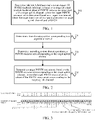
- the method includes following process steps: Step 101: Determine sidelink hybrid automatic repeat request SL HARQ feedback information based on a target physical sidelink feedback channel PSFCH resource set associated with a target uplink channel, where the target PSFCH resource set is determined based on a target time interval, where the target time interval is a spacing between the target uplink channel and a target PSFCH.
- the target uplink channel is used for transmission of SL HARQ feedback information, and may include a physical uplink control channel (Physical Uplink Control Channel, PUCCH) or a physical uplink shared channel (Physical Uplink Shared Channel, PUSCH).
- PUCCH Physical Uplink Control Channel
- PUSCH Physical Uplink Shared Channel
- the target time interval between the target uplink channel and the target physical sidelink feedback channel includes a slot spacing, for example, 0 slot to 15 slots.
- the spacing may be configured or indicated by the network device.
- There may be one or more target time intervals.
- a feedback position of SL HARQ feedback information corresponding to PSFCH resources in the target PSFCH resource set on the target uplink channel may be determined based on the target time interval.
- the target time interval may be indicated by the network device by using Radio Resource Control (Radio Resource Control, RRC) signaling, downlink control information (Downlink Control Information, DCI), or other signaling.
- Radio Resource Control Radio Resource Control
- DCI Downlink Control Information
- a starting point of the target time interval may be a starting point of a time domain resource (for example, a slot) at which the PSFCH is located, and an end point thereof is a starting point of a time domain resource (for example, a slot) at which the target uplink channel is located.
- a time domain resource for example, a slot
- the starting point of the target time interval may be an end point of a time domain resource (for example, a slot) at which the PSFCH is located or may be a receiving moment of the PSFCH.
- the target time interval may be explained according to an air interface sub-carrier spacing (Uu SCS).
- the air interface (Uu, where U represents a user to network interface, and u represents universal) is configured to implement communication between UE and an evolved Evolved Universal Terrestrial Radio Access Network (Evolved Universal Terrestrial Radio Access Network, EUTRAN).
- a sub-carrier spacing (Sub-Carrier Spacing, SCS) may also be referred to as a PUCCH SCS or a UL SCS.
- the Uu SCS may be a PUCCH SCS or an uplink SCS, but is not limited thereto.
- the SL HARQ feedback information includes ACK information or NACK information.
- a value of a feedback bit corresponding to ACK information may be set to "1", and a value of a feedback bit corresponding to NACK information is set to "0".
- a value of a feedback bit corresponding to ACK information may be set to "0", and a value of a feedback bit corresponding to NACK information is set to "1".
- transmission of the SL HARQ feedback information is performed on the target uplink channel in the format of an SL codebook, to feed back SL HARQ feedback information corresponding to a plurality of pieces of data, for example, SL HARQ feedback information corresponding to a plurality of TBs, on a same resource, to reduce the complexity of feedback.
- the SL codebook may be a bitmap (bitmap) or a matrix.
- a mode of constructing an SL codebook based on the SL HARQ feedback information determined in the embodiments of the present invention may reduce the burden of a user in aspects, such as reporting and encoding complexity, and lower codebook overheads while improving the reliability of feeding back SL HARQ feedback information based on uplink transmission.
- the target PSFCH resource set may be a set of time domain resources, for example, a set of PSFCH occasions (occasion), or may be resources in another dimension, for example, a frequency domain dimension, a carrier dimension, or a terminal device, that is, a user dimension. That is, the target PSFCH resource set may be a set of resources corresponding to a plurality of dimensions.
- a target PSFCH resource set associated with a target uplink channel can be accurately derived from a target time interval between the target uplink channel and a physical sidelink feedback channel PSFCH, to establish a mapping relationship between the target uplink channel and the target PSFCH resource set, so that based on this, SL HARQ feedback information corresponding to the target PSFCH resource set may be mapped to the target uplink channel for reporting.
- efficient and reliable HARQ feedback on the sidelink is achieved, so that a receiving party of the SL HARQ feedback information can accurately learn whether data transmission on the sidelink succeeds, thereby improving the reliability and the resource utilization of the data transmission on the SL.
- a specific embodiment of the method for determining SL feedback information provided in the embodiments of the present invention may further include the following process steps, to determine a target PSFCH resource set associated with the target uplink channel:
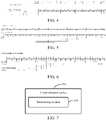
- a feedback window that is, the time domain position, of the target uplink channel may be determined based on the target time interval, and further, all PSFCH resources in the time domain position can be determined as resources in the PSFCH resource set corresponding to the target uplink channel.
- the time domain position corresponding to Y2 includes a slot corresponding to (n-Y2), and further, PSFCH resources (for example, PSFCH occasions) in the slot corresponding to (n-Y2) are all resources in the PSFCH resource set corresponding to the target uplink channel.
- PSFCH resources for example, PSFCH occasions
- the slot may be a Uu slot.
- the Uu slot corresponding to Y2 refers to a slot that corresponds to (n-Y2) and of which an SCS is a Uu SCS.
- the slot may be an SL slot.
- the SL slot corresponding to Y2 refers to one or more SL slots that overlap with a slot (n-Y2).
- a plurality of SL slots correspond to the slot (n-Y2).
- Step 205 Determine the target PSFCH resource set based on the PSFCH resource set corresponding to the target uplink channel, where the target PSFCH resource set is a subset of the PSFCH resource set corresponding to the target uplink channel.
- the target PSFCH resource set associated with the target uplink channel may be obtained based on the PSFCH resource set corresponding to the target uplink channel.
- the target PSFCH resource set is a subset of the PSFCH resource set corresponding to the target uplink channel, that is, some or all resources in the PSFCH resource set corresponding to the target uplink channel are used as resources in the target PSFCH resource set.
- step 205 may be correspondingly performed as different solutions, and includes, but is not limited to, the content shown in the following specific embodiments.
- the PSFCH resource set corresponding to the target uplink channel includes a first PSFCH resource, where the first PSFCH resource corresponds to a time domain position including a PSFCH resource.
- step 205 may be performed as the following content: determining the first PSFCH resource in the PSFCH resource set corresponding to the target uplink channel as a PSFCH resource in the target PSFCH resource set.
- the resource in the target PSFCH resource set may include only the first PSFCH resource corresponding to the time domain position actually including a PSFCH resource in the PSFCH resource set corresponding to the target uplink channel.
- the PSFCH resource set corresponding to the target uplink channel includes a second PSFCH resource, where the second PSFCH resource corresponds to a time domain position including no PSFCH resource.
- the second PSFCH resource may be referred to as a virtual PSFCH resource (virtual PSFCH occasion).
- step 205 may be performed as the following content: determining the second PSFCH resource in the PSFCH resource set corresponding to the target uplink channel as a PSFCH resource in the target PSFCH resource set.
- the resource in the target PSFCH resource set may also include only the second PSFCH resource corresponding to the time domain position including no PSFCH resource in the PSFCH resource set corresponding to the target uplink channel.
- the PSFCH resource set corresponding to the target uplink channel includes a first PSFCH resource and a second PSFCH resource.
- the first PSFCH resource corresponds to a time domain position including a PSFCH resource
- a second PSFCH resource corresponds to a time domain position including no PSFCH resource.
- step 205 may be performed as the following content: determining the first PSFCH resource and the second PSFCH resource in the PSFCH resource set corresponding to the target uplink channel as PSFCH resources in the target PSFCH resource set.
- the resources in the target PSFCH resource set may include the first PSFCH resource corresponding to the time domain position actually including a PSFCH resource and the second PSFCH resource corresponding to the time domain position including no PSFCH resource in the PSFCH resource set corresponding to the target uplink channel.
- the time domain position may belong to the target PSFCH resource set or may not belong to the target PSFCH resource set.
- step 101 may be performed as the following content: determining all of SL HARQ feedback information corresponding to the second PSFCH resource in the target PSFCH resource set as one of acknowledgment ACK information or negative acknowledgment NACK information.
- SL HARQ feedback information corresponding to the second PSFCH resources may be entirely determined as ACK information or may be entirely determined as NACK information, that is, values of SL HARQ feedback time domain bits corresponding to the second PSFCH resources are all set to a value corresponding to the ACK information (for example, "1") or are all set to a value (for example, "0") corresponding to the NACK information.
- step 101 may be performed as the following content: determining the SL HARQ feedback information based on a first number of SL HARQ feedback time domain bits respectively corresponding to each PSFCH resource in the target PSFCH resource set.
- the SL HARQ feedback information corresponding to the target PSFCH resource set may include values corresponding to the first number of SL HARQ feedback time domain bits respectively corresponding to all the PSFCH resources in the target PSFCH resource set.
- the first number may be determined based on different parameters.
- the parameter may include at least one of PSFCH density and a target sub-carrier spacing SCS.
- the target SCS includes at least one of an SL SCS or a Uu SCS.
- a specific embodiment of a mode of determining the first number includes, but is not limited, to following content:
- the PSFCH density may also be referred to as a PSFCH period.
- the PSFCH density may be explained according to the SL SCS, but is not limited to the SL SCS, and refers to that one PSFCH resource appears every a specific number of time domain positions, where the specific number is a value of the PSFCH density.
- some time domain positions include a PSFCH resource and another sidelink channel resource, for example, at least one of a physical sidelink shared channel (Physical Sidelink Share Channel, PSSCH) resource or a physical sidelink control channel (Physical Sidelink Control Channel, PSCCH) resource.
- PSSCH Physical Sidelink Share Channel
- PSCCH Physical Sidelink Control Channel
- some time domain positions include only a PSSCH resource and/or a PSCCH resource but include no PSFCH resource.
- a value of the first number is equal to a value of the PSFCH density.
- the first number is related to the target sub-carrier spacing SCS.
- a value of the first number is equal to a value of the PSFCH density.
- a value of the first number is determined based on one of the following modes:
- N the number of possible PSSCH occasions associated with the PSFCH occasion
- a mode of presetting a fixed value for the first number may also be adopted.
- another mode may also be adopted, and includes, but is not limited to the foregoing content.
- step 101 may be performed as the following content: determining the SL HARQ feedback information based on a second number of first sidelink channel resources respectively corresponding to each PSFCH resource in the target PSFCH resource set, where the first sidelink channel resource includes at least one of a physical sidelink shared channel PSSCH resource or a physical sidelink control channel PSCCH resource.
- the SL HARQ feedback information corresponding to the target PSFCH resource set may be determined based on the second number of first sidelink channel resources respectively corresponding to all the PSFCH resources in the target PSFCH resource set.
- the first sidelink channel resource includes at least one of a PSSCH resource or a PSCCH resource.
- the number of SL HARQ feedback time domain bits respectively corresponding to each PSFCH resource in the target PSFCH resource set may be derived based on a second number of first sidelink channel resources respectively corresponding to the each PSFCH resource in the target PSFCH resource set, and further, the SL HARQ feedback information may be determined based on values corresponding to SL HARQ feedback time domain bits respectively corresponding to the each PSFCH resource in the target PSFCH resource set.
- the second number may be determined based on different parameters.
- the parameter may include at least one of PSFCH density and a target sub-carrier spacing SCS.
- the target SCS includes at least one of a sidelink sub-carrier spacing SL SCS or an air interface sub-carrier spacing Uu SCS.
- a specific embodiment of a mode of determining the second number includes, but is not limited, to following content:
- the PSFCH density may also be referred to as a PSFCH period.
- the PSFCH density may be explained according to the SL SCS, and refers to that one PSFCH resource appears every a specific number of time domain positions, where the specific number is a value of the PSFCH density.
- some time domain positions include a PSFCH resource and another sidelink channel resource, for example, at least one of a PSSCH resource or a PSCCH resource.
- some time domain positions include only a PSSCH resource and/or a PSCCH resource but include no PSFCH resource.
- a value of the second number is equal to a value of the PSFCH density.
- the second number is related to the target sub-carrier spacing SCS.
- a value of the second number is equal to a value of the PSFCH density.
- a value of the second number is determined based on one of the following modes:
- N the number of possible PSSCH occasions associated with the PSFCH occasion
- a mode of presetting a fixed value for the second number may also be adopted.
- another mode may also be adopted, and includes, but is not limited to the foregoing content.
- the step of determining the SL HARQ feedback information based on a second number of first sidelink channel resources respectively corresponding to each PSFCH resource in the target PSFCH resource set may be implemented based on different solutions, which include, but are not limited to, the content disclosed in the following specific embodiments.
- the step of determining the SL HARQ feedback information based on a second number of first sidelink channel resources respectively corresponding to each PSFCH resource in the target PSFCH resource set may be performed as the following content: setting, if the first sidelink channel resources are used for transmission of a corresponding first sidelink channel, the SL HARQ feedback time domain bits corresponding to the first sidelink channel resources to a decoding state or an SL HARQ feedback state corresponding to the first sidelink channel.
- first signaling corresponding to the first sidelink channel indicates that the target uplink channel is used for transmission of the SL HARQ feedback information, where the first signaling may include control signaling (for example, DCI or SCI) or configuration signaling.
- control signaling for example, DCI or SCI
- configuration signaling for example, DCI or SCI
- the decoding state includes a decoding success or a decoding failure
- the SL HARQ feedback state includes an ACK state or a NACK state.
- a value of an SL HARQ feedback time domain bit corresponding to the first sidelink channel resource may be set to "1".
- a value of an SL HARQ feedback time domain bit corresponding to the first sidelink channel resource may be set to "0".
- DTX discontinuous transmission
- a value of an SL HARQ feedback time domain bit value corresponding to the first sidelink channel resource is set to DTX, NACK, or ACK.
- the step of determining the SL HARQ feedback information based on a second number of first sidelink channel resources respectively corresponding to each PSFCH resource in the target PSFCH resource set may be performed as the following content: setting, in a case that a first preset condition is satisfied, all the SL HARQ feedback time domain bits corresponding to the first sidelink channel resources to ACK information.
- the first preset condition includes one of the following:
- the step of determining the SL HARQ feedback information based on a second number of first sidelink channel resources respectively corresponding to each PSFCH resource in the target PSFCH resource set may be performed as the following content: setting, in a case that a second preset condition is satisfied, all the SL HARQ feedback time domain bits corresponding to the first sidelink channel resources to NACK information.
- the second preset condition includes one of the following:
- the step of determining the SL HARQ feedback information based on a second number of first sidelink channel resources respectively corresponding to each PSFCH resource in the target PSFCH resource set may be performed as one of the following content:
- a value of the fourth number in (2) to (4) may be set to 1.
- the fourth number of first sidelink channel resources in (2) to (4) are one or more first sidelink channel resources having time domain positions arranged at a preset position (for example, the last position) in the third number of first sidelink channel resources.
- the preset position may be last one or more positions at which time domain positions in the third number of first sidelink channel resources are arranged.
- the SL HARQ feedback time domain bits corresponding to all the first sidelink channel resources in the third number of first sidelink channel resources are set to a decoding state or an SL HARQ feedback state corresponding to a first sidelink channel corresponding to the last first sidelink channel resource in the third number of first sidelink channel resources.
- the target PSFCH resource set associated with the target uplink channel is determined based on at least one of a first feedback time or a second feedback time.
- the target PSFCH resource set in addition to the mode of determining the target PSFCH resource set corresponding to FIG. 2 , the target PSFCH resource set may also be determined based on at least one of the first feedback time or the second feedback time. Further, the SL HARQ feedback information may be determined based on the target PSFCH resource set.
- the first feedback time and the second feedback time may be respectively determined based on at least one of the following modes: being configured by a control node; being pre-configured; being indicated by a network device; being defined in a protocol; or being indicated by another terminal device. That is, values of different parameters may be determined respectively in a same mode or different modes.
- a process of determining the target PSFCH resource set based on at least one of the first feedback time or the second feedback time may be performed as the following different specific embodiments:
- the target PSFCH resource set associated with the target uplink channel is determined according to a resource position at which the target uplink channel is located and the first feedback time.
- SL HARQ feedback information that needs to be fed back may be determined based on a slot corresponding to n-T.
- a feedback time period is determined according to a resource position at which the target uplink channel is located, the first feedback time, and the second feedback time, and the target PSFCH resource set associated with the target uplink channel is determined according to the feedback time period.
- each target time in the feedback time period corresponds to at least one SL HARQ feedback time domain bit.
- SL HARQ feedback information that needs to be fed back is determined based on a feedback time period not later than a slot (n-T).
- the target time includes resources in the target PSFCH resource set.
- each slot including a PSFCH occasion (that is, a resource in the target PSFCH resource set) in the above feedback time period corresponds to a specific number of SL HARQ feedback time domain bits.
- a time domain position corresponding to the target time interval may be located in the feedback time period.
- a slot (that is, a time domain position) corresponding to Y2 ⁇ 4
- 6 ⁇ is located in the feedback time period of from the slot (n-6) to the slot (n-1), and further, its corresponding PSFCH occasion belongs to the foregoing target PSFCH resource set.
- a feedback time period is determined according to a resource position at which the target uplink channel is located and the second feedback time, and the target PSFCH resource set associated with the target uplink channel is determined according to the feedback time period.
- each target time in the feedback time period corresponds to at least one SL HARQ feedback time domain bit.
- each slot including a PSFCH occasion (that is, a resource in the target PSFCH resource set) in the above feedback time period corresponds to a specific number of SL HARQ feedback time domain bits.
- the target time includes resources in the target PSFCH resource set.
- feedback information in a time domain dimension corresponding to the target PSFCH resource set can be determined through the foregoing content.
- each PSFCH resource in the target PSFCH resource set corresponds to a fifth number of SL HARQ feedback time domain bits.
- each PSFCH resource in the target PSFCH resource set may correspond to a fifth number of SL HARQ feedback time domain bits.
- the fifth number includes at least one of the following:
- the target time interval, the PSFCH density, the first number, the second number, the third number, the fourth number, and the fifth number are respectively determined based on at least one of the following modes: being configured by a control node; being pre-configured; being indicated by a network device; being agreed on in a protocol; or being indicated by another terminal device. That is, values of different parameters may be determined respectively in a same mode or different modes.
- a sequence of determining feedback information in a time domain dimension corresponding to the target PSFCH resource set and determining feedback information in a frequency domain dimension corresponding to the target PSFCH resource set is not specifically defined, and any combination is possible.
- the SL corresponds to a sixth number of carriers.
- the SL in the embodiments of the present invention corresponds to a sixth number of carriers.
- Each carrier in the sixth number of carriers can be considered in the foregoing time domain dimension and frequency domain dimension, to implement the solution of determining sidelink hybrid automatic repeat request SL HARQ feedback information based on a target physical sidelink feedback channel PSFCH resource set associated with a target uplink channel.
- the number of PSFCH RBs associated with the terminal device is a seventh number.
- a value of seventh number may be set to 1.
- a value of seventh number may be set to 2.
- the sixth number and the seventh number may be respectively determined based on at least one of the following modes: being configured by a control node; being pre-configured; being indicated by a network device; being agreed on in a protocol; or being indicated by another terminal device. That is, values of different parameters may be determined respectively in a same mode or different modes.
- step 101 may be performed as the following content:
- SL HARQ feedback bits corresponding to the target PSFCH resource set according to at least one of a terminal device dimension, a carrier dimension, a time domain dimension, or a frequency domain dimension, to determine the SL HARQ feedback information.
- the SL HARQ feedback bits corresponding to the target PSFCH resource set can be sorted and traversed (that is, concatenated) according to a specific sequence or rule, so that orderly and comprehensive mapping between the target PSFCH resource set and the SL HARQ feedback information can be accurately implemented.
- a target time interval ⁇ Y2 ⁇ is first traversed, PSFCH occasions are sorted (for example, in descending order according to a value of Y2), and then, PSSCH occasions associated with each PSFCH occasion are stored (for example, according to a sidelink slot index in which the PSSCH occasions are located):
- the method for determining SL feedback information in the embodiments of the present invention may further include the following content:
- a 1-bit downlink assignment indicator (Downlink Assignment Indicator, DAI) in DCI indicates whether transmission of the SL HARQ feedback information can be performed on the PUSCH.
- DAI Downlink Assignment Indicator
- the target uplink channel is associated with at least one target resource, where the target resource includes a resource pool, a sub-channel, a bandwidth part BWP, or a carrier.
- resources in the target PSFCH resource set associated with the target uplink channel may belong to a same target resource, or may belong to a same set of target resources, and may be associated with any target resource. That is, the target uplink channel may feed back only SL HARQ feedback information corresponding to PSFCH resources or PSSCH resources in a specified target resource, or may feed back SL HARQ feedback information corresponding to PSFCH resources or PSSCH resources in some specified target resources, or may feed back SL HARQ feedback information corresponding to PSFCH resources or PSSCH resources in any target resource.
- a mode in which the target uplink channel is associated with the at least one target resource includes at least one of the following: (1) The target uplink channel is associated with one or more target resources in the at least one target resource.
- the target uplink channel is associated with an identifier or identifiers (Identifier, ID) of one or more target resources in the at least one target resource.
- the IDs of the target resources may be indicated by control signaling or higher layer signaling.
- the higher layer signaling includes at least one of RRC signaling, Packet Data Convergence Protocol (Packet Data Convergence Protocol, PDCP) signaling, Service Data Adaptation Protocol (Service Data Adaptation Protocol, SDAP) signaling, Radio Link Control (Radio Link Control, RLC) signaling, Medium Access Control (Medium Access Control, MAC) signaling, or the like.
- a resource set (resource set) of the target uplink channel is associated with an ID or IDs of one or more target resources in the at least one target resource.
- the resource set of the target uplink channel is associated with an ID or IDs of one or more target resources in the at least one target resource.
- a format (format) of the target uplink channel is associated with one or more target resources in the at least one target resource.
- the format of the target uplink channel is associated with an ID or IDs of one or more target resources in the at least one target resource.
- a sequence of the target uplink channel is associated with one or more target resources in the at least one target resource
- the sequence of the target uplink channel is associated with an ID or IDs of one or more target resources in the at least one target resource.
- the sequence of the target uplink channel includes at least one of a base sequence (base sequence), initialization (initialization), a cyclic shift (cyclic shift), phase rotation, or the like.
- a frequency domain resource of the target uplink channel is associated with one or more target resources in the at least one target resource.
- the frequency domain resource of the target uplink channel is associated with an ID or IDs of one or more target resources in the at least one target resource.
- a time domain resource of the target uplink channel is associated with one or more target resources in the at least one target resource.
- the time domain resource of the target uplink channel is associated with an ID or IDs of one or more target resources in the at least one target resource.
- a frequency hopping pattern of the target uplink channel is associated with one or more target resources in the at least one target resource.
- the frequency hopping pattern of the target uplink channel is associated with an ID or IDs of one or more target resources in the at least one target resource.
- the frequency hopping pattern is used for the communication device to perform frequency hopping.
- the target uplink channel is associated with a target sidelink channel resource.
- the target sidelink channel resource includes at least one of a PSFCH resource, a PSSCH resource, or a PSCCH resource.
- the target sidelink channel resource includes at least one resource outside a sidelink channel resource range corresponding to the at least one target resource.
- all of SL HARQ feedback information corresponding to the at least one resource outside the sidelink channel resource range corresponding to the at least one target resource is one of acknowledgment ACK information or negative acknowledgment NACK information.
- one PUCCH is associated with a resource pool #1, and the PUCCH is associated with 4 PSFCH occasions #1, #2, #3, and #4. If the occasion #3 in the 4 PSFCH occasions belongs to a resource pool#2, and the other three belongs to the resource pool#1, when the PUCCH feeds back HARQ-ACK bit(s) of the 4 PSFCH occasions, HARQ-ACK bit(s) corresponding to the occasion #3 is or are all set to ACK information.
- one PUCCH is associated with a resource pool #1, and the PUCCH is associated with 4 PSFCH occasions #1, #2, #3, and #4. If the occasion #3 in the 4 PSFCH occasions belongs to a resource pool#2, and the other three belongs to the resource pool#1, when the PUCCH feeds back HARQ-ACK bit(s) of the 4 PSFCH occasions, HARQ-ACK bit(s) corresponding to the occasion #3 is or are all set to NACK information.
- a resource in the target PSFCH resource set associated with the foregoing target uplink channel may include at least one resource outside a sidelink channel resource range corresponding to the at least one target resource.
- a resource that does not belong to a sidelink channel resource range corresponding to the at least one target resource associated with the target uplink channel may be a resource in a target PSFCH resource set associated with the target uplink channel.
- the target sidelink channel resource is a resource in a sidelink channel resource range corresponding to the at least one target resource.
- a resource in the target PSFCH resource set associated with the foregoing target uplink channel may be at least one resource in a sidelink channel resource range corresponding to the at least one target resource.
- a resource that does not belong to a sidelink channel resource range corresponding to the at least one target resource associated with the target uplink channel is not a resource in a target PSFCH resource set associated with the target uplink channel either.
- target sidelink channel resources associated with the target uplink channel are grouped according to the target resource.
- resources associated with each target resource or corresponding SL HARQ-ACK bit(s) may be sequentially concatenated according to an ID of the target resource.
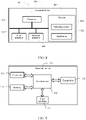
- the communication device 300 may be a network device or a terminal device, and may include: a determining module 301, configured to determine sidelink hybrid automatic repeat request SL HARQ feedback information based on a target physical sidelink feedback channel PSFCH resource set associated with a target uplink channel, where the target PSFCH resource set is determined based on a target time interval, where the target time interval is a spacing between the target uplink channel and a PSFCH.
- a determining module 301 configured to determine sidelink hybrid automatic repeat request SL HARQ feedback information based on a target physical sidelink feedback channel PSFCH resource set associated with a target uplink channel, where the target PSFCH resource set is determined based on a target time interval, where the target time interval is a spacing between the target uplink channel and a PSFCH.
- the determining module 301 may be configured to: determine the SL HARQ feedback information based on a first number of SL HARQ feedback time domain bits respectively corresponding to each PSFCH resource in the target PSFCH resource set.
- the first number is related to PSFCH density.
- a value of the first number is equal to a value of the PSFCH density.
- the first number is related to a target sub-carrier spacing SCS, where the target SCS includes at least one of a sidelink sub-carrier spacing SL SCS or an air interface sub-carrier spacing Uu SCS.
- the determining module 301 may be configured to: determine a time domain position corresponding to the target time interval; and determine, according to the time domain positions, a PSFCH resource set corresponding to the target uplink channel.
- the determining module 301 may be configured to: determine the target PSFCH resource set based on the PSFCH resource set corresponding to the target uplink channel, where the target PSFCH resource set is a subset of the PSFCH resource set corresponding to the target uplink channel.
- the PSFCH resource set corresponding to the target uplink channel includes a first PSFCH resource, where the first PSFCH resource corresponds to a time domain position including a PSFCH resource.
- the determining module 301 may be configured to: determine the first PSFCH resource in the PSFCH resource set corresponding to the target uplink channel as a PSFCH resource in the target PSFCH resource set.
- the PSFCH resource set corresponding to the target uplink channel includes a second PSFCH resource, where the second PSFCH resource corresponds to a time domain position including no PSFCH resource.
- the determining module 301 may be configured to: determine the second PSFCH resource in the PSFCH resource set corresponding to the target uplink channel as a PSFCH resource in the target PSFCH resource set.
- the determining module 301 may be configured to: determine all of SL HARQ feedback information corresponding to the second PSFCH resource in the target PSFCH resource set as one of acknowledgment ACK information or negative acknowledgment NACK information.
- the determining module 301 may be configured to: determine the SL HARQ feedback information based on a second number of first sidelink channel resources respectively corresponding to each PSFCH resource in the target PSFCH resource set, where the first sidelink channel resource includes at least one of a physical sidelink shared channel PSSCH resource or a physical sidelink control channel PSCCH resource.
- the second number is related to PSFCH density.
- a value of the second number is equal to a value of the PSFCH density.
- the second number is related to a target sub-carrier spacing SCS, where the target SCS includes at least one of an SL SCS or a Uu SCS.
- the determining module 301 may be configured to: set, if the first sidelink channel resources are used for transmission of a corresponding first sidelink channel, the SL HARQ feedback time domain bits corresponding to the first sidelink channel resources to a decoding state or an SL HARQ feedback state corresponding to the first sidelink channel.
- the determining module 301 may be configured to: set, in a case that a first preset condition is satisfied, all the SL HARQ feedback time domain bits corresponding to the first sidelink channel resources to ACK information.
- the first preset condition includes one of the following: the first sidelink channel resource is used for transmission of a broadcast message; sidelink control information corresponding to the first sidelink channel indicates that no SL HARQ feedback information is fed back; it is configured by a network device or pre-configured that no SL HARQ feedback information is fed back; SL HARQ feedback is disabled; a multicast option-1 mode is used for HARQ feedback, and no NACK information corresponding to the first sidelink channel resource is received; and the first sidelink channel resource is a resource for a configured grant but is not used.
- the determining module 301 may be configured to: set, in a case that a second preset condition is satisfied, all the SL HARQ feedback time domain bits corresponding to the first sidelink channel resources to NACK information.
- the second preset condition includes one of the following: SL HARQ feedback information corresponding to the first sidelink channel resource is not received; no PSFCH corresponding to the first sidelink channel resource is received; no second signaling used for scheduling the first sidelink channel resource is detected; the first sidelink channel resources are not used for transmission of the corresponding first sidelink channel; the first sidelink channel resources are preempted; transmission corresponding to the first sidelink channel resources is dropped, abandoned, or canceled; and the first sidelink channel resources are used for transmission of the corresponding first sidelink channel, and third signaling corresponding to the first sidelink channel indicates performing SL HARQ feedback on an uplink channel corresponding to a time domain position other than a target time domain position.
- the determining module 301 may be configured to perform one of the following: setting SL HARQ feedback time domain bits corresponding to each of the third number of first sidelink channel resources to a decoding state or an SL HARQ feedback state corresponding to a first sidelink channel corresponding to the each of the third number of the first sidelink channel resources respectively; setting, for a fourth number of first sidelink channel resources in the third number of first sidelink channel resources, SL HARQ feedback time domain bits corresponding to each of the fourth number of first sidelink channel resources to a decoding state or an SL HARQ feedback state corresponding to a first sidelink channel corresponding to the first sidelink channel resources respectively; setting, for other first sidelink channel resources than the fourth number of first sidelink channel resources in the third number of first sidelink channel resources, all
- the target PSFCH resource set is determined based on at least one of the first feedback time or the second feedback time.
- the determining module 301 may be configured to determine the target PSFCH resource set based on one of the following: determining the target PSFCH resource set associated with the target uplink channel according to a resource position at which the target uplink channel is located and the first feedback time; determining a feedback time period according to a resource position at which the target uplink channel is located, the first feedback time, and the second feedback time, and determining, according to the feedback time period, the target PSFCH resource set associated with the target uplink channel; or determining a feedback time period according to a resource position at which the target uplink channel is located and the second feedback time, and determining the target PSFCH resource set associated with the target uplink channel according to the feedback time period.
- each target time in the feedback time period corresponds to at least one SL HARQ feedback time domain bit.
- the target time includes resources in the target PSFCH resource set.
- each PSFCH resource in the target PSFCH resource set corresponds to a fifth number of SL HARQ feedback time domain bits.
- the fifth number includes at least one of the following: the number of corresponding PSSCH resource blocks RB on each second sidelink channel resource, where the second sidelink channel resource includes at least one of a PSSCH resource or a PSCCH resource; the number of sub-channels on each second sidelink channel resource; the corresponding maximum number of PSSCHs for transmission or demodulation on each second sidelink channel resource; or the number of PSSCH RBs or the number of sub-channels in at least one target frequency domain resource, where the target frequency domain resource includes a sub-channel, a resource pool, or a bandwidth part BWP
- the fifth number includes at least one of the following: the maximum number of pieces of sidelink control information SCI or the maximum number of PSCCH resources for transmission, blind detection, detection, or demodulation on each second sidelink channel resource, slot, or span; the number of pieces of SCI or the number of PSCCH resources in at least one target frequency domain resource, where the target frequency domain resource includes a sub-channel, a resource pool, or a bandwidth part BWP; the maximum number of pieces of SCI or the maximum number of PSCCH resources in the at least one target frequency domain resource; or the number of pieces of SCI or the number of PSCCH resources on each second sidelink channel resource, slot, or span.
- the fifth number includes at least one of the following: the maximum number of transmission PSFCH resources; or the maximum number of transmission PSFCH RBs.
- the fifth number includes at least one of the following: the number of PSFCH RBs in one resource pool; a maximum value in the numbers of PSFCH RBs corresponding to at least two resource pools; the number of RBs in a sub-channel in one resource pool; a maximum value in the numbers of RBs corresponding to sub-channels in at least two resource pools; the number of PSFCH RBs in a sub-channel in one resource pool; a maximum value in the numbers of PSFCH RBs corresponding to sub-channels in at least two resource pools; the number of RBs included in the BWP; or the number of PSFCH RBs included in the BWP.
- the fifth number includes the number of PSFCH RBs corresponding to each second sidelink channel resource.
- the SL corresponds to a sixth number of carriers.
- the number of PSFCH RBs associated with the terminal device is a seventh number.
- the determining module 301 may be configured to: concatenate the SL HARQ feedback bits corresponding to the target PSFCH resource set according to at least one of a terminal device dimension, a carrier dimension, a time domain dimension, or a frequency domain dimension, to determine the SL HARQ feedback information.
- the target uplink channel is associated with at least one target resource, where the target resource includes a resource pool, a sub-channel, a bandwidth part BWP, or a carrier.
- a mode in which the target uplink channel is associated with the at least one target resource includes at least one of the following: the target uplink channel is associated with one or more target resources in the at least one target resource; a resource set of the target uplink channel is associated with one or more target resources in the at least one target resource; a format of the target uplink channel is associated with one or more target resources in the at least one target resource; a sequence of the target uplink channel is associated with one or more target resources in the at least one target resource; a frequency domain resource of the target uplink channel is associated with one or more target resources in the at least one target resource; a time domain resource of the target uplink channel is associated with one or more target resources in the at least one target resource; or a frequency hopping pattern of the target uplink channel is associated with one or more target resources in the at least one target resource.
- the target uplink channel is associated with a target sidelink channel resource, where the target sidelink channel resource includes at least one of a PSFCH resource, a physical sidelink shared channel PSSCH resource, or a physical sidelink control channel PSCCH resource.
- the target sidelink channel resource includes at least one resource outside a sidelink channel resource range corresponding to the at least one target resource.
- all of SL HARQ feedback information corresponding to the at least one resource outside the sidelink channel resource range corresponding to the at least one target resource is one of acknowledgment ACK information or negative acknowledgment NACK information.
- the target sidelink channel resource is a resource within a sidelink channel resource range corresponding to the at least one target resource.
- the communication device 300 provided in the embodiments of the present invention can implement the method for determining sidelink feedback information performed by the communication device 300, related descriptions about the method for determining sidelink feedback information are all applicable to the communication device 300, and details are not described herein again.
- a target PSFCH resource set associated with a target uplink channel can be accurately derived from a target time interval between the target uplink channel and a physical sidelink feedback channel PSFCH, to establish a mapping relationship between the target uplink channel and the target PSFCH resource set, so that based on this, SL HARQ feedback information corresponding to the target PSFCH resource set may be mapped to the target uplink channel for reporting.
- efficient and reliable HARQ feedback on the sidelink is achieved, so that a receiving party of the SL HARQ feedback information can accurately learn whether data transmission on the sidelink succeeds, thereby improving the reliability and the resource utilization of the data transmission on the SL.
- FIG. 8 is a block diagram of a terminal device according to an embodiment of the present invention.
- a terminal device 400 shown in FIG. 8 includes at least one processor 401, a memory 402, at least one network interface 404, and a user interface 403. All the components in the terminal device 400 are coupled together by using the bus system 405. It may be understood that the bus system 405 is configured to implement connection and communication between the components. In addition to a data bus, the bus system 405 further includes a power bus, a control bus, and a status signal bus. However, for ease of clear description, all types of buses are labeled as the bus system 405 in FIG. 8 .
- the user interface 403 may include a display, a keyboard or a clicking device (for example, a mouse), a track ball (track ball), a touch panel or a touchscreen, and the like.
- the memory 402 in the embodiments of the present invention may be a volatile memory or a nonvolatile memory, or may include a volatile memory and a nonvolatile memory.
- the non-volatile memory may be a read-only memory (ROM), a programmable ROM (PROM), an erasable PROM (EPROM), an electrically EPROM (EEPROM), or a flash memory.
- the volatile memory may be a random access memory (RAM) serving as an external cache.
- RAMs may be used, for example, a static random access memory (Static RAM, SRAM), a dynamic random access memory (Dynamic RAM, DRAM), a synchronous dynamic random access memory (Synchronous DRAM, SDRAM), a double data rate synchronous dynamic random access memory (Double Data Rate SDRAM, DDR SDRAM), an enhanced synchronous dynamic random access memory (Enhanced SDRAM, ESDRAM), a synchronous link dynamic random access memory (Synch Link DRAM, SLDRAM), and a direct rambus dynamic random access memory (Direct Rambus RAM, DR RAM).
- Static RAM, SRAM static random access memory
- DRAM dynamic random access memory
- DRAM synchronous dynamic random access memory
- SDRAM double data rate synchronous dynamic random access memory
- Double Data Rate SDRAM Double Data Rate SDRAM
- ESDRAM enhanced synchronous dynamic random access memory
- Synch Link DRAM Synchrobus dynamic random access memory
- Direct Rambus RAM Direct Rambus RAM
- the memory 402 stores the following element, executable module, or data structure, or a subset thereof, or an extension set thereof: an operating system 4021 and an application 4022.
- the operating system 4021 includes various system programs, for example, a frame layer, a core library layer, and a drive layer, used for implementing various basic services and processing tasks based on hardware.
- the application 4022 includes various applications, for example, a media player and a browser, used for implementing various application services.
- a program for implementing the method in the embodiments of the present invention may be included in the application 4022.
- the communication device 400 further includes a computer program stored on the memory 402 and executable on the processor 401.
- the computer program When executed by the processor 401, the computer program implements the following step: determining sidelink hybrid automatic repeat request SL HARQ feedback information based on a target physical sidelink feedback channel PSFCH resource set associated with a target uplink channel, where the target PSFCH resource set is determined based on a target time interval, where the target time interval is a spacing between the target uplink channel and a PSFCH.
- the method disclosed in the foregoing embodiment of the present invention may be applied to the processor 401, or implemented by the processor 401.
- the processor 401 may be an integrated circuit chip having a signal processing capability.
- steps in the foregoing methods can be implemented by using a hardware integrated logical circuit in the processor 401, or by using instructions in a form of software.
- the foregoing processor 401 may be a general purpose processor, a digital signal processor (Digital Signal Processor, DSP), an application-specific integrated circuit (Application Specific Integrated Circuit, ASIC), a field-programmable gate array (Field Programmable Gate Array, FPGA), or another programmable logic device, discrete gate or transistor logic device, or discrete hardware component, and can implement or execute each method, step, and logic block diagram disclosed in the embodiments of the present invention.
- the general-purpose processor may be a microprocessor, or the processor may be any conventional processor and the like. Steps of the method disclosed with reference to the embodiments of the present invention may be directly implemented by a hardware decoding processor, or implemented by a combination of hardware in the decoding processor and a software module.
- the software module may be stored in a computer-readable storage medium that is mature in the art, such as a RAM, a flash memory, a read-only memory (ROM), a programmable ROM, an electrically erasable programmable memory, or a register.
- the computer-readable storage medium is located in the memory 402, and the processor 401 reads information in the memory 402, and completes the steps in the foregoing methods in combination with hardware thereof.
- the computer-readable storage medium stores a computer program.
- the computer program when executed by the processor 401, implements steps of the method embodiments of the method for determining sidelink feedback information.
- a processing unit may be implemented in one or more application-specific integrated circuits (Application Specific Integrated Circuits, ASIC), a digital signal processor (Digital Signal Processor, DSP), a digital signal processing device (DSP Device, DSPD), a programmable logic device (Programmable Logic Device, PLD), a field-programmable gate array (Field-Programmable Gate Array, FPGA), a general purpose processor, a controller, a micro-controller, a microprocessor, and other electronic units configured to execute the functions described in the present invention, or a combination of the above.
- ASIC Application Specific Integrated Circuits
- DSP Digital Signal Processor
- DSP Device digital signal processing device
- PLD programmable logic device
- FPGA field-programmable gate array
- a general purpose processor a controller, a micro-controller, a microprocessor, and other electronic units configured to execute the functions described in the present invention, or a combination of the above.
- the technologies in the embodiments of the present invention may be implemented by performing the functional modules (for example, a process and a function) in the embodiments of the present invention.
- Software code may be stored in a memory and executed by a processor.
- the memory may be implemented inside or outside the processor.
- a target PSFCH resource set associated with a target uplink channel can be accurately derived from a target time interval between the target uplink channel and a physical sidelink feedback channel PSFCH, to establish a mapping relationship between the target uplink channel and the target PSFCH resource set, so that based on this, SL HARQ feedback information corresponding to the target PSFCH resource set may be mapped to the target uplink channel for reporting.
- efficient and reliable HARQ feedback on the sidelink is achieved, so that a receiving party of the SL HARQ feedback information can accurately learn whether data transmission on the sidelink succeeds, thereby improving the reliability and the resource utilization of the data transmission on the SL.
- the terminal device 400 can implement various processes implemented by the communication device in the foregoing embodiments. To avoid repetition, details are not described herein again.
- FIG. 9 is a structural diagram of a network device to which an embodiment of the present invention is applied, which can implement details of the method for determining sidelink feedback information, and achieve the same effect.
- a network device 500 includes a processor 501, a transceiver 502, a memory 503, a user interface 504, and a bus interface 505.
- the network device 500 further includes a computer program stored on the memory 503 and executable on the processor 501.
- the computer program When executed by the processor 501, the computer program implements the following step: determining sidelink hybrid automatic repeat request SL HARQ feedback information based on a target physical sidelink feedback channel PSFCH resource set associated with a target uplink channel, where the target PSFCH resource set is determined based on a target time interval, where the target time interval is a spacing between the target uplink channel and a PSFCH.
- a bus architecture may include any number of interconnected buses and bridges, and specifically connects together circuits that are of one or more processors represented by the processor 501 and of a memory represented by the memory 503.
- the bus architecture may further connect various other circuits of a peripheral device, a voltage regulator, a power management circuit, and the like. This is well known in the art, and therefore, no further description is provided in this specification.
- the bus interface 505 provides an interface.
- the transceiver 502 may be a plurality of components, including a transmitter and a receiver, and providing units for communicating with various other apparatuses on a transmission medium.
- the user interface 504 may also be an interface that can connect to a needed device externally or internally.
- the connected device may include, but is not limited to, a keypad, a display, a speaker, a microphone, a joystick, or the like.
- the processor 501 is responsible for bus architecture management and general processing.
- the memory 503 may store data used by the processor when the processor 501 performs an operation.
- a target PSFCH resource set associated with a target uplink channel can be accurately derived from a target time interval between the target uplink channel and a physical sidelink feedback channel PSFCH, to establish a mapping relationship between the target uplink channel and the target PSFCH resource set, so that based on this, SL HARQ feedback information corresponding to the target PSFCH resource set may be mapped to the target uplink channel for reporting.
- efficient and reliable HARQ feedback on the sidelink is achieved, so that a receiving party of the SL HARQ feedback information can accurately learn whether data transmission on the sidelink succeeds, thereby improving the reliability and the resource utilization of the data transmission on the SL.
- the embodiments of the present invention further provide a communication device (which may be a network device or a terminal device), including a processor, a memory, and a computer program stored in the memory and executable on the processor, where when executed by the processor, the computer program implements respective processes of the method for determining sidelink feedback information in the foregoing embodiments, and can achieve the same technical effects.
- a communication device which may be a network device or a terminal device
- the embodiments of the present invention further provide a communication device (which may be a network device or a terminal device), including a processor, a memory, and a computer program stored in the memory and executable on the processor, where when executed by the processor, the computer program implements respective processes of the method for determining sidelink feedback information in the foregoing embodiments, and can achieve the same technical effects. To avoid repetition, details are not described herein again.
- the embodiments of the present invention further provide a computer-readable storage medium, storing a computer program, where when executed by a processor, the computer program implements respective processes of the method for determining sidelink feedback information applied to the foregoing communication device (which may be a network device or a terminal device) in the foregoing embodiments, and can achieve the same technical effects. To avoid repetition, details are not described herein again.
- the computer-readable storage medium may include a read-only memory (ROM), a random access memory (RAM), a magnetic disk, and an optical disc.
- the foregoing embodiment methods may be implemented by using software in combination with a necessary universal hardware platform. Certainly, the embodiment methods may also be implemented by using hardware, but the former is a better implementation in many cases. Based on such an understanding, the technical solutions of the present invention essentially, or the part contributing to the prior art, may be presented in the form of a software product.
- the computer software product is stored in a storage medium (for example, a ROM/RAM, a magnetic disk, or an optical disc) including several instructions to enable a terminal (which may be a mobile phone, a computer, a server, an air conditioner, a network device, or the like) to perform the methods described in the embodiments of the present invention.
Landscapes
- Engineering & Computer Science (AREA)
- Signal Processing (AREA)
- Computer Networks & Wireless Communication (AREA)
- Mobile Radio Communication Systems (AREA)
- Small-Scale Networks (AREA)
Applications Claiming Priority (2)
| Application Number | Priority Date | Filing Date | Title |
|---|---|---|---|
| CN202010066291.XA CN113141663B (zh) | 2020-01-20 | 2020-01-20 | 确定旁链路反馈信息的方法和通信设备 |
| PCT/CN2021/072729 WO2021147864A1 (fr) | 2020-01-20 | 2021-01-19 | Procédé de détermination d'informations de rétroaction de liaison latérale, et dispositif de communication |
Publications (2)
| Publication Number | Publication Date |
|---|---|
| EP4096336A1 true EP4096336A1 (fr) | 2022-11-30 |
| EP4096336A4 EP4096336A4 (fr) | 2023-07-05 |
Family
ID=76808920
Family Applications (1)
| Application Number | Title | Priority Date | Filing Date |
|---|---|---|---|
| EP21744963.6A Pending EP4096336A4 (fr) | 2020-01-20 | 2021-01-19 | Procédé de détermination d'informations de rétroaction de liaison latérale, et dispositif de communication |
Country Status (7)
| Country | Link |
|---|---|
| US (1) | US20220353849A1 (fr) |
| EP (1) | EP4096336A4 (fr) |
| JP (1) | JP7416964B2 (fr) |
| KR (1) | KR20220124251A (fr) |
| CN (1) | CN113141663B (fr) |
| PH (1) | PH12022551791A1 (fr) |
| WO (1) | WO2021147864A1 (fr) |
Families Citing this family (7)
| Publication number | Priority date | Publication date | Assignee | Title |
|---|---|---|---|---|
| US12279259B2 (en) * | 2019-05-24 | 2025-04-15 | Beijing Xiaomi Mobile Software Co., Ltd. | Feedback information transmission method and apparatus, and device and storage medium |
| US12273829B2 (en) * | 2020-03-23 | 2025-04-08 | Qualcomm Incorporated | Sidelink feedback reporting |
| WO2022205370A1 (fr) * | 2021-04-01 | 2022-10-06 | Oppo广东移动通信有限公司 | Procédé et dispositif de sélection de porteuse, terminal et support d'enregistrement |
| CN115701730A (zh) * | 2021-08-02 | 2023-02-10 | 维沃移动通信有限公司 | 旁链路反馈信息的信道接入方法、处理方法及相关设备 |
| CN115915397A (zh) * | 2021-08-02 | 2023-04-04 | 维沃移动通信有限公司 | 旁链路资源确定方法、装置、终端及存储介质 |
| WO2023123439A1 (fr) * | 2021-12-31 | 2023-07-06 | Nec Corporation | Procédé, dispositif et support lisible par ordinateur destinés aux communications |
| CN116830513A (zh) * | 2023-04-07 | 2023-09-29 | 北京小米移动软件有限公司 | Pssch资源的确定方法、装置、通信设备及存储介质 |
Family Cites Families (8)
| Publication number | Priority date | Publication date | Assignee | Title |
|---|---|---|---|---|
| US10880895B2 (en) * | 2018-05-27 | 2020-12-29 | Brian Gordaychik | Variable length downlink control information formats for next generation radio technologies |
| US10863447B2 (en) * | 2018-07-11 | 2020-12-08 | Samsung Electronics Co., Ltd. | Method and apparatus for multi-antenna transmission in vehicle to vehicle communication |
| US11895703B2 (en) * | 2019-01-11 | 2024-02-06 | Lg Electronics Inc. | Method and apparatus for selecting PSSCH resource in NR V2X |
| WO2020215222A1 (fr) * | 2019-04-23 | 2020-10-29 | 北京小米移动软件有限公司 | Procédé et dispositif d'envoi et de réception d'informations de retour, et support |
| CN110311762B (zh) * | 2019-07-16 | 2021-04-16 | 北京紫光展锐通信技术有限公司 | 反馈信息传输方法、装置、终端及存储介质 |
| CN110545533B (zh) * | 2019-08-16 | 2022-09-09 | 中国信息通信研究院 | 一种车联网反馈资源配置方法、终端设备 |
| US11546937B2 (en) * | 2019-11-08 | 2023-01-03 | Huawei Technologies Co., Ltd. | System and method for reservation and resource selection for sidelink communication |
| US11082954B2 (en) * | 2019-12-03 | 2021-08-03 | Asustek Computer Inc. | Method and apparatus for generating device-to-device sidelink HARQ-ACK in a wireless communication system |
-
2020
- 2020-01-20 CN CN202010066291.XA patent/CN113141663B/zh active Active
-
2021
- 2021-01-19 PH PH1/2022/551791A patent/PH12022551791A1/en unknown
- 2021-01-19 KR KR1020227027558A patent/KR20220124251A/ko active Pending
- 2021-01-19 WO PCT/CN2021/072729 patent/WO2021147864A1/fr not_active Ceased
- 2021-01-19 EP EP21744963.6A patent/EP4096336A4/fr active Pending
- 2021-01-19 JP JP2022544190A patent/JP7416964B2/ja active Active
-
2022
- 2022-07-20 US US17/868,931 patent/US20220353849A1/en active Pending
Also Published As
| Publication number | Publication date |
|---|---|
| EP4096336A4 (fr) | 2023-07-05 |
| JP2023511136A (ja) | 2023-03-16 |
| US20220353849A1 (en) | 2022-11-03 |
| JP7416964B2 (ja) | 2024-01-17 |
| CN113141663A (zh) | 2021-07-20 |
| PH12022551791A1 (en) | 2023-09-18 |
| CN113141663B (zh) | 2022-11-18 |
| KR20220124251A (ko) | 2022-09-13 |
| WO2021147864A1 (fr) | 2021-07-29 |
Similar Documents
| Publication | Publication Date | Title |
|---|---|---|
| US20220353849A1 (en) | Method for determining sidelink feedback information and communication device | |
| US11516807B2 (en) | Method and device for configuring control channel, method and device for detecting control channel, program and medium | |
| EP3713122B1 (fr) | Procédé permettant de répondre à une trame d'accusé de réception, appareil et système de transmission de données | |
| US8582638B2 (en) | System and method for channel state feedback in carrier aggregation | |
| US9913254B2 (en) | Method and apparatus for indicating subframes associated with a hybrid automatic repeat request feedback | |
| US11317411B2 (en) | Method and apparatus for decoding a PDSCH using pre-emption | |
| US20170105212A1 (en) | Pusch transmission method and apparatus | |
| EP3827613A1 (fr) | Stations de base et procédés associés | |
| EP3605911A1 (fr) | Procédé, appareil, et système de rétroaction harq | |
| WO2021024922A1 (fr) | Multiplexage de harq-ack de différents types de service sur un seul pusch | |
| JP2016534638A (ja) | キャリアアグリゲーションを使用するharqフィードバック | |
| CN109152053A (zh) | 传输时序确定及指示方法、通信设备及存储介质 | |
| US12489562B2 (en) | Method and apparatus for HARQ-ACK feedback transmission | |
| US20180324821A1 (en) | Cross-carrier scheduling method, feedback method, and apparatus | |
| WO2018199643A1 (fr) | Procédé et appareil de détermination de temporisation d'émission de liaison montante dans un système de communication sans fil | |
| CN116746083A (zh) | 用于下行链路控制信息大小对准的方法及设备 | |
| EP3113537B1 (fr) | Dispositif de terminal, circuit intégré et procédé de radiocommunication | |
| EP4519996B1 (fr) | Mise en correspondance d'informations de commande de liaison montante amélioré avec des attributions de canal de liaison montante | |
| EP4344113A1 (fr) | Procédé de communication sans fil, équipement terminal et dispositif de réseau | |
| CN113966001A (zh) | 半持久调度数据传输触发的混合自动重复请求确认报告 | |
| CN116964969A (zh) | 用于基于仅nack的harq-ack反馈复用的方法及设备 | |
| WO2019192411A1 (fr) | Transmission de donnees et de commande | |
| WO2021168673A1 (fr) | Procédé, dispositif, et terminal pour transmission d'informations, et support de stockage | |
| EP4096335A1 (fr) | Procédé de détermination d'informations de rétroaction de liaison latérale physique et dispositif de communication | |
| KR20220059909A (ko) | 통신 시스템에서 harq 피드백을 위한 방법 및 장치 |
Legal Events
| Date | Code | Title | Description |
|---|---|---|---|
| STAA | Information on the status of an ep patent application or granted ep patent |
Free format text: STATUS: THE INTERNATIONAL PUBLICATION HAS BEEN MADE |
|
| PUAI | Public reference made under article 153(3) epc to a published international application that has entered the european phase |
Free format text: ORIGINAL CODE: 0009012 |
|
| STAA | Information on the status of an ep patent application or granted ep patent |
Free format text: STATUS: REQUEST FOR EXAMINATION WAS MADE |
|
| 17P | Request for examination filed |
Effective date: 20220811 |
|
| AK | Designated contracting states |
Kind code of ref document: A1 Designated state(s): AL AT BE BG CH CY CZ DE DK EE ES FI FR GB GR HR HU IE IS IT LI LT LU LV MC MK MT NL NO PL PT RO RS SE SI SK SM TR |
|
| DAV | Request for validation of the european patent (deleted) | ||
| DAX | Request for extension of the european patent (deleted) | ||
| REG | Reference to a national code |
Ref country code: DE Ref legal event code: R079 Free format text: PREVIOUS MAIN CLASS: H04W0072120000 Ipc: H04L0001182900 |
|
| A4 | Supplementary search report drawn up and despatched |
Effective date: 20230606 |
|
| RIC1 | Information provided on ipc code assigned before grant |
Ipc: H04L 1/00 20060101ALN20230531BHEP Ipc: H04L 1/1607 20230101ALN20230531BHEP Ipc: H04W 72/0453 20230101ALI20230531BHEP Ipc: H04L 5/00 20060101ALI20230531BHEP Ipc: H04L 1/1829 20230101AFI20230531BHEP |
|
| STAA | Information on the status of an ep patent application or granted ep patent |
Free format text: STATUS: EXAMINATION IS IN PROGRESS |
|
| 17Q | First examination report despatched |
Effective date: 20251007 |