EP4098512A1 - Procédé et système de commande de groupe de trains sur la base d'un réseau ad hoc - Google Patents
Procédé et système de commande de groupe de trains sur la base d'un réseau ad hoc Download PDFInfo
- Publication number
- EP4098512A1 EP4098512A1 EP21879014.5A EP21879014A EP4098512A1 EP 4098512 A1 EP4098512 A1 EP 4098512A1 EP 21879014 A EP21879014 A EP 21879014A EP 4098512 A1 EP4098512 A1 EP 4098512A1
- Authority
- EP
- European Patent Office
- Prior art keywords
- train
- hoc network
- following
- target
- speed
- Prior art date
- Legal status (The legal status is an assumption and is not a legal conclusion. Google has not performed a legal analysis and makes no representation as to the accuracy of the status listed.)
- Granted
Links
Images

Classifications
-
- B—PERFORMING OPERATIONS; TRANSPORTING
- B61—RAILWAYS
- B61L—GUIDING RAILWAY TRAFFIC; ENSURING THE SAFETY OF RAILWAY TRAFFIC
- B61L23/00—Control, warning or like safety means along the route or between vehicles or trains
- B61L23/08—Control, warning or like safety means along the route or between vehicles or trains for controlling traffic in one direction only
- B61L23/14—Control, warning or like safety means along the route or between vehicles or trains for controlling traffic in one direction only automatically operated
- B61L23/18—Control, warning or like safety means along the route or between vehicles or trains for controlling traffic in one direction only automatically operated specially adapted for changing lengths of track sections in dependence upon speed and traffic density
-
- B—PERFORMING OPERATIONS; TRANSPORTING
- B61—RAILWAYS
- B61L—GUIDING RAILWAY TRAFFIC; ENSURING THE SAFETY OF RAILWAY TRAFFIC
- B61L15/00—Indicators provided on the vehicle or train for signalling purposes
- B61L15/0018—Communication with or on the vehicle or train
- B61L15/0027—Radio-based, e.g. using GSM-R
-
- B—PERFORMING OPERATIONS; TRANSPORTING
- B61—RAILWAYS
- B61L—GUIDING RAILWAY TRAFFIC; ENSURING THE SAFETY OF RAILWAY TRAFFIC
- B61L15/00—Indicators provided on the vehicle or train for signalling purposes
- B61L15/0054—Train integrity supervision, e.g. end-of-train [EOT] devices
-
- B—PERFORMING OPERATIONS; TRANSPORTING
- B61—RAILWAYS
- B61L—GUIDING RAILWAY TRAFFIC; ENSURING THE SAFETY OF RAILWAY TRAFFIC
- B61L15/00—Indicators provided on the vehicle or train for signalling purposes
- B61L15/0062—On-board target speed calculation or supervision
-
- B—PERFORMING OPERATIONS; TRANSPORTING
- B61—RAILWAYS
- B61L—GUIDING RAILWAY TRAFFIC; ENSURING THE SAFETY OF RAILWAY TRAFFIC
- B61L23/00—Control, warning or like safety means along the route or between vehicles or trains
- B61L23/34—Control, warning or like safety means along the route or between vehicles or trains for indicating the distance between vehicles or trains by the transmission of signals therebetween
-
- B—PERFORMING OPERATIONS; TRANSPORTING
- B61—RAILWAYS
- B61L—GUIDING RAILWAY TRAFFIC; ENSURING THE SAFETY OF RAILWAY TRAFFIC
- B61L27/00—Central railway traffic control systems; Trackside control; Communication systems specially adapted therefor
- B61L27/70—Details of trackside communication
Definitions
- the present invention belongs to the technical field of traffic, and particularly relates to a train group control method and system based on an ad-hoc network.
- trains usually operate in a marshalling mode, and a peer-to-peer communication mode or a train-to-ground-to-train communication mode is usually used as a communication mode.
- the peer-to-peer communication mode is as follows: a train A, after receiving a command from a ground control center, needs to perform peer-to-peer communication with a train B, then the train A establishes communication connection with the train B via a peer-to-peer communication, the train A provides speed and position coordinates information to the train B, and the train B generates a respective train control curve of the train B by combining the respective position and speed information to control the train operation, based on the received information of the train A.
- each of the train C and the train D will generate a respective train control curve to control the respective train operation.
- each train must receive a control common for which train to communication with before establishing communication, and cannot form a formation by itself.
- the train cannot directly obtain how many trains are in the group and what train it is.
- Each train needs to calculate a respective movement authority in real time.
- the train-to-ground-to-train communication mode is as follows: a train A and a train B are subjected to peer-to-peer communication by means of a ground base station, the train A provides speed and position coordinates information to the base station, the base station forwards such information to the train B, and the train B generates a train control valve of the B train by combining the respective position and speed information to control the train operation, based on the received information of the train A.
- each of the train C and the train D will generate a respective train control curve to control the respective train operation.
- each train must provide which train to communicate with by means of ground center control equipment before establishing the communication connection with the target train by means of the ground base station.
- Each train needs to calculate a respective movement authority in real time. Wireless coverage is required throughout the track.
- a central equipment needs to be provided to manage the position and states of all trains.
- a train management center needs to be arranged on the ground, continuous coverage of the ground wireless network is needed, and the requirement for network indexes is high.
- Each train performs communication connection with a specified train according to a command provided by the ground, and each train needs to calculate its own movement authority in real time, but the functions of autonomous management and autonomous networking of the train cannot be achieved.
- the ground train management center cannot operate normally when having a failure, the construction cost is high, the system is huge and miscellaneous, the reliability is low, and the maintenance cost is high.
- the present invention provides a train group control method based on an ad-hoc network.
- the method includes:
- the networking condition includes:
- control method further includes: receiving, by the train, track condition information, wherein the track condition information includes: route information, track information, temporary speed restriction information, and movement authority.
- controlling, by a train set in the ad-hoc network, the train operation in the ad-hoc network by means of the ad-hoc network includes:
- the first train control includes:
- first train control further includes:
- train control includes:
- train control further includes:
- the present invention further provides a train group control system based on an ad-hoc network.
- the system includes an ad-hoc equipment.
- the ad-hoc network equipment is configured to:
- the networking condition includes:
- system further includes: on-board ATP equipment, a station data server, and a track circuit.
- the on-board ATP equipment is configured to receive track condition information, the track condition information includes: route information, track information, temporary speed restriction information, and movement authority.
- the station data server is configured to send the route information, the track information and the temporary speed restriction information.
- the track circuit sends the movement authority.
- controlling, by a train set in the ad-hoc network, the train operation in the ad-hoc network by means of the ad-hoc network includes:
- the first train control includes:
- first train control further includes:
- train control includes:
- train control further includes:
- the train group control method and system based on the ad-hoc network designed by the present invention can achieve the train group control based on a train-to-train communication technology of the ad-hoc network. Trains are automatically networked when the conditions are satisfied, and inter-train data are transmitted between the trains without relying on the ground base station. No central control equipment needs to be arranged on the ground, and no wireless network coverage is needed in a ground section. A train interval is dynamically adjusted according to track conditions, a temporary speed restriction and the states of various trains in the group.
- the embodiment of the present invention discloses a train group control method based on an ad-hoc network.
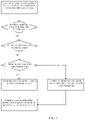
- the method includes: searching for, by ad-hoc network equipment on a train, communication equipment of another train within a preset distance; determining whether the train is on the same track as another train; if the train is on the same track as another train, determining whether a networking condition is satisfied; if the networking condition is satisfied, establishing an ad-hoc network by the trains satisfying the networking condition; and controlling, by the train set in the ad-hoc network, the train operation in the ad-hoc network by means of the ad-hoc network.
- the networking condition includes: ad-hoc network equipment is provided in a target train; the target train is allowed to establish the ad-hoc network; and the target train is in stable communication with a local train.
- the train receives track condition information, the track condition information includes: route information, track information, temporary speed restriction information, and movement authority.
- the current train communication ways are train-to-ground communication and train-to-train communication.
- the train-to-ground communication refers to that the train communicates with ground equipment.
- the train-to-train communication is also divided into train-to-ground-to-train communication and train-to-train communication.
- the train-to-ground-to-train communication refers to that a plurality of trains perform communication by means of the ground equipment, or perform communication by means of information of the ground equipment.
- the train obtains the information of another train by means of the ground equipment, such as a data interaction center, and then communicates with another train according to the obtained information, which belongs to the train-to-ground-to-train communication.
- the train-to-train communication refers to that the communication connection is established between trains, and the communication and the disconnection of communication are completely completed by train equipment without relying on the ground equipment.
- the communication involved in the present invention is the train-to-train communication; the establishment of the ad-hoc network, the use of the ad-hoc network communication and the disconnection of communication are all completed by on-board equipment without relying on the ground equipment.
- the present invention is mainly used in the field of heavy wagons, and can also be used in the field of another train. All trains in the ad-hoc network are controlled by the ad-hoc network, all trains in the ad-hoc network are called group trains, and are also called a train set.
- the group trains refer to a train group consisting of two or more real trains, the ground equipment controls control the train group by one train, and various trains in the train group are subjected to coordinated control.
- the train receives the track condition information
- the track condition information includes: route information, track information, temporary speed restriction information, and movement authority.
- the train operation requires a series of authorities and relevant data, and can be performed only after these authorities and data are obtained.
- data include: the route information, the temporary speed restriction information, and the track information.
- the authority includes the movement authority.
- These data may be transmitted to the train using, but not limited to, the following ways: the train receives the data by using on-board ATP (automatic train protection) equipment; a station data server (SDS), which has the function of storing basic data of the station and section track, may complete real-time framing and verification of a wireless message according to the track information stored by itself and information provided by equipment such as CBI (computer-based interlocking) and TSRS (temporary speed restriction server).
- CBI computer-based interlocking
- TSRS temporary speed restriction server
- the station data server sends the information to all trains in the wireless coverage area by means of train-to-ground communication, and may also send the information to a specified train as required.
- the station data server receives interlocking route information, temporary speed restriction information of the temporary speed restriction server and the track information, generates messages such as the route information, the track information and temporary speed restriction, and provides, within the scope of the station, the in-station messages and section message to the on-board ATP.
- a track circuit (TC) sends the movement authority information to the on-board ATP.
- the train can receive the track condition information by means of such way.
- the ad-hoc network equipment on the train searches for communication equipment of another train within a preset distance to determine whether the train is on the same track as another train.
- the ad-hoc network equipment on the train searches for communication equipment of another train within the preset distance.
- the communication range of the ad-hoc network equipment on the train is large enough, so that the front train and the rear train can normally communicate with each other.
- the train-to-train communication of the ad-hoc network equipment is performed by means of two radios that are both original train equipment, without adding hardware equipment.
- One of the radios is configured for long-distance communication, and the other of the radios is configured for short and medium-distance communication.
- the switching of the two radio stations is completed by the ad-hoc network equipment.
- a local wireless broadband communication private network may be established within a short time in an ad-hoc manner. All ad-hoc network equipment in the wireless broadband communication private network communicates with one another by using the wireless broadband communication private network. After the wireless broadband communication private network has been established, new ad-hoc network equipment is communicatively connected to any ad-hoc network equipment in the wireless broadband communication private network, and when networking condition is satisfied, the new ad-hoc network equipment will automatically join the wireless broadband communication private network to form a new wireless broadband communication private network.
- the communication between the new ad-hoc network and all ad-hoc network equipment under the jurisdiction of the original wireless broadband communication private network is achieved by means of the new wireless broadband communication private network.
- the ad-hoc network equipment on the train searches for communication equipment of another train within the preset distance, the preset distance, such as the shortest distance between a front train and a rear train in normal tracking operation, the longest distance of long-distance communication of the radio station, may be appointed in advance.
- the ad-hoc network equipment is arranged at a head of the train.
- ad-hoc network equipment on the train sends a wireless signal to the periphery, and communication equipment of end of train (EOT) of this train, communication equipment of head of train (HOT) of another train within the preset distance, communication equipment of EOT of another train and the ad-hoc network equipment of another train can all receive the signal.
- the ad-hoc network equipment has a function of identifying communication equipment of HOT and communication equipment of EOT of a neighboring-line train, thereby preventing the head of the train or the end of the train of neighboring line train from being included in the wireless communication network.
- the identification may be performed using, but not limited to, the following ways: the ad-hoc network equipment sends networking request information to the periphery and informs the track where it is located; the train on the same track, after receiving the networking request information, replies its corresponding information, and the train on different track does not reply or replies information including the respective track information.
- the ad-hoc network equipment may determine which trains are on the same track as itself according to the received information.
- the networking condition includes: ad-hoc network equipment is provided in a target train; the target train is allowed to establish the ad-hoc network; and the target train is in stable communication with a local train.
- the networking condition includes: ad-hoc network equipment is provided in the target train, the target train is allowed to establish the ad-hoc network; and the target train is in stable communication with a local train.
- the train can join the ad-hoc network only when being provided with the ad-hoc network equipment. Any train provided with the ad-hoc network equipment has a function of permitting or prohibiting the itself to establish or join the ad-hoc network.
- a certain train When a certain train is set to permit itself to establish or join the ad-hoc network by itself, after another train sends an ad-hoc network establishing request or an ad-hoc network joining request to this train, this train establishes an ad-hoc network or joins the ad-hoc network when all networking conditions are satisfied.
- the train establishing the ad-hoc network needs to maintain stable communication.
- the communication equipment of EOT of the train plays a communication relay role. When the train is in a tunnel or a cave, the head of the train may communicate with another train via the communication equipment of EOT, and another train may communicate with the head of the train via the communication equipment of EOT of this train.
- two sets of ad-hoc network equipment may communicate with each other via the communication equipment of EOT, and the stable communication is also considered to be stable communication between the target train and the local train.
- the ad-hoc network there may be a plurality of trains in the ad-hoc network, and the ad-hoc network equipment also plays a role of communication relay.
- the communication between the target train and the current train is considered to be stable as long as the communication is stable.
- the ad-hoc network equipment on the train determines whether there is an ad-hoc network at present. If no ad-hoc network exists, all trains satisfying the networking condition are configured to establish the ad-hoc network with the original train. If the ad-hoc network already exists, all the trains satisfying the networking conditions join the original ad-hoc network to form a new ad-hoc network.
- the train sets in the ad-hoc network control the train operation in the ad-hoc network by means of the ad-hoc network.
- controlling, by a train set in the ad-hoc network, the train operation in the ad-hoc network by means of the ad-hoc network includes: a first train control and a following train control.
- the first train control is used in the ad-hoc network to enable the first train to control the operation of another train in the ad-hoc network;
- the following train control is used in the ad-hoc network to enable the following train to control itself to operate following a front train.
- the train set in the ad-hoc network controls the operation of trains in the ad-hoc network by means of the ad-hoc network in two ways: one is the first train control, that is, in the ad-hoc network, the first train controls the operation of another train in the ad-hoc network; one is the following train control, that is, in the ad-hoc network, the following train controls itself to operate following the front train. An operator may select the specific control way according to actual situations.
- the first train control includes: each of the trains in the ad-hoc network determines a respective position in the ad-hoc network, If the train is the first train, the first train receives train data information transmitted from the following train, wherein the data information includes: a speed, a position, an acceleration, a braking performance, and an operating condition; the first train calculates a target speed of the following train in the ad-hoc network according to the data information, the track information of a current position of each train in the ad-hoc network and a position-speed relation between each train and the front train in the group; the first train notifies the corresponding train to monitor and operate according to the target speed by means of ad-hoc network communication; and then the first train periodically receives real-time train data information of another train; If the train is the following train, the following train sends data information to the first train, wherein the data information includes: a speed, a position, an acceleration, a braking performance and an operating condition; the following train receives the target speed transmitted
- the first train further calculates a target distance between another train in the ad-hoc network and the preceding train; the first train further calculates a distance-to-go curve of another train in the ad-hoc network; the first train further calculates a target stop point of another train in the ad-hoc network; the first train sends the target distance, the distance-to-go curve and the target stop point to the corresponding following train via the ad-hoc network communication; and the following train receives the target distance, the distance-to-go curve and the target stop point.
- all trains in the ad-hoc network are all on the same track, according to operation directions of the trains, the headmost train in the ad-hoc network is the first train of the group and is also called as the first train, and the trains except the first train are the following trains of the group.
- Each of the trains in the ad-hoc network may determine the respective position in the ad-hoc network using, but not limited to the following ways: each of the trains in the ad-hoc network sends the respective position information to another train, and may obtain the respective position in the ad-hoc network by combining the position information of all the trains with traveling direction information and track information of the current train.
- the train may obtain the following information by determining the respective position in the ad-hoc network: whether it is the first train or the following train, and if it is the following train, what position it is in. If there are four in the ad-hoc network, the train behind the first train is the second position (the second train), and the last train is the fourth (the fourth train).
- the first train in the ad-hoc network receives train data information transmitted from another train, the data information include: a speed, a position, an acceleration, a braking performance, and an operating condition.
- the first train calculates a target speed of the following train in the ad-hoc network according to the data information, the track information of a current position of each train in the ad-hoc network and a position-speed relation between each train and the front train in the group.
- the operating condition refers to different states of the train in operation, the train under locomotive traction includes five types: traction inertia, air braking, electric braking and air-electricity blended braking.
- the different operating conditions of the train affect a value of a train braking model parameter, and thus affect the determination of the target speed.
- the target speed refers to the highest speed allowed before reaching the target point.
- the first train notifies notify the corresponding train to operate according to the target speed via the ad-hoc network communication.
- the first train operates under the control of the ground equipment. In this way, the trains in the ad-hoc network may operate at the maximum speed.
- the following train in the ad-hoc network periodically sends the respective real-time train data information to the first train, wherein the data information includes a speed, a position, an acceleration, a braking performance, and an operating condition; the period is calculated according to the target speed of the train, the position of the preceding train, the braking performance, the track condition and the like, and is less than safety braking time.
- the safety braking time is the maximum time of one-off braking for ensuring that the current train can operate safely after operating according to the target speed.
- the following train receives the target speed transmitted from the first train by means of the ad-hoc network, operates according to the target speed.
- the first train periodically receives receive the real-time train data information of the following train.
- the first train recalculates a new target speed according to the real-time train data information and sends the new target speed to the corresponding train, and the thus following train operates according to the new target speed.
- the first train monitors the actual speed and the target speed of the following train in real time, and controls the traction and braking of the following train by combining a train traction model and a braking model. Finally, the closed-loop supervision of the first train on another train is completed.
- the first train may calculate the target speed using , but is not limited to, the following ways: during operation, a rear train needs to maintain a safety spacing S from the front train to ensure the safety of operation.
- the first train determines the distance L between itself and the rear train according to the position sent by the rear train (the second train) via the ad-hoc network communication, and obtains a least-favorable braking distance D (including safety protection distance) under the response time according to the information such as the respective speed, acceleration and breaking performance.
- the safety spacing S of the rear train is equal to the sum of the L and D; the first train calculates the target speed of the rear train according to the safety spacing S data and a safety braking model of the rear train.
- the first train may calculate a target speed of each of the third train, the fourth train and the like.
- the first train further calculates a target distance between another train in the ad-hoc network and the front train, the target distance refers to the distance between the front end of the train and the target point.
- the target distance refers to the safety spacing S, namely, L+D, and a calculation way of the safety spacing S has appeared in how to calculate the target speed.
- the first train further calculates a distance-to-go curve of another train in the ad-hoc network.
- the distance-to-go curve is a one-off braking control curve generated on the basis of the target speed, the target distance, the track condition, and the train characteristics to ensure the safe train operation.
- the distance-to-go curve may be calculated using, but not limited to, the following ways: the first train acquires relevant parameters of the trains in the set, and the first train calculates the most restrictive speed profile (MRSP) according to the track information of the train in the set, fixed speed restriction, track temporary speed restriction, train construction speed restriction, mode speed restriction and the like.
- the track information, the fixed speed restriction, the track temporary speed restriction, the train construction speed restriction and the mode speed restriction are provided by the ground equipment.
- the first train recalculates the MRSP.
- the safety braking model takes influences of factors such as a position uncertainty of a train, an initial speed of the train, an initial acceleration of the train, a speed measurement error, a track gradient, a braking delay and an action delay of the train into consideration.
- the initial speed of the train is obtained by a speed sensor.
- the initial acceleration of the train is obtained by calculating a traction force and the mass according to the Regulations on Railway Train Traction Calculation.
- the track gradient is provided by the ground equipment; errors of the position uncertainty of the train, the braking delay, the speed measurement error and the action delay of the train are stipulated by a system.
- the first train monitors a difference between a current speed and a current speed restriction of the train in a monitoring set, and according to the current positioning information, a distance-to-go curve of this train is calculated by combining the train safety braking model.
- the first train further calculates a target stop point of another train in the ad-hoc network.
- the calculation may be performed using, but not limited to the following ways: the first train calculates the position range of the tail of the train when it stops, based on its own relevant parameter; the closest distance between the tail part of the first train after stopping and the rear train is used as a target stop point of the rear train; and then a braking measure grade, opportunity and the like which should be taken by the rear train are calculated according to the relevant parameters of the rear train, thereby guaranteeing that the rear train does not cross the target stop point of the rear train after stopping.
- the first train may calculate target distances, distance-to-go curves, and target stop points of all trains in the ad-hoc network, and then send such information to the corresponding trains.
- the following train receives the target distance, the distance-to-go curve and the target stop point. When an emergency occurs, such as inability to communicate, the following train may safely stop or operate according to the information.
- the following train control includes: each of the trains in the ad-hoc network determines a respective position in the ad-hoc network; if the train is the first train, the first train periodically transmits respective train data information to a rear train, wherein the data information includes: a speed, a position, an acceleration, a braking performance and an operating condition.
- the following train periodically receives the train data information transmitted from the front train in the ad-hoc network, calculates a respective target speed, and operates according to the target speed, and then the following train periodically transmits the respective train data information to the rear train, wherein the data information includes: a speed, a position, an acceleration, a braking performance and an operating condition.
- the train periodically receives the train data information transmitted from the front train in the ad-hoc network, calculates the respective target speed, and operates according to the target speed.
- the following train control further includes: the following train calculates a target distance between the respective position and the front train in the ad-hoc network; the following train further calculates a respective distance-to-go curve in the ad-hoc network; and then the following train further calculates a respective target stop point in the ad-hoc network.
- the use of the following train control also requires each train in the ad-hoc network to determine the respective position in the ad-hoc network, and the used way is the same as that of the first train control.
- each train periodically transmits respective train data information to the rear train, wherein the data information includes: a speed, a position, an acceleration, a braking performance and an operating condition.
- each train receives train data information transmitted from the front train, calculates respective target speed, and operates according to the target speed.
- the first train operates under the control of the ground equipment.
- the rear train periodically receives the train data information of the front train and recalculates a new target speed, and then operates according to the new target speed.
- the following train monitors its actual speed and the target speed in real time, and controls the train traction and braking by combining a train traction model and a braking model.
- the following train may calculate the respective target speed using, but is not limited to, the following ways: during operation, the rear train needs to maintain a safety spacing S from the front train to ensure the safety of operation.
- the following train determines a distance L between itself and the rear train according to the position sent by the front train via the ad-hoc network communication, and obtains the least-favorable braking distance (including safety protection distance) under the response time according to the information such as the speed, the acceleration and the breaking performance of the front train.
- the safety spacing S of the local train is equal to the sum of the L and D; the local train calculates a respective target speed according to the safety spacing S and a respective safety braking model.
- the following train further calculates a target distance between itself and the front train in the ad-hoc network, namely, L+D; the following train further calculates a respective distance-to-go curve in the ad-hoc network; and the following train further calculates a respective target stop point in the ad-hoc network.
- the distance-to-go curve may be calculated using, but not limited to, the following ways: the following train calculates the respective most restrictive speed profile (MRSP) according to respective relevant parameters by combining train track information, a fixed speed restriction, a track temporary speed restriction, a train construction speed restriction, a mode speed restriction and the like. When the components of the MRSP change, the following train recalculates the MRSP.
- MRSP most restrictive speed profile
- the safety braking model takes influences of factors such as a position uncertainty of a train, an initial speed of the train, an initial acceleration of the train, a speed measurement error, a track gradient, a braking delay and an action delay of the train into consideration.
- the following train monitors a difference between its own actual speed and the current limit restriction in real time, and calculates the respective distance-to-go curve according to the current positioning information by combining a train safety braking model.
- the following train further calculates a respective target stop point.
- the calculation may be carried out using, but not limited to, the following ways: the rear train calculates the position range of a tail of the train when the front train stops, based on the relevant parameters of the front train; the closest distance between the tail part of the front train after stopping and the rear train is used as a target stop point of the rear train, and then the rear train calculates a braking measure grade, opportunity and the like which should be taken according to the respective relevant parameters, thereby guaranteeing that the rear train does not cross the respective target stop point after stopping.
- Each of the following trains calculates a respective target distance, a respective distance-to-go curve, and a respective target stop point. When an emergency occurs, such as inability to communicate, the following train may safely stop or operate according to the information.
- the embodiment of the present invention further discloses a train group control system based on an ad-hoc network.
- the system includes ad-hoc network equipment, on-board ATP equipment, a station data server, and a track circuit.
- the ad-hoc network equipment is configured to: search for, by ad-hoc network equipment on a train, communication equipment of another train within a preset distance; determine whether the train is on the same track as another train; if the train is in the same track of another train, determine whether a networking condition is satisfied; if the networking condition is satisfied, determine whether an ad-hoc network exists or not; if no ad-hoc network exists, establish, by another train satisfying the networking condition, an ad-hoc network with an original train; if an ad-hoc network exists, add another train satisfying the networking condition to the ad-hoc network; and control, by the train set in the ad-hoc network, the train operation in the ad-hoc network by means of the ad-hoc network.
- the networking condition includes: the ad-hoc network equipment is provided in a target train; the target train is allowed to establish or join the ad-hoc network, and the target train is in stable communication with a train.
- the on-board ATP equipment is configured to receive track condition information, wherein the track condition information include: route information, track information, temporary speed restriction information, and a movement authority.
- the station data server is configured to send the route information, the track information and the temporary speed restriction information.
- the station data server has the function of storing basic data of the station and section track, and may complete real-time framing and verification of a wireless message according to track information stored by itself and information provided by equipment such as CBI and TSRS.
- the station data server sends the information to all the trains in the wireless coverage area by means of train-to-ground communication, and may also send the information to a specified train as required.
- the station data server receives interlocking route information, temporary speed restriction information of the temporary speed restriction server and the track information, generates messages such as the route information, the track information and temporary speed restriction, and provides, within the scope of the station, the in-station messages and section message to the on-board ATP.
- the track circuit sends the movement authority.
- the controlling, by a train set in the ad-hoc network, the train operation in the ad-hoc network by means of the ad-hoc network includes: a first train control and a following train control.
- the first train control is used in the ad-hoc network to enable the first train to control the operation of another train in the ad-hoc network; and the following train control is used in the ad-hoc network to enable a following train to control itself to operate following a front train.
- the first train control includes: each of the trains in the ad-hoc network determines a respective position in the ad-hoc network. If the train is the first train, the first train receives train data information transmitted from the following train, wherein the data information includes: a speed, a position, an acceleration, a braking performance and an operating condition; the first train calculates a target speed of the following train in the ad-hoc network according to the data information, the track information of a current position of each train in the ad-hoc network and a position-speed relation between each train and the front train in the group; the first train notifies the corresponding train to monitor and operate according to the target speed by means of ad-hoc network communication; and the first train periodically receives real-time train data information of another train.
- the following train sends data information to the first train, wherein the data information includes: a speed, a position, an acceleration, a braking performance and an operating condition; the following train receives the target speed transmitted from the first train by means of the ad-hoc network, operates according to the target speed, and periodically sends the real-time train data information of the current train to the first train.
- the data information includes: a speed, a position, an acceleration, a braking performance and an operating condition
- the first train control further includes: the first train further calculates a target distance between another train and the front train in the ad-hoc network; the first train further calculates a distance-to-go curve of another train in the ad-hoc network; and the first train further calculates a target stop point of another train in the ad-hoc network.
- the first train sends the target distance, the distance-to-go curve and the target stop point to the corresponding following train via the ad-hoc network communication.
- the following train receives the target distance, the distance-to-go curve and the target stop point.
- the following train control includes: each of the trains in the ad-hoc network determines a respective position in the ad-hoc network. If the train is the first train, the first train periodically transmits the respective train data information to a rear train, wherein the data information includes: a speed, a position, an acceleration, a braking performance and an operating condition.
- the train If the train is the following train, and is not the last train in the ad-hoc network, the following train periodically receives the train data information transmitted from the front train in the ad-hoc network, calculates a respective target speed, and operates according to the target speed, and then the following train periodically transmits the respective train data information to the rear train, wherein the data information includes: a speed, a position, an acceleration, a braking performance and an operating condition. If the train is the last train in the ad-hoc network, the train periodically receives the train data information transmitted from the front train in the ad-hoc network, calculates the respective target speed, and operates according to the target speed.
- the following train control further includes: the following train further calculates a target distance between the respective position and the front train in the ad-hoc network; the following train calculates the respective distance-to-go curve in the ad-hoc network; and the following train calculates the respective target stop point in the ad-hoc network.
- the train group control method and system based on the ad-hoc network designed by the present invention can achieve the train group control based on a train-to-train communication technology of the ad-hoc network. Trains are automatically networked when the conditions are satisfied, and inter-train data are transmitted between the trains without relying on the ground base station. No central control equipment needs to be arranged on the ground, and no wireless network coverage is needed in a ground section. A train interval is dynamically adjusted according to track conditions, a temporary speed restriction and the states of various trains in the group.
Landscapes
- Engineering & Computer Science (AREA)
- Mechanical Engineering (AREA)
- Mobile Radio Communication Systems (AREA)
- Electric Propulsion And Braking For Vehicles (AREA)
Applications Claiming Priority (2)
| Application Number | Priority Date | Filing Date | Title |
|---|---|---|---|
| CN202011099742.6A CN112009526B (zh) | 2020-10-15 | 2020-10-15 | 一种基于自组网的列车群组控制方法与系统 |
| PCT/CN2021/105122 WO2022077966A1 (fr) | 2020-10-15 | 2021-07-08 | Procédé et système de commande de groupe de trains sur la base d'un réseau ad hoc |
Publications (4)
| Publication Number | Publication Date |
|---|---|
| EP4098512A1 true EP4098512A1 (fr) | 2022-12-07 |
| EP4098512A4 EP4098512A4 (fr) | 2023-12-06 |
| EP4098512B1 EP4098512B1 (fr) | 2025-11-05 |
| EP4098512C0 EP4098512C0 (fr) | 2025-11-05 |
Family
ID=73527296
Family Applications (1)
| Application Number | Title | Priority Date | Filing Date |
|---|---|---|---|
| EP21879014.5A Active EP4098512B1 (fr) | 2020-10-15 | 2021-07-08 | Procédé et système de commande de groupe de trains sur la base d'un réseau ad hoc |
Country Status (3)
| Country | Link |
|---|---|
| EP (1) | EP4098512B1 (fr) |
| CN (1) | CN112009526B (fr) |
| WO (1) | WO2022077966A1 (fr) |
Families Citing this family (10)
| Publication number | Priority date | Publication date | Assignee | Title |
|---|---|---|---|---|
| CN112009526B (zh) * | 2020-10-15 | 2021-02-19 | 北京全路通信信号研究设计院集团有限公司 | 一种基于自组网的列车群组控制方法与系统 |
| CN112477929B (zh) * | 2020-12-10 | 2023-04-07 | 中国铁路设计集团有限公司 | 列车运行控制方法、装置和电子设备 |
| CN112758140B (zh) * | 2021-04-08 | 2021-07-06 | 北京全路通信信号研究设计院集团有限公司 | 一种基于车车及车地通信的列车运行控制系统及方法 |
| CN113525461B (zh) * | 2021-08-06 | 2022-04-22 | 北京交通大学 | 面向虚拟编队的列车运行控制方法 |
| CN113411774B (zh) * | 2021-08-17 | 2021-11-19 | 深圳电通信息技术有限公司 | 基于自组网的列车群组控制方法及装置 |
| CN114162179A (zh) * | 2021-12-03 | 2022-03-11 | 中车唐山机车车辆有限公司 | 一种灵活编组的建立方法、系统、设备和存储介质 |
| CN115946746B (zh) * | 2023-02-28 | 2025-07-18 | 北京全路通信信号研究设计院集团有限公司 | 临时限速的处理方法、装置、设备及存储介质 |
| CN116080716B (zh) * | 2023-03-03 | 2023-06-02 | 北京全路通信信号研究设计院集团有限公司 | 一种列车自动驾驶协同控制方法、系统和计算机存储介质 |
| CN116279691A (zh) * | 2023-04-17 | 2023-06-23 | 北京全路通信信号研究设计院集团有限公司 | 一种基于自组网列车群组的运行图编制方法和系统 |
| CN117864212A (zh) * | 2024-02-29 | 2024-04-12 | 北京全路通信信号研究设计院集团有限公司 | 一种动车组群组运行的控制方法及系统 |
Family Cites Families (17)
| Publication number | Priority date | Publication date | Assignee | Title |
|---|---|---|---|---|
| MX340797B (es) * | 2012-06-30 | 2016-07-27 | Co El Da Software Srl | Sistema de transporte ferroviario con composicion automatica de convoyes. |
| JP6158103B2 (ja) * | 2014-01-22 | 2017-07-05 | 株式会社東芝 | 列車制御システム |
| CN104442933B (zh) * | 2014-10-09 | 2016-06-08 | 兰州交通大学 | 一种列车编队运行组织的方法 |
| FR3041311B1 (fr) * | 2015-09-22 | 2019-03-22 | Sncf Mobilites | Procede et systeme de controle de vehicules ferroviaires circulant sur une voie ferree. |
| JP6789604B2 (ja) * | 2016-12-27 | 2020-11-25 | 日本車輌製造株式会社 | 鉄道車両 |
| KR102096963B1 (ko) * | 2017-07-26 | 2020-04-03 | 한국철도기술연구원 | 열차 간 가상 연결 방법 및 이를 위한 열차 제어 장치 |
| KR102097420B1 (ko) * | 2017-12-26 | 2020-04-07 | 한국철도기술연구원 | 가상열차편성의 열차무결성 확인시스템 및 이를 이용한 열차무결성 확인방법 |
| CN108466637B (zh) * | 2018-01-03 | 2021-12-10 | 中车工业研究院有限公司 | 列车控制方法 |
| AU2019100007A4 (en) * | 2018-01-08 | 2019-02-14 | 4AI Systems Holdings Pty Ltd | A system of transmitting information between trains |
| CN108725517A (zh) * | 2018-03-13 | 2018-11-02 | 中车工业研究院有限公司 | 列车协同运行控制系统、控制方法及列车车载设备 |
| CN108919799B (zh) * | 2018-06-10 | 2020-08-11 | 同济大学 | 一种网联智能车辆协作换道方法 |
| CN111376950B (zh) * | 2018-12-27 | 2022-02-15 | 交控科技股份有限公司 | 一种基于仿生雁群的列车群控制方法和列车控制系统 |
| CN110682943B (zh) * | 2019-10-12 | 2022-02-01 | 中车工业研究院有限公司 | 列车编组方法及装置 |
| CN110962888B (zh) * | 2019-12-09 | 2021-06-29 | 中南大学 | 列车的实时动态编组方法及系统 |
| CN111273675A (zh) * | 2020-03-24 | 2020-06-12 | 陕西铁鹰特种车有限公司 | 一种编队驾驶系统 |
| CN111516735B (zh) * | 2020-05-14 | 2022-02-08 | 重庆交通大学 | 虚拟重联小编组列车自动驾驶的控制系统及其控制方法 |
| CN112009526B (zh) * | 2020-10-15 | 2021-02-19 | 北京全路通信信号研究设计院集团有限公司 | 一种基于自组网的列车群组控制方法与系统 |
-
2020
- 2020-10-15 CN CN202011099742.6A patent/CN112009526B/zh active Active
-
2021
- 2021-07-08 WO PCT/CN2021/105122 patent/WO2022077966A1/fr not_active Ceased
- 2021-07-08 EP EP21879014.5A patent/EP4098512B1/fr active Active
Also Published As
| Publication number | Publication date |
|---|---|
| EP4098512B1 (fr) | 2025-11-05 |
| WO2022077966A1 (fr) | 2022-04-21 |
| CN112009526A (zh) | 2020-12-01 |
| EP4098512A4 (fr) | 2023-12-06 |
| EP4098512C0 (fr) | 2025-11-05 |
| CN112009526B (zh) | 2021-02-19 |
Similar Documents
| Publication | Publication Date | Title |
|---|---|---|
| EP4098512B1 (fr) | Procédé et système de commande de groupe de trains sur la base d'un réseau ad hoc | |
| EP4101719B1 (fr) | Procédé et système de groupage et de dégroupage dynamiques de trains basés sur un réseau ad hoc | |
| CN110126882B (zh) | 列车控制方法和系统及移动授权的计算方法 | |
| CN110239596B (zh) | 一种基于ctcs-3的移动闭塞列车控制方法及系统 | |
| CN110126883B (zh) | 列车行车路径的规划方法和车载控制器 | |
| CN106740989B (zh) | 一种基于轨道电路的移动授权计算方法 | |
| CN106314487B (zh) | 基于动态间隔的运能可配置列车运行控制系统及方法 | |
| US9522688B2 (en) | On-board device, signaling system, and control method of moving vehicle | |
| CN105711618B (zh) | 具有车载管理的铁路控制系统 | |
| US20160046306A1 (en) | On-board device, signaling system and control method of moving vehicle | |
| US9849897B2 (en) | Signaling system and control method of moving vehicle | |
| CN108189860B (zh) | 一种适用于普速铁路的行车许可控制系统 | |
| CN112874577B (zh) | 列车管理方法及系统 | |
| CN113954910B (zh) | 一种tacs系统的列车通信管理方法 | |
| WO2025179872A1 (fr) | Procédé et système de commande pour l'exécution d'un groupe d'unités électriques multiples | |
| CN113548098A (zh) | 列车降级管理方法、装置和存储介质 | |
| CN114407977B (zh) | 列车及区域控制器的控制方法、控制系统及存储介质 | |
| EP3696046A1 (fr) | Système et procédé de gestion de trafic d'une ligne de chemin de fer | |
| RU2743103C1 (ru) | Система интервального регулирования движения поездов | |
| CN109367583B (zh) | 一种有轨电车进路防错办系统及方法 | |
| CN110843868A (zh) | 车辆控制方法、装置、计算机设备及存储介质 | |
| CN117022402B (zh) | 一种实现列车授权管理的方法、计算机存储介质及终端 | |
| CN119239705A (zh) | 列车虚拟联挂控制的方法、系统、设备及介质 | |
| Matsumoto et al. | The new ATC system with an autonomous speed control with on-board equipment | |
| CN114670904B (zh) | 列车通信系统、方法、电子设备和存储介质 |
Legal Events
| Date | Code | Title | Description |
|---|---|---|---|
| STAA | Information on the status of an ep patent application or granted ep patent |
Free format text: STATUS: THE INTERNATIONAL PUBLICATION HAS BEEN MADE |
|
| PUAI | Public reference made under article 153(3) epc to a published international application that has entered the european phase |
Free format text: ORIGINAL CODE: 0009012 |
|
| STAA | Information on the status of an ep patent application or granted ep patent |
Free format text: STATUS: REQUEST FOR EXAMINATION WAS MADE |
|
| 17P | Request for examination filed |
Effective date: 20220902 |
|
| AK | Designated contracting states |
Kind code of ref document: A1 Designated state(s): AL AT BE BG CH CY CZ DE DK EE ES FI FR GB GR HR HU IE IS IT LI LT LU LV MC MK MT NL NO PL PT RO RS SE SI SK SM TR |
|
| A4 | Supplementary search report drawn up and despatched |
Effective date: 20231106 |
|
| RIC1 | Information provided on ipc code assigned before grant |
Ipc: B61L 15/00 20060101ALN20231030BHEP Ipc: B61L 3/00 20060101ALI20231030BHEP Ipc: B61L 23/34 20060101ALI20231030BHEP Ipc: B61L 27/70 20220101ALI20231030BHEP Ipc: B61L 23/18 20060101AFI20231030BHEP |
|
| DAV | Request for validation of the european patent (deleted) | ||
| DAX | Request for extension of the european patent (deleted) | ||
| STAA | Information on the status of an ep patent application or granted ep patent |
Free format text: STATUS: EXAMINATION IS IN PROGRESS |
|
| 17Q | First examination report despatched |
Effective date: 20240712 |
|
| GRAP | Despatch of communication of intention to grant a patent |
Free format text: ORIGINAL CODE: EPIDOSNIGR1 |
|
| STAA | Information on the status of an ep patent application or granted ep patent |
Free format text: STATUS: GRANT OF PATENT IS INTENDED |
|
| RIC1 | Information provided on ipc code assigned before grant |
Ipc: B61L 15/00 20060101ALN20250520BHEP Ipc: B61L 3/00 20060101ALI20250520BHEP Ipc: B61L 23/34 20060101ALI20250520BHEP Ipc: B61L 27/70 20220101ALI20250520BHEP Ipc: B61L 23/18 20060101AFI20250520BHEP |
|
| INTG | Intention to grant announced |
Effective date: 20250611 |
|
| GRAS | Grant fee paid |
Free format text: ORIGINAL CODE: EPIDOSNIGR3 |
|
| GRAA | (expected) grant |
Free format text: ORIGINAL CODE: 0009210 |
|
| STAA | Information on the status of an ep patent application or granted ep patent |
Free format text: STATUS: THE PATENT HAS BEEN GRANTED |
|
| AK | Designated contracting states |
Kind code of ref document: B1 Designated state(s): AL AT BE BG CH CY CZ DE DK EE ES FI FR GB GR HR HU IE IS IT LI LT LU LV MC MK MT NL NO PL PT RO RS SE SI SK SM TR |
|
| REG | Reference to a national code |
Ref country code: CH Ref legal event code: F10 Free format text: ST27 STATUS EVENT CODE: U-0-0-F10-F00 (AS PROVIDED BY THE NATIONAL OFFICE) Effective date: 20251105 Ref country code: GB Ref legal event code: FG4D |
|
| REG | Reference to a national code |
Ref country code: DE Ref legal event code: R096 Ref document number: 602021042011 Country of ref document: DE |
|
| REG | Reference to a national code |
Ref country code: IE Ref legal event code: FG4D |
|
| U01 | Request for unitary effect filed |
Effective date: 20251126 |
|
| U07 | Unitary effect registered |
Designated state(s): AT BE BG DE DK EE FI FR IT LT LU LV MT NL PT RO SE SI Effective date: 20251201 |
|
| PG25 | Lapsed in a contracting state [announced via postgrant information from national office to epo] |
Ref country code: ES Free format text: LAPSE BECAUSE OF FAILURE TO SUBMIT A TRANSLATION OF THE DESCRIPTION OR TO PAY THE FEE WITHIN THE PRESCRIBED TIME-LIMIT Effective date: 20251105 |
|
| PG25 | Lapsed in a contracting state [announced via postgrant information from national office to epo] |
Ref country code: NO Free format text: LAPSE BECAUSE OF FAILURE TO SUBMIT A TRANSLATION OF THE DESCRIPTION OR TO PAY THE FEE WITHIN THE PRESCRIBED TIME-LIMIT Effective date: 20260205 |
|
| PG25 | Lapsed in a contracting state [announced via postgrant information from national office to epo] |
Ref country code: HR Free format text: LAPSE BECAUSE OF FAILURE TO SUBMIT A TRANSLATION OF THE DESCRIPTION OR TO PAY THE FEE WITHIN THE PRESCRIBED TIME-LIMIT Effective date: 20251105 |
|
| PG25 | Lapsed in a contracting state [announced via postgrant information from national office to epo] |
Ref country code: RS Free format text: LAPSE BECAUSE OF FAILURE TO SUBMIT A TRANSLATION OF THE DESCRIPTION OR TO PAY THE FEE WITHIN THE PRESCRIBED TIME-LIMIT Effective date: 20260205 |
|
| PG25 | Lapsed in a contracting state [announced via postgrant information from national office to epo] |
Ref country code: IS Free format text: LAPSE BECAUSE OF FAILURE TO SUBMIT A TRANSLATION OF THE DESCRIPTION OR TO PAY THE FEE WITHIN THE PRESCRIBED TIME-LIMIT Effective date: 20260305 |
|
| PG25 | Lapsed in a contracting state [announced via postgrant information from national office to epo] |
Ref country code: PL Free format text: LAPSE BECAUSE OF FAILURE TO SUBMIT A TRANSLATION OF THE DESCRIPTION OR TO PAY THE FEE WITHIN THE PRESCRIBED TIME-LIMIT Effective date: 20251105 |