EP4098634A1 - Eisenhaltiges bindemittel - Google Patents
Eisenhaltiges bindemittel Download PDFInfo
- Publication number
- EP4098634A1 EP4098634A1 EP21177507.7A EP21177507A EP4098634A1 EP 4098634 A1 EP4098634 A1 EP 4098634A1 EP 21177507 A EP21177507 A EP 21177507A EP 4098634 A1 EP4098634 A1 EP 4098634A1
- Authority
- EP
- European Patent Office
- Prior art keywords
- iron
- binder composition
- binder
- precursor
- slag
- Prior art date
- Legal status (The legal status is an assumption and is not a legal conclusion. Google has not performed a legal analysis and makes no representation as to the accuracy of the status listed.)
- Withdrawn
Links
- XEEYBQQBJWHFJM-UHFFFAOYSA-N Iron Chemical compound [Fe] XEEYBQQBJWHFJM-UHFFFAOYSA-N 0.000 title claims abstract description 190
- 239000011230 binding agent Substances 0.000 title claims abstract description 100
- 229910052742 iron Inorganic materials 0.000 title claims abstract description 99
- 239000000203 mixture Substances 0.000 claims abstract description 172
- 239000002243 precursor Substances 0.000 claims abstract description 90
- BPQQTUXANYXVAA-UHFFFAOYSA-N Orthosilicate Chemical compound [O-][Si]([O-])([O-])[O-] BPQQTUXANYXVAA-UHFFFAOYSA-N 0.000 claims abstract description 66
- 239000008139 complexing agent Substances 0.000 claims abstract description 51
- 239000012190 activator Substances 0.000 claims abstract description 43
- 239000003513 alkali Substances 0.000 claims abstract description 40
- 239000004570 mortar (masonry) Substances 0.000 claims abstract description 29
- 239000004567 concrete Substances 0.000 claims abstract description 27
- PNEYBMLMFCGWSK-UHFFFAOYSA-N aluminium oxide Inorganic materials [O-2].[O-2].[O-2].[Al+3].[Al+3] PNEYBMLMFCGWSK-UHFFFAOYSA-N 0.000 claims abstract description 25
- 229910052593 corundum Inorganic materials 0.000 claims abstract description 25
- 229910001845 yogo sapphire Inorganic materials 0.000 claims abstract description 25
- JEIPFZHSYJVQDO-UHFFFAOYSA-N iron(III) oxide Inorganic materials O=[Fe]O[Fe]=O JEIPFZHSYJVQDO-UHFFFAOYSA-N 0.000 claims abstract description 15
- 239000002893 slag Substances 0.000 claims description 62
- VYPSYNLAJGMNEJ-UHFFFAOYSA-N Silicium dioxide Chemical compound O=[Si]=O VYPSYNLAJGMNEJ-UHFFFAOYSA-N 0.000 claims description 47
- 239000004568 cement Substances 0.000 claims description 25
- 150000001875 compounds Chemical class 0.000 claims description 22
- 239000010881 fly ash Substances 0.000 claims description 22
- 229910052681 coesite Inorganic materials 0.000 claims description 16
- 229910052906 cristobalite Inorganic materials 0.000 claims description 16
- 239000000377 silicon dioxide Substances 0.000 claims description 16
- 229910052682 stishovite Inorganic materials 0.000 claims description 16
- 229910052905 tridymite Inorganic materials 0.000 claims description 16
- 239000004576 sand Substances 0.000 claims description 15
- 229910052783 alkali metal Inorganic materials 0.000 claims description 14
- 150000001340 alkali metals Chemical class 0.000 claims description 14
- XLYOFNOQVPJJNP-UHFFFAOYSA-N water Substances O XLYOFNOQVPJJNP-UHFFFAOYSA-N 0.000 claims description 14
- RTZKZFJDLAIYFH-UHFFFAOYSA-N Diethyl ether Chemical compound CCOCC RTZKZFJDLAIYFH-UHFFFAOYSA-N 0.000 claims description 12
- 239000003795 chemical substances by application Substances 0.000 claims description 12
- 150000003839 salts Chemical class 0.000 claims description 12
- MUBZPKHOEPUJKR-UHFFFAOYSA-N Oxalic acid Chemical compound OC(=O)C(O)=O MUBZPKHOEPUJKR-UHFFFAOYSA-N 0.000 claims description 9
- KRKNYBCHXYNGOX-UHFFFAOYSA-N citric acid Chemical compound OC(=O)CC(O)(C(O)=O)CC(O)=O KRKNYBCHXYNGOX-UHFFFAOYSA-N 0.000 claims description 9
- UFWIBTONFRDIAS-UHFFFAOYSA-N Naphthalene Chemical compound C1=CC=CC2=CC=CC=C21 UFWIBTONFRDIAS-UHFFFAOYSA-N 0.000 claims description 8
- PXHVJJICTQNCMI-UHFFFAOYSA-N Nickel Chemical compound [Ni] PXHVJJICTQNCMI-UHFFFAOYSA-N 0.000 claims description 8
- 239000011575 calcium Substances 0.000 claims description 8
- 239000004927 clay Substances 0.000 claims description 8
- 239000008030 superplasticizer Substances 0.000 claims description 8
- CWYNVVGOOAEACU-UHFFFAOYSA-N Fe2+ Chemical compound [Fe+2] CWYNVVGOOAEACU-UHFFFAOYSA-N 0.000 claims description 7
- 239000002956 ash Substances 0.000 claims description 7
- 239000002699 waste material Substances 0.000 claims description 7
- 239000011398 Portland cement Substances 0.000 claims description 6
- 239000010882 bottom ash Substances 0.000 claims description 6
- JVTAAEKCZFNVCJ-UHFFFAOYSA-N lactic acid Chemical compound CC(O)C(O)=O JVTAAEKCZFNVCJ-UHFFFAOYSA-N 0.000 claims description 6
- 150000007524 organic acids Chemical class 0.000 claims description 6
- BVKZGUZCCUSVTD-UHFFFAOYSA-L Carbonate Chemical compound [O-]C([O-])=O BVKZGUZCCUSVTD-UHFFFAOYSA-L 0.000 claims description 5
- 229910052791 calcium Inorganic materials 0.000 claims description 5
- TUSDEZXZIZRFGC-UHFFFAOYSA-N 1-O-galloyl-3,6-(R)-HHDP-beta-D-glucose Natural products OC1C(O2)COC(=O)C3=CC(O)=C(O)C(O)=C3C3=C(O)C(O)=C(O)C=C3C(=O)OC1C(O)C2OC(=O)C1=CC(O)=C(O)C(O)=C1 TUSDEZXZIZRFGC-UHFFFAOYSA-N 0.000 claims description 4
- 239000010754 BS 2869 Class F Substances 0.000 claims description 4
- OYPRJOBELJOOCE-UHFFFAOYSA-N Calcium Chemical compound [Ca] OYPRJOBELJOOCE-UHFFFAOYSA-N 0.000 claims description 4
- RYGMFSIKBFXOCR-UHFFFAOYSA-N Copper Chemical compound [Cu] RYGMFSIKBFXOCR-UHFFFAOYSA-N 0.000 claims description 4
- FEWJPZIEWOKRBE-JCYAYHJZSA-N Dextrotartaric acid Chemical compound OC(=O)[C@H](O)[C@@H](O)C(O)=O FEWJPZIEWOKRBE-JCYAYHJZSA-N 0.000 claims description 4
- 239000001263 FEMA 3042 Substances 0.000 claims description 4
- LRBQNJMCXXYXIU-PPKXGCFTSA-N Penta-digallate-beta-D-glucose Natural products OC1=C(O)C(O)=CC(C(=O)OC=2C(=C(O)C=C(C=2)C(=O)OC[C@@H]2[C@H]([C@H](OC(=O)C=3C=C(OC(=O)C=4C=C(O)C(O)=C(O)C=4)C(O)=C(O)C=3)[C@@H](OC(=O)C=3C=C(OC(=O)C=4C=C(O)C(O)=C(O)C=4)C(O)=C(O)C=3)[C@H](OC(=O)C=3C=C(OC(=O)C=4C=C(O)C(O)=C(O)C=4)C(O)=C(O)C=3)O2)OC(=O)C=2C=C(OC(=O)C=3C=C(O)C(O)=C(O)C=3)C(O)=C(O)C=2)O)=C1 LRBQNJMCXXYXIU-PPKXGCFTSA-N 0.000 claims description 4
- QAOWNCQODCNURD-UHFFFAOYSA-L Sulfate Chemical compound [O-]S([O-])(=O)=O QAOWNCQODCNURD-UHFFFAOYSA-L 0.000 claims description 4
- FEWJPZIEWOKRBE-UHFFFAOYSA-N Tartaric acid Natural products [H+].[H+].[O-]C(=O)C(O)C(O)C([O-])=O FEWJPZIEWOKRBE-UHFFFAOYSA-N 0.000 claims description 4
- ATJFFYVFTNAWJD-UHFFFAOYSA-N Tin Chemical compound [Sn] ATJFFYVFTNAWJD-UHFFFAOYSA-N 0.000 claims description 4
- HCHKCACWOHOZIP-UHFFFAOYSA-N Zinc Chemical compound [Zn] HCHKCACWOHOZIP-UHFFFAOYSA-N 0.000 claims description 4
- JXLHNMVSKXFWAO-UHFFFAOYSA-N azane;7-fluoro-2,1,3-benzoxadiazole-4-sulfonic acid Chemical compound N.OS(=O)(=O)C1=CC=C(F)C2=NON=C12 JXLHNMVSKXFWAO-UHFFFAOYSA-N 0.000 claims description 4
- 229910052802 copper Inorganic materials 0.000 claims description 4
- 239000010949 copper Substances 0.000 claims description 4
- LRBQNJMCXXYXIU-QWKBTXIPSA-N gallotannic acid Chemical compound OC1=C(O)C(O)=CC(C(=O)OC=2C(=C(O)C=C(C=2)C(=O)OC[C@H]2[C@@H]([C@@H](OC(=O)C=3C=C(OC(=O)C=4C=C(O)C(O)=C(O)C=4)C(O)=C(O)C=3)[C@H](OC(=O)C=3C=C(OC(=O)C=4C=C(O)C(O)=C(O)C=4)C(O)=C(O)C=3)[C@@H](OC(=O)C=3C=C(OC(=O)C=4C=C(O)C(O)=C(O)C=4)C(O)=C(O)C=3)O2)OC(=O)C=2C=C(OC(=O)C=3C=C(O)C(O)=C(O)C=3)C(O)=C(O)C=2)O)=C1 LRBQNJMCXXYXIU-QWKBTXIPSA-N 0.000 claims description 4
- 239000011521 glass Substances 0.000 claims description 4
- 229910052751 metal Inorganic materials 0.000 claims description 4
- 239000002184 metal Substances 0.000 claims description 4
- 229910052759 nickel Inorganic materials 0.000 claims description 4
- 239000012266 salt solution Substances 0.000 claims description 4
- 229910001220 stainless steel Inorganic materials 0.000 claims description 4
- 239000010935 stainless steel Substances 0.000 claims description 4
- 229910021653 sulphate ion Inorganic materials 0.000 claims description 4
- 235000015523 tannic acid Nutrition 0.000 claims description 4
- 229940033123 tannic acid Drugs 0.000 claims description 4
- 229920002258 tannic acid Polymers 0.000 claims description 4
- 239000011975 tartaric acid Substances 0.000 claims description 4
- 235000002906 tartaric acid Nutrition 0.000 claims description 4
- 229910052725 zinc Inorganic materials 0.000 claims description 4
- 239000011701 zinc Substances 0.000 claims description 4
- 239000002028 Biomass Substances 0.000 claims description 3
- XFXPMWWXUTWYJX-UHFFFAOYSA-N Cyanide Chemical compound N#[C-] XFXPMWWXUTWYJX-UHFFFAOYSA-N 0.000 claims description 3
- KRHYYFGTRYWZRS-UHFFFAOYSA-M Fluoride anion Chemical compound [F-] KRHYYFGTRYWZRS-UHFFFAOYSA-M 0.000 claims description 3
- 229920000877 Melamine resin Polymers 0.000 claims description 3
- 229910002651 NO3 Inorganic materials 0.000 claims description 3
- NHNBFGGVMKEFGY-UHFFFAOYSA-N Nitrate Chemical compound [O-][N+]([O-])=O NHNBFGGVMKEFGY-UHFFFAOYSA-N 0.000 claims description 3
- 229910019142 PO4 Inorganic materials 0.000 claims description 3
- ZMZDMBWJUHKJPS-UHFFFAOYSA-M Thiocyanate anion Chemical compound [S-]C#N ZMZDMBWJUHKJPS-UHFFFAOYSA-M 0.000 claims description 3
- NIXOWILDQLNWCW-UHFFFAOYSA-N acrylic acid group Chemical group C(C=C)(=O)O NIXOWILDQLNWCW-UHFFFAOYSA-N 0.000 claims description 3
- 150000004645 aluminates Chemical class 0.000 claims description 3
- -1 aluminosulphate Chemical compound 0.000 claims description 3
- 150000001412 amines Chemical class 0.000 claims description 3
- XFWJKVMFIVXPKK-UHFFFAOYSA-N calcium;oxido(oxo)alumane Chemical compound [Ca+2].[O-][Al]=O.[O-][Al]=O XFWJKVMFIVXPKK-UHFFFAOYSA-N 0.000 claims description 3
- 235000015165 citric acid Nutrition 0.000 claims description 3
- 239000000428 dust Substances 0.000 claims description 3
- 238000000605 extraction Methods 0.000 claims description 3
- 229940104869 fluorosilicate Drugs 0.000 claims description 3
- 125000000524 functional group Chemical group 0.000 claims description 3
- 239000005337 ground glass Substances 0.000 claims description 3
- ZMZDMBWJUHKJPS-UHFFFAOYSA-N hydrogen thiocyanate Natural products SC#N ZMZDMBWJUHKJPS-UHFFFAOYSA-N 0.000 claims description 3
- XLYOFNOQVPJJNP-UHFFFAOYSA-M hydroxide Chemical compound [OH-] XLYOFNOQVPJJNP-UHFFFAOYSA-M 0.000 claims description 3
- 239000004310 lactic acid Substances 0.000 claims description 3
- 235000014655 lactic acid Nutrition 0.000 claims description 3
- JDSHMPZPIAZGSV-UHFFFAOYSA-N melamine Chemical compound NC1=NC(N)=NC(N)=N1 JDSHMPZPIAZGSV-UHFFFAOYSA-N 0.000 claims description 3
- 235000006408 oxalic acid Nutrition 0.000 claims description 3
- NBIIXXVUZAFLBC-UHFFFAOYSA-K phosphate Chemical compound [O-]P([O-])([O-])=O NBIIXXVUZAFLBC-UHFFFAOYSA-K 0.000 claims description 3
- 239000010452 phosphate Substances 0.000 claims description 3
- UEZVMMHDMIWARA-UHFFFAOYSA-M phosphonate Chemical compound [O-]P(=O)=O UEZVMMHDMIWARA-UHFFFAOYSA-M 0.000 claims description 3
- 108090000623 proteins and genes Proteins 0.000 claims description 3
- 102000004169 proteins and genes Human genes 0.000 claims description 3
- 229910021487 silica fume Inorganic materials 0.000 claims description 3
- BZWNJUCOSVQYLV-UHFFFAOYSA-H trifluoroalumane Chemical compound [F-].[F-].[F-].[F-].[F-].[F-].[Al+3].[Al+3] BZWNJUCOSVQYLV-UHFFFAOYSA-H 0.000 claims description 3
- 230000000694 effects Effects 0.000 description 39
- 239000000463 material Substances 0.000 description 32
- 239000002245 particle Substances 0.000 description 24
- ODINCKMPIJJUCX-UHFFFAOYSA-N calcium oxide Inorganic materials [Ca]=O ODINCKMPIJJUCX-UHFFFAOYSA-N 0.000 description 20
- NFDRPXJGHKJRLJ-UHFFFAOYSA-N edtmp Chemical compound OP(O)(=O)CN(CP(O)(O)=O)CCN(CP(O)(O)=O)CP(O)(O)=O NFDRPXJGHKJRLJ-UHFFFAOYSA-N 0.000 description 20
- 239000000292 calcium oxide Substances 0.000 description 19
- 235000012255 calcium oxide Nutrition 0.000 description 19
- 235000012245 magnesium oxide Nutrition 0.000 description 18
- 239000000395 magnesium oxide Substances 0.000 description 18
- 238000011161 development Methods 0.000 description 17
- NLYAJNPCOHFWQQ-UHFFFAOYSA-N kaolin Chemical compound O.O.O=[Al]O[Si](=O)O[Si](=O)O[Al]=O NLYAJNPCOHFWQQ-UHFFFAOYSA-N 0.000 description 14
- 239000000843 powder Substances 0.000 description 12
- 230000008901 benefit Effects 0.000 description 11
- CURLTUGMZLYLDI-UHFFFAOYSA-N Carbon dioxide Chemical compound O=C=O CURLTUGMZLYLDI-UHFFFAOYSA-N 0.000 description 8
- 238000004519 manufacturing process Methods 0.000 description 8
- 230000035699 permeability Effects 0.000 description 8
- 238000002474 experimental method Methods 0.000 description 6
- OTYBMLCTZGSZBG-UHFFFAOYSA-L potassium sulfate Chemical compound [K+].[K+].[O-]S([O-])(=O)=O OTYBMLCTZGSZBG-UHFFFAOYSA-L 0.000 description 6
- 229910052939 potassium sulfate Inorganic materials 0.000 description 6
- PMZURENOXWZQFD-UHFFFAOYSA-L Sodium Sulfate Chemical compound [Na+].[Na+].[O-]S([O-])(=O)=O PMZURENOXWZQFD-UHFFFAOYSA-L 0.000 description 5
- 238000009826 distribution Methods 0.000 description 5
- 238000000034 method Methods 0.000 description 5
- 235000011151 potassium sulphates Nutrition 0.000 description 5
- 229910052938 sodium sulfate Inorganic materials 0.000 description 5
- CYDQOEWLBCCFJZ-UHFFFAOYSA-N 4-(4-fluorophenyl)oxane-4-carboxylic acid Chemical compound C=1C=C(F)C=CC=1C1(C(=O)O)CCOCC1 CYDQOEWLBCCFJZ-UHFFFAOYSA-N 0.000 description 4
- QPCDCPDFJACHGM-UHFFFAOYSA-N N,N-bis{2-[bis(carboxymethyl)amino]ethyl}glycine Chemical compound OC(=O)CN(CC(O)=O)CCN(CC(=O)O)CCN(CC(O)=O)CC(O)=O QPCDCPDFJACHGM-UHFFFAOYSA-N 0.000 description 4
- 239000000654 additive Substances 0.000 description 4
- 239000001569 carbon dioxide Substances 0.000 description 4
- 229910002092 carbon dioxide Inorganic materials 0.000 description 4
- 239000004035 construction material Substances 0.000 description 4
- 239000007788 liquid Substances 0.000 description 4
- 238000002156 mixing Methods 0.000 description 4
- 239000001540 sodium lactate Substances 0.000 description 4
- 235000011088 sodium lactate Nutrition 0.000 description 4
- 229940005581 sodium lactate Drugs 0.000 description 4
- 235000011152 sodium sulphate Nutrition 0.000 description 4
- HEMHJVSKTPXQMS-UHFFFAOYSA-M Sodium hydroxide Chemical compound [OH-].[Na+] HEMHJVSKTPXQMS-UHFFFAOYSA-M 0.000 description 3
- 230000000996 additive effect Effects 0.000 description 3
- PHZLMBHDXVLRIX-UHFFFAOYSA-M potassium lactate Chemical compound [K+].CC(O)C([O-])=O PHZLMBHDXVLRIX-UHFFFAOYSA-M 0.000 description 3
- 239000001521 potassium lactate Substances 0.000 description 3
- 235000011085 potassium lactate Nutrition 0.000 description 3
- 229960001304 potassium lactate Drugs 0.000 description 3
- 239000002994 raw material Substances 0.000 description 3
- 230000009257 reactivity Effects 0.000 description 3
- DBVJJBKOTRCVKF-UHFFFAOYSA-N Etidronic acid Chemical compound OP(=O)(O)C(O)(C)P(O)(O)=O DBVJJBKOTRCVKF-UHFFFAOYSA-N 0.000 description 2
- CPLXHLVBOLITMK-UHFFFAOYSA-N Magnesium oxide Chemical compound [Mg]=O CPLXHLVBOLITMK-UHFFFAOYSA-N 0.000 description 2
- KKCBUQHMOMHUOY-UHFFFAOYSA-N Na2O Inorganic materials [O-2].[Na+].[Na+] KKCBUQHMOMHUOY-UHFFFAOYSA-N 0.000 description 2
- CDBYLPFSWZWCQE-UHFFFAOYSA-L Sodium Carbonate Chemical compound [Na+].[Na+].[O-]C([O-])=O CDBYLPFSWZWCQE-UHFFFAOYSA-L 0.000 description 2
- 239000006227 byproduct Substances 0.000 description 2
- ZCCIPPOKBCJFDN-UHFFFAOYSA-N calcium nitrate Chemical compound [Ca+2].[O-][N+]([O-])=O.[O-][N+]([O-])=O ZCCIPPOKBCJFDN-UHFFFAOYSA-N 0.000 description 2
- 238000006243 chemical reaction Methods 0.000 description 2
- 229910052500 inorganic mineral Inorganic materials 0.000 description 2
- 235000010755 mineral Nutrition 0.000 description 2
- 239000011707 mineral Substances 0.000 description 2
- PSZYNBSKGUBXEH-UHFFFAOYSA-N naphthalene-1-sulfonic acid Chemical compound C1=CC=C2C(S(=O)(=O)O)=CC=CC2=C1 PSZYNBSKGUBXEH-UHFFFAOYSA-N 0.000 description 2
- 230000008092 positive effect Effects 0.000 description 2
- AVTYONGGKAJVTE-OLXYHTOASA-L potassium L-tartrate Chemical compound [K+].[K+].[O-]C(=O)[C@H](O)[C@@H](O)C([O-])=O AVTYONGGKAJVTE-OLXYHTOASA-L 0.000 description 2
- BWHMMNNQKKPAPP-UHFFFAOYSA-L potassium carbonate Chemical compound [K+].[K+].[O-]C([O-])=O BWHMMNNQKKPAPP-UHFFFAOYSA-L 0.000 description 2
- KWYUFKZDYYNOTN-UHFFFAOYSA-M potassium hydroxide Inorganic materials [OH-].[K+] KWYUFKZDYYNOTN-UHFFFAOYSA-M 0.000 description 2
- 238000001556 precipitation Methods 0.000 description 2
- 239000000047 product Substances 0.000 description 2
- 150000004760 silicates Chemical class 0.000 description 2
- ZNCPFRVNHGOPAG-UHFFFAOYSA-L sodium oxalate Chemical compound [Na+].[Na+].[O-]C(=O)C([O-])=O ZNCPFRVNHGOPAG-UHFFFAOYSA-L 0.000 description 2
- 229940039790 sodium oxalate Drugs 0.000 description 2
- 101000795655 Canis lupus familiaris Thymic stromal cotransporter homolog Proteins 0.000 description 1
- OKTJSMMVPCPJKN-UHFFFAOYSA-N Carbon Chemical compound [C] OKTJSMMVPCPJKN-UHFFFAOYSA-N 0.000 description 1
- VEXZGXHMUGYJMC-UHFFFAOYSA-M Chloride anion Chemical compound [Cl-] VEXZGXHMUGYJMC-UHFFFAOYSA-M 0.000 description 1
- 229910020440 K2SiF6 Inorganic materials 0.000 description 1
- 235000019738 Limestone Nutrition 0.000 description 1
- 239000007832 Na2SO4 Substances 0.000 description 1
- 229910004883 Na2SiF6 Inorganic materials 0.000 description 1
- 239000004111 Potassium silicate Substances 0.000 description 1
- 238000003723 Smelting Methods 0.000 description 1
- 239000004115 Sodium Silicate Substances 0.000 description 1
- 229910000831 Steel Inorganic materials 0.000 description 1
- QTBSBXVTEAMEQO-UHFFFAOYSA-N acetic acid Substances CC(O)=O QTBSBXVTEAMEQO-UHFFFAOYSA-N 0.000 description 1
- 230000003213 activating effect Effects 0.000 description 1
- 239000004411 aluminium Substances 0.000 description 1
- 229910052782 aluminium Inorganic materials 0.000 description 1
- XAGFODPZIPBFFR-UHFFFAOYSA-N aluminium Chemical compound [Al] XAGFODPZIPBFFR-UHFFFAOYSA-N 0.000 description 1
- 229910000323 aluminium silicate Inorganic materials 0.000 description 1
- QVGXLLKOCUKJST-UHFFFAOYSA-N atomic oxygen Chemical compound [O] QVGXLLKOCUKJST-UHFFFAOYSA-N 0.000 description 1
- 229910001570 bauxite Inorganic materials 0.000 description 1
- 239000002802 bituminous coal Substances 0.000 description 1
- 238000001354 calcination Methods 0.000 description 1
- AXCZMVOFGPJBDE-UHFFFAOYSA-L calcium dihydroxide Chemical compound [OH-].[OH-].[Ca+2] AXCZMVOFGPJBDE-UHFFFAOYSA-L 0.000 description 1
- 239000000920 calcium hydroxide Substances 0.000 description 1
- 235000011116 calcium hydroxide Nutrition 0.000 description 1
- 229910001861 calcium hydroxide Inorganic materials 0.000 description 1
- BRPQOXSCLDDYGP-UHFFFAOYSA-N calcium oxide Chemical compound [O-2].[Ca+2] BRPQOXSCLDDYGP-UHFFFAOYSA-N 0.000 description 1
- 229910052799 carbon Inorganic materials 0.000 description 1
- 150000004649 carbonic acid derivatives Chemical class 0.000 description 1
- 239000003245 coal Substances 0.000 description 1
- 238000002485 combustion reaction Methods 0.000 description 1
- 230000000052 comparative effect Effects 0.000 description 1
- 230000006835 compression Effects 0.000 description 1
- 238000007906 compression Methods 0.000 description 1
- 238000001816 cooling Methods 0.000 description 1
- 238000004090 dissolution Methods 0.000 description 1
- 238000010891 electric arc Methods 0.000 description 1
- 238000005516 engineering process Methods 0.000 description 1
- 230000007613 environmental effect Effects 0.000 description 1
- 239000012467 final product Substances 0.000 description 1
- 230000004907 flux Effects 0.000 description 1
- 239000000446 fuel Substances 0.000 description 1
- 239000005431 greenhouse gas Substances 0.000 description 1
- 231100001261 hazardous Toxicity 0.000 description 1
- 239000011372 high-strength concrete Substances 0.000 description 1
- 230000036571 hydration Effects 0.000 description 1
- 238000006703 hydration reaction Methods 0.000 description 1
- 239000012535 impurity Substances 0.000 description 1
- 238000009776 industrial production Methods 0.000 description 1
- 229910052622 kaolinite Inorganic materials 0.000 description 1
- 239000006028 limestone Substances 0.000 description 1
- VTHJTEIRLNZDEV-UHFFFAOYSA-L magnesium dihydroxide Chemical compound [OH-].[OH-].[Mg+2] VTHJTEIRLNZDEV-UHFFFAOYSA-L 0.000 description 1
- 239000000347 magnesium hydroxide Substances 0.000 description 1
- 235000012254 magnesium hydroxide Nutrition 0.000 description 1
- 229910001862 magnesium hydroxide Inorganic materials 0.000 description 1
- 238000010310 metallurgical process Methods 0.000 description 1
- 238000005272 metallurgy Methods 0.000 description 1
- 150000002739 metals Chemical class 0.000 description 1
- 238000003801 milling Methods 0.000 description 1
- 235000016337 monopotassium tartrate Nutrition 0.000 description 1
- 238000009856 non-ferrous metallurgy Methods 0.000 description 1
- 230000003647 oxidation Effects 0.000 description 1
- 238000007254 oxidation reaction Methods 0.000 description 1
- 229910052760 oxygen Inorganic materials 0.000 description 1
- 239000001301 oxygen Substances 0.000 description 1
- 229910000027 potassium carbonate Inorganic materials 0.000 description 1
- NOTVAPJNGZMVSD-UHFFFAOYSA-N potassium monoxide Inorganic materials [K]O[K] NOTVAPJNGZMVSD-UHFFFAOYSA-N 0.000 description 1
- NNHHDJVEYQHLHG-UHFFFAOYSA-N potassium silicate Chemical compound [K+].[K+].[O-][Si]([O-])=O NNHHDJVEYQHLHG-UHFFFAOYSA-N 0.000 description 1
- 229910052913 potassium silicate Inorganic materials 0.000 description 1
- 235000019353 potassium silicate Nutrition 0.000 description 1
- 239000001472 potassium tartrate Substances 0.000 description 1
- 229940111695 potassium tartrate Drugs 0.000 description 1
- 235000011005 potassium tartrates Nutrition 0.000 description 1
- 230000008569 process Effects 0.000 description 1
- 230000001737 promoting effect Effects 0.000 description 1
- 238000010791 quenching Methods 0.000 description 1
- 230000000171 quenching effect Effects 0.000 description 1
- 238000007670 refining Methods 0.000 description 1
- 238000000518 rheometry Methods 0.000 description 1
- HELHAJAZNSDZJO-OLXYHTOASA-L sodium L-tartrate Chemical compound [Na+].[Na+].[O-]C(=O)[C@H](O)[C@@H](O)C([O-])=O HELHAJAZNSDZJO-OLXYHTOASA-L 0.000 description 1
- 229910001388 sodium aluminate Inorganic materials 0.000 description 1
- 229910000029 sodium carbonate Inorganic materials 0.000 description 1
- NTHWMYGWWRZVTN-UHFFFAOYSA-N sodium silicate Chemical compound [Na+].[Na+].[O-][Si]([O-])=O NTHWMYGWWRZVTN-UHFFFAOYSA-N 0.000 description 1
- 229910052911 sodium silicate Inorganic materials 0.000 description 1
- 239000001433 sodium tartrate Substances 0.000 description 1
- 229960002167 sodium tartrate Drugs 0.000 description 1
- 235000011004 sodium tartrates Nutrition 0.000 description 1
- 238000010561 standard procedure Methods 0.000 description 1
- 239000010959 steel Substances 0.000 description 1
- 239000000126 substance Substances 0.000 description 1
- 150000003467 sulfuric acid derivatives Chemical class 0.000 description 1
- 238000012360 testing method Methods 0.000 description 1
- LWIHDJKSTIGBAC-UHFFFAOYSA-K tripotassium phosphate Chemical compound [K+].[K+].[K+].[O-]P([O-])([O-])=O LWIHDJKSTIGBAC-UHFFFAOYSA-K 0.000 description 1
- 229910000404 tripotassium phosphate Inorganic materials 0.000 description 1
Images


Classifications
-
- C—CHEMISTRY; METALLURGY
- C04—CEMENTS; CONCRETE; ARTIFICIAL STONE; CERAMICS; REFRACTORIES
- C04B—LIME, MAGNESIA; SLAG; CEMENTS; COMPOSITIONS THEREOF, e.g. MORTARS, CONCRETE OR LIKE BUILDING MATERIALS; ARTIFICIAL STONE; CERAMICS; REFRACTORIES; TREATMENT OF NATURAL STONE
- C04B7/00—Hydraulic cements
- C04B7/24—Cements from oil shales, residues or waste other than slag
- C04B7/243—Mixtures thereof with activators or composition-correcting additives, e.g. mixtures of fly ash and alkali activators
-
- C—CHEMISTRY; METALLURGY
- C04—CEMENTS; CONCRETE; ARTIFICIAL STONE; CERAMICS; REFRACTORIES
- C04B—LIME, MAGNESIA; SLAG; CEMENTS; COMPOSITIONS THEREOF, e.g. MORTARS, CONCRETE OR LIKE BUILDING MATERIALS; ARTIFICIAL STONE; CERAMICS; REFRACTORIES; TREATMENT OF NATURAL STONE
- C04B14/00—Use of inorganic materials as fillers, e.g. pigments, for mortars, concrete or artificial stone; Treatment of inorganic materials specially adapted to enhance their filling properties in mortars, concrete or artificial stone
- C04B14/02—Granular materials, e.g. microballoons
- C04B14/04—Silica-rich materials; Silicates
- C04B14/045—Alkali-metal containing silicates, e.g. petalite
-
- C—CHEMISTRY; METALLURGY
- C04—CEMENTS; CONCRETE; ARTIFICIAL STONE; CERAMICS; REFRACTORIES
- C04B—LIME, MAGNESIA; SLAG; CEMENTS; COMPOSITIONS THEREOF, e.g. MORTARS, CONCRETE OR LIKE BUILDING MATERIALS; ARTIFICIAL STONE; CERAMICS; REFRACTORIES; TREATMENT OF NATURAL STONE
- C04B22/00—Use of inorganic materials as active ingredients for mortars, concrete or artificial stone, e.g. accelerators or shrinkage compensating agents
- C04B22/08—Acids or salts thereof
- C04B22/14—Acids or salts thereof containing sulfur in the anion, e.g. sulfides
- C04B22/142—Sulfates
- C04B22/147—Alkali-metal sulfates; Ammonium sulfate
-
- C—CHEMISTRY; METALLURGY
- C04—CEMENTS; CONCRETE; ARTIFICIAL STONE; CERAMICS; REFRACTORIES
- C04B—LIME, MAGNESIA; SLAG; CEMENTS; COMPOSITIONS THEREOF, e.g. MORTARS, CONCRETE OR LIKE BUILDING MATERIALS; ARTIFICIAL STONE; CERAMICS; REFRACTORIES; TREATMENT OF NATURAL STONE
- C04B24/00—Use of organic materials as active ingredients for mortars, concrete or artificial stone, e.g. plasticisers
- C04B24/003—Phosphorus-containing compounds
-
- C—CHEMISTRY; METALLURGY
- C04—CEMENTS; CONCRETE; ARTIFICIAL STONE; CERAMICS; REFRACTORIES
- C04B—LIME, MAGNESIA; SLAG; CEMENTS; COMPOSITIONS THEREOF, e.g. MORTARS, CONCRETE OR LIKE BUILDING MATERIALS; ARTIFICIAL STONE; CERAMICS; REFRACTORIES; TREATMENT OF NATURAL STONE
- C04B24/00—Use of organic materials as active ingredients for mortars, concrete or artificial stone, e.g. plasticisers
- C04B24/04—Carboxylic acids; Salts, anhydrides or esters thereof
-
- C—CHEMISTRY; METALLURGY
- C04—CEMENTS; CONCRETE; ARTIFICIAL STONE; CERAMICS; REFRACTORIES
- C04B—LIME, MAGNESIA; SLAG; CEMENTS; COMPOSITIONS THEREOF, e.g. MORTARS, CONCRETE OR LIKE BUILDING MATERIALS; ARTIFICIAL STONE; CERAMICS; REFRACTORIES; TREATMENT OF NATURAL STONE
- C04B24/00—Use of organic materials as active ingredients for mortars, concrete or artificial stone, e.g. plasticisers
- C04B24/12—Nitrogen containing compounds organic derivatives of hydrazine
- C04B24/123—Amino-carboxylic acids
-
- C—CHEMISTRY; METALLURGY
- C04—CEMENTS; CONCRETE; ARTIFICIAL STONE; CERAMICS; REFRACTORIES
- C04B—LIME, MAGNESIA; SLAG; CEMENTS; COMPOSITIONS THEREOF, e.g. MORTARS, CONCRETE OR LIKE BUILDING MATERIALS; ARTIFICIAL STONE; CERAMICS; REFRACTORIES; TREATMENT OF NATURAL STONE
- C04B28/00—Compositions of mortars, concrete or artificial stone, containing inorganic binders or the reaction product of an inorganic and an organic binder, e.g. polycarboxylate cements
- C04B28/001—Compositions of mortars, concrete or artificial stone, containing inorganic binders or the reaction product of an inorganic and an organic binder, e.g. polycarboxylate cements containing unburned clay
-
- C—CHEMISTRY; METALLURGY
- C04—CEMENTS; CONCRETE; ARTIFICIAL STONE; CERAMICS; REFRACTORIES
- C04B—LIME, MAGNESIA; SLAG; CEMENTS; COMPOSITIONS THEREOF, e.g. MORTARS, CONCRETE OR LIKE BUILDING MATERIALS; ARTIFICIAL STONE; CERAMICS; REFRACTORIES; TREATMENT OF NATURAL STONE
- C04B28/00—Compositions of mortars, concrete or artificial stone, containing inorganic binders or the reaction product of an inorganic and an organic binder, e.g. polycarboxylate cements
- C04B28/02—Compositions of mortars, concrete or artificial stone, containing inorganic binders or the reaction product of an inorganic and an organic binder, e.g. polycarboxylate cements containing hydraulic cements other than calcium sulfates
- C04B28/021—Ash cements, e.g. fly ash cements ; Cements based on incineration residues, e.g. alkali-activated slags from waste incineration ; Kiln dust cements
-
- C—CHEMISTRY; METALLURGY
- C04—CEMENTS; CONCRETE; ARTIFICIAL STONE; CERAMICS; REFRACTORIES
- C04B—LIME, MAGNESIA; SLAG; CEMENTS; COMPOSITIONS THEREOF, e.g. MORTARS, CONCRETE OR LIKE BUILDING MATERIALS; ARTIFICIAL STONE; CERAMICS; REFRACTORIES; TREATMENT OF NATURAL STONE
- C04B28/00—Compositions of mortars, concrete or artificial stone, containing inorganic binders or the reaction product of an inorganic and an organic binder, e.g. polycarboxylate cements
- C04B28/02—Compositions of mortars, concrete or artificial stone, containing inorganic binders or the reaction product of an inorganic and an organic binder, e.g. polycarboxylate cements containing hydraulic cements other than calcium sulfates
- C04B28/08—Slag cements
-
- C—CHEMISTRY; METALLURGY
- C04—CEMENTS; CONCRETE; ARTIFICIAL STONE; CERAMICS; REFRACTORIES
- C04B—LIME, MAGNESIA; SLAG; CEMENTS; COMPOSITIONS THEREOF, e.g. MORTARS, CONCRETE OR LIKE BUILDING MATERIALS; ARTIFICIAL STONE; CERAMICS; REFRACTORIES; TREATMENT OF NATURAL STONE
- C04B28/00—Compositions of mortars, concrete or artificial stone, containing inorganic binders or the reaction product of an inorganic and an organic binder, e.g. polycarboxylate cements
- C04B28/02—Compositions of mortars, concrete or artificial stone, containing inorganic binders or the reaction product of an inorganic and an organic binder, e.g. polycarboxylate cements containing hydraulic cements other than calcium sulfates
- C04B28/08—Slag cements
- C04B28/082—Steelmaking slags; Converter slags
-
- C—CHEMISTRY; METALLURGY
- C04—CEMENTS; CONCRETE; ARTIFICIAL STONE; CERAMICS; REFRACTORIES
- C04B—LIME, MAGNESIA; SLAG; CEMENTS; COMPOSITIONS THEREOF, e.g. MORTARS, CONCRETE OR LIKE BUILDING MATERIALS; ARTIFICIAL STONE; CERAMICS; REFRACTORIES; TREATMENT OF NATURAL STONE
- C04B28/00—Compositions of mortars, concrete or artificial stone, containing inorganic binders or the reaction product of an inorganic and an organic binder, e.g. polycarboxylate cements
- C04B28/02—Compositions of mortars, concrete or artificial stone, containing inorganic binders or the reaction product of an inorganic and an organic binder, e.g. polycarboxylate cements containing hydraulic cements other than calcium sulfates
- C04B28/08—Slag cements
- C04B28/085—Slags from the production of specific alloys, e.g. ferrochrome slags
-
- C—CHEMISTRY; METALLURGY
- C04—CEMENTS; CONCRETE; ARTIFICIAL STONE; CERAMICS; REFRACTORIES
- C04B—LIME, MAGNESIA; SLAG; CEMENTS; COMPOSITIONS THEREOF, e.g. MORTARS, CONCRETE OR LIKE BUILDING MATERIALS; ARTIFICIAL STONE; CERAMICS; REFRACTORIES; TREATMENT OF NATURAL STONE
- C04B2103/00—Function or property of ingredients for mortars, concrete or artificial stone
- C04B2103/30—Water reducers, plasticisers, air-entrainers, flow improvers
-
- Y—GENERAL TAGGING OF NEW TECHNOLOGICAL DEVELOPMENTS; GENERAL TAGGING OF CROSS-SECTIONAL TECHNOLOGIES SPANNING OVER SEVERAL SECTIONS OF THE IPC; TECHNICAL SUBJECTS COVERED BY FORMER USPC CROSS-REFERENCE ART COLLECTIONS [XRACs] AND DIGESTS
- Y02—TECHNOLOGIES OR APPLICATIONS FOR MITIGATION OR ADAPTATION AGAINST CLIMATE CHANGE
- Y02W—CLIMATE CHANGE MITIGATION TECHNOLOGIES RELATED TO WASTEWATER TREATMENT OR WASTE MANAGEMENT
- Y02W30/00—Technologies for solid waste management
- Y02W30/50—Reuse, recycling or recovery technologies
- Y02W30/91—Use of waste materials as fillers for mortars or concrete
Definitions
- the present invention relates to an iron-containing binder composition for a concrete or a mortar.
- the present invention further relates to a concrete composition containing said binder composition and to the use of said binder composition in a concrete or a mortar.
- alkali-activated materials As an alternative for OPC has been explored in the past. It is commonly known that various at least partially amorphous residues can be used as a precursor for an alkali-activated binder. Alkali-activation technology has been used to produce inorganic alternatives for cement for over a century, as a means for valorising wastes or industrial by-products derived from different commercial activities. The basic principle is the dissolution of a precursor in an alkaline environment followed by the precipitation of a durable body. By controlling these reactions, it is possible to use a combination of an amorphous precursor and an alkali-activator in a similar way as e.g.
- GGBFS Ground granulated blast furnace slags
- fly ashes obtained from coal-burning powerplants and calcined clays, specifically calcined kaolinite (metakaolin, MK) have been widely utilized for the production of alkali-activated cements.
- GGBFS and some types of fly ashes are thereby considered to be Ca-rich compounds, whereas other fly ashes and MK are grouped as aluminosilicates.
- WO 2019/110134 A1 discloses a slag-based binder comprising at least one GGBFS slag, at least one carbonate-containing mineral powder, at least one activator and at least one chelatant. The combination of these elements leads to an increase in final strength of the hardened concrete/mortar.
- amorphous, siliceous materials such as metallurgical slags, which currently have little or no commercial value, can be used as a precursor for producing alkali-activated cements.
- the distinction of this subgroup is based on the iron-content, which tends to be higher than for GGBFS, MK residues or most fly ashes.
- this group include amorphous Fe-rich residues, which can be obtained as slags from non-ferro metallurgy, as well as certain steel slags, red mud and treated by-products of aluminium production and iron-rich clays. Alkali-activation of these iron-rich residues has been performed by solely activating the residue with an activator or by combining the iron-rich residue with a second residue or cement, in further combination with an alkali activator.
- WO 2020/025691 A1 discloses a binder with a high total content of Fe-rich phases, the binder comprising a Fe-rich glass or Fe-rich metallurgical slag, a Ca-rich additive, wherein the additive comprises more than 30 wt% Ca, expressed as calcium oxide and an alkali source.
- OPC types of cement, clinkers, carbonates and silicates of calcium are used as Ca-rich additive.
- a binder composition for a mortar or concrete comprising:
- a binder which may be used as an alternative for cement, e.g. OPC, in the production of a concrete or mortar.
- the binder as described herein may be used to replace cement in concrete or mortar materials, e.g. OPC-based concrete.
- dumping of Fe-rich residues, such as iron-containing silicates and iron-rich slags, can be avoided, as these materials can now be used in a valuable application.
- a binder is provided which allows to overcome the hurdle of limited mobility and solubility of the Fe-rich species.
- compressive strengths measured at different moments after mixing the concrete or mortar based on the binder as described herein can have a value which may be at least 5%, 10%, 15%, 20%, 25% or even 30% higher than the values measured for similar binder compositions lacking at least one of said alkali activator or iron-complexing agent as described herein. Such improvements may be measured from day 2, day 7 or day 28 onwards. It is a further advantage of the present invention that concrete or mortar materials that are produced based on the binder composition described herein have a low shrinkage, a high freeze-thaw resistance and a good fire resistance.
- a further advantage of the invention is that said concrete or mortar materials are relatively easy to recycle, compared to OPC-based concretes, are easy to work with and can easily be put into industrial production. It is a further advantage that said concrete or mortar materials combine a high strength with a comparatively low level of CaO, the latter having the effect of improving the resistance of said materials to sulphates.
- said binder comprises from 30 to 99.8 wt% of said iron-containing silicate precursor a), from 0.1 to 15 wt% of said alkali-containing activator b), and from 0.001 to 5 wt% of said iron-complexing agent c) with reference to the dry composition.
- activator concentrations in the binder compositions are comparatively low in view of other compositions that lead to concrete or mortar-like materials with comparative strength.
- the overall cost of the binder composition according to the invention is low compared to other such compositions.
- said iron-containing silicate precursor a) further comprises at least 10 wt% and at most 50 wt% SiO 2 , with reference to the dry composition.
- said iron-containing silicate precursor a) may be selected from the following:
- At least 30 wt% of said iron-containing silicate precursor a) is amorphous.
- such a precursor may be used to produce concrete or mortarlike materials having a high compressive strength as described herein. It has been found that a high degree of amorphousness contributes to the strength of the final material.
- said alkali-containing activator b) comprises at least one salt or salt solution of an alkali metal or earth alkali metal.
- said alkali-containing activator b) comprises at least one oxide, hydroxide, silicate, carbonate, aluminate, sulphate, fluoride, fluorosilicate, aluminosulphate, fluoroaluminate (or aluminium hexafluoride) of an alkali metal or earth alkali-metal, or mixtures thereof.
- the iron-complexing agent c) comprises at least one salt having a functional group selected from sulphonate, cyanide, phosphate, phosphonate, amine, nitrate, thiocyanide, ferrocyanide, or at least an organic acid or salt thereof, and mixtures thereof.
- the iron-complexing agents c) as described herein may improve the rheology of the binder composition by increasing the setting time of the composition, thereby improving workability.
- said organic acid is one of oxalic acid, tartaric acid, tannic acid, lactic acid or citric acid.
- said binder composition further comprises at least one further inorganic precursor d), wherein said at least one further inorganic precursor d) is different from said iron-containing silicate precursor a), and wherein said at least one further inorganic precursor d) comprises at least one of a slag, such as a ground granulated blast furnace slag, an ash, such as a fly ash of class C or a fly ash of class F comprising less than 20 wt% Fe, calculated as if present in the form Fe 2 O 3 , a biomass ash or a bottom ash comprising less than 20 wt% Fe, calcined mine tailings, leach residues from metal extraction, ground glass, cement kiln dust, silica fume, and mixtures thereof.
- a slag such as a ground granulated blast furnace slag
- an ash such as a fly ash of class C or a fly ash of class F comprising less than 20 wt% Fe, calculated as if present
- the binder composition further comprises at least one hydraulic compound e), wherein said at least one hydraulic compound e) is at least one of ordinary Portland cement (OPC), calcium aluminate cement, calcium sulphoaluminate cement, as well as mixtures thereof.
- OPC ordinary Portland cement
- the binder composition further comprises at least one plasticizing agent f), wherein said at least one plasticizing agent f) is at least one of a naphthalene-based superplasticizer, a lignosulphate, a naphthalene sulphonate, a protein, a melamine-based superplasticizer, a polycarboxylic ether (PCE) or poly acrylic ether (PAE), a salt or derivative thereof, and mixtures thereof.
- a plasticizing agent f is at least one of a naphthalene-based superplasticizer, a lignosulphate, a naphthalene sulphonate, a protein, a melamine-based superplasticizer, a polycarboxylic ether (PCE) or poly acrylic ether (PAE), a salt or derivative thereof, and mixtures thereof.
- a concrete or mortar composition comprising the binder composition as described herein and at least one of water, sand, gravel and an aggregate.
- a binder as described herein in a mortar or a concrete.
- cement refers herein to a substance made for use in mortar or concrete.
- the term can refer to ordinary Portland cement (OPC).
- OPC ordinary Portland cement
- alkali-activated cement refers to an alternative for OPC, and typically refers to a binder comprising a precursor and an alkali activator.
- D50 refers herein to a mass-median-diameter, considered to be the average particle size by mass. D50 may be measured by experimental techniques such as laser diffraction.
- a binder composition for mortar or concrete comprising:
- the binder composition comprises said iron-containing silicate precursor a) in the range of 30 wt% - 99.8 wt% with reference to the total dry composition.
- the binder composition comprises at least 40 wt%, more preferably at least 50 wt%, even more preferably at least 60 wt%, more preferably at least 70 wt%, even more preferably at least 80 wt% and most preferably at least 85 wt% of said iron-containing silicate precursor a) with reference to the total dry composition.
- the binder composition preferably comprises at most 99 wt%, more preferably at most 98 wt%, even more preferably at most 97 wt%, more preferably at most 96 wt% and most preferably at most 95 wt% of said iron-containing silicate precursor a) with reference to the total dry composition.
- the binder composition comprises said alkali-containing activator b) in the range of 0.1 wt% - 15 wt% with reference to the total dry composition.
- the binder composition comprises at least 0.5 wt%, more preferably at least 1 wt%, even more preferably at least 2 wt%, more preferably at least 3 wt%, and most preferably at least 4 wt% of said alkali-containing activator b) with reference to the total dry composition.
- the binder composition preferably comprises at most 14 wt% and most preferably at most 13 wt% of said alkali-containing activator b) with reference to the total dry composition.
- the binder composition comprises said iron-complexing agent c) in the range of 0.001 wt% - 5 wt% with reference to the total dry composition.
- the binder composition comprises at least 0.005 wt%, more preferably at least 0.01 wt%, even more preferably at least 0.05 wt%, more preferably at least 0.1 wt%, and most preferably at least 0.2 wt% of said iron-complexing agent c) with reference to the total dry composition.
- the binder composition preferably comprises at most 4.5 wt%, more preferably at most 4 wt%, even more preferably at most 3.5 wt%, and most preferably at most 3 wt% of said iron-complexing agent c) with reference to the total dry composition.
- the binder composition or at least one of its components, may be used in, or be present in, the composition in liquid form.
- the iron-containing silicate precursor a) may be selected from the following:
- the iron-containing silicate precursor a) is preferably ground, e.g. the slag is preferably a ground slag.
- the non-ferrous metallurgical slag a product of non-ferrous metallurgical processes, may be a zinc metallurgical slag, a nickel metallurgical slag, a lead metallurgical slag, a tin metallurgical slag or a copper metallurgical slag.
- the stainless-steel slag may be a basic oxygen furnace slag (BOF slag) or an electric arc furnace slag (EAF slag).
- the fly ash is typically a class F fly ash, which may be produced by the burning of bituminous coal.
- the fly ash preferably comprises at least 20 wt%, preferably at least 25 wt%, more preferably at least 30 wt%, even more preferably at least 35 wt% and most preferably at least 40 wt% Fe, expressed as Fe 2 O 3 .
- the Fe-containing clay or Fe-containing calcined clay preferably comprises at least 20 wt%, preferably at least 25 wt%, more preferably at least 30 wt%, even more preferably at least 35 wt% and most preferably at least 40 wt% Fe, expressed as Fe 2 O 3 .
- the iron-containing silicate precursor a) is at least partially amorphous.
- at least 30 wt% of the iron-containing silicate precursor a) is amorphous, more preferably at least 40 wt%, even more preferably at least 50 wt%, more preferably at least 70 wt% and most preferably at least 80 wt%.
- the iron-containing silicate precursor a) is ground, meaning composed of powder or milled particles.
- the powder particles have a particle size distribution with a mass-median diameter D50 which is at least 500nm, preferably at least 1 ⁇ m, more preferably at least 2 ⁇ m, even more preferably at least 3 ⁇ m, more preferably at least 4 ⁇ m, and most preferably at least 5 ⁇ m.
- D50 mass-median diameter
- 50% of the particles have a diameter that is less than the indicated number, and 50% of the particles have a diameter that is greater than the indicated number.
- the powder particles typically have a particle size distribution with a diameter D50 being at most 50 ⁇ m, preferably at most 40 ⁇ m, more preferably at most 30 ⁇ m, even more preferably at most 20 and most preferably at most 10 ⁇ m.
- a diameter D50 being at most 50 ⁇ m, preferably at most 40 ⁇ m, more preferably at most 30 ⁇ m, even more preferably at most 20 and most preferably at most 10 ⁇ m.
- the inventors have found that, although in general a lower D50 value is appreciated, excellent results may be obtained when the mass-median diameter D50 is between 1 ⁇ m and 20 ⁇ m, preferably between 5 ⁇ m and 10 ⁇ m.
- said values for the particle size distribution may be obtained by fast cooling or quenching the slag, which usually results in particles in the order of magnitude of mm and has the additional advantage that a substantial part of the particles will be amorphous. Said particles will then typically be milled to obtain powder or milled particles with the desired particle size distribution. It will be clear that increasing the milling time will result in powder particles with a lower value for D50.
- Several experimental techniques have been used in the state of the art to measure a particle size distribution. The powder particles used herein have been measured by use of laser diffraction, which is a standard technique, more in particular by use of a Beckman Coulter LS 13 320 device.
- the air permeability specific surface of a powder material measures the fineness of powder.
- the air permeability specific surface of the iron-containing silicate precursor a) particles is at least 1000 cm 2 /g, preferably at least 1500 cm 2 /g, more preferably at least 2000 cm 2 /g, even more preferably at least 2500 cm 2 /g, and most preferably at least 3000 cm 2 /g.
- the air permeability specific surface of the iron-containing silicate precursor a) particles is will typically be at most 15000 cm 2 /g, at most 13000 cm 2 /g, at most 11000 cm 2 /g, at most 9000 cm 2 /g, or at most 7000 cm 2 /g.
- the inventors have found that excellent results can be obtained when the air permeability specific surface of the iron-containing silicate precursor a) particles is between 3000 cm 2 /g and 7000 cm 2 /g or in the order of 4000-5000 cm 2 /g.
- the air permeability specific surface is measured herein by use of the Blaine method (ASTM C204) using a Blaine Air Permeability Apparatus E009 KIT by Matest.
- the iron-containing silicate precursor a) comprises at least 20 wt% Fe, preferably at least 23 wt% Fe, more preferably at least 27 wt% Fe, even more preferably at least 30 wt% Fe, more preferably at least 33 wt% Fe, even more preferably at least 37 wt% Fe and most preferably at least 40 wt% Fe, calculated as if present in the form Fe 2 O 3 .
- the iron-containing silicate precursor a) comprises at most 80 wt% Fe, preferably at most 77 wt%, more preferably at most 73 wt%, even more preferably at most 70 wt%, preferably at most 67 wt% Fe, more preferably at most 63 wt% Fe, even more preferably at most 60 wt% Fe, more preferably at most 57 wt% Fe, and most preferably at most 53 wt% Fe, calculated as if present in the form Fe 2 O 3 . It will be clear to the skilled person that, although the iron content is calculated as if present in the form Fe 2 O 3 , iron may be present in the composition in other oxidation states.
- the iron-containing silicate precursor a) further comprises at least 10 wt% SiO 2 , preferably at least 12 wt% SiO 2 , more preferably at least 14 wt% SiO 2 , even more preferably at least 16 wt% SiO 2 , more preferably at least 18 wt% SiO 2 , and most preferably at least 20 wt% SiO 2 .
- the iron-containing silicate precursor a) comprises at most 50 wt% SiO 2 , preferably at most 47 wt% SiO 2 , more preferably at most 43 wt% SiO 2 , even more preferably at most 40 wt% SiO 2 , more preferably at most 37 wt% SiO 2 , even more preferably at most 33 wt% SiO 2 and most preferably at most 30 wt% SiO 2 .
- the iron-containing silicate precursor a) further comprises CaO.
- the iron-containing silicate a) comprises at least 0.01 wt% CaO, preferably at least 0.1 wt% CaO, more preferably at least 1 wt% CaO, even more preferably at least 1.5 wt% CaO, more preferably at least 2 wt% CaO, and most preferably at least 5 wt% CaO.
- the iron-containing silicate precursor a) comprises at most 30 wt% CaO, or less that 30wt% CaO, preferably at most 27 wt% CaO, more preferably at most 23 wt% CaO, even more preferably at most 20 wt% CaO, and most preferably at most 16 wt% CaO.
- the iron-containing silicate precursor a) contains no CaO or CaO in trace amounts (being less than 0.01 wt% with reference to the total weight of the silicate precursor a)).
- the iron-containing silicate precursor a) further comprises Al 2 O 3 .
- the iron-containing silicate a) comprises at least 0.01 wt% Al 2 O 3 , preferably at least 0.1 wt% Al 2 O 3 , more preferably at least 1 wt% Al 2 O 3 , even more preferably at least 2 wt% Al 2 O 3 , more preferably at least 3 wt% Al 2 O 3 , even more preferably at least 4 wt% Al 2 O 3 , and most preferably at least 5 wt% Al 2 O 3 .
- the iron-containing silicate precursor a) comprises at most 30 wt% Al 2 O 3 , or less than 30 wt% Al 2 O 3 , preferably at most 27 wt% Al 2 O 3 , more preferably at most 23 wt% Al 2 O 3 , even more preferably at most 20 wt% Al 2 O 3 , more preferably at most 17 wt% Al 2 O 3 , even more preferably at most 13 wt% Al 2 O 3 , more preferably at most 10 wt% Al 2 O 3 and most preferably at most 8 wt% Al 2 O 3 .
- the iron-containing silicate precursor a) contains no Al 2 O 3 or Al 2 O 3 in trace amounts (being less than 0.01 wt% with reference to the total weight of the silicate precursor a)).
- the iron-containing silicate precursor a) further comprises MgO.
- the iron-containing silicate precursor a) comprises at least 0.01 wt% MgO, preferably at least 0.1 wt% MgO, more preferably at least 0.2 wt% MgO, even more preferably at least 0.4 wt% MgO, more preferably at least 0.6 wt% MgO, even more preferably at least 0.8 wt% MgO, and most preferably at least 1.0 wt% MgO.
- the iron-containing silicate precursor a) comprises at most 20 wt% MgO, preferably at most 15 wt% MgO, more preferably at most 10 wt% MgO, even more preferably at most 5 wt% MgO, more preferably at most 4 wt% MgO, and most preferably at most 3 wt% MgO.
- the iron-containing silicate precursor a) contains no MgO or MgO in trace amounts (being less than 0.01 wt% with reference to the total weight of the silicate precursor a)).
- the alkali-containing activator b) comprises at least one alkali metal or earth alkali metal.
- the role of the activator is typically to increase the pH of the binder in the binder-water-aggregate and/or sand and/or gravel mixture promoting or speeding up the setting, curing and/or hardening of the mixture.
- the activator can be in powder form or in liquid form.
- said alkali-containing activator comprises at least one salt or salt solution of an alkali metal or earth alkali metal.
- the alkali-containing activator comprises at least one oxide, hydroxide, silicate, carbonate, aluminate, sulphate, aluminosulphate, fluoride, fluorosilicate, fluoroaluminate (or aluminium hexafluoride) of an alkali metal or earth alkali-metal, or mixtures thereof.
- nSiO 2 with n 0.5-4), Na 2 SO 4 , K 2 O, Na 2 O, NaOH, KOH, NaAlO 2 , Na2SiF6, Na3AIF6, K2SiF6, K 3 AlF 6 , MgSiF 6 , KAl(SO 4 ) 2 , Na 2 CO 3 , K 2 CO 3 , Ca(OH)2, CaO, MgO, Mg(OH)2 and mixtures thereof.
- the iron-complexing agent c) comprises at least one salt having a functional group selected from sulphonate, cyanide, phosphate, phosphonate, amine, nitrate, thiocyanide, ferrocyanide, or at least an organic acid or salt thereof; and mixtures thereof.
- said organic acid is one of oxalic acid, tartaric acid, lactic acid, tannic acid or citric acid. It is thought that a possible role of the iron-complexing agent is to improve the mobility and/or solubility of the Fe-containing species and/or to increase precipitation of the Fe-containing species.
- the iron-complexing agent can be in powder form or in liquid form, e.g.
- the iron-complexing agent c) comprises at one of the following: EDTMP (ethylenediamine-tetra[methylene phosphonic acid]), sodium oxalate, DTPA (diethylenetriaminopenta-acetic acid), HEDP (Hydroxyethylidene-1,1-diphosphonic acid), tartaric acid, cream of tartar, sodium tartrate, potassium tartrate, tannic acid, sodium lactate, Ca(NO 3 ) 2 , potassium lactate, K 3 PO 4 and mixtures thereof.
- EDTMP ethylenediamine-tetra[methylene phosphonic acid]
- sodium oxalate sodium oxalate
- DTPA diethylenetriaminopenta-acetic acid
- HEDP Hydroxyethylidene-1,1-diphosphonic acid
- tartaric acid cream of tartar, sodium tartrate, potassium tartrate, tannic acid, sodium lactate, Ca(NO 3 ) 2
- the binder composition further comprises at least one of the following:
- the binder composition further comprises at least one further inorganic precursor d), wherein said at least one further inorganic precursor d) is different from said iron-containing silicate precursor a).
- said at least one further inorganic precursor d) is a mineral precursor.
- Said at least one further inorganic precursor d) can be a powder or can be composed of particles.
- the air permeability specific surface of the at least one further inorganic precursor d) particles is at least 1000 cm 2 /g, preferably at least 2000 cm 2 /g, and most preferably at least 3000 cm 2 /g.
- the air permeability specific surface of the at least one further inorganic precursor d) particles is at most 10000 cm 2 /g, preferably at most 7000 cm 2 /g.
- the at least one further inorganic precursor d) comprises at least one of a slag, such as a ground granulated blast furnace slag, an ash, such as a fly ash of class C or a fly ash of class F comprising less than 20 wt% Fe, a bottom ash or a biomass ash comprising less than 20 wt% Fe, calcined mine tailings, leach residues from metal extraction, ground glass, cement kiln dust, silica fume, and mixtures thereof.
- a slag such as a ground granulated blast furnace slag
- an ash such as a fly ash of class C or a fly ash of class F comprising less than 20 wt% Fe, a bottom ash or a biomass ash comprising less than 20 wt%
- the binder composition when present in the binder composition, comprises said at least one further inorganic precursor d) in the range of 0.01 wt% - 50 wt% with reference to the total dry composition.
- the binder composition comprises at least 0.1 wt%, more preferably at least 1 wt%, even more preferably at least 2 wt%, more preferably at least 3 wt%, even more preferably at least 5 wt% and most preferably at least 10 wt% of said at least one further inorganic precursor d) with reference to the total dry composition.
- the binder composition preferably comprises at most 40 wt%, more preferably at most 35 wt%, even more preferably at most 30 wt%, and most preferably at most 25 wt% of said at least one further inorganic precursor d) with reference to the total dry composition.
- the binder composition does not contain said at least one further inorganic precursor d) or only in trace amounts (being less than 0.01 wt% with reference to the dry composition).
- the binder composition further comprises at least one hydraulic compound e).
- the at least one hydraulic compound e) comprises at least one of ordinary Portland cement (OPC), calcium aluminate cement, calcium sulphoaluminate cement, as well as mixtures thereof.
- OPC may be at least one of CEM I, CEM II, CEM III, CEM IV or CEM V, according to EN 197-1.
- the binder composition when present in the binder composition, comprises said at least one hydraulic compound e) in the range of 0.01 wt% - 50 wt% with reference to the total dry composition.
- the binder composition comprises at least 0.1 wt%, more preferably at least 1 wt%, even more preferably at least 5 wt%, more preferably at least 10 wt%, even more preferably at least 20 wt% and most preferably at least 25 wt% of said at least one hydraulic compound e) with reference to the total dry composition. It will be further understood that the binder composition preferably comprises at most 50 wt%, more preferably at most 45 wt%, even more preferably at most 40 wt%, and most preferably at most 35 wt% of said at least one hydraulic compound e) with reference to the total dry composition. According to alternative embodiments, the binder composition does not contain said at least one hydraulic compound e) or only in trace amounts (being less than 0.01 wt% with reference to the dry composition).
- the binder composition further comprises at least one plasticizing agent f).
- the at least one plasticizing agent f) comprises at least one of a naphthalene-based superplasticizer, a lignosulphate, a naphthalene sulphonate, a protein, a melamine-based superplasticizer, a polycarboxylic ether (PCE) or poly acrylic ether (PAE), a salt or derivative thereof, and mixtures thereof.
- the at least one plasticizing agent f) comprises at least PCE-based superplasticizer or consists of a PCE-based superplasticizer.
- the binder composition when present in the binder composition, comprises said at least one plasticizing agent f) in the range of 0.01 wt% - 5 wt% with reference to the total dry composition.
- the binder composition comprises at least 0.1 wt%, more preferably at least 0.5 wt%, even more preferably at least 1 wt%, and most preferably at least 2 wt% of said at least one plasticizing agent f) with reference to the total dry composition.
- the binder composition preferably comprises at most 5.0 wt%, more preferably at most 4.5 wt%, even more preferably at most 4.0 wt%, and most preferably at most 3.5 wt% of said at least one plasticizing agent f) with reference to the total dry composition.
- the binder composition does not contain said at least one plasticizing agent f) or only in trace amounts (being less than 0.01 wt% with reference to the dry composition).
- Table 1 compositions for iron-containing silicate precursor a) (ICSP) and alternative precursors (GGBFS, Fly Ash and Metakaolin) Fe 2 O 3 SiO 2 CaO Al 2 O 3 MgO Blaine surface (cm 2 /g) ICSP 1 50.3 26.8 3.1 7.6 1.2 4000 +/- 300 ICSP 2 61.5 25.9 1.9 3 1.1 4500 +/- 300 ICSP 3 41.1 24.6 19.1 5.4 2.7 5500 +/- 300 GGBFS 0.6 33.1 41.8 14 5.9 4500 +/- 300 Fly Ash 5.8 54.3 1.9 28.2 1.6 3500 +/- 300 Metakaolin 2 55.7 0.2 41.2 0.3 - wherein the components of said iron-containing silicate precursor a) are expressed in weight.
- a precursor composition such as a slag or an ash
- a precursor composition is usually made up of a large number of compounds (typically 10-20) which are typically present in small concentrations.
- Metakaolin as used herein has a d50 value of 10 ⁇ m.
- compositions for a series of binders are presented.
- the compositions are prepared by mixing the dry components of the mixture, followed by adding under continuous mixing the components in liquid form, the latter being typically water and at least one alkali-containing activator.
- Sand as used herein is CEN Standard Sand.
- the components in the experiments below are expressed in weight. After adding all components, mixing is typically done for a period of a few minutes, the period used in the experiments herein is 3 minutes.
- the mixture is casted into beams with dimensions 40 ⁇ 40 ⁇ 160mm 3 and allowed to cure at room temperature with a strength profile being measured at different times after preparing the mixture (1 day, 2 days, 7 days, and 28 days). The increase in strength is regarded as evidence for an effect of improved reactivity and durability of the binder.
- Compressive strength was measured according to EN 196-1 using a compression and flexural testing machine (300/15 kN), Cyber-plus evolution E181N by Matest.
- Binder compositions were defined, having the following compositions as summarized in Table 2.
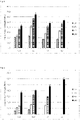
- Fig. 1 shows the effect of the combination of alkali-containing activator b) and iron-complexing agent c), compared to only the alkali-containing activator b) for use with an iron-containing silicate precursor a) with high iron concentration.
- Adding an iron-complexing agent c) as described herein increases the strength of the final material. The effect can be observed for all three selected iron-complexing agents from 2 days onwards.
- Binder compositions were defined, having the following compositions as summarized in Table 3.
- the term CEM I 52.5R refers herein to the strength class of the cement CEM I.
- Table 3 a) b) c) e) Water Sand CE2 700 ICSP1 - - - - 300 CEM I 52.5R 400 3000 CE3 700 ICSP1 40 Potassium sulfate - - 300 CEM I 52.5R 400 3000 E4 700 ICSP1 40 Potassium sulfate 1 EDTMP 300 CEM I 52.5R 400 3000 E5 700 ICSP1 40 Potassium sulfate 10 EDTMP 300 CEM I 52.5R 400 3000
- Fig. 2 illustrates the effect of a 70/30 hybrid system, with 70% of a precursor a) with high iron concentration and 30% of a hydraulic compound e). Curing said mixture in combination with components b) and c) as described herein has a positive effect on strength development, although such effect is visible in the end-strength, while in an early phase, compressive strength may be difficult to measure.
- Binder compositions were defined, having the following compositions as summarized in Table 4.
- CE5 500 ICSP1 40 Potassium sulfate - - 200 GGBFS 300 CEM I 52.5R 400 3000
- E6 500 ICSP1 40 Potassium sulfate 0.5 EDTMP 200 GGBFS 300 CEM I 52.5R 400 3000
- FIG. 3 illustrates the effect of an iron-complexing agent in a 50/20/30 hybrid system, having 50% of an iron-containing silicate precursor a), 20% of a further inorganic precursor d) and 30% of a hydraulic compound e).
- the addition of an iron-complexing agent has a positive effect on compressive strength from day 7 onwards.
- Binder compositions were defined, having the following compositions as summarized in Table 5.
- Fig. 4 illustrates the effect of iron-complexing agents in a 60/40 hybrid system, having 60% of an iron-containing silicate precursor a), and 40% of a hydraulic compound e).
- the combination of sodium lactate and EDTMP provides an excellent strength profile at all ages.
- Binder compositions were defined, having the following compositions as summarized in Table 6.
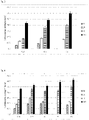
- Fig. 5 shows the effect of the combination of alkali-containing activator b) and iron-complexing agent c), compared to only the alkali-containing activator b) for use with an iron-containing silicate precursor a) with high iron concentration.
- Adding an iron-complexing agent c) as described herein increases the strength of the final material. The effect can be observed from 2 days onwards.
- Binder compositions were defined, having the following compositions as summarized in Table 7.
- Fig. 6 shows the effect of the combination of alkali-containing activator b) and iron-complexing agent c), compared to only the alkali-containing activator b) for use with an iron-containing silicate precursor a) with high iron concentration.
- Adding an iron-complexing agent c) as described herein increases the strength of the final material. The effect can be observed from 2 days onwards.
- Binder compositions were defined, having the following compositions as summarized in Table 8.
- Fig. 7 shows the effect of the combination of alkali-containing activator b) and iron-complexing agent c), compared to only the alkali-containing activator b) for use with an iron-containing silicate precursor a) with high iron concentration. Adding an iron-complexing agent c) as described herein increases the strength of the final material. The effect is observed at 28 days.
- Binder compositions were defined, having the following compositions as summarized in Table 9.
- Table 9 a) b) c) Water Sand CE11 1000 GGBFS 90 K-silicate (n 1.65) - - 360 3000
- CE12 1000 GGBFS 90 K-silicate (n 1.65) 2 EDTMP 360 3000
- Fig. 8 The development of compressive strength (strength profile) is presented in Fig. 8 , which shows that the addition of EDTMP to a combination of an alkali-containing activator b) according to the invention and GGBFS does not have an effect on the strength development or the strength of the final material.
- Binder compositions were defined, having the following compositions as summarized in Table 10.
- Table 10 a) b) c) Water Sand CE13 1000 Fly Ash 90 K-silicate (n 1.00) - - 360 3000
- CE14 1000 Fly ASh 90 K-silicate (n 1.00) 1 EDTMP 360 3000
- Fig. 9 The development of compressive strength (strength profile) is presented in Fig. 9 , which shows that the addition of EDTMP to a combination of an alkali-containing activator b) according to the invention and fly Ash does not have an effect on the strength development or the strength of the final material.
- Binder compositions were defined, having the following compositions as summarized in Table 10.
- Table 10 a) b) c) Water Sand CE15 1000 Metakaolin 150 K-silicate (n 1.00) - - 350 3000
- CE16 1000 Metakaolin 150 K-silicate (n 1.00) 1 EDTMP 350 3000
- Fig. 10 The development of compressive strength (strength profile) is presented in Fig. 10 , which shows that the addition of EDTMP to a combination of an alkali-containing activator b) according to the invention and Metakaolin does not have an effect on the strength development or the strength of the final material.
Landscapes
- Chemical & Material Sciences (AREA)
- Engineering & Computer Science (AREA)
- Ceramic Engineering (AREA)
- Materials Engineering (AREA)
- Structural Engineering (AREA)
- Organic Chemistry (AREA)
- Inorganic Chemistry (AREA)
- Chemical Kinetics & Catalysis (AREA)
- Civil Engineering (AREA)
- Dispersion Chemistry (AREA)
- Combustion & Propulsion (AREA)
- Curing Cements, Concrete, And Artificial Stone (AREA)
Priority Applications (4)
| Application Number | Priority Date | Filing Date | Title |
|---|---|---|---|
| EP21177507.7A EP4098634A1 (de) | 2021-06-02 | 2021-06-02 | Eisenhaltiges bindemittel |
| EP22731650.2A EP4347523A1 (de) | 2021-06-02 | 2022-06-02 | Eisenhaltiges bindemittel |
| PCT/EP2022/065133 WO2022253989A1 (en) | 2021-06-02 | 2022-06-02 | Iron-containing binder |
| US18/566,485 US20240294433A1 (en) | 2021-06-02 | 2022-06-02 | Iron-containing binder |
Applications Claiming Priority (1)
| Application Number | Priority Date | Filing Date | Title |
|---|---|---|---|
| EP21177507.7A EP4098634A1 (de) | 2021-06-02 | 2021-06-02 | Eisenhaltiges bindemittel |
Publications (1)
| Publication Number | Publication Date |
|---|---|
| EP4098634A1 true EP4098634A1 (de) | 2022-12-07 |
Family
ID=76269600
Family Applications (2)
| Application Number | Title | Priority Date | Filing Date |
|---|---|---|---|
| EP21177507.7A Withdrawn EP4098634A1 (de) | 2021-06-02 | 2021-06-02 | Eisenhaltiges bindemittel |
| EP22731650.2A Pending EP4347523A1 (de) | 2021-06-02 | 2022-06-02 | Eisenhaltiges bindemittel |
Family Applications After (1)
| Application Number | Title | Priority Date | Filing Date |
|---|---|---|---|
| EP22731650.2A Pending EP4347523A1 (de) | 2021-06-02 | 2022-06-02 | Eisenhaltiges bindemittel |
Country Status (3)
| Country | Link |
|---|---|
| US (1) | US20240294433A1 (de) |
| EP (2) | EP4098634A1 (de) |
| WO (1) | WO2022253989A1 (de) |
Cited By (2)
| Publication number | Priority date | Publication date | Assignee | Title |
|---|---|---|---|---|
| WO2024213799A1 (en) | 2023-04-14 | 2024-10-17 | Katholieke Universiteit Leuven | Inorganic liquid glues |
| CN118851676A (zh) * | 2024-09-23 | 2024-10-29 | 安徽水利开发有限公司 | 湿接缝用高强度防开裂混凝土及其制备工艺 |
Families Citing this family (1)
| Publication number | Priority date | Publication date | Assignee | Title |
|---|---|---|---|---|
| WO2024245733A1 (en) * | 2023-05-26 | 2024-12-05 | Construction Research & Technology Gmbh | Alkali-activatable binder composition containing tannin-dispersants |
Citations (3)
| Publication number | Priority date | Publication date | Assignee | Title |
|---|---|---|---|---|
| WO2019110134A1 (en) | 2017-12-08 | 2019-06-13 | Ecocem Materials Limited | Ground granulated blast furnace slag based binder, dry and wet formulations made therefrom and their preparation methods |
| WO2020025691A1 (en) | 2018-07-31 | 2020-02-06 | Katholieke Universiteit Leuven | Fe-rich binder |
| WO2020188070A1 (en) * | 2019-03-21 | 2020-09-24 | Tata Steel Ijmuiden B.V. | Method for the manufacture of high-end performance steel slag-based building products |
Family Cites Families (6)
| Publication number | Priority date | Publication date | Assignee | Title |
|---|---|---|---|---|
| US5366547A (en) * | 1993-05-24 | 1994-11-22 | U.S. Army Corps Of Engineers As Represented By The Secretary Of The Army | Setting control for alkali-activated silicate binders |
| AU2013339753B2 (en) * | 2012-10-31 | 2016-10-06 | Sika Technology Ag | Alkali-activated aluminosilicate binder with superior freeze-thaw stability |
| CN107814544A (zh) * | 2017-11-13 | 2018-03-20 | 东南大学 | 一种用于复合重金属污染土的固化剂及制备和应用方法 |
| CN110386781A (zh) * | 2019-07-26 | 2019-10-29 | 江苏禾吉新材料科技有限公司 | 一种碱激发矿渣-钢渣净浆试块的制备方法 |
| CN111960765B (zh) * | 2020-08-19 | 2021-06-18 | 湖南天为环保科技有限公司 | 一种基于垃圾渗滤液全量化处理的蒸发残渣固化工艺 |
| CN112142412A (zh) * | 2020-09-29 | 2020-12-29 | 南京工业大学 | 气冷非活性钢渣石膏基自流平砂浆及其制备方法 |
-
2021
- 2021-06-02 EP EP21177507.7A patent/EP4098634A1/de not_active Withdrawn
-
2022
- 2022-06-02 EP EP22731650.2A patent/EP4347523A1/de active Pending
- 2022-06-02 US US18/566,485 patent/US20240294433A1/en active Pending
- 2022-06-02 WO PCT/EP2022/065133 patent/WO2022253989A1/en not_active Ceased
Patent Citations (3)
| Publication number | Priority date | Publication date | Assignee | Title |
|---|---|---|---|---|
| WO2019110134A1 (en) | 2017-12-08 | 2019-06-13 | Ecocem Materials Limited | Ground granulated blast furnace slag based binder, dry and wet formulations made therefrom and their preparation methods |
| WO2020025691A1 (en) | 2018-07-31 | 2020-02-06 | Katholieke Universiteit Leuven | Fe-rich binder |
| WO2020188070A1 (en) * | 2019-03-21 | 2020-09-24 | Tata Steel Ijmuiden B.V. | Method for the manufacture of high-end performance steel slag-based building products |
Non-Patent Citations (1)
| Title |
|---|
| A.P. FANTILLI ET AL., THE CARBON FOOTPRINT OF NORMAL AND HIGH-STRENGTH CONCRETE USED IN LOW-RISE AND HIGH-RISE BUILDINGS, Retrieved from the Internet <URL:https://doi.org/10.1016/i.cscm.2019.eO0296)> |
Cited By (2)
| Publication number | Priority date | Publication date | Assignee | Title |
|---|---|---|---|---|
| WO2024213799A1 (en) | 2023-04-14 | 2024-10-17 | Katholieke Universiteit Leuven | Inorganic liquid glues |
| CN118851676A (zh) * | 2024-09-23 | 2024-10-29 | 安徽水利开发有限公司 | 湿接缝用高强度防开裂混凝土及其制备工艺 |
Also Published As
| Publication number | Publication date |
|---|---|
| WO2022253989A1 (en) | 2022-12-08 |
| EP4347523A1 (de) | 2024-04-10 |
| US20240294433A1 (en) | 2024-09-05 |
Similar Documents
| Publication | Publication Date | Title |
|---|---|---|
| EP1420000B1 (de) | Zementzusatzmittel, zementzusammensetzung und verfahren zur unterdrückung der carbonatisierung unter dessen verwendung | |
| CN103396026B (zh) | 白云石复合掺合料的制备方法及应用 | |
| JP5818579B2 (ja) | 中性化抑制型早強セメント組成物 | |
| US20240294433A1 (en) | Iron-containing binder | |
| JP5750011B2 (ja) | 高炉セメント組成物 | |
| KR101418238B1 (ko) | 고내구성 초속경 혼합시멘트 조성물 | |
| JPWO2002022518A1 (ja) | セメント組成物 | |
| AU2024227718A1 (en) | Methods for producing a cement composition | |
| AU2024227639A1 (en) | Methods for producing a low CO2 cement composition | |
| KR101323591B1 (ko) | 전기로 산화슬래그를 이용한 콘크리트 조성물 및 이로부터 제조된 2차 제품 | |
| CN101844905B (zh) | 水淬锰渣高性能混凝土及其制备方法 | |
| EP3315472B1 (de) | Schnellhärtendes material, verfahren zur herstellung davon und schnellhärtende zementzusammensetzung damit | |
| CN119390418A (zh) | 一种低收缩全固废混凝土及其制备方法 | |
| US20130247796A1 (en) | Cement admixture, cement composition, and method for reducing hexavalent chromium using the same | |
| JP4115767B2 (ja) | セメント混和材及びセメント組成物 | |
| CN107879649A (zh) | 一种海工水泥及其生产方法 | |
| CN115093146A (zh) | 复合激发剂及制备方法和应用 | |
| CN117177952A (zh) | 灌浆材料、灌浆砂浆组合物及固化体 | |
| CN110240438B (zh) | 一种用于水泥基材料密实增强剂及其制备方法 | |
| KR20130087192A (ko) | 탄닌을 이용한 저알칼리 비시멘트 콘크리트 조성물 및 이를 포함하는 블록 | |
| JP6735624B2 (ja) | コンクリートの表面改質材およびそれを用いたコンクリートの表層品質を改善する方法 | |
| US20060180052A1 (en) | Chemical admixture for cementitious compositions | |
| US20230192565A1 (en) | Activation system, including at least one alkaline metal salt and calcium and/or magnesium carbonate for activating ground granulated blast furnace slag and binder comprising the same for the preparation of mortar or concrete composition | |
| KR101111635B1 (ko) | 탄닌을 이용한 저알칼리 콘크리트 조성물 및 이를 포함하는 블록 | |
| EP4197986A1 (de) | Alkalische aktivatorzusammensetzung |
Legal Events
| Date | Code | Title | Description |
|---|---|---|---|
| PUAI | Public reference made under article 153(3) epc to a published international application that has entered the european phase |
Free format text: ORIGINAL CODE: 0009012 |
|
| STAA | Information on the status of an ep patent application or granted ep patent |
Free format text: STATUS: THE APPLICATION HAS BEEN PUBLISHED |
|
| AK | Designated contracting states |
Kind code of ref document: A1 Designated state(s): AL AT BE BG CH CY CZ DE DK EE ES FI FR GB GR HR HU IE IS IT LI LT LU LV MC MK MT NL NO PL PT RO RS SE SI SK SM TR |
|
| STAA | Information on the status of an ep patent application or granted ep patent |
Free format text: STATUS: THE APPLICATION IS DEEMED TO BE WITHDRAWN |
|
| 18D | Application deemed to be withdrawn |
Effective date: 20230608 |