EP4101867A1 - Anti-cd3 und anti-cd123 bispezifischer antikörper und verwendung davon - Google Patents
Anti-cd3 und anti-cd123 bispezifischer antikörper und verwendung davon Download PDFInfo
- Publication number
- EP4101867A1 EP4101867A1 EP20918015.7A EP20918015A EP4101867A1 EP 4101867 A1 EP4101867 A1 EP 4101867A1 EP 20918015 A EP20918015 A EP 20918015A EP 4101867 A1 EP4101867 A1 EP 4101867A1
- Authority
- EP
- European Patent Office
- Prior art keywords
- seq
- set forth
- antigen
- binding portion
- portion against
- Prior art date
- Legal status (The legal status is an assumption and is not a legal conclusion. Google has not performed a legal analysis and makes no representation as to the accuracy of the status listed.)
- Pending
Links
Images



Classifications
-
- C—CHEMISTRY; METALLURGY
- C07—ORGANIC CHEMISTRY
- C07K—PEPTIDES
- C07K16/00—Immunoglobulins [IG], e.g. monoclonal or polyclonal antibodies
- C07K16/18—Immunoglobulins [IG], e.g. monoclonal or polyclonal antibodies against material from animals or humans
- C07K16/28—Immunoglobulins [IG], e.g. monoclonal or polyclonal antibodies against material from animals or humans against receptors, cell surface antigens or cell surface determinants
- C07K16/2803—Immunoglobulins [IG], e.g. monoclonal or polyclonal antibodies against material from animals or humans against receptors, cell surface antigens or cell surface determinants against the immunoglobulin superfamily
- C07K16/2809—Immunoglobulins [IG], e.g. monoclonal or polyclonal antibodies against material from animals or humans against receptors, cell surface antigens or cell surface determinants against the immunoglobulin superfamily against the T-cell receptor (TcR)-CD3 complex
-
- A—HUMAN NECESSITIES
- A61—MEDICAL OR VETERINARY SCIENCE; HYGIENE
- A61P—SPECIFIC THERAPEUTIC ACTIVITY OF CHEMICAL COMPOUNDS OR MEDICINAL PREPARATIONS
- A61P35/00—Antineoplastic agents
-
- A—HUMAN NECESSITIES
- A61—MEDICAL OR VETERINARY SCIENCE; HYGIENE
- A61P—SPECIFIC THERAPEUTIC ACTIVITY OF CHEMICAL COMPOUNDS OR MEDICINAL PREPARATIONS
- A61P35/00—Antineoplastic agents
- A61P35/02—Antineoplastic agents specific for leukemia
-
- C—CHEMISTRY; METALLURGY
- C07—ORGANIC CHEMISTRY
- C07K—PEPTIDES
- C07K16/00—Immunoglobulins [IG], e.g. monoclonal or polyclonal antibodies
- C07K16/18—Immunoglobulins [IG], e.g. monoclonal or polyclonal antibodies against material from animals or humans
- C07K16/28—Immunoglobulins [IG], e.g. monoclonal or polyclonal antibodies against material from animals or humans against receptors, cell surface antigens or cell surface determinants
- C07K16/2866—Immunoglobulins [IG], e.g. monoclonal or polyclonal antibodies against material from animals or humans against receptors, cell surface antigens or cell surface determinants against receptors for cytokines, lymphokines, interferons
-
- A—HUMAN NECESSITIES
- A61—MEDICAL OR VETERINARY SCIENCE; HYGIENE
- A61K—PREPARATIONS FOR MEDICAL, DENTAL OR TOILETRY PURPOSES
- A61K39/00—Medicinal preparations containing antigens or antibodies
- A61K2039/505—Medicinal preparations containing antigens or antibodies comprising antibodies
-
- A—HUMAN NECESSITIES
- A61—MEDICAL OR VETERINARY SCIENCE; HYGIENE
- A61K—PREPARATIONS FOR MEDICAL, DENTAL OR TOILETRY PURPOSES
- A61K39/00—Medicinal preparations containing antigens or antibodies
- A61K2039/545—Medicinal preparations containing antigens or antibodies characterised by the dose, timing or administration schedule
-
- C—CHEMISTRY; METALLURGY
- C07—ORGANIC CHEMISTRY
- C07K—PEPTIDES
- C07K2317/00—Immunoglobulins specific features
- C07K2317/20—Immunoglobulins specific features characterized by taxonomic origin
- C07K2317/24—Immunoglobulins specific features characterized by taxonomic origin containing regions, domains or residues from different species, e.g. chimeric, humanized or veneered
-
- C—CHEMISTRY; METALLURGY
- C07—ORGANIC CHEMISTRY
- C07K—PEPTIDES
- C07K2317/00—Immunoglobulins specific features
- C07K2317/30—Immunoglobulins specific features characterized by aspects of specificity or valency
- C07K2317/31—Immunoglobulins specific features characterized by aspects of specificity or valency multispecific
-
- C—CHEMISTRY; METALLURGY
- C07—ORGANIC CHEMISTRY
- C07K—PEPTIDES
- C07K2317/00—Immunoglobulins specific features
- C07K2317/50—Immunoglobulins specific features characterized by immunoglobulin fragments
- C07K2317/52—Constant or Fc region; Isotype
-
- C—CHEMISTRY; METALLURGY
- C07—ORGANIC CHEMISTRY
- C07K—PEPTIDES
- C07K2317/00—Immunoglobulins specific features
- C07K2317/50—Immunoglobulins specific features characterized by immunoglobulin fragments
- C07K2317/52—Constant or Fc region; Isotype
- C07K2317/53—Hinge
-
- C—CHEMISTRY; METALLURGY
- C07—ORGANIC CHEMISTRY
- C07K—PEPTIDES
- C07K2317/00—Immunoglobulins specific features
- C07K2317/50—Immunoglobulins specific features characterized by immunoglobulin fragments
- C07K2317/55—Fab or Fab'
-
- C—CHEMISTRY; METALLURGY
- C07—ORGANIC CHEMISTRY
- C07K—PEPTIDES
- C07K2317/00—Immunoglobulins specific features
- C07K2317/50—Immunoglobulins specific features characterized by immunoglobulin fragments
- C07K2317/56—Immunoglobulins specific features characterized by immunoglobulin fragments variable (Fv) region, i.e. VH and/or VL
-
- C—CHEMISTRY; METALLURGY
- C07—ORGANIC CHEMISTRY
- C07K—PEPTIDES
- C07K2317/00—Immunoglobulins specific features
- C07K2317/50—Immunoglobulins specific features characterized by immunoglobulin fragments
- C07K2317/56—Immunoglobulins specific features characterized by immunoglobulin fragments variable (Fv) region, i.e. VH and/or VL
- C07K2317/565—Complementarity determining region [CDR]
-
- C—CHEMISTRY; METALLURGY
- C07—ORGANIC CHEMISTRY
- C07K—PEPTIDES
- C07K2317/00—Immunoglobulins specific features
- C07K2317/60—Immunoglobulins specific features characterized by non-natural combinations of immunoglobulin fragments
- C07K2317/62—Immunoglobulins specific features characterized by non-natural combinations of immunoglobulin fragments comprising only variable region components
- C07K2317/622—Single chain antibody (scFv)
-
- C—CHEMISTRY; METALLURGY
- C07—ORGANIC CHEMISTRY
- C07K—PEPTIDES
- C07K2317/00—Immunoglobulins specific features
- C07K2317/70—Immunoglobulins specific features characterized by effect upon binding to a cell or to an antigen
- C07K2317/73—Inducing cell death, e.g. apoptosis, necrosis or inhibition of cell proliferation
-
- C—CHEMISTRY; METALLURGY
- C07—ORGANIC CHEMISTRY
- C07K—PEPTIDES
- C07K2317/00—Immunoglobulins specific features
- C07K2317/70—Immunoglobulins specific features characterized by effect upon binding to a cell or to an antigen
- C07K2317/74—Inducing cell proliferation
-
- C—CHEMISTRY; METALLURGY
- C07—ORGANIC CHEMISTRY
- C07K—PEPTIDES
- C07K2317/00—Immunoglobulins specific features
- C07K2317/90—Immunoglobulins specific features characterized by (pharmaco)kinetic aspects or by stability of the immunoglobulin
- C07K2317/92—Affinity (KD), association rate (Ka), dissociation rate (Kd) or EC50 value
Definitions
- the present application generally relates to the field of antibody drugs.
- the present application relates to a bispecific antibody comprising an antigen-binding portion against human CD3E and/or an antigen-binding portion against human CD123 and medical and biological uses thereof.
- a bispecific antibody is a type of artificial antibodies that comprise two different antigen binding sites.
- Bispecific antibodies are widely used in the field of biomedicine, especially tumor immunotherapy.
- One arm of the bispecific antibodies targeting CD3 can bind to the CD3E subunit in TCR receptor complex on the surface of T cells, and the other arm targets a tumor antigen.
- bispecific antibodies can redirect T cells to specifically kill tumor cells in a histocompatibility complex (MHC)-independent manner.
- MHC histocompatibility complex
- bispecific antibodies There are numerous platforms for bispecific antibodies and their structures are complex.
- the bispecific antibodies can be divided into two categories: those with Fc fragments and those without Fc fragments.
- the bispecific antibodies without Fc fragments consist of the VH and VL regions or Fab fragments derived from two antibodies.
- the main representatives of such bispecific antibodies include BiTE, DART, TandAbs, bi-nanobody, and the like.
- the advantage of such bispecific antibodies is that there is no mismatch between heavy and light chains.
- the disadvantages are that their half-life is short and it is inconvenient when they are used in clinical applications.
- the bispecific antibodies with Fc fragments retain the structures of conventional monoclonal antibodies and can mediate the biological function of the Fc fragment.
- bispecific antibodies include KIH IgG, crossmab, DVD-Ig, Triomab, and the like, which have a long half-life in vivo and can have ADCC and CDC activities (see Hongyan Liu, Abhishek Saxena, Sachdev S. Sidhu, et al. Fc engineering for Developing Therapeutic Bispecific Antibodies and Novel Scaffolds. Front. Immunol. 2017; 8: 38 ).
- a bispecific antibody comprising an antigen-binding portion against human CD3E, wherein the antigen-binding portion against human CD3E comprises:
- a bispecific antibody comprising an antigen-binding portion against human CD123, wherein the antigen-binding portion against human CD123 comprises:
- a bispecific antibody comprising an antigen-binding portion against human CD3E and an antigen-binding portion against human CD123.
- the antigen-binding portion against human CD3E comprises:
- the antigen-binding portion against human CD123 comprises:
- the antigen-binding portion against human CD3E and the antigen-binding portion against human CD123 comprise the same light chain variable region.
- the bispecific antibody is an IgG1 antibody comprising two heavy chain constant regions having the same hinge region, and the amino acid sequence of the hinge region is set forth in SEQ ID NO:10.
- the bispecific antibody is an IgG1 antibody comprising a first heavy chain constant region and a second heavy chain constant region, wherein the amino acids at positions 354 and 366 of the first heavy chain constant region are C and W, respectively, and the amino acids at positions 349, 366, 368 and 407 of the second heavy chain constant region are C, S, A and V, respectively; wherein the amino acid positions of the antibody constant region are determined according to EU numbering.
- the bispecific antibody is an IgG1 antibody comprising a first heavy chain constant region and a second heavy chain constant region, wherein the amino acids at positions 234, 235 and 331 of the first and second heavy chain constant regions are F, E, and S, respectively; wherein the amino acid positions of the antibody constant region are determined according to EU numbering.
- the antigen-binding portion against human CD3E comprises a heavy chain variable region as set forth in SEQ ID NO:11 and a light chain variable region as set forth in SEQ ID NO:12.
- the antigen-binding portion against human CD123 comprises a heavy chain variable region as set forth in SEQ ID NO:13 and a light chain variable region as set forth in SEQ ID NO:12.
- the antigen-binding portion against human CD3E comprises a single chain fragment variable (scFv) or a Fab fragment.
- the antigen-binding portion against human CD123 comprises a single chain fragment variable (scFv) or a Fab fragment.
- the antibody has a first arm and a second arm, wherein the first arm comprises an antigen-binding portion against human CD3E and the second arm comprises an antigen-binding portion against human CD123:
- a pharmaceutical composition comprising the bispecific antibody of any one of the first aspect to the third aspect.
- the pharmaceutical composition is used for the prevention or treatment of a CD123-positive tumor.
- a fifth aspect there is provided in the present application use of the bispecific antibody of any one of the first aspect to the third aspect, or the pharmaceutical composition of the fourth aspect in the manufacture of a medicament for the prevention or treatment of a CD123-positive tumor.
- a method of preventing or treating a CD123-positive tumor comprising administering to a subject in need thereof the bispecific antibody of any one of the first aspect to the third aspect, or the pharmaceutical composition of the fourth aspect.
- Fc fragment refers to a portion of the heavy chain constant region of an antibody, including the hinge region (hinge), the CH2 and CH3 segments of the constant region.
- the Fc fragment refers to the amino acid sequence at positions 216-447 in the constant region of the antibody.
- Fab fragment antigen-binding fragment
- Fab portion refers to an antibody fragment capable of binding to an antigen that is produced by treatment of an intact antibody with papain, including the intact light chain (VL-CL), the heavy chain variable region, and the CH1 fragment (VH-CH1).
- single chain fragment variable refers to an antibody having a single chain structure comprising a polypeptide chain comprising a heavy chain variable region (VH) and a light chain variable region (VL), which is generally constructed using genetic engineering techniques.
- a flexible linker is typically designed between the heavy chain variable region and the light chain variable region so that the heavy chain variable region and the light chain variable region can be folded into the correct conformation capable of binding to an antigen.
- the term "antigen-binding portion” refers to a portion of the antibody structure that determines the antigen-binding ability. It will be understood by those skilled in the art that the major parts of an antibody structure that determine the antigen-binding ability are the CDRs, so the CDRs are also the core components of the antigen-binding portion. In the construction of a bispecific antibody, the examples of the "antigen-binding portion” include, but are not limited to a single chain fragment variable (scFv) or a Fab fragment.
- scFv single chain fragment variable
- bispecific antibody refers to an antibody having the ability to bind to two different antigens, which can consist of two Fc fragments and two antigen-binding portions fused thereto, respectively.
- a bispecific antibody used herein refers to a bispecific antibody based on the human IgG1 antibody, and in addition to the altered structures described herein, it has the basic characteristics and function of the human IgG1 antibody. It is well-known to those skilled in the art that "a bispecific antibody” used herein can also be those based on other immunoglobulin subtypes, such as the human IgG2 antibody.
- CDRs complementarity determining regions
- CDRs generally including CDR1, CDR2 and CDR3
- the CDR sequences of a VH or a VL have two common definitions, i.e., the Kabat definition and the Chothia definition (see, e.g., Kabat, "Sequences of Proteins of Immunological Interest", National Institutes of Health, Bethesda, Md. (1991 ); A1-Lazikani et al., J. Mol. Biol. 273:927-948 (1997 ); and Martin et al., Proc. Natl. Acad. Sci.
- variable region sequences of a given antibody the sequences of CDR regions in the VH and the VL can be determined according to the Kabat definition or the Chothia definition. In an embodiment of the present application, CDR sequences are defined according to the Kabat definition.
- variable region sequences of a given antibody the sequences of CDR regions in the variable region sequences can be analyzed in a variety of ways, for example, using online software Abysis (http://www.abysis.org/).
- telomere binding refers to a non-random binding reaction between two molecules, e.g., binding of an antibody to an antigen epitope.
- CD3 molecule is an important differentiation antigen on T cell membrane and is also a characteristic marker of the mature T cells.
- CD3 molecule consists of four chains of ⁇ , ⁇ , ⁇ and ⁇ , or five chains of ⁇ , ⁇ , ⁇ , ⁇ and ⁇ ( ⁇ and ⁇ are homologous isomers), is composed of three dimers of CD3 ⁇ , CD3 ⁇ and CD3 ⁇ (or CD3 ⁇ ) and expressed on T cell membrane.
- Three chains of CD3 ⁇ , ⁇ and ⁇ contain highly conserved acidic amino acid residues (glutamic acid in ⁇ chain, and aspartic acid in ⁇ and ⁇ chains), which can be non-covalently linked to the basic amino acid residues on the ⁇ and ⁇ chains of the T cell receptor (TCR) by a salt bridge to form a stable TCR-CD3 complex structure.
- the complex can transmit T cell activation signals and stabilize the TCR structure.
- the intracellular domains of each chain of CD3 contain an ITAM (immune receptor tyrosine-based activation motif) structure, which is the basis for a CD3 molecule-mediated intracellular signaling.
- ITAM immune receptor tyrosine-based activation motif
- CD3 has the function of transmitting the activation signal generated after TCR recognizes the antigen and the signal is the first signal for inducing T cell activation.
- CD123 also known as human interleukin-3 (IL-3) receptor alpha chain
- IL-3 receptor alpha chain is a member of the cytokine receptor superfamily with a molecular weight of about 40 KDa and belongs to a type I transmembrane glycoprotein.
- the interleukin-3 receptor is a heterodimer composed of an alpha chain (CD123) and a beta chain (CD131). After the binding of IL-3 to CD123, CD131 provides signal transduction, which in turn regulates the function of hematopoietic cells and immune cells and stimulates the proliferation of endothelial cells ( Testa et al., Biomark Res. 2:4 (2014 )).
- CD123 is mainly expressed in a myeloid progenitor cell, a plasmacytoid dendritic cell, a monocyte, a basophil and a small subset of B cells ( Munoz L et al., Haematologica. 86(12):1261-9 ). About 80% of AML patients have blasts that overexpress CD123, and studies have shown that overexpression of CD123 antigen corresponds to poor prognosis and lower remission rates in AML ( Testa U et al., Blood. 2002; 100(8 )). Although most AML patients respond well to initial therapy, some (60-80%) require consolidation therapy to achieve complete remission.
- a bispecific antibody comprising an antigen-binding portion against human CD3E, wherein the antigen-binding portion against human CD3E comprises:
- a bispecific antibody comprising an antigen-binding portion against human CD123, wherein the antigen-binding portion against human CD123 comprises:
- a bispecific antibody comprising an antigen-binding portion against human CD3E and an antigen-binding portion against human CD123.
- the antigen-binding portion against human CD3E comprises:
- the antigen-binding portion against human CD123 comprises:
- the antigen-binding portion against human CD3E and the antigen-binding portion against human CD123 comprise the same light chain variable region.
- the antigen-binding portion against human CD3E and the antigen-binding portion against human CD123 comprise the same light chain. This embodiment facilitates proper assembly of the light and heavy chains, and is also a preferred embodiment.
- the bispecific antibody is an IgG1 antibody comprising two heavy chain constant regions having the same hinge region, and the amino acid sequence of the hinge region is set forth in SEQ ID NO:10, which replaces the sequences at positions 216-230 of the constant region of the natural human IgG1 antibody.
- the amino acid positions of the antibody constant region are determined according to EU numbering.
- the bispecific antibody is an IgG1 antibody comprising a first heavy chain constant region and a second heavy chain constant region, wherein the amino acids at positions 354 and 366 of the first heavy chain constant region are C and W, respectively, and the amino acids at positions 349, 366, 368 and 407 of the second heavy chain constant region are C, S, A and V, respectively.
- the amino acid positions of the antibody constant region are determined according to EU numbering.
- the structure of the bispecific antibody can be optimized from the following two aspects: the first one is the heavy chain heteromerization and the second one is the proper assembly of the light and heavy chains.
- two Fc fragments comprise mutations that can ensure heavy chain heteromerization.
- the KIH (knob-in-hole) technique is a strategy to address heavy chain heteromerization.
- the KIH technique refers to the formation of a structure that facilitates pairing of the heterologous halves to each other by modifying the amino acid sequence of the CH3 region, which can maintain the structure of the normal antibody as much as possible while promoting the formation of the bispecific antibody.
- the KIH technique utilized includes allowing the amino acids at positions 354 and 366 of one Fc fragment to be C and W, respectively, and the amino acids at positions 349, 366, 368 and 407 of the other Fc fragment to be C, S, A and V, respectively.
- the KIH technique see, for example, " An efficient route to human bispecific IgG", A. Margaret Merchant et al., Nature Biotechnology, Volume 16, 1998 ", which is incorporated herein by reference in its entirety.
- the bispecific antibody is an IgG1 antibody comprising a first heavy chain constant region and a second heavy chain constant region, wherein the amino acids at positions 234, 235 and 331 of the first and second heavy chain constant regions are F, E, and S, respectively.
- the amino acid positions of the antibody constant region are determined according to EU numbering.
- the amino acids at positions 234, 235 and 331 of the CH2 fragments of the two heavy chain constant regions are F, E and S, respectively, which can reduce antibody dependent cytotoxicity (ADCC) mediated by the Fc fragment of an antibody, thereby potentially reducing side effects caused by the bispecific antibody in vivo.
- ADCC antibody dependent cytotoxicity
- the antigen-binding portion against human CD3E comprises a heavy chain variable region as set forth in SEQ ID NO:11 (comprising HCDR1 as set forth in SEQ ID NO: 1, HCDR2 as set forth in SEQ ID NO: 2 and HCDR3 as set forth in SEQ ID NO:3) and a light chain variable region as set forth in SEQ ID NO:12 (comprising LCDR1 as forth in SEQ ID NO:4, LCDR2 as set forth in SEQ ID NO:5 and LCDR3 as set forth in SEQ ID NO:6).
- the antigen-binding portion against human CD123 comprises a heavy chain variable region as set forth in SEQ ID NO:13 (comprising HCDR1 as set forth in SEQ ID NO: 7, HCDR2 as set forth in SEQ ID NO: 8 and HCDR3 as set forth in SEQ ID NO:9) and a light chain variable region as set forth in SEQ ID NO:12 (comprising LCDR1 as forth in SEQ ID NO:4, LCDR2 as set forth in SEQ ID NO:5 and LCDR3 as set forth in SEQ ID NO:6).
- the antigen-binding portion against human CD3E comprises a single chain fragment variable (scFv) or a Fab fragment.
- the antigen-binding portion against human CD123 comprises a single chain fragment variable (scFv) or a Fab fragment.
- the antigen-binding portions can comprise two forms, i.e., a single chain fragment variable (scFv) or a Fab fragment
- the configuration of antigen-binding portions of the bispecific antibody can have four combinations for given two antigens: Fab+Fab, Fab+scFv, scFv+Fab, and scFv+scFv.
- the antigen-binding portion against human CD3E comprises a Fab fragment and the antigen-binding portion against human CD123 comprises a Fab fragment.
- the antigen-binding portion against human CD3E comprises a Fab fragment and the antigen-binding portion against human CD123 comprises a single chain fragment variable (scFv).
- the antigen-binding portion against human CD3E comprises a single chain fragment variable (scFv) and the antigen-binding portion against human CD123 comprises a Fab fragment.
- scFv single chain fragment variable
- the antigen-binding portion against human CD3E comprises a single chain fragment variable (scFv) and the antigen-binding portion against human CD123 comprises a single chain fragment variable (scFv).
- the bispecific antibody is also described herein as having two "arms".
- the bispecific antibody can be divided into two arms from the central portion.
- the arms of the bispecific antibody can consist of an Fc fragment and an antigen-binding portion (a Fab fragment or a single chain fragment variable).
- a Fab fragment or a single chain fragment variable For the arm consisting of an Fc fragment and a Fab fragment, its structure is similar to that of a common antibody, comprising intact heavy and light chains, and thus the structure of such arm can be represented as Fc + Fab, or can be represented as a heavy chain (Fc + the heavy chain variable region of Fab and CH1 fragment) + a light chain (the light chain portion of Fab).
- both arms contain the antigen-binding portions in the form of Fab fragment, the structure of the bispecific antibody thus formed is close to that of a native antibody and is a preferred embodiment.
- the antibody has a first arm and a second arm, wherein the first arm comprises an antigen-binding portion against human CD3E and the second arm comprises an antigen-binding portion against human CD 123:
- the heavy chain constant region of the bispecific antibody is human IgG1 subtype or various mutants of a selected human IgG1 subtype, such as IgG1H, IgG1K, IgGlm3-H, or IgG1m3-K.
- the light chain constant region of the bispecific antibody is human ⁇ subtype or human ⁇ subtype, preferably human ⁇ subtype.
- a pharmaceutical composition comprising the bispecific antibody of any one of the first aspect to the third aspect.
- the pharmaceutical composition further comprises a pharmaceutically acceptable carrier, excipient, diluent, and the like.
- the pharmaceutical composition is used to prevent or treat CD123-positive tumors, for example, acute myeloid leukemia (AML) and blastic plasmacytoid dendritic cell tumors (BPDCN).
- CD123-positive tumors for example, acute myeloid leukemia (AML) and blastic plasmacytoid dendritic cell tumors (BPDCN).
- AML acute myeloid leukemia
- BPDCN blastic plasmacytoid dendritic cell tumors
- the pharmaceutical composition can further comprise a lubricant, such as talc, magnesium stearate, and mineral oil; a wetting agent; an emulsifier; a suspending agent; a preservative, such as benzoic acid, sorbic acid and calcium propionate; a sweetening agent and/or a flavoring agent and the like.
- the pharmaceutical composition of the present application can be formulated as a tablet, a pill, a powder, a lozenge, an elixir, a suspension, an emulsion, a solution, a syrup, a suppository, or a capsule and the like.
- the pharmaceutical composition of the present application can be delivered using any physiologically acceptable administration route including, but not limited to, oral administration, parenteral administration, nasal administration, rectal administration, intraperitoneal administration, intravascular injection, subcutaneous administration, transdermal administration, inhalation administration and the like.
- a pharmaceutical composition for therapeutic use can be formulated for storage in a lyophilized formulation or in the form of an aqueous solution by mixing an agent with desired purity with a pharmaceutically acceptable carrier or excipient where appropriate.
- a fifth aspect there is provided in the present application use of the bispecific antibody of any one of the first aspect to the third aspect, or the pharmaceutical composition of the fourth aspect in the manufacture of a medicament for the prevention or treatment of a CD123-positive tumor.
- the CD123 positive tumor is selected from the group consisting of acute myeloid leukemia (AML) and blastic plasmacytoid dendritic cell tumors (BPDCN).
- AML acute myeloid leukemia
- BPDCN blastic plasmacytoid dendritic cell tumors
- a method of preventing or treating a CD123 positive tumor comprising administering to a subject in need thereof the bispecific antibody of any one of the first aspect to the third aspect, or the pharmaceutical composition of the fourth aspect.
- the CD123 positive tumor is selected from the group consisting of acute myeloid leukemia (AML) and blastic plasmacytoid dendritic cell tumors (BPDCN).
- AML acute myeloid leukemia
- BPDCN blastic plasmacytoid dendritic cell tumors
- CD3E ⁇ CD123 bispecific antibody including the extracellular region of human CD3E (hCD3E, SEQ ID NO:14), the extracellular region of human CD3D (hCD3D, SEQ ID NO:15), the extracellular region of monkey CD3E (mfCD3E, SEQ ID NO: 16), the extracellular region of monkey CD3D (mfCD3D, SEQ ID NO:17), the extracellular region of mouse CD3E (mCD3E, SEQ ID NO:18), the extracellular region of mouse CD3D (mCD3D, SEQ ID NO:19) and the extracellular region of human CD123 subtype 1 (hCD123-SP1, SEQ ID NO:20), the extracellular region of monkey CD123 subtype 1 (mfCD123-SP1, SEQ ID NO:21), and the extracellular region of mouse CD123 subtype 1 (mCD123-SP1, SEQ ID NO:22).
- recombinant proteins all have a large number of post-translational modifications (e.g., glycosylation or disulfide bonds, etc.), and thus the use of the mammal cell expression system would be more advantageous in maintaining the structures and functions of the recombinant proteins.
- post-translational modifications e.g., glycosylation or disulfide bonds, etc.
- His tags SEQ ID NO:23
- Fc fragments of mouse antibody IgG2a mFc, SEQ ID NO:24
- Fc mutants FcK, SEQ ID NO:25 or FcH, SEQ ID NO:26
- the heavy chain constant region of the antibody can be human IgG1 subtype (SEQ ID NO:27) or various mutants of the selected human IgG1 subtype, such as IgG1H (SEQ ID NO:28), IgG1K (SEQ ID NO:29), IgG1m3-H (SEQ ID NO:30) or IgG1m3-K (SEQ ID NO:31), and the light chain constant region can be human ⁇ subtype (SEQ ID NO:32) or human ⁇ subtype (SEQ ID NO:33).
- the genes (comprising His-tag, mFc or Fc encoding gene) of the above recombinant proteins were designed and synthesized.
- the synthesized genes encoding various recombinant proteins were cloned into proper eukaryotic expression vectors (such as pcDNA3.1 purchased from Invitrogen Inc.) by conventional molecular biology techniques.
- liposomes e.g., 293fectin from Invitrogen Inc.
- other transfection agents such as PEI
- the cells were incubated in suspension under serum-free condition for 3-5 days. Then, the supernatant of the culture was harvested by centrifugation.
- the recombinant proteins in the supernatant were further purified using metal chelate affinity chromatography column (such as HisTrap FF from GE Inc.).
- the recombinant proteins and antibodies fused with mFc were further purified using a Protein A/G affinity chromatography column (such as Mabselect SURE from GE Inc.).
- the recombinant protein preservation buffer was then replaced with PBS buffer (pH 7.0) or other suitable buffers using a desalination column (such as Hitrap desaulting from GE Inc.). If necessary, the antibody samples can be sterilized by filtration and then stored in aliquots at -20°C.
- Example 2 Construction of CD123 mouse immune library based on a common light chain
- the light chain variable region of a specific anti-CD3E monoclonal antibody was selected to be matched with the mouse heavy chain variable region that has undergone in vivo affinity maturation of the CD123 antigen.
- a single chain fragment variable (scFv) library was constructed for screening specific antibodies against CD123 by conventional molecular biology means.
- Splenocytes were collected after cross-immunization of 6-8 week old BALB/c mice with hCD123-SP1-His and mfCD123-SP1-His recombinant proteins.
- Mouse spleen lymphocytes were isolated using mouse lymphocyte separation agent (CAT#DKW33-R0100, DAKEWE). The isolated lymphocytes were subjected to total RNA extraction using total cell RNA extraction kit (CAT#DP430, TIANGEN BIOTECH (BEIJING) CO., LTD.). Using the extracted total RNA as a template, the heavy chain variable region of the antibody was synthesized using a first-strand cDNA synthesis kit (CAT#K1621, Thermo scientific).
- the light chain variable region of the rat monoclonal antibody WM03-C6 (referring to the sequence of the monoclonal antibody 20E5-F10 in the application WO_2016_116626_A1, in which the amino acid sequence of the heavy chain variable region is set forth in SEQ ID NO: 34, and the amino acid sequence of the light chain variable region is set forth in SEQ ID NO: 35) that specifically recognizes human and cynomolgus monkey CD3E, and the mouse heavy chain variable region, which was obtained by immunizing the mouse with the CD123 recombinant antigen, were obtained by using conventional molecular biology means, such as PCR amplification technique. Then a single chain fragment variable (scFv) was constructed using the overlap extension PCR technique.
- scFv single chain fragment variable
- a scFv library was constructed by cloning the prepared gene encoding the mouse single chain fragment variable into the vector pADSCFV-S (for the experimental technical process, referring to Example 1 of Chinese Patent Application No. 201510097117.0 ).
- the capacity of this antibody library reaches 1.2 ⁇ 10E8, and the correct rate is 65%.
- Example 3 Screening of CD123 mouse immune library having a common light chain
- the phage library constructed in Example 2 to display mouse single chain fragment variable was screened by the solid-phase screening strategy using the recombinant hCD123-SP1-His prepared in Example 1 as the antigen (for the experimental protocol, referring to Phage Display: General Experimental Guide, Clackson, T. (USA) and Lowman, H.B. (USA) (Ed.); translated by Lan Ma et al., Chemical Industry Press Co., Ltd., May, 2008 ).
- One single chain fragment variable S8F3 (SEQ ID NO: 36) specifically binding to human CD123 was obtained by carried out a total of three rounds of screening including binding, elution, neutralization, infection and amplification.
- the nucleotide sequences encoding the heavy chain variable region S8F3VH of S8F3 (SEQ ID NO:37) and the light chain variable region WM03-C6VK (SEQ ID NO:35) were cloned into a eukaryotic expression vector (such as pcDNA3.1 from Invitrogen, etc.) fused with the nucleotide sequences encoding a human heavy chain constant region and a light chain constant region using conventional molecular biology means to express the whole antibody S8F3VH+C6VK in combination.
- a eukaryotic expression vector such as pcDNA3.1 from Invitrogen, etc.
- the anti-CD123 antibody CSL362 (the amino acid sequence of the heavy chain was set forth in SEQ ID NO: 38, and the amino acid sequence of the light chain was set forth in SEQ ID NO: 39) was prepared as a positive control antibody for subsequent research with reference to US patent US_2014_0178364_A1 .
- the affinity of anti-CD 123 antibodies was determined by surface plasmon resonance using Biacore X100.
- Related reagents and consumables such as Amino Conjugation Kit (BR-1000-50), Human Antibody Capture Kit (BR-1008-39), CM5 Chip (BR100012) and 10 ⁇ HBS-EP (BR100669) buffer with pH 7.4 were all purchased from GE healthcare.
- the anti-CD123 antibodies (S8F3VH+C6VK and CSL362) were diluted to 0.5-1 ⁇ g/mL and injected at 10 ⁇ L/min to ensure that about 100RU of the antibody was captured by the anti-human Fc antibody. Then hCD123-SP1-his was diluted to a series of concentration gradients (such as 2.47 nM, 7.4 nM, 22.2 nM, 66.7 nM, and 200 nM), and injected from low to high concentrations at 30 ⁇ L/min at 25°C with a binding time of 120 s and a dissociation time of 600-2400s.
- concentration gradients such as 2.47 nM, 7.4 nM, 22.2 nM, 66.7 nM, and 200 nM
- KG-1a cells Human Acute Myeloid Leukemia Cells, purchased from the Cell Resource Center of Institute of Basic Medicine, Chinese Academy of Medical Sciences) at logarithmic phase of growth were used and resuspended to 2 ⁇ 10 6 cells/mL with PBS buffer containing 1% BSA after centrifugation. KG-1a cells were plated in a 96-well V-bottom plate at 100 ⁇ L/well, and the supernatant was removed after centrifugation.
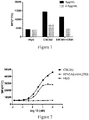
- the sample S8F3VH+C6VK to be tested, the control sample CSL362 and the irrelevant antibody HIgG (human IgG control (whole molecule), Purifie, A01006, GenScript) were prepared with PBS buffer to final concentrations of 5 ⁇ g/mL and 0.5 ⁇ g/mL, respectively.
- the antibodies were added to the wells containing cells and incubated at 4 °C for 1 hr. Then, the plate was washed three times with 200 ⁇ L of PBS buffer.
- the goat anti-human IgG-FITC secondary antibody ZF-0308, ZSGB-BIO was added to the wells (100 ⁇ L/well), and incubated at 4°C for 30 minutes in the dark.
- the humanization protocol adopted the classic framework transplantation strategy (referring to J immunol. 169, 1119-1125, 2002 ).
- the heavy and light chain variable regions of WM03-C6 were respectively compared with the human antibody germline gene sequences in the IMGT database.
- the appropriate germline gene sequences were selected to provide the framework regions 1 to 3 (FR1+FR2+FR3) of the antibody, and the appropriate J region gene sequence was selected to provide framework region 4 (FR4).
- This template can be selected based on a variety of factors, such as relative overall length of the antibody, size of the CDRs, amino acid residues located at the junction between the framework regions (FR) and hypervariable regions (CDR) of the antibody, global homology between sequences and the like.
- the selected template can be a mixture of multiple sequences or can be a consensus template, so long as the proper conformation of the parental complementarity determining regions (CDRs) is maintained as far as possible.
- the mutants of the light and heavy chains of the humanized antibody were designed in order to avoid the possible protein heterogeneity caused by the deamination site NG in the hypervariable regions (CDRs) of the antibody.
- a humanized light chain mutant L27E5 SEQ ID NO: 12
- a humanized heavy chain mutant H3B8 SEQ ID NO: 11
- the anti-human IgG (Fc) antibody was coupled to the surface of CM5 chip, the anti-CD3E antibodies (WM03-C6 and H3B8+L27E5) were diluted to 0.5-1 ⁇ g/mL, and injected at 10 ⁇ L/min to ensure about 350-400RU of the antibodies were captured by anti-human Fc antibody. Then hCD3E-his was diluted to a series of concentration gradients (such as 6.17 nM, 18.5 nM, 55.6 nM, 167 nM, and 500 nM), and injected from low to high concentration at 30 ⁇ L/min at 25°C with a binding time of 120 s and a dissociation time of 600-1800s.
- concentration gradients such as 6.17 nM, 18.5 nM, 55.6 nM, 167 nM, and 500 nM
- the S8F3 heavy chain variable region was subjected to in vitro affinity maturation in order to improve the specificity of the bispecific antibody against the target antigen and enhance the tissue distribution and killing efficiency of the bispecific antibody during administration.
- a S8F3VH-based CDR3 mutation library was constructed by introducing mutations in the CDR3 of the S8F3 heavy chain variable region using conventional molecular biology means. The designed mutation scheme is shown in Table 3, the library capacity is 1.7 ⁇ 10E8, and the correct rate is 86%. Table 3.
- the constructed S8F3VH-CDR3 mutant library was subjected to three rounds of screening and enrichment with the hCD123-SP1 antigen by solid phase screening method.
- the heavy chain variable region mutant H7A3 (SEQ ID NO:10) with increased affinity was obtained.
- the obtained nucleotide sequence encoding the H7A3 variable region was cloned into a eukaryotic expression vector fused with the nucleotide sequence encoding the human heavy chain constant region, and combined with the L27E5 light chain expression vector to express the whole antibody.
- a classical framework grafting strategy was used in the humanization of the anti-human CD123 murine monoclonal antibody heavy chain H7A3.
- CDR transplantation was performed on the heavy chain variable region of H7A3 to obtain a humanized version H7A3VH-h2.
- some key amino acids in the framework region of the humanized antibody such as 169, R71, T73, A75 were back mutated, and finally a humanized version H7A3-h2-m5 (SEQ ID NO: 13) was obtained.
- the antibody variable region gene was designed and synthesized according to the amino acid sequence of the humanized antibody, and cloned into a eukaryotic expression vector to combine with the common light chain L27E5 to express the whole antibody of human IgG1.
- MV-4-11 cells Human Acute Monocytic Leukemia Cells, purchased from COBIOER BIOSCIENCES CO., LTD) at logarithmic phase of growth were used and resuspended to 2 ⁇ 10 6 cells/well with PBS buffer containing 1% BSA after centrifugation. MV-4-11 cells were plated in a 96-well V-bottom plate at 100 ⁇ L/well, and the supernatant was removed after centrifugation.
- the sample H7A3-h2-m5+L27E5 to be tested, the control sample CSL362 and the irrelevant antibody HIgG human IgG control (whole molecule), Purifie, A01006, GenScript) were prepared with PBS buffer to total 9 final concentrations with 100 nM as the starting concentration, followed by a 3-fold gradient dilution.
- the antibodies were added to the wells containing cells and incubated at 4°C for 1 hour. Then, the plate was washed three times with 200 ⁇ L PBS buffer.
- the goat anti-human IgG-FITC secondary antibody ZF-0308, ZSGB-BIO was added to the wells (100 ⁇ L/well), and incubated at 4°C for 30 minutes in the dark.
- nucleotide sequences encoding the heavy chain variable region H3B8 of the anti-CD3E monoclonal antibody and the heavy chain variable region H7A3-h2-m5 of the anti-CD123 monoclonal antibody were respectively cloned into suitable eukaryotic expression vectors to construct heterodimers based on a common light chain.
- nucleotide sequence encoding the heavy chain variable region of the anti-CD3E antibody was cloned into the eukaryotic expression vector fused with the nucleotide sequence encoding the IgG1 constant region with Knob mutation IgG1m3-K
- nucleotide sequence encoding the heavy chain variable region of the anti-CD123 antibody was cloned into the eukaryotic expression vector containing the nucleotide sequence encoding the IgG1 constant region with Hole mutation IgG1m3-H
- nucleotide sequence encoding the variable region VK of the common light chain L27E5 was cloned into the eukaryotic expression vector fused with the nucleotide sequence encoding the human light chain constant region CK.
- Xmab14045 based on the same Fc structure (SEQ ID NO: 40, SEQ ID NO: 41, SEQ ID NO: 42) was constructed in order to compare the biological activity of the candidate molecule and the CD3E ⁇ CD123 bispecific antibody under clinical research.
- the three constructed eukaryotic expression vectors expressing H3B8-IgG1m3-K, H7A3-h2-m5-IgG1m3-H and L27E5-CK were co-transfected into HEK293F cells using liposomes, and the cells were cultured in suspension in a serum-free medium for 3-5 days. The supernatant of the culture was harvested by centrifugation. The bispecific antibodies in the culture supernatant were purified using a Protein A/G affinity chromatography column (e.g., Mabselect SURE, GE Inc.).
- a Protein A/G affinity chromatography column e.g., Mabselect SURE, GE Inc.
- the recombinant protein preservation buffer was then replaced with PBS buffer (pH 7.0) or other suitable buffers using a desalination column (e.g., Hitrap desaulting, GE Inc.).
- the desalted protein solution was purified by a size exclusion chromatography (SEC) using Superdex 200 (GE), thereby obtaining the protein of interest. If necessary, the antibody samples can be sterilized by filtration and then stored in aliquots at -20°C for later use.
- Example 8 Affinity assay of a bispecific antibody
- the affinity assays were performed on the anti-CD3E monoclonal antibody H3B8+L27E5, the anti-CD123 monoclonal antibody H7A3-h2-m5+L27E5, the bispecific antibody CD3E ⁇ CD123 (CD3xCD123 BsAb) and the control antibody Xmab14045 by surface plasmon resonance technique using Biacore X100.
- the affinity fitting results are shown in Table 6 and Table 7. Table 6.
- CD3E ⁇ CD123 BsAb The ability of the bispecific antibody CD3E ⁇ CD123 (CD3E ⁇ CD123 BsAb) to simultaneously bind to both CD3E and CD123 antigens was detected using conventional ELISA methods.
- a 96-well ELISA plate was coated with the antigen CD123-SP1-mFc (3 ⁇ g/mL, 100 ⁇ L/well) overnight at 4 °C.
- the anti-CD123 monoclonal antibody H7A3-h2-m5+L27E5, the anti-CD3E monoclonal antibody H3B8+L27E5 and the bispecific antibody CD3E ⁇ CD123 were respectively added to the wells in duplicate (10 ⁇ g/mL, 100 ⁇ L/well), and incubated at 37 °C for 1 hour.
- the ELISA plate was washed with PBS-0.1% Tween 20, followed by addition of CD123-His antigen (1 ⁇ g/mL, 100 ⁇ L/well) and incubation at 37 °C for 1 hour.
- the ELISA plate was washed with PBS-0.1% Tween 20, followed by addition of HRP mouse anti-his IgG (cw0285M, Beijing ComWin Biotech Co., Ltd.) and incubation at 37 °C for 1 hour.
- the ELISA plate was washed with PBS-0.1% Tween 20, and OPD substrate color development solution was added. The color development was terminated with 1 M H 2 SO 4 after 5-10 minutes.
- the optical density values at 492 nm/630 nm dual wavelength were measured using a microplate reader.
- the result of ELISA assay was shown in FIG. 3 .
- the bispecific antibody CD3E ⁇ CD123 simultaneously recognized both CD3E and CD123 antigens.
- Example 10 Identification of the ability of the bispecific antibody to recognize CD3E and CD123 on cell surface
- Jurkat-Dual cells (jktd-isnf, purchased from Invivogen) at the logarithmic phase of growth were used and resuspended to 2 ⁇ 10 6 cells/well with PBS buffer containing 1% BSA after centrifugation.
- Jurkat-Dual cells were plated in a 96-well V-bottom plate at 100 ⁇ L/well, and the supernatant was removed after centrifugation.
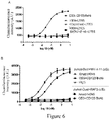
- the control sample of the bispecific antibody Xmab14045, the anti-CD3E monoclonal antibody H3B8+L27E5, the irrelevant antibody HIgG (human IgG control (whole molecule), Purifie, A01006, GenScript) and the bispecific antibody CD3 ⁇ CD123 (CD3 ⁇ CD123 BsAb) were diluted with PBS buffer to total 8 concentrations with 400 nM as the starting concentration, followed by 2-fold dilution for the first 3 concentration points and 3-fold dilution for the last 5 concentration points.
- the antibodies were added to the wells containing cells and incubated at 4°C for 1 hour. Then, the plate was washed three times with 200 ⁇ L PBS buffer.
- the goat anti-human IgG-FITC secondary antibody (ZF-0308, ZSGB-BIO) was added to the wells (100 ⁇ L/well), and incubated at 4°C for 30 minutes in the dark. Then, the cells were washed three times with 200 ⁇ L of PBS buffer, and resuspended in 100 ⁇ L of PBS buffer to detect FITC channel by flow cytometer (ACEA, Novocyte).
- AUA flow cytometer
- the results showed that the bispecific antibody CD3 ⁇ CD123 could bind to CD3E on the surface of Jurkat-Dual cells, and the binding strength was weaker than that of the control sample Xmab14045, which is consistent with the affinity measurement results in Example 9 ( Fig. 4 ).
- MV-4-11 cells at the logarithmic phase of growth were used and resuspended to 2 ⁇ 10 6 cells/well with PBS buffer containing 1% BSA after centrifugation.
- MV-4-11 cells were plated in a 96-well V-bottom plate at 100 ⁇ L/well, and the supernatant was removed after centrifugation.
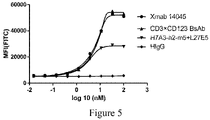
- the control sample of the bispecific antibody Xmab14045, the anti-CD123 monoclonal antibody H7A3-h2-m5+L27E5, the bispecific antibody CD3 ⁇ CD123 (CD3 ⁇ CD123 BsAb) and the irrelevant antibody HIgG (human IgG control (whole molecule), Purifie, A01006, GenScript) were diluted with PBS buffer to total 9 concentrations with 100 nM as the starting concentration, followed by a 3-fold gradient dilution. The antibodies were added to the wells containing cells and incubated at 4°C for 1 hour. Then, the plate was washed three times with 200 ⁇ L PBS buffer.
- the goat anti-human IgG-FITC secondary antibody (ZF-0308, ZSGB-BIO) was added to the wells (100 ⁇ L/well), and incubated at 4°C for 30 minutes in the dark. Then, the cells were washed three times with 200 ⁇ L of PBS buffer, and resuspended in 100 ⁇ L of PBS buffer to detect FITC channel by flow cytometer (ACEA, Novocyte).
- AAC flow cytometer
- Example 11 Specific activation of Jurkat-Dual cells mediated by the bispecific antibody
- MV-4-11 cells (CD123+ cells) at logarithmic phase of growth were collected. After centrifugation, the cells were resuspended with 1640 medium to 2 ⁇ 10 6 cells/mL and plated in the cell plate at 50 ⁇ L/well.
- Jurkat-dual cells purchased from Invivogen
- resuspended with 1640 medium to 2 ⁇ 10 6 cells/mL were collected, centrifugated, and resuspended with 1640 medium to 2 ⁇ 10 6 cells/mL, and were added to the cell plate with 50 ⁇ L/well to obtain a final E:T ratio of 1: 1.
- bispecific antibody CD3 ⁇ CD123 (CD3 ⁇ CD123 BsAb, 50 ⁇ L/well) was added with 6 nM as the starting concentration, followed by a 4-fold gradient dilution.
- Example 12 The expression of the activation molecules on the surface of the purified T cells and the killing of the CD123 positive tumor cells mediated by the bispecific antibody CD3 ⁇ CD123
- PBMCs peripheral blood mononuclear cells
- PBMCs were isolated from whole blood of the volunteers using Ficoll density gradient centrifugation and were cultured in 1640 medium.
- MV-4-11 cells (CD123 + cells) at the logarithmic phase of growth were collected, centrifuged, and resuspended in 1640 medium to 1 ⁇ 10 6 cells/mL, and were plated in cell plates at 50 ⁇ L/well. Then, total 8 concentrations of the bispecific antibody CD3 ⁇ CD123 (CD3 ⁇ CD123 BsAb, 50 ⁇ L/well) was added with 1 nM as the starting concentration, followed by a 4-fold gradient dilution.
- the purified T cells (5 ⁇ 10 6 cells/mL, 50 ⁇ L/well) were obtained by sorting from PBMCs according to the instructions of the T cell negative sorting kit (BD IMaq human T lymphocyte enrichment set-DM, 557874, BD), and the final effector to target ratio was 5:1.
- BD IMaq human T lymphocyte enrichment set-DM 557874, BD
- the final effector to target ratio was 5:1.
- a control with only target cells MV-4-11 cells
- T control with only effector cells
- T blank control with only medium were set, and the volume was filled to 150 ⁇ L with the medium. After 20 hours of incubation, the supernatant was taken.
- the killing rate of T cells to tumor cells mediated by the bispecific antibody CD3E ⁇ CD123 was detected and analyzed with reference to the instructions of the cytoTox96 ® Non-Radioactive Cytotoxicity Assay (G1780, Promega). The results showed that the bispecific antibody CD3 ⁇ CD123 could specifically mediate the killing of CD123-positive tumor cells by T cells, but had no killing effect on CD123-negative tumor cells (BAF3 cells) ( Fig. 7 ).
- the supernatant was removed and the cells were washed twice with PBS buffer, and incubated with the anti-human CD3-APC antibody (ebioscience, 17-0037-42) and the anti-human CD69-PE antibody (ebioscience, 11-0069-42) at 4°C for 30 minutes in the dark. Then, the cells were washed twice with PBS buffer, resuspended in 100 ⁇ L PBS buffer, and loaded to the flow cytometer (ACEA, Novocyte) for detection to compare the expression difference of the activation marker CD69 in the CD3 positive cell population (MV-4-11 cells) before and after treated with the bispecific antibody CD3 ⁇ CD123 (CD3 ⁇ CD123 BsAb).
- the flow cytometer e.g., Novocyte
- PBMCs Human Peripheral Blood Mononuclear Cells
- PBMCs were obtained by sorting according to Example 12.1.
- the purified T cells were obtained by sorting from PBMCs according to the instructions of the T cell negative sorting kit (BD IMaq human T lymphocyte enrichment set-DM, 557874, BD).
- the purified T cells were stained with reference to CFSE staining instructions (CFSE, 65-0850-84, eBioscience), resuspended in 1640 medium to 2 ⁇ 10 6 cells/mL, and were added to the cell culture plate at 50 ⁇ L/well.
- MV-4-11 cells CD123 + cells
- the cells were resuspended with 1640 medium to 5 ⁇ 10 5 cells/mL and plated in the cell plate at 50 ⁇ L/well.
- the final effector to target ratio was 4:1. Then, total 8 concentrations of the bispecific antibody CD3 ⁇ CD123 (CD3 ⁇ CD123 BsAb, 50 ⁇ L/well) and Xmab14045 were added with 0.25 nM as the starting concentration, followed by a 4-fold gradient dilution.
- the anti-CD3E monoclonal antibody H3B8+L27E5 alone, the anti-CD123 monoclonal antibody H7A3-h2-m5+L27E5 alone, and the combination of H3B8+L27E5 and H7A3-h2-m5+L27E5 (H3B8+L27E5&H7A3-h2-m5+L27E5) were set as controls at the concentration of 0.25 nM.
- the bispecific antibody CD3 ⁇ CD123 at a concentration of 0.25 nM in the presence of CD123-negative tumor cells (BAF3 cells) was also set as a control.
- the cells were washed twice with PBS buffer, and incubated with the anti-human CD3-APC antibody (ebioscience, 17-0037-42) at 4°C for 30 minutes in the dark. Then, the cells were washed twice with PBS buffer, resuspended in 100 ⁇ L PBS buffer, and loaded to the flow cytometer (ACEA, Novocyte) to detect the proliferation of T cells ( Figs. 9A-B ).
- Example 14 Activity identification of the bispecific antibody in a CD34 + mouse model
- mice Forty-two (32 for grouping, and 10 for spare) female hCD34 + humanized mice aged 20-24 weeks (purchased from Pharmalegacy (Shanghai)) were selected. 100 ⁇ L of 1 ⁇ 10 7 MV-4-11 cells and 100 ⁇ L of Matrigel were mixed well. Then the mixture was inoculated into the right side of the back of the mice via subcutaneous injection. The mice were anesthetized with 3-4% isoflurane before inoculation. When the average tumor volume reached to about 50-80 mm 3 , 32 tumor-bearing mice were randomly divided into 4 groups according to the ratio of hCD45 + in the peripheral blood and the tumor volume, with 8 mice in each group. The day of grouping and administration was defined as day 0.
- test groups were divided into 4 groups: 3 groups of the bispecific antibody CD3E ⁇ CD123 at the concentrations of 0.01mg/kg, 0.1mg/kg and 0.5 mg/kg, respectively; and the negative control group (IgG1m3, 0.5 mg/kg).
- Each group consisted of 8 mice.
- the antibodies were administered via tail vein injection with a total of 5 times at days 0, 3, 7, 14 and 21.
- the therapeutic effects were evaluated according to the relative tumor growth inhibition value (TGI), and the safety was evaluated according to the body weight change and death of mice.
- TGI tumor growth inhibition value
Landscapes
- Health & Medical Sciences (AREA)
- Chemical & Material Sciences (AREA)
- Immunology (AREA)
- Organic Chemistry (AREA)
- Medicinal Chemistry (AREA)
- Life Sciences & Earth Sciences (AREA)
- General Health & Medical Sciences (AREA)
- Proteomics, Peptides & Aminoacids (AREA)
- Genetics & Genomics (AREA)
- Molecular Biology (AREA)
- Biophysics (AREA)
- Biochemistry (AREA)
- Nuclear Medicine, Radiotherapy & Molecular Imaging (AREA)
- General Chemical & Material Sciences (AREA)
- Chemical Kinetics & Catalysis (AREA)
- Pharmacology & Pharmacy (AREA)
- Animal Behavior & Ethology (AREA)
- Public Health (AREA)
- Veterinary Medicine (AREA)
- Hematology (AREA)
- Oncology (AREA)
- Peptides Or Proteins (AREA)
- Medicines Containing Antibodies Or Antigens For Use As Internal Diagnostic Agents (AREA)
Applications Claiming Priority (2)
| Application Number | Priority Date | Filing Date | Title |
|---|---|---|---|
| CN202010080449.9A CN111171155B (zh) | 2020-02-05 | 2020-02-05 | 抗cd3和cd123双特异性抗体及其用途 |
| PCT/CN2020/082151 WO2021155635A1 (zh) | 2020-02-05 | 2020-03-30 | 抗cd3和cd123双特异性抗体及其用途 |
Publications (2)
| Publication Number | Publication Date |
|---|---|
| EP4101867A1 true EP4101867A1 (de) | 2022-12-14 |
| EP4101867A4 EP4101867A4 (de) | 2024-04-03 |
Family
ID=70647663
Family Applications (1)
| Application Number | Title | Priority Date | Filing Date |
|---|---|---|---|
| EP20918015.7A Pending EP4101867A4 (de) | 2020-02-05 | 2020-03-30 | Anti-cd3 und anti-cd123 bispezifischer antikörper und verwendung davon |
Country Status (6)
| Country | Link |
|---|---|
| US (2) | US12509520B2 (de) |
| EP (1) | EP4101867A4 (de) |
| JP (1) | JP7457822B2 (de) |
| KR (1) | KR20220137723A (de) |
| CN (2) | CN111171155B (de) |
| WO (1) | WO2021155635A1 (de) |
Families Citing this family (9)
| Publication number | Priority date | Publication date | Assignee | Title |
|---|---|---|---|---|
| CN111171155B (zh) | 2020-02-05 | 2021-02-19 | 北京智仁美博生物科技有限公司 | 抗cd3和cd123双特异性抗体及其用途 |
| WO2022104692A1 (en) * | 2020-11-20 | 2022-05-27 | Bliss Biopharmaceutical (Hangzhou) Co., Ltd. | Engineered antibody, antibody-drug conjugate, and use thereof |
| CN112646033B (zh) * | 2020-12-16 | 2022-04-12 | 北京艺妙神州医药科技有限公司 | 靶向cd123的嵌合抗原受体及其用途 |
| CN116018351A (zh) * | 2021-08-16 | 2023-04-25 | 上海优替济生生物医药有限公司 | 靶向cd123的抗体、嵌合抗原受体及其用途 |
| WO2023125611A1 (zh) * | 2021-12-29 | 2023-07-06 | 四川汇宇制药股份有限公司 | 靶向cd3的抗体及多特异性抗体及其用途 |
| CN120958019A (zh) * | 2023-03-29 | 2025-11-14 | 南京金斯瑞生物科技有限公司 | 针对人分化簇3蛋白的抗体及其变体 |
| CN119552258B (zh) * | 2023-09-01 | 2025-11-07 | 北京智仁美博生物科技有限公司 | 结合hla-a02/mage-a4复合体的多种抗体及其用途 |
| CN119912577A (zh) * | 2023-10-31 | 2025-05-02 | 北京智仁美博生物科技有限公司 | 结合hla-a24/prame复合体的多种抗体及其用途 |
| CN121758624A (zh) * | 2024-09-23 | 2026-03-31 | 北京智仁美博生物科技有限公司 | 结合人cd16和/或人cd123的多种抗体及其用途 |
Family Cites Families (20)
| Publication number | Priority date | Publication date | Assignee | Title |
|---|---|---|---|---|
| US20100209341A1 (en) * | 2009-02-18 | 2010-08-19 | Csl Limited | Treatment of chronic inflammatory conditions |
| EP2839842A1 (de) | 2013-08-23 | 2015-02-25 | MacroGenics, Inc. | Bispezifische monovalente Diabodies mit Fähigkeit zur Bindung von CD123 und CD3 und Verwendungen davon |
| EP3023437A1 (de) * | 2014-11-20 | 2016-05-25 | EngMab AG | Bispezifische Antikörper gegen CD3epsilon und BCMA |
| AR103488A1 (es) | 2015-01-23 | 2017-05-10 | Sanofi Sa | Anticuerpos anti-cd3, anticuerpos anti-cd123 y anticuerpos biespecíficos que se unen específicamente a cd3 y/o cd123 |
| CN105315371B (zh) | 2015-03-05 | 2018-05-29 | 北京百特美博生物科技有限公司 | 抗人il-17单克隆抗体 |
| US10100118B2 (en) * | 2015-04-08 | 2018-10-16 | Sorrento Therapeutics, Inc. | Antibody therapeutics that bind CD123 |
| EP3464365A1 (de) | 2016-06-01 | 2019-04-10 | Xencor, Inc. | Bispezifische antikörper, die cd123 und cd3 binden |
| TWI790206B (zh) * | 2016-07-18 | 2023-01-21 | 法商賽諾菲公司 | 特異性結合至cd3和cd123的雙特異性抗體樣結合蛋白 |
| US20200048347A1 (en) * | 2016-09-01 | 2020-02-13 | Immunomab, Inc. | Bispecific antibodies |
| EP3515491A4 (de) | 2016-09-21 | 2020-09-16 | Aptevo Research and Development LLC | Cd123-bindende proteine sowie zugehörige zusammensetzungen und verfahren |
| CN107868792B (zh) * | 2016-09-27 | 2019-10-29 | 上海恒润达生生物科技有限公司 | 靶向cd123的嵌合抗原受体及其用途 |
| CN114989305A (zh) * | 2017-03-31 | 2022-09-02 | 北京智仁美博生物科技有限公司 | 新型双特异性抗体及其用途 |
| WO2019072824A1 (en) * | 2017-10-09 | 2019-04-18 | Cellectis | IMPROVED ANTI-CD123 CAR IN UNIVERSAL MODIFIED IMMUNE T LYMPHOCYTES |
| EP3466923A1 (de) | 2017-10-09 | 2019-04-10 | KRKA, d.d., Novo mesto | Verfahren zur herstellung von agomelatin in kristalliner form |
| WO2020001344A1 (en) * | 2018-06-29 | 2020-01-02 | Beijing Biocytogen Co., Ltd | ANTI-CD3e ANTIBODIES AND USES THEREOF |
| CN109810195B (zh) * | 2018-11-27 | 2022-08-02 | 中国医学科学院血液病医院(血液学研究所) | 一种鼠抗人cd123单克隆抗体及应用 |
| CN109627339B (zh) * | 2019-01-25 | 2022-03-15 | 北京智仁美博生物科技有限公司 | 抗人pdl1抗体及其用途 |
| CN110172100B (zh) * | 2019-05-06 | 2021-03-19 | 北京智仁美博生物科技有限公司 | 抗人cd3e抗体及其用途 |
| CN111269315B (zh) * | 2019-06-19 | 2022-04-08 | 北京智仁美博生物科技有限公司 | 针对bcma的单克隆抗体 |
| CN111171155B (zh) | 2020-02-05 | 2021-02-19 | 北京智仁美博生物科技有限公司 | 抗cd3和cd123双特异性抗体及其用途 |
-
2020
- 2020-02-05 CN CN202010080449.9A patent/CN111171155B/zh active Active
- 2020-02-05 CN CN202010229581.1A patent/CN111349163B/zh active Active
- 2020-03-30 EP EP20918015.7A patent/EP4101867A4/de active Pending
- 2020-03-30 US US17/797,656 patent/US12509520B2/en active Active
- 2020-03-30 WO PCT/CN2020/082151 patent/WO2021155635A1/zh not_active Ceased
- 2020-03-30 JP JP2022547913A patent/JP7457822B2/ja active Active
- 2020-03-30 KR KR1020227030639A patent/KR20220137723A/ko active Pending
-
2025
- 2025-11-25 US US19/399,869 patent/US20260184798A1/en active Pending
Also Published As
| Publication number | Publication date |
|---|---|
| CN111349163B (zh) | 2024-07-16 |
| US12509520B2 (en) | 2025-12-30 |
| WO2021155635A1 (zh) | 2021-08-12 |
| CN111349163A (zh) | 2020-06-30 |
| EP4101867A4 (de) | 2024-04-03 |
| JP2023513200A (ja) | 2023-03-30 |
| KR20220137723A (ko) | 2022-10-12 |
| US20260184798A1 (en) | 2026-07-02 |
| CN111171155B (zh) | 2021-02-19 |
| JP7457822B2 (ja) | 2024-03-28 |
| US20230071422A1 (en) | 2023-03-09 |
| CN111171155A (zh) | 2020-05-19 |
Similar Documents
| Publication | Publication Date | Title |
|---|---|---|
| US12509520B2 (en) | Anti-CD3 and anti-CD123 bispecific antibody and use thereof | |
| CN111269315B (zh) | 针对bcma的单克隆抗体 | |
| WO2022042690A1 (zh) | Ccr8抗体及其应用 | |
| CN114728065A (zh) | 针对cd3和bcma的抗体和自其制备的双特异性结合蛋白 | |
| EP4209509A1 (de) | Auf ror1 abzielender antikörper oder antigenbindendes fragment davon, herstellungsverfahren dafür und anwendung davon | |
| CN114981301B (zh) | Pd1和vegfr2双结合剂 | |
| CN114907479B (zh) | 抗cd112r抗体及其用途 | |
| EP4304725A1 (de) | Aus kaninchen stammende antigenbindende protein-nukleinsäurebibliotheken | |
| CN116209680A (zh) | 与人CD3ε结合的新型人抗体 | |
| EP4682169A1 (de) | Spezifisch an claudin18.2 bindender antikörper und herstellungsverfahren dafür und verwendung davon | |
| WO2021143914A1 (zh) | 一种激活型抗ox40抗体、生产方法及应用 | |
| US20250002586A1 (en) | Dual mhc-targeting t cell engager | |
| US20240269276A1 (en) | Specific binding protein targeting pd-l1 and cd73 | |
| CN116848144A (zh) | 抗pd-l1抗体及其用途 | |
| CN114773485B (zh) | 抗人PD-L1抗体和TGFβRII的双功能融合蛋白分子 | |
| TWI833227B (zh) | 靶向pd-l1和cd73的特異性結合蛋白及其應用 | |
| US12559556B1 (en) | BCMA × CD3 T bispecific cell engager | |
| US20250289901A1 (en) | Anti-cd3e/bcma bispecific antibody and use thereof | |
| HK40067877A (en) | Antibodies to cd3 and bcma, and bispecific binding proteins made therefrom | |
| WO2024234988A1 (zh) | 特异性结合cd38的抗体及其制法和应用 |
Legal Events
| Date | Code | Title | Description |
|---|---|---|---|
| STAA | Information on the status of an ep patent application or granted ep patent |
Free format text: STATUS: THE INTERNATIONAL PUBLICATION HAS BEEN MADE |
|
| PUAI | Public reference made under article 153(3) epc to a published international application that has entered the european phase |
Free format text: ORIGINAL CODE: 0009012 |
|
| STAA | Information on the status of an ep patent application or granted ep patent |
Free format text: STATUS: REQUEST FOR EXAMINATION WAS MADE |
|
| 17P | Request for examination filed |
Effective date: 20220818 |
|
| AK | Designated contracting states |
Kind code of ref document: A1 Designated state(s): AL AT BE BG CH CY CZ DE DK EE ES FI FR GB GR HR HU IE IS IT LI LT LU LV MC MK MT NL NO PL PT RO RS SE SI SK SM TR |
|
| DAV | Request for validation of the european patent (deleted) | ||
| DAX | Request for extension of the european patent (deleted) | ||
| P01 | Opt-out of the competence of the unified patent court (upc) registered |
Effective date: 20230524 |
|
| A4 | Supplementary search report drawn up and despatched |
Effective date: 20240229 |
|
| RIC1 | Information provided on ipc code assigned before grant |
Ipc: A61K 39/00 20060101ALI20240223BHEP Ipc: C07K 16/28 20060101ALI20240223BHEP Ipc: A61P 35/02 20060101ALI20240223BHEP Ipc: A61P 35/00 20060101ALI20240223BHEP Ipc: A61K 39/395 20060101ALI20240223BHEP Ipc: C07K 16/46 20060101AFI20240223BHEP |
|
| STAA | Information on the status of an ep patent application or granted ep patent |
Free format text: STATUS: EXAMINATION IS IN PROGRESS |