EP4102876A1 - Procédé de reprise après défaillance de faisceau, terminal et dispositif de réseau - Google Patents
Procédé de reprise après défaillance de faisceau, terminal et dispositif de réseau Download PDFInfo
- Publication number
- EP4102876A1 EP4102876A1 EP21751453.8A EP21751453A EP4102876A1 EP 4102876 A1 EP4102876 A1 EP 4102876A1 EP 21751453 A EP21751453 A EP 21751453A EP 4102876 A1 EP4102876 A1 EP 4102876A1
- Authority
- EP
- European Patent Office
- Prior art keywords
- information
- object information
- target
- terminal
- bfrq
- Prior art date
- Legal status (The legal status is an assumption and is not a legal conclusion. Google has not performed a legal analysis and makes no representation as to the accuracy of the status listed.)
- Granted
Links
Images


Classifications
-
- H—ELECTRICITY
- H04—ELECTRIC COMMUNICATION TECHNIQUE
- H04B—TRANSMISSION
- H04B7/00—Radio transmission systems, i.e. using radiation field
- H04B7/02—Diversity systems; Multi-antenna system, i.e. transmission or reception using multiple antennas
- H04B7/04—Diversity systems; Multi-antenna system, i.e. transmission or reception using multiple antennas using two or more spaced independent antennas
- H04B7/06—Diversity systems; Multi-antenna system, i.e. transmission or reception using multiple antennas using two or more spaced independent antennas at the transmitting station
- H04B7/0686—Hybrid systems, i.e. switching and simultaneous transmission
- H04B7/0695—Hybrid systems, i.e. switching and simultaneous transmission using beam selection
- H04B7/06952—Selecting one or more beams from a plurality of beams, e.g. beam training, management or sweeping
- H04B7/06964—Re-selection of one or more beams after beam failure
-
- H—ELECTRICITY
- H04—ELECTRIC COMMUNICATION TECHNIQUE
- H04W—WIRELESS COMMUNICATION NETWORKS
- H04W24/00—Supervisory, monitoring or testing arrangements
- H04W24/04—Arrangements for maintaining operational condition
-
- H—ELECTRICITY
- H04—ELECTRIC COMMUNICATION TECHNIQUE
- H04L—TRANSMISSION OF DIGITAL INFORMATION, e.g. TELEGRAPHIC COMMUNICATION
- H04L5/00—Arrangements affording multiple use of the transmission path
- H04L5/003—Arrangements for allocating sub-channels of the transmission path
- H04L5/0048—Allocation of pilot signals, i.e. of signals known to the receiver
-
- H—ELECTRICITY
- H04—ELECTRIC COMMUNICATION TECHNIQUE
- H04W—WIRELESS COMMUNICATION NETWORKS
- H04W24/00—Supervisory, monitoring or testing arrangements
- H04W24/08—Testing, supervising or monitoring using real traffic
-
- H—ELECTRICITY
- H04—ELECTRIC COMMUNICATION TECHNIQUE
- H04W—WIRELESS COMMUNICATION NETWORKS
- H04W48/00—Access restriction; Network selection; Access point selection
- H04W48/08—Access restriction or access information delivery, e.g. discovery data delivery
-
- H—ELECTRICITY
- H04—ELECTRIC COMMUNICATION TECHNIQUE
- H04W—WIRELESS COMMUNICATION NETWORKS
- H04W72/00—Local resource management
- H04W72/04—Wireless resource allocation
- H04W72/044—Wireless resource allocation based on the type of the allocated resource
- H04W72/046—Wireless resource allocation based on the type of the allocated resource the resource being in the space domain, e.g. beams
-
- H—ELECTRICITY
- H04—ELECTRIC COMMUNICATION TECHNIQUE
- H04W—WIRELESS COMMUNICATION NETWORKS
- H04W72/00—Local resource management
- H04W72/12—Wireless traffic scheduling
- H04W72/1263—Mapping of traffic onto schedule, e.g. scheduled allocation or multiplexing of flows
- H04W72/1273—Mapping of traffic onto schedule, e.g. scheduled allocation or multiplexing of flows of downlink data flows
-
- H—ELECTRICITY
- H04—ELECTRIC COMMUNICATION TECHNIQUE
- H04W—WIRELESS COMMUNICATION NETWORKS
- H04W72/00—Local resource management
- H04W72/20—Control channels or signalling for resource management
- H04W72/23—Control channels or signalling for resource management in the downlink direction of a wireless link, i.e. towards a terminal
-
- H—ELECTRICITY
- H04—ELECTRIC COMMUNICATION TECHNIQUE
- H04W—WIRELESS COMMUNICATION NETWORKS
- H04W74/00—Wireless channel access
- H04W74/002—Transmission of channel access control information
-
- H—ELECTRICITY
- H04—ELECTRIC COMMUNICATION TECHNIQUE
- H04W—WIRELESS COMMUNICATION NETWORKS
- H04W74/00—Wireless channel access
- H04W74/08—Non-scheduled access, e.g. ALOHA
- H04W74/0833—Random access procedures, e.g. with 4-step access
-
- H—ELECTRICITY
- H04—ELECTRIC COMMUNICATION TECHNIQUE
- H04W—WIRELESS COMMUNICATION NETWORKS
- H04W72/00—Local resource management
- H04W72/20—Control channels or signalling for resource management
- H04W72/21—Control channels or signalling for resource management in the uplink direction of a wireless link, i.e. towards the network
-
- H—ELECTRICITY
- H04—ELECTRIC COMMUNICATION TECHNIQUE
- H04W—WIRELESS COMMUNICATION NETWORKS
- H04W74/00—Wireless channel access
- H04W74/04—Scheduled access
-
- H—ELECTRICITY
- H04—ELECTRIC COMMUNICATION TECHNIQUE
- H04W—WIRELESS COMMUNICATION NETWORKS
- H04W74/00—Wireless channel access
- H04W74/08—Non-scheduled access, e.g. ALOHA
- H04W74/0833—Random access procedures, e.g. with 4-step access
- H04W74/0838—Random access procedures, e.g. with 4-step access using contention-free random access [CFRA]
Definitions
- the present invention relates to the field of communications technologies, and in particular, to a beam failure recovery method, a terminal, and a network device.
- TRP Transmission Reception Point
- Embodiments of the present invention provide a beam failure recovery method, a terminal, and a network device, so as to resolve a prior-art problem that it is still unclear how a beam failure event is determined in a multi-TRP scenario.
- an embodiment of the present invention provides a beam failure recovery method, applied to a terminal and including:
- an embodiment of the present invention provides a beam failure recovery method, applied to a network device and including:
- an embodiment of the present invention provides a terminal, including:
- an embodiment of the present invention provides a network device, including:
- an embodiment of the present invention provides a communications device, including a memory, a processor, and a computer program stored in the memory and capable of running on the processor.
- the steps of the beam failure recovery method can be implemented.
- the communications device may be a terminal or a network device.
- an embodiment of the present invention provides a computer-readable storage medium, where a computer program is stored in the computer-readable storage medium, and when the computer program is executed by a processor, the steps of the beam failure recovery method can be implemented.
- an embodiment of the present invention provides a computer software product, where the computer software product is stored in a non-volatile storage medium, and the software product is configured to implement the steps of the beam failure recovery method when being executed by at least one processor.
- an embodiment of the present invention provides a communications device, where the communications device is configured to execute the foregoing beam failure recovery method.
- BFD RSs are measured, and the BFD RS corresponds to a plurality of pieces of first object information.
- the target event is determined based on a BFD RS measurement result, and BFRQ information is sent, so as to determine a beam failure event in the multi-TRP scenario and quickly recover an interrupted beam link, thereby improving reliability of data transmission.
- a wireless communications system in the embodiments of the present invention includes a terminal and a network device.
- the terminal may also be referred to as a terminal device or user equipment (User Equipment, UE).
- the terminal may be a terminal-side device such as a mobile phone, a tablet computer (Tablet Personal Computer), a laptop computer (Laptop Computer), a personal digital assistant (Personal Digital Assistant, PDA), a mobile Internet device (Mobile Internet Device, MID), a wearable device (Wearable Device), or an in-vehicle device.
- PDA Personal Digital Assistant
- a mobile Internet device Mobile Internet Device, MID
- Wearable Device wearable Device
- the network device may be a base station or a core network.
- the base station may be a fifth-generation (5 th Generation, 5G) or later-version base station (for example, a gNB or a 5G NR NB), or a base station in another communications system (for example, an eNB, a wireless local area network (Wireless Local Area Network, WLAN) access point, or another access point).
- 5G fifth-generation
- gNB gNode B
- 5G NR NB 5th Generation
- a base station in another communications system for example, an eNB, a wireless local area network (Wireless Local Area Network, WLAN) access point, or another access point.
- WLAN Wireless Local Area Network
- the base station may be referred to as a NodeB, an evolved NodeB, an access point, a base transceiver station (Base Transceiver Station, BTS), a radio base station, a radio transceiver, a basic service set (Basic Service Set, BSS), an extended service set (Extended Service Set, ESS), a NodeB, an evolved NodeB (eNB), a home NodeB, a home evolved NodeB, a WLAN access point, a Wi-Fi (Wireless Fidelity, WiFi) node, or another appropriate term in the art.
- BTS Base Transceiver Station
- BTS Base Transceiver Station
- BSS Base Service Set
- ESS Extended Service Set
- eNB evolved NodeB
- WLAN access point a Wi-Fi (Wireless Fidelity, WiFi) node, or another appropriate term in the art.
- Wi-Fi Wireless Fidelity, WiFi
- the embodiments of the present invention are applicable to a multi-carrier scenario.
- the multi-carrier scenario may be construed as carrier aggregation (Carrier Aggregation, CA), and there are multiple carriers (carrier), or multiple component carriers CCs, or multiple cells.
- carrier aggregation Carrier Aggregation, CA
- carrier Carrier Aggregation
- CCs multiple component carriers
- PCell Primary cell
- MCG master cell group
- PSCell Primary secondary cell
- SCG secondary cell group
- SCell Secondary Cell
- beam information spatial relation (spatial relation) information, spatial domain transmission filter (spatial domain transmission filter) information, transmission configuration indication (Transmission configuration indication, TCI) state (state) information, antenna quasi-colocation (Quasi-co-location, QCL) information, and QCL parameter in the embodiments of the present invention have approximately the same meaning.
- Downlink beam information may be usually represented by TCI state information, QCL information, or the like.
- Uplink beam information may be usually represented by using spatial relation information.
- first object information may include at least one of the following: TRP identifier, CORESETPoolIndex information, group identifier, cell identity (Cell ID), physical cell identifier (Physical Cell ID, PCI), and the like.
- Second object information may include at least one of the following: all TRP identifiers, all CORESETPoolIndex information, all group identifiers, all Cell IDs, all PCIs, and the like.
- Target object information may include at least one of the following: a target TRP identifier, target CORESETPoolIndex information, a target group identifier, a target cell ID, a target PCI, and the like. It can be understood that content included in the first object information, the second object information, and the target object information in the following embodiments may be specifically as described above, and details are not described below again.
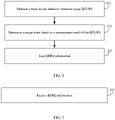
- FIG. 1 is a flowchart of a beam failure recovery method according to an embodiment of the present invention. The method is applied to a terminal. As shown in FIG. 1 , the method includes the following steps.
- Step 101 Measure a beam failure detection reference signal BFD RS.
- the beam failure detection reference signal (Beam Failure Detection Reference Signal, BFD RS) corresponds to a plurality of pieces of first object information.
- BFD RS Beam Failure Detection Reference Signal
- the BFD RS may explicitly correspond to the plurality of pieces of first object information, which is, for example, indicated by using signaling; or may implicitly correspond to the plurality of pieces of first object information, for example, according to a preset rule (for example, a preset correspondence between RS resource indexes and first object information).
- a new parameter is added to configuration information of a BFD RS resource to indicate first object information, for example, CORESETPoolIndex is added.
- CORESETPoolIndex 0 is added to resource configuration of BFD RS1 and BFD RS2.
- BFD RS3 and BFD RS4 are used for measurement of TRP2
- the BFD RS corresponds to different TRPs according to a preset rule based on an index order of BFD RS resources configured by the network.
- the network configures four BFD RS resources, where BFD RS1 and BFD RS2 are used for measurement of TRP1, and BFD RS3 and BFD RS4 are used for measurement of TRP2.
- BFD RS resources with same beam information correspond to a same TRP.
- the network configures four BFD RS resources, where BFD RS1 and BFD RS2 have same beam information and are used for measurement of TRP1, and BFD RS3 and BFD RS4 have same beam information and are used for measurement of TRP2.
- the measurement of the BFD RS may be used for beam failure detection (Beam Failure Detection, BFD) in a multi-TRP scenario.
- BFD Beam Failure Detection
- a PCI may be used for obtaining a TRP identifier.
- the PCI is used in the configuration information, so as to obtain corresponding TRP identification information.
- the TRP identifiers cannot be obtained based on only a PCI, but based on a combination of a PCI and TRP identifier, or by using other identification information such as a cell index.
- the foregoing BFD RS may be configured by the network.
- the BFD RS configured by the network may correspond to one TRP or a plurality of TRPs.
- the BFD RS configured by the network may be used for BFD of a primary cell, BFD of a secondary cell, or BFD of a plurality of cells.
- Step 102 Determine a target event based on a measurement result of the BFD RS.
- the target event may be understood as a beam failure event.
- the terminal may initiate a beam failure recovery process, for example, sending beam failure recovery request (Beam Failure Recovery reQuest, BFRQ) information and monitoring beam failure recovery response (Beam Failure Recovery Response, BFRR) information.
- Beam Failure Recovery reQuest BFRQ
- BFRR Beam Failure Recovery Response
- Step 103 Send BFRQ information.
- the BFD RS is measured, and the BFD RS corresponds to a plurality of pieces of first object information.
- the target event is determined based on the measurement result of the BFD RS, and then the BFRQ information is sent, so as to determine a beam failure event in the multi-TRP scenario and quickly recover an interrupted beam link, thereby improving reliability of data transmission.
- the target event determined by the terminal based on the measurement result of the BFD RS may be classified into at least the following three cases, which are separately described as follows:
- the target event is that measurement results of all BFD RSs corresponding to a primary cell satisfy a first preset condition.
- the first preset condition is that the measurement results of all the BFD RSs (for example, L1-RSRP or L1-SINR) corresponding to the primary cell are less than a preset threshold, that is, a beam is blocked and channel quality is degraded.
- the target event can be understood as that all TRPs in the plurality of TRPs have a beam failure in the primary cell, that is, the beam failure in the primary cell is detected and determined on all the TRPs.
- the process of sending the BFRQ information may include:
- the terminal may send the BFRQ information by using the contention-free RACH resource in a case that a preset condition (for example, the network has configured a contention-free RACH resource and a control resource set (Control Resource Set, CORESET) for beam failure recovery) is satisfied.
- a preset condition for example, the network has configured a contention-free RACH resource and a control resource set (Control Resource Set, CORESET) for beam failure recovery
- the process of sending the BFRQ information by the terminal by using the contention-free RACH resource may include: determining a target RACH resource; and determining, based on a correspondence between RACH resources and first object information, target object information corresponding to the target RACH resource, and sending the BFRQ information based on the target object information.
- the sending the BFRQ information based on the target object information may be understood as: sending the BFRQ information to a target object corresponding to the target object information.
- the terminal may determine, based on a correspondence between RACH resources and TRP identifiers, a target TRP identifier corresponding to the target RACH resource, and send the BFRQ information to a target TRP corresponding to the target TRP identifier.
- the terminal may determine, based on a correspondence between RACH resources and PCIs, a target PCI corresponding to the target RACH resource, and send the BFRQ information to a TRP corresponding to the target PCI.
- the target PCI corresponds to one TRP
- the BFRQ information may be directly sent to the TRP.
- a target TRP needs to be further selected based on a corresponding TRP identifier and then the BFRQ information is sent.
- the process of determining the target RACH resource may include:
- the candidate beam RS may be a synchronization signal and a PBCH block (Synchronization Signal and PBCH block, SSB) or a channel state information reference signal (Channel State Information Reference Signal, CSI-RS) in a cell or a physical cell other than acurrent serving cell.
- the target RS may be an SSB or a CSI-RS.
- a beam corresponding to the target RS can be construed as a new beam.
- the terminal may further determine, based on an association relationship between candidate beam RSs and RACH resources, an RACH resource corresponding to the target RS as the target RACH resource.
- configuration information of the candidate beam RSs includes: a correspondence between candidate beam RSs and first object information.
- the configuration information of the candidate beam RSs includes: a correspondence between candidate beam RSs and cell indexes, a correspondence between candidate beam RSs and PCIs, and/or a correspondence between candidate beam RSs and TRP identifiers.
- RACH resource configuration information of the terminal includes: a correspondence between RACH resources and first object information.
- the RACH resource configuration information includes: a correspondence between RACH resources and cell indexes, a correspondence between RACH resources and PCIs, and/or a correspondence between RACH resources and TRP identifiers.
- the plurality of pieces of first object information is any one of the following cases:
- the terminal may further perform the following operations:
- the case of (1) is applied to an ideal backhaul (backhaul) scenario
- the case of (2) is applied to a non-ideal backhaul (backhaul) scenario.
- the monitoring BFRR information on a CORESET that corresponds to same target object information as the target RACH resource may be understood as: monitoring BFRR information of a corresponding CORESET on a target object corresponding to the target RACH resource.
- the terminal may monitor the BFRR information of the corresponding CORESET on a target TRP corresponding to the target RACH resource.
- the terminal may monitor the BFRR information of the corresponding CORESET on a target cell corresponding to the target RACH resource.
- the terminal may monitor the BFRR information of the corresponding CORESET on a target physical cell corresponding to the target RACH resource.
- the monitoring BFRR information on a CORESET that corresponds to same target object information as the target RS may be understood as: monitoring BFRR information of a corresponding CORESET on a target object corresponding to the target RS.
- the terminal may monitor the BFRR information of the corresponding CORESET on a target TRP corresponding to the target RS.
- the terminal may monitor the BFRR information of the corresponding CORESET on a target cell corresponding to the target RS.
- the terminal may monitor the BFRR information of the corresponding CORESET on a target physical cell corresponding to the target RS.
- beam information of other channels may be reset in the case that the terminal sends the BFRQ information by using the contention-free RACH resource.
- a specific resetting process may be as follows:
- the UE may determine, based on the beam information of the target RACH resource, transmit beam information of a PUCCH on a target cell corresponding to the target cell index.
- the target object information being a target PCI as an example
- the UE may determine, based on the beam information of the target RACH resource, transmit beam information of a PUCCH on a target physical cell corresponding to the target PCI.
- the target object information being a target TRP identifier as an example, the UE may determine, based on the beam information of the target RACH resource, transmit beam information of a PUCCH on a target TRP corresponding to the target TRP identifier.
- the UE may determine transmit beam information of PUCCHs on all cells, all physical cells, or all TRPs based on the beam information of the target RACH resource.
- the UE may determine, based on the target RS, beam information of a PDCCH on a target cell corresponding to the target cell index, and/or determine beam information of a PDSCH scheduled by using downlink control information (Downlink Control Information, DCI) on a target cell corresponding to the target cell index.
- DCI Downlink Control Information
- the UE may determine, based on the target RS, beam information of a PDCCH on a target physical cell corresponding to the target PCI, and/or determine beam information of a PDSCH scheduled by using DCI on a target physical cell corresponding to the target PCI.
- the UE may determine, based on the target RS, beam information of a PDCCH on a target TRP corresponding to the target TRP identifier, and/or determine beam information of a PDSCH scheduled by using DCI on a target TRP corresponding to the target TRP identifier.
- the UE may determine, based on the target RS, beam information of PDCCHs on all cells, all physical cells, or all TRPs, and/or determine beam information of PDSCHs scheduled by DCI on all cells, all physical cells, or all TRPs.
- the beam information of the PDSCH (such as the PDSCH on the target cell, the target physical cell and/or the target TRP) corresponding to the target object information does not need to be reset along with the target RS, and may be reconfigured by the network.
- the beam information determined in the foregoing resetting process may start at a time with an offset of a preset quantity (for example, K) of symbols after a time of reception of the BFRR information; and correspondingly ends at a time of reception of reconfiguration information, activation information, or indication information of the determined beam information.
- K a preset quantity
- a handover process may be performed in the case that the terminal sends the BFRQ information by using the contention-free RACH resource.
- the specific handover process may include at least one of the following:
- the terminal may send the BFRQ information by using the contention-based RACH resource in a case that a preset condition is satisfied (for example, a contention-free RACH resource is not configured).
- the process of sending the BFRQ information by the terminal by using the contention-based RACH resource may include: determining a target RACH resource; and determining, based on a correspondence between RACH resources and first object information, target object information corresponding to the target RACH resource, and sending the BFRQ information based on the target object information.
- the sending the BFRQ information based on the target object information may be understood as: sending the BFRQ information to a target object corresponding to the target object information.
- the terminal may determine, based on a correspondence between RACH resources and TRP identifiers, a target TRP identifier corresponding to the target RACH resource, and send the BFRQ information to a target TRP corresponding to the target TRP identifier.
- the terminal may determine, based on a correspondence between RACH resources and PCIs, a target PCI corresponding to the target RACH resource, and send the BFRQ information to a TRP corresponding to the target PCI.
- the target PCI corresponds to one TRP
- the BFRQ information may be directly sent to the TRP.
- a target TRP needs to be further selected based on a corresponding TRP identifier and then the BFRQ information is sent.
- the process of determining the target RACH resource may include:
- the resource configuration information of the terminal includes at least one of the following:
- the resource configuration information may be sent to the terminal by the network by using radio resource control (Radio Resource Control, RRC) signaling.
- RRC Radio Resource Control
- the plurality of pieces of first object information is any one of the following cases:
- the terminal may monitor the BFRR information on CORESET#0.
- QCL information of CORESET#0 may be determined based on information of the target RACH resource.
- a time for monitoring the BFRR information may be after a preset time T elapses since the terminal sends the BFRQ information, or within a random access response window (RAR window).
- beam information of other channels may be reset in the case that the terminal sends the BFRQ information by using the contention-based RACH resource.
- a specific resetting process may be as follows: based on the target SSB, determining beam information of a channel corresponding to the target object information or second object information, and/or determining beam information of an RS corresponding to the target object information or second object information.
- the UE may determine, based on the target SSB, beam information of a channel on a target cell corresponding to the target cell index, and/or determine beam information of an RS on a target cell corresponding to the target cell index.
- the target object information being a target PCI as an example
- the UE may determine, based on the target SSB, beam information of a channel on a target physical cell corresponding to the target PCI, and/or determine beam information of an RS on a target physical cell corresponding to the target PCI.
- the UE may determine, based on the target SSB, beam information of a channel on a target TRP corresponding to the target TRP identifier, and/or determine beam information of an RS on a target TRP corresponding to the target TRP identifier.
- the UE may determine, based on the target SSB, beam information of channels on all cells, all physical cells, or all TRPs, and/or determine beam information of RSs on all cells, all physical cells, or all TRPs.
- a channel corresponding to the target object information or the second object information may still use originally configured beam information.
- the beam information determined in the foregoing resetting process may start at a time with an offset of a preset quantity (for example, K) of symbols after a time of reception of the BFRR information; and correspondinglt ends at a time of reception of reconfiguration information, activation information, or indication information of the determined beam information.
- K a preset quantity
- a handover process may be performed in the case that the terminal sends the BFRQ information by using the contention-based RACH resource.
- the specific handover process may include at least one of the following:
- the target event is that measurement results of all BFD RSs corresponding to a secondary cell satisfy a second preset condition.
- the second preset condition is that the measurement results of all the BFD RSs corresponding to the secondary cell are less than a preset threshold, that is, a beam is blocked and channel quality is degraded.
- the target event can be understood as that all TRPs in the plurality of TRPs have a beam failure in the secondary cell, that is, the beam failure in one or more secondary cells is detected and determined on all the TRPs.
- the process of sending the BFRQ information may include:
- the uplink grant when there is an available uplink grant, corresponds to any one piece of first object information.
- the uplink grant corresponds to a grant of any one TRP identifier; or the uplink grant corresponds to a grant of any one group identifier; or the uplink grant corresponds to a grant of any one PCI. That is, the terminal may send the BFRQ information by using an uplink grant of any first object.
- the foregoing process of sending the BFRQ information by using an uplink grant requested from a network may include: sending a scheduling request (Scheduling Request, SR); and receiving a response sent by the network, and sending the BFRQ information by using an uplink grant indicated by the response.
- SR scheduling request
- SR scheduling request
- the SR and the response correspond to same or different first object information (such as a cell index, a TRP identifier, or a PCI). That is, the SR and the response may correspond to different network nodes.
- the SR corresponds to a TRP1 and the response corresponds to a TRP2.
- the response may be new scheduling information indicated by the network.
- the SR may be carried by a PUCCH-BFR.
- a manner of sending the SR may include any one of the following:
- the first correspondence may be included in the configuration information of the terminal.
- the first correspondence may include any one of the following:
- the first object information being a TRP identifier is used as an example.
- the terminal may send the SR to a TRP corresponding to a TRP identifier that is corresponding to the SR; or, based on a correspondence between TRP identifiers and PUCCH resources for BFR in SR configuration information (for example, a correspondence between PUCCH resources in SR config and CORESETPoolIndex), the terminal may send the SR to a TRP corresponding to a TRP identifier that is corresponding to a PUCCH resource in use; or, based on a correspondence between TRP identifiers and spatial relation information of PUCCH resources for BFR in SR configuration information (for example, a correspondence between spatial relations of PUCCH resources in SR config and CORESETPoolIndex), the terminal may send the SR to a TRP corresponding to a TRP identifier that is corresponding to a PUCCH resource in use; or, based on a correspondence between TRP
- the terminal may send the SR based on any one cell index, or may send the SR based on any one PCI, or may send the SR based on any one TRP identifier.
- the terminal may send the SR simultaneously or in turn based on a plurality of cell indexes, or may send the SR simultaneously or in turn based on a plurality of PCIs, or may send the SR simultaneously or in turn based on a plurality of TRP identifiers.
- the process of sending the BFRQ information by using an uplink grant requested from a network may include: requesting the uplink grant from the network by using a contention-based RACH resource on a primary cell, and sending the BFRQ information by using the requested uplink grant.
- the contention-based RACH resource may be determined based on a correspondence between SSBs and contention-based RACH resources after the terminal determines a target SSB through terminal measurement.
- the contention-based RACH resource and the target SSB correspond to same first object information.
- the contention-based RACH resource and the target SSB correspond to a same cell index, PCI, or TRP identifier.
- the terminal may request an uplink grant from the network by using only a RACH resource of a TRP on the primary cell, that is, requesting the uplink grant from a TRP configured with a primary cell.
- the terminal may further receive BFRR information.
- the BFRQ information and the BFRR information correspond to same or different first object information.
- the BFRQ information and the BFRR information correspond to same or different cell indexes, PCIs, or TRP identifiers.
- the BFRQ information may include at least one of a cell index for a beam failure, a PCI for a beam failure, a TRP identifier for a beam failure, and an identified new beam RS.
- the information included in the BFRQ information can alternatively be implicitly carried based on a correspondence between identified new beam RSs and cell indexes, PCIs, and/or TRP identifiers.
- the terminal may reset beam information of other channels.
- a specific resetting process may be as follows: based on new beam RS information reported in the BFRQ information, determining beam information of a channel corresponding to target object information or second object information.
- the UE may determine, based on the new beam RS information, beam information of a channel on a target cell corresponding to the target cell index.
- the target object information being a target PCI as an example
- the UE may determine, based on the new beam RS information, beam information of a channel on a target physical cell corresponding to the target PCI.
- the target object information being a target TRP identifier as an example
- the UE may determine, based on the new beam RS information, beam information of a channel on a target TRP corresponding to the target TRP identifier.
- the UE may determine, based on the new beam RS information, beam information of channels on all cells, all physical cells, or all TRPs.
- the beam information determined in the foregoing resetting process may start at a time with an offset of a preset quantity (for example, K) of symbols after a time of reception of the BFRR information; and correspondingly ends at a time of reception of reconfiguration information, activation information, or indication information of the determined beam information.
- K a preset quantity
- the target event is that measurement results of part of BFD RSs satisfy a third preset condition.
- the third preset condition is that the measurement results of the part of BFD RSs are less than a preset threshold, that is, a beam is blocked and channel quality is degraded.
- the target event may be understood as a beam failure occurring on TRPs corresponding to the part of BFD RSs, while transmission can be still performed properly on TRPs corresponding to other BFD RSs.
- the beam failure may be a beam failure of a primary cell and/or a beam failure of a secondary cell.
- the process of sending the BFRQ information may include any one of the following:
- the BFRQ information may include at least one of the following: first object information corresponding to the part of BFD RSs, and new beam RS information.
- the first object information corresponding to the part of BFD RSs may be understood as a TRP identifier, a PCI, and/or a cell index for a beam failure.
- the new beam RS information may correspond to a TRP with a beam failure or a TRP without beam failure.
- the preset object information may be any one of the following:
- the preset object information may be understood as information corresponding to a preset TRP.
- the sending the BFRQ information based on the preset object information may be understood as sending the BFRQ information to a preset TRP, and the preset TRP may be any one of the following: a TRP with a beam failure, a TRP without beam failure, and any one TRP.
- the preset resource may be any one of the following: a RACH resource, and an uplink resource for transmitting a MAC CE.
- the RACH resource may be determined based on at least one of the following:
- the network configures a plurality of sets of RACH resources corresponding to respective cell indexes, PCIs, and/or TRP identifiers, and the UE determines a set of to-be-used RACH resources based on preset-TRP related information such as a cell index, PCI, and/or TRP identifier.
- the UE determines a to-be-used contention-free RACH resource based on the identified new beam RS information and a correspondence between new beam RSs and RACH resources.
- the UE determines a to-be-used contention-based RACH resource based on the measured and determined target SSB information and a correspondence between SSBs and RACH resources.
- the network configures an association relationship between RACH resources and TRPs, and the UE determines TRP information based on the identified new beam RS information or the target SSB information, and then determines the to-be-used RACH resource based on the TRP information.
- the UE may send the BFRQ information to the preset TRP by using the determined RACH resource.
- the UE needs to notify the network of the TRP information for the beam failure.
- the terminal may further perform any one of the following:
- the process of sending the BFRQ information by using the preset resource may be:
- a priority of a first uplink grant is higher than a priority of a second uplink grant
- the first uplink grant corresponds to first object information corresponding to the part of BFD RSs
- the second uplink grant corresponds to first object information other than the first object information corresponding to the part of BFD RSs. That is, when there is an available uplink grant, an available grant of a cell on the TRP with the beam failure has a higher priority than an available grant of a cell on other TRPs.
- the process of sending the BFRQ information by using an uplink grant requested from a network may include:
- the terminal may determine a to-be-used PUCCH-BFR resource based on a network configuration or according to a preset rule.
- the process of sending an SR by using the PUCCH resource for BFR may include: determining fourth object information based on a second correspondence, and sending the SR by using the PUCCH resource based on the fourth object information.
- the second correspondence may include any of the following:
- the second correspondence may be included in configuration information sent by the network to the terminal.
- a plurality of pieces of SR configuration information (SR config) may be configured, respectively corresponding to a plurality of TRPs (that is, TRP information).
- one piece of SR configuration information may be configured to include a plurality of PUCCH resources for BFR (there are a plurality of PUCCH resources in the SR config), respectively corresponding to a plurality of TRPs.
- the PUCCH resource used for BFR in the SR configuration information may be configured to include a plurality of pieces of spatial relation information (the PUCCH resource in the SR config has a plurality of spatial relations), respectively corresponding to a plurality of TRPs.
- the terminal may choose to use the PUCCH resource for BFR, or use a plurality of PUCCH resources for BFR in a time-division manner, or choose to use, or use in a time-division manner, the spatial relation information of the PUCCH resource; and send the SR to the corresponding TRP based on the foregoing correspondence.
- the network configures a PUCCH resource group
- the UE may select any PUCCH resource in one group to send an SR to a TRP corresponding to the PUCCH resource group.
- the terminal may further perform any one of the following:
- the terminal may reset beam information of other channels.
- a specific resetting process may be as follows: based on new beam RS information reported in the BFRQ information, determining beam information of a channel corresponding to same first object information as the part of BFD RSs, and/or determining beam information of a channel corresponding to second object information.
- the UE may determine, based on the new beam RS information, beam information of channels on all cells, all physical cells, or all TRPs. For another example, in the resetting process, for a TRP with a beam failure, beam information of other channels of the TRP may be determined based on the new beam RS information reported in the BFRQ information. If the PUCCH resource is configured with a plurality of pieces of spatial relation information, only spatial relation information corresponding to the TRP with the beam failure may be determined based on the new beam RS information reported in the BFRQ information.
- the beam information determined in the foregoing resetting process may start at a time with an offset of a preset quantity (for example, K) of symbols after a time of reception of the BFRR information; and correspondingly ends at a time of reception of reconfiguration information, activation information, or indication information of the determined beam information.
- K a preset quantity
- FIG. 2 is a flowchart of a beam failure recovery method according to an embodiment of the present invention. The method is applied to a network device. As shown in FIG. 2 , the method includes the following steps.
- Step 201 Receive BFRQ information sent by a terminal.
- the BFRQ information is sent after the terminal determines a target event based on a measurement result of a BFD RS, and the BFD RS corresponds to a plurality of pieces of first object information.
- a beam failure event in the multi-TRP scenario can be clarified, so as to quickly recover an interrupted beam link, thereby improving reliability of data transmission.
- the target event is that measurement results of all BFD RSs corresponding to a primary cell satisfy a first preset condition
- the step 201 includes:
- the receiving the BFRQ information that is sent by the terminal by using a contention-free RACH resource includes:
- the target RACH resource corresponds to a target RS, or the target RACH resource and the target RS correspond to same first object information; and the target RS is determined based on measurement results of candidate beam RSs.
- the method further includes: sending configuration information of the candidate beam RSs to the terminal, and/or sending RACH resource configuration information to the terminal; where the configuration information of the candidate beam RSs includes a correspondence between candidate beam RSs and first object information, and the RACH resource configuration information includes: a correspondence between RACH resources and first object information.
- the method further includes:
- the method further includes:
- the receiving the BFRQ information sent by the terminal by using the contention-based RACH resource includes: receiving the BFRQ information that is sent by the terminal based on the target object information.
- the target object information is determined by the terminal based on a target RACH resource and a correspondence between RACH resources and first object information; the target RACH resource corresponds to a target SSB, or the target RACH resource and the target SSB correspond to same first object information; and the target SSB is determined based on terminal measurement.
- the method further includes: sending resource configuration information to the terminal.
- the resource configuration information includes at least one of the following:
- the method further includes: sending BFRR information on CORESET#0.
- the method further includes: based on the target SSB, determining beam information of a channel corresponding to the target object information or second object information, and/or determining beam information of an RS corresponding to the target object information or second object information.
- the plurality of pieces of first object information is any one of the following cases:
- the target event is that measurement results of all BFD RSs corresponding to a secondary cell satisfy a second preset condition
- the receiving BFRQ information sent by a terminal includes: receiving the BFRQ information that is sent by the terminal by using an uplink grant.
- the uplink grant corresponds to any one piece of first object information.
- the method further includes:
- the receiving an SR includes any one of the following:
- the method further includes:
- the contention-based RACH resource is determined based on a correspondence between SSBs and contention-based RACH resources after the terminal determines a target SSB through terminal measurement.
- the contention-based RACH resource and the target SSB correspond to same first object information.
- the method further includes: based on new beam RS information reported in the BFRQ information, determining beam information of a channel corresponding to target object information or the second object information.
- the method further includes: sending BFRR information to the terminal, where the BFRQ information and the BFRR information correspond to same or different first object information.
- the target event is that measurement results of part of BFD RSs satisfy a third preset condition
- the receiving BFRQ information sent by a terminal includes any one of the following:
- the preset object information is any one of the following:
- the preset resource is any one of the following:
- the RACH resource is determined based on at least one of the following:
- the receiving the BFRQ information that is sent by the terminal by using a preset resource includes: receiving the BFRQ information that is sent by the terminal by using an uplink grant.
- a priority of a first uplink grant is higher than a priority of a second uplink grant
- the first uplink grant corresponds to first object information corresponding to the part of BFD RSs
- the second uplink grant corresponds to first object information other than the first object information corresponding to the part of BFD RSs.
- the method further includes:
- the method further includes:
- the receiving an SR that is sent by the terminal based on a configured PUCCH resource for BFR includes: receiving the SR that is sent by the terminal based on fourth object information, where the fourth object information is determined based on a second correspondence;
- the second correspondence includes any one of the following:
- the method further includes:
- the method further includes: based on new beam RS information reported in the BFRQ information, determining beam information of a channel corresponding to same first object information as the part of BFD RSs, and/or determining beam information of a channel corresponding to second object information.
- FIG. 3 is a schematic structural diagram of a terminal according to an embodiment of the present invention.
- the terminal 30 includes:
- the target event is that measurement results of all BFD RSs corresponding to a primary cell satisfy a first preset condition
- the first sending module 33 is specifically configured to:
- the first sending module 33 includes:
- the first determining unit is specifically configured to:
- the configuration information of the candidate beam RSs includes: a correspondence between candidate beam RSs and first object information; and/or, RACH resource configuration information of the terminal includes: a correspondence between RACH resources and first object information.
- the terminal 30 further includes:
- the terminal 30 further includes:
- the determined beam information starts at a time after an offset with a preset quantity of symbols from the BFRR information reception; and the determined beam information ends at a time of reception of reconfiguration information, activation information, or indication information of the determined beam information.
- the first sending module 33 includes:
- the second determining unit is specifically configured to:
- the resource configuration information of the terminal includes at least one of the following:
- the terminal 30 further includes: a second monitoring module, configured to monitor BFRR information on CORESET#0.
- the terminal 30 further includes: a third determining module, configured to: based on the target SSB, determine beam information of a channel corresponding to the target object information or second object information, and/or determine beam information of an RS corresponding to the target object information or second object information.
- a third determining module configured to: based on the target SSB, determine beam information of a channel corresponding to the target object information or second object information, and/or determine beam information of an RS corresponding to the target object information or second object information.
- the plurality of pieces of first object information is any one of the following cases:
- the target event is that measurement results of all BFD RSs corresponding to a secondary cell satisfy a second preset condition
- the first sending module 33 is specifically configured to:
- the uplink grant corresponds to any one piece of first object information.
- the first sending module 33 includes:
- the process of sending an SR includes any one of the following:
- the first sending module 33 is further configured to: request the uplink grant from the network by using a contention-based RACH resource on a primary cell, and sending the BFRQ information by using the uplink grant.
- the contention-based RACH resource is determined based on a correspondence between SSBs and contention-based RACH resources after the terminal determines a target SSB through terminal measurement.
- the contention-based RACH resource and the target SSB correspond to same first object information.
- the terminal 30 further includes: a fourth determining module, configured to: based on new beam RS information reported in the BFRQ information, determine beam information of a channel corresponding to target object information or second object information.
- a fourth determining module configured to: based on new beam RS information reported in the BFRQ information, determine beam information of a channel corresponding to target object information or second object information.
- the terminal 30 further includes: a first receiving module, configured to receive BFRR information, where the BFRQ information and the BFRR information correspond to same or different first object information.
- a first receiving module configured to receive BFRR information, where the BFRQ information and the BFRR information correspond to same or different first object information.
- the target event is that measurement results of part of BFD RSs satisfy a third preset condition
- the first sending module 33 is specifically configured to execute any one of the following:
- the preset object information is any one of the following:
- the preset resource is any one of the following:
- the RACH resource is determined based on at least one of the following:
- the process of sending the BFRQ information by using the preset resource specifically includes:
- a priority of a first uplink grant is higher than a priority of a second uplink grant
- the first uplink grant corresponds to first object information corresponding to the part of BFD RSs
- the second uplink grant corresponds to first object information other than the first object information corresponding to the part of BFD RSs.
- the process of sending the BFRQ information by using an uplink grant requested from a network includes:
- the sending the SR by using the PUCCH resource for BFR includes: determining fourth object information based on a second correspondence, and sending the SR by using the PUCCH resource based on the fourth object information.
- the second correspondence includes any one of the following:
- the terminal 30 further includes: a second receiving module, configured to: receive BFRR information based on first object information corresponding to the part of BFD RSs; or receiving BFRR information based on any one piece of first object information corresponding to the measured BFD RSs.
- a second receiving module configured to: receive BFRR information based on first object information corresponding to the part of BFD RSs; or receiving BFRR information based on any one piece of first object information corresponding to the measured BFD RSs.
- the terminal 30 further includes: a fifth determining module, configured to: based on new beam RS information reported in the BFRQ information, determining beam information of a channel corresponding to same first object information as the part of BFD RSs, and/or determining beam information of a channel corresponding to second object information.
- a fifth determining module configured to: based on new beam RS information reported in the BFRQ information, determining beam information of a channel corresponding to same first object information as the part of BFD RSs, and/or determining beam information of a channel corresponding to second object information.
- the BFRQ information includes at least one of the following: first object information corresponding to the part of BFD RSs, and new beam RS information.
- the terminal may further execute at least one of the following:
- the terminal 30 in this embodiment of the present invention is capable of implementing the processes implemented in the method embodiment shown in FIG. 1 , with the same beneficial effects achieved. To avoid repetition, details are not described herein again.
- FIG. 4 is a schematic structural diagram of a network device according to an embodiment of the present invention.
- the network device 40 includes:
- the target event is that measurement results of all BFD RSs corresponding to a primary cell satisfy a first preset condition
- the third receiving module 41 is specifically configured to:
- the process of receiving the BFRQ information that is sent by the terminal by using a contention-free RACH resource includes:
- the target RACH resource corresponds to a target RS, or the target RACH resource and the target RS correspond to same first object information; and the target RS is determined based on measurement results of candidate beam RSs.
- the network device 40 further includes:
- the network device 40 further includes:
- the network device 40 further includes:
- the process of receiving the BFRQ information that is sent by the terminal by using a contention-based RACH resource includes:
- the network device 40 further includes: a fourth sending module, configured to send resource configuration information to the terminal.
- the resource configuration information includes at least one of the following:
- the network device 40 further includes: a fifth sending module, configured to send BFRR information on CORESET#0.
- the network device 40 further includes: a seventh determining module, configured to: based on the target SSB, determine beam information of a channel corresponding to the target object information or second object information, and/or determine beam information of an RS corresponding to the target object information or second object information.
- a seventh determining module configured to: based on the target SSB, determine beam information of a channel corresponding to the target object information or second object information, and/or determine beam information of an RS corresponding to the target object information or second object information.
- the plurality of pieces of first object information is any one of the following cases:
- the target event is that measurement results of all BFD RSs corresponding to a secondary cell satisfy a second preset condition
- the third receiving module 41 is specifically configured to: receiving the BFRQ information that is sent by the terminal by using an uplink grant.
- the uplink grant corresponds to any one piece of first object information.
- the network device 40 when there is no uplink grant, the network device 40 further includes: a first transceiver module, configured to receive an SR, and send a response to the terminal, where the response indicates the uplink grant, and the SR and the response correspond to same or different first object information.
- a first transceiver module configured to receive an SR, and send a response to the terminal, where the response indicates the uplink grant, and the SR and the response correspond to same or different first object information.
- the process of receiving an SR includes any one of the following:
- the first transceiver module is further configured to receive a request that is sent by the terminal on a contention-based RACH resource in a primary cell; and send a response to the terminal, where the response indicates the uplink grant.
- the contention-based RACH resource is determined based on a correspondence between SSBs and contention-based RACH resources after the terminal determines a target SSB through terminal measurement.
- the contention-based RACH resource and the target SSB correspond to same first object information.
- the network device 40 further includes: an eighth determining module, configured to: based on new beam RS information reported in the BFRQ information, determine beam information of a channel corresponding to target object information or second object information.
- the network device 40 further includes: a sixth sending module, configured to: send BFRR information to the terminal, where the BFRQ information and the BFRR information correspond to same or different first object information.
- a sixth sending module configured to: send BFRR information to the terminal, where the BFRQ information and the BFRR information correspond to same or different first object information.
- the target event is that measurement results of part of BFD RSs satisfy a third preset condition
- the third receiving module 41 is specifically configured to execute any one of the following:
- the preset object information is any one of the following:
- the preset resource is any one of the following:
- the RACH resource is determined based on at least one of the following:
- the process of receiving the BFRQ information that is sent by the terminal by using a preset resource includes: receiving the BFRQ information that is sent by the terminal by using an uplink grant.
- a priority of a first uplink grant is higher than a priority of a second uplink grant
- the first uplink grant corresponds to first object information corresponding to the part of BFD RSs
- the second uplink grant corresponds to first object information other than the first object information corresponding to the part of BFD RSs.
- the network device 40 when there is no uplink grant, the network device 40 further includes: a second transceiver module, configured to receive an SR that is sent by the terminal based on a configured PUCCH resource for BFR, and send a response to the terminal, where the response indicates the uplink grant, and the SR and the response correspond to same or different first object information.
- a second transceiver module configured to receive an SR that is sent by the terminal based on a configured PUCCH resource for BFR, and send a response to the terminal, where the response indicates the uplink grant, and the SR and the response correspond to same or different first object information.
- the second transceiver module is further configured to: receive a request that is sent by the terminal using a contention-based RACH resource; and send a response to the terminal, where the response indicates the uplink grant.
- the process of receiving an SR that is sent by the terminal based on a configured PUCCH resource for BFR includes: receiving the SR that is sent by the terminal based on fourth object information, where the fourth object information is determined based on a second correspondence.
- the second correspondence includes any one of the following:
- the network device 40 further includes: a seventh sending module, configured to: send BFRR information based on first object information corresponding to the part of BFD RSs; or send BFRR information based on any one piece of first object information corresponding to the measured BFD RSs.
- a seventh sending module configured to: send BFRR information based on first object information corresponding to the part of BFD RSs; or send BFRR information based on any one piece of first object information corresponding to the measured BFD RSs.
- the network device 40 further includes: a ninth determining module, configured to: based on new beam RS information reported in the BFRQ information, determine beam information of a channel corresponding to same first object information as the part of BFD RSs, and/or determine beam information of a channel corresponding to second object information.
- a ninth determining module configured to: based on new beam RS information reported in the BFRQ information, determine beam information of a channel corresponding to same first object information as the part of BFD RSs, and/or determine beam information of a channel corresponding to second object information.
- the network device 40 in this embodiment of the present invention is capable of implementing the processes implemented in the method embodiment shown in FIG. 2 , with the same beneficial effects achieved. To avoid repetition, details are not described herein again.
- An embodiment of the present invention further provides a communications device, including a processor, a memory, and a computer program stored in the memory and capable of running on the processor.
- a communications device including a processor, a memory, and a computer program stored in the memory and capable of running on the processor.
- the computer program is executed by the processor, the processes of the foregoing embodiment shown in FIG. 1 or FIG. 2 are implemented, with the same technical effects achieved. To avoid repetition, details are not described herein again.
- the communications device is optionally a terminal or a network device.
- FIG. 5 is a schematic structural diagram of hardware of a terminal for implementing the embodiments of the present invention.
- the terminal 500 includes but is not limited to components such as a radio frequency unit 501, a network module 502, an audio output unit 503, an input unit 504, a sensor 505, a display unit 506, a user input unit 507, an interface unit 508, a memory 509, a processor 510, and a power supply 511.
- a radio frequency unit 501 such as a radio frequency unit 501, a network module 502, an audio output unit 503, an input unit 504, a sensor 505, a display unit 506, a user input unit 507, an interface unit 508, a memory 509, a processor 510, and a power supply 511.
- a person skilled in the art may understand that the structure of the terminal shown in FIG. 5 does not constitute any limitation on the terminal device.
- the terminal may include more or fewer components than those shown in the figure, or a combination of some components, or the components disposed differently.
- the terminal includes, but is not limited to, a mobile phone, a tablet computer, a laptop computer, a personal digital assistant, an in-vehicle terminal, a wearable device, a pedometer, and the like.
- the processor 510 is configured to measure a BFD RS, and determine a target event based on a measurement result of the BFD RS, where the BFD RS corresponds to a plurality of pieces of first object information, and the first object information includes at least one of the following: a transmission and reception point TRP identifier, CORESETPoolIndex information, a group identifier, a cell identity, and a PCI.
- the radio frequency unit 501 is configured to send BFRQ information.
- the terminal 500 in this embodiment of the present invention is capable of implementing the processes implemented in the method embodiment shown in FIG. 1 , with the same beneficial effects achieved. To avoid repetition, details are not described herein again.
- the radio frequency unit 501 may be configured to: receive and transmit signals in an information receiving/sending process or a call process; and specifically, after receiving downlink data from a base station, transmit the downlink information to the processor 510 for processing, and in addition, transmit uplink data to the base station.
- the radio frequency unit 501 includes but is not limited to an antenna, at least one amplifier, a transceiver, a coupler, a low noise amplifier, a duplexer, and the like.
- the radio frequency unit 501 may also communicate with a network and other devices via a wireless communications system.
- the terminal provides a user with wireless broadband internet access through the network module 502, for example, helping the user to transmit and receive e-mails, browse web pages, and access streaming media.
- the audio output unit 503 may convert audio data received by the radio frequency unit 501 or the network module 502 or stored in the memory 509 into an audio signal and output the audio signal as a sound. Furthermore, the audio output unit 503 may also provide audio output (for example, a call signal received sound or a message received sound) related to a specific function performed by the terminal 500.
- the audio output unit 503 includes a speaker, a buzzer, a receiver, and the like.
- the input unit 504 is configured to receive an audio or video signal.
- the input unit 504 may include a graphics processing unit (Graphics Processing Unit, GPU) 5041 and a microphone 5042.
- the graphics processing unit 5041 processes image data of a still picture or a video obtained by an image capture apparatus (for example, a camera) in an image capture mode or a video capture mode.
- a processed image frame may be displayed on the display unit 506.
- the image frame processed by the graphics processing unit 5041 may be stored in the memory 509 (or another storage medium) or be transmitted by the radio frequency unit 501 or the network module 502.
- the microphone 5042 is capable of receiving sounds and processing such sounds into audio data.
- the processed audio data may be converted in a telephone call mode into a format that can be transmitted by the radio frequency unit 501 to a mobile communications base station, for outputting.
- the terminal 500 further includes at least one sensor 505, for example, an optical sensor, a motion sensor, and other sensors.
- the optical sensor may include an ambient light sensor and a proximity sensor.
- the ambient light sensor may adjust luminance of the display panel 5061 based on brightness of ambient light
- the proximity sensor may turn off the display panel 5061 and/or backlight when the terminal 500 moves close to an ear.
- an accelerometer sensor can detect magnitudes of accelerations in all directions (usually three axes), can detect a magnitude and a direction of gravity when the mobile phone is in a static state, and can be applied to posture recognition (such as screen switching between portrait and landscape, related games, and magnetometer posture calibration) of the terminal, functions related to vibration recognition (such as pedometer and tapping), and the like.
- the sensor 505 may also include a fingerprint sensor, a pressure sensor, an iris sensor, a molecular sensor, a gyroscope, a barometer, a hygrometer, a thermometer, an infrared sensor, and the like. Details are not described herein.
- the display unit 506 is configured to display information input by the user or information provided to the user.
- the display unit 506 may include a display panel 5061, and the display panel 5061 may be configured in a form of a liquid crystal display (Liquid Crystal Display, LCD), an organic light-emitting diode (Organic Light-Emitting Diode, OLED), or the like.
- LCD Liquid Crystal Display
- OLED Organic Light-Emitting Diode
- the user input unit 507 may be configured to: receive a digit or character information that is input, and generate signal input related to user settings and function control of the terminal.
- the user input unit 507 may include a touch panel 5071 and other input devices 5072.
- the touch panel 5071 is also referred to as a touchscreen and can collect a touch operation (such as an operation performed by the user on the touch panel 5071 or near the touch panel 5071 with a finger or by using any proper object or accessory such as a stylus) of the user on or near the touch panel 5071.
- the touch panel 5071 may include two parts: a touch detection apparatus and a touch controller.
- the touch detection apparatus detects a touch azimuth of a user, detects a signal brought by a touch operation, and transmits the signal to the touch controller.
- the touch controller receives touch information from the touch detection apparatus, converts the touch information into touchpoint coordinates, and transmits the touchpoint coordinates to the processor 510, and can receive a command transmitted by the processor 510 and execute the command.
- the touch panel 5071 may be implemented in a plurality of forms, for example, as a resistive, capacitive, infrared, or surface acoustic wave touch panel.
- the user input unit 507 may further include the other input devices 5072 in addition to the touch panel 5071.
- the other input devices 5072 may include but are not limited to a physical keyboard, a function key (such as a volume control key or an on/off key), a trackball, a mouse, and a joystick. Details are not described herein.
- the touch panel 5071 may cover the display panel 5061.
- the touch panel 5071 transmits the touch operation to the processor 510 to determine a type of a touch event. Then, the processor 510 provides a corresponding visual output on the display panel 5061 based on the type of the touch event.
- the touch panel 5071 and the display panel 5061 serve as two independent components to implement input and output functions of the terminal. In some embodiments, however, the touch panel 5071 may be integrated with the display panel 5061 to implement the input and output functions of the terminal. This is not specifically limited herein.
- the interface unit 508 is an interface between an external apparatus and the terminal 500.
- the external apparatus may include a wired or wireless headphone port, an external power (or battery charger) port, a wired or wireless data port, a memory card port, a port for connecting an apparatus provided with a recognition module, an audio input/output (Input/Output, I/O) port, a video I/O port, an earphone port, and the like.
- the interface unit 508 may be configured to: receive input (for example, data information and power) from the external apparatus, and transmit the received input to one or more elements in the terminal 500, or may be configured to transmit data between the terminal 500 and the external apparatus.
- the memory 509 may be configured to store software programs and various data.
- the memory 509 may mainly include a program storage area and a data storage area.
- the program storage area may store an operating system, and an application program required by at least one function (for example, a sound playback function or an image playback function).
- the data storage area may store data (for example, audio data or a phone book) created according to use of the mobile phone.
- the memory 509 may include a high-speed random access memory, and may further include a non-volatile memory such as at least one disk storage device, a flash memory device, or another volatile solid-state storage device.
- the processor 510 is a control center of the terminal, and is connected to all components of the terminal by using various interfaces and lines. By running or executing a software program and/or module that is stored in the memory 509 and calling data stored in the memory 509, the processor 510 executes various functions of the terminal and processes data, so as to perform overall monitoring on the terminal.
- the processor 510 may include one or more processing units.
- the processor 510 may integrate an application processor and a modem processor.
- the application processor mainly processes the operating system, a user interface, an application program, and the like.
- the modem processor mainly processes wireless communication. It can be understood that the modem processor may alternatively be not integrated in the processor 510.
- the terminal 500 may further include the power supply 511 (such as a battery) supplying power to each component.
- the power supply 511 may be logically connected to the processor 510 by using a power management system, so that functions such as charge and discharge management and power consumption management are implemented by using the power management system.
- the terminal 500 may also include some functional modules that are not shown. Details are not described herein.
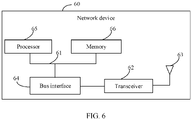
- FIG. 6 is a schematic structural diagram of hardware of a network device for implementing the embodiments of the present invention.
- the network device 60 includes a bus 61, a transceiver 62, an antenna 63, a bus interface 64, a processor 65, and a memory 66.
- the network device 60 further includes a computer program stored in the memory 66 and capable of running on the processor 65.
- the computer program is executed by the processor 65, the following steps are implemented: receiving BFRQ information sent by a terminal; where the BFRQ information is sent after the terminal determines a target event based on measurement results of BFD RSs, the BFD RS corresponds to a plurality of pieces of first object information, and the first object information includes at least one of the following: a TRP identifier, CORESETPoolIndex information, a group identifier, a cell identity, and a PCI.
- the transceiver 62 is configured to receive and transmit data under the control of processor 65.
- the network device 60 in this embodiment of the present invention is capable of implementing the processes implemented in the method embodiment shown in FIG. 2 , with the same beneficial effects achieved. To avoid repetition, details are not described herein again.
- a bus architecture (represented by a bus 61), that is, the bus 61, may include any quantity of interconnected buses and bridges.
- the bus 61 connects one or more processors represented by the processor 65 to each circuit of a memory represented by a memory 66.
- the bus 61 may further connect a peripheral device and a voltage stabilizer to other circuits such as a power management circuit. This is known in the prior art, and the specification does not provide a further description.
- the bus interface 64 provides an interface between the bus 61 and the transceiver 62.
- the transceiver 62 may be one component or a plurality of components, for example, a plurality of transmitters and receivers, and provides units for communicating with a variety of other apparatuses on a transmission medium.
- Data processed by the processor 65 is transmitted over a wireless medium through the antenna 63. Further, the antenna 63 also receives data and transmits the data to the processor 65.
- the processor 65 is responsible for managing the bus 61 and general processing, and provides various functions, including timing, peripheral interfaces, voltage regulation, power management, and other control functions.
- the memory 66 may be configured to store data that is used when the processor 65 performs an operation.
- the processor 65 may be CPU, ASIC, FPGA, or CPLD.
- An embodiment of the present invention further provides a computer-readable storage medium, where a computer program is stored in the computer-readable storage medium.
- a computer program is stored in the computer-readable storage medium.
- the computer-readable storage medium is, for example, a read-only memory (Read-Only Memory, ROM), a random access memory (Random Access Memory, RAM), a magnetic disk, or an optical disc.
- the disclosed apparatus and method may be implemented in other manners.
- the described apparatus embodiment is merely an example.
- the unit division is merely logical function division and may be other division in actual implementation.
- a plurality of units or components may be combined or integrated into another system, or some features may be ignored or may not be performed.
- the displayed or discussed mutual couplings or direct couplings or communication connections may be implemented by using some interfaces.
- the indirect couplings or communication connections between the apparatuses or units may be implemented in electronic, mechanical, or other forms.
- the units described as separate parts may or may not be physically separate, and parts displayed as units may or may not be physical units, may be located in one position, or may be distributed on a plurality of network elements. Some or all of the units may be selected based on actual requirements to achieve the objectives of the solutions of the embodiments.
- the software product is stored in a storage medium (such as a ROM/RAM, a magnetic disk, or an optical disc), and includes several instructions for instructing a terminal (which may be a mobile phone, a computer, a server, an air conditioner, a network device, or the like) to perform the methods described in the embodiments of the present invention.
- a storage medium such as a ROM/RAM, a magnetic disk, or an optical disc
- a terminal which may be a mobile phone, a computer, a server, an air conditioner, a network device, or the like
- the program may be stored in a computer readable storage medium. When the program runs, the processes of the method embodiments may be included.
- the foregoing storage medium may be a magnetic disk, an optical disc, a read-only memory (Read-Only Memory, ROM), a random access memory (Random Access Memory, RAM), or the like.
- a module, a unit, a sub-unit, a submodule, and the like may be implemented in one or more application specific integrated circuits (Application Specific Integrated Circuit, ASIC), digital signal processors (Digital Signal Processor, DSP), digital signal processing devices (DSP Device, DSPD), programmable logic devices (Programmable Logic Device, PLD), field-programmable gate arrays (Field-Programmable Gate Array, FPGA), general-purpose processors, controllers, microcontrollers, microprocessors, and other electronic units for performing the functions described in this disclosure, or a combination thereof.
- ASIC Application Specific Integrated Circuit
- DSP Digital Signal Processor
- DSP Device digital signal processing devices
- PLD programmable logic devices
- FPGA field-programmable gate array
- general-purpose processors controllers, microcontrollers, microprocessors, and other electronic units for performing the functions described in this disclosure, or a combination thereof.
- the techniques described in the embodiments of this disclosure may be implemented by modules (such as processes and functions) that perform the functions described in the embodiments of this disclosure.
- Software code may be stored in the memory and executed by the processor.
- the memory may be implemented in or outside the processor.
Landscapes
- Engineering & Computer Science (AREA)
- Signal Processing (AREA)
- Computer Networks & Wireless Communication (AREA)
- Computer Security & Cryptography (AREA)
- Mobile Radio Communication Systems (AREA)
- Data Exchanges In Wide-Area Networks (AREA)
Priority Applications (1)
| Application Number | Priority Date | Filing Date | Title |
|---|---|---|---|
| EP25223745.8A EP4723792A2 (fr) | 2020-02-07 | 2021-02-03 | Procédé de reprise après défaillance de faisceau, terminal et dispositif de réseau |
Applications Claiming Priority (2)
| Application Number | Priority Date | Filing Date | Title |
|---|---|---|---|
| CN202010082906.8A CN113259973B (zh) | 2020-02-07 | 2020-02-07 | 波束失败恢复方法、终端及网络设备 |
| PCT/CN2021/075004 WO2021155797A1 (fr) | 2020-02-07 | 2021-02-03 | Procédé de reprise après défaillance de faisceau, terminal et dispositif de réseau |
Related Child Applications (2)
| Application Number | Title | Priority Date | Filing Date |
|---|---|---|---|
| EP25223745.8A Division-Into EP4723792A2 (fr) | 2020-02-07 | 2021-02-03 | Procédé de reprise après défaillance de faisceau, terminal et dispositif de réseau |
| EP25223745.8A Division EP4723792A2 (fr) | 2020-02-07 | 2021-02-03 | Procédé de reprise après défaillance de faisceau, terminal et dispositif de réseau |
Publications (4)
| Publication Number | Publication Date |
|---|---|
| EP4102876A1 true EP4102876A1 (fr) | 2022-12-14 |
| EP4102876A4 EP4102876A4 (fr) | 2023-07-12 |
| EP4102876B1 EP4102876B1 (fr) | 2026-03-04 |
| EP4102876C0 EP4102876C0 (fr) | 2026-03-04 |
Family
ID=77199628
Family Applications (2)
| Application Number | Title | Priority Date | Filing Date |
|---|---|---|---|
| EP21751453.8A Active EP4102876B1 (fr) | 2020-02-07 | 2021-02-03 | Procédé de reprise après défaillance de faisceau, terminal et dispositif de réseau |
| EP25223745.8A Pending EP4723792A2 (fr) | 2020-02-07 | 2021-02-03 | Procédé de reprise après défaillance de faisceau, terminal et dispositif de réseau |
Family Applications After (1)
| Application Number | Title | Priority Date | Filing Date |
|---|---|---|---|
| EP25223745.8A Pending EP4723792A2 (fr) | 2020-02-07 | 2021-02-03 | Procédé de reprise après défaillance de faisceau, terminal et dispositif de réseau |
Country Status (8)
| Country | Link |
|---|---|
| US (2) | US12375154B2 (fr) |
| EP (2) | EP4102876B1 (fr) |
| JP (1) | JP7437518B2 (fr) |
| KR (1) | KR102888249B1 (fr) |
| CN (1) | CN113259973B (fr) |
| BR (1) | BR112022015509A2 (fr) |
| PH (1) | PH12022552002A1 (fr) |
| WO (1) | WO2021155797A1 (fr) |
Families Citing this family (12)
| Publication number | Priority date | Publication date | Assignee | Title |
|---|---|---|---|---|
| CN115669127B (zh) * | 2020-03-19 | 2025-06-03 | 株式会社Ntt都科摩 | 终端、无线通信方法以及基站 |
| WO2021240051A1 (fr) * | 2020-05-27 | 2021-12-02 | Nokia Technologies Oy | Indication de défaillance de faisceau m-trp |
| US11743951B2 (en) * | 2020-07-28 | 2023-08-29 | Qualcomm Incorporated | Two step RACH based L1/L2 inter-cell mobility |
| US20220061117A1 (en) * | 2020-08-21 | 2022-02-24 | FG Innovation Company Limited | Method of updating spatial parameters and related device |
| US11838774B2 (en) * | 2020-09-25 | 2023-12-05 | Qualcomm Incorporated | Transmission reception point specific beam failure recovery process |
| US12166561B2 (en) * | 2020-09-29 | 2024-12-10 | Qualcomm Incorporated | Transmission reception point (TRP)-specific beam failure detection (BFD) reference signal (RS) determination |
| CN117178587A (zh) * | 2021-04-30 | 2023-12-05 | 高通股份有限公司 | 每trp波束故障恢复后的pucch重置 |
| WO2023039762A1 (fr) * | 2021-09-15 | 2023-03-23 | Oppo广东移动通信有限公司 | Procédé et appareil de communication sans fil, dispositif terminal et périphérique de réseau |
| AU2021465754A1 (en) * | 2021-09-24 | 2024-05-02 | Nokia Technologies Oy | Transceiver point beam failure recovery |
| JP7758883B2 (ja) * | 2022-01-10 | 2025-10-22 | 1Finity株式会社 | ビーム失敗回復情報送信方法及び装置 |
| CN116847388A (zh) * | 2022-03-23 | 2023-10-03 | 维沃移动通信有限公司 | 波束失败检测方法、装置、终端和存储介质 |
| KR20240070754A (ko) | 2022-11-14 | 2024-05-22 | 서울대학교산학협력단 | Ris를 활용한 무선 통신 시스템에서 기지국의 빔 실패 복구 방법 및 이를 위한 장치와 프로그램 |
Family Cites Families (9)
| Publication number | Priority date | Publication date | Assignee | Title |
|---|---|---|---|---|
| US10784944B2 (en) * | 2018-01-09 | 2020-09-22 | Ofinno, Llc | Timing advance in beam failure recovery request transmission |
| CN110022611B (zh) * | 2018-01-10 | 2022-10-28 | 展讯通信(上海)有限公司 | 实现波束失败恢复的方法、装置及用户设备 |
| CN110505692B (zh) * | 2018-05-16 | 2022-02-22 | 维沃移动通信有限公司 | 一种多载波系统中的波束失败恢复方法及装置 |
| CN112204899B (zh) | 2018-06-08 | 2024-01-19 | 汉尼拔Ip有限责任公司 | 用于多trp传输的方法和ue |
| US11470631B2 (en) * | 2018-07-12 | 2022-10-11 | Ntt Docomo, Inc. | Terminal, method, and system for beam failure recovery |
| CN110719154B (zh) * | 2018-07-12 | 2021-06-01 | 维沃移动通信有限公司 | 一种波束失败恢复请求传输方法及设备 |
| CN109076365A (zh) * | 2018-07-20 | 2018-12-21 | 北京小米移动软件有限公司 | 波束故障恢复请求发送方法、响应方法、装置及存储介质 |
| CN110798864B (zh) * | 2018-08-01 | 2021-03-02 | 维沃移动通信有限公司 | 用于波束失败恢复的方法和终端设备 |
| JP7745536B2 (ja) | 2019-08-16 | 2025-09-29 | インターデイジタル パテント ホールディングス インコーポレイテッド | マルチtrpおよびマルチパネル伝送を用いるビーム障害検出および回復 |
-
2020
- 2020-02-07 CN CN202010082906.8A patent/CN113259973B/zh active Active
-
2021
- 2021-02-03 JP JP2022548048A patent/JP7437518B2/ja active Active
- 2021-02-03 WO PCT/CN2021/075004 patent/WO2021155797A1/fr not_active Ceased
- 2021-02-03 PH PH1/2022/552002A patent/PH12022552002A1/en unknown
- 2021-02-03 BR BR112022015509A patent/BR112022015509A2/pt unknown
- 2021-02-03 KR KR1020227030605A patent/KR102888249B1/ko active Active
- 2021-02-03 EP EP21751453.8A patent/EP4102876B1/fr active Active
- 2021-02-03 EP EP25223745.8A patent/EP4723792A2/fr active Pending
-
2022
- 2022-08-05 US US17/882,281 patent/US12375154B2/en active Active
-
2025
- 2025-07-01 US US19/256,730 patent/US20250330231A1/en active Pending
Also Published As
| Publication number | Publication date |
|---|---|
| CN113259973A (zh) | 2021-08-13 |
| EP4102876B1 (fr) | 2026-03-04 |
| BR112022015509A2 (pt) | 2022-09-27 |
| US20250330231A1 (en) | 2025-10-23 |
| KR20220137721A (ko) | 2022-10-12 |
| EP4102876A4 (fr) | 2023-07-12 |
| WO2021155797A1 (fr) | 2021-08-12 |
| CN113259973B (zh) | 2022-11-22 |
| US20220377586A1 (en) | 2022-11-24 |
| US12375154B2 (en) | 2025-07-29 |
| PH12022552002A1 (en) | 2023-11-29 |
| KR102888249B1 (ko) | 2025-11-20 |
| EP4723792A2 (fr) | 2026-04-08 |
| JP2023513674A (ja) | 2023-04-03 |
| JP7437518B2 (ja) | 2024-02-22 |
| EP4102876C0 (fr) | 2026-03-04 |
Similar Documents
| Publication | Publication Date | Title |
|---|---|---|
| US12375154B2 (en) | Beam failure recovery method, terminal, and network device | |
| US12177781B2 (en) | Channel monitoring method, terminal, and network device | |
| US12019174B2 (en) | Method for configuring PRS resource, method for configuring measurement gap, and related device | |
| US12028818B2 (en) | Measurement processing method, parameter configuration method, terminal, and network device | |
| EP3905835A1 (fr) | Procédé de traitement de défaillance de faisceau et dispositif associé | |
| US12219412B2 (en) | Method for reporting state information, terminal, and network device | |
| EP4050927A1 (fr) | Procédé de traitement de mesures, procédé d'envoi d'informations d'indication, terminal et dispositif de réseau | |
| US12284656B2 (en) | Search space allocation method, search space configuration method, and related device | |
| CN112929921B (zh) | 波束失败恢复方法、终端及网络侧设备 | |
| US20220264399A1 (en) | Handover method, configuration method, terminal, and network device | |
| EP4138480B1 (fr) | Procédé de détermination de ressource conflictuelle, terminal et dispositif réseau | |
| US20220386144A1 (en) | Method for determining reference signal and communications device | |
| CN113473605A (zh) | 一种冲突资源确定方法和终端 | |
| HK40081096A (en) | Beam failure recovery method, terminal, and network device | |
| CN113543215A (zh) | 一种冲突资源判断方法、终端和网络设备 | |
| US11368961B2 (en) | Processing method for secondary cell state transition and communication device | |
| HK40072715A (en) | Handover method, configuration method, terminal, and network device | |
| CN113453265A (zh) | 一种测量方法、终端设备和网络侧设备 | |
| HK40067216A (en) | Status information reporting method, terminal and network device |
Legal Events
| Date | Code | Title | Description |
|---|---|---|---|
| STAA | Information on the status of an ep patent application or granted ep patent |
Free format text: STATUS: THE INTERNATIONAL PUBLICATION HAS BEEN MADE |
|
| PUAI | Public reference made under article 153(3) epc to a published international application that has entered the european phase |
Free format text: ORIGINAL CODE: 0009012 |
|
| STAA | Information on the status of an ep patent application or granted ep patent |
Free format text: STATUS: REQUEST FOR EXAMINATION WAS MADE |
|
| 17P | Request for examination filed |
Effective date: 20220822 |
|
| AK | Designated contracting states |
Kind code of ref document: A1 Designated state(s): AL AT BE BG CH CY CZ DE DK EE ES FI FR GB GR HR HU IE IS IT LI LT LU LV MC MK MT NL NO PL PT RO RS SE SI SK SM TR |
|
| REG | Reference to a national code |
Ref country code: HK Ref legal event code: DE Ref document number: 40081096 Country of ref document: HK |
|
| DAV | Request for validation of the european patent (deleted) | ||
| DAX | Request for extension of the european patent (deleted) | ||
| REG | Reference to a national code |
Ref country code: DE Ref legal event code: R079 Free format text: PREVIOUS MAIN CLASS: H04W0024040000 Ipc: H04B0007060000 Ref country code: DE Ref legal event code: R079 Ref document number: 602021049266 Country of ref document: DE Free format text: PREVIOUS MAIN CLASS: H04W0024040000 Ipc: H04B0007060000 |
|
| A4 | Supplementary search report drawn up and despatched |
Effective date: 20230613 |
|
| RIC1 | Information provided on ipc code assigned before grant |
Ipc: H04W 74/08 20090101ALN20230607BHEP Ipc: H04W 74/04 20090101ALN20230607BHEP Ipc: H04W 72/21 20230101ALN20230607BHEP Ipc: H04W 24/08 20090101ALN20230607BHEP Ipc: H04B 7/06 20060101AFI20230607BHEP |
|
| STAA | Information on the status of an ep patent application or granted ep patent |
Free format text: STATUS: EXAMINATION IS IN PROGRESS |
|
| 17Q | First examination report despatched |
Effective date: 20241203 |
|
| RIC1 | Information provided on ipc code assigned before grant |
Ipc: H04B 7/06 20060101AFI20250731BHEP Ipc: H04W 24/08 20090101ALN20250731BHEP Ipc: H04W 72/21 20230101ALN20250731BHEP Ipc: H04W 74/04 20090101ALN20250731BHEP Ipc: H04W 74/0833 20240101ALN20250731BHEP |
|
| GRAP | Despatch of communication of intention to grant a patent |
Free format text: ORIGINAL CODE: EPIDOSNIGR1 |
|
| STAA | Information on the status of an ep patent application or granted ep patent |
Free format text: STATUS: GRANT OF PATENT IS INTENDED |
|
| RIC1 | Information provided on ipc code assigned before grant |
Ipc: H04B 7/06 20060101AFI20250818BHEP Ipc: H04W 24/08 20090101ALN20250818BHEP Ipc: H04W 72/21 20230101ALN20250818BHEP Ipc: H04W 74/04 20090101ALN20250818BHEP Ipc: H04W 74/0833 20240101ALN20250818BHEP |
|
| INTG | Intention to grant announced |
Effective date: 20250908 |
|
| GRAS | Grant fee paid |
Free format text: ORIGINAL CODE: EPIDOSNIGR3 |
|
| GRAL | Information related to payment of fee for publishing/printing deleted |
Free format text: ORIGINAL CODE: EPIDOSDIGR3 |
|
| GRAS | Grant fee paid |
Free format text: ORIGINAL CODE: EPIDOSNIGR3 |
|
| GRAA | (expected) grant |
Free format text: ORIGINAL CODE: 0009210 |
|
| STAA | Information on the status of an ep patent application or granted ep patent |
Free format text: STATUS: THE PATENT HAS BEEN GRANTED |
|
| AK | Designated contracting states |
Kind code of ref document: B1 Designated state(s): AL AT BE BG CH CY CZ DE DK EE ES FI FR GB GR HR HU IE IS IT LI LT LU LV MC MK MT NL NO PL PT RO RS SE SI SK SM TR |
|
| REG | Reference to a national code |
Ref country code: CH Ref legal event code: F10 Free format text: ST27 STATUS EVENT CODE: U-0-0-F10-F00 (AS PROVIDED BY THE NATIONAL OFFICE) Effective date: 20260304 Ref country code: GB Ref legal event code: FG4D |
|
| REG | Reference to a national code |
Ref country code: IE Ref legal event code: FG4D |
|
| REG | Reference to a national code |
Ref country code: DE Ref legal event code: R096 Ref document number: 602021049266 Country of ref document: DE |
|
| U01 | Request for unitary effect filed |
Effective date: 20260320 |
|
| U07 | Unitary effect registered |
Designated state(s): AT BE BG DE DK EE FI FR IT LT LU LV MT NL PT RO SE SI Effective date: 20260325 |