EP4104087B1 - Kryptografische berechnung in mandantenfähigen umgebungen - Google Patents
Kryptografische berechnung in mandantenfähigen umgebungen Download PDFInfo
- Publication number
- EP4104087B1 EP4104087B1 EP20918345.8A EP20918345A EP4104087B1 EP 4104087 B1 EP4104087 B1 EP 4104087B1 EP 20918345 A EP20918345 A EP 20918345A EP 4104087 B1 EP4104087 B1 EP 4104087B1
- Authority
- EP
- European Patent Office
- Prior art keywords
- key
- code
- memory
- data
- encrypted
- Prior art date
- Legal status (The legal status is an assumption and is not a legal conclusion. Google has not performed a legal analysis and makes no representation as to the accuracy of the status listed.)
- Active
Links
Images























Classifications
-
- G—PHYSICS
- G06—COMPUTING OR CALCULATING; COUNTING
- G06F—ELECTRIC DIGITAL DATA PROCESSING
- G06F21/00—Security arrangements for protecting computers, components thereof, programs or data against unauthorised activity
- G06F21/60—Protecting data
- G06F21/602—Providing cryptographic facilities or services
-
- G—PHYSICS
- G06—COMPUTING OR CALCULATING; COUNTING
- G06F—ELECTRIC DIGITAL DATA PROCESSING
- G06F12/00—Accessing, addressing or allocating within memory systems or architectures
- G06F12/14—Protection against unauthorised use of memory or access to memory
- G06F12/1458—Protection against unauthorised use of memory or access to memory by checking the subject access rights
- G06F12/1466—Key-lock mechanism
-
- G—PHYSICS
- G06—COMPUTING OR CALCULATING; COUNTING
- G06F—ELECTRIC DIGITAL DATA PROCESSING
- G06F12/00—Accessing, addressing or allocating within memory systems or architectures
- G06F12/14—Protection against unauthorised use of memory or access to memory
- G06F12/1458—Protection against unauthorised use of memory or access to memory by checking the subject access rights
- G06F12/1466—Key-lock mechanism
- G06F12/1475—Key-lock mechanism in a virtual system, e.g. with translation means
-
- G—PHYSICS
- G06—COMPUTING OR CALCULATING; COUNTING
- G06F—ELECTRIC DIGITAL DATA PROCESSING
- G06F21/00—Security arrangements for protecting computers, components thereof, programs or data against unauthorised activity
- G06F21/50—Monitoring users, programs or devices to maintain the integrity of platforms, e.g. of processors, firmware or operating systems
- G06F21/52—Monitoring users, programs or devices to maintain the integrity of platforms, e.g. of processors, firmware or operating systems during program execution, e.g. stack integrity ; Preventing unwanted data erasure; Buffer overflow
- G06F21/54—Monitoring users, programs or devices to maintain the integrity of platforms, e.g. of processors, firmware or operating systems during program execution, e.g. stack integrity ; Preventing unwanted data erasure; Buffer overflow by adding security routines or objects to programs
-
- G—PHYSICS
- G06—COMPUTING OR CALCULATING; COUNTING
- G06F—ELECTRIC DIGITAL DATA PROCESSING
- G06F21/00—Security arrangements for protecting computers, components thereof, programs or data against unauthorised activity
- G06F21/70—Protecting specific internal or peripheral components, in which the protection of a component leads to protection of the entire computer
- G06F21/78—Protecting specific internal or peripheral components, in which the protection of a component leads to protection of the entire computer to assure secure storage of data
- G06F21/79—Protecting specific internal or peripheral components, in which the protection of a component leads to protection of the entire computer to assure secure storage of data in semiconductor storage media, e.g. directly-addressable memories
-
- H—ELECTRICITY
- H04—ELECTRIC COMMUNICATION TECHNIQUE
- H04L—TRANSMISSION OF DIGITAL INFORMATION, e.g. TELEGRAPHIC COMMUNICATION
- H04L9/00—Cryptographic mechanisms or cryptographic arrangements for secret or secure communications; Network security protocols
- H04L9/06—Cryptographic mechanisms or cryptographic arrangements for secret or secure communications; Network security protocols the encryption apparatus using shift registers or memories for block-wise or stream coding, e.g. DES systems or RC4; Hash functions; Pseudorandom sequence generators
- H04L9/0618—Block ciphers, i.e. encrypting groups of characters of a plain text message using fixed encryption transformation
- H04L9/0631—Substitution permutation network [SPN], i.e. cipher composed of a number of stages or rounds each involving linear and nonlinear transformations, e.g. AES algorithms
-
- H—ELECTRICITY
- H04—ELECTRIC COMMUNICATION TECHNIQUE
- H04L—TRANSMISSION OF DIGITAL INFORMATION, e.g. TELEGRAPHIC COMMUNICATION
- H04L9/00—Cryptographic mechanisms or cryptographic arrangements for secret or secure communications; Network security protocols
- H04L9/06—Cryptographic mechanisms or cryptographic arrangements for secret or secure communications; Network security protocols the encryption apparatus using shift registers or memories for block-wise or stream coding, e.g. DES systems or RC4; Hash functions; Pseudorandom sequence generators
- H04L9/0643—Hash functions, e.g. MD5, SHA, HMAC or f9 MAC
-
- H—ELECTRICITY
- H04—ELECTRIC COMMUNICATION TECHNIQUE
- H04L—TRANSMISSION OF DIGITAL INFORMATION, e.g. TELEGRAPHIC COMMUNICATION
- H04L2209/00—Additional information or applications relating to cryptographic mechanisms or cryptographic arrangements for secret or secure communication H04L9/00
- H04L2209/34—Encoding or coding, e.g. Huffman coding or error correction
Definitions
- US 2017/0237560 A1 discloses methods, media, and systems for secure provisioning of servers within a cloud computing environment.
- a management service can delegate provisioning of a server of the cloud computing environment to an imaging service.
- the imaging service can generate an operating system image for the server and can utilize disk encryption to protect to operating system image.
- a volume encryption key of the disk encryption can be encrypted utilizing a public key of a trusted platform manager of the server, to produce an encrypted volume encryption key that is protected by the trusted platform module of the server.
- the encrypted operating system image and the encrypted volume encryption key can then be transmitted to the server to cause the server to be provisioned with the operating system image.
- system or “module” may refer to, for example, software, firmware and/or circuitry configured to perform any of the aforementioned operations.
- Software may be embodied as a software package, code, instructions, instruction sets and/or data recorded on non-transitory computer readable storage mediums.
- Firmware may be embodied as code, instructions or instruction sets and/or data that are hard-coded (e.g., nonvolatile) in memory devices.
- allocation refers to an addressable portion of memory in which an object, such as data or code, is stored.
- slot refers a unit of memory in a cache line.
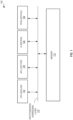
- Fig. 1 is a block diagram illustrating an example cryptographic computing environment 100 according to at least one embodiment.
- a cryptographic addressing layer 110 extends across the example compute vectors central processing unit (CPU) 102, graphical processing unit (GPU) 104, artificial intelligence (AI) 106, and field programmable gate array (FPGA) 108.
- the CPU 102 and GPU 104 may share the same virtual address translation for data stored in memory 112, and the cryptographic addresses may build on this shared virtual memory. They may share the same process key for a given execution flow, and compute the same tweaks to decrypt the cryptographically encoded addresses and decrypt the data referenced by such encoded addresses, following the same cryptographic algorithms.
- Memory 112 may be encrypted at every level of the memory hierarchy, from the first level of cache through last level of cache and into the system memory. Binding the cryptographic address encoding to the data encryption may allow extremely fine-grain object boundaries and access control, enabling fine grain secure containers down to even individual functions and their objects for function-as-a-service. Cryptographically encoding return addresses on a call stack (depending on their location) may also enable control flow integrity without the need for shadow stack metadata. Thus, any of data access control policy and control flow can be performed cryptographically, simply dependent on cryptographic addressing and the respective cryptographic data bindings.
- Figs. 2-4 are block diagrams of exemplary computer architectures that may be used in accordance with embodiments disclosed herein.
- any computer architecture designs known in the art for processors and computing systems may be used.
- system designs and configurations known in the arts for laptops, desktops, handheld PCs, personal digital assistants, tablets, engineering workstations, servers, network devices, servers, appliances, network hubs, routers, switches, embedded processors, digital signal processors (DSPs), graphics devices, video game devices, set-top boxes, micro controllers, smart phones, mobile devices, wearable electronic devices, portable media players, hand held devices, and various other electronic devices, are also suitable for embodiments of computing systems described herein.
- suitable computer architectures for embodiments disclosed herein can include, but are not limited to, configurations illustrated in Figs. 2-4 .
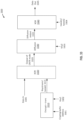
- Fig. 2 is an example illustration of a processor according to an embodiment.
- Processor 200 is an example of a type of hardware device that can be used in connection with the implementations shown and described herein (e.g., processor 102).
- Processor 200 may be any type of processor, such as a microprocessor, an embedded processor, a digital signal processor (DSP), a network processor, a multi-core processor, a single core processor, or other device to execute code.
- DSP digital signal processor
- a processing element may alternatively include more than one of processor 200 illustrated in Fig. 2 .
- Processor 200 may be a single-threaded core or, for at least one embodiment, the processor 200 may be multi-threaded in that it may include more than one hardware thread context (or "logical processor") per core.
- Processor 200 can execute any type of instructions associated with algorithms, processes, or operations detailed herein. Generally, processor 200 can transform an element or an article (e.g., data) from one state or thing to another state or thing.
- processor 200 can transform an element or an article (e.g., data) from one state or thing to another state or thing.
- Processor 200 can also include execution logic 214 having a set of execution units 216a, 216b, 216n, etc. Some embodiments may include a number of execution units dedicated to specific functions or sets of functions. Other embodiments may include only one execution unit or one execution unit that can perform a particular function. Execution logic 214 performs the operations specified by code instructions.
- a processor pipeline 300 includes a fetch stage 302, a length decode stage 304, a decode stage 306, an allocation stage 308, a renaming stage 310, a schedule (also known as a dispatch or issue) stage 312, a register read/memory read stage 314, an execute stage 316, a write back/memory write stage 318, an exception handling stage 322, and a commit stage 324.
- the front end unit 330 includes a branch prediction unit 332 coupled to an instruction cache unit 334, which is coupled to an instruction translation lookaside buffer (TLB) unit 336, which is coupled to an instruction fetch unit 338, which is coupled to a decode unit 340.
- the decode unit 340 (or decoder) may decode instructions, and generate as an output one or more micro-operations, micro-code entry points, microinstructions, other instructions, or other control signals, which are decoded from, or which otherwise reflect, or are derived from, the original instructions.
- the decode unit 340 may be implemented using various different mechanisms.
- Program code such as code 430, may be applied to input instructions to perform the functions described herein and generate output information.
- the output information may be applied to one or more output devices, in known fashion.
- a processing system may be part of computing system 400 and includes any system that has a processor, such as, for example; a digital signal processor (DSP), a microcontroller, an application specific integrated circuit (ASIC), or a microprocessor.
- DSP digital signal processor
- ASIC application specific integrated circuit
- the program code (e.g., 430) may be implemented in a high level procedural or object oriented programming language to communicate with a processing system.
- the program code may also be implemented in assembly or machine language, if desired.
- the mechanisms described herein are not limited in scope to any particular programming language. In any case, the language may be a compiled or interpreted language.
- Such machine-readable storage media may include, without limitation, non-transitory, tangible arrangements of articles manufactured or formed by a machine or device, including storage media such as hard disks, any other type of disk including floppy disks, optical disks, compact disk read-only memories (CD-ROMs), compact disk rewritables (CD-RWs), and magneto-optical disks, semiconductor devices such as read-only memories (ROMs), random access memories (RAMs) such as dynamic random access memories (DRAMs), static random access memories (SRAMs), erasable programmable read-only memories (EPROMs), flash memories, electrically erasable programmable read-only memories (EEPROMs), phase change memory (PCM), magnetic or optical cards, or any other type of media suitable for storing electronic instructions.
- storage media such as hard disks, any other type of disk including floppy disks, optical disks, compact disk read-only memories (CD-ROMs), compact disk rewritables (CD-RWs), and magneto-opti
- embodiments of the present disclosure also include non-transitory, tangible machine-readable media containing instructions or containing design data, such as Hardware Description Language (HDL), which defines structures, circuits, apparatuses, processors and/or system features described herein.
- HDL Hardware Description Language
- Such embodiments may also be referred to as program products.
- an instruction converter may be used to convert an instruction from a source instruction set to a target instruction set.
- the instruction converter may translate (e.g., using static binary translation, dynamic binary translation including dynamic compilation), morph, emulate, or otherwise convert an instruction to one or more other instructions to be processed by the core.
- the instruction converter may be implemented in software, hardware, firmware, or a combination thereof.
- the instruction converter may be on processor, off processor, or part on and part off processor.
- Fig. 5 is a block diagram contrasting the use of a software instruction converter to convert binary instructions in a source instruction set to binary instructions in a target instruction set according to embodiments of this disclosure.
- the instruction converter is a software instruction converter, although alternatively the instruction converter may be implemented in software, firmware, hardware, or various combinations thereof.
- Fig. 5 shows a program in a high level language 502 may be compiled using an x86 compiler 504 to generate x86 binary code 506 that may be natively executed by a processor with at least one x86 instruction set core 516.
- FIG. 5 shows the program in the high level language 502 may be compiled using an alternative instruction set compiler 508 to generate alternative instruction set binary code 510 that may be natively executed by a processor without at least one x86 instruction set core 514 (e.g., a processor with cores that execute the MIPS instruction set of MIPS Technologies of Sunnyvale, CA and/or that execute the ARM instruction set of ARM Holdings of Sunnyvale, CA).
- the instruction converter 512 is used to convert the x86 binary code 506 into code that may be natively executed by the processor without an x86 instruction set core 514.
- cryptographic computing may reduce or remove the need for extra separate memory/storage to provide policy and context information/metadata. This can save up to billions of dollars in the computing industry (e.g., in dynamic random access memory (DRAM) expenses) due to the reduction of metadata alone. Customers can reap these savings in memory costs while still getting the security, safety and error-free functionality they want with cryptographic computing. By allowing safe speculation, the fundamentally cryptographic separation policies of cryptographic computing may allow the processor to speculate freely and provide increased performance.
- DRAM dynamic random access memory
- Cryptographic computing where data security is fundamentally linked to cryptographic memory addressing, processing and fine grain cryptographic access controls to data are important.
- Cryptographic computing transforms all compute vectors from the CPU to GPU, accelerators to FPGAs, etc.
- protections may be cryptographic, where processors and accelerators alike utilize secret keys and ciphers to provide access control and separation at increasingly fine granularities.
- individual functions may become the boundary, address spaces are shared while pointers are encrypted, with keys providing controlled access down to individual data objects. Capabilities may thus become entwined in the cryptographic operations to provide granular access control to data objects while preventing buffer overflows, type confusion and temporal (e.g.
- Cryptographic computing may utilize these new ciphers, as well as others, introducing novel computer architecture concepts including, but not limited to: (i) cryptographic addressing, i.e., the encryption of data pointers at the processor using, as tweaks, contextual information about the referenced data (e.g., metadata embedded in the pointer and/or external metadata), a slice of the address itself, or any suitable combination thereof; and (ii) encryption of the data itself at the core, using cryptographically encoded pointers or portions thereof, non-cryptographically encoded pointers or portion(s) thereof, contextual information associated with the referenced data, or any suitable combination thereof as tweaks for the data encryption.
- a variety of encryption modes that are tweakable can be used for this purpose of including metadata (e.g.
- Memory tagging is not suitable for mitigating type confusion and protecting against uninitialized use variables.
- the overhead of memory tagging may be reduced using error-correcting code bits, it can nevertheless require additional devices, which can increase costs.
- Capability machines may also use fat pointers to embed security metadata in-line with pointers, imposing substantial memory overheads (e.g., 25% in pointer heavy applications) due to doubling the pointer size.
- some embodiments of cryptographic computing may provide context information (e.g., metadata encoded in pointer, external metadata), codified as tweaks to cryptographic addressing and data, cryptographic addressing and code, or a combination thereof, removing potential performance and memory overheads caused by the inclusion of such metadata.
- context information e.g., metadata encoded in pointer, external metadata
- base address encryption in cryptographic computing mitigates major categories of memory safety vulnerabilities, while simultaneously enabling compilers to embed statically-computed context information into program code to reduce time and memory overheads from loading metadata dynamically, as such overheads have been substantial in past approaches relying solely on dynamic metadata.
- the resulting encrypted base address slice may need no additional protections beyond the secret key, allowing reuse of the same memory as the data.
- the address metadata can include a tag value or version number.
- a tag value can include randomized bits generated for the memory allocation. The randomized bits may be generated to be unique for the memory allocation.
- a version number can be a deterministically different value such as a sequential number that determines current ownership of the referenced allocated memory in time. The sequential number can be incremented by a predetermined amount each time an indirect address is created for newly allocated memory.
- the tag/version can be used as part of a tweak to encrypt and decrypt the base address slice encoded in the indirect address. The tag/version can also be used as part of a tweak to encrypt and decrypt the data or code that the base address references.
- other metadata can be encoded in the unused bits of indirect address 614 such as a memory allocation size (e.g., Bytes of allocated memory referenced by the indirect address), a type of the data or code (e.g., class of data or code defined by programming language), and/or permissions (e.g., read, write, and execute permissions of the indirect address), a location of the data or code (e.g., address combined with the size of the data or code), the memory location where the pointer itself is to be stored, an ownership of the data or code, a privilege level (e.g., user or supervisor), a cryptographic context identifier (or crypto context ID) (e.g., randomized or deterministically unique value for each indirect address), etc.
- a memory allocation size e.g., Bytes of allocated memory referenced by the indirect address
- a type of the data or code e.g., class of data or code defined by programming language
- permissions e.g., read, write, and execute permissions of the
- the example secure memory access logic 650 is embodied as part of processor instructions (e.g., as part of the processor instruction set architecture), or microcode (e.g., instructions that are stored in read-only memory and executed directly by the processor 602). In other embodiments, portions of the secure memory access logic 650 may be embodied as hardware, firmware, software, or a combination thereof (e.g., as programming code executed by a privileged system component 642 of the computing device 600). For example, the secure memory access logic 650 may be embodied in software as an instruction set emulator (e.g., a binary instrumentation tool such as a PIN Tool) that emulates the instruction logic utilizing the encoded addresses as disclosed herein.
- an instruction set emulator e.g., a binary instrumentation tool such as a PIN Tool
- indirect addresses may be referred to by other terminology, such as “pointer,” “address pointer,” or “pointer address.”
- metadata may refer to, among other things, information about or relating to an indirect address 614, such as a valid data range, a valid code range, pointer access permissions, a size of plaintext address slice (e.g., encoded as a power in bits), a memory allocation size, a type of the data or code, a location of the data or code, an ownership of the data or code, a version of the indirect address, a tag of randomized bits, version, a privilege level of software, a cryptographic context identifier, etc.
- memory store instruction may refer to, among other things, a “MOV” or “STORE” instruction or any other instruction that causes data to be read, copied, or otherwise accessed at one storage location, e.g., register, and moved into another storage location, e.g., memory, or any instruction that accesses or manipulates memory.
- new instructions to load data or code using a pointer encoded with an encrypted base address slice e.g., "LdEP” instruction
- StEP an encrypted base address slice
- the example secure memory access logic 650 includes address encoding logic 652 (which includes metadata encoding logic 656 and address encrypting logic 658) and address decoding logic 662 (which includes address decrypting logic 664 and address formation logic 666). Secure memory access logic 650 also includes encrypt pointer instruction logic 672 ("EncryptBaseAddr” instruction), specialize pointer instruction logic 674 ("SpecializePtr” instruction), load from encrypted pointer instruction logic 676 (“LdEP” instruction), store to encrypted pointer instruction logic 678 (“StEP” instruction), and legacy memory access instruction logic (e.g., MOV instruction).
- EncryptBaseAddr EncryptBaseAddr
- specialize pointer instruction logic 674 specialize pointer instruction logic 674
- LodedEP load from encrypted pointer instruction logic 676
- StEP store to encrypted pointer instruction logic
- legacy memory access instruction logic e.g., MOV instruction
- the indirect address 614 is returned to its original (e.g., canonical) form, based on appropriate operations (e.g. address decoding logic 662) in order to restore the original value of the indirect address 614 (e.g., the true, original linear memory address).
- the address decoding logic 662 may remove the address metadata (e.g., tag) encoded in the unused bits of the indirect address 614 (e.g., return the unused bits to their original form).
- the encrypted slice can be decrypted and concatenated with the upper address bits. The result can be adjusted based on the offset. If the indirect address 614 decodes successfully, the memory access operation completes successfully.
- the computing device 600 also includes memory 620, an input/output subsystem 624, a data storage device 626, a display device 628, a user interface (UI) subsystem 630, a communication subsystem 632, at least one user space application 634, and the privileged system component 642 (which, illustratively, includes the memory manager module 644 and the key creation module 648).
- the computing device 600 may include other or additional components, such as those commonly found in a mobile and/or stationary computers (e.g., various sensors and input/output devices), in other embodiments. Additionally, in some embodiments, one or more of the example components may be incorporated in, or otherwise form a portion of, another component.
- Each of the components of the computing device 600 may be embodied as software, firmware, hardware, or a combination of software and hardware.
- the computing device 600 further includes a communication subsystem 632, which may be embodied as any communication circuit, device, or collection thereof, capable of enabling communications between the computing device 600 and other electronic devices.
- the communication subsystem 632 may be configured to use any one or more communication technology (e.g., wireless or wired communications) and associated protocols (e.g., Ethernet, Bluetooth TM , Wi-Fi TM , WiMAX, 3G/LTE, etc.) to effect such communication.
- the communication subsystem 632 may be embodied as a network adapter, including a wireless network adapter.
- the example computing device 600 also includes a number of computer program components, such as the user space application 634 and the privileged system component 642.
- the user space application 634 may be embodied as any computer application (e.g., software, firmware, hardware, or a combination thereof) that interacts directly or indirectly with an end user via, for example, the display device 628 or the UI subsystem 630.
- Some examples of user space applications 634 include word processing programs, document viewers/readers, web browsers, electronic mail programs, messaging services, computer games, camera and video applications, etc.
- the privileged system component 642 facilitates the communication between the user space applications 634 and the hardware components of the computing device 600.
- the example privileged system component 642 includes a number of computer program components, such as the memory manager module 644 and the key creation module 648.
- Each of the components of the privileged system component 642 may be embodied as software, firmware, hardware, or a combination of software and hardware.
- the components of the privileged system component 642 may be embodied as modules of an operating system kernel, a virtual machine monitor, or a hypervisor.
- the memory manager module 644 allocates portions of memory 620 to the various processes running on the computing device 600 (e.g., as ranges of virtual memory addresses).
- the memory manager module 644 is embodied as, for example, a loader, a memory manager service, or a heap management service.
- a myriad of approaches could be used to generate or obtain a key for embodiments disclosed herein.
- the key creation module 648 is shown as being part of computing device 600, one or more secret keys could be obtained from any suitable external source using any suitable authentication processes to securely communicate the key to computing device 600, which may include generating the key as part of those processes.
- privileged system component 642 may be part of a trusted execution environment (TEE), virtual machine, processor 602, a co-processor (not shown), or any other suitable hardware, firmware, or software in computing device 600 or securely connected to computing device 600.
- the key may be "secret", which is intended to mean that its value is kept hidden, inaccessible, obfuscated, or otherwise secured from unauthorized actors (e.g., software, firmware, machines, extraneous hardware components, and humans).
- the address encoding logic 652 is executed in response to the memory allocation 702 (e.g., in place of a conventional "malloc" instruction/function call).
- the memory manager module 644 (or memory allocator) may include a heap allocator or stack allocator that executes an encrypt pointer instruction (EncryptBaseAddr), which performs address encoding logic 652, along with additional checks related to the size of the object relative to the bounds of the region within which the object is allocated, and table management for storing context information in some scenarios.
- EncryptBaseAddr encrypt pointer instruction
- the user space application 634 or the privileged system component 642 may issue a memory load 720 from time to time, which may be handled by the processor 102 as a processor instruction that reads from memory 620 and writes to a register 612 using an indirect address 614 (e.g. LdEP or MOV instruction).
- an indirect address 614 e.g. LdEP or MOV instruction.
- the load from encrypted pointer instruction logic 676 performs the memory access only after successfully executing the address decoding logic 662 to decode the encoded indirect address 706.
- Successful execution of address decoding logic 662 is based on successful execution of address decrypting logic 664, which uses an address tweak and secret address key 616(1) to decrypt the encrypted address slice of the encoded indirect address 706.
- control transfer instructions such as call and JMP can load the encoded pointer address for the code to execute into the processor's program counter register (e.g. instruction pointer) (e.g., the RIP, where RIP is the instruction pointer register in 64-bit code).
- the instruction pointer register can then be queried by the processor and as a result, the current program counter address will be the encoded form (offset to the current program counter location).
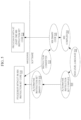
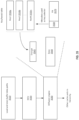
- Fig. 8 is a simplified flow diagram 800 illustrating additional details of software units, hardware, and data flow associated with memory allocation and access using a cryptographically encoded pointer in an encrypted base address (EBA) format.
- a pointer having an EBA format is encoded with an encrypted slice of a base address and at least one item of metadata associated with the data stored at the base address.
- a computing device such as computing device 600 includes software units 810, hardware 820, and data flow 830.
- Software units 810 include a memory allocator 812, a memory allocator invoking function 814, and a memory access function 816.
- Hardware 820 includes a pointer cryptography and encoding unit 822, a data cache unit 824, and a data cryptography unit 826.
- Data flow 830 includes a raw pointer 831, untyped context 832, an encrypted, untyped pointer 833, typed context 834, an encrypted, typed pointer 835, encrypted data 837, and decrypted data 838.
- the untyped context 832 can be used as a tweak input to an encryption algorithm (e.g., block cipher) to encrypt the slice of the raw pointer 831 (e.g., plaintext base address).
- Pointer cryptography and encoding unit 822 may also generate a tag of randomized bits, which can be used as part of the tweak for the base address slice.
- pointer cryptography and encoding unit 822 generates encrypted, untyped pointer 833 by concatenating the tag, the encrypted base address slice, and an offset in the pointer 833. The offset may be initialized to zeroes.
- the decrypted base address slice represents bits 3 to 34 of the original base address (i.e., because the address is 8-Byte aligned)
- three bits initialized to "0" are concatenated at the end of the decrypted base address slice to obtain the original base address.
- the offset of the encrypted, untyped pointer 833 can be added to the original base address to obtain a specialized base address to a sub-region within the allocated memory (or to the same region of the allocated memory) for which a specialize pointer is to be generated. For example, if the offset has changed, then the specialized address will point to a location within the allocated memory. If the offset has not changed, then the specialized address will point to the same location as the original base address.
- typed context 834 includes a memory allocation size, permissions, and a type of the object.
- the memory allocation size in the typed context 834 may be the same or smaller than the memory allocation size in the untyped context 832.
- the permissions metadata in the typed context 834 may be the same or less than the permissions metadata in the untyped context 832.
- Pointer cryptography and encoding unit 822 may also generate a tag of randomized bits, which can be used as part of the tweak for the specialized address slice.
- the tags for pointers that are used to access the same regions of memory should match to ensure correct data decryption.
- the tag encoded in the encrypted, untyped pointer 833 may be used instead.
- pointer cryptography and encoding unit 822 generates encrypted, typed pointer 835 by concatenating the tag (either the newly generated tag or the original tag encoded in pointer 833), the encrypted specialized address slice, and an offset in the pointer 835. The offset may be initialized to zeroes.
- a pointer After a pointer is cryptographically encoded with a base address slice or specialized address slice, metadata (e.g., tag), and an offset, the cryptographically encoded pointer may be used to access an object stored in the memory location referenced by the pointer.
- metadata e.g., tag
- an offset the cryptographically encoded pointer may be used to access an object stored in the memory location referenced by the pointer.
- both the encrypted, untyped pointer 833 and the encrypted, typed pointer 835 could be used to access memory at their respective locations based on their respective permissions.
- Fig. 8 further shows how a specialized pointer such as encrypted, typed pointer 835 can be used to access memory.
- the memory access function 816 can invoke a load from encrypted pointer instruction 806 (LdEP) based on a previously-encoded pointer such as encrypted, typed pointer 835.
- LdEP encrypted pointer instruction 806
- the encrypted, typed pointer 835 and the typed context 834 can be passed as register operands of the LdEP instruction 806.
- the LdEP instruction 806 causes pointer cryptography and encoding unit 822 to decrypt the encrypted specialized address slice of the encrypted, typed pointer 835 using the typed context 834 as a tweak and generate a raw pointer 836.
- the upper address bits of the specialized address (which are the same as the upper address bits of the base address) may be retrieved and concatenated with the decrypted specialized address slice.
- the decrypted specialized address slice represents bits 3 to 34 of the original specialized address (i.e., because the specialized address is 8-Byte aligned), then three bits initialized to "0" are concatenated at the end of the decrypted specialized address slice to obtain the original specialized address.
- the offset of the encrypted, typed pointer 835 can be added to the original specialized address to obtain the raw pointer 836, which is the location in memory to be accessed. If there is no offset, then raw pointer 836 represents the original specialized address.
- additional context may also be used in the tweak including, for example, a crypto context identifier (or crypto context ID) (e.g., 64-bit random or deterministically unique value assigned to the pointer) and/or other variable length metadata (e.g., range, location, ownership, version, privilege level, etc.).
- LdEP instruction 806 causes data cryptography unit 826 to decrypt encrypted data 837 using the same tweak to generate decrypted data 838.
- the address metadata may include a tag of randomized bits associated with the indirect address to make the tag unpredictable for an adversary.
- System 900 may include a processor with one or more cores, SoC, integrated circuit, or other mechanism.
- system 900 may include a processor 901 with a core 904.
- core 904 is shown and described as an example in Fig. 9 , any suitable mechanism may be used, including multiple cores within processor 901.
- Core 904 may include any suitable mechanisms for executing cryptographic computing operations, including those that involve programming 128-bit pointer keys, data keys, and code keys, switching keys between processes, making routable pointers, compressing/decompressing pointers, transferring pointer ownership of an object, and memory move/reverse data from one address to different address. In one embodiment, such mechanisms may be implemented in hardware.
- Core 904 may be implemented fully or in part by the elements described in Figs. 1-8 .
- instruction stream 902 may include a "KCALL" instruction and a "KRET" instruction for enabling a secure library call and return to a single instance of library code in memory that can be securely shared by multiple processes.
- An encrypted process key (or code key) for the library code may be passed as an operand from a calling program to an instruction cache (e.g., 334, 471, 481, 682) to be used for decrypting instructions in the library code for execution.
- Execution units 916 may be configured with cryptographic computing engines and/or microcode 917 in any suitable manner to enable cryptographic computing instruction extensions to be performed.
- core 904 may include some dedicated execution units for cryptographic computing primitives (e.g., encoding/decoding a cryptographically encoded pointer, encrypting/decrypting a cryptographically encoded pointer, etc.), while some executing units include microcode to accomplish the overall cryptographic computing instruction flows.
- One or more specific cryptographic computing instructions to be executed by core 904 may be included in a library defined for execution by core 904. In another embodiment, specific cryptographic computing instructions may be targeted by particular portions of core 904. For example, core 904 may recognize, either implicitly or through decoding (e.g., via decode unit 910) and execution or attempted execution of one of the aforementioned instructions, that one of these extended cryptographic computing operations is to be performed. In some implementations and scenarios, the extended cryptographic computing instruction (or particular operation(s) of the instruction) may be directed to a particular one of the execution units 916 for execution of the instruction (or particular operation(s) of the instruction). For example, the instruction (or particular operation of the instruction) may be directed to a dedicated execution unit that performs a certain cryptographic primitive.
- Memory subsystem 920 may include, for example, memory, RAM, or a cache hierarchy, which may include caches 924, such as one or more Level 1 (L1) caches or Level 2 (L2) caches, some of which may be shared by multiple cores 904 or processors 901.
- L1 Level 1
- L2 Level 2
- Fig 10 generically depicts an edge computing system for providing edge services and applications to multi-stakeholder entities, as distributed among one or more client compute nodes 1002, one or more edge gateway nodes 1012, one or more edge aggregation nodes 1022, one or more core data centers 1032, and a global network cloud 1042, as distributed across layers of the network.
- the implementation of the edge computing system may be provided at or on behalf of a telecommunication service provider ("telco", or "TSP"), internet-of-things service provider, cloud service provider (CSP), enterprise entity, or any other number of entities.
- telco telecommunication service provider
- CSP cloud service provider
- Switching keys can strengthen isolation without requiring translation lookaside buffer (TLB) evictions, cache evictions, or other actions that impose additional overhead as in conventional page table switching.
- Embodiments also allow switching memory access between containers 1122, where one container transfers control so that another container may access the code and data of the second container.
- the first container e.g., Container A 1120A
- Container B 1120B may cause the keys of the container being accessed (e.g., Container B 1120B) to be activated for use in order to successfully access data and code of the container being accessed.
- a cryptographic sub-process object-granular multitenant system can resolve these issues.
- Embodiments herein provide cryptographic computing with a security engine (e.g., 692) to protect the confidentiality and integrity of in-memory data and code for container applications.
- the embedded security (e.g., 692) engine and key management hardware (e.g., 694) can generate and manage per-container data and code keys, where a code key and a data key of a particular container process are unique.
- the security engine can load the plaintext of first container code 1316 and other container code 1314.
- each instance of container code (also referred to herein as "code image") can be fixed up to enable attestation of the code image.
- code image also referred to herein as "code image”
- a secret key can be injected into the code image demonstrating it had undergone this method.
- implicit integrity can be implemented by periodically inserting no operation ("NOP") instructions in the code image to verify code sections are unmodified during execution and verifying the NOPs are still present in the decrypted image, or MACs, separate MAC tables or other integrity mechanism.
- NOP no operation
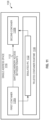
- Fig. 14 is a simplified block diagram illustrating a multitenancy runtime process 1400 according to an embodiment.
- Multitenancy runtime process 1400 illustrates a shared library call subprocess and includes using respective process keys for container code and shared libraries.
- the operating system can call a security engine (e.g., SEAM, secure mode, security engine, secure mode, etc.) to lock new process keys 1412 by encryption.
- New process keys 1412 can include a first code key for container code 1416 and other code keys (also referred to herein as library keys) for shared libraries 1414.
- the new process keys 1412 can be encrypted using a processor key that is available only to the processor (e.g., 602) and security engine. Accordingly, the encrypted keys cannot be directly decrypted by the operating system but instead, can be decrypted by the processor for example, when invoked by the security engine.
- New instructions such as library call and return instructions 1430, may be executed by container code 1416 once it is launched. These instructions may also use the encrypted library key for library code 1432.
- container code 1416 can load library 1432 via the OS, get a signed message authentication code (MAC) or encrypted hash and encrypted key for the library, and verify that the MAC or encrypted hash and encrypted key corresponds to library code 1432.
- Container code 1416 may then execute a library call (e.g., KCALL) instruction using the library's encrypted key.
- the library's encrypted key is set as an instruction cache key on the library call instruction for the instruction cache (e.g., 334, 471, 482, 682) of the processor (e.g., 390, 470, 480, 602).
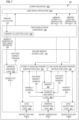
- Multitenant system 1500 is configured to launch a container with an encrypted code image on a verified platform (e.g., 1540), protect code and data in-memory, and securely handle asynchronous events and communication between container processes (e.g., first container process 1540A and second container process 1540B).
- the example multitenant system 1500 can include an image registry 1560 and a multitenant platform 1510.
- Tenant 1570 represents a computing device or system that is configured for communication to image registry 1560 and multitenant platform 1510, and that may be used to request container code to be launched (e.g., first container process 1540) on multitenant platform 1510.
- One or more other tenants may also be configured for communication to multitenant platform 1510 to request container code to be launched (e.g., second container process 1550) on multitenant platform 1510.
- a tenant owner may give commands via a user interface to request the multitenant platform to launch the container and in other scenarios, tenant 1570 may be automated for launching container code on multitenant platform 1510.
- Multitenant platform 1510 represents one example multitenancy architecture according to one or more embodiments, which may be implemented as a computing platform configured to run multiple containers with cryptographic computing based container security.
- the platform provides attestation of its hardware to the tenant to verify that it is a trusted platform.
- the platform can also attest to its hardware, boot, operating system, for example.
- Any suitable attestation infrastructure may be utilized to provide platform attestation (e.g., TPM2 in Intel PTT, SGX/TDX, security engine, etc.).
- Multitenant platform 1510 may include a processor 1520 (e.g.
- CPU central processing unit
- GPU graphical processing unit
- a security engine 1530 and key management hardware 1532 may be configured in multitenant platform 1500 to generate and store per-container process keys that can be used to encrypt and decrypt code and data associated with a particular container.
- Process keys can include a code key for a process that is instantiated by executing a container code image and a data key for data that is associated with the process.
- Security engine 1530 and key management hardware 1532 may be logically separate entities (as shown in Fig.
- any suitable secure mode e.g., Secure-Arbitration Mode (SEAM) of Intel ® Trust Doman Extensions, ESE, etc.
- security processor e.g., Intel ® Converged Security Management Engine (CSME), etc.
- Data cache 684 can also be coupled to or include control circuitry 1588 to store encrypted data and to allow the decryption of the encrypted data with a different data key programmed in the control circuitry for each process.
- Control circuitries 1582 and 1588 may be combined or separate and may be similar to IMC 472, 482. Some embodiments may use a shared code and data cache with tags or other context identifiers to distinguish the code and data keys used for individual cachelines.
- a host operating system 1522 running in multitenant platform 1510 may be configured to manage the executions of multiple containers via a container runtime 1524, in coordination with security engine 1530 and key management hardware 1532.
- Host operating system 1522 may be a host operating system in a non-virtualized environment.
- multitenant platform 1510 may be implemented as a virtualized environment and host operating system 1522 may be a guest operating system for one or more virtual machines.
- a virtual machine manager may also be implemented on hardware (e.g., processor 1520).
- the signature applied to the published code may be a digitally signed certificate that is of a particular variant of the application (or library) with a specified version.
- Metadata fields that may be included in the certificate can include at least one of a identifier of the supplier of the published code (e.g., unique, fully-qualified domain name), an application or library name, a version of the application or library, a hash of binary code and constant data associated with the published code, a hash of initial values for writable data associated with the published code.
- a request/command may be sent to a cloud services provider to launch a container, for example, to run code image 1562.
- the provider can assign the workload to a worker node, such as multitenant platform 1510, which may be a trusted platform of the provider.
- security engine 1530 can attest to tenant 1570 that it is trustworthy, as previously described. Once tenant 1570 is satisfied by the attestation of the platform 1510, at 1503, security engine 1530 can pull or receive, code image 1562 from image registry 1560, measure the code image, and decrypt it if it is encrypted, and then encrypt it with a per-process code key.
- processor 1520 can use security engine 1530 to inject an image attestation key into code image 1562, or other secret(s), for subsequent image attestation by tenant 1570, for example, to establish a secure channel to a container process (e.g., first container process 1540) instantiated from the cryptographically secured code image. Additionally, security engine 1530 can periodically insert no-operation (“NOP" or "no-op") instructions in the code image at some block granularity and the processor verifies their presence upon decryption.
- NOP no-operation
- processor 1520 can detect if the no-ops exist at some block boundary and be assured (e.g., by implicit integrity) that if the NOPs are present upon decryption the code has not been modified. If the code was modified in any way (e.g., physical adversary or unintentional modification), then the no-ops will not decrypt correctly as they will decrypt to garbage, and this can be inferred as tampering of the code and an appropriate action (e.g., exception raised) can be taken. Other embodiments may inject MACs into the image or setup MAC tables used by the processor to verify image integrity upon decryption. Security engine 1530 can also generate a hash of the image, which along with the image attestation key is sent to the tenant.
- a hash of the image which along with the image attestation key is sent to the tenant.
- security engine 1530 requests that process keys (for code and data) be established for a first container process 1540 to be instantiated based on the code image.
- Key management hardware 1532 can be configured to generate process keys (data and code) per container, and can provide the process keys to security engine 1530 at 1505.
- key management hardware 1532 is illustrated as a separate entity from security engine 1530 in Fig. 15 , in some implementations, key management hardware 1532 and security engine 1530 may be combined as one logical and physical entity.
- the process keys for a container process can include a code key for encrypting and decrypting the code image binary corresponding to the container process, and a data key that is separate for in-memory and at-rest data associated with the container process.
- security engine 1530 may generate tenant (or container) keys for cryptographic caches (e.g., L1 data cache, L1 instruction cache, L2 cache, or L3 cache, etc.) for diffusion using a tweakable block cipher.
- Security engine 1530 can wrap the keys with the processor/hardware key and an integrity indication, such as a hash, to ensure that any modification or tampering with the keys can be detected.
- tenant keys for the cryptographic cache for diffusion can be sent to the operating system or can be directly programmed into the processor using separate instructions from the instruction set architecture.
- the process keys may be symmetric, in which code (or data) can be encrypted and then decrypted using the same key.
- Any suitable type of symmetric algorithm may be implemented including, but not limited to, the various examples previously described herein, such as block ciphers and possibly other types of encryption.
- an asymmetric key pair may be used.
- the instruction cache and data cache may set both the encryption and decryption keys for a process to enable decryption of data and code and subsequent encryption of data and code once it is no longer needed.
- additional communication may be implemented to retrieve the correct key of the key pair as needed.
- Any suitable type of asymmetric algorithm may be implemented including, but not limited to, Rivest-Shamir-Adleman (RSA) or Diffie-Hellman.
- the process keys may be derived from a root (or master) key and wrapped (i.e., encrypted) before being passed to the operating system.
- each key e.g., code key and data key
- each key may be encrypted using a key that is stored and/or generated from hardware that processor 1520 (and security engine 1530) can access but that software components may not access.
- This hardware (or processor) key is kept hidden from software, including privileged software such as the operating system 1522 or a virtual machine manager in a virtualized environment.
- the hardware key may be stored in fuses, stored in ROM, or generated by a physically unclonable function that produces a consistent set of randomized bits.
- the data key and the code key may be wrapped separately with the hardware key.
- a key wrapping mechanism may be used for tenant-supplied process keys as well.
- the process keys may use derived keys.
- unique key identifiers (rather than code and data keys) may be generated per container process for code and data.
- a key identifier may be some number that is unique, for example, a monatomic counter value that increases whenever a new on is assigned.
- the unique key identifier along with some constant value (e.g., salt), may be encrypted with the hardware key (e.g., processor key).
- Other key derivation methods may also be used such as hashing (e.g. SHA3) the unique identifier with a secret key to produce value that may be used as a derived key.
- the unique key identifier may be passed through privileged software because the privileged software will be unable to derive the actual code or data key for the container process.
- Embodiments may provide migratable hardware keys per virtual machine to enable migration of virtual machines across different hardware platforms, allowing the correct derivation of keys for migrated images.
- the keys e.g., code key, data key, library key, interrupt key, migration key
- the key e.g., code key, data key, library key, interrupt key, migration key
- the key could be derived, as previously explained herein.
- a unique key identifier is generated and the actual shared substitute key can be derived by using the hardware key to encrypt the unique key identifier, possibly along with some constant data.
- a substitute key embodied as a unique key identifier rather than a substitute key embodied as an encrypted key, would be passed to the appropriate container process(es) depending on the particular functionality being described.
- Wrapped keys and unique key identifiers are two possible techniques that may be used in one or more embodiments disclosed herein. Generally, any technique may be used that enables the actual value of cryptographic code and data keys for encrypting/decrypting code and data, respectively, to be concealed from the operating system 1522, while giving the operating system enough information to enable it to manage execution of the code. In particular role of deciding when and to which process hardware access is to be provided.
- the information passed to the operating system when using the wrapped process keys technique e.g., encrypted code keys and encrypted data keys
- the unique process key identifier technique e.g., unique code key identifier and unique data key identifier
- substitute code keys and “substitute data keys” which are essentially substitutes for the actual code and data keys needed to encrypt and decrypt code and data of a process.
- Security engine 1530 can encrypt the retrieved code image 1562 using the code key and at least a portion of the linear address allocated for the code image as a tweak. Security engine 1530 can also encrypt the image hash using the code key. For regular code keys and data keys (i.e., not derived keys), security engine 1530 can encrypt the code and/or data keys using a hardware key. The hardware key may be accessible to processor 1520, but not to software. Security engine 1530 can send the encrypted image hash, the encrypted code key, and the encrypted data key to host operating system 1522.
- security engine 1530 may generate tenant keys for crypto cache for diffusion, and wrap these keys with a CPU key (and an integrity to ensure they are not tampered with, and either send to host operating system 1522 or directly program these into the processor 1520 using a separate ISA instruction(s).
- the unique code key identifier can be encrypted with the hardware key to produce a derived code key.
- Security engine 1530 can encrypt code image 1562 using the derived code key and at least a portion of the linear address allocated for the code image as a tweak.
- Security engine 1530 can also encrypt the image hash using the derived code key.
- Security engine 1530 may not encrypt the derived code key but instead, sends the encrypted image hash, the unique code key identifier, and the unique data key identifier to host operating system 1522.
- the operating system 1522 may perform its normal functions in scheduling the execution of the code image. Because the operating system 1522 does not know how to decrypt the encrypted code key (or derive the code key from the unique code key identifier), the operating system is prevented from decrypting the code image and potentially manipulating the code. In one or more or more embodiments, once the operating system 1522 is ready to instantiate first container process 1540 by executing the encrypted code image, the operating system may execute a new instruction to pass the encrypted process keys (or unique process key identifiers) to instruction cache (icache) 1580. The iCache 1580 can verify that the encrypted code key (or unique code key identifier) is bound to the encrypted code image.
- inter-process communication may be established between first container process 1540 and second container process 1550 at 1507 in some scenarios. Additionally, data associated with first container process 1540 may be retrieved and/or stored in storage unit 1512.
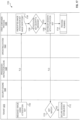
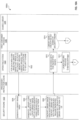
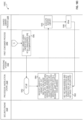
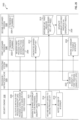
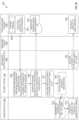
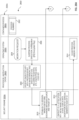
- FIGs. 1600A-1600B Although specific operations and communications are illustrated in Figs. 1600A-1600B with reference to particular entities of multitenant system 1500, this is done for illustration purposes and it should be understood that various other configurations of multitenant system 1500 are possible, based on particular implementations and needs, and that instructions and/or operations may be combined or separated, or performed by a different entity in some embodiments and implementations.
- the tenant may select and/or prepare a code image for a remote machine, such as multitenant platform 1510.
- a tenant public key may be sent to the remote machine and passed to the remote machine's operating system to request that a particular container associated with the tenant public key be executed.
- the tenant may store the code image of the container to be executed, the tenant public key, and a timestamp.
- security engine 1530 can obtain the selected code image to be executed.
- the security engine may obtain the code image from an image registry or from tenant at 1604.
- the security engine can load and fix-up the code image.
- the security image can inject an attestation key into the code image for subsequent image attestation, for example, by the tenant to initiate the code image.
- the attestation key may be generated at the multitenant platform 1510.
- an attestation key could be generated by security engine 1530, key management hardware 1532, or any other suitable component of multitenant platform 1510 and provided to security engine 1530.
- an image hash can be generated for the fixed up code image.
- any suitable one-way hash function may be used to generate the image hash including, but not necessarily limited to, Secure Hash Algorithm (e.g., SHA-3, SHA-2, etc.) or Message Digest (e.g., MD4, MD5).
- a message authentication code may be generated for the code image using the attestation key.
- the MAC can also be generated using any suitable one-way hash function (e.g., SHA1-3, MD4-5, etc.).
- the attestation key and timestamp are used to generate MAC on the updated image.
- the attestation key is encrypted with tenant public key, and a digital signature is generated on the encrypted attestation key using the security engine's private key (e.g., processor key or other private key of security engine).
- the MAC, the encrypted attestation key, and the signature by the security engine are sent to tenant 1570. This scheme is used to send attestation key and image MAC to the tenant and ensure that it binds to the security engine.
- Security engine 1530 can also use the code key to encrypt the image hash and generate an encrypted image hash. This can bind the image hash, which represents the plaintext code image, to the key (i.e., the code key) that was used to encrypt that code image in memory.
- the image hash may be calculated cache line-by-cache line as each subsequent cache line comprising the image is successively encrypted by the security image (e.g.
- the encrypted image is loaded into the allocated memory to be executed as process 1540, as indicated at 1620.
- the encrypted image hash, the attestation key and an entrypoint into the code image is also loaded in memory to enable execution of the process.
- control is passed back to the operating system to manage the timing and allocation of hardware resources for executing the stored encrypted code image.
- security engine 1530 can use a processor key to encrypt the code key that was used to encrypt the code image stored in memory and that was also used to encrypt the image hash of the unencrypted code image. Both the encrypted key and the encrypted image hash can be provided to the operating system 1522 as control is passed back to the operating system to initiate execution of the stored encrypted code image. At 1622, the operating system can store the encrypted key and the encrypted image hash (and possibly the image hash that has not been encrypted).
- tenant 1570 may communicate with first container process 1540 on the multitenant platform 1500 and send a code image or a message identifying the known code image (e.g., name, version, and/or any other information identifying a particular code image corresponding to the container process that the tenant wants to access.
- the attestation key may have been generated by security engine 1530 as described at 1612 and injected when the image was loaded by the security engine at 1620.
- the attestation key may also be sent to the multitenant platform.
- First container process 1540 may receive the message or code image from tenant 1570 via the TLS channel.
- the encrypted code image, the attestation key (which was injected into the code image before it was encrypted), and the image entrypoint are obtained.
- the secure session can be established between the platform 1510 and tenant 1570.
- the attestation process 1536 may send the attestation key to tenant 1570. If the received attestation key matches the attestation key previously stored by tenant 1570 (e.g., see 1614), then a secure session is established at 1712 between tenant 1570 and the container process that is running the code image at 1714. As the process is running at 1714, the code image can execute securely as the code and data are cryptographically bound to linear addresses and the code key and data key, respectively.
- the attestation key could be a public key certificate signed by security engine 1530, where a private key remains secret to the encrypted image.
- the security engine's digital signature may be used to establish a TLS session with the secure process image's public key.
- the certificate may also include a hash of a dynamic linker and application binaries.
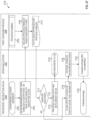
- Figs. 18A-18C illustrate example flow diagrams 1800A-1800C of initialization of shared libraries used by container processes and a container process calling a shared library according to an embodiment.
- One or more operations of flow diagrams 1800A-1800C may be executed by hardware, firmware, and/or software of a multitenant platform, such as multitenant platform 1510.
- a security engine e.g., 1530
- a processor e.g., 1520
- an instruction cache such as iCache (e.g., 1580)
- an operating system e.g., 1522
- container process e.g., 1540
- a library process e.g., 1544
- the library key that was used to encrypt a particular library code image is different than the code keys (also referred to as "container code keys" or process key) used to encrypt and decrypt the code of the container processes that call that particular library.
- code keys also referred to as "container code keys” or process key
- a container code key used to encrypt and decrypt a particular container code image that invokes a shared library is distinct from a library key that is used to encrypt and decrypt that particular library code image.
- flow diagram 1800A-1800C will now be described. It should be noted that the flow can be applied to multiple libraries that may be called by a container process, such as first container process 1540. For simplicity, however, flow diagram 1800A-1800C is usually described with reference to a single library. In addition, for simplification, the initialization of a container application or code image is not described as it has been previously described herein. It should be noted that the initialization of an application (or container) code image may be occurring concurrently with the initialization of the library images.
- the security engine may ensure that the library being used is the correct image by verifying the digital signature from the publisher (e.g., developer, company, etc.) of a library image. This may be particularly useful in scenarios when a patch update is made to a shared library and is signed by the publisher of the update.
- a digital signature of the library image can also be provided to security engine 1530.
- a determination is made as to whether the digital signature received from operating system 1522 matches digital signatures of the trusted publisher by security engine 1530 for the received library image. If the signature does not match, then an error may be returned.
- security engine 1530 can use the library key to encrypt the library image hash and generate an encrypted library image hash. This can bind the library image hash, which represents the library image, to the key (i.e., the library key) that was used to encrypt that library image in memory.
- security engine 1530 can use a processor key to encrypt the library key that was used to encrypt the library image stored in memory and that was also used to encrypt the library image hash of the unencrypted library image.
- Both the encrypted library key and the encrypted library image hash can be provided to the operating system 1522 as control is passed back to the operating system to manage execution of a container code image that calls the shared library code image and loads the physical pages of the library into the linear address space of the container code process using page table mappings.
- the encrypted library key and library image hash may be provided as a key handle, which may be generated by encrypting the encrypted library key and the library image hash together.
- the operating system 1522 can store the encrypted library key and the encrypted library image hash (and possibly the library image hash that has not been encrypted).
- the library name and encrypted library key which may be signed by the security engine, are provided to (or stored for) the container process (e.g., 1540) that calls the library.
- the encrypted container code key can be decrypted with the processor key.
- processor 1520 can flush instruction cache 1580 of any currently stored instructions.
- the logic (e.g., control circuitry 1582) of instruction cache 1580 can be set or programmed to use the container code key to decrypt the encrypted container code image to obtain decrypted container code (or instructions) that can be executed in the processor pipeline.
- data cache 1586 may also be flushed and its logic (e.g., control circuitry 1588) may also be set to use the data key associated with the process instantiated by executing the encrypted container code image.
- instruction cache 1580 begins decrypting the encrypted container code image at its entrypoint and instantiates first container process 1540.
- the library image may be verified.
- the library image hash from the key handle may be read, along with the corresponding writable data hash computed at 1830. If the key handle is encrypted, then it may be decrypted so that the library image hash can be read. A lookup may be performed in a trusted library hash list. If the library image hash or the writable data hash is not found, then the library code image is not run and an error may be returned or the program may be allowed to crash.
- the VerifyHash instruction 1624 may be used to verify the expected image hash corresponds to an encrypted library key where the library key was used to encrypt the hash for the library image.
- the digital signatures of the publishers of the library images or applications may be used for the verification. If a digital signature of a library image (or application) matches the hash of the initial values of writable data sections, then the library image (or application) is verified. Otherwise, an error may be returned.
- process 1540 can identify which library code image is to be loaded and can copy verified encrypted library keys to a virtual table (vtable) for the identified library code image, which indicates that the identified library code image is trusted.
- vtable virtual table
- the shared library may be called using a new instruction (e.g., KCall) that passes in the memory address (e.g., the linear address of the memory location of the encrypted library image and/or the logical base address of where the library is loaded) and the encrypted library key.
- a new instruction e.g., KCall
- the memory address e.g., the linear address of the memory location of the encrypted library image and/or the logical base address of where the library is loaded
- control passes to processor 1520 at 1842.
- the encrypted library key passed in the instruction at 1840 can be decrypted with the processor key.
- a return address and the address of the caller's encrypted code key e.g., address of encrypted code key for first container process 1540 or the encrypted code key itself may be stored on the call stack
- the code key for the shared library can be stored in a register and the instruction pointer can jump to the supplied memory address for the loaded library code image.
- All data accesses use the current, per-process data key for encrypting and decrypting data as the data is stored and retrieved, respectively.
- data associated with process A is stored as encrypted data 1912 and is encrypted using a data key generated (or derived) for process A.
- Data associated with process B is stored as encrypted data 1922 and is encrypted using a data key generated (or derived) for process B.
- constant data denoted as ".rodata” contains read-only global allocations that are each initialized with values from the program binary
- uninitialized data denoted as ".bss" contains global allocations zeroed out when the program starts.
- each process also contains other code and data than what is illustrated in Fig. 19 .
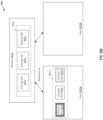
- Fig. 20 is a block diagram of a possible memory layout 2000 for data and code in a scenario in which two container processes C and D call shared library Y.
- Library code and global variables are shared between the two processes C and D.
- Memory allocated for the two container processes includes a first linear space 2010 for process C and a second linear space 2020 for process D.
- Library Y 2030 is called by both processes and both the code and global variables associated with library Y are shared.
- Code and global variables associated with library Y are stored at the physical level as encrypted code and data 2032 and are encrypted and decrypted using a library code/data key that was generated (or derived) for library Y.
- process C's encrypted data 2012 is not shared with process D and may only be mapped into process C linear space 2010, as indicated by.data 2015, .bss 2016, heap 2017, and stack 2018.
- Process D's encrypted data 2022 is not shared with process C and may only be mapped into process D linear space 2020, as indicated by .data 2025, .bss 2026, heap 2027, and stack 2028.
- both code and data (i.e., global variables) of library Y are shared by process C and process D.
- Library Y's encrypted code 2032 may be shared by process C and process D as indicated by .text (code) 2033A and 2033B, and the same copy of global variables may be shared by process C and process D as indicated by .rodata 2034A and 2034B.
- data accesses to .rodata global allocations e.g., those using an RIP- (instruction pointer register) relative accesses with read-only permissions in page tables
- RIP- instruction pointer register
- An alternative way of indicating to the processor when the library-specific code/rodata key should be used for data accesses is by indicating the range of the .rodata section to the processor, e.g. in registers that are initialized from a range specification stored in the key handle for the library.
- the compiler can move it, for example, to .data to support correct functioning.
- page permissions are under operating system control and could potentially cause the wrong key to be used in this case, they would still be unable to access and/or manipulate the data using this approach.
- Multitenant platform 1510 includes a secure user interrupt capability.
- Multitenant platform 1510 illustrates first container process 1540 as running application 1542 and second container process 1550 running application 1552. For simplicity, libraries are not illustrated and the crypto caches 1580 and 1586 are not shown.
- a user interrupt module 2320 is shown as part of security engine 1530.
- first container process 1540 is shown as the called process (or receiver), and second container process 1550 is shown as the calling process (or sender). Accordingly, as the called process, first container process 1540 includes a user interrupt (UI) handler 2342 and a unique process identifier 2344.
- UI user interrupt
- second container process 1550 includes a user interrupt (UI) handler 2352 and a user interrupt target table (UITT) 2354.
- UI user interrupt
- UITT user interrupt target table
- the code images of first container process 1540 and second container process 1550 may include secure handlers 2340 and 2350, respectively, for handling asynchronous interrupts as will be further described herein.
- an embodiment of a user-interrupt capability allows delivery of interrupts directly to user space. It enables direct communication between two processes (e.g., first container process 1540 and second container process 1550). It also allows direct communication between a device and a process without requiring. These direct communications do not require intervention by an operating system, such as host operating system 1522.
- the operating system may provide some initial support to set up the user interrupts.
- the user-interrupt capability may be initialized using a user interrupt module 2320, which may be configured as part of security engine 1530.
- FIG. 23 An example general flow of user interrupts in multitenant platform 1510 is illustrated in Fig. 23 .
- per process code and data keys and library keys, if any
- IPC inter-process communication
- the secure processor Upon receiving the IPC interrupt registration request, at 2303, the secure processor requests key management hardware 1532 to generate a shared interrupt key to be used between the communicating containers processes (e.g., 1540 and 1550).
- Key management hardware 1532 sends the interrupt key (or a key handle for the interrupt key) to security engine 1530.
- the security engine encrypts the interrupt key with the hardware key to generate an encrypted interrupt key.
- security engine 1530 shares the encrypted interrupt key with the IPC interrupt receiver (e.g., first container process 1540).
- Security engine 1530 allocates and initializes a unique process interrupt descriptor (UPID) in memory for the interrupt receiver (e.g., first container process 1540).
- UPID unique process interrupt descriptor
- the encrypted interrupt key may be stored in the UPID in bit locations that are currently reserved and/or ignored during user-interrupt notification processing.
- Security engine 1530 may also populate user-interrupt related registers, such as model specific registers (MSRs). In one example, the following MSRs may be populated: IA32_UINTR_HANDLER, IA32_UINTR_STACKADJUST, and IA32_UINTR_MISC, etc.
- MSRs model specific registers
- the security engine encrypts the UITT entry with the shared interrupt key (or potentially with the hardware key) and returns a UITT entry index, an interrupt identifier such as an interrupt number that distinguishes an interrupt the second process may initiate from other interrupts the second process initiates, information about the receiver process (e.g., first container process 1540), etc. to the sender via the initially set communication channel at 2301B.
- a UITT entry in a UITT table may have a format and information that is the same or similar to the following: Bit Positions Name Description 0 Valid Bit If this bit is set, there is a notification outstanding for one or more user interrupts in PIR.
- the sender can now generate an IPC interrupt request by using an interrupt instruction, such as SENDUIPI(UITT_INDEX).
- Processor 1520 can verify that the UITT entry is valid and can then located the receiver's UPID based on its linear address, which is stored in the UITT entry.
- Processor 1520 can then invoke the UI handler of the receiver and the receiver and the sender can begin inter-process communication.
- the shared interrupt key may be used for communications between the receiver and sender while the inter-process communication is established.
- the shared interrupt key may be used to encrypt and decrypt messages or other data that is shared between the processes.
- Fig. 24 is a block diagram illustrating a selected portion of information used during a user interrupt.
- the processor can add an entry 2430 to a sender user interrupt target table (UITT) 2410 to provide information needed by the interrupt sender to successfully issue an interrupt to establish inter-process communication with a particular container process.
- the process can use a UITT address 2402 to store the UITT entry 2430 at the appropriate memory location.
- the UITT entry 2430 can include the linear address of a user process interrupt descriptor (UPID) 2436 of the interrupt receiver, a shared interrupt key 2434 (or a key handle for the shared interrupt key) encrypted by a hardware key, and a user vector 2432.
- User vector 2432 can identify the sender and include a memory location of the sender's interrupt handler 2352.
- the receiver's UPID 2436 can be stored in post interrupt requests (PIR) 2440.
- PIR post interrupt requests
- first container process 1540 is running on multitenant platform 1510.
- second container process 1550 is running on multitenant platform 1510.
- Container processes 1540 and 1550 may be configured with per-process keys using cryptographic computing as previously described herein.
- the processor can pull the linear address of the receiver's UPID from the UITT entry and use the linear address to read the receiver's UPID.
- the information in the UPID indicates which interrupt to invoke, which process is receiving the interrupt, and which code to execute.
- first container process 1540 invokes its own UI handler (e.g., 2342) to handle the interrupt. Accordingly, the interrupt is accomplished securely without involving privileged software (e.g., operating system interrupt handler). Instead, the receiver container process executes its own UI handler. Additionally, if the first and second container processes share data, the data can be encrypted and decrypted using the shared interrupt key which is concealed from software other than the first and second container processes.
- one or more operations may be performed by a hardware device (e.g., 2601), a security engine (e.g., 1530), a processor (e.g., 1520) including an instruction cache such as iCache (e.g., 1580), and a container process (e.g., 1540).
- a hardware device e.g., 2601
- a security engine e.g., 1530
- a processor e.g., 1520
- an instruction cache such as iCache
- container process e.g., 1540
- first container process 1540 is running on multitenant platform 1510.
- First container processes 1540 may be configured with per-process keys using cryptographic computing as previously described herein.
- first container process 1540 registers with processor 1520 as an interrupt receiver for device interrupt from hardware device 2601. This registration is handled via security engine 1530, as first container process 1540 sends a registration request to the security engine.
- the security engine allocates and initializes a per process unique process interrupt descriptor (UPID) (e.g., 2344) in memory for first container process 1540.
- UPID per process unique process interrupt descriptor
- security engine 1530 can also program user-interrupt related registers (e.g., MSRs) and per-process user interrupt handler (e.g., 2342) for first container process 1540.
- security engine 1530 can generate a process-device shared interrupt key for first container process 1540 and hardware device 2601, for example, via key management hardware (e.g., 1532). Security engine 1530 can encrypt the process-device shared interrupt key with the hardware key (e.g., processor key). At 2410, the encrypted process-device shared interrupt key can be passed to first container process 1540.
- key management hardware e.g. 1532
- Security engine 1530 can encrypt the process-device shared interrupt key with the hardware key (e.g., processor key).
- the encrypted process-device shared interrupt key can be passed to first container process 1540.
- security engine 1530 notifies hardware device 2601 of the interrupt registration.
- the hardware device 2601 can register itself as an interrupt sender for the device interrupt.
- the security engine can return a UITT entry index, an interrupt number, and information about first container process 1540 to hardware device 2601.
- the use of the shared interrupt key which is encrypted by the hardware key (or is a unique key identifier that requires encryption by the hardware key to derive the interrupt key), prevents privileged software, such as host operating system 1522, from accessing the shared data or understanding the shared data if it is accessed.
- first container process 1540 is running on multitenant platform 1510.
- First container process 1540 may be configured with per-process keys using cryptographic computing as previously described herein.
- control passes to first container process 1540 and at 2708, and a secure handler (e.g., 2340) can run at an entry point of the currently executing process.
- This secure handler may be provided within the container code image associated with first container process 1540. In at least one embodiment, this secure handler can be invoked as a user-level interrupt.
- the secure handler can save any state associated with the container code image, such as being used by first container process 1540 and any other registers or data that is sensitive or needed by the first container process.
- first container process 1540 can encrypt the state information and save it to memory (e.g., to stack) using an insecure instruction.
- processor 1520 can flush any secrets (e.g., caches, etc.) of the first container process 1540.
- processor 1520 can clear instruction cache 1580 of any currently stored instructions. If derived keys are used and each cache line has a tag (e.g., a unique key identifier), then flushing the crypto cache can be achieved by merely switching, modifying, or otherwise obscuring the cache tags.
- the logic (e.g., control circuitry 1582) of instruction cache 1580 that is programmed with the code key associated with first container process 1540 may be cleared so that operating system 1522 is unable to decrypt code from the container image of first container process 1540.
- data cache 1586 may also be flushed and its logic (e.g., control circuitry 1588) that is programmed with the data key associated with the first container process may also be cleared.
- processor 1520 can return control to the operating system 1522 to handle the asynchronous event without exposing any secrets of the first container process 1540 to the operating system.
- the operating system is kept outside the trusted computing base.
- Figs. 28A-28B illustrate an example flow diagram 2800A-2800B of operations associated with a container migration process in a multitenancy environment according to an embodiment.
- one or more sets of operations corresponds to the activities of flow diagram 2800A-2800B.
- Fig. 28A illustrates example operations and control and data flow on a source node 2700A from which a container code image is to be migrated.
- Fig. 28B illustrates example operations and control and data flow that may occur on a target node 2820B to which the container code image is to be migrated.
- Source node 2820A and target node 2820B represent multitenant platform architectures, such as those shown and described herein (e.g., 1510, 1100).
- Operating systems 2850A and 2850B may be configured in the same or similar manner as other operating systems disclosed herein (e.g., 1522) and generally may be configured to run in a multitenant platform.
- Container process 2860A is an example process instantiated on source node 2820A from the execution of a container code image to be migrated to target node 2820B.
- Container process 2860B is an example process instantiated on target node 2820B after the container code image on the source node is migrated to the target node.
- security engines 2830A and 2830B may be configured to perform secure migration operations as further described herein.
- a secure migration agent may be configured in the source node and the target node as separate entities from their corresponding security engines 2830A and 2830B.
- a secure migration agent may be configured as part of processor 2840A but distinct from security engine 2830A, and a secure migration agent may be configured as part of processor 2840B but distinct from security engine 2830B.
- process keys that include a data key and a code key have been generated for (or can be derived from unique key identifiers generated for) container process 2860A.
- the process keys may be generated as previously described herein for example, with reference to Figs. 16A-16B .
- the code key is used to encrypt and decrypt the code of the code image corresponding to container process 2860B.
- the data key is used the encrypt and decrypt data associated with container process 2860A.
- the container migration process includes three main operations.
- source node 2820A saves the states of the running process (e.g., container process 2860A), which is encrypted with a process key (a code key) for the running process.
- source node 2820A and target node 2820B authenticate each other and exchange a migration key as they establish a secure TLS session.
- container states are transferred to the target node 2820B over the established TLS connection.
- Target node 2820B performs the initialization process as describe with reference to Figs. 16A-16B , for example, to load and restore the running states of the container and resume execution on the target node.
- the security engines (or separate migration agents) on source node 2820A and target node 2820B can authenticate each other using their public key certificates and establish a TLS session.
- the source node and target node can exchange a migration key (Km) as the TLS session is established for communication.
- Km migration key
- CC with diffusion may be referred to as cryptographic computing (CC) with diffusion.
- EBC Electronic codebook
- XEX xor-encrypt-xor
- XTS ciphertext stealing
- CC with diffusion may mitigate counter mode vulnerabilities such as the one described above or others described herein. For example, cross-allocation replays on the same address are mitigated by CC with diffusion.
- CC with diffusion may support authenticated security contexts coming from an encoded pointer at the allocation granularity. Further, CC with diffusion may protect at a finer granularity than the key domain, which is the granularity of the allocation.
- Fig. 29 illustrates a simplified block diagram of a virtual address encryption technique 380 in accordance with certain embodiments.
- the virtual address 390 is cryptographically encoded to provide cryptographic isolation among data objects in memory. With this, embodiments may provide cryptographic assurance that an attacker's virtual address may collide with a victim's virtual address with only a negligible probability.
- the virtual address 390 includes a number of zero bits 391, upper address bits 392, lower address bits 393, and an offset 394.
- the upper address bits 392 are combined with non-canonical bits %115 and provided as plaintext input to a counter mode cipher 2930, with the lower address bits 393 of the virtual address 390 and a size field 2920 being provided as tweak inputs to the cipher 2930.
- the cipher 2930 may be a 32-bit tweakable block-cipher, such as for example, the PRINCE cipher, Simon cipher, or K-cipher as disclosed in U.S. Patent Application Publication No. US2020/01455187 .
- the size field 2920 may indicate a memory allocation size.
- the ciphertext produced by the cipher 2930 is combined with the lower address bits 393 of the virtual address 390 and the size field 2920 as shown to construct the encrypted address 2940.
- each memory allocation is associated with a unique bounding box, the size of which is a power of two. This is the smallest memory region described by a binary prefix which contains the allocation. This bounding box which is unique per allocation I used for producing a cryptographic secret, which is present in the pointer encoding.
- the fixed address bits 3006 and power size (PS) bits 3002 may be used as tweaks to encrypt the bits from 57 to 26.
- the adversary's pointer will have only a few lower order bits in the fixed address bits 3006 differ from the target victim's allocation.
- the adversary must do following two things: (1) change Fixed address bits to match with corresponding victim's bits; and (2) manipulate the encrypted 32-bits so that the decrypted 32-bit (bits 57-26) will match with the corresponding bits in the victim's pointer. To do this, the adversary would need to break the pointer encryption algorithm.
- Fig. 31 illustrates example memory allocations for a victim and adversary in accordance with certain embodiments.
- each data object may be encrypted in the counter mode, with the counter value being tweaked by the encrypted virtual address of the corresponding allocation.
- an x-byte (2 k -1 ⁇ x ⁇ 2 k ) allocation 3115 to a victim's pointer may be bounded by the 2k bytes bounding box 3110 as shown in Fig. 31 .
- the victim can generate a victim-specific CC keystream and can perform read/write operations anywhere within the bounding box 3110.
- an adversary's y -byte (2 k ⁇ y ⁇ 2 k +1) allocation 3125 for its pointer A may be bounded by the 2k+1 bytes bounding box 3120, which overlaps the victim's bounding box 3110 as shown.
- the adversary can generate an adversary-specific keystream and perform read/write operations in the entire bounding box 3120, which overlaps the victim's bounding box 3110 as shown.
- the adversary may accordingly perform read/write operations inside the victim's bounding box 3110.
- the adversary may access the victim allocation's data 3115 through following sequence of reads:
- an intra-process adversary may aim in extracting random uniformly distributed secrets (e.g., keys).
- an intra-process adversary may aim in extracting any data.
- an inter-process adversary may aim to extract the data of a different process.
- an adversary may be colluding with a VMM or an interposer (i.e., it may be both a software inter-process and physical adversary).
- the adversary accesses the victim with a different size field.
- the access may be treated as a DCU miss.
- PAs physical addresses
- Fig. 32 illustrates a simplified block diagram 3200 of an example diffusion technique in accordance with certain embodiments.
- the example shown includes an additional encryption stage (also denoted by "diffusion") that is performed on counter mode encrypted data with a different key (key2).
- the technique shown may protect against inter-process adversaries with overlapping bounding boxes as shown in Fig. 33 from observing victim's data updates (e.g., bit-flips).
- the technique shown may be used on both read and write operations, providing double diffusion.
- data may be doubly diffused via the read and write operations performed.
- adversarial out-of-bound accesses to extract victim's data through overlapping bounding boxes as shown in Fig. 33 may be unsuccessful, as no meaningful information can be leaked as described above. This is illustrated in the following out-of-bound access scenario.
- an adversary would perform the following reads:
- Fig. 33 illustrates a simplified block diagram 3300 of another example diffusion technique in accordance with certain embodiments.
- the example shown includes the same diffusion technique as shown in Fig. 32 and described above (i.e., data 3305 may be implemented similar to data 3205 of Fig. 32 , encryption and truncation function 3310 may be implemented similar to encryption and truncation function 3210 of Fig. 32 , XOR 3320 may be implemented similar to XOR 3220 of Fig. 32 , and diffusion 3330 may be implemented similar to diffusion 3230 of Fig. 32 ), but with an additional XOR 3340 that is performed on an output of the diffusion 3330. In this way, the technique shown may use the XEX mode of encryption.
- the first counter mode encryption stage (e.g., 3210 and 3220 of Fig. 32 , or 3310 and 3320 of Fig. 33 ) may be performed between the core and the DCU/L1 cache units.
- the core may encrypt data by XORing it with a keystream prior to storage in the DCUs/L1 cache, and may decrypt data stored in the DCUs/L1 cache by XORing the data with a keystream prior to using the data.
- the additional diffusion (e.g., diffusion 3230 of Fig. 32 or diffusion 3330 and XOR 3340 of Fig. 33 ) may be performed in any suitable location within the memory hierarchy. The following discussion considers various locations in which the diffusion may take place.
- the diffusion engine 3450 may be placed in one of the locations indicated by Options 1, 2, 3, and 4, e.g., based on the following considerations.
- the diffusion engine 3450 may perform diffusion on encrypted data as described above, e.g., with respect to diffusion 3230 of Fig. 32 or diffusion 3330 and XOR 3340 of Fig. 33 .
- the security provided by embodiments herein may stem from the use of the size field in an address (e.g., the size field 2920 of Fig. 2920 or power size field 3002 of Fig. 30 ). Even for small object allocations, if one reads with the wrong size field, the content will be double diffused. Diffusion itself can be done in any mode, even in the electronic codebook (ECB) mode. In some embodiments, diffusion is performed at the granularity of 8 bytes (i.e., 64 bits), which is a typical block length used by lightweight block ciphers such as PRINCE. For example, if we want to read 2 bytes from memory, we would first need to reverse the diffusion of an 8 byte aligned "granule" that contains the quantity we want to read.
- ECCB electronic codebook
- Fig. 37 illustrates an example technique 3700 for allowing merging to be performed inside the cache hierarchy in accordance with certain embodiments.
- Fig. $0 shows how merging metadata may be used inside the cache.
- metadata may act as instructions on how to diffuse and how to merge.
- a set associative cache is shown that includes cache line data 3703, an LRU counter 3702, and tag bits 3701.
- bit vector 3710 present (e.g., in the state of each set of a cache unit) that indicates which granules from the cache line data 3703 have been modified (e.g., are "relevant").
- the bit vector 3710 may include the same number of bits as there are bytes in the cache line data 3703. For instance, since the cache line contains 8 granules in the example shown in Fig. 37 , the bit vector 3710 is of length 8.
- the properly diffused granules are decrypted by the core 3920A and modified by the respective functions accessing them, then re-encrypted prior to being stored in the DCU of the core 3920A.
- the modified granules are indicated by granules 3912' and 3913'.
- the counter mode of encryption in CC provides the protections against coldboot and interposer in general to provide forward secrecy and write-once confidentiality.
- an interposer can observe the hamming-distances and bit-flips of data updates on the same location.
- the diffusion embodiments described with respect to Fig. 32 and 33 can protect physical interposer to observe bit-flips as well.
- Diffusion engine implementations may also take into account the presence of multiple tenants, each associated with a different key. When encrypting and decrypting data inside the cache hierarchy there is a need to efficiently access per tenant keys.
- the diffusion engine In a first option, there is an explicit key store supported by the diffusion engine (e.g., 3440). There is also data path for loading keys into the key store. The diffusion engine accesses the key store and selects the most appropriate key based on the metadata bits which are present in the physical address associated with a read or write operation. In one embodiment these metadata bits indicate the ID of the tenant. Such ID may also be referred to as "PASSID". In a variant of this embodiment, the tenant ID is not obtained from the physical address, but instead communicated to the diffusion engine via a separate data path.
- entries from units of the cache hierarchy may be flushed based on the value of a tenant ID included in a new "selective invalidation" message.
- This may involve novel sequencer logic that performs all the necessary write backs one-by-one associated with the cache lines, which become evicted, as well appropriate wiring to broadcast a selective invalidation message to all entries of a cache.
- LIM Linear In-Line Metadata
- Metadata Stored in Out-of-Band Tables and In-Page Metadata.
- a tenant may, according to one embodiment, be cryptographically isolated from another tenant, although cryptographically isolated tenants provide merely an example and not intended to be limiting with respect to the definition of a "compartment.”
- the term "cryptographic isolation” is intended to mean isolation resulting from different areas of memory (different compartments or tenants) being encrypted with different keys and/or tweaks. Isolated memory compartments/tenants can be composed of data structures and/or code of virtual machines (VMs), applications, functions, or threads. In multi-tenant environments, cryptography may be used to enforce isolation between the tenants rather than page tables or extended page tables.
- VMs virtual machines
- cryptography may be used to enforce isolation between the tenants rather than page tables or extended page tables.
- a memory allocation security check system may include memory controller circuitry; and processor circuitry coupled to the memory controller circuitry and to be coupled to a memory circuitry, the processor circuitry to: in response to a memory allocation request, perform a memory allocation operation including obtaining a memory allocation for an object in the memory circuitry, assigning first metadata to the memory allocation including at least one of bounds information for the memory allocation and a compartment identification (ID) to identify a compartment allowed to access the object, storing the object at a memory location of the memory circuitry, and storing the metadata at one of the memory location or in a table distinct from the memory location; in response to a memory operation request corresponding to a program, access the first metadata using a pointer including data to identify a location of the first metadata in the memory circuitry, wherein the first metadata is hidden from the program; and in response to a determination by the memory controller circuitry of a match between the first metadata and second metadata, perform a memory operation corresponding to the memory operation request.
- a memory allocation request including obtaining a memory allocation for an
- a non-transitory or transitory storage device or storage medium includes machine-readable instructions that, when executed by a processor circuitry, cause the processor circuitry to perform operations including: in response to a memory allocation request, performing a memory allocation operation including obtaining a memory allocation for an object in a memory circuitry, assigning first metadata to the memory allocation including at least one of bounds information for the memory allocation and a compartment identification (ID) to identify a compartment allowed to access the object, storing the object at a memory location of the memory circuitry, and storing the metadata at one of the memory location or in a table distinct from the memory location; in response to a memory operation request corresponding to a program, accessing the first metadata using a pointer including data to identify a location of the first metadata in the memory circuitry, wherein the first metadata is hidden from the program; and in response to a determination of a match between the first metadata and second metadata, performing a memory operation corresponding to the memory operation request.
- a memory allocation operation including obtaining a memory allocation for an object in a
- compartment IDs as part of object metadata, whether stored in-line or in a separate metadata table, provide especially useful solutions for example in the context of browsers and Function-as-a-Service (FaaS) workloads in datacenters.
- FaaS Function-as-a-Service
- the metadata may then be hidden from software (i.e. the program) by the system processor circuitry such as by one or more cores 474/484, providing a contiguous memory when incrementing the logical address or index across the extent of the memory allocation in the slot, with the processor skipping over the metadata and adjusting the linear/virtual address accordingly.
- the midpoint of a memory allocation bounding box (corresponding to a given slot size in which an object is stored in an allocation) may, according to one embodiment, be determined by the memory controller circuitry (such as integrated memory controller logic (IMC) 472 of Fig. 4 ) using a best-fit power of two pointer encoding, or any other encoding where a midpoint of a bounding box may be designated for carrying metadata.
- the metadata may be encoded only once per memory allocation, located at the midpoint of the allocation's bounding box, and may be hidden by the processor circuitry such that the memory circuitry appears as a contiguous allocation to software using an encoded pointer.
- the metadata associated with the entire memory allocation is stored about the determined midpoint location, and may be accessed by the pointer such that it is accessible to the processor, along with the allocation it pertains to.
- the C++ New operator or C malloc function (or similar) of the memory allocator library may take the metadata size into account and adjust (increase) the memory allocation accordingly to accommodate the metadata size and any additional metadata such as the allocation's true size.
- the processor circuitry can hide the existence of the tag metadata by reliably skipping over the metadata and adding the size of the metadata to memory accesses linear/virtual addresses past the midpoint based on pointer encoding when accessing memory circuitry via the pointer. Meanwhile, the processor will be able to directly determine the location of the metadata inline along with the allocation based on the pointer encoding.
- a power of two encoding of the allocation size may provide a best fit bounding box (or slot) midpoint value that is always located with the memory allocation.
- multiple memory slots may overlap within a larger memory slot's power of two size, but each of the smaller memory slots will have different midpoint addresses and each of the smaller memory slot midpoint values will differ from the larger memory slot midpoint value.
- Any tag data in the metadata 4050 may be associated with a storage location (slot of the allocation being referenced by the pointer 4080.
- some systems and methods disclosed herein reduce memory overhead for storing metadata, while providing performance optimizations.
- the processor circuitry may store one tag per each memory block (16B) comprising an allocation
- some of the systems and methods disclosed herein provide a processor that can instead cache metadata, such as one including at least one of bounds and a compartment ID per allocation, making caching far more effective and reducing memory lookups, by fetching metadata from a predetermined reference location within a memory location such as cache, such as a slot, the reference location for example corresponding to the midpoint of the allocation's bounding box.
- Memory allocations (objects) may have the metadata at the same memory location (cache, cache line or slot) as the object, completely avoiding the extra memory lookups from a separate metadata tag table (aka. data corruption detection DCD) requires.
- malloc()/new may simply account for the metadata at the midpoint of the bounding box, increasing the allocation size (e.g. by one Byte, or two Bytes, or more depending on the size of the bounding box and associated metadata size), and setting the metadata at the midpoint of the memory allocation's bounding box.
- the logic (such as malloc) may then return a pointer with the same metadata along with the size of the bounding box in the size field.
- the processor circuitry When the processor is accessing the memory (such as a cache) with this encoded pointer format, the processor circuitry will look-up the metadata value from the midpoint of the allocation's bounding box and compare with the pointer metadata value, allowing memory access if there is a match, and triggering a fault or exception if there is no match. Malloc free() may then be used to reset the memory metadata, such as at least parts of the metadata.
- the processor may use bounds information in the metadata verifying the memory access is within the correct allocation bounds, for example, is within X1 Bytes (or other unit of minimum allocation size) from the left of the bounding box midpoint (LB) and X2 Bytes (or other unit of minimum allocation size) from the right of the midpoint (UB) of the bounding box, where tag, X1 and X2 are separate fields of the midpoint metadata.
- Fig. 40 is a schematic diagram of an illustrative memory circuitry/cache circuitry 471 (similar to cache 471 or 481 or to memory 432 or 434 of Fig. 4 ) to allow security checks on memory allocations along with processor circuitry (for example similar to cores 474 or 484 of Fig. 4 ), and memory controller circuitry 4020 (similar to IMC 472 or 482 of Fig. 4 ).
- processor circuitry for example similar to cores 474 or 484 of Fig. 4
- memory controller circuitry 4020 similar to IMC 472 or 482 of Fig. 4 .
- the memory circuitry/cache circuitry 471 may be apportioned into one or more power of two ( i.e., 2 0 to 2 n ) slots 4040 in which the respective midpoint address 4042 includes respective, unique, metadata 4050 that is associated with the respective memory allocations 4054 within slots 4040, in accordance with at least one embodiment described herein.
- an instruction that causes the processor circuitry (such as cores 474/484 of Fig. 4 ) to perform a memory operation causes the memory controller circuitry (such as IMC 472/482 of Fig 4 ) to access the memory circuitry/cache circuitry 471 using a pointer 4080 that includes at least data representative of the address 4082 for the memory operation and metadata 4084 associated with the respective memory allocation 4040 corresponding to memory address 4082.
- the metadata 4084 is compared to metadata 4050 stored at the midpoint address 4042 of the respective memory allocation 4040. If the pointer metadata 4084 matches the stored metadata 4050 within the memory allocation 4040, the operation at the designated memory address 4082 is permitted. If the pointer metadata 4084 fails to match the stored metadata 4050 within the memory allocation 4040, an exception is returned to the processor 470.
- comparison is not meant to be viewed in a restrictive manner, and is meant to encompass comparison of all or part of the metadata (such as tag data, compartment ID, etc.) in the pointer with metadata associated with the object for which an access control is to be implemented.
- each object 4054 is fully assigned to a given slot (i.e. one object per slot and one slot per object), in this way ensuring that the metadata 4050 at the midpoint can be easily associated with the object to which it pertains.
- Embodiments are however not so limited, and include within their scope the provisional of metadata, compartment ID and bounds information at a cache line that includes none, some, or all of the object to which the metadata pertains.
- the objects 4054 are shown in Fig. 40 once at the bottom of the figure, and represented correspondingly by double pointed arrows within the respective slots 4040 themselves.
- the object 4054 may be allocated to a slot that most tightly fits the object, given the set of available slots and objects.
- the 32B object 4054 is allocated to a 32B slot 4040, the 56B object to a 128B slot 4040, the 48B object to a 256B slot, the 24B object to a 32B slot and the 96B object to a 128B slot.
- the 48B object would have crossed an alignment boundary within two slots, it is assigned to the larger 128B slot.
- Fig. 40 shows the objects as spanning through the slots in a contiguous fashion (tightly packed), clearly, embodiments are not so limited, and include within their scope an allocation scheme of objects to respective, dedicated memory slots as long as a midpoint address of the slot is crossed by the object, where some slots may be free, especially for example in UAF scenario where a dangling pointer is involved.
- object sizes may be no smaller than half the width of a smallest slot in order for them to cross (i.e. to at least partially cover) the midpoint when assigned to a slot.
- Po2 power-of-two
- metadata 4050 may be encrypted as well.
- the memory circuitry/cache circuitry 471 may include any number and/or combination of electrical components, semiconductor devices, optical storage devices, quantum storage devices, molecular storage devices, atomic storage devices, and/or logic elements capable of storing information and/or data. All or a portion of the memory circuitry/cache circuitry 471 may include transitory memory circuitry, such as RAM, DRAM, SRAM, or similar. All or a portion of the memory circuitry/cache circuitry 471 may include non-transitory memory circuitry, such as: optical storage media; magnetic storage media; NAND memory; and similar. The memory circuitry/cache circuitry 471 may include one or more storage devices having any storage capacity.
- the midpoint address 4042 in each of the memory slots 4040 does not align with the midpoint address in other memory slots, thereby permitting the storage of metadata 4050 that is unique to the respective memory slot 4040s.
- the metadata 4050 may include any number of bits.
- the metadata 4050 may include 2 bits or more, 4-bits or more, 6-bits or more; 8-bits or more, 16-bits or more, or 32-bits or more.
- the encoded pointer 4080 includes the memory address 4082 to perform a memory operation (fetch, store, etc. ).
- the memory address 4082 may include any number of bits.
- the memory address 4082 may include: 8-bits or more; 16-bits or more, 32-bits or more; 48-bits or more; or 64-bits or more; 128-bits or more; 256-bits or more, 512-bits for more, up to 2 to the power of the linear address width for the current operating mode, e.g. the user linear address width-bits in terms of slot sizes being addressed.
- the metadata 4084 carried by the encoded pointer 4080 may include any number of bits.
- the IMC 472/482 or other logic in performing memory operations on data stored in the processor cache circuitry 471/481, compares the metadata 4084 and other relevant information such as the address 4082 and the contents of the current compartment ID register with the metadata 4050 stored on the cache line containing the requested memory address.
- Fig. 41 is a schematic diagram of an illustrative encoded pointer architecture 4100 in which the encoded pointer 4080 includes a multi-bit memory allocation size field 4110, a multi-bit optional metadata field 4120 (such as tag data field), a multi-bit address field 4130, and a multi-bit pointer arithmetic field 4140.
- the encoded pointer 4080 may include any size pointer, such as, for example, a 64-bit pointer, or a 128-bit pointer, or a pointer that is larger than 128-bits.
- the encoded pointer in one embodiment, may include a x86 architecture pointer.
- the encoded pointer 4080 may include a greater ( e.g., 128-bits), or lesser ( e.g., 16-bits, 32-bits) number of bits.
- the number of bits used in the address field 4130 may be based on the size of the respective memory allocation 4040 as expressed in the size field 4110. For example, in general, a larger memory allocation (2 0 ) may require a lesser number of address bits than a smaller memory allocation (2 1 to 2 n ).
- the address field 4130 may include any number of bits, although, it is noted that, in the shown embodiment of Fig. 40 , the size number in fact does not correspond to the Po2 slot size.
- the address field 4130 may accommodate memory addresses having: 8-bits or more; 16-bits or more, 32-bits or more; 48-bits or more; 64-bits or more; 128-bits or more.
- the size field 4110 in combination with the information in the address field 4130, will allow the processor to find the midpoint of a given slot.
- the specific address bits in the address field 4130 are determined by the size indicated in the size field. For a Po2 scheme, where the size field includes size exponent information, as the size exponent becomes larger (for larger slots), fewer address bits are needed to identify a particular slot (since with larger slots, there will be fewer slots to identify). In such a case, more of the bits at the end of the pointer, in the pointer arithmetic field 240, can be used to range within a given slot. The latter leads to a shrinking of the address field.
- Tag data in the pointer may be avoided, for example where other mechanisms are used to ensure the right of the pointer to access an object, such as where integrity checks are used.
- integrity checks may provide a measure for use in checking the integrity of at least a portion of an object, such as data, after it is decrypted and/or decompressed. More specifically, a measure including an integrity value may first be associated with at least a portion of an object before the object is compressed and/or encrypted and stored in a slot.
- an integrity value may include an integrity check value (ICV) (e.g., a hash), a message authentication code (MAC) (e.g., the same MAC produced when the same message, secret key, and initialization vector used), a message integrity code (MIC) (e.g., the same MIC produced if the same algorithm is used), a signature (e.g., produced using a private key of a key pair), hash message authentication code/HMAC (e.g., SHA3 HMAC), and so on, or combinations thereof.
- ICV integrity check value
- MAC message authentication code
- MIC message integrity code
- signature e.g., produced using a private key of a key pair
- hash message authentication code/HMAC e.g., SHA3 HMAC
- the permissible pointer arithmetic field 4140 may include any number of bits.
- the pointer arithmetic field 4140 may include: 4-bits or more, 6-bits or more; 8-bits or more, 16-bits or more, or 32-bits or more.
- the processor circuitry 470 and/or the IMC 472/482 compares at 4150 the metadata 4084 included in the metadata field 4120, the address 4130, and/or the contents of the current compartment ID register with the metadata 4050 stored at the midpoint address 4042 of the memory allocation 4040. If the metadata 4084 included in the metadata field 4120 matches the metadata 4050 stored at the midpoint address 4042 of the memory allocation 4040, and the other metadata checks also succeed, then the processor circuitry 470 and/or the IMC 472/482 completes the requested memory operation in the memory circuitry/cache circuitry 471 at operation 270.
- the metadata 4050 may include at least one of bounds information and a compartment ID corresponding to a tenant with permission to access the object associated with the metadata. If the metadata 4084 included in the metadata field 4120 fails to match the metadata 4050 stored at the midpoint address 4042 of the memory allocation 4040, the IMC 472/482 reports an error, fault, or exception 4160 to the processor circuitry 470.
- allocation bounds metadata may be included in metadata 4050. In such embodiments, the IMC 472/482 may also check whether the memory access is within the specified bounds.
- the bounds information may include coordinates of a memory allocation - e.g., offset and array size, or actual allocation size to the left and allocation size to the right of a bounding box midpoint.
- slot sizes of 128 to 256 Bytes include tag data, LB and UB on both sides of and adjacent to the midpoint 4042, with 2Bytes allocated to LIM if no compartment ID is used, and 4Bytes allocated to LIM where a compartment ID is used.
- the 2Byte LIM in this case includes 8-bits of tag data straddling the midpoint, and 4 bits each for the LB and UB, and a total of 16 bits for the compartment ID.
- a compartment should not be permitted to update metadata for a different compartment, so the processor should first check that the previous value of the compartment ID in the stored metadata matches the value of the current compartment ID register prior to permitting an update of any of the stored metadata. Privileged software or a trusted portion of unprivileged software may be permitted to override the check for the previous value of the compartment ID.
- the metadata may thus, as suggested in the storage format of Fig. 42 , be stored such that at least some of the metadata (such as, in the shown case, the tag metadata and the compartment ID metadata) is duplicated about the slot midpoint.
- This duplicated format for metadata allows the pointer to access one side of a cache line or page boundary (referring to cases in which the midpoint coincides with a cache line or page boundary) to perform one or more checks on the metadata without the necessity to access the other side of the cache line or page boundary.
- the duplication thus allows the processor to avoid having to look up metadata in multiple cache lines or pages, especially for larger allocations.
- the metadata including the tag data if it is there, but in any event including at least one of bounds information or a compartment ID, may, according to one embodiment, be encrypted.
- only part of the metadata 4050 may be encrypted, such as only tag data when present, or only the bounds information, or other parts of the metadata.
- the bounds information allows an integrity check (where an integrity value is used as explained above) or other access control mechanisms to be performed based on the actual extent of the allocation within a slot.
- the bounds information provided to the processor allows the processor to ensure that the offset within the pointer to specify a given location in the slot is within the bounds of the object that is assigned to the slot for which the access control is to be performed.
- the bounds information is useful at least because other allocations may be overlapping the same memory range covering a number of slots.
- the bounds pointers corresponding to a slot are allowed to use only the specified range of memory designated in the bounds information.
- Bounds information is also related to the concept of access control mechanisms such as integrity checks. When integrity values are being calculated, the bounds information allow the processor to determine the extent of the objects within the memory for which the integrity values are being calculated.
- compartment identification information (compartment ID) information may be added as part of the metadata to support zero copy data sharing across cryptographically isolated compartments.
- isolation can be supported at arbitrary levels of granularity such as, for example, isolation between virtual machines, isolation between applications, isolation between functions, isolation between threads, or isolation between data structures (e.g., few Byte structures).
- Compartment IDs are useful in multitenant environments, where each tenant has access to its own private objects and where at least some tenants have the ability to delegate access to their private objects by other tenants.
- the processor may compare the compartment ID accessed in the metadata 4050 against a current compartment ID value in a dedicated register, such as one situated in the core 474b/484b, or via a general purpose register, although a dedicated register may be preferable according to some embodiments.
- Fig. 43 where, according to an embodiment, metadata corresponding to objects may be stored in tables separate from the linear memory layout (slots) shown in Fig. 42 .
- metadata tables 4300 of Fig. 43 metadata for each object is stored not in-line with the object within a memory slot, but in a dedicated metadata table, with the table format 4302 corresponding to a granularity 4304 based on an associated granularity of the object to which the stored metadata pertains.
- the granularities 4304 represented in the embodiment of Fig.
- a commonality between the LIM option of Fig. 42 and the metadata table option of Fig. 43 is that, in the metadata table option, the number of bits corresponding to each slot size or granularity can increase or decrease with the granularity.
- the storage format of the metadata may not necessarily involve duplication of information about a midpoint location within memory, contrary to the embodiment for the storage format of some of the in-line metadata as shown by way of example in Fig. 42 .
- the embodiment of Fig. 43 may lay out metadata in memory identically to the in-line metadata table, or it may use a layout that groups metadata for each slot size in a contiguous range of memory. Any type of metadata that could be stored using the in-line metadata table can alternatively be stored in the embodiment of Fig. 43 , e.g. tag, bounds, compartment ID, key ID, tweak, counter, MAC, ECC, etc.
- the in-line metadata option of Figs. 40-42 may be advantageously accessed by the processor, along with the object to which the metadata pertains, in a single memory operation rather than two separate memory operation as would be the case with a metadata table, in this way yielding better performance.
- the in-line metadata approach makes the object and the corresponding metadata available to the processor substantially simultaneously, and thus mitigates any security issues that may arise from the object and the metadata arriving at the processor at different times, especially where the processor may be subject to speculation attacks (by virtue of not having all of the needed information in order to perform access control on the object before accessing the same), and therefore.
- Any metadata that was described above for in-line storage in relation to the embodiment of Figs. 40-42 may be stored in a metadata table format as described with respect to the embodiment of Fig. 43 .
- a metadata table according to embodiments may support any arbitrary size of metadata.
- Fig. 44 by keeping metadata closer to the object to which it pertains, although not directly in-line in a cache line carrying the object.
- all metadata is then on a same page as the object to which it pertains.
- the embodiment of Fig. 44 avoids overheads associated with having metadata in a separate table, where the metadata is likely on a different page than the page storing the object, and where multiple page blocks may be needed to look up address translations for the object versus the corresponding metadata, potentially requiring multiple translation look-aside buffers (TLBs).
- TLBs translation look-aside buffers
- a "cache” may refer to cache memory as understood by a person skilled in the art, or to any quickly accessible memory element within a memory hierarchy.
- a content addressable memory (CAM) circuitry is referred to in the context of storing encrypted linear address-linear address pairs, embodiments are not limited to provision of a CAM circuitry to store the pair. Any memory circuitry that is adapted to store a lookup table of correlated information is thus within the purview of embodiments.
- CAM content addressable memory
- the operands for all arithmetic and logic operations may be contained in registers.
- the data is first copied into registers.
- a load operation copies data from main memory into a register or load buffer, for example before it is copied to cache.
- a store operation copies data from a register or store buffer into main memory, for example from a cache. Load and store buffers are referred to in this section in the above context.
- Figs. 46 and 47 provide illustrations of flows according to a first and second embodiment, respectively. Although Figs. 46 and 47 depict the flow in terms of consecutive operations, embodiments include within their scope the performance of the operations in parallel with one another to the extent feasible.
- An address generation unit in the memory access unit may implement CAM (or lookup table) for recently decoded pointers to shorten access latency to the same encoded pointers in the near future, that is, for future instructions that are to operate on data to be accessed in the processor's cache. Improvements as described in this section may, for example, be implemented in cryptographic addressing layer 110 of Fig. 1 and memory access unit 364 of Fig. 3 .
- a CAM circuitry may, for example, be implemented similarly to the supplemental hardware (HW) memory 696 of Fig. 6 .
- HW supplemental hardware
- embodiments in this section may also encompass CAM circuitry that is distinct from the processor cache, that is able to store ciphertext-plaintext pairs corresponding to a pointer address, but that may in addition, be used to store other data, such as keys or tweaks.
- Embodiments may be used in client or server CPUs or processors.
- Crypto caches are implemented in the CPU/processor, and specifically as part of the core, and the internal signals are not accessible from the outside of the processor. However, one could indirectly measure the impact of crypto caches on data read latency.
- decryption of an encoded linear address (eLA) to an unencrypted (raw) linear address (LA) may be bypassed before the core accesses data in its cache, and, and, in addition, the core may be able to start operating on the data (i.e. executing an instruction on the data) before, without, or simultaneously with the decryption.
- the core may be able to obtain ready access to cache data without waiting for the decryption of eLA to LA from the cryptographically encoded pointer by determining whether a ciphertext-plaintext pair corresponding to a prior decryption of the pointer eLA into LA (with the ciphertext corresponding to eLA, and the plaintext corresponding to the LA) exists in the CAM circuitry.
- the prior decryption may have happened when an eLA from a prior access request to the cache was decrypted by the core into LA, and stored in the CAM circuitry.
- An advantage of embodiments in this section is a performance improvement in cryptographic memory addressing by optimizing data access latency. Because the eLA to LA decryption may typically take multiple cycles, bypassing the same in order to be able to execute instructions on cache data quickly can bring significant advantages with respect to reducing the latency of memory accesses.
- the multiple cycles may be replaced by a single operation of performing a cryptographic cache table look up in the CAM circuitry in order to look for a eLA match and the corresponding eLA-LA pair stored therein.
- the CAM circuitry is to exist within the security boundary of the processor or CPU, so that unencrypted addresses can be stored therein with a decreased possibility of a security breach.
- the CAM circuitry storage of unencrypted LAs is akin to the TLB's storage of unencrypted PAs.
- the CAM circuitry may be placed on the same physical chip as the core and cache, such as the data and instruction caches.
- the security boundary may be smaller than the extent of a physical chip, as long as the CAM circuitry, core and cache exist within the same security boundary, and especially if other circuitry on the chip is not communicatively connected to the cache unless it does so through ciphertext messages.
- the core may store all decrypted eLA-LA pairs in the CAM circuitry.
- the core may select eLA-LA pairs for storage in the CAM circuitry, for example based on pointer parameters. If all decrypted eLA-LAs are stored, there would be more overriding of existing entries in the CAM circuitry to accommodate new entries as compared with a scenario where only some eLA-LA pairs are stored in the CAM circuitry.
- the core may implement an algorithm to select the eLA-LA pairs to be migrated into the CAM circuitry.
- the algorithm may, for example, select the eLA-LA pairs that are associated with an unencrypted size field in the pointer that is larger than a threshold. Larger eLA sizes would typically correlate with a larger probability of future access requests with the same eLA, as it would correlate with a larger data object being pointed to by the pointer in memory, and hence a larger probability that the pointer will be reused.
- the algorithm may select the eLA-LA pairs predictively, based on probability of future access requests by way of future instructions.
- the CAM circuitry may store eLA-LA pairs for both stack and heap accesses. According to an alternative embodiment, there may be separate CAM circuitries for stack accesses and heap accesses, respectively.
- a core may thus access the CAM circuitry to determine a correlation between the eLA in the detected pointer, and eLA CAM , which was stored in the pointer in the context of a previous pointer. Therefore, according to some embodiments, storage of the eLA-LA pair in the CAM circuitry is to outlive an instruction that led to its generation and storage. In this way, the next instruction can take advantage of the same in order to reduce access latency.
- Fig. 46 a flow diagram is shown of flow options according to some embodiments. It is noted at the outset that paths (1)-(6) in Fig. 46 , shown in broken lines, are optional paths according to a variation of the shown embodiment, and will be explained in further detail later. In addition, the flows, decisions and actions in Fig. 46 are all subject to the options and variations discussed in this section with respect to each, and are not meant to be interpreted as limiting with respect to possible embodiments in this section.
- the core may, at operation 4610, determine the LA in the pair (LA CAM ) that correlates with eLA CAM , and, at 4612, obtain a PA associated with LA CAM (PA CAM ).
- the core may obtain PA CAM for example from a TLB associated with a cache maintained by the core.
- the core may access data at the memory location corresponding to PA CAM , and operate on the data, that is, execute an instruction on the data.
- the core may cause the data accessed at 4614 to be retired to main memory, or to otherwise be discarded from the core's execution pipeline, after completion of execution of the instruction.
- the core may, at operation 4618 decrypt the eLA from the pointer, and either simultaneously with operation 4618 or thereafter, store the eLA-LA pair resulting from the decryption into the CAM circuitry.
- the core may, at operation 4622, obtain a PA associated the LA obtained from the decryption.
- the core may obtain the PA for example from a TLB associated with a cache maintained by the core.
- the core may access data at the memory location corresponding to PA, and operate on the data, that is, execute an instruction on the data.
- the core may cause the data accessed at 4624 to be retired to main memory, or to otherwise be discarded from the core's execution pipeline, after completion of execution of the instruction.
- the core may also, using flow path (1), decrypt, at 4618 the pointer eLA to obtain LA, store, at 4620, the thus obtained eLA-LA pair in CAM circuitry.
- the core may also obtain, at 4622, the PA from the LA obtained from decryption.
- the core may, at any time during operation 4618, the decryption operation, and/or operation 4622, the operation of obtaining the PA, by way of flow paths (2) and (3) respectively, determine at 4608 whether there exists an eLA-eLA CAM match.
- the core may continue at paths (5)/(6), respectively, with obtaining the PA from LA at 4622 and accessing the data at the memory location of the PA, and operating on the data at 4624, and then retiring the data or removing the data from the core pipelines at 4616 at the conclusion of the execution of the instruction.
- the core can start directly accessing the load and store buffer data paths without waiting for a PA, and, where the eLA, as opposed to the LA, is used to directly access the cache, the core may further bypass waiting for a eLA to LA decryption as noted above before starting to execute an instruction on the returned data.
- the cache itself may be used to obtain a translation of the eLA to the PA in parallel to the core accessing the cache data directly using the eLA.
- the cache would be able to immediately return data to the core in order for the core to start executing an instruction on the returned data while, in parallel, the core would be, in parallel, going through regular eLA-LA decryption operation and the regular
- the core may stop the speculation that the returned data is the intended data, and may discard the returned data from its execution pipelines.
- a return of the PA from a TLB process, as well as a parallel eLA based cache access, allows the core to confirm that the data being operated on is the intended data, and can allow the core to proceed to higher instructions and confirm the data.
- the core may perform a "pipeline nuke" to revert all of its registers and all changes in its pipeline related to the returned data as if that data had never been returned.
- An eLA-addressable cache therefore provides the possibility of the core memory access operations proceeding on a speculative basis until a verification is made regarding whether the PA of the returned data corresponds to the PA of the intended data.
- a pipeline nuking operation may be performed as long as the verification operation happens prior to the returned data being committee back to the main memory. As long as the returned data is within the processor pipeline, the core can always unwind or reverse the operation on the data in response to a non-match resulting from the verification operation.
- the core may store in its registers a value of eLA, as the eLA may need to be carried through to decrypt the data returned by the cache and referenced by the eLA, where the eLA was cryptographically bound to the data.
- the core would need to know the eLA content or value in order to properly decrypt and diffuse the dada that comes in from the main memory or a higher level cache in the hierarchy.
- Fig. 47 a flow diagram is shown of flow options according to some embodiments.
- the flows, decisions and actions in Fig. 47 are all subject to the options and variations discussed in this section with respect to each, and are not meant to be interpreted as limiting with respect to possible embodiments in this section.
- the core may detect a cryptographically encoded pointer.
- the core may determine an eLA associated with the pointer.
- the core may access data at a memory location corresponding to the eLA (and in this way obtain the "returned data"), and may operate on the returned data.
- the core may determine whether the returned data corresponds to intended data (verification operation).
- the verification operation may entail a comparison between the PA obtained from a translation of the LA corresponding to the pointer eLA, and the PA corresponding to the returned data.
- the core may cause the returned data accessed at 4706 to be retired to main memory, or to otherwise be discarded from the core's execution pipeline, after completion of execution of the instruction.
- the core may, at operation 4710, nuke the pipeline(s), that is, the core may perform a "pipeline nuke” to revert all of its registers and all changes in its pipeline related to the returned data as if that data had never been returned, and halt execution of the instruction. Thereafter, at operation 4730, the core may issue an access request to the main memory to obtain the intended data from the memory.
- optimizations may be provided as set forth below.
- Memory data units also known as caches
- caches are annotated.
- Technical problems arise in architectures where memories are organized in a hierarchical fashion, where the cache, such as, for example, L1 cache, represents the part of the memory hierarchy that is fastest to access.
- Some current computing architectures include separate computing cores and various associated caches, where a same cache may be accessible by separate cores.
- the memory hierarchy may include progressively larger and or more difficult to access parts, ending in the main memory.
- a memory hierarchy architecture is useful at least because of scalability and use.
- a technical problem being addressed herein is how to ensure that changes happening in a dedicated cache associated with a core become known and propagate seamlessly to the other cores.
- a core may be changing memory content (i.e. data), while another core can be changing another version of the memory content in another cache line.
- one core overrides the change made by the other core, there is no consistency or coherency between the cache lines, and a conflict arises as to memory content stored among those various caches. The latter may happen where some data/memory content change in one cache may not propagate seamlessly to other caches.
- MESI MESI
- a communication may involve snooping, and in terms of hardware implementation, the cores may have snooping agents, which, in one option, may intercept read requests or write requests by other cores, determine if the other core is attempting to read memory content which the core maintaining the cache that is being accessed has modified, ensure that the memory content that has been modified propagates back to the main memory, and cause a response to be sent to stop the read request.
- the core that modified the cache memory content may write back the modified content into main memory, and the other core will issue another read request again to access the most up-to-date content.
- a "write-back" as used in this section refers to a procedure by which a computing element, such as a core, updates in main memory only those memory contents where, in the update operation, the memory content which exists in the main memory is replaced by the memory content of the local copy of the core performing the write back.
- a write back process optionally, if the security metadata is tied with additional encryption, the memory content that is being written back by a core maybe reverse diffused to the main memory, which means that it may be encrypted when written back.
- the security metadata may, for example, be used as a key selector or as a tweak.
- Selectors for specific keys may be used for further processing of the content (such as through diffusion), which selectors may be used in the form of a few bits in the physical address associated with a cache line to tell you how to diffuse certain content (such as certain bytes) within the cache
- Some embodiments in this section pertain to different approaches that may be taken with respect to an access request (e.g. a read request or a write request) on memory content while using a security metadata that does not match the security metadata used to annotate the memory content within a cache line, a situation we refer to herein as a "conflict” or “mismatch,” that may be detected by the core maintaining the cache for which the cache line is to be accessed.
- a "conflict” or “mismatch” as used herein are to be distinguished from a "violation,” which refers to a "conflict” or “mismatch” resulting from a malicious attack, rather than for example from a buggy software, or from attempts by a prefetcher to access the data with the wrong security metadata.
- Embodiments encompass cache coherency in the context of read and write accesses by cores that are local to a given device, and/or by cores that are remote using security metadata.
- a remote access refers to an access by a remote device, that is, a device that is distinct from the device housing the local core and its local cache, for example a device communicatively connected to the device housing the local core and its local cache by way of a cloud network, such as the one shown in Fig. 10 .
- a simpler embodiment is for the core maintaining the cache sought to be accessed (hereinafter, the "cache to be accessed”) may treat the security metadata as part a physical address associated with the access request from a core attempting to access the cache (hereinafter the "accessing core”) , and do nothing, that is, treat the read/write request similar to one including a physical address not matching that of the memory content sought to be accessed.
- an embodiment pertaining to an aggressive approach may include a core, in response to detection of a conflict, for example after a read or write operation, causing an update to the main memory and invalidating the memory content sought to be accessed within the cache to be accessed.
- An alternative approach may involve the use of a snooping agent of a core.
- the snooping agent may detect another core attempting an access using a different security metadata than the one associated with a given memory content in a cache to be accessed of a core with the snooping agent, and may then interrupt the execution of the main program and invoke an exception with an exception handler, which will handle the conflict.
- a conflict may be treated as an integrity violation.
- a core may raise an exception and/or the exception handler may handle the conflict differently depending on the number of exceptions invoked.
- a core may invoke an exception handler in the event that the number of detected conflicts is equal to or larger than a given threshold.
- sets of granules of cache lines may be annotated with different security metadata with respect to one another.
- core may annotate sets of 8 bytes, or sets of a given number of bits, or a given number of bits of a cache line in its cache to be accessed with a first security metadata, and another given number of bits with a second security metadata.
- a core maintaining the cache line may determine that the other core operates with different security metadata for the memory content it seeks to access in the same cache line of the cache to be accessed, not react to the access of the cache line by the other core, and act as if the other core were accessing memory content from another cache line, that is, allow the access by the other core to the different sets of granules of the cache line as if it were an access to a different cache line with its own security policy.
- the core maintaining the cache to be accessed may determine that the other core operates with different security metadata to access data in the cache line of the cache to be accessed for example by virtue of a communication to a core regarding the different security metadata to be used by the other core.
- the latter communication may correspond to an update or revision to the MESI protocol.
- a core is configured to perform its own access in its own granule(s) in a cache line of a cache to be accessed using a first security metadata (first security policy), and to determine that another core is attempting to access one or more other granule(s) in the same cache line using a second security metadata (second security policy) different from the first security metadata, a core
- Cores that are adapted to annotate individual granules of a cache line with respective metadata allow changes to a same cache line to happen simultaneously and independently while granules with different security metadata and corresponding to different security domains are being accessed by different cores.
- the latter functionality provides tremendous performance benefits among different cores.
- a purpose of the threshold policy described herein in the context of embodiments within this section is to detect innocent accesses.
- the number of mismatches happening in the event of a threat or malware/attack is typically higher as compared with innocent accesses that lead to mismatches, as the attacker would be trying to guess the right security metadata for certain regions of memory within a given amount of time at a higher frequency.
- the latter relates to the notion of a window associated with memory accesses and the number of attempted memory accesses within that time window. Heuristics would allow a distinction between violations caused by buggy software and those caused by an attacker who may be persistent. Where a temporal number of violations against the threshold is exceeded, according to a more tolerant policy, the core may interrupt the access and cause an exception to be raised.
- the determination of a conflict may be an indication that there is some bug in the software.
- the core attempting the access will invalidate its local copy and reissue a read request to read again, to the main memory, and get the correct copy with the correct security metadata.
- the subsequent read request from the main memory again results in a conflict, there may be a persistent bug in the code, in which case the number of accesses may exceed a given (preset, predetermined) threshold and result in an exception, which process may help catch bugs in the code.
- a more tolerant policy is to continue working with one's local copy of the memory content, even though another core may be accessing the memory content with different security metadata.
- conflicts as opposed to bugs, may be tracked against a given threshold, with the assumptions that there are no bugs in the software/code.
- a core may continue to work with the memory content in its local copy including its local security metadata, while allowing another core to attempt accesses to the memory content with different security metadata and resolve its own conflicts. The latter approach suggests confidence in the core with respect to its local copy and code used (security metadata).
- the various policies to be used may be stored in a policy register, such as a special purpose register, a Model Specific Register (MSR), for example one for each core, for example in the form of a bit vector, and accessed by the various cores to set their policies and to be configured accordingly.
- MSR Model Specific Register
- the policies may be implemented at the cores at boot time.
- the aggressive policy means that every time a core attempts to read or write with a different value of security metadata (detection of a conflict), the core can immediately back off and essentially invalidate the memory content it was attempting to access.
- the core believes that it has the correct code/correct security metadata, and that, should another core attempt to read the same memory content with different security metadata, it will read garbage, and will handle its own coherency conflicts, which means that multiple copies of the same memory content, with different security metadata, will exist in different caches.
- the concepts of exclusive, modified and shared will have the same meaning as in the current MESI protocol, as noted above, but, in a tolerant policy, the concepts of the exclusive, modified and shared will have different meanings as noted below:
- the policy may be in the form of a bit vector encoding, which may be stored in a register, such as a MSR for each core.
- a bit vector encoding may be stored in a register, such as a MSR for each core.
- bit vector for example at bits 4, 5 and 6 in the example embodiment above, may set the possibility for the core cache coherency agent of affecting the execution of the main software by invoking an exception handler to interrupt the operation of the same.
- bit vector Although an example of a bit vector is provided in the description above, embodiments are not so limited, and include within their scope the provision of a bit vector of any number of bits to indicate any of the policies noted above or described herein.
- the counter (that determines whether a threshold of conflict detections has been reached within a time window) may be part of the policy register (such as the MSR).
- Embodiments in this section are very well suited for distributed memory systems, such as those associated with any of the computing nodes of Fig. 10 .
- Embodiments may be deployed among cores in a single system, such as a SoC, such as the computing system 400 of Fig. 4 including multiple cores and caches (the cores may be CPU, GPU, xPU or any other cores). Embodiments may further be deployed in a distributed memory system where the memory distributed among different edge computing nodes, such as nodes 1002, 1012, 1022 and 1032 of Fig. 10 .
- a policy register may exist a controller node, and may store cache coherency policies for one or more cores (in this case a computing core such as cores 474/484 of Fig. 4 ) of one or more nodes within an edge computing network, such as the network of Fig. 10 .
- the controller node may be adapted to transmit cache coherency policies stored in its policy register, such as those described herein, to computing cores of other nodes within the edge computing network.
- the controller node may further include a counter to keep track of a history of conflicts for each computing core of nodes coupled to it, and make decisions regarding how to allocate memory based on a history of conflicts associated with each computing core.
- a controller node in a distributed memory system, such as one associated with the edge computing network of Fig. 10 , there may exist a policy register within each distinct node for each computing core of that node.
- cache coherency policies may dictate the behavior of a core upon the detection of a conflict. Examples of these policies are addressed below and in the context of Figs. 48-52 .
- E-hit and E-miss refer respectively to a match of a physical address in either a read request or a write request with respect to the physical address of the memory content of the local cache of a core.
- Figs. 48-52 E-hit and E-miss refer respectively to a match of a physical address in either a read request or a write request with respect to the physical address of the memory content of the local cache of a core.
- Fig. 48 pertains to a read request in the case of a E-hit and security metadata miss, and where there is a single copy of the memory content to be accessed in the local cache of the core attempting the access. If a core is attempting a read, there is thereafter a determination that the content to be read is in that core's local cache (E-hit), and a further determination as to whether the security metadata associated with the read request is a hit or a miss. In the case of a security metadata miss ( Fig. 48 ), the core may issue a main memory read request at 4802.
- copy In the event of a single copy of the memory content at the local cache of the core (hereinafter, "copy"), the flow moves to a determination as to whether that copy is of state Exclusive (E) or Modified (M). If the copy is of state E, then the local core invalidates its copy at 4822 and sets the state to Invalid (I), stores the main memory value in its cache at 4824, and sets the state of the new store to E at 4826.
- E State Exclusive
- M Modified
- the main memory access is aborted at the local core at 4810, the local core writes the modified version back to main memory at 4812, sets the state of the copy from E to I at 4814, reissues a main memory access at 4816, stores the main memory value of the content in its local cache at 4818 (in this case, if the security metadata is incorrect, the memory entry from main memory would be decrypted with the wrong key, and the memory content would then appear as random), and finally sets its state to E.
- the local core issuing the read request may implement different policies from those shown (hence the broken lines surrounding the blocks corresponding to those operations). As shown in Fig. 48 , the core issuing the read request may implement any of the below policies, in addition to, in conjunction with and/or instead of the relevant operations of the branch starting at operation (hence the broken lines used for the branch of operations) 4822 or 4810:
- Ignoring the mismatch in the context of embodiments in this section means not invalidating one's own memory content. Ignoring may include, in some options, using a counter to keep track of the mismatch within a specific time window, and for example, invoking an exception handler to take further action based on the mismatch. This latter option of keeping a counter may apply in the case where the same granules within a cache line are sought to be accessed by a core but with different security metadata from that of the snooping core(s), in which case there could be a violation if the counter number exceeds a predetermined threshold for example.
- Fig. 49 pertains to a read request in the case of a E-hit and security metadata miss, and where there are multiple copies of the memory content to be accessed with state S in various cores.
- Fig. 49 is a continuation of a branch of the flow of Fig. 48 after issuance of a main memory read request by the core and, based on the same, a determination that there exist, at various cores, a number of copies of the memory content sought to be read at a state S or Shared (same copy with same security metadata).
- all snooping cores and the local core may set the state of the memory content from S to I at 4902, and the local core may store the main memory value of the memory content in its local cache at 4904, and thereafter set its state to E at 4906.
- the snooping cores may implement different policies from those shown (hence the broken lines surrounding the blocks corresponding to operations 4902 and 4904).
- the snooping cores may implement any of the below policies in addition to, in conjunction with and/or instead of the relevant operations of the branch starting at operation (hence the broken lines used for the branch of operations) 4902:
- Fig. 50 pertains to an embodiment in the case of a read request with an E-miss (the physical address used as part of the read request does not lead to the memory content sought to be read), and where there is a single copy of the memory content to be accessed in the local cache of the core attempting the access, where the single core is at state E or M with respect to the memory content. Instances where no copies of the memory content and multiple copies of the memory content exist are addressed at A and B in Fig. 51 , the description of which is to follow.
- E-miss the physical address used as part of the read request does not lead to the memory content sought to be read
- E-miss If a core is attempting a read, there is thereafter a determination that the content to be read is not in that core's local cache (E-miss).
- the core may issue a main memory read request at 5002 in order to broadcast a read request and allow snooping agents of other cores to know of the existence of the read request. Thereafter, in the event of zero copy present at any core, or multiple copies of the memory content of state Shared (S) present at multiple cores, the flow will move to that shown in Fig. 51 .
- the local core aborts its main memory access at 5010, the snooping core puts its copy of the memory content on the bus (or otherwise shares it with the local core) at 5012, and the snooping and local core set their state to S at 5014.
- the snooping core sets its state from E to I, invalidating its copy at 5016 (in which case no write back to main memory would be needed).
- the local core at 5018 stores the main memory copy in its cache at 5018, and sets the state of the new store to E at 5020.
- the main memory access may be aborted at the local core at 5022. Then, there is a determination as to whether there exists a security metadata mismatch or conflict between the snooping core(s) and the local core attempting the read.
- the snooping core puts its copy of the memory content on the bus (or otherwise shares it with the local core) at 5024, and the snooping and local core set their state to S at 5026.
- the modified version of the memory content including its security metadata is copied back to the main memory at 5028, the snooping core sets its copy state to I at 5032, the local core reissues its main memory access at 5036, stores the main memory value of the memory content and its associated metadata in its cache at 5030, and sets its state to E at 5034.
- the snooping core may implement different policies from those shown (hence the broken lines surrounding the blocks corresponding to those operations).
- the snooping core may not respond to the local core.
- the snooping core may ignore the mismatch if the local core is attempting to access the same granules as the snooping core.
- the snooping core may continue to work on its local copy, while, because of the state I, the local core may perceive the snooping core cache as have zero copy, and attempt to obtain the memory content sought to be read from the main memory (Q318) itself.
- policies 2) through 4) above the snooping core may continue to keep its memory content sought to be accessed at state M, knowing that a different security metadata is being used by the local core to try to read the same.
- Policy 2 may apply to a group of cores that are to access the same granules but with different security metadata than that of the local core. In this case, they may ignore the mismatch under the assumption that the snooping core's security metadata is the valid one.
- the local core aborts its main memory access at 5108, an arbitrary snooping core puts its copy of the memory content on the bus (or otherwise shares it with the local core) at 5110, and the local core sets its state to S at 5112.
- the snooping cores set their state from S to I, invalidating their copies at 5114 (in which case no write back to main memory would be needed).
- the local core at 5116 stores the main memory copy in its cache, and sets the state of the new store to E at 5118.
- a local core attempts to start writing into some memory content which exists in its local cache, and is in a state of either M, E or S. If it is in a M state, this means that the local core already started writing on this memory content and it is different from the main memory content in terms of its security metadata. If it is in an E state, this means that it was previously read, but was never written on. If it is in a S state, this means the local core read it, but several other cores read it and the cores all have exactly the same copy (same memory content and same security metadata for that content).
- the local core updates its cache line at 5220 by writing the memory content sought to be written with its associated security metadata, and the state remains M.
- the local core updates its cache line at 5222 by writing the memory content sought to be written with its associated security metadata, and changing the state from E to M at 5224.
- the local core broadcasts a transmission to set the state of the memory content from S to I at 5230, and the snooping cores set the entry state of their memory content from S to I at 5232. Then, at 5226, the local core updates its cache line at 5226 by writing the memory content sought to be written with its associated security metadata, and by setting its entry state from S to M.
- the local core at 5202 broadcasts a Read with Intent to Modify (RWITM) message to other cores, and there is thereafter a determination as to whether there are copies of the memory content sought to be read and modified.
- RWITM Read with Intent to Modify
- the snooping core may implement different policies from those shown (hence the broken lines surrounding the blocks corresponding to those operations).
- the local core may implement any of the below policies in addition to, in conjunction with and/or instead of the relevant operations of the branch starting at operation (hence the broken lines used for the branch of operations) 5220 or 5222, where the local core is the sole owner of that copy:
- the local core may implement any of the below policies in addition to, in conjunction with and/or instead of the relevant operations of the branch starting at operation (hence the broken lines used for the branch of operations) 5230 (where several cores own the copy, all in the shared state):
- the snooping cores may implement any of the below policies in addition to, in conjunction with and/or instead of the relevant operations of the branch starting at operation (hence the broken lines used for the branch of operations) 5230:
- Example embodiment 1 provides a processor comprising: first circuitry to: encrypt a first code image using a first code key; load the encrypted first code image into a memory area allocated in memory for the first code image by an operating system running on the processor; and send to the operating system a substitute key that corresponds to the first code key, where the first code key is concealed from the operating system; and an instruction cache including control circuitry; and second circuitry coupled to the instruction cache, the second circuitry to: receive the substitute key from the operating system; in response to a first request from the operating system to execute the first code image to instantiate a first process, perform a first cryptographic function using a hardware key to generate the first code key from the substitute key; and program the control circuitry of the instruction cache with the first code key to enable the first code image to be decrypted using the first code key.
- Example embodiment 2 comprises the subject matter of Example embodiment 1, wherein the substitute key is an encrypted version of the first code key.
- Example embodiment 4 comprises the subject matter of any one of Example embodiments 1 to 3, wherein the substitute key is a unique key identifier.
- Example embodiment 6 provides a method comprising: encrypting a first code image using a first code key; loading the encrypted first code image into a memory area allocated in memory for the first code image by an operating system running on a processor coupled to the memory; sending to the operating system a substitute key that corresponds to the first code key, wherein the first code key is concealed from the operating system; receiving, at the processor, the substitute key from the operating system; in response to a first request from the operating system to execute the first code image to instantiate a first process, performing a first cryptographic function using a hardware key to generate the first code key from the substitute key; and programming control circuitry of an instruction cache in the processor with the first code key to enable decryption of the first code image using the first code key.
- Example embodiment 9 comprises the subject matter of Example embodiment 6, and the method further comprises: prior to encrypting the first code image, injecting an attestation key into the first code image; and sending the attestation key to a user authorized to access the first code image.
- Example embodiment 12 comprises the subject matter of Example embodiment 6, and the method further comprises: establishing a data key for encrypting and decrypting data associated with the first process.
- Example embodiment 13 comprises the subject matter of Example embodiment 6, and the method further comprises: encrypting the first code image based, in part on a tweak, the tweak including at least a portion of a linear address corresponding to the memory area where the first code image is stored.
- Example embodiment 14 includes a machine-readable storage medium storing machine-readable instructions which, when executed, implement the method of any one of Example embodiments 6 to 13.
Landscapes
- Engineering & Computer Science (AREA)
- Computer Security & Cryptography (AREA)
- Theoretical Computer Science (AREA)
- Software Systems (AREA)
- Physics & Mathematics (AREA)
- General Engineering & Computer Science (AREA)
- General Physics & Mathematics (AREA)
- Computer Hardware Design (AREA)
- Health & Medical Sciences (AREA)
- Bioethics (AREA)
- General Health & Medical Sciences (AREA)
- Computer Networks & Wireless Communication (AREA)
- Signal Processing (AREA)
- Power Engineering (AREA)
- Storage Device Security (AREA)
- Advance Control (AREA)
Claims (14)
- Prozessor (102, 200, 470, 480, 602, 901, 1520), umfassend:
eine erste Schaltungsanordnung zum:Verschlüsseln eines ersten Codebildes unter Verwendung eines ersten Codeschlüssels;Laden des verschlüsselten ersten Codebildes in einen Speicherbereich, der im Speicher (112, 202, 432, 434, 620, 930) durch ein Betriebssystem (1422, 1522, 2850A, 2850B), das auf dem Prozessor (102, 200, 470, 480, 602, 901, 1520) ausgeführt wird, für das erste Codebild zugewiesen ist; undSenden eines Ersatzschlüssels, der dem ersten Codeschlüssel entspricht, an das Betriebssystem (1422, 1522, 2850A, 2850B), wobei der erste Codeschlüssel vor dem Betriebssystem (1422, 1522, 2850A, 2850B) verborgen ist; undeinen Anweisungscache (334, 471, 481, 682, 1580), der eine Steuerschaltungsanordnung (1582, 1588) aufweist; undeine zweite Schaltungsanordnung, die mit dem Anweisungscache (334, 471, 481, 682, 1580) gekoppelt ist, wobei die zweite Schaltungsanordnung für Folgendes ist:Empfangen des Ersatzschlüssels von dem Betriebssystem (1422, 1522, 2850A, 2850B);in Reaktion auf eine erste Anforderung von dem Betriebssystem (1422, 1522, 2850A, 2850B), das erste Codebild auszuführen, um einen ersten Prozess (1226, 1326, 1426) zu instanziieren, Durchführen einer ersten kryptografischen Funktion unter Verwendung eines Hardwareschlüssels, um den ersten Codeschlüssel aus dem Ersatzschlüssel zu erzeugen; undProgrammieren der Steuerschaltungsanordnung (1582, 1588) des Anweisungscaches (334, 471, 481, 682, 1580) mit dem ersten Codeschlüssel, um zu ermöglichen, dass das erste Codebild unter Verwendung des ersten Codeschlüssels entschlüsselt wird. - Prozessor (102, 200, 470, 480, 602, 901, 1520) nach Anspruch 1, wobei der Ersatzschlüssel eine verschlüsselte Version des ersten Codeschlüssels ist.
- Prozessor (102, 200, 470, 480, 602, 901, 1520) nach Anspruch 2, wobei die erste Schaltungsanordnung ferner für Folgendes ist:Erzeugen des ersten Codeschlüssels aus einem Stammschlüssel vor dem Verschlüsseln des ersten Codebildes mit dem ersten Codeschlüssel; undDurchführen einer zweiten kryptografischen Funktion an dem ersten Codeschlüssel unter Verwendung des Hardwareschlüssels, um den Ersatzschlüssel zu erzeugen, wobei die zweite kryptografische Funktion einen Verschlüsselungsalgorithmus aufweist.
- Prozessor (102, 200, 470, 480, 602, 901, 1520) nach einem der Ansprüche 1-3, wobei der Ersatzschlüssel eine eindeutige Schlüsselkennung ist.
- Prozessor (102, 200, 470, 480, 602, 901, 1520) nach Anspruch 4, wobei die erste Schaltungsanordnung ferner für Folgendes ist:Erzeugen der eindeutigen Schlüsselkennung vor dem Verschlüsseln des ersten Codeabbildes mit dem ersten Codeschlüssel;Durchführen der ersten kryptografischen Funktion an der eindeutigen Schlüsselkennung unter Verwendung des Hardwareschlüssels, um den ersten Codeschlüssel zu erhalten; undDurchführen einer zweiten kryptografischen Funktion an dem ersten Codeschlüssel unter Verwendung des Hardwareschlüssels, um den Ersatzschlüssel zu erzeugen, wobei die zweite kryptografische Funktion einen Entschlüsselungsalgorithmus aufweist.
- Verfahren, umfassend:Verschlüsseln eines ersten Codebildes unter Verwendung eines ersten Codeschlüssels;Laden des verschlüsselten ersten Codebildes in einen Speicherbereich, der im Speicher (112, 202, 432, 434, 620, 930) durch ein Betriebssystem (1422, 1522, 2850A, 2850B), das auf dem Prozessor (102, 200, 470, 480, 602, 901, 1520) ausgeführt wird, der mit dem Speicher (112, 202, 432, 434, 620, 930) gekoppelt ist, für das erste Codebild zugewiesen ist;Senden eines Ersatzschlüssels, der dem ersten Codeschlüssel entspricht, an das Betriebssystem (1422, 1522, 2850A, 2850B), wobei der erste Codeschlüssel vor dem Betriebssystem (1422, 1522, 2850A, 2850B) verborgen ist;Empfangen des Ersatzschlüssels von dem Betriebssystem (1422, 1522, 2850A, 2850B) an dem Prozessor (102, 200, 470, 480, 602, 901, 1520);in Reaktion auf eine erste Anforderung von dem Betriebssystem (1422, 1522, 2850A, 2850B), das erste Codebild auszuführen, um einen ersten Prozess (1226, 1326, 1426) zu instanziieren, Durchführen einer ersten kryptografischen Funktion unter Verwendung eines Hardwareschlüssels, um den ersten Codeschlüssel aus dem Ersatzschlüssel zu erzeugen; undProgrammieren einer Steuerschaltungsanordnung (1582, 1588) eines Anweisungscaches (334, 471, 481, 682, 1580) in dem Prozessor (102, 200, 470, 480, 602, 901, 1520) mit dem ersten Codeschlüssel, um Entschlüsselung des ersten Codebildes unter Verwendung des ersten Codeschlüssels zu ermöglichen.
- Verfahren nach Anspruch 6, wobei der Ersatzschlüssel eine verschlüsselte Version des ersten Codeschlüssels ist.
- Verfahren nach Anspruch 7, ferner umfassend:Erzeugen des ersten Codeschlüssels aus einem Stammschlüssel vor dem Verschlüsseln des ersten Codeabbildes mit dem ersten Codeschlüssel; undDurchführen einer zweiten kryptografischen Funktion an dem ersten Codeschlüssel unter Verwendung des Hardwareschlüssels, um den Ersatzschlüssel zu erzeugen, wobei die zweite kryptografische Funktion einen Verschlüsselungsalgorithmus aufweist.
- Verfahren nach Anspruch 6, ferner umfassend:
Injizieren eines Attestierungsschlüssels in das erste Codebild vor dem Verschlüsseln des ersten Codebildes; und Senden des Attestierungsschlüssels an einen Benutzer, der zum Zugreifen auf das erste Codebild autorisiert ist. - Verfahren nach Anspruch 6, ferner umfassend:
Injizieren einer Mehrzahl von Nicht-Operationsanweisungen in das erste Codebild mit einer gegebenen Blockgranularität vor dem Verschlüsseln des ersten Codebildes, wobei die zweite Schaltungsanordnung ferner für Folgendes ist:
Bestimmen, ob das erste Codebild basierend auf der entschlüsselten Anweisung modifiziert wurde, vor dem Ausführen einer entschlüsselten Anweisung des ersten Codebildes. - Verfahren nach Anspruch 10, wobei die zweite Schaltungsanordnung ferner für Folgendes ist:
Bestimmen vor dem Ausführen des ersten Codebildes, ob der erste Codeschlüssel gültig ist, wobei das Bestimmen, dass der erste Codeschlüssel gültig ist, Bestimmen aufweist, dass der erste Codeschlüssel für den ersten Prozess (1226, 1326, 1426) erstellt wurde. - Verfahren nach Anspruch 6, ferner umfassend:
Erstellen eines Datenschlüssels (616) zum Verschlüsseln und Entschlüsseln von Daten, die mit dem ersten Prozess (1226, 1326, 1426) assoziiert sind. - Verfahren nach Anspruch 6, ferner umfassend:
Verschlüsseln des ersten Codebildes teilweise basierend auf einem Tweak, wobei der Tweak mindestens einen Teil einer linearen Adresse aufweist, die dem Speicherbereich entspricht, in dem das erste Codebild gespeichert ist. - Nichtflüchtiges maschinenlesbares Speichermedium, das maschinenlesbare Anweisungen speichert, die, wenn sie ausgeführt werden, das Verfahren nach einem der Ansprüche 6-13 implementieren.
Applications Claiming Priority (3)
| Application Number | Priority Date | Filing Date | Title |
|---|---|---|---|
| US202062976319P | 2020-02-13 | 2020-02-13 | |
| US202063122444P | 2020-12-07 | 2020-12-07 | |
| PCT/US2020/067072 WO2021162792A1 (en) | 2020-02-13 | 2020-12-26 | Cryptographic computing in multitenant environments |
Publications (3)
| Publication Number | Publication Date |
|---|---|
| EP4104087A1 EP4104087A1 (de) | 2022-12-21 |
| EP4104087A4 EP4104087A4 (de) | 2024-04-10 |
| EP4104087B1 true EP4104087B1 (de) | 2025-04-09 |
Family
ID=77292605
Family Applications (1)
| Application Number | Title | Priority Date | Filing Date |
|---|---|---|---|
| EP20918345.8A Active EP4104087B1 (de) | 2020-02-13 | 2020-12-26 | Kryptografische berechnung in mandantenfähigen umgebungen |
Country Status (5)
| Country | Link |
|---|---|
| US (1) | US12277234B2 (de) |
| EP (1) | EP4104087B1 (de) |
| JP (1) | JP7632896B2 (de) |
| CN (1) | CN114902225A (de) |
| WO (1) | WO2021162792A1 (de) |
Families Citing this family (52)
| Publication number | Priority date | Publication date | Assignee | Title |
|---|---|---|---|---|
| US11580234B2 (en) | 2019-06-29 | 2023-02-14 | Intel Corporation | Implicit integrity for cryptographic computing |
| US12277234B2 (en) | 2020-02-13 | 2025-04-15 | Intel Corporation | Cryptographic computing in multitenant environments |
| US11216366B2 (en) | 2020-02-13 | 2022-01-04 | Intel Corporation | Security check systems and methods for memory allocations |
| US11928472B2 (en) | 2020-09-26 | 2024-03-12 | Intel Corporation | Branch prefetch mechanisms for mitigating frontend branch resteers |
| US11748211B2 (en) * | 2020-12-17 | 2023-09-05 | EMC IP Holding Company LLC | Automatic update of network assets using gold images |
| WO2022132184A1 (en) | 2020-12-20 | 2022-06-23 | Intel Corporation | System, method and apparatus for total storage encryption |
| WO2022139850A1 (en) | 2020-12-26 | 2022-06-30 | Intel Corporation | Cryptographic computing including enhanced cryptographic addresses |
| US12182317B2 (en) | 2021-02-13 | 2024-12-31 | Intel Corporation | Region-based deterministic memory safety |
| EP4060537B1 (de) * | 2021-03-17 | 2025-05-07 | Secure Thingz Limited | Verfahren und system zur sicheren bereitstellung elektronischer vorrichtungen |
| US11972126B2 (en) | 2021-03-26 | 2024-04-30 | Intel Corporation | Data relocation for inline metadata |
| FR3123469B1 (fr) * | 2021-05-26 | 2023-09-01 | Idemia France | Contremesures par infection améliorées |
| US12504891B2 (en) | 2021-06-24 | 2025-12-23 | Intel Corporation | Zero-redundancy tag storage for bucketed allocators |
| US11874776B2 (en) * | 2021-06-25 | 2024-01-16 | Intel Corporation | Cryptographic protection of memory attached over interconnects |
| US12455701B2 (en) | 2021-07-27 | 2025-10-28 | Intel Corporation | Scalable access control checking for cross-address-space data movement |
| US20230057242A1 (en) * | 2021-08-10 | 2023-02-23 | Baidu Usa Llc | Countermeasures against side-channel attacks on secure encrypted virtualization (sev)-encrypted state (sev-es) processors |
| US12375390B2 (en) * | 2021-08-17 | 2025-07-29 | Intel Corporation | Memory pooled time sensitive networking based architectures |
| US12235791B2 (en) | 2021-08-23 | 2025-02-25 | Intel Corporation | Loop driven region based frontend translation control for performant and secure data-space guided micro-sequencing |
| US12541416B2 (en) | 2021-09-23 | 2026-02-03 | Intel Corporation | Lane based normalized historical error counter view for faulty lane isolation and disambiguation of transient versus persistent errors |
| US11954045B2 (en) | 2021-09-24 | 2024-04-09 | Intel Corporation | Object and cacheline granularity cryptographic memory integrity |
| US12111913B2 (en) * | 2021-09-26 | 2024-10-08 | Ceremorphic, Inc. | Core processor and redundant branch processor with control flow attack detection |
| US12430162B2 (en) * | 2021-09-30 | 2025-09-30 | Intel Corporation | User-level interprocessor interrupts |
| CN113885885A (zh) * | 2021-10-21 | 2022-01-04 | 广州链安科技有限公司 | 基于动态执行多点插桩的安卓安装包批量自动化脱壳平台 |
| US12242618B2 (en) * | 2021-12-20 | 2025-03-04 | Salesforce, Inc. | Multi-tenant cryptography implementation compliance |
| US20240338238A1 (en) * | 2022-01-26 | 2024-10-10 | Intel Corporation | Host to guest notification |
| WO2023185764A1 (zh) * | 2022-03-30 | 2023-10-05 | 华为技术有限公司 | 内存访问方法及相关设备 |
| US12487762B2 (en) | 2022-05-10 | 2025-12-02 | Intel Corporation | Flexible provisioning of coherent memory address decoders in hardware |
| CN114710263B (zh) * | 2022-06-07 | 2022-08-05 | 苏州浪潮智能科技有限公司 | 密钥管理方法、密钥管理装置、密钥管理设备及存储介质 |
| US11853574B1 (en) * | 2022-06-21 | 2023-12-26 | Dell Products L.P. | Container flush ownership assignment |
| DE112023002072T5 (de) * | 2022-06-28 | 2025-02-27 | Apple Inc. | Pc-basierte computerberechtigungen |
| US12321467B2 (en) * | 2022-06-30 | 2025-06-03 | Intel Corporation | Cryptographic computing isolation for multi-tenancy and secure software components |
| US12306998B2 (en) | 2022-06-30 | 2025-05-20 | Intel Corporation | Stateless and low-overhead domain isolation using cryptographic computing |
| US20240095063A1 (en) * | 2022-09-21 | 2024-03-21 | Intel Corporation | User-level exception-based invocation of software instrumentation handlers |
| WO2024129066A1 (en) * | 2022-12-13 | 2024-06-20 | Robin Systems, Inc | Application deployment based on image fingerprint |
| US20240202289A1 (en) * | 2022-12-14 | 2024-06-20 | Advanced Micro Devices, Inc. | Using Ownership Identifiers in Metadata in a Memory for Protecting Encrypted Data Stored in the Memory |
| US12475460B2 (en) * | 2023-01-09 | 2025-11-18 | Marqeta, Inc. | Managing cryptographic key lifecycles via multi-layer metadata and dynamic key exchanges |
| US12267415B2 (en) * | 2023-01-27 | 2025-04-01 | Salesforce, Inc. | Cryptographic key migration |
| US12242740B2 (en) * | 2023-04-26 | 2025-03-04 | SanDisk Technologies, Inc. | Data storage device and method for hiding tweak generation latency |
| CN116185310B (zh) * | 2023-04-27 | 2023-07-14 | 中茵微电子(南京)有限公司 | 一种存储器数据读写调度方法及装置 |
| CN116611527B (zh) * | 2023-05-22 | 2023-11-21 | 北京百度网讯科技有限公司 | 量子电路处理方法、装置及电子设备 |
| GB2632091A (en) * | 2023-06-21 | 2025-01-29 | Ibm | Eye-catcher injection into library transformation |
| US12432320B1 (en) | 2023-06-22 | 2025-09-30 | HereVu LLC | Anonymous remote device content capture, scheduling and secure delivery |
| CN116933321A (zh) * | 2023-08-07 | 2023-10-24 | 北京火山引擎科技有限公司 | 数据库处理方法、装置、设备及介质 |
| US12399834B2 (en) * | 2023-08-28 | 2025-08-26 | Nxp B.V. | Data processing system having tagged and untagged address pointers and method for accessing a location in the data processing system |
| US20250139270A1 (en) * | 2023-10-27 | 2025-05-01 | Dell Products L.P. | Integrity verification mechanism for protection against container migration attacks |
| US20250190373A1 (en) * | 2023-12-11 | 2025-06-12 | Nvidia Corporation | Object-level metadata locator |
| US12452049B2 (en) | 2024-01-05 | 2025-10-21 | Bank Of America Corporation | System and method for AI-based adaptive security parameter calculation in license key generation with quantum-resistant protections |
| US12436691B2 (en) | 2024-02-12 | 2025-10-07 | SanDisk Technologies, Inc. | Data storage device and method for hiding tweak generation latency |
| US20250298672A1 (en) * | 2024-03-22 | 2025-09-25 | Tenstorrent USA, Inc. | Flexible Cache Pooling for Network of Processing Cores |
| US20250385920A1 (en) * | 2024-06-18 | 2025-12-18 | Stripe, Inc. | Sharing customer data between entities in an organization |
| CN118764327A (zh) * | 2024-09-09 | 2024-10-11 | 印信数安(成都)科技有限公司 | 一种商用密码服务平台 |
| US12602498B1 (en) * | 2024-09-30 | 2026-04-14 | Dell Products Lp | System and method for securing audio and video data for artificial intelligence operations on an information handling system |
| CN121567469A (zh) * | 2026-01-21 | 2026-02-24 | 北京神州邦邦技术服务有限公司 | 一种抗共谋高效多用户可搜索加密方法 |
Family Cites Families (97)
| Publication number | Priority date | Publication date | Assignee | Title |
|---|---|---|---|---|
| EP1182571B1 (de) | 2000-08-21 | 2011-01-26 | Texas Instruments Incorporated | Auf gemeinsamem Bit basierte TLB-Operationen |
| US8438392B2 (en) | 2002-06-20 | 2013-05-07 | Krimmeni Technologies, Inc. | Method and system for control of code execution on a general purpose computing device and control of code execution in a recursive security protocol |
| US7603704B2 (en) | 2002-12-19 | 2009-10-13 | Massachusetts Institute Of Technology | Secure execution of a computer program using a code cache |
| US6961852B2 (en) * | 2003-06-19 | 2005-11-01 | International Business Machines Corporation | System and method for authenticating software using hidden intermediate keys |
| WO2005015818A1 (en) | 2003-08-07 | 2005-02-17 | Rao Mohan G R | Data security and digital rights management system |
| DE10345385B4 (de) | 2003-09-30 | 2005-10-06 | Infineon Technologies Ag | Entschlüsselung bzw. Verschlüsselung bei Schreibzugriffen auf einen Speicher |
| US7734932B2 (en) * | 2003-11-10 | 2010-06-08 | Broadcom Corporation | System and method for securing executable code |
| US7657756B2 (en) | 2004-10-08 | 2010-02-02 | International Business Machines Corporaiton | Secure memory caching structures for data, integrity and version values |
| US9753754B2 (en) | 2004-12-22 | 2017-09-05 | Microsoft Technology Licensing, Llc | Enforcing deterministic execution of threads of guest operating systems running in a virtual machine hosted on a multiprocessor machine |
| US8689338B2 (en) | 2005-08-03 | 2014-04-01 | St-Ericsson Sa | Secure terminal, a routine and a method of protecting a secret key |
| US8051299B2 (en) | 2006-03-20 | 2011-11-01 | Hewlett-Packard Development Company, L.P. | Computer security method and computer system |
| US20070230690A1 (en) | 2006-04-03 | 2007-10-04 | Reuven Elhamias | System for write failure recovery |
| US8189770B2 (en) | 2006-08-10 | 2012-05-29 | Nec Corporation | Tweakable block encryption apparatus, method, and program |
| JP4912921B2 (ja) | 2007-02-27 | 2012-04-11 | 富士通セミコンダクター株式会社 | セキュアプロセッサシステム、セキュアプロセッサ及びセキュアプロセッサシステムの制御方法 |
| US8776258B2 (en) | 2007-06-20 | 2014-07-08 | David J. Linsley | Providing access rights to portions of a software application |
| WO2009111405A1 (en) | 2008-03-04 | 2009-09-11 | Apple Inc. | System and method of authorizing execution of software code based on a trusted cache |
| US20090285390A1 (en) * | 2008-05-16 | 2009-11-19 | Ati Technologies Ulc | Integrated circuit with secured software image and method therefor |
| US8738932B2 (en) | 2009-01-16 | 2014-05-27 | Teleputers, Llc | System and method for processor-based security |
| US20130283396A1 (en) | 2009-07-30 | 2013-10-24 | Rascalim Software Security Ltd. | System and method for limiting execution of software to authorized users |
| US8990582B2 (en) | 2010-05-27 | 2015-03-24 | Cisco Technology, Inc. | Virtual machine memory compartmentalization in multi-core architectures |
| US8904190B2 (en) * | 2010-10-20 | 2014-12-02 | Advanced Micro Devices, Inc. | Method and apparatus including architecture for protecting sensitive code and data |
| CN104012030B (zh) | 2011-12-21 | 2018-04-13 | 英特尔公司 | 用于保护对称加密密钥的系统及方法 |
| US8751830B2 (en) | 2012-01-23 | 2014-06-10 | International Business Machines Corporation | Memory address translation-based data encryption/compression |
| US9015824B1 (en) | 2012-01-25 | 2015-04-21 | Google Inc. | Allowing a client computing device to securely interact with a private network |
| US9424049B2 (en) | 2012-03-02 | 2016-08-23 | Apple Inc. | Data protection for opaque data structures |
| US9195551B2 (en) | 2012-03-29 | 2015-11-24 | Intel Corporation | Enhanced storage of metadata utilizing improved error detection and correction in computer memory |
| US9165138B2 (en) | 2012-07-11 | 2015-10-20 | Leviathan Security Group, Inc. | Mitigation of function pointer overwrite attacks |
| US9323950B2 (en) * | 2012-07-19 | 2016-04-26 | Atmel Corporation | Generating signatures using a secure device |
| US9374228B2 (en) * | 2012-10-12 | 2016-06-21 | International Business Machines Corporation | Verifying a geographic location of a virtual disk image executing at a data center server within a data center |
| US20140149730A1 (en) | 2012-11-26 | 2014-05-29 | Dell Products L.P. | Systems and methods for enforcing secure boot credential isolation among multiple operating systems |
| US10084603B2 (en) | 2013-06-12 | 2018-09-25 | Lookout, Inc. | Method and system for rendering a stolen mobile communications device inoperative |
| US9395993B2 (en) | 2013-07-29 | 2016-07-19 | Intel Corporation | Execution-aware memory protection |
| JP6162556B2 (ja) | 2013-09-18 | 2017-07-12 | 株式会社メガチップス | 記憶装置及び情報処理システム |
| US9213653B2 (en) | 2013-12-05 | 2015-12-15 | Intel Corporation | Memory integrity |
| US10169618B2 (en) * | 2014-06-20 | 2019-01-01 | Cypress Semiconductor Corporation | Encryption method for execute-in-place memories |
| US9436847B2 (en) | 2014-09-26 | 2016-09-06 | Intel Corporation | Cryptographic pointer address encoding |
| US9830162B2 (en) | 2014-12-15 | 2017-11-28 | Intel Corporation | Technologies for indirect branch target security |
| US20160192194A1 (en) | 2014-12-29 | 2016-06-30 | Gongming Yang | Secure way to build internet credit system and protect private information |
| JP6494373B2 (ja) | 2015-03-31 | 2019-04-03 | キヤノン株式会社 | 情報処理装置、情報処理装置の制御方法、およびコンピュータプログラム |
| US9846648B2 (en) | 2015-05-11 | 2017-12-19 | Intel Corporation | Create page locality in cache controller cache allocation |
| US9842065B2 (en) | 2015-06-15 | 2017-12-12 | Intel Corporation | Virtualization-based platform protection technology |
| US10114958B2 (en) | 2015-06-16 | 2018-10-30 | Microsoft Technology Licensing, Llc | Protected regions |
| US10313129B2 (en) | 2015-06-26 | 2019-06-04 | Intel Corporation | Keyed-hash message authentication code processors, methods, systems, and instructions |
| US10075296B2 (en) | 2015-07-02 | 2018-09-11 | Intel Corporation | Loading and virtualizing cryptographic keys |
| US9390268B1 (en) | 2015-08-04 | 2016-07-12 | Iboss, Inc. | Software program identification based on program behavior |
| US10142101B2 (en) | 2015-09-29 | 2018-11-27 | Intel Corporation | Hardware enforced one-way cryptography |
| US10091190B2 (en) | 2015-12-11 | 2018-10-02 | International Business Machines Corporation | Server-assisted authentication |
| US9954950B2 (en) | 2015-12-23 | 2018-04-24 | Intel Corporation | Attestable information flow control in computer systems |
| KR101754518B1 (ko) | 2016-01-19 | 2017-07-07 | 순천향대학교 산학협력단 | Usb 장치를 통해 입력된 데이터를 보호하기 위한 보안 시스템 및 방법 |
| US10425229B2 (en) * | 2016-02-12 | 2019-09-24 | Microsoft Technology Licensing, Llc | Secure provisioning of operating systems |
| US10474823B2 (en) | 2016-02-16 | 2019-11-12 | Atmel Corporation | Controlled secure code authentication |
| US10515023B2 (en) | 2016-02-29 | 2019-12-24 | Intel Corporation | System for address mapping and translation protection |
| US10326744B1 (en) | 2016-03-21 | 2019-06-18 | EMC IP Holding Company LLC | Security layer for containers in multi-tenant environments |
| US9886393B2 (en) | 2016-04-13 | 2018-02-06 | At&T Mobility Ii Llc | Translation lookaside buffer switch bank |
| US11061572B2 (en) | 2016-04-22 | 2021-07-13 | Advanced Micro Devices, Inc. | Memory object tagged memory monitoring method and system |
| US20170344297A1 (en) | 2016-05-26 | 2017-11-30 | Microsoft Technology Licensing, Llc | Memory attribution and control |
| US10460124B2 (en) * | 2016-06-20 | 2019-10-29 | Netapp, Inc. | Per-volume tenant encryption and external key manager |
| US10303899B2 (en) * | 2016-08-11 | 2019-05-28 | Intel Corporation | Secure public cloud with protected guest-verified host control |
| US10248571B2 (en) | 2016-08-11 | 2019-04-02 | Hewlett Packard Enterprise Development Lp | Saving position of a wear level rotation |
| US10810321B2 (en) * | 2016-08-11 | 2020-10-20 | Intel Corporation | Secure public cloud |
| US10341085B2 (en) | 2016-09-06 | 2019-07-02 | Nxp B.V. | Software protection against differential fault analysis |
| US20180082057A1 (en) | 2016-09-22 | 2018-03-22 | Intel Corporation | Access control |
| US10311252B2 (en) | 2017-03-15 | 2019-06-04 | Intel Corporation | Technologies for protecting dynamically generated managed code with protection domains |
| US10204241B2 (en) | 2017-06-30 | 2019-02-12 | Microsoft Technology Licensing, Llc | Theft and tamper resistant data protection |
| US10372628B2 (en) | 2017-09-29 | 2019-08-06 | Intel Corporation | Cross-domain security in cryptographically partitioned cloud |
| US10776525B2 (en) * | 2017-09-29 | 2020-09-15 | Intel Corporation | Multi-tenant cryptographic memory isolation |
| US10706164B2 (en) | 2017-09-29 | 2020-07-07 | Intel Corporation | Crypto-enforced capabilities for isolation |
| US10671737B2 (en) * | 2017-11-10 | 2020-06-02 | Intel Corporation | Cryptographic memory ownership table for secure public cloud |
| US10949210B2 (en) | 2018-05-02 | 2021-03-16 | Micron Technology, Inc. | Shadow cache for securing conditional speculative instruction execution |
| US10795679B2 (en) | 2018-06-07 | 2020-10-06 | Red Hat, Inc. | Memory access instructions that include permission values for additional protection |
| US10860709B2 (en) | 2018-06-29 | 2020-12-08 | Intel Corporation | Encoded inline capabilities |
| US10785028B2 (en) | 2018-06-29 | 2020-09-22 | Intel Corporation | Protection of keys and sensitive data from attack within microprocessor architecture |
| US10592431B2 (en) | 2018-08-13 | 2020-03-17 | Hewlett Packard Enterprise Development Lp | Independent shared and process virtual address translations |
| US10628063B2 (en) | 2018-08-24 | 2020-04-21 | Advanced Micro Devices, Inc. | Implementing scalable memory allocation using identifiers that return a succinct pointer representation |
| JP7091203B2 (ja) | 2018-09-19 | 2022-06-27 | キオクシア株式会社 | メモリシステムおよび制御方法 |
| US10708247B2 (en) * | 2018-09-27 | 2020-07-07 | Intel Corporation | Technologies for providing secure utilization of tenant keys |
| US11163701B2 (en) * | 2018-11-15 | 2021-11-02 | Intel Corporation | System, apparatus and method for integrity protecting tenant workloads in a multi-tenant computing environment |
| US11829517B2 (en) * | 2018-12-20 | 2023-11-28 | Intel Corporation | Method and apparatus for trust domain creation and destruction |
| US10853140B2 (en) | 2019-01-31 | 2020-12-01 | EMC IP Holding Company LLC | Slab memory allocator with dynamic buffer resizing |
| US11288213B2 (en) | 2019-03-29 | 2022-03-29 | Intel Corporation | Memory protection with hidden inline metadata |
| US11295025B2 (en) | 2019-05-31 | 2022-04-05 | Nxp B.V | Probabilistic memory safety using cryptography |
| US11403234B2 (en) | 2019-06-29 | 2022-08-02 | Intel Corporation | Cryptographic computing using encrypted base addresses and used in multi-tenant environments |
| US12282567B2 (en) | 2019-06-29 | 2025-04-22 | Intel Corporation | Cryptographic computing using encrypted base addresses and used in multi-tenant environments |
| US11580234B2 (en) | 2019-06-29 | 2023-02-14 | Intel Corporation | Implicit integrity for cryptographic computing |
| US20200145187A1 (en) | 2019-12-20 | 2020-05-07 | Intel Corporation | Bit-length parameterizable cipher |
| US11662928B1 (en) | 2019-11-27 | 2023-05-30 | Amazon Technologies, Inc. | Snapshot management across cloud provider network extension security boundaries |
| US11809735B1 (en) | 2019-11-27 | 2023-11-07 | Amazon Technologies, Inc. | Snapshot management for cloud provider network extensions |
| US11392492B2 (en) | 2019-12-27 | 2022-07-19 | Intel Corporation | Memory management apparatus and method for compartmentalization using linear address metadata |
| US11216366B2 (en) | 2020-02-13 | 2022-01-04 | Intel Corporation | Security check systems and methods for memory allocations |
| US12277234B2 (en) | 2020-02-13 | 2025-04-15 | Intel Corporation | Cryptographic computing in multitenant environments |
| US11711201B2 (en) | 2020-08-14 | 2023-07-25 | Intel Corporation | Encoded stack pointers |
| WO2022139850A1 (en) | 2020-12-26 | 2022-06-30 | Intel Corporation | Cryptographic computing including enhanced cryptographic addresses |
| US11288188B1 (en) | 2021-01-21 | 2022-03-29 | Qualcomm Incorporated | Dynamic metadata relocation in memory |
| US11972126B2 (en) | 2021-03-26 | 2024-04-30 | Intel Corporation | Data relocation for inline metadata |
| US11954045B2 (en) | 2021-09-24 | 2024-04-09 | Intel Corporation | Object and cacheline granularity cryptographic memory integrity |
| US12321467B2 (en) | 2022-06-30 | 2025-06-03 | Intel Corporation | Cryptographic computing isolation for multi-tenancy and secure software components |
| US12306998B2 (en) | 2022-06-30 | 2025-05-20 | Intel Corporation | Stateless and low-overhead domain isolation using cryptographic computing |
-
2020
- 2020-12-26 US US17/791,000 patent/US12277234B2/en active Active
- 2020-12-26 EP EP20918345.8A patent/EP4104087B1/de active Active
- 2020-12-26 JP JP2022540601A patent/JP7632896B2/ja active Active
- 2020-12-26 CN CN202080092944.XA patent/CN114902225A/zh active Pending
- 2020-12-26 WO PCT/US2020/067072 patent/WO2021162792A1/en not_active Ceased
Also Published As
| Publication number | Publication date |
|---|---|
| US12277234B2 (en) | 2025-04-15 |
| EP4104087A4 (de) | 2024-04-10 |
| WO2021162792A1 (en) | 2021-08-19 |
| JP7632896B2 (ja) | 2025-02-19 |
| JP2023514484A (ja) | 2023-04-06 |
| CN114902225A (zh) | 2022-08-12 |
| EP4104087A1 (de) | 2022-12-21 |
| US20230027329A1 (en) | 2023-01-26 |
Similar Documents
| Publication | Publication Date | Title |
|---|---|---|
| EP4104087B1 (de) | Kryptografische berechnung in mandantenfähigen umgebungen | |
| US12050701B2 (en) | Cryptographic isolation of memory compartments in a computing environment | |
| US12282567B2 (en) | Cryptographic computing using encrypted base addresses and used in multi-tenant environments | |
| US11711201B2 (en) | Encoded stack pointers | |
| EP3757853B1 (de) | Kryptografische berechnung unter verwendung von verschlüsselten basisadressen und verwendung in mandantenfähigen umgebungen | |
| US11625337B2 (en) | Encoded pointer based data encryption | |
| EP3757858A1 (de) | Speicherschreiben für eigentumszugriff in einem kern | |
| US12306998B2 (en) | Stateless and low-overhead domain isolation using cryptographic computing | |
| CN116260606A (zh) | 与遗留外围设备的密态计算 | |
| US20220121447A1 (en) | Hardening cpu predictors with cryptographic computing context information | |
| US12481502B2 (en) | Cryptographic computing with context information for transient side channel security | |
| US20240104027A1 (en) | Temporal information leakage protection mechanism for cryptographic computing | |
| EP4202700B1 (de) | Transiente seitenkanalbewusste architektur für kryptografische berechnung | |
| EP4020273A1 (de) | Cache-zeilen-verschlüsselung auf slot-ebene auf basis von kontextinformationen |
Legal Events
| Date | Code | Title | Description |
|---|---|---|---|
| STAA | Information on the status of an ep patent application or granted ep patent |
Free format text: STATUS: THE INTERNATIONAL PUBLICATION HAS BEEN MADE |
|
| PUAI | Public reference made under article 153(3) epc to a published international application that has entered the european phase |
Free format text: ORIGINAL CODE: 0009012 |
|
| STAA | Information on the status of an ep patent application or granted ep patent |
Free format text: STATUS: REQUEST FOR EXAMINATION WAS MADE |
|
| 17P | Request for examination filed |
Effective date: 20220704 |
|
| AK | Designated contracting states |
Kind code of ref document: A1 Designated state(s): AL AT BE BG CH CY CZ DE DK EE ES FI FR GB GR HR HU IE IS IT LI LT LU LV MC MK MT NL NO PL PT RO RS SE SI SK SM TR |
|
| DAV | Request for validation of the european patent (deleted) | ||
| DAX | Request for extension of the european patent (deleted) | ||
| REG | Reference to a national code |
Ref country code: DE Ref legal event code: R079 Free format text: PREVIOUS MAIN CLASS: G06F0021780000 Ipc: G06F0012084600 Ref document number: 602020049347 Country of ref document: DE |
|
| A4 | Supplementary search report drawn up and despatched |
Effective date: 20240314 |
|
| RIC1 | Information provided on ipc code assigned before grant |
Ipc: H04L 9/06 20060101ALI20240307BHEP Ipc: G06F 21/60 20130101ALI20240307BHEP Ipc: G06F 12/10 20160101ALI20240307BHEP Ipc: G06F 12/14 20060101ALI20240307BHEP Ipc: G06F 12/0846 20160101AFI20240307BHEP |
|
| GRAP | Despatch of communication of intention to grant a patent |
Free format text: ORIGINAL CODE: EPIDOSNIGR1 |
|
| STAA | Information on the status of an ep patent application or granted ep patent |
Free format text: STATUS: GRANT OF PATENT IS INTENDED |
|
| RIC1 | Information provided on ipc code assigned before grant |
Ipc: H04L 9/06 20060101ALI20241016BHEP Ipc: G06F 21/60 20130101ALI20241016BHEP Ipc: G06F 12/10 20160101ALI20241016BHEP Ipc: G06F 12/14 20060101ALI20241016BHEP Ipc: G06F 12/0846 20160101AFI20241016BHEP |
|
| INTG | Intention to grant announced |
Effective date: 20241108 |
|
| GRAS | Grant fee paid |
Free format text: ORIGINAL CODE: EPIDOSNIGR3 |
|
| GRAA | (expected) grant |
Free format text: ORIGINAL CODE: 0009210 |
|
| STAA | Information on the status of an ep patent application or granted ep patent |
Free format text: STATUS: THE PATENT HAS BEEN GRANTED |
|
| AK | Designated contracting states |
Kind code of ref document: B1 Designated state(s): AL AT BE BG CH CY CZ DE DK EE ES FI FR GB GR HR HU IE IS IT LI LT LU LV MC MK MT NL NO PL PT RO RS SE SI SK SM TR |
|
| REG | Reference to a national code |
Ref country code: GB Ref legal event code: FG4D |
|
| REG | Reference to a national code |
Ref country code: CH Ref legal event code: EP |
|
| REG | Reference to a national code |
Ref country code: DE Ref legal event code: R096 Ref document number: 602020049347 Country of ref document: DE |
|
| REG | Reference to a national code |
Ref country code: IE Ref legal event code: FG4D |
|
| P01 | Opt-out of the competence of the unified patent court (upc) registered |
Free format text: CASE NUMBER: APP_16472/2025 Effective date: 20250404 |
|
| REG | Reference to a national code |
Ref country code: NL Ref legal event code: FP |
|
| REG | Reference to a national code |
Ref country code: AT Ref legal event code: MK05 Ref document number: 1784156 Country of ref document: AT Kind code of ref document: T Effective date: 20250409 |
|
| PG25 | Lapsed in a contracting state [announced via postgrant information from national office to epo] |
Ref country code: ES Free format text: LAPSE BECAUSE OF FAILURE TO SUBMIT A TRANSLATION OF THE DESCRIPTION OR TO PAY THE FEE WITHIN THE PRESCRIBED TIME-LIMIT Effective date: 20250409 Ref country code: PT Free format text: LAPSE BECAUSE OF FAILURE TO SUBMIT A TRANSLATION OF THE DESCRIPTION OR TO PAY THE FEE WITHIN THE PRESCRIBED TIME-LIMIT Effective date: 20250811 Ref country code: FI Free format text: LAPSE BECAUSE OF FAILURE TO SUBMIT A TRANSLATION OF THE DESCRIPTION OR TO PAY THE FEE WITHIN THE PRESCRIBED TIME-LIMIT Effective date: 20250409 |
|
| REG | Reference to a national code |
Ref country code: LT Ref legal event code: MG9D |
|
| PG25 | Lapsed in a contracting state [announced via postgrant information from national office to epo] |
Ref country code: GR Free format text: LAPSE BECAUSE OF FAILURE TO SUBMIT A TRANSLATION OF THE DESCRIPTION OR TO PAY THE FEE WITHIN THE PRESCRIBED TIME-LIMIT Effective date: 20250710 Ref country code: NO Free format text: LAPSE BECAUSE OF FAILURE TO SUBMIT A TRANSLATION OF THE DESCRIPTION OR TO PAY THE FEE WITHIN THE PRESCRIBED TIME-LIMIT Effective date: 20250709 |
|
| PG25 | Lapsed in a contracting state [announced via postgrant information from national office to epo] |
Ref country code: PL Free format text: LAPSE BECAUSE OF FAILURE TO SUBMIT A TRANSLATION OF THE DESCRIPTION OR TO PAY THE FEE WITHIN THE PRESCRIBED TIME-LIMIT Effective date: 20250409 |
|
| PG25 | Lapsed in a contracting state [announced via postgrant information from national office to epo] |
Ref country code: BG Free format text: LAPSE BECAUSE OF FAILURE TO SUBMIT A TRANSLATION OF THE DESCRIPTION OR TO PAY THE FEE WITHIN THE PRESCRIBED TIME-LIMIT Effective date: 20250409 |
|
| PG25 | Lapsed in a contracting state [announced via postgrant information from national office to epo] |
Ref country code: HR Free format text: LAPSE BECAUSE OF FAILURE TO SUBMIT A TRANSLATION OF THE DESCRIPTION OR TO PAY THE FEE WITHIN THE PRESCRIBED TIME-LIMIT Effective date: 20250409 |
|
| PG25 | Lapsed in a contracting state [announced via postgrant information from national office to epo] |
Ref country code: AT Free format text: LAPSE BECAUSE OF FAILURE TO SUBMIT A TRANSLATION OF THE DESCRIPTION OR TO PAY THE FEE WITHIN THE PRESCRIBED TIME-LIMIT Effective date: 20250409 |
|
| PG25 | Lapsed in a contracting state [announced via postgrant information from national office to epo] |
Ref country code: RS Free format text: LAPSE BECAUSE OF FAILURE TO SUBMIT A TRANSLATION OF THE DESCRIPTION OR TO PAY THE FEE WITHIN THE PRESCRIBED TIME-LIMIT Effective date: 20250709 |
|
| PG25 | Lapsed in a contracting state [announced via postgrant information from national office to epo] |
Ref country code: IS Free format text: LAPSE BECAUSE OF FAILURE TO SUBMIT A TRANSLATION OF THE DESCRIPTION OR TO PAY THE FEE WITHIN THE PRESCRIBED TIME-LIMIT Effective date: 20250809 |
|
| PG25 | Lapsed in a contracting state [announced via postgrant information from national office to epo] |
Ref country code: LV Free format text: LAPSE BECAUSE OF FAILURE TO SUBMIT A TRANSLATION OF THE DESCRIPTION OR TO PAY THE FEE WITHIN THE PRESCRIBED TIME-LIMIT Effective date: 20250409 |
|
| PGFP | Annual fee paid to national office [announced via postgrant information from national office to epo] |
Ref country code: NL Payment date: 20251126 Year of fee payment: 6 |
|
| PGFP | Annual fee paid to national office [announced via postgrant information from national office to epo] |
Ref country code: DE Payment date: 20251119 Year of fee payment: 6 |
|
| PGFP | Annual fee paid to national office [announced via postgrant information from national office to epo] |
Ref country code: GB Payment date: 20251120 Year of fee payment: 6 |
|
| REG | Reference to a national code |
Ref country code: DE Ref legal event code: R097 Ref document number: 602020049347 Country of ref document: DE |
|
| PG25 | Lapsed in a contracting state [announced via postgrant information from national office to epo] |
Ref country code: DK Free format text: LAPSE BECAUSE OF FAILURE TO SUBMIT A TRANSLATION OF THE DESCRIPTION OR TO PAY THE FEE WITHIN THE PRESCRIBED TIME-LIMIT Effective date: 20250409 Ref country code: SM Free format text: LAPSE BECAUSE OF FAILURE TO SUBMIT A TRANSLATION OF THE DESCRIPTION OR TO PAY THE FEE WITHIN THE PRESCRIBED TIME-LIMIT Effective date: 20250409 |
|
| PG25 | Lapsed in a contracting state [announced via postgrant information from national office to epo] |
Ref country code: CZ Free format text: LAPSE BECAUSE OF FAILURE TO SUBMIT A TRANSLATION OF THE DESCRIPTION OR TO PAY THE FEE WITHIN THE PRESCRIBED TIME-LIMIT Effective date: 20250409 |
|
| PG25 | Lapsed in a contracting state [announced via postgrant information from national office to epo] |
Ref country code: EE Free format text: LAPSE BECAUSE OF FAILURE TO SUBMIT A TRANSLATION OF THE DESCRIPTION OR TO PAY THE FEE WITHIN THE PRESCRIBED TIME-LIMIT Effective date: 20250409 |
|
| PG25 | Lapsed in a contracting state [announced via postgrant information from national office to epo] |
Ref country code: SK Free format text: LAPSE BECAUSE OF FAILURE TO SUBMIT A TRANSLATION OF THE DESCRIPTION OR TO PAY THE FEE WITHIN THE PRESCRIBED TIME-LIMIT Effective date: 20250409 |
|
| PG25 | Lapsed in a contracting state [announced via postgrant information from national office to epo] |
Ref country code: IT Free format text: LAPSE BECAUSE OF FAILURE TO SUBMIT A TRANSLATION OF THE DESCRIPTION OR TO PAY THE FEE WITHIN THE PRESCRIBED TIME-LIMIT Effective date: 20250409 |
|
| PG25 | Lapsed in a contracting state [announced via postgrant information from national office to epo] |
Ref country code: RO Free format text: LAPSE BECAUSE OF FAILURE TO SUBMIT A TRANSLATION OF THE DESCRIPTION OR TO PAY THE FEE WITHIN THE PRESCRIBED TIME-LIMIT Effective date: 20250409 |
|
| PLBE | No opposition filed within time limit |
Free format text: ORIGINAL CODE: 0009261 |
|
| STAA | Information on the status of an ep patent application or granted ep patent |
Free format text: STATUS: NO OPPOSITION FILED WITHIN TIME LIMIT |
|
| REG | Reference to a national code |
Ref country code: CH Ref legal event code: L10 Free format text: ST27 STATUS EVENT CODE: U-0-0-L10-L00 (AS PROVIDED BY THE NATIONAL OFFICE) Effective date: 20260218 |
|
| 26N | No opposition filed |
Effective date: 20260112 |