EP4104410B1 - Système d'automatisation de la sécurité avec fonctions d'apprentissage machine - Google Patents
Système d'automatisation de la sécurité avec fonctions d'apprentissage machine Download PDFInfo
- Publication number
- EP4104410B1 EP4104410B1 EP21703872.8A EP21703872A EP4104410B1 EP 4104410 B1 EP4104410 B1 EP 4104410B1 EP 21703872 A EP21703872 A EP 21703872A EP 4104410 B1 EP4104410 B1 EP 4104410B1
- Authority
- EP
- European Patent Office
- Prior art keywords
- security
- risk
- engine
- threat
- catalog
- Prior art date
- Legal status (The legal status is an assumption and is not a legal conclusion. Google has not performed a legal analysis and makes no representation as to the accuracy of the status listed.)
- Active
Links
Images








Classifications
-
- G—PHYSICS
- G06—COMPUTING OR CALCULATING; COUNTING
- G06F—ELECTRIC DIGITAL DATA PROCESSING
- G06F21/00—Security arrangements for protecting computers, components thereof, programs or data against unauthorised activity
- G06F21/50—Monitoring users, programs or devices to maintain the integrity of platforms, e.g. of processors, firmware or operating systems
- G06F21/57—Certifying or maintaining trusted computer platforms, e.g. secure boots or power-downs, version controls, system software checks, secure updates or assessing vulnerabilities
- G06F21/577—Assessing vulnerabilities and evaluating computer system security
-
- H—ELECTRICITY
- H04—ELECTRIC COMMUNICATION TECHNIQUE
- H04L—TRANSMISSION OF DIGITAL INFORMATION, e.g. TELEGRAPHIC COMMUNICATION
- H04L63/00—Network architectures or network communication protocols for network security
- H04L63/14—Network architectures or network communication protocols for network security for detecting or protecting against malicious traffic
- H04L63/1408—Network architectures or network communication protocols for network security for detecting or protecting against malicious traffic by monitoring network traffic
- H04L63/1416—Event detection, e.g. attack signature detection
-
- G—PHYSICS
- G06—COMPUTING OR CALCULATING; COUNTING
- G06F—ELECTRIC DIGITAL DATA PROCESSING
- G06F21/00—Security arrangements for protecting computers, components thereof, programs or data against unauthorised activity
- G06F21/50—Monitoring users, programs or devices to maintain the integrity of platforms, e.g. of processors, firmware or operating systems
- G06F21/55—Detecting local intrusion or implementing counter-measures
- G06F21/552—Detecting local intrusion or implementing counter-measures involving long-term monitoring or reporting
-
- G—PHYSICS
- G06—COMPUTING OR CALCULATING; COUNTING
- G06F—ELECTRIC DIGITAL DATA PROCESSING
- G06F21/00—Security arrangements for protecting computers, components thereof, programs or data against unauthorised activity
- G06F21/50—Monitoring users, programs or devices to maintain the integrity of platforms, e.g. of processors, firmware or operating systems
- G06F21/55—Detecting local intrusion or implementing counter-measures
- G06F21/554—Detecting local intrusion or implementing counter-measures involving event detection and direct action
-
- G—PHYSICS
- G06—COMPUTING OR CALCULATING; COUNTING
- G06F—ELECTRIC DIGITAL DATA PROCESSING
- G06F21/00—Security arrangements for protecting computers, components thereof, programs or data against unauthorised activity
- G06F21/50—Monitoring users, programs or devices to maintain the integrity of platforms, e.g. of processors, firmware or operating systems
- G06F21/55—Detecting local intrusion or implementing counter-measures
- G06F21/56—Computer malware detection or handling, e.g. anti-virus arrangements
- G06F21/566—Dynamic detection, i.e. detection performed at run-time, e.g. emulation, suspicious activities
-
- H—ELECTRICITY
- H04—ELECTRIC COMMUNICATION TECHNIQUE
- H04L—TRANSMISSION OF DIGITAL INFORMATION, e.g. TELEGRAPHIC COMMUNICATION
- H04L63/00—Network architectures or network communication protocols for network security
- H04L63/14—Network architectures or network communication protocols for network security for detecting or protecting against malicious traffic
- H04L63/1408—Network architectures or network communication protocols for network security for detecting or protecting against malicious traffic by monitoring network traffic
- H04L63/1425—Traffic logging, e.g. anomaly detection
-
- H—ELECTRICITY
- H04—ELECTRIC COMMUNICATION TECHNIQUE
- H04L—TRANSMISSION OF DIGITAL INFORMATION, e.g. TELEGRAPHIC COMMUNICATION
- H04L63/00—Network architectures or network communication protocols for network security
- H04L63/20—Network architectures or network communication protocols for network security for managing network security; network security policies in general
-
- G—PHYSICS
- G06—COMPUTING OR CALCULATING; COUNTING
- G06F—ELECTRIC DIGITAL DATA PROCESSING
- G06F2221/00—Indexing scheme relating to security arrangements for protecting computers, components thereof, programs or data against unauthorised activity
- G06F2221/03—Indexing scheme relating to G06F21/50, monitoring users, programs or devices to maintain the integrity of platforms
- G06F2221/034—Test or assess a computer or a system
Definitions
- the proposed technology generally relates to Information Security (IS) and Information Technology (IT), and specifically concerns a security automation system configured for security management of an Information Technology system, and a network entity of a communication system or network comprising such a security automation system, a method for security management of an Information Technology system as well as a corresponding computer program and computer-program product.
- IS Information Security
- IT Information Technology
- IS Information Security
- IT Information Technology
- Another object is to provide a method for security management of an Information Technology system.
- Yet another object is to provide a computer program for performing, when executed, security management of an Information Technology system.
- a security automation system configured for security management of an Information Technology (IT) system.
- the security automation system uses machine learning (ML) and comprises a Threat engine, a Risk engine, a Policy engine and a Security Adaptation engine.
- the Threat engine comprises a threat catalog and detection rules for identifying threat events, wherein the detection rules are automatically adjusted and modified based on information collected from the managed IT system.
- such a Security automation system comprising processing circuitry and memory.
- the memory comprises instructions executable by the processing circuitry, whereby the security automation system is operative to perform security management of the IT system.
- a network entity of a communication system or network comprising such a security automation system.
- a method for security management of an Information Technology system having a number of interacting system components.
- a computer program for performing, when executed, security management of an Information Technology system comprises instructions, which when executed by at least one processor, cause the at least one processor to perform such a method for security management.
- the proposed technology may, according to an exemplary embodiment, be regarded as a risk-based or risk-driven adaptive security automation system and method for an Information Technology (IT) system.
- IT Information Technology
- the proposed technology may connect risk management, security policy management and/or enforcement, vulnerability information and threat pattern auditing and analysis into one or more unified action flows.
- the risk-based security automation although risk-based, may be triggered or initiated based on threat analysis/monitoring, security policy adaptation and/or new security vulnerabilities, which in turn may affect risk analysis and/or evaluation.
- detected security events may be checked in relation to technical and/or operational security policies and risk database and routed for risk evaluation.
- the proposed technology may provide fully automated or security-analyst assisted action flows to manage the observed security risk or to further monitor the observed security risk for a given context.
- the security automation procedure may be designed to be able to identify, analyze and/or monitor security threats to provide useful input to risk evaluation and/or security policy management. For example, threat information may then be used for security policy adaptation and/or for triggering one or more policy-based security control actions.
- threat information may be used for risk evaluation and/or further risk monitoring and/or further threat analysis, and/or for triggering one or more policy-based security control actions, in or more unified action flows between the interacting components.
- security control actions may be regarded as executed or effectuated by a security adaptation and/or configuration component in the overall security automation procedure, the security control actions are normally triggered or otherwise initiated based on risk-based security policies and/or controls.
- the proposed technology may use machine learning technologies to combine information automatically from threat pattern analysis, risk information, vulnerability information, operational and technical security policies, historical data and other data with actual network asset inventory.
- it may provide end-to-end visibility of the overall risk level and risk status of the whole IT system and may direct actions towards areas with highest risk levels.
- the non-limiting term "threat” may for example refer to any circumstance, incident or event with the potential to adversely impact a technological system and/or the operation thereof and/or an asset of such a system.
- a threat may be seen as a possible danger that might exploit a vulnerability to breach security and therefore cause possible harm.
- this may relate to an event or situation that has the potential for causing undesirable consequences or impact.
- risk may for example relate to a situation in which it is possible but not certain that some unwanted or undesirable event will occur.
- the term may often be used synonymously with the probability of the unwanted event to occur.
- risk may be regarded as the product of threat impact and probability of threat occurrence, where threat impact is defined as the value of losses due to a threat being realized.
- risk level may for example refer to a calculated value of risk.
- the calculated value of the risk may be compared against risk acceptance criteria, to make decisions about how to treat the risk, e.g. whether to manage, monitor or accept the identified risk or risks.
- Least privilege may for example refer to the concept and practice of restricting access rights for users, accounts, and computing processes to only those resources absolutely required to perform routine, legitimate activities.
- the non-limiting term "segregation of duties" may for example refer to the concept of having more than one person required to complete a task. In business the separation by sharing of more than one individual in one single task is an internal control intended to prevent fraud and error.
- security event may for example refer to any event and/or incident and/or circumstance that may affect the security of a considered system and/or procedure, and may involve and/or relate to security threats, risks and/or vulnerabilities.
- information about security events may communicated in log files, as alarms and/or notification, and may be received, e.g. from the managed servers and/or other network components.
- detection rule may for example refer to pre-defined or machine-learning based rules for identifying abnormal behavior and/or policy violations.
- Information Technology system may refer to any technological system for generating, processing, storing and/or transferring information.
- server may generally refer to any technical entity, component, device, system and/or or node located in connection with a network environment such as an enterprise network
- network entity may generally refer to any technical entity, component, device, system and/or or node located in connection with a network environment such as a wired and/or wireless communication network, including Internet components, servers and/or network nodes of wireless communication systems.
- network node may refer to any node or device located in connection with a communication network, including but not limited to devices in access networks, core networks and similar network structures.
- the term network node may also encompass cloud-based network devices.
- engine may refer to any functional module or unit for executing one or more process steps and/or performing one or more actions such as computations, monitoring, analysis, evaluation, decisions, execution of security control workflows and so forth, and may be implemented in hardware or software executing on processing hardware such as one or more processors.
- a functional module or unit when operating as an engine, may also have communication interfaces for internal and/or external communication for input/output and/or receiving/sending of relevant information.
- the proposed technology provides an improved solution, as exemplified below with reference to exemplary embodiments.
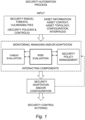
- FIG. 1 is a schematic diagram illustrating an example of an improved security automation process or procedure according to an embodiment.
- the security automation process is typically related to an Information Technology (IT) system, which has a number of interacting system components, each system component being associated with one or more operational assets for the operation of the system component.
- the operational assets may be organized in one or more security domains according to a system topology.
- the proposed technology may implement interconnection and mapping of information from different sources.
- threat and/or risk evaluation and/or monitoring may be executed. Based on such threat and/or risk evaluation and/or monitoring, proper security adaptation and/or configuration may be determined and/or updated to decide on and/or provide one or more security control actions, in cooperation with a security policy component.
- the security automation procedure and/or system may therefore be configured to obtain:
- the security configuration information representative of asset and/or domain security configuration may include information representative of asset security configuration and/or information representative of domain security configuration.
- security policies and/or controls may also be considered.
- An example of an overall security automation procedure is based on functions for monitoring, managing and/or adaptation involving three main interacting components: threat evaluation, risk evaluation and security policy management.
- the proposed technology may for example create automated and dynamic risk-based or risk-driven action flows, keeping the risk level acceptable by risk treatment actions and keeping the context compliant to given operational and technical security policies.
- the security automation procedure may be designed to be able to identify, analyze and/or monitor security threats to provide useful input to risk evaluation and/or security policy management. For example, threat information may then be used for security policy adaptation and/or for triggering one or more policy-based security control actions. As an example, threat information may be used for risk evaluation and/or further risk monitoring and/or further threat analysis, and/or for triggering one or more policy-based security control actions, in or more unified actions flows between the interacting components.
- security control actions may be regarded as executed or effectuated by a security adaptation and/or configuration component in the overall security automation procedure, the security control actions are normally triggered or otherwise initiated based on risk-based security policies and/or controls.
- information about the determined and/or updated security configuration may optionally be used as feedback to provide useful information for the evaluation and/or monitoring of security threats, risks and/or other security vulnerabilities.
- FIG. 2 is a schematic diagram illustrating an example of a security automation system according to an embodiment.
- the security automation system 100 represented in FIG. 2 is configured for security management of an associated Information Technology (IT) system 200, which may for example be part of a communication system or network (NET).
- IT Information Technology
- NET Network
- the security automation system 100 comprises a threat engine 110, a risk engine 120, a policy engine 130, and a security adaptation engine 140.
- the security automation system 100 may implement interconnection and mapping of information from different sources and create automated security control action flows, keeping the risk level acceptable, and the context compliant and trustworthy according to given policies.
- the security automation system 100 may be configured to determine one or more security control actions for a fully automated or security-analyst-assisted workflow to mitigate security risks and/or security threats.
- the security adaptation engine 140 may be seen as an orchestration layer for effectively interworking with the other system components.
- the security adaptation engine may be configured to communicate, via workflows to at least a subset of security automation system sub-components, threat and/or risk information and events at least partly based on the threat and/or risk assessment performed by the threat engine 110 and/or risk engine 120, possibly in cooperation with the policy engine 130.
- the security adaptation engine 140 may be configured to determine and/or effectuate one or more security control actions related to at least a subset of the operational assets and/or domains, and/or perform security configuration according to the determined security control action(s).
- the security automation system may provide fully automated or security-analyst-assisted workflows to mitigate security threats and/or risks for a given context.
- the security automation system may provide end-to-end visibility to the threat and risk status of the system and make automated qualifications in near real-time, e.g. with the aid of machine learning technologies to adjust security controls, insert security functions and/or provide information to external systems.
- the threat engine 110 may be configured to identify a threat based on a set detection rules and possibly provide a new detection rule, and provide relevant input to the risk engine 120 and/or policy engine 130. It may also perform a further threat analysis, e.g. as triggered by the risk engine 120.
- the risk engine 120 may be configured to monitor and/or manage one or more risks, e.g. based on risk evaluation, which may lead to further monitoring and/or analysis of risk and/or threat, or risk management based on relevant/valid security policy.
- the policy engine 130 may be configured to evaluate and/or adapt and/or update one or more (existing or new) security policies used for determining whether various security control actions should be invoked.
- the security adaptation engine 140 may be configured to execute and/or effectuate one or more security control actions affecting the considered IT system 200 being managed by the security automation system 100.
- supervised machine learning may be used to map one or more input variables (e.g. vulnerabilities, threats) to one or more output variables (e.g. type of risk, policy) based on pre-defined input-output pairs (learning data).
- input variables e.g. vulnerabilities, threats
- output variables e.g. type of risk, policy
- a supervised learning algorithm may analyze the training or learning data and produce an inferred function, which can be used for mapping new input-output pairs.
- the security automation system of the proposed technology may be operated more or less autonomously in connection with an Information Technology system that needs improved security, or may be operated on top of existing SIEM and/or SOAR systems and utilize such systems for information retrieval and threat and/or risk evaluation.
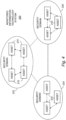
- FIG. 3 is a schematic diagram illustrating an example of a monitored Information Technology system.
- the Information Technology system 200 has a number of interacting system components 205, each system component 205 being associated with one or more operational assets 210 for the operation of the system component.
- the system components 205 and the associated operational assets 210 are organized in one or more security domains 220 according to a system topology.
- Different security domains 220 may be interconnected via an optional interconnect 230, such as a firewall (FW).
- FW firewall
- the operational assets 210 may use various communication interfaces and/or protocols, and appropriate security controls may be deployed for the operational asset(s) or planned for deployment.
- the operational assets 210 may include at least one of:
- the operational assets 210 include at least one digital asset
- the one or more security control actions typically include at least one executable security control operating on the at least one digital asset and/or an associated security domain.
- FIG. 4 is a schematic diagram illustrating another example of a monitored Information Technology system.
- another asset topology is illustrated, with assets 210 being organized in different security domains that may be interconnected to one another.
- the assets 210 within a security domain 220 may have various interdependencies.
- the security automation system may be configured to determine, for each of at least a subset of the operational assets 210 and/or for each of a number security domains 220, a risk level also at least partly based on dependency between assets 210.
- the security automation system is configured to determine, for each of at least a subset of the operational assets 210 and/or for each of a number security domains 220, a risk level also at least partly based on asset placement in the system topology, the number and nature of security risks and/or threats, communication interface(s) and/or protocol(s) used by the operational asset(s) and/or deployed security controls for the operational asset(s).
- the security automation system may be configured to determine one or more security control actions based on Machine Learning (ML).
- ML Machine Learning
- the security automation system may be configured to perform ML-based risk treatment analysis on how to handle security risks when the determined risk levels exceed a given threshold and determine one or more of the security control actions related to at least a subset of the operational assets 210 and/or domains 220 based on the ML-based risk treatment analysis.
- the security automation system may be configured to detect one or more security risks, system vulnerabilities and/or security threats based on Machine Learning (ML).
- ML Machine Learning
- the one or more security control actions includes updating or adding a new a security policy, adjusting a security configuration, removing an existing security function and/or inserting a new security function.
- Information Technology system may be any system for generating, processing, storing and/or transferring information.
- the security automation system may be configured for security management of the Information Technology system 200 of a communication system or network 300.
- FIG. 5 is a schematic diagram illustrating an example of a communication system/network having Information Technology components.
- the overall communication system/network 300 may include wireless communication systems such as radio access networks 310, wired communication systems such as server/data networks 320 as well as interconnecting networks 330, and may include system components such as radio base stations, access points, radio controllers, network management units, communication gateways, routers, servers and the like, each of which may have Information Technology components for generating, processing, storing and/or transferring information.
- the Information Technology system may be an integrated part of the communication system or network 300 and the interacting system components 205 of the Information Technology system 200 may involve network nodes and/or elements of the communication system or network 300.
- FIG. 6 is a schematic diagram illustrating an example of security automation system 100 in connection with a managed environment 200.
- the managed environment 200 such as an Information Technology (IT) system comprises assets organized in security domains.
- IT Information Technology
- the security automation system 100 may include a threat engine 110, a risk engine 120, a policy engine 130, and a security adaptation engine 140 that are operatively interconnected.
- the security automation system may implement interconnection and mapping of information from different sources. It may also create automated and dynamic risk-driven action flows, keeping the risk level acceptable by risk treatment actions and keeping the context compliant to the given operational and technical security policies.
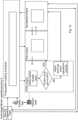
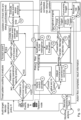
- FIG. 7 is a schematic diagram illustrating an example of an overall security automation system according to a specific embodiment, as well as the specific FIGs. 8-15 .
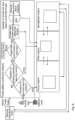
- FIG. 8 is a schematic diagram illustrating an example of illustrative operations of a threat engine within an overall context according to a specific embodiment.
- Threat Pattern Auditing and Analysis Engine also referred to as Threat Engine, collects, analyzes and monitors security events from the information technology system.
- the Threat Engine includes a Threat Catalog with a threat catalog and detection rules in order to monitor risk realization, behavior of technical and operational policies and interacts with asset database for information on the server types under monitoring.
- the pre-defined and machine-learning based detection rules are used to automatically identify signs of malicious and abnormal activities in servers. These abnormalities can be against the defined technical and operational security policies or related to already identified risks or new risks.
- Complex detection rules can be also defined by chaining individual detection rules. For instance, monitoring least privilege or segregation of duties type of operational policies can be achieved by having several individual detection rules for verifying that no user can use a group account to perform task with privileged entitlements on the network nodes.
- Threat Pattern Auditing and Analysis may execute Threat Validation based on the received data content and its detection rules and compares the data against the defined technical and operational policies to detect possible policy violations or new threat events that may be related to existing risks or new risks.
- the Threat Pattern Auditing & Analysis may invoke the policy engine to verify the infraction of the technical security policy. If there are no violation against the technical security policies and their controls, next the verification against the operational polices are done. Machine Learning algorithms are used to train the Threat Pattern Auditing & Analytics Engine to recognize legitimate events from the malicious ones.
- the Risk Engine may be invoked to perform further risk evaluation and actions. If there is indication of an operational policy violation, the Risk Engine may be invoked to perform further risk evaluation and actions. If there is no violation against operational security policies, the next verification is to analyze if the event is legitimate event based on policies or not. If yes, event is accepted as normal behavior. If not, then the threat event is recorded as "new observed threat” and Risk Engine is invoked to perform further risk evaluation and actions.
- deep event/action analysis may be invoked by Risk Engine when there is a need to execute detailed analysis of an event or series of events based on historical information and execute continuous analytics loop for new events. Deep event/action analysis is updating threat information and threat status back to Risk Engine.
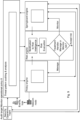
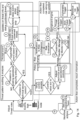
- FIG. 9 is a schematic diagram illustrating an example of illustrative operations of a risk engine within an overall context according to a specific embodiment.
- the Risk engine receives risk notifications from other components, evaluates and calculates risk level for the information technology system under monitoring and carries out a risk treatment analysis on whether to manage, monitor or accept the identified risks.
- the Risk Engine comprises a Risk Catalog with a database or list of potential risks and identified risks relevant for the system under monitoring and it interacts with asset database for information on the server types. Risks can be related to technical and operational security policies or related to existing risk under monitoring or new risks.
- the Risk Engine comprises a Vulnerability Catalog with a database or list of relevant generic vulnerabilities for the information technology systems, known software vulnerabilities and indicators of compromise received from external information sources. Software vulnerabilities and indicators of compromise are mapped to generic vulnerability families with help of machine learning algorithms for the system under monitoring.
- the Risk Engine may compare the risk against risk catalog and risk acceptance criteria. It performs risk calculation and estimation, e.g. based on machine learning algorithms and passes the risk rating to the Risk Treatment Handler. In risk treatment machine learning based risk treatment analysis is carried out on how to treat each unacceptable risk.
- the risk treatment options relevant for Risk Engine may include risk modification (management), risk monitoring and risk acceptance. These treatment options can be executed automatically or by involving human interaction. Actions are initiated and routed via springboard engine.
- the Risk Treatment Handler performs the risk treatment analysis for the received risks.
- Risk Treatment Handler may select either to manage, monitor or accept the risks. If manage is selected, then proper technical and/or operational policies and controls are selected to enhance the protection for the monitored system. It forwards the protection instructions to the Policy Engine to introduce, remove or alter dynamic or static controls automatically for the permanent or temporary protection. If risk level is raised, but not yet to be managed, it will be monitored. Monitoring is initiated by Springboard Engine towards Threat Pattern Auditing & Analysis in order to validate if it is a confirmed threat requiring risk re-evaluation and actions accordingly.
- risk evaluation result is recorded by Risk Engine for further reference and usage.
- FIG. 10 is a schematic diagram illustrating an example of illustrative operations of a policy engine within an overall context according to a specific embodiment.
- the Policy Engine initiates enforcement, maintains and/or monitors compliance for technical and operational security policies. It receives policy verification and policy modification requests from other components and sends risk notifications for risk evaluation.
- the Policy Engine comprises a Policy Catalog with includes policy families, technical security policies, operational security policies, configurable controls for the policies based on industry standard security frameworks. Policy Engine uses policy catalog as a base for selecting, configuring and monitoring applicable security policies and controls for the information technology infrastructure based on the initial risk evaluation.
- the Policy Engine configures the initial security profiles of the servers with help of the executable security controls executed on the monitored servers. It adapts or reconfigures policies (modify, add, decommission) automatically for permanent or temporary protection based on the instructions from the Risk Engine received, e.g. via Springboard Engine or more or less directly.
- an acknowledgement and residual risk information is sent via Springboard Engine to Risk Engine to execute re-rating for the identified risk in order to confirm the latest risk level of the system.
- the Springboard Engine which is also referred to as a Supporting and/or Coordinating Engine, is an optional supporting and/or coordinating function for the Threat Pattern Auditing and Analysis (Threat) Engine, Policy Engine and Risk Engine. It provides support for automating, executing, keeping track and triggering actions from a component to another. It conveys information from another component to another for the purpose of triggering risk evaluation, policy adjustment or initiating further threat monitoring. It is based on machine learning algorithms learning from the past action flows and past risk treatment decisions.
- FIG. 11 is a schematic diagram illustrating an example of initialization of a security automation system according to a specific embodiment, e.g. to define the starting state for risks, vulnerability information, security policies and threat monitoring.
- FIG. 12 is a schematic diagram illustrating an example of interaction between Risk Catalog, Vulnerability Catalog, Policy Catalog and Threat Catalog relevant for the context which is defined in the Asset Inventory database.
- access control related risks are mitigated with technical and operations security policies (Limit for Consecutive Invalid Logon Attempts, maximum SSH Authentication and Segregation of duties) which are monitored by respective detection rules.
- CVE software vulnerability
- IoC Indicator of compromise
- Common Vulnerabilities and Exposures generally relates to publicly disclosed information security flaws.
- Next steps after Risk, Vulnerability, Policy and Threat Catalog are initialized, may for example be to perform a first iteration of risk evaluation, e.g. with the following steps: 4. Information technology system specific machine learning algorithms are fed into Risk Engine and initial risk evaluation calculation is performed.
- Examples of relevant features of the security automation system and/or method may involve one or more of the following:
- Examples of relevant features in the Risk Engine may involve one or more of the following:
- Examples of relevant features in the Threat Engine may involve one or more of the following:
- Examples of relevant features in the Policy Engine may involve one or more of the following:
- the so-called springboard engine may be optional and the considered functions, steps and/or actions thereof may at least partly be integrated in the Threat Engine, Risk Engine and/or Policy Engine.
- the springboard engine may be at least partly transparent, just forwarding the relevant information and/or trigger to the relevant engine, depending on the situation and the circumstances.
- FIG. 13 is a schematic diagram illustrating a use case example according to an embodiment.
- Risk identified as "Unauthorized user access”, technical security policy enforced with control "maximum allowed failed logins 4" to mitigate the risk, detection rule for "failed invalid login attempts” activated and log collection on-going.
- Risk Catalog, Vulnerability Catalog, Threat Catalog and Policy Catalog initialized and up-to-date.
- Use case 2 New operational risk, risk put into monitoring mode followed by risk treatment decision and action
- FIG. 14 is a schematic diagram illustrating a use case example according to another embodiment.
- Use Case 3 New software (CVE) vulnerability received, based on the risk evaluation, Risk Catalog updated, and a new detection rule deployed in Threat Catalog
- FIG. 15 is a schematic diagram illustrating a use case example according to yet another embodiment.
- Vulnerability Catalog has been updated with the new vulnerability and loC information
- Risk Catalog has been updated with new risk
- Policy Catalog has been updated with new policies.
- Policy Engine enforced the new policies to information technology system
- Threat Catalog has been updated with new detection rule and monitoring according to the new detection rule has been started.
- embodiments may be implemented in hardware, or in software for execution by suitable processing circuitry, or a combination thereof.
- processing circuitry such as one or more processors or processing units.
- processors or processing units.
- processing circuitry and “processor” may be used interchangeably in parts of this disclosure.
- processing circuitry includes, but is not limited to, one or more microprocessors, one or more Digital Signal Processors (DSPs), one or more Central Processing Units (CPUs), video acceleration hardware, and/or any suitable programmable logic circuitry such as one or more Field Programmable Gate Arrays (FPGAs), or one or more Programmable Logic Controllers (PLCs).
- DSPs Digital Signal Processors
- CPUs Central Processing Units
- FPGAs Field Programmable Gate Arrays
- PLCs Programmable Logic Controllers
- FIG. 16A is a schematic block diagram illustrating an example of a security automation system according to an embodiment.
- the security automation system 400 comprises processing circuitry 410 including one or more processors and a memory 420, the memory 420 comprising instructions executable by the processing circuitry 410, whereby the security automation system 400 is operative to perform security management of the Information Technology system.
- processing circuitry is operative to perform at least some of the steps, actions and/or functions described herein, including the operations of the security automation system 400.
- the security automation system 400 may also include a communication circuit 430.
- the communication circuit 430 may include functions for wired and/or wireless communication with other devices and/or network nodes in the network.
- the communication circuit 430 may be based on radio circuitry for communication with one or more other nodes, including transmitting and/or receiving information.
- the communication circuit 430 may be interconnected to the processing circuitry 410 and/or memory 420.
- the communication circuit 430 may include any of the following: a receiver, a transmitter, a transceiver, input/output (I/O) circuitry, input port(s) and/or output port(s).
- FIG. 16B is a schematic block diagram illustrating an example of a network entity (node) comprising a security automation system according to an embodiment.
- the network entity 350 may be a network node or part thereof and/or a cloud-based network device.
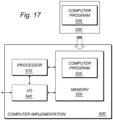
- FIG. 17 is a schematic diagram illustrating an example of a computer-implementation according to an embodiment.
- a computer program 525; 535 which is loaded into the memory 520 for execution by processing circuitry including one or more processors 510.
- the processor(s) 510 and memory 520 are interconnected to each other to enable normal software execution.
- An optional input/output device 540 may also be interconnected to the processor(s) 510 and/or the memory 520 to enable input and/or output of relevant data such as input parameter(s) and/or resulting output parameter(s).
- processor' should be interpreted in a general sense as any system or device capable of executing program code or computer program instructions to perform a particular processing, determining or computing task.
- the processing circuitry including one or more processors 510 is thus configured to perform, when executing the computer program 525, well-defined processing tasks such as those described herein.
- the processing circuitry does not have to be dedicated to only execute the above-described steps, functions, procedure and/or blocks, but may also execute other tasks.
- a computer program 525; 535 for performing, when executed, security management of an Information Technology system.
- the computer program 525; 535 comprises instructions, which when executed by at least one processor 510, cause the at least one processor 510 to perform the security management described herein.
- the proposed technology also provides a carrier comprising the computer program, wherein the carrier is one of an electronic signal, an optical signal, an electromagnetic signal, a magnetic signal, an electric signal, a radio signal, a microwave signal, or a computer-readable storage medium.
- the software or computer program 525; 535 may be realized as a computer program product, which is normally carried or stored on a computer-readable medium 520; 530, in particular a non-volatile medium.
- the computer-readable medium may include one or more removable or non-removable memory devices including, but not limited to a Read-Only Memory (ROM), a Random Access Memory (RAM), a Compact Disc (CD), a Digital Versatile Disc (DVD), a Blu-ray disc, a Universal Serial Bus (USB) memory, a Hard Disk Drive (HDD) storage device, a flash memory, a magnetic tape, or any other conventional memory device.
- the computer program may thus be loaded into the operating memory of a computer or equivalent processing device for execution by the processing circuitry thereof.
- the flow diagram or diagrams presented herein may be regarded as a computer flow diagram or diagrams, when performed by one or more processors.
- a corresponding apparatus may be defined as a group of function modules, where each step performed by the processor corresponds to a function module.
- the function modules are implemented as a computer program running on the processor.
- the computer program residing in memory may thus be organized as appropriate function modules configured to perform, when executed by the processor, at least part of the steps and/or tasks described herein.
- any appropriate steps, methods, features, functions, or benefits disclosed herein may be performed through one or more functional units or modules of one or more virtual apparatuses.
- Each virtual apparatus may comprise a number of these functional units.
- These functional units may be implemented via processing circuitry, which may include one or more microprocessor or microcontrollers, as well as other digital hardware, which may include digital signal processors (DSPs), special-purpose digital logic, and the like.
- the processing circuitry may be configured to execute program code stored in memory, which may include one or several types of memory such as read-only memory (ROM), random-access memory (RAM), cache memory, flash memory devices, optical storage devices, etc.
- Program code stored in memory includes program instructions for executing one or more telecommunications and/or data communications protocols as well as instructions for carrying out one or more of the techniques described herein.
- the processing circuitry may be used to cause the respective functional unit to perform corresponding functions according one or more embodiments of the present disclosure.
- module(s) it is possible to realize such module(s) predominantly by hardware modules, or alternatively by hardware, with suitable interconnections between relevant modules.
- Particular examples include one or more suitably configured digital signal processors and other known electronic circuits, e.g. discrete logic gates interconnected to perform a specialized function, and/or Application Specific Integrated Circuits (ASICs) as previously mentioned.
- Other examples of usable hardware include input/output (I/O) circuitry and/or circuitry for receiving and/or sending signals.
- I/O input/output
- the virtual apparatus may comprise processing circuitry, which may include one or more microprocessor or microcontrollers, as well as other digital hardware, which may include digital signal processors (DSPs), special-purpose digital logic, and the like.
- the processing circuitry may be configured to execute program code stored in memory, which may include one or several types of memory such as read-only memory (ROM), random-access memory, cache memory, flash memory devices, optical storage devices, etc.
- Program code stored in memory includes program instructions for executing one or more telecommunications and/or data communications protocols as well as instructions for carrying out one or more of the techniques described herein, in several embodiments.
- module or unit may have conventional meaning in the field of electronics, electrical devices and/or electronic devices and may include, for example, electrical and/or electronic circuitry, devices, modules, processors, memories, logic solid state and/or discrete devices, computer programs or instructions for carrying out respective tasks, procedures, computations, outputs, and/or displaying functions, and so on, as such as those that are described herein.
- computing services in network devices such as network nodes and/or servers where the resources are delivered as a service to remote locations over a network.
- functionality can be distributed or re-located to one or more separate physical nodes or servers.
- the functionality may be re-located or distributed to one or more jointly acting physical and/or virtual machines that can be positioned in separate physical node(s), i.e. in the so-called cloud.
- cloud computing is a model for enabling ubiquitous on-demand network access to a pool of configurable computing resources such as networks, servers, storage, applications and general or customized services.
- a Network Device may generally be seen as an electronic device being communicatively connected to other electronic devices in the network.
- the network device may be implemented in hardware, software or a combination thereof.
- the network device may be a special-purpose network device or a general-purpose network device, or a hybrid thereof.
- a special-purpose network device may use custom processing circuits and a proprietary operating system (OS), for execution of software to provide one or more of the features or functions disclosed herein.
- OS operating system
- a general-purpose network device may use common off-the-shelf (COTS) processors and a standard OS, for execution of software configured to provide one or more of the features or functions disclosed herein.
- COTS off-the-shelf
- a special-purpose network device may include hardware comprising processing or computing resource(s), which typically include a set of one or more processors, and physical network interfaces (Nls), which sometimes are called physical ports, as well as non-transitory machine readable storage media having stored thereon software.
- a physical NI may be seen as hardware in a network device through which a network connection is made, e.g. wirelessly through a wireless network interface controller (WNIC) or through plugging in a cable to a physical port connected to a network interface controller (NIC).
- WNIC wireless network interface controller
- NIC network interface controller
- the software may be executed by the hardware to instantiate a set of one or more software instance(s).
- Each of the software instance(s), and that part of the hardware that executes that software instance may form a separate virtual network element.
- a general-purpose network device may for example include hardware comprising a set of one or more processor(s), often COTS processors, and network interface controller(s) (NICs), as well as non-transitory machine-readable storage media having stored thereon software.
- the processor(s) executes the software to instantiate one or more sets of one or more applications.
- one embodiment does not implement virtualization, alternative embodiments may use different forms of virtualization - for example represented by a virtualization layer and software containers.
- one such alternative embodiment implements operating system-level virtualization, in which case the virtualization layer represents the kernel of an operating system (or a shim executing on a base operating system) that allows for the creation of multiple software containers that may each be used to execute one of a sets of applications.
- each of the software containers also called virtualization engines, virtual private servers, or jails
- a user space instance typically a virtual memory space.
- the virtualization layer represents a hypervisor (sometimes referred to as a Virtual Machine Monitor (VMM)) or the hypervisor is executed on top of a host operating system; and 2) the software containers each represent a tightly isolated form of software container called a virtual machine that is executed by the hypervisor and may include a guest operating system.
- VMM Virtual Machine Monitor
- a hypervisor is the software/hardware that is responsible for creating and managing the various virtualized instances and in some cases the actual physical hardware.
- the hypervisor manages the underlying resources and presents them as virtualized instances. What the hypervisor virtualizes to appear as a single processor may actually comprise multiple separate processors. From the perspective of the operating system, the virtualized instances appear to be actual hardware components.
- a virtual machine is a software implementation of a physical machine that runs programs as if they were executing on a physical, non-virtualized machine; and applications generally do not know they are running on a virtual machine as opposed to running on a "bare metal" host electronic device, though some systems provide para-virtualization which allows an operating system or application to be aware of the presence of virtualization for optimization purposes.
- the instantiation of the one or more sets of one or more applications as well as the virtualization layer and software containers if implemented, are collectively referred to as software instance(s).
- Each set of applications, corresponding software container if implemented, and that part of the hardware that executes them (be it hardware dedicated to that execution and/or time slices of hardware temporally shared by software containers), forms a separate virtual network element(s).
- the virtual network element(s) may perform similar functionality compared to Virtual Network Element(s) (VNEs). This virtualization of the hardware is sometimes referred to as Network Function Virtualization (NFV)).
- NFV Network Function Virtualization
- NFV may be used to consolidate many network equipment types onto industry standard high-volume server hardware, physical switches, and physical storage, which could be located in data centers, NDs, and Customer Premise Equipment (CPE).
- CPE Customer Premise Equipment
- different embodiments may implement one or more of the software container(s) differently.
- a hybrid network device which includes both custom processing circuitry/proprietary OS and COTS processors/standard OS in a network device, e.g. in a card or circuit board within a network device ND.
- a platform Virtual Machine such as a VM that implements functionality of a special-purpose network device, could provide for para-virtualization to the hardware present in the hybrid network device.
Landscapes
- Engineering & Computer Science (AREA)
- Computer Security & Cryptography (AREA)
- Computer Hardware Design (AREA)
- General Engineering & Computer Science (AREA)
- Software Systems (AREA)
- Theoretical Computer Science (AREA)
- General Physics & Mathematics (AREA)
- Physics & Mathematics (AREA)
- Computing Systems (AREA)
- Signal Processing (AREA)
- Computer Networks & Wireless Communication (AREA)
- Health & Medical Sciences (AREA)
- General Health & Medical Sciences (AREA)
- Virology (AREA)
- Computer And Data Communications (AREA)
- Storage Device Security (AREA)
Claims (16)
- Système d'automatisation de la sécurité (100 ; 400 ; 500) configuré pour une gestion de la sécurité d'un système informatique, IT, (200), le système d'automatisation de la sécurité utilisant un apprentissage automatique, ML, et comprenant :a. un moteur de menaces (110),b. un moteur de risques (120) configuré pour gérer un ou plusieurs risques sur la base d'une évaluation de risques,c. un moteur de politiques (130) comprenant un catalogue de politiques, le moteur de politiques étant configuré pour utiliser une ou plusieurs politiques du catalogue de politiques sur la base d'une évaluation de risques, etd. un moteur d'adaptation de la sécurité (140),le moteur de menaces (110) comprenant un catalogue de menaces et des règles de détection pour identifier des événements de menaces, et dans lequel les règles de détection sont automatiquement ajustées et modifiées sur la base d'informations collectées depuis le système IT géré.
- Système d'automatisation de la sécurité selon la revendication 1, apte à utiliser des résultats d'une évaluation de risques en ligne pour ajuster dynamiquement les règles de détection dans le moteur de menaces.
- Système d'automatisation de la sécurité selon la revendication 1 ou 2, dans lequel le moteur de menaces est apte en outre à surveiller et analyser des événements de menaces identifiés, et, après une période spécifiée, envoyer des informations au moteur de risques pour une évaluation de risques et une classification de risques.
- Système d'automatisation de la sécurité selon la revendication 1 ou 2, dans lequel le moteur de risques (120) comprend un catalogue de risques avec une base de données stockant des risques potentiels et des risques identifiés pour le système IT (200) géré, et un catalogue de vulnérabilités avec une base de données stockant des vulnérabilités génériques et connues du système IT.
- Système d'automatisation de la sécurité selon la revendication 4, dans lequel le catalogue de risques du moteur de risques (120) est mis à jour dynamiquement au cours d'opérations du système IT géré pour réaliser une gestion automatique et axée sur les risques de la sécurité.
- Système d'automatisation de la sécurité selon l'une quelconque des revendications 3 à 5, dans lequel des risques identifiés dans le moteur de risques sont reclassés dynamiquement.
- Système d'automatisation de la sécurité selon l'une quelconque des revendications précédentes, dans lequel le moteur de politiques (130) comprend un catalogue de politiques avec des politiques de sécurité, dans lequel les politiques de sécurité sont associées à des règles de détection du moteur de menaces (110).
- Système d'automatisation de la sécurité selon l'une quelconque des revendications précédentes, dans lequel le catalogue de risques, le catalogue de vulnérabilités, le catalogue de menaces et le catalogue de politiques sont interconnectés afin d'interconnecter les risques, les menaces, les vulnérabilités et les politiques inclus dans lesdits catalogues.
- Système d'automatisation de la sécurité selon l'une quelconque des revendications précédentes, dans lequel le moteur de menaces est apte à analyser des événements de menaces sur la base de règles de détection prédéfinies spécifiques à l'IT dans le catalogue de menaces.
- Système d'automatisation de la sécurité selon l'une quelconque des revendications précédentes, en outre apte à utiliser un algorithme d'apprentissage automatique pour collecter des informations dans le catalogue de risques et dans le catalogue de vulnérabilités du moteur de risques, afin de détecter des événements malveillants et des faiblesses de la sécurité dans le système IT (200), et ajuster les politiques de sécurité et les règles de détection afin d'atténuer les risques de la sécurité.
- Système d'automatisation de la sécurité (100 ; 400 ; 500) selon la revendication 10, dans lequel le système IT (200) comprend des composants (205) en interaction, dans lequel chaque composant est associé à au moins un actif opérationnel (210), et dans lequel chaque actif opérationnel (210) est organisé dans au moins un domaine de sécurité (220) selon une topologie de système.
- Système d'automatisation de la sécurité selon l'une quelconque des revendications précédentes, dans lequel le système d'automatisation de la sécurité (100) comprend en outre une circuiterie de traitement (410 ; 510) et une mémoire (420 ; 520), la mémoire (420 ; 520) comprenant des instructions exécutables par la circuiterie de traitement (410 ; 510), de telle manière que le système d'automatisation de la sécurité (100 ; 400 ; 500) soit opérationnel pour réaliser une gestion de la sécurité du système IT (200).
- Entité de réseau (350) d'un système ou réseau de communication (300) comprenant un système d'automatisation de la sécurité (100 ; 400 ; 500) selon l'une quelconque des revendications 1 à 12.
- Entité de réseau selon la revendication 13, dans laquelle l'entité de réseau (350) est un noeud de réseau ou un dispositif de réseau basé sur le cloud.
- Procédé de gestion de la sécurité d'un système informatique, IT, (200) comportant un nombre de composants de système (205) en interaction, chaque composant de système (205) étant associé à un ou plusieurs actifs opérationnels (210) concernant le fonctionnement du composant de système, dans lequel les actifs opérationnels (210) sont organisés dans un ou plusieurs domaines de sécurité (220) selon une topologie de système, de telle manière que le système d'automatisation de la sécurité (100 ; 400 ; 500) selon l'une quelconque des revendications 1 à 12 soit opérationnel pour réaliser une gestion de la sécurité du système IT (200).
- Programme d'ordinateur (525 ; 535) pour réaliser, lorsqu'il est exécuté, une gestion de la sécurité d'un système informatique, IT, (200) comportant un nombre de composants de système (205) en interaction, chaque composant de système (205) étant associé à un ou plusieurs actifs opérationnels (210) concernant le fonctionnement du composant de système, dans lequel les actifs opérationnels (210) sont organisés dans un ou plusieurs domaines de sécurité (220) selon une topologie de système,
dans lequel le programme d'ordinateur (525 ; 535) comprend des instructions qui, lorsqu'elles sont exécutées par au moins un processeur (510), amènent l'au moins un processeur (510) à réaliser une gestion de la sécurité du système IT, selon la revendication 15.
Applications Claiming Priority (2)
| Application Number | Priority Date | Filing Date | Title |
|---|---|---|---|
| US202062975889P | 2020-02-13 | 2020-02-13 | |
| PCT/EP2021/052592 WO2021160499A1 (fr) | 2020-02-13 | 2021-02-04 | Système d'automatisation de la sécurité |
Publications (2)
| Publication Number | Publication Date |
|---|---|
| EP4104410A1 EP4104410A1 (fr) | 2022-12-21 |
| EP4104410B1 true EP4104410B1 (fr) | 2023-10-25 |
Family
ID=74561872
Family Applications (1)
| Application Number | Title | Priority Date | Filing Date |
|---|---|---|---|
| EP21703872.8A Active EP4104410B1 (fr) | 2020-02-13 | 2021-02-04 | Système d'automatisation de la sécurité avec fonctions d'apprentissage machine |
Country Status (3)
| Country | Link |
|---|---|
| US (1) | US12423438B2 (fr) |
| EP (1) | EP4104410B1 (fr) |
| WO (1) | WO2021160499A1 (fr) |
Families Citing this family (30)
| Publication number | Priority date | Publication date | Assignee | Title |
|---|---|---|---|---|
| US11770377B1 (en) * | 2020-06-29 | 2023-09-26 | Cyral Inc. | Non-in line data monitoring and security services |
| US20230421582A1 (en) * | 2021-05-27 | 2023-12-28 | Revelstoke Security, Inc. | Cybersecurity operations case triage groupings |
| KR102454948B1 (ko) * | 2021-11-01 | 2022-10-17 | 주식회사 지엔 | IoT 기기 점검 방법 및 그 장치 |
| US11620390B1 (en) * | 2022-04-18 | 2023-04-04 | Clearwater Compliance LLC | Risk rating method and system |
| US12335405B2 (en) | 2022-07-27 | 2025-06-17 | Rapid7, Inc. | Machine learning techniques for verifying correctness of associations between assets related to events and addressable computer network assets |
| CN115549972B (zh) * | 2022-08-31 | 2025-08-19 | 国网江西省电力有限公司信息通信分公司 | 一种基于soar的网络安全自动化方法及系统 |
| US12314406B1 (en) | 2023-01-19 | 2025-05-27 | Citibank, N.A. | Generative cybersecurity exploit discovery and evaluation |
| US11748491B1 (en) | 2023-01-19 | 2023-09-05 | Citibank, N.A. | Determining platform-specific end-to-end security vulnerabilities for a software application via a graphical user interface (GUI) systems and methods |
| US11763006B1 (en) * | 2023-01-19 | 2023-09-19 | Citibank, N.A. | Comparative real-time end-to-end security vulnerabilities determination and visualization |
| US12596813B2 (en) | 2023-01-19 | 2026-04-07 | Citibank, N.A | Autonomous agent observation and control |
| US12282565B2 (en) | 2023-01-19 | 2025-04-22 | Citibank, N.A. | Generative cybersecurity exploit synthesis and mitigation |
| US12271491B2 (en) | 2023-01-19 | 2025-04-08 | Citibank, N.A. | Detection and mitigation of machine learning model adversarial attacks |
| US12299140B2 (en) | 2023-01-19 | 2025-05-13 | Citibank, N.A. | Dynamic multi-model monitoring and validation for artificial intelligence models |
| US12223063B2 (en) | 2023-01-19 | 2025-02-11 | Citibank, N.A. | End-to-end measurement, grading and evaluation of pretrained artificial intelligence models via a graphical user interface (GUI) systems and methods |
| US11874934B1 (en) | 2023-01-19 | 2024-01-16 | Citibank, N.A. | Providing user-induced variable identification of end-to-end computing system security impact information systems and methods |
| US12608486B2 (en) | 2023-01-19 | 2026-04-21 | Citibank, N.A. | Generating predicted end-to-end cyber-security attack characteristics via bifurcated machine learning-based processing of multi-modal data systems and methods |
| US12475235B2 (en) | 2023-01-19 | 2025-11-18 | Citibank, N.A. | Generative cybersecurity exploit discovery and evaluation |
| US12526323B2 (en) * | 2023-03-14 | 2026-01-13 | Salesforce, Inc. | Self healing network security policy management |
| US20250139251A1 (en) * | 2023-10-26 | 2025-05-01 | Crowdstrike, Inc. | Secure code analysis copilot |
| US12602624B2 (en) | 2023-12-11 | 2026-04-14 | Citibank, N.A. | Anomaly detection method for model outputs |
| US12346820B1 (en) | 2024-04-11 | 2025-07-01 | Citibank, N. A. | Identifying and remediating gaps in artificial intelligence use cases using a generative artificial intelligence model |
| US12602418B2 (en) | 2024-04-11 | 2026-04-14 | Citibank, N.A. | Intelligent query decomposition, specialized model routing, and hierarchical aggregation with conflict resolution |
| US12596738B2 (en) | 2024-04-11 | 2026-04-07 | Citibank, N.A. | Explainable large language model routing with immutable audit trails |
| US12524508B2 (en) | 2024-04-11 | 2026-01-13 | Citibank, N.A. | Prompt refinement to improve accuracy of outputs from machine learning models |
| US12154019B1 (en) | 2024-06-07 | 2024-11-26 | Citibank, N.A. | System and method for constructing a layered artificial intelligence model |
| US20260099592A1 (en) * | 2024-10-03 | 2026-04-09 | Microsoft Technology Licensing, Llc | Security action based on an ai-determined intent and/or impact of a resource in an enterprise |
| CN119233264A (zh) * | 2024-12-04 | 2024-12-31 | 北京邮电大学 | 安全面架构系统、数据处理方法、设备及介质 |
| CN119788439B (zh) * | 2025-03-12 | 2025-09-19 | 北京大方云图科技有限公司 | 一种跨域资源共享的漏洞检测方法和系统 |
| CN120728886B (zh) * | 2025-08-29 | 2025-11-04 | 北京新源恒远科技发展有限公司 | 虚拟电厂与综合监控安全平台集成的智能管理系统 |
| CN121523806A (zh) * | 2026-01-15 | 2026-02-13 | 麒麟软件有限公司 | 一种Linux容器安全隔离系统 |
Family Cites Families (24)
| Publication number | Priority date | Publication date | Assignee | Title |
|---|---|---|---|---|
| US20070113272A2 (en) * | 2003-07-01 | 2007-05-17 | Securityprofiling, Inc. | Real-time vulnerability monitoring |
| US10027711B2 (en) * | 2009-11-20 | 2018-07-17 | Alert Enterprise, Inc. | Situational intelligence |
| US8595845B2 (en) * | 2012-01-19 | 2013-11-26 | Mcafee, Inc. | Calculating quantitative asset risk |
| US9137258B2 (en) * | 2012-02-01 | 2015-09-15 | Brightpoint Security, Inc. | Techniques for sharing network security event information |
| US9774616B2 (en) * | 2012-06-26 | 2017-09-26 | Oppleo Security, Inc. | Threat evaluation system and method |
| US9401926B1 (en) * | 2013-10-31 | 2016-07-26 | Fulcrum IP Services, LLC | System and method for implementation of cyber security |
| US8966639B1 (en) * | 2014-02-14 | 2015-02-24 | Risk I/O, Inc. | Internet breach correlation |
| US10469514B2 (en) * | 2014-06-23 | 2019-11-05 | Hewlett Packard Enterprise Development Lp | Collaborative and adaptive threat intelligence for computer security |
| US20180027006A1 (en) * | 2015-02-24 | 2018-01-25 | Cloudlock, Inc. | System and method for securing an enterprise computing environment |
| US10609079B2 (en) * | 2015-10-28 | 2020-03-31 | Qomplx, Inc. | Application of advanced cybersecurity threat mitigation to rogue devices, privilege escalation, and risk-based vulnerability and patch management |
| CA2968710A1 (fr) * | 2016-05-31 | 2017-11-30 | Valarie Ann Findlay | Systemes et methodes de rapport d'incident et de collecte de renseignements sur les menaces de securite |
| US10158654B2 (en) * | 2016-10-31 | 2018-12-18 | Acentium Inc. | Systems and methods for computer environment situational awareness |
| US10587644B1 (en) * | 2017-05-11 | 2020-03-10 | Ca, Inc. | Monitoring and managing credential and application threat mitigations in a computer system |
| US11637844B2 (en) * | 2017-09-28 | 2023-04-25 | Oracle International Corporation | Cloud-based threat detection |
| CN109962891B (zh) * | 2017-12-25 | 2021-10-22 | 中国移动通信集团安徽有限公司 | 监测云安全的方法、装置、设备和计算机存储介质 |
| US11431740B2 (en) * | 2018-01-02 | 2022-08-30 | Criterion Systems, Inc. | Methods and systems for providing an integrated assessment of risk management and maturity for an organizational cybersecurity/privacy program |
| EP3746891A4 (fr) * | 2018-01-31 | 2020-12-23 | Aon Risk Consultants, Inc. | Systèmes et procédés d'évaluation de vulnérabilité et de fourniture de services et de produits associés pour une suppression de risques efficace |
| AU2019201137B2 (en) | 2018-02-20 | 2023-11-16 | Darktrace Holdings Limited | A cyber security appliance for a cloud infrastructure |
| US11288385B2 (en) * | 2018-04-13 | 2022-03-29 | Sophos Limited | Chain of custody for enterprise documents |
| WO2019211592A1 (fr) * | 2018-05-03 | 2019-11-07 | Sophos Limited | Sécurisation locale de points d'extrémités dans un réseau d'entreprise à l'aide de ressources de réseau distantes |
| US11995593B2 (en) * | 2018-11-28 | 2024-05-28 | Merck Sharp & Dohme Llc | Adaptive enterprise risk evaluation |
| US11277431B2 (en) * | 2019-06-27 | 2022-03-15 | Forescout Technologies, Inc. | Comprehensive risk assessment |
| US11308219B2 (en) * | 2019-07-19 | 2022-04-19 | F5, Inc. | System and method for multi-source vulnerability management |
| WO2021028060A1 (fr) | 2019-08-15 | 2021-02-18 | Telefonaktiebolaget Lm Ericsson (Publ) | Système d'automatisation de la sécurité |
-
2021
- 2021-02-04 EP EP21703872.8A patent/EP4104410B1/fr active Active
- 2021-02-04 US US17/904,079 patent/US12423438B2/en active Active
- 2021-02-04 WO PCT/EP2021/052592 patent/WO2021160499A1/fr not_active Ceased
Also Published As
| Publication number | Publication date |
|---|---|
| US20230071264A1 (en) | 2023-03-09 |
| EP4104410A1 (fr) | 2022-12-21 |
| US12423438B2 (en) | 2025-09-23 |
| WO2021160499A1 (fr) | 2021-08-19 |
Similar Documents
| Publication | Publication Date | Title |
|---|---|---|
| EP4104410B1 (fr) | Système d'automatisation de la sécurité avec fonctions d'apprentissage machine | |
| US20250280026A1 (en) | Protecting serverless applications | |
| US11757920B2 (en) | User and entity behavioral analysis with network topology enhancements | |
| US11057407B2 (en) | Detecting malware attacks using extracted behavioral features | |
| US11526610B2 (en) | Peer-to-peer network for blockchain security | |
| US20220053013A1 (en) | User and entity behavioral analysis with network topology enhancement | |
| US11022949B2 (en) | PLC virtual patching and automated distribution of security context | |
| US9892270B2 (en) | System and method for programmably creating and customizing security applications via a graphical user interface | |
| US20070266433A1 (en) | System and Method for Securing Information in a Virtual Computing Environment | |
| Fernandez et al. | Patterns for security and privacy in cloud ecosystems | |
| US12363156B1 (en) | Systems and methods for verification and validation of cyber resilience | |
| EP4091084A1 (fr) | Sécurité de point d'extrémité à l'aide d'un modèle de prédiction d'action | |
| Laura et al. | Cloud Security Mastery: Integrating Firewalls and AI-Powered Defenses for Enterprise Protection | |
| Zacaron et al. | Generative adversarial network models for anomaly detection in software-defined networks | |
| Gangina | AI-enhanced DevSecOps: Automating security compliance in cloud-native pipelines | |
| GB2618884A (en) | Admission control in a containerised computing environment | |
| EP4614369A1 (fr) | Moteur autonome de protection contre les menaces dans un système de gestion de sécurité | |
| Reddy | Zero-Day Threat Protection: Advanced Cybersecurity Measures for Cloud-Based Guidewire Implementations | |
| Palma et al. | Enhancing trust and liability assisted mechanisms for ZSM 5G architectures | |
| Jouini et al. | A security risk management model for cloud computing systems: infrastructure as a service | |
| CN113591096A (zh) | 综合检测大数据漏洞和不安全配置的脆弱性扫描系统 | |
| EP4497077B1 (fr) | Sdn intelligent pour la prévention d'intrusion | |
| Udayakumar | Design and deploy security for infrastructure, data, and applications | |
| Begum et al. | Fortifying cyber defenses with IDPS implementation and management best practices | |
| Shashank | Zero Trust Architecture–A Beginner’s Guide |
Legal Events
| Date | Code | Title | Description |
|---|---|---|---|
| STAA | Information on the status of an ep patent application or granted ep patent |
Free format text: STATUS: UNKNOWN |
|
| STAA | Information on the status of an ep patent application or granted ep patent |
Free format text: STATUS: THE INTERNATIONAL PUBLICATION HAS BEEN MADE |
|
| PUAI | Public reference made under article 153(3) epc to a published international application that has entered the european phase |
Free format text: ORIGINAL CODE: 0009012 |
|
| STAA | Information on the status of an ep patent application or granted ep patent |
Free format text: STATUS: REQUEST FOR EXAMINATION WAS MADE |
|
| 17P | Request for examination filed |
Effective date: 20220909 |
|
| AK | Designated contracting states |
Kind code of ref document: A1 Designated state(s): AL AT BE BG CH CY CZ DE DK EE ES FI FR GB GR HR HU IE IS IT LI LT LU LV MC MK MT NL NO PL PT RO RS SE SI SK SM TR |
|
| REG | Reference to a national code |
Ref legal event code: R079 Ref country code: DE Ref document number: 602021006228 Country of ref document: DE Free format text: PREVIOUS MAIN CLASS: H04L0029060000 Ipc: H04L0009400000 |
|
| RIC1 | Information provided on ipc code assigned before grant |
Ipc: G06F 21/55 20130101ALI20230329BHEP Ipc: H04L 9/40 20220101AFI20230329BHEP |
|
| DAV | Request for validation of the european patent (deleted) | ||
| DAX | Request for extension of the european patent (deleted) | ||
| GRAP | Despatch of communication of intention to grant a patent |
Free format text: ORIGINAL CODE: EPIDOSNIGR1 |
|
| STAA | Information on the status of an ep patent application or granted ep patent |
Free format text: STATUS: GRANT OF PATENT IS INTENDED |
|
| INTG | Intention to grant announced |
Effective date: 20230519 |
|
| RAP3 | Party data changed (applicant data changed or rights of an application transferred) |
Owner name: TELEFONAKTIEBOLAGET LM ERICSSON (PUBL) |
|
| GRAS | Grant fee paid |
Free format text: ORIGINAL CODE: EPIDOSNIGR3 |
|
| GRAA | (expected) grant |
Free format text: ORIGINAL CODE: 0009210 |
|
| STAA | Information on the status of an ep patent application or granted ep patent |
Free format text: STATUS: THE PATENT HAS BEEN GRANTED |
|
| AK | Designated contracting states |
Kind code of ref document: B1 Designated state(s): AL AT BE BG CH CY CZ DE DK EE ES FI FR GB GR HR HU IE IS IT LI LT LU LV MC MK MT NL NO PL PT RO RS SE SI SK SM TR |
|
| REG | Reference to a national code |
Ref country code: GB Ref legal event code: FG4D |
|
| REG | Reference to a national code |
Ref country code: CH Ref legal event code: EP |
|
| REG | Reference to a national code |
Ref country code: DE Ref legal event code: R096 Ref document number: 602021006228 Country of ref document: DE |
|
| REG | Reference to a national code |
Ref country code: IE Ref legal event code: FG4D |
|
| REG | Reference to a national code |
Ref country code: LT Ref legal event code: MG9D |
|
| REG | Reference to a national code |
Ref country code: NL Ref legal event code: MP Effective date: 20231025 |
|
| REG | Reference to a national code |
Ref country code: AT Ref legal event code: MK05 Ref document number: 1625796 Country of ref document: AT Kind code of ref document: T Effective date: 20231025 |
|
| PG25 | Lapsed in a contracting state [announced via postgrant information from national office to epo] |
Ref country code: NL Free format text: LAPSE BECAUSE OF FAILURE TO SUBMIT A TRANSLATION OF THE DESCRIPTION OR TO PAY THE FEE WITHIN THE PRESCRIBED TIME-LIMIT Effective date: 20231025 |
|
| PG25 | Lapsed in a contracting state [announced via postgrant information from national office to epo] |
Ref country code: GR Free format text: LAPSE BECAUSE OF FAILURE TO SUBMIT A TRANSLATION OF THE DESCRIPTION OR TO PAY THE FEE WITHIN THE PRESCRIBED TIME-LIMIT Effective date: 20240126 |
|
| PG25 | Lapsed in a contracting state [announced via postgrant information from national office to epo] |
Ref country code: IS Free format text: LAPSE BECAUSE OF FAILURE TO SUBMIT A TRANSLATION OF THE DESCRIPTION OR TO PAY THE FEE WITHIN THE PRESCRIBED TIME-LIMIT Effective date: 20240225 |
|
| PG25 | Lapsed in a contracting state [announced via postgrant information from national office to epo] |
Ref country code: LT Free format text: LAPSE BECAUSE OF FAILURE TO SUBMIT A TRANSLATION OF THE DESCRIPTION OR TO PAY THE FEE WITHIN THE PRESCRIBED TIME-LIMIT Effective date: 20231025 |
|
| PG25 | Lapsed in a contracting state [announced via postgrant information from national office to epo] |
Ref country code: AT Free format text: LAPSE BECAUSE OF FAILURE TO SUBMIT A TRANSLATION OF THE DESCRIPTION OR TO PAY THE FEE WITHIN THE PRESCRIBED TIME-LIMIT Effective date: 20231025 |
|
| PG25 | Lapsed in a contracting state [announced via postgrant information from national office to epo] |
Ref country code: ES Free format text: LAPSE BECAUSE OF FAILURE TO SUBMIT A TRANSLATION OF THE DESCRIPTION OR TO PAY THE FEE WITHIN THE PRESCRIBED TIME-LIMIT Effective date: 20231025 |
|
| PG25 | Lapsed in a contracting state [announced via postgrant information from national office to epo] |
Ref country code: LT Free format text: LAPSE BECAUSE OF FAILURE TO SUBMIT A TRANSLATION OF THE DESCRIPTION OR TO PAY THE FEE WITHIN THE PRESCRIBED TIME-LIMIT Effective date: 20231025 Ref country code: IS Free format text: LAPSE BECAUSE OF FAILURE TO SUBMIT A TRANSLATION OF THE DESCRIPTION OR TO PAY THE FEE WITHIN THE PRESCRIBED TIME-LIMIT Effective date: 20240225 Ref country code: GR Free format text: LAPSE BECAUSE OF FAILURE TO SUBMIT A TRANSLATION OF THE DESCRIPTION OR TO PAY THE FEE WITHIN THE PRESCRIBED TIME-LIMIT Effective date: 20240126 Ref country code: ES Free format text: LAPSE BECAUSE OF FAILURE TO SUBMIT A TRANSLATION OF THE DESCRIPTION OR TO PAY THE FEE WITHIN THE PRESCRIBED TIME-LIMIT Effective date: 20231025 Ref country code: BG Free format text: LAPSE BECAUSE OF FAILURE TO SUBMIT A TRANSLATION OF THE DESCRIPTION OR TO PAY THE FEE WITHIN THE PRESCRIBED TIME-LIMIT Effective date: 20240125 Ref country code: AT Free format text: LAPSE BECAUSE OF FAILURE TO SUBMIT A TRANSLATION OF THE DESCRIPTION OR TO PAY THE FEE WITHIN THE PRESCRIBED TIME-LIMIT Effective date: 20231025 Ref country code: PT Free format text: LAPSE BECAUSE OF FAILURE TO SUBMIT A TRANSLATION OF THE DESCRIPTION OR TO PAY THE FEE WITHIN THE PRESCRIBED TIME-LIMIT Effective date: 20240226 |
|
| PG25 | Lapsed in a contracting state [announced via postgrant information from national office to epo] |
Ref country code: SE Free format text: LAPSE BECAUSE OF FAILURE TO SUBMIT A TRANSLATION OF THE DESCRIPTION OR TO PAY THE FEE WITHIN THE PRESCRIBED TIME-LIMIT Effective date: 20231025 Ref country code: RS Free format text: LAPSE BECAUSE OF FAILURE TO SUBMIT A TRANSLATION OF THE DESCRIPTION OR TO PAY THE FEE WITHIN THE PRESCRIBED TIME-LIMIT Effective date: 20231025 Ref country code: PL Free format text: LAPSE BECAUSE OF FAILURE TO SUBMIT A TRANSLATION OF THE DESCRIPTION OR TO PAY THE FEE WITHIN THE PRESCRIBED TIME-LIMIT Effective date: 20231025 Ref country code: NO Free format text: LAPSE BECAUSE OF FAILURE TO SUBMIT A TRANSLATION OF THE DESCRIPTION OR TO PAY THE FEE WITHIN THE PRESCRIBED TIME-LIMIT Effective date: 20240125 Ref country code: LV Free format text: LAPSE BECAUSE OF FAILURE TO SUBMIT A TRANSLATION OF THE DESCRIPTION OR TO PAY THE FEE WITHIN THE PRESCRIBED TIME-LIMIT Effective date: 20231025 Ref country code: HR Free format text: LAPSE BECAUSE OF FAILURE TO SUBMIT A TRANSLATION OF THE DESCRIPTION OR TO PAY THE FEE WITHIN THE PRESCRIBED TIME-LIMIT Effective date: 20231025 |
|
| PG25 | Lapsed in a contracting state [announced via postgrant information from national office to epo] |
Ref country code: DK Free format text: LAPSE BECAUSE OF FAILURE TO SUBMIT A TRANSLATION OF THE DESCRIPTION OR TO PAY THE FEE WITHIN THE PRESCRIBED TIME-LIMIT Effective date: 20231025 |
|
| PG25 | Lapsed in a contracting state [announced via postgrant information from national office to epo] |
Ref country code: CZ Free format text: LAPSE BECAUSE OF FAILURE TO SUBMIT A TRANSLATION OF THE DESCRIPTION OR TO PAY THE FEE WITHIN THE PRESCRIBED TIME-LIMIT Effective date: 20231025 |
|
| REG | Reference to a national code |
Ref country code: DE Ref legal event code: R097 Ref document number: 602021006228 Country of ref document: DE |
|
| PG25 | Lapsed in a contracting state [announced via postgrant information from national office to epo] |
Ref country code: SK Free format text: LAPSE BECAUSE OF FAILURE TO SUBMIT A TRANSLATION OF THE DESCRIPTION OR TO PAY THE FEE WITHIN THE PRESCRIBED TIME-LIMIT Effective date: 20231025 |
|
| PG25 | Lapsed in a contracting state [announced via postgrant information from national office to epo] |
Ref country code: SM Free format text: LAPSE BECAUSE OF FAILURE TO SUBMIT A TRANSLATION OF THE DESCRIPTION OR TO PAY THE FEE WITHIN THE PRESCRIBED TIME-LIMIT Effective date: 20231025 Ref country code: SK Free format text: LAPSE BECAUSE OF FAILURE TO SUBMIT A TRANSLATION OF THE DESCRIPTION OR TO PAY THE FEE WITHIN THE PRESCRIBED TIME-LIMIT Effective date: 20231025 Ref country code: RO Free format text: LAPSE BECAUSE OF FAILURE TO SUBMIT A TRANSLATION OF THE DESCRIPTION OR TO PAY THE FEE WITHIN THE PRESCRIBED TIME-LIMIT Effective date: 20231025 Ref country code: IT Free format text: LAPSE BECAUSE OF FAILURE TO SUBMIT A TRANSLATION OF THE DESCRIPTION OR TO PAY THE FEE WITHIN THE PRESCRIBED TIME-LIMIT Effective date: 20231025 Ref country code: EE Free format text: LAPSE BECAUSE OF FAILURE TO SUBMIT A TRANSLATION OF THE DESCRIPTION OR TO PAY THE FEE WITHIN THE PRESCRIBED TIME-LIMIT Effective date: 20231025 Ref country code: DK Free format text: LAPSE BECAUSE OF FAILURE TO SUBMIT A TRANSLATION OF THE DESCRIPTION OR TO PAY THE FEE WITHIN THE PRESCRIBED TIME-LIMIT Effective date: 20231025 Ref country code: CZ Free format text: LAPSE BECAUSE OF FAILURE TO SUBMIT A TRANSLATION OF THE DESCRIPTION OR TO PAY THE FEE WITHIN THE PRESCRIBED TIME-LIMIT Effective date: 20231025 |
|
| PLBE | No opposition filed within time limit |
Free format text: ORIGINAL CODE: 0009261 |
|
| STAA | Information on the status of an ep patent application or granted ep patent |
Free format text: STATUS: NO OPPOSITION FILED WITHIN TIME LIMIT |
|
| REG | Reference to a national code |
Ref country code: DE Ref legal event code: R119 Ref document number: 602021006228 Country of ref document: DE |
|
| PG25 | Lapsed in a contracting state [announced via postgrant information from national office to epo] |
Ref country code: MC Free format text: LAPSE BECAUSE OF FAILURE TO SUBMIT A TRANSLATION OF THE DESCRIPTION OR TO PAY THE FEE WITHIN THE PRESCRIBED TIME-LIMIT Effective date: 20231025 |
|
| REG | Reference to a national code |
Ref country code: CH Ref legal event code: PL |
|
| 26N | No opposition filed |
Effective date: 20240726 |
|
| PG25 | Lapsed in a contracting state [announced via postgrant information from national office to epo] |
Ref country code: LU Free format text: LAPSE BECAUSE OF NON-PAYMENT OF DUE FEES Effective date: 20240204 |
|
| PG25 | Lapsed in a contracting state [announced via postgrant information from national office to epo] |
Ref country code: CH Free format text: LAPSE BECAUSE OF NON-PAYMENT OF DUE FEES Effective date: 20240229 |
|
| PG25 | Lapsed in a contracting state [announced via postgrant information from national office to epo] |
Ref country code: SI Free format text: LAPSE BECAUSE OF FAILURE TO SUBMIT A TRANSLATION OF THE DESCRIPTION OR TO PAY THE FEE WITHIN THE PRESCRIBED TIME-LIMIT Effective date: 20231025 |
|
| PG25 | Lapsed in a contracting state [announced via postgrant information from national office to epo] |
Ref country code: SI Free format text: LAPSE BECAUSE OF FAILURE TO SUBMIT A TRANSLATION OF THE DESCRIPTION OR TO PAY THE FEE WITHIN THE PRESCRIBED TIME-LIMIT Effective date: 20231025 Ref country code: LU Free format text: LAPSE BECAUSE OF NON-PAYMENT OF DUE FEES Effective date: 20240204 Ref country code: CH Free format text: LAPSE BECAUSE OF NON-PAYMENT OF DUE FEES Effective date: 20240229 |
|
| REG | Reference to a national code |
Ref country code: BE Ref legal event code: MM Effective date: 20240229 |
|
| PG25 | Lapsed in a contracting state [announced via postgrant information from national office to epo] |
Ref country code: DE Free format text: LAPSE BECAUSE OF NON-PAYMENT OF DUE FEES Effective date: 20240903 |
|
| PG25 | Lapsed in a contracting state [announced via postgrant information from national office to epo] |
Ref country code: BE Free format text: LAPSE BECAUSE OF NON-PAYMENT OF DUE FEES Effective date: 20240229 |
|
| PG25 | Lapsed in a contracting state [announced via postgrant information from national office to epo] |
Ref country code: FR Free format text: LAPSE BECAUSE OF NON-PAYMENT OF DUE FEES Effective date: 20240229 |
|
| PG25 | Lapsed in a contracting state [announced via postgrant information from national office to epo] |
Ref country code: IE Free format text: LAPSE BECAUSE OF NON-PAYMENT OF DUE FEES Effective date: 20240204 |
|
| PG25 | Lapsed in a contracting state [announced via postgrant information from national office to epo] |
Ref country code: IE Free format text: LAPSE BECAUSE OF NON-PAYMENT OF DUE FEES Effective date: 20240204 Ref country code: FR Free format text: LAPSE BECAUSE OF NON-PAYMENT OF DUE FEES Effective date: 20240229 Ref country code: DE Free format text: LAPSE BECAUSE OF NON-PAYMENT OF DUE FEES Effective date: 20240903 Ref country code: BE Free format text: LAPSE BECAUSE OF NON-PAYMENT OF DUE FEES Effective date: 20240229 |
|
| PG25 | Lapsed in a contracting state [announced via postgrant information from national office to epo] |
Ref country code: CY Free format text: LAPSE BECAUSE OF FAILURE TO SUBMIT A TRANSLATION OF THE DESCRIPTION OR TO PAY THE FEE WITHIN THE PRESCRIBED TIME-LIMIT; INVALID AB INITIO Effective date: 20210204 |
|
| PG25 | Lapsed in a contracting state [announced via postgrant information from national office to epo] |
Ref country code: HU Free format text: LAPSE BECAUSE OF FAILURE TO SUBMIT A TRANSLATION OF THE DESCRIPTION OR TO PAY THE FEE WITHIN THE PRESCRIBED TIME-LIMIT; INVALID AB INITIO Effective date: 20210204 |
|
| PG25 | Lapsed in a contracting state [announced via postgrant information from national office to epo] |
Ref country code: FI Free format text: LAPSE BECAUSE OF FAILURE TO SUBMIT A TRANSLATION OF THE DESCRIPTION OR TO PAY THE FEE WITHIN THE PRESCRIBED TIME-LIMIT Effective date: 20231025 |
|
| PG25 | Lapsed in a contracting state [announced via postgrant information from national office to epo] |
Ref country code: TR Free format text: LAPSE BECAUSE OF FAILURE TO SUBMIT A TRANSLATION OF THE DESCRIPTION OR TO PAY THE FEE WITHIN THE PRESCRIBED TIME-LIMIT Effective date: 20231025 |
|
| PGFP | Annual fee paid to national office [announced via postgrant information from national office to epo] |
Ref country code: GB Payment date: 20260227 Year of fee payment: 6 |