EP4105751A2 - Abnormality detection system and abnormality detection method - Google Patents
Abnormality detection system and abnormality detection method Download PDFInfo
- Publication number
- EP4105751A2 EP4105751A2 EP22176123.2A EP22176123A EP4105751A2 EP 4105751 A2 EP4105751 A2 EP 4105751A2 EP 22176123 A EP22176123 A EP 22176123A EP 4105751 A2 EP4105751 A2 EP 4105751A2
- Authority
- EP
- European Patent Office
- Prior art keywords
- data
- sensor
- unit
- target machine
- abnormality detection
- Prior art date
- Legal status (The legal status is an assumption and is not a legal conclusion. Google has not performed a legal analysis and makes no representation as to the accuracy of the status listed.)
- Granted
Links
Images









Classifications
-
- G—PHYSICS
- G05—CONTROLLING; REGULATING
- G05B—CONTROL OR REGULATING SYSTEMS IN GENERAL; FUNCTIONAL ELEMENTS OF SUCH SYSTEMS; MONITORING OR TESTING ARRANGEMENTS FOR SUCH SYSTEMS OR ELEMENTS
- G05B23/00—Testing or monitoring of control systems or parts thereof
- G05B23/02—Electric testing or monitoring
- G05B23/0205—Electric testing or monitoring by means of a monitoring system capable of detecting and responding to faults
- G05B23/0218—Electric testing or monitoring by means of a monitoring system capable of detecting and responding to faults characterised by the fault detection method dealing with either existing or incipient faults
- G05B23/0224—Process history based detection method, e.g. whereby history implies the availability of large amounts of data
- G05B23/024—Quantitative history assessment, e.g. mathematical relationships between available data; Functions therefor; Principal component analysis [PCA]; Partial least square [PLS]; Statistical classifiers, e.g. Bayesian networks, linear regression or correlation analysis; Neural networks
-
- G—PHYSICS
- G05—CONTROLLING; REGULATING
- G05B—CONTROL OR REGULATING SYSTEMS IN GENERAL; FUNCTIONAL ELEMENTS OF SUCH SYSTEMS; MONITORING OR TESTING ARRANGEMENTS FOR SUCH SYSTEMS OR ELEMENTS
- G05B23/00—Testing or monitoring of control systems or parts thereof
- G05B23/02—Electric testing or monitoring
- G05B23/0205—Electric testing or monitoring by means of a monitoring system capable of detecting and responding to faults
- G05B23/0218—Electric testing or monitoring by means of a monitoring system capable of detecting and responding to faults characterised by the fault detection method dealing with either existing or incipient faults
- G05B23/0243—Electric testing or monitoring by means of a monitoring system capable of detecting and responding to faults characterised by the fault detection method dealing with either existing or incipient faults model based detection method, e.g. first-principles knowledge model
-
- G—PHYSICS
- G05—CONTROLLING; REGULATING
- G05B—CONTROL OR REGULATING SYSTEMS IN GENERAL; FUNCTIONAL ELEMENTS OF SUCH SYSTEMS; MONITORING OR TESTING ARRANGEMENTS FOR SUCH SYSTEMS OR ELEMENTS
- G05B23/00—Testing or monitoring of control systems or parts thereof
- G05B23/02—Electric testing or monitoring
- G05B23/0205—Electric testing or monitoring by means of a monitoring system capable of detecting and responding to faults
- G05B23/0218—Electric testing or monitoring by means of a monitoring system capable of detecting and responding to faults characterised by the fault detection method dealing with either existing or incipient faults
- G05B23/0221—Preprocessing measurements, e.g. data collection rate adjustment; Standardization of measurements; Time series or signal analysis, e.g. frequency analysis or wavelets; Trustworthiness of measurements; Indexes therefor; Measurements using easily measured parameters to estimate parameters difficult to measure; Virtual sensor creation; De-noising; Sensor fusion; Unconventional preprocessing inherently present in specific fault detection methods like PCA-based methods
-
- G—PHYSICS
- G06—COMPUTING OR CALCULATING; COUNTING
- G06N—COMPUTING ARRANGEMENTS BASED ON SPECIFIC COMPUTATIONAL MODELS
- G06N20/00—Machine learning
Definitions
- the present invention relates to an abnormality detection system and an abnormality detection method.
- an object of the present disclosure is to provide an abnormality detection system and an abnormality detection method capable of performing more stable abnormality detection.
- an abnormality detection system that detects an abnormality of a target machine by a computer.
- the computer includes a communication unit configured to acquire first data from a first sensor attached to the target machine and second data from a second sensor attached to the target machine, an arithmetic unit, and a memory unit.
- the arithmetic unit includes an encoding unit trained to generate latent expressions including a predetermined latent expression that estimates the second data on the basis of the first data, a decoding unit trained to restore the first data from the latent expressions, and an abnormality detection unit configured to detect the abnormality of the target machine on the basis of a restoration error between the first data and the first data restored by the decoding unit.
- the second data output from the second sensor is estimated using the predetermined latent expression which is a part of the latent expression, when the first data varies due to factors other than the second sensor, it is possible to describe the variation using another latent expression other than the predetermined latent expression and more robustly estimate the second data than in the related art.
- a target machine 2 includes various industrial machines such as a press machine, an injection molding machine, a heating furnace, an NC machine tool, a 3D printer, an electric discharge machine, a welding device, a machining center, a polishing device, an industrial sewing machine, and an industrial robot.
- the target machine 2 is not limited to the industrial machines, and may also include, for example, electric machines such as an air conditioner, a freezer, and a blower.
- One target machine 2 may be configured with a plurality of machines such as a fan, a pump, a slider, a valve, and a motor.
- machines such as a fan, a pump, a slider, a valve, and a motor.
- physical quantities such as temperature, pressure, speed, voltage, current, load weight, load torque, vibration, and operation sound are measured by sensors.
- An abnormality detection system 1 determines a state and presence/absence of an abnormality of the target machine 2 on the basis of data output by the sensors.
- the abnormality detection system 1 estimates, on the basis of first data D0 output from a first sensor 11, second data D1 output from a second sensor 12, which is different from the first sensor 11.
- the first sensor 11 is attached to the target machine 2 whose abnormality is to be detected, and outputs the first data D0 at the time of training a machine learning model and at the time of operating a machine learning model.
- the second sensor 12 may be used only at the time of training the machine learning model to output the second data D1, and may be used also at the time of operating the machine learning model to output the second data D1.
- a first sensor 11 capable of estimating all sensors required for monitoring the state of the target machine 2 is selected.
- the first sensor 11 may be one or more. In the following description, a case where one first sensor 11 is used will be mainly described.
- the abnormality detection system 1 estimates the second data D1 output from the second sensor 12, which is necessary for monitoring the state of the target machine 2 but is not installed in the target machine 2, on the basis of the first data D0 output from the first sensor 11.
- the abnormality detection system 1 monitors the state of the target machine 2, detects an abnormality, and identifies a cause of the abnormality on the basis of the first data D0 and the estimated second data D1.
- the second sensor 12 whose output is estimated with the first data D0 measured by the first sensor 11 may be one or more.
- the machine learning model capable of estimating the second data D1 of the second sensor 12 which is not installed from the first data D0 of the first sensor 11 which is installed is generated at the time of training, it is possible to monitor the state and detect the abnormality even when the target machine 2 cannot have a plurality of sensors installed in at the time of operation.
- a set of hyper parameters to be used when calculating a difference between an observation value and a restoration value is selected according to a relation between the physical quantities and a type of the target machine.
- the set of the hyper parameters can be prepared in advance, for example, in accordance with physical properties and a required robustness of the target machine 2. Accordingly, the abnormality of the target machine 2 can be detected as appropriate in accordance with the physical properties and the required robustness of the target machine 2.
- FIG. 1 is a block diagram of the abnormality detection system 1 according to the present embodiment.
- the state of the target machine 2 such as a motor, a fan, a pump, a valve, and a slider is measured to monitor the state of target machine 2 and calculate an abnormality degree by a minimum number of the first sensors 11.
- a power source of the target machine 2 may be any electricity, hydraulic pressure, and pneumatic pressure.
- the abnormality detection system 1 includes, for example, the first sensor 11, the second sensor 12, an encoding unit 13, a decoding unit 14, a training unit 15, an abnormality detection unit 16, a state grasping unit 17, a training data database DB1, and a training model database DB2.
- the abnormality detection system 1 estimates the second data D1 output from the second sensor 12 which is not installed at the time of operating the target machine 2 (at the time of operating the machine learning model) from the first data D0 output from the first sensor 11 which can be installed at the time of operation. Therefore, the encoding unit 13 acquires latent expressions for estimating the second data D1 from the first data D0 at the time of training the machine learning model.
- the decoding unit 14 restores the first data D0 output from the first sensor 11 using all the latent expressions obtained by the encoding unit 13.
- the training is performed by acquiring the first data D0 and the second data D1 from the machine 2 attached with all of the first and second sensors 11 and 12 necessary for grasping the state of the target machine 2.
- the encoding unit 13 is trained so as to obtain, from the first data D0 of the first sensor 11 that can be installed at the time of operation, a latent expression that represents the second data D1 of the second sensor 12 which is not installed at the time of operation.
- the abnormality detection system 1 estimates the second data D1 of the second sensor 12 which is not installed in the target machine 2 by using the encoding unit 13.
- the state grasping unit 17 of the abnormality detection system 1 grasps the state of the target machine 2 from the first data D0 of the first sensor which is installed in the target machine 2 and the second data (estimation value) of the second sensor 12 which is not installed in the target machine 2.
- the state grasping unit 17 outputs an observation value or an estimation value of the first sensor 11 or the second sensor 12 as data D5. At the time of training, the state grasping unit 17 outputs the observation value of the first sensor 11 and the observation value of the second sensor 12. As will be described in embodiments to be described later, the state grasping unit 17 can also output the estimation value of the second sensor 12 at the time of training. The state grasping unit 17 outputs the observation value of the first sensor 11 and the estimation value of the second sensor 12 as data D5 at the time of operation.
- the observation value of the first sensor 11 is the first data D0 actually measured by the first sensor 11.
- the estimation value of the second sensor 12 is the second data D1 estimated from the first data.
- the abnormality detection unit 16 of the abnormality detection system 1 calculates and outputs an abnormality degree D6 indicating whether an abnormality occurs in the target machine 2 on the basis of a difference between the first data D0 observed by the first sensor 11 and first data D0 restored by the encoding unit 13 and the decoding unit 14 constituting the machine learning model.
- the abnormality degree D6 can be used in other systems such as a production management system (not shown).
- the training unit 15 learns parameters used in the encoding unit 13 and parameters used in the decoding unit 14 on the basis of training data stored in the training data database DB1, the first data D0 of the first sensor 11, and the second data D1 of the second sensor 12. Further, the training unit 15 updates the parameters used in the encoding unit 13 and the parameters used in the decoding unit 14 and stores the updated parameters in the training model database DB2 such that a predetermined loss function is minimized.
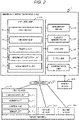
- FIG. 2 illustrates a hardware configuration diagram of the abnormality detection system 1.
- the abnormality detection system 1 includes, for example, an abnormality detection apparatus 100, the first sensor 11, and the second sensor 12.
- the abnormality detection apparatus 100 is implemented by a computer.
- the computer can be used as the abnormality detection apparatus 100 by causing the computer to execute a predetermined computer program.
- FIG. 2 illustrates an example of implementing the abnormality detection apparatus 100 from one computer, but instead, one or a plurality of abnormality detection apparatuses 100 may be formed from a plurality of computers.
- the computer may be a virtual computer.
- the abnormality detection apparatus 100 is connected to the first and second sensors 11 and 12 via a communication network CN.
- the first and second sensors 11 and 12 include a microphone, a vibration sensor, a temperature sensor, a current sensor, a voltage sensor, a weight sensor, and a torque sensor.
- a case in which the first sensor 11 is a microphone (sound sensor) and the second sensor 12 is a sensor that measures a physical quantity other than a sound will be described as an example.
- the abnormality detection apparatus 100 includes, for example, an arithmetic unit 101, a main memory device 102, an auxiliary memory device 103, an input unit 104, an output unit 105, and a communication unit 106.
- the arithmetic unit 101 includes one or a plurality of microprocessors, and implements a predetermined function as the abnormality detection apparatus 100 by reading the predetermined computer program stored in the auxiliary memory device 103 into the main memory device 102.
- the predetermined function is, for example, the encoding unit 13, the decoding unit 14, the training unit 15, the abnormality detection unit 16, and the state grasping unit 17.
- the input unit 104 can include, for example, a keyboard, a touch panel, or a pointing device, and receives input from a user using the abnormality detection apparatus 100.
- the output unit 105 can include, for example, a monitor display, a speaker, or a printer, and provides information to the user.
- the communication unit 106 communicates with the first and second sensors 11 and 12 via the communication network CN.
- the communication unit 106 can also communicate with another computer (not shown).
- a memory medium MM is, for example, a flash memory or a hard disk, and transfers a computer program or data to the abnormality detection apparatus 100 for memory, and reads and stores the computer program or data from the abnormality detection apparatus 100.
- the memory medium MM may be directly connected to the abnormality detection apparatus 100, or may be connected to the abnormality detection apparatus 100 via the communication network CN.
- the first sensor 11 will be described as an example.
- the second sensor 12 can be implemented in the same manner.
- the first sensor 11 includes, for example, a sensor unit 111, a control unit 112, a memory unit 113, and a communication unit 114.
- the sensor unit 111 is a microphone that detects a sound of the target machine 2. Therefore, in the following, the sensor unit 111 may be referred to as a microphone 111.
- Data of the sound detected by the sensor unit 111 is stored in the memory unit 113.
- the control unit 112 controlling the sensor 11 transmits the sound data stored in the memory unit 113 toward the abnormality detection apparatus 100.
- FIG. 3 illustrates a method of training the machine learning model.
- the first data D0 output from the first sensor 11 is input to the encoding unit 13.
- the encoding unit 13 calculates feature data of the input first data D0 and outputs encoded data D2.
- the encoded data D2 includes latent expressions (can also be referred to as latent variables) LV12(1) to LV12(3) and LV0 for restoring the first data from the input first data D0.
- the predetermined latent expressions LV12(1) to LV12(3) are used to estimate the output of the second sensor 12 (the second data D1).
- a first predetermined latent expression LV12(1) is used, for example, to estimate output of a second sensor 12(1) such as a temperature sensor.
- a second predetermined latent expression LV12(2) is used, for example, to estimate output of a second sensor 12(2) such as a voltage sensor.
- a third predetermined latent expression LV12(3) is used, for example, to estimate output of a second sensor 12(3) such as a load weight sensor.
- the temperature sensor, the voltage sensor, and the load weight sensor are examples for explanation.
- the other latent expression LV0 is not used to estimate the output of the second sensor 12, and is only used to restore the output of the first sensor 11. That is, only predetermined data LV12(1) to LV12(3) as a part of the encoded data D2 output from the encoding unit 13 is used to estimate the output of the second sensor 12, and remaining data LV0 is used to estimate the output of the first sensor 11 together with the predetermined data LV12(1) to LV12(3).
- not only the first sensor 11 but also the second sensors 12(1) to 12(3) are attached to the target machine 2 and output data RV12(1) to RV12(3) as observation values.
- the training unit 15 compares the data estimated from the predetermined latent expressions LV12(1) to LV12(3) with the observation data RV12(1) to RV12(3) measured by the actual second sensors 12(1) to 12(3), and calculates an estimation error which is a difference therebetween.
- the decoding unit 14 restores the first data D0 of the first sensor 11 from the encoded data D2 output from the encoding unit 13, and outputs restored first data D0A.
- a description will be given by changing to the code "D0" of the observed first data and the code "D0A" of the restored first data.
- the training unit 15 compares the first data D0 output from the first sensor 11 and the first data D0A restored by the decoding unit 14, calculates a restoration error (reconstruction error) which is the difference therebetween, and adjusts the parameters of the encoding unit 13 and the parameters of the decoding unit 14 such that a total loss of the estimation error and the restoration error is minimized.
- a restoration error reconstruction error
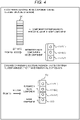
- FIG. 4 is an explanatory diagram illustrating an effect of the present embodiment.
- (1) of FIG. 4 illustrates a comparative example.
- the second data D1 output from the second sensor 12 is estimated using all of the latent expressions LV12(1) to LV12(3) obtained from the first data D0 output from the first sensor 11. Therefore, a variation added to the first data D0, even if unrelated to the second data D1, is reflected in the estimation of the second data D1.
- the first sensor 11 measures an operation sound of the target machine 2 and an operation speed of the target machine is estimated from the operation sound.
- An operation sound of another apparatus near to the target machine 2 is not a measurement target of the first sensor 11, and is thus a noise.
- the first sensor 11 detects the operation sound of the other apparatus included in the operation sound of the target machine 2, a noise component thereof is reflected in an estimation value of the operation speed.
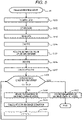
- FIG. 5 is a flow chart of a training process S1.
- the abnormality detection system 1 acquires the first data D0 from the first sensor 11 (S101), and stores the acquired first data D0 in the auxiliary memory device 103 (S102).
- the abnormality detection system 1 causes the main memory device 102 to read the first data D0 stored in the auxiliary memory device 103 (S103), and causes the encoding unit 13 to encode the first data D0 (S104).
- the abnormality detection system 1 estimates the second data D1 of the second sensor 12 from the predetermined latent expression of the latent expressions generated by the encoding unit 13 (S105).
- the abnormality detection system 1 causes the decoding unit 14 to restore the first data D0 using all of the latent expressions generated by the encoding unit 13 (S106).
- the abnormality detection system 1 calculates, as a loss, the restoration error between the first data D0 input into the encoding unit 13 and the first data D0A restored by the decoding unit 14 and the estimation error between the second data observed by the second sensor 12 and the second data estimated from the predetermined latent expression (S107).
- the abnormality detection system 1 repeatedly learns parameters of the machine learning model such that a value of the calculated loss is minimized (S109 to S111). These parameters of the machine learning model are stored in the training model database DB2 (S112).
- the abnormality detection system 1 determines whether a predetermined convergence condition is satisfied or an iteration count C1 of the present process exceeds an upper limit value ThC (S108).
- the training unit 15 updates the parameters of the machine learning model (S109), calculates the convergence condition (S110), increments the iteration count C1 by 1, and returns to step S108.
- the abnormality detection system 1 stores the parameters of the machine learning model to the training model database DB2 (S112).
- FIG. 6 is a flow chart of a process S2 for detecting the abnormality of the target machine 2.
- the abnormality detection process S2 corresponds to a process at the time of operation in which the machine learning model is operated. At the time of operation according to the present embodiment, only the first sensor 11 is provided in the target machine 2, and the second sensor 12 is not provided in the target machine.
- the abnormality detection system 1 reads the parameters of the machine learning model from the training model database DB2 and sets the read parameters to the encoding unit 13 and the decoding unit 14 (S201) .
- the abnormality detection system 1 acquires the first data D0 from the first sensor 11 (S202) and stores the acquired first data D0 in the auxiliary memory device 103 (S203).
- the abnormality detection system 1 causes the main memory device 102 to read the first data D0 stored in the auxiliary memory device 103 (S204), and causes the encoding unit 13 to encode the first data D0 to generate the latent expressions (S205).
- the abnormality detection system 1 estimates the second data D1 of the second sensor 12 from the predetermined latent expression of the latent expressions generated by the encoding unit 13 (S206).
- the decoding unit 14 restores the first data D0 (D0A in FIG. 3 ) using all of the latent expressions generated by the encoding unit 13 (S207).
- step S208 the abnormality detection system 1 treats the restoration error of the first data D0 as the abnormality degree, and determines whether the target machine 2 is in an abnormal state or a normal state from a magnitude of the abnormality degree. Further, the abnormality detection system 1 grasps the state of the target machine 2 from the first data which is the observation value and the second data D1 which is the estimation value, and estimates a cause of the case where it is determined that the target machine 2 is in the abnormal state.
- the abnormality detection system 1 can estimate the cause of the abnormality of the target machine 2 from the estimation value of the second data D1 output from the second sensor 12, such as an operation speed, a temperature, or a voltage. For example, in the case where it is determined from the operation sound that the target machine 2 is abnormal, when a temperature of the target machine 2 is higher than a predetermined temperature, the abnormality detection system 1 can estimate that the abnormality of the target machine 2 is caused by the temperature.
- the second data D1 of the second sensor 12 which is not used at the time of operation can be estimated on the basis of the first data D0 of the first sensor 11 which is used at the time of operation. Therefore, even when the target machine 2 cannot be attached with a plurality of sensors due to limitation of sensor attachment or the like, it is possible to detect the abnormality of the target machine 2 from the first and second data D0 and D1 of the plurality of sensors and to monitor the state thereof.
- the second data D1 of the second sensor 12 is estimated from the predetermined latent expression which is a part of the latent expressions of the machine learning model, even when a noise unrelated to the second sensor 12 is included in the first data D0 of the first sensor 11, an influence of the noise on the estimation of the second data D1 can be reduced, and reliability is improved.
- a sensor to be selected as the first sensor 11 is selected from a plurality of first sensor candidates by using a physical causal database DB3 that defines a causal relation of the physical quantities.
- FIG. 7 is a block diagram of an abnormality detection system 1A according to the present embodiment.
- the abnormality detection system 1A includes all of configurations of the abnormality detection system 1 illustrated in FIG. 1 and is added with a first sensor selection unit 18 and the physical causal database DB3.
- the first sensor selection unit 18 receives a sensor list L0 defining sensors necessary for grasping the state of the target machine 2, and then selects the first sensor 11 from the sensor group listed in the sensor list L0 with reference to the physical causal database DB3. A sensor that is not selected as the first sensor 11 in the sensor group listed in the sensor list L0 is the second sensor.
- FIG. 8 illustrates a method for selecting the first sensor 11.
- the first sensor selection unit 18 collates the sensor group listed in the sensor list L0 with the physical causal database DB3, and selects the first sensor 11 and the second sensor 12 that can most efficiently grasp the state of the target machine 2.
- To most efficiently grasp the state of the target machine 2 means to grasp the state of the target machine 2 by the smallest number of sensors.
- a sensor for detecting a motor rotation number, a temperature sensor, a vibration sensor, a sensor for detecting a motor acceleration, and a sensor for detecting the operation sound are described as types of the sensors necessary for grasping the state of the target machine 2. That is, physical quantities necessary for grasping the state of the target machine 2 are defined in the sensor list L0.
- the physical causal database DB3 illustrates causal relations between a plurality of the physical quantities. For example, a motor rotation number of a machine may affect the operation sound but is not affected by the operation sound. It is possible to select the first sensor 11 that can efficiently grasp the state of the target machine 2 using such physical causal relations.
- the physical causal relations may be manually set in advance by an administrator or the like of the abnormality detection system 1A, or may be semi-automatically or automatically created by simulation software or the like.
- the present embodiment constituted in this manner also achieves the same operational effect as that of the first embodiment. Further, in the present embodiment, it is possible to determine a sensor having a minimum configuration on the basis of the sensor list L0 illustrating the sensor group necessary for grasping the state of the target machine 2 (measurement values are necessary physical quantities). This improves convenience of the user using the abnormality detection system 1A.
- the first sensor 11 is selected from the sensor group listed in the sensor list L0 without using the physical causal database DB3.
- the sensor that is not selected as the first sensor 11 is the second sensor 12.
- FIG. 9 is a block diagram of an abnormality detection system 1A1 according to the present modification.
- the abnormality detection system 1A1 includes the first sensor selection unit 18 but does not include the physical causal database DB3.
- FIG. 10 illustrates a method for selecting the first sensor 11 by the first sensor selection unit 18.
- the first sensor selection unit 18 selects one sensor from the sensor group listed in the sensor list L0 as a first sensor candidate 11A and sets a sensor that is not selected as a second sensor candidate 12A. Then, the abnormality detection system 1A1 calculates a restoration error between an observation value D0 and a restoration value D3 of the first sensor candidate 11A and an estimation error between an observation value of the second sensor candidate 12A and an estimation value estimated from the predetermined latent expression generated by the encoding unit 13.
- the abnormality detection system 1A1 calculates a loss at the time of training while changing the first sensor candidate 11A, and selects a first sensor candidate 11A having the minimum loss as the first sensor 11.
- the present modification constituted in this manner also achieves the same operational effect as that of the present embodiment. Further, in the present modification, since the physical causal database DB3 is not used, it is not necessary to prepare the physical causal database DB3 in advance. Therefore, the present modification improves convenience of a user using the abnormality detection system 1A1.
- An abnormality detection system 1B calculates the abnormality degree using the estimation error of the second data D1 in addition to the restoration error of the first data D0 when detecting the abnormality of the target machine 2.
- FIG. 11 is a block diagram of an abnormality detection system 1B according to the present embodiment.
- FIG. 12 illustrates a method for detecting the abnormality.
- the first sensor 11 and the second sensor 12 are provided in the target machine 2, and data of each is output as an observation value.
- the abnormality detection system 1B determines the parameters of the machine learning model, such that the second data of the second sensor 12 can be estimated on the basis of the predetermined latent expression of the latent expressions based on the first data D0 of the first sensor 11 (S301).
- the target machine 2 is provided with the first sensor 11 and the second sensor 12.
- the first sensor 11 outputs the first data D0 as the observation value
- the second sensor 12 outputs the second data D1 as the observation value.
- the abnormality detection system 1B compares the second data D1 observed by the second sensor 12 and the second data D1 estimated from the first data D0 and calculates the estimation error (S302).
- the abnormality detection system 1B calculates the restoration error between the first data D0 and the first data D0A restored from the first data D0 (S303), and determines the abnormality degree of the target machine 2 from the estimation error and the restoration error (S304).
- the present embodiment constituted in this manner also achieves the same operational effect as that of the first embodiment.
- the abnormality degree is calculated by including the estimation error in addition to the restoration error, and thus it is possible to detect the abnormality of the target machine 2 at higher accuracy than the method of calculating the abnormality degree by using only the restoration error.
- a fourth embodiment will be described with reference to FIGS. 13 and 14 .
- a training model created from data on a machine of the same type as the target machine 2 is used as an initial model, and the initial model is finely tuned with data obtained from the target machine 2.
- FIG. 13 is a block diagram of an abnormality detection system 1C.
- the abnormality detection system 1C according to the present embodiment includes a pre-trained model database DB4.
- the pre-trained model database DB4 stores a pre-trained model M0 (refer to FIG. 14 )
- the pre-trained model M0 will be described with reference to FIG. 14 .
- the pre-trained model M0 is a training model generated for a machine of the same type, i.e., a machine that belongs to the same machine genre as the target machine 2 but has a different individual identification number.
- the machine genre can be classified from information including a machine type, a vendor name, a driving method, and the like, for example, as in "hydraulic type press machine made by A” and "electric type die casting system made by B".
- the machine genre may be classified from the machine type and the driving method.
- the machine genre may be classified by only the machine type.
- machine genres MG1 and MG2 are illustrated.
- the machine genre MG1 and the machine genre MG2 are products of the same vendor, but have driving methods different from each other, such as a hydraulic type and an electric type. It is assumed that a factory of a user who uses the abnormality detection system 1C is provided with machines belonging to the machine genres MG1 and MG2.
- the machine genre MG1 includes two identification numbers IN1 and IN2. Meanwhile, the other machine genre MG2 includes two identification numbers IN3 and IN4.
- the target machine 2 is a machine having the identification number IN1 of the machine genre MG1.
- the abnormality detection system 1 trains the training model in the training model database DB2 on the basis of the data measured by the first and second sensors 11 and 12 for the target machine 2 (MG1, IN1) (S401) as described above.
- the abnormality detection system 1 uses, as the pre-trained model M0, a machine learning model generated for a machine of the same type (MG1, IN2) that has an identification number IN different from that of the target machine 2 but belongs to the same machine genre MG1 (S402).
- the abnormality detection system 1 acquires the pre-trained model M0 stored in the pre-trained model database DB4 and uses the pre-trained model M0 as an initial value of the machine learning model used to monitor the target machine 2 (S403) .
- the present embodiment constituted in this manner also achieves the same operational effect as that of the first embodiment. Further, in the present embodiment, when amounts of the first and second data D0 and D1 measured for the target machine 2 are small, the pre-trained model created for the machine of same type as the target machine 2 is used as the initial value of the machine learning model and is finely tuned by the data measured for the target machine 2, and thus it is possible to create an appropriate machine learning model in a shorter time.
- a fifth embodiment will be described with reference to FIGS. 15 and 16 .
- the physical quantities measured for the target machine 2 continuously change in accordance with the state of the target machine 2, data between the observed data is interpolated.
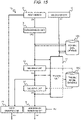
- FIG. 15 is a block diagram of an abnormality detection system 1D according to the present embodiment.
- the abnormality detection system 1D includes a data expansion unit 19 for expanding the first data D0 detected by the first sensor 11.
- both the first sensor 11 and the second sensor 12 can be used at the time of training the machine learning model used to grasp the state of the target machine 2.
- the first sensor 11 may be used, and the second sensor 12 may or may not be used. That is, at the time of operation, the second data of the second sensor 12 may be estimated on the basis of the first data.
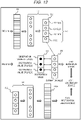
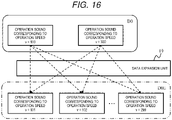
- FIG. 16 illustrates a method for expanding the data.
- the first sensor 11 is a microphone for measuring the operation sound
- the operation sound of the target machine 2 changes in accordance with a continuously changing state such as the temperature, the operation speed, and the pressure of the target machine 2.
- the abnormality detection system 1D generates expansion data (interpolation data) D0E by using a data expansion method such as mix-up on the basis of first data D0 of an operation sound measured in one state of the target machine 2 (an operation sound at an operation speed v100) and first data D0 of an operation sound measured in another state of the target machine 2 (an operation sound at an operation speed v300).
- unmeasured data such as data of an operation sound at an operation speed v101, data of an operation sound at an operation speed v102, data of an operation sound at an operation speed v103, ..., and data of an operation sound at an operation speed v299 can be acquired in advance.
- the present embodiment constituted in this manner also achieves the same operational effect as that of the first embodiment. Further, in the present embodiment, even when the first data D0 output from the first sensor 11 changes in accordance with a continuous state change of the target machine 2, the first data D0 of the first sensor 11 can be expanded and acquired in advance, and the machine learning model can be created in an early stage.
- a sixth embodiment will be described with reference to FIGS. 17 to 22 .
- it is possible to improve the abnormality detection accuracy and to satisfy the required robustness by optimizing a loss function used in the machine learning model in accordance with characteristics of the target machine 2.
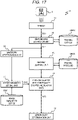
- FIG. 17 is a block diagram of an abnormality detection system 1E at the time of training.
- the abnormality detection system 1E may include, for example, a sensor 51, a feature data extraction unit 52, a machine learning unit 53, a loss calculation unit 54, an abnormality determination unit 55, a waveform determination unit 56, a hyper parameter setting unit 57, a training data database DB1E, a training model database DB2E, and a hyper parameter set database DB5.
- a sensor such as a microphone that measures the operation sound of the target machine 2 will be described as an example of the sensor 51.
- a vibration sensor may be used as the sensor 51.
- the feature data extraction unit 52 extracts feature data vector (hereinafter, referred to as feature data) D51 from data 50 measured by the sensor 51, and stores the extracted feature data D51 in the training data database DB1E.
- feature data feature data vector
- the machine learning unit 53 trains the machine learning model stored in the training model database DB2E using the feature data D51 extracted by the feature data extraction unit 52.
- the loss calculation unit 54 calculates a loss between an observation value of the sensor 51 and a restoration value restored by the machine learning model. It is possible to determine how abnormal the target machine 2 is on the basis of a magnitude of the loss, and thus the loss calculation unit 54 may be referred to as an abnormality degree calculation unit 54.
- the abnormality determination unit 55 determines whether the target machine 2 is abnormal on the basis of data D53 output from the loss calculation unit 54 (loss or abnormality degree).
- the waveform determination unit 56 determines a waveform pattern registered in advance to which a waveform pattern of the operation sound corresponds, on the basis of the extracted feature data D51.
- the hyper parameter setting unit 57 refers to the hyper parameter set database DB5 to select one hyper parameter set on the basis of a determination result of the waveform determination unit 56, and sets the selected hyper parameter set D52 in the loss calculation unit 54.
- FIG. 18 is a hardware configuration diagram when the abnormality detection system 1E is implemented using a computer 50.
- the computer 50 includes, for example, a control unit 501, a memory unit 502, a storage 503, and an input/output device (I/O device) 504, and is connected to the communication network CN.
- the computer 50 can be connected to the memory medium MM, and can transmit and receive a computer program or data between the memory medium MM and the memory 502 or the storage 503.
- a predetermined computer program stored in the storage 503 is read into the memory 502 and executed by the control unit (arithmetic unit) 501, thereby implementing the feature data extraction unit 52, the machine learning unit 53, the loss calculation unit 54, and the abnormality determination unit 55.
- a part or all of the predetermined computer program can be stored in the memory medium MM.
- FIG. 19 illustrates a method for setting the hyper parameter set in accordance with the characteristics and the required robustness of the target machine 2 in the loss calculation unit 54.
- the waveform determination unit 56 selects a waveform pattern and the like corresponding to the machine type on the basis of a table T1 illustrating a combination of the machine type and the waveform pattern and the like.
- the waveform pattern and the like indicate a tendency of a waveform pattern and a noise for each target machine 2.
- a fan outputs a stationary operation sound and hardly generates an abrupt sound (noise).
- a pump outputs a stationary operation sound but may also generate an abrupt sound sometimes.
- a slider generates different sounds during operation and during stop, and thus a stationary operation sound and a non-stationary operation sound coexist.
- a valve operates intermittently, and thus has a non-stationary operation sound.
- the waveform determination unit 56 may determine a machine type to which the target machine 2 corresponds from the feature data D51 of the operation sound of the target machine 2, or by acquiring a signal indicating the type of the target machine 2. For example, when the abnormality detection system 1E is installed at a factory, the type of the target machine 2 may be set manually.
- the hyper parameter setting unit 57 refers to the hyper parameter set database DB5 on the basis of the determination result of the waveform determination unit 56 (the corresponding waveform pattern and the like), thereby identifying a hyper parameter set to be set in the loss calculation unit 54.
- the hyper parameter set database DB5 manages, for example, a set number, the waveform pattern and the like, the required robustness, the hyper parameter, the number of samples, and a weight of the loss function in association with one another.
- the required robustness illustrates the required robustness for determining the abnormality of the target machine 2.
- the required robustness includes, for example, "high”, “low”, “medium-low”, and “medium-high”.
- the hyper parameter includes, for example, a standard deviation ⁇ and an average value ⁇ of a probability distribution function used by the loss calculation unit 54.
- the hyper parameter setting unit 57 selects a hyper parameter set corresponding to the determined waveform pattern and the like, and sets the hyper parameter and the weight of the loss function included in the selected hyper parameter set in the loss calculation unit 54.
- a hyper parameter set is selected such that a range determined as normal by the loss calculation unit 54 is narrowed (Set-1).
- a hyper parameter is selected such that the range determined as normal by the loss calculation unit 54 is widened (Set-4).
- a hyper parameter set used in a case where the target machine 2 is a pump or a slider is an intermediate value has a range determined to be normal by the loss calculation unit 54 that is between the case of a fan and the case of a valve.
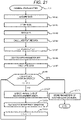
- FIG. 21 is a flow chart illustrating a process S11 at the time of training.
- the abnormality detection system 1E acquires the data D50 measured by the sensor 51 (S1101), and stores the acquired data D50 in the storage 503 (S1102).
- the abnormality detection system 1E reads the data D50 from the storage 503 to the memory 502 (S1103), and causes the feature data extraction unit 52 to extract the feature data D51 (S1104).
- the abnormality detection system 1E causes the waveform determination unit 56 to determine the waveform pattern and the like of the feature data D51 (S1105), and causes the hyper parameter setting unit 57 to select the hyper parameter set in accordance with the waveform pattern and the like (S1106).
- the loss calculation unit 54 uses the hyper parameter set that is set by the hyper parameter setting unit 57 to calculate the loss of the machine learning model (S1108).
- the abnormality detection system 1E repeatedly learns the parameters of the machine learning model such that a value of the calculated loss is minimized (S1109 to S1111). These parameters of the machine learning model are stored in the training model database DB2E (S1112).
- the abnormality detection system 1E determines whether the predetermined convergence condition is satisfied or the iteration count C1 of the present process exceeds the upper limit value ThC (S1108).
- the machine learning unit 53 updates the parameters of the machine learning model (S1109), calculates the convergence condition (S1110), increments the iteration count C1 by 1, and returns to step S1108.
- the abnormality detection system 1E stores the parameters of the machine learning model to the training model database DB2E (S1112).
- FIG. 22 is a flow chart of a process S21 for detecting the abnormality of the target machine 2.
- the abnormality detection system 1E reads and sets the parameters of the machine learning model from the training model database DB2E (S2101).
- the abnormality detection system 1E acquires the data D50 from the sensor 51 (S2102), and stores the acquired data D50 in the storage 503 (S2103).
- the abnormality detection system 1E reads the data D50 stored in the storage 503 into the memory 502 (S2104), and causes the feature data extraction unit 52 to extract the feature data D51 (S2105).
- the abnormality detection system 1E causes the waveform determination unit 56 to determine the waveform pattern and the like (S2106), and causes the hyper parameter setting unit 57 to set the hyper parameter set in accordance with the determination result in the loss calculation unit 54 (S2107).
- the abnormality detection system 1E causes the loss calculation unit 54 to calculate the abnormality degree by a method according to properties of the target machine 2 (S2108).
- the abnormality detection system 1E causes the abnormality determination unit 55 to determine whether the calculated abnormality degree is larger than a predetermined threshold value (S2109).
- the abnormality determination unit 54 determines that the target machine 2 is in the abnormal state (S2110). In contrast, when the calculated abnormality degree is equal to or less than the predetermined threshold value (S2109: NO), the abnormality determination unit 54 determines that the target machine 2 is in the normal state (S2111).
- the hyper parameter set selected in accordance with the type of the target machine 2 can be set in the loss calculation unit 54, and thus the abnormality of the target machine 2 can be detected more appropriately.
- the robustness is determined according to a degree of change in the physical quantities measured for the target machine 2 (whether the physical quantities are stationary or non-stationary, whether noise is mixed, or the like), and thus it is possible to detect the abnormality according to the properties of the target machine 2.
- the present embodiment can be combined with the first to the fifth embodiments.
- the first sensor and the second sensor may be used as in the first embodiment.
- a value of the second sensor may be estimated using a part of the latent expressions obtained from the first sensor.
- the invention is not limited to the above embodiments, and includes various modifications.
- the embodiments described above have been described in detail for easy understanding of the invention, and are not necessarily limited to those including all the configurations described above.
- a part of a configuration of one embodiment can be replaced with the configuration of another embodiment, and the configuration of another embodiment can be added to the configuration of one embodiment.
- a part of the configuration of each embodiment may be added to, deleted from, or replaced with another configuration.
Landscapes
- Engineering & Computer Science (AREA)
- Physics & Mathematics (AREA)
- General Physics & Mathematics (AREA)
- Automation & Control Theory (AREA)
- Software Systems (AREA)
- Evolutionary Computation (AREA)
- Artificial Intelligence (AREA)
- Mathematical Physics (AREA)
- Theoretical Computer Science (AREA)
- Computer Vision & Pattern Recognition (AREA)
- Data Mining & Analysis (AREA)
- Medical Informatics (AREA)
- Computing Systems (AREA)
- General Engineering & Computer Science (AREA)
- Testing And Monitoring For Control Systems (AREA)
Abstract
Description
- The present invention relates to an abnormality detection system and an abnormality detection method.
- A company suffers from loss when a machine in a factory has an abnormality and is stopped for a long time. Therefore, at the time of cyclic inspection, a skilled person detects an initial abnormality of the machine on the basis of his/her five senses. However, in recent years, since there are not enough skilled persons, mechanization and labor saving are desired. In order to detect an abnormality of a target machine at an early stage, it is necessary to collect and analyze data by attaching various types of sensors to the target machine. However, it is difficult to attach all of the necessary sensors to the target machine due to a physical restriction or a cost of the target machine. Therefore, a technique for estimating, from certain sensor data, other sensor data by using a regression model is proposed (
JP-A-2017-207904 - In the method described in
Patent Literature 1, all variations in the sensor data input in the regression model are described as variations to be estimated. Therefore, inPTL 1, in a case where a variation unrelated to the sensor data to be estimated is added to the input sensor data, the unrelated variation is reflected on a value of the sensor data to be estimated. - Therefore, an object of the present disclosure is to provide an abnormality detection system and an abnormality detection method capable of performing more stable abnormality detection.
- In order to solve the above problems, an abnormality detection system according to one aspect of the invention is an abnormality detection system that detects an abnormality of a target machine by a computer. The computer includes a communication unit configured to acquire first data from a first sensor attached to the target machine and second data from a second sensor attached to the target machine, an arithmetic unit, and a memory unit. The arithmetic unit includes an encoding unit trained to generate latent expressions including a predetermined latent expression that estimates the second data on the basis of the first data, a decoding unit trained to restore the first data from the latent expressions, and an abnormality detection unit configured to detect the abnormality of the target machine on the basis of a restoration error between the first data and the first data restored by the decoding unit.
- According to the invention, since the second data output from the second sensor is estimated using the predetermined latent expression which is a part of the latent expression, when the first data varies due to factors other than the second sensor, it is possible to describe the variation using another latent expression other than the predetermined latent expression and more robustly estimate the second data than in the related art.
-
-
FIG. 1 is a block diagram of an abnormality detection system. -
FIG. 2 is a hardware configuration diagram of the abnormality detection system. -
FIG. 3 is an explanatory diagram when a model is trained. -
FIG. 4 is an explanatory diagram illustrating an effect of the present embodiment. -
FIG. 5 is a flow chart of a training process. -
FIG. 6 is a flow chart of an abnormality detection process (at the time of operation). -
FIG. 7 is a block diagram of an abnormality detection system according to a second embodiment. -
FIG. 8 is an explanatory diagram of a method for selecting a first sensor. -
FIG. 9 is a block diagram of an abnormality detection system according to a modification of the second embodiment. -
FIG. 10 is an explanatory diagram of a method for selecting the first sensor. -
FIG. 11 is a block diagram of an abnormality detection system according to a third embodiment. -
FIG. 12 is an explanatory diagram of a method for detecting an abnormality. -
FIG. 13 is a block diagram of an abnormality detection system according to a fourth embodiment. -
FIG. 14 is an explanatory diagram of a pre-trained model. -
FIG. 15 is a block diagram of an abnormality detection system according to a fifth embodiment. -
FIG. 16 is an explanatory diagram of a data expansion unit. -
FIG. 17 is a block diagram of an abnormality detection system according to a sixth embodiment. -
FIG. 18 is a hardware configuration diagram of the abnormality detection system. -
FIG. 19 is an explanatory diagram of a method for setting a hyper parameter in a loss calculation unit. -
FIG. 20 is an explanatory diagram illustrating a relation between an abnormality degree and a probability distribution function. -
FIG. 21 is a flow chart of a training process. -
FIG. 22 is a flow chart of an abnormality detection process. - Hereinafter, an embodiment of the invention will be described with reference to the drawings. In this disclosure, a state of a machine to be subjected to abnormality detection (target machine) is determined by a minimum number of sensors. A
target machine 2 includes various industrial machines such as a press machine, an injection molding machine, a heating furnace, an NC machine tool, a 3D printer, an electric discharge machine, a welding device, a machining center, a polishing device, an industrial sewing machine, and an industrial robot. Thetarget machine 2 is not limited to the industrial machines, and may also include, for example, electric machines such as an air conditioner, a freezer, and a blower. - One
target machine 2 may be configured with a plurality of machines such as a fan, a pump, a slider, a valve, and a motor. For example, physical quantities such as temperature, pressure, speed, voltage, current, load weight, load torque, vibration, and operation sound are measured by sensors. Anabnormality detection system 1 determines a state and presence/absence of an abnormality of thetarget machine 2 on the basis of data output by the sensors. - The
abnormality detection system 1 according to this disclosure estimates, on the basis of first data D0 output from afirst sensor 11, second data D1 output from asecond sensor 12, which is different from thefirst sensor 11. - The
first sensor 11 is attached to thetarget machine 2 whose abnormality is to be detected, and outputs the first data D0 at the time of training a machine learning model and at the time of operating a machine learning model. Thesecond sensor 12 may be used only at the time of training the machine learning model to output the second data D1, and may be used also at the time of operating the machine learning model to output the second data D1. - In one embodiment, when the sensors attachable to the
target machine 2 are limited, afirst sensor 11 capable of estimating all sensors required for monitoring the state of thetarget machine 2 is selected. Thefirst sensor 11 may be one or more. In the following description, a case where onefirst sensor 11 is used will be mainly described. - The
abnormality detection system 1 according to the embodiment described above estimates the second data D1 output from thesecond sensor 12, which is necessary for monitoring the state of thetarget machine 2 but is not installed in thetarget machine 2, on the basis of the first data D0 output from thefirst sensor 11. Theabnormality detection system 1 monitors the state of thetarget machine 2, detects an abnormality, and identifies a cause of the abnormality on the basis of the first data D0 and the estimated second data D1. Thesecond sensor 12 whose output is estimated with the first data D0 measured by thefirst sensor 11 may be one or more. - According to this disclosure, since the machine learning model capable of estimating the second data D1 of the
second sensor 12 which is not installed from the first data D0 of thefirst sensor 11 which is installed is generated at the time of training, it is possible to monitor the state and detect the abnormality even when thetarget machine 2 cannot have a plurality of sensors installed in at the time of operation. - In another embodiment of this disclosure, when physical quantities in accordance with the state of the
target machine 2 are measured by the sensors, a set of hyper parameters to be used when calculating a difference between an observation value and a restoration value is selected according to a relation between the physical quantities and a type of the target machine. The set of the hyper parameters can be prepared in advance, for example, in accordance with physical properties and a required robustness of thetarget machine 2. Accordingly, the abnormality of thetarget machine 2 can be detected as appropriate in accordance with the physical properties and the required robustness of thetarget machine 2. - A first embodiment will be described with reference to
FIGS. 1 to 6 .FIG. 1 is a block diagram of theabnormality detection system 1 according to the present embodiment. In the present embodiment, the state of thetarget machine 2 such as a motor, a fan, a pump, a valve, and a slider is measured to monitor the state oftarget machine 2 and calculate an abnormality degree by a minimum number of thefirst sensors 11. A power source of thetarget machine 2 may be any electricity, hydraulic pressure, and pneumatic pressure. - The
abnormality detection system 1 includes, for example, thefirst sensor 11, thesecond sensor 12, anencoding unit 13, adecoding unit 14, atraining unit 15, anabnormality detection unit 16, astate grasping unit 17, a training data database DB1, and a training model database DB2. - The
abnormality detection system 1 estimates the second data D1 output from thesecond sensor 12 which is not installed at the time of operating the target machine 2 (at the time of operating the machine learning model) from the first data D0 output from thefirst sensor 11 which can be installed at the time of operation. Therefore, theencoding unit 13 acquires latent expressions for estimating the second data D1 from the first data D0 at the time of training the machine learning model. - The
decoding unit 14 restores the first data D0 output from thefirst sensor 11 using all the latent expressions obtained by theencoding unit 13. - At the time of training the machine learning model (sometimes referred to as a model training time or a training mode), the training is performed by acquiring the first data D0 and the second data D1 from the
machine 2 attached with all of the first andsecond sensors target machine 2. At the time of training, theencoding unit 13 is trained so as to obtain, from the first data D0 of thefirst sensor 11 that can be installed at the time of operation, a latent expression that represents the second data D1 of thesecond sensor 12 which is not installed at the time of operation. - At the time of operation, the first data D0 from the
first sensor 11 which is installed in thetarget machine 2 is used. Theabnormality detection system 1 estimates the second data D1 of thesecond sensor 12 which is not installed in thetarget machine 2 by using theencoding unit 13. - The
state grasping unit 17 of theabnormality detection system 1 grasps the state of thetarget machine 2 from the first data D0 of the first sensor which is installed in thetarget machine 2 and the second data (estimation value) of thesecond sensor 12 which is not installed in thetarget machine 2. - The
state grasping unit 17 outputs an observation value or an estimation value of thefirst sensor 11 or thesecond sensor 12 as data D5. At the time of training, thestate grasping unit 17 outputs the observation value of thefirst sensor 11 and the observation value of thesecond sensor 12. As will be described in embodiments to be described later, thestate grasping unit 17 can also output the estimation value of thesecond sensor 12 at the time of training. Thestate grasping unit 17 outputs the observation value of thefirst sensor 11 and the estimation value of thesecond sensor 12 as data D5 at the time of operation. - Here, the observation value of the
first sensor 11 is the first data D0 actually measured by thefirst sensor 11. The estimation value of thesecond sensor 12 is the second data D1 estimated from the first data. - The
abnormality detection unit 16 of theabnormality detection system 1 calculates and outputs an abnormality degree D6 indicating whether an abnormality occurs in thetarget machine 2 on the basis of a difference between the first data D0 observed by thefirst sensor 11 and first data D0 restored by theencoding unit 13 and thedecoding unit 14 constituting the machine learning model. The abnormality degree D6 can be used in other systems such as a production management system (not shown). - The
training unit 15 learns parameters used in theencoding unit 13 and parameters used in thedecoding unit 14 on the basis of training data stored in the training data database DB1, the first data D0 of thefirst sensor 11, and the second data D1 of thesecond sensor 12. Further, thetraining unit 15 updates the parameters used in theencoding unit 13 and the parameters used in thedecoding unit 14 and stores the updated parameters in the training model database DB2 such that a predetermined loss function is minimized. -
FIG. 2 illustrates a hardware configuration diagram of theabnormality detection system 1. Theabnormality detection system 1 includes, for example, anabnormality detection apparatus 100, thefirst sensor 11, and thesecond sensor 12. - The
abnormality detection apparatus 100 is implemented by a computer. The computer can be used as theabnormality detection apparatus 100 by causing the computer to execute a predetermined computer program.FIG. 2 illustrates an example of implementing theabnormality detection apparatus 100 from one computer, but instead, one or a plurality ofabnormality detection apparatuses 100 may be formed from a plurality of computers. The computer may be a virtual computer. - The
abnormality detection apparatus 100 is connected to the first andsecond sensors second sensors first sensor 11 is a microphone (sound sensor) and thesecond sensor 12 is a sensor that measures a physical quantity other than a sound will be described as an example. - The
abnormality detection apparatus 100 includes, for example, anarithmetic unit 101, amain memory device 102, anauxiliary memory device 103, aninput unit 104, anoutput unit 105, and acommunication unit 106. - The
arithmetic unit 101 includes one or a plurality of microprocessors, and implements a predetermined function as theabnormality detection apparatus 100 by reading the predetermined computer program stored in theauxiliary memory device 103 into themain memory device 102. The predetermined function is, for example, theencoding unit 13, thedecoding unit 14, thetraining unit 15, theabnormality detection unit 16, and thestate grasping unit 17. - The
input unit 104 can include, for example, a keyboard, a touch panel, or a pointing device, and receives input from a user using theabnormality detection apparatus 100. Theoutput unit 105 can include, for example, a monitor display, a speaker, or a printer, and provides information to the user. - The
communication unit 106 communicates with the first andsecond sensors communication unit 106 can also communicate with another computer (not shown). - A memory medium MM is, for example, a flash memory or a hard disk, and transfers a computer program or data to the
abnormality detection apparatus 100 for memory, and reads and stores the computer program or data from theabnormality detection apparatus 100. The memory medium MM may be directly connected to theabnormality detection apparatus 100, or may be connected to theabnormality detection apparatus 100 via the communication network CN. - Configurations of the first and
second sensors first sensor 11 will be described as an example. Thesecond sensor 12 can be implemented in the same manner. Thefirst sensor 11 includes, for example, a sensor unit 111, acontrol unit 112, amemory unit 113, and acommunication unit 114. - The sensor unit 111 is a microphone that detects a sound of the
target machine 2. Therefore, in the following, the sensor unit 111 may be referred to as a microphone 111. Data of the sound detected by the sensor unit 111 is stored in thememory unit 113. Thecontrol unit 112 controlling thesensor 11 transmits the sound data stored in thememory unit 113 toward theabnormality detection apparatus 100. -
FIG. 3 illustrates a method of training the machine learning model. As illustrated in an upper side ofFIG. 3 , the first data D0 output from thefirst sensor 11 is input to theencoding unit 13. Theencoding unit 13 calculates feature data of the input first data D0 and outputs encoded data D2. The encoded data D2 includes latent expressions (can also be referred to as latent variables) LV12(1) to LV12(3) and LV0 for restoring the first data from the input first data D0. - Here, four latent expressions are illustrated here for the sake of description, while more latent expressions are actually included. Among the encoded data D2, the predetermined latent expressions LV12(1) to LV12(3) are used to estimate the output of the second sensor 12 (the second data D1). A first predetermined latent expression LV12(1) is used, for example, to estimate output of a second sensor 12(1) such as a temperature sensor. A second predetermined latent expression LV12(2) is used, for example, to estimate output of a second sensor 12(2) such as a voltage sensor. A third predetermined latent expression LV12(3) is used, for example, to estimate output of a second sensor 12(3) such as a load weight sensor. The temperature sensor, the voltage sensor, and the load weight sensor are examples for explanation.
- The other latent expression LV0 is not used to estimate the output of the
second sensor 12, and is only used to restore the output of thefirst sensor 11. That is, only predetermined data LV12(1) to LV12(3) as a part of the encoded data D2 output from theencoding unit 13 is used to estimate the output of thesecond sensor 12, and remaining data LV0 is used to estimate the output of thefirst sensor 11 together with the predetermined data LV12(1) to LV12(3). - As illustrated in the center of
FIG. 3 , at the time of training the machine learning model, not only thefirst sensor 11 but also the second sensors 12(1) to 12(3) are attached to thetarget machine 2 and output data RV12(1) to RV12(3) as observation values. - The
training unit 15 compares the data estimated from the predetermined latent expressions LV12(1) to LV12(3) with the observation data RV12(1) to RV12(3) measured by the actual second sensors 12(1) to 12(3), and calculates an estimation error which is a difference therebetween. - Meanwhile, the
decoding unit 14 restores the first data D0 of thefirst sensor 11 from the encoded data D2 output from theencoding unit 13, and outputs restored first data D0A. Here, for the sake of understanding, a description will be given by changing to the code "D0" of the observed first data and the code "D0A" of the restored first data. - The
training unit 15 compares the first data D0 output from thefirst sensor 11 and the first data D0A restored by thedecoding unit 14, calculates a restoration error (reconstruction error) which is the difference therebetween, and adjusts the parameters of theencoding unit 13 and the parameters of thedecoding unit 14 such that a total loss of the estimation error and the restoration error is minimized. -
FIG. 4 is an explanatory diagram illustrating an effect of the present embodiment. (1) ofFIG. 4 illustrates a comparative example. In the comparative example, the second data D1 output from thesecond sensor 12 is estimated using all of the latent expressions LV12(1) to LV12(3) obtained from the first data D0 output from thefirst sensor 11. Therefore, a variation added to the first data D0, even if unrelated to the second data D1, is reflected in the estimation of the second data D1. - For example, a case will be described in which the
first sensor 11 measures an operation sound of thetarget machine 2 and an operation speed of the target machine is estimated from the operation sound. An operation sound of another apparatus near to thetarget machine 2 is not a measurement target of thefirst sensor 11, and is thus a noise. When thefirst sensor 11 detects the operation sound of the other apparatus included in the operation sound of thetarget machine 2, a noise component thereof is reflected in an estimation value of the operation speed. - In contrast, in the method of the present embodiment illustrated in (2) of
FIG. 4 , only a part of the latent expressions generated by theencoding unit 13 is used to estimate the second data D1 of thesecond sensor 12, and the other latent expression LV0 is not used to estimate the second data. Therefore, when the first data D0 input to theencoding unit 13 varies due to a cause unrelated to the second data D1 to be estimated, the variation is aggregated into the other latent expression LV0 which is not used for the estimation. Therefore, it is possible to confirm that the variation is unrelated to the estimation of the second data D1. -
FIG. 5 is a flow chart of a training process S1. Theabnormality detection system 1 acquires the first data D0 from the first sensor 11 (S101), and stores the acquired first data D0 in the auxiliary memory device 103 (S102). - The
abnormality detection system 1 causes themain memory device 102 to read the first data D0 stored in the auxiliary memory device 103 (S103), and causes theencoding unit 13 to encode the first data D0 (S104). Theabnormality detection system 1 estimates the second data D1 of thesecond sensor 12 from the predetermined latent expression of the latent expressions generated by the encoding unit 13 (S105). - The
abnormality detection system 1 causes thedecoding unit 14 to restore the first data D0 using all of the latent expressions generated by the encoding unit 13 (S106). Theabnormality detection system 1 calculates, as a loss, the restoration error between the first data D0 input into theencoding unit 13 and the first data D0A restored by thedecoding unit 14 and the estimation error between the second data observed by thesecond sensor 12 and the second data estimated from the predetermined latent expression (S107). - The
abnormality detection system 1 repeatedly learns parameters of the machine learning model such that a value of the calculated loss is minimized (S109 to S111). These parameters of the machine learning model are stored in the training model database DB2 (S112). - That is, the
abnormality detection system 1 determines whether a predetermined convergence condition is satisfied or an iteration count C1 of the present process exceeds an upper limit value ThC (S108). When the convergence condition is not satisfied and the iteration count C1 is equal to or less than the upper limit value ThC, thetraining unit 15 updates the parameters of the machine learning model (S109), calculates the convergence condition (S110), increments the iteration count C1 by 1, and returns to step S108. - When the predetermined convergence condition is satisfied (S108: YES), the
abnormality detection system 1 stores the parameters of the machine learning model to the training model database DB2 (S112). -
FIG. 6 is a flow chart of a process S2 for detecting the abnormality of thetarget machine 2. The abnormality detection process S2 corresponds to a process at the time of operation in which the machine learning model is operated. At the time of operation according to the present embodiment, only thefirst sensor 11 is provided in thetarget machine 2, and thesecond sensor 12 is not provided in the target machine. - The
abnormality detection system 1 reads the parameters of the machine learning model from the training model database DB2 and sets the read parameters to theencoding unit 13 and the decoding unit 14 (S201) . Theabnormality detection system 1 acquires the first data D0 from the first sensor 11 (S202) and stores the acquired first data D0 in the auxiliary memory device 103 (S203). - The
abnormality detection system 1 causes themain memory device 102 to read the first data D0 stored in the auxiliary memory device 103 (S204), and causes theencoding unit 13 to encode the first data D0 to generate the latent expressions (S205). - The
abnormality detection system 1 estimates the second data D1 of thesecond sensor 12 from the predetermined latent expression of the latent expressions generated by the encoding unit 13 (S206). - Meanwhile, the
decoding unit 14 restores the first data D0 (D0A inFIG. 3 ) using all of the latent expressions generated by the encoding unit 13 (S207). - In step S208, the
abnormality detection system 1 treats the restoration error of the first data D0 as the abnormality degree, and determines whether thetarget machine 2 is in an abnormal state or a normal state from a magnitude of the abnormality degree. Further, theabnormality detection system 1 grasps the state of thetarget machine 2 from the first data which is the observation value and the second data D1 which is the estimation value, and estimates a cause of the case where it is determined that thetarget machine 2 is in the abnormal state. - For example, when it is determined from the operation sound of the
target machine 2 that thetarget machine 2 is in the abnormal state, theabnormality detection system 1 can estimate the cause of the abnormality of thetarget machine 2 from the estimation value of the second data D1 output from thesecond sensor 12, such as an operation speed, a temperature, or a voltage. For example, in the case where it is determined from the operation sound that thetarget machine 2 is abnormal, when a temperature of thetarget machine 2 is higher than a predetermined temperature, theabnormality detection system 1 can estimate that the abnormality of thetarget machine 2 is caused by the temperature. - According to the present embodiment constituted in this manner, the second data D1 of the
second sensor 12 which is not used at the time of operation can be estimated on the basis of the first data D0 of thefirst sensor 11 which is used at the time of operation. Therefore, even when thetarget machine 2 cannot be attached with a plurality of sensors due to limitation of sensor attachment or the like, it is possible to detect the abnormality of thetarget machine 2 from the first and second data D0 and D1 of the plurality of sensors and to monitor the state thereof. - In the present embodiment, since it is only necessary to attach a part of the
first sensors 11 of a sensor group necessary for monitoring thetarget machine 2 to thetarget machine 2, it is possible to reduce a purchase cost and an attachment cost of the sensors. As a result, it is possible to reduce a cost of theabnormality detection system 1. - In the present embodiment, since the second data D1 of the
second sensor 12 is estimated from the predetermined latent expression which is a part of the latent expressions of the machine learning model, even when a noise unrelated to thesecond sensor 12 is included in the first data D0 of thefirst sensor 11, an influence of the noise on the estimation of the second data D1 can be reduced, and reliability is improved. - A second embodiment will be described with reference to
FIGS. 7 to 10 . In the following embodiments including the present embodiment, differences from the first embodiment will be mainly described. In the present embodiment, a sensor to be selected as thefirst sensor 11 is selected from a plurality of first sensor candidates by using a physical causal database DB3 that defines a causal relation of the physical quantities. -
FIG. 7 is a block diagram of an abnormality detection system 1A according to the present embodiment. The abnormality detection system 1A includes all of configurations of theabnormality detection system 1 illustrated inFIG. 1 and is added with a firstsensor selection unit 18 and the physical causal database DB3. - The first
sensor selection unit 18 receives a sensor list L0 defining sensors necessary for grasping the state of thetarget machine 2, and then selects thefirst sensor 11 from the sensor group listed in the sensor list L0 with reference to the physical causal database DB3. A sensor that is not selected as thefirst sensor 11 in the sensor group listed in the sensor list L0 is the second sensor. -
FIG. 8 illustrates a method for selecting thefirst sensor 11. The firstsensor selection unit 18 collates the sensor group listed in the sensor list L0 with the physical causal database DB3, and selects thefirst sensor 11 and thesecond sensor 12 that can most efficiently grasp the state of thetarget machine 2. To most efficiently grasp the state of thetarget machine 2 means to grasp the state of thetarget machine 2 by the smallest number of sensors. - An example will be described. In the sensor list L0, a sensor for detecting a motor rotation number, a temperature sensor, a vibration sensor, a sensor for detecting a motor acceleration, and a sensor for detecting the operation sound are described as types of the sensors necessary for grasping the state of the
target machine 2. That is, physical quantities necessary for grasping the state of thetarget machine 2 are defined in the sensor list L0. - The physical causal database DB3 illustrates causal relations between a plurality of the physical quantities. For example, a motor rotation number of a machine may affect the operation sound but is not affected by the operation sound. It is possible to select the
first sensor 11 that can efficiently grasp the state of thetarget machine 2 using such physical causal relations. The physical causal relations may be manually set in advance by an administrator or the like of the abnormality detection system 1A, or may be semi-automatically or automatically created by simulation software or the like. - The present embodiment constituted in this manner also achieves the same operational effect as that of the first embodiment. Further, in the present embodiment, it is possible to determine a sensor having a minimum configuration on the basis of the sensor list L0 illustrating the sensor group necessary for grasping the state of the target machine 2 (measurement values are necessary physical quantities). This improves convenience of the user using the abnormality detection system 1A.
- A modification of the present embodiment will be described with reference to
FIGS. 9 and10 . In the present modification, thefirst sensor 11 is selected from the sensor group listed in the sensor list L0 without using the physical causal database DB3. The same as the above, the sensor that is not selected as thefirst sensor 11 is thesecond sensor 12. -
FIG. 9 is a block diagram of an abnormality detection system 1A1 according to the present modification. The abnormality detection system 1A1 includes the firstsensor selection unit 18 but does not include the physical causal database DB3. -
FIG. 10 illustrates a method for selecting thefirst sensor 11 by the firstsensor selection unit 18. The firstsensor selection unit 18 selects one sensor from the sensor group listed in the sensor list L0 as afirst sensor candidate 11A and sets a sensor that is not selected as asecond sensor candidate 12A. Then, the abnormality detection system 1A1 calculates a restoration error between an observation value D0 and a restoration value D3 of thefirst sensor candidate 11A and an estimation error between an observation value of thesecond sensor candidate 12A and an estimation value estimated from the predetermined latent expression generated by theencoding unit 13. - The abnormality detection system 1A1 calculates a loss at the time of training while changing the
first sensor candidate 11A, and selects afirst sensor candidate 11A having the minimum loss as thefirst sensor 11. - The present modification constituted in this manner also achieves the same operational effect as that of the present embodiment. Further, in the present modification, since the physical causal database DB3 is not used, it is not necessary to prepare the physical causal database DB3 in advance. Therefore, the present modification improves convenience of a user using the abnormality detection system 1A1.
- A third embodiment will be described with reference to
FIGS. 11 and12 . An abnormality detection system 1B according to the present embodiment calculates the abnormality degree using the estimation error of the second data D1 in addition to the restoration error of the first data D0 when detecting the abnormality of thetarget machine 2. -
FIG. 11 is a block diagram of an abnormality detection system 1B according to the present embodiment.FIG. 12 illustrates a method for detecting the abnormality. In the present embodiment, not only at the time of training but also at the time of operating the machine learning model, thefirst sensor 11 and thesecond sensor 12 are provided in thetarget machine 2, and data of each is output as an observation value. - As illustrated in an upper side of
FIG. 12 , at the time of training the machine learning model, the abnormality detection system 1B determines the parameters of the machine learning model, such that the second data of thesecond sensor 12 can be estimated on the basis of the predetermined latent expression of the latent expressions based on the first data D0 of the first sensor 11 (S301). - At the time of operating the machine learning model, the
target machine 2 is provided with thefirst sensor 11 and thesecond sensor 12. Thefirst sensor 11 outputs the first data D0 as the observation value, and thesecond sensor 12 outputs the second data D1 as the observation value. - At the time of operating the machine learning model, the abnormality detection system 1B compares the second data D1 observed by the
second sensor 12 and the second data D1 estimated from the first data D0 and calculates the estimation error (S302). - The abnormality detection system 1B calculates the restoration error between the first data D0 and the first data D0A restored from the first data D0 (S303), and determines the abnormality degree of the
target machine 2 from the estimation error and the restoration error (S304). - The present embodiment constituted in this manner also achieves the same operational effect as that of the first embodiment. Further, in the present embodiment, the abnormality degree is calculated by including the estimation error in addition to the restoration error, and thus it is possible to detect the abnormality of the
target machine 2 at higher accuracy than the method of calculating the abnormality degree by using only the restoration error. In the present embodiment, it is possible to detect the abnormality of thetarget machine 2 from the restoration error of the first data D0. Further, it is possible to estimate the cause of the abnormality from the first data D0 (observation value) and the second data D1 (observation value). Further, in the present embodiment, it is possible to detect the abnormality at high accuracy using the estimation error between the second data D1 (observation value) and the second data D1 (estimation value). - A fourth embodiment will be described with reference to
FIGS. 13 and14 . In the present embodiment, when data on thetarget machine 2 is small, a training model created from data on a machine of the same type as thetarget machine 2 is used as an initial model, and the initial model is finely tuned with data obtained from thetarget machine 2. -
FIG. 13 is a block diagram of anabnormality detection system 1C. Theabnormality detection system 1C according to the present embodiment includes a pre-trained model database DB4. The pre-trained model database DB4 stores a pre-trained model M0 (refer toFIG. 14 ) - The pre-trained model M0 will be described with reference to
FIG. 14 . The pre-trained model M0 is a training model generated for a machine of the same type, i.e., a machine that belongs to the same machine genre as thetarget machine 2 but has a different individual identification number. - The machine genre can be classified from information including a machine type, a vendor name, a driving method, and the like, for example, as in "hydraulic type press machine made by A" and "electric type die casting system made by B". Alternatively, the machine genre may be classified from the machine type and the driving method. Furthermore, for example, in the case of a machine that is highly standardized in the industry, the machine genre may be classified by only the machine type.
- In the example of
FIG. 14 , two machine genres MG1 and MG2 are illustrated. For example, the machine genre MG1 and the machine genre MG2 are products of the same vendor, but have driving methods different from each other, such as a hydraulic type and an electric type. It is assumed that a factory of a user who uses theabnormality detection system 1C is provided with machines belonging to the machine genres MG1 and MG2. - The machine genre MG1 includes two identification numbers IN1 and IN2. Meanwhile, the other machine genre MG2 includes two identification numbers IN3 and IN4. The
target machine 2 is a machine having the identification number IN1 of the machine genre MG1. - The
abnormality detection system 1 trains the training model in the training model database DB2 on the basis of the data measured by the first andsecond sensors - Here, in a case where the
target machine 2 has just been introduced recently and a data amount measured for thetarget machine 2 is small, it takes time to generate a machine learning model at high accuracy. Therefore, theabnormality detection system 1 uses, as the pre-trained model M0, a machine learning model generated for a machine of the same type (MG1, IN2) that has an identification number IN different from that of thetarget machine 2 but belongs to the same machine genre MG1 (S402). - The
abnormality detection system 1 acquires the pre-trained model M0 stored in the pre-trained model database DB4 and uses the pre-trained model M0 as an initial value of the machine learning model used to monitor the target machine 2 (S403) . - Then, the
abnormality detection system 1 finely tunes the machine learning model (= the initial value is the pre-trained model M0) on the basis of the data measured for thetarget machine 2 by thefirst sensor 11 and the second sensor 12 (S404) . - The present embodiment constituted in this manner also achieves the same operational effect as that of the first embodiment. Further, in the present embodiment, when amounts of the first and second data D0 and D1 measured for the
target machine 2 are small, the pre-trained model created for the machine of same type as thetarget machine 2 is used as the initial value of the machine learning model and is finely tuned by the data measured for thetarget machine 2, and thus it is possible to create an appropriate machine learning model in a shorter time. - A fifth embodiment will be described with reference to
FIGS. 15 and16 . In the present embodiment, when the physical quantities measured for thetarget machine 2 continuously change in accordance with the state of thetarget machine 2, data between the observed data is interpolated. -
FIG. 15 is a block diagram of an abnormality detection system 1D according to the present embodiment. The abnormality detection system 1D includes adata expansion unit 19 for expanding the first data D0 detected by thefirst sensor 11. In the present embodiment, both thefirst sensor 11 and thesecond sensor 12 can be used at the time of training the machine learning model used to grasp the state of thetarget machine 2. At the time of operating the machine learning model, thefirst sensor 11 may be used, and thesecond sensor 12 may or may not be used. That is, at the time of operation, the second data of thesecond sensor 12 may be estimated on the basis of the first data. -
FIG. 16 illustrates a method for expanding the data. For example, a case will be described in which thefirst sensor 11 is a microphone for measuring the operation sound, and the operation sound of thetarget machine 2 changes in accordance with a continuously changing state such as the temperature, the operation speed, and the pressure of thetarget machine 2. - In this case, it is difficult to measure all the operation sounds corresponding to the continuous change of the
target machine 2. Therefore, the abnormality detection system 1D generates expansion data (interpolation data) D0E by using a data expansion method such as mix-up on the basis of first data D0 of an operation sound measured in one state of the target machine 2 (an operation sound at an operation speed v100) and first data D0 of an operation sound measured in another state of the target machine 2 (an operation sound at an operation speed v300). - In this embodiment, unmeasured data such as data of an operation sound at an operation speed v101, data of an operation sound at an operation speed v102, data of an operation sound at an operation speed v103, ..., and data of an operation sound at an operation speed v299 can be acquired in advance.
- The present embodiment constituted in this manner also achieves the same operational effect as that of the first embodiment. Further, in the present embodiment, even when the first data D0 output from the
first sensor 11 changes in accordance with a continuous state change of thetarget machine 2, the first data D0 of thefirst sensor 11 can be expanded and acquired in advance, and the machine learning model can be created in an early stage. - A sixth embodiment will be described with reference to
FIGS. 17 to 22 . In the present embodiment, it is possible to improve the abnormality detection accuracy and to satisfy the required robustness by optimizing a loss function used in the machine learning model in accordance with characteristics of thetarget machine 2. -
FIG. 17 is a block diagram of an abnormality detection system 1E at the time of training. The abnormality detection system 1E may include, for example, asensor 51, a featuredata extraction unit 52, amachine learning unit 53, aloss calculation unit 54, anabnormality determination unit 55, awaveform determination unit 56, a hyperparameter setting unit 57, a training data database DB1E, a training model database DB2E, and a hyper parameter set database DB5. - Here, a sensor such as a microphone that measures the operation sound of the
target machine 2 will be described as an example of thesensor 51. When a vibration is measured instead of the operation sound, a vibration sensor may be used as thesensor 51. - The feature
data extraction unit 52 extracts feature data vector (hereinafter, referred to as feature data) D51 fromdata 50 measured by thesensor 51, and stores the extracted feature data D51 in the training data database DB1E. - The
machine learning unit 53 trains the machine learning model stored in the training model database DB2E using the feature data D51 extracted by the featuredata extraction unit 52. - The
loss calculation unit 54 calculates a loss between an observation value of thesensor 51 and a restoration value restored by the machine learning model. It is possible to determine how abnormal thetarget machine 2 is on the basis of a magnitude of the loss, and thus theloss calculation unit 54 may be referred to as an abnormalitydegree calculation unit 54. - The
abnormality determination unit 55 determines whether thetarget machine 2 is abnormal on the basis of data D53 output from the loss calculation unit 54 (loss or abnormality degree). - The
waveform determination unit 56 determines a waveform pattern registered in advance to which a waveform pattern of the operation sound corresponds, on the basis of the extracted feature data D51. The hyperparameter setting unit 57 refers to the hyper parameter set database DB5 to select one hyper parameter set on the basis of a determination result of thewaveform determination unit 56, and sets the selected hyper parameter set D52 in theloss calculation unit 54. -
FIG. 18 is a hardware configuration diagram when the abnormality detection system 1E is implemented using acomputer 50. - The
computer 50 includes, for example, acontrol unit 501, amemory unit 502, astorage 503, and an input/output device (I/O device) 504, and is connected to the communication network CN. In addition, thecomputer 50 can be connected to the memory medium MM, and can transmit and receive a computer program or data between the memory medium MM and thememory 502 or thestorage 503. - A predetermined computer program stored in the
storage 503 is read into thememory 502 and executed by the control unit (arithmetic unit) 501, thereby implementing the featuredata extraction unit 52, themachine learning unit 53, theloss calculation unit 54, and theabnormality determination unit 55. A part or all of the predetermined computer program can be stored in the memory medium MM. -
FIG. 19 illustrates a method for setting the hyper parameter set in accordance with the characteristics and the required robustness of thetarget machine 2 in theloss calculation unit 54. - The
waveform determination unit 56 selects a waveform pattern and the like corresponding to the machine type on the basis of a table T1 illustrating a combination of the machine type and the waveform pattern and the like. The waveform pattern and the like indicate a tendency of a waveform pattern and a noise for eachtarget machine 2. For example, a fan outputs a stationary operation sound and hardly generates an abrupt sound (noise). A pump outputs a stationary operation sound but may also generate an abrupt sound sometimes. A slider generates different sounds during operation and during stop, and thus a stationary operation sound and a non-stationary operation sound coexist. A valve operates intermittently, and thus has a non-stationary operation sound. Thewaveform determination unit 56 may determine a machine type to which thetarget machine 2 corresponds from the feature data D51 of the operation sound of thetarget machine 2, or by acquiring a signal indicating the type of thetarget machine 2. For example, when the abnormality detection system 1E is installed at a factory, the type of thetarget machine 2 may be set manually. - The hyper
parameter setting unit 57 refers to the hyper parameter set database DB5 on the basis of the determination result of the waveform determination unit 56 (the corresponding waveform pattern and the like), thereby identifying a hyper parameter set to be set in theloss calculation unit 54. - The hyper parameter set database DB5 manages, for example, a set number, the waveform pattern and the like, the required robustness, the hyper parameter, the number of samples, and a weight of the loss function in association with one another.
- The required robustness illustrates the required robustness for determining the abnormality of the
target machine 2. The required robustness includes, for example, "high", "low", "medium-low", and "medium-high". As illustrated inFIG. 20 , the hyper parameter includes, for example, a standard deviation δ and an average value µ of a probability distribution function used by theloss calculation unit 54. - The hyper
parameter setting unit 57 selects a hyper parameter set corresponding to the determined waveform pattern and the like, and sets the hyper parameter and the weight of the loss function included in the selected hyper parameter set in theloss calculation unit 54. - As illustrated in
FIG. 20 , in a case such as a fan in which the operation sound is stable and is hardly mixed with a noise, it is not necessary to increase the required robustness, and thus the required robustness is set low. Therefore, in this case, a hyper parameter set is selected such that a range determined as normal by theloss calculation unit 54 is narrowed (Set-1). - In contrast, in a case such as a valve that operates irregularly and outputs a non-stationary operation sound, the required robustness increases. This is because that since the operation sound of the valve is not a stable pattern, there is a high possibility that the valve is erroneously determined to be abnormal if the required robustness is lowered. In this case, a hyper parameter is selected such that the range determined as normal by the
loss calculation unit 54 is widened (Set-4). A hyper parameter set used in a case where thetarget machine 2 is a pump or a slider is an intermediate value has a range determined to be normal by theloss calculation unit 54 that is between the case of a fan and the case of a valve. -
FIG. 21 is a flow chart illustrating a process S11 at the time of training. The abnormality detection system 1E acquires the data D50 measured by the sensor 51 (S1101), and stores the acquired data D50 in the storage 503 (S1102). The abnormality detection system 1E reads the data D50 from thestorage 503 to the memory 502 (S1103), and causes the featuredata extraction unit 52 to extract the feature data D51 (S1104). - The abnormality detection system 1E causes the
waveform determination unit 56 to determine the waveform pattern and the like of the feature data D51 (S1105), and causes the hyperparameter setting unit 57 to select the hyper parameter set in accordance with the waveform pattern and the like (S1106). - The
loss calculation unit 54 uses the hyper parameter set that is set by the hyperparameter setting unit 57 to calculate the loss of the machine learning model (S1108). - The abnormality detection system 1E repeatedly learns the parameters of the machine learning model such that a value of the calculated loss is minimized (S1109 to S1111). These parameters of the machine learning model are stored in the training model database DB2E (S1112).
- That is, the abnormality detection system 1E determines whether the predetermined convergence condition is satisfied or the iteration count C1 of the present process exceeds the upper limit value ThC (S1108). When the convergence condition is not satisfied and the iteration count C1 is equal to or less than the upper limit value ThC, the
machine learning unit 53 updates the parameters of the machine learning model (S1109), calculates the convergence condition (S1110), increments the iteration count C1 by 1, and returns to step S1108. - When the predetermined convergence condition is satisfied (S1108: YES), the abnormality detection system 1E stores the parameters of the machine learning model to the training model database DB2E (S1112).
-
FIG. 22 is a flow chart of a process S21 for detecting the abnormality of thetarget machine 2. The abnormality detection system 1E reads and sets the parameters of the machine learning model from the training model database DB2E (S2101). - The abnormality detection system 1E acquires the data D50 from the sensor 51 (S2102), and stores the acquired data D50 in the storage 503 (S2103).
- The abnormality detection system 1E reads the data D50 stored in the
storage 503 into the memory 502 (S2104), and causes the featuredata extraction unit 52 to extract the feature data D51 (S2105). - The abnormality detection system 1E causes the
waveform determination unit 56 to determine the waveform pattern and the like (S2106), and causes the hyperparameter setting unit 57 to set the hyper parameter set in accordance with the determination result in the loss calculation unit 54 (S2107). - The abnormality detection system 1E causes the
loss calculation unit 54 to calculate the abnormality degree by a method according to properties of the target machine 2 (S2108). The abnormality detection system 1E causes theabnormality determination unit 55 to determine whether the calculated abnormality degree is larger than a predetermined threshold value (S2109). - When the calculated abnormality degree is larger than the predetermined threshold value (S2109: YES), the
abnormality determination unit 54 determines that thetarget machine 2 is in the abnormal state (S2110). In contrast, when the calculated abnormality degree is equal to or less than the predetermined threshold value (S2109: NO), theabnormality determination unit 54 determines that thetarget machine 2 is in the normal state (S2111). - According to the present embodiment constituted in this manner, the hyper parameter set selected in accordance with the type of the
target machine 2 can be set in theloss calculation unit 54, and thus the abnormality of thetarget machine 2 can be detected more appropriately. - In the present embodiment, the robustness is determined according to a degree of change in the physical quantities measured for the target machine 2 (whether the physical quantities are stationary or non-stationary, whether noise is mixed, or the like), and thus it is possible to detect the abnormality according to the properties of the
target machine 2. - The present embodiment can be combined with the first to the fifth embodiments. For example, also in the present embodiment, the first sensor and the second sensor may be used as in the first embodiment. A value of the second sensor may be estimated using a part of the latent expressions obtained from the first sensor.
- The invention is not limited to the above embodiments, and includes various modifications. For example, the embodiments described above have been described in detail for easy understanding of the invention, and are not necessarily limited to those including all the configurations described above. A part of a configuration of one embodiment can be replaced with the configuration of another embodiment, and the configuration of another embodiment can be added to the configuration of one embodiment. In addition, a part of the configuration of each embodiment may be added to, deleted from, or replaced with another configuration.
- Each constituent element of the invention can be arbitrarily selected, and inventions having the selected configuration are also included in the invention. Further, configurations described in claims can be combined with combinations other than those explicitly described in the claims.
Claims (8)
- An abnormality detection system for detecting an abnormality of a target machine by a computer, whereinthe computer includes a communication unit configured to acquire first data from a first sensor attached to the target machine and second data from a second sensor attached to the target machine, an arithmetic unit, and a memory unit, andthe arithmetic unit includesan encoding unit trained to generate latent expressions including a predetermined latent expression that estimates the second data on the basis of the first data,a decoding unit trained to restore the first data from the latent expressions, andan abnormality detection unit configured to detect the abnormality of the target machine on the basis of a restoration error between the first data and the first data restored by the decoding unit.
- The abnormality detection system according to claim 1, whereinthe second sensor is temporarily attached to the target machine in a training mode in order to obtain the predetermined latent expression, andthe arithmetic unit further includes a state monitoring unit configured to monitor a state of the target machine on the basis of the first data and the second data estimated from the predetermined latent expression.
- The abnormality detection system according to claim 2, whereinthe memory unit stores a sensor correspondence relation management unit in which the second sensor that outputs the second data that can be estimated from the first data is associated with each of first sensor candidates in advance, andthe arithmetic unit further includes a first sensor selection unit configured to select any first sensor from the first sensor candidates on the basis of the sensor correspondence relation management unit.
- The abnormality detection system according to claim 1, wherein
the abnormality detection unit is configured to detect the abnormality of the target machine on the basis of the restoration error between the first data observed by the first sensor and the first data restored by the decoding unit and an estimation error between the second data observed by the second sensor and the second data estimated from the predetermined latent expression. - The abnormality detection system according to claim 1, whereinthe memory unit stores a pre-trained model trained in advance on the basis of the first data from the first sensor and the second data from the second sensor attached to a machine of the same type as the target machine and having a different individual identification number, andthe arithmetic unit is configured to use the pre-trained model as an initial model of a training model for adjusting a parameter of the encoding unit and a parameter of the decoding unit.
- The abnormality detection system according to claim 1, wherein
the arithmetic unit further includes a data interpolation unit configured to interpolate the first data from the first sensor. - An abnormality detection method for detecting an abnormality of a target machine by a computer, the abnormality detection method comprising:
the computeracquiring first data from a first sensor attached to the target machine;acquiring second data from a second sensor attached to the target machine;training an encoding unit such that the encoding unit generates latent expressions including a predetermined latent expression that estimates the second data on the basis of the first data;training a decoding unit such that the decoding unit restores the first data from the latent expressions;calculating a restoration error between the first data and the first data restored by the decoding unit;detecting the abnormality of the target machine on the basis of the calculated restoration error; andmonitoring a state of the target machine on the basis of the first data and the second data estimated from the predetermined latent expression. - An abnormality detection system for detecting an abnormality of a target machine, the abnormality detection system comprising:a feature data extraction unit configured to extract feature data on the basis of sensor data obtained from a sensor corresponding to the target machine;a model training unit configured to restore the feature data by inputting the extracted feature data to a machine learning model;a loss calculation unit configured to calculate a loss on the basis of the feature data restored by the model training unit, the feature data extracted by the feature data extraction unit, and a predetermined hyper parameter;an abnormality determination unit configured to determine the abnormality of the target machine on the basis of the loss calculated by the loss calculation unit; anda hyper parameter setting unit configured to select, on the basis of the feature data extracted by the feature data extraction unit, a hyper parameter corresponding to the feature data extracted from hyper parameters prepared in advance according to a type of the target machine as the predetermined hyper parameter and set the selected hyper parameter in the loss calculation unit.
Applications Claiming Priority (1)
| Application Number | Priority Date | Filing Date | Title |
|---|---|---|---|
| JP2021098665A JP7614025B2 (en) | 2021-06-14 | 2021-06-14 | Anomaly Detection System |
Publications (3)
| Publication Number | Publication Date |
|---|---|
| EP4105751A2 true EP4105751A2 (en) | 2022-12-21 |
| EP4105751A3 EP4105751A3 (en) | 2023-02-22 |
| EP4105751B1 EP4105751B1 (en) | 2024-10-09 |
Family
ID=82446640
Family Applications (1)
| Application Number | Title | Priority Date | Filing Date |
|---|---|---|---|
| EP22176123.2A Active EP4105751B1 (en) | 2021-06-14 | 2022-05-30 | Abnormality detection system and abnormality detection method |
Country Status (3)
| Country | Link |
|---|---|
| US (1) | US20220397894A1 (en) |
| EP (1) | EP4105751B1 (en) |
| JP (1) | JP7614025B2 (en) |
Families Citing this family (3)
| Publication number | Priority date | Publication date | Assignee | Title |
|---|---|---|---|---|
| KR20250016690A (en) * | 2023-07-24 | 2025-02-04 | 현대자동차주식회사 | Fault diagnostics method and device |
| JP7776759B2 (en) * | 2023-12-19 | 2025-11-27 | 東芝情報システム株式会社 | Learning data generation device, learning data generation method, learning data generation program, and classification device |
| JPWO2025203302A1 (en) * | 2024-03-27 | 2025-10-02 |
Citations (1)
| Publication number | Priority date | Publication date | Assignee | Title |
|---|---|---|---|---|
| JP2017207904A (en) | 2016-05-18 | 2017-11-24 | エヌ・ティ・ティ・コミュニケーションズ株式会社 | Abnormality detection system, model generation device, abnormality detection device, abnormality detection method, model generation program, and abnormality detection program |
Family Cites Families (12)
| Publication number | Priority date | Publication date | Assignee | Title |
|---|---|---|---|---|
| US7756678B2 (en) * | 2008-05-29 | 2010-07-13 | General Electric Company | System and method for advanced condition monitoring of an asset system |
| JP6245208B2 (en) | 2015-03-30 | 2017-12-13 | Jfeスチール株式会社 | Temperature measuring device, plated steel plate heating device, plated steel plate pressing device, temperature measuring method, plated steel plate heating method, and plated steel plate pressing method |
| JP6740247B2 (en) * | 2015-12-01 | 2020-08-12 | 株式会社Preferred Networks | Anomaly detection system, anomaly detection method, anomaly detection program and learned model generation method |
| WO2018100655A1 (en) * | 2016-11-30 | 2018-06-07 | 株式会社日立製作所 | Data collection system, abnormality detection system, and gateway device |
| JP6834446B2 (en) * | 2016-12-14 | 2021-02-24 | オムロン株式会社 | Control system, control program and control method |
| JP7017861B2 (en) * | 2017-03-23 | 2022-02-09 | 株式会社日立製作所 | Anomaly detection system and anomaly detection method |
| EP4216216B1 (en) * | 2018-08-10 | 2025-02-19 | Nippon Telegraph And Telephone Corporation | Probability distribution learning apparatus and autoencoder learning apparatus |
| JP2020052459A (en) | 2018-09-21 | 2020-04-02 | 株式会社Ye Digital | Failure prediction method, failure prediction device and failure prediction program |
| CN109710636B (en) * | 2018-11-13 | 2022-10-21 | 广东工业大学 | Unsupervised industrial system anomaly detection method based on deep transfer learning |
| JP7173168B2 (en) | 2019-01-18 | 2022-11-16 | 日本電気株式会社 | Anomaly detection device, system, method and program |
| KR102270347B1 (en) * | 2019-11-26 | 2021-06-30 | 한국전력공사 | Apparatus for detecting abnormal situation using deep learning ensemble model and method thereof |
| CN112101426B (en) * | 2020-08-26 | 2022-11-01 | 东南大学 | Unsupervised learning image anomaly detection method based on self-encoder |
-
2021
- 2021-06-14 JP JP2021098665A patent/JP7614025B2/en active Active
-
2022
- 2022-05-30 EP EP22176123.2A patent/EP4105751B1/en active Active
- 2022-05-31 US US17/828,714 patent/US20220397894A1/en not_active Abandoned
Patent Citations (1)
| Publication number | Priority date | Publication date | Assignee | Title |
|---|---|---|---|---|
| JP2017207904A (en) | 2016-05-18 | 2017-11-24 | エヌ・ティ・ティ・コミュニケーションズ株式会社 | Abnormality detection system, model generation device, abnormality detection device, abnormality detection method, model generation program, and abnormality detection program |
Also Published As
| Publication number | Publication date |
|---|---|
| JP2022190376A (en) | 2022-12-26 |
| EP4105751B1 (en) | 2024-10-09 |
| US20220397894A1 (en) | 2022-12-15 |
| JP7614025B2 (en) | 2025-01-15 |
| EP4105751A3 (en) | 2023-02-22 |
Similar Documents
| Publication | Publication Date | Title |
|---|---|---|
| EP4105751A2 (en) | Abnormality detection system and abnormality detection method | |
| CN110515351B (en) | Abnormality detector | |
| US12093818B2 (en) | Method and system for semi-supervised deep anomaly detection for large-scale industrial monitoring systems based on time-series data utilizing digital twin simulation data | |
| JP5297272B2 (en) | Device abnormality monitoring method and system | |
| CN110008565A (en) | A kind of industrial process unusual service condition prediction technique based on operating parameter association analysis | |
| TWI755794B (en) | Abnormality diagnosis method, abnormality diagnosis apparatus, and abnormality diagnosis program | |
| JPWO2020188696A1 (en) | Anomaly detection device and abnormality detection method | |
| JP6702297B2 (en) | Abnormal state diagnosis method and abnormal state diagnosis device | |
| JP2019147433A (en) | Device for determining state of railway facility and method for determining state of railway facility | |
| TWI818607B (en) | Battery performance evaluation device and battery performance evaluation method | |
| JP6509001B2 (en) | Failure diagnosis system | |
| CN115702288B (en) | Engine abnormality diagnosis method, engine abnormality diagnosis program, and engine abnormality diagnosis system | |
| US20220179402A1 (en) | Method and device for analyzing a sequential process | |
| CN118974286A (en) | Blast furnace abnormality determination device, blast furnace abnormality determination method, blast furnace operation method, blast furnace operation system, blast furnace abnormality determination server device, blast furnace abnormality determination server device program and display terminal device | |
| JP5824959B2 (en) | Abnormality diagnosis device | |
| JP5949135B2 (en) | Abnormality diagnosis method and abnormality diagnosis device | |
| TW202134807A (en) | Unsteadiness detection system, unsteadiness detection method, and unsteadiness detection program | |
| JP5811683B2 (en) | Abnormality diagnosis device | |
| JP2006336875A (en) | Air conditioning control system | |
| CN112100919A (en) | A Remaining Life Prediction Method of Rolling Bearing Based on RE-CF-EKF Algorithm | |
| CN114594391A (en) | Method and apparatus for predicting the aging state of a device battery in a battery-operated device | |
| JP5312475B2 (en) | Method for analyzing energy consumption of mechanical device and mechanical device | |
| JP5948998B2 (en) | Abnormality diagnosis device | |
| KR20240160059A (en) | Server, method and computer program for estimating production index of factory | |
| JP2011506987A5 (en) |
Legal Events
| Date | Code | Title | Description |
|---|---|---|---|
| PUAI | Public reference made under article 153(3) epc to a published international application that has entered the european phase |
Free format text: ORIGINAL CODE: 0009012 |
|
| STAA | Information on the status of an ep patent application or granted ep patent |
Free format text: STATUS: REQUEST FOR EXAMINATION WAS MADE |
|
| 17P | Request for examination filed |
Effective date: 20220623 |
|
| AK | Designated contracting states |
Kind code of ref document: A2 Designated state(s): AL AT BE BG CH CY CZ DE DK EE ES FI FR GB GR HR HU IE IS IT LI LT LU LV MC MK MT NL NO PL PT RO RS SE SI SK SM TR |
|
| PUAL | Search report despatched |
Free format text: ORIGINAL CODE: 0009013 |
|
| AK | Designated contracting states |
Kind code of ref document: A3 Designated state(s): AL AT BE BG CH CY CZ DE DK EE ES FI FR GB GR HR HU IE IS IT LI LT LU LV MC MK MT NL NO PL PT RO RS SE SI SK SM TR |
|
| RIC1 | Information provided on ipc code assigned before grant |
Ipc: G06N 20/00 20190101ALI20230119BHEP Ipc: G05B 23/02 20060101AFI20230119BHEP |
|
| GRAP | Despatch of communication of intention to grant a patent |
Free format text: ORIGINAL CODE: EPIDOSNIGR1 |
|
| STAA | Information on the status of an ep patent application or granted ep patent |
Free format text: STATUS: GRANT OF PATENT IS INTENDED |
|
| INTG | Intention to grant announced |
Effective date: 20240503 |
|
| GRAS | Grant fee paid |
Free format text: ORIGINAL CODE: EPIDOSNIGR3 |
|
| GRAA | (expected) grant |
Free format text: ORIGINAL CODE: 0009210 |
|
| STAA | Information on the status of an ep patent application or granted ep patent |
Free format text: STATUS: THE PATENT HAS BEEN GRANTED |
|
| AK | Designated contracting states |
Kind code of ref document: B1 Designated state(s): AL AT BE BG CH CY CZ DE DK EE ES FI FR GB GR HR HU IE IS IT LI LT LU LV MC MK MT NL NO PL PT RO RS SE SI SK SM TR |
|
| REG | Reference to a national code |
Ref country code: CH Ref legal event code: EP |
|
| REG | Reference to a national code |
Ref country code: DE Ref legal event code: R096 Ref document number: 602022006616 Country of ref document: DE |
|
| REG | Reference to a national code |
Ref country code: IE Ref legal event code: FG4D |
|
| REG | Reference to a national code |
Ref country code: LT Ref legal event code: MG9D |
|
| REG | Reference to a national code |
Ref country code: NL Ref legal event code: MP Effective date: 20241009 |
|
| REG | Reference to a national code |
Ref country code: AT Ref legal event code: MK05 Ref document number: 1731253 Country of ref document: AT Kind code of ref document: T Effective date: 20241009 |
|
| PG25 | Lapsed in a contracting state [announced via postgrant information from national office to epo] |
Ref country code: NL Free format text: LAPSE BECAUSE OF FAILURE TO SUBMIT A TRANSLATION OF THE DESCRIPTION OR TO PAY THE FEE WITHIN THE PRESCRIBED TIME-LIMIT Effective date: 20241009 |
|
| PG25 | Lapsed in a contracting state [announced via postgrant information from national office to epo] |
Ref country code: NL Free format text: LAPSE BECAUSE OF FAILURE TO SUBMIT A TRANSLATION OF THE DESCRIPTION OR TO PAY THE FEE WITHIN THE PRESCRIBED TIME-LIMIT Effective date: 20241009 |
|
| PG25 | Lapsed in a contracting state [announced via postgrant information from national office to epo] |
Ref country code: HR Free format text: LAPSE BECAUSE OF FAILURE TO SUBMIT A TRANSLATION OF THE DESCRIPTION OR TO PAY THE FEE WITHIN THE PRESCRIBED TIME-LIMIT Effective date: 20241009 Ref country code: IS Free format text: LAPSE BECAUSE OF FAILURE TO SUBMIT A TRANSLATION OF THE DESCRIPTION OR TO PAY THE FEE WITHIN THE PRESCRIBED TIME-LIMIT Effective date: 20250209 Ref country code: PT Free format text: LAPSE BECAUSE OF FAILURE TO SUBMIT A TRANSLATION OF THE DESCRIPTION OR TO PAY THE FEE WITHIN THE PRESCRIBED TIME-LIMIT Effective date: 20250210 |
|
| PG25 | Lapsed in a contracting state [announced via postgrant information from national office to epo] |
Ref country code: FI Free format text: LAPSE BECAUSE OF FAILURE TO SUBMIT A TRANSLATION OF THE DESCRIPTION OR TO PAY THE FEE WITHIN THE PRESCRIBED TIME-LIMIT Effective date: 20241009 |
|
| PG25 | Lapsed in a contracting state [announced via postgrant information from national office to epo] |
Ref country code: BG Free format text: LAPSE BECAUSE OF FAILURE TO SUBMIT A TRANSLATION OF THE DESCRIPTION OR TO PAY THE FEE WITHIN THE PRESCRIBED TIME-LIMIT Effective date: 20241009 |
|
| PG25 | Lapsed in a contracting state [announced via postgrant information from national office to epo] |
Ref country code: ES Free format text: LAPSE BECAUSE OF FAILURE TO SUBMIT A TRANSLATION OF THE DESCRIPTION OR TO PAY THE FEE WITHIN THE PRESCRIBED TIME-LIMIT Effective date: 20241009 |
|
| PG25 | Lapsed in a contracting state [announced via postgrant information from national office to epo] |
Ref country code: NO Free format text: LAPSE BECAUSE OF FAILURE TO SUBMIT A TRANSLATION OF THE DESCRIPTION OR TO PAY THE FEE WITHIN THE PRESCRIBED TIME-LIMIT Effective date: 20250109 |
|
| PG25 | Lapsed in a contracting state [announced via postgrant information from national office to epo] |
Ref country code: LV Free format text: LAPSE BECAUSE OF FAILURE TO SUBMIT A TRANSLATION OF THE DESCRIPTION OR TO PAY THE FEE WITHIN THE PRESCRIBED TIME-LIMIT Effective date: 20241009 Ref country code: GR Free format text: LAPSE BECAUSE OF FAILURE TO SUBMIT A TRANSLATION OF THE DESCRIPTION OR TO PAY THE FEE WITHIN THE PRESCRIBED TIME-LIMIT Effective date: 20250110 Ref country code: AT Free format text: LAPSE BECAUSE OF FAILURE TO SUBMIT A TRANSLATION OF THE DESCRIPTION OR TO PAY THE FEE WITHIN THE PRESCRIBED TIME-LIMIT Effective date: 20241009 |
|
| PG25 | Lapsed in a contracting state [announced via postgrant information from national office to epo] |
Ref country code: PL Free format text: LAPSE BECAUSE OF FAILURE TO SUBMIT A TRANSLATION OF THE DESCRIPTION OR TO PAY THE FEE WITHIN THE PRESCRIBED TIME-LIMIT Effective date: 20241009 |
|
| PG25 | Lapsed in a contracting state [announced via postgrant information from national office to epo] |
Ref country code: RS Free format text: LAPSE BECAUSE OF FAILURE TO SUBMIT A TRANSLATION OF THE DESCRIPTION OR TO PAY THE FEE WITHIN THE PRESCRIBED TIME-LIMIT Effective date: 20250109 |
|
| PG25 | Lapsed in a contracting state [announced via postgrant information from national office to epo] |
Ref country code: SM Free format text: LAPSE BECAUSE OF FAILURE TO SUBMIT A TRANSLATION OF THE DESCRIPTION OR TO PAY THE FEE WITHIN THE PRESCRIBED TIME-LIMIT Effective date: 20241009 |
|
| PGFP | Annual fee paid to national office [announced via postgrant information from national office to epo] |
Ref country code: DE Payment date: 20250531 Year of fee payment: 4 |
|
| PG25 | Lapsed in a contracting state [announced via postgrant information from national office to epo] |
Ref country code: DK Free format text: LAPSE BECAUSE OF FAILURE TO SUBMIT A TRANSLATION OF THE DESCRIPTION OR TO PAY THE FEE WITHIN THE PRESCRIBED TIME-LIMIT Effective date: 20241009 |
|
| REG | Reference to a national code |
Ref country code: DE Ref legal event code: R097 Ref document number: 602022006616 Country of ref document: DE |
|
| PG25 | Lapsed in a contracting state [announced via postgrant information from national office to epo] |
Ref country code: EE Free format text: LAPSE BECAUSE OF FAILURE TO SUBMIT A TRANSLATION OF THE DESCRIPTION OR TO PAY THE FEE WITHIN THE PRESCRIBED TIME-LIMIT Effective date: 20241009 |
|
| PGFP | Annual fee paid to national office [announced via postgrant information from national office to epo] |
Ref country code: FR Payment date: 20250523 Year of fee payment: 4 |
|
| PGFP | Annual fee paid to national office [announced via postgrant information from national office to epo] |
Ref country code: CH Payment date: 20250601 Year of fee payment: 4 |
|
| PG25 | Lapsed in a contracting state [announced via postgrant information from national office to epo] |
Ref country code: RO Free format text: LAPSE BECAUSE OF FAILURE TO SUBMIT A TRANSLATION OF THE DESCRIPTION OR TO PAY THE FEE WITHIN THE PRESCRIBED TIME-LIMIT Effective date: 20241009 |
|
| PG25 | Lapsed in a contracting state [announced via postgrant information from national office to epo] |
Ref country code: SK Free format text: LAPSE BECAUSE OF FAILURE TO SUBMIT A TRANSLATION OF THE DESCRIPTION OR TO PAY THE FEE WITHIN THE PRESCRIBED TIME-LIMIT Effective date: 20241009 |
|
| PG25 | Lapsed in a contracting state [announced via postgrant information from national office to epo] |
Ref country code: CZ Free format text: LAPSE BECAUSE OF FAILURE TO SUBMIT A TRANSLATION OF THE DESCRIPTION OR TO PAY THE FEE WITHIN THE PRESCRIBED TIME-LIMIT Effective date: 20241009 |
|
| PG25 | Lapsed in a contracting state [announced via postgrant information from national office to epo] |
Ref country code: IT Free format text: LAPSE BECAUSE OF FAILURE TO SUBMIT A TRANSLATION OF THE DESCRIPTION OR TO PAY THE FEE WITHIN THE PRESCRIBED TIME-LIMIT Effective date: 20241009 |
|
| PLBE | No opposition filed within time limit |
Free format text: ORIGINAL CODE: 0009261 |
|
| STAA | Information on the status of an ep patent application or granted ep patent |
Free format text: STATUS: NO OPPOSITION FILED WITHIN TIME LIMIT |
|
| PG25 | Lapsed in a contracting state [announced via postgrant information from national office to epo] |
Ref country code: SE Free format text: LAPSE BECAUSE OF FAILURE TO SUBMIT A TRANSLATION OF THE DESCRIPTION OR TO PAY THE FEE WITHIN THE PRESCRIBED TIME-LIMIT Effective date: 20241009 |
|
| 26N | No opposition filed |
Effective date: 20250710 |
|
| PG25 | Lapsed in a contracting state [announced via postgrant information from national office to epo] |
Ref country code: LU Free format text: LAPSE BECAUSE OF NON-PAYMENT OF DUE FEES Effective date: 20250530 |
|
| REG | Reference to a national code |
Ref country code: BE Ref legal event code: MM Effective date: 20250531 |
|
| PG25 | Lapsed in a contracting state [announced via postgrant information from national office to epo] |
Ref country code: MC Free format text: LAPSE BECAUSE OF FAILURE TO SUBMIT A TRANSLATION OF THE DESCRIPTION OR TO PAY THE FEE WITHIN THE PRESCRIBED TIME-LIMIT Effective date: 20241009 |
|
| PG25 | Lapsed in a contracting state [announced via postgrant information from national office to epo] |
Ref country code: IE Free format text: LAPSE BECAUSE OF NON-PAYMENT OF DUE FEES Effective date: 20250530 |
|
| PG25 | Lapsed in a contracting state [announced via postgrant information from national office to epo] |
Ref country code: BE Free format text: LAPSE BECAUSE OF NON-PAYMENT OF DUE FEES Effective date: 20250531 |