EP4106264A1 - Système et procédé permettant d'effectuer un échange de clés sécurisé - Google Patents
Système et procédé permettant d'effectuer un échange de clés sécurisé Download PDFInfo
- Publication number
- EP4106264A1 EP4106264A1 EP21180200.4A EP21180200A EP4106264A1 EP 4106264 A1 EP4106264 A1 EP 4106264A1 EP 21180200 A EP21180200 A EP 21180200A EP 4106264 A1 EP4106264 A1 EP 4106264A1
- Authority
- EP
- European Patent Office
- Prior art keywords
- node
- authentication key
- verifier
- pair
- master node
- Prior art date
- Legal status (The legal status is an assumption and is not a legal conclusion. Google has not performed a legal analysis and makes no representation as to the accuracy of the status listed.)
- Pending
Links
Images



Classifications
-
- H—ELECTRICITY
- H04—ELECTRIC COMMUNICATION TECHNIQUE
- H04L—TRANSMISSION OF DIGITAL INFORMATION, e.g. TELEGRAPHIC COMMUNICATION
- H04L9/00—Cryptographic mechanisms or cryptographic arrangements for secret or secure communications; Network security protocols
- H04L9/08—Key distribution or management, e.g. generation, sharing or updating, of cryptographic keys or passwords
- H04L9/0816—Key establishment, i.e. cryptographic processes or cryptographic protocols whereby a shared secret becomes available to two or more parties, for subsequent use
- H04L9/0819—Key transport or distribution, i.e. key establishment techniques where one party creates or otherwise obtains a secret value, and securely transfers it to the other(s)
- H04L9/083—Key transport or distribution, i.e. key establishment techniques where one party creates or otherwise obtains a secret value, and securely transfers it to the other(s) involving central third party, e.g. key distribution center [KDC] or trusted third party [TTP]
- H04L9/0833—Key transport or distribution, i.e. key establishment techniques where one party creates or otherwise obtains a secret value, and securely transfers it to the other(s) involving central third party, e.g. key distribution center [KDC] or trusted third party [TTP] involving conference or group key
-
- H—ELECTRICITY
- H04—ELECTRIC COMMUNICATION TECHNIQUE
- H04L—TRANSMISSION OF DIGITAL INFORMATION, e.g. TELEGRAPHIC COMMUNICATION
- H04L63/00—Network architectures or network communication protocols for network security
- H04L63/04—Network architectures or network communication protocols for network security for providing a confidential data exchange among entities communicating through data packet networks
- H04L63/0428—Network architectures or network communication protocols for network security for providing a confidential data exchange among entities communicating through data packet networks wherein the data content is protected, e.g. by encrypting or encapsulating the payload
-
- H—ELECTRICITY
- H04—ELECTRIC COMMUNICATION TECHNIQUE
- H04L—TRANSMISSION OF DIGITAL INFORMATION, e.g. TELEGRAPHIC COMMUNICATION
- H04L63/00—Network architectures or network communication protocols for network security
- H04L63/06—Network architectures or network communication protocols for network security for supporting key management in a packet data network
- H04L63/065—Network architectures or network communication protocols for network security for supporting key management in a packet data network for group communications
-
- H—ELECTRICITY
- H04—ELECTRIC COMMUNICATION TECHNIQUE
- H04L—TRANSMISSION OF DIGITAL INFORMATION, e.g. TELEGRAPHIC COMMUNICATION
- H04L9/00—Cryptographic mechanisms or cryptographic arrangements for secret or secure communications; Network security protocols
- H04L9/08—Key distribution or management, e.g. generation, sharing or updating, of cryptographic keys or passwords
- H04L9/0816—Key establishment, i.e. cryptographic processes or cryptographic protocols whereby a shared secret becomes available to two or more parties, for subsequent use
- H04L9/0819—Key transport or distribution, i.e. key establishment techniques where one party creates or otherwise obtains a secret value, and securely transfers it to the other(s)
- H04L9/0822—Key transport or distribution, i.e. key establishment techniques where one party creates or otherwise obtains a secret value, and securely transfers it to the other(s) using key encryption key
-
- H—ELECTRICITY
- H04—ELECTRIC COMMUNICATION TECHNIQUE
- H04L—TRANSMISSION OF DIGITAL INFORMATION, e.g. TELEGRAPHIC COMMUNICATION
- H04L9/00—Cryptographic mechanisms or cryptographic arrangements for secret or secure communications; Network security protocols
- H04L9/08—Key distribution or management, e.g. generation, sharing or updating, of cryptographic keys or passwords
- H04L9/0816—Key establishment, i.e. cryptographic processes or cryptographic protocols whereby a shared secret becomes available to two or more parties, for subsequent use
- H04L9/0838—Key agreement, i.e. key establishment technique in which a shared key is derived by parties as a function of information contributed by, or associated with, each of these
- H04L9/0841—Key agreement, i.e. key establishment technique in which a shared key is derived by parties as a function of information contributed by, or associated with, each of these involving Diffie-Hellman or related key agreement protocols
Definitions
- the invention relates to secure and efficient authentication of multiple devices or nodes of a communication network, e.g., nodes that want to mutually and efficiently evaluate ranging or localization in a secure way, and to exchange group authentication keys and pair-wise authentication keys among the nodes to perform secure communication among the nodes.
- group communications have become more essential for many emerging applications, especially in wireless networks, e.g. sensor and mobile ad-hoc networks. Due to their open nature, efficient and secure distribution of common key is an essential issue for secure communications in the group.
- group key In order to maintain confidentiality during communication in the group, all authorized devices or nodes require a common key called the group key in advance.
- the system security is required to be further augmented.
- the document US 7,234,058 B1 presents a method for generating pairwise cryptographic transforms based on group keys.
- the method derives pair-wise keys for multiple nodes from a group key, which is received from a key server, and further uses said pair-wise keys for point-to-point communication.
- the technique is not secure since a pair-wise key designated to a particular node can be derived by other nodes in the group.
- an object of the invention is to provide a system and a method for performing secure key exchange between a plurality of nodes of a communication system, which can address the aforementioned limitations.
- a system for performing secure key exchange between a plurality of nodes of a communication network.
- the system comprises a master node and at least two slave nodes.
- the master node is configured to authenticate the at least two slave nodes with a pair-wise authentication key corresponding to each pair of master node and slave nodes.
- the master node is further configured to generate a group authentication key common to the plurality of nodes.
- the master node is configured to encrypt the group authentication key with the pair-wise authentication key for each respective pair of master node and slave nodes, thereby generating a respective encrypted group authentication key.
- the master node is configured to communicate the encrypted group authentication key to the respective slave nodes.
- the communicating nodes are not only provided with a group authentication key for all the nodes in the group but also a pair-wise authentication key for each respective pair of master-slave nodes.
- the group authentication key is advantageously encrypted with the respective pair-wise authentication key, designated to each pair of the master-slave nodes.
- the slave nodes do not possess the knowledge of other pair-wise authentication keys except for the one designated to said pair. This advantageously facilitates a high degree of security while performing secure communication with a particular node.
- the master node is configured to communicate with the at least two slave nodes simultaneously. This advantageously facilitates efficient authentication of several nodes, e.g. by decreasing the number of transmissions for authentication.
- the at least two slave nodes are configured to receive the respective encrypted group authentication key from the master node sequentially or simultaneously.
- each of the at least two slave nodes is configured to decrypt the encrypted group authentication key with its respective pair-wise authentication key.
- the master node may transmit the encrypted group authentication key messages sequentially, e.g. in different time slots.
- the master node may transmit the encrypted group authentication key messages simultaneously, e.g. broadcasting one packet containing several messages, i.e. the encrypted group authentication key messages.
- the group authentication key is used to secure the communication between the master node and the plurality of slave nodes.
- the pair-wise authentication key is used to secure the communication between a slave node and the master node.
- the group authentication key and the pair-wise authentication key are used side-by-side to secure the communication among the nodes.
- the master node is configured to be operable as a verifier node and the at least two slave nodes each configured to be operable as a verifier node or a prover node.
- a verifier node may control access to a resource and a prover node may be used to gain access to the resource controlled by the verifier node, by virtue, at least in part, of physical proximity between the prover node and the verifier node.
- the master node and/or the at least two slave nodes are each configured to be operable as a verifier node and a prover node at the same time.
- the master node and/or the at least two slave nodes are each configured to be operable as a transient prover node, i.e. an entity that temporarily uses the network in order to localize itself or to gain access to resources for a given duration.
- the master node and the at least two slave nodes are synchronized, preferably clock-synchronized, with one another.
- a high transmission accuracy is facilitated among the communicating nodes, especially for networks with variable latency.
- the master node comprises a transmit mode and a receive mode, whereby the at least two slave nodes each comprises a transmit mode, a receive mode and a sleep mode.
- the master node operates on the transmit mode and the at least two slave nodes each operates on the receive mode or on the sleep mode.
- the master node operates on the receive mode and the at least two slave nodes operate on the transmit mode or on the receive mode or on the sleep mode.
- an identity of the master node and of the at least two slave nodes are known to each other.
- the identity of the master node and of the at least two slave nodes are unknown to each other.
- An identity of a communicating node can be understood as a public key, a public key certificate, or a digital certificate of the node.
- the master node is configured to be operable as a verifier node and the at least two slave nodes each is configured to be operable as a prover node, whereby the system comprises at least one further verifier node.
- the master node is configured to authenticate the at least one further verifier node with a pair-wise authentication key for the pair of master node and the at least one further verifier node.
- multiple verifier nodes and multiple prover nodes are provided while at least one verifier node operates as a master node.
- the implementation of multiple verifiers and multiple provers advantageously provides benefits such as higher attack resilience, improved availability by avoiding a single point of compromise or failure, as well as localization using multilateration.
- the master node is configured to transmit a message comprising the pair-wise authentication keys for each pair of master node and slave nodes and/or the group authentication key to the at least one further verifier node, encrypted with the pair-wise authentication key for the pair of master node and the at least one further verifier node.
- the at least one further verifier node is configured to decrypt the message with the pair-wise authentication key for the pair of master node and the at least one further verifier node.
- the group authentication key is used to secure the communication between the master verifier and the rest of verifiers and provers.
- the pair-wise authentication key is used to secure the communication between a prover or a verifier and the master verifier.
- a method for performing secure key exchange between a plurality of nodes of a communication network.
- the method comprises the step of authenticating, by a master node, at least two slave nodes with a pair-wise authentication key corresponding to each pair of master node and slave nodes.
- the method comprises the step of generating, by the master node, a group authentication key common to the plurality of nodes.
- the method further comprises the step of encrypting, by the master node, the group authentication key with the pair-wise authentication key for each respective pair of master node and slave nodes, thereby generating a respective encrypted group authentication key.
- the method moreover comprises the step of communicating, by the master node, the encrypted group authentication key to the respective slave nodes.
- a high degree of security is incorporated while performing secure communication with a particular node, since the group authentication key and the pair-wise authentication key are used side-by-side to secure the communication among the nodes.
- the method further comprises the step of communicating, by the master node, with the at least two slave nodes simultaneously.
- the method further comprises the step of receiving, by the at least two slave nodes, the respective encrypted group authentication key from the master node sequentially or simultaneously.
- the method further comprises the step of decrypting, by each of the at least two slave nodes, the encrypted group authentication key with its respective pair-wise authentication key.
- the present invention relates to secure authentication, especially employed in cryptographic protocols such as distance bounding protocols, where a verifier establishes an upper bound on the physical distance to a prover.
- the communicating nodes are labeled as a prover node or a verifier node, based on their role in the communication network. It is to be understood that, in a general case, "prover node” and “verifier node” are mere labels for, respectively, a first and a second node between which secure communication is performed.
- the verifier node may control access to a resource and the prover node may be used to gain access to the resource controlled by the verifier node, by virtue, at least in part, of physical proximity between the prover node and the verifier node.
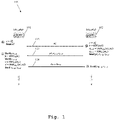
- a schematic description 100 of a two-party authenticated key exchange (AKE) protocol is illustrated as an elliptic curve based version.
- the schematic description of the AKE protocol 100 is illustrated based on the two-party AKE disclosed in " Krawczyk, H., SIGMA: The 'SIGn-and-MAc' approach to authenticated Diffie-Hellman and its use in the IKE protocols, Annual International Cryptology Conference, pp. 400-425, Springer, Berlin, Heidelberg, August 2003 ".
- the schematic description 100 is illustrated for two parties, namely a verifier 101 and a prover 102. It is to be understood that the public parameters for the elliptic curve, such as the order q, generator G, and the like are known to both verifier 101 and prover 102.
- the verifier 101 generates a random element x as an ephemeral private key from Zq*, and computes an ephemeral public key xG.
- x and xG are verifier's ephemeral or session private key and ephemeral or session public key, respectively.
- the verifier 101 transmits its ephemeral public key xG to the prover 102 in a first transmission 112.
- the prover 102 Upon receiving the transmission 112, particularly upon receiving the verifier's public key xG, the prover 102 generates a random element y as an ephemeral private key from Zq*, and computes an ephemeral public key yG.
- y and yG are prover's ephemeral or session private key and ephemeral or session public key, respectively.
- MAC serves as key confirmation in order to make sure that both verifier 101 and prover 102 computed the same shared key k.
- the prover 102 transmits its ephemeral public key yG, the computed digital signature ⁇ P ⁇ V , and the computed MAC tag ⁇ P ⁇ V to the verifier 101 in a second transmission 123.
- the verifier 101 verifies the MAC tag ⁇ P ⁇ V using the computed shared key k. Again, if the MAC tag is invalid, the protocol is aborted.
- MAC message authentication code
- the verifier 101 transmits the computed digital signature ⁇ V ⁇ P , and the computed MAC tag ⁇ V ⁇ P to the prover 102 in a third transmission 134.
- the prover 102 Upon receiving the transmission 134, particularly upon receiving the digital signature ⁇ V ⁇ P , and the MAC tag ⁇ V ⁇ P , the prover 102 verifies their validity. If either one of them is invalid, the protocol is aborted. Otherwise, the protocol is successful and the shared key k will be used in the next phase, e.g. in distance bounding.
- the verifier 101 and the prover 102 do not communicate their identities, e.g. a public key or a certificate on the public key, to each other, since they are assumed to know each other's identities.
- identities e.g. a public key or a certificate on the public key
- the prover 102 may transmit its long term public key pk P in addition to its ephemeral public key yG, the computed digital signature ⁇ P ⁇ V , and the computed MAC tag ⁇ P ⁇ V , to the verifier 101.
- the verifier 101 will be able to verify the digital signature ⁇ P ⁇ V using the prover's long term public key pk P .
- the verifier 101 may transmit its long term public key pk V in addition to the computed digital signature ⁇ V ⁇ P , and the computed MAC tag ⁇ V ⁇ P to the prover 102.
- the prover 102 will be able to verify the digital signature ⁇ V ⁇ P using the verifier's long term public key pk V .
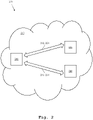
- the system 200 comprises a master node or device or entity 201 and at least two slave nodes or devices or entities 202,203, communicating with each other in a communication network 210, e.g. a wireless network.
- a communication network 210 e.g. a wireless network.
- the number of slave nodes is preferably more than two. However, the number of simultaneously communicating slave nodes is limited by the amount of network resource allocated by the communication network 210.
- the master node 201 communicates with the slave nodes 202,203 so as to form a master-slave pair with each corresponding slave nodes 202,203, in order to authenticate and to further communicate.
- the transmission direction of broadcasts between each master-slave pair is depicted as a respective two-directional arrow as a transmission path, however only exemplarily.
- the master node 201 may communicate with a first slave node 202 through a transmission path 212, and the first slave node may communicate with the master node through a transmission path 221.
- the master node 201 may communicate with a second slave node 203 through a transmission path 213, and the second slave node may communicate with the master node through a transmission path 231.
- the master node 201 agrees on a unique pair-wise authentication key with each slave node 202,203. During this procedure, a mutual authentication between the master node 201 and the respective slave nodes 202,203 takes place. Then, the master node 201 generates a group authentication key that is common for all slave nodes of the network group, and encrypts the group authentication key with the respective pair-wise authentication key for each master-slave pair. Next, the master node 201 communicates the encrypted group authentication key to the slave nodes 202,203. Thus, the respective slave nodes 202,203 is only able to decrypt the encrypted group authentication key with its designated pair-wise authentication key.
- FIG. 3 an exemplary block representation of a communicating node 300, e.g. a master node 201 or a slave node 202 or 203, is illustrated.
- the communicating node 300 comprises a transceiver module 301 for broadcasting communication as well as to receive broadcasts to and from a neighboring communicating node.
- the communicating node 300 further comprises a processing module or processor 302, operably coupled to the transceiver module 301.
- the communicating node 300 moreover comprises a memory module or memory 303, operably coupled to the processing module 302.
- the communicating node 300 may be generalized as a mobile or fixed station device, a mesh point device, or a hub device representing either an access point device in an infrastructure network or a group owner device in a peer-to-peer network, in accordance with example embodiments of the invention.
- the communicating node 300 may be a modern smartphone configured as an access point so that it may share its cellular telephone connection with other surrounding devices via a WLAN link.
- the processing module 302 may include a single core central processing unit (CPU) or multiple core CPU, interface circuits to interface with the transceiver module 301, battery or house power sources, keyboard, display, etc.
- the memory module 303 may include a random access memory (RAM), a programmable read only memory (PROM), removable memory devices such as smart cards, SIMs, WIMs, flash memory devices, or a combination thereof.
- the functional instructions respective to the role of the communicating node 300 within the communication network may be implemented as computer code instructions stored in the memory module 303, which when executed by the processing module 302, carry out the functions of the example embodiments of the invention.
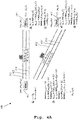
- a first exemplary authentication scheme 400 according to the first aspect of the invention is illustrated.
- Fig. 4A shows a master node operating as a verifier node 401
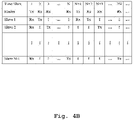
- Fig. 4B shows an exemplary operation schedule for the nodes of the network group.
- the verifier node 401 may correspond to the master node 201 of Fig. 2 .
- the first prover node 402 and the second prover node 403 may correspond to the first slave node 202 and the second slave node 203 of Fig. 2 , respectively, or vice versa.
- the authentication scheme 400 represents a schematic description of an extended authenticated key exchange based on elliptic curve. It is assumed that the public parameters for the elliptic curve, such as the order q, generator G, and the like are known to the verifier node 401 and the prover nodes 402,403.
- the verifier node 401 generates a random element x as its ephemeral private key from Zq*, and computes its ephemeral public key xG. The verifier node 401 then transmits its ephemeral public key xG to the first prover node 402 and to the second prover node 403 simultaneously in a first transmission 412.
- MAC message authentication code
- MAC serves as key confirmation in order to make sure that both the verifier node 401 and the first prover node 402 computed the same pair-wise authentication key k 1 .
- the first prover node 402 transmits its ephemeral public key y P 1 G, the computed digital signature ⁇ P 1 ⁇ V , and the computed MAC tag ⁇ P 1 ⁇ V to the verifier node 401 in a second transmission 423.
- the second prover node 403 upon receiving the transmission 412, particularly upon receiving the verifier node's ephemeral public key xG, the second prover node 403 generates a random element y P 2 as its ephemeral private key from Zq*, and computes its ephemeral public key y P 2 G.
- MAC serves as key confirmation in order to make sure that both the verifier node 401 and the second prover node 403 computed the same pair-wise authentication key k 2 .
- the second prover node 403 transmits its ephemeral public key y P 2 G, the computed digital signature ⁇ P 2 ⁇ V , and the computed MAC tag ⁇ P 2 ⁇ V to the verifier node 401 in a second transmission 423'.
- the verifier node 401 verifies the respective MAC tags of the first prover node 402 and the second prover node 403 using the respective computed pair-wise authentication key k i . Again, if the MAC tag is invalid, the protocol is aborted.
- MAC message authentication code
- the verifier node 401 generates a random element k as a group authentication key for all the nodes of the network group.
- the verifier node 401 transmits the computed digital signatures ⁇ V ⁇ P i , the computed MAC tags ⁇ V ⁇ P i , and the encrypted group authentication key C i to the respective prover nodes 402,403, either simultaneously or sequentially, in a third transmission 434,434'.
- the protocol is successful and the group authentication key k will be used in the next phase, e.g. in distance bounding.
- the protocol is successful and the group authentication key k will be used in the next phase, e.g. in distance bounding.
- the verifier node 401 and the prover nodes 402,403 do not communicate their identities, e.g. a public key or a certificate on the public key, to each other, since they are assumed to know each other's identities.
- identities e.g. a public key or a certificate on the public key
- the exemplary scheduling of the communicating nodes is illustrated for N number of nodes, where at least one node acts as a master node and remaining N-1 nodes act as slave nodes.
- the period of operation for each node is defined as a time slot, which is repetitive after N number of time slots. For example, during a first time slot 1, the master node is operating on transmit mode (Tx) and all the slave nodes are operating on receive mode (Rx).
- Tx transmit mode
- Rx receive mode
- a second time slot 2 e.g. the first slave node is operating on transmit mode (Tx) and the master node is operating on receive mode (Rx), whereas all the remaining slave nodes are operating on sleep mode (I), i.e. possess an idle state of operation.
- the idle operation of the remaining slave nodes significantly reduces the cumulative loading on network resources.
- the subsequent slave nodes are operating on transmit mode one by one, while the rest of the slave nodes are in idle state, and the master node remains at its receive mode.
- the above scheduling again repeats after the time slot N.
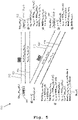
- a second exemplary authentication scheme 500 according to the first aspect of the invention is illustrated.
- Fig. 5 shows a master node operating as a first verifier node 501, whereas a first slave node and a second slave node operating as a second verifier node 502 and a prover node 503, respectively.
- the first verifier node 501 may correspond to the master node 201 of Fig. 2 .
- the second verifier node 502 and the prover node 503 may correspond to the first slave node 202 and the second slave node 203 of Fig. 2 , respectively, or vice versa.
- the authentication scheme 500 represents a schematic description of an extended authenticated key exchange based on elliptic curve. It is assumed that the public parameters for the elliptic curve, such as the order q, generator G, and the like are known to the first verifier node 501, the second verifier node 502, and the prover node 503.
- the first verifier node 501 generates a random element x as its ephemeral private key from Zq*, and computes its ephemeral public key xG.
- the first verifier node 501 then transmits its ephemeral public key xG to the second verifier node 502 and to the prover node 503 simultaneously in a first transmission 512.
- MAC message authentication code
- MAC serves as key confirmation in order to make sure that both the first verifier node 501 and the second verifier node 502 computed the same pair-wise authentication key k 12 .
- the second verifier node 502 transmits its ephemeral public key x V 2 G, the computed digital signature ⁇ V 2 ⁇ V 1 , and the computed MAC tag ⁇ V 2 ⁇ V 1 to the first verifier node 501 in a second transmission 523.
- the prover node 503 upon receiving the transmission 512, particularly upon receiving the verifier node's ephemeral public key xG, the prover node 503 generates a random element y as its ephemeral private key from Zq*, and computes its ephemeral public key yG.
- MAC serves as key confirmation in order to make sure that both the first verifier node 501 and the prover node 503 computed the same pair-wise authentication key k.
- the prover node 503 transmits its ephemeral public key yG, the computed digital signature ⁇ P ⁇ V 1 , and the computed MAC tag ⁇ P ⁇ V 1 to the first verifier node 501 in a second transmission 523'.
- the verifier node 501 receives the transmissions 523 and 523' from the second verifier node 502 and the prover node 503, respectively, either simultaneously or sequentially. Upon receiving the respective slave's ephemeral public key, the digital signature and the MAC tag, the first verifier node 501 verifies the digital signatures using the respective slave's long term public key. If the digital signature is valid, the first verifier node 501 computes the respective pair-wise authentication key for the respective slave nodes as:
- the first verifier node 501 verifies the respective MAC tags of the second verifier node 502 and the prover node 503 using the respective computed pair-wise authentication keys k 12 , k. Again, if the MAC tag is invalid, the protocol is aborted.
- the first verifier node 501 computes a respective message authentication code (MAC) on its long term public key pk V 1 for the respective slave nodes 502,503 using the respective computed pair-wise authentication key k 12 , k as:
- MAC message authentication code
- the first verifier node 501 selects the computed pair-wise authentication key k as a group authentication key for the group of the first verifier node 501, the second verifier node 502 and the prover node 503.
- This process contradicts to the embodiment of Fig. 4A , since the embodiment illustrated in Fig. 4A comprises a plurality of prover nodes 402,403, and therefore the verifier node 401 was required to generate a random element as a group authentication key common for all the nodes of the network group.
- the first verifier node 501 encrypts the group authentication key k with the computed pair-wise authentication key k 12 for the second verifier node 502, since only the second verifier node 502 does not possess the group authentication key k.
- the first verifier node 501 transmits the computed digital signatures, the computed MAC tags to the respective slave nodes 502,503, either simultaneously or sequentially, in a third transmission 534,534'. Additionally, the first verifier node 501 transmits the encrypted group authentication key to the second verifier node 502 in the third transmission 534.
- the protocol is successful and the group authentication key k will be used in the next phase, e.g. in distance bounding.
- the prover node 503 verifies their validity. If either one of them is invalid, the protocol is aborted. If the digital signature and the MAC tag are valid, the protocol is successful and the group authentication key k , i.e. the pair-wise authentication key for the pair of first verifier node 501 and the prover node 503, will be used in the next phase, e.g. in distance bounding.
- the first verifier node 501, the second verifier node 502, and the prover node 503 do not communicate their identities, e.g. a public key or a certificate on the public key, to each other, since they are assumed to know each other's identities.
- identities e.g. a public key or a certificate on the public key
- a third exemplary authentication scheme 600 according to the first aspect of the invention is illustrated.
- Fig. 6 shows a master node operating as a first verifier node 601, whereas a first slave node operating as a second verifier node 602, a second slave node operating as a first prover node 603, and a third slave node operating as a second prover node 604.
- the first verifier node 601 may correspond to the master node 201 of Fig. 2 .
- the second verifier node 602, the first prover node 603, and the second prover node 604 may correspond to any of the slave nodes 202,203 of Fig. 2 .
- the authentication scheme 600 represents a schematic description of an extended authenticated key exchange based on elliptic curve. It is assumed that the public parameters for the elliptic curve, such as the order q, generator G, and the like are known to the verifier nodes 601,602 as well as to the prover nodes 603,604.
- the first verifier node 601 generates a random element x as its ephemeral private key from Zq*, and computes its ephemeral public key xG.
- the first verifier node 601 then transmits its ephemeral public key xG to the second verifier node 602, to the first prover node 603, and to the second prover node 604 simultaneously in a first transmission 612.
- MAC message authentication code
- MAC serves as key confirmation in order to make sure that both the first verifier node 601 and the second verifier node 602 computed the same pair-wise authentication key k 12 .
- the second verifier node 602 transmits its ephemeral public key x V 2 G, the computed digital signature ⁇ V 2 ⁇ V 1 , and the computed MAC tag ⁇ V 2 ⁇ V 1 to the first verifier node 601 in a second transmission 623.
- the first prover node 603 upon receiving the transmission 612, particularly upon receiving the first verifier node's ephemeral public key xG, the first prover node 603 generates a random element y P 1 as its ephemeral private key from Zq*, and computes its ephemeral public key y P 1 G.
- MAC message authentication code
- MAC serves as key confirmation in order to make sure that both the first verifier node 601 and the first prover node 603 computed the same pair-wise authentication key k P 1 .
- the first prover node 603 transmits its ephemeral public key y P 1 G, the computed digital signature ⁇ P 1 ⁇ V , and the computed MAC tag ⁇ P 1 ⁇ V to the first verifier node 601 in a second transmission 623'.
- MAC message authentication code
- MAC serves as key confirmation in order to make sure that both the first verifier node 601 and the second prover node 604 computed the same pair-wise authentication key k P 2 .
- the second prover node 604 transmits its ephemeral public key y P 2 G, the computed digital signature ⁇ P 2 ⁇ V 1 , and the computed MAC tag ⁇ P 2 ⁇ V 1 to the first verifier node 601 in a second transmission 623''.
- the first verifier node 601 receives the transmissions 623, 623', and 623'' from the second verifier node 602, the first prover node 603, and the second prover node 604, respectively, either simultaneously or sequentially.
- the first verifier node 601 Upon receiving the respective slave's ephemeral public key, the digital signature and the MAC tag, the first verifier node 601 verifies the digital signatures using the respective slave's long term public key. If the digital signature is valid, the first verifier node 601 computes the respective pair-wise authentication key for the respective slave nodes as:
- the first verifier node 601 verifies the respective MAC tags of the second verifier node 602, the first prover node 603, and the second prover node 604 using the respective computed pair-wise authentication key k 12 , k P 1 , k P 2 . Again, if the MAC tag is invalid, the protocol is aborted.
- the first verifier node 601 computes a respective message authentication code (MAC) on its long term public key pk V 1 for the respective slave nodes 602,603,604 using the respective computed pair-wise authentication key k 12 , k P 1 , k P 2 as:
- MAC message authentication code
- the first verifier node 601 generates a random element k as a group authentication key for all the nodes of the network group.
- the first verifier node 601 encrypts the group authentication key k with the respective computed pair-wise authentication key k 12 , k P i for the respective slave nodes 602,603,604. Additionally, the first verifier node 601 encrypts the respective computed pair-wise authentication keys for the pair of the first verifier node 601 and the first prover node 603 as well as for the pair of the first verifier node 601 and the second prover node 604 along with the group authentication key for the second verifier node 602.
- the encrypted transmissions can be illustrated as:
- the first verifier node 601 transmits the computed digital signatures, the computed MAC tags, and the encrypted group authentication key to the respective slave nodes 602, 603, 604, either simultaneously or sequentially, in a third transmission 634, 634', 634''.
- the protocol is successful and the group authentication key k will be used in the next phase, e.g. in distance bounding.
- the protocol is successful and the group authentication key k will be used in the next phase, e.g. in distance bounding.
- the protocol is successful and the group authentication key k will be used in the next phase, e.g. in distance bounding.
- the verifier nodes 601,602 and the prover nodes 603,604 do not communicate their identities, e.g. a public key or a certificate on the public key, to each other, since they are assumed to know each other's identities.
- identities e.g. a public key or a certificate on the public key
- a master node authenticates at least two slave nodes with a pair-wise authentication key corresponding to each pair of master node and slave nodes.
- the master node generates a group authentication key common to the plurality of nodes.
- the master node encrypts the group authentication key with the pair-wise authentication key for each respective pair of master node and slave nodes, thereby generates a respective encrypted group authentication key.
- the master node communicates the encrypted group authentication key to the respective slave nodes.
- the present invention provides a system and a method to efficiently authenticate several devices in close proximity and further to securely exchange authentication keys among the communicating nodes or entities.
- the underlying technique can be advantageously utilized for systems that require a high security and a high efficiency in distance measurements among multiple communicating nodes, e.g. wireless devices, particularly in close proximity.
- security refers to, e.g. impersonation and man-in-the-middle or relay attack resistance.
- efficiency refers to, e.g. low number of transmissions among the communicating nodes.
- the benefits include, but not limited to, higher attack resilience, improved availability by avoiding a single point of compromise or failure, as well as localization using multilateration.
Landscapes
- Engineering & Computer Science (AREA)
- Computer Security & Cryptography (AREA)
- Computer Networks & Wireless Communication (AREA)
- Signal Processing (AREA)
- Computer Hardware Design (AREA)
- Computing Systems (AREA)
- General Engineering & Computer Science (AREA)
- Mobile Radio Communication Systems (AREA)
Priority Applications (3)
| Application Number | Priority Date | Filing Date | Title |
|---|---|---|---|
| EP21180200.4A EP4106264A1 (fr) | 2021-06-18 | 2021-06-18 | Système et procédé permettant d'effectuer un échange de clés sécurisé |
| US17/842,440 US12199955B2 (en) | 2021-06-18 | 2022-06-16 | System and method for performing secure key exchange |
| US18/970,204 US20250097203A1 (en) | 2021-06-18 | 2024-12-05 | System and Method for Performing Secure Key Exchange |
Applications Claiming Priority (1)
| Application Number | Priority Date | Filing Date | Title |
|---|---|---|---|
| EP21180200.4A EP4106264A1 (fr) | 2021-06-18 | 2021-06-18 | Système et procédé permettant d'effectuer un échange de clés sécurisé |
Publications (1)
| Publication Number | Publication Date |
|---|---|
| EP4106264A1 true EP4106264A1 (fr) | 2022-12-21 |
Family
ID=76623860
Family Applications (1)
| Application Number | Title | Priority Date | Filing Date |
|---|---|---|---|
| EP21180200.4A Pending EP4106264A1 (fr) | 2021-06-18 | 2021-06-18 | Système et procédé permettant d'effectuer un échange de clés sécurisé |
Country Status (2)
| Country | Link |
|---|---|
| US (2) | US12199955B2 (fr) |
| EP (1) | EP4106264A1 (fr) |
Families Citing this family (1)
| Publication number | Priority date | Publication date | Assignee | Title |
|---|---|---|---|---|
| US11847352B1 (en) * | 2021-09-22 | 2023-12-19 | Ridgeline, Inc. | Parent child request recovery to improve stability |
Citations (5)
| Publication number | Priority date | Publication date | Assignee | Title |
|---|---|---|---|---|
| US5003593A (en) * | 1989-06-05 | 1991-03-26 | Motorola, Inc. | Teleconferencing method for a secure key management system |
| US7234058B1 (en) | 2002-08-27 | 2007-06-19 | Cisco Technology, Inc. | Method and apparatus for generating pairwise cryptographic transforms based on group keys |
| US20130036305A1 (en) * | 2011-08-03 | 2013-02-07 | Cisco Technology, Inc. | Group Key Management and Authentication Schemes for Mesh Networks |
| WO2015184385A1 (fr) * | 2014-05-30 | 2015-12-03 | Qualcomm Incorporated | Systèmes et procédés pour une association sélective |
| US20160149908A1 (en) * | 2014-02-18 | 2016-05-26 | Panasonic Intellectual Property Corporation Of America | Authentication method and authentication system |
Family Cites Families (5)
| Publication number | Priority date | Publication date | Assignee | Title |
|---|---|---|---|---|
| US7461253B2 (en) | 2005-11-22 | 2008-12-02 | Motorola, Inc. | Method and apparatus for providing a key for secure communications |
| KR20090067178A (ko) | 2006-09-21 | 2009-06-24 | 인터디지탈 테크날러지 코포레이션 | 그룹 단위 비밀키 발생 |
| US20090103730A1 (en) * | 2007-10-19 | 2009-04-23 | Mastercard International Incorporated | Apparatus and method for using a device conforming to a payment standard for access control and/or secure data storage |
| US7987363B2 (en) * | 2007-12-21 | 2011-07-26 | Harris Corporation | Secure wireless communications system and related method |
| US20180160459A1 (en) * | 2016-12-02 | 2018-06-07 | Motorola Mobility Llc | Method and apparatus for cooperative microsleep operation |
-
2021
- 2021-06-18 EP EP21180200.4A patent/EP4106264A1/fr active Pending
-
2022
- 2022-06-16 US US17/842,440 patent/US12199955B2/en active Active
-
2024
- 2024-12-05 US US18/970,204 patent/US20250097203A1/en active Pending
Patent Citations (5)
| Publication number | Priority date | Publication date | Assignee | Title |
|---|---|---|---|---|
| US5003593A (en) * | 1989-06-05 | 1991-03-26 | Motorola, Inc. | Teleconferencing method for a secure key management system |
| US7234058B1 (en) | 2002-08-27 | 2007-06-19 | Cisco Technology, Inc. | Method and apparatus for generating pairwise cryptographic transforms based on group keys |
| US20130036305A1 (en) * | 2011-08-03 | 2013-02-07 | Cisco Technology, Inc. | Group Key Management and Authentication Schemes for Mesh Networks |
| US20160149908A1 (en) * | 2014-02-18 | 2016-05-26 | Panasonic Intellectual Property Corporation Of America | Authentication method and authentication system |
| WO2015184385A1 (fr) * | 2014-05-30 | 2015-12-03 | Qualcomm Incorporated | Systèmes et procédés pour une association sélective |
Non-Patent Citations (1)
| Title |
|---|
| KRAWCZYK, H.: "Annual International Cryptology Conference", August 2003, SPRINGER, article "SIGMA: The 'SIGn-and-MAc' approach to authenticated Diffie-Hellman and its use in the IKE protocols", pages: 400 - 425 |
Also Published As
| Publication number | Publication date |
|---|---|
| US12199955B2 (en) | 2025-01-14 |
| US20220407845A1 (en) | 2022-12-22 |
| US20250097203A1 (en) | 2025-03-20 |
Similar Documents
| Publication | Publication Date | Title |
|---|---|---|
| EP2810418B1 (fr) | Amorçage basé sur un groupe dans une communication de type machine | |
| US9473941B1 (en) | Method, apparatus, and computer program product for creating an authenticated relationship between wireless devices | |
| EP2272271B1 (fr) | Procédé et système pour l'authentification mutuelle de noeuds dans un réseau de communication sans fil | |
| US8397062B2 (en) | Method and system for source authentication in group communications | |
| US8942377B2 (en) | Trust discovery in a communications network | |
| US8429404B2 (en) | Method and system for secure communications on a managed network | |
| JP5519633B2 (ja) | 暗号手段を配布するための方法 | |
| US9264404B1 (en) | Encrypting data using time stamps | |
| US9503891B2 (en) | Authentication method of wireless mesh network | |
| EP2664099B1 (fr) | Procédés et appareils de distribution de clés pour protocole ptp | |
| WO2008021855A2 (fr) | Gestion de clé de réseau ad-hoc | |
| Yao et al. | Lightweight batch AKA scheme for user-centric ultra-dense networks | |
| CN101159639A (zh) | 一种单向接入认证方法 | |
| CN102487506A (zh) | 一种基于wapi协议的接入认证方法、系统和服务器 | |
| US20250097203A1 (en) | System and Method for Performing Secure Key Exchange | |
| EP2320691A1 (fr) | Procédé d'amélioration de la sécurité du système de diffusion/multidiffusion | |
| Gupta et al. | Towards security mechanism in D2D wireless communication: A 5G network approach | |
| US20240430244A1 (en) | System and methods for authenticated secure session key establishment for protecting a communication between nodes in a communication network | |
| CN108141359A (zh) | 用于产生共同的秘密的方法和设备 | |
| CN115278661B (zh) | 基于空口帧的单播传输方法、系统、电子设备及存储介质 | |
| EP4250641A1 (fr) | Procédé, dispositifs et système permettant d'effectuer une gestion de clé | |
| CN110784309B (zh) | 车辆侧的第一终端设备、第二终端设备及其运行方法 | |
| Aydin et al. | Authenticated Hand-Over Algorithm for Group Communication | |
| Li et al. | A key establishment protocol for Bluetooth scatternets | |
| Rivero-Garcıa et al. | Secure Communication System for Emergency Services in Network Congestion Scenarios |
Legal Events
| Date | Code | Title | Description |
|---|---|---|---|
| PUAI | Public reference made under article 153(3) epc to a published international application that has entered the european phase |
Free format text: ORIGINAL CODE: 0009012 |
|
| STAA | Information on the status of an ep patent application or granted ep patent |
Free format text: STATUS: REQUEST FOR EXAMINATION WAS MADE |
|
| 17P | Request for examination filed |
Effective date: 20220506 |
|
| AK | Designated contracting states |
Kind code of ref document: A1 Designated state(s): AL AT BE BG CH CY CZ DE DK EE ES FI FR GB GR HR HU IE IS IT LI LT LU LV MC MK MT NL NO PL PT RO RS SE SI SK SM TR |
|
| STAA | Information on the status of an ep patent application or granted ep patent |
Free format text: STATUS: EXAMINATION IS IN PROGRESS |
|
| 17Q | First examination report despatched |
Effective date: 20250317 |
|
| RAP3 | Party data changed (applicant data changed or rights of an application transferred) |
Owner name: KATHOLIEKE UNIVERSITEIT LEUVEN Owner name: STICHTING IMEC NEDERLAND |