EP4106277A1 - Verfahren zum aktivieren einer kommunikationsschnittstelle eines gateways für wohngebäude in einem lokalen kommunikationsnetz, entsprechende ausrüstung und entsprechendes computerprogramm - Google Patents
Verfahren zum aktivieren einer kommunikationsschnittstelle eines gateways für wohngebäude in einem lokalen kommunikationsnetz, entsprechende ausrüstung und entsprechendes computerprogramm Download PDFInfo
- Publication number
- EP4106277A1 EP4106277A1 EP22177645.3A EP22177645A EP4106277A1 EP 4106277 A1 EP4106277 A1 EP 4106277A1 EP 22177645 A EP22177645 A EP 22177645A EP 4106277 A1 EP4106277 A1 EP 4106277A1
- Authority
- EP
- European Patent Office
- Prior art keywords
- communication interface
- residential gateway
- int
- equipment
- activation
- Prior art date
- Legal status (The legal status is an assumption and is not a legal conclusion. Google has not performed a legal analysis and makes no representation as to the accuracy of the status listed.)
- Granted
Links
Images


Classifications
-
- H—ELECTRICITY
- H04—ELECTRIC COMMUNICATION TECHNIQUE
- H04L—TRANSMISSION OF DIGITAL INFORMATION, e.g. TELEGRAPHIC COMMUNICATION
- H04L12/00—Data switching networks
- H04L12/28—Data switching networks characterised by path configuration, e.g. LAN [Local Area Networks] or WAN [Wide Area Networks]
- H04L12/2803—Home automation networks
- H04L12/283—Processing of data at an internetworking point of a home automation network
-
- H—ELECTRICITY
- H04—ELECTRIC COMMUNICATION TECHNIQUE
- H04W—WIRELESS COMMUNICATION NETWORKS
- H04W28/00—Network traffic management; Network resource management
- H04W28/02—Traffic management, e.g. flow control or congestion control
- H04W28/0215—Traffic management, e.g. flow control or congestion control based on user or device properties, e.g. MTC-capable devices
-
- H—ELECTRICITY
- H04—ELECTRIC COMMUNICATION TECHNIQUE
- H04L—TRANSMISSION OF DIGITAL INFORMATION, e.g. TELEGRAPHIC COMMUNICATION
- H04L12/00—Data switching networks
- H04L12/66—Arrangements for connecting between networks having differing types of switching systems, e.g. gateways
-
- H—ELECTRICITY
- H04—ELECTRIC COMMUNICATION TECHNIQUE
- H04W—WIRELESS COMMUNICATION NETWORKS
- H04W52/00—Power management, e.g. Transmission Power Control [TPC] or power classes
- H04W52/02—Power saving arrangements
- H04W52/0203—Power saving arrangements in the radio access network or backbone network of wireless communication networks
- H04W52/0206—Power saving arrangements in the radio access network or backbone network of wireless communication networks in access points, e.g. base stations
-
- H—ELECTRICITY
- H04—ELECTRIC COMMUNICATION TECHNIQUE
- H04W—WIRELESS COMMUNICATION NETWORKS
- H04W72/00—Local resource management
- H04W72/50—Allocation or scheduling criteria for wireless resources
- H04W72/51—Allocation or scheduling criteria for wireless resources based on terminal or device properties
-
- H—ELECTRICITY
- H04—ELECTRIC COMMUNICATION TECHNIQUE
- H04W—WIRELESS COMMUNICATION NETWORKS
- H04W84/00—Network topologies
- H04W84/02—Hierarchically pre-organised networks, e.g. paging networks, cellular networks, WLAN [Wireless Local Area Network] or WLL [Wireless Local Loop]
- H04W84/10—Small scale networks; Flat hierarchical networks
- H04W84/12—WLAN [Wireless Local Area Networks]
-
- H—ELECTRICITY
- H04—ELECTRIC COMMUNICATION TECHNIQUE
- H04W—WIRELESS COMMUNICATION NETWORKS
- H04W88/00—Devices specially adapted for wireless communication networks, e.g. terminals, base stations or access point devices
- H04W88/16—Gateway arrangements
Definitions
- the field of the invention is that of a domestic or professional local communication network, managed by a gateway, called a residential gateway, to which user equipment is connected.
- the invention relates to the activation of one or more previously deactivated wired or wireless type communication interface(s) of the residential gateway, depending on the actual use of that(s)- this.
- HGW Home Gateway
- This equipment installed at the customer's premises, is the hub of all the connections, services and applications provided by the operator. Indeed, the gateway is connected, on the one hand, to the operator's network, and has, on the other hand, a set of interfaces, wireless or wired, allowing the connection of a plurality of equipment to the within a local communication network, such as for example a digital decoder (“Set-Top Box” in English or STB), a computer, a telephone, a digital television, etc.
- a digital decoder Set-Top Box” in English or STB
- interface is used to designate both a software component, a hardware component or a set of hardware and software components.
- the residential gateway includes several communication interfaces allowing it to establish a connection with the different equipment of the communication network thanks to different communication protocols such as for example WiFi ® , Bluetooth, Bluetooth low energy (or “ Bluetooth Low Energy " in English or BLE) etc... These communication interfaces consume more or less energy depending on the communication protocol implemented.
- WiFi ® for “ Wireless Fidelity ” in English, is a technology which notably allows a wireless connection between several devices within a wireless communication network (“ Wireless Local Area Network ” in English, or WLAN), such as for example between a residential gateway and user equipment, in particular via a WiFi-type wireless communication interface present within of the gateway.
- a wireless communication network (“ Wireless Local Area Network ” in English, or WLAN)
- WLAN Wireless Local Area Network
- WiFi frequencies are the 2.4 GHz and 5 GHz bands.
- Most residential gateways use a so-called dual-band technology based on the use of the two WiFi frequencies 2.4 GHz and 5 GHz.
- the local communication network equipment When connected via a WiFi wireless connection to the residential gateway, the local communication network equipment mainly uses the 2.4 GHz frequency. Some equipment is however capable of connecting to the 5 GHz frequency, introduced more recently into the network, and which offers a higher speed: this is the case for example of the digital decoder.
- one of the ways to optimize the electrical consumption of residential gateway components is to dynamically activate or deactivate certain communication interfaces of the gateway in order to only keep active the one that is really useful for the final user.
- the energy-intensive communication interfaces are deactivated by default, while the interfaces that consume little energy remain activated.
- One of the solutions is therefore to periodically wake up the 5 GHz WiFi communication interface of the residential gateway, for example every thirty seconds, in order to detect the presence of compatible equipment in the communication network.
- the latter is only activated if the user really needs it, i.e. when he wants a device of the communication network, such as for example the digital decoder, connects via this WiFi frequency to the WLAN communication network, and therefore to the residential gateway, for example to access a service such as a digital content consumption service.
- a device of the communication network such as for example the digital decoder
- this periodic wake-up or activation solution induces latency which can have an impact on the user's experience. Indeed, in one example, if the detection of a device compatible with the 5 GHz WiFi frequency is programmed to take place every 30 seconds, that is to say that the communication interface 5GHz WiFi is activated every 30 seconds, this means that the equipment, such as the digital decoder, when it wakes up, will potentially have to wait 30 seconds before connecting to the WLAN communication network via the 5GHz WiFi frequency.
- the invention is based on an entirely new and inventive approach to the activation, or awakening, of a communication interface of the residential gateway deactivated by default, such as for example a wired communication interface of the Ethernet type, or 5GHz WiFi type wireless.
- the invention proposes to use another piece of equipment, called secondary equipment, configured to communicate, on the one hand, with the main equipment, and, on the other hand, with the residential gateway.
- the user when the user wishes to use the main equipment of the communication network, such as for example a digital decoder, the user sends a command message from this main equipment via a secondary equipment configured to communicate with the latter, such as a remote control controlling the digital decoder. More particularly, in a conventional manner known from the prior art, at the request of the user, the secondary equipment transmits to the main equipment a command message for the latter.
- the transmission of this command message can be done over a communication channel based for example on a communication protocol of the Bluetooth low energy type (“ Bluetooth Low Energy ” in English or BLE).
- the invention makes it possible to transmit a command message to the main equipment on a first wireless communication channel, and to transmit on a second wireless communication channel, a request for activation of the communication interface to which the main equipment must connect.
- the digital decoder in order to access a digital content consumption service, is configured to connect to a communication interface of the residential gateway, in particular to the 5GHz WiFi wireless communication interface, which is deactivated, when not in use, to limit energy consumption.
- the user In order to activate the residential gateway's WiFi 5GHz wireless communication interface, the user then uses the digital set-top box remote control, configured to communicate with the digital set-top box and the residential gateway, via an active communication channel, such as by example a BLE communication channel.
- an active communication channel such as by example a BLE communication channel.
- the remote control transmits to the digital decoder a control message from the digital decoder, in a conventional manner known from the prior art (for example by pressing the on/off button of the remote control by the user).
- the remote control transmits to the residential gateway a request for activation of the communication interface to which the digital decoder must connect, in this example the 5 GHz WiFi wireless communication interface of the residential gateway.
- the user sends, via secondary equipment, here the remote control, a command message to the main equipment, in this example the decoder digital, and a request to activate the communication interface of the residential gateway allowing the digital decoder and the residential gateway to communicate together, typically the 5GHz WiFi communication interface.
- the activation of the communication interface for example the 5GHz WiFi wireless communication interface of the residential gateway, is therefore only done in the event of actual use.
- the activation/deactivation of this communication interface on demand makes it possible to reduce the electricity consumption of the residential gateway, while avoiding any harmful latency time for the main equipment which needs to connect to it.
- the request for activation of said at least one communication interface is transmitted prior to the transmission to said at least one main user equipment of the command message of said at least one main equipment.
- the transmission of the request for activation of the deactivated communication interface of the residential gateway, prior to the transmission of the command message from the main equipment makes it possible to activate the interface in question before the activation of main equipment.
- the main equipment can connect to the now active communication interface of the residential gateway without latency.
- the request for activation of said at least one communication interface comprises activation information for said at least one communication interface.
- this activation information allows, for example, the modification of a value of an activation control characteristic of a proprietary profile of a communication protocol of the BLE type and thus the activation of the interface communication of interest.
- the request for activation of said at least one communication interface further comprises information identifying said at least one communication interface.
- this identification information makes it possible, for example, to modify a value of an identification characteristic of the communication interface to be activated from a proprietary profile in a communication protocol of the BLE type and therefore the activation of the communication interface of interest.
- a proprietary profile in a communication protocol of the BLE type in which several different communication interfaces are deactivated within the residential gateway, it is possible to choose whether one or more interfaces must be activated and if so, which ones.
- the first wireless communication channel and the second wireless communication channel are based on a communication protocol chosen from: Bluetooth, Bluetooth Low Energy, Z-wave, Zigbee, DECT-ULE , Li-Fi, 4G, 5G or 6GHz WiFi.
- the residential gateway comprises different wireless communication interfaces enabling it to communicate via different communication channels with one or more main equipment items of the local network and at least one secondary equipment item configured to control all or part of these main equipment items.
- the gateway can, for example, be connected to this equipment via a wireless communication channel based on wireless communication protocols such as Bluetooth, Bluetooth Low Energy, z-wave, zigbee, DECT-ULE (for " Digital Enhanced Cordless Telecommnication-Ultra Low Energy ” in English or digital enhanced wireless low energy telecommunications), Li-Fi (for “ Light Fidelity ” in English or visible light communication), 4G, 5G, WiFi 6GHz etc.
- the wireless communication interfaces associated with these different communication channels remain active within the residential gateway, for example because they consume less energy.
- the first wireless communication channel and the second wireless communication channel are based on the same communication protocol.
- the invention also relates to a computer program product comprising program code instructions for implementing the activation method as described previously, when it is executed by a processor.
- a program can use any programming language, and be under the form of source code, object code, or intermediate code between source code and object code, such as in partially compiled form, or in any other desirable form.
- the invention also relates to a recording medium readable by a computer on which is recorded a computer program comprising program code instructions for the execution of the steps of the method according to the invention as described above.
- Such recording medium can be any entity or device capable of storing the program.
- the medium may include a storage medium, such as a ROM, for example a CD ROM or a microelectronic circuit ROM, or else a magnetic recording medium, for example a mobile medium (memory card) or a hard drive or SSD.
- such a recording medium may be a transmissible medium such as an electrical or optical signal, which may be conveyed via an electrical or optical cable, by radio or by other means, so that the program computer it contains is executable remotely.
- the program according to the invention can in particular be downloaded onto a network, for example the Internet network.
- the recording medium may be an integrated circuit in which the program is incorporated, the circuit being adapted to execute or to be used in the execution of the aforementioned display control method.
- the present technique is implemented by means of software and/or hardware components.
- module may correspond in this document to a software component, a hardware component or a set of hardware and software components.
- a software component corresponds to one or more computer programs, one or more sub-programs of a program, or more generally to any element of a program or software capable of implementing a function or a set of functions, as described below for the module concerned.
- Such a software component is executed by a data processor of a physical entity (terminal, server, gateway, set-top-box, router, etc.) and is likely to access the hardware resources of this physical entity (memories, recording media, communication bus, electronic input/output cards, user interfaces, etc.).
- resources means all sets of hardware and/or software elements supporting a function or a service, whether unitary or combined.
- a hardware component corresponds to any element of a hardware assembly (or hardware) able to implement a function or a set of functions, according to what is described below for the module concerned. It can be a programmable hardware component or with integrated processor for the execution of software, for example an integrated circuit, a smart card, a memory card, an electronic card for executing firmware, etc.
- the invention also relates to a system for activating at least one communication interface of a residential gateway of a local communication network to which is connected at least one main piece of equipment configured to connect to said at least one communication interface of the residential gateway.
- This system comprises a residential gateway and at least one piece of equipment, called secondary equipment, as described previously.
- the equipment, the computer program, and the aforementioned corresponding system have at least the same advantages as those conferred by the method for activating at least one communication interface of a residential gateway according to the present invention.
- the general principle of the invention is based on the dynamic awakening, or activation, of a communication interface of the residential gateway deactivated by default, such as the 5GHz WiFi wireless communication interface, by using the possible interactions between the gateway and various user equipment, such as a remote control for a digital decoder (or "Set Top Box” STB in English), a smart phone, a tablet, etc.
- a communication interface of the residential gateway deactivated by default such as the 5GHz WiFi wireless communication interface
- various user equipment such as a remote control for a digital decoder (or "Set Top Box" STB in English), a smart phone, a tablet, etc.
- the invention makes it possible to take advantage of the presence of one or more other communication interface(s) already active within the residential gateway, such as for example a communication interface using a protocol low energy Bluetooth wireless communication device (“ Bluetooth Low Energy ” in English, or BLE), to activate, only when necessary, a communication interface deactivated by default, such as the 5 GHz WiFi wireless communication interface.
- a protocol low energy Bluetooth wireless communication device (“ Bluetooth Low Energy ” in English, or BLE”
- the invention is based on a transmission by a device, called secondary device, of a command message from a communication network device, called main device, and of a wake-up or activation request, at least one deactivated communication interface of the residential gateway.
- main device when the user wishes to use a device of the communication network, called main device, to access a service requiring a connection to a communication interface of the residential gateway, which is in the inactive state, he can use a other equipment, called secondary equipment, configured to connect and communicate with the main equipment on the one hand and the residential gateway on the other hand, via a communication channel associated with another active communication interface of the gateway, distinct from communication interface disabled.
- secondary equipment a device of the communication network
- secondary equipment configured to connect and communicate with the main equipment on the one hand and the residential gateway on the other hand, via a communication channel associated with another active communication interface of the gateway, distinct from communication interface disabled.
- a command message from the main equipment and a request to wake up, or activate, the deactivated communication interface of the residential gateway are transmitted by the secondary equipment.
- this request to wake up, or to activate, the deactivated communication interface of the residential gateway is transmitted prior to the transmission of the command message from the main equipment.
- the communication interface of the residential gateway is then active before the activation of the main equipment.
- the main equipment can connect as soon as it wakes up to the communication interface of the residential gateway now activated.
- the activation of the communication interface of the gateway which the main equipment needs takes place before the activation of the main equipment by the user, which makes it possible to avoid latency, while ensuring lower power consumption.
- the environment shown in [ Fig.1 ] notably comprises a local communication network LAN which is managed by a residential gateway GW connected to a data communication network R_EXT of an operator.
- the digital decoder STB and the HDMI key C_HDMI are connected to a television set TV allowing the reproduction of video content, such as for example a film.
- the digital decoder STB, the HDMI key C_HDMI, the telephone 2, the tablet 3 are connected to the gateway GW by a radio wireless link in the WLAN wireless local communication network, for example WiFi on a frequency 2, 4GHz or 5GHz.
- WiFi on a frequency 2, 4GHz or 5GHz.
- other types of wireless link can be used such as WiFi on a 6GHz frequency, Bluetooth, Bluetooth Low Energy, z-wave, zigbee, DECT-ULE (" Digital Enhanced Cordless Telecommunications - Ultra Low Energy " in English or telecommunications enhanced digital wireless, 4G, 5G or Li-Fi etc.
- the digital decoder STB is connected to the gateway GW by a wired connection, such as an Ethernet connection.
- the latter comprises several wired or wireless communication interfaces. More particularly, these different communication interfaces use different communication protocols making it possible to establish different communication channels between the gateway and the network or off-network equipment.
- the gateway includes a wireless communication interface making it possible to establish a communication channel based on a communication protocol of the Bluetooth Low Energy type with one of the devices of the network such as for example the smart telephone 2 or else a device not belonging to the communication network, but configured for control communication network equipment, such as remote control 1.
- the gateway GW can also comprise a 5 GHz WiFi communication interface making it possible to establish a WiFi wireless connection on a 5 GHz frequency with, for example, the HDMI key C_HDMI or the digital decoder STB.
- FIG.2A and the [ Fig.2B ] illustrate examples of the architecture of a management system 10 of a system for activating at least one communication interface of a local communication network management gateway according to embodiments of the invention.
- This management system 10 comprises, among other things, the WLAN wireless communication network management gateway GW, or residential gateway, as well as several pieces of equipment, including at least one main piece of equipment EQ1 belonging to this communication network, such as for example a digital decoder STB, an HDMI key C_HDMI, and at least one secondary equipment EQ2 belonging to the communication network, such as for example a smart telephone 2, or else not belonging to the communication network, such as for example a remote control 1.
- the notion of belonging to the network underlies the notion of the IP protocol: as such, the remote control does not belong to the local network, although it is geographically "local" equipment, which makes it possible to use radio links short distance in one embodiment of the invention.
- main equipment EQ1 means equipment of the WLAN communication network that the user wishes to use to access a service via the residential gateway GW, such as a digital content consumption service for example.
- the main equipment EQ1 is configured to connect via a communication interface Int_COM2' to a communication interface Int_COM2 of the residential gateway GW to access the requested service.
- the gateway's Int_COM2 communication interface is not used, ie when no network device is connected to it, it is deactivated by default to save energy.
- the main equipment EQ1 is for example the digital decoder STB, and the communication interface of the residential gateway Int_COM2 and the communication interface of the digital decoder Int_COM2' are wireless communication interfaces of the WiFi 5GHz type.
- the GW Gateway 5GHz WiFi wireless communication interface is disabled.
- the STB digital decoder is therefore configured to connect and exchange data with the residential gateway GW via a connection between their 5GHz WiFi wireless communication interface Int_WiFi 5GHz_2 and Int_WiFi 5GHz_2'.
- the STB digital decoder is part of the equipment compatible with the 5 GHz WiFi frequency of the GW residential gateway, which makes it possible to receive digital content in 5 GHz WiFi between the GW gateway and the STB digital decoder.
- the communication interface of the residential gateway Int_COM2 and the communication interface of the digital decoder Int_COM2' are wired communication interfaces of the Ethernet type.
- Secondary equipment EQ2 means equipment belonging or not to the WLAN communication network used by the user to control the main equipment EQ1.
- the secondary equipment EQ2 is configured to connect, via a communication interface Int_COM, to a wireless communication interface Int_COM1' of the main equipment EQ1.
- the secondary equipment EQ2 communicates with the main equipment EQ1, via a wireless communication channel established between the communication interfaces Int_COM of the secondary equipment EQ2 and the communication interface Int_COM1' of the main equipment EQ1 .
- the Int_COM wireless communication interface of the secondary equipment EQ2 is also configured to establish a connection with an already activated wireless communication interface Int_COM1 of the residential gateway GW.
- the wireless communication interfaces of the gateway Int_COM1, of the secondary equipment Int_COM and of the main equipment Int_COM1' can be any type of radio wireless communication interface enabling the secondary equipment EQ2 to communicate with the residential gateway GW and the main equipment EQ1 such as for example a communication interface of the Bluetooth, z-wave, zigbee, DECT-ULE, WiFi 2.4GHz or 6GHz, Li-Fi, 4G, 5G etc. type.
- the secondary equipment EQ2 can communicate with the main equipment EQ1 via a first communication channel and with the residential gateway GW via a second communication channel, these two channels being able to use the same communication protocol, or different communication protocols.
- the user UT wishes to access a service via the residential gateway GW, such as for example a digital content consumption service.
- the user UT uses the secondary equipment EQ2 to control the main equipment EQ1 and activate it.
- the user UT activates the main equipment EQ1 thanks to the secondary equipment EQ2 configured to control the main equipment EQ1.
- the secondary equipment EQ2 transmits in a step 21′, a command message from the main equipment EQ1 to the latter.
- this command message from the main equipment EQ1 is transmitted via a wireless communication channel established between the communication interface Int_COM of the secondary equipment EQ2 and the communication interface Int_COM1' of the main equipment EQ1.
- This wireless communication channel is for example a communication channel of the BLE type.
- the user UT therefore sends a command message to the digital decoder STB, via for example the establishment of a channel BLE type wireless communication interface, between a BLE Int_BLE type communication interface of the remote control 1 and a BLE Int_BLE1 type communication interface of the digital decoder STB.
- one or more communication interfaces of the residential gateway GW are deactivated by default, for example wired communication interfaces of the Ethernet type, or wireless communication interfaces of the 5GHz WiFi type.
- the secondary equipment EQ2 transmits a connection request to the communication interface Int_COM1 of the residential gateway GW via a communication channel, for example of the BLE type, prior to the transmission of a request for activation of the Int_COM2 communication interface of the residential gateway GW.
- the secondary equipment EQ2 connects via its Int_COM wireless communication interface to an Int_COM1 wireless communication interface of the already active residential gateway GW.
- the residential gateway also includes one or more other less energy-consuming communication interfaces which are active by default and which allow certain equipment to communicate and exchange data with the residential gateway. GW.
- the secondary equipment EQ2 Prior to the transmission of a command message from the main equipment EQ1, the secondary equipment EQ2 transmits to the gateway GW, the request for activation of one or more communication interfaces of the previously deactivated residential gateway Int_COM2 . It will be noted that as a variant the activation request and the command message can be transmitted together, or the activation request can be transmitted after the command message.
- This request for activation of the previously deactivated communication interface of the residential gateway Int_COM2 comprises information for activating this communication interface of the residential gateway Int_COM2.
- this request for activation of the communication interface of the residential gateway Int_COM2 also includes information on exiting deep standby from the residential gateway GW.
- this request for activation of the communication interface of the residential gateway Int_COM2 also comprises an identifier of the communication interface of the residential gateway GW to be activated.
- the BLE Int_BLE wireless communication interface of the remote control 1 connects to the BLE Int_BLE1 wireless communication interface of the residential gateway GW.
- the remote control 1 transmits via a BLE type communication channel, a request to activate the 5GHz WiFi communication interface Int_WiFi 5GHz_2 of the GW residential gateway to the latter.
- the active communication interface Int_COM1 of the residential gateway GW decodes the request for activation of the previously deactivated communication interface Int_COM2.
- the residential gateway GW activates the communication interface Int_COM2, such as for example the WiFi communication interface 5GHz Int_WiFi 5GHz_2 of the [ Fig.2B ].
- the residential gateway GW when the activation request includes information for activating the previously deactivated communication interface Int_COM2 and information for exiting deep standby from the residential gateway GW, the residential gateway GW exits deep standby, then activates its communication interface Int_COM2.
- the main equipment EQ1 connects via its communication interface Int_COM2′ to the activated interface Int_COM2 of the residential gateway GW to establish communication and exchange data.
- the STB digital set-top box connects to the WLAN network via a connection between its WiFi 5GHz Int_5GHz_2' compatible communication interface and the enabled 5 GHz WiFi communication interface Int_WiFi 5GHz_2 of the residential gateway GW.
- FIG.3 illustrates an example of hierarchization of a proprietary profile of a wireless communication protocol according to an embodiment of the invention.
- the [ Fig.3 ] illustrates the hierarchy of a proprietary profile according to a Bluetooth Low Energy or BLE communication protocol in the example in connection with [ Fig.2B ] and the [ Fig.4 ], used for establishing communication between the secondary equipment EQ2, such as the remote control 1, and the residential gateway GW on the one hand, and the main equipment EQ1, such as the digital decoder STB on the other go.
- the secondary equipment EQ2 such as the remote control 1
- the residential gateway GW on the one hand
- the main equipment EQ1 such as the digital decoder STB on the other go.
- the specification of the BLE standard provides for the possibility of creating proprietary profiles respecting the generic attribute profile protocol (“ Generic Attribute Protocol ” in English or GATT).
- a profile is defined in the GATT standard as a set of services and characteristics allowing certain applications to be carried out. It is therefore possible to define proprietary characteristics supported by a GATT server, using specific Universally Unique Identifiers (UUIDs).
- UUIDs Universally Unique Identifiers
- the residential gateway GW implements such a so-called “proprietary” profile of GATT server SRV_GATT making it possible to wake up, or activate, communication interfaces of the gateway GW previously deactivated to save energy.
- the residential gateway GW implements a wake-up service, or an activation service for its previously deactivated communication interfaces Srv_WKP_INT.
- the GATT client modifies the values of the write-accessible attributes of the characteristics defined in the proprietary profile.
- a characteristic defined in the owner profile can be a command for activating one or more communication interfaces of the gateway GW deactivated by default COM_act.
- the GATT client modifies the value, for example integer "0" or "1", assigned to the activation command characteristic COM_act, to trigger the process activation of the communication interface of the gateway GW.
- the GATT client that is to say the secondary equipment EQ2 transmits to the residential gateway GW, in particular to the GATT server of the gateway, a request for activation, or wake-up, of at at least one communication interface disabled by default of this gateway.
- This activation request, or wake-up call comprises in particular activation information for at least one communication interface deactivated by default, allowing the modification of the value of the COM_act activation command characteristic of the owner profile and therefore the activation of the communication interface of interest.
- the GATT client modifies the value, for example "wlan0" or "wlan1", “eth0” or “eth1”, assigned to the identification characteristic of the communication interface to activate ID_Int_act, to trigger the process of activating the communication interface of the chosen GW gateway.
- the request for activation, or wake-up, of at least one communication interface deactivated by default of this gateway sent by the GATT client further comprises information identifying at least one communication interface of the gateway , allowing the modification of the value of the identification characteristic of the communication interface to activate ID_Int_act of the owner profile and therefore the activation of the communication interface of interest.
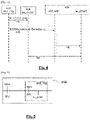
- FIG.4 illustrates in the form of a flowchart the exchanges between an activation module of at least one communication interface of the residential gateway of the secondary equipment, the main equipment, and the management gateway of the communication network local, according to an exemplary embodiment of the invention.
- the activation module of at least one communication interface of the secondary equipment gateway DISP_EQ2, or activation module DISP_EQ2, presented in connection with [ Fig.5 ], comprises a communication interface Int_COM, for example a communication interface of the BLE type, allowing the establishment of a connection between the secondary equipment EQ2 and the main equipment EQ1.
- the user UT activates the main equipment EQ1 thanks to the secondary equipment EQ2 configured to control the main equipment EQ1.
- the secondary equipment EQ2 via the establishment of a wireless communications channel between the communication interface Int_COM of its activation module DISP_EQ2 and the communication interface Int_COM1' of the main equipment EQ1, transmits a command message to the equipment main EQ1.
- the command message from the main equipment EQ1 can be a command message of the type: BLE HID EQ1 alarm clock.
- the secondary equipment EQ2 transmits to the residential gateway, via the communication interface Int_COM of its activation module DISP_EQ2, a request activation, or wake-up, of one or more communication interface(s) of the residential gateway previously deactivated.
- this activation request also includes an identifier of the communication interface to be activated, for example one or more wireless “wlan1” or wired “eth1” communication interfaces.
- the residential gateway GW commands the activation of the communication interface(s) Int_COM2 of the gateway GW.
- the main equipment EQ1 then connects to the WLAN network via its communication interface Int_COM2' to the activated Int_COM2 interface of the residential gateway GW.
- the [ Fig.5 ] schematically presents an example of the architecture of secondary equipment EQ2 incorporating a module for activating at least one communication interface of the residential gateway DISP_EQ2 according to one embodiment of the invention.
- the activation module DISP_EQ2 comprises a random access memory RAM (for example a RAM memory), a processing unit CPU equipped for example with a processor, and controlled by a computer program stored in a read only memory (for example a memory ROM or a hard disk). On initialization, the code instructions of the computer program are for example loaded into the random access memory RAM before being executed by the processor of the processing unit CPU.
- a random access memory RAM for example a RAM memory
- a processing unit CPU equipped for example with a processor
- a computer program stored in a read only memory for example a memory ROM or a hard disk.
- the code instructions of the computer program are for example loaded into the random access memory RAM before being executed by the processor of the processing unit CPU.
- the activation module DISP_EQ2 further comprises a wireless communication interface Int_COM allowing the secondary equipment to establish communication.
- Fig.5 only illustrates one particular way, among several possible, of making the activation module DISP_EQ2, so that it performs the steps of the methods for activating at least one communication interface of the gateway GW detailed above, in relationship with the figure 2A , 2B and 4 in its different embodiments. Indeed, these steps can be carried out either on a reprogrammable calculation machine (a PC computer, a DSP processor or a microcontroller) executing a program comprising a sequence of instructions, or on a dedicated calculation machine (for example a set of logic gates like an FPGA or an ASIC, or any other hardware module).
- a reprogrammable calculation machine a PC computer, a DSP processor or a microcontroller
- a dedicated calculation machine for example a set of logic gates like an FPGA or an ASIC, or any other hardware module.
- the corresponding program (that is to say the sequence of instructions) can be stored in a removable storage medium (such as for example an SD card, a USB key, a CD-ROM or a DVD-ROM) or not, this storage medium being partially or totally readable by a computer or a processor.
- a removable storage medium such as for example an SD card, a USB key, a CD-ROM or a DVD-ROM
Landscapes
- Engineering & Computer Science (AREA)
- Computer Networks & Wireless Communication (AREA)
- Signal Processing (AREA)
- Automation & Control Theory (AREA)
- Computing Systems (AREA)
- Mobile Radio Communication Systems (AREA)
Applications Claiming Priority (1)
| Application Number | Priority Date | Filing Date | Title |
|---|---|---|---|
| FR2106224A FR3124046A1 (fr) | 2021-06-14 | 2021-06-14 | Procédé d’activation d’une interface de communication d’une passerelle résidentielle dans un réseau de communication local, équipement et programme d’ordinateur correspondants. |
Publications (2)
| Publication Number | Publication Date |
|---|---|
| EP4106277A1 true EP4106277A1 (de) | 2022-12-21 |
| EP4106277B1 EP4106277B1 (de) | 2025-09-10 |
Family
ID=77913185
Family Applications (1)
| Application Number | Title | Priority Date | Filing Date |
|---|---|---|---|
| EP22177645.3A Active EP4106277B1 (de) | 2021-06-14 | 2022-06-07 | Verfahren zum aktivieren einer kommunikationsschnittstelle eines gateways für wohngebäude in einem lokalen kommunikationsnetz, entsprechende ausrüstung und entsprechendes computerprogramm |
Country Status (4)
| Country | Link |
|---|---|
| US (1) | US12507111B2 (de) |
| EP (1) | EP4106277B1 (de) |
| ES (1) | ES3056384T3 (de) |
| FR (1) | FR3124046A1 (de) |
Families Citing this family (1)
| Publication number | Priority date | Publication date | Assignee | Title |
|---|---|---|---|---|
| FR3122055B1 (fr) * | 2021-04-19 | 2023-11-03 | Orange | Procédé de traitement d’une demande d’activation d’au moins une interface d’un équipement hôte avec au moins un réseau de communication local géré par ledit équipement hôte, procédé de demande d’activation de ladite au moins une interface, dispositifs, équipement hôte, équipement terminal, système de gestion et programmes d’ordinateur correspondants. |
Citations (3)
| Publication number | Priority date | Publication date | Assignee | Title |
|---|---|---|---|---|
| EP1895713A1 (de) * | 2006-08-31 | 2008-03-05 | LG Electronics Inc. | Gerät und Verfahren zur Optimierung der Energieeinsparung in einem Endgerät mit WLAN und Bluetooth |
| WO2010044714A1 (en) * | 2008-10-16 | 2010-04-22 | Telefonaktiebolaget L M Ericsson (Publ) | A residential gateway providing backup interface to external network |
| EP2608454A2 (de) * | 2011-12-21 | 2013-06-26 | France Télécom | Method for triggering a function that can be executed by a gateway, corresponding computer program product, storage medium and system |
Family Cites Families (12)
| Publication number | Priority date | Publication date | Assignee | Title |
|---|---|---|---|---|
| US20050239445A1 (en) * | 2004-04-16 | 2005-10-27 | Jeyhan Karaoguz | Method and system for providing registration, authentication and access via broadband access gateway |
| US20170257257A1 (en) * | 2008-08-11 | 2017-09-07 | Paul DAWES | Coordinated control of connected devices in a premise |
| US9031050B2 (en) * | 2012-04-17 | 2015-05-12 | Qualcomm Incorporated | Using a mobile device to enable another device to connect to a wireless network |
| CN102945029B (zh) * | 2012-10-31 | 2014-12-10 | 鸿富锦精密工业(深圳)有限公司 | 智能网关、智能家居系统及家电设备的智能控制方法 |
| US10485032B2 (en) * | 2015-02-27 | 2019-11-19 | Verizon Patent And Licensing Inc. | Providing a network gateway for user devices |
| US9749420B2 (en) * | 2015-06-24 | 2017-08-29 | Qualcomm Incorporated | Controlling an IoT device using a remote control device via an infrastructure device |
| US9654564B2 (en) * | 2015-06-24 | 2017-05-16 | Qualcomm Incorporated | Controlling an IoT device using a remote control device via a remote control proxy device |
| EP3533148A4 (de) * | 2016-10-28 | 2020-07-01 | Insight Energy Ventures, LLC | Verfahren zur automatischen anpassung einer gateway-vorrichtung mit einer energiemessvorrichtung |
| US20190132796A1 (en) * | 2018-01-29 | 2019-05-02 | Po-Kai Huang | Wake-up frame indication |
| KR20190099586A (ko) * | 2018-02-19 | 2019-08-28 | 삼성전자주식회사 | 전자 장치, 전자 장치의 제어방법 및 서버 |
| CN110636478B (zh) * | 2018-06-22 | 2023-04-14 | 阿里巴巴集团控股有限公司 | 蓝牙Mesh网络系统及其通信方法、设备与存储介质 |
| US11907039B2 (en) * | 2021-03-25 | 2024-02-20 | Dell Products L.P. | Information handling system location wakeup radio interface synchronized communications |
-
2021
- 2021-06-14 FR FR2106224A patent/FR3124046A1/fr not_active Ceased
-
2022
- 2022-06-07 EP EP22177645.3A patent/EP4106277B1/de active Active
- 2022-06-07 ES ES22177645T patent/ES3056384T3/es active Active
- 2022-06-14 US US17/840,443 patent/US12507111B2/en active Active
Patent Citations (3)
| Publication number | Priority date | Publication date | Assignee | Title |
|---|---|---|---|---|
| EP1895713A1 (de) * | 2006-08-31 | 2008-03-05 | LG Electronics Inc. | Gerät und Verfahren zur Optimierung der Energieeinsparung in einem Endgerät mit WLAN und Bluetooth |
| WO2010044714A1 (en) * | 2008-10-16 | 2010-04-22 | Telefonaktiebolaget L M Ericsson (Publ) | A residential gateway providing backup interface to external network |
| EP2608454A2 (de) * | 2011-12-21 | 2013-06-26 | France Télécom | Method for triggering a function that can be executed by a gateway, corresponding computer program product, storage medium and system |
Also Published As
| Publication number | Publication date |
|---|---|
| EP4106277B1 (de) | 2025-09-10 |
| ES3056384T3 (en) | 2026-02-20 |
| US12507111B2 (en) | 2025-12-23 |
| FR3124046A1 (fr) | 2022-12-16 |
| US20220400400A1 (en) | 2022-12-15 |
Similar Documents
| Publication | Publication Date | Title |
|---|---|---|
| EP3395090B1 (de) | Verfahren zur steuerung eines eingebetteten teilnehmeridentitätsmoduls | |
| EP2306324A1 (de) | Verfahren, System und adaptierende Vorrichtung zum Ermöglichen eines Datenaustausches zwischen einem kommunizierenden Objekt und einer Verarbeitungseinheit | |
| EP3149917B1 (de) | Vorrichtung und verfahren von gateway zu konsistenter aktualisierung der diensten einer lokalen netzwerk | |
| EP4256830A1 (de) | Verfahren und vorrichtung, gateway und computerprogramme zum zugriff auf ein lokales netzwerk | |
| WO2022117971A1 (fr) | Procédé d'activation d'un service opéré dans un réseau de communication local, procédé de traitement d'une demande de réveil d'un équipement connecté au réseau local et configuré pour mettre en œuvre ledit service, procédé de demande d'activation d'un service, dispositifs, passerelle, équipement, terminal utilisateur, système et programmes d'ordinateur correspondants. | |
| EP4106277B1 (de) | Verfahren zum aktivieren einer kommunikationsschnittstelle eines gateways für wohngebäude in einem lokalen kommunikationsnetz, entsprechende ausrüstung und entsprechendes computerprogramm | |
| FR3014631A1 (fr) | Dispositif et procede de configuration d'un dispositif de communication | |
| EP3053309A1 (de) | Verbesserte verwaltung von netzwerkverbindungen | |
| EP3520322B1 (de) | Verfahren und vorrichtung zum remote-aufwecken einer mit einem netzwerk verbundenen vorrichtung | |
| EP3336709B1 (de) | Verfahren zum einsatz eines ausgedehnten arbeitsplatzes, und entsprechendes einsatzsystem eines ausgedehnten arbeitsplatzes | |
| EP2255509B1 (de) | Verfahren zum dienstzugriff, zugehörige vorrichtung und computerprogramm-produkt | |
| EP2925084B1 (de) | Methode zur steuerung eines aktivierungszustands eines netzes für den funkzugang in ein lokales netz | |
| FR3122055A1 (fr) | Procédé de traitement d’une demande d’activation d’au moins une interface d’un équipement hôte avec au moins un réseau de communication local géré par ledit équipement hôte, procédé de demande d’activation de ladite au moins une interface, dispositifs, équipement hôte, équipement terminal, système de gestion et programmes d’ordinateur correspondants. | |
| EP2282262B1 (de) | Kommunikationsgerät, Verfahren zur Kommunikation zwischen besagtem Gerät und einem Netzwerk, Schnittstelleneinheit zwischen besagtem Gerät und besagtem Netzwerk | |
| EP4482225B1 (de) | Verfahren zur verwaltung eines aktivierungszustands einer knotenvorrichtung eines kommunikationsnetzwerks, entsprechende vorrichtung, knotenvorrichtung, system und computerprogramm | |
| EP4258749A2 (de) | Verfahren zum hinzufügen eines kommunizierenden objekts zu einem drahtlosen kommunikationsnetzwerk | |
| EP4616677A1 (de) | Verfahren zur erkennung von anomalien an wifi-stationen | |
| EP4500868A1 (de) | Verfahren zur verwaltung von ausrüstung in einer audiovisuellen heimumgebung und zugehöriges computerprogramm, datenträger und wiedergabevorrichtung | |
| EP4300259A1 (de) | Verwaltung des stromverbrauchs einer vorrichtung | |
| EP2739059B1 (de) | Wiedergabeverfahren von Audio- und/oder Videoinhalten | |
| FR3004044A1 (fr) | Procede de controle de la consommation energetique d'equipements d'un reseau de communication local | |
| FR3164091A1 (fr) | Procede de gestion de mise en veille d’une ressource radio d’un dispositif point d’acces sans fil, dispositif de gestion de mise en veille, et dispositf point d’acces sans fil. | |
| FR3118673A1 (fr) | Procédé de gestion d’une mise à jour d’une passerelle résidentielle, dispositif de gestion, passerelle résidentielle et programme d’ordinateur correspondants. | |
| EP4690885A1 (de) | Verfahren zur dynamischen erhöhung des wi-fi-sicherheitsniveaus | |
| FR3123171A1 (fr) | Procédé de détection d’un branchement d’un terminal sur une interface de téléphonie d’une passerelle résidentielle dans un réseau de communication local, dispositif de détection et programme d’ordinateur correspondants. |
Legal Events
| Date | Code | Title | Description |
|---|---|---|---|
| PUAI | Public reference made under article 153(3) epc to a published international application that has entered the european phase |
Free format text: ORIGINAL CODE: 0009012 |
|
| STAA | Information on the status of an ep patent application or granted ep patent |
Free format text: STATUS: THE APPLICATION HAS BEEN PUBLISHED |
|
| AK | Designated contracting states |
Kind code of ref document: A1 Designated state(s): AL AT BE BG CH CY CZ DE DK EE ES FI FR GB GR HR HU IE IS IT LI LT LU LV MC MK MT NL NO PL PT RO RS SE SI SK SM TR |
|
| STAA | Information on the status of an ep patent application or granted ep patent |
Free format text: STATUS: REQUEST FOR EXAMINATION WAS MADE |
|
| 17P | Request for examination filed |
Effective date: 20230302 |
|
| RBV | Designated contracting states (corrected) |
Designated state(s): AL AT BE BG CH CY CZ DE DK EE ES FI FR GB GR HR HU IE IS IT LI LT LU LV MC MK MT NL NO PL PT RO RS SE SI SK SM TR |
|
| RAP3 | Party data changed (applicant data changed or rights of an application transferred) |
Owner name: ORANGE |
|
| GRAP | Despatch of communication of intention to grant a patent |
Free format text: ORIGINAL CODE: EPIDOSNIGR1 |
|
| STAA | Information on the status of an ep patent application or granted ep patent |
Free format text: STATUS: GRANT OF PATENT IS INTENDED |
|
| RIC1 | Information provided on ipc code assigned before grant |
Ipc: H04W 88/16 20090101ALN20250321BHEP Ipc: H04W 84/12 20090101ALN20250321BHEP Ipc: H04W 52/02 20090101ALI20250321BHEP Ipc: H04L 12/66 20060101ALI20250321BHEP Ipc: H04L 12/28 20060101AFI20250321BHEP |
|
| RIC1 | Information provided on ipc code assigned before grant |
Ipc: H04W 88/16 20090101ALN20250407BHEP Ipc: H04W 84/12 20090101ALN20250407BHEP Ipc: H04W 52/02 20090101ALI20250407BHEP Ipc: H04L 12/66 20060101ALI20250407BHEP Ipc: H04L 12/28 20060101AFI20250407BHEP |
|
| INTG | Intention to grant announced |
Effective date: 20250416 |
|
| GRAS | Grant fee paid |
Free format text: ORIGINAL CODE: EPIDOSNIGR3 |
|
| GRAA | (expected) grant |
Free format text: ORIGINAL CODE: 0009210 |
|
| STAA | Information on the status of an ep patent application or granted ep patent |
Free format text: STATUS: THE PATENT HAS BEEN GRANTED |
|
| AK | Designated contracting states |
Kind code of ref document: B1 Designated state(s): AL AT BE BG CH CY CZ DE DK EE ES FI FR GB GR HR HU IE IS IT LI LT LU LV MC MK MT NL NO PL PT RO RS SE SI SK SM TR |
|
| REG | Reference to a national code |
Ref country code: GB Ref legal event code: FG4D Free format text: NOT ENGLISH |
|
| REG | Reference to a national code |
Ref country code: CH Ref legal event code: EP |
|
| REG | Reference to a national code |
Ref country code: DE Ref legal event code: R096 Ref document number: 602022021049 Country of ref document: DE |
|
| REG | Reference to a national code |
Ref country code: IE Ref legal event code: FG4D Free format text: LANGUAGE OF EP DOCUMENT: FRENCH |
|
| PG25 | Lapsed in a contracting state [announced via postgrant information from national office to epo] |
Ref country code: NO Free format text: LAPSE BECAUSE OF FAILURE TO SUBMIT A TRANSLATION OF THE DESCRIPTION OR TO PAY THE FEE WITHIN THE PRESCRIBED TIME-LIMIT Effective date: 20251210 |
|
| REG | Reference to a national code |
Ref country code: LT Ref legal event code: MG9D |
|
| PG25 | Lapsed in a contracting state [announced via postgrant information from national office to epo] |
Ref country code: FI Free format text: LAPSE BECAUSE OF FAILURE TO SUBMIT A TRANSLATION OF THE DESCRIPTION OR TO PAY THE FEE WITHIN THE PRESCRIBED TIME-LIMIT Effective date: 20250910 |
|
| REG | Reference to a national code |
Ref country code: NL Ref legal event code: MP Effective date: 20250910 |
|
| PG25 | Lapsed in a contracting state [announced via postgrant information from national office to epo] |
Ref country code: HR Free format text: LAPSE BECAUSE OF FAILURE TO SUBMIT A TRANSLATION OF THE DESCRIPTION OR TO PAY THE FEE WITHIN THE PRESCRIBED TIME-LIMIT Effective date: 20250910 |
|
| PG25 | Lapsed in a contracting state [announced via postgrant information from national office to epo] |
Ref country code: GR Free format text: LAPSE BECAUSE OF FAILURE TO SUBMIT A TRANSLATION OF THE DESCRIPTION OR TO PAY THE FEE WITHIN THE PRESCRIBED TIME-LIMIT Effective date: 20251211 |
|
| PG25 | Lapsed in a contracting state [announced via postgrant information from national office to epo] |
Ref country code: SE Free format text: LAPSE BECAUSE OF FAILURE TO SUBMIT A TRANSLATION OF THE DESCRIPTION OR TO PAY THE FEE WITHIN THE PRESCRIBED TIME-LIMIT Effective date: 20250910 |
|
| PG25 | Lapsed in a contracting state [announced via postgrant information from national office to epo] |
Ref country code: LV Free format text: LAPSE BECAUSE OF FAILURE TO SUBMIT A TRANSLATION OF THE DESCRIPTION OR TO PAY THE FEE WITHIN THE PRESCRIBED TIME-LIMIT Effective date: 20250910 |
|
| PG25 | Lapsed in a contracting state [announced via postgrant information from national office to epo] |
Ref country code: PL Free format text: LAPSE BECAUSE OF FAILURE TO SUBMIT A TRANSLATION OF THE DESCRIPTION OR TO PAY THE FEE WITHIN THE PRESCRIBED TIME-LIMIT Effective date: 20250910 Ref country code: BG Free format text: LAPSE BECAUSE OF FAILURE TO SUBMIT A TRANSLATION OF THE DESCRIPTION OR TO PAY THE FEE WITHIN THE PRESCRIBED TIME-LIMIT Effective date: 20250910 |
|
| PG25 | Lapsed in a contracting state [announced via postgrant information from national office to epo] |
Ref country code: RS Free format text: LAPSE BECAUSE OF FAILURE TO SUBMIT A TRANSLATION OF THE DESCRIPTION OR TO PAY THE FEE WITHIN THE PRESCRIBED TIME-LIMIT Effective date: 20251210 |
|
| REG | Reference to a national code |
Ref country code: AT Ref legal event code: MK05 Ref document number: 1837092 Country of ref document: AT Kind code of ref document: T Effective date: 20250910 |
|
| PG25 | Lapsed in a contracting state [announced via postgrant information from national office to epo] |
Ref country code: NL Free format text: LAPSE BECAUSE OF FAILURE TO SUBMIT A TRANSLATION OF THE DESCRIPTION OR TO PAY THE FEE WITHIN THE PRESCRIBED TIME-LIMIT Effective date: 20250910 |
|
| REG | Reference to a national code |
Ref country code: ES Ref legal event code: FG2A Ref document number: 3056384 Country of ref document: ES Kind code of ref document: T3 Effective date: 20260220 |
|
| PG25 | Lapsed in a contracting state [announced via postgrant information from national office to epo] |
Ref country code: SM Free format text: LAPSE BECAUSE OF FAILURE TO SUBMIT A TRANSLATION OF THE DESCRIPTION OR TO PAY THE FEE WITHIN THE PRESCRIBED TIME-LIMIT Effective date: 20250910 |
|
| PG25 | Lapsed in a contracting state [announced via postgrant information from national office to epo] |
Ref country code: AT Free format text: LAPSE BECAUSE OF FAILURE TO SUBMIT A TRANSLATION OF THE DESCRIPTION OR TO PAY THE FEE WITHIN THE PRESCRIBED TIME-LIMIT Effective date: 20250910 |
|
| PG25 | Lapsed in a contracting state [announced via postgrant information from national office to epo] |
Ref country code: IS Free format text: LAPSE BECAUSE OF FAILURE TO SUBMIT A TRANSLATION OF THE DESCRIPTION OR TO PAY THE FEE WITHIN THE PRESCRIBED TIME-LIMIT Effective date: 20260110 |