EP4106367A1 - Terminal - Google Patents
Terminal Download PDFInfo
- Publication number
- EP4106367A1 EP4106367A1 EP20919265.7A EP20919265A EP4106367A1 EP 4106367 A1 EP4106367 A1 EP 4106367A1 EP 20919265 A EP20919265 A EP 20919265A EP 4106367 A1 EP4106367 A1 EP 4106367A1
- Authority
- EP
- European Patent Office
- Prior art keywords
- cell
- snpn
- camping
- npn
- information
- Prior art date
- Legal status (The legal status is an assumption and is not a legal conclusion. Google has not performed a legal analysis and makes no representation as to the accuracy of the status listed.)
- Pending
Links
Images




Classifications
-
- H—ELECTRICITY
- H04—ELECTRIC COMMUNICATION TECHNIQUE
- H04W—WIRELESS COMMUNICATION NETWORKS
- H04W48/00—Access restriction; Network selection; Access point selection
- H04W48/08—Access restriction or access information delivery, e.g. discovery data delivery
- H04W48/12—Access restriction or access information delivery, e.g. discovery data delivery using downlink control channel
-
- H—ELECTRICITY
- H04—ELECTRIC COMMUNICATION TECHNIQUE
- H04W—WIRELESS COMMUNICATION NETWORKS
- H04W4/00—Services specially adapted for wireless communication networks; Facilities therefor
- H04W4/90—Services for handling of emergency or hazardous situations, e.g. earthquake and tsunami warning systems [ETWS]
-
- H—ELECTRICITY
- H04—ELECTRIC COMMUNICATION TECHNIQUE
- H04W—WIRELESS COMMUNICATION NETWORKS
- H04W48/00—Access restriction; Network selection; Access point selection
- H04W48/18—Selecting a network or a communication service
-
- H—ELECTRICITY
- H04—ELECTRIC COMMUNICATION TECHNIQUE
- H04W—WIRELESS COMMUNICATION NETWORKS
- H04W48/00—Access restriction; Network selection; Access point selection
- H04W48/20—Selecting an access point
-
- H—ELECTRICITY
- H04—ELECTRIC COMMUNICATION TECHNIQUE
- H04W—WIRELESS COMMUNICATION NETWORKS
- H04W84/00—Network topologies
- H04W84/02—Hierarchically pre-organised networks, e.g. paging networks, cellular networks, WLAN [Wireless Local Area Network] or WLL [Wireless Local Loop]
- H04W84/10—Small scale networks; Flat hierarchical networks
- H04W84/105—PBS [Private Base Station] network
Definitions
- the present disclosure relates to a terminal that can access a Non-Public Network (NPN).
- NPN Non-Public Network
- LTE Long Term Evolution
- NR New Radio
- NG Next Generation
- NR defines a technology for providing ultra-reliable and low latency communications (URLLC).
- URLLC ultra-reliable and low latency communications
- Non-Public Network NPN
- PLMN Public Land Mobile Network
- NPN includes stand-alone NPN (SNPN) operated by an NPN operator without depending on a network function provided by PLMN and NPN (which will be appropriately referred to as non-SNPN for convenience) deployed by the support of PLMN.
- SNPN stand-alone NPN
- non-SNPN for convenience
- a terminal in a state of being accessible to SNPN specifically, a state of being configured to an SNPN access mode (User Equipment, UE, hereinafter, referred to as SNPN access mode UE as appropriate) is assumed to be used in mission-critical areas such as factory robots, assembly machine, and IoT (Internet of Things) devices.
- SNPN access mode UE User Equipment
- automatic emergency stop of a system can be implemented by broadcasting emergency information by ETWS/CMAS to the SNPN access mode UE.
- the following disclosure has been made in view of such a situation, and aims to provide a terminal that can reliably acquire emergency information even in a state of being accessible to a stand-alone NPN (SNPN).
- SNPN stand-alone NPN
- One aspect of the present disclosure is a terminal (UE 200) including: a control unit (camping control unit 230) that executes camping in a non-suitable cell that is included in a non-public mobile communication network in a state of being configured to an access mode with respect to the non-public mobile communication network different from a public mobile communication network, satisfies a condition, and is not a suitable cell; and a receiving unit (radio receiving unit 220) that receives emergency information via the non-suitable cell.
- a control unit camping control unit 230
- camping control unit 230 that executes camping in a non-suitable cell that is included in a non-public mobile communication network in a state of being configured to an access mode with respect to the non-public mobile communication network different from a public mobile communication network, satisfies a condition, and is not a suitable cell
- a receiving unit radio receiving unit 220
- One aspect of the present disclosure is a terminal (UE 200) including: a control unit (camping control unit 230) that executes camping in a public cell included in a public mobile communication network in a state of being configured to an access mode with respect to a non-public mobile communication network different from the public mobile communication network; and a receiving unit (radio receiving unit 220) that receives emergency information via the public cell.
- a control unit camping control unit 230
- a receiving unit radio receiving unit 220
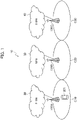
- Fig. 1 is an overall schematic configuration diagram of a radio communication system 10 according to the present embodiment.
- the radio communication system 10 is a radio communication system according to 5G New Radio (NR).
- NR 5G New Radio
- the radio communication system 10 may include a plurality of mobile communication networks.
- the radio communication system 10 includes a public land mobile network 20 (hereinafter, PLMN 20), a non-public network 30 (hereinafter, NPN 30), and a stand-alone non-public network 40 (hereinafter, SNPN 40).
- PLMN 20 public land mobile network 20
- NPN 30 non-public network 30
- SNPN 40 stand-alone non-public network 40
- the PLMN 20 may be called a public mobile communication network, a mobile communication network, a public land mobile network, and the like, and the PLMN 20 includes the NPN 30 and a radio base station 100A (hereinafter, gNB 100A).
- the PLMN 20 may be interpreted as an operator (telecommunications carrier) that provides service using the PLMN 20.
- the gNB 100A is a 5G (NR)-compliant radio base station, and is capable of executing 5G-compliant radio communication with a user terminal 200 (User Equipment 200, hereinafter, UE 200).
- UE 200 User Equipment 200
- the NPN 30 may be called a non-public mobile communication network, a non-public network, a dedicated network, and the like, and the NPN 30 includes a radio base station 100B (hereinafter, gNB 100B).
- gNB 100B radio base station 100B
- the NPN 30 may be intended for the single use by a private entity such as a company and can be deployed in a variety of configurations utilizing both virtual elements and physical elements. Specifically, the NPN 30 may be hosted by the PLMN 20 or provided as a slice of the PLMN 20. Note that NPN may be called a Closed Access Group (CAG) or a Closed Subscriber Group (CSG).
- CAG Closed Access Group
- CSG Closed Subscriber Group
- the SNPN 40 is a type of NPN.
- the SNPN 40 may be deployed as a completely stand-alone network separate from the PLMN 20. That is, the SNPN 40 may be operated by a private entity different from the operator of the PLMN 20.
- the NPN 30 may be operated by the operator of the PLMN 20 as described above.
- the SNPN 40 includes a radio base station 100C (hereinafter, gNB 100C).
- the radio communication system 10 may support the non-public network (NPN) and may support an NPN that provides coverage within a particular geographical area.
- NPN non-public network
- the 5G system can support both physical and virtual NPNs and can support the stand-alone operation of NPN.
- the 5G system may provide access to subscribed PLMN service via NPN, or access to selected NPN service via PLMN.
- the radio communication system 10 also supports a mechanism for the UE 200 to identify and select NPN.
- the UE 200 can also access the NPN 30 and the SNPN 40.
- the NPN (including SNPN) can satisfy higher Quality of Service (QoS) and security requirements than PLMN.
- QoS Quality of Service
- NPN can implement isolation from other networks as one mode of protection against problems in public networks including PLMN, and there may be a case where such isolation is desirable from the viewpoint of performance, security, privacy, and safety.
- the mobile communication network including the PLMN 20, and the NPN 30 and the SNPN 40 different from the PLMN 20 may be simply expressed as a network. That is, the network may include the PLMN 20, the NPN 30, and the SNPN 40.
- NPN may be interpreted as a network intended for the non-public use.
- a private network may be interpreted as an independent network that does not interact with the public network (which may include PLMN).
- the gNB 100A forms a PLMN cell C10.
- the gNB 100B forms an NPN cell C20.
- the gNB 100C forms an SNPN cell C30.
- emergency notification which may be called emergency notification
- EWS Earthquake and Tsunami Warning System
- CMAS Commercial Mobile Alert System
- the UE 200 in the state of being configured to an access mode with respect to the SNPN 40 may access the NPN 30 or the PLMN 20 and receive the emergency information by ETWS/CMAS.
- the SNPN access mode UE may be interpreted as a UE operating in an SNPN access mode, is not necessarily in the state of being connected (RRC connected) to SNPN in a radio resource control layer (RRC), and may be in an idle (RRC idle) state or an inactive (RRC inactive) state.
- RRC radio resource control layer
- the cells formed by the gNB 100A to the gNB 100C may be classified into any of the following.
- Barred cell A cell in which camping is barred by system information as specified by 3GPP TS38.331.
- Fig. 2 is the functional block configuration diagram of the UE 200. As illustrated in Fig. 2 , the UE 200 includes a radio transmitting unit 210, a radio receiving unit 220, a camping control unit 230, an emergency information processing unit 240, and an emergency operation execution unit 250.
- the UE 200 includes a radio transmitting unit 210, a radio receiving unit 220, a camping control unit 230, an emergency information processing unit 240, and an emergency operation execution unit 250.
- the radio transmitting unit 210 transmits a radio signal according to the 5G specifications.
- the radio receiving unit 220 receives a radio signal according to the 5G specifications.
- the radio receiving unit 220 can receive emergency information by ETWS/CMAS via a non-suitable cell.
- the radio receiving unit 220 constitutes a receiving unit that receives emergency information via an non-suitable cell.
- the non-suitable cell may be included in NPN (including SNPN).
- the non-suitable cell may be interpreted as a cell that is not a suitable cell.
- the radio receiving unit 220 can receive emergency information via a public cell, specifically, the PLMN cell C10.
- the radio receiving unit 220 constitutes a receiving unit that receives emergency information via a public cell.
- the radio receiving unit 220 can receive the emergency information that is transmitted by being included in system information (SIB: System Information Block) via the cell (non-suitable cell or public cell).
- SIB System Information Block
- the radio receiving unit 220 may receive information other than SIB (for example, information using signaling in an upper layer or a lower layer) when the emergency information by ETWS/CMAS has been broadcasted by information other than SIB.
- the radio receiving unit 220 may receive camped cell information indicating a cell in which the UE 200 needs to camp.
- the radio receiving unit 220 can receive SIB including the camped cell information.
- information other than SIB for example, information using signaling in an upper layer or a lower layer
- the camping control unit 230 controls a cell in which the UE 200 camps.
- the camping control unit 230 can cause the UE 200 to camp in a non-suitable cell that is included in an NPN different from the PLMN 20, specifically, in the NPN in the state of being configured to the access mode with respect to the NPN 30 or the SNPN 40 (that is, SNPN access mode UE), is not a suitable cell, but satisfies a condition.
- condition may be a condition that the cell is not barred or that cell selection criteria are fulfilled.
- the camping control unit 230 may execute camping in the state of being configured to the access mode with respect to the stand-alone non-public mobile communication network, specifically, the SNPN 40.
- the camping control unit 230 constitutes a control unit that executes camping in an non-suitable cell.
- the camping control unit 230 can execute camping in a public cell included in the PLMN 20, specifically, the PLMN cell C10 in the state of being configured to the access mode with respect to the NPN 30 or the SNPN 40.
- the camping control unit 230 constitutes a control unit that executes camping in a public cell.
- the camping in the cell may be interpreted as a state where the UE 200 can process an incoming call to the UE 200 in the cell.
- the UE 200 may release a camping state and start communication with the network.
- the camping control unit 230 may execute camping in the PLMN cell C10 when the emergency information by the ETWS/CMAS has not been broadcasted in the cell included in the NPN 30 or the SNPN 40 or when the cell included in the NPN 30 or the SNPN 40 is not available.
- the case where the emergency information has not been broadcasted may include, for example, a case where SIB does not include the emergency information and a case where it is difficult to receive SIB.
- the case where the cell included in the NPN 30 or the SNPN 40 is not available may include, for example, a case where it is difficult for the UE 200 to access the cell due to a propagation state of a radio signal and a case where the cell is not operating due to a failure.
- the camping control unit 230 may also execute camping based on the camped cell information received by the radio receiving unit 220. Specifically, the camping control unit 230 can decide a cell in which camping is to be executed in order to receive emergency information by ETWS/CMAS based on the received camped cell information, and execute camping in the decided cell.
- the emergency information processing unit 240 executes processing related to emergency information. Specifically, the emergency information processing unit 240 processes emergency information by ETWS/CMAS.
- the ETWS may include emergency information such as an earthquake warning provided by the local government or the central government.
- the emergency information by ETWS may be broadcasted based on cell broadcast service (CBS).
- CBS cell broadcast service
- the emergency information may be delivered in the state of being separated into two types of signals of a primary notification that delivers at the fastest speed that is feasible and a secondary notification that delivers supplementary information (seismic intensity, epicenter, and the like).
- CMAS may also broadcast the same emergency information as ETWS, but other emergency situations other than the earthquake and tsunami (for example, presidential alert, threat alert (tornado/hurricane), child abduction alert, and the like) may be included.
- ETWS/CMAS is included in the Public Warning System (PWS) and may be also called PWS.
- PWS Public Warning System
- the emergency operation execution unit 250 executes an emergency operation based on the received emergency information. Specifically, the emergency operation execution unit 250 can display a content of the emergency information on a screen and output an alarm sound.
- the operation of the radio communication system 10 will be described. Specifically, the camping operation of the UE 200 (SNPN access mode UE) in the state of being configured to the access mode with respect to the SNPN 40 will be described.
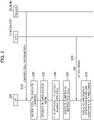
- Fig. 3 illustrates a schematic communication sequence related to reception of emergency information by ETWS/CMAS.
- the network broadcasts the camped cell information to the UE 200 via at least any one of the PLMN cell C10, the NPN cell C20, and the SNPN cell C30 (S10).
- the network may include the PLMN 20, the NPN 30, or the SNPN 40.
- the network can broadcast SIB including the camped cell information via the cell.
- the camped cell information indicates the cell in which the UE 200 needs to camp as described above.
- the UE 200 decides a cell in which camping is to be executed in order to receive the emergency information by the cell ETWS/CMAS to execute camping, based on the received camped cell information (S20).
- the UE 200 starts the operation in the SNPN access mode in order to access the SNPN 40 (S30). Specifically, the UE 200 executes radio communication via a suitable cell among NPN cells.
- the suitable cell may be called a suitable SNPN cell.
- the UE 200 can execute radio communication in the SNPN 40 via the SNPN cell C30.
- the SNPN access mode UE may be interpreted as a UE operating in an SNPN access mode, is not necessarily in the state of being connected (RRC connected) to SNPN in RRC, and may be in an idle (RRC idle) state or an inactive (RRC inactive) state.
- the application of the UE 200 is not particularly limited, but it is assumed that the UE 200 is used in mission-critical areas such as factory robots, assembly machine, and IoT (Internet of Things) devices.
- mission-critical areas such as factory robots, assembly machine, and IoT (Internet of Things) devices.
- the UE 200 enters a state where it is difficult to detect the suitable SNPN cell (S40).
- the state where it is difficult to detect the suitable SNPN cell (SNPN cell C30) may include a state where the quality of a radio signal between the UE 200 and the gNB 100C does not satisfy a condition for camping or connection, a state where the suitable SNPN cell is not formed due to a failure of the gNB 100C, or the like.
- the UE 200 executes camping in a cell instructed by the camped cell information (S50).
- the UE 200 can execute camping in the NPN cell C20 included in the NPN 30 or the PLMN cell C10 included in the PLMN 20 based on the camped cell information.
- the UE 200 receives SIB including the emergency information by ETWS/CMAS in the cell instructed by the camped cell information (S60).
- the SIB used for broadcasting the emergency information by the ETWS/CMAS is not particularly limited, but SIB1 and SIB12, for example, may be used as in the existing CMAS.
- the UE 200 executes the emergency operation based on a content of the received emergency information by ETWS/CMAS (S70). Specifically, the UE 200 displays the content of the received emergency information on the screen and outputs the alarm sound.
- ETWS/CMAS ETWS/CMAS
- the emergency information may be received by ETWS/CMAS via the suitable SNPN cell without changing the camped cell (when the emergency information has been broadcasted in the suitable SNPN cell).
- the camped cell may be changed to another cell (NPN cell C20 or PLMN cell C10) as will be described later.
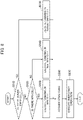
- Fig. 4 illustrates a camping operation flow (Operation Example 1) of the UE 200. As illustrated in Fig. 4 , the UE 200 determines whether or not emergency information by ETWS/CMAS has been broadcasted in the SNPN cell (S110).
- the UE 200 determines whether or not there is a suitable SNPN cell (S120). Whether or not there is a suitable SNPN cell may be determined based on whether or not it is possible to secure the radio quality that can be camped in the cell (the same applies hereinafter).
- the UE 200 searches for a non-suitable SNPN cell (S130) and determines whether or not there is a non-suitable SNPN cell (S140).
- the non-suitable SNPN cell may be interpreted as a cell that is not a suitable SNPN cell.
- the non-suitable cell is interpreted as the cell that is included in NPN (including SNPN) and is not a suitable cell as described above, the UE 200 can camp and acquire the limited service even in the non-suitable cell.
- the non-suitable SNPN cell may be interpreted as a type of acceptable cell.
- the UE 200 executes camping in the non-suitable SNPN cell (S150).
- the UE 200 executes camping in the suitable SNPN cell (S160).
- the suitable SNPN cell may be interpreted as an SNPN cell satisfying a predetermined condition for the access by the UE 200.
- the UE 200 acquires emergency information by ETWS/CMAS via a camped cell (S170). Specifically, the UE 200 acquires the emergency information included in SIB.
- the UE 200 executes an emergency operation based on the acquired emergency information (S180). Specifically, the UE 200 displays the content of the emergency information on the screen and outputs the alarm sound.
- the operation of the UE 200 according to the present operation example may be expressed as follows.
- Fig. 5 illustrates a camping operation flow (Operation Example 2) of the UE 200.
- Operation Example 2 the description of the same portions as those in Operation Example 1 will be appropriately omitted.
- the UE 200 determines whether or not emergency information by ETWS/CMAS has been broadcasted in the SNPN cell (S210).
- the UE 200 determines whether or not the SNPN cell in which the emergency information has been broadcast by ETWS/CMAS is available (S220). Specifically, the UE 200 determines whether or not the SNPN cell is in operation and allows camping.
- the UE 200 searches for a non-SNPN cell (S230) and determines whether there is a non-SNPN cell (S240).
- the non-SNPN cell may be interpreted as a cell other than the SNPN cell, specifically, an NPN cell (NPN cell C20) or a PLMN cell (PLMN cell C10).
- the UE 200 executes camping in the non-SNPN cell (S250).
- the processes of S260 and S270 are the same as the processes of S170 and S180 according to Operation Example 1.
- the operation of the UE 200 according to the present operation example may be expressed as follows.
- Fig. 6 illustrates a camping operation flow (Operation Example 3) of the UE 200.
- the present operation example is an operation obtained by combining Operation Example 1 and Operation Example 2. Specifically, the priority order of cells for camping in order to receive emergency information by ETWS/CMAS is defined.
- the UE 200 determines whether or not there is a suitable SNPN cell (S310).
- the UE 200 determines whether or not there is a non-suitable SNPN cell (S320). Note that the UE 200 may search for the presence/absence of a non-suitable SNPN cell as illustrated in Operation Example 1.
- the UE 200 executes camping in the suitable SNPN cell (S330).
- the UE 200 executes camping in the non-SNPN cell (S340).
- the UE 200 executes camping in the non-suitable SNPN cell (S350).
- the processes of S360 and S370 are the same as the processes of S170 and S180 according to Operation Example 1.
- the operation of the UE 200 according to the present operation example may be expressed as follows.
- Fig. 7 illustrates a camping operation flow (Operation Example 4) of the UE 200. Even in the present operation example, the priority order of cells for camping in order to receive emergency information by ETWS/CMAS is specified.
- the UE 200 determines whether or not there is a suitable SNPN cell (S410).
- the UE 200 determines whether or not there is a non-SNPN cell (S420).
- the UE 200 executes camping in the non-SNPN cell (S430).
- the UE 200 executes camping in the suitable SNPN cell (S440).
- the processes of S450 and S460 are the same as the processes of S170 and S180 according to Operation Example 1.
- the operation of the UE 200 according to the present operation example may be expressed as follows.
- Fig. 8 illustrates a camping operation flow (Operation Example 5) of the UE 200. Even in the present operation example, the priority order of cells for camping in order to receive emergency information by ETWS/CMAS is specified.
- the UE 200 determines whether or not there is a suitable SNPN cell (S510).
- the UE 200 determines whether or not there is an NPN cell (S520).
- the UE 200 executes camping in the suitable SNPN cell (S530).
- the UE 200 executes camping in the non-NPN cell (S540).
- the non-NPN cell may mean a public cell, specifically, the PLMN cell C10.
- the UE 200 executes camping in the NPN cell (S550).
- the processes of S560 and S570 are the same as the processes of S170 and S180 according to Operation Example 1.
- the operation of the UE 200 according to the present operation example may be expressed as follows.
- the UE 200 may determine whether or not there is a non-NPN cell in S520 in the present operation example. In this case, the UE 200 may execute camping in the non-NPN cell if there is a non-NPN cell, and may execute camping in the NPN cell if there is no non-NPN cell.
- the operation of the UE 200 may be expressed as follows.
- the UE 200 can execute camping in the non-suitable cell that is included in NPN in the state of being configured to the access mode with respect to the NPN 30 or the SNPN 40 (that is, SNPN access mode UE), is not the suitable cell, but satisfies the condition.
- the UE 200 can receive the emergency information by ETWS/CMAS via the non-suitable cell.
- the UE 200 can execute camping in the PLMN cell C10 included in the PLMN 20 in the state of SNPN access mode UE.
- the UE 200 operating as the SNPN access mode UE can more reliably acquire the emergency information by ETWS/CMAS even when the UE 200 is used in mission-critical areas such as factory robots, assembly machine, and IoT (Internet of Things) devices.
- mission-critical areas such as factory robots, assembly machine, and IoT (Internet of Things) devices.
- the UE 200 can camp in the PLMN cell C10 when the emergency information by ETWS/CMAS has not been broadcasted in the cell included in the NPN 30 and/or the SNPN 40 or when the cell included in the NPN 30 and/or the SNPN 40 (NPN cell C20, SNPN cell C30) is not available. Therefore, the UE 200 can more reliably acquire the emergency information by ETWS/CMAS.
- the UE 200 can receive the camped cell information indicating the cell in which the UE 200 needs to camp, and execute camping based on the received camped cell information. Therefore, an appropriate camped cell can be controlled by the network initiative from among various types of cells.
- the suitable SNPN cell and the non-suitable SNPN cell may be collectively interpreted as the SNPN cell
- the NPN cell and the PLMN cell may be collectively interpreted as the non-SNPN cell.
- ETWS/CMAS has been described as an example in the above embodiment, the invention may be applied to other systems that broadcast the same type of emergency information, for example, Korean Public Alert System (KPAS), EU-ALERT, WEA (Wireless Emergency Alerts).
- KPAS Korean Public Alert System
- EU-ALERT EU-ALERT
- WEA Wired Emergency Alerts
- each functional block can be implemented by a desired combination of at least one of hardware and software.
- a method for implementing each functional block is not particularly limited. That is, each functional block may be implemented by one physically or logically coupled device, or may be implemented by directly or indirectly connecting two or more physically or logically separated devices (for example, in a wired or wireless manner), and these plural devices.
- the functional blocks may be implemented by combining software with the one device or the plural devices described above.
- Functions include determining, deciding, judging, calculating, computing, processing, deriving, investigating, searching, ascertaining, receiving, transmitting, output, accessing, resolving, selecting, choosing, establishing, comparing, assuming, expecting, considering, broadcasting, notifying, communicating, forwarding, configuring, reconfiguring, allocating (mapping), assigning, and the like.
- the functions are not limited thereto.
- a functional block (component) that causes transmitting to function is called a transmitting unit or a transmitter.
- a implementation method for any of the above functions is not particularly limited to any one method as described above.
- Fig. 9 is a diagram illustrating an example of a hardware configuration of the UE 200.
- the UE 200 can be configured as a computer device including a processor 1001, a memory 1002, a storage 1003, a communication device 1004, an input device 1005, an output device 1006, a bus 1007, and the like.
- the term "device” can be replaced with a circuit, device, unit, and the like in the following explanation.
- the hardware configuration of the device can be configured to include one or a plurality of the devices illustrated in the drawings, or can be configured by without including some of the devices.
- the functional blocks of the UE 200 can be implemented by any of hardware elements of the computer device or a combination of the hardware elements.
- various functions of the UE 200 are realized by loading a predetermined software (program) on hardware such as the processor 1001 and the memory 1002 to perform operations by the processor 1001, and by controlling communication via the communication device 1004, and controlling reading and/or writing of data on the memory 1002 and the storage 1003.
- a predetermined software program
- the processor 1001 for example, operates an operating system to control the entire computer.
- the processor 1001 can be configured with a central processing unit (CPU) including an interface with a peripheral device, a control device, a computing device, a register, and the like.
- CPU central processing unit
- the processor 1001 reads a program (program code), a software module, data, and the like from the storage 1003 and/or the communication device 1004 into the memory 1002, and executes various processes according to the data.
- a program program code
- a program that is capable of executing on the computer at least a part of the operation described in the above embodiment is used.
- various processes described above can be executed by one processor 1001 or can be executed simultaneously or sequentially by two or more processors 1001.
- the processor 1001 can be implemented using one or more chips.
- the program can be transmitted from a network via a telecommunication line.
- the memory 1002 is a computer-readable recording medium and is configured, for example, using at least one of a read only memory (ROM), an erasable programmable ROM (EPROM), an electrically erasable programmable ROM (EEPROM), a random access memory (RAM), and the like.
- the memory 1002 can be called a register, a cache, a main memory (main storage device), and the like.
- the memory 1002 can store therein a program (program codes), software modules, and the like that can execute the method according to the embodiment of the present disclosure.
- the storage 1003 is a computer readable recording medium.
- Examples of the storage 1003 include an optical disk such as a compact disc ROM (CD-ROM), a hard disk drive, a flexible disk, a magneto-optical disk (for example, a compact disk, a digital versatile disk, Blu-ray (registered trademark) disk), a smart card, a flash memory (for example, a card, a stick, a key drive), a floppy (registered trademark) disk, a magnetic strip, and the like.
- the storage 1003 may be called an auxiliary storage device.
- the recording medium can be, for example, a database including the memory 1002 and/or the storage 1003, a server, or other appropriate medium.
- the communication device 1004 is hardware (transmission/reception device) capable of performing communication between computers via at least one of a wired network and a wireless network.
- the communication device 1004 is also called, for example, a network device, a network controller, a network card, a communication module, and the like.
- the communication device 1004 includes a high-frequency switch, a duplexer, a filter, a frequency synthesizer, and the like in order to implement, for example, at least one of Frequency Division Duplex (FDD) and Time Division Duplex (TDD).
- FDD Frequency Division Duplex
- TDD Time Division Duplex
- the input device 1005 is an input device (for example, a keyboard, a mouse, a microphone, a switch, a button, a sensor, and the like) that receives input from the outside.
- the output device 1006 is an output device (for example, a display, a speaker, an LED lamp, and the like) that outputs data to the outside. Note that the input device 1005 and the output device 1006 may be integrated (for example, a touch screen).
- the respective devices such as the processor 1001 and the memory 1002, are connected to each other with the bus 1007 for communicating information thereamong.
- the bus 1007 can be configured using a single bus or can be configured using separate buses between the devices.
- the device may be configured to include hardware such as a microprocessor, a digital signal processor (DSP), an application specific integrated circuit (ASIC), a programmable logic device (PLD), and a field programmable gate array (FPGA) .
- DSP digital signal processor
- ASIC application specific integrated circuit
- PLD programmable logic device
- FPGA field programmable gate array
- notification of information is not limited to that described in the above aspect/embodiment, and may be performed using a different method.
- the notification of information may be performed by physical layer signaling (for example, downlink control information (DCI), uplink control information (UCI), upper layer signaling (for example, RRC signaling, medium access control (MAC) signaling, notification information (master information block (MIB), system information block (SIB)), other signals, or a combination of these.
- the RRC signaling may be called an RRC message, for example, or can be an RRC connection setup message, an RRC connection reconfiguration message, or the like.
- LTE Long Term Evolution
- LTE-A LTE-Advanced
- SUPER 3G IMT-Advanced
- 4G 5th generation mobile communication system
- 5G Future Radio Access
- FAA New Radio
- NR New Radio
- W-CDMA registered trademark
- GSM registered trademark
- UMB Ultra Mobile Broadband
- IEEE 802.11 Wi-Fi (registered trademark)
- IEEE 802.16 WiMAX (registered trademark)
- IEEE 802.20 Ultra-WideBand (UWB), Bluetooth (registered trademark)
- a plurality of systems may be combined (for example, a combination of at least one of the LTE and the LTE-A with the 5G).
- the specific operation that is performed by the base station in the present disclosure may be performed by its upper node in some cases.
- the various operations performed for communication with the terminal may be performed by at least one of the base station and other network nodes other than the base station (for example, MME, S-GW, and the like may be considered, but not limited thereto).
- MME Mobility Management Entity
- S-GW Packet Control Function
- the example in which there is one network node other than the base station has been described; however, a combination of a plurality of other network nodes (for example, MME and S-GW) may be used.
- Information and signals can be output from an upper layer (or lower layer) to a lower layer (or upper layer).
- the information may be input and output via a plurality of network nodes.
- the input/output information can be stored in a specific location (for example, a memory) or can be managed in a management table.
- the information to be input/output can be overwritten, updated, or added.
- the information can be deleted after outputting.
- the input information can be transmitted to another device.
- the determination may be made using a value (0 or 1) represented by one bit, using Boolean value (Boolean: true or false), or by comparison of numerical values (for example, comparison with a predetermined value).
- notification of predetermined information is not limited to being performed explicitly, but may be performed implicitly (for example, without notifying the predetermined information).
- the software should be interpreted broadly to mean an instruction, an instruction set, a code, a code segment, a program code, a program, a subprogram, a software module, an application, a software application, a software package, a routine, a subroutine, an object, an executable file, an execution thread, a procedure, a function, and the like.
- software, an instruction, information, and the like may be transmitted and received via a transmission medium.
- a transmission medium for example, when software is transmitted from a website, a server, or some other remote source using at least one of a wired technology (coaxial cable, optical fiber cable, twisted pair, digital subscriber line (DSL), or the like) and a wireless technology (infrared light, microwave, or the like), at least one of these wired and wireless technologies is included within the definition of the transmission medium.
- a wired technology coaxial cable, optical fiber cable, twisted pair, digital subscriber line (DSL), or the like
- DSL digital subscriber line
- wireless technology infrared light, microwave, or the like
- the information, signals, or the like described above may be represented by using any of a variety of different technologies.
- data, an instruction, a command, information, a signal, a bit, a symbol, a chip, or the like that can be described throughout the above description may be represented by a voltage, a current, an electromagnetic wave, a magnetic field or a magnetic particle, an optical field or a photon, or a desired combination thereof.
- a channel and a symbol may be a signal (signaling).
- the signal may be a message.
- a component carrier (Component Carrier: CC) may be called a carrier frequency, a cell, a frequency carrier, or the like.
- system and “network” used in the present disclosure can be used interchangeably.
- the information, the parameter, and the like described in the present disclosure can be represented by an absolute value, can be expressed as a relative value from a predetermined value, or can be represented by corresponding other information.
- the radio resource can be instructed by an index.
- base station Base Station: BS
- radio base station fixed station
- NodeB NodeB
- eNodeB eNodeB
- gNodeB gNodeB
- the base station can accommodate one or more (for example, three) cells (also called sectors). In a configuration in which the base station accommodates a plurality of cells, the entire coverage area of the base station can be divided into a plurality of smaller areas. In each such a smaller area, communication service can be provided by a base station subsystem (for example, a small base station for indoor use (Remote Radio Head: RRH)).
- a base station subsystem for example, a small base station for indoor use (Remote Radio Head: RRH)).
- cell refers to a part or all of the coverage area of a base station and/or a base station subsystem that performs communication service in this coverage.
- the terms “mobile station (Mobile Station: MS)”, “user terminal”, “user equipment (User Equipment: UE)”, “terminal”, and the like can be used interchangeably.
- the mobile station is called by the persons skilled in the art as a subscriber station, a mobile unit, a subscriber unit, a radio unit, a remote unit, a mobile device, a radio device, a radio communication device, a remote device, a mobile subscriber station, an access terminal, a mobile terminal, a radio terminal, a remote terminal, a handset, a user agent, a mobile client, a client, or with some other suitable term.
- At least one of a base station and a mobile station may be called a transmitting device, a receiving device, a communication device, or the like.
- at least one of a base station and a mobile station may be a device mounted on a moving body, a moving body itself, or the like.
- the moving body may be a vehicle (for example, a car, an airplane, or the like), a moving body that moves unmanned (for example, a drone, an automatically driven vehicle, or the like), a robot (manned type or unmanned type).
- at least one of a base station and a mobile station can be a device that does not necessarily move during the communication operation.
- at least one of a base station and a mobile station may be an Internet of Things (IoT) device such as a sensor.
- IoT Internet of Things
- a base station in the present disclosure may be read as a mobile station (user terminal, hereinafter the same).
- a base station in the present disclosure may be read as a mobile station (user terminal, hereinafter the same).
- each of the aspects/embodiments of the present disclosure may be applied to a configuration that allows communication between a base station and a mobile station to be replaced with communication among a plurality of mobile stations (for example, may be called Device-to-Device (D2D), Vehicle-to-Everything (V2X), or the like).
- the mobile station may have the function of the base station.
- the terms "uplink”, “downlink” and the like may also be replaced with terms corresponding to inter-terminal communication (for example, "side").
- terms such as an uplink channel, and a downlink channel may be read as a side channel.
- a mobile station in the present disclosure may be read as a base station.
- the base station may have the function of the mobile station.
- a radio frame may be constituted by one or a plurality of frames in a time domain.
- the one frame or each frame of the plurality of frames in the time domain may be called a subframe.
- a subframe may also be constituted by one or a plurality of slots in the time domain.
- the subframe may have a fixed time length (for example, 1 ms) that does not depend on numerology.
- the numerology may be a communication parameter applied to at least one of transmission and reception of a certain signal or channel.
- the numerology may represent at least one of, for example, a subcarrier spacing (SCS), a bandwidth, a symbol length, a cyclic prefix length, a transmission time interval (TTI), the number of symbols per TTI, a radio frame configuration, a specific filtering process performed by the transceiver in the frequency domain, a specific windowing process performed by the transceiver in the time domain, and the like.
- SCS subcarrier spacing
- TTI transmission time interval
- the slot may be constituted by one or a plurality of symbols (such as orthogonal frequency division multiplexing (OFDM)) symbols and single carrier frequency division multiple access (SC-FDMA) symbols) in the time domain.
- the slot may be a time unit based on the numerology.
- the slot may include a plurality of mini-slots. Each mini-slot may be constituted by one or a plurality of symbols in the time domain. In addition, the mini-slot may also be called a sub-slot. The mini-slot may be constituted by fewer symbols than the slot.
- PDSCH (or PUSCH) transmitted in a time unit greater than the mini-slot may be called PDSCH (or PUSCH) mapping type A.
- the PDSCH (or PUSCH) transmitted using the mini-slot may be called PDSCH (or PUSCH) mapping type B.
- All of the radio frame, the subframe, the slot, the mini-slot, and the symbol represent a time unit at the time of transmitting a signal. All of the radio frame, the subframe, the slot, the mini-slot, and the symbol may have different names corresponding to them.
- one subframe may be called a transmission time interval (TTI), a plurality of consecutive subframes may be called TTI, and one slot or one mini-slot may be called TTI. That is, at least one of the subframe and TTI may be a subframe (1 ms) in the existing LTE, may be a period shorter than 1 ms (for example, 1 to 13 symbols), or may be longer than 1 ms. Note that the unit representing TTI may be called a slot, a mini-slot, and the like instead of a subframe.
- TTI refers to, for example, a minimum time unit of scheduling in radio communication.
- the base station performs scheduling to allocate radio resources (frequency bandwidths, transmission power, and the like that can be used by each user terminal) to each user terminal in units of TTI.
- radio resources frequency bandwidths, transmission power, and the like that can be used by each user terminal
- TTI is not limited thereto.
- TTI may be a transmission time unit such as a channel-encoded data packet (transport block), a code block, and a codeword, and may be a processing unit such as scheduling and link adaptation. Note that, when TTI is given, a time interval (for example, the number of symbols) at which a transport block, a code block, a codeword, and the like are actually mapped may be shorter than the TTI.
- one slot or one mini-slot when one slot or one mini-slot is called TTI, one or more TTIs (that is, one or more slots or one or more mini-slots) may be the minimum time unit for scheduling.
- the number of slots (the number of mini-slots) constituting the minimum time unit of the scheduling may be controlled.
- TTI having a time length of 1 ms may be called a general TTI (TTI in LTE Rel. 8-12), a normal TTI, a long TTI, a general subframe, a normal subframe, a long subframe, a slot, and the like.
- the TTI shorter than the general TTI may be called a shortened TTI, a short TTI, a partial TTI (partial or fractional TTI), a shortened subframe, a short subframe, a mini-slot, a sub-slot, a slot, and the like.
- a long TTI for example, a general TTI, a subframe, and the like
- TTI having a time length exceeding 1 ms
- a short TTI for example, a shortened TTI
- a resource block is a resource allocation unit in the time domain and the frequency domain, and may include one or a plurality of consecutive subcarriers in the frequency domain.
- the number of subcarriers included in the RB may be the same regardless of the numerology, and may be twelve, for example.
- the number of subcarriers included in RB may be decided based on the numerology.
- a time domain of RB may include one or a plurality of symbols, and may be one slot, one mini-slot, one subframe, or one TTI in length.
- One TTI, one subframe, and the like may be constituted by one or a plurality of resource blocks.
- one or a plurality of RBs may be called a physical resource block (Physical RB: PRB), a sub-carrier group (SCG), a resource element group (REG), a PRB pair, an RB pair, and the like.
- PRB Physical resource block
- SCG sub-carrier group
- REG resource element group
- the resource block may be constituted by one or a plurality of resource elements (RE).
- RE resource elements
- one RE may be a radio resource area of one subcarrier and one symbol.
- a bandwidth part (may also be called a partial bandwidth) may represent a subset of consecutive common RBs (common resource blocks) for a certain numerology in a certain carrier.
- the common RB may be specified by an index of RB based on a common reference point of the carrier.
- the PRB may be defined in a BWP and numbered within the BWP.
- the BWP may include a BWP for UL (UL BWP) and a BWP for DL (DL BWP).
- UL BWP UL BWP
- DL BWP DL BWP
- one or more BWPs may be configured in one carrier.
- At least one of the configured BWPs may be active, and UE does not necessarily assume transmission/reception of a predetermined signal/channel outside the active BWP.
- BWP bitmap
- the structures of the radio frame, the subframe, the slot, the mini-slot, the symbol, and the like described above are merely examples.
- the configurations such as the number of subframes included in the radio frame, the number of slots per subframe or radio frame, the number of mini-slots included in the slot, the number of symbols and RBs included in the slot or mini-slot, the number of subcarriers included in the RB, the number of symbols in the TTI, the symbol length, and the cyclic prefix (CP) length can be variously changed.
- connection means any direct or indirect connection or coupling between two or more elements.
- one or more intermediate elements may be present between two elements that are “connected” or “coupled” to each other.
- the coupling or connection between the elements may be physical, logical, or a combination thereof.
- connection may be read as "access”.
- two elements can be “connected” or “coupled” to each other by using at least one of one or more wires, cables, printed electrical connections, and as some non-limiting and non-exhaustive examples, by using electromagnetic energy having wavelengths in the radio frequency domain, the microwave region and light (both visible and invisible) regions, and the like.
- the reference signal may be abbreviated as Reference Signal (RS) and may be called pilot (Pilot) according to applicable standards.
- RS Reference Signal
- Pilot pilot
- the phrase “based on” does not mean “based only on” unless explicitly stated otherwise. In other words, the phrase “based on” means both “based only on” and “based at least on”.
- any reference to an element using a designation such as “first”, “second”, and the like used in the present disclosure generally does not limit the amount or order of those elements. Such designations can be used in the present disclosure as a convenient method to distinguish between two or more elements. Thus, the reference to the first and second elements does not imply that only two elements can be adopted, or that the first element must precede the second element in some or the other manner.
- determining and “determining” used in the present disclosure sometimes encompass a wide variety of operations.
- “determining” and “deciding” can include judging, calculating, computing, processing, deriving, investigating, looking up, search, or inquiry (for example, search in a table, a database, or another data structure), and ascertaining which are considered as “determining” or “deciding”.
- “determining” and “deciding” can include receiving (for example, receiving information), transmitting (for example, transmitting information), "input”, “output”, and “accessing” (for example, accessing data in a memory) which are considered as “determining” or "deciding”.
- determining and “deciding” can include resolving, selecting, choosing, establishing, and comparing which are considered as “determining” or “deciding”. That is, the “determining” and “deciding” can include any operation considered as “determining” or “deciding”. In addition, “determining (deciding)” may be read as “assuming”, “expecting”, “considering”, and the like.
- the term "A and B are different” may mean “A and B are different from each other”. Note that the term may mean “A and B are each different from C”. Terms such as “leave”, “coupled”, or the like may also be interpreted in the same manner as “different”.
Landscapes
- Engineering & Computer Science (AREA)
- Computer Networks & Wireless Communication (AREA)
- Signal Processing (AREA)
- Computer Security & Cryptography (AREA)
- Business, Economics & Management (AREA)
- Health & Medical Sciences (AREA)
- Emergency Management (AREA)
- Environmental & Geological Engineering (AREA)
- Public Health (AREA)
- Mobile Radio Communication Systems (AREA)
- Telephonic Communication Services (AREA)
Applications Claiming Priority (1)
| Application Number | Priority Date | Filing Date | Title |
|---|---|---|---|
| PCT/JP2020/005159 WO2021161389A1 (fr) | 2020-02-10 | 2020-02-10 | Terminal |
Publications (2)
| Publication Number | Publication Date |
|---|---|
| EP4106367A1 true EP4106367A1 (fr) | 2022-12-21 |
| EP4106367A4 EP4106367A4 (fr) | 2023-10-25 |
Family
ID=77292195
Family Applications (1)
| Application Number | Title | Priority Date | Filing Date |
|---|---|---|---|
| EP20919265.7A Pending EP4106367A4 (fr) | 2020-02-10 | 2020-02-10 | Terminal |
Country Status (3)
| Country | Link |
|---|---|
| EP (1) | EP4106367A4 (fr) |
| CN (1) | CN115053547B (fr) |
| WO (1) | WO2021161389A1 (fr) |
Cited By (1)
| Publication number | Priority date | Publication date | Assignee | Title |
|---|---|---|---|---|
| US20220361098A1 (en) * | 2021-05-04 | 2022-11-10 | FG Innovation Company Limited | Method related to emergency service and user equipment |
Families Citing this family (2)
| Publication number | Priority date | Publication date | Assignee | Title |
|---|---|---|---|---|
| US20230147513A1 (en) * | 2020-04-22 | 2023-05-11 | Nec Corporation | Snpn-ran entity, distribution system, distribution method, and non-temporary computer readable medium |
| EP4598072A4 (fr) * | 2022-09-29 | 2025-10-15 | Sharp Kk | Système de réseau, terminal et procédé de notification |
Family Cites Families (5)
| Publication number | Priority date | Publication date | Assignee | Title |
|---|---|---|---|---|
| US20110237218A1 (en) * | 2008-12-17 | 2011-09-29 | Panasonic Corporation | Mobile terminals, and earthquake and tsunami warning system |
| US8831555B2 (en) * | 2009-04-03 | 2014-09-09 | Qualcomm Incorporated | Reestablishment procedure for an emergency call |
| CN102440012B (zh) * | 2009-04-15 | 2014-01-01 | 华为技术有限公司 | 接收公共预警系统pws消息的方法、装置和系统 |
| CN106797531A (zh) * | 2014-09-27 | 2017-05-31 | Lg电子株式会社 | 在无线通信系统中终端管理装置对装置(d2d)操作的配置的方法及使用该方法的终端 |
| CN108696853B (zh) * | 2017-02-27 | 2021-02-26 | 华为技术有限公司 | 一种呼叫建立的方法及终端设备 |
-
2020
- 2020-02-10 CN CN202080095574.5A patent/CN115053547B/zh active Active
- 2020-02-10 EP EP20919265.7A patent/EP4106367A4/fr active Pending
- 2020-02-10 WO PCT/JP2020/005159 patent/WO2021161389A1/fr not_active Ceased
Cited By (1)
| Publication number | Priority date | Publication date | Assignee | Title |
|---|---|---|---|---|
| US20220361098A1 (en) * | 2021-05-04 | 2022-11-10 | FG Innovation Company Limited | Method related to emergency service and user equipment |
Also Published As
| Publication number | Publication date |
|---|---|
| EP4106367A4 (fr) | 2023-10-25 |
| WO2021161389A1 (fr) | 2021-08-19 |
| CN115053547B (zh) | 2025-07-08 |
| CN115053547A (zh) | 2022-09-13 |
Similar Documents
| Publication | Publication Date | Title |
|---|---|---|
| JP7308277B2 (ja) | 端末、基地局、通信方法及び通信システム | |
| JP2023096185A (ja) | 端末、通信システム及び端末により実行される通信方法 | |
| WO2022195778A1 (fr) | Terminal, station de base et procédé d'émission | |
| EP4106367A1 (fr) | Terminal | |
| JP7250048B2 (ja) | 端末、基地局、通信方法及び無線通信システム | |
| JP7537837B2 (ja) | 端末、無線通信システム及び無線通信方法 | |
| JP2023156536A (ja) | 端末、無線通信方法、及び基地局 | |
| EP4228321A1 (fr) | Station de base et terminal sans fil | |
| JP7248709B2 (ja) | 端末、基地局、通信方法及び無線通信システム | |
| JP7201786B2 (ja) | 端末、基地局、通信方法及び無線通信システム | |
| US12219523B2 (en) | Terminal and communication method | |
| US20230217388A1 (en) | Terminal | |
| JP7221374B2 (ja) | 端末、基地局及び通信方法 | |
| WO2022185501A1 (fr) | Terminal et procédé de communication | |
| US12075336B2 (en) | User equipment to perform access to a cell | |
| US12463788B2 (en) | Radio communication node | |
| US20230247529A1 (en) | Terminal, base station, and communication method | |
| WO2023002586A1 (fr) | Terminal et procédé de communication | |
| WO2023002587A1 (fr) | Terminal et procédé de communication | |
| WO2023012910A1 (fr) | Terminal et procédé de communication | |
| WO2022239091A1 (fr) | Terminal et procédé de communication | |
| US20220330135A1 (en) | Network device | |
| WO2023012913A1 (fr) | Terminal et procédé de communication | |
| WO2023276011A1 (fr) | Terminal et procédé de communication | |
| WO2022239090A1 (fr) | Terminal et procédé de communication |
Legal Events
| Date | Code | Title | Description |
|---|---|---|---|
| STAA | Information on the status of an ep patent application or granted ep patent |
Free format text: STATUS: THE INTERNATIONAL PUBLICATION HAS BEEN MADE |
|
| PUAI | Public reference made under article 153(3) epc to a published international application that has entered the european phase |
Free format text: ORIGINAL CODE: 0009012 |
|
| STAA | Information on the status of an ep patent application or granted ep patent |
Free format text: STATUS: REQUEST FOR EXAMINATION WAS MADE |
|
| 17P | Request for examination filed |
Effective date: 20220825 |
|
| AK | Designated contracting states |
Kind code of ref document: A1 Designated state(s): AL AT BE BG CH CY CZ DE DK EE ES FI FR GB GR HR HU IE IS IT LI LT LU LV MC MK MT NL NO PL PT RO RS SE SI SK SM TR |
|
| DAV | Request for validation of the european patent (deleted) | ||
| DAX | Request for extension of the european patent (deleted) | ||
| P01 | Opt-out of the competence of the unified patent court (upc) registered |
Effective date: 20230509 |
|
| A4 | Supplementary search report drawn up and despatched |
Effective date: 20230927 |
|
| RIC1 | Information provided on ipc code assigned before grant |
Ipc: H04W 48/20 20090101ALI20230921BHEP Ipc: H04W 48/18 20090101ALI20230921BHEP Ipc: H04W 48/12 20090101ALI20230921BHEP Ipc: H04W 84/10 20090101ALI20230921BHEP Ipc: H04W 4/90 20180101AFI20230921BHEP |
|
| STAA | Information on the status of an ep patent application or granted ep patent |
Free format text: STATUS: EXAMINATION IS IN PROGRESS |
|
| 17Q | First examination report despatched |
Effective date: 20241030 |