EP4108301B1 - Systèmes et procédés de rénovation de machines d'exercice avec des fonctions intelligentes - Google Patents
Systèmes et procédés de rénovation de machines d'exercice avec des fonctions intelligentes Download PDFInfo
- Publication number
- EP4108301B1 EP4108301B1 EP21201184.5A EP21201184A EP4108301B1 EP 4108301 B1 EP4108301 B1 EP 4108301B1 EP 21201184 A EP21201184 A EP 21201184A EP 4108301 B1 EP4108301 B1 EP 4108301B1
- Authority
- EP
- European Patent Office
- Prior art keywords
- control module
- cloud
- application server
- based application
- angle
- Prior art date
- Legal status (The legal status is an assumption and is not a legal conclusion. Google has not performed a legal analysis and makes no representation as to the accuracy of the status listed.)
- Active
Links
Images


Classifications
-
- A—HUMAN NECESSITIES
- A63—SPORTS; GAMES; AMUSEMENTS
- A63B—APPARATUS FOR PHYSICAL TRAINING, GYMNASTICS, SWIMMING, CLIMBING, OR FENCING; BALL GAMES; TRAINING EQUIPMENT
- A63B24/00—Electric or electronic controls for exercising apparatus of preceding groups; Controlling or monitoring of exercises, sportive games, training or athletic performances
- A63B24/0062—Monitoring athletic performances, e.g. for determining the work of a user on an exercise apparatus, the completed jogging or cycling distance
-
- A—HUMAN NECESSITIES
- A63—SPORTS; GAMES; AMUSEMENTS
- A63B—APPARATUS FOR PHYSICAL TRAINING, GYMNASTICS, SWIMMING, CLIMBING, OR FENCING; BALL GAMES; TRAINING EQUIPMENT
- A63B24/00—Electric or electronic controls for exercising apparatus of preceding groups; Controlling or monitoring of exercises, sportive games, training or athletic performances
- A63B24/0003—Analysing the course of a movement or motion sequences during an exercise or trainings sequence, e.g. swing for golf or tennis
-
- A—HUMAN NECESSITIES
- A63—SPORTS; GAMES; AMUSEMENTS
- A63B—APPARATUS FOR PHYSICAL TRAINING, GYMNASTICS, SWIMMING, CLIMBING, OR FENCING; BALL GAMES; TRAINING EQUIPMENT
- A63B21/00—Exercising apparatus for developing or strengthening the muscles or joints of the body by working against a counterforce, with or without measuring devices
- A63B21/005—Exercising apparatus for developing or strengthening the muscles or joints of the body by working against a counterforce, with or without measuring devices using electromagnetic or electric force-resisters
- A63B21/0058—Exercising apparatus for developing or strengthening the muscles or joints of the body by working against a counterforce, with or without measuring devices using electromagnetic or electric force-resisters using motors
-
- A—HUMAN NECESSITIES
- A63—SPORTS; GAMES; AMUSEMENTS
- A63B—APPARATUS FOR PHYSICAL TRAINING, GYMNASTICS, SWIMMING, CLIMBING, OR FENCING; BALL GAMES; TRAINING EQUIPMENT
- A63B21/00—Exercising apparatus for developing or strengthening the muscles or joints of the body by working against a counterforce, with or without measuring devices
- A63B21/06—User-manipulated weights
- A63B21/062—User-manipulated weights including guide for vertical or non-vertical weights or array of weights to move against gravity forces
- A63B21/0626—User-manipulated weights including guide for vertical or non-vertical weights or array of weights to move against gravity forces with substantially vertical guiding means
- A63B21/0628—User-manipulated weights including guide for vertical or non-vertical weights or array of weights to move against gravity forces with substantially vertical guiding means for vertical array of weights
-
- A—HUMAN NECESSITIES
- A63—SPORTS; GAMES; AMUSEMENTS
- A63B—APPARATUS FOR PHYSICAL TRAINING, GYMNASTICS, SWIMMING, CLIMBING, OR FENCING; BALL GAMES; TRAINING EQUIPMENT
- A63B21/00—Exercising apparatus for developing or strengthening the muscles or joints of the body by working against a counterforce, with or without measuring devices
- A63B21/40—Interfaces with the user related to strength training; Details thereof
- A63B21/4027—Specific exercise interfaces
- A63B21/4033—Handles, pedals, bars or platforms
- A63B21/4035—Handles, pedals, bars or platforms for operation by hand
-
- A—HUMAN NECESSITIES
- A63—SPORTS; GAMES; AMUSEMENTS
- A63B—APPARATUS FOR PHYSICAL TRAINING, GYMNASTICS, SWIMMING, CLIMBING, OR FENCING; BALL GAMES; TRAINING EQUIPMENT
- A63B24/00—Electric or electronic controls for exercising apparatus of preceding groups; Controlling or monitoring of exercises, sportive games, training or athletic performances
- A63B24/0087—Electric or electronic controls for exercising apparatus of groups A63B21/00 - A63B23/00, e.g. controlling load
-
- A—HUMAN NECESSITIES
- A63—SPORTS; GAMES; AMUSEMENTS
- A63B—APPARATUS FOR PHYSICAL TRAINING, GYMNASTICS, SWIMMING, CLIMBING, OR FENCING; BALL GAMES; TRAINING EQUIPMENT
- A63B71/00—Games or sports accessories not covered in groups A63B1/00 - A63B69/00
- A63B71/06—Indicating or scoring devices for games or players, or for other sports activities
- A63B71/0619—Displays, user interfaces and indicating devices, specially adapted for sport equipment, e.g. display mounted on treadmills
-
- G—PHYSICS
- G01—MEASURING; TESTING
- G01D—MEASURING NOT SPECIALLY ADAPTED FOR A SPECIFIC VARIABLE; ARRANGEMENTS FOR MEASURING TWO OR MORE VARIABLES NOT COVERED IN A SINGLE OTHER SUBCLASS; TARIFF METERING APPARATUS; MEASURING OR TESTING NOT OTHERWISE PROVIDED FOR
- G01D21/00—Measuring or testing not otherwise provided for
- G01D21/02—Measuring two or more variables by means not covered by a single other subclass
-
- G—PHYSICS
- G06—COMPUTING OR CALCULATING; COUNTING
- G06K—GRAPHICAL DATA READING; PRESENTATION OF DATA; RECORD CARRIERS; HANDLING RECORD CARRIERS
- G06K17/00—Methods or arrangements for effecting co-operative working between equipments covered by two or more of main groups G06K1/00 - G06K15/00, e.g. automatic card files incorporating conveying and reading operations
-
- H—ELECTRICITY
- H04—ELECTRIC COMMUNICATION TECHNIQUE
- H04L—TRANSMISSION OF DIGITAL INFORMATION, e.g. TELEGRAPHIC COMMUNICATION
- H04L67/00—Network arrangements or protocols for supporting network services or applications
- H04L67/01—Protocols
- H04L67/12—Protocols specially adapted for proprietary or special-purpose networking environments, e.g. medical networks, sensor networks, networks in vehicles or remote metering networks
-
- H—ELECTRICITY
- H04—ELECTRIC COMMUNICATION TECHNIQUE
- H04W—WIRELESS COMMUNICATION NETWORKS
- H04W4/00—Services specially adapted for wireless communication networks; Facilities therefor
- H04W4/30—Services specially adapted for particular environments, situations or purposes
- H04W4/38—Services specially adapted for particular environments, situations or purposes for collecting sensor information
-
- A—HUMAN NECESSITIES
- A63—SPORTS; GAMES; AMUSEMENTS
- A63B—APPARATUS FOR PHYSICAL TRAINING, GYMNASTICS, SWIMMING, CLIMBING, OR FENCING; BALL GAMES; TRAINING EQUIPMENT
- A63B2220/00—Measuring of physical parameters relating to sporting activity
- A63B2220/20—Distances or displacements
- A63B2220/24—Angular displacement
-
- A—HUMAN NECESSITIES
- A63—SPORTS; GAMES; AMUSEMENTS
- A63B—APPARATUS FOR PHYSICAL TRAINING, GYMNASTICS, SWIMMING, CLIMBING, OR FENCING; BALL GAMES; TRAINING EQUIPMENT
- A63B2220/00—Measuring of physical parameters relating to sporting activity
- A63B2220/30—Speed
-
- A—HUMAN NECESSITIES
- A63—SPORTS; GAMES; AMUSEMENTS
- A63B—APPARATUS FOR PHYSICAL TRAINING, GYMNASTICS, SWIMMING, CLIMBING, OR FENCING; BALL GAMES; TRAINING EQUIPMENT
- A63B2220/00—Measuring of physical parameters relating to sporting activity
- A63B2220/40—Acceleration
- A63B2220/44—Angular acceleration
-
- A—HUMAN NECESSITIES
- A63—SPORTS; GAMES; AMUSEMENTS
- A63B—APPARATUS FOR PHYSICAL TRAINING, GYMNASTICS, SWIMMING, CLIMBING, OR FENCING; BALL GAMES; TRAINING EQUIPMENT
- A63B2220/00—Measuring of physical parameters relating to sporting activity
- A63B2220/80—Special sensors, transducers or devices therefor
- A63B2220/803—Motion sensors
-
- A—HUMAN NECESSITIES
- A63—SPORTS; GAMES; AMUSEMENTS
- A63B—APPARATUS FOR PHYSICAL TRAINING, GYMNASTICS, SWIMMING, CLIMBING, OR FENCING; BALL GAMES; TRAINING EQUIPMENT
- A63B2220/00—Measuring of physical parameters relating to sporting activity
- A63B2220/80—Special sensors, transducers or devices therefor
- A63B2220/83—Special sensors, transducers or devices therefor characterised by the position of the sensor
- A63B2220/833—Sensors arranged on the exercise apparatus or sports implement
-
- A—HUMAN NECESSITIES
- A63—SPORTS; GAMES; AMUSEMENTS
- A63B—APPARATUS FOR PHYSICAL TRAINING, GYMNASTICS, SWIMMING, CLIMBING, OR FENCING; BALL GAMES; TRAINING EQUIPMENT
- A63B2220/00—Measuring of physical parameters relating to sporting activity
- A63B2220/80—Special sensors, transducers or devices therefor
- A63B2220/89—Field sensors, e.g. radar systems
-
- A—HUMAN NECESSITIES
- A63—SPORTS; GAMES; AMUSEMENTS
- A63B—APPARATUS FOR PHYSICAL TRAINING, GYMNASTICS, SWIMMING, CLIMBING, OR FENCING; BALL GAMES; TRAINING EQUIPMENT
- A63B2225/00—Miscellaneous features of sport apparatus, devices or equipment
- A63B2225/02—Testing, calibrating or measuring of equipment
-
- A—HUMAN NECESSITIES
- A63—SPORTS; GAMES; AMUSEMENTS
- A63B—APPARATUS FOR PHYSICAL TRAINING, GYMNASTICS, SWIMMING, CLIMBING, OR FENCING; BALL GAMES; TRAINING EQUIPMENT
- A63B2225/00—Miscellaneous features of sport apparatus, devices or equipment
- A63B2225/15—Miscellaneous features of sport apparatus, devices or equipment with identification means that can be read by electronic means
-
- A—HUMAN NECESSITIES
- A63—SPORTS; GAMES; AMUSEMENTS
- A63B—APPARATUS FOR PHYSICAL TRAINING, GYMNASTICS, SWIMMING, CLIMBING, OR FENCING; BALL GAMES; TRAINING EQUIPMENT
- A63B2225/00—Miscellaneous features of sport apparatus, devices or equipment
- A63B2225/20—Miscellaneous features of sport apparatus, devices or equipment with means for remote communication, e.g. internet or the like
Definitions
- the present invention relates generally to the field of smart exercise machines, and, more particularly, to systems and methods for retrofitting exercise machines with smart functions.
- Conventional exercise machines particular those used for strength training in fitness centers or rehabilitation facilities, provides physical exercises for various parts of our body through repetitive movements.
- the conventional exercise machines lack monitoring and feedback functions, thus a fitness coach is often needed on site to track an exercise session and to provide guidance to a user. This is both costly and often time not practical.
- a method for retrofitting exercise machines includes removably attaching a sensor module to a moving part of an exercise machine, the sensor module being configured to detect rotations of the moving part and transmit the detected data by a wireless communication connection with a control module, the control module being configured to receive the detected data, calculate an angle value using the detected data and transmit the angle value by a wireless communication connection, providing a cloud-based application server remote to the exercise machine, the cloud-base application server being configured to receive the angle value via the wireless communication connection, verify a user, produce packets of data based on the angle value and the verified user information and transmit the packets of data to a display device, and affixing an identification code to the exercise machine, the identification code being linked to the cloud-based application server.
- a retrofitted exercise machine system is further disclosed.
- the present invention relates to retrofitting conventional exercise machines with smart functions. Preferred embodiments of the present invention will be described hereinafter with reference to the attached drawings.
- Fig. 1 is a block diagram of a system for retrofitting conventional exercise machines according to an embodiment of the present invention.
- the retrofitting system includes a sensor module 110, a control module 140, a cloud-based application server 160, local user interface devices 172 and remote user terminals 178.
- the sensor module 110 is to be mounted on a moving part of a designated exercise machine by a specially designed fixture, such as a clip or a magnet, to detect motions of the machine part.
- the sensor module 110 can also be secured to a user's body part by an exemplary strap to detect body movements directly.
- the senor module 110 includes an accelerometer 131, a gyroscope 133, a magnetometer 135, a processing unit 112 and a wireless transmission module 122.
- the accelerometer 131, the gyroscope 133, and the magnetometer 135 together can detect the exercise machine part's linear distance and angle of movement.
- the processing unit 112 collects data sampled by the accelerometer 131, the gyroscope 133, and the magnetometer 135 and transforms the sampled raw data into acceleration, angular acceleration, magnetic value and quaternion data for being transmitted by the wireless transmission module 122.
- the wireless transmission module 122 is implemented with Bluetooth technology and the data transmission is in packet form. However, other wireless transmission technologies, such as infrared communication, broadcast radio, microwave communication, mobile communication and Wi-Fi communication, may also be used to implement the wireless transmission module 122.
- multiple sensor module 110 may be used, so that each moving part has its own sensor module 110.
- a typical fitness facilities may have multiple exercise machines, and every machine may have its own set of sensor modules 110.
- an identification number may be assigned to it. The identification number may be set by the factory and can be read out by the control module 140, or can be dynamically written into an internal storage device of the control module 140 or into an external storage device of the control module 140.
- the control module 140 wirelessly communicates with multiple sensor modules 110 through Bluetooth technology, so as to respectively assign the identification numbers to the sensor modules 110.
- the control module 140 includes a processing unit 145, a Bluetooth module 152, and an exemplary Wi-Fi module 155.
- the Bluetooth module 152 and the wireless transmission module 122 of the sensor module 110 establish a wireless communication connection for receiving data from and transmitting commands to the sensor module 110.
- the control module 140 may store data (e.g., the receiving data from the sensor module 110) and commands (e.g., the to-be-transmitted commands for the sensor module 110) into an internal storage device or an external storage device.
- the internal storage device is inside the control module 140.
- the external storage device is outside the control module 140.
- the Wi-Fi module 155 is used to wirelessly communicates the control module 140 with the cloud-based application server 160 through the Internet.
- a single wireless communication module can be used in place of both the Bluetooth module 152 and the Wi-Fi module 155.
- the control module 140 communicates with both the sensor module 110 and the cloud-based application server 160 using Wi-Fi technology.
- the control module 140 is exemplarily placed on a ground near yet separated from the exercise machine or placed on the exercise machine.
- a control module 140 may be associated with one exercise machine or multiple exercise machines depending on a number of sensor modules 110 the exercise machines have. In a large fitness facility where multiple exercise machines may be scattered in different rooms, multiple control modules 140 may be used.
- a local computer (not shown) may be used to control and communicate with the multiple control modules 140 through either wireless Bluetooth or ethernet cables. The local computer serves as a gateway to communicate with the cloud-based application server 160.
- the processing unit 145 receives the acceleration, angular acceleration, magnetic value and quaternion data from the sensor module 110, and calculates an angle of rotation and angular acceleration of a corresponding machine part based on the received data. In addition, the processing unit 145 also detects a speed range of the corresponding machine part based on the received data. The angle of rotation, the angular acceleration and the speed range are then transmitted to the cloud-based application server 160 through the exemplary Wi-Fi module 155.
- the processing unit 145 is also coupled to local user interface devices 172, such as a display with touch sensing inputs.
- a user can sign up or log into his or her account through the local user interface devices 172.
- the local user interface devices 172 may have a touch sensing screen as well as a QR code scanner, a card reader and/or a wearable device sensor.
- the local user interface devices 172 allows the user to instantly monitor his or her workout characteristics, such as range of motion and cadence, etc. These characteristics may be compared with predetermined targets.
- the local user interface devices 172 also allows the user to set the targets or acquiring training programs from the cloud-base application server 160. As such, each exercise machine may associate with a local user interface device 172 placed nearby for individual use.
- the local user interface device 172 may also include a large display and associate with multiple exercise machines to facilitate group workouts.
- the cloud-based application server 160 serves as a management platform for the smart exercise machine system according to embodiments of the present invention.
- the management platform provides a website that is hosted by a cloud service providers, such as Amazon Web Services and Microsoft Azure Cloud Provider, etc.
- the website can be accessed by the user terminals 178 from anywhere with an Internet connection.
- the website offers numerous training and management operations, such as real-time coaching, series of classes, training information dashboard, trainee's training records, training organizing and planning, administrator's access, facility management, machine management, and agent management, etc.
- the real-time training guidance can stream video and/or audio content to the local user interface devices 172, so that the user can follow a selected workout routine.
- the corresponding sensor module 110 can monitor the user's performance in real-time for comparing with the selected workout routine.
- the user interface devices 172 displays progresses by the user, such as how many repetitions the user has performed and how many to go.
- the cloud-based application server 160 may also host user account records accessible through the website.
- the user account records may store user's contact information, training logs, physical fitness test records, personal profiles, user sign-in information and user's biometric data.
- the cloud-based application server 160 may provide a web portal for facility management personnel, so that they can monitor the machine usages and coaching activities.
- the cloud-based application server 160 may be linked to users' social media accounts, such as LINE accounts, so that their fitness activities can be shared through social media; family members can monitor their workouts in real time; and their training and coaching records can be easily accessed.
- users' social media accounts such as LINE accounts
- the users can also talk to or share video with each other during exercise.
- family members can access a user's physical fitness record and biometric data through the social media account.
- Fig. 2 illustrates an angle calculation method performed by the processing unit 145 in the control module 140.
- the angle estimation algorithm 202 uses the acceleration, angular acceleration, magnetic value and quaternion data from the sensor module 110 to calculate the turning angle of a corresponding machine part. From the calculated turning angle, an angle position of the beginning rotation 211, an angle position of the end rotation 214 and a rotation angle 217 are obtained.
- the angle position of the beginning rotation 211 and the angle position of the end rotation can be calculated from the quaternion data. If the axis of rotation around the quaternion is a normalized vector (ax, ay, az), the rotation angle is ⁇ , then the (w, x, y, z) component of the quaternion is: (ax ⁇ sin( ⁇ /2), ay ⁇ sin( ⁇ /2), az ⁇ sin( ⁇ /2), cos( ⁇ /2)).
- the equation is stored in an internal storage device of the control module 140 or in an external storage device of the control module 140.
- a nine-axis sensor module may be used to detect three-axis acceleration, three-axis angular acceleration, three-axis magnetic value and quaternion data.
- the quaternion data is derived from the acceleration, the angular acceleration, and the magnetic value data.
- completeness of a workout repetition can be derived.
- the completeness is defined as a ratio or percentage of the actual rotation angle to a predetermined maximum rotation angle for a particular machine part.
- the predetermined maximum rotation angle is stored in either the control module 140 or the cloud-based application server 160.
- Fig. 3 is a flowchart illustrating a process of detecting completeness of a workout repetition according to an embodiment of the present invention.
- the process begins with block 310 where current angle change is detected.
- block 320 the detection result is evaluated. If there is an angle change, the process enters block 330 where the current angle change is accumulated.
- block 340 a percentage of completion is calculated.
- the current angle is outputted to either the local user interface devices 172 or the cloud-based application server 160 in real time, or both in real time.
- the process starts a timer in block 360. If the timer expires after a predetermined time, for instance, 1 second, there is still no angle change being detected, the process enters block 370 where a completion angle is calculated and outputted to either the local user interface devices 172 or the cloud-based application server 160 in real time, or both in real time.
- a predetermined time for instance, 1 second
- Figs. 4A-4C illustrates various locations the sensor modules 110 are attached to different exercise machines. Referring to Fig. 4A , for a simple arm press machine on which both arms move synchronously, only one sensor module 110 is needed to be mounted at location A which reflects angular changes of a handle.
- a chest expansion machine as the left and right arm may move asynchronously, two sensor modules 110 are needed with one mounted at location A on a left arm part and the other mounted at location B on a right arm part.
- a combinational machine has multiple moving parts, multiple sensor modules 110 are mounted at locations A, B, C, D, E, and F, each corresponds to a moving part.
- each sensor module 110 is identified by an identification number or code and associated with the exercise machine the sensor module 110 is mounted to.
- Fig. 5 is a flowchart illustrating a process for retrofitting an exercise machine with the smart system of the present invention.
- the retrofitting process begins with block 510 where a purchaser first creates an account in the cloud-based application server 160. After signing up, in block 520, the purchaser obtains a name and identification code for a particular exercise machine that is intended to be retrofitted with the smart functions.
- a control module 140 is designated to the exercise machine.
- the control module 140's universal unique identifier (UUID) is then provided to the cloud-based application server 160.
- sensor modules 110 are installed on the exercise machine. Identification number or code of each of the installed sensor modules 110 are obtained and provided to the cloud-based application server 160.
- range of motions of the installed sensor modules are calibrated.
- the range of motions of the installed sensor modules are stored in an internal storage device of the control module 140 or in an external storage device of the control module.
- the calibration includes detecting and recording a starting angle and an end angle.
- information relates to the retrofitted exercise machine such as the facility identification, the machine identification, the control module 140's UUID and the sensor module 110's starting angle and end angle, are stored in the cloud-base application server 160.
- Fig. 6 is a flowchart illustrating a process of using a retrofitted smart exercise machine.
- a user uses his or her smartphone to scan a quick response (QR) code or universal product code (UPC) affixed on the exercise machine in block 610.
- the log-in process also include transmitting the user identity information along with the exercise machine's identification code to the cloud-based application server 160. If the user is not a registered customer, and the cloud-based application server 160 does not recognize the user, then the smart functions will not be activated, so the user can only use the exercise machine as a conventional one.
- QR quick response
- UPC universal product code
- the cloud-based application server 160 transmits a start token to a control module 140 associated with the exercise machine to start detecting and transmitting training data in block 620. Upon request, the cloud-based application server 160 also transmits a prestored training program for the user to the control module 140 in block 630. In block 640, the control module 140 detects angle changes as a result of the user's workout by the sensor module 110. In block 650, a timer tracks time durations of angle changes. If there is no angle change for a predetermined time, for instance 10 minutes, the control module 140 transmits an idle token to the cloud-based application server 160 in block 665.
- the cloud-based application server 160 Upon receiving the idle token, the cloud-based application server 160 returns a stop token to the control module 140 to stop further detecting training data in block 690.
- the control module 140 compares the detected training data with the training program and provide real-time feedback to the user on the local user interface devices 172 in block 660.
- the control module 140 also uploads the training data to the cloud-based application server 160 in an account associated with the user in block 670.
- the control module checks if the training program is completed? If completed, the training session ends and cloud-based application server 160 performs block 690. Otherwise, the training process returns to block 660.
- Fig. 7 is a flowchart illustrating a calibration process for a retrofitted exercise machine.
- the calibration process begins with selecting an exercise machine in block 710. Then select a sensor module 110 that is attached to a moving part of the exercise machine for calibration in block 720. In block 730, the moving part is moved to a beginning position and an angle is detected. In block 740, the moving part is moved to an end position and an angle is detected again. In block 750, the operator is prompted to select where to store the calibration data? If "local" is selected, the beginning and end angle are then stored in the local control module 140 (i.e. block 760).
- the control module 140 may have a respective storage device.
- the beginning and end angle are then stored in the cloud-based application server 160 (i.e. block 770).
- the beginning and end angle are stored in both the local control module 140 and the cloud-based application server 160.
- the beginning and end angle are first stored in the local control module 140, and then optionally stored in the cloud-based application server 160.
- Fig. 8 is a flowchart illustrating a process of detecting angles by the control module 140.
- the control module 140 inspects packets transmitted from the sensor module 110.
- the control module 140 keep inspecting the incoming packets in block 810; if sensor packets are received, the control module 140 parse the received packets in block 830, and obtain quaternion data (w, x, y, z) from the sensor packets in block 840.
- the control module calculates an angle offset.
- the calculated angle offset is outputted to the cloud-based application server 160 or the local user interface devices 172 or both.
- Fig. 9 is a flowchart illustrating a process of determining a speed range of each motor speed level according to embodiments of the present invention.
- an operator selects an exercise machine to be calibrated.
- a motor speed level is selected.
- the operator adjusts a moving part of the exercise machine to its beginning angle.
- the control module 140 detects angular acceleration of the moving part.
- the operator adjusts the moving part to its end angle.
- the process goes back to block 920 to perform calibration for another speed level until all the speed levels are calibrated.
- the control module estimates a speed range of each motor speed level.
- the estimated result is outputted to the local user interface devices 172. If selected, the estimated result is further outputted to the cloud-based application server 160.
- Table II shows an exemplary result of motor speed level vs speed range. In this case, there are six motor speed level corresponding to six speed ranges each with a maximum speed and a minimum speed. Table II Motor speed level Minimum speed Maximum speed Level 1 Lv1_min Lv1_max Level 2 Lv2_min Lv2_max Level 3 Lv3_min Lv3_max Level 4 Lv4_min Lv4_max Level 5 Lv5_min Lv5_max Level 6 Lv6_min Lv6_max
- Fig. 10 is a flowchart illustrating a process of detecting motor speed levels during a workout session according embodiments of the present invention.
- a user starts a workout session on an exercise machine.
- the control module 140 receives angular acceleration data from the sensor module 110.
- the control module 140 detects angular acceleration changes and calculates a sum for a predetermined time duration, such as 1 second.
- the process enters block 1043, where rotation is detected.
- angular acceleration is recorded and then return back to block 1030.
- the process enters block 1050, i.e., when the exercise machine has not started operation, the process returns to block 1030; when the operation has started, the sensor module 110 detects motor speed in block 1060. When a stop is detected, the current motor rotation speed is calculated through a detecting motor speed algorithm.
- the control module 140 determines an average angular acceleration belonging to a speed range.
- the control module 140 outputs a motor speed level corresponding to the speed range to the cloud-based application server 160 or the local user interface devices 172 or both.
- the detected angular acceleration during a rotation has two situations. In a first situation, the angular acceleration is caused by both a motor and a user's force. In a second situation, the angular acceleration is only caused by the motor. In order to correctly detect actual motor speed, the second situation has to be extracted from the first situation. In an embodiment, the actual motor speed is detected using following method.
- equation (1) and the equation (2) are stored in an internal storage device of the control module 140 or an external storage device of the control module 140.
- Fig. 11 is a measurement plot of angular acceleration vs. time.
- the measurement is performed on a retrofitted smart exercise machine having two independent sensor modules 110.
- the angular acceleration measurements fluctuates dramatically, i.e., sequential measurements differ more than a predetermined threshold. This indicates that the exercise machine is in situation (1) where the angular acceleration is caused by both a motor and a user's force.
- situation (1) is ignored.
- the angular acceleration measurement become smooth. This period is viewed as in situation (2) where the angular acceleration is only caused by the motor, and correct motor speed level can be detected. Equation (1) can be used to separate situation (2) from situation (1).
- Fig. 12 is a block diagram illustrated a retrofitted smart exercise machine system with two control modules 140A and 1408 separately controlling their respective exercise machines 1212 and 1223.
- An exemplary sensor module 110A is removably attached to the exercise machine 1212, and transmits sensor data to the control module 140A via a Bluetooth low energy (BLE) connection.
- the control module 140A calculates the sensor data into desired measurement data, such as angle values, and transmits the measurement data to the cloud-based application server 160 via a Wi-Fi connection.
- the cloud-based application server 160 returned training guidance information back to the control module 140A, which in turn displays the information on a local user interface device 172A.
- an exemplary sensor module 110B is removably attached to the exercise machine 1223, and transmits sensor data to the control module 140B via a Bluetooth low energy (BLE) connection.
- the control module 140B calculates the sensor data into desired measurement data, such as angle values, and transmits the measurement data to the cloud-based application server 160 via a Wi-Fi connection.
- the cloud-based application server 160 returned training guidance information back to the control module 140B, which in turn displays the information on a local user interface device 1728.
- Fig. 13 is a block diagram illustrating a retrofitted smart exercise machine system with two exercise machines 1212 and 1223 sharing one big screen display. Different from the system shown in Fig. 12 , the two exercise machines 1212 and 1223 of Fig. 13 do not have their own local user interface devices, instead they share a big screen local user interface device 172C which is controlled by a control module 140C.
- the control module 140C receives training guidance information for users of both exercise machines 1212 and 1223 from the cloud-based application server 160.
- Fig. 14 is a block diagram illustrating a retrofitted smart exercise machine system with two exercise machines 1212 and 1223 sharing one control module 140A. Different from the system shown in Fig. 13 , the two exercise machines 1212 and 1223 of Fig. 14 are placed near each other thus share a common control module 140A.
- Figs. 15A and 15B are flowcharts illustrating data flow during a user's exercise session on the retrofitted smart exercise machine system of the present invention.
- machine A transmits a signal.
- the control module 140 inquires if machine A that transmits the signal is within its range? If not, the control module 140 does not receive data in block 1508. If yes, the control module inquires if machine A is associated in block 1510.
- the control module 140 acquires axial information from machine A.
- the axial information is used to calculate angle using equation A which is associated with machine A.
- the calculated angle is stored, and in block 1550, transmitted to the cloud-based application server shown in Fig. 15B .
- the transmission is inspected. If successful, the angle information is deleted in block 1556; if not successful, the control module 140 goes back to block 1540 and perform transmission again in block 1550.
- machine B is invoked in block 1513.
- the control module 140 acquires axial information from machine B.
- the axial information is used to calculate angle using equation B which is associated with machine B. Because machine B may be different from machine A, equation B may be different from equation A.
- the equation A and the equation B are stored in an internal storage device of the control module 140 or in an external storage device of the control module 140. Then the calculated angle of machine B is stored in block 1540 and transmitted to the cloud-based application server 160 shown in Fig. 15B .
- the cloud-based application server 160 recognizes the control module in block 1562.
- the user choose machine A for workout he or she uses a smartphone to scan a QR code affixed to machine A.
- the user information is transmitted to the cloud-based application server 160.
- the user's training program is received in block 1580.
- the user's training result and progress from the angle information is calculated in block 1585, and stored in block 1590.
- the user's training result and progress may also be provided for display in a local user interface device 172 (not shown in Fig. 15B ).
- the cloud-based application server 160 recognizes the user in block 1574, and recognizes the exercise machine in block 1576.
- the prestored user's training information is retrieved for use in block 1580.
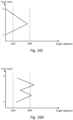
- Figs. 16A-16D illustrate exemplary training results vs. training guidance.
- a horizontal axis represents measured angle in degrees executed by a user; and a vertical axis represents a recorded time in seconds.
- the user starts moving at 1 second and reaches 76% of a total range of motion, and then returns to starting point at 5 second.
- a training guidance sets minimum angle at 10% and maximum angle at 40% of the total range of motion. Therefore, Fig. 16A shows that the user have completed a repetition.
Landscapes
- Health & Medical Sciences (AREA)
- General Health & Medical Sciences (AREA)
- Physical Education & Sports Medicine (AREA)
- Engineering & Computer Science (AREA)
- Human Computer Interaction (AREA)
- Physics & Mathematics (AREA)
- Life Sciences & Earth Sciences (AREA)
- Biophysics (AREA)
- Orthopedic Medicine & Surgery (AREA)
- Computer Networks & Wireless Communication (AREA)
- Signal Processing (AREA)
- General Physics & Mathematics (AREA)
- Electromagnetism (AREA)
- Theoretical Computer Science (AREA)
- Computing Systems (AREA)
- Medical Informatics (AREA)
- Measurement Of The Respiration, Hearing Ability, Form, And Blood Characteristics Of Living Organisms (AREA)
- Telephonic Communication Services (AREA)
- Arrangements For Transmission Of Measured Signals (AREA)
- User Interface Of Digital Computer (AREA)
- Measuring Pulse, Heart Rate, Blood Pressure Or Blood Flow (AREA)
- Telephone Function (AREA)
- External Artificial Organs (AREA)
Claims (15)
- Système d'exercice physique, comprenant :un premier module de capteur (110, 110A, 110B) fixé de manière amovible à une première partie mobile d'une première machine d'exercice (1212,1223), le premier module de capteur (110, 110A, 110B) étant configuré pour détecter des mouvements par la première partie mobile et transmettre des données détectées par une première connexion de communication ; etun module de commande (140, 140A, 140B, 140C) configuré pour recevoir les données détectées, calculer une première valeur de mouvement en utilisant les données détectées et transmettre la première valeur de mouvement à un dispositif d'affichage (172, 172A, 172B, 172C),caractérisé en ce que le module de commande (140, 140A, 140B, 140C) reçoit un jeton de démarrage d'un serveur d'application à base de nuage (160) pour commencer à détecter et à calculer la première valeur de mouvement, et le module de commande (140, 140A, 140B, 140C) transmet un jeton d'inactivité au serveur d'application à base de nuage (160) lorsqu'aucun changement d'angle n'est détecté pendant une période de temps prédéterminée.
- Système d'exercice physique selon la revendication 1, dans lequel le premier module de capteur (110, 110A, 110B) comprend une unité d'accéléromètre (131), une unité de gyroscope (133) et une unité de magnétomètre (135), dans lequel la première valeur de mouvement est un angle de rotation (217) ou une plage de vitesse de la première partie mobile calculée en utilisant des données de quaternion transmises depuis le premier module de capteur (110, 110A, 110B) .
- Système d'exercice physique selon l'une quelconque des revendications 1 et 2, dans lequel le module de commande (140, 140A, 140B, 140C) est configuré pour estimer une plage de vitesse d'un niveau de vitesse d'un moteur entraînant la première partie mobile en sélectionnant le niveau de vitesse, et détecter des accélérations angulaires par le premier module de capteur (110, 110A, 110B) lorsque la première partie mobile est ajustée à un angle de début (211) et à un angle de fin (214).
- Système d'exercice physique selon l'une quelconque des revendications 1 à 3, dans lequel le module de commande (140, 140A, 140B, 140C) est configuré pour détecter des changements d'accélération angulaire, calculer une somme des changements d'accélération angulaire pour une durée de temps prédéterminée, calculer une accélération angulaire moyenne à partir de la somme, et déterminer un niveau de vitesse de moteur correspondant à une plage de vitesse associée à l'accélération angulaire moyenne.
- Système d'exercice physique selon l'une quelconque des revendications 1 à 4, dans lequel le module de commande (140, 140A, 140B, 140C) est configuré pour mémoriser une première plage de mouvement du premier module de capteur (110, 110A, 110B) et une première équation de calcul de la première valeur de mouvement.
- Système d'exercice physique selon l'une quelconque des revendications 1 à 5, comprenant en outre le serveur d'application à base de nuage (160) et un dispositif d'interface utilisateur (172, 172A, 172B, 172C), le serveur d'application à base de nuage (160) distant de la première machine d'exercice (1212,1223) et configuré pour recevoir la première valeur de mouvement via une deuxième connexion de communication, vérifier un utilisateur, produire des paquets de données sur la base de la première valeur de mouvement et des informations d'utilisateur vérifié, et transmettre les paquets de données au dispositif d'affichage, le dispositif d'interface utilisateur (172, 172A, 172B, 172C) comprenant le dispositif d'affichage, le dispositif d'interface utilisateur (172, 172A, 172B, 172C) communiquant avec le serveur d'application à base de nuage (160), la machine d'exercice (1212, 1223) étant affublée d'un code d'identification lié au serveur d'application à base de nuage (160), le serveur d'application à base de nuage (160) fournissant une première page Web accessible par l'utilisateur, une deuxième page Web accessible par un instructeur d'exercice physique et une troisième page Web accessible par un opérateur de la première machine d'exercice (1212, 1223).
- Système d'exercice physique selon l'une quelconque des revendications 1 à 6, comprenant en outre un deuxième module de capteur (110, 110A, 110B) fixé de manière amovible à une deuxième partie mobile de la première machine d'exercice (1212,1223), le deuxième module de capteur (110, 110A, 110B) étant configuré pour détecter des mouvements par la deuxième partie mobile et transmettre les mouvements détectés au module de commande (140, 140A, 140B, 140C), le module de commande (140, 140A, 140B, 140C) stockant une deuxième plage de mouvement du deuxième module de capteur (110, 110A, 110B) et une deuxième équation de calcul d'une deuxième valeur de mouvement à partir des mouvements détectés de la deuxième partie mobile, la deuxième plage de mouvement étant différente de la première plage de mouvement et la deuxième équation étant différente de la première équation.
- Système d'exercice physique selon l'une quelconque des revendications 1 à 7, comprenant en outre un troisième module de capteur (110, 110A, 110B) fixé de manière amovible à une troisième partie mobile d'une deuxième machine d'exercice (1212, 1223), le troisième module de capteur (110, 110A, 110B) étant configuré pour détecter des mouvements par la troisième partie mobile et transmettre les mouvements détectés au module de commande (140, 140A, 140B, 140C).
- Procédé pour rééquiper des machines d'exercice, le procédé comprenant :fixer de manière amovible un module de capteur (110, 110A, 110B) à une partie mobile d'une machine d'exercice (1212, 1223), le module de capteur (110, 110A, 110B) étant configuré pour détecter des mouvements de la partie mobile et transmettre des données détectées par une première connexion de communication sans fil ;placer un module de commande (140, 140A, 140B, 140C), le module de commande (140, 140A, 140B, 140C) étant configuré pour recevoir les données détectées par la première connexion de communication sans fil, calculer une valeur d'angle (217) en utilisant les données détectées et transmettre la valeur d'angle (217) par une deuxième connexion de communication sans fil à un dispositif d'affichage (172, 172A, 172B, 172C) ;transmettre, par un serveur d'application à base de nuage (160), un jeton de démarrage au module de commande (140, 140A, 140B, 140C) pour commencer à détecter et à calculer la valeur d'angle (217) ; ettransmettre un jeton d'inactivité au serveur d'application à base de nuage (160) par le module de commande (140, 140A, 140B, 140C) lorsqu'aucun changement d'angle n'est détecté pendant une période de temps prédéterminée.
- Procédé selon la revendication 9, comprenant en outre :
fournir le serveur d'application à base de nuage (160) distant de la machine d'exercice (1212, 1223), dans lequel le serveur d'application à base de nuage (160) est configuré pour recevoir la valeur d'angle (217) via la deuxième connexion de communication sans fil, vérifier un utilisateur, produire des paquets de données à base de la valeur d'angle (217) et des informations d'utilisateur vérifié et transmettre les paquets de données au dispositif d'affichage (172, 172A, 172B, 172C). - Procédé selon l'une quelconque des revendications 9 et 10, comprenant en outre :la sélection d'un niveau de vitesse d'un moteur entraînant la partie mobile ;l'ajustement de la partie mobile à un angle de début (211) ;la détection d'une accélération angulaire par le module de capteur (110, 110A, 110B) ;l'ajustement de la partie mobile à un angle de fin (214) ; etl'estimation d'une plage de vitesse du niveau de vitesse.
- Procédé selon l'une quelconque des revendications 9 à 11, comprenant en outre :la détection de changements d'accélération angulaire ;le calcul d'une somme des changements d'accélération angulaire pour une durée de temps prédéterminée ;le calcul d'une accélération angulaire moyenne à partir de la somme ; etla détermination d'un niveau de vitesse de moteur correspondant à une plage de vitesse associée à l'accélération angulaire moyenne.
- Procédé selon la revendication 12, comprenant en outre :comparer les changements d'accélération angulaire à un seuil prédéterminé ; etignorer le niveau de vitesse de moteur déterminé lorsque le changement d'accélération angulaire dépasse le seuil prédéterminé.
- Procédé selon l'une quelconque des revendications 9 à 13, comprenant en outre l'étalonnage d'une plage de mouvement du module de capteur (110, 110A, 110B) et le stockage de la plage de mouvement dans le module de commande (140, 140A, 140B, 140C) ou le serveur d'application à base de nuage (160) .
- Procédé selon l'une quelconque des revendications 9 à 14, comprenant en outre :
la transmission du jeton de démarrage au module de commande (140, 140A, 140B, 140C) pour commencer à détecter et à calculer la valeur d'angle (217) lorsque l'utilisateur est vérifié par le serveur d'application à base de nuage (160) en tant qu'utilisateur enregistré ; la transmission d'un jeton d'arrêt au module de commande (140, 140A, 140B, 140C) par le serveur d'application à base de nuage (160) après une pluralité de changements d'angle étant détectés pour répondre à une exigence prédéterminée stockée dans le serveur d'application à base de nuage (160).
Applications Claiming Priority (1)
| Application Number | Priority Date | Filing Date | Title |
|---|---|---|---|
| US17/358,305 US11857839B2 (en) | 2021-06-25 | 2021-06-25 | Systems and methods for retrofitting exercise machines with smart functions |
Publications (2)
| Publication Number | Publication Date |
|---|---|
| EP4108301A1 EP4108301A1 (fr) | 2022-12-28 |
| EP4108301B1 true EP4108301B1 (fr) | 2024-08-14 |
Family
ID=78085520
Family Applications (1)
| Application Number | Title | Priority Date | Filing Date |
|---|---|---|---|
| EP21201184.5A Active EP4108301B1 (fr) | 2021-06-25 | 2021-10-06 | Systèmes et procédés de rénovation de machines d'exercice avec des fonctions intelligentes |
Country Status (5)
| Country | Link |
|---|---|
| US (1) | US11857839B2 (fr) |
| EP (1) | EP4108301B1 (fr) |
| JP (1) | JP7241147B2 (fr) |
| CN (1) | CN115518363B (fr) |
| TW (1) | TWI783663B (fr) |
Family Cites Families (17)
| Publication number | Priority date | Publication date | Assignee | Title |
|---|---|---|---|---|
| TWI247618B (en) | 2003-02-28 | 2006-01-21 | Nautilus Inc | System and method for controlling an exercise apparatus |
| CN103297488B (zh) | 2012-03-01 | 2014-08-06 | 王琦凡 | 一种对产品使用进行监控提醒的方法和系统 |
| CN103933722B (zh) | 2014-02-28 | 2016-04-27 | 杭州匠物网络科技有限公司 | 一种健身哑铃运动检测装置及健身哑铃运动检测方法 |
| US10130842B2 (en) * | 2014-05-21 | 2018-11-20 | IncludeFitness, Inc. | Fitness systems and methods thereof |
| US9414784B1 (en) * | 2014-06-28 | 2016-08-16 | Bertec Limited | Movement assessment apparatus and a method for providing biofeedback using the same |
| WO2017062462A1 (fr) * | 2015-10-05 | 2017-04-13 | Motive Mechatronics, Inc. | Dispositif d'exercice à commande active |
| CN107303430A (zh) * | 2016-04-22 | 2017-10-31 | 明跃国际健康科技股份有限公司 | 健身训练阻力系统及其控制调整方法 |
| US10265581B2 (en) * | 2016-05-06 | 2019-04-23 | Christopher S. O'CONNOR | Dynamically adaptive weight lifting apparatus |
| US10973439B2 (en) | 2016-12-29 | 2021-04-13 | BioMech Sensor LLC | Systems and methods for real-time data quantification, acquisition, analysis, and feedback |
| WO2018140959A1 (fr) | 2017-01-30 | 2018-08-02 | Liftlab, Inc | Systèmes d'entraînement à résistance dynamique |
| CN108579020A (zh) * | 2018-03-12 | 2018-09-28 | 广州大象健康科技有限公司 | 一种智能科学运动方法及运动系统 |
| CN108492035A (zh) | 2018-03-26 | 2018-09-04 | 绍兴文理学院 | 一种健身器材管理系统的数据交互方法及数据交互平台 |
| EP3588474A1 (fr) | 2018-06-28 | 2020-01-01 | West & Berg Holding AB | Aide à l'entraînement au swing de golf en temps réel |
| CN111514540B (zh) * | 2019-02-02 | 2021-04-30 | 广州艾美网络科技有限公司 | 一种身体训练设备 |
| CN110201372A (zh) | 2019-05-21 | 2019-09-06 | 南京邮电大学 | 一种基于NB-IoT的社区健身器材运动统计方法 |
| CN210751205U (zh) * | 2019-06-10 | 2020-06-16 | 建菱科技股份有限公司 | 以动作感测器来侦测运动行程的健身器 |
| KR20210022293A (ko) | 2019-08-20 | 2021-03-03 | 엘지전자 주식회사 | 로봇 시스템 및 그 제어방법 |
-
2021
- 2021-06-25 US US17/358,305 patent/US11857839B2/en active Active
- 2021-09-02 TW TW110132710A patent/TWI783663B/zh active
- 2021-10-06 EP EP21201184.5A patent/EP4108301B1/fr active Active
- 2021-10-20 JP JP2021171815A patent/JP7241147B2/ja active Active
- 2021-11-09 CN CN202111321056.3A patent/CN115518363B/zh active Active
Also Published As
| Publication number | Publication date |
|---|---|
| CN115518363B (zh) | 2024-11-26 |
| TW202300200A (zh) | 2023-01-01 |
| TWI783663B (zh) | 2022-11-11 |
| JP7241147B2 (ja) | 2023-03-16 |
| US11857839B2 (en) | 2024-01-02 |
| EP4108301A1 (fr) | 2022-12-28 |
| JP2023004812A (ja) | 2023-01-17 |
| CN115518363A (zh) | 2022-12-27 |
| US20220409959A1 (en) | 2022-12-29 |
Similar Documents
| Publication | Publication Date | Title |
|---|---|---|
| CN105975967B (zh) | 一种目标定位方法和系统 | |
| EP4310855A2 (fr) | Procédé et système permettant de déterminer une reproduction correcte d'un mouvement | |
| KR101952692B1 (ko) | 모바일 기기를 이용한 통합 운동 관리 및 권장 플랫폼 시스템 | |
| US20130316310A1 (en) | Methods for determining orientation of a moving vehicle | |
| US20180056127A1 (en) | Workout Sensing System | |
| KR101458432B1 (ko) | 운동정보 제공을 위한 자동연결 운동기구, 스마트기기, 이에 사용되는 운동정보 제공 시스템과 방법 | |
| EP3984008B1 (fr) | Détermination de la cause de déconnexion de capteurs d'un système de suivi de mouvement | |
| EP2108311A1 (fr) | Système pour détecter et présenter les rythmes cardiaques de personnes pendant l'effort | |
| EP3993693B1 (fr) | Connexions sans fil entre les dispositifs d'un système de suivi de mouvement et authentification d'un utilisateur de ce système | |
| KR101853465B1 (ko) | 보폭 산출과 nfc 기능을 갖는 러닝머신 시스템 | |
| WO2023150715A3 (fr) | Systèmes et procédés de mesure et d'analyse du mouvement d'un swing et de mise en correspondance du mouvement d'un swing avec un équipement de swing optimisé | |
| US11460912B2 (en) | System and method related to data fusing | |
| EP4108301B1 (fr) | Systèmes et procédés de rénovation de machines d'exercice avec des fonctions intelligentes | |
| CN112973084A (zh) | 高尔夫挥杆分析装置以及利用其的高尔夫练习模拟系统 | |
| US10549172B2 (en) | Sensor for improving and training putting technique | |
| CN107091940A (zh) | 设备识别方法及装置 | |
| DE102013205547B4 (de) | Verfahren zur Ortsbestimmung eines mobilen Gerätes innerhalb eines Gebäudes sowie Vorrichtungen zur Durchführung desselben | |
| US12161922B2 (en) | Golf swing analyzer system | |
| KR20160015674A (ko) | 관성센서를 이용한 인체 동작 분석 시스템 | |
| KR102810444B1 (ko) | 운동 자세 분석 장치 및 이를 포함하는 스마트 운동 기기 | |
| KR102769301B1 (ko) | 센서 모듈 및 이를 포함한 웨이트 운동 기기 | |
| EP4243941B1 (fr) | Système et procédé de surveillance d'un système de poids libre | |
| KR20150089485A (ko) | 휴대 단말을 이용한 운동 활동의 산출과 피드백을 위한 시스템 및 방법 | |
| WO2022263578A1 (fr) | Dispositif de suivi de condition physique | |
| KR20160109794A (ko) | 모션 감지 센서 모듈을 이용한 운동 분석 장치, 그 운동 분석 방법, 및 그 운동 분석 방법을 실행시키는 프로그램이 기록된 기록 매체 |
Legal Events
| Date | Code | Title | Description |
|---|---|---|---|
| PUAI | Public reference made under article 153(3) epc to a published international application that has entered the european phase |
Free format text: ORIGINAL CODE: 0009012 |
|
| STAA | Information on the status of an ep patent application or granted ep patent |
Free format text: STATUS: REQUEST FOR EXAMINATION WAS MADE |
|
| 17P | Request for examination filed |
Effective date: 20220707 |
|
| AK | Designated contracting states |
Kind code of ref document: A1 Designated state(s): AL AT BE BG CH CY CZ DE DK EE ES FI FR GB GR HR HU IE IS IT LI LT LU LV MC MK MT NL NO PL PT RO RS SE SI SK SM TR |
|
| GRAP | Despatch of communication of intention to grant a patent |
Free format text: ORIGINAL CODE: EPIDOSNIGR1 |
|
| STAA | Information on the status of an ep patent application or granted ep patent |
Free format text: STATUS: GRANT OF PATENT IS INTENDED |
|
| INTG | Intention to grant announced |
Effective date: 20240506 |
|
| RIC1 | Information provided on ipc code assigned before grant |
Ipc: A63B 71/06 20060101ALI20240419BHEP Ipc: A63B 21/00 20060101ALI20240419BHEP Ipc: A63B 21/062 20060101ALI20240419BHEP Ipc: A63B 24/00 20060101AFI20240419BHEP |
|
| GRAS | Grant fee paid |
Free format text: ORIGINAL CODE: EPIDOSNIGR3 |
|
| GRAA | (expected) grant |
Free format text: ORIGINAL CODE: 0009210 |
|
| STAA | Information on the status of an ep patent application or granted ep patent |
Free format text: STATUS: THE PATENT HAS BEEN GRANTED |
|
| AK | Designated contracting states |
Kind code of ref document: B1 Designated state(s): AL AT BE BG CH CY CZ DE DK EE ES FI FR GB GR HR HU IE IS IT LI LT LU LV MC MK MT NL NO PL PT RO RS SE SI SK SM TR |
|
| REG | Reference to a national code |
Ref country code: GB Ref legal event code: FG4D |
|
| REG | Reference to a national code |
Ref country code: CH Ref legal event code: EP |
|
| REG | Reference to a national code |
Ref country code: DE Ref legal event code: R096 Ref document number: 602021017119 Country of ref document: DE |
|
| REG | Reference to a national code |
Ref country code: IE Ref legal event code: FG4D |
|
| P01 | Opt-out of the competence of the unified patent court (upc) registered |
Free format text: CASE NUMBER: APP_50158/2024 Effective date: 20240904 |
|
| REG | Reference to a national code |
Ref country code: LT Ref legal event code: MG9D |
|
| REG | Reference to a national code |
Ref country code: NL Ref legal event code: MP Effective date: 20240814 |
|
| PG25 | Lapsed in a contracting state [announced via postgrant information from national office to epo] |
Ref country code: NO Free format text: LAPSE BECAUSE OF FAILURE TO SUBMIT A TRANSLATION OF THE DESCRIPTION OR TO PAY THE FEE WITHIN THE PRESCRIBED TIME-LIMIT Effective date: 20241114 |
|
| REG | Reference to a national code |
Ref country code: AT Ref legal event code: MK05 Ref document number: 1712752 Country of ref document: AT Kind code of ref document: T Effective date: 20240814 |
|
| PG25 | Lapsed in a contracting state [announced via postgrant information from national office to epo] |
Ref country code: PT Free format text: LAPSE BECAUSE OF FAILURE TO SUBMIT A TRANSLATION OF THE DESCRIPTION OR TO PAY THE FEE WITHIN THE PRESCRIBED TIME-LIMIT Effective date: 20241216 Ref country code: NL Free format text: LAPSE BECAUSE OF FAILURE TO SUBMIT A TRANSLATION OF THE DESCRIPTION OR TO PAY THE FEE WITHIN THE PRESCRIBED TIME-LIMIT Effective date: 20240814 Ref country code: PL Free format text: LAPSE BECAUSE OF FAILURE TO SUBMIT A TRANSLATION OF THE DESCRIPTION OR TO PAY THE FEE WITHIN THE PRESCRIBED TIME-LIMIT Effective date: 20240814 Ref country code: FI Free format text: LAPSE BECAUSE OF FAILURE TO SUBMIT A TRANSLATION OF THE DESCRIPTION OR TO PAY THE FEE WITHIN THE PRESCRIBED TIME-LIMIT Effective date: 20240814 Ref country code: GR Free format text: LAPSE BECAUSE OF FAILURE TO SUBMIT A TRANSLATION OF THE DESCRIPTION OR TO PAY THE FEE WITHIN THE PRESCRIBED TIME-LIMIT Effective date: 20241115 |
|
| PG25 | Lapsed in a contracting state [announced via postgrant information from national office to epo] |
Ref country code: BG Free format text: LAPSE BECAUSE OF FAILURE TO SUBMIT A TRANSLATION OF THE DESCRIPTION OR TO PAY THE FEE WITHIN THE PRESCRIBED TIME-LIMIT Effective date: 20240814 |
|
| PG25 | Lapsed in a contracting state [announced via postgrant information from national office to epo] |
Ref country code: LV Free format text: LAPSE BECAUSE OF FAILURE TO SUBMIT A TRANSLATION OF THE DESCRIPTION OR TO PAY THE FEE WITHIN THE PRESCRIBED TIME-LIMIT Effective date: 20240814 |
|
| PG25 | Lapsed in a contracting state [announced via postgrant information from national office to epo] |
Ref country code: IS Free format text: LAPSE BECAUSE OF FAILURE TO SUBMIT A TRANSLATION OF THE DESCRIPTION OR TO PAY THE FEE WITHIN THE PRESCRIBED TIME-LIMIT Effective date: 20241214 Ref country code: AT Free format text: LAPSE BECAUSE OF FAILURE TO SUBMIT A TRANSLATION OF THE DESCRIPTION OR TO PAY THE FEE WITHIN THE PRESCRIBED TIME-LIMIT Effective date: 20240814 |
|
| PG25 | Lapsed in a contracting state [announced via postgrant information from national office to epo] |
Ref country code: HR Free format text: LAPSE BECAUSE OF FAILURE TO SUBMIT A TRANSLATION OF THE DESCRIPTION OR TO PAY THE FEE WITHIN THE PRESCRIBED TIME-LIMIT Effective date: 20240814 |
|
| PG25 | Lapsed in a contracting state [announced via postgrant information from national office to epo] |
Ref country code: RS Free format text: LAPSE BECAUSE OF FAILURE TO SUBMIT A TRANSLATION OF THE DESCRIPTION OR TO PAY THE FEE WITHIN THE PRESCRIBED TIME-LIMIT Effective date: 20241114 Ref country code: ES Free format text: LAPSE BECAUSE OF FAILURE TO SUBMIT A TRANSLATION OF THE DESCRIPTION OR TO PAY THE FEE WITHIN THE PRESCRIBED TIME-LIMIT Effective date: 20240814 |
|
| PG25 | Lapsed in a contracting state [announced via postgrant information from national office to epo] |
Ref country code: RS Free format text: LAPSE BECAUSE OF FAILURE TO SUBMIT A TRANSLATION OF THE DESCRIPTION OR TO PAY THE FEE WITHIN THE PRESCRIBED TIME-LIMIT Effective date: 20241114 Ref country code: PT Free format text: LAPSE BECAUSE OF FAILURE TO SUBMIT A TRANSLATION OF THE DESCRIPTION OR TO PAY THE FEE WITHIN THE PRESCRIBED TIME-LIMIT Effective date: 20241216 Ref country code: PL Free format text: LAPSE BECAUSE OF FAILURE TO SUBMIT A TRANSLATION OF THE DESCRIPTION OR TO PAY THE FEE WITHIN THE PRESCRIBED TIME-LIMIT Effective date: 20240814 Ref country code: NO Free format text: LAPSE BECAUSE OF FAILURE TO SUBMIT A TRANSLATION OF THE DESCRIPTION OR TO PAY THE FEE WITHIN THE PRESCRIBED TIME-LIMIT Effective date: 20241114 Ref country code: NL Free format text: LAPSE BECAUSE OF FAILURE TO SUBMIT A TRANSLATION OF THE DESCRIPTION OR TO PAY THE FEE WITHIN THE PRESCRIBED TIME-LIMIT Effective date: 20240814 Ref country code: LV Free format text: LAPSE BECAUSE OF FAILURE TO SUBMIT A TRANSLATION OF THE DESCRIPTION OR TO PAY THE FEE WITHIN THE PRESCRIBED TIME-LIMIT Effective date: 20240814 Ref country code: IS Free format text: LAPSE BECAUSE OF FAILURE TO SUBMIT A TRANSLATION OF THE DESCRIPTION OR TO PAY THE FEE WITHIN THE PRESCRIBED TIME-LIMIT Effective date: 20241214 Ref country code: HR Free format text: LAPSE BECAUSE OF FAILURE TO SUBMIT A TRANSLATION OF THE DESCRIPTION OR TO PAY THE FEE WITHIN THE PRESCRIBED TIME-LIMIT Effective date: 20240814 Ref country code: GR Free format text: LAPSE BECAUSE OF FAILURE TO SUBMIT A TRANSLATION OF THE DESCRIPTION OR TO PAY THE FEE WITHIN THE PRESCRIBED TIME-LIMIT Effective date: 20241115 Ref country code: FI Free format text: LAPSE BECAUSE OF FAILURE TO SUBMIT A TRANSLATION OF THE DESCRIPTION OR TO PAY THE FEE WITHIN THE PRESCRIBED TIME-LIMIT Effective date: 20240814 Ref country code: ES Free format text: LAPSE BECAUSE OF FAILURE TO SUBMIT A TRANSLATION OF THE DESCRIPTION OR TO PAY THE FEE WITHIN THE PRESCRIBED TIME-LIMIT Effective date: 20240814 Ref country code: BG Free format text: LAPSE BECAUSE OF FAILURE TO SUBMIT A TRANSLATION OF THE DESCRIPTION OR TO PAY THE FEE WITHIN THE PRESCRIBED TIME-LIMIT Effective date: 20240814 Ref country code: AT Free format text: LAPSE BECAUSE OF FAILURE TO SUBMIT A TRANSLATION OF THE DESCRIPTION OR TO PAY THE FEE WITHIN THE PRESCRIBED TIME-LIMIT Effective date: 20240814 |
|
| PG25 | Lapsed in a contracting state [announced via postgrant information from national office to epo] |
Ref country code: RO Free format text: LAPSE BECAUSE OF FAILURE TO SUBMIT A TRANSLATION OF THE DESCRIPTION OR TO PAY THE FEE WITHIN THE PRESCRIBED TIME-LIMIT Effective date: 20240814 Ref country code: DK Free format text: LAPSE BECAUSE OF FAILURE TO SUBMIT A TRANSLATION OF THE DESCRIPTION OR TO PAY THE FEE WITHIN THE PRESCRIBED TIME-LIMIT Effective date: 20240814 Ref country code: SM Free format text: LAPSE BECAUSE OF FAILURE TO SUBMIT A TRANSLATION OF THE DESCRIPTION OR TO PAY THE FEE WITHIN THE PRESCRIBED TIME-LIMIT Effective date: 20240814 |
|
| PG25 | Lapsed in a contracting state [announced via postgrant information from national office to epo] |
Ref country code: EE Free format text: LAPSE BECAUSE OF FAILURE TO SUBMIT A TRANSLATION OF THE DESCRIPTION OR TO PAY THE FEE WITHIN THE PRESCRIBED TIME-LIMIT Effective date: 20240814 |
|
| PG25 | Lapsed in a contracting state [announced via postgrant information from national office to epo] |
Ref country code: CZ Free format text: LAPSE BECAUSE OF FAILURE TO SUBMIT A TRANSLATION OF THE DESCRIPTION OR TO PAY THE FEE WITHIN THE PRESCRIBED TIME-LIMIT Effective date: 20240814 |
|
| PG25 | Lapsed in a contracting state [announced via postgrant information from national office to epo] |
Ref country code: SK Free format text: LAPSE BECAUSE OF FAILURE TO SUBMIT A TRANSLATION OF THE DESCRIPTION OR TO PAY THE FEE WITHIN THE PRESCRIBED TIME-LIMIT Effective date: 20240814 Ref country code: IT Free format text: LAPSE BECAUSE OF FAILURE TO SUBMIT A TRANSLATION OF THE DESCRIPTION OR TO PAY THE FEE WITHIN THE PRESCRIBED TIME-LIMIT Effective date: 20240814 |
|
| REG | Reference to a national code |
Ref country code: DE Ref legal event code: R097 Ref document number: 602021017119 Country of ref document: DE |
|
| REG | Reference to a national code |
Ref country code: CH Ref legal event code: PL |
|
| PLBE | No opposition filed within time limit |
Free format text: ORIGINAL CODE: 0009261 |
|
| STAA | Information on the status of an ep patent application or granted ep patent |
Free format text: STATUS: NO OPPOSITION FILED WITHIN TIME LIMIT |
|
| PG25 | Lapsed in a contracting state [announced via postgrant information from national office to epo] |
Ref country code: MC Free format text: LAPSE BECAUSE OF FAILURE TO SUBMIT A TRANSLATION OF THE DESCRIPTION OR TO PAY THE FEE WITHIN THE PRESCRIBED TIME-LIMIT Effective date: 20240814 |
|
| PG25 | Lapsed in a contracting state [announced via postgrant information from national office to epo] |
Ref country code: LU Free format text: LAPSE BECAUSE OF NON-PAYMENT OF DUE FEES Effective date: 20241006 Ref country code: BE Free format text: LAPSE BECAUSE OF NON-PAYMENT OF DUE FEES Effective date: 20241031 |
|
| 26N | No opposition filed |
Effective date: 20250515 |
|
| PG25 | Lapsed in a contracting state [announced via postgrant information from national office to epo] |
Ref country code: CH Free format text: LAPSE BECAUSE OF NON-PAYMENT OF DUE FEES Effective date: 20241031 |
|
| REG | Reference to a national code |
Ref country code: BE Ref legal event code: MM Effective date: 20241031 |
|
| PG25 | Lapsed in a contracting state [announced via postgrant information from national office to epo] |
Ref country code: SE Free format text: LAPSE BECAUSE OF FAILURE TO SUBMIT A TRANSLATION OF THE DESCRIPTION OR TO PAY THE FEE WITHIN THE PRESCRIBED TIME-LIMIT Effective date: 20240814 |
|
| PGFP | Annual fee paid to national office [announced via postgrant information from national office to epo] |
Ref country code: FR Payment date: 20250710 Year of fee payment: 5 |
|
| PG25 | Lapsed in a contracting state [announced via postgrant information from national office to epo] |
Ref country code: IE Free format text: LAPSE BECAUSE OF NON-PAYMENT OF DUE FEES Effective date: 20241006 |
|
| PGFP | Annual fee paid to national office [announced via postgrant information from national office to epo] |
Ref country code: DE Payment date: 20250717 Year of fee payment: 5 |
|
| PGFP | Annual fee paid to national office [announced via postgrant information from national office to epo] |
Ref country code: GB Payment date: 20251016 Year of fee payment: 5 |
|
| PG25 | Lapsed in a contracting state [announced via postgrant information from national office to epo] |
Ref country code: CY Free format text: LAPSE BECAUSE OF FAILURE TO SUBMIT A TRANSLATION OF THE DESCRIPTION OR TO PAY THE FEE WITHIN THE PRESCRIBED TIME-LIMIT; INVALID AB INITIO Effective date: 20211006 |
|
| PG25 | Lapsed in a contracting state [announced via postgrant information from national office to epo] |
Ref country code: HU Free format text: LAPSE BECAUSE OF FAILURE TO SUBMIT A TRANSLATION OF THE DESCRIPTION OR TO PAY THE FEE WITHIN THE PRESCRIBED TIME-LIMIT; INVALID AB INITIO Effective date: 20211006 |