EP4108643A1 - Composition de liaison durcissable pour laine minérale comprenant un biocide - Google Patents
Composition de liaison durcissable pour laine minérale comprenant un biocide Download PDFInfo
- Publication number
- EP4108643A1 EP4108643A1 EP21382558.1A EP21382558A EP4108643A1 EP 4108643 A1 EP4108643 A1 EP 4108643A1 EP 21382558 A EP21382558 A EP 21382558A EP 4108643 A1 EP4108643 A1 EP 4108643A1
- Authority
- EP
- European Patent Office
- Prior art keywords
- mineral wool
- binder composition
- amount
- curable
- copper
- Prior art date
- Legal status (The legal status is an assumption and is not a legal conclusion. Google has not performed a legal analysis and makes no representation as to the accuracy of the status listed.)
- Pending
Links
- 239000011490 mineral wool Substances 0.000 title claims abstract description 155
- 239000000203 mixture Substances 0.000 title claims abstract description 150
- 239000011230 binding agent Substances 0.000 title claims abstract description 119
- 230000003115 biocidal effect Effects 0.000 title claims abstract description 114
- 239000003139 biocide Substances 0.000 title claims abstract description 114
- 150000001875 compounds Chemical class 0.000 claims abstract description 102
- XSQUKJJJFZCRTK-UHFFFAOYSA-N Urea Chemical compound NC(N)=O XSQUKJJJFZCRTK-UHFFFAOYSA-N 0.000 claims description 106
- 239000000047 product Substances 0.000 claims description 78
- 229920005989 resin Polymers 0.000 claims description 72
- 239000011347 resin Substances 0.000 claims description 72
- 229920003987 resole Polymers 0.000 claims description 51
- 239000004202 carbamide Substances 0.000 claims description 47
- 239000000835 fiber Substances 0.000 claims description 43
- 229920001568 phenolic resin Polymers 0.000 claims description 39
- 229920005862 polyol Polymers 0.000 claims description 33
- 150000003077 polyols Chemical class 0.000 claims description 33
- SLGWESQGEUXWJQ-UHFFFAOYSA-N formaldehyde;phenol Chemical compound O=C.OC1=CC=CC=C1 SLGWESQGEUXWJQ-UHFFFAOYSA-N 0.000 claims description 32
- 238000000034 method Methods 0.000 claims description 27
- ARUVKPQLZAKDPS-UHFFFAOYSA-L copper(II) sulfate Chemical compound [Cu+2].[O-][S+2]([O-])([O-])[O-] ARUVKPQLZAKDPS-UHFFFAOYSA-L 0.000 claims description 26
- 229910000365 copper sulfate Inorganic materials 0.000 claims description 24
- -1 carbohydrate compound Chemical class 0.000 claims description 23
- 238000004519 manufacturing process Methods 0.000 claims description 21
- RYGMFSIKBFXOCR-UHFFFAOYSA-N Copper Chemical compound [Cu] RYGMFSIKBFXOCR-UHFFFAOYSA-N 0.000 claims description 15
- 239000010949 copper Substances 0.000 claims description 15
- 229910052802 copper Inorganic materials 0.000 claims description 15
- 239000004634 thermosetting polymer Substances 0.000 claims description 15
- 239000002253 acid Substances 0.000 claims description 14
- LCDFWRDNEPDQBV-UHFFFAOYSA-N formaldehyde;phenol;urea Chemical compound O=C.NC(N)=O.OC1=CC=CC=C1 LCDFWRDNEPDQBV-UHFFFAOYSA-N 0.000 claims description 14
- 150000003839 salts Chemical class 0.000 claims description 14
- 238000006243 chemical reaction Methods 0.000 claims description 10
- 235000000346 sugar Nutrition 0.000 claims description 10
- 229910052751 metal Inorganic materials 0.000 claims description 9
- 239000002184 metal Substances 0.000 claims description 9
- 235000014633 carbohydrates Nutrition 0.000 claims description 8
- 150000001412 amines Chemical class 0.000 claims description 5
- PXHVJJICTQNCMI-UHFFFAOYSA-N Nickel Chemical compound [Ni] PXHVJJICTQNCMI-UHFFFAOYSA-N 0.000 claims description 4
- QAOWNCQODCNURD-UHFFFAOYSA-L Sulfate Chemical compound [O-]S([O-])(=O)=O QAOWNCQODCNURD-UHFFFAOYSA-L 0.000 claims description 4
- OPQARKPSCNTWTJ-UHFFFAOYSA-L copper(ii) acetate Chemical compound [Cu+2].CC([O-])=O.CC([O-])=O OPQARKPSCNTWTJ-UHFFFAOYSA-L 0.000 claims description 4
- QTBSBXVTEAMEQO-UHFFFAOYSA-M Acetate Chemical compound CC([O-])=O QTBSBXVTEAMEQO-UHFFFAOYSA-M 0.000 claims description 3
- BVKZGUZCCUSVTD-UHFFFAOYSA-M Bicarbonate Chemical compound OC([O-])=O BVKZGUZCCUSVTD-UHFFFAOYSA-M 0.000 claims description 3
- BVKZGUZCCUSVTD-UHFFFAOYSA-L Carbonate Chemical compound [O-]C([O-])=O BVKZGUZCCUSVTD-UHFFFAOYSA-L 0.000 claims description 3
- BERDEBHAJNAUOM-UHFFFAOYSA-N copper(I) oxide Inorganic materials [Cu]O[Cu] BERDEBHAJNAUOM-UHFFFAOYSA-N 0.000 claims description 3
- ORTQZVOHEJQUHG-UHFFFAOYSA-L copper(II) chloride Chemical compound Cl[Cu]Cl ORTQZVOHEJQUHG-UHFFFAOYSA-L 0.000 claims description 3
- DYROSKSLMAPFBZ-UHFFFAOYSA-L copper;2-hydroxypropanoate Chemical compound [Cu+2].CC(O)C([O-])=O.CC(O)C([O-])=O DYROSKSLMAPFBZ-UHFFFAOYSA-L 0.000 claims description 3
- HFDWIMBEIXDNQS-UHFFFAOYSA-L copper;diformate Chemical compound [Cu+2].[O-]C=O.[O-]C=O HFDWIMBEIXDNQS-UHFFFAOYSA-L 0.000 claims description 3
- KRFJLUBVMFXRPN-UHFFFAOYSA-N cuprous oxide Chemical compound [O-2].[Cu+].[Cu+] KRFJLUBVMFXRPN-UHFFFAOYSA-N 0.000 claims description 3
- 229940112669 cuprous oxide Drugs 0.000 claims description 3
- XLYOFNOQVPJJNP-UHFFFAOYSA-M hydroxide Chemical compound [OH-] XLYOFNOQVPJJNP-UHFFFAOYSA-M 0.000 claims description 3
- BTBUEUYNUDRHOZ-UHFFFAOYSA-N Borate Chemical compound [O-]B([O-])[O-] BTBUEUYNUDRHOZ-UHFFFAOYSA-N 0.000 claims description 2
- VEXZGXHMUGYJMC-UHFFFAOYSA-M Chloride anion Chemical compound [Cl-] VEXZGXHMUGYJMC-UHFFFAOYSA-M 0.000 claims description 2
- JJLJMEJHUUYSSY-UHFFFAOYSA-L Copper hydroxide Chemical compound [OH-].[OH-].[Cu+2] JJLJMEJHUUYSSY-UHFFFAOYSA-L 0.000 claims description 2
- 239000005750 Copper hydroxide Substances 0.000 claims description 2
- 239000005752 Copper oxychloride Substances 0.000 claims description 2
- BDAGIHXWWSANSR-UHFFFAOYSA-M Formate Chemical compound [O-]C=O BDAGIHXWWSANSR-UHFFFAOYSA-M 0.000 claims description 2
- JVTAAEKCZFNVCJ-UHFFFAOYSA-M Lactate Chemical compound CC(O)C([O-])=O JVTAAEKCZFNVCJ-UHFFFAOYSA-M 0.000 claims description 2
- MUBZPKHOEPUJKR-UHFFFAOYSA-N Oxalic acid Chemical compound OC(=O)C(O)=O MUBZPKHOEPUJKR-UHFFFAOYSA-N 0.000 claims description 2
- BQCADISMDOOEFD-UHFFFAOYSA-N Silver Chemical compound [Ag] BQCADISMDOOEFD-UHFFFAOYSA-N 0.000 claims description 2
- HCHKCACWOHOZIP-UHFFFAOYSA-N Zinc Chemical compound [Zn] HCHKCACWOHOZIP-UHFFFAOYSA-N 0.000 claims description 2
- DOVLHZIEMGDZIW-UHFFFAOYSA-N [Cu+3].[O-]B([O-])[O-] Chemical compound [Cu+3].[O-]B([O-])[O-] DOVLHZIEMGDZIW-UHFFFAOYSA-N 0.000 claims description 2
- 239000007795 chemical reaction product Substances 0.000 claims description 2
- HKMOPYJWSFRURD-UHFFFAOYSA-N chloro hypochlorite;copper Chemical compound [Cu].ClOCl HKMOPYJWSFRURD-UHFFFAOYSA-N 0.000 claims description 2
- 229940116318 copper carbonate Drugs 0.000 claims description 2
- 229910001956 copper hydroxide Inorganic materials 0.000 claims description 2
- GEZOTWYUIKXWOA-UHFFFAOYSA-L copper;carbonate Chemical compound [Cu+2].[O-]C([O-])=O GEZOTWYUIKXWOA-UHFFFAOYSA-L 0.000 claims description 2
- YMBOSYHCYOYHLF-UHFFFAOYSA-L copper;hydrogen carbonate Chemical compound [Cu+2].OC([O-])=O.OC([O-])=O YMBOSYHCYOYHLF-UHFFFAOYSA-L 0.000 claims description 2
- QYCVHILLJSYYBD-UHFFFAOYSA-L copper;oxalate Chemical compound [Cu+2].[O-]C(=O)C([O-])=O QYCVHILLJSYYBD-UHFFFAOYSA-L 0.000 claims description 2
- RCJVRSBWZCNNQT-UHFFFAOYSA-N dichloridooxygen Chemical compound ClOCl RCJVRSBWZCNNQT-UHFFFAOYSA-N 0.000 claims description 2
- 229910052759 nickel Inorganic materials 0.000 claims description 2
- 229910052709 silver Inorganic materials 0.000 claims description 2
- 239000004332 silver Substances 0.000 claims description 2
- 229910052725 zinc Inorganic materials 0.000 claims description 2
- 239000011701 zinc Substances 0.000 claims description 2
- 244000052769 pathogen Species 0.000 abstract description 10
- 230000009257 reactivity Effects 0.000 abstract description 10
- 230000001717 pathogenic effect Effects 0.000 abstract description 2
- KRKNYBCHXYNGOX-UHFFFAOYSA-N citric acid Chemical compound OC(=O)CC(O)(C(O)=O)CC(O)=O KRKNYBCHXYNGOX-UHFFFAOYSA-N 0.000 description 81
- LYCAIKOWRPUZTN-UHFFFAOYSA-N ethylene glycol Natural products OCCO LYCAIKOWRPUZTN-UHFFFAOYSA-N 0.000 description 39
- WSFSSNUMVMOOMR-UHFFFAOYSA-N Formaldehyde Chemical compound O=C WSFSSNUMVMOOMR-UHFFFAOYSA-N 0.000 description 33
- 239000005913 Maltodextrin Substances 0.000 description 31
- 229920002774 Maltodextrin Polymers 0.000 description 31
- 229940035034 maltodextrin Drugs 0.000 description 31
- 235000015165 citric acid Nutrition 0.000 description 27
- XLYOFNOQVPJJNP-UHFFFAOYSA-N water Substances O XLYOFNOQVPJJNP-UHFFFAOYSA-N 0.000 description 24
- 230000035755 proliferation Effects 0.000 description 22
- JZCCFEFSEZPSOG-UHFFFAOYSA-L copper(II) sulfate pentahydrate Chemical compound O.O.O.O.O.[Cu+2].[O-]S([O-])(=O)=O JZCCFEFSEZPSOG-UHFFFAOYSA-L 0.000 description 19
- 229920002245 Dextrose equivalent Polymers 0.000 description 17
- 241000233866 Fungi Species 0.000 description 15
- 125000002887 hydroxy group Chemical group [H]O* 0.000 description 15
- ISWSIDIOOBJBQZ-UHFFFAOYSA-N phenol group Chemical group C1(=CC=CC=C1)O ISWSIDIOOBJBQZ-UHFFFAOYSA-N 0.000 description 13
- 229910000077 silane Inorganic materials 0.000 description 13
- DNIAPMSPPWPWGF-UHFFFAOYSA-N Propylene glycol Chemical compound CC(O)CO DNIAPMSPPWPWGF-UHFFFAOYSA-N 0.000 description 12
- 239000003054 catalyst Substances 0.000 description 12
- 238000011534 incubation Methods 0.000 description 10
- 241000222122 Candida albicans Species 0.000 description 9
- 241000191967 Staphylococcus aureus Species 0.000 description 9
- 229940095731 candida albicans Drugs 0.000 description 9
- 235000013824 polyphenols Nutrition 0.000 description 9
- CYKLGTUKGYURDP-UHFFFAOYSA-L copper;hydrogen sulfate;hydroxide Chemical compound O.[Cu+2].[O-]S([O-])(=O)=O CYKLGTUKGYURDP-UHFFFAOYSA-L 0.000 description 8
- KXGFMDJXCMQABM-UHFFFAOYSA-N 2-methoxy-6-methylphenol Chemical compound [CH]OC1=CC=CC([CH])=C1O KXGFMDJXCMQABM-UHFFFAOYSA-N 0.000 description 7
- 241000894006 Bacteria Species 0.000 description 7
- 241000589516 Pseudomonas Species 0.000 description 7
- 239000011521 glass Substances 0.000 description 7
- 239000005011 phenolic resin Substances 0.000 description 7
- 239000000243 solution Substances 0.000 description 7
- PEDCQBHIVMGVHV-UHFFFAOYSA-N Glycerine Chemical compound OCC(O)CO PEDCQBHIVMGVHV-UHFFFAOYSA-N 0.000 description 6
- WNLRTRBMVRJNCN-UHFFFAOYSA-N adipic acid Chemical compound OC(=O)CCCCC(O)=O WNLRTRBMVRJNCN-UHFFFAOYSA-N 0.000 description 6
- BFNBIHQBYMNNAN-UHFFFAOYSA-N ammonium sulfate Chemical compound N.N.OS(O)(=O)=O BFNBIHQBYMNNAN-UHFFFAOYSA-N 0.000 description 6
- 229910052921 ammonium sulfate Inorganic materials 0.000 description 6
- 235000011130 ammonium sulphate Nutrition 0.000 description 6
- 150000002894 organic compounds Chemical class 0.000 description 6
- GETQZCLCWQTVFV-UHFFFAOYSA-N trimethylamine Chemical compound CN(C)C GETQZCLCWQTVFV-UHFFFAOYSA-N 0.000 description 6
- 239000003795 chemical substances by application Substances 0.000 description 5
- 238000004132 cross linking Methods 0.000 description 5
- 238000009413 insulation Methods 0.000 description 5
- 150000008163 sugars Chemical class 0.000 description 5
- QGZKDVFQNNGYKY-UHFFFAOYSA-N Ammonia Chemical compound N QGZKDVFQNNGYKY-UHFFFAOYSA-N 0.000 description 4
- OFOBLEOULBTSOW-UHFFFAOYSA-N Malonic acid Chemical compound OC(=O)CC(O)=O OFOBLEOULBTSOW-UHFFFAOYSA-N 0.000 description 4
- 150000008064 anhydrides Chemical class 0.000 description 4
- WERYXYBDKMZEQL-UHFFFAOYSA-N butane-1,4-diol Chemical compound OCCCCO WERYXYBDKMZEQL-UHFFFAOYSA-N 0.000 description 4
- 239000007822 coupling agent Substances 0.000 description 4
- 229910052500 inorganic mineral Inorganic materials 0.000 description 4
- 238000005507 spraying Methods 0.000 description 4
- KWSLGOVYXMQPPX-UHFFFAOYSA-N 5-[3-(trifluoromethyl)phenyl]-2h-tetrazole Chemical compound FC(F)(F)C1=CC=CC(C2=NNN=N2)=C1 KWSLGOVYXMQPPX-UHFFFAOYSA-N 0.000 description 3
- FEWJPZIEWOKRBE-JCYAYHJZSA-N Dextrotartaric acid Chemical compound OC(=O)[C@H](O)[C@@H](O)C(O)=O FEWJPZIEWOKRBE-JCYAYHJZSA-N 0.000 description 3
- KDYFGRWQOYBRFD-UHFFFAOYSA-N Succinic acid Natural products OC(=O)CCC(O)=O KDYFGRWQOYBRFD-UHFFFAOYSA-N 0.000 description 3
- FEWJPZIEWOKRBE-UHFFFAOYSA-N Tartaric acid Natural products [H+].[H+].[O-]C(=O)C(O)C(O)C([O-])=O FEWJPZIEWOKRBE-UHFFFAOYSA-N 0.000 description 3
- 150000007513 acids Chemical class 0.000 description 3
- 239000000654 additive Substances 0.000 description 3
- 239000001361 adipic acid Substances 0.000 description 3
- 235000011037 adipic acid Nutrition 0.000 description 3
- 229910052783 alkali metal Inorganic materials 0.000 description 3
- KDYFGRWQOYBRFD-NUQCWPJISA-N butanedioic acid Chemical compound O[14C](=O)CC[14C](O)=O KDYFGRWQOYBRFD-NUQCWPJISA-N 0.000 description 3
- 229910052799 carbon Inorganic materials 0.000 description 3
- 125000004432 carbon atom Chemical group C* 0.000 description 3
- MTHSVFCYNBDYFN-UHFFFAOYSA-N diethylene glycol Chemical compound OCCOCCO MTHSVFCYNBDYFN-UHFFFAOYSA-N 0.000 description 3
- WGCNASOHLSPBMP-UHFFFAOYSA-N hydroxyacetaldehyde Natural products OCC=O WGCNASOHLSPBMP-UHFFFAOYSA-N 0.000 description 3
- 239000000463 material Substances 0.000 description 3
- 238000002156 mixing Methods 0.000 description 3
- 229920001296 polysiloxane Polymers 0.000 description 3
- 230000008569 process Effects 0.000 description 3
- 238000007493 shaping process Methods 0.000 description 3
- FZHAPNGMFPVSLP-UHFFFAOYSA-N silanamine Chemical compound [SiH3]N FZHAPNGMFPVSLP-UHFFFAOYSA-N 0.000 description 3
- 229910001379 sodium hypophosphite Inorganic materials 0.000 description 3
- 239000011975 tartaric acid Substances 0.000 description 3
- 235000002906 tartaric acid Nutrition 0.000 description 3
- 229920001187 thermosetting polymer Polymers 0.000 description 3
- 238000009966 trimming Methods 0.000 description 3
- 210000002268 wool Anatomy 0.000 description 3
- PUPZLCDOIYMWBV-UHFFFAOYSA-N (+/-)-1,3-Butanediol Chemical compound CC(O)CCO PUPZLCDOIYMWBV-UHFFFAOYSA-N 0.000 description 2
- AGNTUZCMJBTHOG-UHFFFAOYSA-N 3-[3-(2,3-dihydroxypropoxy)-2-hydroxypropoxy]propane-1,2-diol Chemical compound OCC(O)COCC(O)COCC(O)CO AGNTUZCMJBTHOG-UHFFFAOYSA-N 0.000 description 2
- CIWBSHSKHKDKBQ-JLAZNSOCSA-N Ascorbic acid Chemical compound OC[C@H](O)[C@H]1OC(=O)C(O)=C1O CIWBSHSKHKDKBQ-JLAZNSOCSA-N 0.000 description 2
- IJGRMHOSHXDMSA-UHFFFAOYSA-N Atomic nitrogen Chemical compound N#N IJGRMHOSHXDMSA-UHFFFAOYSA-N 0.000 description 2
- 239000004971 Cross linker Substances 0.000 description 2
- 239000004606 Fillers/Extenders Substances 0.000 description 2
- VZCYOOQTPOCHFL-OWOJBTEDSA-N Fumaric acid Chemical compound OC(=O)\C=C\C(O)=O VZCYOOQTPOCHFL-OWOJBTEDSA-N 0.000 description 2
- DHMQDGOQFOQNFH-UHFFFAOYSA-N Glycine Chemical compound NCC(O)=O DHMQDGOQFOQNFH-UHFFFAOYSA-N 0.000 description 2
- WTDHULULXKLSOZ-UHFFFAOYSA-N Hydroxylamine hydrochloride Chemical compound Cl.ON WTDHULULXKLSOZ-UHFFFAOYSA-N 0.000 description 2
- 239000001888 Peptone Substances 0.000 description 2
- 108010080698 Peptones Proteins 0.000 description 2
- 241000589517 Pseudomonas aeruginosa Species 0.000 description 2
- LSNNMFCWUKXFEE-UHFFFAOYSA-N Sulfurous acid Chemical compound OS(O)=O LSNNMFCWUKXFEE-UHFFFAOYSA-N 0.000 description 2
- UWHCKJMYHZGTIT-UHFFFAOYSA-N Tetraethylene glycol, Natural products OCCOCCOCCOCCO UWHCKJMYHZGTIT-UHFFFAOYSA-N 0.000 description 2
- GSEJCLTVZPLZKY-UHFFFAOYSA-N Triethanolamine Chemical compound OCCN(CCO)CCO GSEJCLTVZPLZKY-UHFFFAOYSA-N 0.000 description 2
- ZJCCRDAZUWHFQH-UHFFFAOYSA-N Trimethylolpropane Chemical compound CCC(CO)(CO)CO ZJCCRDAZUWHFQH-UHFFFAOYSA-N 0.000 description 2
- 241000700605 Viruses Species 0.000 description 2
- 229910021529 ammonia Inorganic materials 0.000 description 2
- 150000003863 ammonium salts Chemical class 0.000 description 2
- 150000001720 carbohydrates Chemical class 0.000 description 2
- 150000002009 diols Chemical class 0.000 description 2
- 239000012153 distilled water Substances 0.000 description 2
- 238000001035 drying Methods 0.000 description 2
- 238000005886 esterification reaction Methods 0.000 description 2
- 238000011156 evaluation Methods 0.000 description 2
- 239000004744 fabric Substances 0.000 description 2
- 150000004676 glycans Chemical class 0.000 description 2
- 230000007062 hydrolysis Effects 0.000 description 2
- 238000006460 hydrolysis reaction Methods 0.000 description 2
- 238000011081 inoculation Methods 0.000 description 2
- 239000011707 mineral Substances 0.000 description 2
- 150000002772 monosaccharides Chemical class 0.000 description 2
- 229910052757 nitrogen Inorganic materials 0.000 description 2
- BDJRBEYXGGNYIS-UHFFFAOYSA-N nonanedioic acid Chemical compound OC(=O)CCCCCCCC(O)=O BDJRBEYXGGNYIS-UHFFFAOYSA-N 0.000 description 2
- 229920001542 oligosaccharide Polymers 0.000 description 2
- 150000002482 oligosaccharides Chemical class 0.000 description 2
- 235000019319 peptone Nutrition 0.000 description 2
- WLJVNTCWHIRURA-UHFFFAOYSA-N pimelic acid Chemical compound OC(=O)CCCCCC(O)=O WLJVNTCWHIRURA-UHFFFAOYSA-N 0.000 description 2
- 229920000642 polymer Polymers 0.000 description 2
- 229920001282 polysaccharide Polymers 0.000 description 2
- 239000005017 polysaccharide Substances 0.000 description 2
- 239000002244 precipitate Substances 0.000 description 2
- 238000012545 processing Methods 0.000 description 2
- GHMLBKRAJCXXBS-UHFFFAOYSA-N resorcinol Chemical compound OC1=CC=CC(O)=C1 GHMLBKRAJCXXBS-UHFFFAOYSA-N 0.000 description 2
- CXMXRPHRNRROMY-UHFFFAOYSA-N sebacic acid Chemical compound OC(=O)CCCCCCCCC(O)=O CXMXRPHRNRROMY-UHFFFAOYSA-N 0.000 description 2
- 239000007787 solid Substances 0.000 description 2
- TYFQFVWCELRYAO-UHFFFAOYSA-N suberic acid Chemical compound OC(=O)CCCCCCC(O)=O TYFQFVWCELRYAO-UHFFFAOYSA-N 0.000 description 2
- 239000000126 substance Substances 0.000 description 2
- VZCYOOQTPOCHFL-UHFFFAOYSA-N trans-butenedioic acid Natural products OC(=O)C=CC(O)=O VZCYOOQTPOCHFL-UHFFFAOYSA-N 0.000 description 2
- BJEPYKJPYRNKOW-REOHCLBHSA-N (S)-malic acid Chemical compound OC(=O)[C@@H](O)CC(O)=O BJEPYKJPYRNKOW-REOHCLBHSA-N 0.000 description 1
- 229940043375 1,5-pentanediol Drugs 0.000 description 1
- RTBFRGCFXZNCOE-UHFFFAOYSA-N 1-methylsulfonylpiperidin-4-one Chemical compound CS(=O)(=O)N1CCC(=O)CC1 RTBFRGCFXZNCOE-UHFFFAOYSA-N 0.000 description 1
- QGZKDVFQNNGYKY-UHFFFAOYSA-O Ammonium Chemical compound [NH4+] QGZKDVFQNNGYKY-UHFFFAOYSA-O 0.000 description 1
- OKTJSMMVPCPJKN-UHFFFAOYSA-N Carbon Chemical group [C] OKTJSMMVPCPJKN-UHFFFAOYSA-N 0.000 description 1
- 241000193468 Clostridium perfringens Species 0.000 description 1
- 229910000881 Cu alloy Inorganic materials 0.000 description 1
- FBPFZTCFMRRESA-FSIIMWSLSA-N D-Glucitol Natural products OC[C@H](O)[C@H](O)[C@@H](O)[C@H](O)CO FBPFZTCFMRRESA-FSIIMWSLSA-N 0.000 description 1
- 229920001353 Dextrin Polymers 0.000 description 1
- 239000004375 Dextrin Substances 0.000 description 1
- WQZGKKKJIJFFOK-GASJEMHNSA-N Glucose Natural products OC[C@H]1OC(O)[C@H](O)[C@@H](O)[C@@H]1O WQZGKKKJIJFFOK-GASJEMHNSA-N 0.000 description 1
- 239000004471 Glycine Substances 0.000 description 1
- 241000589248 Legionella Species 0.000 description 1
- 208000007764 Legionnaires' Disease Diseases 0.000 description 1
- 229920000877 Melamine resin Polymers 0.000 description 1
- ALQSHHUCVQOPAS-UHFFFAOYSA-N Pentane-1,5-diol Chemical compound OCCCCCO ALQSHHUCVQOPAS-UHFFFAOYSA-N 0.000 description 1
- 239000002202 Polyethylene glycol Substances 0.000 description 1
- 229920000388 Polyphosphate Polymers 0.000 description 1
- BLRPTPMANUNPDV-UHFFFAOYSA-N Silane Chemical compound [SiH4] BLRPTPMANUNPDV-UHFFFAOYSA-N 0.000 description 1
- 229920002472 Starch Polymers 0.000 description 1
- 230000002378 acidificating effect Effects 0.000 description 1
- 239000002318 adhesion promoter Substances 0.000 description 1
- 230000032683 aging Effects 0.000 description 1
- 150000001298 alcohols Chemical class 0.000 description 1
- 125000001931 aliphatic group Chemical group 0.000 description 1
- 150000001340 alkali metals Chemical class 0.000 description 1
- 150000003973 alkyl amines Chemical class 0.000 description 1
- BJEPYKJPYRNKOW-UHFFFAOYSA-N alpha-hydroxysuccinic acid Natural products OC(=O)C(O)CC(O)=O BJEPYKJPYRNKOW-UHFFFAOYSA-N 0.000 description 1
- 229910052782 aluminium Inorganic materials 0.000 description 1
- XAGFODPZIPBFFR-UHFFFAOYSA-N aluminium Chemical compound [Al] XAGFODPZIPBFFR-UHFFFAOYSA-N 0.000 description 1
- 150000001413 amino acids Chemical class 0.000 description 1
- JFCQEDHGNNZCLN-UHFFFAOYSA-N anhydrous glutaric acid Natural products OC(=O)CCCC(O)=O JFCQEDHGNNZCLN-UHFFFAOYSA-N 0.000 description 1
- 230000000844 anti-bacterial effect Effects 0.000 description 1
- 230000000840 anti-viral effect Effects 0.000 description 1
- 239000012736 aqueous medium Substances 0.000 description 1
- 239000007864 aqueous solution Substances 0.000 description 1
- 239000011668 ascorbic acid Substances 0.000 description 1
- 235000010323 ascorbic acid Nutrition 0.000 description 1
- 229960005070 ascorbic acid Drugs 0.000 description 1
- 239000003899 bactericide agent Substances 0.000 description 1
- 230000015572 biosynthetic process Effects 0.000 description 1
- 150000001721 carbon Chemical group 0.000 description 1
- 230000001332 colony forming effect Effects 0.000 description 1
- 238000009833 condensation Methods 0.000 description 1
- 230000005494 condensation Effects 0.000 description 1
- 238000006482 condensation reaction Methods 0.000 description 1
- 230000001143 conditioned effect Effects 0.000 description 1
- 238000005260 corrosion Methods 0.000 description 1
- 230000007797 corrosion Effects 0.000 description 1
- 238000012864 cross contamination Methods 0.000 description 1
- 235000019425 dextrin Nutrition 0.000 description 1
- ZBCBWPMODOFKDW-UHFFFAOYSA-N diethanolamine Chemical compound OCCNCCO ZBCBWPMODOFKDW-UHFFFAOYSA-N 0.000 description 1
- GPLRAVKSCUXZTP-UHFFFAOYSA-N diglycerol Chemical compound OCC(O)COCC(O)CO GPLRAVKSCUXZTP-UHFFFAOYSA-N 0.000 description 1
- 239000000975 dye Substances 0.000 description 1
- 230000000694 effects Effects 0.000 description 1
- 125000003700 epoxy group Chemical group 0.000 description 1
- 230000032050 esterification Effects 0.000 description 1
- 230000002349 favourable effect Effects 0.000 description 1
- 229920002313 fluoropolymer Polymers 0.000 description 1
- 239000001530 fumaric acid Substances 0.000 description 1
- 235000011087 fumaric acid Nutrition 0.000 description 1
- 125000000524 functional group Chemical group 0.000 description 1
- 230000000855 fungicidal effect Effects 0.000 description 1
- 239000000417 fungicide Substances 0.000 description 1
- 239000003365 glass fiber Substances 0.000 description 1
- 239000011491 glass wool Substances 0.000 description 1
- 239000008103 glucose Substances 0.000 description 1
- 238000010438 heat treatment Methods 0.000 description 1
- XXMIOPMDWAUFGU-UHFFFAOYSA-N hexane-1,6-diol Chemical compound OCCCCCCO XXMIOPMDWAUFGU-UHFFFAOYSA-N 0.000 description 1
- BHEPBYXIRTUNPN-UHFFFAOYSA-N hydridophosphorus(.) (triplet) Chemical compound [PH] BHEPBYXIRTUNPN-UHFFFAOYSA-N 0.000 description 1
- 230000006872 improvement Effects 0.000 description 1
- 239000012535 impurity Substances 0.000 description 1
- 238000010348 incorporation Methods 0.000 description 1
- 238000009776 industrial production Methods 0.000 description 1
- 239000003112 inhibitor Substances 0.000 description 1
- 150000002484 inorganic compounds Chemical class 0.000 description 1
- 229910010272 inorganic material Inorganic materials 0.000 description 1
- 239000007788 liquid Substances 0.000 description 1
- VZCYOOQTPOCHFL-UPHRSURJSA-N maleic acid Chemical compound OC(=O)\C=C/C(O)=O VZCYOOQTPOCHFL-UPHRSURJSA-N 0.000 description 1
- 239000011976 maleic acid Substances 0.000 description 1
- 239000001630 malic acid Substances 0.000 description 1
- 235000011090 malic acid Nutrition 0.000 description 1
- 239000000845 maltitol Substances 0.000 description 1
- VQHSOMBJVWLPSR-WUJBLJFYSA-N maltitol Chemical compound OC[C@H](O)[C@@H](O)[C@@H]([C@H](O)CO)O[C@H]1O[C@H](CO)[C@@H](O)[C@H](O)[C@H]1O VQHSOMBJVWLPSR-WUJBLJFYSA-N 0.000 description 1
- 235000010449 maltitol Nutrition 0.000 description 1
- 229940035436 maltitol Drugs 0.000 description 1
- 230000007246 mechanism Effects 0.000 description 1
- JDSHMPZPIAZGSV-UHFFFAOYSA-N melamine Chemical compound NC1=NC(N)=NC(N)=N1 JDSHMPZPIAZGSV-UHFFFAOYSA-N 0.000 description 1
- 238000002844 melting Methods 0.000 description 1
- 230000008018 melting Effects 0.000 description 1
- WSFSSNUMVMOOMR-NJFSPNSNSA-N methanone Chemical compound O=[14CH2] WSFSSNUMVMOOMR-NJFSPNSNSA-N 0.000 description 1
- 125000000325 methylidene group Chemical group [H]C([H])=* 0.000 description 1
- 239000002480 mineral oil Substances 0.000 description 1
- 235000013379 molasses Nutrition 0.000 description 1
- SLCVBVWXLSEKPL-UHFFFAOYSA-N neopentyl glycol Chemical compound OCC(C)(C)CO SLCVBVWXLSEKPL-UHFFFAOYSA-N 0.000 description 1
- 125000004433 nitrogen atom Chemical group N* 0.000 description 1
- 239000012188 paraffin wax Substances 0.000 description 1
- 230000010399 physical interaction Effects 0.000 description 1
- 229920001223 polyethylene glycol Polymers 0.000 description 1
- 239000001205 polyphosphate Substances 0.000 description 1
- 235000011176 polyphosphates Nutrition 0.000 description 1
- 238000002360 preparation method Methods 0.000 description 1
- 239000003755 preservative agent Substances 0.000 description 1
- 150000003141 primary amines Chemical class 0.000 description 1
- 125000002924 primary amino group Chemical group [H]N([H])* 0.000 description 1
- 102000004196 processed proteins & peptides Human genes 0.000 description 1
- 108090000765 processed proteins & peptides Proteins 0.000 description 1
- YRVCHYUHISNKSG-UHFFFAOYSA-N propane-1,3-diol Chemical compound OCCCO.OCCCO YRVCHYUHISNKSG-UHFFFAOYSA-N 0.000 description 1
- 108090000623 proteins and genes Proteins 0.000 description 1
- 102000004169 proteins and genes Human genes 0.000 description 1
- 230000035484 reaction time Effects 0.000 description 1
- 238000011084 recovery Methods 0.000 description 1
- 239000005871 repellent Substances 0.000 description 1
- 230000002940 repellent Effects 0.000 description 1
- 230000029058 respiratory gaseous exchange Effects 0.000 description 1
- 239000011435 rock Substances 0.000 description 1
- 150000003335 secondary amines Chemical class 0.000 description 1
- 150000004756 silanes Chemical class 0.000 description 1
- 125000005372 silanol group Chemical group 0.000 description 1
- 239000002893 slag Substances 0.000 description 1
- 239000002904 solvent Substances 0.000 description 1
- 239000000600 sorbitol Substances 0.000 description 1
- 238000010561 standard procedure Methods 0.000 description 1
- 235000019698 starch Nutrition 0.000 description 1
- 239000008107 starch Substances 0.000 description 1
- 239000004575 stone Substances 0.000 description 1
- 150000005846 sugar alcohols Chemical class 0.000 description 1
- 230000004083 survival effect Effects 0.000 description 1
- 229920001864 tannin Polymers 0.000 description 1
- 239000001648 tannin Substances 0.000 description 1
- 235000018553 tannin Nutrition 0.000 description 1
- 229920001169 thermoplastic Polymers 0.000 description 1
- 150000003628 tricarboxylic acids Chemical class 0.000 description 1
- GWBUNZLLLLDXMD-UHFFFAOYSA-H tricopper;dicarbonate;dihydroxide Chemical compound [OH-].[OH-].[Cu+2].[Cu+2].[Cu+2].[O-]C([O-])=O.[O-]C([O-])=O GWBUNZLLLLDXMD-UHFFFAOYSA-H 0.000 description 1
- JXUKBNICSRJFAP-UHFFFAOYSA-N triethoxy-[3-(oxiran-2-ylmethoxy)propyl]silane Chemical compound CCO[Si](OCC)(OCC)CCCOCC1CO1 JXUKBNICSRJFAP-UHFFFAOYSA-N 0.000 description 1
- ZIBGPFATKBEMQZ-UHFFFAOYSA-N triethylene glycol Chemical compound OCCOCCOCCO ZIBGPFATKBEMQZ-UHFFFAOYSA-N 0.000 description 1
- BPSIOYPQMFLKFR-UHFFFAOYSA-N trimethoxy-[3-(oxiran-2-ylmethoxy)propyl]silane Chemical compound CO[Si](OC)(OC)CCCOCC1CO1 BPSIOYPQMFLKFR-UHFFFAOYSA-N 0.000 description 1
Images




Classifications
-
- C—CHEMISTRY; METALLURGY
- C03—GLASS; MINERAL OR SLAG WOOL
- C03C—CHEMICAL COMPOSITION OF GLASSES, GLAZES OR VITREOUS ENAMELS; SURFACE TREATMENT OF GLASS; SURFACE TREATMENT OF FIBRES OR FILAMENTS MADE FROM GLASS, MINERALS OR SLAGS; JOINING GLASS TO GLASS OR OTHER MATERIALS
- C03C25/00—Surface treatment of fibres or filaments made from glass, minerals or slags
- C03C25/10—Coating
- C03C25/24—Coatings containing organic materials
- C03C25/26—Macromolecular compounds or prepolymers
- C03C25/32—Macromolecular compounds or prepolymers obtained otherwise than by reactions involving only carbon-to-carbon unsaturated bonds
-
- C—CHEMISTRY; METALLURGY
- C03—GLASS; MINERAL OR SLAG WOOL
- C03C—CHEMICAL COMPOSITION OF GLASSES, GLAZES OR VITREOUS ENAMELS; SURFACE TREATMENT OF GLASS; SURFACE TREATMENT OF FIBRES OR FILAMENTS MADE FROM GLASS, MINERALS OR SLAGS; JOINING GLASS TO GLASS OR OTHER MATERIALS
- C03C25/00—Surface treatment of fibres or filaments made from glass, minerals or slags
- C03C25/10—Coating
- C03C25/12—General methods of coating; Devices therefor
-
- C—CHEMISTRY; METALLURGY
- C03—GLASS; MINERAL OR SLAG WOOL
- C03C—CHEMICAL COMPOSITION OF GLASSES, GLAZES OR VITREOUS ENAMELS; SURFACE TREATMENT OF GLASS; SURFACE TREATMENT OF FIBRES OR FILAMENTS MADE FROM GLASS, MINERALS OR SLAGS; JOINING GLASS TO GLASS OR OTHER MATERIALS
- C03C25/00—Surface treatment of fibres or filaments made from glass, minerals or slags
- C03C25/10—Coating
- C03C25/24—Coatings containing organic materials
- C03C25/26—Macromolecular compounds or prepolymers
- C03C25/32—Macromolecular compounds or prepolymers obtained otherwise than by reactions involving only carbon-to-carbon unsaturated bonds
- C03C25/321—Starch; Starch derivatives
-
- C—CHEMISTRY; METALLURGY
- C03—GLASS; MINERAL OR SLAG WOOL
- C03C—CHEMICAL COMPOSITION OF GLASSES, GLAZES OR VITREOUS ENAMELS; SURFACE TREATMENT OF GLASS; SURFACE TREATMENT OF FIBRES OR FILAMENTS MADE FROM GLASS, MINERALS OR SLAGS; JOINING GLASS TO GLASS OR OTHER MATERIALS
- C03C25/00—Surface treatment of fibres or filaments made from glass, minerals or slags
- C03C25/10—Coating
- C03C25/24—Coatings containing organic materials
- C03C25/26—Macromolecular compounds or prepolymers
- C03C25/32—Macromolecular compounds or prepolymers obtained otherwise than by reactions involving only carbon-to-carbon unsaturated bonds
- C03C25/34—Condensation polymers of aldehydes, e.g. with phenols, ureas, melamines, amides or amines
-
- C—CHEMISTRY; METALLURGY
- C09—DYES; PAINTS; POLISHES; NATURAL RESINS; ADHESIVES; COMPOSITIONS NOT OTHERWISE PROVIDED FOR; APPLICATIONS OF MATERIALS NOT OTHERWISE PROVIDED FOR
- C09J—ADHESIVES; NON-MECHANICAL ASPECTS OF ADHESIVE PROCESSES IN GENERAL; ADHESIVE PROCESSES NOT PROVIDED FOR ELSEWHERE; USE OF MATERIALS AS ADHESIVES
- C09J161/00—Adhesives based on condensation polymers of aldehydes or ketones; Adhesives based on derivatives of such polymers
- C09J161/04—Condensation polymers of aldehydes or ketones with phenols only
- C09J161/06—Condensation polymers of aldehydes or ketones with phenols only of aldehydes with phenols
- C09J161/14—Modified phenol-aldehyde condensates
-
- C—CHEMISTRY; METALLURGY
- C09—DYES; PAINTS; POLISHES; NATURAL RESINS; ADHESIVES; COMPOSITIONS NOT OTHERWISE PROVIDED FOR; APPLICATIONS OF MATERIALS NOT OTHERWISE PROVIDED FOR
- C09J—ADHESIVES; NON-MECHANICAL ASPECTS OF ADHESIVE PROCESSES IN GENERAL; ADHESIVE PROCESSES NOT PROVIDED FOR ELSEWHERE; USE OF MATERIALS AS ADHESIVES
- C09J161/00—Adhesives based on condensation polymers of aldehydes or ketones; Adhesives based on derivatives of such polymers
- C09J161/34—Condensation polymers of aldehydes or ketones with monomers covered by at least two of the groups C09J161/04, C09J161/18 and C09J161/20
-
- D—TEXTILES; PAPER
- D04—BRAIDING; LACE-MAKING; KNITTING; TRIMMINGS; NON-WOVEN FABRICS
- D04H—MAKING TEXTILE FABRICS, e.g. FROM FIBRES OR FILAMENTARY MATERIAL; FABRICS MADE BY SUCH PROCESSES OR APPARATUS, e.g. FELTS, NON-WOVEN FABRICS; COTTON-WOOL; WADDING ; NON-WOVEN FABRICS FROM STAPLE FIBRES, FILAMENTS OR YARNS, BONDED WITH AT LEAST ONE WEB-LIKE MATERIAL DURING THEIR CONSOLIDATION
- D04H1/00—Non-woven fabrics formed wholly or mainly of staple fibres or like relatively short fibres
- D04H1/40—Non-woven fabrics formed wholly or mainly of staple fibres or like relatively short fibres from fleeces or layers composed of fibres without existing or potential cohesive properties
- D04H1/42—Non-woven fabrics formed wholly or mainly of staple fibres or like relatively short fibres from fleeces or layers composed of fibres without existing or potential cohesive properties characterised by the use of certain kinds of fibres insofar as this use has no preponderant influence on the consolidation of the fleece
- D04H1/4209—Inorganic fibres
-
- D—TEXTILES; PAPER
- D04—BRAIDING; LACE-MAKING; KNITTING; TRIMMINGS; NON-WOVEN FABRICS
- D04H—MAKING TEXTILE FABRICS, e.g. FROM FIBRES OR FILAMENTARY MATERIAL; FABRICS MADE BY SUCH PROCESSES OR APPARATUS, e.g. FELTS, NON-WOVEN FABRICS; COTTON-WOOL; WADDING ; NON-WOVEN FABRICS FROM STAPLE FIBRES, FILAMENTS OR YARNS, BONDED WITH AT LEAST ONE WEB-LIKE MATERIAL DURING THEIR CONSOLIDATION
- D04H1/00—Non-woven fabrics formed wholly or mainly of staple fibres or like relatively short fibres
- D04H1/40—Non-woven fabrics formed wholly or mainly of staple fibres or like relatively short fibres from fleeces or layers composed of fibres without existing or potential cohesive properties
- D04H1/58—Non-woven fabrics formed wholly or mainly of staple fibres or like relatively short fibres from fleeces or layers composed of fibres without existing or potential cohesive properties by applying, incorporating or activating chemical or thermoplastic bonding agents, e.g. adhesives
- D04H1/64—Non-woven fabrics formed wholly or mainly of staple fibres or like relatively short fibres from fleeces or layers composed of fibres without existing or potential cohesive properties by applying, incorporating or activating chemical or thermoplastic bonding agents, e.g. adhesives the bonding agent being applied in wet state, e.g. chemical agents in dispersions or solutions
-
- C—CHEMISTRY; METALLURGY
- C08—ORGANIC MACROMOLECULAR COMPOUNDS; THEIR PREPARATION OR CHEMICAL WORKING-UP; COMPOSITIONS BASED THEREON
- C08G—MACROMOLECULAR COMPOUNDS OBTAINED OTHERWISE THAN BY REACTIONS ONLY INVOLVING UNSATURATED CARBON-TO-CARBON BONDS
- C08G14/00—Condensation polymers of aldehydes or ketones with two or more other monomers covered by at least two of the groups C08G8/00 - C08G12/00
- C08G14/02—Condensation polymers of aldehydes or ketones with two or more other monomers covered by at least two of the groups C08G8/00 - C08G12/00 of aldehydes
- C08G14/04—Condensation polymers of aldehydes or ketones with two or more other monomers covered by at least two of the groups C08G8/00 - C08G12/00 of aldehydes with phenols
- C08G14/06—Condensation polymers of aldehydes or ketones with two or more other monomers covered by at least two of the groups C08G8/00 - C08G12/00 of aldehydes with phenols and monomers containing hydrogen attached to nitrogen
- C08G14/08—Ureas; Thioureas
Definitions
- This disclosure pertains to the field of curable binder composition to manufacture mineral wool products.
- the mineral wool products obtained may be used as thermal and acoustic insulation or as mineral wool panels to make air ducts.
- Mineral wool products are widely used for the thermal and acoustic insulation of different parts of buildings, transportations, or appliances, for fire protection, and for the manufacture of air ducts made of mineral wool panels.
- Mineral wool materials are mainly randomly interlaced masses of mineral wool fibers with varying lengths and usually bound by a cured resin-based binder. Three types of mineral materials are most commonly employed, glass, rock or slag.
- Processes for the production of mineral wool products are well known in the art, and usually comprise the steps of melting the mineral material to an adequate temperature, fiberizing the molten mixture into fine fibers, spraying of an uncured curable binder composition to the individual fibers while they still have some residual heat, collection of the fibers and formation of a primary fleece on a foraminous conveyor, densifying the fleece, and curing the curable binder composition at elevated temperatures.
- the cured mat is then cut to the desired size with transverse and edge trimmers to manufacture, for example, mineral wool panels of air ducts.
- the air ducts made of mineral wool panels are responsible for distributing the conditioned air breathed by the people present inside the building.
- pathogens such as fungi, bacteria and viruses may develop inside the air ducts.
- breathing air free of fungi, bacteria and viruses is important, and nowadays even crucial. Therefore, the protection against these pathogens that can eventually grow under particular conditions is very important in the air ducts made of mineral wool panels.
- EP 2 485 989 discloses the incorporation of biocide organic compounds to a binder composition.
- a biocide organic compound is not efficient against all the pathogens, and thus, it needs to be selected for each pathogen. Therefore, this solution requires determining the pathogens that can be present in the air duct, selecting the most efficient biocide organic compounds against these pathogens and then add the selected biocide organic compounds to the binder composition. Additionally, in the mineral wool manufacturing process biocide organic compounds can degrade at the high temperatures applied. This solution is thus difficult to implement industrially, and particularly difficult to apply in the industrial production of mineral wool.
- a curable binder composition for a mineral wool product comprising a thermoset resin and an inorganic biocide compound, characterized in that the amount of inorganic biocide compound is less than or equal to 0.9 wt.% relative to the dry weight of the curable binder composition.
- Mineral wool products made by the curable binder composition according to the invention are advantageously efficiently protected against pathogens, such as Legionella, Clostridium Perfringens, Pseudomonas Aeruginosa, Staphylococcus Aureus and Candida Albicans, even though the amount of inorganic biocide compound in the curable binder composition according to the invention is low. Indeed, the population of these pathogens can be first controlled and then reduced in the mineral wool products made by the curable binder composition according to the invention. Particularly, Figs. 3 to 8B show the control of Pseudomonas Aeruginosa, Staphylococcus Aureus and Candida Albicans population in mineral wool by the curable composition according to the invention.
- pathogens such as Legionella, Clostridium Perfringens, Pseudomonas Aeruginosa, Staphylococcus Aureus and Candida Albicans
- the inventors have surprisingly found that the curable binder composition according to the invention is stable. Indeed, a curable binder composition having an amount of inorganic biocide compound higher than 1 wt.% relative to the dry weight of the curable binder composition is unstable, precipitates in the nozzles and eventually blocks them, thereby hindering the spraying of the uncured curable binder composition to the individual fibers to make the mineral wool produced.
- water dilutability refers to the amount of water that can be added per gram of curable binder composition before permanent turbidity appears.
- the water dilutability is determined at 20°C by mixing 1 g of the curable binder composition with incremental quantities of distilled water while mixing until the solution gets permanently cloudy.
- the reactivity of the curable binder composition according to the invention is advantageously high when the amount of inorganic biocide compound is less than or equal to 0.9 wt.% relative to the dry weight of the curable binder composition.
- the curable binder composition according to the invention avoids the above-mentioned disadvantage of stability when a high amount of inorganic biocide compound is used, without compromising the resin reactivity and its biocide activity.
- the inventors have surprisingly found that the curable binder composition according to the invention further comprising amino compounds such as urea and/or ammonium sulfate catalyst, does not have bad odor. It is known that curable binder compositions comprising amino compound such as urea and/or ammonium sulfate catalyst have bad odor. This bad odor is caused by the release of volatile amine compounds such as trimethylamine (TMA), even in trace amounts, due the hydrolysis of the ammonium salts in the curable binder composition. While not wishing to be bound by theory, the inventors are of the opinion that the inorganic biocide compound, in particular the salt of copper, reduces the TMA release.
- TMA trimethylamine
- a method for manufacturing a mineral wool product comprising mineral wool fibers and an inorganic biocide compound, the method comprising the following steps:
- a mineral wool product comprising mineral wool fibers and an inorganic biocide compound, characterized in that the amount of inorganic biocide compound in the mineral wool product, is less than or equal to 0.16 wt.% relative to the weight of mineral wool product.
- an air duct made of a least one mineral wool product according to the invention being a mineral wool panel.
- a mineral wool product according to the invention being a mineral wool panel to make ducts, preferably air ducts.
- FIG. 1 shows the influence of the amount of inorganic biocide compound (copper sulfate pentahydrate) contained in a phenolic resin on the water dilutability of said phenolic resin.
- the amount of inorganic biocide compound is expressed relative to the dry weight of the phenolic resin.
- FIG. 2 shows the influence of the amount of inorganic biocide compound (copper sulfate pentahydrate) contained in a phenolic resin on the reactivity of the phenolic resin.
- the amount of inorganic biocide compound is expressed relative to the dry weight of the phenolic resin.
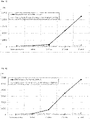
- FIG. 3 shows the proliferation curve of Pseudomona Aeruginosa inoculated on the internal surface of air duct panels URSA AIR P8858 ZERO 25mm thickness untreated and treated with a phenolic binder comprising 0.3% of inorganic biocide compound (copper sulfate pentahydrate) for several incubation times.
- FIG. 4 shows the proliferation curve of Staphylococcus Aureus inoculated on the internal surface of air duct panels URSA AIR P8858 ZERO 25mm thickness untreated and treated with a phenolic binder comprising 0.3% of inorganic biocide compound (copper sulfate pentahydrate) for several incubation times.
- FIG. 5 shows the proliferation curve of the fungi strain Candida Albicans inoculated on the internal surface of air duct panels URSA AIR P8858 ZERO 25mm thickness untreated and treated with a phenolic binder comprising 0.3% of inorganic biocide compound (copper sulfate pentahydrate) for several incubation times.
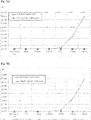
- FIG. 6A] and [Fig. 6B ] show the proliferation curves of the fungi stain Pseudomona Aeruginosa inoculated on the panel core of air duct panels URSA AIR P8858 ZERO 25mm thickness untreated and treated with a phenolic binder comprising two different amounts of the inorganic biocide compound (copper sulfate pentahydrate).
- [ Fig. 6A] and [Fig. 6B ] show the curve when a phenolic binder comprising 0.3% ([ Fig. 6A ]) or 0.6% ([ Fig. 6B ]) of inorganic biocide compound is applied.
- FIG. 7A] and [Fig. 7B ] show the proliferation curves of the fungi stain Staphylococcus Aureus inoculated on the panel core of air duct panels URSA AIR P8858 ZERO 25mm thickness untreated and treated with a phenolic binder comprising two different amounts of the inorganic biocide compound (copper sulfate pentahydrate).
- [ Fig. 7A] and [Fig. 7B ] show the curve when a phenolic binder comprising 0.3% ([ Fig. 7A ]) or 0.6% ([ Fig. 7B ]) of inorganic biocide compound is applied.
- [ Fig. 8A] and [Fig. 8B ] show the proliferation curves of the fungi stain Candida Albicans inoculated on the panel core of air duct panels URSA AIR P8858 ZERO 25mm thickness untreated and treated with a phenolic binder comprising two different amounts of the inorganic biocide compound (copper sulfate pentahydrate).
- [ Fig. 8A] and [Fig. 8B ] show the curve when a phenolic binder comprising 0.3% ([ Fig. 8A ]) or 0.6% ([ Fig. 8B ]) of inorganic biocide compound is applied.
- curable binder composition for a mineral wool product comprising a thermoset resin and an inorganic biocide compound, characterized in that the amount of inorganic biocide compound is less than or equal to 0.9 wt.% relative to the dry weight of the curable binder composition.
- the amount of inorganic biocide compound in the curable binder composition compound may be between 0.01 wt.% and 0.9 wt.%, in particular between 0.1 wt.% and 0.85 wt.%, more particularly between 0.3 wt.% and 0.6 wt.% relative to the dry weight of the curable binder composition.
- the weight percentages, in wt.%, as used herein are given as ratios relative to the dry weight of the curable binder composition.
- the sum of all components of the curable binder composition may surmount 100% in some embodiments.
- the weight percentages given for components of the binder composition are indicated for the compounds as such, in their pure form, excluding any impurities, water or solvents which they might contain, e.g. in their commercially available forms.
- curable binder composition for a mineral wool product refers to any composition that can be applied on the surface of mineral wool fibers and that hardens when subjected to elevated heating temperatures, for example at above 100°C, in a curing oven to manufacture a mat of mineral wool fibers.
- the mineral wool fibers may be glass wool fibers or stone wool fibers.
- thermoset resin refers to polymers that harden during the curing process, undergoing cross-linking reactions to form an infusible and insoluble three-dimensional polymer networks. Unlike thermoplastic polymers, once hardened the thermoset polymers cannot be melted for reshaping.
- inorganic biocide compound refers to a salt of a metal element having biocide properties, in particular fungicide, bactericide and/or antiviral properties.
- the inorganic biocide compound may be in anhydrous form or hydrated form, in particular in hydrated form.
- the inorganic biocide compound may be chosen from a salt of a metal element selected from copper, nickel, silver, zinc and mixtures thereof, in particular may be a salt of copper.
- the salt of the inorganic biocide compound may be chosen from, for example, acetate, bicarbonate, borate, carbonate, chloride, formate, hydroxide, lactate, oxalate, oxide, oxisulfate, oxychloride, sulfate, tallate and mixtures thereof, in particular acetate, bicarbonate, carbonate, hydroxide, oxide, oxisulfate, sulfate, tallate and mixtures thereof, more particularly oxisulfate, sulfate and mixture thereof.
- the inorganic biocide compound may be chosen from copper acetate, copper bicarbonate, copper borate, copper carbonate, copper chloride, copper formate, copper hydroxide, copper lactate, copper oxalate, cuprous oxide, copper oxisulfate, copper oxychloride, copper sulfate, copper tallate and mixtures thereof, in particular copper acetate, copper bicarbonate copper carbonate copper hydroxide, cuprous oxide, copper oxisulfate, copper sulfate, copper tallate and mixtures thereof, more particularly copper oxisulfate, copper sulfate and mixture thereof.
- the inorganic biocide compound is chosen from copper sulfate, copper acetate, copper chloride, copper lactate, copper formate and copper oxisulfate.
- the inorganic biocide compound may be copper sulfate, in particular copper sulfate hydrate, more particularly copper sulfate pentahydrate.
- the inorganic biocide compound may be copper sulfate pentahydrate and the amount of inorganic biocide compound may be between 0.3 wt.% and 0.6 wt.% relative to the dry weight of the curable binder composition.
- the curable binder composition according to the present invention comprising a thermoset resin and an inorganic biocide compound, can be prepared by methods well known in the art, such as by mixing the components before applying the curable binder composition to the surface of the mineral wool fibers. Additionally, the curable binder composition can be prepared by spraying the inorganic biocide compound on the thermoset resin before curing the curable binder composition on the surface of the mineral wool fibers.
- thermoset resin of the curable binder composition according to the invention may be a curable phenol-formaldehyde resole.
- the curable phenol-formaldehyde resole may comprise a first amount of urea (U1), a phenol-formaldehyde-urea (PFU) prereact or a mixture thereof.
- phenol-formaldehyde-urea prereact or "PFU prereact” refers to the product of a reaction between an aqueous phenol-formaldehyde resole and a second amount of urea (U2) carried out for at least 1 hour, in particular at least 2 hours, at a temperature lower than 70°C, in particular between 20°C and 60°C.
- resole refers to a reactive mixture with methylol functional groups, which undergo a self-curing reaction under influence of heat or acids.
- the resoles are thus partially reacted thermosets, also known as resins, prepolymers or precondensates, stable at low temperature and alkaline pH, and which can be further condensed to a thermoset in a curing reaction by application of heat and/or at acidic pH value.
- thermosets also known as resins, prepolymers or precondensates, stable at low temperature and alkaline pH, and which can be further condensed to a thermoset in a curing reaction by application of heat and/or at acidic pH value.
- the skilled person is aware of how such resole is commonly manufactured and recognizes how to modify the different reaction phases and parameters to obtain the characteristics described in the preferred embodiments according to the invention.
- Such parameters include e.g. the phenol:formaldehyde molar ratio, the catalyst type and amount, and the condensation reaction time and
- the first amount of urea (U1) may be comprised between 5 wt.% and 45 wt.%, in particular between 10 wt.% and 30 wt.%, more particularly between 15 wt.% and 20 wt.% relative to the dry weight of the curable phenol-formaldehyde resole.
- the second amount of urea (U2) may be between 5 wt.% and 20 wt.%, in particular between 10 wt.% and 15 wt.% relative to the sum of the dry weight of the curable phenol-formaldehyde resole and the total amount of urea (Ut), wherein the total amount of urea (Ut) is the addition of the first amount of urea (U1) and the second amount of urea (U2).
- the first amount of urea (U1) may be higher than 40 wt.%, in particular higher than 50 wt.% of the total amount of urea (Ut).
- the first amount of urea (U1) may be 0 wt.%
- the second amount of urea (U2) may be between 5 wt.% and 45 wt.%, preferably between 10 wt.% and 30 wt.%, more preferably between 15 wt.% and 20 wt.% relative to the sum of the dry weight of the curable phenol-formaldehyde resole and the total amount of urea (Ut).
- the second amount of urea (U2) may be at least 10 wt.% of the total amount of urea (Ut), and the total amount of urea (Ut) may be between 10 wt.% and 60 wt.% relative to the sum of the dry weight of the curable phenol-formaldehyde resole and the total amount of urea (Ut).
- the sum of the first (U1) and second (U2) amounts of urea may be between 10 wt.% and 40 wt.%, preferably between 15 wt.% and 35 wt.%, relative to the sum of the dry weight of the curable phenol-formaldehyde resole and the total weight amount of urea (Ut), and the second amount of urea (U2) may be at least 40 wt.%, preferably at least 50 wt.%, of the total amount of urea (Ut).
- the curable phenol-formaldehyde resole may be formed by contacting the first amount of urea (U1) and the phenol-formaldehyde-urea (PFU) prereact at least 24h after the production of the phenol-formaldehyde-urea (PFU) prereact, preferably at least 72h.
- the emissions of formaldehyde from the mineral wool products manufactured by the curable phenol-formaldehyde resole according to this specific embodiment are significantly reduced compared with the case where the same total amount of urea (Ut) is only used in the preparation of the prereact, or when the first amount of urea (U1) is less than 40 wt.% of the total amount of urea (Ut).
- the curable phenol-formaldehyde resole may comprise:
- the aqueous phenol-formaldehyde resole may have a free formaldehyde content of 10 wt.% or less, preferably of 6 wt.% or less, and also preferably of at least 1 wt.%, in relation to the dry weight content of the resole, when measured according to the method ISO 9397:1995 (hydroxylamine hydrochloride method).
- the aqueous phenol-formaldehyde resole may also have at least one of the following characteristics:
- the dry weight content is defined as the weight fraction of residue remaining after drying 3 g of the aqueous composition (resole, prereact or binder) at 135°C for 1 hour in a ventilated oven, as measured according to ISO 3251:2008
- the aqueous phenol-formaldehyde resole may also be substantially free of nitrogenated compounds (compounds comprising at least one nitrogen atom), particularly substantially free of a compound chosen from urea, ammonia, ammonium inorganic or organic salts, alkanolamines, alkylamines and/or melamine.
- nitrogenated compounds compounds comprising at least one nitrogen atom
- the aqueous phenol-formaldehyde resole may also be substantially free of formaldehyde scavengers chosen from the group of amines, tannins, sulfite and bisulfite salts, compounds with methylene active groups, glycine, resorcinol and its derivatives, alkanolamines, and mixtures thereof.
- formaldehyde scavengers chosen from the group of amines, tannins, sulfite and bisulfite salts, compounds with methylene active groups, glycine, resorcinol and its derivatives, alkanolamines, and mixtures thereof.
- substantially free means that the amount of the corresponding compound in the resole, is sufficiently low as to be negligible. In this context, it should be understood however that the compound in question might be present as traces, e.g. from unintended cross-contamination, preferably at an amount of ⁇ 0.1 wt.% relative to the dry weights of the resole, prereact or binder.
- thermoset resin of the curable binder composition according to the invention may be a curable formaldehyde-free resin comprising, in addition of the inorganic biocide compound:
- an esterification reaction between component a) the carbohydrate compound and component b) the polycarboxylic acid takes place during curing.
- the resin may also cure by the crosslinking reaction between multiple carboxylic groups of the polycarboxylic acid (component b) and multiple hydroxyl groups in the carbohydrate compound (component a)) and/or the polyol (optional component d)).
- other curing mechanisms may take place based on chemical or physical interactions among the components.
- formaldehyde-free means that no or essentially no formaldehyde is contained in the resin, is released from the resin, by curing the resin, from a binder containing the resin or from a mineral wool product containing the resin.
- essentially no formaldehyde it is meant that the amount of formaldehyde in the curable formaldehyde-free resin is less than 0.1 wt.% relative to sum of the weights of component a), component b), component c) and optional component d), more preferably less than 0.01 wt.%, or even below a detectable limit of formaldehyde, and even more preferably zero.
- the components a), b), c) and d) of the curable formaldehyde-free resin according to the present disclosure contain all the components of this kind in the resin, i.e. all the carbohydrate compounds contained in the resin are contained in component a), all the polycarboxylic acids contained in the resin are contained in component b), all the epoxysilanes contained in the resin are contained in component c), and all the polyols contained in the resin are contained in optional component d).
- the carbohydrate compound of component a) may comprise a reducing sugar and/or a nonreducing sugar, such as maltitol.
- the carbohydrate compound can comprise one or more reducing sugars selected from monosaccharides, oligosaccharides, polysaccharides and mixtures thereof.
- component a) is a mixture of different saccharides, in particular a mixture of monosaccharides, oligosaccharides, and polysaccharides.
- component a) may be a dextrin, preferably maltodextrin.
- the curable formaldehyde-free resin may comprise:
- the dextrose equivalent (DE) of component a) may be between 11 and 21, in particular between 12 and 20, more particularly between 14 and 19, and even more particularly between 15 and 17.
- the dextrose equivalent may be between 17 and 21, more particularly between 11 and 15.
- the dextrose equivalent may be about 12 or 19.
- dextrose equivalent values are well known in the art. Particularly, the dextrose equivalent values mentioned in the present disclosure were all measured according to the norm ISO 5377-1994. This norm specifies a Lane and Eynon constant titre method for the determination of reducing power and dextrose equivalent in starch hydrolysis products.
- component a) may be a maltodextrin having a DE between 11 and 21, preferably a DE of between 11 and 15 or between 17 and 19.
- the curable formaldehyde-free resin may comprise component a) in the range between 40 wt.% and 80 wt.%, in particular between 50 wt.% and 70 wt.%. These amounts are particularly adapted to component a) being maltodextrin.
- component b) may be a saturated aliphatic polycarboxylic acid or anhydride or salt thereof.
- component b) may be a monomeric polycarboxylic acid.
- the monomeric polycarboxylic acid may be a dicarboxylic acid or a tricarboxylic acid.
- the polycarboxylic acid may be a C3-C10 polycarboxylic acid comprising at least two carboxylic groups separated by at least 1 carbon atom.
- Suitable acids may include maleic acid, malonic acid, fumaric acid, malic acid, ascorbic acid, succinic acid, adipic acid, glutaric acid, tartaric acid, pimelic acid, suberic acid, azelaic acid, sebacic acid, citric acid, anhydrides and salts thereof, and mixtures thereof.
- component b) may be chosen from citric acid, succinic acid, tartaric acid, adipic acid, anhydrides and salts thereof, and mixtures thereof.
- Component b) may also be a mixture of any of citric acid, succinic acid, tartaric acid, adipic acid, anhydrides and salts thereof.
- the polycarboxylic acid may be citric acid.
- the curable formaldehyde-free resin may comprise:
- component a) may be maltodextrin and component b) may be citric acid, in particular component a) may be maltodextrin having a DE between 17 and 19 or having a DE between 11 and 15, and component b) may be citric acid.
- the curable formaldehyde-free resin may comprise:
- the curable formaldehyde-free resin may comprise component b) in the range between 20 wt.% and 50 wt.%, in particular between 25 wt.% and 40 wt.%. These amounts are particularly adapted to component b) being citric acid.
- the curable formaldehyde-free resin may comprise from 40 wt.% to 80 wt.% of maltodextrin and from 20 wt.% to 50 wt.% of citric acid, preferably from 50 wt.% to 70 wt.% of maltodextrin and from 25 wt.% to 40 wt.% of citric acid.
- component c) epoxysilane improves the adhesion between the organic resin and the inorganic mineral wool in a curing step, i.e. acts as a "coupling agent".
- Providing coupling agents as such is known in the art, however, prior art resins are largely based on amino-silane.
- Amino-silanes are rather inexpensive components that exhibit good chemical stability and have been shown to improve the adhesion of a cured resin compared to no coupling agent being present at all in the curable resin.
- the inventors discovered that resins comprising epoxy-silane exhibit highly superior mechanical properties in comparison to resins comprising amino-silane.
- epoxysilane is a rather expensive component.
- a resin comprising epoxy-silane more than 3 wt.% of epoxysilane leads to improved mechanical properties, but results in a product of limited commercial interest, which encouraged the inventors to investigate other options. Further, the presence of epoxysilane in an amount according to the present disclosure facilitates processing the curable resin. The low solubility of epoxysilane impedes the processing with increasing weight percentage, requiring even to be pre-reacted in water. In addition, the reactivity of epoxysilane may lead to unwanted reactions difficult to control. Thus, curable resin according to the present disclosure having a moderate amount of epoxysilane, minimises said drawbacks related to the use of epoxysilane.
- component c) epoxysilane is an alcoxy-epoxy-silane, in particular an alcoxy-epoxy-silane selected from tri-methoxy-epoxy-silane, tri-ethoxy-epoxy-silane, isopropoxy-epoxy-silane, tert-butoxy-epoxy-silane, di-methoxy-epoxy-silane or di-ethoxy-epoxy-silane.
- component c) may be 3-glycidoxypropyltrimethoxysilane, 3-glycidoxyetyltrimethoxysilane, 3-glycidoxymetyltrimethoxysilane, 3-glycidoxypropyltriethoxysilane, 3-glycidoxyetyltriethoxysilane, 3-glycidoxymetyltriethoxysilane or mixtures thereof.
- the alcoxy group of the alcoxy-epoxy-silane is hydrolysed in contact with the aqueous medium to a hydroxyl group that is able to react with the functional groups of the mineral wool, for example with silanol groups of glass fibre. Further, the epoxy group of the alcoxy-epoxy-silane opens in the aqueous environment, resulting in a silane comprising a hydroxyl group that can act as a crosslinker in the resin.
- polyols are organic compounds containing at least two hydroxyl groups.
- Sugars, and in particular reducing sugars are not polyols according to the present disclosure, (despite comprising multiple hydroxyl groups) as is general knowledge for the person skilled in the art.
- Sugar alcohols (or hydrogenated sugars) which are commonly derived from sugars, such as for example sorbitol, on the other hand may be regarded as polyols according to the present disclosure. It is believed that the polyol in the curable formaldehyde-free resin of the present application acts as an agent to improve the cross-linking degree.
- the polyol has a few hydroxyl groups and a limited carbon chain length.
- Each of the one or more polyols has a molecular weight of less than 1000 g/mol, preferably of less than 500 g/mol and even more preferably of less than 300 g/mol.
- the one or more polyols contain no more than five hydroxyl groups, preferably no more than four hydroxyl groups, more preferably three hydroxyl groups.
- the one or more polyols contain exactly two hydroxyl groups.
- the polyol in the curable formaldehyde-free resin is an alkylene glycol.
- alkylene glycols are understood as organic diols with two hydroxyl groups in two different carbon atoms.
- the carbon atoms carrying the hydroxyl groups are vicinal. They can also be described as alcohols derived from ethylene glycol.
- alkylene glycols as used herein, also includes diols obtained by condensation of ethylene glycol, in which the hydroxy groups are located in non-adjacent carbon atoms.
- Preferred alkylene glycols are ethylene glycol, propylene glycol, trimethylene glycol (1,3-propane diol), neopentyl glycol, diethylene glycol, triethylene glycol and polyethylene glycol. More preferably, the alkylene glycol is selected from ethylene glycol, propylene glycol and mixtures thereof. Even more preferably, the alkylene glycol is ethylene glycol.
- the polyol in the curable formaldehyde-free resin according to the invention is selected from ethylene glycol, tetraethylene glycol, 1,4-butanediol, 1,3-butanediol, 1,5 pentanediol, 1,6-hexanediol, glycerol, diglycerol, triglycerol, triethanolamine, diethanolamine, trimethylolpropane, propylene glycol and mixtures thereof.
- the polyol is selected from ethylene glycol, tetraethylene glycol, 1,4-butanediol, glycerol, triglycerol, triethanolamine, trimethylolpropane, propylene glycol and mixtures thereof.
- the one or more polyol is ethylene glycol.
- the total amount of optional component d) in the curable formaldehyde-free resin is between 0.5 wt.% and 10 wt.% with respect to the sum of components a) and b).
- the Applicant has found that the mechanical properties of the curable formaldehyde-free resin, such as the maximum load value or the maximum slope value, drop dramatically when the total amount of polyols exceeds 10 wt.% with respect to the sum of components a) and b).
- the total amount of polyols in the curable formaldehyde-free resin should therefore be no greater than 10 wt.% with respect to the sum of components a) and b).
- the total amount of optional component d) in the curable formaldehyde-free resin is between 1 wt.% and 6 wt.% with respect to the sum of components a) and b), preferably between 2 wt.% and 5 wt.%, and more preferably between 3 wt.% and 4 wt.%
- the total amount of optional component d) in the curable formaldehyde-free resin is between 1 wt.% and 2 wt.% with respect to the sum of components a) and b).
- the range between 1 wt.% and 2 wt.% exhibits particularly high resistance to weathering and good ageing behavior.
- the Applicant believed that the polyols also function as a coupling agent between the inorganic mineral wool and the organic components of the resin in addition to the epoxysilanes. Indeed, it is believed that the polyol acts as a crosslinker agent within the resin.
- the small size of the polyols considered in the composition may allow the polyols to act as bridges between the components of the resin.
- the presence of polyols in an amount according to the present disclosure leads to an improvement of the mechanical properties of the resin. While a higher amount of polyol could lead to a very high crosslinking, the high crosslinking can result in a stiff resin, which is difficult to handle.
- the curable formaldehyde-free resin may comprise:
- the curable formaldehyde-free resin may comprise:
- the curable formaldehyde-free resin may comprise:
- the curable formaldehyde-free resin may comprise:
- the curable formaldehyde-free resin may comprise:
- the curable formaldehyde-free resin may comprise:
- thermoset resin of the curable binder composition according to the invention may comprise reaction products of an amine component and a reducing sugar.
- Said thermoset resin can be made via a Maillard reaction forming polymeric melanoidins.
- Suitable amine components include ammonia, a primary amine, a secondary amine, proteins, peptides, amino acids and ammonium salts.
- thermoset resin of the curable binder composition may consist of phenol-formaldehyde and phenol-formaldehyde-amine condensates.
- the amine in the phenol-formaldehyde-amine condensates is an alkanolamine or a cyclic amine.
- the curable phenol-formaldehyde resole and the curable formaldehyde-free resin may further contain a catalyst.
- the catalyst may facilitate and/or accelerate the subsequent curing step.
- useful catalysts are ammonium sulfate or phosphorous-containing esterification catalysts, like alkali metal hypophosphite salts, alkali metal phosphites, alkali metal polyphosphates, and the like.
- a preferred catalyst is ammonium sulfate or sodium hypophosphite. Ammonium sulfate is more adapted to the curable phenol-formaldehyde resole. Sodium hypophosphite is more adapted to the curable formaldehyde-free resin.
- the amount of the catalyst may depend on the curable binder composition.
- the amount of the catalyst in the curable phenol-formaldehyde resole may be below 15 wt.%, preferably between 1 wt.% and 10 wt.% relative to the dry weight of the curable phenol-formaldehyde resole.
- the amount of the catalyst in the curable formaldehyde-free resin according to the invention may be greater than 0.1 wt.% and less than 5 wt.% relative to the sum of the weights of the components a) and b) of the resin, preferably the amount of the catalyst may be between 2.90 wt.% and 3 wt.%.
- the curable formaldehyde-free resin according to the invention may contain sodium hypophosphite in an amount of greater than 0.1 wt.% and less than 5 wt.% relative to the sum of the weights of the components a) and b) of the resin, preferably in an amount of about 3 wt.%.
- the curable phenol-formaldehyde resole and the curable formaldehyde-free resin may further contain additives.
- additives are hydrophobising agents such as silicones and fluorocarbon-polymers, dedusting agents such as paraffin and mineral oils, fibre softeners, preservatives, dyes and/or corrosion inhibitors, among others.
- the curable phenol-formaldehyde resole may comprise also specific additives such as resin extenders different than urea, such as carbohydrates, adhesion promoters such as silanes, and water repellent agents such as silicones, and more particularly reactive silicones. It is particularly preferred to include up to 10 wt.% of molasses and/or glucose as resin extender.
- the curable binder composition of the present invention may be used to manufacture mineral wool products.
- the inorganic biocide compound is as defined above in relation with the curable binder composition.
- the curable binder composition may be applied by spraying onto the surface of freshly formed wool fibers arising from a fiberizing device.
- the curing step c) may be carried out by passing the mineral wool fibers bearing the curable binder composition through a curing oven, in particular an air-circulated curing oven, set at a temperature higher than 100°C, preferably at a temperature between 140°C and 180°C.
- the curing time preferably ranges from 3 to 5 minutes.
- the mineral wool product may afterwards be trimmed and shaped into its final dimensions, optionally rolled up, and packaged.
- the mineral wool product may be trimmed and shaped into mineral wool panels adapted to the manufacture of air duct.
- facing layers like paper, aluminum, glass veil or combinations thereof might be applied to the mineral wool product depending on its intended application.
- the curable binder composition is advantageously applied in an amount to produce a solid binder content in the mineral wool product after drying and curing between 3 wt.% and 18 wt.% relative to the weight of the mineral wool product.
- This amount of cured binder is measured as LOI (loss on ignition) according to ISO 29771:2008.
- the amount of inorganic biocide compound in the mineral wool product may be less than or equal to 0.16 wt.%, in particular between 0.0003 wt.% and 0.16 wt.%, more particularly between 0.003 wt.% and 0.15 wt.%, even more particularly between 0.009 wt.% and 0.11wt.% relative to the weight of mineral wool product.
- a mineral wool product comprising mineral wool fibers and an inorganic biocide compound, characterized in that the amount of inorganic biocide compound in the mineral wool product is less than or equal to 0.16 wt.% relative to the weight of mineral wool product.
- the amount of inorganic biocide compound in the mineral wool product may be between 0.0003 wt.% and 0.16 wt.%, in particular between 0.003 wt.% and 0.15 wt.%, more particularly between 0.009 wt.% and 0.11 wt.% relative to the weight of mineral wool product.
- the amount of inorganic biocide compound in the mineral wool product may be between 0.02 wt.% and 0.13 wt.%, in particular between 0.04 wt.% and 0.11 wt.%, more particularly between 0.05 wt.% and 0.09 wt.% relative to the weight of mineral wool product.
- biocide inorganic compound is as defined above in relation with the curable binder composition according to the invention.
- the amount of inorganic biocide in the mineral wool product may be comprised between 0.02 wt.% and 0.14 wt.% relative to the weight of mineral wool product.
- This specific embodiment is advantageously adapted to mineral wool product used for air duct panels.
- the amount of inorganic biocide compound in the mineral wool product may be about 0.07 wt.% relative to the weight of mineral wool product.
- the inorganic biocide compound may be a salt of a metal element and the amount of said metal element in the mineral wool product may be comprised between 7.6 ppm and 400 ppm, preferably between 10 and 350 ppm, more preferably between 15 and 300 ppm, more preferably between 50 and 250 ppm, even more preferably between 100 and 200 ppm relative to the weight of mineral wool product.
- the metal element is advantageously copper.
- the mineral wool product may be obtained by applying the curable binder composition according to the invention as defined above to the surface of the mineral wool fibers and then curing the binder composition on the surface of the mineral wool fibers, e.g. at a temperature higher than 100°C, preferably at a temperature between 140°C and 180°C.
- a suitable method for manufacturing a mineral wool product comprising mineral wool fibers and an inorganic biocide compound according to the invention is described above.
- the mineral wool product may be shaped into different specific products. Therefore, the mineral wool product may be a mineral wool panel or a mineral wool rolled up board.
- the mineral wool panel may be obtained by trimming and shaping:
- the mineral wool product in particular being a mineral wool panel, may be used in the thermal and acoustic insulation of buildings, transportations or appliances, for fire protection or for other non-insulation applications such as air duct.
- an air duct made of at least one, in particular at least two, more particularly four mineral wool panels as defined above.
- the air duct made of a plurality of mineral wool panels may be obtained by assembling a plurality of mineral wool panels to form the air duct, wherein at least one mineral wool panel, in particular at least two mineral wool panels, more particularly all the mineral wool panels of the plurality of mineral wool panels comprise(s) mineral wool fibers and an inorganic biocide compound.
- a suitable method for manufacturing an air duct according to the invention is described below.
- Binder evaluation at laboratory scale stability and reactivity
- Fig. 1 shows that the water dilutability diminishes as the amount of copper sulfate increases. More particularly Fig. 1 evidences that the water dilutability of the compositions 1 to 5 having an amount of copper sulfate of between 0.1 wt.% and 0.9 wt.% is higher than 4 g/g. Fig. 1 also evidences that the water dilutability of the composition 6 having an amount of copper sulfate of 1.5 wt.% is 4 g/g. Composition 1 to 5 are stable while composition 6 is not stable and precipitates.
- the B-time, B-Stage time or Gel time is the time a resole requires to reach the gelled B-stage, determined at 130°C according to the DIN 16916.
- the curing process of the resole resins comprises three well-known stages: the liquid resole (A-Stage resin), the gelled resin (B-Stage), and the fully cross-linked phenolic resin (C-Stage).
- the B-time of insulation resins should be in the range 300-1,200 seconds to ensure the binder has an adequate processability and produces optimal mechanical properties in the product.
- B-times shorter than 300 seconds may generate binder pre-curing before the mineral wool enters the curing oven, that is, the binder would not have enough time to glide into the junction points and would thus cause a poor recovery of the mineral wool.
- too high B-time values don't enable the curing to be completed. Both scenarios lead to mineral wool mechanical properties worsening.
- the B-time of the binder compositions 1 to 6 of Table 1 above were tested at laboratory scale.
- the B-time was determined using a B-time device placing 0.5 g (420 ⁇ L) of each composition on the device after being pre-heated up to 130°C.
- the sample is kept at 130°C while being stirred circularly from the rim to the center with a glass rod.
- the B-time is reached when the sample snaps up when lifting the glass rod.
- Fig. 2 shows the impact of the amount of copper sulfate salt on the reactivity of the binder compositions 1 to 6 of Table 1. Particularly, Fig. 2 shows the evolution of the B-time with the amount of copper sulfate salt in the binder compositions 1 to 6 of Table 1.
- the increase of copper sulfate pentahydrate biocide up to 0.4 wt.% in the binder composition reduces the B-time by 25%, thus increasing the binder reactivity. Further increase of copper sulfate until 1.5% does not impact the B-time anymore and the reactivity remains stable in the adequate processability ranges.
- binder composition 2 and the binder composition 4 of Table 1 above were used to manufacture samples of panels URSA AIR P8858 ZERO 25mm thickness, to carry out biocide performance essays.
- samples were produced with the binder composition 0 without addition of copper sulfate pentahydrate.
- Panels URSA AIR P8858 ZERO 25mm thickness contain a core of glass mineral wool of ca. 80 kg/m 3 density with a weight binder content of approximately 10%.
- the product also comprises an 'internal surface' made of a black glass fabric, which covers the internal surface of the air duct.
- Fig. 3 shows the proliferation of Pseudomona Aeruginosa inoculated on the internal surface of the air duct panels untreated and treated with the composition 2 for several incubation times.
- the addition of copper sulfate inorganic biocide in the binder composition totally avoids the proliferation of the Pseudomona Aeruginosa in the internal surface.
- Fig. 4 shows the proliferation curve of the Staphylococcus Aureus inoculated on the internal surface of the air duct panels untreated and treated with the composition 2 for several incubation times: The addition of copper sulfate inorganic biocide in the binder composition totally avoids the proliferation of the Staphylococcus Aureus in the internal veil surface.
- Fig. 5 shows the proliferation curve of the fungi strain Candida Albicans inoculated on the internal surface of the air duct panels untreated and treated with the composition 2 for several incubation times.
- the addition of copper sulfate inorganic biocide in the binder composition totally avoids the proliferation of the fungi strain Candida Albicans in the internal veil surface.
- Fig. 6a shows the proliferation of Pseudomona Aeruginosa inoculated on the panel core of air duct panels untreated and treated with the composition 2 for several incubation times.
- the Fig. 6b shows the proliferation of Pseudomona Aeruginosa treated with composition 4: The addition of copper sulfate inorganic biocide in the binder composition totally avoids the proliferation of the Pseudomona Aeruginosa.
- Fig. 7a shows the proliferation curve of the Staphylococcus Aureus inoculated on the panel core of the air duct panels untreated and treated with the composition 2 for several incubation times.
- Fig. 7b shows the proliferation of Staphylococcus Aureus treated with composition 4: The addition of copper sulfate inorganic biocide in the binder composition totally avoids the proliferation of the Staphylococcus Aureus.
- Fig. 8a shows the proliferation curve of the fungi strain Candida Albicans inoculated on the panel core of the air duct panels untreated and treated with the composition 2 for several incubation times.
- Fig. 8b shows the proliferation of Candida Albicans treated with composition 4: The addition of copper sulfate inorganic biocide in the binder composition totally avoids the proliferation of the fungi strain Candida Albicans.
Landscapes
- Chemical & Material Sciences (AREA)
- Life Sciences & Earth Sciences (AREA)
- Organic Chemistry (AREA)
- Engineering & Computer Science (AREA)
- General Chemical & Material Sciences (AREA)
- Chemical Kinetics & Catalysis (AREA)
- General Life Sciences & Earth Sciences (AREA)
- Geochemistry & Mineralogy (AREA)
- Materials Engineering (AREA)
- Textile Engineering (AREA)
- Inorganic Chemistry (AREA)
- Dispersion Chemistry (AREA)
- Compositions Of Macromolecular Compounds (AREA)
Priority Applications (3)
| Application Number | Priority Date | Filing Date | Title |
|---|---|---|---|
| EP21382558.1A EP4108643A1 (fr) | 2021-06-23 | 2021-06-23 | Composition de liaison durcissable pour laine minérale comprenant un biocide |
| PCT/EP2022/066972 WO2022268863A1 (fr) | 2021-06-23 | 2022-06-22 | Composition de liant durcissable pour laine minérale comprenant un biocide |
| EP22738554.9A EP4359360A1 (fr) | 2021-06-23 | 2022-06-22 | Composition de liant durcissable pour laine minérale comprenant un biocide |
Applications Claiming Priority (1)
| Application Number | Priority Date | Filing Date | Title |
|---|---|---|---|
| EP21382558.1A EP4108643A1 (fr) | 2021-06-23 | 2021-06-23 | Composition de liaison durcissable pour laine minérale comprenant un biocide |
Publications (1)
| Publication Number | Publication Date |
|---|---|
| EP4108643A1 true EP4108643A1 (fr) | 2022-12-28 |
Family
ID=76890955
Family Applications (2)
| Application Number | Title | Priority Date | Filing Date |
|---|---|---|---|
| EP21382558.1A Pending EP4108643A1 (fr) | 2021-06-23 | 2021-06-23 | Composition de liaison durcissable pour laine minérale comprenant un biocide |
| EP22738554.9A Pending EP4359360A1 (fr) | 2021-06-23 | 2022-06-22 | Composition de liant durcissable pour laine minérale comprenant un biocide |
Family Applications After (1)
| Application Number | Title | Priority Date | Filing Date |
|---|---|---|---|
| EP22738554.9A Pending EP4359360A1 (fr) | 2021-06-23 | 2022-06-22 | Composition de liant durcissable pour laine minérale comprenant un biocide |
Country Status (2)
| Country | Link |
|---|---|
| EP (2) | EP4108643A1 (fr) |
| WO (1) | WO2022268863A1 (fr) |
Citations (6)
| Publication number | Priority date | Publication date | Assignee | Title |
|---|---|---|---|---|
| US20040131874A1 (en) * | 2003-01-08 | 2004-07-08 | Georgia-Pacific Resins, Inc. | Reducing odor in fiberglass insulation bonded with urea-extended phenol-formaldehyde resins |
| US20110200814A1 (en) * | 2009-05-15 | 2011-08-18 | Hernandez-Torres Jesus M | Biocides for bio-based binders, fibrous insulation products and wash water systems |
| US20120156954A1 (en) * | 2009-08-11 | 2012-06-21 | Bernhard Eckert | Curable fiberglass binder |
| EP2485989A1 (fr) | 2009-10-09 | 2012-08-15 | Owens Corning Intellectual Capital, LLC | Liants biologiques pour l'isolation et mats non tissés |
| WO2014140396A1 (fr) | 2013-03-13 | 2014-09-18 | Ortíz-Vivanco Martín Francisco José | Conduit de ventilation antimicrobien |
| WO2015048918A1 (fr) * | 2013-10-03 | 2015-04-09 | Améstica Salazar Luis Alberto | Composition biocide de résines comprenant une ou plusieurs résines sélectionnées parmi mf, uf, pf, muf et résines phénoliques; et plus d'un sel de cuivre soluble |
-
2021
- 2021-06-23 EP EP21382558.1A patent/EP4108643A1/fr active Pending
-
2022
- 2022-06-22 EP EP22738554.9A patent/EP4359360A1/fr active Pending
- 2022-06-22 WO PCT/EP2022/066972 patent/WO2022268863A1/fr not_active Ceased
Patent Citations (6)
| Publication number | Priority date | Publication date | Assignee | Title |
|---|---|---|---|---|
| US20040131874A1 (en) * | 2003-01-08 | 2004-07-08 | Georgia-Pacific Resins, Inc. | Reducing odor in fiberglass insulation bonded with urea-extended phenol-formaldehyde resins |
| US20110200814A1 (en) * | 2009-05-15 | 2011-08-18 | Hernandez-Torres Jesus M | Biocides for bio-based binders, fibrous insulation products and wash water systems |
| US20120156954A1 (en) * | 2009-08-11 | 2012-06-21 | Bernhard Eckert | Curable fiberglass binder |
| EP2485989A1 (fr) | 2009-10-09 | 2012-08-15 | Owens Corning Intellectual Capital, LLC | Liants biologiques pour l'isolation et mats non tissés |
| WO2014140396A1 (fr) | 2013-03-13 | 2014-09-18 | Ortíz-Vivanco Martín Francisco José | Conduit de ventilation antimicrobien |
| WO2015048918A1 (fr) * | 2013-10-03 | 2015-04-09 | Améstica Salazar Luis Alberto | Composition biocide de résines comprenant une ou plusieurs résines sélectionnées parmi mf, uf, pf, muf et résines phénoliques; et plus d'un sel de cuivre soluble |
Also Published As
| Publication number | Publication date |
|---|---|
| EP4359360A1 (fr) | 2024-05-01 |
| WO2022268863A1 (fr) | 2022-12-29 |
Similar Documents
| Publication | Publication Date | Title |
|---|---|---|
| KR101666601B1 (ko) | 수소화된 당에 기초한 미네랄 울을 위한 사이징 조성물 및 얻어진 차단 제품 | |
| US10774466B2 (en) | Sizing composition based on a non-reducing saccharide and a hydrogenated saccharide, and insulating products obtained | |
| KR101978287B1 (ko) | 말티톨에 기초한 광물성 울을 위한 사이징 조성물 및 수득된 절연 제품 | |
| JP2024501931A (ja) | 鉱物繊維製品 | |
| EP4127028B1 (fr) | Composition du liant aqueux | |
| CA3035464C (fr) | Procede de fabrication de produits en laine minerale avec un liant a base de resol phenol-formaldehyde | |
| EP4108643A1 (fr) | Composition de liaison durcissable pour laine minérale comprenant un biocide | |
| KR102420583B1 (ko) | 수성 바인더 조성물 및 이를 적용한 섬유상 재료 | |
| JP7587596B2 (ja) | ミネラルウール用バインダーおよび硬化性樹脂 | |
| EP3561166B1 (fr) | Procédé de fabrication de produits en laine minérale |
Legal Events
| Date | Code | Title | Description |
|---|---|---|---|
| PUAI | Public reference made under article 153(3) epc to a published international application that has entered the european phase |
Free format text: ORIGINAL CODE: 0009012 |
|
| STAA | Information on the status of an ep patent application or granted ep patent |
Free format text: STATUS: THE APPLICATION HAS BEEN PUBLISHED |
|
| AK | Designated contracting states |
Kind code of ref document: A1 Designated state(s): AL AT BE BG CH CY CZ DE DK EE ES FI FR GB GR HR HU IE IS IT LI LT LU LV MC MK MT NL NO PL PT RO RS SE SI SK SM TR |
|
| STAA | Information on the status of an ep patent application or granted ep patent |
Free format text: STATUS: REQUEST FOR EXAMINATION WAS MADE |
|
| 17P | Request for examination filed |
Effective date: 20230614 |
|
| RBV | Designated contracting states (corrected) |
Designated state(s): AL AT BE BG CH CY CZ DE DK EE ES FI FR GB GR HR HU IE IS IT LI LT LU LV MC MK MT NL NO PL PT RO RS SE SI SK SM TR |
|
| STAA | Information on the status of an ep patent application or granted ep patent |
Free format text: STATUS: EXAMINATION IS IN PROGRESS |
|
| 17Q | First examination report despatched |
Effective date: 20250212 |