EP4110010A1 - Wärmetauscher - Google Patents
Wärmetauscher Download PDFInfo
- Publication number
- EP4110010A1 EP4110010A1 EP21756195.0A EP21756195A EP4110010A1 EP 4110010 A1 EP4110010 A1 EP 4110010A1 EP 21756195 A EP21756195 A EP 21756195A EP 4110010 A1 EP4110010 A1 EP 4110010A1
- Authority
- EP
- European Patent Office
- Prior art keywords
- metal fiber
- fiber structure
- pipe
- heat exchanger
- housing body
- Prior art date
- Legal status (The legal status is an assumption and is not a legal conclusion. Google has not performed a legal analysis and makes no representation as to the accuracy of the status listed.)
- Pending
Links
Images


Classifications
-
- F—MECHANICAL ENGINEERING; LIGHTING; HEATING; WEAPONS; BLASTING
- F28—HEAT EXCHANGE IN GENERAL
- F28F—DETAILS OF HEAT-EXCHANGE AND HEAT-TRANSFER APPARATUS, OF GENERAL APPLICATION
- F28F1/00—Tubular elements; Assemblies of tubular elements
- F28F1/10—Tubular elements and assemblies thereof with means for increasing heat-transfer area, e.g. with fins, with projections, with recesses
- F28F1/40—Tubular elements and assemblies thereof with means for increasing heat-transfer area, e.g. with fins, with projections, with recesses the means being only inside the tubular element
-
- F—MECHANICAL ENGINEERING; LIGHTING; HEATING; WEAPONS; BLASTING
- F28—HEAT EXCHANGE IN GENERAL
- F28D—HEAT-EXCHANGE APPARATUS, NOT PROVIDED FOR IN ANOTHER SUBCLASS, IN WHICH THE HEAT-EXCHANGE MEDIA DO NOT COME INTO DIRECT CONTACT
- F28D1/00—Heat-exchange apparatus having stationary conduit assemblies for one heat-exchange medium only, the media being in contact with different sides of the conduit wall, in which the other heat-exchange medium is a large body of fluid, e.g. domestic or motor car radiators
- F28D1/02—Heat-exchange apparatus having stationary conduit assemblies for one heat-exchange medium only, the media being in contact with different sides of the conduit wall, in which the other heat-exchange medium is a large body of fluid, e.g. domestic or motor car radiators with heat-exchange conduits immersed in the body of fluid
- F28D1/04—Heat-exchange apparatus having stationary conduit assemblies for one heat-exchange medium only, the media being in contact with different sides of the conduit wall, in which the other heat-exchange medium is a large body of fluid, e.g. domestic or motor car radiators with heat-exchange conduits immersed in the body of fluid with tubular conduits
-
- F—MECHANICAL ENGINEERING; LIGHTING; HEATING; WEAPONS; BLASTING
- F28—HEAT EXCHANGE IN GENERAL
- F28D—HEAT-EXCHANGE APPARATUS, NOT PROVIDED FOR IN ANOTHER SUBCLASS, IN WHICH THE HEAT-EXCHANGE MEDIA DO NOT COME INTO DIRECT CONTACT
- F28D3/00—Heat-exchange apparatus having stationary conduit assemblies for one heat-exchange medium only, the media being in contact with different sides of the conduit wall, in which the other heat-exchange medium flows in a continuous film, or trickles freely, over the conduits
- F28D3/02—Heat-exchange apparatus having stationary conduit assemblies for one heat-exchange medium only, the media being in contact with different sides of the conduit wall, in which the other heat-exchange medium flows in a continuous film, or trickles freely, over the conduits with tubular conduits
-
- F—MECHANICAL ENGINEERING; LIGHTING; HEATING; WEAPONS; BLASTING
- F28—HEAT EXCHANGE IN GENERAL
- F28F—DETAILS OF HEAT-EXCHANGE AND HEAT-TRANSFER APPARATUS, OF GENERAL APPLICATION
- F28F1/00—Tubular elements; Assemblies of tubular elements
- F28F1/10—Tubular elements and assemblies thereof with means for increasing heat-transfer area, e.g. with fins, with projections, with recesses
- F28F1/40—Tubular elements and assemblies thereof with means for increasing heat-transfer area, e.g. with fins, with projections, with recesses the means being only inside the tubular element
- F28F1/405—Tubular elements and assemblies thereof with means for increasing heat-transfer area, e.g. with fins, with projections, with recesses the means being only inside the tubular element and being formed of wires
-
- F—MECHANICAL ENGINEERING; LIGHTING; HEATING; WEAPONS; BLASTING
- F28—HEAT EXCHANGE IN GENERAL
- F28F—DETAILS OF HEAT-EXCHANGE AND HEAT-TRANSFER APPARATUS, OF GENERAL APPLICATION
- F28F13/00—Arrangements for modifying heat-transfer, e.g. increasing, decreasing
- F28F13/003—Arrangements for modifying heat-transfer, e.g. increasing, decreasing by using permeable mass, perforated or porous materials
-
- F—MECHANICAL ENGINEERING; LIGHTING; HEATING; WEAPONS; BLASTING
- F28—HEAT EXCHANGE IN GENERAL
- F28F—DETAILS OF HEAT-EXCHANGE AND HEAT-TRANSFER APPARATUS, OF GENERAL APPLICATION
- F28F13/00—Arrangements for modifying heat-transfer, e.g. increasing, decreasing
- F28F13/06—Arrangements for modifying heat-transfer, e.g. increasing, decreasing by affecting the pattern of flow of the heat-exchange media
-
- H—ELECTRICITY
- H05—ELECTRIC TECHNIQUES NOT OTHERWISE PROVIDED FOR
- H05B—ELECTRIC HEATING; ELECTRIC LIGHT SOURCES NOT OTHERWISE PROVIDED FOR; CIRCUIT ARRANGEMENTS FOR ELECTRIC LIGHT SOURCES, IN GENERAL
- H05B3/00—Ohmic-resistance heating
- H05B3/40—Heating elements having the shape of rods or tubes
- H05B3/42—Heating elements having the shape of rods or tubes non-flexible
-
- H—ELECTRICITY
- H05—ELECTRIC TECHNIQUES NOT OTHERWISE PROVIDED FOR
- H05B—ELECTRIC HEATING; ELECTRIC LIGHT SOURCES NOT OTHERWISE PROVIDED FOR; CIRCUIT ARRANGEMENTS FOR ELECTRIC LIGHT SOURCES, IN GENERAL
- H05B6/00—Heating by electric, magnetic or electromagnetic fields
- H05B6/02—Induction heating
- H05B6/10—Induction heating apparatus, other than furnaces, for specific applications
- H05B6/105—Induction heating apparatus, other than furnaces, for specific applications using a susceptor
- H05B6/108—Induction heating apparatus, other than furnaces, for specific applications using a susceptor for heating a fluid
Definitions
- the present invention relates to a heat exchanger.
- JP2003-123949A discloses an electromagnetic induction heating device that applies electromagnetic induction heating for heating, has good fluid heating efficiency, and for which a conductor to be used is easily produced.
- JP2003-123949A discloses a honeycomb structure material formed from metal fibers inside a metal pipe.
- JP2019-172275A discloses a cooling member having a metal fiber sheet made of metal fibers and a cooling mechanism for cooling the metal fiber sheet.
- a metal fiber structure formed from metal fibers is generally adhered to the inner surface of a pipe through which a fluid as a heat transfer medium flows.
- turbulent flow is less likely to be generated in the fluid flowing through the pipe, and in this case, there is a problem that the staying time of the fluid flowing through the pipe is shortened, resulting in a decrease in thermal conduction properties.
- the present invention has been made in consideration of such circumstances, and an object of the present invention is to provide a heat exchanger capable of enhancing thermal conduction properties for a fluid flowing inside a housing body in which a metal fiber structure is housed.
- a heat exchanger of the present invention includes: a metal fiber structure formed from metal fibers; and a housing body in which the metal fiber structure is housed, and a gap is formed at least partially between the metal fiber structure housed in the housing body and an inner surface of the housing body.
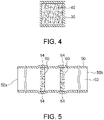
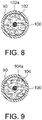
- FIG. 1 to FIG. 9 are cross-sectional views showing various examples of a heat exchanger according to the present embodiment.
- the heat exchanger according to the present embodiment causes a fluid as a heat transfer medium to flow in a pipe, thereby heating the fluid or dissipating heat from the fluid.
- the heat exchanger shown in FIG. 1 and FIG. 2 includes a pipe 10 having a cylindrical shape and having a circular cross-section, and a metal fiber structure 20 having a substantially columnar shape and disposed inside the pipe 10.
- a fluid (specifically, liquid or gas) as a heat transfer medium flows through a flow passage 12 formed inside the pipe 10. More specifically, an inlet 10a and an outlet 10b for the fluid are formed at both ends of the pipe 10, respectively, and the fluid entering the inside of the pipe 10 through the inlet 10a passes through the flow passage 12 and is discharged from the outlet 10b.
- the pipe 10 serves as a housing body in which the metal fiber structure 20 is housed.
- the pipe 10 is made of, for example, a metal selected from the group consisting of stainless steel, iron, copper, aluminum, bronze, brass, nickel, chromium, and the like.
- the metal fiber structure 20 is formed from metal fibers. Metal-coated fibers may be used as such metal fibers.
- the metal fiber structure 20 may be a metal fiber structure into which a nonwoven fabric, a woven fabric, a mesh, or the like formed by using a wet or dry process is processed.
- a metal fiber nonwoven fabric in which metal fibers are bonded together is used as the metal fiber structure 20.
- the metal fibers being bonded together means that the metal fibers are physically fixed to each other to form bonded portions.
- the metal fibers may be directly fixed to each other at bonded portions, or parts of the metal fibers may be indirectly fixed to each other via a component other than the metal component.
- the metal fiber structure 20 is formed from metal fibers, voids exist inside the metal fiber structure 20. Accordingly, the fluid flowing through the flow passage 12 in the pipe 10 can pass through the inside of the metal fiber structure 20. In addition, in the case where the metal fibers are bonded together in the metal fiber structure 20, voids are more easily formed between the metal fibers forming the metal fiber structure 20. Such voids may be formed, for example, by entangling the metal fibers. Since the metal fiber structure 20 has such voids, the fluid flowing through the flow passage 12 of the pipe 10 is introduced into the inside of the metal fiber structure 20, so that the heat exchange performance for the fluid is easily enhanced. In addition, in the metal fiber structure 20, the metal fibers are preferably sintered at the bonded portions. When the metal fibers are sintered, the thermal conduction properties and the homogeneity of the metal fiber structure 20 are easily stabilized.
- a specific example of the metal forming the metal fibers included in the metal fiber structure 20 is not limited, and may be selected from the group consisting of stainless steel, iron, copper, aluminum, bronze, brass, nickel, chromium, and the like, or may be a noble metal selected from the group consisting of gold, platinum, silver, palladium, rhodium, iridium, ruthenium, osmium, and the like.
- copper fibers and aluminum fibers are preferable since these fibers have excellent thermal conduction properties and moderate balance between rigidity and plastic deformability.
- the material of the metal fibers forming the metal fiber structure 20 and the material of the pipe 10 are preferably different from each other. Specifically, whereas the metal fibers forming the metal fiber structure 20 may be copper fibers, the material of the pipe 10 may be aluminum.
- a gap is formed at least partially between the metal fiber structure 20 housed in the pipe 10 and the inner surface of the pipe 10. That is, the metal fiber structure 20 exists inside the pipe 10 in a state where the metal fiber structure 20 is not bonded to the inner surface of the pipe 10. Therefore, the metal fiber structure 20 is freely movable inside the pipe 10 along the flowing direction of the fluid.
- the fluid flowing through the flow passage 12 in the pipe 10 can pass through the gap formed between the metal fiber structure 20 and the inner surface of the pipe 10.
- the inner surface of the pipe 10 can be inhibited from being damaged by the metal fiber structure 20.
- the hardness of the material of the pipe 10 is preferably larger than the hardness of the material of the metal fiber structure 20. In this case, even when the metal fiber structure 20 moves inside the pipe 10, the inner surface of the pipe 10 can be further inhibited from being damaged by the metal fiber structure 20.
- the size of the gap between the metal fiber structure 20 housed in the pipe 10 and the inner surface of the pipe 10 is in the range of 10 ⁇ m to 500 ⁇ m, preferably in the range of 30 ⁇ m to 300 ⁇ m, and further preferably in the range of 50 ⁇ m to 200 ⁇ m.
- the size of the gap between the metal fiber structure 20 housed in the pipe 10 and the inner surface of the pipe 10 refers to the distance between the pipe 10 and the metal fiber structure 20 in a direction orthogonal to the inner surface of the pipe 10.
- the size of the gap is set to be not less than 10 ⁇ m, an increase in pressure loss can be prevented, so that it can be prevented from being difficult for the fluid to pass through the gap.
- the size of the gap is set to be not greater than 500 ⁇ m, the fluid can be prevented from flowing through the gap without resistance, so that the heat exchange performance can be enhanced.
- the gap is formed at least partially between the metal fiber structure 20 housed in the pipe 10 as a housing body and the inner surface of the pipe 10. Therefore, the surface area of the metal fiber structure 20 with which the fluid flowing through the pipe 10 comes into contact is increased, so that the thermal conductivity of the metal fiber structure 20 can be increased.
- the metal fiber structure 20 is made of randomly arranged short metal fibers, it is easy to generate turbulent flow in the fluid flowing through the pipe 10. In this case, the staying time of the fluid flowing through the pipe 10 can be lengthened, so that the heat transfer effect can be enhanced.
- the temperature of the fluid flowing through the pipe 10 can be made uniform (for example, the temperatures at a center portion of the pipe 10 and near the inner wall of the pipe 10 can be made uniform).
- the thermal conductivity of the metal fiber structure 20 can be increased, and the staying time of the fluid flowing through the pipe 10 can be lengthened, thereby enhancing the heat transfer effect, so that the thermal conduction properties for the fluid can be enhanced.
- the metal fiber structure 20 In the case where the metal fiber structure 20 is completely separated from the pipe 10, even when such a configuration is applied to a heat exchanger that repeatedly performs rapid heating and rapid cooling, the metal fiber structure 20 does not follow expansion and contraction of the pipe 10, so that the metal fiber structure 20 can be inhibited from being damaged. In addition, in the case where a gap is formed at least partially between the metal fiber structure 20 and the inner surface of the pipe 10, it is easy to release the internal pressure due to the fluid flowing through the pipe 10.
- the inner surface of the pipe 10 may be damaged by the metal structure when the metal structure moves inside the pipe 10.
- the metal fiber structure 20 is made of metal fibers and has cushioning properties, the inner surface of the pipe 10 can be inhibited from being damaged by the metal fiber structure 20.
- the metal fiber structure 20 is freely movable inside the pipe 10. Therefore, it is easier to generate turbulent flow when the fluid flows through the flow passage 12 of the pipe 10. Accordingly, the staying time of the fluid flowing through the pipe 10 is further lengthened, so that the heat transfer effect can be further enhanced.
- a blade (not shown) may be attached to an end portion of the metal fiber structure 20.
- the fluid flowing through the flow passage 12 of the pipe 10 comes into contact with the blade of the metal fiber structure 20, thereby rotating the metal fiber structure 20 inside the pipe 10. Accordingly, it is easier to generate turbulent flow when the fluid flows through the flow passage 12 of the pipe 10.
- the thermal conductivity of the metal fiber structure 20 can be increased, and the staying time of the fluid flowing through the pipe 10 can be lengthened, thereby enhancing the heat transfer effect, so that the thermal conduction properties for the fluid can be enhanced.
- the heat exchanger according to the present embodiment is not limited to the one shown in FIG. 1 and FIG. 2 . Another example of the heat exchanger according to the present embodiment will be described with reference to FIG. 3 and FIG. 4 .
- the heat exchanger shown in FIG. 3 and FIG. 4 includes a pipe 30 having a substantially square cross-section, and a plurality of (three in the example shown in FIG. 3 and FIG. 4 ) metal fiber structures 40 each having a substantially rectangular parallelepiped shape (specifically, for example, a plate shape) and disposed inside the pipe 30.
- a fluid specifically, liquid or gas
- an inlet 30a and an outlet 30b for the fluid are formed at both ends of the pipe 30, respectively, and the fluid entering the inside of the pipe 30 through the inlet 30a passes through the flow passage 32 and is discharged from the outlet 30b.
- the pipe 30 serves as a housing body in which each metal fiber structure 40 is housed.
- each metal fiber structure 40 As the metal forming the pipe 30, the same type as the metal forming the pipe 10 shown in FIG. 1 and FIG. 2 is used.
- the metal fibers forming each metal fiber structure 40 As the metal fibers forming each metal fiber structure 40, the same type as the metal fibers forming the metal fiber structure 20 shown in FIG. 1 and FIG. 2 is used. Since each metal fiber structure 40 is formed from metal fibers as described above, voids exist inside each metal fiber structure 40. Accordingly, the fluid flowing through the flow passage 32 in the pipe 30 can pass through the inside of each metal fiber structure 40.
- retaining members 34 are provided in order to retain each metal fiber structure 40 at a predetermined position.
- Such retaining members 34 are, for example, projections formed on the inner surface of the pipe 30. Since such retaining members 34 are provided, each metal fiber structure 40 does not move to a large extent inside the pipe 30 along the flowing direction of the fluid as compared to the heat exchanger shown in FIG. 1 and FIG. 2 .
- each metal fiber structure 40 exists inside the pipe 30 in a state where the metal fiber structure 40 is not bonded to the inner surface of the pipe 30. Accordingly, the fluid flowing through the flow passage 32 in the pipe 30 can pass through the gap formed between each metal fiber structure 40 and the inner surface of the pipe 30.
- each metal fiber structure 40 may move slightly. However, since each metal fiber structure 40 is made of metal fibers and has cushioning properties, the inner surface of the pipe 30 can be inhibited from being damaged by each metal fiber structure 40.
- the size of the gap between each metal fiber structure 40 housed in the pipe 30 and the inner surface of the pipe 30 is in the range of 10 ⁇ m to 500 ⁇ m, preferably in the range of 30 ⁇ m to 300 ⁇ m, and further preferably in the range of 50 ⁇ m to 200 ⁇ m.
- the size of the gap between each metal fiber structure 40 housed in the pipe 30 and the inner surface of the pipe 30 refers to the distance between the pipe 30 and each metal fiber structure 40 in a direction orthogonal to the inner surface of the pipe 30.
- the size of the gap is set to be not less than 10 ⁇ m, an increase in pressure loss can be prevented, so that it can be prevented from being difficult for the fluid to pass through the gap.
- the size of the gap is set to be not greater than 500 ⁇ m, the fluid can be prevented from flowing through the gap without resistance, so that the heat exchange performance can be enhanced.
- the gap is formed at least partially between each metal fiber structure 40 housed in the pipe 30 as a housing body and the inner surface of the pipe 30. Therefore, the surface area of each metal fiber structure 40 with which the fluid flowing through the pipe 30 comes into contact is increased, so that the thermal conductivity of each metal fiber structure 40 can be increased. In addition, the temperature of the fluid flowing through the pipe 30 can be made uniform. Moreover, in the case where a gap is formed at least partially between each metal fiber structure 40 and the inner surface of the pipe 30, it is easy to generate turbulent flow in the fluid flowing through the pipe 30.
- the staying time of the fluid flowing through the pipe 30 is lengthened, so that the heat transfer effect can be enhanced.
- the thermal conductivity of each metal fiber structure 40 can be increased, and the staying time of the fluid flowing through the pipe 30 can be lengthened, thereby enhancing the heat transfer effect, so that the thermal conduction properties for the fluid can be enhanced.
- the heat exchanger shown in FIG. 5 includes a pipe 50 having a substantially square cross-section, and a plurality of (two in FIG. 5 ) metal fiber structures 60 each having a substantially rectangular parallelepiped shape (specifically, for example, a plate shape) and disposed inside the pipe 50.
- a fluid (specifically, liquid or gas) as a heat transfer medium flows through a flow passage 52 formed inside the pipe 50. More specifically, an inlet 50a and an outlet 50b for the fluid are formed at both ends of the pipe 50, respectively, and the fluid entering the inside of the pipe 50 through the inlet 50a passes through the flow passage 52 and is discharged from the outlet 50b.
- the pipe 50 serves as a housing body in which each metal fiber structure 60 is housed.
- each metal fiber structure 60 As the metal forming the pipe 50, the same type as the metal forming the pipe 10 shown in FIG. 1 and FIG. 2 is used.
- the metal fibers forming each metal fiber structure 60 As the metal fibers forming each metal fiber structure 60, the same type as the metal fibers forming the metal fiber structure 20 shown in FIG. 1 and FIG. 2 is used. Since each metal fiber structure 60 is formed from metal fibers as described above, voids exist inside each metal fiber structure 60. Accordingly, the fluid flowing through the flow passage 52 in the pipe 50 can pass through the inside of each metal fiber structure 60.
- mountain portions 54 are provided in the pipe 50 such that the cross-sectional areas of parts of the pipe 50 are increased, so that the end edge of each metal fiber structure 60 is held by the mountain portion 54. More specifically, the cross-section of each portion other than the mountain portions 54 in the pipe 50 is smaller than the cross-section of each metal fiber structure 60. Meanwhile, the cross-section of the portion, of the pipe 50, at which each mountain portion 54 is provided is larger than the cross-section of each metal fiber structure 60. Since such mountain portions 54 are provided in the pipe 50, each metal fiber structure 60 does not move to a large extent inside the pipe 50 as compared to the heat exchanger shown in FIG. 1 and FIG. 2 .
- each metal fiber structure 60 exists inside the pipe 50 in a state where the metal fiber structure 60 is not bonded to the inner surface of the pipe 50. Accordingly, the fluid flowing through the flow passage 52 in the pipe 50 can pass through the gap formed between each metal fiber structure 60 and the inner surface of the pipe 50.
- each metal fiber structure 60 may move slightly. However, since each metal fiber structure 60 is made of metal fibers and has cushioning properties, the inner surface of the pipe 50 can be inhibited from being damaged by each metal fiber structure 60.
- the size of the gap between each metal fiber structure 60 housed in the pipe 50 and the inner surface of the pipe 50 is in the range of 10 ⁇ m to 500 ⁇ m, preferably in the range of 30 ⁇ m to 300 ⁇ m, and further preferably in the range of 50 ⁇ m to 200 ⁇ m.
- the size of the gap between each metal fiber structure 60 housed in the pipe 50 and the inner surface of the pipe 50 refers to the distance between the pipe 50 and each metal fiber structure 60 in a direction orthogonal to the inner surface of the pipe 50.
- the size of the gap is set to be not less than 10 ⁇ m, an increase in pressure loss can be prevented, so that it can be prevented from being difficult for the fluid to pass through the gap.
- the size of the gap is set to be not greater than 500 ⁇ m, the fluid can be prevented from flowing through the gap without resistance, so that the heat exchange performance can be enhanced.
- the gap is formed at least partially between each metal fiber structure 60 housed in the pipe 50 as a housing body and the inner surface of the pipe 50. Therefore, the surface area of each metal fiber structure 60 with which the fluid flowing through the pipe 50 comes into contact is increased, so that the thermal conductivity of each metal fiber structure 60 can be increased. In addition, the temperature of the fluid flowing through the pipe 50 can be made uniform. Moreover, in the case where a gap is formed at least partially between each metal fiber structure 60 and the inner surface of the pipe 50, it is easy to generate turbulent flow in the fluid flowing through the pipe 50.
- the staying time of the fluid flowing through the pipe 50 is lengthened, so that the heat transfer effect can be enhanced.
- the thermal conductivity of each metal fiber structure 60 can be increased, and the staying time of the fluid flowing through the pipe 50 can be lengthened, thereby enhancing the heat transfer effect, so that the thermal conduction properties for the fluid can be enhanced.
- the heat exchanger shown in FIG. 6 includes a pipe 70 having a circular cross-section and bent at portions near both ends thereof by about 90°, and a metal fiber structure 80 having a substantially columnar shape and disposed inside the pipe 70.
- a fluid (specifically, liquid or gas) as a heat transfer medium flows through a flow passage 72 formed inside the pipe 70. More specifically, an inlet 70a and an outlet 70b for the fluid are formed at both ends of the pipe 70, respectively; and the direction of the fluid entering the inside of the pipe 10 through the inlet 70a is changed at a bent portion 74, then the fluid passes through the metal fiber structure 80, the direction of the fluid is subsequently changed at a bent portion 76, and the fluid is then discharged from the outlet 70b.
- the pipe 70 serves as a housing body in which the metal fiber structure 80 is housed.
- the metal forming the pipe 70 the same type as the metal forming the pipe 10 shown in FIG. 1 and FIG. 2 is used.
- the metal fibers forming the metal fiber structure 80 the same type as the metal fibers forming the metal fiber structure 20 shown in FIG. 1 and FIG. 2 is used. Since the metal fiber structure 80 is formed from metal fibers as described above, voids exist inside the metal fiber structure 80. Accordingly, the fluid flowing through the flow passage 72 in the pipe 70 can pass through the inside of the metal fiber structure 80.
- the metal fiber structure 80 is retained at a predetermined position by a pair of the bent portions 74 and 76 of the pipe 70. More specifically, since the bent portion 74 is provided in the pipe 70, the metal fiber structure 80 does not move rightward to a large extent from the position shown in FIG. 6 . In addition, since the bent portion 76 is provided in the pipe 70, the metal fiber structure 80 does not move leftward to a large extent from the position shown in FIG. 6 . Since the bent portions 74 and 76 are provided in the pipe 70 as described above, the metal fiber structure 80 does not move to a large extent inside the pipe 70 as compared to the heat exchanger shown in FIG. 1 and FIG. 2 .
- a gap is formed at least partially between the metal fiber structure 80 housed in the pipe 70 and the inner surface of the pipe 70. That is, the metal fiber structure 80 exists inside the pipe 70 in a state where the metal fiber structure 80 is not bonded to the inner surface of the pipe 70. Accordingly, the fluid flowing through the flow passage 72 in the pipe 70 can pass through the gap formed between the metal fiber structure 80 and the inner surface of the pipe 70.
- the metal fiber structure 80 is retained at a predetermined position inside the pipe 70 by the respective bent portions 74 and 76 of the pipe 70, since the gap is formed at least partially between the metal fiber structure 80 and the inner surface of the pipe 70, the metal fiber structure 80 may move slightly. However, since the metal fiber structure 80 is made of metal fibers and has cushioning properties, the inner surface of the pipe 70 can be inhibited from being damaged by the metal fiber structure 80.
- the size of the gap between the metal fiber structure 80 housed in the pipe 70 and the inner surface of the pipe 70 is in the range of 10 ⁇ m to 500 ⁇ m, preferably in the range of 30 ⁇ m to 300 ⁇ m, and further preferably in the range of 50 ⁇ m to 200 ⁇ m.
- the size of the gap between the metal fiber structure 80 housed in the pipe 70 and the inner surface of the pipe 70 refers to the distance between the pipe 70 and the metal fiber structure 80 in a direction orthogonal to the inner surface of the pipe 70.
- the size of the gap is set to be not less than 10 ⁇ m, an increase in pressure loss can be prevented, so that it can be prevented from being difficult for the fluid to pass through the gap.
- the size of the gap is set to be not greater than 500 ⁇ m, the fluid can be prevented from flowing through the gap without resistance, so that the heat exchange performance can be enhanced.
- the gap is formed at least partially between the metal fiber structure 80 housed in the pipe 70 as a housing body and the inner surface of the pipe 70. Therefore, the surface area of the metal fiber structure 80 with which the fluid flowing through the pipe 70 comes into contact is increased, so that the thermal conductivity of the metal fiber structure 80 can be increased. In addition, the temperature of the fluid flowing through the pipe 70 can be made uniform. Moreover, in the case where a gap is formed at least partially between the metal fiber structure 80 and the inner surface of the pipe 70, it is easy to generate turbulent flow in the fluid flowing through the pipe 70.
- the staying time of the fluid flowing through the pipe 70 is lengthened, so that the heat transfer effect can be enhanced.
- the thermal conductivity of the metal fiber structure 80 can be increased, and the staying time of the fluid flowing through the pipe 70 can be lengthened, thereby enhancing the heat transfer effect, so that the thermal conduction properties for the fluid can be enhanced.
- the heat exchanger shown in FIG. 7 to FIG. 9 includes a pipe 90 having a cylindrical shape and having a circular cross-section, a plurality of (five in the example shown in FIG. 7 , etc.) metal fiber structures 102 and 104 having a substantially disc shape and disposed inside the pipe 90, and a rod-shaped connection member 100 connecting the respective metal fiber structures 102 and 104.
- a fluid (specifically, liquid or gas) as a heat transfer medium flows through a flow passage 92 formed inside the pipe 90. More specifically, an inlet 90a and an outlet 90b for the fluid are formed at both ends of the pipe 90, respectively, and the fluid entering the inside of the pipe 90 through the inlet 90a passes through the flow passage 92 and is discharged from the outlet 90b.
- the pipe 90 serves as a housing body in which the respective metal fiber structures 102 and 104 are housed.
- the metal forming the pipe 90 the same type as the metal forming the pipe 10 shown in FIG. 1 and FIG. 2 is used.
- the rod-shaped connection member 100 extends through through holes (not shown) formed at the centers of the respective metal fiber structures 102 and 104 having a substantially disc shape, and the respective metal fiber structures 102 and 104 are fixed to the connection member 100.
- the connection member 100 is made of, for example, a metal selected from the group consisting of stainless steel, iron, copper, aluminum, bronze, brass, nickel, chromium, and the like.
- the respective metal fiber structures 102 and 104 are bonded to the connection member 100.
- a plurality of (for example, eight) through holes 102a or 104a are formed in each of the metal fiber structures 102 and 104, and the fluid flowing through the flow passage 92 of the pipe 90 can pass through each of the through holes 102a and 104a.
- the phases of the through holes 102a and 104a provided in the metal fiber structures 102 and 104 fixed to the connection member 100 are different from each other.
- these metal fiber structures 102 and 104 are arranged alternately. Therefore, it is easy to generate turbulent flow in the fluid flowing through the respective through holes 102a and 104a of the respective metal fiber structures 102 and 104.
- each of the metal fiber structures 102 and 104 As the metal fibers forming each of the metal fiber structures 102 and 104, the same type as the metal fibers forming the metal fiber structure 20 shown in FIG. 1 and FIG. 2 is used. Since each of the metal fiber structures 102 and 104 is formed from metal fibers as described above, voids exist inside each of the metal fiber structures 102 and 104. Accordingly, the fluid flowing through the flow passage 92 in the pipe 90 can pass through the inside of each of the metal fiber structures 102 and 104 in addition to the through holes 102a and 104a.
- a gap is formed at least partially between each of the metal fiber structures 102 and 104 housed in the pipe 90 and the inner surface of the pipe 90. That is, each of the metal fiber structures 102 and 104 exists inside the pipe 90 in a state where the metal fiber structure 102 or 104 is not bonded to the inner surface of the pipe 90. Therefore, an assembly of the respective metal fiber structures 102 and 104 and the connection member 100 is freely movable inside the pipe 90. Accordingly, the fluid flowing through the flow passage 92 in the pipe 90 can pass through the gap formed between each of the metal fiber structures 102 and 104 and the inner surface of the pipe 90.
- each of the metal fiber structures 102 and 104 is made of metal fibers and has cushioning properties, the inner surface of the pipe 90 can be inhibited from being damaged by the respective metal fiber structures 102 and 104.
- the size of the gap between each of the metal fiber structures 102 and 104 housed in the pipe 90 and the inner surface of the pipe 90 is in the range of 10 ⁇ m to 500 ⁇ m, preferably in the range of 30 ⁇ m to 300 ⁇ m, and further preferably in the range of 50 ⁇ m to 200 ⁇ m.
- the size of the gap between each of the metal fiber structures 102 and 104 housed in the pipe 90 and the inner surface of the pipe 90 refers to the distance between the pipe 90 and each of the metal fiber structures 102 and 104 in a direction orthogonal to the inner surface of the pipe 90.
- the size of the gap When the size of the gap is set to be not less than 10 ⁇ m, an increase in pressure loss can be prevented, so that it can be prevented from being difficult for the fluid to pass through the gap. On the other hand, when the size of the gap is set to be not greater than 500 ⁇ m, the fluid can be prevented from flowing through the gap without resistance, so that the heat exchange performance can be enhanced.
- the gap is formed at least partially between each of the metal fiber structures 102 and 104 housed in the pipe 90 as a housing body and the inner surface of the pipe 90. Therefore, the surface area of each of the metal fiber structures 102 and 104 with which the fluid flowing through the pipe 90 comes into contact is increased, so that the thermal conductivity of each of the metal fiber structures 102 and 104 can be increased. In addition, the temperature of the fluid flowing through the pipe 90 can be made uniform.
- a gap is formed at least partially between each of the metal fiber structures 102 and 104 and the inner surface of the pipe 90, it is easy to generate turbulent flow in the fluid flowing through the pipe 90. In this case, the staying time of the fluid flowing through the pipe 90 is lengthened, so that the heat transfer effect can be enhanced.
- the thermal conductivity of each of the metal fiber structures 102 and 104 can be increased, and the staying time of the fluid flowing through the pipe 90 can be lengthened, thereby enhancing the heat transfer effect, so that the thermal conduction properties for the fluid can be enhanced.
- the assembly of the respective metal fiber structures 102 and 104 and the connection member 100 is freely movable inside the pipe 90. Therefore, it is easier to generate turbulent flow when the fluid flows through the flow passage 92 of the pipe 90. Accordingly, the staying time of the fluid flowing through the pipe 90 is further lengthened, so that the heat transfer effect can be further enhanced.
- the rod-shaped connection member 100 may be rotated by a drive means which is not shown. Accordingly, the respective metal fiber structures 102 and 104 are also rotated about the connection member 100, so that it is easier to generate turbulent flow in the fluid flowing through the flow passage 92 of the pipe 90.
- the polymer liquid can be diffused by rotating the respective metal fiber structures 102 and 104.
- the respective metal fiber structures 102 and 104 may be supported by the connection member 100 such that each of the metal fiber structures 102 and 104 is freely slidable relative to the connection member 100 in the right-left direction in FIG. 7 .
- the connection member 100 may be provided so as to be fixed in position inside the pipe 90. In such a case as well, since each of the metal fiber structures 102 and 104 is freely slidable relative to the connection member 100, it is easier to generate turbulent flow in the fluid flowing through the flow passage 92 of the pipe 90.
Landscapes
- Engineering & Computer Science (AREA)
- Physics & Mathematics (AREA)
- Thermal Sciences (AREA)
- Mechanical Engineering (AREA)
- General Engineering & Computer Science (AREA)
- Chemical & Material Sciences (AREA)
- Dispersion Chemistry (AREA)
- Geometry (AREA)
- Electromagnetism (AREA)
- Heat-Exchange Devices With Radiators And Conduit Assemblies (AREA)
- Resistance Heating (AREA)
- General Induction Heating (AREA)
- Power Steering Mechanism (AREA)
- Compression-Type Refrigeration Machines With Reversible Cycles (AREA)
- Separation By Low-Temperature Treatments (AREA)
Applications Claiming Priority (2)
| Application Number | Priority Date | Filing Date | Title |
|---|---|---|---|
| JP2020026159 | 2020-02-19 | ||
| PCT/JP2021/004407 WO2021166697A1 (ja) | 2020-02-19 | 2021-02-05 | 熱交換器 |
Publications (2)
| Publication Number | Publication Date |
|---|---|
| EP4110010A1 true EP4110010A1 (de) | 2022-12-28 |
| EP4110010A4 EP4110010A4 (de) | 2023-08-09 |
Family
ID=77391022
Family Applications (1)
| Application Number | Title | Priority Date | Filing Date |
|---|---|---|---|
| EP21756195.0A Pending EP4110010A4 (de) | 2020-02-19 | 2021-02-05 | Wärmetauscher |
Country Status (7)
| Country | Link |
|---|---|
| US (1) | US12568558B2 (de) |
| EP (1) | EP4110010A4 (de) |
| JP (2) | JP7386963B2 (de) |
| KR (1) | KR102771228B1 (de) |
| CN (1) | CN115152323B (de) |
| TW (1) | TWI775316B (de) |
| WO (1) | WO2021166697A1 (de) |
Families Citing this family (1)
| Publication number | Priority date | Publication date | Assignee | Title |
|---|---|---|---|---|
| CN117083710A (zh) * | 2021-03-25 | 2023-11-17 | 株式会社巴川制纸所 | 传热体 |
Family Cites Families (39)
| Publication number | Priority date | Publication date | Assignee | Title |
|---|---|---|---|---|
| US3289756A (en) * | 1964-10-15 | 1966-12-06 | Olin Mathieson | Heat exchanger |
| US3704748A (en) * | 1970-02-11 | 1972-12-05 | Ratheon Co | Heat transfer structure |
| US4108241A (en) * | 1975-03-19 | 1978-08-22 | The United States Of America As Represented By The Administrator Of The National Aeronautics And Space Administration | Heat exchanger and method of making |
| GB1562905A (en) * | 1976-08-17 | 1980-03-19 | Othmer D | Electric resistance heating utilising the skin effect in magnetic metal shapes |
| JPS612243Y2 (de) * | 1981-02-16 | 1986-01-24 | ||
| JPS59150950A (ja) * | 1983-02-15 | 1984-08-29 | Asahi Glass Co Ltd | 熱ガス機械用伝熱管 |
| JPS602240U (ja) * | 1983-06-17 | 1985-01-09 | 三菱電機株式会社 | 流体加熱装置 |
| EP0580806B1 (de) * | 1991-04-15 | 1998-02-25 | The Scientific Ecology Group, Inc. | Wärmetauscher für sehr hohe temperatur |
| US5405586A (en) * | 1993-07-01 | 1995-04-11 | Uop | Radial flow heat exchanging reactor |
| WO1996013138A1 (en) * | 1994-10-24 | 1996-05-02 | Matsushita Electric Industrial Co., Ltd. | Steam generating apparatus of induction heating system |
| JPH09283268A (ja) * | 1996-04-17 | 1997-10-31 | Mamoru Fukumura | 流体の加熱方法 |
| JP3043911U (ja) * | 1997-05-30 | 1997-12-12 | 佑仲實業股▲ふん▼有限公司 | 微熱導管のv形溝付き繊維毛管装置 |
| JPH11132685A (ja) * | 1997-10-24 | 1999-05-21 | Mikawa Gijutsu Kogyo Kk | 熱交換体 |
| US6459854B1 (en) | 2000-01-24 | 2002-10-01 | Nestec S.A. | Process and module for heating liquid |
| JP2003083694A (ja) * | 2001-09-11 | 2003-03-19 | Mikawa Gijutsu Kogyo Kk | 熱交換体 |
| JP2003123949A (ja) * | 2001-10-15 | 2003-04-25 | Kogi Corp | 電磁誘導加熱装置 |
| JP2004279021A (ja) * | 2003-02-27 | 2004-10-07 | Usui Kokusai Sangyo Kaisha Ltd | 樹脂材製フィン部材を内装した伝熱管 |
| JP2006170571A (ja) * | 2004-12-17 | 2006-06-29 | Hitachi Cable Ltd | 二重多管式熱交換器 |
| JP5559088B2 (ja) * | 2010-05-18 | 2014-07-23 | 株式会社ワイ・ジェー・エス. | 熱交換器 |
| EP2508374B1 (de) * | 2011-04-07 | 2013-10-30 | Kabushiki-Kaisha Takumi | Heizungseinheit eines Fahrzeugheizungssystems |
| KR20120135776A (ko) * | 2011-06-07 | 2012-12-17 | 디에스엠 주식회사 | 열교환 파이프 |
| KR101679489B1 (ko) * | 2012-01-03 | 2016-11-24 | 필립모리스 프로덕츠 에스.에이. | 개선된 공기류를 가진 에어로졸 발생 장치 및 시스템 |
| US9599404B2 (en) | 2013-08-27 | 2017-03-21 | Black Night Enterprises, Inc. | Fluid direct contact heat exchange apparatus and method |
| ES2703350T5 (es) * | 2014-05-12 | 2024-07-10 | Philip Morris Products Sa | Dispositivo vaporizador mejorado |
| JP2015224804A (ja) * | 2014-05-26 | 2015-12-14 | 株式会社ノーリツ | 熱交換器 |
| JP2016020757A (ja) * | 2014-07-14 | 2016-02-04 | 日立アプライアンス株式会社 | 冷凍サイクル装置及びこれに使用されるクロスフィンチューブ型熱交換器の製造方法 |
| GB201511358D0 (en) * | 2015-06-29 | 2015-08-12 | Nicoventures Holdings Ltd | Electronic aerosol provision systems |
| US10237926B2 (en) * | 2015-11-09 | 2019-03-19 | Pace, Inc. | Inductive heater for area array rework system and soldering handpieces |
| FR3048494B1 (fr) * | 2016-03-04 | 2018-03-02 | Commissariat A L'energie Atomique Et Aux Energies Alternatives | Dispositif de stockage d'energie par materiau a changement de phase incluant une charge electrique integree dans le circuit du fluide caloporteur |
| US11388929B2 (en) * | 2016-04-27 | 2022-07-19 | Philip Morris Products S.A. | Aerosol generating device with securing means |
| JP3208098U (ja) * | 2016-10-11 | 2016-12-22 | 株式会社バルビス | 多孔質熱交換体 |
| JP6906930B2 (ja) * | 2016-11-24 | 2021-07-21 | 株式会社ブリヂストン | 電磁誘導加熱装置 |
| US11019850B2 (en) * | 2018-02-26 | 2021-06-01 | Rai Strategic Holdings, Inc. | Heat conducting substrate for electrically heated aerosol delivery device |
| JP7018797B2 (ja) | 2018-03-27 | 2022-02-14 | 株式会社巴川製紙所 | 保護部材、及び袋体入り保護部材 |
| JP7270027B2 (ja) * | 2018-08-01 | 2023-05-09 | フォンテム ホールディングス 1 ビー. ブイ. | 加熱式喫煙デバイス |
| JP2021143366A (ja) * | 2020-03-11 | 2021-09-24 | 三菱マテリアル株式会社 | 熱交換用パイプ及びその製造方法 |
| KR102451070B1 (ko) * | 2020-06-03 | 2022-10-05 | 주식회사 케이티앤지 | 외부가열식 에어로졸 생성 장치 |
| WO2021189799A1 (zh) * | 2020-09-28 | 2021-09-30 | 云南中烟工业有限责任公司 | 一种在烟支前端感应加热的发烟装置 |
| CN119063461A (zh) * | 2023-06-02 | 2024-12-03 | 中国石化工程建设有限公司 | 一种电加热工艺加热炉 |
-
2021
- 2021-02-05 KR KR1020227030506A patent/KR102771228B1/ko active Active
- 2021-02-05 US US17/800,939 patent/US12568558B2/en active Active
- 2021-02-05 CN CN202180015859.8A patent/CN115152323B/zh active Active
- 2021-02-05 WO PCT/JP2021/004407 patent/WO2021166697A1/ja not_active Ceased
- 2021-02-05 EP EP21756195.0A patent/EP4110010A4/de active Pending
- 2021-02-05 JP JP2022501801A patent/JP7386963B2/ja active Active
- 2021-02-18 TW TW110105523A patent/TWI775316B/zh active
-
2023
- 2023-10-17 JP JP2023178739A patent/JP7681660B2/ja active Active
Also Published As
| Publication number | Publication date |
|---|---|
| JP7386963B2 (ja) | 2023-11-27 |
| KR102771228B1 (ko) | 2025-02-20 |
| JP2023179718A (ja) | 2023-12-19 |
| CN115152323A (zh) | 2022-10-04 |
| US12568558B2 (en) | 2026-03-03 |
| WO2021166697A1 (ja) | 2021-08-26 |
| CN115152323B (zh) | 2024-10-15 |
| TW202138735A (zh) | 2021-10-16 |
| US20230080550A1 (en) | 2023-03-16 |
| JP7681660B2 (ja) | 2025-05-22 |
| EP4110010A4 (de) | 2023-08-09 |
| JPWO2021166697A1 (de) | 2021-08-26 |
| KR20220136412A (ko) | 2022-10-07 |
| TWI775316B (zh) | 2022-08-21 |
Similar Documents
| Publication | Publication Date | Title |
|---|---|---|
| JP4460856B2 (ja) | ミクロ構造冷却器とその使用法 | |
| US5628363A (en) | Composite continuous sheet fin heat exchanger | |
| EP2208874B1 (de) | Wärmerückgewinnungssystem | |
| JP4907703B2 (ja) | マイクロチャネル熱交換器、熱源を冷却する方法 | |
| US7686071B2 (en) | Blade-thru condenser having reeds and heat dissipation system thereof | |
| US4832118A (en) | Heat exchanger | |
| JP2006515054A5 (de) | ||
| US10107576B2 (en) | Heat exchanger | |
| US20230194193A1 (en) | Temperature regulation unit | |
| US12568558B2 (en) | Heat exchanger | |
| KR20050021562A (ko) | 열교환장치 | |
| KR20230006539A (ko) | 온도 조절 유닛 | |
| JP3632402B2 (ja) | ヒートポンプ給湯装置 | |
| US12550291B2 (en) | Temperature regulation unit and method for manufacturing temperature regulation unit | |
| WO2011096801A2 (en) | Heat exchanger | |
| TWI846369B (zh) | 熱擴散裝置及電子機器 | |
| JP2016130625A (ja) | 熱交換器および熱交換器用金属薄板状プレート | |
| JP3918843B2 (ja) | ヒートポンプ給湯装置 | |
| CN118111126A (zh) | 一种ptc加热器壳体水道结构 | |
| US12566033B2 (en) | Three-dimensional vapor chamber device | |
| JP2016151387A (ja) | 熱交換器および熱交換器用中間プレート | |
| JP6525248B2 (ja) | 熱交換器および熱交換器用プレートユニット | |
| JP4909725B2 (ja) | 熱交換器 | |
| CN118168367A (zh) | 热管理集成组件 | |
| JP2014088967A (ja) | 熱交換器 |
Legal Events
| Date | Code | Title | Description |
|---|---|---|---|
| STAA | Information on the status of an ep patent application or granted ep patent |
Free format text: STATUS: THE INTERNATIONAL PUBLICATION HAS BEEN MADE |
|
| PUAI | Public reference made under article 153(3) epc to a published international application that has entered the european phase |
Free format text: ORIGINAL CODE: 0009012 |
|
| STAA | Information on the status of an ep patent application or granted ep patent |
Free format text: STATUS: REQUEST FOR EXAMINATION WAS MADE |
|
| 17P | Request for examination filed |
Effective date: 20220812 |
|
| AK | Designated contracting states |
Kind code of ref document: A1 Designated state(s): AL AT BE BG CH CY CZ DE DK EE ES FI FR GB GR HR HU IE IS IT LI LT LU LV MC MK MT NL NO PL PT RO RS SE SI SK SM TR |
|
| DAV | Request for validation of the european patent (deleted) | ||
| DAX | Request for extension of the european patent (deleted) | ||
| REG | Reference to a national code |
Ref country code: DE Ref legal event code: R079 Free format text: PREVIOUS MAIN CLASS: H05B0003400000 Ipc: H05B0006100000 |
|
| A4 | Supplementary search report drawn up and despatched |
Effective date: 20230706 |
|
| RIC1 | Information provided on ipc code assigned before grant |
Ipc: F28F 13/06 20060101ALI20230630BHEP Ipc: F28F 13/00 20060101ALI20230630BHEP Ipc: F28F 1/40 20060101ALI20230630BHEP Ipc: F28D 1/04 20060101ALI20230630BHEP Ipc: H05B 3/40 20060101ALI20230630BHEP Ipc: H05B 6/10 20060101AFI20230630BHEP |
|
| GRAP | Despatch of communication of intention to grant a patent |
Free format text: ORIGINAL CODE: EPIDOSNIGR1 |
|
| STAA | Information on the status of an ep patent application or granted ep patent |
Free format text: STATUS: GRANT OF PATENT IS INTENDED |
|
| INTG | Intention to grant announced |
Effective date: 20260515 |