EP4111721B1 - Procédé et dispositif de protection de trafic sensible de plan utilisateur - Google Patents
Procédé et dispositif de protection de trafic sensible de plan utilisateur Download PDFInfo
- Publication number
- EP4111721B1 EP4111721B1 EP21795914.7A EP21795914A EP4111721B1 EP 4111721 B1 EP4111721 B1 EP 4111721B1 EP 21795914 A EP21795914 A EP 21795914A EP 4111721 B1 EP4111721 B1 EP 4111721B1
- Authority
- EP
- European Patent Office
- Prior art keywords
- dns
- information
- message
- network
- dns server
- Prior art date
- Legal status (The legal status is an assumption and is not a legal conclusion. Google has not performed a legal analysis and makes no representation as to the accuracy of the status listed.)
- Active
Links
Images


Classifications
-
- H—ELECTRICITY
- H04—ELECTRIC COMMUNICATION TECHNIQUE
- H04W—WIRELESS COMMUNICATION NETWORKS
- H04W12/00—Security arrangements; Authentication; Protecting privacy or anonymity
- H04W12/10—Integrity
- H04W12/106—Packet or message integrity
-
- H—ELECTRICITY
- H04—ELECTRIC COMMUNICATION TECHNIQUE
- H04L—TRANSMISSION OF DIGITAL INFORMATION, e.g. TELEGRAPHIC COMMUNICATION
- H04L61/00—Network arrangements, protocols or services for addressing or naming
- H04L61/45—Network directories; Name-to-address mapping
- H04L61/4505—Network directories; Name-to-address mapping using standardised directories; using standardised directory access protocols
- H04L61/4511—Network directories; Name-to-address mapping using standardised directories; using standardised directory access protocols using domain name system [DNS]
-
- H—ELECTRICITY
- H04—ELECTRIC COMMUNICATION TECHNIQUE
- H04L—TRANSMISSION OF DIGITAL INFORMATION, e.g. TELEGRAPHIC COMMUNICATION
- H04L63/00—Network architectures or network communication protocols for network security
- H04L63/12—Applying verification of the received information
- H04L63/123—Applying verification of the received information received data contents, e.g. message integrity
-
- H—ELECTRICITY
- H04—ELECTRIC COMMUNICATION TECHNIQUE
- H04W—WIRELESS COMMUNICATION NETWORKS
- H04W12/00—Security arrangements; Authentication; Protecting privacy or anonymity
- H04W12/03—Protecting confidentiality, e.g. by encryption
- H04W12/033—Protecting confidentiality, e.g. by encryption of the user plane, e.g. user's traffic
-
- H—ELECTRICITY
- H04—ELECTRIC COMMUNICATION TECHNIQUE
- H04W—WIRELESS COMMUNICATION NETWORKS
- H04W12/00—Security arrangements; Authentication; Protecting privacy or anonymity
- H04W12/04—Key management, e.g. using generic bootstrapping architecture [GBA]
- H04W12/043—Key management, e.g. using generic bootstrapping architecture [GBA] using a trusted network node as an anchor
- H04W12/0431—Key distribution or pre-distribution; Key agreement
-
- H—ELECTRICITY
- H04—ELECTRIC COMMUNICATION TECHNIQUE
- H04W—WIRELESS COMMUNICATION NETWORKS
- H04W12/00—Security arrangements; Authentication; Protecting privacy or anonymity
- H04W12/06—Authentication
-
- H—ELECTRICITY
- H04—ELECTRIC COMMUNICATION TECHNIQUE
- H04W—WIRELESS COMMUNICATION NETWORKS
- H04W12/00—Security arrangements; Authentication; Protecting privacy or anonymity
- H04W12/06—Authentication
- H04W12/069—Authentication using certificates or pre-shared keys
-
- H—ELECTRICITY
- H04—ELECTRIC COMMUNICATION TECHNIQUE
- H04W—WIRELESS COMMUNICATION NETWORKS
- H04W76/00—Connection management
- H04W76/10—Connection setup
-
- H—ELECTRICITY
- H04—ELECTRIC COMMUNICATION TECHNIQUE
- H04L—TRANSMISSION OF DIGITAL INFORMATION, e.g. TELEGRAPHIC COMMUNICATION
- H04L2101/00—Indexing scheme associated with group H04L61/00
- H04L2101/60—Types of network addresses
- H04L2101/618—Details of network addresses
- H04L2101/659—Internet protocol version 6 [IPv6] addresses
-
- H—ELECTRICITY
- H04—ELECTRIC COMMUNICATION TECHNIQUE
- H04L—TRANSMISSION OF DIGITAL INFORMATION, e.g. TELEGRAPHIC COMMUNICATION
- H04L63/00—Network architectures or network communication protocols for network security
- H04L63/20—Network architectures or network communication protocols for network security for managing network security; network security policies in general
Definitions
- the present disclosure relates to wireless communication protection and more specifically relates to method and device for protection of user plane traffic.
- 5G communication system also being developed are various technologies for the 5G communication system to have an enhanced network, such as evolved or advanced small cell, cloud radio access network (cloud RAN), ultra-dense network, device-to-device (D2D) communication, wireless backhaul, moving network, cooperative communication, coordinated multi-point (CoMP), and interference cancellation.
- cloud RAN cloud radio access network
- D2D device-to-device
- SWSC sliding window superposition coding
- ACM advanced coding modulation
- FBMC filter bank multi-carrier
- NOMA non-orthogonal multiple access
- SCMA sparse code multiple access
- the sensor network machine-to-machine (M2M), machine type communication (MTC), or other 5G techniques are implemented by schemes, such as beamforming, multi-input multi-output (MIMO), and array antenna schemes.
- M2M machine-to-machine
- MTC machine type communication
- MIMO multi-input multi-output
- array antenna schemes such as beamforming, multi-input multi-output (MIMO), and array antenna schemes.
- RAN cloud radio access network as a Big data processing technique may be said to be an example of the convergence of the 5G and IoT technologies.
- Another object of the embodiments herein is to provide a method for configuring the DNS credentials in the UE by the network system during Service Request procedure, using the NAS message(s) which carries new Information Element (IE)/Container.
- IE Information Element
- Another object of the embodiments herein is to provide a method for configuring the DNS credentials in the UE by the network system during a Protocol Data Unit (PDU) session establishment procedure, using the NAS message(s) which carries new Information Element (IE)/Container.
- PDU Protocol Data Unit
- IE Information Element
- Another object of the embodiments herein is to inform the network system that the UE supports secure exchange of DNS message using DNS configuration parameters provided by the network system.
- circuits may, for example, be embodied in one or more semiconductor chips, or on substrate supports such as printed circuit boards and the like.
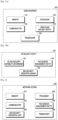
- Fig. 1 illustrates a block diagram of an UE (100) for protecting sensitive user plane traffic, according to an embodiment as disclosed herein.
- the UE (100) may be, for example, but not limited, to social robot, a smart watch, a cellular phone, a smart phone, a Personal Digital Assistant (PDA), a tablet computer, a laptop computer, a music player, a video player, an Internet of things (IoT) device, a smart speaker, an Artificial intelligent (AI) device or the like.
- social robot a smart watch, a cellular phone, a smart phone, a Personal Digital Assistant (PDA), a tablet computer, a laptop computer, a music player, a video player, an Internet of things (IoT) device, a smart speaker, an Artificial intelligent (AI) device or the like.
- IoT Internet of things
- AI Artificial intelligent
- the memory (110) can be configured to store larger amounts of information than the memory.
- a non-transitory storage medium may store data that can, over time, change (e.g., in Random Access Memory (RAM) or cache).
- the memory (110) can be an internal storage unit or it can be an external storage unit of the UE (100), a cloud storage, or any other type of external storage.
- the communicator (130) is configured for communicating internally between internal hardware components and with external devices via one or more networks.
- the communicator (130) includes an electronic circuit specific to a standard that enables wired or wireless communication.
- the UP security entity (140) is responsible for protecting Domain Name System (DNS) packets which are exchanged over the air by providing integrity protection to the DNS packets in order to avoid redirection attack.
- DNS Domain Name System
- the UP security entity (140) protects DNS packets using DNS security credentials received from a network entity.
- the UP security entity (140) is configured to determine that the UE (100) supports secure exchange of the DNS message with the DNS server if DNS configuration parameters are received. Further, the UE (100) informs the network system that the UE (100) supports secure exchange of the DNS message in a NAS message by including DNS server security information indicator. The UE (100) receives the DNS configuration parameters in response to the NAS message, if network wants to enforce the use of DNS over secure channel (for example, if the SMF wants to disable the integrity protection in the PDCP layer and enable DNS security at the application layer (DTLS/TLS/HTTPs)). The DNS message are protected by configuring the UE (100) with the DNS configuration parameters received from network. Finally the protected DNS packets are exchanged with the network system.
- FIG. 1B illustrates a block diagram of UP security entity (140) for protecting user plane traffic, according to an embodiment as disclosed herein.
- the UE capability determiner (142) informs the PDU session management entity (144) that the UE (100) supports secure exchange (for example, support for DNS over Datagram Transport Layer Security (DTLS) and/or DNS over Transport Layer Security (TLS) and/or DNS over Hypertext Transfer Protocol Secure (HTTPs)) of the DNS message.
- secure exchange for example, support for DNS over Datagram Transport Layer Security (DTLS) and/or DNS over Transport Layer Security (TLS) and/or DNS over Hypertext Transfer Protocol Secure (HTTPs) of the DNS message.
- DTLS Datagram Transport Layer Security
- TLS Transport Layer Security
- HTTPs Hypertext Transfer Protocol Secure
- the PDU session management entity (144) is implemented by processing circuitry such as logic gates, integrated circuits, microprocessors, microcontrollers, memory circuits, passive electronic components, active electronic components, optical components, hardwired circuits, or the like, and may optionally be driven by firmware.
- the circuits may, for example, be embodied in one or more semiconductor chips, or on substrate supports such as printed circuit boards and the like.
- the PDU Session Establishment Request also informs the network system about secure channels which are supported by the UE (100).
- the secure channel may be DNS over Datagram Transport Layer Security (DTLS).
- the secure channel may be DNS over Transport Layer Security (TLS).
- the secure channel may be DNS over Hypertext Transfer Protocol Secure (HTTPS).
- the container "secure DNS configuration parameters" is sent to the DNS credential unit (146).
- the UE (100) informs the network system about its capability of secure DNS message exchange in a attach request message to the network system during the attach procedure.
- the UE (100) includes the "Secure DNS Configuration Parameters Request" as part of PCO (Protocol Configuration Options).
- the Secure DNS Configuration Parameters Request indicates to the network that UE is capable of exchanging DNS over secure channel such as for example, Transport layer security (TLS) and is willing to accept corresponding DNS Server configuration parameters.
- TLS Transport layer security
- the UE (100) receives a "Attach Complete" message from the network system in response to the attach request.
- the attach complete message contains PCO (Protocol configuration Options), which includes the container “Secure DNS Configuration Parameters” comprising of information mentioned in a DNS server security information.
- the UE (100) informs the network system about its capability of secure DNS message exchange in a PDN connectivity request to the network system during the PDN connectivity procedure.
- the UE (100) includes the "Secure DNS Configuration Parameters Request" as part of PCO (Protocol Configuration Options) in the PDN connectivity request.
- the Secure DNS Configuration Parameters Request indicates to the network that UE is capable of exchanging DNS over secure channel such as for example, Transport layer security (TLS) and is willing to accept corresponding DNS Server configuration parameters.
- TLS Transport layer security
- the UE (100) receives a "PDN connectivity accept" message from the network system in response to the attach request.
- the PDN connectivity accept message contains PCO (Protocol configuration Options), which includes the container “Secure DNS Configuration Parameters” comprising of information mentioned in a DNS server security information.
- the UE (100) informs the network system about its capability of secure DNS message exchange in a UE registration Request to the network system during the registration procedure.
- the UE (100) includes the "Secure DNS Configuration Parameters Request" as part of PCO (Protocol Configuration Options) in the registration request message.
- the Secure DNS Configuration Parameters Request indicates to the network system that UE is capable of exchanging DNS over secure channel such as for example, Transport layer security (TLS) and is willing to accept corresponding DNS Server configuration parameters.
- TLS Transport layer security
- the UE (100) receives DNS configuration parameters in the container in response to the registration request from the network system (200).
- the UE (100) receives additional parameters from the network system (200) indicating whether a specific DNS configuration is valid over 5GS only or Evolved Packet System (EPS) only or both in EPS or 5GS. If the UE (100) receives an indication that default DNS configuration is valid over 5GS only then the UE (100) uses the default DNS configuration only when the UE (100) accessing 5GS. In this case, the network (200) or the UE (100) releases the related PDU session implicitly (without sending any session management message) or explicitly (initiating PDU session release procedure) during mobility from 5GS to EPS.
- EPS Evolved Packet System
- the UE (100) receives an indication that default DNS configuration is valid over EPS only then the UE (100) uses the default DNS configuration only when the UE (100) accessing EPS.
- the network (200) or the UE (100) releases the related PDN Connection implicitly (without sending any session management message) or explicitly (initiating Protocol Data Unit (PDU) session release procedure) during mobility from EPS to 5GS.
- PDU Protocol Data Unit
- the DNS credential unit (146) determines information about the DNS server security information from the container, secure DNS configuration parameters.
- the container comprises at least one of the following: A DNS security mechanism information, DNS security credentials, DNS service port information, security profile, and supported server certificate type.
- the DNS security mechanism information determines whether it is DNS over HTTPS or DNS over TLS or DNS over DTLS.
- the DNS Security Credentials comprises root certificate of a certificate authority to be used for server certificate verification or Public key of the server to establish the TLS session without authentication, Subject Public Key Info (SPKI), and an authentication domain name.
- the DNS Service Port information indicates that the service port may be 53 or 853 or ⁇ administrator defined port>.
- the security profile information may indicate Strict Privacy profile or Opportunistic Privacy profile.
- the Supported Server certificate type may be RawPublicKey and/or X.509 and/or OpenPGP.
- the DNS over TLS supported server by default listens and accept Transmission Control Protocol (TCP) connections on port 853, unless it it ⁇ s communicated by the network to the U E(100) to use a port other than 853 for DNS over TLS.
- TCP Transmission Control Protocol
- the UE (100) is configured with the DNS configuration parameters and the DNS messages are protected and exchanged with the DNS server through the PDU session.
- the network system (200) send the DNS configuration parameters in the container format in response to the registration request from the UE (100).
- the UE (100) determines that the UE (100) is capable of secure exchange of DNS messages/packets if DNS configuration parameters are received from the network system (200).
- the UE (100) informs the network system (200) about the UE (100) capability of secure exchange of the DNS packets/messages in the NAS procedure.
- the UE (100) informs the network system (200) by sending a first Non-Access-Stratum (NAS) message.
- NAS Non-Access-Stratum
- the UE (100) initiates a PDU session establishment request.
- the UE (100) sends a PDU session establishment request to the network system (200).
- the PDU Session Establishment Request includes "Secure DNS Configuration Parameters Request (DNS server security information indicator)" as part of Protocol Configuration Options (PCO) IE.
- the UE (200) receives the PDU Session Establishment Accept message from the network system (200) if the PDU Session Establishment Request is accepted by the network system (200).
- the accept message is a second NAS message in response to the first NAS message.
- the PDU Session Establishment Accept message contains PCO which includes a container called "Secure DNS Configuration Parameters" comprising information mentioned in a DNS server security information.
- the network system (200) receives the dedicated PDU session establishment request from the UE (100).
- the PDU Session Establishment Request includes "Secure DNS Configuration Parameters Request" as part of Protocol Configuration Options (PCO).
- the network system (200) determines that the UE (100) is capable of secure exchange of the DNS messages/packets and is willing to accept corresponding DNS Server configuration parameters.
- the DNS server in the network establish the secure channel, if initiated by the UE.
- the dedicated PDU session is established and the DNS packets are protected.
- the protected DNS packets/messages are exchanged with the UE (100).
- the container includes the information about the different security mechanism.
- 402 indicates the DNS over HTTP channel.
- 404 indicates DNS over TLS channel.
- 406 indicates DNS over DTLS channel.
- Further 408 shows the DNS security port and the like.
- the container identifier contents field contains one of the parameters: security protocol type, port number, authentication domain name, SPKI pin sets, root certificate, raw public key.
- the first octet of container identifier contents of the DNS server security information with length of two octets contains the type and all octets excluding the first octet of the container identifier contents field of the DNS server security information with length of two octets contain the value part. If the DNS server security information with length of two octets contains security protocol type then the type is set to 0x00 and the value part is set to 0x00 if the security protocol type is TLS and 0x01 if the security protocol type is DTLS.
- the container comprises the DNS security credentials, the DNS service port information, the security profile, and the supported server certificate type.
- the DNS security mechanism information determines whether it is DNS over HTTPS or DNS over TLS or DNS over DTLS.
- the DNS Security Credentials comprises root certificate of a certificate authority to be used for server certificate verification or Public key of the server to establish the TLS session without authentication, Subject Public Key Info (SPKI), and an authentication domain name.
- the DNS Service Port information indicates that the service port may be 53 or 853 or ⁇ administrator defined port>.
- the security profile information may indicate Strict Privacy profile or Opportunistic Privacy profile.
- the Supported Server certificate type may be RawPublicKey and/or X.509 and/or OpenPGP.
- the serving network configures the UE (500) with a UE Route Selection Policy (URSP) rules such that, two PDU sessions (DNN1 and DNN2) need to be established.
- URSP UE Route Selection Policy
- one PDU session security is activated or deactivated based on the User Plane security policies from the serving network and other (say, DNN2) with integrity protection and with/without encryption (User Plane security policies from SMF, indicates UP integrity protection is "Required" for all the traffic on the PDU Session UP integrity protection shall apply) with filter information on what application data should pass the PDU session established for the DNN (DNN2, special DNN).
- PCF H-PCF and/or V-PCF triggers the UE (500) Configuration Update Procedure as specified in Technical Specification 23.502 to sends the UE (500) policy container including UE access selection and PDU Session selection related policy information to the UE (500).
- the policy container includes the URSP rules, to indicate that for a particular application or particular DNN or particular S-NSSAI, in addition to the normal PDU session(s) (for which security (encryption and/or integrity Protection) may not be activated (based on User Plane security policies)), a dedicated PDU session needs to be established (additional/special DNN).
- the dedicated PDU session shall activate the protection of the PDU session to protect (encryption and/or integrity Protection) of sensitive user plane traffic (for example, DNS, ICMP, SIP, like so), that is the User Plane security policies from SMF, indicates UP integrity protection is "Required” for all the traffic on the PDU Session UP integrity protection shall apply.
- Application may be unaware of DNN) in the UE (500), whenever request for PDU session, then the UE(500) use the URSP and identify that, for the request (DNN Type IPv4 in eMBB slice) it matches with two DNNs and the UE (500) initiates two requests for establishment of PDU Sessions with the network by including DNN1 and DNN2 (in sequence).
- the IP packet filter set takes care of identifying the appropriate PDU session and route the application packets, so that appropriate configured security mechanisms are applied.
- the IP Packet Filter Set use at least any 10 combination to identify appropriate PDU session.
- the Packet Filter Set shall support Packet Filters based on: - Source/destination IP address or IPv6 prefix. Source / destination port number. Protocol ID of the protocol above IP/Next header type.
- IPv4 Type of Service
- IPv6 Traffic class
- IPv6 Traffic class
- IPv6 Traffic class
- IPv6 Security parameter index. Packet Filter direction.
- PDU sessions #1, #2, #3 belongs to S-NSSAI-1
- PDU sessions #4 belongs to S-NSSAI-2
- PDU sessions #5 and #6 belongs to S-NSSAI-3.
- the re-attempts can be restricted to only the DNS query that goes out the first time after the PDN/PDU session is established.
- the spacing of the successive DNS queries and the number of attempts can be left to implementation.
- the network (for example, the gNB/eNB/PGW/UPF) can identify the inappropriate TTL value (for example, other than 64/128/255 and 63/127/254 in case of tethering) from the UE on the User Plane traffic (may be for particular protocols like, DNS, ICMP, SIP) and discard the packet suspecting it as the manipulated packet 5 (as the EPS/5GS is the first hop to receive the packets from the UE).
- the inappropriate TTL value for example, other than 64/128/255 and 63/127/254 in case of tethering
- the User Plane traffic may be for particular protocols like, DNS, ICMP, SIP
- discard the packet suspecting it as the manipulated packet 5 (as the EPS/5GS is the first hop to receive the packets from the UE).
- the UE (600) is in communication with a Policy Control Function PCF (606), and an Access and Mobility Management Function (AMF) (604) over a Radio Access Network (RAN) (602) the PCF decides to update the UE policy.
- PCF Policy Control Function
- AMF Access and Mobility Management Function
- RAN Radio Access Network
Landscapes
- Engineering & Computer Science (AREA)
- Computer Security & Cryptography (AREA)
- Computer Networks & Wireless Communication (AREA)
- Signal Processing (AREA)
- Computer Hardware Design (AREA)
- Computing Systems (AREA)
- General Engineering & Computer Science (AREA)
- Mobile Radio Communication Systems (AREA)
Claims (13)
- Procédé d'un équipement utilisateur, UE (100), le procédé comprenant :transmettre, à un réseau (200), un premier message de strate de non-accès, NAS, comprenant un indicateur indiquant que l'UE prend en charge le système de noms de domaine, DNS, sur la sécurité de couche de transport, TLS, ou le DNS sur la TLS de datagramme, DTLS ;recevoir, du réseau (200), un deuxième message NAS comprenant des informations de sécurité de serveur DNS en réponse à la transmission du premier message NAS ; ettransmettre, au réseau (200), un message basé sur les informations de sécurité de serveur DNS,dans lequel les informations de sécurité de serveur DNS comprennent des informations sur un mécanisme de sécurité, des informations sur un port de service et des informations sur un nom de domaine d'authentification.
- Procédé de la revendication 1, dans lequel le premier message NAS comprend un d'un message de demande d'établissement de session d'une unité de données de protocole, PDU, d'un message de demande d'enregistrement ou d'un message de demande de service.
- Procédé de la revendication 1, dans lequel le deuxième message NAS comprend un d'un message d'acceptation d'établissement de session PDU, d'un message d'acceptation d'enregistrement ou d'un message d'acceptation de service.
- Procédé de la revendication 2, dans lequel l'indicateur est inclus dans les options de configuration de protocole dans le premier message NAS.
- Procédé de la revendication 3, dans lequel les informations de sécurité de serveur DNS sont incluses dans les options de configuration de protocole dans le deuxième message NAS.
- Procédé de la revendication 1, dans lequel les informations de sécurité de serveur DNS comprennent au moins une des informations sur la clé publique du sujet, SPKI, des informations sur le certificat racine ou des informations sur une clé publique brute.
- Procédé d'un réseau (200), le procédé comprenant :recevoir, d'un équipement utilisateur, UE (100), un premier message de strate de non-accès, NAS, comprenant un indicateur indiquant que l'UE prend en charge le système de noms de domaine, DNS, sur la sécurité de couche de transport, TLS, ou le DNS sur la TLS de datagramme, DTLS ;transmettre, à l'UE (100), un deuxième message NAS comprenant des informations de sécurité de serveur DNS en réponse à la transmission du premier message NAS ; etrecevoir, de l'UE (100), un message basé sur les informations de sécurité de serveur DNS,dans lequel les informations de sécurité de serveur DNS comprennent des informations sur un mécanisme de sécurité, des informations sur un port de service et des informations sur un nom de domaine d'authentification.
- Procédé de la revendication 7,dans lequel le premier message NAS comprend un d'un message de demande d'établissement de session d'une unité de données de protocole, PDU, d'un message de demande d'enregistrement ou d'un message de demande de service, etdans lequel le deuxième message NAS comprend un d'un message d'acceptation d'établissement de session PDU, d'un message d'acceptation d'enregistrement ou d'un message d'acceptation de service.
- Procédé de la revendication 8, dans lequel l'indicateur est inclus dans les options de configuration de protocole dans le premier message NAS.
- Procédé de la revendication 8, dans lequel les informations de sécurité de serveur DNS sont incluses dans les options de configuration de protocole dans le deuxième message NAS.
- Procédé de la revendication 7, dans lequel les informations de sécurité de serveur DNS comprennent au moins une des informations sur la clé publique du sujet, SPKI, des informations sur le certificat racine ou des informations sur une clé publique brute.
- Équipement utilisateur, UE (100), l'UE comprenant :un émetteur-récepteur ; etun processeur, couplé à l'émetteur-récepteur et configuré afin de commander pour :transmettre, à un réseau (200), un premier message de strate de non-accès, NAS, comprenant un indicateur indiquant que l'UE prend en charge le système de noms de domaine, DNS, sur la sécurité de couche de transport, TLS, ou le DNS sur la TLS de datagramme, DTLS,recevoir, du réseau (200), un deuxième message NAS comprenant des informations de sécurité de serveur DNS en réponse à la transmission du premier message NAS, ettransmettre, au réseau (200), un message basé sur les informations de sécurité de serveur DNS,dans lequel les informations de sécurité de serveur DNS comprennent des informations sur un mécanisme de sécurité, des informations sur un port de service et des informations sur un nom de domaine d'authentification.
- Réseau (200), le réseau comprenant :un émetteur-récepteur ; etun processeur, couplé à l'émetteur-récepteur et configuré afin de commander pour :recevoir, d'un équipement utilisateur, UE, un premier message de strate de non-accès, NAS, comprenant un indicateur indiquant que l'UE prend en charge le système de noms de domaine, DNS, sur la sécurité de couche de transport, TLS, ou le DNS sur la TLS de datagramme, DTLS,transmettre, à l'UE, un deuxième message NAS comprenant des informations de sécurité de serveur DNS en réponse à la transmission du premier message NAS, etrecevoir, de l'UE, un message basé sur les informations de sécurité de serveur DNS,dans lequel les informations de sécurité de serveur DNS comprennent des informations sur un mécanisme de sécurité, des informations sur un port de service et des informations sur un nom de domaine d'authentification.
Applications Claiming Priority (2)
| Application Number | Priority Date | Filing Date | Title |
|---|---|---|---|
| IN202041018540 | 2020-04-30 | ||
| PCT/KR2021/005518 WO2021221489A1 (fr) | 2020-04-30 | 2021-04-30 | Procédé et dispositif de protection de trafic sensible de plan utilisateur |
Publications (4)
| Publication Number | Publication Date |
|---|---|
| EP4111721A1 EP4111721A1 (fr) | 2023-01-04 |
| EP4111721A4 EP4111721A4 (fr) | 2023-10-18 |
| EP4111721C0 EP4111721C0 (fr) | 2025-04-09 |
| EP4111721B1 true EP4111721B1 (fr) | 2025-04-09 |
Family
ID=78374233
Family Applications (1)
| Application Number | Title | Priority Date | Filing Date |
|---|---|---|---|
| EP21795914.7A Active EP4111721B1 (fr) | 2020-04-30 | 2021-04-30 | Procédé et dispositif de protection de trafic sensible de plan utilisateur |
Country Status (5)
| Country | Link |
|---|---|
| US (2) | US11882451B2 (fr) |
| EP (1) | EP4111721B1 (fr) |
| KR (1) | KR102645975B1 (fr) |
| CN (1) | CN115699831A (fr) |
| WO (1) | WO2021221489A1 (fr) |
Cited By (2)
| Publication number | Priority date | Publication date | Assignee | Title |
|---|---|---|---|---|
| US20240171936A1 (en) * | 2021-04-06 | 2024-05-23 | Sony Group Corporation | Dns lookup control for edge services |
| US12621631B2 (en) * | 2021-04-06 | 2026-05-05 | Sony Group Corporation | DNS lookup control for edge services |
Families Citing this family (7)
| Publication number | Priority date | Publication date | Assignee | Title |
|---|---|---|---|---|
| CN117242760A (zh) * | 2021-05-10 | 2023-12-15 | 高通股份有限公司 | 用于边缘应用服务的域名系统查询处理 |
| US20230163984A1 (en) * | 2022-01-13 | 2023-05-25 | Intel Corporation | User equipment (ue) route selection policy (usrp) ue in an evolved packet system (eps) |
| US12355770B2 (en) * | 2023-10-03 | 2025-07-08 | strongDM, Inc. | Identity and activity based network security policies |
| US12242599B1 (en) | 2024-09-27 | 2025-03-04 | strongDM, Inc. | Fine-grained security policy enforcement for applications |
| US12348519B1 (en) | 2025-02-07 | 2025-07-01 | strongDM, Inc. | Evaluating security policies in aggregate |
| US12432242B1 (en) | 2025-03-28 | 2025-09-30 | strongDM, Inc. | Anomaly detection in managed networks |
| US12603921B1 (en) | 2025-11-19 | 2026-04-14 | strongDM, Inc. | Indexing entities and attributes for policy enforcement |
Family Cites Families (10)
| Publication number | Priority date | Publication date | Assignee | Title |
|---|---|---|---|---|
| US7716728B2 (en) * | 2004-02-16 | 2010-05-11 | Microsoft Corproation | Security scopes and profiles |
| CN1327663C (zh) * | 2005-08-12 | 2007-07-18 | 华为技术有限公司 | 用户接入无线通信网络的方法和无线网络接入控制装置 |
| US10334435B2 (en) | 2016-04-27 | 2019-06-25 | Qualcomm Incorporated | Enhanced non-access stratum security |
| KR102633995B1 (ko) * | 2016-08-22 | 2024-02-06 | 삼성전자 주식회사 | 무선 통신 시스템에서, 단말과 써드 파티 서버 간의 인증 요청 방법 및, 이를 위한 단말 및 네트워크 슬라이스 인스턴스 관리 장치 |
| EP3635997B1 (fr) * | 2017-06-06 | 2020-08-26 | Telefonaktiebolaget LM Ericsson (publ) | Technique d'allocation de fonction de plan utilisateur |
| US10681072B2 (en) * | 2017-08-31 | 2020-06-09 | Blackberry Limited | Method and system for user plane traffic characteristics and network security |
| JP2021521672A (ja) * | 2018-04-06 | 2021-08-26 | コンヴィーダ ワイヤレス, エルエルシー | 5gネットワークでのローカルエリアデータネットワーク(ladn)への接続を管理する方法 |
| WO2020260921A2 (fr) * | 2018-07-30 | 2020-12-30 | Lenovo (Singapore) Pte. Ltd. | Protection de sécurité de trafic de plan d'utilisateur |
| KR102736611B1 (ko) | 2018-08-03 | 2024-12-02 | 삼성전자주식회사 | 무선 네트워크에서 사용자 평면 신호 메시지들의 무결성 보호를 위한 방법 및 시스템 |
| WO2020060333A1 (fr) * | 2018-09-20 | 2020-03-26 | Lg Electronics Inc. | Procédé et appareil permettant d'effectuer une prédiction de qos sur la base d'une prédiction autonome d'ue dans nr v2x |
-
2021
- 2021-04-30 EP EP21795914.7A patent/EP4111721B1/fr active Active
- 2021-04-30 CN CN202180029471.3A patent/CN115699831A/zh active Pending
- 2021-04-30 WO PCT/KR2021/005518 patent/WO2021221489A1/fr not_active Ceased
- 2021-04-30 KR KR1020227041878A patent/KR102645975B1/ko active Active
- 2021-04-30 US US17/911,830 patent/US11882451B2/en active Active
-
2023
- 2023-12-14 US US18/540,242 patent/US12231894B2/en active Active
Cited By (2)
| Publication number | Priority date | Publication date | Assignee | Title |
|---|---|---|---|---|
| US20240171936A1 (en) * | 2021-04-06 | 2024-05-23 | Sony Group Corporation | Dns lookup control for edge services |
| US12621631B2 (en) * | 2021-04-06 | 2026-05-05 | Sony Group Corporation | DNS lookup control for edge services |
Also Published As
| Publication number | Publication date |
|---|---|
| WO2021221489A1 (fr) | 2021-11-04 |
| CN115699831A (zh) | 2023-02-03 |
| US11882451B2 (en) | 2024-01-23 |
| EP4111721C0 (fr) | 2025-04-09 |
| US20240129738A1 (en) | 2024-04-18 |
| US20230138033A1 (en) | 2023-05-04 |
| KR20230005331A (ko) | 2023-01-09 |
| EP4111721A4 (fr) | 2023-10-18 |
| KR102645975B1 (ko) | 2024-03-12 |
| US12231894B2 (en) | 2025-02-18 |
| EP4111721A1 (fr) | 2023-01-04 |
Similar Documents
| Publication | Publication Date | Title |
|---|---|---|
| EP4111721B1 (fr) | Procédé et dispositif de protection de trafic sensible de plan utilisateur | |
| US12432559B2 (en) | Methods and apparatus for secure access control in wireless communications | |
| CN114342439B (zh) | 用于无线网络中的集成接入和回程(iab)节点的认证的方法和装置 | |
| KR102699480B1 (ko) | Pc5 통신을 이용하여 wtru들을 위한 프라이버시를 가능하게 하는 절차들 | |
| EP4066526B1 (fr) | Procédé et appareil de gestion de politiques de sécurité dans un système de communication v2x | |
| KR102446197B1 (ko) | Pdcp pdu들의 무결성 검사 실패의 핸들링을 위한 방법 및 사용자 단말기 | |
| EP3840518B1 (fr) | Procédé de connexion rrc et terminal | |
| US12267676B2 (en) | Methods and systems for authentication and establishment of secure connection for edge computing services | |
| EP3371993B1 (fr) | Procédé, équipement d'utilisateur et noeud de réseau pour la protection de la confidentialité de l'utilisateur dans des réseaux | |
| US11722890B2 (en) | Methods and systems for deriving cu-up security keys for disaggregated gNB architecture | |
| US10757754B2 (en) | Techniques for securing PDCP control PDU | |
| US11032869B2 (en) | Method of securing unicast message communication in 3GPP based wireless networks | |
| WO2017200978A1 (fr) | Sélection et attribution de tranches à base de sécurité | |
| EP3818740B1 (fr) | Procédé et système de protection d'intégrité de messages de signalisation de plan utilisateur dans un réseau sans fil | |
| EP3903444B1 (fr) | La protection de l'intégrité grâce à des codes d'authentification des messages de différentes longueurs | |
| JP2024531869A (ja) | 5g非シームレスワイヤレスローカルエリアネットワークオフロード | |
| US12185390B2 (en) | Data transmission with stateless routing | |
| Sharma et al. | Security challenges and solutions for 5G HetNet | |
| Nyangaresi et al. | Secure algorithm for IoT devices authentication | |
| Raavi et al. | Towards securing availability in 5G: Analyzing the injection attack impact on core network | |
| US12574723B2 (en) | Early data communication in an inactive state | |
| Musa | History of security and privacy in wireless communication systems: Open research issues and future directions | |
| US20260129438A1 (en) | Synchronizing devices based on a temporary id mismatch | |
| US20240147568A1 (en) | Managing early data communication | |
| WO2026093996A1 (fr) | Dispositifs de synchronisation basés sur une désadaptation temporaire d'id |
Legal Events
| Date | Code | Title | Description |
|---|---|---|---|
| STAA | Information on the status of an ep patent application or granted ep patent |
Free format text: STATUS: THE INTERNATIONAL PUBLICATION HAS BEEN MADE |
|
| PUAI | Public reference made under article 153(3) epc to a published international application that has entered the european phase |
Free format text: ORIGINAL CODE: 0009012 |
|
| STAA | Information on the status of an ep patent application or granted ep patent |
Free format text: STATUS: REQUEST FOR EXAMINATION WAS MADE |
|
| 17P | Request for examination filed |
Effective date: 20220926 |
|
| AK | Designated contracting states |
Kind code of ref document: A1 Designated state(s): AL AT BE BG CH CY CZ DE DK EE ES FI FR GB GR HR HU IE IS IT LI LT LU LV MC MK MT NL NO PL PT RO RS SE SI SK SM TR |
|
| DAV | Request for validation of the european patent (deleted) | ||
| DAX | Request for extension of the european patent (deleted) | ||
| A4 | Supplementary search report drawn up and despatched |
Effective date: 20230920 |
|
| RIC1 | Information provided on ipc code assigned before grant |
Ipc: H04W 12/0431 20210101ALI20230914BHEP Ipc: H04W 76/10 20180101ALI20230914BHEP Ipc: H04L 9/40 20220101ALI20230914BHEP Ipc: H04W 12/033 20210101AFI20230914BHEP |
|
| GRAP | Despatch of communication of intention to grant a patent |
Free format text: ORIGINAL CODE: EPIDOSNIGR1 |
|
| STAA | Information on the status of an ep patent application or granted ep patent |
Free format text: STATUS: GRANT OF PATENT IS INTENDED |
|
| RIC1 | Information provided on ipc code assigned before grant |
Ipc: H04W 12/106 20210101ALI20240503BHEP Ipc: H04L 61/4511 20220101ALI20240503BHEP Ipc: H04L 9/40 20220101ALI20240503BHEP Ipc: H04W 76/10 20180101ALI20240503BHEP Ipc: H04W 12/0431 20210101ALI20240503BHEP Ipc: H04W 12/033 20210101AFI20240503BHEP |
|
| INTG | Intention to grant announced |
Effective date: 20240607 |
|
| GRAJ | Information related to disapproval of communication of intention to grant by the applicant or resumption of examination proceedings by the epo deleted |
Free format text: ORIGINAL CODE: EPIDOSDIGR1 |
|
| STAA | Information on the status of an ep patent application or granted ep patent |
Free format text: STATUS: REQUEST FOR EXAMINATION WAS MADE |
|
| GRAP | Despatch of communication of intention to grant a patent |
Free format text: ORIGINAL CODE: EPIDOSNIGR1 |
|
| STAA | Information on the status of an ep patent application or granted ep patent |
Free format text: STATUS: GRANT OF PATENT IS INTENDED |
|
| INTC | Intention to grant announced (deleted) | ||
| INTG | Intention to grant announced |
Effective date: 20241104 |
|
| GRAS | Grant fee paid |
Free format text: ORIGINAL CODE: EPIDOSNIGR3 |
|
| GRAA | (expected) grant |
Free format text: ORIGINAL CODE: 0009210 |
|
| STAA | Information on the status of an ep patent application or granted ep patent |
Free format text: STATUS: THE PATENT HAS BEEN GRANTED |
|
| AK | Designated contracting states |
Kind code of ref document: B1 Designated state(s): AL AT BE BG CH CY CZ DE DK EE ES FI FR GB GR HR HU IE IS IT LI LT LU LV MC MK MT NL NO PL PT RO RS SE SI SK SM TR |
|
| REG | Reference to a national code |
Ref country code: GB Ref legal event code: FG4D |
|
| REG | Reference to a national code |
Ref country code: CH Ref legal event code: EP |
|
| REG | Reference to a national code |
Ref country code: DE Ref legal event code: R096 Ref document number: 602021028995 Country of ref document: DE |
|
| REG | Reference to a national code |
Ref country code: IE Ref legal event code: FG4D |
|
| U01 | Request for unitary effect filed |
Effective date: 20250506 |
|
| U07 | Unitary effect registered |
Designated state(s): AT BE BG DE DK EE FI FR IT LT LU LV MT NL PT RO SE SI Effective date: 20250512 |
|
| U20 | Renewal fee for the european patent with unitary effect paid |
Year of fee payment: 5 Effective date: 20250508 |
|
| PG25 | Lapsed in a contracting state [announced via postgrant information from national office to epo] |
Ref country code: ES Free format text: LAPSE BECAUSE OF FAILURE TO SUBMIT A TRANSLATION OF THE DESCRIPTION OR TO PAY THE FEE WITHIN THE PRESCRIBED TIME-LIMIT Effective date: 20250409 |
|
| PG25 | Lapsed in a contracting state [announced via postgrant information from national office to epo] |
Ref country code: GR Free format text: LAPSE BECAUSE OF FAILURE TO SUBMIT A TRANSLATION OF THE DESCRIPTION OR TO PAY THE FEE WITHIN THE PRESCRIBED TIME-LIMIT Effective date: 20250710 Ref country code: NO Free format text: LAPSE BECAUSE OF FAILURE TO SUBMIT A TRANSLATION OF THE DESCRIPTION OR TO PAY THE FEE WITHIN THE PRESCRIBED TIME-LIMIT Effective date: 20250709 |
|
| PG25 | Lapsed in a contracting state [announced via postgrant information from national office to epo] |
Ref country code: PL Free format text: LAPSE BECAUSE OF FAILURE TO SUBMIT A TRANSLATION OF THE DESCRIPTION OR TO PAY THE FEE WITHIN THE PRESCRIBED TIME-LIMIT Effective date: 20250409 |
|
| PG25 | Lapsed in a contracting state [announced via postgrant information from national office to epo] |
Ref country code: HR Free format text: LAPSE BECAUSE OF FAILURE TO SUBMIT A TRANSLATION OF THE DESCRIPTION OR TO PAY THE FEE WITHIN THE PRESCRIBED TIME-LIMIT Effective date: 20250409 |
|
| PG25 | Lapsed in a contracting state [announced via postgrant information from national office to epo] |
Ref country code: RS Free format text: LAPSE BECAUSE OF FAILURE TO SUBMIT A TRANSLATION OF THE DESCRIPTION OR TO PAY THE FEE WITHIN THE PRESCRIBED TIME-LIMIT Effective date: 20250709 |
|
| PG25 | Lapsed in a contracting state [announced via postgrant information from national office to epo] |
Ref country code: IS Free format text: LAPSE BECAUSE OF FAILURE TO SUBMIT A TRANSLATION OF THE DESCRIPTION OR TO PAY THE FEE WITHIN THE PRESCRIBED TIME-LIMIT Effective date: 20250809 |
|
| REG | Reference to a national code |
Ref country code: CH Ref legal event code: H13 Free format text: ST27 STATUS EVENT CODE: U-0-0-H10-H13 (AS PROVIDED BY THE NATIONAL OFFICE) Effective date: 20251125 |
|
| PG25 | Lapsed in a contracting state [announced via postgrant information from national office to epo] |
Ref country code: SM Free format text: LAPSE BECAUSE OF FAILURE TO SUBMIT A TRANSLATION OF THE DESCRIPTION OR TO PAY THE FEE WITHIN THE PRESCRIBED TIME-LIMIT Effective date: 20250409 |
|
| PG25 | Lapsed in a contracting state [announced via postgrant information from national office to epo] |
Ref country code: CH Free format text: LAPSE BECAUSE OF NON-PAYMENT OF DUE FEES Effective date: 20250430 |
|
| PG25 | Lapsed in a contracting state [announced via postgrant information from national office to epo] |
Ref country code: CZ Free format text: LAPSE BECAUSE OF FAILURE TO SUBMIT A TRANSLATION OF THE DESCRIPTION OR TO PAY THE FEE WITHIN THE PRESCRIBED TIME-LIMIT Effective date: 20250409 |
|
| PG25 | Lapsed in a contracting state [announced via postgrant information from national office to epo] |
Ref country code: SK Free format text: LAPSE BECAUSE OF FAILURE TO SUBMIT A TRANSLATION OF THE DESCRIPTION OR TO PAY THE FEE WITHIN THE PRESCRIBED TIME-LIMIT Effective date: 20250409 |
|
| PG25 | Lapsed in a contracting state [announced via postgrant information from national office to epo] |
Ref country code: MC Free format text: LAPSE BECAUSE OF FAILURE TO SUBMIT A TRANSLATION OF THE DESCRIPTION OR TO PAY THE FEE WITHIN THE PRESCRIBED TIME-LIMIT Effective date: 20250409 |
|
| PLBE | No opposition filed within time limit |
Free format text: ORIGINAL CODE: 0009261 |
|
| STAA | Information on the status of an ep patent application or granted ep patent |
Free format text: STATUS: NO OPPOSITION FILED WITHIN TIME LIMIT |
|
| REG | Reference to a national code |
Ref country code: CH Ref legal event code: L10 Free format text: ST27 STATUS EVENT CODE: U-0-0-L10-L00 (AS PROVIDED BY THE NATIONAL OFFICE) Effective date: 20260218 |
|
| 26N | No opposition filed |
Effective date: 20260112 |
|
| GBPC | Gb: european patent ceased through non-payment of renewal fee |
Effective date: 20250709 |
|
| PG25 | Lapsed in a contracting state [announced via postgrant information from national office to epo] |
Ref country code: GB Free format text: LAPSE BECAUSE OF NON-PAYMENT OF DUE FEES Effective date: 20250709 |
|
| PG25 | Lapsed in a contracting state [announced via postgrant information from national office to epo] |
Ref country code: IE Free format text: LAPSE BECAUSE OF NON-PAYMENT OF DUE FEES Effective date: 20250430 |