EP4112082A1 - Arzneimittelabgabezusammensetzung mit vernetzter hyaluronsäure und verfahren zu ihrer herstellung - Google Patents
Arzneimittelabgabezusammensetzung mit vernetzter hyaluronsäure und verfahren zu ihrer herstellung Download PDFInfo
- Publication number
- EP4112082A1 EP4112082A1 EP20921761.1A EP20921761A EP4112082A1 EP 4112082 A1 EP4112082 A1 EP 4112082A1 EP 20921761 A EP20921761 A EP 20921761A EP 4112082 A1 EP4112082 A1 EP 4112082A1
- Authority
- EP
- European Patent Office
- Prior art keywords
- hyaluronic acid
- crosslinked hyaluronic
- weight
- drug
- crosslinked
- Prior art date
- Legal status (The legal status is an assumption and is not a legal conclusion. Google has not performed a legal analysis and makes no representation as to the accuracy of the status listed.)
- Pending
Links
Images





Classifications
-
- A—HUMAN NECESSITIES
- A61—MEDICAL OR VETERINARY SCIENCE; HYGIENE
- A61K—PREPARATIONS FOR MEDICAL, DENTAL OR TOILETRY PURPOSES
- A61K9/00—Medicinal preparations characterised by special physical form
- A61K9/0012—Galenical forms characterised by the site of application
- A61K9/0019—Injectable compositions; Intramuscular, intravenous, arterial, subcutaneous administration; Compositions to be administered through the skin in an invasive manner
- A61K9/0024—Solid, semi-solid or solidifying implants, which are implanted or injected in body tissue
-
- A—HUMAN NECESSITIES
- A61—MEDICAL OR VETERINARY SCIENCE; HYGIENE
- A61K—PREPARATIONS FOR MEDICAL, DENTAL OR TOILETRY PURPOSES
- A61K31/00—Medicinal preparations containing organic active ingredients
- A61K31/16—Amides, e.g. hydroxamic acids
- A61K31/165—Amides, e.g. hydroxamic acids having aromatic rings, e.g. colchicine, atenolol, progabide
- A61K31/167—Amides, e.g. hydroxamic acids having aromatic rings, e.g. colchicine, atenolol, progabide having the nitrogen of a carboxamide group directly attached to the aromatic ring, e.g. lidocaine, paracetamol
-
- A—HUMAN NECESSITIES
- A61—MEDICAL OR VETERINARY SCIENCE; HYGIENE
- A61K—PREPARATIONS FOR MEDICAL, DENTAL OR TOILETRY PURPOSES
- A61K31/00—Medicinal preparations containing organic active ingredients
- A61K31/33—Heterocyclic compounds
- A61K31/395—Heterocyclic compounds having nitrogen as a ring hetero atom, e.g. guanethidine or rifamycins
- A61K31/435—Heterocyclic compounds having nitrogen as a ring hetero atom, e.g. guanethidine or rifamycins having six-membered rings with one nitrogen as the only ring hetero atom
- A61K31/44—Non condensed pyridines; Hydrogenated derivatives thereof
- A61K31/445—Non condensed piperidines, e.g. piperocaine
-
- A—HUMAN NECESSITIES
- A61—MEDICAL OR VETERINARY SCIENCE; HYGIENE
- A61K—PREPARATIONS FOR MEDICAL, DENTAL OR TOILETRY PURPOSES
- A61K47/00—Medicinal preparations characterised by the non-active ingredients used, e.g. carriers or inert additives; Targeting or modifying agents chemically bound to the active ingredient
- A61K47/30—Macromolecular organic or inorganic compounds, e.g. inorganic polyphosphates
- A61K47/36—Polysaccharides; Derivatives thereof, e.g. gums, starch, alginate, dextrin, hyaluronic acid, chitosan, inulin, agar or pectin
-
- A—HUMAN NECESSITIES
- A61—MEDICAL OR VETERINARY SCIENCE; HYGIENE
- A61K—PREPARATIONS FOR MEDICAL, DENTAL OR TOILETRY PURPOSES
- A61K9/00—Medicinal preparations characterised by special physical form
- A61K9/06—Ointments; Bases therefor; Other semi-solid forms, e.g. creams, sticks, gels
-
- A—HUMAN NECESSITIES
- A61—MEDICAL OR VETERINARY SCIENCE; HYGIENE
- A61P—SPECIFIC THERAPEUTIC ACTIVITY OF CHEMICAL COMPOUNDS OR MEDICINAL PREPARATIONS
- A61P23/00—Anaesthetics
- A61P23/02—Local anaesthetics
-
- C—CHEMISTRY; METALLURGY
- C08—ORGANIC MACROMOLECULAR COMPOUNDS; THEIR PREPARATION OR CHEMICAL WORKING-UP; COMPOSITIONS BASED THEREON
- C08B—POLYSACCHARIDES; DERIVATIVES THEREOF
- C08B37/00—Preparation of polysaccharides not provided for in groups C08B1/00 - C08B35/00; Derivatives thereof
- C08B37/006—Heteroglycans, i.e. polysaccharides having more than one sugar residue in the main chain in either alternating or less regular sequence; Gellans; Succinoglycans; Arabinogalactans; Tragacanth or gum tragacanth or traganth from Astragalus; Gum Karaya from Sterculia urens; Gum Ghatti from Anogeissus latifolia; Derivatives thereof
- C08B37/0063—Glycosaminoglycans or mucopolysaccharides, e.g. keratan sulfate; Derivatives thereof, e.g. fucoidan
- C08B37/0072—Hyaluronic acid, i.e. HA or hyaluronan; Derivatives thereof, e.g. crosslinked hyaluronic acid (hylan) or hyaluronates
-
- C—CHEMISTRY; METALLURGY
- C08—ORGANIC MACROMOLECULAR COMPOUNDS; THEIR PREPARATION OR CHEMICAL WORKING-UP; COMPOSITIONS BASED THEREON
- C08J—WORKING-UP; GENERAL PROCESSES OF COMPOUNDING; AFTER-TREATMENT NOT COVERED BY SUBCLASSES C08B, C08C, C08F, C08G or C08H
- C08J3/00—Processes of treating or compounding macromolecular substances
- C08J3/02—Making solutions, dispersions, lattices or gels by other methods than by solution, emulsion or suspension polymerisation techniques
- C08J3/03—Making solutions, dispersions, lattices or gels by other methods than by solution, emulsion or suspension polymerisation techniques in aqueous media
- C08J3/075—Macromolecular gels
-
- C—CHEMISTRY; METALLURGY
- C08—ORGANIC MACROMOLECULAR COMPOUNDS; THEIR PREPARATION OR CHEMICAL WORKING-UP; COMPOSITIONS BASED THEREON
- C08J—WORKING-UP; GENERAL PROCESSES OF COMPOUNDING; AFTER-TREATMENT NOT COVERED BY SUBCLASSES C08B, C08C, C08F, C08G or C08H
- C08J3/00—Processes of treating or compounding macromolecular substances
- C08J3/12—Powdering or granulating
-
- C—CHEMISTRY; METALLURGY
- C08—ORGANIC MACROMOLECULAR COMPOUNDS; THEIR PREPARATION OR CHEMICAL WORKING-UP; COMPOSITIONS BASED THEREON
- C08J—WORKING-UP; GENERAL PROCESSES OF COMPOUNDING; AFTER-TREATMENT NOT COVERED BY SUBCLASSES C08B, C08C, C08F, C08G or C08H
- C08J3/00—Processes of treating or compounding macromolecular substances
- C08J3/24—Crosslinking, e.g. vulcanising, of macromolecules
-
- C—CHEMISTRY; METALLURGY
- C08—ORGANIC MACROMOLECULAR COMPOUNDS; THEIR PREPARATION OR CHEMICAL WORKING-UP; COMPOSITIONS BASED THEREON
- C08L—COMPOSITIONS OF MACROMOLECULAR COMPOUNDS
- C08L5/00—Compositions of polysaccharides or of their derivatives not provided for in groups C08L1/00 or C08L3/00
- C08L5/08—Chitin; Chondroitin sulfate; Hyaluronic acid; Derivatives thereof
-
- C—CHEMISTRY; METALLURGY
- C08—ORGANIC MACROMOLECULAR COMPOUNDS; THEIR PREPARATION OR CHEMICAL WORKING-UP; COMPOSITIONS BASED THEREON
- C08J—WORKING-UP; GENERAL PROCESSES OF COMPOUNDING; AFTER-TREATMENT NOT COVERED BY SUBCLASSES C08B, C08C, C08F, C08G or C08H
- C08J2305/00—Characterised by the use of polysaccharides or of their derivatives not provided for in groups C08J2301/00 or C08J2303/00
- C08J2305/08—Chitin; Chondroitin sulfate; Hyaluronic acid; Derivatives thereof
-
- C—CHEMISTRY; METALLURGY
- C08—ORGANIC MACROMOLECULAR COMPOUNDS; THEIR PREPARATION OR CHEMICAL WORKING-UP; COMPOSITIONS BASED THEREON
- C08J—WORKING-UP; GENERAL PROCESSES OF COMPOUNDING; AFTER-TREATMENT NOT COVERED BY SUBCLASSES C08B, C08C, C08F, C08G or C08H
- C08J2405/00—Characterised by the use of polysaccharides or of their derivatives not provided for in groups C08J2401/00 or C08J2403/00
- C08J2405/08—Chitin; Chondroitin sulfate; Hyaluronic acid; Derivatives thereof
Definitions
- the present invention relates to a drug delivery composition using a crosslinked hyaluronic acid and a method for preparation thereof, and comprises the drug delivery composition and a drug.
- Hyaluronic acid has a water adsorption capacity of up to 1,000 times compared than its own mass, but uncrosslinked hyaluronic acid alone is decomposed within a few days in vivo, and the drug delivery effect is insignificant, so it was difficult to anticipate the role of the drug delivery system greatly.
- a crosslinked hyaluronic acid gel was formed to the conventional hyaluronic acid using a relatively high ratio of crosslinking agent (BDDE), but this has a high probability of side effects when used in the body.
- BDDE ratio of crosslinking agent
- the ratio of the crosslinking agent is lowered to reduce the probability of side effects in the body, it becomes difficult to maintain the durability and physical properties of hyaluronic acid, but the main thigh to maintain the durability and physical properties is hyaluronic acid purification even if the ratio of the crosslinking agent is lowered.
- An embodiment of the present invention is to provide a drug delivery composition comprising two kinds of crosslinked hyaluronic acids having different swelling ratios, which has desired release characteristic behavior and a method for preparation thereof.
- An additional example of the present invention is to provide a pharmaceutical composition comprising a drug delivery composition comprising two kinds of crosslinked hyaluronic acids having different swelling ratios and a drug.
- the present invention relates to a drug delivery composition using 2 or more crosslinked hyaluronic acids and a method for preparation thereof, and a pharmaceutical composition comprising the drug delivery composition and a drug to have desired release characteristic behavior.
- the present invention develops a crosslinked hyaluronic acid as a drug delivery system to which crosslinking and purification technology is applied to increase physical properties while minimizing crushing of hyaluronic acid, and thereby, controls the in vivo decomposition period and release rate of a drug, and achieve sufficient drug efficacy even with single administration, and therefore, it can secure procedure convenience and lead to more effective and safe pain management for patients.
- it is possible to realize a technology capable of maintaining a constant drug release rate by stepwise controlling the decomposition rate of the hyaluronic acid gel by mixing gels with different swelling ratios of the crosslinked hyaluronic acid gel.
- One embodiment of the present invention is a drug delivery composition comprising two kinds of crosslinked hyaluronic acids having different swelling ratios, in which the hyaluronic acid gels having different swelling ratios have a difference in the swelling ratio of 100% to 500%, and comprise the first crosslinked hyaluronic acid gel having a low swelling ratio and the second crosslinked hyaluronic acid gel having a high swelling ratio.
- the drug delivery composition may have one or more physical properties selected from the group consisting of (1) a complex viscosity of 500,000 to 1,500,000cp as measured at 0.02 Hz for a drug delivery composition sample with a solid content of 2% by weight, (2) a modulus of elasticity of 150 to 250pa as measured at 1Hz for a drug delivery composition sample with a solid content of 2% by weight, and (3) a swelling ratio of 100 to 250%.
- the two kinds of crosslinked hyaluronic acids having different swelling ratios may have a difference in the swelling ratio of 100% to 500% and comprise the first crosslinked hyaluronic acid having a low swelling ratio and the second crosslinked hyaluronic acid having a high swelling ratio, and specifically, the first crosslinked hyaluronic acid may have a swelling ratio of 50 to 175%, and the second crosslinked hyaluronic acid may have a swelling ratio of 150 to 675%.
- the swelling ratio of the crosslinked hyaluronic acid may be represented by Equation 1 below, and more specifically, 2g of crosslinked hyaluronic acid obtained by purification and crushing of the crosslinked reaction product is added to 25 mL phosphate buffer solution, and it is centrifuged at 2,000rpm for 5 minutes and the supernatant is removed and then the weight of the swollen hyaluronic acid gel is measured and it is obtained by Equation 1 below.
- the weight of the crosslinked hyaluronic acid gel initially measured in Equation 1 below is the weight before the phosphate buffer solution is added, and for example, it is a product that has undergone purification and crushing of the crosslinked reaction product, and it may have a solid content of 0.5 to 5.0 % by weight or 1.0 to 5.0 % by weight and a water content of 95.0 to 99.0 % by weight or 95.0 to 99.5 % by weight.
- Swelling ratio % weight of swollen crosslinked hyaluronic acid gel / initially measured weight of gel of crosslinked hyaluronic acid ⁇ 100
- the modulus of elasticity (G') of the drug delivery composition according to the present invention may be measured in a frequency range of 0.02 Hz to 1 Hz using a rheometer, and the complex viscosity may be measured in a frequency range of 0.02 Hz to 1 Hz using a rheometer.
- the first crosslinked hyaluronic acid having a low swelling ratio and the second crosslinked hyaluronic acid having a high swelling ratio may be prepared by a method comprising performing crosslinking reaction using a hyaluronic acid with a molecular weight of 1,000 kDa to 2,000 kDa and a crosslinking agent of 0.3 to 1.3 mol%, and purification and crushing processes.
- the two kinds of crosslinked hyaluronic acids having different swelling ratios may be prepared through purification and crushing processes by performing crosslinking reaction with different reaction volumns.
- the crosslinking reaction volume for preparing the first crosslinked hyaluronic acid may be of 100 to 800 mL, preferably, 150 to 800 mL, 150 to 700 mL, 150 to 600 mL, 150 to 550 mL, 200 to 800 mL, 200 to 700 mL, 200 to 600 mL, 200 to 550 mL, 250 to 800 mL, 250 to 700 mL, 250 to 600 mL, or 250 to 550 mL.
- the first crosslinked hyaluronic acid may have a low swelling ratio, and for example, the swelling ratio of 50 to 175%.
- the crosslinking reaction volume for preparing the second crosslinked hyaluronic acid may be 3 to 50mL, preferably, 5 to 30 mL, and the second crosslinked hyaluronic acid may have a high swelling ratio, and for example, e the swelling ratio of 150 to 675%.
- the difference between the first crosslinked hyaluronic acid having a low swelling ratio and the second crosslinked hyaluronic acid having a high swelling ratio may be 100% to 500%.
- the drug delivery composition according to the present invention may comprise two kinds of crosslinked hyaluronic acids having different swelling ratios, and the hyaluronic acids having different swelling ratios may have a difference in the swelling ratio of 100% to 500%, and it may comprise the first crosslinked hyaluronic acid having a low swelling ratio and the second crosslinked hyaluronic acid having a high swelling ratio.
- the mixing weight ratio of the first crosslinked hyaluronic acid having a low swelling ratio and the second crosslinked hyaluronic acid having a high swelling ratio comprised in the drug delivery composition may be 5:1 to 1:5, 4:1 to 4:1, 3:1 to 1:3, 2:1 to 1:2, 1: 1 to 5, 1: 1 to 4, 1: 1 to 3, 1:1 to 2, or 1:1.
- the drug delivery composition according to the present invention may be used for preparation of a pharmaceutical composition comprising a drug to exhibit a specific drug release behavior. Therefore, another embodiment of the present invention provides a pharmaceutical composition comprising a drug delivery composition comprising two kinds of crosslinked hyaluronic acids having different swelling ratios according to the present invention and a drug.
- the cumulative drug release amount of the pharmaceutical composition comprising the drug delivery composition according to the present invention and a drug, for example, a local anesthetic is 55 to 75 % by weight for 24 hours, 70 to 90 % by weight for 48 hours and 90 % by weight or more for 72 hours, but the drug cumulative release amount for 48 hours has a drug release pattern with a difference of 5% by weight or more from the drug cumulative release amount for 24 hours.
- the cumulative drug release amount for 24 hours may be 57 to 75% by weight, 59 to 75 % by weight, or 60 to 75 % by weight
- the cumulative drug release amount for 48 hours may be 75 to 90% by weight, 77 to 90 % by weight, 80 to 90 % by weight, 80 % by weight or more to less than 90 % by weight, 75 to 87% by weight, 77 to 87 % by weight, or 80 to 87 % by weight, but the drug cumulative release amount for 48 hours has a drug release pattern with a difference of 5% by weight or more from the drug cumulative release amount for 24 hours.
- the solid content of the crosslinked hyaluronic acid may be 40 to 90 % by weight and the content of the drug may be 10 to 60 % by weight.
- the solid content of the crosslinked hyaluronic acid may be 45 to 90 % by weight, 50 to 90 % by weight, 55 to 90 % by weight, 60 to 90 % by weight, 65 to 90 % by weight, 70 to 90 % by weight, 45 to 87 % by weight, 50 to 87 % by weight, 55 to 87 % by weight, 60 to 87 % by weight, 65 to 87 % by weight, 70 to 87 % by weight, 45 to 85 % by weight, 50 to 85 % by weight, 55 to 85 % by weight, 60 to 85 % by weight, 65 to 85 % by weight, or 70 to 85 % by weight, and the solid content of the drug may be 10 to 55 % by weight, 10 to 50 % by weight, 10 to 45 % by weight, 10 to 40 % by weight, 10 to 35 % by weight, 10 to 30 %
- the drug can be used without particular limitation, and for example, it may be at least a local anesthetic selected from the group consisting of ropivacaine, bupivacaine, chlorprocaine, lidocaine, mepivacaine, procaine, tetracaine, levobupivacaine and articaine.
- the content of the local anesthetic may be 0.01 to 3 % by weight, 0.05 to 3 % by weight, 0.075 to 3 % by weight, 0.1 to 3 % by weight, 0.01 to 1 % by weight, 0.05 to 1 % by weight, 0.075 to 1 % by weight, 0.1 to 1 % by weight, 0.01 to 0.5 % by weight, 0.05 to 0.5 % by weight, 0.075 to 0.5 % by weight, or 0.1 to 0.5 % by weight, based on 1 mL comprising an additive (sodium chloride, sodium hydroxide, water for injection, hydrochloric acid).
- an additive sodium chloride, sodium hydroxide, water for injection, hydrochloric acid
- hyaluronic acid is a biopolymer material in which repeating units consisting of N-acetyl-D-glucosamine and D-glucuronic acid are linearly connected, and in the present invention, hyaluronic acid is used as a meaning comprising all of hyaluronic acid itself, its salt or a combination thereof.
- the salt of hyaluronic acid includes for example, inorganic salts such as sodium hyaluronic acid, potassium hyaluronic acid, calcium hyaluronic acid, magnesium hyaluronic acid, zinc hyaluronic acid, cobalt hyaluronic acid, and the like and organic salts such as tetrabutylammonium hyaluronic acid, and the like, but not limited thereto.
- hyaluronic acid itself or a salt thereof alone, or hyaluronic acid itself or a salt thereof in combination of 2 or more kinds may be used.
- the molecular weight of hyaluronic acid may be in a range of molecular weight of 1,000 kDa to 2,000 kDa.
- a crosslinked hyaluronic acid polymer or crosslinked hyaluronic acid derivative may be prepared by crosslinking the hyaluronic acid itself or its salt as above using a crosslinking agent.
- a method for using a crosslinking agent under an alkaline aqueous solution may be used.
- the alkaline aqueous solution NaOH, KOH, or preferably, NaOH aqueous solution may be used, but not limited thereto.
- the NaOH aqueous solution may be used at a concentration of 0.25N to 5N.
- a complex viscosity measured at 0.02 Hz for a sample of the drug delivery composition with the solid content of 2% by weight may be 500,000 to 1,500,000cp.
- the crosslinking agent is a compound comprising two or more of epoxy functional groups, and it may be various, and as a preferable example, it may include butandiol diglycidyl ether (1,4-butandiol diglycidyl ether: BDDE), ethylene glycol diglycidyl ether (EGDGE), hexanediol diglycidyl ether (1,6-hexanediol diglycidyl ether), propylene glycol diglycidyl ether, polypropylene glycol diglycidyl ether, polytetramethylene glycol diglycidyl ether, neopentyl glycol diglycidyl ether, polyglycerol polyglycidyl ether, diglycerol polyglycidyl ether, glycerol polyglycidyl ether, tri-methylpropane polyglycidyl ether, bisepoxypropoxyethylene (1,2-(bis(2,3-e
- a crosslinking agent of 0.3 to 1.3 mol%, preferably, 0.35 to 1.0 mol% may be used.
- the term "degree of crosslinking” is defined as % weight ratio of the crosslinking agent to the hyaluronic acid monomer unit in the crosslinked portion of the hyaluronic acid-based composition. It is measured as the weight ratio of the crosslinking agent to the weight ratio of the hyaluronic acid monomer.
- the degree of crosslinking (MOD, Degree of Modification, mol%) of this hyaluronic acid may be 0.1 mol% to 5 mol%, 0.2 to 5 mol%, 0.25 to 5 mol%, 0.3 to 5 mol%, 0.35 to 5 mol%, 0.4 to 5mol%, 0.1 mol% to 3 mol%, 0.2 to 3 mol%, 0.25 to 3 mol%, 0.3 to 3 mol%, 0.35 to 3 mol%, 0.4 to 3mol%, 0.1 mol% to 2 mol%, 0.2 to 2 mol%, 0.25 to 2 mol%, 0.3 to 2 mol%, 0.35 to 2 mol%, 0.4 to 2mol%, 0.1 mol% to 1 mol%, 0.2 to 1 mol%, 0.25 to 1 mol%, 0.3 to 1 mol%, 0.35 to 1 mol%, 0.4 to 1mol%, specifically, 0.1 mol% to 5 mol%, 0. 2 to 4
- the crosslinked hyaluronic acid derivative prepared by the method according to the present invention may have a solid content of 0.5 to 5.0 % by weight or 1.0 to 5.0% by weight and a water content of 95.0 to 99.0 % by weight or 95.0 to 99.5 % by weight.
- a crosslinking reaction product may be prepared by adding hyaluronic acid or its salt at a concentration of 1 to 30 % by weight based on a basic aqueous solution of 0.25 to 2.5 N, for example, NaOH aqueous solution, adding a crosslinking agent of 0.3 to 1.3 mol%, preferably, 0.35 to 1.0 mol% for the hyaluronic acid to mix it with hyaluronic acid or its salt in a homogeneous state and performing crosslinking reaction with at least two kinds of different capacities.
- the crosslinking reaction of the hyaluronic acid and crosslinking agent may be achieved at 10 to 60 °C, more preferably, 20 to 50 °C, or most preferably, 25 to 40 °C.
- the crosslinking reaction of the step (a) of the method for preparation performs crosslinking reaction with different capacities.
- the crosslinking reaction capacity for first crosslinked hyaluronic acid may be 100 to 800 mL, preferably, 150 to 800 mL, 150 to 700 mL, 150 to 600 mL, 150 to 550 mL, 200 to 800 mL, 200 to 700 mL, 200 to 600 mL, 200 to 550 mL, 250 to 800 mL, 250 to 700 mL, 250 to 600 mL, or 250 to 550 mL.
- the first crosslinked hyaluronic acid may have a low swelling ratio, and for example, it may have the swelling ratio of 50 to 175%.
- the second crosslinked hyaluronic acid may have a capacity of crosslinking reaction of 3 to 50mL, preferably, 5 to 30 mL, and the second crosslinking hyaluronic acid may have a high swelling ratio, and for example, it may have the swelling ratio of 150 to 675%.
- the difference in the swelling ratios of the first crosslinked hyaluronic acid having a low swelling ratio and the second crosslinked hyaluronic acid having a high swelling ratio may be 100% to 500%.
- the step (b) of obtaining at least two kinds of more of crosslinked hyaluronic acids having different swelling ratios obtains at least two kinds of crosslinked hyaluronic acids with different swelling ratios by performing purification and/or crushing.
- the purification and crushing for each crosslinked reaction product obtained by crosslinking reaction with different capacities separately at least two kinds of crosslinked hyaluronic acids having different swelling ratios may be obtained.
- the first crosslinked hyaluronic acid having a low swelling ratio may have a capacity of crosslinking reaction of 100 to 800 mL, and a pre-crushed product is obtained by pre-crushing the obtained crosslinking reaction product having a relatively large reaction volume using a sieve having a pore diameter of 500 to 2,000 ⁇ m, for example, a pore diameter of 1000 ⁇ m.
- a non-reacted crosslinking agent may be removed and pH may be stabilized at a level of 6.5 to 7.5.
- the crosslinked hyaluronic acid may be washed by using a washing water, and saline solution or phosphate buffer solution or the like may be used as the washing water, but not particularly limited.
- the purified crushed product may be performed by passing through a sieve having a pore diameter of 20 ⁇ m to 500 ⁇ m, 50 ⁇ m to 500 ⁇ m, 100 ⁇ m to 500 ⁇ m, 150 ⁇ m to 500 ⁇ m, 200 ⁇ m to 500 ⁇ m, 20 ⁇ m to 450 ⁇ m, 50 ⁇ m to 450 ⁇ m, 100 ⁇ m to 450 ⁇ m, 150 ⁇ m to 450 ⁇ m, or 200 ⁇ m to 450 ⁇ m, for example, a pore diameter of 350 ⁇ m.
- the second crosslinked hyaluronic acid having a high swelling ratio obtained a crosslinked reaction product in which crosslinking reaction is performed with a reaction volume of 3 to 50mL, and a non-reacted crosslinking agent is removed by performing a purification process without a crushing process, and the pH is stabilized at a level of 6.5 to 7.5.
- the crosslinked hyaluronic acid may be washed by using washing water, and as the washing water, saline solution or phosphate buffer solution, or the like may be used, but not particularly limited.
- a crushing process is performed for the crosslinked reaction product, after completing purification, and the crushing may be performed by passing through a sieve having a pore diameter of 20 ⁇ m to 500 ⁇ m, 50 ⁇ m to 500 ⁇ m, 100 ⁇ m to 500 ⁇ m, 150 ⁇ m to 500 ⁇ m, 200 ⁇ m to 500 ⁇ m, 20 ⁇ m to 450 ⁇ m, 50 ⁇ m to 450 ⁇ m, 100 ⁇ m to 450 ⁇ m, 150 ⁇ m to 450 ⁇ m, or 200 ⁇ m to 450 ⁇ m, for example, a pore diameter of 350 ⁇ m.
- the solid content of the first crosslinked hyaluronic acid obtained after performing the pre-crushing, purification and crushing processes may be 2.0 % by weight or less, or 1.5 % by weight or less, for example, 0.5 to 2.0 % by weight, 0.5 to 1.5 % by weight, 1.0 to 1.5 % by weight, or 1.1 to 1.4 % by weight, and the remainder may be the water content.
- the solid content of the second crosslinked hyaluronic acid obtained after performing the purification and crushing processes may be 1.5 % by weight or more, 2.0 % by weight or more, or 2.5 % by weight or more, for example, 1.5 to 5.0 % by weight, 2.0 to 5.0 % by weight, 2.5 to 5.0 % by weight, or 3.0 to 5.0 % by weight, and the remainder other than the solid content among the total 100% by weight may be the water content.
- the hyaluronic acid having different swelling ratios has a difference in the swelling ratio of 100% to 500%, and it may comprise the first crosslinked hyaluronic acid having a low swelling ratio and the second crosslinked hyaluronic acid having a high swelling ratio, or the first crosslinked hyaluronic acid may have a swelling ratio of 50 to 175%, and the second crosslinked hyaluronic acid may have a swelling ratio of 150 to 675%.
- step (b) of the method for preparation may comprise obtaining at least two kinds of crosslinked hyaluronic acids having different swelling ratios by performing purification and crushing for the crosslinked reaction product obtained by crosslinking reaction with different capacities separately, and further mixing the at least two kinds of crosslinked hyaluronic acids having different swelling ratios.
- the first crosslinked hyaluronic acid may be prepared by performing primary crushing with a sieve, purifying, and secondary crushing with a sieve for the crosslinked reaction product.
- the second crosslinked hyaluronic acid may be prepared by preforming purifying and crushing with a sieve for the crosslinked reaction product.
- the drug delivery composition prepared by the method may be prepared by adjusting a solid content of the product, and further comprising a process of container filling, sterilizing and packaging.
- the present invention develops a crosslinked hyaluronic acid as a drug delivery system to which crosslinking and purification technology is applied to increase physical properties while minimizing crushing of hyaluronic acid, and thereby, controls the in vivo decomposition period and release rate of a drug, and achieve sufficient drug efficacy even with single administration, and therefore, it can secure procedure convenience and lead to more effective and safe pain management for patients.
- Non-crosslinked hyaluronic acid having a molecular weight of 1,500,000 Da (repeated unit molecular weight 401.3) of 100 parts by weight was dissolved in 0.25N NaOH solution of 400 parts by weight to prepare a hyaluronic acid solution of 20 % by weight.
- a crosslinking agent 1,4-butanediol diglycidyl ether (BDDE) was added at a ratio of 0.7 mol% to the hyaluronic acid solution, and it was reacted with each of 4 different capacities, and specifically, by aliquoting JPD001 with a capacity volume of 400mL, JPD002 with 5 mL, JPD003 with 15mL and JPD004 with 25mL to perform crosslinking reaction at a room temperature for 24 hours, and thereby, crosslinked reaction products having different reaction volumes were obtained.
- BDDE 1,4-butanediol diglycidyl ether
- the JPD001 after completing crosslinking reaction obtained a primary crushed product so that the diameter of each crushed product was about 1,000 ⁇ m by crushing it by passing through a sieve with a pore diameter of 1,000 ⁇ m. Then, the primary crushed product of the JPD001 was washed with phosphate buffer solution several times and non-reacted BDDE was removed, and the pH was stabilized at a level of 6.5 to 7.5, and the time taken for purification was 24 hours.
- JPD002, JPD003 and JPD004 reaction products in which crosslinking reaction was completed were washed with phosphate buffer solution without a crushing process themselves several times to remove non-reacted BDDE and the pH was stabilized at a level of 6.5 to 7.5.
- the time taken for the purification process was about 36 hours for the JPD002 and JPD003 reaction products and it was about 72 hours for the JPD004reaction product.
- the obtained 4 kinds of reaction products (JPD001, JPD002, JPD003, JPD004) were crushed by passing through a sieve of a pore size 300 ⁇ m, and the content of the solid was measured by the drying and reducing test method of the Korean Pharmacopoeia.
- the solid content of the reaction product obtained after crushing was 1.4 wt/wt% for JPD001, 2.2 wt/wt% for JPD002, 2.5 wt/wt% for JPD003, and 3.9 wt/wt% for JPD004.
- the JPD001 reaction product was adjusted to 2.0 % by weight by adding non-crosslinked hyaluronic acid used as a raw material for the crosslinking reaction, and since the JPD002, JPD003, JPD004 reaction products had a solid content exceeding 2.0% by weight, PBS was added and diluted to 2.0 % by weight so that the solid content was to be 2.0 % by weight.
- the obtained 4 kinds of samples were sterilized at 121°C for 20 minutes to prepare a crosslinked hyaluronic acid gel.
- a sample comprising the purified and crushed JPD002 to JPD004 reaction products has little water absorption in the purification process of the crosslinked reaction product, so when mixed with an aqueous solution comprising a drug, the crosslinked hyaluronic acid swells and the drug may be more incorporated into the crosslinked hyaluronic acid.
- the JPD001 with the crosslinking reaction volume of 400mL is in a state of absorbing much more moistures because of having the solid content lower than the solid content comprised in a commercial product of 2%, and thus, when it is mixed with a drug, the drug amount that can be mixed is rather low.
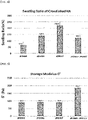
- each sample 2g was accurately weighted and added to a 50mL conical tube, and 25 mL phosphate buffer solution was added, and then it was shaken at 100rpm for 15 minutes and centrifuged at 2,000rpm for 5 minutes and the supernatant of the conical tube was removed, and then the weight of the swollen hyaluronic acid gel was measured, and it means a swelling ratio as Equation 1 below.
- the initially measured weight of the crosslinked hyaluronic acid gel is a weight before phosphate buffer solution is added, and substantially, it is a weight of a sample comprising the solid content obtained in Example 1 of 2.0% by weight.
- Swelling ratio % weight of swollen gel of crosslinked hyaluronic acid gel / initial weight of gel of crosslinked hyaluronic acid ⁇ 100
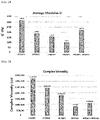
- a modulus of elasticity (G') was measured within a frequency range of 0.02 Hz to 1 Hz by using a rheometer.
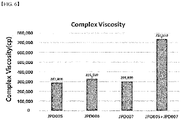
- a complex viscosity was measured within a frequency range of 0.02 Hz to 1 Hz by using a rheometer.
- the drug was released the fastest in case of JPD001 having the lowest swelling ratio, and the drug release rate was shown as the lowest in case of JPD004 having the highest swelling ratio.
- the swelling ratio acts as the most important factor, and in case of the modulus of elasticity and complex viscosity, it acts as a factor supporting the action of the local anesthetic in actual clinical application.
- the swelling ratio of the crosslinked hyaluronic acid shown in Table 1 above was shown within a range of 100 to 600, and it could be confirmed that the drug was stably released under the condition of mixing JPD001 and JPD004 for 3 days when the pain was the most severe.
- Non-crosslinked hyaluronic acid having a molecular weight of 1,500 kDa (repeated unit molecular weight 401.3) of 100 parts by weight was dissolved in 0.25N NaOH solution of 400 parts by weight to prepare a hyaluronic acid solution of 20 % by weight.
- a crosslinking agent 1,4-butanediol diglycidyl ether (BDDE) was added at a ratio of 0.4 mol% to the hyaluronic acid solution, and it was reacted with each of 3 different capacities, and specifically, by aliquoting JD005 with a capacity volume of 400mL, JD006 with 5 mL, and JD007 with 25mL to perform crosslinking reaction at a room temperature for 24 hours, and thereby, crosslinked reaction products having different capacities were obtained.
- BDDE 1,4-butanediol diglycidyl ether
- Non-crosslinked hyaluronic acid having a molecular weight of 1,500 kDa was dissolved in 0.25N NaOH solution to prepare a hyaluronic acid solution of 20 % by weight.
- a crosslinking agent, 1,4-butanediol diglycidyl ether (BDDE) was added at a ratio of 0.4 mol% to the hyaluronic acid solution, and it was reacted with each of 4 different capacities, and specifically, by aliquoting JD005 with a capacity volume of 400mL, JD006 with 5 mL, and JD007 with 25mL to perform crosslinking reaction at a room temperature for 24 hours, and thereby, crosslinked reaction products having different capacities were obtained.
- the JD005 after completing crosslinking reaction obtained a primary crushed product so that the diameter of each crushed product was about 1,000 ⁇ m by crushing it by passing through a sieve with a pore diameter of 1,000 ⁇ m. Then, the primary crushed product of the JD005 was washed with phosphate buffer solution several times and non-reacted BDDE was removed, and the pH was stabilized at a level of 6.5 to 7.5, and the time taken for purification was 24 hours.
- JD006 and JD007 reaction products in which crosslinking reaction was completed were washed with phosphate buffer solution without a crushing process themselves several times to remove non-reacted BDDE and the pH was stabilized at a level of 6.5 to 7.5.
- the time taken for the purification process was about 36 hours for the JD006 reaction product and it was about 72 hours for the JD006 reaction product.
- the obtained 3 kinds of reaction products (JD005, JD006, JD007) were crushed by passing through a sieve of a pore size 300 ⁇ m, and the content of the solid was measured by the drying and reducing test method of the Korean Pharmacopoeia.
- the solid content of the reaction product obtained after crushing was 1.1 wt/wt% for JD005, 1.8 wt/wt% for JD006, and 2.5 wt/wt% for JD007.
- the JD005 and JD006 reaction products were adjusted to 2.0 % by weight by adding non-crosslinked hyaluronic acid used as a raw material for the crosslinking reaction, and since the JD007 reaction product had a solid content exceeding 2.0% by weight, PBS was added and diluted to 2.0 % by weight so that the solid content was to be 2.0 % by weight.
- the obtained 3 kinds of samples were sterilized at 121°C for 20 minutes to prepare a crosslinked hyaluronic acid gel.
- the mixed sample shows a modulus of elasticity (G') by about 2 times.
- G' modulus of elasticity
- Example 3 Release behavior evaluation of drug using crosslinked hyaluronic acid (bupivacaine)
- a drug preparation was prepared.
- a preparation in which non-crosslinked hyaluronic acid having a molecular weight of 1,500 kDa (repeated unit molecular weight 401.3) 2 % by weight and a preparation comprising only the bupivacaine drug were prepared, respectively, as a control group.
- the prepared drug preparation was put in a dialysis bag (MWCO: 12 K-14 K Da), separately. Then, the dialysis bag was immersed into a tube with 15ml phosphate buffer solution. The 50mL conical tube in which the immersed dialysis bag was put was placed in a shaking tank maintained at 37 °C and shaken at 100rpm horizontally. Then, at scheduled time intervals, a release medium (PBS) aliquot of 1.5 mL was collected and the entire release medium was replaced with new PBS to maintain a sink condition.
- PBS release medium
- Quantification of the released bupivacaine was determined by reverse-phase high-performance liquid chromatography (RP-HPLC) using a ZORBAX Eclipse XDB C18 column (4.6mm ⁇ 250mm, 5 ⁇ m) and acetonitrile/pH 8.0 buffer (60:40, v/v) for 10 minutes or more.
- RP-HPLC reverse-phase high-performance liquid chromatography
- the drug delivery system in which JPD001 and JPD004 were mixed at a weight ratio of 1:1 showed the release rate as same as JPD001 at the beginning of release, and then showed a profile of slowly releasing, and specifically, the cumulative amount of the drug release showed a release pattern of 60% for 24 hours, 75% for 48 hours and 90% or more for 72 hours.
- a drug preparation was prepared.
- a preparation in which non-crosslinked hyaluronic acid having a molecular weight of 1,500 kDa (molecular weight 401.3 of repeat unit) 2 % by weight and a preparation comprising only the bupivacaine drug were prepared, respectively, as a control group.
- the drug release behavior was evaluated by the method as Example 3, and the result was shown in FIG. 8 .
- the cumulative amount of JD006 (Sample 2-3) release showed a release pattern of 90% for 24 hours and 95% or more for 48 hours.
- the cumulative amount of the drug release showed a release pattern of 60.7% for 24 hours, 79.6% for 48 hours and 90.8% for 72 hours. Therefore, it was confirmed that the local anesthetic was gradually released when applied to the body, and it was possible to reduce the pain during the most painful three(3) days after surgery.
- SPF pathogen-free Sprague-Dawley rats [Crl:CD (Sprague Dawley)] (Producer: Orient Bio Inc. (322, Galmachi-ro, Jungwon-gu, Seongnam-si, Gyeonggi-do)) were prepared according to the following condition.
- the body weight was measured on the day before administration, and group separation was performed by weight ranked using Excel program. Only animals belonging to the range of ⁇ 20% of the mean body weight were used for the test.
- Feed Teklad Certified Irradiated Global 18% Protein Rodent Diet, Envigo, USA
- Koatech 19421, Jinwi-ro, Sinwi-myeon, Pyeongtaek-si, Gyeonggi-do
- the skin and fascia with a length of 1 cm were incised in the longitudinal direction starting from the part 0.5cm away from the tip of the back of the foot.
- the sole muscle (plantar muscle) of the incised part was lifted with forceps to separate 1cm in length.
- the drug preparation to be administered to Gc used the crosslinked hyaluronic acid gel 3g at a concentration of 2 % by weight, and ropivacaine solution 3g at a concentration of 0.75 % by weight, and when these were converted into the solid content of each of active ingredients, the crosslinked hyaluronic acid 60mg and ropivacaine 23mg were comprised, and based on the total solid content of the crosslinked hyaluronic acid and drug of 100 % by weight, the solid content of voferon-L60 was 72.2 % by weight and the solid content of ropivacaine was 27.3 % by weight.
- the drug preparation to be administered to Gd used the crosslinked hyaluronic gel 4g at a concentration of 2 % by weight and ropivacaine solution 2g at a concentration of 0.75 % by weight, and when these were converted into the solid content of each of the active ingredients, the crosslinked hyaluronic acid 80mg and ropivacaine 15mg were comprised, and based on the total solid content of the crosslinked hyaluronic acid and drug of 100 % by weight, the solid content of voferon-L60 was 84.2 % by weight and the solid content of ropivacaine was 15.8 % by weight.
- a white rat was placed in a wire mesh cage with a net eye size of 2 ⁇ 2 mm and acclimatized for 15 minutes or more, and then the continuous reaction was evaluated by an up-down method using 8 consecutive von Frey filaments (1, 2, 4, 6, 8, 15, 26, 60 g, Stoelting, USA) when the movement of the rat became quiet.
- the filaments were placed in vertical contact with the sole of the left affected area and held for 5-6 seconds and it was considered as positive reaction was shown, when the rat exhibited a quick avoidance response or immediately flinched while removing hairs or licked the sole.
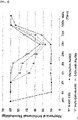
- the pharmacodynamic analysis result according to the time-dependent response after drug administration was shown in Table 4 and FIG. 9 below. Pain threshold values were measured before and at 1, 2, 4, 8, 24, 48, 72, 120, 168 after administration of the test substance of each animal of the Ga to Gd group test groups, and the average of the threshold values of each test group was calculated. In Table 4 below, the threshold value (g) measured over time of drug administration was shown.
- the average threshold started to decrease to 37.3g from 4 hour after surgery and the average threshold was 17.5g after 48 hours, and the pain was gradually recovered stably and completely recovered at 120 hours.
- the average threshold started to decrease to 48.7g from 4 hour after surgery and the average threshold was 20.5g after 48 hours, and the pain was gradually recovered stably and completely recovered at 120 hours.
- the average threshold started to decrease to 57.2g from 8 hour after surgery and the average threshold was 24.2g after 48 hours, and the pain was gradually recovered stably and completely recovered at 120 hours.
- SPF pathogen-free Sprague-Dawley rats [Crl:CD (Sprague Dawley)] (Producer: Orient Bio Inc. (322, Galmachi-ro, Jungwon-gu, Seongnam-si, Gyeonggi-do)) were prepared according to the following condition.
- the body weight was measured on the day before administration, and group separation was performed by weight ranked using Excel program. Only animals belonging to the range of ⁇ 20% of the mean body weight were used for the test.
- a preparation comprising Sample 2-4 which was the mixture of JD005 and JD007 at a weight ratio of 1:1, which were crosslinked hyaluronic acid gels comprising the crosslinked hyaluronic acid solid prepared in Example 2 (Voferon-L60) and ropivacaine was administered once and the skin was sutured and the test groups were composed as Table 5 below. All Ge to Gg doses ( ⁇ l) were set to 600 ⁇ l equally, and the number animals comprised in the experimental group were 5.
- a disposable syringe from the jugular vein about 0.5 ⁇ l of blood from the test groups was collected before and at 0.5, 1, 2, 4, 6, 8, 12, 24 and 48 hours after administration of the test substances.
- the collected blood was transferred to a heparin-treated tube (5 IU/ml) and centrifuged at 12,000rpm (4°C) for 5 minutes and then the upper layer (plasma) was separated.
- the separated plasma was stored in an ultra-low temperature freezer (Daihan Science, Korea; MAI-040-03) set at -70°C before analysis and then used for analysis.
- the experimental equipment used in the present invention is as Table 6 below, and the reagent is as Table 7 below.
- Table 6 Experiment equipment Name Manufacturer LC 1290 Infinity Agilent, USA MS/MS 6460 Triple Quadruple Agilent, USA Centrifuge Eppendorf Centrifuge 5810R Eppendorf, USA Ultra pure water system Basic 361 Series and Ultra 370 Series Younglin Instrument, Korea
- Table 7 Reagent Place of acquisition Ropivacaine hydrochloride hydrate (standard material) Lot No. : 0000077915, Sigma Aldrich, USA Lidocaine hydrochloride hydrate (internal standard material) Lot No. : WS-054, Joonghun Pharmaceutical, Korea Methanol Lot No. : 0000110849, J.T.
- LC/MS/MS analysis was progressed using 1290 Infinity (Agilent, USA) as LC equipment and 6460 Triple Quadruple (Agilent, USA) as MS/MS equipment.
- Ropivacaine hydrochloride monohydrate Lit No.: 0000077915, Sigma Aldrich, USA
- lidocaine hydrochloride monohydrate Lit No.: WS-054, Joonghun Pharmaceutical, Korea was used as an internal standard substance.
- a ropivacaine hydrochloride hydrate standard substance (purity 98.7 %) of 0.0500g was weighed and put in a 50ml bottle, and 50% methanol was filled and then dissolved to prepare 987.000mg/l, and then the ropivacaine hydrochloride hydrate standard substance 1.013ml at a concentration of 987.000mg/l was added to a 10ml volumetric flask, and 50% methanol was added up to 10ml mark to prepare a stock solution at a concentration of 100.000mg/l, and the prepared stock solution having the concentration and volume of Table 8 below was diluted serially with 50% methanol, and thereby, a working solution having the concentration of Table 8 below was prepared and used.
- a lidocaine hydrochloride hydrate (purity 100.0 %) of 0.05g was weighed and put in a 50ml bottle, and 50% methanol was filled and then dissolved to prepare 1,000.000mg/l, and then the lidocaine hydrochloride hydrate standard substance 1ml at a concentration of 1,000.000mg/l was added to a 10ml volumetric flask, and 50% methanol was added up to 10ml mark to prepare a stock solution at a concentration of 10.000mg/l, and the prepared stock solution 60 ⁇ l and acetonitrile 9,940 ⁇ l were mixed to prepare a working solution of 600ng/ml.
- the plasma stored at 70°C or less was dissolved by standing at a room temperature, and then mixed well in a vortex for about 30 seconds.
- the working solution having the concentration and volume of Table 10 below was diluted serially with the plasma and the working solution of the standard solution was prepared by preparing standard plasma of the calibration curve sample having the concentration of Table 10 below.
- Working solution volume (ul) Plasma volume (ul) Lidocaine concentration in plasma (ng/ml) S1 50 40 360 5 S2 100 40 360 10 S3 500 40 360 50 S4 1,000 40 360 100 S5 2,000 40 360 200 S6 5,000 40 360 500 S7 10,000 40 360 1,000
- the peak area ratio of the standard substance to the peak area of the internal standard substance was obtained from the obtained chromatogram.
- concentration of the test substance in plasma was calculated from the pre-prepared calibration curve using MassHunter Workstation Software, version B.07.1 (Agilent, USA) of the corresponding equipment.
- Toxicokinetic result interpretation was performed by calculating kinetic parameters of Tmax (time to reach maximum blood concentration), Cmax (maximum blood concentration), AUC 0-48hr (area under blood concentration-time curve of 0 to 48 times) and MRT (average residence time of drug) using Phoenix TM WinNonlin by a non-model interpretation method based on a blood concentration curve.
- the AUC 0-48hr average was shown as 1254.97ng ⁇ h/ml, and the Cmax average was 439.90ng/ml, and the Tmax average was 1.2hr, and the MRT average was 1.86hr.
- the AUC 0-48hr average was shown as 1308.39ng ⁇ h/ml, and the Cmax average was 409.23ng/ml, and the Tmax average was 2hr, and the MRT average was 2.17hr.
- the AUC 0-48hr average was shown as 947.86ng ⁇ h/ml, and the Cmax average was 320.41ng/ml, and the Tmax average was 1.2hr, and the MRT average was 2.15hr.
- the injection solution used for the surgical product delays the drug release of ropivacaine, and it is determined that the drug release is delayed according to the increase of the Voferon-L60 concentration.
- the low Cmax value in blood in the test group, Gf and Gg group compared to the control group (Ge) is determined to be safer than when using ropivacaine alone, as the drug release is delayed due to the effect according to the increase of the concentration of Voferon-L60.
Landscapes
- Health & Medical Sciences (AREA)
- Chemical & Material Sciences (AREA)
- Medicinal Chemistry (AREA)
- Life Sciences & Earth Sciences (AREA)
- General Health & Medical Sciences (AREA)
- Pharmacology & Pharmacy (AREA)
- Animal Behavior & Ethology (AREA)
- Public Health (AREA)
- Veterinary Medicine (AREA)
- Epidemiology (AREA)
- Chemical Kinetics & Catalysis (AREA)
- Organic Chemistry (AREA)
- Polymers & Plastics (AREA)
- Inorganic Chemistry (AREA)
- Dispersion Chemistry (AREA)
- Anesthesiology (AREA)
- Engineering & Computer Science (AREA)
- Pain & Pain Management (AREA)
- Biochemistry (AREA)
- Biomedical Technology (AREA)
- Nuclear Medicine, Radiotherapy & Molecular Imaging (AREA)
- General Chemical & Material Sciences (AREA)
- Neurosurgery (AREA)
- Materials Engineering (AREA)
- Molecular Biology (AREA)
- Dermatology (AREA)
- Pharmaceuticals Containing Other Organic And Inorganic Compounds (AREA)
- Medicinal Preparation (AREA)
- Medicines That Contain Protein Lipid Enzymes And Other Medicines (AREA)
- Acyclic And Carbocyclic Compounds In Medicinal Compositions (AREA)
- Polysaccharides And Polysaccharide Derivatives (AREA)
Applications Claiming Priority (2)
| Application Number | Priority Date | Filing Date | Title |
|---|---|---|---|
| KR1020200023763A KR102173790B1 (ko) | 2020-02-26 | 2020-02-26 | 가교 히알루론산을 이용한 약물 전달 조성물 및 이의 제조방법 |
| PCT/KR2020/014829 WO2021172694A1 (ko) | 2020-02-26 | 2020-10-28 | 가교 히알루론산을 이용한 약물 전달 조성물 및 이의 제조방법 |
Publications (2)
| Publication Number | Publication Date |
|---|---|
| EP4112082A1 true EP4112082A1 (de) | 2023-01-04 |
| EP4112082A4 EP4112082A4 (de) | 2024-04-17 |
Family
ID=73197691
Family Applications (1)
| Application Number | Title | Priority Date | Filing Date |
|---|---|---|---|
| EP20921761.1A Pending EP4112082A4 (de) | 2020-02-26 | 2020-10-28 | Arzneimittelabgabezusammensetzung mit vernetzter hyaluronsäure und verfahren zu ihrer herstellung |
Country Status (5)
| Country | Link |
|---|---|
| US (1) | US12521384B2 (de) |
| EP (1) | EP4112082A4 (de) |
| JP (1) | JP7441556B2 (de) |
| KR (1) | KR102173790B1 (de) |
| WO (1) | WO2021172694A1 (de) |
Families Citing this family (5)
| Publication number | Priority date | Publication date | Assignee | Title |
|---|---|---|---|---|
| CN115932083B (zh) * | 2022-11-24 | 2024-11-15 | 华熙生物科技股份有限公司 | 交联玻璃酸钠中甘油和1,4-丁二醇的检测方法 |
| KR102916694B1 (ko) | 2022-12-05 | 2026-01-22 | (주)메디톡스 | 퍼짐성과 안정성이 좋은 가교된 히알루론산 겔 및 그의 용도 |
| WO2024144003A1 (ko) * | 2022-12-29 | 2024-07-04 | 주식회사 녹십자 | 뮤코다당질 축적증에서의 안면 이형의 치료용 조성물 |
| US20240216504A1 (en) * | 2022-12-30 | 2024-07-04 | Dong Kyu Jin | Method for preventing or treating of hemathrosis |
| KR102868943B1 (ko) * | 2024-09-05 | 2025-10-13 | 주식회사 차메디텍 | 저온 용매 분산법을 포함하는 신규한 히알루론산 필러의 제조방법 |
Family Cites Families (22)
| Publication number | Priority date | Publication date | Assignee | Title |
|---|---|---|---|---|
| EP1572218A4 (de) | 2002-12-20 | 2007-05-16 | Univ Leland Stanford Junior | Lokalanästhetikum mit ester-kombination |
| US20050281880A1 (en) * | 2004-05-20 | 2005-12-22 | Wei Wang | Methods for making injectable polymer hydrogels |
| ES2381417T3 (es) | 2007-09-28 | 2012-05-28 | Shiseido Company, Ltd. | Polvo de ácido hialurónico reticulado hinchable y procedimiento para fabricarlo |
| US8357795B2 (en) | 2008-08-04 | 2013-01-22 | Allergan, Inc. | Hyaluronic acid-based gels including lidocaine |
| KR101103423B1 (ko) | 2009-09-04 | 2012-01-06 | 아주대학교산학협력단 | 생체 주입형 조직 접착성 하이드로젤 및 이의 생의학적 용도 |
| KR101834588B1 (ko) | 2010-08-23 | 2018-03-05 | 덴카 주식회사 | 가교 히알루론산 조성물 및 자기 가교 히알루론산 입자 |
| KR101379380B1 (ko) | 2011-04-19 | 2014-04-02 | 주식회사 엠아이텍 | 생체적합성 히알루론산 가교물을 포함하는 약물 전달 조성물 |
| KR101374271B1 (ko) | 2012-05-02 | 2014-03-14 | 주식회사 제네웰 | 히알루론산 에폭사이드 가교체 및 그 제조방법 |
| MX369409B (es) * | 2013-06-28 | 2019-11-07 | Galderma Sa | Método para la fabricación de un producto perfilado de ácido hialurónico. |
| FR3015290B1 (fr) | 2013-12-23 | 2017-01-13 | Lab Vivacy | Compositions d'acide hyaluronique compreant de la mepivacaine |
| BR112017016655B1 (pt) * | 2015-02-13 | 2022-05-03 | Endo Derma Co., Ltd | Micro-agulha biodegradável contendo hidrogel de ácido hialurônico reticulado e método para sua preparação |
| KR101620090B1 (ko) | 2015-04-20 | 2016-05-12 | 주식회사 티젤바이오 | 약물전달 키트, 약물전달체 제조용 기구, 및 약물전달체 제조방법 |
| KR101692782B1 (ko) | 2015-04-27 | 2017-01-04 | 단국대학교 천안캠퍼스 산학협력단 | 서방형 방출이 가능한 국소 마취제 |
| RU2017143884A (ru) | 2015-05-29 | 2019-07-01 | Альбатросс Текнолоджис Лимитед | Сшитая гиалуроновая кислота для доставки лекарственного средства и фармацевтический препарат с ее использованием |
| KR101720426B1 (ko) * | 2015-09-01 | 2017-04-14 | (주)시지바이오 | 히알루론산 조성물 및 그의 제조방법 |
| KR101660211B1 (ko) | 2016-06-07 | 2016-09-26 | 동국제약 주식회사 | 단일상과 이성상의 특성을 동시에 갖는 히알루론산 가교체, 이의 제조 방법 및 이의 용도 |
| KR20180027126A (ko) | 2016-09-06 | 2018-03-14 | (주)한국비엠아이 | 가교화 히알루론산 유도체 매트릭스가 포함된 지혈 조성물 |
| KR101769739B1 (ko) | 2017-01-18 | 2017-08-21 | 구태훈 | 모노-페이직 ha 필러의 특성과 바이-페이직 ha 필러의 특성을 함께 갖는 ha 필러, 필러 주입에 사용되는 주사기 및, 필러의 제조방법 |
| AU2018228299B2 (en) * | 2017-02-28 | 2020-05-07 | Cg Bio Co., Ltd. | Composition For Dermal Injection |
| WO2019155391A1 (en) | 2018-02-06 | 2019-08-15 | Regen Lab Sa | Cross-linked hyaluronic acids and combinations with prp/bmc |
| KR102071029B1 (ko) | 2018-02-27 | 2020-01-30 | 서울대학교 산학협력단 | 생체안정성과 기계적 물성이 향상된 생분해성 고분자 하이드로겔 복합체 및 이의 제조방법 |
| KR101902956B1 (ko) | 2018-03-13 | 2018-10-02 | 주식회사 제네웰 | 외과수술 후 절개부위 통증 감소를 위한 키트 |
-
2020
- 2020-02-26 KR KR1020200023763A patent/KR102173790B1/ko active Active
- 2020-10-28 US US17/799,402 patent/US12521384B2/en active Active
- 2020-10-28 JP JP2022551561A patent/JP7441556B2/ja active Active
- 2020-10-28 WO PCT/KR2020/014829 patent/WO2021172694A1/ko not_active Ceased
- 2020-10-28 EP EP20921761.1A patent/EP4112082A4/de active Pending
Also Published As
| Publication number | Publication date |
|---|---|
| JP7441556B2 (ja) | 2024-03-01 |
| WO2021172694A1 (ko) | 2021-09-02 |
| KR102173790B1 (ko) | 2020-11-03 |
| US20230338353A1 (en) | 2023-10-26 |
| JP2023515181A (ja) | 2023-04-12 |
| US12521384B2 (en) | 2026-01-13 |
| EP4112082A4 (de) | 2024-04-17 |
Similar Documents
| Publication | Publication Date | Title |
|---|---|---|
| EP4112082A1 (de) | Arzneimittelabgabezusammensetzung mit vernetzter hyaluronsäure und verfahren zu ihrer herstellung | |
| EP2670447B9 (de) | Hyaluronsäurezusammensetzung, die ein Ascorbinsäurederivat enthält | |
| EP2656833B1 (de) | Vernetzte Hyaluronsäurezusammensetzungen zur Gewebeaugmentation | |
| DE69213739T2 (de) | Osteogene proteine enthaltende arzneimittel | |
| US20160346433A1 (en) | Hyaluronic acid compositions including mepivacaine | |
| TW200812642A (en) | Compositions and methods for treating conditions of the nail unit | |
| CA2705201A1 (en) | Prolonged release of local anesthetics using microparticles and surgery applications related applications | |
| EP4245328A1 (de) | Vernetztes hyaluronsäurehydrogel, das mit einem vernetzer und polyol vernetzt ist, und füllstoff damit | |
| US20260000660A1 (en) | Sustained release local anesthetic hydrogel composition | |
| KR20070095921A (ko) | 조갑 단위의 상태를 치료하기 위한 조성물 및 방법 | |
| US10898613B2 (en) | Hyaluronic acid gel with a divalent zinc cation | |
| EP3316911B1 (de) | Verfahren zur herstellung einer zusammensetzung enthaltend hyaluronsäure | |
| WO2025011563A1 (zh) | 聚乳酸及其共聚物在制备用于促进神经生长和修复药物中的应用 | |
| EP4400125A1 (de) | Sol-gel-übergang eines 6-arm-peg-hydrogels über einen längeren zeitraum | |
| EP3743043A1 (de) | Pharmazeutische zusammensetzungen zur behandlung von postoperativem schmerz | |
| RU2838899C1 (ru) | Гидрогель из сшитой гиалуроновой кислоты, сшитый при использовании сшивателя и полиола, и филлер, содержащий его | |
| KR102348467B1 (ko) | Dna 분획물을 포함하는 필러 제조방법 및 이로부터 제조된 필러 | |
| Alam et al. | Effect of different excipients on the release of vinpocetine from biodegradable polymeric implants of chitosan and sodium alginate | |
| KR102652905B1 (ko) | 주사용 사전-제형 및 이를 이용한 도네페질 초기방출 억제형 키트 | |
| HK1190931A (en) | Crosslinked hyaluronic acid compositions for tissue augmentation |
Legal Events
| Date | Code | Title | Description |
|---|---|---|---|
| STAA | Information on the status of an ep patent application or granted ep patent |
Free format text: STATUS: THE INTERNATIONAL PUBLICATION HAS BEEN MADE |
|
| PUAI | Public reference made under article 153(3) epc to a published international application that has entered the european phase |
Free format text: ORIGINAL CODE: 0009012 |
|
| STAA | Information on the status of an ep patent application or granted ep patent |
Free format text: STATUS: REQUEST FOR EXAMINATION WAS MADE |
|
| 17P | Request for examination filed |
Effective date: 20220902 |
|
| AK | Designated contracting states |
Kind code of ref document: A1 Designated state(s): AL AT BE BG CH CY CZ DE DK EE ES FI FR GB GR HR HU IE IS IT LI LT LU LV MC MK MT NL NO PL PT RO RS SE SI SK SM TR |
|
| DAV | Request for validation of the european patent (deleted) | ||
| DAX | Request for extension of the european patent (deleted) | ||
| A4 | Supplementary search report drawn up and despatched |
Effective date: 20240315 |
|
| RIC1 | Information provided on ipc code assigned before grant |
Ipc: C08L 5/08 20060101ALI20240311BHEP Ipc: C08B 37/00 20060101ALI20240311BHEP Ipc: A61L 31/04 20060101ALI20240311BHEP Ipc: A61L 27/52 20060101ALI20240311BHEP Ipc: A61L 24/08 20060101ALI20240311BHEP Ipc: A61P 23/02 20060101ALI20240311BHEP Ipc: A61K 31/445 20060101ALI20240311BHEP Ipc: A61K 9/06 20060101ALI20240311BHEP Ipc: A61K 47/36 20060101AFI20240311BHEP |