EP4112731A1 - Système de production de raav de haut niveau - Google Patents
Système de production de raav de haut niveau Download PDFInfo
- Publication number
- EP4112731A1 EP4112731A1 EP21183218.3A EP21183218A EP4112731A1 EP 4112731 A1 EP4112731 A1 EP 4112731A1 EP 21183218 A EP21183218 A EP 21183218A EP 4112731 A1 EP4112731 A1 EP 4112731A1
- Authority
- EP
- European Patent Office
- Prior art keywords
- aav
- promoter
- rep
- vector
- cap
- Prior art date
- Legal status (The legal status is an assumption and is not a legal conclusion. Google has not performed a legal analysis and makes no representation as to the accuracy of the status listed.)
- Withdrawn
Links
Images





Classifications
-
- C—CHEMISTRY; METALLURGY
- C12—BIOCHEMISTRY; BEER; SPIRITS; WINE; VINEGAR; MICROBIOLOGY; ENZYMOLOGY; MUTATION OR GENETIC ENGINEERING
- C12N—MICROORGANISMS OR ENZYMES; COMPOSITIONS THEREOF; PROPAGATING, PRESERVING, OR MAINTAINING MICROORGANISMS; MUTATION OR GENETIC ENGINEERING; CULTURE MEDIA
- C12N15/00—Mutation or genetic engineering; DNA or RNA concerning genetic engineering, vectors, e.g. plasmids, or their isolation, preparation or purification; Use of hosts therefor
- C12N15/09—Recombinant DNA-technology
- C12N15/63—Introduction of foreign genetic material using vectors; Vectors; Use of hosts therefor; Regulation of expression
- C12N15/79—Vectors or expression systems specially adapted for eukaryotic hosts
- C12N15/85—Vectors or expression systems specially adapted for eukaryotic hosts for animal cells
- C12N15/86—Viral vectors
-
- C—CHEMISTRY; METALLURGY
- C12—BIOCHEMISTRY; BEER; SPIRITS; WINE; VINEGAR; MICROBIOLOGY; ENZYMOLOGY; MUTATION OR GENETIC ENGINEERING
- C12N—MICROORGANISMS OR ENZYMES; COMPOSITIONS THEREOF; PROPAGATING, PRESERVING, OR MAINTAINING MICROORGANISMS; MUTATION OR GENETIC ENGINEERING; CULTURE MEDIA
- C12N2710/00—MICROORGANISMS OR ENZYMES; COMPOSITIONS THEREOF; PROPAGATING, PRESERVING, OR MAINTAINING MICROORGANISMS; MUTATION OR GENETIC ENGINEERING; CULTURE MEDIA dsDNA viruses
- C12N2710/00011—Details
- C12N2710/10011—Adenoviridae
- C12N2710/10311—Mastadenovirus, e.g. human or simian adenoviruses
- C12N2710/10341—Use of virus, viral particle or viral elements as a vector
- C12N2710/10343—Use of virus, viral particle or viral elements as a vector viral genome or elements thereof as genetic vector
-
- C—CHEMISTRY; METALLURGY
- C12—BIOCHEMISTRY; BEER; SPIRITS; WINE; VINEGAR; MICROBIOLOGY; ENZYMOLOGY; MUTATION OR GENETIC ENGINEERING
- C12N—MICROORGANISMS OR ENZYMES; COMPOSITIONS THEREOF; PROPAGATING, PRESERVING, OR MAINTAINING MICROORGANISMS; MUTATION OR GENETIC ENGINEERING; CULTURE MEDIA
- C12N2710/00—MICROORGANISMS OR ENZYMES; COMPOSITIONS THEREOF; PROPAGATING, PRESERVING, OR MAINTAINING MICROORGANISMS; MUTATION OR GENETIC ENGINEERING; CULTURE MEDIA dsDNA viruses
- C12N2710/00011—Details
- C12N2710/10011—Adenoviridae
- C12N2710/10311—Mastadenovirus, e.g. human or simian adenoviruses
- C12N2710/10341—Use of virus, viral particle or viral elements as a vector
- C12N2710/10344—Chimeric viral vector comprising heterologous viral elements for production of another viral vector
-
- C—CHEMISTRY; METALLURGY
- C12—BIOCHEMISTRY; BEER; SPIRITS; WINE; VINEGAR; MICROBIOLOGY; ENZYMOLOGY; MUTATION OR GENETIC ENGINEERING
- C12N—MICROORGANISMS OR ENZYMES; COMPOSITIONS THEREOF; PROPAGATING, PRESERVING, OR MAINTAINING MICROORGANISMS; MUTATION OR GENETIC ENGINEERING; CULTURE MEDIA
- C12N2750/00—MICROORGANISMS OR ENZYMES; COMPOSITIONS THEREOF; PROPAGATING, PRESERVING, OR MAINTAINING MICROORGANISMS; MUTATION OR GENETIC ENGINEERING; CULTURE MEDIA ssDNA viruses
- C12N2750/00011—Details
- C12N2750/14011—Parvoviridae
- C12N2750/14111—Dependovirus, e.g. adenoassociated viruses
- C12N2750/14122—New viral proteins or individual genes, new structural or functional aspects of known viral proteins or genes
-
- C—CHEMISTRY; METALLURGY
- C12—BIOCHEMISTRY; BEER; SPIRITS; WINE; VINEGAR; MICROBIOLOGY; ENZYMOLOGY; MUTATION OR GENETIC ENGINEERING
- C12N—MICROORGANISMS OR ENZYMES; COMPOSITIONS THEREOF; PROPAGATING, PRESERVING, OR MAINTAINING MICROORGANISMS; MUTATION OR GENETIC ENGINEERING; CULTURE MEDIA
- C12N2750/00—MICROORGANISMS OR ENZYMES; COMPOSITIONS THEREOF; PROPAGATING, PRESERVING, OR MAINTAINING MICROORGANISMS; MUTATION OR GENETIC ENGINEERING; CULTURE MEDIA ssDNA viruses
- C12N2750/00011—Details
- C12N2750/14011—Parvoviridae
- C12N2750/14111—Dependovirus, e.g. adenoassociated viruses
- C12N2750/14123—Virus like particles [VLP]
-
- C—CHEMISTRY; METALLURGY
- C12—BIOCHEMISTRY; BEER; SPIRITS; WINE; VINEGAR; MICROBIOLOGY; ENZYMOLOGY; MUTATION OR GENETIC ENGINEERING
- C12N—MICROORGANISMS OR ENZYMES; COMPOSITIONS THEREOF; PROPAGATING, PRESERVING, OR MAINTAINING MICROORGANISMS; MUTATION OR GENETIC ENGINEERING; CULTURE MEDIA
- C12N2750/00—MICROORGANISMS OR ENZYMES; COMPOSITIONS THEREOF; PROPAGATING, PRESERVING, OR MAINTAINING MICROORGANISMS; MUTATION OR GENETIC ENGINEERING; CULTURE MEDIA ssDNA viruses
- C12N2750/00011—Details
- C12N2750/14011—Parvoviridae
- C12N2750/14111—Dependovirus, e.g. adenoassociated viruses
- C12N2750/14141—Use of virus, viral particle or viral elements as a vector
- C12N2750/14143—Use of virus, viral particle or viral elements as a vector viral genome or elements thereof as genetic vector
-
- C—CHEMISTRY; METALLURGY
- C12—BIOCHEMISTRY; BEER; SPIRITS; WINE; VINEGAR; MICROBIOLOGY; ENZYMOLOGY; MUTATION OR GENETIC ENGINEERING
- C12N—MICROORGANISMS OR ENZYMES; COMPOSITIONS THEREOF; PROPAGATING, PRESERVING, OR MAINTAINING MICROORGANISMS; MUTATION OR GENETIC ENGINEERING; CULTURE MEDIA
- C12N2750/00—MICROORGANISMS OR ENZYMES; COMPOSITIONS THEREOF; PROPAGATING, PRESERVING, OR MAINTAINING MICROORGANISMS; MUTATION OR GENETIC ENGINEERING; CULTURE MEDIA ssDNA viruses
- C12N2750/00011—Details
- C12N2750/14011—Parvoviridae
- C12N2750/14111—Dependovirus, e.g. adenoassociated viruses
- C12N2750/14151—Methods of production or purification of viral material
-
- C—CHEMISTRY; METALLURGY
- C12—BIOCHEMISTRY; BEER; SPIRITS; WINE; VINEGAR; MICROBIOLOGY; ENZYMOLOGY; MUTATION OR GENETIC ENGINEERING
- C12N—MICROORGANISMS OR ENZYMES; COMPOSITIONS THEREOF; PROPAGATING, PRESERVING, OR MAINTAINING MICROORGANISMS; MUTATION OR GENETIC ENGINEERING; CULTURE MEDIA
- C12N2750/00—MICROORGANISMS OR ENZYMES; COMPOSITIONS THEREOF; PROPAGATING, PRESERVING, OR MAINTAINING MICROORGANISMS; MUTATION OR GENETIC ENGINEERING; CULTURE MEDIA ssDNA viruses
- C12N2750/00011—Details
- C12N2750/14011—Parvoviridae
- C12N2750/14111—Dependovirus, e.g. adenoassociated viruses
- C12N2750/14151—Methods of production or purification of viral material
- C12N2750/14152—Methods of production or purification of viral material relating to complementing cells and packaging systems for producing virus or viral particles
Definitions
- the present invention is directed to novel production methods for recombinant adeno-associated viral (rAAV) vectors or AAV virus-like particles, e.g., for use in research as well as therapeutic applications.
- the invention discloses an advantageous method for producing recombinant adeno-associated virus (rAAV) vectors or AAV virus-like particles wherein a cell is infected with a first recombinant adenoviral vector encoding the AAV Rep proteins, and a second recombinant adenoviral vector encoding the AAV Cap proteins.
- the cell is further provided with a transgene-vector harboring an expression cassette flanked by AAV inverted terminal repeats (ITRs) comprising a transgene.
- ITRs AAV inverted terminal repeats
- the invention further discloses a kit or a composition for producing an rAAV vector according to the method of the invention that comprises the transgene vector, the first recombinant adenoviral vector encoding the AAV Rep proteins, and the second recombinant adenoviral vector encoding the AAV Cap proteins.
- the method, kits and composition of the invention allow for an increased production of AAV vector particles in a stable system.
- rAAV adeno-associated viruses
- Engl J Med 371 as well as hereditary forms of blindness such as Leber's congenital amaurosis (LCA) ( Bennett et al., 2016, Lancet 388 ) or Leber's hereditary optic atrophy ( Feuer et al., 2016, Opthalmology 123 ) could be achieved.
- LCA Leber's congenital amaurosis
- rAAV vector-mediated expression of the RPE65 gene in the retina of LCA patients received clinical approval in the US in December 2017 and in the EU in November 2018.
- a rAAV vector for the treatment of spinal muscular atrophy (SMA) Mendell et al, 2017 N Engl J Med. 377 ) received clinical approval in the US in May 2019 and in the EU in July 2020 under the trade name ZOLGENSMA.
- rAAV vectors in the clinical setting, especially in the treatment of human diseases involving body-wide gene transfer, requires production and purification systems capable of generating large amounts of highly-purified and infectious vector particles ( Clement and Grieger, 2016, Mol Ther Methods Clin Dev 3 ).
- one of the plasmid constructs used in the co-transfection method contains the therapeutic transgene flanked by the AAV inverted terminal repeats (ITR), which are required in cis for replication and packaging of the vector genome.
- a second plasmid provides the AAV Rep/Cap cassette in trans.
- the required adenoviral (AdV) helper functions E2a, E4orf6 and the VA RNA are either provided together with the Rep/Cap functions on the second plasmid, as in the pDG plasmid used in many laboratories ( Grimm et al., 1998, Gene Ther 26 ), or separately on a third plasmid. However, the latter then requires the co-transfection of a total of three plasmid constructs.
- the additionally required adenoviral functions E1a and E1b are expressed from adenoviral sequences constitutively integrated into the host genome.
- rAAV rAAV vectors
- An alternative to the transfection-based production of rAAV in mammalian cells is the production in insect cells.
- Insect cells serve as host cells for the subfamily of densoviruses (Denso-virinae) within the parvoviruses.
- Densoviruses replicate their genome by a very similar mechanism as AAV ( Ding et al., 2002, J Virol 76 ). It was shown that Sf9 cells isolated from Spodop-tera frugiperda are able to support Rep protein-mediated replication of an AAV-ITR flanked vector genome without additional helper functions ( Urabe et al., 2002, Hum Gene Ther 13 ).
- rAAVs produced in insect cells appear to exhibit poorer transduction characteristics as compared to rAAV produced in human cells ( Rumachik et al., 2020 Molecular Therapy Methods & Clinical Development 18 ), probably due to differential post-translational modifications of the capsid proteins.
- helper viruses derived from adenoviruses or herpes simplex viruses (HSV). After infection, these viruses can concurrently provide the helper functions required for rAAV production.
- HSV herpes simplex viruses
- a rAd vector with the AAV-ITR-flanked transgene cassette can be well propagated and, in combination with stable cell lines for the expression of the AAV-2 Rep and Cap proteins, can also be successfully used for large-scale rAAV production ( Zhang et al., 2009, Hum Gene Ther 20 ).
- the second required component, a recombinant adenovirus comprising the AAV rep and cap genes could not be propagated at all or was genetically unstable and thus is deemed unsuitable for adaptation to the large scale ( Zhang et al., 2001, Gene Ther 8 ).
- rAAV vectors in the clinical setting, especially in the treatment of human diseases involving body-wide gene transfer, however requires production and purification systems capable of generating large amounts of highly-purified and infectious vector particles. Therefore, in light of the state of the art, the present inventors addressed the problem of providing a novel and highly efficient method for up-scaling the production of recombinant AAV vectors, e.g., for pre-clinical and clinical requirements.
- the invention provides a method for producing recombinant adeno-associated virus (rAAV) vectors, wherein the method comprises infecting a cell with
- the invention provides a method for producing recombinant AAV virus-like particles, wherein the method comprises infecting a cell with a recombinant adenoviral cap- vector comprising an expression cassette comprising the AAV cap gene operably linked to a promoter that is not the wild-type p40 promoter, wherein said cap-vector does not encode the AAV Rep proteins.
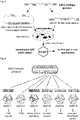
- AAVs form the genus Dependoviruses within the family of parvoviruses (Parvoviridae), a family of single-stranded DNA viruses with a non-enveloped, icosahedral capsid. Their productive infection cycle with replication of AAV DNA and assembly of new infectious virus particles depends on the presence of a suitable helper virus, for example adenovirus or herpes simplex virus (HSV), hence its name and taxonomy classification ( Figure 1 ). In the absence of helper viruses, AAV is able to establish a latent infection.
- a suitable helper virus for example adenovirus or herpes simplex virus (HSV), hence its name and taxonomy classification ( Figure 1 ).
- HSV herpes simplex virus
- recombinant AAV refers to an AAV whose genome has been modified by artificial means, e.g., by recombinant DNA technology via genetic engineering to obtain an AAV that comprises a transgene and may be used as a vector e.g., in gene therapy.
- AAV virus-like particle refers to a molecule that resembles an actual AAV, but does not contain any viral genetic material and thus is non-infectious.
- Virus-like particles are assembled from viral structural proteins, e.g., proteins that form the viral capsid.
- AAV virus-like particles may serve as delivery systems for genes or other therapeutic agents, or may be used as vaccines.
- the empty AAV-virus like particles produced by the method of the invention may also serve as decoys for AAV-specific antibodies produced by a patient's immune system, and they may thus beneficially affect AAV-mediated gene transfer during gene therapy.
- producing rAAV vectors or AAV virus-like particles refers to their generation by exploiting the protein biosynthesis machinery of a producer or packaging cell. Producing may also mean amplifying rAAV, e.g., amplifying a low amount of a starter rAAV to titers sufficiently high for applications at, e.g., the clinical level, as described herein.
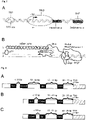
- the genome of the best characterized AVV serotype AAV-2 has a length of about 4.7 kb and contains as essential elements two open reading frames (ORFs) for the four regulatory (Rep) proteins Rep78, Rep68, Rep52 and Rep40 and the three capsid (Cap) proteins VP1, VP2 and VP3 flanked by two inverted terminal repeats (ITRs) of 145 bp each ( Figure 2 ).
- ORFs open reading frames
- Rep78, Rep68, Rep52 and Rep40 the three capsid proteins VP1, VP2 and VP3 flanked by two inverted terminal repeats (ITRs) of 145 bp each ( Figure 2 ).
- the AAV vector produced by the disclosed method is preferably based on the AAV-2 serotype. Accordingly, AAV-2 is used as the reference serotype throughout the invention. Unless explicitly stated otherwise, all references to the AAV genome, individual AAV proteins as well as nucleic acid or amino acid sequences of AAV are made with regard to AAV-2. The person skilled in the art can easily transfer all the information given with regard to AAV-2 genome to other AAV serotypes.
- the rep and cap genes of AAV-2 partially overlap, as they share a common intron.
- the large Rep proteins Rep78 and Rep68 are expressed under the control of the endogenous p5 promoter ( Redemann et al., 1989, J Virol 63 ) and play an essential role in AAV-2 DNA replication via their sequence-specific DNA binding to the AAV-ITRs ( McCarty et al., 1994 J. Virol 68 ).
- they stimulate the expression of the small Rep proteins Rep52/Rep40 and the capsid proteins in the presence of the helper virus by binding to other elements in the AAV-2 genome and a number of cellular transcription factors ( Pereira and Muzyczka, 1997, J Virol 71 ).
- the small Rep proteins Rep52 and Rep40 are expressed by the p19 promoter and are required for the insertion of newly formed single-stranded DNA into pre-formed capsids during DNA replication ( King et al., 2001, Embo J 20 )).
- Rep78 and Rep52 are encoded by unspliced transcripts, whereas the transcripts for the shorter variants Rep68 and Rep40 excise the intron localized in the 3' part of the rep gene.
- Replication studies show that one of the large Rep proteins Rep78 or Rep68 together with one of the small Rep proteins Rep52 or Rep40 is sufficient for replication of AAV-2 DNA and virus production ( Ward et al., 1994, J Virol 68 ).
- Cap capsid proteins
- VP1, VP2 and VP3 are produced under the control of the p40 promoter via the use of alternatively spliced transcripts and translation initiation codons ( Becerra et al., 1988, J Virol 68 , Muralidhar et al., 1994, J Virol 68 ) in the stoichiometry of 1:1:10 ( Xie et al., 2002, Proc Natl Acad Sci 99 ), which is also present in the final capsid.
- splice variant in which the same intron in the 3' part of the rep gene is excised as in the expression of Rep68 and Rep40, the synthesis of VP2 is triggered by a non-canonical ACG start codon and that of the main capsid protein VP3 by a regular AUG start codon further downstream.
- the less abundant alternatively spliced p40 transcript uses the same splice donor site but a more upstream splice acceptor site, so that this transcript still contains the AUG start codon for VP1.
- Capsid structures are assembled above a critical concentration of capsid proteins with the involvement of chaperones such as the AAV-encoded assembly activating protein (AAP).
- AAP AAV-encoded assembly activating protein
- AAP is necessary for the formation of infectious virus particles in the AAV-2 serotype and enhances this process in other serotypes ( Earley et al., 2017, J Virol 91 , Stanford et al., 2011, J Virol 85 , Stanford et al., 2010, Proc Natl Acad Sci 107 ). It is encoded by an alternative reading frame in the cap gene. AAV DNA replication and the assembly of finished DNA-containing viral particles are thought to constitute coupled processes.
- rAVV viral vectors
- a major factor in the use of viral vectors such as rAVV is safety, as they must not be harmful to the target organism. Therefore, replication-deficient AVV have to be developed, which can still introduce the therapeutic gene into the target cell, but can no longer replicate in it. This is achieved by removing viral genes that are essential for replication.
- AAVs are considered apathogenic and depend on helper viruses for productive replication, the coding viral sequences (Rep/Cap) in the recombinant genome are usually completely removed. This is intended on the one hand to make room for the therapeutic transgene, as the maximum packaging capacity for the vector genome is approximately in the order of magnitude of the wild-type genome with a length of 4.7 kb.
- possible toxic effects of high Rep concentrations should be avoided, as, e.g., for Rep78 in cell culture, a number of inhibitory effects on, inter alia, cell proliferation and the cell cycle have been described.
- Due to the deletion of the rep gene rAAV vectors also lose the ability to integrate into the genome of the transduced target cell. However, the episomal vector genomes show a very high stability in differentiated cells due to the formation of so-called concatamers.
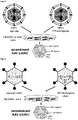
- AAV vector production can be successfully achieved by providing the AAV rep gene and the AAV cap gene from two separate recombinant adenoviral vectors, herein referred to as rep-vector and cap-vector or rep-rAdV and cap-rAdV, respectively. They could demonstrate that co-infection of a cell with separate rep- and cap- rAdVs can functionally replace the Rep/Cap cassette and the adenoviral helper functions of the traditional plasmid-based production method completely. This approach also eliminates the need to produce large quantities of highly purified plasmid DNA, which was necessary in the previous standard transfection process.
- Adenovirus refers a family of non-enveloped icosahedral viruses with a linear doublestranded DNA genome of a length of 26-45 kilo base pairs (kbp). Due to their large genome size, uncomplicated generation and the possibility of their amplifying to high titres without the need for complex complementing cell lines, recombinant adenoviruses (rAd) are considered attractive vectors for research applications and gene transfer.
- rAd vector (rAdV) technology has been continuously advanced to improve its safety and therapeutic potential.
- rAdV rAd vector
- three generations of rAdVs have been designed.
- Recombinant adenoviral vectors of the first generation still contain all adenoviral genes except for the E1a/E1b and the E3 region that are essential for virus replication. While the E3 region, due to its exclusively immunomodulatory function, is expendable for rAdV propagation in cell culture per se and is also not involved in the helper effect for productive AAV infection, the missing E1a/E1b functions required for rAdV amplification can be provided by, e.g., genetically modified packaging cells such as HEK293 cells.
- First generation rAdVs have a cloning capacity of about 8.2 kb.
- Second generation rAdVs further lack the non-structural E2 and E4 genes, which results in an increased cloning capacity of about 12 kb.
- third generation rAdVs have all their viral protein coding sequences removed and only retain the adenoviral ITRs and a packaging signal in cis . Accordingly, third generation rAdVs rely on co-infection with a helper adenovirus for provision of the viral proteins in trans.
- First generation rAdVs can be amplified inexpensively to very high titers by simple infection of well-established and easy-to-handle complementing cell lines such as HEK293. Furthermore, the cloning capacity of first generation AdVs is sufficiently large to harbor the AAV rep or the cap open reading frames. Therefore, in a preferred embodiment, the recombinant adenoviral rep- and cap-vectors are first generation recombinant adenoviral vectors (rAdVs). However, the rep- and cap -rAdVs may, in another embodiment, also be second generation rAdVs. The rep- and cap -rAdVs may also be third generation rAdVs. However, use of third generation rAdVs for the method of the invention would require co-infection with a suitable helper adenovirus as described above, and therefore is less preferable.
- the two different rAdVs used for the expression of the AAV Rep and Cap proteins can be produced by any method known from the state of the art.
- the rAdV may be produced using the AdEasy TM Adenoviral Vector System by the company Agilent Technologies, as described in the examples below.
- a person skilled in the art may however also refer to different rAdV production systems known in the art or may rely on commercially provided custom-made AdV services for obtaining the herein described rep- and cap-rAdVs.
- RIS-Ad Rep inhibition sequence for adenoviral replication
- the RIS-Ad inhibits adenoviral genome replication by a transcription-associated mechanism, apparently mediated by promoter-proximal paused RNA II polymerase complexes ( Weger et al, 2016, J Virol 90 ).
- the RIS-Ad corresponds to the nucleotide sequence of SEQ ID NO: 2 and spans the nucleotide (nt) positions 1701 to 2186 of the AAV-2 genome (SEQ ID NO: 1).
- the RIS-Ad is not able to express functional Rep proteins, but still comprises the p40 promoter responsible for the expression of the Cap proteins and large parts of the AAV intron as well as the splice donor site at nt position 1906 of SEQ ID NO. 1, which is essential for the splicing of the transcripts encoding the Cap proteins.
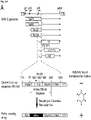
- RNA polymerase II producing these short transcripts pauses directly downstream of the p40 promoter, possibly leading to steric hindrance of replication of the rep-Ad genome in this region ( Figure 7 ).
- Recoding a nucleic acid refers to a substitution of the triplet codons encoding individual amino acids with synonymous triplet codons so that the translated amino acid sequence remains unchanged. Accordingly, only the primary nucleic acid sequence is altered by the recoding. This can be done since the 64-codon genetic code has redundancy but no ambiguity, i.e., multiple different nucleic acid codons encode for one and the same amino acid.
- the encoded polypeptides i.e., the AAV Rep proteins
- the encoded polypeptides remain unaffected since the amino acid sequence constituting said Rep-proteins is not altered.
- recoding modifies or, preferably, completely disrupts the p40 promoter inside the Rep ORF and thus interferes with RNA polymerase binding to the 3' end of the rep gene. Accordingly, inhibition of rAdV replication by the inserted Rep78 cassette can be abolished.
- the rep gene does no longer comprise a RIS-Ad, i.e., the entire RIS-Ad is recoded, e.g., into a nucleic acid sequence that shares 100% sequence identity to SEQ ID NO: 3 as previously described in Sitaraman et al.
- the recoded region may also have a nucleic acid sequence of at least 5%, at least 10%, at least 20%, at least 30%, at least 40%, at least 50%, at least 60%, at least 70%, at least 80%, at least 90%, at least 95%, at least 96%, at least 97%, at least 98% or at least 99% sequence identity to SEQ ID NO: 3.
- the recoded RIS-Ad has less than 95%, less than 90%, less than 80% or less than 70% sequence identity to SEQ ID NO: 2, i.e. the nucleic acid sequence of the wild-type RIS-Ad.
- the RIS-Ad can be further narrowed down to a nucleotide sequence spanning nt 1781-2060 of SEQ ID NO: 1 and corresponding to SEQ ID NO: 12.
- This so-called minimal RIS-Ad may be recoded as described for the RIS-Ad above.
- the recoded minimal RIS-Ad may therefore have a nucleic acid sequence according to SEQ ID NO: 13.
- the recoded minimal RIS-Ad may also have a nucleic acid sequence of at least 10%, at least 20%, at least 30%, at least 40%, at least 50%, at least 60%, at least 70%, at least 80%, at least 90%, at least 95%, at least 96%, at least 97%, at least 98% or at least 99% sequence identity to SEQ ID NO: 3.
- the recoded minimal RIS-Ad has less than 95%, less than 90%, less than 80%, less than 70%, less than 60% or less than 50% sequence identity to SEQ ID NO: 12, i.e. the nucleic acid sequence of the wild-type minimal RIS-Ad.
- sRep corresponds to amino acids 488 to 531 of the Rep78 protein (SEQ ID NO: 5).
- the recoded sub-region of the rep gene may also have a nucleic acid sequence of at least 20%, at least 30%, at least 40%, at least 50%, at least 60%, at least 70%, at least 80%, at least 90%, at least 95%, at least 96%, at least 97%, at least 98% or at least 99% sequence identity to sRep (SEQ ID NO: 4).
- the recoded sub-region of the RIS-Ad spanning nt 1782 to 1916 of SEQ ID NO: 1 has less than 80%, less than 70%, less than 60% or less than 50% sequence identity to the region of nt 1782 to 1916 of SEQ ID NO: 1.
- Recoding a nucleic acid region does not imply that every single triplet codon in said nucleic acid sequence has to be recoded.
- recoding a nucleic acid sequence refers to the recoding of merely one or more selected triplet codons within said sequence. For instance, it may suffice to only recode selected triplet codons within the RIS-Ad, e.g., regions within the p40 promoter that are bound by RNA polymerase or particular transcription factors.
- recoding of only nucleotides 1851-1856 of SEQ ID NO: 1 in the 3' region of the AAV rep gene harboring the p40 transcription start site (TSS) at nucleotide 1853 may be sufficient to reduce p40 promoter function and at least partially alleviate the inhibition of rep -AdV replication.
- a region of 17 nucleotides encompassing a GGT motif corresponding to nt 1781-1797 of SEQ ID NO: 1 may be recoded.
- both the p40 TSS corresponding to nt 1851-1856 of SEQ ID NO: 1 and the GGT motif-encompassing p40 region corresponding to nt 1781-1797 of SEQ ID NO: 1 is recoded while the rest of the RIS-Ad may remain unaltered.
- the Sp1-binding site covering nt positions 1802-1810 of SEQ ID NO: 1 and/or the AP1-binding site spanning nt 1813-1820 of SEQ ID NO: 1 may also suffice to recode the Sp1-binding site covering nt positions 1802-1810 of SEQ ID NO: 1 and/or the AP1-binding site spanning nt 1813-1820 of SEQ ID NO: 1 to reverse the inhibition of rep -AdV replication.
- the Sp1-binding site and/or the AP1-binding site may also be recoded in addition to the p40 TSS or the GGT motif-encompassing region spanning nt 1781-1797 of SEQ ID NO: 1.
- recoding of the RIS-Ad or “does not comprise a RIS-Ad” may herein be understood to mean, e.g., the recoding of the entire RIS-Ad corresponding to nt 1701 to 2186 of SEQ ID NO:1, the minimal RIS-Ad corresponding to nt 1781-2060 of SEQ ID NO: 1, the sub-region of the RIS-Ad corresponding to nt 1782-1916 of SEQ ID NO: 1, or merely selected codons of the RIS-Ad encompassing, e.g., the p40 TSS and/or individual transcription factor binding sites as described herein.
- Recoding of the RIS-Ad should reduce the activity of the physiological p40 promoter in the 3' region of the Rep ORF to an extent that the p40 promoter no longer interferes with the replication of the rep -AdV. In the context of the invention, this is achieved when recoding of the RIS-Ad reduces the activity of the p40 promoter to at most 30% of that of the wild type p40 promoter.
- the activity of the p40 promoter after recoding of the RIS-Ad is even lower than 30% of the activity of the wild type p40 promoter, e.g., the activity of the p40 promoter is preferably reduced to at most 25%, at most 20%, at most 15%, at most 10%, at most 9%, at most 8%, at most 7%, at most 6%, at most 5%, at most 4%, at most 3%, at most 2% or at most 1% of that of the wild type p40 promoter.
- recoding of the RIS-Ad results in a complete disruption of p40 promoter function, i.e. the p40 promoter exhibits no measurable transcriptional activity at all.
- the 5' end of the AAV-2 rep gene provided by the rep -AdV is operably linked to a promoter capable of driving expression of the large Rep proteins.
- a promoter is a DNA element that regulates the timing, rate and location of the transcription of an associated gene. Promoter regions are found upstream of their respective associated genes and are asymmetrically organized to indicate the direction of the gene's transcription into RNA. RNA polymerases initiate the transcription of a gene by binding to the promoter region of said gene. Promoters furthermore comprise a variety of specific sub-regions that may serve as binding sites for transcription factors. Dependent on the type of transcription factor bound to the promoter, transcription of the respective genes is either activated or repressed.
- a nucleic acid sequence e.g., a gene
- a nucleic acid sequence is considered to be "operably linked" to a promoter when said promoter is positioned in a correct functional location and/or orientation in relation to said nucleic acid sequence to control transcription of that sequence.
- the large AAV-2 Rep proteins Rep78 and Rep68 are transcribed under the control of the AAV-2 p5 promoter positioned at the 5' end of the Rep ORF, whereas the smaller Rep proteins Rep52 and Rep40 are transcribed from the internal p19 promoter present within the Rep ORF. Therefore, in one embodiment, the promoter operably linked to the 5' end of the AAV-2 rep gene in the rep -AdV is the endogenous AAV-2 p5 promoter.
- the inventors made the surprising discovery that the expression of Rep78 under the control of the physiological AAV-2 p5 promoter resulted in a significant inhibition of rep -AdV replication associated with high vector instability.
- the genetic instability of the rep -AdV may be due to a relatively strong binding element for the large Rep proteins (RBE) present in the p5 promoter.
- the physiological promoter operably linked to the AAV-2 rep gene inside the rep-AdV is not the AAV-2 p5 promoter but rather a heterologous promoter.
- a heterologous promoter refers to a promoter that has been artificially linked to a gene of interest, although said promoter normally does not control the expression of the gene.
- a heterologous promoter By using a heterologous promoter, the expression of a transgene may be enhanced or reduced.
- a heterologous promoter may be an inducible promoter that is only able to ignite gene expression in the presence of a chemical trigger factor.
- Heterologous promoters may also be cell- or tissue-specific promoters that ensure cell- or tissue-specific expression of their associated genes.
- the heterologous promoter of the rep -AdV may be any promoter suitable for transgene expression in a viral vector.
- the heterologous promoter linked to the rep gene is a weak promoter, such as an MMTV promoter, a PGK1 gene promoter, a UBC gene promoter, or an inducible promoter such as a tetracycline-inducible promoter, a Cumate-inducible promoter, an electrosensitive promoter or an optogenetic switch.
- a weak promoter such as an MMTV promoter, a PGK1 gene promoter, a UBC gene promoter, or an inducible promoter such as a tetracycline-inducible promoter, a Cumate-inducible promoter, an electrosensitive promoter or an optogenetic switch.
- the heterologous promoter may also be a constitutively active promoter such as a herpes simplex virus thymidine kinase (HSV-TK) promoter, a cytomegalovirus (CMV) promoter, a CAG promoter comprising the CMV early enhancer element, the promoter, the first exon and the first intron of chicken beta-actin and the splice acceptor of the rabbit beta globulin gene, a CMV and chicken ⁇ -actin (CBA) promoter, a Rous sarcoma virus (RSV) promoter, a human immunodeficiency virus (HIV) promoter, a Simian virus 40 (SV40) promoter, an adenovirus subtype 5 major late promoter (MLP) with or without the first adenovirus subtype 5 intron, a human ⁇ -actin promoter, a human elongation factor-1 ⁇ promoter, an EF1a gene promoter and a human beta actin
- the heterologous promoter of the rep -rAdV is a promoter that comprises at least one TATA-Box, at least one SP1-binding site and at least one CCAAT-Box comprising a CTF-binding site.
- the promoter comprises a TATA-Box, two SP1-binding sites (proximal and distal), and a CCAAT-Box comprising a CTF-binding site.
- the TATA-Box - also known as Goldberg-Hogness box - is a sequence of DNA commonly found in promoter regions and comprising a consensus sequence characterized by repeating thymine (T) and adenine (A) base pairs.
- the TATA-Box serves as a transcription factor binding site and is involved in transcription initiation.
- the Sp1 transcription factor is a so-called zinc finger transcription factor that binds to promoter motifs rich in guanine (G) and cytosine (C) base pairs.
- a CCAAT-Box is a stretch of DNA comprising the consensus sequence GGCCAATCT and is usually positioned about 60-100 bases to the initial transcription site.
- the CCAAT-Box serves as transcription factor binding site, such as for the CCAAT box-binding transcription factor (CTF).
- CTF CCAAT box-binding transcription factor
- the heterologous promoter is furthermore inducible by the transcription factor E2F, which in turn is inducible by the adenoviral function E1A.
- E2F-mediated induction is mediated via the above mentioned promoter elements, in particular via the at least one, preferably two Sp1-binding sites.
- a consensus E2F binding site overlapping with the CCAAT-Box may also be present within the promoter sequence without participating to a major extent in E2F activation.
- the distance between the TATA-Box and the upstream first Sp1-binding site located proximally to the TSS is in the range of 13 - 41 base pairs (bp), e.g., 15-20 bp, 20-25 bp, 25-30 bp, 30-35 bp or 35-41 bp.
- the distance between the TATA-Box and the proximal Sp1-binding site is 17-23 bp, e.g., 19 bp.
- the distance between the proximal Sp1-binding site and the sequence comprising the CCAAT-Box and the second Sp1-binding site located distally from the TSS (distal Sp1-binding site) is preferably in the range of 12-32 bp, e.g., 12-15 bp, 15-20 bp, 20-25 bp or 25-32 bp.
- the distance between the proximal Sp1-binding site and the region comprising the CCAAT-Box and the distal SP1-binding site is 20-25 bp, e.g., 22 bp.
- the CCAAT-Box and the distal Sp1-binding site should be closely juxtaposed with a distance of no more than 10 bp between each other.
- a scheme of an exemplary promoter comprising the mentioned elements in the herein described order is depicted in Fig. 8 .
- the thus described promoter sequences upstream of the TATA Box may also be inverted as long as after inversion the originally distal Sp1-binding site and therefore new proximal Sp1-binding site is distanced about of 13-41 bp away from the TATA box as described above.
- the first, proximal, Sp1-binding site may also be deleted to bring the sequence containing the CCAAT box and the distal Sp1 in close proximity to the TATA box.
- the element with the CCAAT box and the sole remaining Sp1-binding site may also be in an inverted configuration.
- the promoter is a herpes simplex virus thymidine kinase (HSV-TK) promoter.
- HSV-TK herpes simplex virus thymidine kinase
- the HSV-TK promoter is characterized by all of the above described elements and may have a nucleic acid sequence of SEQ ID NO.6.
- the HSV-TK promoter may also be a variant of a HSV-TK promoter having a nucleic acid sequence of at least 70%, at least 75%, at least 80%, at least 85%, at least 90%, at least 95%, at least 96%, at least 97%, at least 98% or at least 99% sequence identity to SEQ ID NO: 6.
- the HSV-TK promoter variant may also have nucleic acid sequence having less than 70% sequence identity to SEQ ID NO: 6, e.g. less than 65%, less than 60%, less than 55%, less than 50%, less than 45%, less than 40%, less than 35%, less than 30% or less than 25% sequence identity to SEQ ID NO: 6.
- the heterologous promoter operably linked to the 5' end of the rep gene shares only the TATA-Box, one or two SP1-binding sites of 10 bp each and the 12 bp CCAAT box with the HSV-TK promoter of SEQ ID NO: 6.
- both the Rep78 and the Rep52 proteins have previously been shown to inhibit adenoviral replication in trans. Without being bound by theory, it is believed that this inhibition is mediated by particular amino acids in the carboxy-terminal (C-terminal) part of Rep78 and Rep52 that are encoded by the AAV-2 intron.
- the AAV-2 intron encodes the most C-terminal 92 amino acids of both the Rep78 and the Rep52 proteins. These C-terminal, intron-encoded 92 amino acids correspond to amino acids 530 to 621 of Rep78.
- the termination codon for both Rep78/Rep52 is located in said intron.
- Rep68 and the Rep40 proteins which arise from alternative splicing of the Rep mRNA, lack these intron-encoded amino acids but instead comprise 7 additional amino acids in their C-terminus encoded by a stretch of nucleotides located immediately downstream of the splice acceptor site. These 7 Rep68/Rep40-specific C-terminal amino acids are in turn not present in Rep78 and Rep52.
- AAV serotypes e.g., AAV-1, AAV-3, AAV-4, AAV-6, AAV-7, AAV-8, AAV-9, AAV-10, AAV-11 or AAV-12, this applies in a corresponding manner.
- Rep proteins from a constitutively active promoter such as the HSV-TK promoter or the endogenous AAV-2 p5 promoter is preferably accompanied by a deletion of the AAV intron sequences encoding the C-terminal part of Rep78 and Rep52.
- the Rep ORF in the recombinant adenoviral rep-vector may be terminated to delete all of the 92 C-terminal amino acids of Rep78 and/or Rep52.
- the deletion may also encompass less than the 92 C-terminal amino acids of Rep78/Rep52.
- the Rep ORF may be terminated to delete only 91 of the intron-encoded C-terminal amino acids of Rep78/Rep52, as described in the examples below.
- less than 90, less than 85, less than 80, less than 75, less than 70, less than 65 less than 60, less than 55, less than 50, less than 40, less than 30, less than 20, less than 10 or even less than 5 intron-encoded amino acids are deleted in the truncated Rep78/Rep52 proteins.
- These selected amino acid may also be substituted, i.e., exchanged with other amino acids to abolish interactions of the Rep proteins with PKA.
- the deletion of the intron-encoded amino acids in the Rep78/Rep52 proteins starts almost directly after the splice donor site, by introducing a stop codon at, preferably, nucleotide position 1911 of SEQ ID NO: 1. Insertion of said stop-codon results in a Rep ORF that terminates at amino acid 531 and, therefore, in the expression of a truncated large Rep protein and a truncated small Rep protein.
- expression of the thus truncated Rep proteins under the control of the HSV-TK promoter allowed for unexpectedly stable replication of the rep-AdV at high titers of up to 3 x 10 11 GP/mL over several rounds of amplification.
- the Rep ORF in the recombinant adenoviral rep-vector is terminated at amino acid 531 by introducing a stop codon at nucleotide position 1911 of SEQ ID NO: 1. It is to be understood that truncating the Rep ORF does not render the recoding of the RIS-Ad dispensable.
- RIS-Ad recoding may still initiate at, e.g., nucleotide position 1782 of SEQ ID NO: 1 of the truncated Rep ORF to obtain a nucleic acid sequence corresponding to sRep (SEQ ID NO: 4).
- the RIS-Ad of the truncated Rep ORF may also be partially recoded as described herein. In any case, recoding preferably ends at nucleotide position 1910 of SEQ ID NO: 1 due to the stop codon being inserted at nt position 1911 of SEQ ID NO: 1.
- Rep1/530 capable of expressing a large Rep protein
- Rep225/530 preferably having an amino acid sequence consisting of the AAV-2 Rep78 amino acids 225-530 according to SEQ ID NO: 5
- Rep1/530 whose expression is preferably under control of a heterologous promoter such as the HSV-TK promoter
- the expression of the Rep225/530 protein preferably remains under the control of its physiological p19 promoter. Since the p19 promoter is located within the Rep78/Rep68 ORF, its replacement with a heterologous promoter would otherwise result in an unwanted disruption of Rep1/530 expression.
- Suitable first generation rAdVs that may be used in the method of the invention can be prepared by the skilled person.
- An exemplary rep -rAdV comprises a nucleic acid sequence of SEQ ID NO: 7.
- the rep-rAdV may also comprise a nucleic acid sequence having at least 80%, at least 85%, at least 90%, at least 95%, at least 96%, at least 97%, at least 98%, or at least 99% sequence identity to SEQ ID NO: 7. It may also consist of SEQ ID NO: 7.
- the first AdV according to the invention may comprise a different promoter region than in SEQ ID NO:7, e.g., another suitable promoter as taught herein.
- the second adenoviral vector used for infecting the cell herein referred to as cap-vector or cap -rAdV, comprises an expression cassette comprising the AAV cap gene operably linked to a promoter that is not the wild type p40 promoter.
- capsid refers to the protein shell of a virus that encloses the viral genome. Capsids usually consist of repeating structural subunits known as protomers and can be classified according to their geometrical structures.
- the capsid proteins encoded by the cap gene provided by the cap -rAdV may be the capsid proteins of the AAV serotype AAV-2, i.e., the capsid formed upon expression of the cap gene in the packaging cell may be an AAV-2 capsid.
- a viral "serotype" is a variation within single virus species that are classified together based on their surface antigens, i.e., in the case of AAV, based on their serotype-specific viral capsids.
- AAV serotypes AAV-2, -3, -5, -6 and -9 were first isolated from humans, serotypes AAV-4, -7, -8, -10, -11 and -12 were derived from monkeys and serotypes AAV-1 was isolated both from humans and monkeys.
- the distinct AAV serotypes may differ substantially in their tissue tropisms, i.e. they may target and infect distinct cell types and tissues.
- serotypes AAV-1, AAV-2, AAV-4, AAV-5 and AAV-8 are particularly suitable for transducing cells of the retina, whereas serotypes AAV-6 and -7 may be used for transducing skeletal muscle cells.
- the capsid of AAV serotype 9 enables AAV to bypass the blood-brain barrier (BBB) and is therefore a leading capsid for the transduction of the central nervous system (CNV) via systemic administration ( Wang et al., 2019, Nat Rev Drug Discov. ).
- the cap gene provided by the cap -rAdV may encode the structural capsid proteins of any known AAV serotype or any known capsid variant.
- it may encode the capsid proteins of any of AAV serotypes 1, 2, 3, 4, 5, 6, 7, 8, 9 and rh10, wherein, preferably, the structural proteins are from AAV serotype 1, 2, 5, 6, 8 and 9.
- pseudotyped rAAV-2 vectors that are particularly suitable for transducing a specific cell type or tissue of interest.
- a person skilled in the art will know how to modify the AAV-2 genome to ultimately obtain a pseudotyped AAV-2 vector.
- the 5' part of the AAV-2 intron which is located in a pyrimidine-rich region important for the function of the splice acceptor sites, may be fused with the 3' part of the intron of the respective other AAV-serotype and the subsequent serotype-specific capsid reading frame.
- the inhibition of adenoviral replication by the regulatory sequences for capsid expression localized in the 3' part of the AAV rep gene is not a serotype 2-specific phenomenon, but is also valid for the corresponding genome regions of other AAV serotypes.
- the cap gene may encode an AAV capsid that has been specifically modified to improve the targeting specificity of the produced AAV.
- the cap gene can be genetically modified to, e.g., express a peptide sequence on the capsid surface that can be bound by specific cellular receptors.
- An example for such a modification can be found, e.g., in Girod et al. (1999, Nature Medicine 5(9 )).
- peptide sequences such as single-chain variable fragments (scFvs) may be fused, e.g., to the VP2 protein to confer antibody-like recognition of cell surface markers (Wang et al., 2019).
- the cap gene may also be derived from directed evolution approaches with and without computational-aided pre-selection such as the SCH9 variant, which comprises fragments from AAV serotypes 2, 6, 8 and 9 ( Ojala, Molecular Therapy 26, 304-319, 2018 )
- the cap gene encoded by the cap-AdV may comprise at least one point mutation effective to increase the stability of the AAV capsid and/or change the tropism of the rAAV vector. For instance, site-specific mutagenesis of surface-exposed tyrosine residues Y252, Y272, Y444, Y500, Y700, Y704, and Y730 of the AAV-2 VP3 protein may protect the AAV capsid from proteasomal degradation ( Zhong et al., 2008, Proc. Natl. Acad. Sci 105 ). A study by Wu et al. (2006, J. Virol.
- the point mutation may be, preferably, a mutation such as Y444F, Y730F, T251A or R585A/R588A of SEQ ID NO:
- the AAV cap gene is normally transcribed from its physiological p40 promoter located in the 3' region of the Rep ORF, which, however, interferes with the replication of the adenoviral vector genome.
- the RIS-Ad within the 3' region of the rep gene needs to be recoded, as described herein.
- recoding reduces or completely abrogates the activity of the p40 promoter, thus preventing Cap protein expression if both the rep and cap genes are delivered in the same AdV.
- the present inventors decided to split the rep and the cap genes and provide them from two separate AdVs.
- the wild type p40 promoter constitutes a major element of the RIS-Ad, it cannot be used for generation of rAdVs expressing the AAV Cap proteins. Therefore, as a second measure, the cap gene has to be expressed under the control of a promoter that is not the wild type p40 promoter.
- the promoter that is operably liked to the cap gene may be a recoded p40 promoter, as described herein. It may thus be a p40 promoter that corresponds in its nucleic acid sequence to the respective area of sRep region described above.
- the recoded p40 promoter may thus have a nucleic acid sequence having at least 50%, at least 60%, at least 70% at least 75%, at least 80%, at least 85%, at least 90% at least 95%, at least 96%, at least 97%, at least 98% or at least 99% sequence identity to SEQ ID NO: 8.
- the recoded p40 promoter may also have a nucleic acid sequence having 100% sequence identity to SEQ ID NO: 8.
- the recoded p40 promoter may correspond in its nucleic acid sequence to the wild type p40 promoter with exception to the p40 transcription start site corresponding to nt 1851-1856 of SEQ ID NO: 1 and, optionally, the GGT motif-encompassing p40 region corresponding to nucleotides 1781-1797 of SEQ ID NO: 1, as described above and may have a nucleic acid sequence of SEQ ID NO: 9.
- the promoter that is operably linked to the cap gene provided by the cap -AdV is a heterologous promoter.
- the heterologous promoter of the cap-rAdV may be any heterologous promoter suitable for transgene expression in a viral vector.
- a constitutively active promoter such as a CMV promoter, a CAG promoter, a CBA promoter, an RSV promoter, an HIV promoter, an SV40 promoter, an HSV-TK promoter, an MLP with or without the first adenovirus subtype 5 intron, a human ⁇ -actin promoter, a human elongation factor-1 ⁇ promoter, an EF1a gene promoter, a PGK1 gene promoter, a UBC gene promoter and a human beta actin gene promoter.
- a constitutively active promoter such as a CMV promoter, a CAG promoter, a CBA promoter, an RSV promoter, an HIV promoter, an SV40 promoter, an HSV-TK promoter, an MLP with or without the first adenovirus subtype 5 intron, a human ⁇ -actin promoter, a human elongation factor-1 ⁇ promoter, an EF1a gene promoter, a PGK1
- the heterologous promoter of the cap -rAdV is a promoter that comprises at least one TATA-Box, at least one SP1-binding site, at least one CCAAT-Box and at least one CTF-binding site as described herein.
- the promoter is a HSV-TK promoter or any of the variants thereof described herein.
- An exemplary cap -rAdV that can be used in the method of the invention comprises a nucleic acid sequence of SEQ ID NO: 10.
- the cap -rAdV may also comprise a nucleic acid sequence having at least 80%, at least 85%, at least 90%, at least 95%, at least 96%, at least 97%, at least 98%, or at least 99% sequence identity to SEQ ID NO: 10. It may also consist of SEQ ID NO: 10.
- the cap -rAdV according to the invention may comprise a different promoter region than in SEQ ID NO: 10, e.g., another suitable promoter as taught herein.
- both the rep -rAdV and the cap -rAdV are administered to the cell at an MOI of 100-2000 genomic particles (GP)/cell each, e.g., an MOI of 100-500, 500-1000, 1000-1500 or 1500-2000 GP/cell each.
- the two AdVs are administered at an MOI of 150-1000 GP/cell, more preferably at an MOI of 175-750 GP/cell and most preferably at an MOI of 200-400 GP/cell each.
- the MOI multiplicity of infection describes the ratio of viral particles to their infection target, i.e., the target cell that is to be infected.
- administering an rAdV at an MOI of 200 GP/cell means that a single target cell is inoculated with 200 rAdV particles.
- the MOI allows indirect conclusions to be drawn about the number of viruses that ultimately enter a given cell. The probability that a cell will absorb a certain amount of virus particles when inoculated with a particular MOI can be calculated for a given cell population using a Poisson distribution. As the MOI increases, the percentages of cells infected with at least one viral particle also increases (https://en.wikipedia.org/wiki/Multiplicity_of_infection)
- the rep -rAdV and the cap -rAdV are preferably administered to the cell at a ratio of 1:2 to 2:1, more preferably at a ratio of 1:1.
- the cell is furthermore provided with a transgene-vector comprising an expression cassette comprising a transgene operably linked to a promoter, wherein the expression cassette is flanked by AAV inverted terminal repeats (ITR).
- a transgene-vector comprising an expression cassette comprising a transgene operably linked to a promoter, wherein the expression cassette is flanked by AAV inverted terminal repeats (ITR).
- the transgene vector preferably is a starter recombinant AAV vector that is provided to the cell alongside the rep -rAdV and the cap -rAdV.
- the transgene vector may however also be a plasmid or a third recombinant adenoviral vector.
- the term "providing" the transgene vector refers to a method of delivering the transgene vector into the target packaging cell so that the expression cassette comprising the cargo transgene can be packaged into a viral vector particle by said cell.
- the specific method of transgene vector "provision" depends on the exact nature of the vector.
- the transgene vector is a viral vector such as a starter AAV vector or an adenoviral vector
- the transgene vector is provided to the cell via infection of said cell.
- the expression cassette comprising the transgene is introduced into the cell by a process known as transduction. Therefore, in case the method of the invention uses a viral vector for transgene delivery, the method is entirely infection-based.
- the transgene vector is a plasmid
- it is preferably provided to the cell via a suitable transfection method known from the state of the art, e.g., via electroporation, microinjection, the use of a gene gun, impalefection, hydrostatic pressure, continuous infusion, sonication, lipofection, non-liposomal reagents such as Fugene or, preferably, calcium phosphate precipitation-based transfection.
- transgene in the context of the invention, the terms “transgene”, “therapeutic gene” or “cargo sequence” are used synonymously and refer to either a nucleic acid sequence that is effective per se (for example, a regulatory RNA) or a nucleic acid sequence coding for a therapeutic polypeptide or protein, each including all control elements necessary for the expression, such as promoters or post-transcriptional regulatory elements (for example polyadenylation sequences).
- the choice of the transgene depends on the intended application of the produced rAAV.
- the transgene is a nucleic acid sequence encoding a polypeptide or protein
- the transgene preferably is a complementary DNA (cDNA) that has been generated via reverse transcription from messenger RNA (mRNA) transcribed from the gene of interest and that lacks introns normally present in the gene of interest.
- mRNA messenger RNA
- it may be the complete gene of interest comprising introns and, optionally, regulatory regions provided that the length of the transgene does not exceed the packaging limit of the final rAAV vector.
- the transgene may alternatively be synthetically engineered. It may, e.g., be codon-optimized to ensure efficient expression of the gene of interest in a target cell, e.g., codon-optimized for expression in human cells.
- the cargo sequence may, optionally, further comprise an internal ribosomal entry site (IRES), i.e. an RNA element that mediates mRNA translation in the absence of a 5' cap structure and allows for co-expression of multiple genes under the control of a single promoter.
- IRS internal ribosomal entry site
- the cargo sequence may be transcribed into a regulatory RNA selected from the group comprising a microRNA, a short hairpin RNA, a single guide RNA and a long non-coding RNA.
- the promoter of the transgene expression cassette is preferably a constitutively active promoter such as a CMV promoter, a CAG promoter, a CBA promoter, an RSV promoter, an HIV promoter, an SV40 promoter, an HSV-TK promoter, a human ⁇ -actin promoter, a human elongation factor-1 ⁇ promoter, an EF1a gene promoter, a PGK1 gene promoter, and a UBC gene promoter, an MLP with or without the first adenovirus subtype 5 intron, an inducible promoter selected from the group comprising a TET-inducible promoter, a Cumate-inducible promoter, an electrosensitive promoter and an optogenetic switch or a tissue specific promoter.
- a constitutively active promoter such as a CMV promoter, a CAG promoter, a CBA promoter, an RSV promoter, an HIV promoter, an SV40 promoter, an HSV-TK promoter,
- the promoter controlling transgene expression may alternatively also be an AAV-specific promoter. It may, e.g., be an AAV-2 p5, p19 or p40 promoter.
- the expression cassette in the transgene vector may further comprise additional regulatory elements besides the promoter that are capable of enhancing transgene expression.
- additional regulatory elements besides the promoter that are capable of enhancing transgene expression.
- the transgene may, e.g., comprise an additional intron capable of enhancing transgene expression.
- the transgene vector may further comprise a woodchuck hepatitis post-transcriptional regulatory element (WPRE).
- WPRE RNA sequence creates a tertiary structure enhancing expression when transcribed from the DNA. The sequence is commonly used in molecular biology to increase expression of genes delivered by viral vectors.
- the transgene is furthermore preferably codon-optimized, i.e. particular codons in the transgene may be substituted by synonymous codons that are preferably used by an organism such as a human to improve gene expression. Codon optimization may help to overcome the impact of a disfavorable GC content, cryptic splice sites, transcription termination signals, motifs that affect RNA stability and/or nucleic acid secondary structures that may be normally present in the transgene.
- the terminal AAV ITRs that flank the expression cassette of the transgene vector are required at the nucleic acid level ( in cis ) for genome replication and packaging of the replicated AAV genome.
- the AAV ITRs are derived from the AAV-2 serotype.
- the AAV ITRs may also be derived from an AAV serotype other than serotype 2.
- the transgene vector preferably is a "starter rAAV vector".
- a starter rAAV is a viral rAAV vector used to initiate rAAV production. It is identical to the rAAV vector that is ultimately for use in clinical research or gene therapy.
- a starter rAAV vector is pre-produced in relatively small amounts and is subsequently amplified by the method of the invention over several rounds to obtain vector titers sufficiently high for pre-clinical and clinical applications.
- the present inventors found that they were able to amplify a starter rAAV by a factor of up to 1000 to 1500-fold using the method of the invention.
- the starter rAAV vector may have been originally obtained by any rAAV vector production method known to the skilled person.
- the starter rAAV vector may be obtainable, e.g., by traditional co-transfection of a packaging cell with a mixture of a vector plasmid and one or more helper plasmids, as described above.
- the starter rAAV vector may be obtainable via an infection-based production method, such as by infecting, e.g., an insect cell with baculoviruses encoding an AAV-ITR flanked transgene cassette of interest and the AAV Rep and Cap proteins.
- the starter rAAV vector may also be obtained by the method of the invention, i.e., a rAAV vector that was obtained through the herein disclosed method may serve as a new starter rAAV vector for an ensuing round of rAAV vector amplification. Accordingly, the method of the invention can be repeated for several rounds for continuous rAAV vector amplification to maximize the final vector yield.
- the starter rAAV vector can be administered to the cell at relatively low MOIs in the range of 10-1500 GP/cell, e.g., at a MOI of 10-100, 100-500, 500-1200 GP/cell or, preferably, at a MOI of 20-50 GP/cell or less.
- An exemplary starter rAAV vector lacking a transgene that can be used as a transgene vector in the method of the invention comprises a nucleic acid sequence of SEQ ID NO: 11.
- the starter rAAV vector may also comprise a nucleic acid sequence having at least 80%, at least 85%, at least 90%, at least 95%, at least 96%, at least 97%, at least 98%, or at least 99% sequence identity to SEQ ID NO: 11.
- the starter rAAV vector according to the invention may comprise a different promoter region than in SEQ ID NO: 11, e.g., another suitable promoter as taught herein.
- the transgene vector may be starter recombinant adenoviral vector.
- a starter recombinant adenoviral vector is a recombinant adenoviral vector vector used to initiate rAAV production.
- the starter recombinant adenoviral vector is a third recombinant adenoviral vector that is administered to the infected cell alongside with the rep-rAdV and the cap-rAdV.
- the transgene-AdV may be a first, a second or a third generation AdV.
- the transgene AdV may be administered to the cell at a MOI of 100-500, 500-1000, 1000-1500 or 1500-2000 GP/cell. Preferably it is administered at a MOI of 150-1000 GP/cell, more preferably at a MOI of 175-750 GP/cell and most preferably at a MOI of 200-400 GP/cell.
- the AVV-ITR transgene-comprising expression cassette may also be provided by a viral vector that is not a starter AAV or an AdV.
- the viral transgene vector may be derived from a retroviral vector. It may, e.g., be a lentiviral vector.
- the transgene vector may also be a starter transfection plasmid, i.e., a plasmid used to initiate rAAV production. Plasmids are relatively small circular DNA molecules that are widely used as vectors in molecular cloning.
- the transgene vector is a plasmid
- said plasmid may be a plasmid that is derived from either bacteria or yeast.
- a person skilled in the art will be able to choose from various plasmid types known from the state of the art to identify a suitable plasmid for transgene delivery.
- a suitable transgene plasmid for AAV vector production is, e.g., the pTR-UF5 plasmid, as described in the examples below.
- the transgene vector preferably is a starter rAAV vector.
- the inventors found that provision of the transgene via a plasmid vector or a third rAdV resulted in higher levels of empty capsids.
- empty capsids may serve as decoys for antibodies produced by the immune system against AAV vectors, and may thus help to prevent antibodies from capturing co-administered rAAV particles carrying a transgene.
- a high fraction of empty AAV capsids obtained during AAV vector production is usually less desired. Empty capsid can further stimulate unwanted immune responses against the AAV vectors and thus reduce the chances of success of a given gene therapy.
- the cell that is infected with the rep- and the cap -rAdVs and provided with the transgene vector serves as a packaging cell for rAAV vector assembly.
- the cell is preferably a cell of a human cell line, such as, e.g., a human embryonic kidney 293 (HEK293) cell, a HEK293T cell, or a HeLa cell.
- HEK293 human embryonic kidney 293
- HEK293T cell a HeLa cell.
- the cell is a HEK293 cell or a HEK293T cell, most preferably a HEK293 cell.
- the cell may be an adherent cell, i.e. it may require a surface or an artificial substrate for growth.
- the production method according to the invention can be easily adapted to vector production in free floating cells, i.e. suspended cells, thus allowing for larger scale AAV vector production.
- the cell used as a packaging cell preferably is a cell in suspension that is present in a suitable medium, e.g. a serum-free medium such as Gibco ® CD 293 Medium by ThermoFisher Scientific. Accordingly, the cell may be, e.g., a Gibco ® 293-F cell.
- the suspended cell may be infected with the rep -AdV, the cap- AdV and, optionally, the transgene rAdV at an MOI of about 100-2000 GP/cell, respectively, e.g., an MOI of 100-500, 500-1000, 1000-1500 or 1500-2000 GP/cell, respectively.
- the transgene vector is a starter rAAV
- it may be administered to the suspended cells at an MOI of 10-1500 GP/cell, e.g., at a MOI of 10-100, 100-500 or 500-1200 GP/cell.
- Infection of the suspended cells may last for 24-96h, e.g. for 24-36 h, 36-48 h, 48-60 h, 60-72 h, 72-84 h or 84-96 h.
- infection of the suspended cells lasts for 64-96 h.
- the cell furthermore does not need to be genetically modified to provide the adenoviral helper functions.
- the transgene vector is a viral vector
- the two rAdVs carrying the rep and the cap genes as well as the transgene vector can be administered simultaneously to the cell via co-infection.
- the vectors may be administered sequentially, e.g., the viral transgene vector is administered first, followed by provision of the two rAdVs comprising the rep and cap genes.
- the order of infection is deemed to be of no particular relevance.
- the transgene vector is a plasmid
- the cell may first be infected with the two rAdVs before being transfected with the transgene vector plasmid, or vice versa.
- the newly generated viral particles need to be harvested.
- the right time point for virus harvesting is characterized by structural changes in the packaging cells caused by the viral invasion. These structural changes are summarized by the term "cytopathic effect", which is well known to a person skilled in the art.
- the time between infection/transfection of the package cell and harvesting of the produced AAV vector particles or the AAV virus-like particles may take several hours to several days, e.g., 12-96 h, 24-72 h, 36-60 h, or 40-50 h.
- the present inventors found that viral particles could be usually harvested about 64-72 h after infection/transfection of the packaging cells.
- the newly produced and harvested rAAV vectors or AAV virus-like particles are purified according to standard laboratory technologies known to a person skilled in the art.
- AAV particle purification may for instance be achieved via chromatographical methods, e.g., an HPLC affinity chromatography with AVB sepharose as described in the examples below.
- the rAAV vectors or virus-like particles may further be formulated and or packaged for administration.
- AAV-VLPs empty AAV virus-like particles
- the inventors found that infection of HEK293 cells alone with the cap -AdV was sufficient to produce high levels of empty AAV capsids. These could be purified in high yield by affinity chromatography in the same way as complete rAAV vectors.
- the AAV-VLPs can be for use in, e.g., overcoming an existing B-cell immune response against AAV, as they act as binding dummies for existing antibodies.
- Other possible applications of AAV-VLPs are, e.g., in diagnostics, where they can be used as antigens for the specific detection of antibodies against different AAV serotypes.
- kits or compositions for producing a recombinant adeno-associated virus (rAAV) vector according to the method of the invention, wherein said kit or composition comprises
- the transgene vector preferably is a starter rAAV vector comprising an expression cassette comprising a transgene operably linked to a heterologous promoter, wherein the expression cassette is flanked by AAV inverted terminal repeats (ITR).
- ITR AAV inverted terminal repeats
- the kit may comprise a single compartment in which the three different viral vectors are mixed together. Alternatively, the three different viral vectors are physically separated into up to three distinct compartments that are only mixed prior to or during use of the kit.
- the kit may also comprise two compartments, wherein, preferably, one compartment comprises the starter rAAV vector and the other compartment comprises the two AdVs.
- the components of the kit i.e. the three different viral vectors may also not be mixed at all, e.g., they may be administered to a suitable packaging cell separately during three separate infection steps.
- the different vectors may be present in a suitable storage medium such as PEG 6000 or a solution comprising glycerol to stabilize the viral vectors during freezing.
- the kit or composition may be stored at temperatures of 2-6°C for several days to several weeks, e.g., 1 day to 4 weeks, 1 day to 3 weeks, 1 day to 2 weeks or 1 day to 7 days.
- the kit or composition may be stored at 2-6°C for less than 2 weeks.
- the kit or composition may be stored at -80°C for a period between several weeks to several month before use, e.g. from 4 weeks to 24 months, from 2 months to 20 months, from 4 months to 16 months, from 8 months to 14 months of for about 12 months.
- the kit or composition may be stored at -80°C for even longer periods before use, e.g. for 3 years, for 4 years, for 5 years, for 6 years, for 7 years, for 8 years, for 9 years, or even for up to 10 years.
- the herein disclosed manufacturing method and kits for AAV vector production allow, e.g., small quantities of pre-produced rAAV to be amplified by a factor of up to 1000 to 1500-fold in a single simple co-infection step.
- the yields per initially inserted cell are in the range of 2-4 x 10 4 genomic copies/inserted cell after affinity chromatic purification of the newly produced rAAVs.
- the time-consuming generation of new transgene-specific packaging cell lines or helper viruses, as is absolutely necessary with other infection-based rAAV packaging methods, is not required. Due to the simple handling and the high rAAV yields, this novel production system should be of interest to all users who e.g. want to quickly bring an rAAV vector already characterized in the laboratory into testing in the animal model and into clinical application.
- Plasmid pTR-UF5 (Zolotukhin et al., 1996) carrying a CMV enhancer/promoter driven GFP cassette flanked by the AAV-2 ITR's was kindly provided by Nick Muzyczka (University of Florida).
- the plasmids pShuttle-p5-Rep and pShuttle-p5-sRep containing the AAV-2 p5 promoter and the complete Rep78 coding region have been described (Weger et al., 2014).
- the term sRep denotes a Rep78 sequence with recoding of AAV-2 nt 1782 to 1916 according to Sitaraman et al. (Sitaraman et al., 2011).
- a cassette containing the CMV promoter, the rtTA (M2) transactivator and the Tet promoter (an array of 7 Tet-Operator sequences followed by a CMV core promoter) was excised as Hindlll/Agel fragment from plasmid pD-Tet-M2-K1, and assembled with the corresponding Rep78 ORFs (either wildtype or sRep nucleotide sequence), generated as PCR fragments with flanking Agel/Xbal sites, in Hindlll/Xbal digested pShuttle vector by three-component ligation.
- Plasmids pShuttle-p40-Cap and pShuttle-s-p40-Cap have been described (Weger et al., 2014).
- AAV-2 Cap proteins under the control of heterologous promoters CMV ( human cytomegalovirus early enhancer / promoter ), PGK ( murine phosphoglycerate kinase promoter ), HSV-TK ( herpes simplex virus thymidine kinase promoter ) and adenovirus subtype 5 MLP ( major late promoter ), the p40 promoter sequences in pShuttle-p40-Cap up to the HindIII site at AAV-2 nt 1882 were replaced by the corresponding heterologous promoter sequences amplified from suitable parental plasmids with primers generating Xbal and HindIII sites for cloning.
- CMV human cytomegalovirus early enhancer / promoter
- PGK murine phosphoglycerate kina
- Ad-MLP sequence contains nt -506 to +192 with respect to the start site for the late Ad5 transcripts including the first leader sequence, while the sequence denoted as Ad-MLP-I additionally contains the complete first intron and the second leader sequence (nt -506 to 1134 with respect to the transcription start site).
- the complete ITR-flanked transgene cassette was excised from pTR-UF26 (Mietzsch et al., 2014) with Pstl, first subcloned into pBluescript II SK (+) and then excised with EcoRV/Xbal for cloning into the pShuttle vector.
- An additional Pacl site present in a non-essential region of the transgene cassette was deleted by partial digestion, fill-in reaction and religation.
- pShuttle-HSV-TK-sRep78 was generated by exchanging the CMV-M2-Tet cassette in pShuttle-M2-Tet-sRep with the HSV-TK promoter amplified with primers generating HindIII and Agel sites for subcloning.
- the sRep78 cassette in pShuttle-HSV-TK-sRep78 was exchanged for the corresponding partially recoded Rep sequences through the Agel and Xbal sites flanking the Rep ORF.
- the sRep1/530 sequence was amplified from pShuttle-M2-Tet-sRep with primers generating an Agel site at the 5'-end and introducing the termination codon TAA downstream from Rep78 amino acid 530 and an Xbal site at the 3'-end, respectively.
- the sRep68 sequence was amplified from pShuttle-M2-Tet-sRep with primers generating an Agel site at the 5'-end and a primer encoding the first 3 Rep68-specific amino acids with a BssHII restriction in frame with Rep78 amino acid 529.
- the Agel/BssHII-cut amplification product was ligated to the Agel/Xbal cut vector using a BssHII/Xbal linker containing the remaining 4 Rep68-specific amino and a termination codon.
- All pAdEasy constructs were generated from the corresponding pShuttle plasmids through homologous recombination of Pmel linearized DNA in E.coli BJ5183-AD-1 cells (Agilent) containing the pAdEasy-1 plasmid (Genbank accession no. AY370909).
- HEK293 human embryonal kidney, ATCC CRL-1573
- HeLa human cervix carcionoma
- DMEM Dulbecco's modified Eagle medium
- FCS fetal calf serum
- Transfections of HEK-293 cells were performed by the calcium phosphate precipitate technique as described (Winter et al., 2012). The numbers of cells seeded the day before transfection were 3 x 10 5 cells for 6-well plates, 6 x 10 5 cells for 25 cm 2 flasks or 4 x 10 6 cells for 14.5 cm dishes, respectively.
- rAdV recombinant adenoviral vectors
- rAdV was generated with the AdEasy system (He et al., 1998, Luo et al., 2007) largely as described.
- the corresponding pShuttle constructs were linearized with Pmel and electroporated into E.coli BJ5183-AD-1 cells for homologous recombination with the E1/E3 deleted Ad5 genome contained on the stably transformed pAdEasy plasmid.
- Recombinant pAdEasy plasmid DNA was amplified in E.coli XL-1-Blue cells, linearized with Pacl and transfected into HEK-293 cells in 25 cm 2 flasks.
- the primary rAdV preparation was harvested 12 to 14 days post transfection by four freeze-thaw cycles in liquid nitrogen/37°C water bath in 2 ml of medium. 1.5 ml of the supernatant was used for first round of amplification with 2 x 10 6 cells seeded in 75 cm 2 flasks the day before infection. Further rounds of amplification and purification by CsCI gradient centrifugation were performed as described (Luo et al., 2007).
- Adenoviral genomic particles in rAdV freeze-thaw supernatants or CsCI purified rAdV were determined by Light-Cycler based Real Time PCR with the GoTaq qPCR Master Mix (Promega) using Primers E4-Q1 and E4-Q2 for amplification of a 202 bp region from the Ad5-E4 region as described recently (Weger et al., 2014).
- rAdV recombinant adenoviruses
- HEK-293 cells were infected in the appropriate cell culture vessels with the indicated amounts (MOI generally stated in genomic particles per cell) of rAdV freeze-thaw lysates or CsCI purified rAdV without prior removal of the cell culture media.
- Immunoblot analysis of purified rAAV-2 preparations for capsid content or of whole cell extracts from transfected or rAdV infected HEK-293 cells for AAV-2 Cap or Rep expression was performed with anti-Cap monoclonal antibody B1 diluted 1:20 or anti-Rep monoclonal antibody 303.9 diluted 1:10 (both from Progen, Heidelberg, Germany), respectively, followed by incubation with horseradish peroxidase conjugated secondary antibodies and enhanced chemiluminescent detection (ECL) as described previously (Winter et al., 2012).
- ECL enhanced chemiluminescent detection
- Capsid protein contents of purified rAAV-2 vector preparations were analyzed in silver stained gels with different amounts of vector, corresponding to 1.0 x 10 8 to 1.0 x10 10 genomic particles, directly lysed in protein sample buffer, incubated for 5 min at 95°C and separated on 8% polyacrylamide/SDS gels. The staining reaction was performed as described in (Mietzsch et al., 2014).
- HEK-293 cells were seeded at 25 to 30% confluency. 24 hours later, cells were either (I) transfected with pTR-UF5 and additionally infected with the two rAdVfor Rep and Cap protein expression, (II) transduced with prepackaged starter rAAV-GFP and co-infected with the two rAdV for Rep and Cap protein expression or (IV) triple-infected with ITR-GFP-rAdV providing the ITR-flanked GFP vector DNA and the two rAdV for Rep and Cap protein expression.
- Cells co-transfected with the pDG helper and the pTR-UF5 GFP-expressing vector plasmid at a 1:1 molecular ratio were generally used as positive control (pc).
- the cell medium was replaced by fresh medium 16 hours post transfection.
- Cells were generally harvested 64 hours post transfection/infection.
- the scraped cells were directly lysed in the medium by three freeze-thaw cycles and, after centrifugation, the supernatant was stored at -80°C fur further use.
- harvested cells were washed with PBS, resuspended in 1 ml of lysis buffer (10mM Tis-HCI pH 8.5, 150mM NaCl, 1 mM MgCl 2 and 1% Triton-X-100 v/v) per 14.5 cm dish and lysed by three freeze-thaw cycles.
- Crude lysates were treated with 250U benzonase (Merck) per ml lysate at 37°C for 1 hour to degrade unpackaged AAV DNA and centrifuged at 8,000g for 30 minutes to pellet cell debris. The supernatant was frozen at -80°C for at least 1 hour.
- the RIS-Ad a regulatory element in the AAV genome inhibiting adenoviral replication in cis ( Fig. 9A ), not only constitutes part of the Rep ORF, but it is also required for efficient Cap protein expression through control of p40 promoter activity and AAV-2 splicing (Weger et al., 2016).
- Our basic strategy for rAdV-mediated expression of AAV Rep and Cap proteins therefore relied on separation of these AAV genes onto two different vectors.
- Rep protein expression we impeded RIS-Ad function by recoding of Rep78 amino acids 488 to 531 ( Fig. 9A , termed sRep).
- Rep78 has been shown to inhibit adenoviral replication in trans (Timpe et al., 2006, Weger et al., 2014), we used not only the physiological AAV-2 p5 promoter, but in parallel also the weaker MMTV-LTR ( Fig. 9B , MMTV-Rep and MMTV-sRep) and an inducible system to drive its expression.
- the later consisted of a constitutive expression cassette for the tetracycline dependent transactivator (rtTA/M2) directly linked to the corresponding response element upstream of the Rep ORF ( Fig. 9B , M2-Tet constructs).
- the small Rep proteins were generally expressed under control of the internal AAV-2 p19 promoter.
- the initial rAdV preparations obtained from MMTV-sRep and M2-Tet-sRep constructs could be successfully passaged with titers in the range of 3 x 10 11 to 6 x 10 11 genomic particles (gp)/ml in freeze-thaw medium supernatants obtained after 5 to 6 amplification rounds. These titers were comparable to those of the rAdV-CMV-GFP control virus.
- the rAdV vectors could be concentrated to titers of 2 to 4 x 10 12 gp/ml.
- rAdV-MMTV-sRep expressed lower Rep52 and especially Rep78 amounts with Rep78 levels in the range of the positive control only at the vector dose of 4000 gp/cell ( Fig. 10A , upper panel, lanes 3 to 6).
- Rep78 amounts with Rep78 levels in the range of the positive control only at the vector dose of 4000 gp/cell ( Fig. 10A , upper panel, lanes 3 to 6).
- barely any doxycycline mediated induction of Rep78 expression was observed for rAdV-M2-Tet-sRep ( Fig. 10A , lower panel).
- Recombinant Adenoviruses can mediate high-level expression of the AAV-2 Cap proteins under control of the HSV-TK promoter.
- Fig. 9A As the wildtype p40 promoter constitutes a major element of the RIS-Ad ( Fig. 9A ), it could not be used for generation of rAdVs expressing the AAV-2 Cap proteins (Weger et al., 2014).
- Different heterologous promoters Fig. 11A
- MLP adenovirus subtype 5 major late major late promoter
- transducing rAAV-GFP particles in freeze-thaw supernatants were determined by secondary transduction of HeLa cells. Representative experiments for each of the three setups with a positive control (standard cotransfection) included in each experiment are shown in the lower part of fig. 12 . Generally, with optimized MOIs (given as GP/cell) of the viral components, similar amounts of transducing particles as in the positive control could be obtained for all three setups.
- the number of transducing units could be amplified by a factor of 100 to 200 using freeze-thaw supernatants as a source of starter rAAV-GFP ( fig. 12 , II).
- Providing the GFP vector template as rAdV (setup III, rAd triple infection) also led to high yields of transducing rAAV-GFP particles with a clear decrease at higher MOIs of ITR-GFP-rAdV (shown for MOI 10000 in fig. 12 , III). This is probably due to interference with the rAdVs for Rep and Cap expression as demonstrated by Western analysis (not shown).
- the yields of the purified rAAV-GFP vector fractions were in a similar range of about 1 x 10 4 GP/cell (burst size), regardless of the setup used for packaging ( fig. 13A ).
- AAV-2 wildtype genomes were below the detection limit of the PCR-based assay in all preparations.
- All purified vectors also showed similar transduction rates in HeLa cells over a wide range of MOIs, when normalized for genomic particles ( fig. 13B ). The only exceptions were the rAAV-GFP vectors produced by rAdV triple infections, which tended to lead to higher transduction rates.
- the latter finding may be due to a slightly different promoter (chicken ⁇ -actin CMV hybrid vs. CMV promoter) in these vectors due to the nature of the rAdV providing the vector template.
- a slightly different promoter chicken ⁇ -actin CMV hybrid vs. CMV promoter
- rAdV-mediated starter rAAV amplification method fig. 12 , method II
- an increase in the input number of genomic rAAV-GFP particles by a factor of about 100 to 200 and an increase in transducing particles of about 200 to 400 were achieved.
- rAAV vector preparations generated by protocols I and III showed an up to 10-fold higher capsid protein content than the one generated by the classical co-transfection protocol, pointing to a probable excess of empty particles.
- rAdV-M2-Tet-sRep and rAdV-HSV-TK-Cap were passaged over 15 rounds with amplification factors of 50 to 150 achieved for each individual round of amplification, as determined by analysis of the amount of genomic particles.
- the genomic titers obtained in freeze-thaw lysates (with about 3.0 to 4.0 x 10 6 cells lysed in 1 ml of medium) were in a largely constant range of 2 to 6 x 10 11 GP/ml for rAdV-M2-Tet-sRep ( fig. 14A , left panel) after two and rAdV-HSV-TK-Cap ( fig. 14A , right panel) after five amplification rounds, respectively.
- assessment of the integrity of the vectors by PCR-based analysis with primers spanning the complete transgene cassette revealed only one distinct major amplification product throughout the complete upper series (starting with round 4) of amplification rounds ( fig.
- rAdV-HSV-TK-sRep68 and rAdV-HSV-TK-sRep1/530 also led to strong abundance of replicative intermediates after coinfection with a purified starter rAAV2-GFP vector as source of a recombinant AAV genome ( fig. 15C ).
- MOIs of 200 and 1000 these levels of rAAV-GFP replicative intermediates were clearly higher than for the positive control, the pDG/pTR-UF5 cotransfection ( fig. 15C ).
- rAAV-GFP preparations were free of contaminating proteins as judged by silver staining ( fig. 16F ).
- rAdV-HSV-TK-sRep1/530 vector and the rAdV-HSV-TK-Cap vector we could amplify small amounts of pre-purified starter rAAV vector with high efficiency obtaining rAAV preparations with favorable properties.
- rAd-HSV-TK-sRep1/530 could be stably propagated without loss of genomic integrity ( Fig. 16B ) or Rep protein expression (data not shown) for at least 10 amplification rounds.
- Table 1 Characteristics of three independent starter rAAV-GFP serotype 2 amplifications performed with rAdV-HSV-TK-sRep1/530 and rAdV-HSV-TK-Cap (AAV-2) rAAV-GFP amplification number of cells
- an AAV2-ITR based vector genome can also be packaged into the corresponding heterologous capsids.
- Such vectors are accordingly referred to as pseudotyped rAAV vectors (cf. also Fig. 4 , "rAAV-2/X", where "X” stands for the serotype of the capsid proteins used).
- pseudotyped rAAV vectors cf. also Fig. 4 , "rAAV-2/X", where "X” stands for the serotype of the capsid proteins used.
- the inhibition of adenoviral replication by the regulatory sequences for capsid expression localized in the 3' part of the AAV rep gene does not represent a serotype 2-specific phenomenon, but also applies to the corresponding genome regions of other AAV serotypes (Weger et al., 2016). Accordingly, the capsid proteins of alternative AAV serotypes were also placed under the control of the HSV-TK promoter.
- the 5'-part of the AAV-2 intron was fused with the 3'-part of the intron of the alternative serotypes followed by the corresponding downstream located capsid reading frame, with the fusion site located directly upstream of the pyrimidine-rich region of the respective splice acceptor sites ( Fig. 17A ).
- rAdV with the respective HSV-TK driven capsid reading frame could be stably propagated over at least six amplification rounds.
- these rAdV led to a strong expression of the respective capsid proteins ( Fig. 17B ).
- capsid proteins VP1, VP2 and VP3 were expressed in a correct size and stoichiometry for all cloned serotypes.
- the capsid proteins of AAV serotypes 5 and 8 showed a significantly different migration behavior compared to the other serotypes.
- the rAdV for the capsid proteins of AAV serotype 3 a clear saturation of capsid expression was already observed from an MOI of 1000 GP/cell.
- the expression rate was significantly higher than that after transfection (transfection efficiency was in the range of 50 to 70% positive cells) of the corresponding standard helper plasmids (Grimm et al., 2003), which express the capsid proteins under the control of the AAV-2 p40 promoter (data not shown).
- rAdV-Tet-M2-sRep78 or rAdV-HSV-TK-sRep1/530 By co-infection with rAdV-Tet-M2-sRep78 or rAdV-HSV-TK-sRep1/530, these rAdV for the expression of the capsid proteins of AAV serotypes 1, 3, 5, 6, 8 and 9 were successfully employed for packaging of the corresponding pseudotyped rAAV vectors by means of the set-ups I (providing the AAV-2 ITR flanked CMV-GFP transgene by plasmid transfection) and II (amplification of a starter rAAV-2-CMV-GFP vector) as outlined in fig. 12 for rAAV serotype 2 packaging.
- rHSV herpes simplex viruses
- Ad adenovirus
- AdV adenovirus packaging systems based exclusively on first generation recombinant adenoviruses (rAdV) have so far struggled with limited replication and stability of the rAdVs expressing the AAV Rep proteins (Zhang et al., 2001).
- Rep proteins Rep78/Rep68 may limit adenoviral replication in trans (Timpe et al., 2006, Weger et al., 2014).
- the promoters for Rep78 expression were initially chosen with regard to low (MMTV-LTR) or tightly regulated (M2-Tet) expression, as reduced Rep78/Rep68 expression under control of the MMTV-LTR has also been shown to be advantageous for the production of recombinant AAV particles with the classical co-transfection system (Grimm et al., 1998). The validity of these considerations was confirmed by our failure to stably propagate the rAdV expressing the recoded Rep78 under p5 promoter control, although this limited stability may also involve interactions of Rep78 with multifunctional Rep binding elements in the p5 region (Murphy et al., 2007).
- rAdV-MMTV-sRep was not as effective in promoting rAAV-DNA replication and packaging as rAdV-M2-Tet-sRep, and was therefore not further pursued.
- further improvements of rAdV-mediated rAAV packaging were achieved by using the HSV-TK promoter for expression of large Rep proteins devoid of the sequences encoded by the AAV-2 intron. These were fully functional in supporting rAAV-DNA replication and could be expressed at high levels in the context of rAdVs.
- AAV-2 intron encoded protein domains have been shown to suppress adenoviral replication by inhibiting PKA activity through direct protein-protein interactions (Di Pasquale and Chiorini, 2003).
- HSV-TK promoter for rAdV mediated expression of AAV-2 functions was another key component of our novel system as, of a series of cellular and viral promoters tested, it was also the only one found to lead to stable and high-level expression of the AAV-2 capsid proteins. It is hypothesized that this heterologous viral promoter is especially suitable for rAd-mediated expression of AAV-2 function, because of a high refractiveness to inhibition by adenoviral or AAV functions.
- rAdVs in large-scale rAAV vectors packaging, these must display a high genomic stability throughout multiple amplification steps.
- a partial loss of this cassette within only a few amplification rounds was reported (Zhang et al., 2001).
- our rAdV were completely stable for genomic integrity and transgene expression over at least 15 amplification rounds for rAdV-M2-Tet-sRep and rAdV-HSV-TK-Cap and at least 10 amplification rounds in case of rAdV-HSV-TK-sRep1/530.
- the burst sizes for the different rAdV-based rAAV production schemes after purification were in a range of 7 ⁇ 10 3 to 1.6 ⁇ 10 4 vg/c (vector genomes/cell) and thus very similar to the standard plasmid co-transfection system at high transfection efficiencies.
- the improved system using the carboxy-terminal deleted sRep1/530 protein led to at least two times higher yields using amplification of the starter rAAV vector, resulting in burst sizes of almost 3 ⁇ 10 4 vg/c after affinity purification.
- Optimized rHSV-based rAAV production systems presently exhibit maximal burst sizes from 8 ⁇ 10 4 to 1 ⁇ 10 5 vg/c in crude cell lysates or supernatants (Chulay et al., 2011, Thomas et al., 2009), resulting in final yields after purification of large-scale preparations of about 2.0 ⁇ 10 4 vg/c (Chulay et al., 2011, Clement and Grieger, 2016).
- rAAV-2 yields of up to 1.4 ⁇ 10 5 vg/c after iodixanol gradient centrifugation (Aslanidi et al., 2009) and 9 ⁇ 10 4 vg/c in crude cell lysates (Mietzsch et al., 2015) have been described.
- the corresponding rAdV can be easily amplified to high titers without loss of Rep or Cap expression by serial passages in the standard HEK293 cell line.
- the HSV based system relies on ICP27 deleted rHSV vectors, which have to be complemented by a corresponding cell line for propagation leading to rather low yields of the required rHSV components (Clement et al., 2009).
- rHSV generally are not as stable and easy to handle as first generation adenoviral vectors.
- the recombinant baculoviruses expressing the Rep and Cap proteins, which were used in the first generation rAAV packaging system in insect cells, are genetically unstable (Kohlbrenner et al., 2005, Smith et al., 2009). Whereas this problem was addressed by the aforementioned Sf9 rep and cap packaging cell lines, a major challenge remaining with the insect cell based systems are the significantly higher particle-to-infectivity ratios reported (>1000) as compared with rHSV or plasmid co-transfection generated rAAV.
Landscapes
- Life Sciences & Earth Sciences (AREA)
- Health & Medical Sciences (AREA)
- Genetics & Genomics (AREA)
- Engineering & Computer Science (AREA)
- Zoology (AREA)
- Bioinformatics & Cheminformatics (AREA)
- Biomedical Technology (AREA)
- Organic Chemistry (AREA)
- Biotechnology (AREA)
- General Engineering & Computer Science (AREA)
- Chemical & Material Sciences (AREA)
- Wood Science & Technology (AREA)
- Microbiology (AREA)
- Physics & Mathematics (AREA)
- Plant Pathology (AREA)
- Virology (AREA)
- Molecular Biology (AREA)
- Biochemistry (AREA)
- General Health & Medical Sciences (AREA)
- Biophysics (AREA)
- Micro-Organisms Or Cultivation Processes Thereof (AREA)
- Medicines Containing Material From Animals Or Micro-Organisms (AREA)
Priority Applications (7)
| Application Number | Priority Date | Filing Date | Title |
|---|---|---|---|
| EP21183218.3A EP4112731A1 (fr) | 2021-07-01 | 2021-07-01 | Système de production de raav de haut niveau |
| EP22741229.3A EP4363596A1 (fr) | 2021-07-01 | 2022-06-30 | Système de production de vaar à haut niveau |
| PCT/EP2022/068080 WO2023275260A1 (fr) | 2021-07-01 | 2022-06-30 | Système de production de vaar à haut niveau |
| CN202280038798.1A CN117480257A (zh) | 2021-07-01 | 2022-06-30 | 用于高水平rAAV生产的系统 |
| CA3218360A CA3218360A1 (fr) | 2021-07-01 | 2022-06-30 | Systeme de production de vaar a haut niveau |
| JP2023573566A JP2024525121A (ja) | 2021-07-01 | 2022-06-30 | 高レベルrAAV生産のためのシステム |
| US18/561,087 US20260009048A1 (en) | 2021-07-01 | 2022-06-30 | System for High-Level rAAV Production |
Applications Claiming Priority (1)
| Application Number | Priority Date | Filing Date | Title |
|---|---|---|---|
| EP21183218.3A EP4112731A1 (fr) | 2021-07-01 | 2021-07-01 | Système de production de raav de haut niveau |
Publications (1)
| Publication Number | Publication Date |
|---|---|
| EP4112731A1 true EP4112731A1 (fr) | 2023-01-04 |
Family
ID=76744744
Family Applications (2)
| Application Number | Title | Priority Date | Filing Date |
|---|---|---|---|
| EP21183218.3A Withdrawn EP4112731A1 (fr) | 2021-07-01 | 2021-07-01 | Système de production de raav de haut niveau |
| EP22741229.3A Pending EP4363596A1 (fr) | 2021-07-01 | 2022-06-30 | Système de production de vaar à haut niveau |
Family Applications After (1)
| Application Number | Title | Priority Date | Filing Date |
|---|---|---|---|
| EP22741229.3A Pending EP4363596A1 (fr) | 2021-07-01 | 2022-06-30 | Système de production de vaar à haut niveau |
Country Status (6)
| Country | Link |
|---|---|
| US (1) | US20260009048A1 (fr) |
| EP (2) | EP4112731A1 (fr) |
| JP (1) | JP2024525121A (fr) |
| CN (1) | CN117480257A (fr) |
| CA (1) | CA3218360A1 (fr) |
| WO (1) | WO2023275260A1 (fr) |
Families Citing this family (4)
| Publication number | Priority date | Publication date | Assignee | Title |
|---|---|---|---|---|
| EP4671265A1 (fr) * | 2024-06-28 | 2025-12-31 | Sartorius Stedim Cellca GmbH | Constructions génétiques pour titres d'aav améliorés et puissance utile associée |
| CN117778431B (zh) * | 2023-12-04 | 2024-10-25 | 广州派真生物技术有限公司 | 一种用于重组腺相关病毒包装的质粒系统及其应用 |
| WO2026003353A1 (fr) * | 2024-06-28 | 2026-01-02 | Sartorius Stedim Cellca Gmbh | Constructions génétiques pour titres de vaa et puissance améliorés |
| CN120118957A (zh) * | 2025-03-05 | 2025-06-10 | 广州派真生物技术有限公司 | 一种高产aav的目的基因载体及应用 |
Citations (4)
| Publication number | Priority date | Publication date | Assignee | Title |
|---|---|---|---|---|
| WO2000011149A1 (fr) * | 1998-08-24 | 2000-03-02 | Uab Research Foundation | Procedes de production de virus associes aux adenovirus recombinants a titre eleve |
| WO2003061582A2 (fr) * | 2002-01-18 | 2003-07-31 | Duke University | Production de vecteurs viraux recombines associes aux adenovirus par une approche induite par des adenovirus |
| WO2004075861A2 (fr) * | 2003-02-26 | 2004-09-10 | Children's Hospital, Inc. | Production de virus recombines adeno associes |
| WO2021156609A1 (fr) * | 2020-02-04 | 2021-08-12 | Oxford Genetics Limited | Procédé de fabrication de vecteurs viraux adénoassociés |
Family Cites Families (1)
| Publication number | Priority date | Publication date | Assignee | Title |
|---|---|---|---|---|
| CN110892064A (zh) * | 2017-07-25 | 2020-03-17 | 牛津遗传学有限公司 | 腺病毒载体 |
-
2021
- 2021-07-01 EP EP21183218.3A patent/EP4112731A1/fr not_active Withdrawn
-
2022
- 2022-06-30 JP JP2023573566A patent/JP2024525121A/ja active Pending
- 2022-06-30 WO PCT/EP2022/068080 patent/WO2023275260A1/fr not_active Ceased
- 2022-06-30 CN CN202280038798.1A patent/CN117480257A/zh active Pending
- 2022-06-30 EP EP22741229.3A patent/EP4363596A1/fr active Pending
- 2022-06-30 CA CA3218360A patent/CA3218360A1/fr active Pending
- 2022-06-30 US US18/561,087 patent/US20260009048A1/en active Pending
Patent Citations (4)
| Publication number | Priority date | Publication date | Assignee | Title |
|---|---|---|---|---|
| WO2000011149A1 (fr) * | 1998-08-24 | 2000-03-02 | Uab Research Foundation | Procedes de production de virus associes aux adenovirus recombinants a titre eleve |
| WO2003061582A2 (fr) * | 2002-01-18 | 2003-07-31 | Duke University | Production de vecteurs viraux recombines associes aux adenovirus par une approche induite par des adenovirus |
| WO2004075861A2 (fr) * | 2003-02-26 | 2004-09-10 | Children's Hospital, Inc. | Production de virus recombines adeno associes |
| WO2021156609A1 (fr) * | 2020-02-04 | 2021-08-12 | Oxford Genetics Limited | Procédé de fabrication de vecteurs viraux adénoassociés |
Non-Patent Citations (85)
| Title |
|---|
| "Differential contribution of adeno-associated virus type 2 Rep protein expression and nucleic acid elements to inhibition of adenoviral replication in cis and in trans", J VIROL, vol. 88, 2014, pages 14126 - 37 |
| A GIROD, M RIED, C WOBUS, H LAHM, K LEIKE, J KLEINSCHMIDT, G DELEAGE, M HALLEK: "Genetic capsid modifications allow efficient re-targeting of adeno-associated virus type 2", NAT MED., vol. 5, no. 9, 1999, pages 1052 - 6, XP002128040, DOI: 10.1038/71021 |
| ASLANIDI ET AL., PROC NATL ACAD SCI, vol. 106, 2009 |
| ASLANIDI, G.LAMB, K.ZOLOTUKHIN, S.: "An inducible system for highly efficient production of recombinant adeno-associated virus (rAAV) vectors in insect Sf9 cells", PROC NATL ACAD SCI USA, vol. 106, 2009, pages 5059 - 64, XP002667813, DOI: 10.1073/PNAS.0810614106 |
| ATCHISON, R. W.CASTO, B. C.HAMMON, W. M.: "Adenovirus-Associated Defective Virus Particles", SCIENCE, vol. 149, 1965, pages 754 - 6 |
| BECERRA, S. P.F. KOCZOTP. FABISCHJ. A. ROSE: "Synthesis of adenoassociated virus structural proteins requires both alternative mRNA splicing and alternative initiations from a single transcript", J VIROL, vol. 62, 1988, pages 2745 - 54 |
| BENNETT ET AL., LANCET, vol. 388, 2016 |
| BYRNE, B. J., SNYDER, R. O., MUZYCZKA, N., WARRINGTON, K. H., JR., ZOLOTUKHIN, S.: "Successful production of pseudotyped rAAV vectors using a modified baculovirus expression system", MOL THER, vol. 12, 2005, pages 1217 - 25 |
| CARLSON, C. A.D. M. SHAYAKHMETOVA. LIEBER.: "An adenoviral expression system for AAV rep78 using homologous recombination", MOL THER, vol. 6, 2002, pages 91 - 8 |
| CECCHINI, S.VIRAG, T.KOTIN, R. M.: "Reproducible high yields of recombinant adeno-associated virus produced using invertebrate cells in 0.02- to 200-liter cultures", HUM GENE THER, vol. 22, 2011, pages 1021 - 30 |
| CHIORINI, J. A.AFIONE, S.KOTIN, R. M.: "Adeno-associated virus (AAV) type 5 Rep protein cleaves a unique terminal resolution site compared with other AAV serotypes", J VIROL, vol. 73, 1999, pages 4293 - 8, XP055529796 |
| CHIORINI, J. A.KIM, F.YANG, L.KOTIN, R. M.: "Cloning and characterization of adeno-associated virus type 5", J VIROL, vol. 73, 1999, pages 1309 - 19, XP055814328, DOI: 10.1128/JVI.73.2.1309-1319.1999 |
| CLEMENT, N.GRIEGER, J. C.: "Manufacturing of recombinant adeno-associated viral vectors for clinical trials", MOL THER METHODS CLIN DEV, vol. 3, 2016, pages 16002, XP055387003, DOI: 10.1038/mtm.2016.2 |
| CLEMENT, N.KNOP, D. R.BYRNE, B. J.: "Large-scale adeno-associated viral vector production using a herpesvirus-based system enables manufacturing for clinical studies", HUM GENE THER, vol. 20, 2009, pages 796 - 806, XP055041035, DOI: 10.1089/hum.2009.094 |
| CONWAY, J. E., RHYS, C. M., ZOLOTUKHIN, I., ZOLOTUKHIN, S., MUZYCZKA, N.,HAYWARD, G. S., BYRNE, B. J.: "High-titer recombinant adeno-associated virus production utilizing a recombinant herpes simplex virus type I vector expressing AAV-2 Rep and Cap", GENE THER, vol. 6, 1999, pages 986 - 93, XP000906811, DOI: 10.1038/sj.gt.3300937 |
| DI PASQUALE, G., CHIORINI, J. A.: "PKA/PrKX activity is a modulator of AAV/adenovirus interaction", EMBO J, vol. 22, 2003, pages 1716 - 24 |
| DING ET AL., J VIROL, vol. 76, 2002 |
| EARLEY, L. F., J. M. POWERS, K. ADACHI, J. T. BAUMGART, N. L. MEYER, Q. XIE, M. S. CHAPMAN, H. NAKAI: "Adeno-associated Virus (AAV) Assembly-Activating Protein Is Not an Essential Requirement for Capsid Assembly of AAV Serotypes 4, 5, and 11", J VIROL, vol. 91, 2017, XP055676161, DOI: 10.1128/JVI.01980-16 |
| FEUER ET AL., OPTHALMOLOGY, vol. 123, 2016 |
| FLOTTE ET AL., HUM MOL GENT, vol. 20, 2011 |
| G., HUMPHRIES, M.FLOTTE, T. R.: "Preclinical evaluation of a recombinant adeno-associated virus vector expressing human alpha-1 antitrypsin made using a recombinant herpes simplex virus production method", HUM GENE THER, vol. 22, 2011, pages 155 - 65 |
| GABRIEL ET AL., HUM GENE THER METHODS, vol. 24, no. 2, 2013 |
| GABRIEL NHAREENDRAN SSEN DGADKARI RASUDHA GSELOT RHUSSAIN MDHAKSNAMOORTHY RSAMUEL RSRINIVASAN N: "Bioengineering of AAV2 capsid at specific serine, threonine, or lysine residues improves its transduction efficiency in vitro and in vivo", HUM GENE THER METHODS, vol. 24, no. 2, April 2013 (2013-04-01), pages 80 - 93, XP055076744, DOI: 10.1089/hgtb.2012.194 |
| GAUDET ET AL., GENE THER, vol. 20, 2013 |
| GIROD ET AL., NATURE MEDICINE, vol. 5, no. 9, 1999 |
| GRIEGER ET AL., MOL THER, vol. 24, 2016 |
| GRIEGER, J. C.SOLTYS, S. M.SAMULSKI, R. J.: "Production of Recombinant Adeno-associated Virus Vectors Using Suspension HEK293 Cells and Continuous Harvest of Vector From the Culture Media for GMP FIX and FLT1 Clinical Vector", MOLECULAR THERAPY: THE JOURNAL OF THE AMERICAN SOCIETY OF GENE THERAPY, vol. 24, 2016, pages 287 - 297, XP055436946, DOI: 10.1038/mt.2015.187 |
| GRIMM ET AL., GENE THER, vol. 26, 1998 |
| GRIMM, D.KAY, M. A.KLEINSCHMIDT, J. A.: "Helper virus-free, optically controllable, and two-plasmid-based production of adeno-associated virus vectors of serotypes 1 to 6", MOL THER, vol. 7, 2003, pages 839 - 50, XP002256403, DOI: 10.1016/S1525-0016(03)00095-9 |
| GRIMM, D.KERN, A.RITTNER, K.KLEINSCHMIDT, J. A.: "Novel tools for production and purification of recombinant adenoassociated virus vectors", HUM GENE THER, vol. 9, 1998, pages 2745 - 60, XP002093963 |
| HAN, S. I.KAWANO, M. A.ISHIZU, K.WATANABE, H.HASEGAWA, M.KANESASHI, S. N.KIM, Y. S.NAKANISHI, A.KATAOKA, K.HANDA, H.: "Rep68 protein of adeno-associated virus type 2 interacts with 14-3-3 proteins depending on phosphorylation at serine 535", VIROLOGY, vol. 320, 2004, pages 144 - 55, XP004494615, DOI: 10.1016/j.virol.2003.11.024 |
| HE, T. C.ZHOU, S.DA COSTA, L. T.YU, J.KINZLER, K. W.VOGELSTEIN, B.: "A simplified system for generating recombinant adenoviruses", PROC NATL ACAD SCI U S A, vol. 95, 1998, pages 2509 - 14, XP002109113, DOI: 10.1073/pnas.95.5.2509 |
| KING ET AL.: "DNA helicase-mediated packaging of adeno-associated virus type 2 genomes into preformed capsids", EMBO J, vol. 20, 2001, pages 3282 - 91 |
| LUO, J., DENG, Z. L., LUO, X., TANG, N., SONG, W. X., CHEN, J., SHARFF, K. A., LUU, H. H., HAYDON, R. C., KINZLER, K. W., VOGELSTE: "A protocol for rapid generation of recombinant adenoviruses using the AdEasy system", NAT PROTOC, vol. 2, 2007, pages 1236 - 47, XP055275653, DOI: 10.1038/nprot.2007.135 |
| MARIO COOPERROLAND W. HERZOGIRENE ZOLOTUKHINKENNETH H. WARRINGTONKIRSTEN A. WEIGEL-VAN AKENJACQUELINE A. HOBBSSERGEI ZOLOTUKHINNIC: "Next generation of adeno-associated virus 2 vectors: Point mutations in tyrosines lead to high-efficiency transduction at lower doses", PROCEEDINGS OF THE NATIONALACADEMY OF SCIENCES, vol. 105, no. 22, June 2008 (2008-06-01), pages 7827 - 7832, XP002493284, DOI: 10.1073/pnas.0802866105 |
| MCCARTY ET AL.: "Identification of linear DNA sequences that specifically bind the adeno-associated virus Rep protein.", J. VIROL, vol. 68, 1994, pages 4988 - 4997, XP002139920 |
| MENDEL ET AL.: "Single-Dose Gene-Replacement Therapy for Spinal Muscular Atrophy", N ENGL J MED., vol. 377, 2017, pages 1713 - 1722 |
| MENDELL ET AL., N ENGL J MED., vol. 377, 2017 |
| MIETZSCH ET AL., HUM GENE THER, vol. 25, 2014 |
| MIETZSCH, M., CASTELEYN, V., WEGER, S., ZOLOTUKHIN, S., HEILBRONN, R.: "OneBac 2.0: Sf9 Cell Lines for Production of AAV5 Vectors with Enhanced Infectivity and Minimal Encapsidation of Foreign DNA", HUM GENE THER, vol. 26, 2015, pages 688 - 97, XP055547363, DOI: 10.1089/hum.2015.050 |
| MIETZSCH, M., GRASSE, S., ZURAWSKI, C., WEGER, S., BENNETT, A., AGBANDJE-MCKENNA, M., MUZYCZKA, N., ZOLOTUKHIN, S., HEILBRONN, R.: "OneBac: platform for scalable and high-titer production of adeno-associated virus serotype 1-12 vectors for gene therapy", HUM GENE THER, vol. 25, pages 212 - 22, XP055416407, DOI: 10.1089/hum.2013.184 |
| MINGOZZI, F., ANGUELA, X. M., PAVANI, G., CHEN, Y., DAVIDSON, R. J., HUI, D. J., YAZICIOGLU, M., ELKOUBY, L., HINDERER, C. J., FAE: "Overcoming preexisting humoral immunity to AAV using capsid decoys", SCITRANSL MED, vol. 5, 2013, pages 194ra92, XP055811011, DOI: 10.1126/scitranslmed.3005795 |
| MINGOZZI, F.HIGH, K. A.: "Immune responses to AAV vectors: overcoming barriers tosuccessful gene therapy", BLOOD, vol. 122, 2013, pages 23 - 36, XP055175008, DOI: 10.1182/blood-2013-01-306647 |
| MURALIDHAR, S.S. P. BECERRAJ. A. ROSE: "Site-directed mutagenesis of adeno-associated virus type 2 structural protein initiation codons: effects on regulation ofsynthesis and biological activity", J VIROL, vol. 68, 1994, pages 170 - 6, XP002291048 |
| MURPHY, M.GOMOS-KLEIN, J.STANKIC, M.FALCK-PEDERSEN, E.: "Adeno-associated virus type 2 p5 promoter: a rep-regulated DNA switch element functioning intranscription, replication, and site-specific integration", J VIROL, vol. 81, 2007, pages 3721 - 30 |
| NATHWANI ET AL., N. ENGL J MED, vol. 371, 2014 |
| OJALA DSSUN SSANTIAGO-ORTIZ JLSHAPIRO MGROMERO PASCHAFFER DV: "In Vivo Selection of a Computationally Designed SCHEMA AAV Library Yields a Novel Variant for Infection of Adult Neural Stem Cells in the SVZ", MOL THER., vol. 26, no. 1, 3 January 2018 (2018-01-03), pages 304 - 319, XP055702783, DOI: 10.1016/j.ymthe.2017.09.006 |
| OJALA, MOLECULAR THERAPY, vol. 26, 2018, pages 304 - 319 |
| PEREIRAMUZYCZKA: "The cellular transcription factor SP1 and an unknown cellular protein are required to mediate Rep protein activation of the adeno-associated virus p19promoter", J VIROL, vol. 71, 1997, pages 1747 - 1756, XP000881018 |
| QU, G., BAHR-DAVIDSON, J., PRADO, J., TAI, A., CATANIAG, F., MCDONNELL, J., ZHOU, J., HAUCK, B., LUNA, J., SOMMER, J. M., SMITH, P: "Separation of adeno-associated virus type 2 empty particles from genome containing vectors by anion-exchange column chromatography", JVIROL METHODS, vol. 140, 2007, pages 183 - 92, XP005870426, DOI: 10.1016/j.jviromet.2006.11.019 |
| RANGARAJAN ET AL., N ENGL J MED, vol. 377, 2017 |
| RECCHIA ET AL., PROC NATL ACAD SCI USA, vol. 96, 1999 |
| RECCHIA, A., L. PERANI, D. SARTORI, C. OLGIATI, F. MAVILIO: "Site-specific integration of functional transgenes into the human genome by adeno/AAV hybrid vectors", MOL THER, vol. 10, 2004, pages 660 - 70, XP004660610, DOI: 10.1016/j.ymthe.2004.07.003 |
| RECCHIA, A., R. J.PARKS, S.LAMARTINA, C.TONIATTI, L.PIERONI, F.PALOMBO, G.CILIBERTO, F. L.GRAHAM, R.CORTESE, N.LA MONICA: "Sitespecific integration mediated by a hybrid adenovirus/adeno-associated virus vector", PROCNATL ACAD SCI U S A, vol. 96, 1999, pages 2615 - 20 |
| REDEMANN ET AL.: "Adeno-associated virus rep protein synthesis during productive infection", J VIROL, vol. 63, 1989, pages 873 - 882 |
| RUMACHIK ET AL., MOLECULAR THERAPY METHODS & CLINICAL DEVELOPMENT, vol. 18, 2020 |
| RUMACHIK, N. G., MALAKER, S. A., POWELEIT, N., MAYNARD, L. H., ADAMS, C. M., LEIB, R. D., CIROLIA, G., THOMAS, D., STAMNES, S., HO: "Methods Matter: Standard Production Platforms for Recombinant AAV Produce Chemically and Functionally Distinct Vectors", MOLECULAR THERAPY METHODS &CLINICAL DEVELOPMENT, vol. 18, 2020, pages 98 - 118 |
| SCHMIDT, JVIROL, 2002 |
| SCHMIDT, M., CHIORINI, J. A., AFIONE, S., KOTIN, R.: "Adeno-associated virus type 2 Rep78 inhibition of PKA and PRKX: fine mapping and analysis of mechanism", J VIROL, vol. 76, pages 1033 - 42 |
| SEN, D.BALAKRISHNAN, B.GABRIEL, N. ET AL.: "Improved adeno-associated virus (AAV) serotype 1 and 5 vectors for gene therapy", SCI REP, vol. 3, 2013, pages 1832, Retrieved from the Internet <URL:https://doi.org/10.1038/srep01832> |
| SKIENA, S.BAHOU, W. F.: "Computationally designed adeno-associated virus (AAV) Rep 78 is efficiently maintained within an adenovirus vector", PROC NATL ACAD SCI USA, vol. 108, 2011, pages 14294 - 9, XP055800452, DOI: 10.1073/pnas.1102883108 |
| SMITH, R. H., LEVY, J. R., KOTIN, R. M.: "A simplified baculovirus-AAV expression vector system coupled with one-step affinity purification yields high-titer rAAV stocks from insect cells", MOL THER, vol. 17, 2009, pages 1888 - 96, XP002667812, DOI: 10.1038/MT.2009.128 |
| SONNTAG ET AL., PROC NATL ACAD SCI, vol. 107, 2010 |
| SONNTAG, F., K. KOTHER, K. SCHMIDT, M. WEGHOFER, C. RAUPP, K. NIETO, A. KUCK, B.GERLACH, B. BOTTCHER, O. J. MULLER, K. LUX, M. HOR: "The assembly-activating protein promotes capsid assembly of different adeno-associated virus serotypes", J VIROL, vol. 85, 2011, pages 12686 - 97, XP055187887, DOI: 10.1128/JVI.05359-11 |
| SONNTAG, F.K. SCHMIDTJ. A. KLEINSCHMIDT: "A viral assembly factor promotes AAV2 capsid formation in the nucleolus", PROC NATL ACAD SCI U S A, vol. 107, 2010, pages 10220 - 5, XP002591761, DOI: 10.1073/PNAS.1001673107 |
| SULLIVAN ET AL., GENE THERAPY, vol. 25, no. 3, 2018 |
| SULLIVAN JASTANEK LMLUKASON MJBU JOSMOND SRBARRY EAO'RIORDAN CRSHIHABUDDIN LSCHENG SHSCARIA A: "Rationally designed AAV2 and AAVrh8R capsids provide improved transduction in the retina and brain", GENE THER., vol. 25, no. 3, June 2018 (2018-06-01), pages 205 - 219, XP036536617, DOI: 10.1038/s41434-018-0017-8 |
| THOMAS ET AL., HUM GENE THERAPY, vol. 20, 2009 |
| THOMAS, D. L., WANG, L., NIAMKE, J., LIU, J., KANG, W., SCOTTI, M. M., YE, G. J., VERES, G., KNOP, D. R.: "Scalable recombinant adeno-associated virus production using recombinant herpes simplex virus type 1 coinfection of suspension-adapted mammalian cells", HUM GENE THER, vol. 20, 2009, pages 861 - 70, XP055043924, DOI: 10.1089/hum.2009.004 |
| TIMPE, J. M., VERRILL, K. C., TREMPE, J. P.: "Effects of adeno-associated virus on adenovirus replication and gene expression during coinfection", J VIROL, vol. 80, 2006, pages 7807 - 15 |
| URABE, M., DING, C., KOTIN, R. M.: "Insect cells as a factory to produce adeno-associated virus type 2 vectors", HUM GENE THER, vol. 13, 2002, pages 1935 - 43, XP002394454, DOI: 10.1089/10430340260355347 |
| WANG ET AL., NAT REV DRUG DISCOV., 2019 |
| WARD: "Adeno-associated virus DNA replication in vitro: activation by a maltose binding protein/Rep 68 fusion protein", J VIROL, vol. 68, 1994, pages 6029 - 37 |
| WEGER S ET AL: "A Regulatory Element Near the 3' End of the Adeno-Associated Virus rep Gene Inhibits Adenovirus Replication in cis by Means of p40 Promoter-Associated Short Transcripts", JOURNAL OF VIROLOGY, vol. 90, no. 8, 15 April 2016 (2016-04-15), US, pages 3981 - 3993, XP055873036, ISSN: 0022-538X, Retrieved from the Internet <URL:https://www.ncbi.nlm.nih.gov/pmc/articles/PMC4810562/pdf/zjv3981.pdf> DOI: 10.1128/JVI.03120-15 * |
| WEGER S. ET AL: "Differential Contribution of Adeno-Associated Virus Type 2 Rep Protein Expression and Nucleic Acid Elements to Inhibition of Adenoviral Replication in cis and in trans", JOURNAL OF VIROLOGY, vol. 88, no. 24, 15 December 2014 (2014-12-15), US, pages 14126 - 14137, XP055800456, ISSN: 0022-538X, Retrieved from the Internet <URL:https://jvi.asm.org/content/jvi/88/24/14126.full.pdf> DOI: 10.1128/JVI.02350-14 * |
| WEGER, S.HAMMER, E.GONSIOR, M.STUTIKA, C.HEILBRONN, R.: "A Regulatory Element Near the 3' End of the Adeno-Associated Virus rep Gene Inhibits Adenovirus Replication in cis by Means of p40 Promoter-Associated Short Transcripts", J VIROL, vol. 90, 2016, pages 3981 - 93 |
| WINTER, K., VON KIETZELL, K., HEILBRONN, R., POZZUTO, T., FECHNER, H., WEGER, S.: "Roles of E4orf6 and VA I RNA in adenovirus-mediated stimulation of human parvovirus B19 DNA replication and structural gene expression", J VIROL, vol. 86, 2012, pages 5099 - 109, XP055219519, DOI: 10.1128/JVI.06991-11 |
| WU ET AL., J. VIROL., vol. 80, no. 22, 2006 |
| WU ZASOKAN AGRIEGER JCGOVINDASAMY LAGBANDJE-MCKENNA MSAMULSKI RJ: "Single amino acid changes can influence titer, heparin binding, and tissue tropism in different adeno-associated virus serotypes", J VIROL., vol. 80, no. 22, 2006, pages 11393 - 11397 |
| XIE ET AL., PROC NATL ACAD SCI, vol. 99, 2002 |
| XIE, Q., W. BU, S. BHATIA, J. HARE, T. SOMASUNDARAM, A. AZZI, M. S. CHAPMAN: "The atomic structure of adeno-associated virus (AAV-2), a vector for human gene therapy", PROC NATL ACAD SCI U S A, vol. 99, 2002, pages 10405 - 10, XP002255705, DOI: 10.1073/pnas.162250899 |
| ZHANG, H. G., WANG, Y. M., XIE, J. F., LIANG, X., HSU, H. C., ZHANG, X., DOUGLAS, J., CURIEL, D. T., MOUNTZ, J. D.: "Recombinant adenovirus expressing adeno-associated virus cap and rep proteins supports production of high-titer recombinant adeno-associated virus", GENE THER, vol. 8, 2001, pages 704 - 12 |
| ZHANG, H.XIE, J.XIE, Q.WILSON, J. M.GAO, G.: "Adenovirus-adeno-associated virus hybrid for large-scale recombinant adeno-associated virus production", HUM GENE THER, vol. 20, 2009, pages 922 - 9 |
| ZHONG ET AL., PROC. NATL. ACAD. SCI, vol. 105, 2008 |
| ZOLOTUKHIN, S.POTTER, M.HAUSWIRTH, W. W.GUY, J.MUZYCZKA, N.: "A ''humanized'' green fluorescent protein cDNA adapted for high-level expression in mammalian cells", J VIROL, vol. 70, 1996, pages 4646 - 54, XP002030427 |
Also Published As
| Publication number | Publication date |
|---|---|
| JP2024525121A (ja) | 2024-07-10 |
| US20260009048A1 (en) | 2026-01-08 |
| EP4363596A1 (fr) | 2024-05-08 |
| CA3218360A1 (fr) | 2023-01-05 |
| WO2023275260A1 (fr) | 2023-01-05 |
| CN117480257A (zh) | 2024-01-30 |
Similar Documents
| Publication | Publication Date | Title |
|---|---|---|
| US20260009048A1 (en) | System for High-Level rAAV Production | |
| US6759237B1 (en) | Adeno-associated virus serotype 1 nucleic acid sequences, vectors and host cells containing same | |
| US7510872B2 (en) | Recombinant adeno-associated virus production | |
| US6943019B2 (en) | Methods and vector constructs useful for production of recombinant AAV | |
| US7220577B2 (en) | Modified AAV | |
| CA2349838C (fr) | Sequences d'acide nucleique du serotype i du virus associe aux adenovirus, vecteurs et cellules hotes contenant ces derniers | |
| US5756283A (en) | Method for improved production of recombinant adeno-associated viruses for gene therapy | |
| US20040087026A1 (en) | Host cells for packing a recombinant adeno-associated virus (raav), method for the production and use thereof | |
| JP2001512674A (ja) | 組換えaavの生産効率を増強する方法 | |
| ES2210391T3 (es) | Sistema auxiliar de alta eficacia para la produccion de vectores aav. | |
| EP1546343B1 (fr) | Production de virus aav recombinants a titre eleve | |
| US11549125B2 (en) | Closed-ended, linear, duplex adenoassociated virus DNA, and uses thereof | |
| WO2000011149A1 (fr) | Procedes de production de virus associes aux adenovirus recombinants a titre eleve | |
| CN115151647A (zh) | Dna扩增方法 | |
| CN116419974A (zh) | 重组aav的制备方法 | |
| Owens | Second generation adeno-associated virus type 2-based gene therapy systems with the potential for preferential integration into AAVS1 | |
| KR20240025645A (ko) | 아데노-연관된 바이러스 패키징 시스템 | |
| Xiao et al. | Adeno-associated virus (AAV) vectors for gene transfer | |
| JP2002505085A (ja) | 精製aavベクターの生産方法 | |
| Trempe | Packaging systems for adeno-associated virus vectors | |
| Weger | High-Level rAAV Vector Production by rAdV-Mediated Amplification of Small Amounts of Input Vector. Viruses 2023, 15, 64 | |
| CN117396610A (zh) | 使用care元件的dna扩增方法 | |
| Liu | Development of new strategies for efficient production and purification of recombinant adeno-associated virus (rAAV) vector | |
| JP2003511038A (ja) | 単純化したaav産生のための材料および方法 |
Legal Events
| Date | Code | Title | Description |
|---|---|---|---|
| PUAI | Public reference made under article 153(3) epc to a published international application that has entered the european phase |
Free format text: ORIGINAL CODE: 0009012 |
|
| STAA | Information on the status of an ep patent application or granted ep patent |
Free format text: STATUS: THE APPLICATION HAS BEEN PUBLISHED |
|
| AK | Designated contracting states |
Kind code of ref document: A1 Designated state(s): AL AT BE BG CH CY CZ DE DK EE ES FI FR GB GR HR HU IE IS IT LI LT LU LV MC MK MT NL NO PL PT RO RS SE SI SK SM TR |
|
| STAA | Information on the status of an ep patent application or granted ep patent |
Free format text: STATUS: THE APPLICATION IS DEEMED TO BE WITHDRAWN |
|
| 18D | Application deemed to be withdrawn |
Effective date: 20230705 |