EP4113997A1 - Procédé de décodage vidéo, procédé de codage vidéo et dispositif associé - Google Patents
Procédé de décodage vidéo, procédé de codage vidéo et dispositif associé Download PDFInfo
- Publication number
- EP4113997A1 EP4113997A1 EP21879209.1A EP21879209A EP4113997A1 EP 4113997 A1 EP4113997 A1 EP 4113997A1 EP 21879209 A EP21879209 A EP 21879209A EP 4113997 A1 EP4113997 A1 EP 4113997A1
- Authority
- EP
- European Patent Office
- Prior art keywords
- transformation
- encoding
- block
- encoding block
- index
- Prior art date
- Legal status (The legal status is an assumption and is not a legal conclusion. Google has not performed a legal analysis and makes no representation as to the accuracy of the status listed.)
- Pending
Links
Images

Classifications
-
- H—ELECTRICITY
- H04—ELECTRIC COMMUNICATION TECHNIQUE
- H04N—PICTORIAL COMMUNICATION, e.g. TELEVISION
- H04N19/00—Methods or arrangements for coding, decoding, compressing or decompressing digital video signals
- H04N19/10—Methods or arrangements for coding, decoding, compressing or decompressing digital video signals using adaptive coding
- H04N19/102—Methods or arrangements for coding, decoding, compressing or decompressing digital video signals using adaptive coding characterised by the element, parameter or selection affected or controlled by the adaptive coding
- H04N19/12—Selection from among a plurality of transforms or standards, e.g. selection between discrete cosine transform [DCT] and sub-band transform or selection between H.263 and H.264
-
- H—ELECTRICITY
- H04—ELECTRIC COMMUNICATION TECHNIQUE
- H04N—PICTORIAL COMMUNICATION, e.g. TELEVISION
- H04N19/00—Methods or arrangements for coding, decoding, compressing or decompressing digital video signals
- H04N19/10—Methods or arrangements for coding, decoding, compressing or decompressing digital video signals using adaptive coding
- H04N19/102—Methods or arrangements for coding, decoding, compressing or decompressing digital video signals using adaptive coding characterised by the element, parameter or selection affected or controlled by the adaptive coding
- H04N19/124—Quantisation
- H04N19/126—Details of normalisation or weighting functions, e.g. normalisation matrices or variable uniform quantisers
-
- H—ELECTRICITY
- H04—ELECTRIC COMMUNICATION TECHNIQUE
- H04N—PICTORIAL COMMUNICATION, e.g. TELEVISION
- H04N19/00—Methods or arrangements for coding, decoding, compressing or decompressing digital video signals
- H04N19/10—Methods or arrangements for coding, decoding, compressing or decompressing digital video signals using adaptive coding
- H04N19/102—Methods or arrangements for coding, decoding, compressing or decompressing digital video signals using adaptive coding characterised by the element, parameter or selection affected or controlled by the adaptive coding
- H04N19/124—Quantisation
-
- H—ELECTRICITY
- H04—ELECTRIC COMMUNICATION TECHNIQUE
- H04N—PICTORIAL COMMUNICATION, e.g. TELEVISION
- H04N19/00—Methods or arrangements for coding, decoding, compressing or decompressing digital video signals
- H04N19/10—Methods or arrangements for coding, decoding, compressing or decompressing digital video signals using adaptive coding
- H04N19/134—Methods or arrangements for coding, decoding, compressing or decompressing digital video signals using adaptive coding characterised by the element, parameter or criterion affecting or controlling the adaptive coding
- H04N19/157—Assigned coding mode, i.e. the coding mode being predefined or preselected to be further used for selection of another element or parameter
- H04N19/159—Prediction type, e.g. intra-frame, inter-frame or bidirectional frame prediction
-
- H—ELECTRICITY
- H04—ELECTRIC COMMUNICATION TECHNIQUE
- H04N—PICTORIAL COMMUNICATION, e.g. TELEVISION
- H04N19/00—Methods or arrangements for coding, decoding, compressing or decompressing digital video signals
- H04N19/10—Methods or arrangements for coding, decoding, compressing or decompressing digital video signals using adaptive coding
- H04N19/169—Methods or arrangements for coding, decoding, compressing or decompressing digital video signals using adaptive coding characterised by the coding unit, i.e. the structural portion or semantic portion of the video signal being the object or the subject of the adaptive coding
- H04N19/17—Methods or arrangements for coding, decoding, compressing or decompressing digital video signals using adaptive coding characterised by the coding unit, i.e. the structural portion or semantic portion of the video signal being the object or the subject of the adaptive coding the unit being an image region, e.g. an object
-
- H—ELECTRICITY
- H04—ELECTRIC COMMUNICATION TECHNIQUE
- H04N—PICTORIAL COMMUNICATION, e.g. TELEVISION
- H04N19/00—Methods or arrangements for coding, decoding, compressing or decompressing digital video signals
- H04N19/10—Methods or arrangements for coding, decoding, compressing or decompressing digital video signals using adaptive coding
- H04N19/169—Methods or arrangements for coding, decoding, compressing or decompressing digital video signals using adaptive coding characterised by the coding unit, i.e. the structural portion or semantic portion of the video signal being the object or the subject of the adaptive coding
- H04N19/17—Methods or arrangements for coding, decoding, compressing or decompressing digital video signals using adaptive coding characterised by the coding unit, i.e. the structural portion or semantic portion of the video signal being the object or the subject of the adaptive coding the unit being an image region, e.g. an object
- H04N19/176—Methods or arrangements for coding, decoding, compressing or decompressing digital video signals using adaptive coding characterised by the coding unit, i.e. the structural portion or semantic portion of the video signal being the object or the subject of the adaptive coding the unit being an image region, e.g. an object the region being a block, e.g. a macroblock
-
- H—ELECTRICITY
- H04—ELECTRIC COMMUNICATION TECHNIQUE
- H04N—PICTORIAL COMMUNICATION, e.g. TELEVISION
- H04N19/00—Methods or arrangements for coding, decoding, compressing or decompressing digital video signals
- H04N19/44—Decoders specially adapted therefor, e.g. video decoders which are asymmetric with respect to the encoder
-
- H—ELECTRICITY
- H04—ELECTRIC COMMUNICATION TECHNIQUE
- H04N—PICTORIAL COMMUNICATION, e.g. TELEVISION
- H04N19/00—Methods or arrangements for coding, decoding, compressing or decompressing digital video signals
- H04N19/70—Methods or arrangements for coding, decoding, compressing or decompressing digital video signals characterised by syntax aspects related to video coding, e.g. related to compression standards
-
- H—ELECTRICITY
- H04—ELECTRIC COMMUNICATION TECHNIQUE
- H04N—PICTORIAL COMMUNICATION, e.g. TELEVISION
- H04N19/00—Methods or arrangements for coding, decoding, compressing or decompressing digital video signals
- H04N19/90—Methods or arrangements for coding, decoding, compressing or decompressing digital video signals using coding techniques not provided for in groups H04N19/10-H04N19/85, e.g. fractals
- H04N19/91—Entropy coding, e.g. variable length coding [VLC] or arithmetic coding
Definitions
- This application relates to the field of computers and communication technologies, and specifically, to video encoding and decoding.
- an encoder side In a video encoding process, an encoder side usually performs transformation, quantization, and entropy coding processing on residual data between original video data and predicted video data before transmitting the residual data to a decoder side. There are also some residuals with weak correlation, which may skip a transformation process.
- DCT discrete cosine transform
- DST discrete sine transform
- Embodiments of this application provide a video decoding method and apparatus, a computer-readable medium, and an electronic device, which can effectively improve video encoding efficiency at least to a certain extent.
- a video decoding method is provided.
- the method is performed by a device with a computing processing function, and the method includes: performing entropy decoding processing on an encoding block of a video image frame to obtain a quantized coefficient block of residual data corresponding to the encoding block; calculating quantization coefficients in the quantized coefficient block to obtain an implicitly derived index value; determining a transformation mode of the encoding block according to the implicitly derived index value and a value of an index identifier included in the encoding block; and performing inverse transformation processing on an inverse quantization result of the quantized coefficient block based on the transformation mode of the encoding block.
- a video encoding method is provided.
- the method is performed by a device with a computing processing function, and the method includes: performing a difference operation on an original image signal and a predicted image signal corresponding to an encoding block to obtain residual data corresponding to the encoding block; performing transform and quantization processing on the residual data according to a transformation mode corresponding to the encoding block to obtain a quantized coefficient block of the residual data corresponding to the encoding block, where the transformation mode corresponding to the encoding block is determined according to an implicitly derived index value and a value of an index identifier included in the encoding block, and the implicitly derived index value has a correspondence with a calculation result of quantization coefficients in the quantized coefficient block; and performing entropy coding on the quantization coefficients in the quantized coefficient block to obtain an encoded video bitstream.
- a video decoding apparatus is provided.
- the apparatus is arranged in a device with a computing processing function, and the apparatus includes: a decoding unit, configured to perform entropy decoding processing on an encoding block of a video image frame to obtain a quantized coefficient block of residual data corresponding to the encoding block; a first processing unit, configured to calculate quantization coefficients in the quantized coefficient block to obtain an implicitly derived index value; a selection unit, configured to determine a transformation mode of the encoding block according to the implicitly derived index value and a value of an index identifier included in the encoding block; and a second processing unit, configured to perform inverse transformation processing on an inverse quantization result of the quantized coefficient block based on the transformation mode of the encoding block.
- the video decoding apparatus further includes: a determining unit, configured to determine, for the encoding block, whether the transformation mode corresponding to the encoding block is to be jointly determined according to the implicitly derived index value and the index identifier included in the encoding block; and
- the selection unit in response to determining that the transformation mode corresponding to the encoding block is to be jointly determined, trigger the selection unit to perform a step of determining a transformation mode of the encoding block according to the implicitly derived index value and a value of an index identifier included in the encoding block.
- a manner in which the determining unit determines for the encoding block, whether the transformation mode corresponding to the encoding block is to be jointly determined according to the implicitly derived index value and the index identifier included in the encoding block includes at least one of the following: an index identifier included in a sequence header of encoded data corresponding to a video image frame sequence, an index identifier included in an image header of encoded data corresponding to a video image frame, and a size of the encoding block.
- a value of the index identifier included in the sequence header is used for indicating whether all encoding blocks, or encoding blocks in an intra-frame encoding mode, or encoding blocks in an inter-frame encoding mode in the encoded data corresponding to the video image frame sequence is to jointly determine the transformation mode corresponding to the encoding block according to the implicitly derived index value and the index identifier included in the encoding block.
- a value of a first index identifier and a value of a second index identifier included in the sequence header are respectively used for indicating for encoding blocks in an intra-frame encoding mode and encoding blocks in an inter-frame encoding mode in the encoded data corresponding to the video image frame sequence, whether the transformation mode corresponding to the encoding block is to be jointly determined according to the implicitly derived index value and the index identifier included in the encoding block.
- the first processing unit is configured to: calculate quantization coefficients in a specified region in the quantized coefficient block to obtain a calculation result of the quantization coefficients; and determine the implicitly derived index value according to parity of the calculation result.
- the first processing unit is configured to: calculate quantization coefficients in a specified region in the quantized coefficient block to obtain a calculation result of the quantization coefficients; calculate a remainder of the calculation result for a set value; and determine the implicitly derived index value according to the remainder.
- the first processing unit is configured to calculate a quantity of non-zero coefficients, even coefficients, non-zero even coefficients, or odd coefficients in the specified region in the quantized coefficient block, and use the quantity as the calculation result of the quantization coefficients.
- the specified region includes an entire region in the quantized coefficient block or a scan region coefficient coding (SRCC) region in the quantized coefficient block.
- SRCC scan region coefficient coding
- the selection unit is configured to: combine the implicitly derived index value and the value of the index identifier according to a set arrangement and combination manner to generate a combined index; and select a transformation mode corresponding to the combined index as a transformation mode of the encoding block according to a correspondence between an index value and a transformation mode.
- the correspondence between the index value and the transformation mode is preset according to a value of the combined index and a set transformation mode.
- the set transformation mode includes at least one of the following: a transformation matrix combination used for performing horizontal transformation and vertical transformation, a sub-block transformation (SBT) mode, and a transform skip mode.
- a transformation kernel used for horizontal transformation and a transformation kernel used for vertical transformation in the transformation matrix combination are selected from following transformation kernels: a DCT2 transformation kernel, a DCT5 transformation kernel, a DCT8 transformation kernel, a DST1 transformation kernel, and a DST7 transformation kernel.
- the encoding block includes at least one of the index identifiers.
- a video encoding apparatus is provided.
- the apparatus is arranged in a device with a computing processing function, and the apparatus includes: a first processing unit, configured to perform a difference operation on an original image signal and a predicted image signal corresponding to an encoding block to obtain residual data corresponding to the encoding block; a second processing unit, configured to perform transform and quantization processing on the residual data according to a transformation mode corresponding to the encoding block to obtain a quantized coefficient block of residual data corresponding to the encoding block, where the transformation mode corresponding to the encoding block is determined according to an implicitly derived index value and a value of an index identifier included in the encoding block, and the implicitly derived index value has a correspondence with a calculation result of quantization coefficients in the quantized coefficient block; and an encoding unit, configured to perform entropy coding on the quantization coefficients in the quantized coefficient block to obtain an encoded video bitstream.
- a computer-readable medium storing a computer program, the computer program, when executed by a processor, implementing the video decoding method or the video encoding method according to the foregoing embodiments.
- an electronic device including: one or more processors; and a storage apparatus, configured to store one or more programs, the one or more programs, when executed by the one or more processors, causing the one or more processors to implement the video decoding method or the video encoding method according to the foregoing embodiments.
- a computer program product or a computer program including computer instructions, the computer instructions being stored in a computer-readable storage medium.
- a processor of a computer device reads the computer instructions from the computer-readable storage medium and executes the computer instructions to cause the computer device to implement the video decoding method or the video encoding method according to the foregoing embodiments.
- the quantization coefficients in the quantized coefficient block are calculated to obtain the implicitly derived index value.
- the transformation mode of the encoding block is determined according to the implicitly derived index value and the value of the index identifier included in the encoding block.
- the index identifier included in the encoding block is an explicit index identifier, so that the corresponding transformation mode can be indicated based on the implicitly derived index value and the explicit index identifier included in the encoding block. In this way, the encoding amount of the index identifier may be reduced while indicating more transformation modes, which is beneficial to improve the video encoding efficiency.
- the block diagrams shown in the accompanying drawings are merely functional entities and do not necessarily correspond to physically independent entities. That is, the functional entities may be implemented in a software form, or in one or more hardware modules or integrated circuits, or in different networks and/or processor apparatuses and/or microcontroller apparatuses.
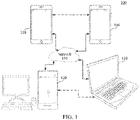
- FIG. 1 is a schematic diagram of an exemplary system architecture to which a technical solution according to an embodiment of this application is applicable.
- a system architecture 100 includes a plurality of terminal devices.
- the plurality of terminal devices may communicate with each other through, for example, a network 150.
- the system architecture 100 may include a first terminal device 110 and a second terminal device 120 that are interconnected by the network 150.
- the first terminal device 110 and the second terminal device 120 perform unidirectional data transmission.
- the first terminal device 110 may encode video data (for example, a video and picture stream acquired by the first terminal device 110) to transmit the encoded video data to the second terminal device 120 through the network 150.
- the encoded video data is transmitted in one or more encoded video bitstreams.
- the second terminal device 120 may receive the encoded video data from the network 150, decode the encoded video data to restore the video data, and display a video picture according to the restored video data.
- the system architecture 100 may include a third terminal device 130 and a fourth terminal device 140 that perform bidirectional transmission of the encoded video data.
- the bidirectional transmission may be performed, for example, during a video conference.
- each of the third terminal device 130 and the fourth terminal device 140 may encode video data (for example, the video and picture stream acquired by the terminal device) to transmit the encoded video data to an other terminal device of the third terminal device 130 and the fourth terminal device 140 through the network 150.
- Each of the third terminal device 130 and the fourth terminal device 140 may further receive the encoded video data transmitted by the other of the third terminal device 130 and the fourth terminal device 140, may decode the encoded video data to restore the video data, and may display a video picture on an accessible display apparatus according to the restored video data.
- the first terminal device 110, the second terminal device 120, the third terminal device 130, and the fourth terminal device 140 may be a server, a personal computer, and a smart phone, but the principles disclosed in this application may not be limited thereto. Embodiments disclosed in this application are applicable to a laptop computer, a tablet computer, a media player, and/or a dedicated video conference device.
- the network 150 represents any quantity of networks including, for example, a wired and/or wireless communication network that transmits the encoded video data between the first terminal device 110, the second terminal device 120, the third terminal device 130, and the fourth terminal device 140.
- a communication network 150 may exchange data in circuit-switched and/or packet-switched channels.
- the network may include a telecommunications network, a local area network, a wide area network, and/or the internet.
- a telecommunications network may include a local area network, a wide area network, and/or the internet.
- an architecture and a topology of network 150 may be immaterial to the operations disclosed in this application.
- FIG. 2 shows a placing manner of a video encoding apparatus and a video decoding apparatus in a streaming transmission environment.
- a topic disclosed in this application is equally applicable to other video-enabled applications including, for example, video conference and digital television (TV), and to storing compressed video on digital media including CD, DVD, memory stick, or the like.
- a streaming system may include an acquisition subsystem 213.
- the acquisition subsystem 213 may include a video source 201 such as a digital camera, and the video source creates an uncompressed video and picture stream 202.
- the video and picture stream 202 includes samples captured by a digital camera.
- the video and picture stream 202 is depicted as a thick line to emphasize the video and picture stream of a high data volume.
- the video and picture stream 202 may be processed by an electronic apparatus 220, and the electronic apparatus 220 includes a video encoding apparatus 203 coupled to a video source 201.
- the video encoding apparatus 203 may include hardware, software, or a combination of hardware and software to implement various aspects of the disclosed topic as described in detail below.
- the encoded video data 204 (or encoded video bitstream 204) is depicted as a thin line to emphasize the encoded video data 204 (or encoded video bitstream 204) of a lower data volume, which may be stored on a streaming transmission server 205 for future use.
- One or more streaming transmission client subsystems such as a client subsystem 206 and a client subsystem 208 in FIG. 2 , may access the streaming transmission server 205 to retrieve a copy 207 and a copy 209 of the encoded video data 204.
- the client subsystem 206 may include, for example, a video decoding apparatus 210 in the electronic apparatus 230.
- the video decoding apparatus 210 decodes the transmission copy 207 of the encoded video data and produces an output video and picture stream 211 that can be presented on a display 212 (for example, a display screen) or another presentation apparatus.
- encoded video data 204, video data 207, and video data 209 may be encoded according to specific video encoding/compression standards. Embodiments of these standards include ITU-T H.265.
- a video coding standard under development is informally referred to as versatile video coding (VVC), and this application may be used in the context of the VVC standard.
- VVC versatile video coding
- the electronic apparatus 220 and the electronic apparatus 230 may include other components not shown in the figure.
- the electronic apparatus 220 may include a video decoding apparatus
- the electronic apparatus 230 may further include a video encoding apparatus.
- HEVC High Efficiency Video Coding
- VVC Versatile Video Coding
- AVS Audio Video Coding Standard
- a video frame image is divided into several non-overlapping processing units according to a block size, and each processing unit performs a similar compression operation.
- the processing unit is referred to as a coding tree unit (CTU), or LCU.
- the CTU may continue to be further divided into finer divisions to obtain one or more basic coding units CU, and the CU is the most basic element in a coding link.
- Predictive coding includes intra-frame prediction and inter-frame prediction. After an original video signal is predicted by a selected reconstructed video signal, a residual video signal is obtained. An encoder side determines which predictive coding mode to select for the current CU and inform a decoder side.
- the intra-frame prediction refers to that a predicted signal comes from a region that has been encoded and reconstructed in the same image; and the inter-frame prediction refers to that a predicted signal comes from another image (referred to as a reference image) that has been encoded and is different from the current image.
- Transform & Quantization After a residual video signal undergoes transformation operations such as Discrete Fourier Transform (DFT) and DCT, a signal is transformed into a transformation domain, which is referred to as a transformation coefficient. A lossy quantization operation is further performed on the transformation coefficient, and a specific amount of information is lost, so that the quantized signal is beneficial to a compressed expression. In some video coding standards, there may be more than one transformation manner to be selected. Therefore, the encoder side also selects one of the transformation manners for the current CU and inform the decoder side. The degree of fineness of quantization is usually determined by the quantization parameter (QP).
- QP quantization parameter
- a larger value of the QP represents that coefficients within a greater range will be quantized as the same output, and therefore, may usually bring a greater distortion and lower bit rate; and conversely, a smaller value of the QP represents that coefficients within a smaller range will be quantized as a same output, and therefore, may usually bring a smaller distortion while corresponding to a higher bit rate.
- Entropy coding or statistical coding Statistical compression coding is performed quantized transform domain signals according to frequencies of occurrence of values, and finally, a binarized (0 or 1) compressed bitstream is outputted. In addition, other information is produced during the coding, such as the selected encoding mode and motion vector data, and the entropy coding also needs to be performed to reduce the bit rate.
- Calculation coding is a lossless coding manner that can effectively reduce the bit rate desired to express the same signal. Common calculation coding manners include variable length coding (VLC) or content adaptive binary arithmetic coding (CABAC).
- Loop filtering The transformed and quantized signal obtains a reconstructed image through operations such as inverse quantization, inverse transformation, and prediction compensation. Compared with an original image, the reconstructed image is different from the original image in some information due to the influence of quantization, that is, distortion is produced in the reconstructed image. Therefore, filtering operations can be performed on the reconstructed image, such as deblocking filter (DB), sample adaptive offset (SAO), or adaptive loop filter (ALF), which can effectively reduce the degree of distortion produced by quantization. Because these filtered reconstructed images are used as references for subsequent encoded images to predict future image signals, the filtering operation is also referred to as the loop filtering, that is, a filtering operation in an encoding loop.
- DB deblocking filter
- SAO sample adaptive offset
- ALF adaptive loop filter
- FIG. 3 is a basic flowchart of a video encoder, in which description is made by using the intra-frame prediction as an example.
- a difference operation is performed between the original image signal s k [ x, y ] and the predicted image signal ⁇ k [ x, y ] to obtain a residual signal u k [ x, y ] .
- Transform and quantization processing is performed on the residual signal u k [ x,y ] to obtain quantization coefficients.
- entropy coding is performed on the quantization coefficients to obtain the encoded bitstream (that is, the encoded video bitstream).
- inverse quantization and inverse transformation processing is performed on the quantization coefficients to obtain the reconstructed residual signal u' k [ x , y ] , and the predicted image signal ⁇ k [ x , y ] and the reconstructed residual signal u' k [ x , y ] are superimposed to generate an image signal s k * x y .
- the image signal s k * x y is inputted to an intra-frame mode decision-making module and an intra-frame prediction module for intra-frame prediction processing.
- a reconstructed image signal s' k [ x , y ] is outputted through the loop filtering, and the reconstructed image signal s ' k [ x , y ] may be used as a reference image of the next frame for motion estimation and motion compensation prediction. Then, a predicted image signal ⁇ k [ x , y ] of the next frame is obtained based on a result s ' r [ x + m x , y + m y ] of the motion compensation prediction and a result of the intra-frame prediction ⁇ s k * x y , and the foregoing process is repeated until the encoding is completed.
- the transformation mode used for the transformation of the residual signal (equivalent to the residual data corresponding to the subsequent encoding block) is determined according to the implicitly derived index value and the value of the index identifier included in the encoding block.
- the implicitly derived index value includes a correspondence with the calculation result of the quantization coefficients in the quantized coefficient block.
- non-zero coefficients of the residual signal in the quantized coefficient block after transform and quantization processing is performed has a high probability to be concentrated in the left and upper regions of the block, while the non-zero coefficients in the right and lower regions of the block are often 0, the SRCC technology is introduced.
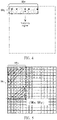
- a size SRx ⁇ SRy of the upper left region of the non-zero coefficients included in each quantized coefficient block may be marked by the SRCC technology, where SRx is a horizontal coordinate of the rightmost non-zero coefficient in the quantized coefficient block, SRy is a vertical coordinate of the lowermost non-zero coefficient in the quantized coefficient block, and 1 ⁇ SRx ⁇ W, 1 ⁇ SRy ⁇ H, and coefficients outside the region are all 0.
- the SRCC technology determines the quantized coefficient region that is to be scanned in the quantized coefficient block by using (SRx, SRy). As shown in FIG. 4 , only the quantization coefficients in the scanning region marked by (SRx, SRy) are to be encoded.
- a scanning sequence of the encoding is shown in FIG. 5 , which can be a reverse zigzag scanning from a lower right corner to an upper left corner.
- entropy decoding is performed to obtain various mode information and quantization coefficients. Then, the inverse quantization and inverse transformation processing is performed on the quantization coefficients to obtain the residual signal.
- the predicted signal corresponding to the CU may be obtained. Then, the reconstructed signal may be obtained by adding the residual signal to the predicted signal. An operation such as the loop filtering is then performed on the reconstructed signal to generate a final output signal.
- the transformation processing performed on the residual signal causes energy of the residual signal to be concentrated on less low-frequency coefficients, that is, most coefficients have smaller values. Then, a subsequent quantization module converts the smaller coefficient value into a zero value, which greatly reduces the cost of encoding the residual signal.
- transformation kernels such as DST7 and DCT8 are introduced into the transformation processing process, and different transformation kernels can be used for horizontal transformation and vertical transformation on the residual signal.
- the possible transformation combinations that may be selected for performing transformation processing on a residual signal are as follows: (DCT2, DCT2), (DCT8, DCT8), (DCT8, DST7), (DST7, DCT8), and (DST7, DST7).
- the sub-block transform (SBT) technology is also mentioned in AVS3.
- SBT sub-block transform
- a width or a height of the non-zero residual sub-block is 64
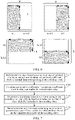
- the horizontal transformation and the vertical transformation of the non-zero residual sub-block are both DCT-2; and in other cases, the selection of the horizontal transformation and the vertical transformation is shown in FIG. 6 .
- FIG. 6 the selection of the horizontal transformation and the vertical transformation is shown in FIG. 6 .
- w1 in FIG. 6 may be 1/2 of the width (w), or may be 1/4 of w; and h1 may be 1/2 of the height (h), or may be 1/4 of h.
- some solutions propose to skip transform in a process of residual encoding in the gray part, and directly perform quantization and coefficient coding.
- rate-distortion optimization is to be used at the encoder side to make a decision.
- some residuals have weak correlations, and therefore, may skip the transformation process.
- a single DCT transformation kernel cannot adapt to all residual features, a plurality of DCT transformation kernels or DST transformation kernels may be selected as a transformation matrix combination for one residual block. In this case, although the adaptability of the transformation matrix combination to the residual block is improved, the encoding amount of a transformation mode index is increased, resulting in low encoding efficiency.
- the corresponding transformation mode is provided based on the implicitly derived index value and the explicit index identifier included in the encoding block.
- the encoding amount of the index identifier may be reduced based on indicating more transformation modes, which is beneficial to improve the video encoding efficiency.
- FIG. 7 is a flowchart of a video decoding method according to an embodiment of this application.
- the video decoding method may be performed by a device with a computing processing function, such as a terminal device or a server.
- the video decoding method includes at least step S710 to step S740. A detailed description is as follows:
- Step S710 Perform entropy decoding processing on an encoding block of a video image frame to obtain a quantized coefficient block of residual data corresponding to the encoding block.
- the video image frame sequence includes a series of images, and each image may be further divided into slices.
- the slices may be divided into a series of LCUs (or CTUs), and the LCUs include several CUs.
- Each image may be referred to as a video image frame.
- the video image frame is encoded in blocks during encoding.
- macroblocks such as the H.264 standard.
- the macroblocks may be further divided into a plurality of prediction blocks that may be used for the predictive coding.
- coding unit CU In the HEVC standard, basic concepts such as a coding unit CU, a prediction unit (PU), and a transform unit (TU) are used, a plurality of block units are functionally divided, and a description is made in which a new tree-based structure is used.
- the CU may be divided into smaller CUs according to a quadtree, and the smaller CUs may be further divided to form a quadtree structure.
- the encoding block in this embodiment of this application may be the CU, or a block smaller than the CU, such as a smaller block obtained by dividing the CU.
- Step S720 Calculate quantization coefficients in the quantized coefficient block to obtain an implicitly derived index value.
- the quantization coefficients in the specified region in the quantized coefficient block may be calculated to obtain a calculation result of the quantization coefficients, and then the implicitly derived index value is determined according to parity of the calculation result.
- the implicitly derived index value is determined based on the parity of the calculation result. For example, if the calculation result is an odd number, the implicitly derived index value may be 1; and if the calculation result is an even number, the implicitly derived index value may be 0. Certainly, if the calculation result is an odd number, the implicitly derived index value may also be 0, and if the calculation result is an even number, the implicitly derived index value may be 1.
- the quantization coefficients in the specified region in the quantized coefficient block may be calculated to obtain a calculation result of the quantization coefficients, then a remainder of the calculation result for a set value is calculated, and then the implicitly derived index value is determined according to the remainder.
- the implicitly derived index value is determined for the remainder of the set value based on the calculation result.
- possible implicitly derived index values may be more than two, for example, the set value may be 3.
- a value of the remainder of the calculation result for 3 may be 0, 1, or 2, and each remainder corresponds to an implicitly derived index value.
- the remainder may be directly used as an implicitly derived index value.
- calculating the quantization coefficients in the specified region in the quantized coefficient block may include calculating a quantity of non-zero coefficients, even coefficients, non-zero even coefficients, or odd coefficients in the specified region in the quantized coefficient block, and using the quantity as the calculation result of the quantization coefficients.
- the specified region may be an entire region in the quantized coefficient block, may also be a partial region in the quantized coefficient block (such as one or more positions specified in the quantized coefficient block, at least one row specified in the quantized coefficient block, at least one column specified in the quantized coefficient block, at least one row specified in the quantized coefficient block, and a position on at least one oblique line in the quantized coefficient block), and may further be an SRCC region in the quantized coefficient block, such as an entire SRCC region or a part of the SRCC region.
- the part of the SRCC region may be one or more positions specified in the SRCC region, at least one row specified in the SRCC region, at least one column specified in the SRCC region, at least one row and at least one column specified in the SRCC region, and a position on at least one oblique line in the SRCC region,
- step S730 Determine a transformation mode of the encoding block according to the implicitly derived index value and a value of an index identifier included in the encoding block.
- the index identifier included in the encoding block is an explicit index identifier, and a value of the index identifier may be 1 or 0.
- One encoding block may include one or more index identifiers. That is, one encoding block may include one or more indication bits, and each indication bit is used for representing an index identifier.
- the implicitly derived index value and the value of the index identifier may be combined according to the set arrangement and combination manner to generate a combined index, and then, the transformation mode corresponding to the combined index is selected as the transformation mode of the encoding block according to the correspondence between the index value and the transformation mode.
- the set arrangement and combination manner may be either the explicit index before the implicitly derived index value, or the implicitly derived index value before the explicit index. That is, the combined index may be either a manner of "explicit index + implicitly derived index value” or a manner of "implicitly derived index value + explicit index”.
- the set arrangement and combination manner may be either the two explicit indices before the implicitly derived index value, or the implicitly derived index value before the two explicit indices, or the implicitly derived index value being between the two explicit indices. That is, the combined index may be either a manner of "explicit index 1 + explicit index 2 + implicitly derived index value", or a manner of "implicitly derived index value + explicit index 1 + explicit index 2", or a manner of "explicit index 1 + implicitly derived index value + explicit index 2".
- index identifiers may be combined with implicitly derived index values according to the set arrangement and combination manner.
- the correspondence between the index value and the transformation mode in the foregoing embodiment is preset according to the value of the combined index and the set transformation mode.
- the set transformation mode includes at least one of the following: a transformation matrix combination used for performing horizontal transformation and vertical transformation, an SBT mode, and a transform skip mode.
- a transformation kernel used for horizontal transformation and a transformation kernel used for vertical transformation in the transformation matrix combination may be selected from following transformation kernels: a DCT2 transformation kernel, a DCT5 transformation kernel, a DCT8 transformation kernel, a DST1 transformation kernel, and a DST7 transformation kernel.
- the transformation matrix combination may be: (DCT2, DCT2), (DCT8, DCT8), (DCT8, DST7), (DST7, DCT8), or (DST7, DST7).
- the first transformation kernel in the transformation matrix combination represents the transformation kernel used for performing the horizontal transformation
- the second transformation kernel represents the transformation kernel used for performing the vertical transformation.
- the transformation matrix combination (DCT8, DST7) represents that the horizontal transformation is performed by DCT8, and the vertical transformation is performed by DST7.
- Table 1 Explicit index Implicitly derived index value Transformation mode 1 0 (DST7, DST7) 1 (DCT8, DST7) 0 - (DCT2, DCT2)
- the set arrangement and combination manner is the explicit index before the implicitly derived index value.
- a case in which the explicit index is "0" and the implicitly derived index value is "-" represents that: when a value of the explicit index is 0, no matter what the implicitly derived index value is, the transformation mode is (DCT2, DCT2).
- the encoder side may perform implicit indication without adjusting the quantized coefficient block, and the decoder side does not need to perform a process of implicitly deriving the index (In addition, even if the encoder side adjusts the quantized coefficient block for implicit indication, the decoder side does not need to perform the process of implicitly deriving the index).
- Table 2 Explicit index Implicitly derived index value Transformation mode 0 - SBT 1 0 (DST7, DST7) 1 (DCT2, DCT2)
- a case in which the explicit index is "0" and the implicitly derived index value is "-" represents that: when a value of the explicit index is 0, no matter what the implicitly derived index value is, the transformation mode is SBT.
- the encoder side can perform implicit indication without adjusting the quantized coefficient block, and the decoder side does not need to perform a process of implicitly deriving the index (In addition, even if the encoder side adjusts the quantized coefficient block for implicit indication, the decoder side does not need to perform the process of implicitly deriving the index).
- Table 3 Explicit index Implicitly derived index value Transformation mode 0 - SBT 1 0 TS 1 (DCT2, DCT2)
- a case in which the explicit index is "0" and the implicitly derived index value is "-" represents that: when a value of the explicit index is 0, no matter what the implicitly derived index value is, the transformation mode is SBT.
- the encoder side can perform implicit indication without adjusting the quantized coefficient block, and the decoder side does not need to perform a process of implicitly deriving the index (In addition, even if the encoder side adjusts the quantized coefficient block for implicit indication, the decoder side does not need to perform the process of implicitly deriving the index).
- "TS” in Table 3 represents the transform skip mode, that is, the transformation process is skipped during encoding, and the inverse transformation process is to be skipped during decoding.
- the correspondence between the index value and the transformation mode in the foregoing embodiment may further be as shown in Table 4:
- the set arrangement and combination manner is the implicitly derived index value before the explicit index.
- a case in which the implicitly derived index value is "1" and the explicit index is "-" represents that: when the implicitly derived index value is 1, no matter what a value of the explicit index is, the transformation mode is (DCT2, DCT2).
- the encoder side does not need to encode the explicit index in the encoding block, and the decoder side does not need to perform the decoding process of the explicit index.
- Table 5 Explicit index 1 Explicit index 2 Implicitly derived index value Transformation mode 1 1 0 (DST7, DST7) 1 (DCT8, DST7) 0 - SBT 0 - - (DCT2, DCT2)
- the set arrangement and combination manner is two explicit indices before the implicitly derived index value.
- a case in which the explicit index 1 is "1", the explicit index 2 is "0", and the implicitly derived index value is "-" represents that: when a value of the explicit index 1 is 1, and a value of the explicit index 2 is "0", no matter what the implicitly derived index value is, the transformation mode is SBT.
- the encoder side can perform implicit indication without adjusting the quantized coefficient block, and the decoder side does not need to perform a process of implicitly deriving the index (In addition, even if the encoder side adjusts the quantized coefficient block for implicit indication, the decoder side does not need to perform the process of implicitly deriving the index).
- the decoder side does not need to perform the decoding process of the explicit index 2 (In addition, even if the encoder side adjusts the quantized coefficient block for implicit indication, the decoder side does not need to perform the process of implicitly deriving the index).
- the value of the explicit index 1, the value of the explicit index 2, the implicitly derived index value in Table 5, and the corresponding transformation modes are just examples. In other embodiments of this application, there may also be other manners, as shown in Table 6: Table 6 Explicit index 1 Explicit index 2 Implicitly derived index value Transformation mode 1 - - SBT 0 1 0 (DST7, DST7) 1 (DCT8, DST7) 0 - (DCT2, DCT2)
- the decoder side does not need to perform the decoding process of the explicit index 2 (In addition, even if the encoder side adjusts the quantized coefficient block for implicit indication, the decoder side does not need to perform the process of implicitly deriving the index).
- the correspondence between the index value and the transformation mode in the foregoing embodiment may further be as shown in Table 7: Table 7 Explicit index 1 Implicitly derived index value Explicit index 2 Transformation mode 1 0 - (DST7, DST7) 1 0 (DCT8, DST7) 1 (DST7, DCT8) 0 - - (DCT2, DCT2)
- the set arrangement and combination manner is the implicitly derived index value being between two explicit indices.
- a case in which the explicit index 1 is "1", the implicitly derived index value is "0", and the explicit index 2 is "-" represents that: when a value of the explicit index 1 is 1, and the implicitly derived index value is 0, no matter what a value of the explicit index 2 is, the transformation mode is (DST7, DST7).
- the encoder side does not need to encode the explicit index 2 in the encoding block, and the decoder side does not need to perform the decoding process of the explicit index 2.
- the decoder side does not need to perform the decoding process of the explicit index 2 (In addition, even if the encoder side adjusts the quantized coefficient block for implicit indication, the decoder side does not need to perform the process of implicitly deriving the index).
- a manner of determining for the encoding block whether the transformation mode corresponding to the encoding block is to be jointly determined according to the implicitly derived index value and the index identifier included in the encoding block may include at least one of the following: an index identifier included in a sequence header of encoded data corresponding to a video image frame sequence, an index identifier included in an image header of encoded data corresponding to a video image frame, and a size of the encoding block.
- a value of the index identifier included in the sequence header is used for indicating, for all encoding blocks, or encoding blocks in an intra-frame encoding mode, or encoding blocks in an inter-frame encoding mode in the encoded data corresponding to the video image frame sequence, whether the transformation mode corresponding to the encoding block is to be jointly determined according to the implicitly derived index value and the index identifier included in the encoding block.
- the index identifier included in the sequence header either indicates for all encoding blocks in the encoded data corresponding to the video image frame sequence, the transformation mode corresponding to the encoding block is to be jointly determined according to the implicitly derived index value and the explicit index, or indicates for the encoding block in the intra-frame encoding mode in the encoded data corresponding to the video image frame sequence, the transformation mode corresponding to the encoding block is to be jointly determined according to the implicitly derived index value and the explicit index, or indicates for the encoding block in the inter-frame encoding mode in the encoded data corresponding to the video image frame sequence, the transformation mode corresponding to the encoding block is to be jointly determined according to the implicitly derived index value and the explicit index.
- the sequence header includes two index identifiers, the first index identifier and the second index identifier respectively, where a value of the first index identifier and a value of the second index identifier are respectively used for indicating for encoding blocks in an intra-frame encoding mode and encoding blocks in an inter-frame encoding mode in the encoded data corresponding to the video image frame sequence, whether the transformation mode corresponding to the encoding block is to be jointly determined according to the implicitly derived index value and the explicit index.
- the sequence header includes index identifiers respectively corresponding to the encoding block in the intra-frame encoding mode and the encoding block in the inter-frame encoding mode, to respectively indicate for the two types of encoding blocks whether the transformation mode corresponding to the encoding block is to be jointly determined according to the implicitly derived index value and the explicit index.
- a specific indication manner may be:
- the size of a specific encoding block in the encoded data corresponding to the video image frame sequence being less than the set value indicates that the transformation mode corresponding to the encoding block is to be jointly determined according to the implicitly derived index value and the index identifier included in the encoding block.
- the size of a specific encoding block in the encoded data corresponding to the video image frame sequence being larger than the set value indicates that the transformation mode corresponding to the encoding block is not to be jointly determined according to the implicitly derived index value and the index identifier included in the encoding block.
- the index identifier in the sequence header of the encoded data corresponding to the video image frame sequence is 0 (the value is only an example), it indicates that for all the encoding blocks in the encoded data corresponding to the video image frame sequence, the transformation mode corresponding to the encoding block is not to be jointly determined according to the implicitly derived index value and the index identifier included in the encoding block.
- step S740 Perform inverse transformation processing on the inverse quantization result of the quantized coefficient block based on the transformation mode corresponding to the encoding block.
- the process reference may be made to the related descriptions in the foregoing embodiments, and details are not repeated herein.
- the corresponding transformation mode may be indicated based on the implicitly derived index value and the explicit index identifier included in the encoding block. In this way, the encoding amount of the index identifier may be reduced while indicating more transformation modes, which is beneficial to improve the video encoding efficiency.
- FIG. 8 is a block diagram of a video decoding apparatus according to an embodiment of this application.
- the video decoding apparatus may be arranged in a device with a computing processing function, such as a terminal device or a server.
- the video decoding apparatus 800 includes: a decoding unit 802, a first processing unit 804, a selection unit 806, and a second processing unit 808.
- a decoding unit 802 is configured to perform entropy decoding processing on an encoding block of a video image frame to obtain a quantized coefficient block of residual data corresponding to the encoding block; a first processing unit 804 is configured to calculate quantization coefficients in the quantized coefficient block to obtain an implicitly derived index value; a selection unit 806 is configured to determine a transformation mode of the encoding block according to the implicitly derived index value and a value of an index identifier included in the encoding block; and a second processing unit 808 is configured to perform inverse transformation processing on an inverse quantization result of the quantized coefficient block based on the transformation mode of the encoding block.
- the video decoding apparatus 800 further includes: a determining unit, configured to determine for the encoding block, whether the transformation mode corresponding to the encoding block is to be jointly determined according to the implicitly derived index value and the index identifier comprised in the encoding block; and if yes, trigger the selection unit to perform a step of determining a transformation mode of the encoding block according to the implicitly derived index value and a value of an index identifier included in the encoding block.
- a determining unit configured to determine for the encoding block, whether the transformation mode corresponding to the encoding block is to be jointly determined according to the implicitly derived index value and the index identifier comprised in the encoding block.
- a manner in which the determining unit determines for the encoding block, whether the transformation mode corresponding to the encoding block is to be jointly determined according to the implicitly derived index value and the index identifier comprised in the encoding block includes at least one of the following: an index identifier included in a sequence header of encoded data corresponding to a video image frame sequence, an index identifier included in an image header of encoded data corresponding to a video image frame, and a size of the encoding block.
- a value of the index identifier included in the sequence header is used for indicating for all encoding blocks, or encoding blocks in an intra-frame encoding mode, or encoding blocks in an inter-frame encoding mode in the encoded data corresponding to the video image frame sequence, whether the transformation mode corresponding to the encoding block is to be jointly determined according to the implicitly derived index value and the index identifier included in the encoding block.
- a value of a first index identifier and a value of a second index identifier included in the sequence header are respectively used for indicating for encoding blocks in an intra-frame encoding mode and encoding blocks in an inter-frame encoding mode in the encoded data corresponding to the video image frame sequence, whether the transformation mode corresponding to the encoding block is to be jointly determined according to the implicitly derived index value and the index identifier included in the encoding block.
- the first processing unit 804 is configured to: calculate quantization coefficients in a specified region in the quantized coefficient block to obtain a calculation result of the quantization coefficients; and determine the implicitly derived index value according to parity of the calculation result.
- the first processing unit 804 is configured to: calculate quantization coefficients in a specified region in the quantized coefficient block to obtain a calculation result of the quantization coefficients; and calculate a remainder of the calculation result for a set value; and determine the implicitly derived index value according to the remainder.
- the first processing unit 804 is configured to calculate a quantity of non-zero coefficients, even coefficients, non-zero even coefficients, or odd coefficients in the specified region in the quantized coefficient block, and use the quantity as the calculation result of the quantization coefficients.
- the specified region includes an entire region in the quantized coefficient block or an SRCC region in the quantized coefficient block.
- the selection unit 806 is configured to: combine the implicitly derived index value and the value of the index identifier according to a set arrangement and combination manner to generate a combined index; and select a transformation mode corresponding to the combined index as a transformation mode of the encoding block according to a correspondence between an index value and a transformation mode.
- the correspondence between the index value and the transformation mode is preset according to a value of the combined index and a set transformation mode.
- the set transformation mode includes at least one of the following: a transformation matrix combination used for performing horizontal transformation and vertical transformation, a sub-block transformation (SBT) mode, and a transform skip mode.
- a transformation kernel used for horizontal transformation and a transformation kernel used for vertical transformation in the transformation matrix combination are selected from following transformation kernels: a DCT2 transformation kernel, a DCT5 transformation kernel, a DCT8 transformation kernel, a DST1 transformation kernel, and a DST7 transformation kernel.
- the encoding block includes at least one of the index identifiers.
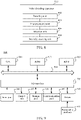
- FIG. 9 is a schematic structural diagram of a computer system adapted to implement an electronic device according to an embodiment of this application.
- a computer system 900 of the electronic device shown in FIG. 9 is merely an example, and does not constitute any limitation on functions and use ranges of the embodiments of this application.
- the computer system 900 includes a central processing unit (CPU) 901, which may perform various suitable actions and processing based on a program stored in a read-only memory (ROM) 902 or a program loaded from a storage part 908 into a random access memory (RAM) 903, for example, perform the method described in the foregoing embodiments.
- the RAM 903 further stores various programs and data required for system operations.
- the CPU 901, the ROM 902, and the RAM 903 are connected to each other by using a bus 904.
- An input/output (I/O) interface 905 is also connected to the bus 904.
- the following components are connected to the I/O interface 905: an input part 906 including a keyboard, a mouse, or the like; an output part 907 including a cathode ray tube (CRT), a liquid crystal display (LCD), a speaker, or the like; a storage part 908 including a hard disk, or the like; and a communication part 909 including a network interface card such as a local area network (LAN) card or a modem.
- the communication part 909 performs communication processing through a network such as the Internet.
- a driver 910 is also connected to the I/O interface 905 as required.
- a removable medium 911 such as a magnetic disk, an optical disc, a magneto-optical disk, or a semiconductor memory, is installed on the drive 910 as required, so that a computer program read from the removable medium is installed into the storage part 908 as required.
- an embodiment of this application includes a computer program product.
- the computer program product includes a computer program stored in a computer-readable medium.
- the computer program includes a computer program used for performing a method shown in the flowchart.
- the computer program may be downloaded and installed from a network through the communication part 909, and/or installed from the removable medium 911.
- the various functions defined in the system of this application are executed.
- the computer-readable medium shown in the embodiments of this application may be a computer-readable signal medium or a computer-readable storage medium or any combination thereof.
- the computer-readable storage medium may be, for example, but is not limited to, an electric, magnetic, optical, electromagnetic, infrared, or semi-conductive system, apparatus, or component, or any combination thereof.
- a more specific example of the computer-readable storage medium may include but is not limited to: an electrical connection having one or more wires, a portable computer magnetic disk, a hard disk, a random access memory (RAM), a read-only memory (ROM), an erasable programmable read-only memory (EPROM), a flash memory, an optical fiber, a compact disc read-only memory (CD-ROM), an optical storage device, a magnetic storage device, or any appropriate combination thereof.
- the computer-readable storage medium may be any tangible medium containing or storing a program, and the program may be used by or used in combination with an instruction execution system, apparatus, or device.
- the computer-readable signal medium may include a data signal transmitted in a baseband or as part of a carrier, and stores a computer-readable computer program.
- the data signal propagated in such a way may assume a plurality of forms, including, but not limited to, an electromagnetic signal, an optical signal, or any appropriate combination thereof.
- the computer-readable signal medium may be further any computer-readable medium in addition to a computer-readable storage medium.
- the computer-readable medium may transmit, propagate, or transmit a program that is used by or used in combination with an instruction execution system, apparatus, or device.
- the computer program included in the computer-readable medium may be transmitted by using any suitable medium, including but not limited to: a wireless medium, a wire, or the like, or any suitable combination thereof.
- Each box in a flowchart or a block diagram may represent a module, a program segment, or a part of code.
- the module, the program segment, or the part of code includes one or more executable instructions used for implementing specified logic functions.
- functions annotated in boxes may alternatively occur in a sequence different from that annotated in an accompanying drawing. For example, actually two boxes shown in succession may be performed basically in parallel, and sometimes the two boxes may be performed in a reverse sequence. This is determined by a related function.
- Each box in a block diagram and/or a flowchart and a combination of boxes in the block diagram and/or the flowchart may be implemented by using a dedicated hardware-based system configured to perform a specified function or operation, or may be implemented by using a combination of dedicated hardware and a computer instruction.
- this application further provides a computer-readable medium.
- the computer-readable medium may be included in the electronic device described in the foregoing embodiments, or may exist alone and is not disposed in the electronic device.
- the computer-readable medium carries one or more programs, the one or more programs, when executed by the electronic device, causing the electronic device to implement the method described in the foregoing embodiments.
- the exemplary implementations described herein may be implemented by using software, or may be implemented by combining software and necessary hardware. Therefore, the technical solutions of the implementations of this application may be implemented in a form of a software product.
- the software product may be stored in a non-volatile storage medium (which may be a CD-ROM, a USB flash drive, a removable hard disk, or the like) or on a network, including several instructions for instructing a computing device (which may be a personal computer, a server, a touch terminal, a network device, or the like) to perform the methods according to the implementations of this application.
Landscapes
- Engineering & Computer Science (AREA)
- Multimedia (AREA)
- Signal Processing (AREA)
- Physics & Mathematics (AREA)
- Discrete Mathematics (AREA)
- General Physics & Mathematics (AREA)
- Compression Or Coding Systems Of Tv Signals (AREA)
Applications Claiming Priority (2)
| Application Number | Priority Date | Filing Date | Title |
|---|---|---|---|
| CN202011112822.0A CN112533000B (zh) | 2020-10-16 | 2020-10-16 | 视频解码方法、装置、计算机可读介质及电子设备 |
| PCT/CN2021/119492 WO2022078163A1 (fr) | 2020-10-16 | 2021-09-22 | Procédé de décodage vidéo, procédé de codage vidéo et dispositif associé |
Publications (2)
| Publication Number | Publication Date |
|---|---|
| EP4113997A1 true EP4113997A1 (fr) | 2023-01-04 |
| EP4113997A4 EP4113997A4 (fr) | 2023-09-13 |
Family
ID=74980569
Family Applications (1)
| Application Number | Title | Priority Date | Filing Date |
|---|---|---|---|
| EP21879209.1A Pending EP4113997A4 (fr) | 2020-10-16 | 2021-09-22 | Procédé de décodage vidéo, procédé de codage vidéo et dispositif associé |
Country Status (4)
| Country | Link |
|---|---|
| US (1) | US12231640B2 (fr) |
| EP (1) | EP4113997A4 (fr) |
| CN (1) | CN112533000B (fr) |
| WO (1) | WO2022078163A1 (fr) |
Families Citing this family (11)
| Publication number | Priority date | Publication date | Assignee | Title |
|---|---|---|---|---|
| CN114079773B (zh) | 2020-08-21 | 2022-12-27 | 腾讯科技(深圳)有限公司 | 视频解码方法、装置、计算机可读介质及电子设备 |
| CN113824957B (zh) * | 2020-09-27 | 2022-10-28 | 腾讯科技(深圳)有限公司 | 视频编解码方法、装置及电子设备 |
| CN112533000B (zh) * | 2020-10-16 | 2022-08-05 | 腾讯科技(深圳)有限公司 | 视频解码方法、装置、计算机可读介质及电子设备 |
| US11938439B2 (en) | 2020-12-09 | 2024-03-26 | Suzhou Jingtian Airen Environmental Technology Co. Ltd. | Apparatus for separating and removing dust from exhaust gas |
| CN115209141B (zh) * | 2021-04-13 | 2025-06-03 | 腾讯科技(深圳)有限公司 | 视频编解码方法、装置、计算机可读介质及电子设备 |
| CN114449345B (zh) * | 2022-02-08 | 2023-06-23 | 腾讯科技(深圳)有限公司 | 视频处理方法、装置、设备及存储介质 |
| CN116233428B (zh) * | 2023-02-20 | 2026-03-31 | 北京达佳互联信息技术有限公司 | 视频编码方法、装置、电子设备及存储介质 |
| CN119496895A (zh) * | 2023-08-17 | 2025-02-21 | 腾讯科技(深圳)有限公司 | 视频编解码方法、装置、电子设备和计算机可读存储介质 |
| CN117354529B (zh) * | 2023-11-28 | 2024-03-12 | 广东匠芯创科技有限公司 | 基于视频编码系统的图像处理方法、电子设备及介质 |
| CN120151547A (zh) * | 2023-12-12 | 2025-06-13 | 腾讯科技(深圳)有限公司 | 一种数据处理方法及相关设备 |
| CN120658885A (zh) * | 2024-03-14 | 2025-09-16 | 腾讯科技(深圳)有限公司 | 视频编解码方法、装置、计算机可读介质及电子设备 |
Family Cites Families (48)
| Publication number | Priority date | Publication date | Assignee | Title |
|---|---|---|---|---|
| US6847735B2 (en) * | 2000-06-07 | 2005-01-25 | Canon Kabushiki Kaisha | Image processing system, image processing apparatus, image input apparatus, image output apparatus and method, and storage medium |
| US7330509B2 (en) | 2003-09-12 | 2008-02-12 | International Business Machines Corporation | Method for video transcoding with adaptive frame rate control |
| US8238442B2 (en) | 2006-08-25 | 2012-08-07 | Sony Computer Entertainment Inc. | Methods and apparatus for concealing corrupted blocks of video data |
| EP3107293A1 (fr) * | 2007-03-20 | 2016-12-21 | Fujitsu Limited | Procédé et appareil de codage vidéo et appareil de décodage vidéo |
| US8085852B2 (en) | 2007-06-26 | 2011-12-27 | Mitsubishi Electric Research Laboratories, Inc. | Inverse tone mapping for bit-depth scalable image coding |
| US7983496B2 (en) | 2007-06-26 | 2011-07-19 | Mitsubishi Electric Research Laboratories, Inc. | Inverse tone mapping for bit-depth scalable image coding adapted to variable block sizes |
| US8526495B2 (en) | 2010-11-22 | 2013-09-03 | Mediatek Singapore Pte. Ltd. | Apparatus and method of constrained partition size for high efficiency video coding |
| US9049452B2 (en) | 2011-01-25 | 2015-06-02 | Mediatek Singapore Pte. Ltd. | Method and apparatus for compressing coding unit in high efficiency video coding |
| CN103748877B (zh) | 2011-08-17 | 2017-05-10 | 联发科技(新加坡)私人有限公司 | 帧内预测方法和装置 |
| EP3139596B1 (fr) | 2011-09-13 | 2019-09-25 | HFI Innovation Inc. | Procédé et appareil pour codage vidéo hevc en mode interne |
| EP2853096A4 (fr) | 2012-05-21 | 2016-07-06 | Mediatek Singapore Pte Ltd | Procédé et appareil de filtrage entre couches pour un codage vidéo scalable |
| US9813737B2 (en) | 2013-09-19 | 2017-11-07 | Blackberry Limited | Transposing a block of transform coefficients, based upon an intra-prediction mode |
| CN105850131B (zh) | 2013-11-14 | 2019-08-20 | 寰发股份有限公司 | 利用基于帧内图片区块复制预测的视频编码方法 |
| US10666968B2 (en) | 2014-05-06 | 2020-05-26 | Hfi Innovation Inc. | Method of block vector prediction for intra block copy mode coding |
| EP3152906B1 (fr) | 2014-07-07 | 2021-06-16 | HFI Innovation Inc. | Procédé de recherche de copie intrabloc et de plage de compensation |
| CA2961681C (fr) | 2014-09-30 | 2022-08-09 | Hfi Innovation Inc. | Procede de resolution adaptative de vecteur de mouvement pour codage video |
| KR102470831B1 (ko) | 2014-10-01 | 2022-11-28 | 주식회사 케이티 | 비디오 신호 처리 방법 및 장치 |
| CN104301724B (zh) * | 2014-10-17 | 2017-12-01 | 华为技术有限公司 | 视频处理方法、编码设备和解码设备 |
| CN107534783B (zh) | 2015-02-13 | 2020-09-08 | 联发科技股份有限公司 | 图像中区块的调色板索引图编解码方法 |
| AU2016253924B2 (en) | 2015-04-29 | 2018-11-01 | Hfi Innovation Inc. | Method and apparatus for intra block copy reference list construction |
| CN107615762B (zh) | 2015-05-29 | 2020-06-26 | 寰发股份有限公司 | 一种管理解码图像缓存器并解码视频比特流的方法及装置 |
| KR102199463B1 (ko) * | 2015-08-31 | 2021-01-06 | 삼성전자주식회사 | 스캔 순서를 고려한 영상의 변환 방법 및 그 장치, 및 역변환 방법 및 그 장치 |
| CN108141619B (zh) | 2015-10-19 | 2020-11-20 | 联发科技股份有限公司 | 管理已解码图像缓存器的方法及装置 |
| CN107925763B (zh) * | 2015-12-23 | 2020-01-10 | 华为技术有限公司 | 等级分割中的块级别变换选择和隐式信令的编码变换方法和设备 |
| CN107071450B (zh) | 2016-02-10 | 2021-07-27 | 同济大学 | 数据压缩的编码、解码方法及装置 |
| US10397569B2 (en) | 2016-06-03 | 2019-08-27 | Mediatek Inc. | Method and apparatus for template-based intra prediction in image and video coding |
| CN107483941A (zh) | 2016-06-08 | 2017-12-15 | 上海天荷电子信息有限公司 | 划分取值范围进行串位移矢量编码的数据压缩方法和装置 |
| US10972733B2 (en) | 2016-07-15 | 2021-04-06 | Qualcomm Incorporated | Look-up table for enhanced multiple transform |
| US10582195B2 (en) | 2017-06-02 | 2020-03-03 | Futurewei Technologies, Inc. | Intra prediction using unequal weight planar prediction |
| US10595019B2 (en) | 2017-09-20 | 2020-03-17 | Futurewei Technologies, Inc. | Noise suppression filter parameter estimation for video coding |
| US10609384B2 (en) | 2017-09-21 | 2020-03-31 | Futurewei Technologies, Inc. | Restriction on sub-block size derivation for affine inter prediction |
| US10491914B2 (en) | 2018-03-29 | 2019-11-26 | Tencent America LLC | Transform information prediction |
| US10609402B2 (en) | 2018-05-02 | 2020-03-31 | Tencent America LLC | Method and apparatus for prediction and transform for small blocks |
| US10587885B2 (en) | 2018-06-04 | 2020-03-10 | Tencent America LLC | Method and apparatus for merge mode with additional middle candidates in video coding |
| US10567752B2 (en) | 2018-07-02 | 2020-02-18 | Tencent America LLC | Method and apparatus for intra prediction for non-square blocks in video compression |
| US10609403B2 (en) | 2018-07-09 | 2020-03-31 | Tencent America LLC | Method and apparatus for block partition with non-uniform quad split |
| WO2020050651A1 (fr) * | 2018-09-05 | 2020-03-12 | 엘지전자 주식회사 | Procédé de codage d'image basé sur une sélection multiple de transformée et dispositif associé |
| KR20250134730A (ko) * | 2018-09-07 | 2025-09-11 | 삼성전자주식회사 | 다중 변환 커널을 사용하는 비디오 신호 처리 방법 및 장치 |
| EP3687172A1 (fr) * | 2019-01-22 | 2020-07-29 | InterDigital VC Holdings, Inc. | Signalisation de sélection de transformations multiples |
| CN111225206B (zh) * | 2018-11-23 | 2021-10-26 | 华为技术有限公司 | 视频解码方法和视频解码器 |
| CN111385584B (zh) * | 2018-12-28 | 2022-09-06 | 杭州海康威视数字技术股份有限公司 | 进行编码、解码的方法、装置和系统 |
| CN113365054B (zh) * | 2019-03-09 | 2022-08-05 | 杭州海康威视数字技术股份有限公司 | 进行编码和解码的方法、解码端、编码端和系统 |
| CN110519601B (zh) * | 2019-09-02 | 2025-09-19 | 北京百度网讯科技有限公司 | 数字视频的编码方法和装置 |
| WO2021180022A1 (fr) * | 2020-03-07 | 2021-09-16 | Beijing Bytedance Network Technology Co., Ltd. | Gestion de mode de saut de transformée dans un codage vidéo |
| CN113727108B (zh) | 2020-05-26 | 2024-03-01 | 腾讯科技(深圳)有限公司 | 视频解码方法、视频编码方法及相关设备 |
| CN113824957B (zh) * | 2020-09-27 | 2022-10-28 | 腾讯科技(深圳)有限公司 | 视频编解码方法、装置及电子设备 |
| CN112533000B (zh) * | 2020-10-16 | 2022-08-05 | 腾讯科技(深圳)有限公司 | 视频解码方法、装置、计算机可读介质及电子设备 |
| CN112565749B (zh) | 2020-12-06 | 2022-08-09 | 浙江大华技术股份有限公司 | 一种视频编码方法、装置、系统及计算机可读存储介质 |
-
2020
- 2020-10-16 CN CN202011112822.0A patent/CN112533000B/zh active Active
-
2021
- 2021-09-22 EP EP21879209.1A patent/EP4113997A4/fr active Pending
- 2021-09-22 WO PCT/CN2021/119492 patent/WO2022078163A1/fr not_active Ceased
-
2022
- 2022-09-30 US US17/958,200 patent/US12231640B2/en active Active
Also Published As
| Publication number | Publication date |
|---|---|
| US20230024834A1 (en) | 2023-01-26 |
| WO2022078163A1 (fr) | 2022-04-21 |
| EP4113997A4 (fr) | 2023-09-13 |
| CN112533000B (zh) | 2022-08-05 |
| CN112533000A (zh) | 2021-03-19 |
| US12231640B2 (en) | 2025-02-18 |
Similar Documents
| Publication | Publication Date | Title |
|---|---|---|
| US12231640B2 (en) | Video decoding method, video encoding method, and related apparatuses | |
| CN113824957B (zh) | 视频编解码方法、装置及电子设备 | |
| CN112543337B (zh) | 视频解码方法、装置、计算机可读介质及电子设备 | |
| CN112995671A (zh) | 视频编解码方法、装置、计算机可读介质及电子设备 | |
| US12177464B2 (en) | Video encoding method and apparatus, video decoding method and apparatus, computer-readable medium, and electronic device | |
| CN114079772B (zh) | 视频解码方法、装置、计算机可读介质及电子设备 | |
| US12526413B2 (en) | Video decoding method and apparatus, video coding method and apparatus, storage medium, and electronic device | |
| US12137223B2 (en) | Video decoding method, video coding method, and related apparatus | |
| HK40087224A (zh) | 视频编码方法、装置、计算机可读介质及电子设备 | |
| HK40064956A (en) | Video decoding method, apparatus, computer-readable medium and electronic device | |
| WO2025190013A1 (fr) | Procédé de codage vidéo et procédé de décodage vidéo, appareil, support lisible par ordinateur et dispositif électronique | |
| HK40064588A (en) | Video decoding method, device, computer-readable medium and electronic equipment | |
| HK40064956B (en) | Video decoding method, apparatus, computer-readable medium and electronic device | |
| HK40064588B (en) | Video decoding method, device, computer-readable medium and electronic equipment | |
| HK40040658A (en) | Video decoding method, apparatus, computer readable medium, and electronic device | |
| HK40040658B (en) | Video decoding method, apparatus, computer readable medium, and electronic device | |
| HK40040679B (en) | Video decoding method and apparatus, computer readable medium, and electronic device | |
| HK40040661B (en) | Video decoding method, apparatus, computer readable medium, and electronic device | |
| HK40040661A (en) | Video decoding method, apparatus, computer readable medium, and electronic device | |
| HK40074042A (en) | Video encoding and decoding method and apparatus, computer readable medium, and electronic device | |
| HK40046827B (en) | Video encoding and decoding method, device, computer-readable medium and electronic equipment | |
| HK40046827A (en) | Video encoding and decoding method, device, computer-readable medium and electronic equipment | |
| HK40040679A (en) | Video decoding method and apparatus, computer readable medium, and electronic device |
Legal Events
| Date | Code | Title | Description |
|---|---|---|---|
| STAA | Information on the status of an ep patent application or granted ep patent |
Free format text: STATUS: THE INTERNATIONAL PUBLICATION HAS BEEN MADE |
|
| PUAI | Public reference made under article 153(3) epc to a published international application that has entered the european phase |
Free format text: ORIGINAL CODE: 0009012 |
|
| STAA | Information on the status of an ep patent application or granted ep patent |
Free format text: STATUS: REQUEST FOR EXAMINATION WAS MADE |
|
| 17P | Request for examination filed |
Effective date: 20221021 |
|
| AK | Designated contracting states |
Kind code of ref document: A1 Designated state(s): AL AT BE BG CH CY CZ DE DK EE ES FI FR GB GR HR HU IE IS IT LI LT LU LV MC MK MT NL NO PL PT RO RS SE SI SK SM TR |
|
| REG | Reference to a national code |
Ref country code: DE Ref legal event code: R079 Free format text: PREVIOUS MAIN CLASS: H04N0019124000 Ipc: H04N0019120000 |
|
| A4 | Supplementary search report drawn up and despatched |
Effective date: 20230811 |
|
| RIC1 | Information provided on ipc code assigned before grant |
Ipc: H04N 19/70 20140101ALI20230807BHEP Ipc: H04N 19/176 20140101ALI20230807BHEP Ipc: H04N 19/12 20140101AFI20230807BHEP |
|
| DAV | Request for validation of the european patent (deleted) | ||
| DAX | Request for extension of the european patent (deleted) | ||
| STAA | Information on the status of an ep patent application or granted ep patent |
Free format text: STATUS: EXAMINATION IS IN PROGRESS |
|
| 17Q | First examination report despatched |
Effective date: 20260304 |