EP4116175A1 - Poutre structurelle pour un véhicule automobile réalisée par profilage de tôle d'aluminium - Google Patents
Poutre structurelle pour un véhicule automobile réalisée par profilage de tôle d'aluminium Download PDFInfo
- Publication number
- EP4116175A1 EP4116175A1 EP21184899.9A EP21184899A EP4116175A1 EP 4116175 A1 EP4116175 A1 EP 4116175A1 EP 21184899 A EP21184899 A EP 21184899A EP 4116175 A1 EP4116175 A1 EP 4116175A1
- Authority
- EP
- European Patent Office
- Prior art keywords
- structural beam
- sheet
- closed chamber
- roll formed
- temper
- Prior art date
- Legal status (The legal status is an assumption and is not a legal conclusion. Google has not performed a legal analysis and makes no representation as to the accuracy of the status listed.)
- Withdrawn
Links
Images
Classifications
-
- B—PERFORMING OPERATIONS; TRANSPORTING
- B62—LAND VEHICLES FOR TRAVELLING OTHERWISE THAN ON RAILS
- B62D—MOTOR VEHICLES; TRAILERS
- B62D21/00—Understructures, i.e. chassis frame on which a vehicle body may be mounted
- B62D21/15—Understructures, i.e. chassis frame on which a vehicle body may be mounted having impact absorbing means, e.g. a frame designed to permanently or temporarily change shape or dimension upon impact with another body
-
- B—PERFORMING OPERATIONS; TRANSPORTING
- B60—VEHICLES IN GENERAL
- B60J—WINDOWS, WINDSCREENS, NON-FIXED ROOFS, DOORS, OR SIMILAR DEVICES FOR VEHICLES; REMOVABLE EXTERNAL PROTECTIVE COVERINGS SPECIALLY ADAPTED FOR VEHICLES
- B60J5/00—Doors
- B60J5/04—Doors arranged at the vehicle sides
- B60J5/042—Reinforcement elements
- B60J5/0422—Elongated type elements, e.g. beams, cables, belts or wires
- B60J5/0438—Elongated type elements, e.g. beams, cables, belts or wires characterised by the type of elongated elements
- B60J5/0443—Beams
- B60J5/0444—Beams characterised by a special cross section
-
- B—PERFORMING OPERATIONS; TRANSPORTING
- B60—VEHICLES IN GENERAL
- B60R—VEHICLES, VEHICLE FITTINGS, OR VEHICLE PARTS, NOT OTHERWISE PROVIDED FOR
- B60R19/00—Wheel guards; Radiator guards, e.g. grilles; Obstruction removers; Fittings damping bouncing force in collisions
- B60R19/02—Bumpers, i.e. impact receiving or absorbing members for protecting vehicles or fending off blows from other vehicles or objects
- B60R19/023—Details
-
- B—PERFORMING OPERATIONS; TRANSPORTING
- B62—LAND VEHICLES FOR TRAVELLING OTHERWISE THAN ON RAILS
- B62D—MOTOR VEHICLES; TRAILERS
- B62D29/00—Superstructures, understructures, or sub-units thereof, characterised by the material thereof
- B62D29/008—Superstructures, understructures, or sub-units thereof, characterised by the material thereof predominantly of light alloys, e.g. extruded
-
- C—CHEMISTRY; METALLURGY
- C21—METALLURGY OF IRON
- C21D—MODIFYING THE PHYSICAL STRUCTURE OF FERROUS METALS; GENERAL DEVICES FOR HEAT TREATMENT OF FERROUS OR NON-FERROUS METALS OR ALLOYS; MAKING METAL MALLEABLE, e.g. BY DECARBURISATION OR TEMPERING
- C21D1/00—General methods or devices for heat treatment, e.g. annealing, hardening, quenching or tempering
- C21D1/18—Hardening; Quenching with or without subsequent tempering
- C21D1/25—Hardening, combined with annealing between 300 degrees Celsius and 600 degrees Celsius, i.e. heat refining ("Vergüten")
-
- B—PERFORMING OPERATIONS; TRANSPORTING
- B60—VEHICLES IN GENERAL
- B60R—VEHICLES, VEHICLE FITTINGS, OR VEHICLE PARTS, NOT OTHERWISE PROVIDED FOR
- B60R19/00—Wheel guards; Radiator guards, e.g. grilles; Obstruction removers; Fittings damping bouncing force in collisions
- B60R19/02—Bumpers, i.e. impact receiving or absorbing members for protecting vehicles or fending off blows from other vehicles or objects
- B60R19/18—Bumpers, i.e. impact receiving or absorbing members for protecting vehicles or fending off blows from other vehicles or objects characterised by the cross-section; Means within the bumper to absorb impact
- B60R2019/1806—Structural beams therefor, e.g. shock-absorbing
- B60R2019/1813—Structural beams therefor, e.g. shock-absorbing made of metal
- B60R2019/182—Structural beams therefor, e.g. shock-absorbing made of metal of light metal, e.g. extruded
Definitions
- the present invention relates to a structural beam for a motor vehicle made by roll forming of aluminium sheet.
- a structural beam is designed to have a high tensile yield strength.
- the subject matter of the invention is furthermore a method of production of such a structural beam.
- Automotive structural design is based on constitutive elements with various degrees of geometrical complexity and structural role:
- crash management system is generally used to describe the structural module consisting of the bumper beam and the related attachments which connect the bumper beam to the longitudinal side members of the vehicle.
- the main goal of a crash management system is to prevent damages following an impact between a vehicle and an obstacle.
- a crash management system combines two of the elements constituting the automotive structural design.
- a crash management system includes a bumper beam typically extending laterally across the front or rear end of a vehicle, which is a structural element, and absorbers also called shock absorbers or deformation elements or crash boxes, which are energy absorbing elements.
- a crash management system has the ability to absorb sufficient crash energy, particularly at the beginning of a crash, to meet the OEM's requirements and to guide the remaining crash forces into the rest of the body structure.
- the crash management system is positioned on the front or rear structure of the vehicle such that each absorber is interposed between a side member and said bumper beam.
- Structural elements such as door beam, door side impact beams, floor or battery enclosures reinforcements are mainly concerns by side impacts effects.
- side impacts one of the objectives of these structural elements is to limit as much as possible the intrusion of a body outside the vehicle, such as a pole or another vehicle, into the vehicle's interior.
- a door impact beam is arranged within a door frame of a vehicle in order to achieve the necessary stability of the door frame in case of impact.
- Structural elements such as floor or battery enclosures reinforcements for electrical vehicle, required to have a robustness which prevents the enclosure from being easily deformed even when the vehicle has an accident, and a protective function which, even when deformation reaches the enclosure, minimizes breakage of the batteries.
- the structural elements are continuously optimized by the vehicle manufacturers who should often completely modify the system, to propose a better protection or also to comply to the new requirements.
- the improvement proposed should not imply a too much increase of weight of the vehicle in order to have less impact as possible on the environmental aspect.
- Structural beams made of roll formed or press-hardened steel sheets are known however they have the disadvantage of being heavy.
- Structural beams made of aluminium extruded profiles are also known but the strength which can be reached by this type of bumper beam is limited, usually to a tensile yield strength of less than 400 MPa.
- the present invention solves the problem of obtaining high strength and light beams that can be used as structural element in a motor vehicle.
- An object of the invention is a structural beam for a motor vehicle comprising at least one roll formed sheet made of a heat-treatable aluminium alloy, wherein said structural beam has at least one closed chamber and has a minimum tensile yield strength of at least 420MPa.
- Another object of the invention is a method to manufacture a structural beam according to the invention comprising the following steps:
- Yet another object of the invention is a crash management system for a motor vehicle comprising a structural beam according to the invention.
- T6 temper is a solution heat treated and then artificially aged temper; this designation applies to products which are not cold worked after solution heat-treatment, or in which the effect of cold work in flattening or straightening may not be recognized in mechanical property limits.
- T6 temper refers to aging corresponding to the peak of tensile strength.
- T6x tempers are further defined according to this standard by a second digit.
- Preferably T6x tempers within the scope of the invention are underaged tempers such as T61, T6151, T63, T64 or T65.
- T7 tempers are solution heat-treated and overaged/stabilized tempers; this designation applies to products which are artificially aged after solution heat-treatment to carry them beyond a point of maximum strength to provide control of some significant characteristic other than mechanical properties.
- T7 tempers may be further defined by a second digit as T7x tempers such as T73, T74 or T76.
- Figure 2 of European standard EN-515 shows evolution of strength for tempers T6x, T6 and T7 tempers.
- a vehicle structure is made of several parts (like for example crash management systems, side rails, battery box enclosures) that are continuously optimized to answer to the requirement imposed by the legislation.
- Structural beams are used in this parts of the vehicle structure.
- the structural beam is to be configured as bending-stiff as possible so that the different impact scenarios, for example collision with a pole, a bumper-to-bumper crash, collision with an obstacle or also side collision, are accounted for and an uncontrolled entering into the motor vehicle is prevented.
- the structural beam of the present invention is in particular able to pass the MPDP crash test.
- the structural beam for a motor vehicle of the invention comprises at least one roll formed sheet made of a heat-treatable aluminium alloy, wherein said structural beam bumper has at least one closed chamber and has a minimum tensile yield strength of at least 420MPa.
- At least one closed chamber is obtained by joining a single rolled formed sheet.
- the structural beam of the invention comprises a single rolled formed sheet.
- the single sheet is being roll formed to cause one edge of the sheet to abut to an intermediate section of the sheet or the other edge of the sheet to form a closed chamber.
- the single sheet is being roll formed to cause some intermediate sections of the sheet to get into contact to each other to form a closed chamber.
- the region of abutment and/or contact is welded.
- At least one closed chamber is obtained by joining at least two rolled formed sheets.
- at least two sheets are roll formed and joined so that they form a closed chamber.
- two contact zones will be needed to define the closed chamber, for example the edges of a first and second sheet abut each other or the two edges of a first sheet abuts to two intermediate section of a second sheet, or one edge of a first sheet abuts an intermediate section of a second sheet and one edge of the second sheet abuts an intermediate section of the first sheet, or one edge of a first sheet abuts an intermediate section of a second sheet and intermediate sections of the first and second sheets come into contact or intermediate sections of the first and second sheets comes into contact.
- at least one closed chamber may be obtained by joining three sheets or more.
- the structural beam of the invention has at least two closed chambers, more preferably at least three closed chambers and even more preferably at least four closed chambers.
- At least two closed chamber may be obtained from a single roll formed sheet.
- the sheet is being roll formed to cause one edge of the sheet to abut to an intermediate section of the sheet or the other edge of the sheet to form a first closed chamber and some other intermediate sections of the sheet comes into contact to each other and define a second closed chambers or more.
- At least two closed chamber may be obtained from at least two roll formed sheet for example by abutting edge of one sheet to intermediate sections of another sheet intermediate sections of one sheet to come into contact to intermediate sections of another sheet and define a second closed chambers or more.
- At least one closed chamber is closed by welding, preferably by laser welding, more preferably by laser welding without filler wire.
- closed chambers may be closed by contact of intermediate sections without welding. According to the invention a contact is obtained when the contact distance of is less than about 1 mm.
- a closed chamber has at least one flange.
- the flange may be used to fix the structural beam to the motor vehicle, or to extend the structural beam.
- the structural beam according to the invention has a minimum tensile yield strength of at least 420 MPa.
- the minimum tensile yield strength of the structural beam according to the invention is measured on flat sections of any one of the aluminium alloy roll formed sheet which are comprised in it. If the structural beam according to the invention comprises several roll formed sheets with different alloy and/or temper, which may result in different tensile yield strength, the tensile yield strength is measured on the roll formed sheets having the lowest tensile yield strength.
- the structural beam of the invention has a minimum ultimate tensile strength of at least 480 MPa.
- the heat-treatable aluminium alloy is a 7XXX alloy.
- said heat-treatable aluminium alloy is selected from the group consisting of AA7010, AA7012, AA7022, AA7122, AA7023, AA7032, AA7033, AA7040, AA7140, AA7050, AA7050A, AA7150, AA7250, AA7075, AA7175, AA7475, preferably AA7075, AA7175, AA7475.
- At least one roll formed sheet is in a T6, T6x or T7 temper and more preferably all the roll formed sheets comprised in the structural beam of the invention are on a T6, T6x or T7 temper.
- T7 is preferred because higher crush resistance and higher corrosion resistance are obtained.
- the structural beam of the invention has at least one closed chamber with at least one angle with a ratio r/t of less than 3.0, preferably less than 2.5 and more preferably less than 2.0.
- r is the inner radius and t is the sheet thickness.
- the ratio r/t is the ratio of the bend radius (r) to the sheet thickness (t). Smaller is the r/t ratio, the more bendable is the sheet.
- the structural beam according to the invention is resistant to corrosion according to standard ASTM G85 A2 "wet" without specific e-coat.
- the structural beam of the invention is made with a method comprising the following steps:
- the joining comprises welding, preferably laser welding, more preferably laser welding without filler wire.
- At least one sheet of a heat treatable aluminium alloy may be supplied in the form of a coil or of a flat sample. At least one sheet is obtained through a process comprising casting a heat treatable aluminium alloy, typically a 2XXX, 6XXX or 7XXX alloy, preferably a 7XXX alloy, optionally homogenizing, hot rolling and optionally cold rolling, solution heat treating, quenching and optionally aging. Casting is typically continuous casting or Direct Chill semi-continuous casting, the latter being preferred.
- the composition has preferably the following characteristics:
- the alloy is one of AA7010, AA7012, AA7022, AA7122, AA7023, AA7032, AA7033, AA7040, AA7140, AA7050, AA7050A, AA7150, AA7250, AA7075, AA7175, AA7475, and preferably AA7010, AA7050, AA7075, AA7175 and AA7475.
- homogenization at a temperature of between 450°C and 500°C is preferably carried out, the homogenization period being preferably between 5 and 60 hours.
- Hot rolling is performed such as to obtain a sheet with a typical thickness of 3 to 8 mm.
- the sheet obtained Following hot rolling, it is possible to optionally cold roll the sheet obtained, in particular to obtain a final thickness of between 0.4 and 4 mm.
- the final thickness is preferably at most 3.0 mm and more preferably at most 2.5 mm.
- the final thickness is between 2.0 and 3.0 mm.
- the sheet obtained is then solution heat treated.
- the solution heat treating temperature is preferably from 450°C to 515°C.
- Solution heat treatment may be performed sheet by sheet in a furnace, with the time in solution in this embodiment being advantageously between 1 minute and 1 hour.
- solution heat treatment is performed on a continuous processing line, with the time in solution in this embodiment being advantageously between 5 seconds and one minute.
- the solution heat treated sheet is then quenched.
- quenching is performed using water, the temperature of which is between 20 and 60°C and preferably between 30 and 50°C.
- the sheet may optionally be subjected to leveling and/or controlled traction with permanent deformation of at least 0.5% and less than 3%. and/or be aged.
- the sheet is not naturally or artificially aged and is in a W temper. This temper is particularly suitable for forming and may be preferred for roll forming wherein very small radii of curvature are needed.
- the sheet is naturally aged for at least one day, typically for at least 30 days. This results in a T3 or T4 temper which is convenient as forming properties remain quite high and there is no need to rapidly form after quenching.
- T3 or T4 tempers a further thermal treatment after roll forming and joining is usually needed in order to obtain a tensile yield strength of at least 420 MPa.
- the sheet is artificially aged to a T6 (peak aged) or T6x (under aged) temper. This temper may be used in combination to a further thermal treatment after roll forming and joining in order to obtain a tensile yield strength of at least 420 MPa.
- the sheet is artificially overaged to a T7 temper, preferably a T73 temper. This temper has the advantage of not requiring a further thermal treatment after roll forming and joining in order to obtain a tensile yield strength of at least 420 MPa.
- Aging wherein the sheet reaches a temperature of between 60 and 140°C for 6 to 30 hours and preferably between 80 and 120°C for 8 to 20 hours is preferred;
- heat treatment is performed at the outlet of a continuous solution heat treatment and quenching line.
- the sheet is re-heated to a sufficient temperature to ensure that, after coiling, the sheet reaches a temperature of between 60 and 140°C for 6 to 30 hours and preferably between 80 and 120°C for 8 to 20 hours.
- the solution heat treated quenched and optionally aged sheet is then roll formed into a roll formed sheet.
- Roll forming is preferably carried out at room temperature. Roll forming may be carried out through a plurality of roll stations to form a specific shape.
- a single sheet is used to make the structural beam.
- At least two sheets are used to make the structural beam, for example two sheets, three sheets or four sheets.
- the sheets are preferably made of the same heat-treatable aluminium alloy in the same temper, although using sheets made of different alloys in different temper is also a possibility.
- the sheets are roll formed typically to different complementary shapes.
- At least one roll formed sheet is then joined and at least one closed chamber is obtained.
- the single sheet has been roll formed to cause one edge of the sheet to abut to an intermediate section of the sheet or the other edge of the sheet to form a closed chamber or formed to cause some intermediate sections of the sheet to get into contact to each other to form a closed chamber.
- the joining operation advantageously comprise secure fastening of the roll formed sheet.
- at least one regions of abutment and/or contact are joined with welding. More preferably, at least one regions of abutment and/or contact are welded by laser welding.
- At least two sheets are used, the roll formed sheets having typically different shapes are joined and at least one closed chamber is obtained.
- two contact zones will be needed to define the closed chamber, for example the edges of a first and second sheet abut each other or the two edges of a first sheet abut to two intermediate section of a second sheet, or one edge of a first sheet abuts an intermediate section of a second sheet and one edge of the second sheet abuts an intermediate section of the first sheet, or one edge of a first sheet abuts an intermediate section of a second sheet and intermediate sections of the first and second sheets come into contact or intermediate sections of the first and second sheets comes into contact.
- at least one closed chamber may be obtained by joining three sheets or more.
- the joining operation comprise positioning the roll formed sheets and secure fastening of the roll formed sheets.
- at least two regions of abutment and/or contact are welded in this second embodiment.
- said structural beam may be bent.
- a number of sheets are roll formed simultaneously on parallel roll forming lines corresponding to step a) of the invention and then assembled together to form a structural beam of the invention according to steps b) to f).
- the structural beam with at least one closed chamber may be thermally treated.
- the thermal treatment may be needed so that said structural beam has a minimum tensile yield strength of at least 420MPa.
- a supplemental thermal treatment may be needed if the supplied heat-treatable aluminium alloy sheets are in a W, T3 or T4 temper.
- At least one roll formed sheet comprised in the structural beam is finally in a T6x, T6 or T7 temper, this temper being either the temper of the supplied sheet or the temper of the rolled formed sheet obtained after the optional thermal treatment.
- the structural beam with at least one closed chamber is cut to length.
- optional bending step optional thermal treatment step and cutting step of the structural beam maybe adjusted to specific manufacturing requirement.
- a typical order of the steps is first cutting, then bending and finally thermally treating however other sequences can be convenient in some embodiments.
- a preferred final temper of all the rolled formed sheets forming the structural beam of the invention is T7.
- Preferred structural beams according to the invention are bumper beams, door upper beams, door side impact beams, floor or battery enclosures reinforcements.
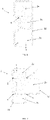
- Figure 1 represents an embodiment wherein the structural beam of the invention 1 is obtained from a single sheet 10.
- the sheet has been roll formed to define three closed chambers 2a, 2b, 2c.
- a welding seam 3 securely fastens the structural beam in a region where one edge of the sheet abuts an intermediate section of the roll formed sheet.
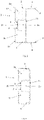
- FIG. 2 represents an embodiment wherein the structural beam of the invention 1 is obtained from two sheets 11, 12.
- the sheets have been roll formed and joined to define three closed chambers 2a, 2b, 2c.
- Four welding seam 3 securely fastens the structural beam regions of contact between the two edges of each roll formed sheets and intermediate region of the other roll formed sheet.
- Figure 3 represents an embodiment wherein the structural beam of the invention 1 is obtained from four sheets 11, 12, 13 and 14.
- the sheets have been roll formed and joined to define three closed chambers 2a, 2b, 2c and two flanges 4.
- Six welding seam 3 securely fastens the structural beam regions of contact between the edges of roll formed sheets and intermediate region of the other roll formed sheets.
- Figure 4 represents an embodiment wherein the structural beam of the invention 1 is obtained from two sheets 11, 12.
- the sheets have been roll formed and joined to define three closed chambers 2a, 2b, 2c.
- Two closed chambers 2a and 2c are closed in part by the contact of intermediate sections of the two sheets.
- Four welding seam 3 securely fastens the structural beam regions of contact between the two edges of each roll formed sheets and intermediate region of the other roll formed sheet.
Landscapes
- Engineering & Computer Science (AREA)
- Mechanical Engineering (AREA)
- Chemical & Material Sciences (AREA)
- Combustion & Propulsion (AREA)
- Transportation (AREA)
- Structural Engineering (AREA)
- Architecture (AREA)
- Physics & Mathematics (AREA)
- Thermal Sciences (AREA)
- Crystallography & Structural Chemistry (AREA)
- Materials Engineering (AREA)
- Metallurgy (AREA)
- Organic Chemistry (AREA)
- Body Structure For Vehicles (AREA)
Priority Applications (4)
| Application Number | Priority Date | Filing Date | Title |
|---|---|---|---|
| EP21184899.9A EP4116175A1 (fr) | 2021-07-09 | 2021-07-09 | Poutre structurelle pour un véhicule automobile réalisée par profilage de tôle d'aluminium |
| PCT/EP2022/068844 WO2023280967A1 (fr) | 2021-07-09 | 2022-07-07 | Poutre structurale pour véhicule à moteur réalisée par profilage d'une feuille d'aluminium |
| EP22741257.4A EP4367004A1 (fr) | 2021-07-09 | 2022-07-07 | Poutre structurale pour véhicule à moteur réalisée par profilage d'une feuille d'aluminium |
| US18/565,167 US20240262424A1 (en) | 2021-07-09 | 2022-07-07 | Structural beam for a motor vehicle made by roll forming of aluminium sheet |
Applications Claiming Priority (1)
| Application Number | Priority Date | Filing Date | Title |
|---|---|---|---|
| EP21184899.9A EP4116175A1 (fr) | 2021-07-09 | 2021-07-09 | Poutre structurelle pour un véhicule automobile réalisée par profilage de tôle d'aluminium |
Publications (1)
| Publication Number | Publication Date |
|---|---|
| EP4116175A1 true EP4116175A1 (fr) | 2023-01-11 |
Family
ID=76859565
Family Applications (2)
| Application Number | Title | Priority Date | Filing Date |
|---|---|---|---|
| EP21184899.9A Withdrawn EP4116175A1 (fr) | 2021-07-09 | 2021-07-09 | Poutre structurelle pour un véhicule automobile réalisée par profilage de tôle d'aluminium |
| EP22741257.4A Pending EP4367004A1 (fr) | 2021-07-09 | 2022-07-07 | Poutre structurale pour véhicule à moteur réalisée par profilage d'une feuille d'aluminium |
Family Applications After (1)
| Application Number | Title | Priority Date | Filing Date |
|---|---|---|---|
| EP22741257.4A Pending EP4367004A1 (fr) | 2021-07-09 | 2022-07-07 | Poutre structurale pour véhicule à moteur réalisée par profilage d'une feuille d'aluminium |
Country Status (3)
| Country | Link |
|---|---|
| US (1) | US20240262424A1 (fr) |
| EP (2) | EP4116175A1 (fr) |
| WO (1) | WO2023280967A1 (fr) |
Cited By (1)
| Publication number | Priority date | Publication date | Assignee | Title |
|---|---|---|---|---|
| WO2025155706A1 (fr) * | 2024-01-17 | 2025-07-24 | Shape Corp. | Rail avant avec caractéristiques de réglage de collision |
Families Citing this family (2)
| Publication number | Priority date | Publication date | Assignee | Title |
|---|---|---|---|---|
| US11524645B2 (en) * | 2020-02-21 | 2022-12-13 | Shape Corp. | Beam assembly with multi-hollow formation |
| US12472806B2 (en) * | 2022-10-07 | 2025-11-18 | Ford Global Technologies, Llc | Mounting structure for electric vehicle |
Citations (4)
| Publication number | Priority date | Publication date | Assignee | Title |
|---|---|---|---|---|
| DE102004033971A1 (de) * | 2004-07-14 | 2006-02-02 | Audi Ag | Karosseriebauteil in Form von aus Metallblechen bestehenden Längs- und/oder Querträger insbesondere in Form eines Schwellers |
| EP2581218A1 (fr) * | 2012-09-12 | 2013-04-17 | Aleris Aluminum Duffel BVBA | Procédé de fabrication d'un composant structurel d'automobile de tôle d'alliage d'aluminium AA7xxx-série |
| US20180112298A1 (en) * | 2016-10-24 | 2018-04-26 | Shape Corp. | Multi-stage aluminum alloy forming and thermal processing method for the production of vehicle components |
| US20210138881A1 (en) * | 2019-11-13 | 2021-05-13 | Honda Motor Co., Ltd. | High strength aluminum alloy door beam |
-
2021
- 2021-07-09 EP EP21184899.9A patent/EP4116175A1/fr not_active Withdrawn
-
2022
- 2022-07-07 EP EP22741257.4A patent/EP4367004A1/fr active Pending
- 2022-07-07 WO PCT/EP2022/068844 patent/WO2023280967A1/fr not_active Ceased
- 2022-07-07 US US18/565,167 patent/US20240262424A1/en active Pending
Patent Citations (4)
| Publication number | Priority date | Publication date | Assignee | Title |
|---|---|---|---|---|
| DE102004033971A1 (de) * | 2004-07-14 | 2006-02-02 | Audi Ag | Karosseriebauteil in Form von aus Metallblechen bestehenden Längs- und/oder Querträger insbesondere in Form eines Schwellers |
| EP2581218A1 (fr) * | 2012-09-12 | 2013-04-17 | Aleris Aluminum Duffel BVBA | Procédé de fabrication d'un composant structurel d'automobile de tôle d'alliage d'aluminium AA7xxx-série |
| US20180112298A1 (en) * | 2016-10-24 | 2018-04-26 | Shape Corp. | Multi-stage aluminum alloy forming and thermal processing method for the production of vehicle components |
| US20210138881A1 (en) * | 2019-11-13 | 2021-05-13 | Honda Motor Co., Ltd. | High strength aluminum alloy door beam |
Non-Patent Citations (1)
| Title |
|---|
| STALEY J T ET AL: "Advances in aluminum alloy products for structural applications in transportation", JOURNAL DE PHYSIQUE IV, EDITIONS DE PHYSIQUE. LES ULIS CEDEX, FR, vol. 3, 1 November 1993 (1993-11-01), pages 179 - 190, XP009152042, ISSN: 1155-4339 * |
Cited By (1)
| Publication number | Priority date | Publication date | Assignee | Title |
|---|---|---|---|---|
| WO2025155706A1 (fr) * | 2024-01-17 | 2025-07-24 | Shape Corp. | Rail avant avec caractéristiques de réglage de collision |
Also Published As
| Publication number | Publication date |
|---|---|
| WO2023280967A1 (fr) | 2023-01-12 |
| EP4367004A1 (fr) | 2024-05-15 |
| US20240262424A1 (en) | 2024-08-08 |
Similar Documents
| Publication | Publication Date | Title |
|---|---|---|
| US20240262424A1 (en) | Structural beam for a motor vehicle made by roll forming of aluminium sheet | |
| JP5366748B2 (ja) | 曲げ圧壊性と耐食性に優れたアルミニウム合金押出材 | |
| JP5160930B2 (ja) | 曲げ圧壊性と耐食性に優れたアルミニウム合金押出材およびその製造方法 | |
| EP3821054B1 (fr) | Procédés de fabrication des produits viellis rapidement à haute résistance en alliage d'aluminium traitables thermiquement | |
| JP5473718B2 (ja) | 曲げ圧壊性と耐食性に優れたアルミニウム合金押出材 | |
| US20100201155A1 (en) | Automobile Body Part | |
| US20190352759A1 (en) | High strength 6xxx and 7xxx aluminum alloys and methods of making the same | |
| EP4168293B1 (fr) | Renfort de longeron et longeron pour un véhicule | |
| US9828033B2 (en) | Method for producing a vehicle component, and vehicle component | |
| US10773756B2 (en) | Structural component of a motor vehicle shell | |
| WO2018078527A1 (fr) | Procédé de formage et de traitement thermique d'un alliage d'aluminium en plusieurs étapes pour la production de composants pour véhicules | |
| EP3312301A1 (fr) | Revenu thermomecanique pour extrusion en alliage 6xxx | |
| CN118317903A (zh) | 用于车辆的槛板组件 | |
| JP2011074470A (ja) | 曲げ圧壊性と耐食性に優れたアルミニウム合金押出材 | |
| KR20190098987A (ko) | 용접봉 없는 레이저 용접을 위한 알루미늄 합금 | |
| US11649536B2 (en) | Method for manufacturing a structure component for a motor vehicle body | |
| JP7734134B2 (ja) | 自動車両の車体用の構造構成要素を製造するための改良された方法 | |
| US20260001118A1 (en) | A unitary bumper beam assembly for a vehicle | |
| US20250084509A1 (en) | A 6xxx alloy for high strength extruded products with high processability | |
| CA3040622C (fr) | Procede de formage et de traitement thermique d'un alliage d'aluminium en plusieurs etapes pour la production de composants pour vehicules |
Legal Events
| Date | Code | Title | Description |
|---|---|---|---|
| PUAI | Public reference made under article 153(3) epc to a published international application that has entered the european phase |
Free format text: ORIGINAL CODE: 0009012 |
|
| STAA | Information on the status of an ep patent application or granted ep patent |
Free format text: STATUS: THE APPLICATION HAS BEEN PUBLISHED |
|
| AK | Designated contracting states |
Kind code of ref document: A1 Designated state(s): AL AT BE BG CH CY CZ DE DK EE ES FI FR GB GR HR HU IE IS IT LI LT LU LV MC MK MT NL NO PL PT RO RS SE SI SK SM TR |
|
| STAA | Information on the status of an ep patent application or granted ep patent |
Free format text: STATUS: THE APPLICATION IS DEEMED TO BE WITHDRAWN |
|
| 18D | Application deemed to be withdrawn |
Effective date: 20230712 |