EP4116809B1 - Procédé d'affichage et dispositif électronique - Google Patents
Procédé d'affichage et dispositif électronique Download PDFInfo
- Publication number
- EP4116809B1 EP4116809B1 EP22740742.6A EP22740742A EP4116809B1 EP 4116809 B1 EP4116809 B1 EP 4116809B1 EP 22740742 A EP22740742 A EP 22740742A EP 4116809 B1 EP4116809 B1 EP 4116809B1
- Authority
- EP
- European Patent Office
- Prior art keywords
- screen
- transition animation
- image frame
- display
- mode
- Prior art date
- Legal status (The legal status is an assumption and is not a legal conclusion. Google has not performed a legal analysis and makes no representation as to the accuracy of the status listed.)
- Active
Links
Images







Classifications
-
- G—PHYSICS
- G06—COMPUTING OR CALCULATING; COUNTING
- G06F—ELECTRIC DIGITAL DATA PROCESSING
- G06F9/00—Arrangements for program control, e.g. control units
- G06F9/06—Arrangements for program control, e.g. control units using stored programs, i.e. using an internal store of processing equipment to receive or retain programs
- G06F9/44—Arrangements for executing specific programs
- G06F9/451—Execution arrangements for user interfaces
-
- G—PHYSICS
- G09—EDUCATION; CRYPTOGRAPHY; DISPLAY; ADVERTISING; SEALS
- G09G—ARRANGEMENTS OR CIRCUITS FOR CONTROL OF INDICATING DEVICES USING STATIC MEANS TO PRESENT VARIABLE INFORMATION
- G09G5/00—Control arrangements or circuits for visual indicators common to cathode-ray tube indicators and other visual indicators
- G09G5/36—Control arrangements or circuits for visual indicators common to cathode-ray tube indicators and other visual indicators characterised by the display of a graphic pattern, e.g. using an all-points-addressable [APA] memory
- G09G5/37—Details of the operation on graphic patterns
- G09G5/373—Details of the operation on graphic patterns for modifying the size of the graphic pattern
-
- G—PHYSICS
- G06—COMPUTING OR CALCULATING; COUNTING
- G06F—ELECTRIC DIGITAL DATA PROCESSING
- G06F3/00—Input arrangements for transferring data to be processed into a form capable of being handled by the computer; Output arrangements for transferring data from processing unit to output unit, e.g. interface arrangements
- G06F3/01—Input arrangements or combined input and output arrangements for interaction between user and computer
- G06F3/048—Interaction techniques based on graphical user interfaces [GUI]
- G06F3/0481—Interaction techniques based on graphical user interfaces [GUI] based on specific properties of the displayed interaction object or a metaphor-based environment, e.g. interaction with desktop elements like windows or icons, or assisted by a cursor's changing behaviour or appearance
-
- G—PHYSICS
- G06—COMPUTING OR CALCULATING; COUNTING
- G06F—ELECTRIC DIGITAL DATA PROCESSING
- G06F3/00—Input arrangements for transferring data to be processed into a form capable of being handled by the computer; Output arrangements for transferring data from processing unit to output unit, e.g. interface arrangements
- G06F3/01—Input arrangements or combined input and output arrangements for interaction between user and computer
- G06F3/048—Interaction techniques based on graphical user interfaces [GUI]
- G06F3/0484—Interaction techniques based on graphical user interfaces [GUI] for the control of specific functions or operations, e.g. selecting or manipulating an object, an image or a displayed text element, setting a parameter value or selecting a range
- G06F3/04845—Interaction techniques based on graphical user interfaces [GUI] for the control of specific functions or operations, e.g. selecting or manipulating an object, an image or a displayed text element, setting a parameter value or selecting a range for image manipulation, e.g. dragging, rotation, expansion or change of colour
-
- G—PHYSICS
- G06—COMPUTING OR CALCULATING; COUNTING
- G06F—ELECTRIC DIGITAL DATA PROCESSING
- G06F3/00—Input arrangements for transferring data to be processed into a form capable of being handled by the computer; Output arrangements for transferring data from processing unit to output unit, e.g. interface arrangements
- G06F3/14—Digital output to display device ; Cooperation and interconnection of the display device with other functional units
- G06F3/1407—General aspects irrespective of display type, e.g. determination of decimal point position, display with fixed or driving decimal point, suppression of non-significant zeros
-
- G—PHYSICS
- G06—COMPUTING OR CALCULATING; COUNTING
- G06T—IMAGE DATA PROCESSING OR GENERATION, IN GENERAL
- G06T13/00—Animation
- G06T13/80—Two-dimensional [2D] animation, e.g. using sprites
-
- G—PHYSICS
- G09—EDUCATION; CRYPTOGRAPHY; DISPLAY; ADVERTISING; SEALS
- G09G—ARRANGEMENTS OR CIRCUITS FOR CONTROL OF INDICATING DEVICES USING STATIC MEANS TO PRESENT VARIABLE INFORMATION
- G09G5/00—Control arrangements or circuits for visual indicators common to cathode-ray tube indicators and other visual indicators
- G09G5/36—Control arrangements or circuits for visual indicators common to cathode-ray tube indicators and other visual indicators characterised by the display of a graphic pattern, e.g. using an all-points-addressable [APA] memory
- G09G5/37—Details of the operation on graphic patterns
- G09G5/377—Details of the operation on graphic patterns for mixing or overlaying two or more graphic patterns
-
- G—PHYSICS
- G09—EDUCATION; CRYPTOGRAPHY; DISPLAY; ADVERTISING; SEALS
- G09G—ARRANGEMENTS OR CIRCUITS FOR CONTROL OF INDICATING DEVICES USING STATIC MEANS TO PRESENT VARIABLE INFORMATION
- G09G2330/00—Aspects of power supply; Aspects of display protection and defect management
- G09G2330/02—Details of power systems and of start or stop of display operation
- G09G2330/021—Power management, e.g. power saving
- G09G2330/022—Power management, e.g. power saving in absence of operation, e.g. no data being entered during a predetermined time
-
- G—PHYSICS
- G09—EDUCATION; CRYPTOGRAPHY; DISPLAY; ADVERTISING; SEALS
- G09G—ARRANGEMENTS OR CIRCUITS FOR CONTROL OF INDICATING DEVICES USING STATIC MEANS TO PRESENT VARIABLE INFORMATION
- G09G2340/00—Aspects of display data processing
- G09G2340/04—Changes in size, position or resolution of an image
- G09G2340/0407—Resolution change, inclusive of the use of different resolutions for different screen areas
- G09G2340/0414—Vertical resolution change
-
- G—PHYSICS
- G09—EDUCATION; CRYPTOGRAPHY; DISPLAY; ADVERTISING; SEALS
- G09G—ARRANGEMENTS OR CIRCUITS FOR CONTROL OF INDICATING DEVICES USING STATIC MEANS TO PRESENT VARIABLE INFORMATION
- G09G2340/00—Aspects of display data processing
- G09G2340/04—Changes in size, position or resolution of an image
- G09G2340/0407—Resolution change, inclusive of the use of different resolutions for different screen areas
- G09G2340/0421—Horizontal resolution change
-
- G—PHYSICS
- G09—EDUCATION; CRYPTOGRAPHY; DISPLAY; ADVERTISING; SEALS
- G09G—ARRANGEMENTS OR CIRCUITS FOR CONTROL OF INDICATING DEVICES USING STATIC MEANS TO PRESENT VARIABLE INFORMATION
- G09G2340/00—Aspects of display data processing
- G09G2340/04—Changes in size, position or resolution of an image
- G09G2340/045—Zooming at least part of an image, i.e. enlarging it or shrinking it
-
- G—PHYSICS
- G09—EDUCATION; CRYPTOGRAPHY; DISPLAY; ADVERTISING; SEALS
- G09G—ARRANGEMENTS OR CIRCUITS FOR CONTROL OF INDICATING DEVICES USING STATIC MEANS TO PRESENT VARIABLE INFORMATION
- G09G2340/00—Aspects of display data processing
- G09G2340/04—Changes in size, position or resolution of an image
- G09G2340/0464—Positioning
- G09G2340/0471—Vertical positioning
-
- G—PHYSICS
- G09—EDUCATION; CRYPTOGRAPHY; DISPLAY; ADVERTISING; SEALS
- G09G—ARRANGEMENTS OR CIRCUITS FOR CONTROL OF INDICATING DEVICES USING STATIC MEANS TO PRESENT VARIABLE INFORMATION
- G09G2340/00—Aspects of display data processing
- G09G2340/12—Overlay of images, i.e. displayed pixel being the result of switching between the corresponding input pixels
- G09G2340/125—Overlay of images, i.e. displayed pixel being the result of switching between the corresponding input pixels wherein one of the images is motion video
-
- G—PHYSICS
- G09—EDUCATION; CRYPTOGRAPHY; DISPLAY; ADVERTISING; SEALS
- G09G—ARRANGEMENTS OR CIRCUITS FOR CONTROL OF INDICATING DEVICES USING STATIC MEANS TO PRESENT VARIABLE INFORMATION
- G09G2354/00—Aspects of interface with display user
-
- G—PHYSICS
- G09—EDUCATION; CRYPTOGRAPHY; DISPLAY; ADVERTISING; SEALS
- G09G—ARRANGEMENTS OR CIRCUITS FOR CONTROL OF INDICATING DEVICES USING STATIC MEANS TO PRESENT VARIABLE INFORMATION
- G09G2358/00—Arrangements for display data security
Definitions
- This application relates to the field of terminal devices, and in particular, to a display method and an electronic device.
- transition animation can be understood as an animation effect displayed when a terminal switches between different modes to improve visual experience of a user in using a mobile phone.
- transition animations are currently used in limited scenarios.
- US 2018/124232 A1 discloses an electronic device, in which a display control unit causes a lock screen to be displayed on a display of the electronic device in response to a received first user operation and causes a home screen to be displayed on the display in response to a received second user operation, wherein a transition screen indicating an ongoing transition from the lock screen to the home screen is displayed on the display before the home screen is displayed.
- US 2014/123078 A1 discloses an electronic device, in which a display control unit causes an animation to appear on a lock screen as it is being transitioned to a desktop screen.
- this application provides a display method, a computer-readable storage medium and an electronic device according to the enclosed independent claims.
- Advantageous features of the present invention are defined in the corresponding subclaims.
- the electronic device can provide display modes of a transition animation for switching between different modes, allowing the transition animation of the electronic device to be applied to more scenarios to improve user experience.
- this application provides an electronic device.
- the electronic device includes a memory and a processor, where the processor is coupled to the memory; and the memory stores program instructions, and when the program instructions are executed by the processor, the electronic device is caused to perform the following steps: displaying a desktop on a display of the electronic device in response to a received first user operation, and playing a first transition animation in an order from the initial image frame to the last image frame of the first transition animation on the desktop; switching from the desktop to a screen off screen on the display of the electronic device in response to a received second user operation, where before the switching from the desktop to the screen off screen, the first transition animation is played to a first image frame on the desktop, and the first image frame is any image frame after the initial image frame of the first transition animation; and playing the first transition animation in an order from the first image frame to the initial image frame of the first transition animation on the screen off screen.
- this application provides a mode of playing a transition animation backward.
- a transition animation in the desktop mode can be
- the first transition animation is optionally the transition animation in the desktop mode in this application.
- the electronic device when the program instructions are executed by the processor, the electronic device is caused to perform the following steps: playing a second transition animation in an order from the last image frame to the initial image frame of the second transition animation on the screen off screen when the initial image frame of the first transition animation is played on the screen off screen; and playing a third transition animation in an order from the last image frame to the initial image frame of the third transition animation on the screen off screen when the initial image frame of the second transition animation is played on the screen off screen.
- a transition animation in a lock screen mode can continue to be played in reverse order.
- a transition animation in a screen off mode can continue to be played in reverse order.
- the second transition animation is optionally the transition animation in the lock screen mode in this application.
- the third transition animation is optionally the transition animation in the screen off mode in this application.
- the electronic device when the program instructions are executed by the processor, the electronic device is caused to perform the following step: playing the third transition animation in an order from the initial image frame to the last image frame of the third transition animation on the screen off screen when the initial image frame of the third transition animation is played on the screen off screen.
- the transition animation in the screen off mode can be played in normal order on the screen off screen.
- the electronic device when the program instructions are executed by the processor, the electronic device is caused to perform the following steps: switching from the screen off screen to a lock screen on the display of the electronic device in response to a received third user operation; and playing the second transition animation in an order from the initial image frame to the last image frame of the second transition animation on the lock screen.
- the transition animation in the lock screen mode can be played on the lock screen, that is, the second transition animation is played in normal order.
- the screen off screen includes a first display box, a size of the first display box is a first size, and the first display box is at a first position of the display; and when the program instructions are executed by the processor, the electronic device is caused to perform the following step: playing the first transition animation in an order from the first image frame to the initial image frame of the first transition animation in the first display box.
- this application provides a mode of playing a transition animation on the screen off screen, to play the transition animation in a display box.
- the size of the first display box is smaller than a size of the screen off screen.
- this application provides an electronic device.
- the electronic device includes a memory and a processor, where the processor is coupled to the memory; and the memory stores program instructions, and when the program instructions are executed by the processor, the electronic device is caused to perform the following steps: displaying a lock screen on a display of the electronic device in response to a received first user operation, and playing a first transition animation in an order from the initial image frame to the last image frame of the first transition animation on the lock screen; switching from the lock screen to a screen off screen on the display of the electronic device in response to a received second user operation, where before the switching from the lock screen to the screen off screen, the first transition animation is played to a first image frame on the lock screen, and the first image frame is any image frame after the initial image frame of the first transition animation; and playing, by the electronic device, the first transition animation in an order from the first image frame to the initial image frame of the first transition animation on the screen off screen.
- this application provides a mode of playing a transition animation backward.
- the first transition animation is optionally the transition animation in the lock screen mode in this application.
- the electronic device when the program instructions are executed by the processor, the electronic device is caused to perform the following step: playing a second transition animation in an order from the last image frame to the initial image frame of the second transition animation on the screen off screen when the initial image frame of the first transition animation is played on the screen off screen.
- playing a second transition animation in an order from the last image frame to the initial image frame of the second transition animation on the screen off screen when the initial image frame of the first transition animation is played on the screen off screen.
- the first transition animation is optionally the transition animation in the lock screen mode in this application.
- the second transition animation is optionally the transition animation in the screen off mode in this application.
- the electronic device when the program instructions are executed by the processor, the electronic device is caused to perform the following step: playing the second transition animation in an order from the initial image frame to the last image frame of the second transition animation on the screen off screen when the initial image frame of the second transition animation is played on the screen off screen.
- the transition animation in the screen off mode can be played in normal order on the screen off screen.
- the lock screen includes a first display box, a size of the first display box is a first size, and the first display box is at a first position of the display; and when the program instructions are executed by the processor, the electronic device is caused to perform the following step: gradually enlarging and moving the first display box to a screen center of the display of the electronic device, where in a process of gradually enlarging and moving the first display box to the screen center of the display of the electronic device, the first transition animation is played in an order from the initial image frame to the last image frame of the first transition animation in the first display box.
- a transition animation of the lock screen can be displayed in a gradually enlarging manner, to improve continuity of a transition animation in switching from the screen off screen to the lock screen.
- the electronic device when the program instructions are executed by the processor, the electronic device is caused to perform the following step: switching from the lock screen to the screen off screen on the display of the electronic device in response to the received second user operation when the first display box is enlarged to a second size, the first display box moves to a second position of the display, and the first image frame of the first transition animation is played in the first display box; where the screen off screen includes a second display box, the first transition animation is played in an order from the first image frame to the initial image frame of the first transition animation in the second display box, a size of the second display box is the first size, and the second display box is at the first position of the display.
- a corresponding transition animation is played in a display box on the screen off screen.
- the first display box is of a rectangular, circular, triangular, oval, or irregular shape.
- this application provides an electronic device.
- the electronic device includes a memory and a processor, where the processor is coupled to the memory; and the memory stores program instructions, and when the program instructions are executed by the processor, the electronic device is caused to perform the following steps: displaying a first screen on a display of the electronic device in response to a received first user operation, and playing a first transition animation in an order from the initial image frame to the last image frame of the first transition animation on the first screen; displaying a second screen on the display of the electronic device in response to a received second user operation, where before the switching from the first screen to the second screen, the first transition animation is played to a first image frame on the first screen, and the first image frame is any image frame after the initial image frame of the first transition animation; and playing the first transition animation in an order from the first image frame to the initial image frame of the first transition animation on the second screen.
- the first screen is a lock screen
- the second screen is a screen off screen
- the electronic device when the program instructions are executed by the processor, the electronic device is caused to perform the following step: playing a second transition animation in an order from the last image frame to the initial image frame of the second transition animation on the second screen when the initial image frame of the first transition animation is played on the second screen.
- the electronic device when the program instructions are executed by the processor, the electronic device is caused to perform the following step: playing the second transition animation in an order from the initial image frame to the last image frame of the second transition animation when the initial image frame of the second transition animation is played on the second screen.
- the first screen is a desktop
- the second screen is a screen off screen
- the electronic device when the program instructions are executed by the processor, the electronic device is caused to perform the following steps: continuing to play the second transition animation in an order from the last image frame to the initial image frame of the second transition animation when the initial image frame of the first transition animation is played on the second screen; and playing a third transition animation in an order from the last image frame to the initial image frame of the third transition animation on the second screen when the initial image frame of the second transition animation is played on the second screen.
- the electronic device when the program instructions are executed by the processor, the electronic device is caused to perform the following step: playing the third transition animation in an order from the initial image frame to the last image frame of the third transition animation on the second screen when the initial image frame of the third transition animation is played on the second screen.
- the electronic device when the program instructions are executed by the processor, the electronic device is caused to perform the following steps: switching from the second screen to a third screen on the display of the electronic device in response to a received third user operation; and playing the second transition animation in an order from the initial image frame to the last image frame of the second transition animation on the third screen.
- the third screen is a lock screen.
- the first screen includes a first display box, a size of the first display box is a first size, and the first display box is at a first position of the display; and when the program instructions are executed by the processor, the electronic device is caused to perform the following step: gradually enlarging and moving the first display box to a screen center of the display of the electronic device, where in a process of gradually enlarging and moving the first display box to the screen center of the display of the electronic device, the first transition animation is played in an order from the initial image frame to the last image frame of the first transition animation in the first display box.
- the electronic device when the program instructions are executed by the processor, the electronic device is caused to perform the following step: switching from the first screen to the second screen on the display of the electronic device in response to the received second user operation when the first display box is enlarged to a second size, the first display box moves to a second position of the display, and the first image frame of the first transition animation is played in the first display box; where the second screen includes a second display box, the first transition animation is played in an order from the first image frame to the initial image frame of the first transition animation in the second display box, a size of the second display box is the first size, and the second display box is at the first position of the display.
- the first display box is of a rectangular, circular, triangular, oval, or irregular shape.
- this application provides a display method.
- the method includes: displaying, by an electronic device, a desktop on a display of the electronic device in response to a received first user operation, and playing a first transition animation in an order from the initial image frame to the last image frame of the first transition animation on the desktop; switching, by the electronic device, from the desktop to a screen off screen on the display of the electronic device in response to a received second user operation, where before the switching from the desktop to the screen off screen, the first transition animation is played to a first image frame on the desktop, and the first image frame is any image frame after the initial image frame of the first transition animation; and playing the first transition animation in an order from the first image frame to the initial image frame of the first transition animation on the screen off screen.
- the method further includes: playing a second transition animation in an order from the last image frame to the initial image frame of the second transition animation on the screen off screen when the initial image frame of the first transition animation is played on the screen off screen; and playing a third transition animation in an order from the last image frame to the initial image frame of the third transition animation on the screen off screen when the initial image frame of the second transition animation is played on the screen off screen.
- the method further includes: playing the third transition animation in an order from the initial image frame to the last image frame of the third transition animation on the screen off screen when the initial image frame of the third transition animation is played on the screen off screen.
- the method further includes: switching from the screen off screen to a lock screen on the display of the electronic device in response to a received third user operation; and playing the second transition animation in an order from the initial image frame to the last image frame of the second transition animation on the lock screen.
- this application provides a display method.
- the method includes: displaying, by an electronic device, a lock screen on a display of the electronic device in response to a received first user operation, and playing a first transition animation in an order from the initial image frame to the last image frame of the first transition animation on the lock screen; switching, by the electronic device, from the lock screen to a screen off screen on the display of the electronic device in response to a received second user operation when a first image frame of the first transition animation is played on the lock screen; and playing the first transition animation in an order from the first image frame to the initial image frame of the first transition animation on the screen off screen.
- the method further includes: playing a second transition animation in an order from the last image frame to the initial image frame of the second transition animation on the screen off screen when the initial image frame of the first transition animation is played on the screen off screen.
- the method further includes: playing the second transition animation in an order from the initial image frame to the last image frame of the second transition animation on the screen off screen when the initial image frame of the second transition animation is played on the screen off screen.
- the lock screen includes a first display box, a size of the first display box is a first size, and the first display box is at a first position of the display; and the playing a first transition animation in an order from the initial image frame to the last image frame of the first transition animation on the lock screen includes: gradually enlarging and moving the first display box to a screen center of the display of the electronic device, where in a process of gradually enlarging and moving the first display box to the screen center of the display of the electronic device, the first transition animation is played in an order from the initial image frame to the last image frame of the first transition animation in the first display box.
- the switching, by the electronic device, from the lock screen to a screen off screen on the display of the electronic device in response to a received second user operation includes: switching from the lock screen to the screen off screen on the display of the electronic device in response to the received second user operation when the first display box is enlarged to a second size, the first display box moves to a second position of the display, and the first image frame of the first transition animation is played in the first display box; where the screen off screen includes a second display box, the first transition animation is played in an order from the first image frame to the initial image frame of the first transition animation in the second display box, a size of the second display box is the first size, and the second display box is at the first position of the display.
- the first display box is of a rectangular, circular, triangular, oval, or irregular shape.
- the fifth aspect and any one of implementations of the fifth aspect correspond to the second aspect and any one of implementations of the second aspect respectively.
- For technical effects corresponding to the fifth aspect and any one of implementations of the fifth aspect refer to the technical effects corresponding to the second aspect and any one of implementations of the second aspect. Details are not described herein again.
- this application provides a display method.
- the method includes: displaying a first screen on a display of an electronic device in response to a received first user operation, and playing a first transition animation in an order from the initial image frame to the last image frame of the first transition animation on the first screen; displaying a second screen on the display of the electronic device in response to a received second user operation, where before the switching from the first screen to the second screen, the first transition animation is played to a first image frame on the first screen, and the first image frame is any image frame after the initial image frame of the first transition animation; and playing the first transition animation in an order from the first image frame to the initial image frame of the first transition animation on the second screen.
- the first screen is a lock screen
- the second screen is a screen off screen
- the method further includes: playing a second transition animation in an order from the last image frame to the initial image frame of the second transition animation on the second screen when the initial image frame of the first transition animation is played on the second screen.
- the method further includes: playing the second transition animation in an order from the initial image frame to the last image frame of the second transition animation when the initial image frame of the second transition animation is played on the second screen.
- the first screen is a desktop
- the second screen is a screen off screen
- the method further includes: continuing to play the second transition animation in an order from the last image frame to the initial image frame of the second transition animation when the initial image frame of the first transition animation is played on the second screen; and playing a third transition animation in an order from the last image frame to the initial image frame of the third transition animation on the second screen when the initial image frame of the second transition animation is played on the second screen.
- the electronic device when the program instructions are executed by the processor, the electronic device is caused to perform the following step: playing the third transition animation in an order from the initial image frame to the last image frame of the third transition animation on the second screen when the initial image frame of the third transition animation is played on the second screen.
- the method further includes: switching from the second screen to a third screen on the display of the electronic device in response to a received third user operation; and playing the second transition animation in an order from the initial image frame to the last image frame of the second transition animation on the third screen.
- the third screen is a lock screen.
- the first screen includes a first display box, a size of the first display box is a first size, and the first display box is at a first position of the display; and the method further includes: gradually enlarging and moving the first display box to a screen center of the display of the electronic device, where in a process of gradually enlarging and moving the first display box to the screen center of the display of the electronic device, the first transition animation is played in an order from the initial image frame to the last image frame of the first transition animation in the first display box.
- the method further includes: switching from the first screen to the second screen on the display of the electronic device in response to the received second user operation when the first display box is enlarged to a second size, the first display box moves to a second position of the display, and the first image frame of the first transition animation is played in the first display box; where the second screen includes a second display box, the first transition animation is played in an order from the first image frame to the initial image frame of the first transition animation in the second display box, a size of the second display box is the first size, and the second display box is at the first position of the display.
- the first display box is of a rectangular, circular, triangular, oval, or irregular shape.
- this application provides a computer-readable medium, configured to store a computer program.
- the computer program includes instructions that are used to perform the method in the fourth aspect or any possible implementation of the fourth aspect.
- this application provides a computer-readable medium, configured to store a computer program.
- the computer program includes instructions that are used to perform the method in the fifth aspect or any possible implementation of the fifth aspect.
- this application provides a computer program.
- the computer program includes instructions that are used to perform the method in the fourth aspect or any possible implementation of the fourth aspect.
- this application provides a computer program.
- the computer program includes instructions that are used to perform the method in the fifth aspect or any possible implementation of the fifth aspect.
- this application provides a chip.
- the chip includes a processing circuit and a transceiver pin.
- the transceiver pin and the processing circuit communicate with each other through an internal connection path, and the processing circuit performs the method in the fourth aspect or any one of possible implementations of the fourth aspect to control a receive pin to receive a signal and to control a transmit pin to transmit a signal.
- this application provides a chip.
- the chip includes a processing circuit and a transceiver pin.
- the transceiver pin and the processing circuit communicate with each other through an internal connection path, and the processing circuit performs the method in the fifth aspect or any one of possible implementations of the fifth aspect to control a receive pin to receive a signal and to control a transmit pin to transmit a signal.
- a and/or B may represent the following three cases: presence of only A, presence of both A and B, and presence of only B.
- first the terms “first”, “second”, and so on are intended to distinguish between different objects but do not indicate a particular order of the objects.
- a first target object, a second target object, and the like are used to distinguish different target objects, rather than describe a specific sequence of target objects.
- the word such as “an example” or “for example” is used to represent giving an example, an instance, or an illustration. Any embodiment or design solution described as “an example” or “for example” in the embodiments of this application shall not be interpreted to be more preferential or advantageous than other embodiments or design solutions. To be precise, the terms such as “an example” or “for example” are intended to present a related concept in a specific manner.
- plurality means two or more, unless otherwise specified.
- a plurality of processing units means two or more processing units
- a plurality of systems means two or more systems.
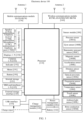
- FIG. 1 is a schematic structural diagram of an electronic device 100. It should be understood that, the electronic device 100 shown in FIG. 1 is merely an example, and the electronic device 100 may have more or fewer components than those shown in the figure, may combine two or more components, or may have different component configurations. Various components shown in FIG. 1 may be implemented by using hardware, software, or a combination of hardware and software including one or more signal processors and/or application-specific integrated circuits.
- the electronic device 100 may include a processor 110, an external storage interface 120, an internal storage 121, a universal serial bus (universal serial bus, USB) interface 130, a charge management module 140, a power management module 141, a battery 142, an antenna 1, an antenna 2, a mobile communications module 150, a wireless communications module 160, an audio module 170, a speaker 170A, a telephone receiver 170B, a microphone 170C, an earphone jack 170D, a sensor module 180, a button 190, a motor 191, an indicator 192, a camera 193, a display 194, a subscriber identification module (subscriber identification module, SIM) card interface 195, and the like.
- a processor 110 an external storage interface 120, an internal storage 121, a universal serial bus (universal serial bus, USB) interface 130, a charge management module 140, a power management module 141, a battery 142, an antenna 1, an antenna 2, a mobile communications module 150, a wireless communications module 160, an audio module 170
- the sensor module 180 may include a pressure sensor 180A, a gyro sensor 180B, a barometric pressure sensor 180C, a magnetic sensor 180D, an acceleration sensor 180E, a distance sensor 180F, an optical proximity sensor 180G, a fingerprint sensor 180H, a temperature sensor 180J, a touch sensor 180K, an ambient light sensor 180L, a bone conduction sensor 180M, and the like.
- the processor 110 may include one or more processing units.
- the processor 110 may include an application processor (application processor, AP), a modem processor, a graphics processing unit (graphics processing unit, GPU), an image signal processor (image signal processor, ISP), a controller, a memory, a video codec, a digital signal processor (digital signal processor, DSP), a baseband processor, a neural-network processing unit (neural-network processing unit, NPU), and/or the like.
- Different processing units may be separate devices or be integrated into one or more processors.
- the controller may be a nerve center and command center of the electronic device 100.
- the controller may generate an operation control signal according to an instruction operation code and a timing signal, to complete control of instruction fetching and execution.
- a memory may be further provided in the processor 110 to store instructions and data.
- the memory in the processor 110 is a cache.
- the memory may store instructions or data that the processor 110 has just used or used repeatedly. If the processor 110 needs to use the instructions or the data again, the processor 110 may directly call the instructions or the data from the memory, thereby avoiding repeated access, reducing waiting time of the processor 110, and improving system efficiency.
- the processor 110 may include one or more interfaces.
- the interface may include an inter-integrated circuit (inter-integrated circuit, I2C) interface, an inter-integrated circuit sound (inter-integrated circuit sound, I2S) interface, a pulse code modulation (pulse code modulation, PCM) interface, a universal asynchronous receiver/transmitter (universal asynchronous receiver/transmitter, UART) interface, a mobile industry processor interface (mobile industry processor interface, MIPI), a general-purpose input/output (general-purpose input/output, GPIO) interface, a subscriber identity module (subscriber identity module, SIM) interface, a universal serial bus (universal serial bus, USB) interface, and/or the like.
- I2C inter-integrated circuit
- I2S inter-integrated circuit sound
- PCM pulse code modulation
- PCM pulse code modulation
- UART universal asynchronous receiver/transmitter
- MIPI mobile industry processor interface
- GPIO general-purpose input/output
- an interface connection relationship between the modules illustrated in the embodiments of this application is merely an example for description, and constitutes no limitation on the structure of the electronic device 100.
- the electronic device 100 may alternatively use an interface connection manner different from that in the foregoing embodiments, or a combination of a plurality of interface connection manners.
- the charge management module 140 is configured to receive charge input from a charger.
- the charger may be a wireless charger or a wired charger.
- the charge management module 140 may receive charge input from a wired charger by using the USB interface 130.
- the charge management module 140 may receive wireless charge input through a wireless charge coil of the electronic device 100.
- the charge management module 140 may also supply power to the electronic device through the power management module 141 while charging the battery 142.
- the power management module 141 is configured to connect the battery 142, the charge management module 140, and the processor 110.
- the power management module 141 receives input from the battery 142 and/or the charge management module 140, to supply power to the processor 110, the internal storage 121, an external storage, the display 194, the camera 193, the wireless communications module 160, and the like.
- the power management module 141 may also be configured to monitor parameters such as capacity of a battery, a cycle count of the battery, and a state of health (leakage and impedance) of the battery.
- the power management module 141 may alternatively be provided in the processor 110.
- the power management module 141 and the charge management module 140 may alternatively be provided in a same device.
- a wireless communication function of the electronic device 100 may be implemented by using the antenna 1, the antenna 2, the mobile communications module 150, the wireless communications module 160, the modem processor, the baseband processor, and the like.
- the antenna 1 and the antenna 2 are configured to transmit and receive an electromagnetic wave signal.
- Each antenna of the electronic device 100 may be configured to cover one or more communication bands. Different antennas may be reused to improve antenna utilization.
- the antenna 1 may be reused as a diversity antenna of a wireless local area network.
- the antenna may be used in combination with a tuning switch.
- the mobile communications module 150 may provide wireless communication solutions including 2G, 3G, 4G, 5G, and the like for application to the electronic device 100.
- the mobile communications module 150 may include at least one filter, a switch, a power amplifier, a low noise amplifier (low noise amplifier, LNA), and the like.
- the mobile communications module 150 may receive an electromagnetic wave through the antenna 1, perform processing such as filtering and amplification on the received electromagnetic wave, and transmit the processed electromagnetic wave to the modem processor for demodulation.
- the mobile communications module 150 may further amplify a signal modulated by the modem processor, and convert the signal into an electromagnetic wave through the antenna 1 for transmission.
- at least some functional modules of the mobile communications module 150 may be provided in the processor 110.
- at least some functional modules of the mobile communications module 150 and at least some modules of the processor 110 may be provided in a same device.
- the modem processor may include a modulator and a demodulator.
- the modulator is configured to modulate a to-be-transmitted low frequency baseband signal into a medium or high frequency signal.
- the demodulator is configured to demodulate a received electromagnetic wave signal into a low frequency baseband signal. Then, the demodulator transmits the low frequency baseband signal obtained through demodulation to the baseband processor for processing. After being processed by the baseband processor, the low frequency baseband signal is transferred to the application processor.
- the application processor outputs a sound signal through an audio device (not limited to the speaker 170A, the telephone receiver 170B, and the like), or displays an image or a video through the display 194.
- the modem processor may be a separate device.
- the modem processor may be separate from the processor 110 and provided in a same device together with the mobile communications module 150 or another functional module.
- the wireless communications module 160 may provide wireless communication solutions for application to the electronic device 100, which include wireless local area networks (wireless local area networks, WLAN) (for example, wireless fidelity (wireless fidelity, Wi-Fi) network), bluetooth (bluetooth, BT), global navigation satellite systems (global navigation satellite system, GNSS), frequency modulation (frequency modulation, FM), near field communication (near field communication, NFC), infrared (infrared, IR) technology, and the like.
- the wireless communications module 160 may be one or more devices integrating at least one communication processing module.
- the wireless communications module 160 receives an electromagnetic wave through the antenna 2, performs frequency modulation and filtering processing on the electromagnetic wave signal, and transmits the processed signal to the processor 110.
- the wireless communications module 160 may also receive a to-be-transmitted signal from the processor 110, perform frequency modulation and amplification on the signal, and transmit the signal as an electromagnetic wave through the antenna 2.
- the electronic device 100 implements a display function by using the GPU, the display 194, the application processor, and the like.
- the GPU is an image processing microprocessor, and is connected to the display 194 and the application processor.
- the GPU is configured to perform mathematical and geometrical computing for graphics rendering.
- the processor 110 may include one or more GPUs that execute program instructions to generate or change display information.
- the display 194 is configured to display an image, a video, and the like.
- the display 194 includes a display panel.
- the display panel may be a liquid crystal display (liquid crystal display, LCD), organic light-emitting diode (organic light-emitting diode, OLED), active-matrix organic light emitting diode or active-matrix organic light emitting diode (active-matrix organic light emitting diode, AMOLED), flexible light-emitting diode (flex light-emitting diode, FLED), Miniled, MicroLed, Micro-oLed, quantum dot light emitting diodes (quantum dot light emitting diodes, QLED), or the like.
- the electronic device 100 may include one or N displays 194, where N is a positive integer greater than 1.
- the electronic device 100 may implement a shooting function by using the ISP, the camera 193, the video codec, the GPU, the display 194, the application processor, and the like.
- the camera 193 is configured to capture a static image or a video.
- An optical image is generated for an object by using a lens, and is projected onto a photosensitive element.
- the photosensitive element may be a charge coupled device (charge coupled device, CCD) or a complementary metal-oxide-semiconductor (complementary metal-oxide-semiconductor, CMOS) phototransistor.
- CCD charge coupled device
- CMOS complementary metal-oxide-semiconductor
- the photosensitive element converts an optical signal into an electrical signal, and then transfers the electrical signal to the ISP which converts the signal into a digital image signal.
- the ISP outputs the digital image signal to the DSP for processing.
- the DSP converts the digital image signal into an image signal in a standard format such as RGB or YUV.
- the electronic device 100 may include one or N cameras 193, where N is a positive integer greater than 1.
- the digital signal processor is configured to process digital signals, and is able to process not only digital image signals but also other digital signals. For example, when the electronic device 100 selects a frequency, the digital signal processor is configured to perform Fourier transform and the like on frequency energy.
- the video codec is configured to compress or decompress a digital video.
- the electronic device 100 may support one or more types of video codecs, so that the electronic device 100 can play or record videos in a plurality of coding formats such as moving picture experts group (moving picture experts group, MPEG) 1, MPEG2, MPEG3, and MPEG4.
- MPEG moving picture experts group
- the external storage interface 120 may be configured to connect an external storage card, for example, a Micro SD card, to extend a storage capacity of the electronic device 100.
- the external storage card communicates with the processor 110 through the external storage interface 120, to implement a data storage function, for example, storing files such as music and video files in the external storage card.
- the internal storage 121 may be configured to store computer-executable program code, and the executable program code includes an instruction.
- the processor 110 runs the instruction stored in the internal storage 121, to implement various function applications and data processing of the electronic device 100.
- the internal storage 121 may include a storage program area and a storage data area.
- the storage program area may store an operating system, an application program required by at least one function (for example, a sound play function and an image play function), and the like.
- the data storage area may store data (such as audio data and contacts) created during use of the electronic device 100, and the like.
- the internal storage 121 may include a high-speed random access memory, or may include a non-volatile memory such as at least one magnetic disk storage device, a flash memory device, and a universal flash storage (universal flash storage, UFS).
- the processor 110 runs the instruction stored in the internal storage 121, to implement a display mode of a transition animation from a screen off mode to a lock screen mode, from a lock screen mode to a desktop mode, and from a desktop mode or a lock screen mode to a screen off mode in the embodiments of this application.
- the electronic device 100 may use the audio module 170, the speaker 170A, the telephone receiver 170B, the microphone 170C, the earphone jack 170D, the application processor, and the like to implement an audio function, for example, music playing and sound recording.
- the audio module 170 is configured to convert digital audio information into an analog audio signal output, and is also configured to convert an analog audio input into a digital audio signal.
- the audio module 170 may be further configured to encode and decode audio signals.
- the audio module 170 may be provided in the processor 110, or some functional modules of the audio module 170 may be provided in the processor 110.
- the pressure sensor 180A is configured to sense a pressure signal, and can convert the pressure signal into an electrical signal.
- the pressure sensor 180A may be provided in the display 194.
- the capacitive pressure sensor may include at least two parallel plates made of a conductive material. When a force is applied to the pressure sensor 180A, capacitance between electrodes changes.
- the electronic device 100 determines pressure intensity based on a capacitance change.
- the electronic device 100 detects strength of the touch operation by using the pressure sensor 180A.
- the electronic device 100 may also calculate a touch position based on a detection signal of the pressure sensor 180A.
- touch operations that are applied to a same touch position but have different touch operation strength may correspond to different operation instructions. For example, when a touch operation whose touch operation strength is less than a first pressure threshold is applied to a messaging application icon, an instruction for displaying messages is executed. When a touch operation whose touch operation strength is greater than or equal to the first pressure threshold is applied to the messaging application icon, an instruction for creating a new message is executed.
- the fingerprint sensor 180H is configured to collect fingerprints.
- the electronic device 100 may implement fingerprint unlock, application access lock, fingerprint-based photographing, fingerprint-based call answering, and the like by using characteristics of the collected fingerprint.
- the fingerprint sensor 180H may collect a fingerprint of a user when a touchscreen is touched, and transmit the collected fingerprint to the processor 110.
- the processor 110 may unlock the electronic device 100 based on fingerprint information input by the fingerprint sensor 180H.
- the touch sensor 180K is also referred to as a "touch panel”.
- the touch sensor 180K may be disposed on the display 194, and the touch sensor 180K and the display 194 form a touchscreen, also referred to as a "touch screen”.
- the touch sensor 180K is configured to detect a touch operation applied on or near the touch sensor 180K.
- the touch sensor may transfer the detected touch operation to the application processor for determining a touch event type, and may provide a visual output related to the touch operation through the display 194.
- the touch sensor 180K may alternatively be disposed on a surface of the electronic device 100 at a location different from that of the display 194.
- the button 190 includes a power on/off button, a volume button, and the like.
- the button 190 may be a mechanical button or a touch button.
- the electronic device 100 may receive a button-based input, and generate a key signal input related to user setting and function control of the electronic device 100. For example, in the embodiments of this application, when the electronic device 100 is in a screen off mode, the user presses the power on/off button.
- the electronic device 100 may enter a lock screen mode from the screen off mode in response to the received operation of pressing the power on/off button by the user. For example, when the electronic device is in the lock screen mode or a desktop mode, if the electronic device 100 receives an operation of pressing the power on/off button by the user, the electronic device 100 enters the screen off mode from the lock screen mode or the desktop mode.
- a software system of the electronic device 100 may use a layered architecture, an event-driven architecture, a microkernel architecture, a microservice architecture, or a cloud architecture.
- a software structure of the electronic device 100 is described by using an Android system with a layered architecture as an example.
- FIG. 2 is a structural block diagram of software of an electronic device 100 according to an embodiment of this application.
- an Android system is divided into four layers: an application layer, an application framework layer, Android runtime (Android runtime) and system libraries, and a kernel layer from top to bottom.
- the application layer may include a series of application program packages.
- the application program packages may include application programs such as camera, gallery, calendar, phone, map, navigation, WLAN, Bluetooth, music, video, messaging, and wallpaper.
- the wallpaper application program may implement display modes of wallpaper or transition animations in the embodiments of this application.
- the wallpaper application program may provide a user interface for a user to change wallpaper or a video displayed in a transition animation.
- the application framework layer provides application programming interfaces (application programming interface, API) and a programming framework for applications at the application layer.
- the application framework layer includes some predefined functions.
- the application framework layer may include a window manager, a content provider, a view system, a phone manager, a resource manager, a notification manager, and the like.
- the window manager is used to manage window programs.
- the window manager can, for example, obtain a display size, determine whether a status bar is present, lock the screen, and take a screenshot.
- the content provider is used to store and retrieve data, and make the data accessible to an application program.
- the data may include videos, images, audio, calls made and received, browse history, bookmarks, contacts, and the like.
- the view system includes visual controls, for example, controls with text displayed and controls with a picture displayed.
- the view system may be used for building an application program.
- a display screen may include one or more views.
- a display screen including a messaging notification icon may include a view displaying text and a view displaying a picture.
- the phone manager is used for providing a communication function of the electronic device 100, for example, management of a call status (including answering or disconnecting calls).
- the resource manager provides various resources for application programs, for example, localized strings, icons, pictures, layout files, and video files.
- the notification manager enables an application program to display notification information in a status bar, and may be used to convey messages of a notification type that may disappear automatically after a short stay without user interaction.
- the notification manager is used to notify that download is completed and alert about a message.
- the notification manager may be a notification that appears in a top status bar of a system in a form of a chart or scroll bar text, for example, a notification of an application program running in the background, or may be a notification that appears on a screen in a form of a dialog box.
- text information is provided in a status bar, an alert sound is played, an electronic device vibrates, or an indicator blinks.
- the Android runtime includes core libraries and a virtual machine.
- the Android runtime is responsible for scheduling and managing an Android system.
- the core libraries include functional functions that the java language needs to call and core libraries of Android.
- the application layer and the application framework layer run on the virtual machine.
- the virtual machine executes java files of the application layer and the application framework layer as binary files.
- the virtual machine is used to perform functions such as object lifecycle management, stack management, thread management, security and exception management, and garbage collection.
- the system libraries may include a plurality of functional modules, for example, a surface manager (surface manager), media libraries (media libraries), three-dimensional graphics processing libraries (for example, OpenGL ES), and 2D graphics engines (for example, SGL).
- a surface manager surface manager
- media libraries media libraries
- three-dimensional graphics processing libraries for example, OpenGL ES
- 2D graphics engines for example, SGL
- the surface manager is used to manage a display subsystem and provide fusion of 2D and 3D graphic layers for a plurality of application programs.
- the media libraries supports playback and recording of audio and videos in a plurality of commonly used formats as well as static image files.
- the media libraries can support a plurality of audio and video coding formats such as MPEG4, H.264, MP3, AAC, AMR, JPG, and PNG.
- the three-dimensional graphics processing libraries are used to implement three-dimensional graphics drawing, image rendering and composition, graphic layer processing, and the like.
- the 2D graphics engines are drawing engines for 2D graphics.
- the kernel layer is a layer between hardware and software.
- the kernel layer includes at least a display driver, a camera driver, an audio driver, and sensor drivers.
- the electronic device 100 may include more or fewer components than shown in the figure, or combine some components, or split some components, or have a different component arrangement.
- an embodiment of this application provides a display mode of a transition animation, allowing the transition animation to be displayed more smoothly and continuously, to improve user experience.
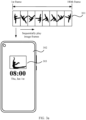
- FIG. 3a to FIG. 3f illustrate a display mode of a transition animation.
- a video segment 301 corresponding to the transition animation (which may also be referred to as a transition animation effect, a transition effect, and the like) includes 180 image frames (which may also be referred to as video frames, and the like).
- the transition animation mentioned in the embodiments of this application may be understood as an animation effect used in a process of switching between different modes.
- the modes in the embodiments of this application include, but are not limited to, a screen off mode, a lock screen mode, and a desktop mode.
- a transition animation in the screen off mode in the following embodiments of this application is optionally an animation effect played on a display when an electronic device switches from the desktop mode to the screen off mode.
- a transition animation in the lock screen mode is optionally an animation effect played on a display when an electronic device switches from the screen off mode to the lock screen mode.
- a transition animation in the desktop mode is optionally an animation effect played on a display when an electronic device switches from the lock screen mode to the desktop mode.
- the desktop mode may also be referred to as an unlock mode. This is not limited in this application.
- the screen off mode is optionally a mode that the electronic device enters after receiving an operation of pressing a power on/off button by a user.
- the electronic device turns off the display, and displays the transition animation in the screen off mode on the turned-off display.
- the lock screen mode is optionally a mode in which the screen of the electronic device is locked.
- the user performs an operation such as touching or pressing a button on a mobile phone, optionally causing the electronic device to enter the lock screen mode.
- the screen is locked in the lock screen mode, and needs to be unlocked by the user before the electronic device can enter the desktop mode.
- some functions that can be used without unlocking such as a camera function and widgets, may be provided in the lock screen mode.
- the lock screen mode the user can perform a corresponding operation on the electronic device, while in the screen off mode, when the user triggers the electronic device, the electronic device will enter the lock screen mode.
- the desktop mode is a mode that the electronic device enters after unlock.
- the user may perform an operation on the electronic device in the desktop mode to use corresponding functions provided by the electronic device.
- the user may use a chat application, a video application, and the like.
- mode switching in the embodiments of this application includes, for example, switching from the screen off mode to the lock screen mode, switching from the lock screen mode to the desktop mode, or switching from the desktop mode (or the lock screen mode) to the screen off mode, and is optionally screen switching.
- switching from the screen off mode to the lock screen mode is optionally switching from a screen off screen displayed on a display of the mobile phone to a lock screen.
- Each screen (including the screen off screen, the lock screen, and the desktop mode) in the embodiments of this application is a display in full screen mode.
- the display switches from one screen (for example, the screen off screen) to another screen (for example, the lock screen)
- the previous screen that is, the screen off screen
- the switched-to screen that is, the lock screen
- a quantity of image frames included in the transition animation in the embodiments of this application is only an illustrative example. This is not limited in this application.
- the mobile phone when the mobile phone is in the lock screen mode or the desktop mode, the user presses the power on/off button. In response to the received operation, the mobile phone enters the screen off mode.
- a screen off screen 302 of the mobile phone includes a transition animation display box 303, a time control, and the like.
- a first image frame in the video segment 301 is displayed in the transition animation display box 303.
- the mobile phone may sequentially play the image frames in the video segment 301 in the transition animation display box 303.
- the mobile phone presets a key frame of the screen off mode.
- the key frame is optionally the last image frame played in a current mode.
- the key frame of the screen off mode is an image frame 304 in the video segment 301.
- the image frames in the video segment 301 are sequentially played in the transition animation display box 303 of the mobile phone until the image frame 304 is played.
- the image frame 304 stays as an image displayed in the transition animation display box 303. It can be understood that the image frame 304 is frozen as a picture in the transition animation display box 303 on the screen off screen 302, while other controls (for example, the time control) run normally.
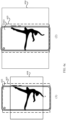
- the mobile phone may perform corresponding processing on image frames in the transition animation corresponding to the screen off mode, so that all the image frames meet a size requirement of the transition animation display box 303.
- the mobile phone performs grayscale processing on the image frame 304.
- the mobile phone selects one or more main body parts in the grayscale-processed image frame 304 according to a given size (for example, 1440*800, which is not limited in this application).
- Each main body part is of the given size.
- a plurality of main body parts may partially overlap.
- a terminal can calculate a difference value of an individual pixel in each main body part.
- a difference value of an individual pixel is a difference value between the pixel and surrounding pixels.
- the mobile phone can obtain a sum of difference values of pixels in a main body part as a difference value of the main body part.
- the mobile phone can crop a main body part with a largest difference value from the image frame 304.
- the cropped main body part is resized in specific proportion (for example, zoomed out by 50%) to obtain the resized main body part.
- the mobile phone adds a mask of a specific shape to the resized main body part.
- the mask of a specific shape may be a rectangular mask, a circular mask, a triangular mask, and the like. This is not limited in this application.
- the processed image frame is an image displayed in the transition animation display box 303.
- the transition animation display box 303 may be round, triangular, or of other shapes. This is not limited in this application.
- the user can make the mobile phone enter the lock screen mode by touching the power on/off button, the screen, or the like on the screen off screen 302.
- the mobile phone enters the lock screen mode.
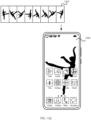
- Image frames of a transition animation in the lock screen mode are sequentially played on a lock screen 305 of the mobile phone.
- the first image frame of the transition animation in the lock screen mode is optionally the last image frame of the transition animation in the screen off mode, that is, the key frame in the screen off mode (for example, the image frame 304).
- the lock screen 305 may further include one or more controls such as a time control, a network control, and a battery control.
- the one or more controls displayed on the lock screen 305 may alternatively be displayed when the transition animation in the lock screen mode is played to any frame.
- the one or more controls may be displayed in a fly-in or fade-in manner. This is not limited in this application.
- the transition animation played on the lock screen 303 is played to a key frame in the lock screen mode.
- an image frame 306 is the key frame in the lock screen mode.
- the transition animation stops after the image frame 306 is played on the lock screen 303.
- an image displayed on the lock screen 305 is always the image frame 306.
- the user can unlock the screen through sliding unlock, fingerprint unlock, or the like.
- the mobile phone enters the desktop mode (or referred to as the unlock mode).
- the mobile phone enters the desktop mode.
- Image frames of a transition animation in the desktop mode are sequentially played on a desktop (or referred to as mobile phone display screen) 307.
- the first image frame of the transition animation in the desktop mode is optionally the last image frame of the transition animation in the lock screen mode, that is, the key frame in the lock screen mode (for example, the image frame 306).
- the image frames of the transition animation in the desktop mode may be displayed on the desktop 307 in a manner of tiling, stretching, or the like.
- the desktop 307 may also include one or more controls such as a time control, a network control, a battery control, and an application icon control.
- the one or more controls displayed on the desktop 307 may alternatively be displayed when the transition animation in the desktop mode is played to any frame.
- the one or more controls may be displayed in a fly-in or fade-in manner. This is not limited in this application. It should be noted that, in this embodiment of this application, that the mobile phone enters the desktop after unlock from the lock screen mode is used as an example for description. In other embodiments, the mobile phone may enter a screen, for example, a web page, displayed before the screen of the mobile phone is turned off.
- the transition animation played on the desktop 307 is played to a key frame in the desktop mode, for example, an image frame 308.
- the transition animation played on the desktop 307 stops after being played to the image frame 308.
- FIG. 5a to FIG. 5d illustrate a display mode of a transition animation from a screen off mode to a lock screen mode.
- a transition animation in the screen off mode is played in a transition animation display box 502 in the screen off mode, and is frozen at the last frame in the screen off mode (that is, a key frame in the screen off mode), for example, the image frame 304 in FIG. 3b .
- the image frame 304 in FIG. 3b for other descriptions, refer to FIG. 3a and FIG. 3b . Details are not described herein again.
- the mobile phone when the mobile phone receives an operation of triggering a power on/off button by a user, the mobile phone enters the lock screen mode.
- the mobile phone displays a lock screen 503.
- a time control and the like on a screen off screen 502 disappear.
- the mobile phone starts playing the transition animation on the lock screen 503.
- a screen may be black. After the screen is black, the lock screen 503 is displayed.
- the lock screen 503 includes a field of view box 504 and a schematic image box 505.
- a position of a center point of the field of view box 504 on the lock screen 503 is the same as that of a center point of the transition animation display box 502 on the screen off screen 501 in (1) of FIG. 5a .
- the center point is a geometric center of the field of view box or the transition animation display box (this also applies in the following descriptions, and details are not repeated).
- a rectangular box is used as an example of the field of view box 504 for description.
- the field of view box 504 may be round, triangular, or of other shapes. This is not limited in this application.
- a size and a position of the field of view box 504 on the lock screen 503 are the same as those of the transition animation display box 502 on the screen off screen 501.
- that the center point of the field of view box 504 and a center point of the lock screen 503 are on a same vertical line and the center point of the transition animation display box 502 and a center point of the screen off screen 501 are on a same vertical line is used as an example for description.
- the field of view box 504 is used to display a part of the schematic image box 505 on which the field of view box 504 is superimposed. It should be noted that parts other than the field of view box 504 are optionally black. In other words, from a user's point of view, currently, an image is displayed only in the field of view box 504 on the lock screen 503, and all parts on the lock screen 503 except the field of view box 504 are black.
- the schematic image box 505 includes the first image frame of a transition animation in the lock screen mode, that is, the last frame in the screen off mode (that is, the key frame in the screen off mode).
- the first image frame displayed in the lock screen mode and the last frame in the screen off mode are one image frame, so that transition between the lock screen mode and the screen off mode is more smooth, improving user experience.
- an image displayed in the transition animation display box 502 has been cropped and resized.
- a size of an image displayed in the schematic image box 505 is corresponding to a size of the resized image.
- the mobile phone reduces a main body part by 50% in a preset scale.
- the size of the image in the schematic image box 505 is obtained by reducing an original image (for example, the image frame 304 in FIG. 3d ) by 50%.
- the foregoing size is only an illustrative example. This is not limited in this application.
- the field of view box 504 is used to display an image, to improve displaying continuity during switching from the screen off mode to the lock screen mode.
- the image displayed in the field of view box 504 is consistent with the image displayed in the transition animation display box 502.
- a part of the field of view box 504 superimposed on the schematic image box 505 needs to be consistent with the image displayed in the transition animation display box 502.
- the superimposed part is the resized main body part in FIG. 4 .
- the mobile phone can add the schematic image box 505 under the field of view box 504 based on a current position of the field of view box 504, so that the superimposed part of the field of view box 504 and the schematic image box 505 is the cropped main body part in FIG. 4 .
- the field of view box 504 and the schematic image box 505 are gradually enlarged, and move to the center of the lock screen 503 in the enlarging process. It should be noted that, in this embodiment of this application, that the field of view box 504 and the schematic image box 505 are proportionally enlarged and move to the center of the lock screen 503 with a same speed and different moving tracks is used as an example for description.
- an enlarging proportion of the field of view box 504 may be different from that of the schematic image box 505, and/or a moving speed of the field of view box 504 to the center of the lock screen 503 may be different from that of the schematic image box 505 to the center of the lock screen 503, and/or a moving track of the field of view box 504 to the center of the lock screen 503 may be different from that of the schematic image box 505. This is not limited in this application.
- the size of the image in the schematic image box 505 is consistent with the size of the schematic image box 505. In other words, while the size and position of the schematic image box 505 are changing, the size of the image in the schematic image box 505 keeps consistent with the size of the schematic image box.
- the schematic image box 505 in this embodiment of this application is only used to describe a superposition mode and a display mode of the image and the field of view box, and the schematic image box 505 is not displayed on the lock screen 503.
- the part of the schematic image box 505 beyond the lock screen 503 is only used to better describe the size and position of the schematic image box 505. Details are not described in the following again. In other words, from a user's point of view, the user can only see the image displayed in the field of view box 504 on the lock screen 503, and other parts on the lock screen 503 are all black.
- the center of the field of view box 504 and the center of the lock screen 503 are on a same vertical line, while a center of the schematic image box 505 and the center of the lock screen 503 are not on a same vertical line.
- the field of view box 504 when moving to the center of the lock screen 503, the field of view box 504 only needs to move downward vertically.
- the schematic image box 505 needs to move to the lower left to approach the center of the lock screen 503.
- the field of view box 504 and the lock screen schematic box 505 are proportionally enlarged.
- moved-to positions of the enlarged schematic image box 505 and field of view box 504 are shown in (1) of FIG. 5b .
- a part that is of the field of view box 504 and that is superimposed on the schematic image box 505 is an image currently displayed in the field of view box 504. It should be noted that parts other than the field of view box 504 in the lock screen schematic box 505 are still black.
- the transition animation from the screen off mode to the lock screen mode includes a plurality of image frames between the first frame (for example, the image frame 304) in the lock screen mode and the last frame (for example, the image frame 306) in the lock screen mode.
- 60 image frames may be included.
- the image frames included in the video segment 301 shown in FIG. 3a to FIG. 3e are only folded image frames.
- the unfolded image frame 304 may optionally include 20 image frames (which is only an illustrative example, and is not limited in this application).
- the image frames in the video segment 301 are still sequentially played on the lock screen 503.
- the image in the schematic image box 505 changes with the image frames in the video segment.
- the unfolded image frame 304 includes an image frame 1, an image frame 2, ..., and an image frame 20.
- the image included in the schematic image box 505 is the image frame 1, and correspondingly, a part superimposed on the image frame 1 is displayed in the field of view box 504.
- the schematic image box 505 and the field of view box 504 are gradually enlarged and move, and at the same time, the schematic image box 505 sequentially includes the image frames of the unfolded image frame 304.
- the schematic image box 505 and the field of view box 504 are enlarged and move, as shown in (1) of FIG.
- the image included in the schematic image box 505 is the image frame 5, and correspondingly, a part superimposed on the image frame 5 is displayed in the field of view box 504.
- the schematic image box 505 and the field of view box 504 continue to be enlarged and move to an extent as shown in (2) of FIG. 5b .
- the image included in the schematic image box 505 is the image frame 13, and correspondingly, a part superimposed on the image frame 13 is displayed in the field of view box 504. It can be understood that, in the process of gradually enlarging and moving the field of view box 504, an image displayed in the field of view box 504 also changes dynamically. For example, there is a dancing girl in the video segment.
- the field of view box 504 is flipping downward, and as the field of view box 504 is gradually enlarged and moves, and the image frames are sequentially played, the dancing girl displayed in the field of view box 504 continues to flip downward. This is the same case in the following descriptions, and details are not repeated.
- the schematic image box 505 stops being enlarged. It should be noted that, in this embodiment of this application, that all side lines of the schematic image box 505 are on the corresponding side lines of the lock screen 503 is only used to illustrate a positional relationship between the side lines.
- the electronic device can obtain a distance between each side line of the schematic image box 505 and a corresponding side line of the lock screen 503.
- the corresponding side line is a side line that is parallel and closest to the schematic image box 505.
- the left side line of the lock screen 503 is a side line corresponding to the left side line of the schematic image box 505.
- the schematic image box 505 overlaps the corresponding side lines, equivalent that the side lines of the schematic image box 505 are on the corresponding side lines in this embodiment of this application. This is the same case in the following descriptions, and details are not repeated.
- the schematic image box 505 continues to be enlarged, continues to move to the center of the lock screen 503 until reaching the center of the lock screen 503, and then stops being enlarged.
- the schematic image box 505 stops moving and continues to be enlarged until all side lines are on or beyond the corresponding side lines of the lock screen 503.
- the field of view box 504 stops moving and stops being enlarged. If the center of the field of view box 504 coincides with the center of the lock screen 503, and at least one side line of the field of view box 504 is within the lock screen 503, the center of the field of view box 504 remains unchanged and the field of view box 504 continues to be enlarged. For example, still referring to (3) of FIG.
- the schematic image box 505 stops being enlarged and stops moving, the center of the field of view box 504 coincides with the center of the lock screen 503, and left and right side lines of the field of view box 504 are respectively on left and right side lines of the lock screen 503, but upper and lower side lines of the field of view box 504 are still respectively within the frame of the lock screen 503.
- a part between the upper side line of the field of view box 504 and an upper side line of the lock screen 505 and a part between the lower side line of the field of view box 504 and a lower side line of the lock screen 505 are still black.
- the field of view box 504 still needs to be enlarged until all the four side lines are on or beyond the corresponding side lines of the lock screen 503.
- the center of the field of view box 504 remains unchanged and the field of view box 504 continues to be enlarged.
- the image in the schematic image box 505 still changes according to an order of the image frames, and the position and size of the schematic image box 505 remain unchanged. For example, referring to (2) of FIG.
- one or more other controls may be displayed on the lock screen 503, such as a time control, a network control, and a battery control.
- a time control for example, the image frame 306 in FIG. 3d
- this image frame is frozen as a picture displayed on the lock screen 503.
- the image displayed on the lock screen 503 in FIG. 5d is a frame before the key frame in the lock screen mode, all subsequent image frames continue to be played on the lock screen 503 until the key frame in the lock screen mode is played.
- an aspect ratio of an original image frame is the same as that of the lock screen.
- the four side lines of the schematic image box 505 that is, the original image frame
- the following describes a display mode of a transition animation when an aspect ratio of an original image frame is different from that of a lock screen. Referring to FIG. 6a , for example, for a screen off screen 601 shown in (1) of FIG. 6a , refer to the related descriptions in (1) of FIG. 5a .
- a mobile phone enters a lock screen mode in response to a received user operation.
- a lock screen is shown in (2) of FIG. 6a .
- the lock screen 603 includes a field of view box 604 and a schematic image box 605.
- the lock screen 603 includes a field of view box 604 and a schematic image box 605.
- an aspect ratio of an image in the schematic image box 605 is different from that of the image in the schematic image box 505.
- (1) of FIG. 6b illustratively shows enlarging and moving manners of the schematic image box 605 and the field of view box 604. For specific descriptions, refer to (1) of FIG. 5b . Details are not described herein again.
- left and right side lines of the schematic image box 605 are respectively on left and right side lines of the lock screen 603, while upper and lower side lines of the schematic image box 605 are still respectively within upper and lower side lines of a view screen 603. Then, the schematic image box 605 continues to move to a center and is still enlarged in proportion. The field of view box 604 is still enlarged and moves in its own way, which does not interfere with enlarging and moving of the schematic image box 605.
- the center of the field of view box 604 remains unchanged and the field of view box 604 continues to be enlarged.
- the left and right side lines of the field of view box 604 are respectively beyond the left and right side lines of the lock screen 603, but a picture displayed on the lock screen 603 is only a part that is on the lock screen 603 and that is in an overlapping part between the field of view box 603 and the image in the schematic image box 605.
- part of the right foot and part of the left foot of the dancing girl are not displayed on the lock screen 603.
- the image frames in the video segment 301 may continue to be played on the lock screen 603 until a key frame in the lock screen mode is played.
- One or more other controls are also displayed on the lock screen 603.
- the image frames played on the lock screen 603 may always have some pictures outside the lock screen 603.
- FIG. 7a and FIG. 7b illustrateanother display mode of a transition animation from a screen off mode to a lock screen mode.
- a screen off screen 701 includes a transition animation display box 702 and other controls.
- a center of a schematic image box 705, a center of a field of view box 704, and a center of a lock screen 703 are on a same vertical line.
- the center of the schematic image box 705 may coincide with the center of the field of view box 704.
- the schematic image box 705 and the field of view box 704 can move vertically to the center of the lock screen 703 simultaneously.
- a position of the schematic image box 705 in (2) of FIG. 7a is different from that of the schematic image box 505 in (2) of FIG. 5a
- an image displayed in the field of view box 704 is also different from that displayed in the field of view box 504.
- the field of view box 704 is located in the middle of the schematic image box 705, and an image displayed in the field of view box 704 is an overlapping part between the field of view box 704 and an image in the schematic image box 705, for example, the lower body of a dancing girl.
- the schematic image box 705 and the field of view box 704 move vertically to the center of the lock screen 703, as shown in (1) of FIG. 7b .
- the schematic image box 705 and the field of view box 704 simultaneously move downward, and are proportionally enlarged.
- the overlapping part between the field of view box 704 and the image in the schematic image box 705 is displayed in the field of view box 704.
- (2) of FIG. 7b refers to the related descriptions of FIG. 5b . Details are not described herein again.
- (3) of FIG. 7b which is the same as (3) of FIG.
- four side lines of the schematic image box 705 are on the lock screen 703, and the position and size of the schematic image box 705 remain unchanged.
- the left and right side lines of the field of view box 704 are on the lock screen 703, while the upper and lower side lines are still within the lock screen 703.
- the field of view box 704 can continue to be enlarged.
- FIG. 8a and FIG. 8b illustrateanother display mode of a transition animation from a screen off mode to a lock screen mode.
- a screen off screen 801 includes a transition animation display box 802 and other controls (for example, a time control).
- the transition animation display box 802 and the time control may be displayed at a designated position on the screen off screen 801 and remain unchanged.
- the designated position may be any position on a lock screen 801, for example, a position shown in (1) of FIG. 5a or a position shown in (1) of FIG. 8a .
- the transition animation display box 802 and the time control may be displayed altogether at different positions on the screen off screen 801 sequentially.
- the position of the transition animation display box 802 and the time control may be as shown in (1) of FIG. 5a
- the position of the transition animation display box 802 and the time control may be as shown in (1) of FIG. 8a . This is not limited in this application.
- a lock screen 803 includes a field of view box 804 and a schematic image box 805.
- a size and a position of the field of view box 804 on the lock screen 803 are the same as those of the transition animation display box 802 on the screen off screen 801.
- the schematic image box 805 may be displayed at a corresponding position on the lock screen 803 based on a currently displayed position of the field of view box 804, so that an overlapping part between the field of view box 804 and an image in the schematic image box 805 is the same as the image displayed in the transition animation display box 802.
- the related content in (2) of FIG. 5a Details are not described herein again.
- the schematic image box 804 is gradually enlarged, and moves from the lower left corner of the lock screen 803 to a center of the lock screen 803.
- the field of view box 804 is gradually enlarged, and moves from the lower left corner of the lock screen 803 to the center of the lock screen 803.
- the schematic image box 804 and the field of view box 804 are enlarged and move to positions shown in (1) of FIG. 8b .
- An overlapping part between the field of view box 804 and the image in the schematic image box 805 is displayed in the field of view box 804.
- the schematic image box 805 and the field of view box 804 continue to be enlarged, and move to the center of the lock screen 803, as shown in (2) of FIG. 8b and ( 3 ) of FIG. 8b .
- FIG. 5b to FIG. 5d Details are not described herein again.
- FIG. 9a to FIG. 9c illustratestill another display mode of a transition animation from a screen off mode to a lock screen mode.
- a screen off screen 901 includes a transition animation display box 902, a time control, and the like.
- a time control for other descriptions, refer to (1) of FIG. 5a . Details are not described herein again.
- a mobile phone enters the lock screen mode in response to a received user operation.
- a lock screen 903 includes, but is not limited to, a field of view box 904 and a schematic image box 905.
- image frames in a video segment are all landscape images.
- an aspect ratio of the landscape image may be 16:9. This ratio is only an example, and is not limited in this application.
- an image in the schematic image box 905 is obtained by zooming out an original landscape image frame in a preset proportion (for example, 50%).
- a preset proportion for example 50%
- the schematic image box 905 is displayed at a corresponding position on the lock screen 903 based on a position of the field of view box 904, so that an image displayed in the field of view box 904 is the same as that in the transition animation display box 902.
- the schematic image box 904 is gradually enlarged, and the schematic image box 904 gradually moves to a center of the lock screen 903.
- the field of view box 904 is gradually enlarged, and the field of view box 904 gradually moves to the center of the lock screen 903.
- the schematic image box 904 and the field of view box 904 are enlarged and move to positions shown in (1) of FIG. 9b .
- An overlapping part between the field of view box 904 and the image in the schematic image box 905 is displayed in the field of view box 904.
- the schematic image box 905 and the field of view box 904 continue to be enlarged and move to the center of the lock screen 903, as shown in (2) of FIG. 8b .
- the related descriptions in (2) of FIG. 5b Details are not described herein again.
- a size and a position of the schematic image box 905 remain unchanged, a center point of the field of view box 904 remains unchanged, and the field of view box 904 continues to be enlarged until upper and lower side lines of the field of view box 904 respectively overlap the corresponding side lines of the lock screen 903.
- image frames in a transition animation in the lock screen mode can continue to be played on the lock screen 903.
- one or more other controls are displayed on the lock screen 903, such as a time control, a network control, and a battery control. For example, because an aspect ratio of the image frame is different from that of the lock screen 903, the image displayed on the lock screen 903 is only part of the image frame.
- the mobile phone can obtain, through image processing such as image recognition, cropping, and resizing, an image frame that has a same aspect ratio as the lock screen and that includes the important part of the image, and apply the image frame to the transition animation.
- image processing such as image recognition, cropping, and resizing
- FIG. 10a and FIG. 10b illustrateanother display mode of a transition animation from a screen off mode to a lock screen mode.
- a screen off screen 1001 includes a transition animation display box 1002, a time control, and the like.
- a mobile phone enters a lock screen mode in response to a received user operation.
- the display mode of the transition animation in this embodiment simulates a blinking process.
- a field of view box 1002 on the screen off screen 1001 can be added with a layer of oval (or other shapes, which is not limited in this application) mask with blurred edges, and the mask is longitudinally compressed until the transition animation display box 1002 disappears, as shown in (3) of FIG. 10a .
- other controls for example, the time control
- the screen off screen 1001 also gradually disappear.
- the mobile phone displays a lock screen 1003, and the lock screen 1003 includes a schematic image box 1004.
- the mask described above may be unfolded from the middle of the schematic image box 1004 to gradually display an image in the schematic image box 1004.
- image frames in a video segment are subsequently displayed in the schematic image box 1004.
- a dotted line part is only used to describe a position of the dancing girl in the schematic image box 1004, and the part outside the mask is actually not displayed.
- the mask continues to be unfolded to display other parts of the image in the schematic image box 1004 until the mask is unfolded to a size the same as that of the lock screen 1003, that is, all parts of the image in the schematic image box 1004 are displayed on the lock screen 1003.
- other image frames in the transition animation are optionally played on the lock screen 1003.
- other controls are also displayed, such as a time control, a network control, and a battery control.
- FIG. 11 to FIG. 13b illustrates display modes of a transition animation in different application scenarios.
- a mobile phone is in a screen off mode
- a screen off screen 1101 includes a transition animation display box 1102 and other controls (for example, a time control), and image frames in a video segment are sequentially played in the transition animation display box 1102 until a key frame in the screen off mode, for example, an image frame 1103, is played.
- a key frame in the screen off mode for example, an image frame 1103, is played.
- a user may touch the screen off screen 1101 to trigger fingerprint unlocking.
- the mobile phone unlocks the screen and directly enters a desktop mode from the screen off mode.
- the mobile phone skips a lock screen mode and directly enters the desktop mode from the screen off mode.
- a screen may be blacked out first.
- a transition animation is displayed on a desktop 1104. Because the mobile phone skips the lock screen mode, a first image frame of the transition animation displayed on the desktop 1104 is the last frame in the screen off mode, that is, a key frame in the screen off mode (for example, the image frame 1103).
- a key frame in the screen off mode for example, the image frame 1103
- image frames in a video segment are sequentially played on the desktop 1104 until the last frame, for example, an image frame 1105, is played.
- other controls on the desktop 1104 such as an application icon control, a network control, and a battery control, may gradually appear while the transition animation is being played on the desktop 1104, or may appear when the transition animation on the desktop 1104 is frozen at the last frame (for example, the image frame 1105). This is not limited in this application.
- FIG. 12a to FIG. 12e illustrate a display mode of a transition animation from a screen off mode to a lock screen mode, and from the lock screen mode to a desktop mode.
- a screen off screen 1201 includes a transition animation display box 1202 and other controls.
- an image frame 1203 is frozen in the transition animation display box 1202.
- a user may press a power on/off button.
- a mobile phone enters the lock screen mode in response to the received user operation.
- the last frame in the screen off mode (for example, the image frame 1203) is displayed on a lock screen 1204.
- the image frame is displayed on the lock screen 1204.
- any display mode in FIG. 5a to FIG. 5d , FIG. 6a to FIG. 6d , FIG.7a and FIG. 7b , FIG. 8a and FIG. 8b , FIG. 9a to FIG. 9c , and FIG. 10a and FIG. 10b are sequentially played on the lock screen 1204.
- a key frame in the lock screen mode (for example, an image frame 1205) is played and frozen on the lock screen 1204.
- the user can unlock the mobile phone through sliding unlock, fingerprint unlock, face unlock, or the like.
- the mobile phone enters the desktop mode in response to the received user operation.
- the image frames in the video segment are sequentially played on a desktop 1206 until a key frame in the desktop mode, for example, an image frame 1107 in FIG. 12e , is played.
- FIG. 13a to FIG. 13d illustrate a display mode of a transition animation from a screen off mode to a lock screen mode, and from the lock screen mode to a desktop mode.
- a screen off screen 1301 includes a transition animation display box 1302 and other controls.
- a key frame in the screen off mode for example, an image frame 1303, is displayed in the transition animation display box 1302.
- the last frame in the screen off mode (for example, the image frame 1303) is displayed on a lock screen 1304.
- the image frame is displayed on the lock screen 1304.
- the image frame is displayed on the lock screen 1304.
- image frames in a video segment are sequentially played on the lock screen 1304.
- a transition animation on the lock screen 1304 is played to any frame before a key frame in the lock screen mode (such as an image frame 1306), for example, played to an image frame 1305, the user unlocks the mobile phone through sliding unlock, fingerprint unlock, face unlock, password unlock, or the like.
- the mobile phone enters the desktop mode in response to the received user operation.
- the transition animation in the lock screen mode is interrupted, and the mobile phone enters the desktop mode.
- the image frames in the video segment are sequentially played on a desktop 1307 until a key frame in the desktop mode is played.
- the transition animation played on the lock screen is actually played in a gradually unfolding manner, as shown in FIG. 5a to FIG. 10b .
- image frames in the transition animation are sequentially played; and if playing is not interrupted, when the transition animation in the lock screen mode is unfolded to full screen, that is, when a field of view box is unfolded to a size the same as that of the lock screen, an image frame played in the field of view box is exactly the last image frame of the transition animation in the lock screen mode.
- the transition animation in the lock screen mode includes 180 frames.
- an image frame displayed in the field of view box is the 90 th image frame among the 180 image frames.
- image frames between the 91 st frame and the 180 th frame are displayed in full screen in the lock screen mode.
- a manner of resumable play shown in FIG. 13b can be understood as that when playing of the transition animation in full screen in the lock screen mode is interrupted, and the mobile phone enters the desktop mode, the remaining image frames of the transition animation and image frames of a transition animation on the desktop continue to be played in full screen.
- the transition animation in the lock screen mode is interrupted in the gradual unfolding process.
- a key frame of the transition animation in the lock screen mode is the image frame 1306.
- part of the image frame 1305 is displayed in the field of view box.
- the user can unlock the mobile phone through sliding unlock, face unlock, or the like.
- the mobile phone enters the desktop mode in response to the received user operation.
- the mobile phone displays a desktop 1307.
- the image frame 1305 and subsequent image frames continue to be played on the desktop 1307.
- the field of view box will continue to be unfolded gradually on the desktop 1307 and move to a center of the screen, and the remaining image frames starting from the image frame 1305 continue to be played in the field of view box.
- the image frame 1306, that is, the key frame of the original lock screen mode is displayed in the field of view box.
- the transition animation in the desktop mode that is, from the image frame 1306 to the last image frame, can continue to be played on the desktop 1307 in full screen.
- the transition animation in the screen off mode is being played in the transition animation display box 1302 on the screen off screen 1301, the user may press the power on/off button.
- the scenario shown in FIG. 13d is a scenario in which the transition animation in the screen off mode continues to be played after being interrupted.
- the mobile phone enters the desktop mode in response to the received user operation.
- the remaining image frames of the transition animation in the screen off mode starting from an image frame, for example, the image frame 1308, at which the transition animation in the screen off mode is interrupted, as well as the image frames of the transition animation in the lock screen mode continue to be played on the lock screen 1304.
- FIG. 14a and FIG. 14b illustrate a display mode of a transition animation from a screen off mode to a lock screen mode, and from the lock screen mode to a desktop mode.
- a key frame in the screen off mode for example, an image frame 1403 is displayed in a transition animation display box 1402 on a screen off screen 1402.
- a user presses a power on/off button.
- a mobile phone enters the lock screen mode in response to the received user operation.
- the user can preset the transition animation in the lock screen mode as a static wallpaper.
- the static wallpaper preset by the user is displayed on a lock screen 1404.
- the static wallpaper may be displayed on the lock screen 1404 in any display mode in FIG. 5a to FIG. 5d , FIG. 6a to FIG. 6d , FIG.7a and FIG. 7b , FIG. 8a and FIG. 8b , FIG. 9a to FIG. 9c , and FIG. 10a and FIG. 10b .
- the user unlocks the mobile phone through sliding unlock, fingerprint unlock, face unlock, or the like.
- the mobile phone enters the desktop mode in response to the received user operation. Referring to FIG.
- image frames are sequentially played on a desktop 1405, optionally from the key frame in the screen off mode (for example, the image frame 1403) to a key frame in the desktop mode.
- the key frame in the screen off mode for example, the image frame 1403
- the image frame 1403 is displayed on the desktop 1405
- any display mode in FIG. 5a to FIG. 5d , FIG. 6a to FIG. 6d , FIG.7a and FIG. 7b , FIG. 8a and FIG. 8b , FIG. 9a to FIG. 9c , and FIG. 10a and FIG. 10b For other content not described, refer to the foregoing description. Details are not described herein again.
- a mobile phone in response to a received user operation, can set a transition animation in a screen off mode as a static wallpaper, or set a transition animation in a desktop mode as a static wallpaper. This is not limited in this application.
- FIG. 15 illustrates a display mode of a transition animation from a desktop mode to a screen off mode.
- the last frame of a transition animation in the desktop mode (that is, a key frame in the desktop mode), for example, an image frame 1502
- a desktop 1501 A user may press a power on/off button.
- a mobile phone enters the screen off mode in response to the received user operation.
- a screen off screen 1503 includes a transition animation display box 1504.
- image frames in a video segment are sequentially played in reverse order in the transition animation display box 1504 until the initial image frame is played.
- a transition animation played in the transition animation display box 1504 is played in reverse order from a key frame in the desktop mode to an image frame 1505.
- image frames starting from the image frame 1505 are sequentially played in the transition animation display box 1504 until a key frame in the screen off mode is played.
- a screen may be blacked out first, and then a transition animation in the screen off mode continues to be played.
- FIG. 16 illustrates a display mode of a transition animation from a desktop mode to a screen off mode.
- the last frame of a transition animation in the desktop mode that is, a key frame in the desktop mode
- an image frame 1602 is displayed on a desktop 1601.
- a specified period of time for example, 10s, which can be set according to a user requirement and is not limited in this application
- a mobile phone enters the screen off mode.
- a picture displayed on the desktop 1601 can gradually disappear until the screen is black.
- a specified period of time for example, 10s, which can be set according to a user requirement and is not limited in this application
- image frames of the transition animation in the screen off mode are sequentially played in a transition animation display box 1604 on a screen off screen 1603 until a key frame in the screen off mode is played.
- FIG. 17 illustrates a display mode of a transition animation from a lock screen mode to a screen off mode.
- the last frame of a transition animation in the lock screen mode (that is, a key frame in the lock screen mode), for example, an image frame 1702, is displayed on a lock screen 1701.
- a user may press a power on/off button.
- a mobile phone enters the screen off mode in response to the received user operation.
- a screen off screen 1703 includes a transition animation display box 1704.
- transition animation display box 1704 For specific descriptions, refer to the foregoing description. Details are not described herein again.
- image frames in a video segment are sequentially played in reverse order in the transition animation display box 1704 until the initial image frame is played.
- a transition animation played in the transition animation display box 1704 is played in reverse order from a key frame in the lock screen mode to an image frame 1705.
- image frames starting from the image frame 1705 are sequentially played in the transition animation display box 1704 until a key frame in the screen off mode is played.
- a screen may be blacked out first, and then a transition animation in the screen off mode continues to be played.
- FIG. 18 illustrates a display mode of a transition animation from a lock screen mode to a screen off mode.
- the last frame of a transition animation in the lock screen mode that is, a key frame in the lock screen mode
- an image frame 1802 is displayed on a lock screen 1801.
- a mobile phone enters the screen off mode.
- a picture displayed on the lock screen 1801 can gradually disappear until the screen is black.
- transition animation display box 1804 for example, starting from the initial image frame of a transition animation in the screen off mode (for example, an image frame 1805), image frames of the transition animation in the screen off mode are sequentially played in a transition animation display box 1804 on a screen off screen 1803 until a key frame in the screen off mode is played.
- initial image frame of a transition animation in the screen off mode for example, an image frame 1805
- image frames of the transition animation in the screen off mode are sequentially played in a transition animation display box 1804 on a screen off screen 1803 until a key frame in the screen off mode is played.
- a mobile phone enters the screen off mode in response to the received user operation. For example, image frames are played in reverse order in the transition animation display box on the screen off screen, from an image frame displayed when the lock screen mode is interrupted to the initial image frame in a video segment. Then, the transition animation in the screen off mode starting from the initial image frame is played in the transition animation display box on the screen off screen.
- the transition animation played on the lock screen may be displayed in full screen, or may be displayed in a gradual unfolding manner.
- FIG. 19 illustrates a scenario in which a transition animation played on a lock screen is interrupted in a gradual unfolding process.
- a mobile phone receives an operation of pressing a power on/off button by a user.
- part of an image frame 1902 is currently played on the lock screen 1901, and a key frame in the lock screen mode is an image frame 1903.
- the mobile phone enters a screen off mode in response to the received user operation.
- image frames in a video segment are played in reverse order in a transition animation display box 1905 on a screen off screen 1904, from the image frame 1902 to the initial image frame.
- image frames of a transition animation in the screen off mode are sequentially played in the transition animation display box 1905 on the screen off screen 1904.
- a mobile phone enters the screen off mode in response to the received user operation. For example, image frames in a video segment are played in reverse order in the transition animation display box on the screen off screen, from an image frame displayed when the desktop mode is interrupted to the initial image frame. Then, starting from the initial image frame, the transition animation in the screen off mode is played in the transition animation display box on the screen off screen.
- the electronic device includes corresponding hardware and/or software modules for performing each function.
- this application can be implemented by hardware or a combination of hardware and computer software. Whether a specific function is performed by hardware or by computer software-driven hardware depends on particular applications and design constraints of the technical solutions.
- FIG. 20 is a schematic block diagram of an apparatus 2000 according to an embodiment of this application.
- the apparatus 2000 may include a processor 2001 and a transceiver/transceiver pin 2002.
- the apparatus 2000 further includes a memory 2003.
- bus 2004 Components of the apparatus 2000 are coupled together through a bus 2004.
- the bus 2004 further includes a power bus, a control bus, and a status signal bus.
- various types of buses in the figure are referred to as the bus 2004.
- the memory 2003 may be configured to store instructions in the foregoing method embodiments.
- the processor 2001 may be configured to execute the instructions in the memory 2003, control a receive pin to receive a signal, and control a transmit pin to transmit a signal.
- the apparatus 2000 may be the electronic device in the foregoing method embodiments or a chip of the electronic device.
- An embodiment further provides a computer storage medium.
- the computer storage medium stores computer instructions.
- the computer instructions When the computer instructions are run on an electronic device, the electronic device is caused to perform the foregoing related method steps to implement the display method in the foregoing embodiments.
- An embodiment further provides a computer program product.
- the computer program product When the computer program product is run on a computer, the computer is caused to perform the foregoing related steps to implement the display method in the foregoing embodiments.
- an embodiment of this application further provides an apparatus.
- the apparatus may be specifically a chip, a component, or a module, and the apparatus may include a processor and a memory that are connected to each other.
- the memory is configured to store computer-executable instructions.
- the processor may execute the computer-executable instructions stored in the memory, so that the chip performs the display method in the foregoing method embodiments.
- the electronic device, computer storage medium, computer program product, and chip provided in the embodiments are all configured to perform the corresponding method provided above. Therefore, for beneficial effects that can be achieved by the electronic device, computer storage medium, computer program product, and chip, refer to the beneficial effects of the corresponding method provided above. Details are not described herein again.
- the disclosed apparatus and method may be implemented in other manners.
- the apparatus embodiment described above is merely an example for illustration.
- the module or unit division is merely logical function division and may be other division in actual implementation.
- a plurality of units or components may be combined or integrated into another apparatus, or some features may be ignored or not performed.
- the displayed or discussed mutual couplings or direct couplings or communication connections may be indirect couplings or communication connections through some interfaces, apparatuses or units, and may be implemented in electronic, mechanical, or other forms.
- the units described as separate parts may or may not be physically separate, and parts displayed as units may be one or more physical units, and may be located in one place or distributed in different places. Some or all of the units may be selected based on an actual requirement to achieve objectives of the solutions of the embodiments.
- functional units in the embodiments of this application may be integrated into one processing unit, or each of the units may exist alone physically, or two or more units are integrated into one unit.
- the integrated unit may be implemented in a form of hardware, or may be implemented in a form of a software functional unit.
- the integrated unit When the integrated unit is implemented in the form of a software functional unit and sold or used as an independent product, the integrated unit may be stored in a readable storage medium. Based on such an understanding, the technical solutions of the embodiments of this application essentially, or the part thereof contributing to the prior art, or all or some of the technical solutions may be implemented in a form of a software product.
- the software product is stored in a storage medium and includes several instructions for instructing a device (which may be a single-chip microcomputer, a chip, or the like) or a processor (processor) to perform all or some of the steps of the methods in the embodiments of this application.
- the foregoing storage medium includes any medium that can store program code, such as a USB flash drive, a removable hard disk, a read-only memory (read only memory, ROM, a random access memory (random access memory, RAM), a magnetic disk, or an optical disc.
- program code such as a USB flash drive, a removable hard disk, a read-only memory (read only memory, ROM, a random access memory (random access memory, RAM), a magnetic disk, or an optical disc.
- the software instruction may include a corresponding software module.
- the software module may be stored in a random access memory (Random Access Memory, RAM), a flash memory, a read-only memory (Read Only Memory, ROM), an erasable programmable read-only memory (Erasable Programmable ROM, EPROM), an electrically erasable programmable read-only memory (Electrically EPROM, EEPROM), a register, a hard disk, a removable hard disk, a compact disc read-only memory (CD-ROM), or any other form of storage medium well-known in the art.
- a storage medium is coupled to the processor, enabling the processor to read information from the storage medium or write information into the storage medium.
- the storage medium may be a component of the processor.
- the processor and the storage medium may be located in an ASIC.
- the functions described in the embodiments of this application may be implemented by hardware, software, firmware, or any combination thereof.
- the foregoing functions may be stored in a computer-readable medium or transmitted as one or more instructions or code in the computer-readable medium.
- the computer-readable medium includes a computer storage medium and a communication medium, where the communication medium includes any medium that enables a computer program to be transmitted from one place to another place.
- the storage medium may be any available medium accessible by a generalpurpose or dedicated computer.
Landscapes
- Engineering & Computer Science (AREA)
- Theoretical Computer Science (AREA)
- Physics & Mathematics (AREA)
- General Physics & Mathematics (AREA)
- General Engineering & Computer Science (AREA)
- Human Computer Interaction (AREA)
- Software Systems (AREA)
- Computer Hardware Design (AREA)
- User Interface Of Digital Computer (AREA)
- Processing Or Creating Images (AREA)
- Controls And Circuits For Display Device (AREA)
Claims (11)
- Dispositif électronique (100), comprenant :une mémoire (121) et un processeur (110), dans lequelle processeur (110) est couplé à la mémoire (121) ; etla mémoire (121) stocke des instructions de programme, et lorsque les instructions de programme sont exécutées par le processeur (110), le dispositif électronique (100) est amené à réaliser les étapes suivantes :l'affichage d'un bureau (1501) ou d'un écran verrouillé (1701) sur un afficheur du dispositif électronique (100) en réponse à une première opération d'utilisateur reçue, et la lecture d'une première animation de transition dans un ordre allant de la trame d'image initiale à la dernière trame d'image (1502 ; 1702) de la première animation de transition sur le bureau (1501) ou l'écran verrouillé (1701) ;le basculement du bureau (1501) ou de l'écran verrouillé (1701) à une vue écran éteint (1503 ; 1703) sur l'afficheur du dispositif électronique (100) en réponse à une seconde opération d'utilisateur reçue, dans lequel avant le basculement du bureau (1501) ou de l'écran verrouillé (1701) à la vue écran éteint (1503 ; 1703), la première animation de transition est lue jusqu'à une première trame d'image sur le bureau (1501) ou l'écran verrouillé (1701), et la première trame d'image est n'importe quelle trame d'image après la trame d'image initiale de la première animation de transition ; etla lecture de la première animation de transition dans un ordre allant de la première trame d'image à la trame d'image initiale de la première animation de transition sur la vue écran éteint (1503 ; 1703) ; dans lequella vue écran éteint (1503 ; 1703) comprend une première boîte d'affichage, une taille de la première boîte d'affichage est plus petite qu'une taille de la vue écran éteint (1503 ; 1703), et la première boîte d'affichage se trouve à une première position de l'afficheur ; etla lecture de la première animation de transition dans un ordre allant de la première trame d'image à la trame d'image initiale de la première animation de transition dans la première boîte d'affichage.
- Dispositif électronique (100) selon la revendication 1, dans lequel, lorsque les instructions de programme sont exécutées par le processeur (110), le dispositif électronique (100) est amené à réaliser les étapes suivantes :la lecture d'une deuxième animation de transition dans un ordre allant de la dernière trame d'image à la trame d'image initiale de la deuxième animation de transition sur la vue écran éteint (1503 ; 1703) lorsque la trame d'image initiale de la première animation de transition est lue sur la vue écran éteint (1503 ; 1703) ; etla lecture d'une troisième animation de transition dans un ordre allant de la dernière trame d'image à la trame d'image initiale de la troisième animation de transition sur la vue écran éteint (1503 ; 1703) lorsque la trame d'image initiale de la deuxième animation de transition est lue sur la vue écran éteint (1503 ; 1703).
- Dispositif électronique (100) selon la revendication 2, dans lequel, lorsque les instructions de programme sont exécutées par le processeur (110), le dispositif électronique (100) est amené à réaliser l'étape suivante :
la lecture de la troisième animation de transition dans un ordre allant de la trame d'image initiale à la dernière trame d'image de la troisième animation de transition sur la vue écran éteint (1503 ; 1703) lorsque la trame d'image initiale de la troisième animation de transition est lue sur la vue écran éteint (1503 ; 1703). - Dispositif électronique (100) selon la revendication 3, dans lequel, lorsque les instructions de programme sont exécutées par le processeur (110), le dispositif électronique (100) est amené à réaliser les étapes suivantes :
le basculement de la vue écran éteint (1503 ; 1703) à un écran verrouillé sur l'afficheur du dispositif électronique (100) en réponse à une troisième opération d'utilisateur reçue ; et la lecture de la deuxième animation de transition dans un ordre allant de la trame d'image initiale à la dernière trame d'image de la deuxième animation de transition sur l'écran verrouillé. - Procédé d'affichage, comprenant :l'affichage, par un dispositif électronique (100), d'un bureau ou d'un écran verrouillé (1701) sur un afficheur du dispositif électronique (100) en réponse à une première opération d'utilisateur reçue, et la lecture d'une première animation de transition dans un ordre allant de la trame d'image initiale à la dernière trame d'image de la première animation de transition sur le bureau ou l'écran verrouillé ;le basculement, par le dispositif électronique (100), du bureau ou de l'écran verrouillé (1701) à une vue écran éteint (1503 ; 1703) sur l'afficheur du dispositif électronique (100) en réponse à une deuxième opération d'utilisateur reçue, dans lequel avant le basculement du bureau ou de l'écran verrouillé (1701) à la vue écran éteint (1503 ; 1703), la première animation de transition est lue jusqu'à une première trame d'image sur le bureau ou l'écran verrouillé (1701), et la première trame d'image est n'importe quelle trame d'image après la trame d'image initiale de la première animation de transition ; etla lecture, par le dispositif électronique (100), de la première animation de transition dans un ordre allant de la première trame d'image à la trame d'image initiale de la première animation de transition sur la vue écran éteint (1503 ; 1703) ; dans lequella vue écran éteint (1503 ; 1703) comprend une première boîte d'affichage, une taille de la première boîte d'affichage est plus petite qu'une taille de la vue écran éteint (1503 ; 1703), et la première boîte d'affichage se trouve à une première position de l'afficheur ; et la première animation de transition est lue dans un ordre allant de la première trame d'image à la trame d'image initiale de la première animation de transition dans la première boîte d'affichage.
- Procédé selon la revendication 5, le procédé comprenant en outre :
la lecture d'une deuxième animation de transition dans un ordre allant de la dernière trame d'image à la trame d'image initiale de la deuxième animation de transition sur la vue écran éteint (1503 ; 1703) lorsque la trame d'image initiale de la première animation de transition est lue sur la vue écran éteint (1503 ; 1703). - Procédé selon la revendication 6, le procédé comprenant en outre :
la lecture de la deuxième animation de transition dans un ordre allant de la trame d'image initiale à la dernière trame d'image de la deuxième animation de transition sur la vue écran éteint (1503 ; 1703) lorsque la trame d'image initiale de la deuxième animation de transition est lue sur la vue écran éteint (1503 ; 1703). - Procédé selon la revendication 5, dans lequel l'écran verrouillé comprend une seconde boîte d'affichage, une taille de la seconde boîte d'affichage est une première taille, et la seconde boîte d'affichage se trouve à une première position de l'afficheur ; et la lecture d'une première animation de transition dans un ordre allant de la trame d'image initiale à la dernière trame d'image de la première animation de transition sur l'écran verrouillé comprend :
l'agrandissement et le déplacement progressifs de la seconde boîte d'affichage jusqu'à un centre d'écran de l'afficheur du dispositif électronique (100), dans lequel dans un processus d'agrandissement et de déplacement progressifs de la seconde boîte d'affichage jusqu'au centre d'écran de l'afficheur du dispositif électronique (100), la première animation de transition est lue dans un ordre allant de la trame d'image initiale à la dernière trame d'image de la première animation de transition dans la seconde boîte d'affichage. - Procédé selon la revendication 8, dans lequel le basculement, par le dispositif électronique (100), de l'écran verrouillé à une vue écran éteint (1503 ; 1703) sur l'afficheur du dispositif électronique (100) en réponse à une seconde opération d'utilisateur reçue comprend :le basculement de l'écran verrouillé à la vue écran éteint (1503 ; 1703) sur l'afficheur du dispositif électronique (100) en réponse à la seconde opération d'utilisateur reçue lorsque la seconde boîte d'affichage est agrandie à une seconde taille, la seconde boîte d'affichage se déplace jusqu'à une seconde position de l'afficheur et la première trame d'image de la première animation de transition est lue dans la seconde boîte d'affichage ; dans lequella taille de la première boîte d'affichage est la première taille et la première boîte d'affichage se trouve à la première position de l'afficheur.
- Procédé selon la revendication 9, dans lequel la seconde boîte d'affichage est de forme rectangulaire, circulaire, triangulaire, ovale ou irrégulière.
- Support de stockage lisible par ordinateur, comprenant un programme d'ordinateur, dans lequel, lorsque le programme d'ordinateur est exécuté sur un dispositif électronique (100), le dispositif électronique (100) est amené à réaliser le procédé d'affichage selon l'une quelconque des revendications 5 à 10.
Applications Claiming Priority (2)
| Application Number | Priority Date | Filing Date | Title |
|---|---|---|---|
| CN202110519372.5A CN115344179A (zh) | 2021-05-12 | 2021-05-12 | 显示方法及电子设备 |
| PCT/CN2022/081450 WO2022237315A1 (fr) | 2021-05-12 | 2022-03-17 | Procédé d'affichage et dispositif électronique |
Publications (3)
| Publication Number | Publication Date |
|---|---|
| EP4116809A1 EP4116809A1 (fr) | 2023-01-11 |
| EP4116809A4 EP4116809A4 (fr) | 2023-12-06 |
| EP4116809B1 true EP4116809B1 (fr) | 2024-10-16 |
Family
ID=83947116
Family Applications (1)
| Application Number | Title | Priority Date | Filing Date |
|---|---|---|---|
| EP22740742.6A Active EP4116809B1 (fr) | 2021-05-12 | 2022-03-17 | Procédé d'affichage et dispositif électronique |
Country Status (4)
| Country | Link |
|---|---|
| US (1) | US12118369B2 (fr) |
| EP (1) | EP4116809B1 (fr) |
| CN (1) | CN115344179A (fr) |
| WO (1) | WO2022237315A1 (fr) |
Families Citing this family (2)
| Publication number | Priority date | Publication date | Assignee | Title |
|---|---|---|---|---|
| CN121078165A (zh) * | 2024-05-27 | 2025-12-05 | 荣耀终端股份有限公司 | 显示信息的处理方法、电子设备及可读存储介质 |
| CN121078166A (zh) * | 2024-05-27 | 2025-12-05 | 荣耀终端股份有限公司 | 显示信息的处理方法、电子设备及可读存储介质 |
Family Cites Families (23)
| Publication number | Priority date | Publication date | Assignee | Title |
|---|---|---|---|---|
| US20070296738A1 (en) * | 2006-06-21 | 2007-12-27 | Louch John O | Manipulating desktop backgrounds |
| US20090204915A1 (en) | 2008-02-08 | 2009-08-13 | Sony Ericsson Mobile Communications Ab | Method for Switching Desktop Panels in an Active Desktop |
| US8355698B2 (en) * | 2009-03-30 | 2013-01-15 | Microsoft Corporation | Unlock screen |
| JP2013016082A (ja) * | 2011-07-05 | 2013-01-24 | Canon Inc | ユーザインタフェース装置及びその制御方法 |
| US9830049B2 (en) * | 2011-12-12 | 2017-11-28 | Nokia Technologies Oy | Apparatus and method for providing a visual transition between screens |
| US9213822B2 (en) * | 2012-01-20 | 2015-12-15 | Apple Inc. | Device, method, and graphical user interface for accessing an application in a locked device |
| US9575650B2 (en) | 2012-10-26 | 2017-02-21 | Htc Corporation | Mobile communications device, non-transitory computer-readable medium and method of switching screen of mobile communications device from screen locked state to screen unlocked state |
| JP6804939B2 (ja) | 2016-11-02 | 2020-12-23 | ソニーモバイルコミュニケーションズ株式会社 | 情報処理装置及び情報処理方法 |
| CN106557328B (zh) * | 2016-11-29 | 2020-12-15 | 芜湖美智空调设备有限公司 | 一种实现家电转场动画的方法、系统和客户端 |
| KR102417633B1 (ko) * | 2017-12-20 | 2022-07-06 | 삼성전자주식회사 | 디스플레이에 표시된 콘텐트의 표시 위치에 기반하여, 콘텐트를 수신할 수 있는 상태에 대응하는 신호의 출력 타이밍을 제어하기 위한 전자 장치 및 방법 |
| KR102497515B1 (ko) * | 2018-02-23 | 2023-02-10 | 삼성전자주식회사 | 디스플레이 패널을 통해 표시되는 콘텐트의 저장을 제어하기 위한 전자 장치 및 방법 |
| CN108600817B (zh) * | 2018-03-15 | 2021-03-16 | 聚好看科技股份有限公司 | 智能电视以及便于浏览显示设备中应用安装进度的方法 |
| CN109739602A (zh) | 2018-12-28 | 2019-05-10 | 努比亚技术有限公司 | 一种移动终端壁纸设置方法及装置、移动终端及存储介质 |
| US11355088B2 (en) * | 2019-03-14 | 2022-06-07 | Novatek Microelectronics Corp. | Display driver device and operating method for display driver device and a display device |
| CN110427151A (zh) * | 2019-06-28 | 2019-11-08 | 华为技术有限公司 | 一种控制用户界面的方法及电子设备 |
| CN111399736B (zh) * | 2020-03-17 | 2021-09-21 | 腾讯科技(深圳)有限公司 | 进度条控制方法、装置、设备及可读存储介质 |
| CN111580904B (zh) * | 2020-04-20 | 2023-05-16 | 北京小米移动软件有限公司 | 显示状态切换方法、显示状态切换装置及存储介质 |
| CN116684522A (zh) | 2020-09-07 | 2023-09-01 | 华为技术有限公司 | 一种界面显示方法及电子设备 |
| CN112363785A (zh) * | 2020-10-29 | 2021-02-12 | 努比亚技术有限公司 | 一种终端显示方法、终端及计算机可读存储介质 |
| CN118535058A (zh) * | 2020-12-30 | 2024-08-23 | 华为技术有限公司 | 一种灭屏显示方法和电子设备 |
| CN112817646B (zh) * | 2021-01-27 | 2024-09-03 | 北京小米移动软件有限公司 | 熄屏显示aod显示模式启动方法及装置、移动终端、存储介质 |
| CN113206915B (zh) * | 2021-04-28 | 2022-11-29 | Oppo广东移动通信有限公司 | 显示方法及装置、计算机可读介质和电子设备 |
| TWI799090B (zh) * | 2022-01-18 | 2023-04-11 | 華碩電腦股份有限公司 | 具有動態桌布的電子裝置 |
-
2021
- 2021-05-12 CN CN202110519372.5A patent/CN115344179A/zh active Pending
-
2022
- 2022-03-17 WO PCT/CN2022/081450 patent/WO2022237315A1/fr not_active Ceased
- 2022-03-17 EP EP22740742.6A patent/EP4116809B1/fr active Active
- 2022-03-17 US US17/796,426 patent/US12118369B2/en active Active
Also Published As
| Publication number | Publication date |
|---|---|
| US12118369B2 (en) | 2024-10-15 |
| EP4116809A4 (fr) | 2023-12-06 |
| US20240184597A1 (en) | 2024-06-06 |
| EP4116809A1 (fr) | 2023-01-11 |
| CN115344179A (zh) | 2022-11-15 |
| WO2022237315A1 (fr) | 2022-11-17 |
Similar Documents
| Publication | Publication Date | Title |
|---|---|---|
| US12449960B2 (en) | Interface display method and device | |
| US12299461B2 (en) | User interface layout method and electronic device | |
| CN115866122A (zh) | 应用界面交互方法、电子设备和计算机可读存储介质 | |
| WO2021000881A1 (fr) | Procédé de division d'écran et dispositif électronique | |
| US12229858B2 (en) | Display method and electronic device | |
| US20250123861A1 (en) | Live wallpaper display method and apparatus, and electronic device | |
| CN114356196B (zh) | 一种显示方法及电子设备 | |
| EP4116809B1 (fr) | Procédé d'affichage et dispositif électronique | |
| EP4116811B1 (fr) | Procédé d'affichage et dispositif électronique | |
| WO2025209372A1 (fr) | Procédé d'affichage de fond d'écran et dispositif électronique | |
| EP4116810B1 (fr) | Procédé d'affichage et dispositif électronique | |
| US20250278163A1 (en) | Window adjustment method, electronic device and computer readable storage medium | |
| US20250147550A1 (en) | Method for unrolling and rolling rollable screen and related product | |
| EP4586086A1 (fr) | Procédé de gestion de fenêtre et dispositif électronique | |
| HK40078715A (en) | Display method and electronic device | |
| EP4579415A1 (fr) | Procédé d'affichage, appareil d'affichage et dispositif électronique | |
| EP4629043A1 (fr) | Procédé d'affichage et dispositif électronique | |
| HK40082987B (zh) | 显示方法及电子设备 | |
| HK40082987A (zh) | 显示方法及电子设备 | |
| HK40079051A (en) | Display method and electronic device | |
| WO2025201355A1 (fr) | Procédé d'interaction et appareil associé | |
| WO2025201354A1 (fr) | Procédé d'interaction de dossier et appareil associé | |
| WO2025260795A1 (fr) | Procédé destiné à un affichage d'interface et dispositif électronique | |
| CN121742737A (zh) | 一种显示方法及电子设备 | |
| CN117369914A (zh) | 显示方法及电子设备 |
Legal Events
| Date | Code | Title | Description |
|---|---|---|---|
| STAA | Information on the status of an ep patent application or granted ep patent |
Free format text: STATUS: UNKNOWN |
|
| STAA | Information on the status of an ep patent application or granted ep patent |
Free format text: STATUS: THE INTERNATIONAL PUBLICATION HAS BEEN MADE |
|
| PUAI | Public reference made under article 153(3) epc to a published international application that has entered the european phase |
Free format text: ORIGINAL CODE: 0009012 |
|
| STAA | Information on the status of an ep patent application or granted ep patent |
Free format text: STATUS: REQUEST FOR EXAMINATION WAS MADE |
|
| 17P | Request for examination filed |
Effective date: 20220726 |
|
| AK | Designated contracting states |
Kind code of ref document: A1 Designated state(s): AL AT BE BG CH CY CZ DE DK EE ES FI FR GB GR HR HU IE IS IT LI LT LU LV MC MK MT NL NO PL PT RO RS SE SI SK SM TR |
|
| A4 | Supplementary search report drawn up and despatched |
Effective date: 20231103 |
|
| RIC1 | Information provided on ipc code assigned before grant |
Ipc: G06F 3/0484 20220101AFI20231027BHEP |
|
| GRAP | Despatch of communication of intention to grant a patent |
Free format text: ORIGINAL CODE: EPIDOSNIGR1 |
|
| STAA | Information on the status of an ep patent application or granted ep patent |
Free format text: STATUS: GRANT OF PATENT IS INTENDED |
|
| DAV | Request for validation of the european patent (deleted) | ||
| DAX | Request for extension of the european patent (deleted) | ||
| INTG | Intention to grant announced |
Effective date: 20240709 |
|
| GRAS | Grant fee paid |
Free format text: ORIGINAL CODE: EPIDOSNIGR3 |
|
| GRAA | (expected) grant |
Free format text: ORIGINAL CODE: 0009210 |
|
| STAA | Information on the status of an ep patent application or granted ep patent |
Free format text: STATUS: THE PATENT HAS BEEN GRANTED |
|
| AK | Designated contracting states |
Kind code of ref document: B1 Designated state(s): AL AT BE BG CH CY CZ DE DK EE ES FI FR GB GR HR HU IE IS IT LI LT LU LV MC MK MT NL NO PL PT RO RS SE SI SK SM TR |
|
| REG | Reference to a national code |
Ref country code: GB Ref legal event code: FG4D |
|
| REG | Reference to a national code |
Ref country code: CH Ref legal event code: EP Ref country code: DE Ref legal event code: R096 Ref document number: 602022006908 Country of ref document: DE |
|
| REG | Reference to a national code |
Ref country code: IE Ref legal event code: FG4D |
|
| REG | Reference to a national code |
Ref country code: NL Ref legal event code: FP |
|
| REG | Reference to a national code |
Ref country code: LT Ref legal event code: MG9D |
|
| REG | Reference to a national code |
Ref country code: AT Ref legal event code: MK05 Ref document number: 1733454 Country of ref document: AT Kind code of ref document: T Effective date: 20241016 |
|
| PG25 | Lapsed in a contracting state [announced via postgrant information from national office to epo] |
Ref country code: HR Free format text: LAPSE BECAUSE OF FAILURE TO SUBMIT A TRANSLATION OF THE DESCRIPTION OR TO PAY THE FEE WITHIN THE PRESCRIBED TIME-LIMIT Effective date: 20241016 Ref country code: IS Free format text: LAPSE BECAUSE OF FAILURE TO SUBMIT A TRANSLATION OF THE DESCRIPTION OR TO PAY THE FEE WITHIN THE PRESCRIBED TIME-LIMIT Effective date: 20250216 Ref country code: PT Free format text: LAPSE BECAUSE OF FAILURE TO SUBMIT A TRANSLATION OF THE DESCRIPTION OR TO PAY THE FEE WITHIN THE PRESCRIBED TIME-LIMIT Effective date: 20250217 |
|
| PG25 | Lapsed in a contracting state [announced via postgrant information from national office to epo] |
Ref country code: FI Free format text: LAPSE BECAUSE OF FAILURE TO SUBMIT A TRANSLATION OF THE DESCRIPTION OR TO PAY THE FEE WITHIN THE PRESCRIBED TIME-LIMIT Effective date: 20241016 |
|
| PG25 | Lapsed in a contracting state [announced via postgrant information from national office to epo] |
Ref country code: BG Free format text: LAPSE BECAUSE OF FAILURE TO SUBMIT A TRANSLATION OF THE DESCRIPTION OR TO PAY THE FEE WITHIN THE PRESCRIBED TIME-LIMIT Effective date: 20241016 |
|
| PG25 | Lapsed in a contracting state [announced via postgrant information from national office to epo] |
Ref country code: ES Free format text: LAPSE BECAUSE OF FAILURE TO SUBMIT A TRANSLATION OF THE DESCRIPTION OR TO PAY THE FEE WITHIN THE PRESCRIBED TIME-LIMIT Effective date: 20241016 |
|
| PG25 | Lapsed in a contracting state [announced via postgrant information from national office to epo] |
Ref country code: NO Free format text: LAPSE BECAUSE OF FAILURE TO SUBMIT A TRANSLATION OF THE DESCRIPTION OR TO PAY THE FEE WITHIN THE PRESCRIBED TIME-LIMIT Effective date: 20250116 |
|
| PG25 | Lapsed in a contracting state [announced via postgrant information from national office to epo] |
Ref country code: GR Free format text: LAPSE BECAUSE OF FAILURE TO SUBMIT A TRANSLATION OF THE DESCRIPTION OR TO PAY THE FEE WITHIN THE PRESCRIBED TIME-LIMIT Effective date: 20250117 Ref country code: LV Free format text: LAPSE BECAUSE OF FAILURE TO SUBMIT A TRANSLATION OF THE DESCRIPTION OR TO PAY THE FEE WITHIN THE PRESCRIBED TIME-LIMIT Effective date: 20241016 Ref country code: AT Free format text: LAPSE BECAUSE OF FAILURE TO SUBMIT A TRANSLATION OF THE DESCRIPTION OR TO PAY THE FEE WITHIN THE PRESCRIBED TIME-LIMIT Effective date: 20241016 |
|
| PG25 | Lapsed in a contracting state [announced via postgrant information from national office to epo] |
Ref country code: PL Free format text: LAPSE BECAUSE OF FAILURE TO SUBMIT A TRANSLATION OF THE DESCRIPTION OR TO PAY THE FEE WITHIN THE PRESCRIBED TIME-LIMIT Effective date: 20241016 |
|
| PG25 | Lapsed in a contracting state [announced via postgrant information from national office to epo] |
Ref country code: RS Free format text: LAPSE BECAUSE OF FAILURE TO SUBMIT A TRANSLATION OF THE DESCRIPTION OR TO PAY THE FEE WITHIN THE PRESCRIBED TIME-LIMIT Effective date: 20250116 |
|
| PG25 | Lapsed in a contracting state [announced via postgrant information from national office to epo] |
Ref country code: SM Free format text: LAPSE BECAUSE OF FAILURE TO SUBMIT A TRANSLATION OF THE DESCRIPTION OR TO PAY THE FEE WITHIN THE PRESCRIBED TIME-LIMIT Effective date: 20241016 |
|
| PG25 | Lapsed in a contracting state [announced via postgrant information from national office to epo] |
Ref country code: DK Free format text: LAPSE BECAUSE OF FAILURE TO SUBMIT A TRANSLATION OF THE DESCRIPTION OR TO PAY THE FEE WITHIN THE PRESCRIBED TIME-LIMIT Effective date: 20241016 |
|
| REG | Reference to a national code |
Ref country code: DE Ref legal event code: R097 Ref document number: 602022006908 Country of ref document: DE |
|
| PG25 | Lapsed in a contracting state [announced via postgrant information from national office to epo] |
Ref country code: EE Free format text: LAPSE BECAUSE OF FAILURE TO SUBMIT A TRANSLATION OF THE DESCRIPTION OR TO PAY THE FEE WITHIN THE PRESCRIBED TIME-LIMIT Effective date: 20241016 |
|
| PG25 | Lapsed in a contracting state [announced via postgrant information from national office to epo] |
Ref country code: RO Free format text: LAPSE BECAUSE OF FAILURE TO SUBMIT A TRANSLATION OF THE DESCRIPTION OR TO PAY THE FEE WITHIN THE PRESCRIBED TIME-LIMIT Effective date: 20241016 |
|
| PG25 | Lapsed in a contracting state [announced via postgrant information from national office to epo] |
Ref country code: SK Free format text: LAPSE BECAUSE OF FAILURE TO SUBMIT A TRANSLATION OF THE DESCRIPTION OR TO PAY THE FEE WITHIN THE PRESCRIBED TIME-LIMIT Effective date: 20241016 |
|
| PG25 | Lapsed in a contracting state [announced via postgrant information from national office to epo] |
Ref country code: CZ Free format text: LAPSE BECAUSE OF FAILURE TO SUBMIT A TRANSLATION OF THE DESCRIPTION OR TO PAY THE FEE WITHIN THE PRESCRIBED TIME-LIMIT Effective date: 20241016 |
|
| PG25 | Lapsed in a contracting state [announced via postgrant information from national office to epo] |
Ref country code: IT Free format text: LAPSE BECAUSE OF FAILURE TO SUBMIT A TRANSLATION OF THE DESCRIPTION OR TO PAY THE FEE WITHIN THE PRESCRIBED TIME-LIMIT Effective date: 20241016 |
|
| PLBE | No opposition filed within time limit |
Free format text: ORIGINAL CODE: 0009261 |
|
| STAA | Information on the status of an ep patent application or granted ep patent |
Free format text: STATUS: NO OPPOSITION FILED WITHIN TIME LIMIT |
|
| PG25 | Lapsed in a contracting state [announced via postgrant information from national office to epo] |
Ref country code: SE Free format text: LAPSE BECAUSE OF FAILURE TO SUBMIT A TRANSLATION OF THE DESCRIPTION OR TO PAY THE FEE WITHIN THE PRESCRIBED TIME-LIMIT Effective date: 20241016 |
|
| 26N | No opposition filed |
Effective date: 20250717 |
|
| PG25 | Lapsed in a contracting state [announced via postgrant information from national office to epo] |
Ref country code: MC Free format text: LAPSE BECAUSE OF FAILURE TO SUBMIT A TRANSLATION OF THE DESCRIPTION OR TO PAY THE FEE WITHIN THE PRESCRIBED TIME-LIMIT Effective date: 20241016 |
|
| REG | Reference to a national code |
Ref country code: CH Ref legal event code: H13 Free format text: ST27 STATUS EVENT CODE: U-0-0-H10-H13 (AS PROVIDED BY THE NATIONAL OFFICE) Effective date: 20251023 |
|
| PG25 | Lapsed in a contracting state [announced via postgrant information from national office to epo] |
Ref country code: LU Free format text: LAPSE BECAUSE OF NON-PAYMENT OF DUE FEES Effective date: 20250317 |
|
| REG | Reference to a national code |
Ref country code: BE Ref legal event code: MM Effective date: 20250331 |
|
| PG25 | Lapsed in a contracting state [announced via postgrant information from national office to epo] |
Ref country code: FR Free format text: LAPSE BECAUSE OF NON-PAYMENT OF DUE FEES Effective date: 20250331 |
|
| PG25 | Lapsed in a contracting state [announced via postgrant information from national office to epo] |
Ref country code: BE Free format text: LAPSE BECAUSE OF NON-PAYMENT OF DUE FEES Effective date: 20250331 |
|
| PG25 | Lapsed in a contracting state [announced via postgrant information from national office to epo] |
Ref country code: CH Free format text: LAPSE BECAUSE OF NON-PAYMENT OF DUE FEES Effective date: 20250331 |
|
| PG25 | Lapsed in a contracting state [announced via postgrant information from national office to epo] |
Ref country code: IE Free format text: LAPSE BECAUSE OF NON-PAYMENT OF DUE FEES Effective date: 20250317 |
|
| PGFP | Annual fee paid to national office [announced via postgrant information from national office to epo] |
Ref country code: NL Payment date: 20260213 Year of fee payment: 5 |
|
| PGFP | Annual fee paid to national office [announced via postgrant information from national office to epo] |
Ref country code: GB Payment date: 20260202 Year of fee payment: 5 |
|
| PGFP | Annual fee paid to national office [announced via postgrant information from national office to epo] |
Ref country code: DE Payment date: 20260204 Year of fee payment: 5 |