EP4119661A1 - Phytase-varianten mit verbesserter stabilität und ip4-aktivität - Google Patents
Phytase-varianten mit verbesserter stabilität und ip4-aktivität Download PDFInfo
- Publication number
- EP4119661A1 EP4119661A1 EP21217370.2A EP21217370A EP4119661A1 EP 4119661 A1 EP4119661 A1 EP 4119661A1 EP 21217370 A EP21217370 A EP 21217370A EP 4119661 A1 EP4119661 A1 EP 4119661A1
- Authority
- EP
- European Patent Office
- Prior art keywords
- variant polypeptide
- substitutions
- phytase
- amino acid
- variant
- Prior art date
- Legal status (The legal status is an assumption and is not a legal conclusion. Google has not performed a legal analysis and makes no representation as to the accuracy of the status listed.)
- Pending
Links
Images

Classifications
-
- C—CHEMISTRY; METALLURGY
- C12—BIOCHEMISTRY; BEER; SPIRITS; WINE; VINEGAR; MICROBIOLOGY; ENZYMOLOGY; MUTATION OR GENETIC ENGINEERING
- C12N—MICROORGANISMS OR ENZYMES; COMPOSITIONS THEREOF; PROPAGATING, PRESERVING, OR MAINTAINING MICROORGANISMS; MUTATION OR GENETIC ENGINEERING; CULTURE MEDIA
- C12N9/00—Enzymes; Proenzymes; Compositions thereof; Processes for preparing, activating, inhibiting, separating or purifying enzymes
- C12N9/14—Hydrolases (3)
- C12N9/16—Hydrolases (3) acting on ester bonds (3.1)
-
- A—HUMAN NECESSITIES
- A23—FOODS OR FOODSTUFFS; TREATMENT THEREOF, NOT COVERED BY OTHER CLASSES
- A23K—FODDER
- A23K10/00—Animal feeding-stuffs
- A23K10/10—Animal feeding-stuffs obtained by microbiological or biochemical processes
- A23K10/14—Pretreatment of feeding-stuffs with enzymes
-
- A—HUMAN NECESSITIES
- A23—FOODS OR FOODSTUFFS; TREATMENT THEREOF, NOT COVERED BY OTHER CLASSES
- A23K—FODDER
- A23K10/00—Animal feeding-stuffs
- A23K10/10—Animal feeding-stuffs obtained by microbiological or biochemical processes
- A23K10/16—Addition of microorganisms or extracts thereof, e.g. single-cell proteins, to feeding-stuff compositions
- A23K10/18—Addition of microorganisms or extracts thereof, e.g. single-cell proteins, to feeding-stuff compositions of live microorganisms
-
- A—HUMAN NECESSITIES
- A23—FOODS OR FOODSTUFFS; TREATMENT THEREOF, NOT COVERED BY OTHER CLASSES
- A23K—FODDER
- A23K10/00—Animal feeding-stuffs
- A23K10/30—Animal feeding-stuffs from material of plant origin, e.g. roots, seeds or hay; from material of fungal origin, e.g. mushrooms
-
- A—HUMAN NECESSITIES
- A23—FOODS OR FOODSTUFFS; TREATMENT THEREOF, NOT COVERED BY OTHER CLASSES
- A23K—FODDER
- A23K20/00—Accessory food factors for animal feeding-stuffs
- A23K20/10—Organic substances
- A23K20/142—Amino acids; Derivatives thereof
-
- A—HUMAN NECESSITIES
- A23—FOODS OR FOODSTUFFS; TREATMENT THEREOF, NOT COVERED BY OTHER CLASSES
- A23K—FODDER
- A23K20/00—Accessory food factors for animal feeding-stuffs
- A23K20/10—Organic substances
- A23K20/142—Amino acids; Derivatives thereof
- A23K20/147—Polymeric derivatives, e.g. peptides or proteins
-
- A—HUMAN NECESSITIES
- A23—FOODS OR FOODSTUFFS; TREATMENT THEREOF, NOT COVERED BY OTHER CLASSES
- A23K—FODDER
- A23K20/00—Accessory food factors for animal feeding-stuffs
- A23K20/10—Organic substances
- A23K20/163—Sugars; Polysaccharides
-
- A—HUMAN NECESSITIES
- A23—FOODS OR FOODSTUFFS; TREATMENT THEREOF, NOT COVERED BY OTHER CLASSES
- A23K—FODDER
- A23K20/00—Accessory food factors for animal feeding-stuffs
- A23K20/10—Organic substances
- A23K20/174—Vitamins
-
- A—HUMAN NECESSITIES
- A23—FOODS OR FOODSTUFFS; TREATMENT THEREOF, NOT COVERED BY OTHER CLASSES
- A23K—FODDER
- A23K20/00—Accessory food factors for animal feeding-stuffs
- A23K20/10—Organic substances
- A23K20/189—Enzymes
-
- A—HUMAN NECESSITIES
- A23—FOODS OR FOODSTUFFS; TREATMENT THEREOF, NOT COVERED BY OTHER CLASSES
- A23K—FODDER
- A23K20/00—Accessory food factors for animal feeding-stuffs
- A23K20/20—Inorganic substances, e.g. oligoelements
- A23K20/22—Compounds of alkali metals
-
- A—HUMAN NECESSITIES
- A23—FOODS OR FOODSTUFFS; TREATMENT THEREOF, NOT COVERED BY OTHER CLASSES
- A23K—FODDER
- A23K50/00—Feeding-stuffs specially adapted for particular animals
- A23K50/10—Feeding-stuffs specially adapted for particular animals for ruminants
-
- A—HUMAN NECESSITIES
- A23—FOODS OR FOODSTUFFS; TREATMENT THEREOF, NOT COVERED BY OTHER CLASSES
- A23K—FODDER
- A23K50/00—Feeding-stuffs specially adapted for particular animals
- A23K50/30—Feeding-stuffs specially adapted for particular animals for swines
-
- A—HUMAN NECESSITIES
- A23—FOODS OR FOODSTUFFS; TREATMENT THEREOF, NOT COVERED BY OTHER CLASSES
- A23K—FODDER
- A23K50/00—Feeding-stuffs specially adapted for particular animals
- A23K50/70—Feeding-stuffs specially adapted for particular animals for birds
- A23K50/75—Feeding-stuffs specially adapted for particular animals for birds for poultry
-
- A—HUMAN NECESSITIES
- A23—FOODS OR FOODSTUFFS; TREATMENT THEREOF, NOT COVERED BY OTHER CLASSES
- A23K—FODDER
- A23K50/00—Feeding-stuffs specially adapted for particular animals
- A23K50/80—Feeding-stuffs specially adapted for particular animals for aquatic animals, e.g. fish, crustaceans or molluscs
-
- A—HUMAN NECESSITIES
- A23—FOODS OR FOODSTUFFS; TREATMENT THEREOF, NOT COVERED BY OTHER CLASSES
- A23L—FOODS, FOODSTUFFS OR NON-ALCOHOLIC BEVERAGES, NOT OTHERWISE PROVIDED FOR; PREPARATION OR TREATMENT THEREOF
- A23L29/00—Foods or foodstuffs containing additives; Preparation or treatment thereof
- A23L29/06—Enzymes
-
- A—HUMAN NECESSITIES
- A23—FOODS OR FOODSTUFFS; TREATMENT THEREOF, NOT COVERED BY OTHER CLASSES
- A23L—FOODS, FOODSTUFFS OR NON-ALCOHOLIC BEVERAGES, NOT OTHERWISE PROVIDED FOR; PREPARATION OR TREATMENT THEREOF
- A23L29/00—Foods or foodstuffs containing additives; Preparation or treatment thereof
- A23L29/065—Microorganisms
-
- C—CHEMISTRY; METALLURGY
- C12—BIOCHEMISTRY; BEER; SPIRITS; WINE; VINEGAR; MICROBIOLOGY; ENZYMOLOGY; MUTATION OR GENETIC ENGINEERING
- C12Y—ENZYMES
- C12Y301/00—Hydrolases acting on ester bonds (3.1)
- C12Y301/03—Phosphoric monoester hydrolases (3.1.3)
- C12Y301/03008—3-Phytase (3.1.3.8)
-
- A—HUMAN NECESSITIES
- A23—FOODS OR FOODSTUFFS; TREATMENT THEREOF, NOT COVERED BY OTHER CLASSES
- A23K—FODDER
- A23K20/00—Accessory food factors for animal feeding-stuffs
- A23K20/20—Inorganic substances, e.g. oligoelements
- A23K20/30—Oligoelements
-
- C—CHEMISTRY; METALLURGY
- C12—BIOCHEMISTRY; BEER; SPIRITS; WINE; VINEGAR; MICROBIOLOGY; ENZYMOLOGY; MUTATION OR GENETIC ENGINEERING
- C12Y—ENZYMES
- C12Y301/00—Hydrolases acting on ester bonds (3.1)
- C12Y301/03—Phosphoric monoester hydrolases (3.1.3)
- C12Y301/03026—4-Phytase (3.1.3.26), i.e. 6-phytase
Definitions
- the present disclosure generally relates to field of enzyme technology.
- the disclosure relates particularly, though not exclusively, to phytase variants having improved thermostability and IP4 degradation activity.
- the present phytase variants are useful in various applications where degradation of phytate is desired in demanding environmental, production, and processing conditions, such as in feedstuffs.
- IP6 Phytic acid (phytate, inositol hexakisphosphate, IP6) is found in many plants where it functions as storage of phosphate. Phosphate stored in IP6 molecules can be released as inorganic phosphate. When inorganic acid is released from myo-inositol hexakisphosphate (IP6), it is converted at first to myo-inositol pentakisphosphate (IP5), and then further via myo-inositol tetrakisphosphate (IP4), myo-inositol trisphosphate (IP3), myo-inositol bisphosphate (IP2) to myo-inositol monophosphate (IP1).
- IP5 myo-inositol hexakisphosphate
- IP4 myo-inositol trisphosphate
- IP2 myo-inositol bisphosphate
- IP1 myo-inositol monophosphate
- Phytases are a group of phosphatase enzymes that catalyse the hydrolysis of phytic acid.
- Commercially available phytases belong to the histidine acid phosphatase (HAP) protein family.
- HAP histidine acid phosphatase
- the phytases belonging to the HAP protein family share a conserved N-terminal active site hepta-peptide motif RHGXRXP and a catalytically active HD-dipeptide at the C-terminus.
- Histidine acid phosphatases are part of a larger superfamily of histidine phosphatases. They share a conserved catalytic core centred on a histidine, which becomes phosphorylated during the reaction.
- PFAM motif His_Phos_2 (PF00328) represents branch 2 of the histidine phosphatase superfamily, the branch containing mainly acid phosphatases and phytases.
- Phytase enzymes can be used in feeds to improve phosphate availability from feed ingredients of plant origin (e.g., wheat, barley, corn, soybean) by phytate degradation. This is in particular of interest for monogastric animals like poultry, fish and pigs, because intestinal phytate degradation in the upper intestinal tract is limited in these animals. This limitation not only restricts utilisation of phosphorus, but also the availability of other nutrients due to the chelating effect of inositol phosphates (IPs), particularly by the high IPs, that is IP6, IP5, and IP4. Consequently, at least IP6 to IP4 should be dephosphorylated as completely as possible, but the dephosphorylation should preferably continue even to IP1 to further increase availability of phosphate and other nutrients.
- IPs inositol phosphates
- IP6 inositol phosphate esters
- a variant polypeptide comprising an amino acid sequence having at least 80% amino acid sequence identity with SEQ ID NO: 1 and comprising amino acid substitutions at:
- the variant polypeptide has a histidine at the position 126.
- the variant further comprises a substitution at the position 121 and/or 216.
- substitution at the position 121 and/or 216 is selected from 121K and 216T, preferably selected from P121K and M216T.
- the variant polypeptide has an increased IP4 degradation activity compared to a phytase having the amino acid sequence SEQ ID NO: 1.
- the increased IP4 degradation activity means that the ratio of IP4 degradation activity to IP6 degradation activity is increased.
- the variant polypeptide comprises at least one further amino acid substitution at a position selected from 56, 67, 107, 154, 174, 180, 183, 202, 204, 211, 258, 271, 276, 277, 285, 302, 344, 352, and 395.
- the at least one further amino acid substitution results into the presence of at least one of the following amino acids: 56S, 67I, 107N, 154N, 174E, 180N, 183A, 202S, 204N, 204T, 211V, 258N, 271I, 276M, 277A, 285E, 302A, 344D, 352M, or 395A.
- the at least one further amino acid substitution is a substitution selected from A56S, V67I, D107N, D154N, Q174E, K180N, K183A, A202S, D204N, D204T, W211V, Q258N, L271I, K276M, T277A, Q285E, G302A, N344D, L352M, or G395A.
- the variant polypeptide has an unfolding temperature of at least 88°C, preferably at least 89°C, and even more preferably at least 90°C.
- the unfolding temperature can be determined as described in Example 4.
- the variant polypeptide has an improved thermostability compared to a phytase having the amino acid sequence SEQ ID NO: 1. Thermostability can be determined for example as described in Example 5.
- improved thermostability means that the variant polypeptide has a higher melting temperature (T m ) than the parent enzyme, i.e. a phytase having the amino acid sequence SEQ ID NO: 1.
- a recombinant host cell comprising genetic elements that allow producing at least one of the present variant polypeptides, and wherein the host cell is preferably selected from the group consisting of
- the recombinant host cell comprises genetic elements configured to produce at least one of the present variant polypeptides, and wherein the host cell is a transgenic plant cell.
- an enzyme composition comprising at least one of the present variant polypeptides, and optionally a preservative, and/or a carrier.
- a use, and a method of using, of at least one of the present variant polypeptides or the present enzyme composition in the manufacturing of feedstuff or foodstuff, feed additive, a dietary supplement, or a pharmaceutical comprising mixing the variant polypeptide or the enzyme composition with the feedstuff, foodstuff, feed additive, dietary supplement, or pharmaceutical.
- the use or the method of using preferably comprises at least adding the present variant polypeptide or enzyme composition and mixing.
- an animal feed comprising the present variant polypeptide or the present enzyme composition, and at least one protein source of plant origin, and
- the feed supplement is a feed premix.
- the feed premix can be added to the feed before use.
- a method of degrading or modifying material containing phytic acid or phytate comprising treating said material with an effective amount of the present variant polypeptide or the present enzyme composition.
- the treating comprises adding an effective amount of the variant polypeptide to the material preferably in an aqueous medium.
- phytase means an enzyme having a capability to enzymatically degrade phytic acid to lower inositol phosphates.
- Phytases are classified into 3-, 5- or 6-phytases (EC 3.1.3.8, EC 3.1.3.72, and EC 3.1.3.26, respectively) based on the carbon position on the inositol ring at which they preferably initiate phosphate hydrolysis. 6-phytases preferably first remove the phosphate group at the C6 position.
- a functional fragment of the variant polypeptide is a shorter polypeptide of the variant polypeptide which does not contain all amino acids of the variant polypeptide, but which still is functionally the same or similar as the variant polypeptide.
- Functional similarity can be for example similar thermostability and/or similar enzymatic activity.
- the present invention also relates to a polynucleotide comprising a nucleic acid sequence encoding a phytase variant polypeptide according to the first aspect.
- polypeptide comprising the phytase variant comprises at least one further amino acid sequence selected from a signal sequence, a secretory sequence, a carrier polypeptide, binding domain, a tag, a linker, an enzyme, or any combination thereof.
- phytase variant means a phytase molecule obtained by site-directed or random mutagenesis, insertion, substitution, deletion, recombination and/or any other protein engineering method, and which leads into a genetically modified phytase that differs in its amino acid sequence from the parent phytase such as a wild type phytase.
- wild type phytase refers to a phytase enzyme with an amino acid sequence found in nature, or a fragment thereof.
- the variant encoding gene can be synthesised or the parent gene be modified using genetic methods, e.g., by site-directed mutagenesis, a technique in which one or more than one mutation are introduced at one or more defined sites in a polynucleotide encoding the parent polypeptide.
- the term variant phytase may also be referred to by using a name given to the variant in examples, tables, figures, or claims.
- the present variants are preferably recombinantly produced non-naturally occurring proteins. They can be prepared using generally known recombinant DNA technology. Briefly, the polynucleotide encoding a variant is cloned and inserted into an expression vector, transformed into a host cell, and then expressed. Preferably, mutations are introduced into the coding sequence with codons preferred by the selected host strain. Methods for protein production by recombinant technology in different host systems are known in the art. Preferably, the variants are produced as extracellular proteins that are secreted into the culture medium wherein the host cell is cultured, and from which they can be easily recovered and isolated.
- mature polypeptide means any polypeptide wherein at least one signal sequence or signal peptide or signal peptide and a putative pro-peptide, or a carrier peptide or a fusion partner is cleaved off.
- a "peptide” and a “polypeptide” are amino acid sequences including a plurality of consecutive polymerized amino acid residues.
- peptides are molecules including up to 20 amino acid residues, and polypeptides include more than 20 amino acid residues.
- the peptide or polypeptide may include modified amino acid residues, naturally occurring amino acid residues not encoded by a codon, and non-naturally occurring amino acid residues.
- a "protein” may refer to a peptide or a polypeptide of any size.
- a protein may be an enzyme, a protein, an antibody, a membrane protein, a peptide hormone, regulator, or any other protein.
- sequence identity means the percentage of exact matches of amino acid residues between two optimally aligned sequences over the number of positions where there are residues present in both sequences.
- sequence alignment of the amino acid sequences means aligning the sequences using Clustal Omega (1.2.4) multiple sequence alignment program (https://www.ebi.ac.uk/Tools/msa/clustalo/) as described by Sievers et al. 2011, and using the default settings.
- references to a certain amino acid position refer to an amino acid of the SEQ ID NO: 1 in said position, or to an amino acid present or missing in the corresponding position of an amino acid sequence aligned with SEQ ID NO: 1.
- disulfide bridge or “disulfide bond”, or “SS bridge” refers to a bond formed between the sulfur atoms of cysteine residues in a polypeptide or a protein.
- Disulfide bridges can be naturally occurring, or non-naturally occurring, and, for example, introduced by way of amino acid substitution(s).
- corresponding positions or “corresponding amino acid position” means aligning at least two amino acid sequences according to identified regions of similarity or identity as pairwise alignment or as multiple sequence alignment, thereby pairing up the corresponding amino acids.
- corresponding positions typically refer to a position corresponding to the position in SEQ ID NO: 1.
- amino acid substitution means an amino acid residue replacement with an amino acid residue that is different than the original amino acid in that specific replacement position.
- amino acid substitution can refer to conservative amino acid substitutions or to non-conservative amino acid substitutions, which means the amino acid residue is replaced with an amino acid residue having a similar side chain (conservative), or a different side chain (non-conservative), as the original amino acid residue in that place.
- secretory signal sequence or “signal sequence” or a “secretory peptide” refers to an amino acid sequence which is a component or a part of a larger polypeptide, and which directs the larger polypeptide through a secretory pathway of a host cell in which it is produced.
- the secretory signal sequence can be native to the polypeptide or it can be obtained from another source.
- the larger polypeptide may be cleaved off from the secretory peptide during transit through the secretory pathway, thereby forming a mature polypeptide lacking the secretory peptide.
- carrier polypeptide or fusion partner refers to a polypeptide into which the protein of interest (phytase) is translationally fused for example to improve yield.
- the carrier/fusion partner can be either homologous or heterologous to production host in its origin and can be a full-length protein or a fragment of a protein (e.g., a core, a CBM or a CBM and linker region). It is preferably encoded by a gene or a nucleotide sequence with good expression level.
- IP4 activity refers to the capability to degrade IP4
- IP6 activity refers to the capability to degrade IP6.
- the ratio of IP4 degrading activity to IP6 degrading activity is sometimes disclosed herein in as IP4/IP6 activity.
- the term "enzyme composition” means an enzymatic fermentation product, possibly isolated and purified, typically produced by a pure culture of a microorganism.
- the enzyme composition usually comprises a number of different enzymatic activities produced by the microorganism.
- the enzyme composition is a mixture of monocomponent enzymes, preferably enzymes derived from bacterial or fungal species by using conventional recombinant production techniques.
- the enzyme composition may contain for example stabilators and/or preservatives which prevent microbial growth and improve storage stability.
- a filler component such as maltodextrin, flour, and/or salt may also included in an enzyme composition.
- a "host cell” means any cell type that is susceptible to transformation, transfection, transduction, mating, crossing, CRISPR-Cas, or the like with a nucleic acid construct or expression vector comprising a polynucleotide.
- the term "host cell” encompasses any progeny that is not identical due to mutations that occur during replication.
- Non-limiting examples of a host cell are fungal cells, preferably a filamentous fungal cell (e.g., Trichoderma or Trichoderma reesei, Aspergillus or Aspergillus oryzae or A.
- Bacilli e.g., Bacillus subtilis, B . licheniformis, B . megaterium, B . amyloliquefaciens, B .
- pumilus pumilus
- gram-negative bacteria e.g., Escherichia coli
- actinomycetales e.g., Streptomyces sp., Nonomuraea flexuosa
- yeasts e.g., Saccharomyces cerevisiae, Schizosaccharomyces pombe, Pichia pastoris, Yarrowia lipolytica.
- the phytase variant is obtained by recombinant production in plant cells, i.e. in a transgenic plant.
- the recombinant host cell can be used to produce the phytase variant and to contain a polynucleotide encoding it.
- the recombinant host cell can be operably linked to one or more control sequence to direct the production of the variant, and that make it possible to initiate the production of the present phytase variant by a stimulus, as is known in the field.
- the recombinant host cell is useful also in preparation of variants with different properties. For example, a host cell can be selected, which provides post-translational modifications beneficial for stability or activity, or which facilitates post-processing of a variant produced in the host cell.
- the host cell is non-pathogenic. This is particularly advantageous for using the host cell, or the phytase variant produced in it, for animal feed products.
- composition containing the phytase variant is food or feed, and it may further comprise plant material which contains phytic acid.
- composition is a food additive or a feed additive further comprising at least one of: at least one trace mineral, at least one amino acid, in particular lysine, water soluble vitamin, fat soluble vitamin, prebiotic, and probiotic.
- composition is a food additive or a feed additive complying with the requirements of Regulation (EC) No 1831/2003 of the European Parliament and of the Council of 22 September 2003 on additives for use in animal nutrition.
- the composition is in a form of a liquid composition or a solid composition such as solution, dispersion, paste, pellet, powder, granule, coated granule, tablet, cake, crystal, crystal slurry, gel, extrude, precipitate, premix, or a combination thereof.
- promoter refers to a portion of a gene containing DNA sequence(s) that provide for the binding of RNA polymerase and initiation of transcription. Promoter sequences are commonly, but not always, found in the 5' non-coding regions of genes.
- propeptide or "pro-peptide” is a part of a protein that is cleaved during maturation or activation. Once cleaved, a propeptide generally has no independent biological function.
- domain and “region” can be used interchangeably with the term “module”.
- amino acids A Ala Alanine C Cys Cysteine D Asp Aspartic acid E Glu Glutamic acid F Phe Phenylalanine G Gly Glycine H His Histidine I Ile Isoleucine K Lys Lysine L Leu Leucine M Met Methionine N Asn Asparagine P Pro Proline Q Gln Glutamine R Arg Arginine S Ser Serine T Thr Threonine V Val Valine W Trp Tryptophan Y Tyr Tyrosine X Xaa Any one of the above amino acids
- substitutions are described herein by using of the following nomenclature: amino acid residue in the protein scaffold i.e. the parent sequence; position; substituted amino acid residue(s).
- the substitution of, for instance, a single residue of proline to lysine residue at position 121 is indicated as Pro121Lys or P121K.
- a substitution of any amino acid in position 121 to lysine is indicated as Xaa121Lys or X121K or 121K.
- a substitution of a tyrosine in position 179 to phenylalanine, tryptophan, or leucine is indicated herein as Y179F/W/L.
- expression includes any step or all steps involved in the production of a polypeptide in a host cell including, but not limited to, transcription, translation, post-translational modification, and secretion. Expression may be followed by harvesting, i.e., recovering, the host cells or the expressed product.
- the phytase variant has phytase activity, and an amino acid sequence with at least 80 %, at least 85 %, at least 90 %, at least 92%, at least 94%, at least 95 %, at least 96%, at least 97%, at least 98%, or at least 99% sequence identity with amino acids of SEQ ID NO: 1.
- the variant polypeptide does not have 100% sequence identity with amino acids of SEQ ID NO: 1.
- the amino acid numbering of the variant polypeptide corresponds to that of SEQ ID NO: 1.
- the amino acid numbering of the variant polypeptide corresponds to that of SEQ ID NO: 1 partially.
- the total number of the amino acid substitutions in the variant polypeptide, compared to the SEQ ID NO: 1, is at least two.
- the number of substitutions may also be at least three or at least four.
- the amino acid substitutions may be selected from the positions disclosed herein.
- the total number of substitutions is at least 5, at least 10, at least 15, at least 20 or at least 25; or 5, 10, 15, 20, or 25.
- the number of substitutions does not exceed 25, 20, 15, or 10.
- a suitable number of substitutions are 2-25 substitutions, 2-20 substitutions, 2-15 substitutions, 2-10 substitutions, and 2-5 substitutions. Further examples of a suitable number of substitutions are 3-25 substitutions, 3-20 substitutions, 3-15 substitutions, 3-10 substitutions, and 3-5 substitutions. Further examples of a suitable number of substitutions are 4-25 substitutions, 4-20 substitutions, 4-15 substitutions, 4-10 substitutions, and 4-5 substitutions.
- substitution or the substitutions are made in a non-conservative region of the amino acid sequence.
- variant polypeptide comprises the substitutions specified in any claim, and additional substitutions in non-conserved region of the amino acid-sequence. The effect these additional substitutions have on the properties can be analyzed as described in the Examples.
- the variant polypeptide, or the functional fragment has a predicted molecular weight between 40 and 60 kDa, preferably between 43-55 kDa.
- the predicted molecular weight can be determined by calculating the sum of the molecular weights of the individual amino acids in the variant polypeptide, or in its functional fragment.
- the structure of the variant polypeptide is similar with the parent sequence to which the substitutions are made.
- a predicted molecular weight in the above range may be preferable to provide a variant polypeptide which possesses similar structural or functional properties as a parent polypeptide.
- the enzyme composition or a product containing the variant polypeptide is provided in the form of a liquid composition or a solid composition, such as solution, dispersion, paste, powder, granule, granulate, coated granulate, tablet, cake, crystal, crystal slurry, gel, or pellet.
- a liquid composition or a solid composition such as solution, dispersion, paste, powder, granule, granulate, coated granulate, tablet, cake, crystal, crystal slurry, gel, or pellet.
- the variant polypeptide degrades phytic acid in a plant-based material or partially plant based material which contains phytic acid.
- the present phytase variant is used or provided in an animal feed, and the animal is a ruminant or a non-ruminant.
- the animal is a cattle, such as beef, cow, a sheep, or a goat.
- the animal is non-ruminant such as poultry (such as broiler, layer and turkey and duck); pigs (such as piglets, growing pigs and sows); fish (such as salmonids, carp, tilapia and catfish) and crustaceans.
- the feed is animal feed intended to be fed to animals, such as any compound feed or mixture.
- feed comprises or consists of grains such as maize, wheat, oats, barley, sorghum and rice; protein sources such as soybean meal, sunflower meal and canola meal; and one or more mineral.
- the feed, wherein the present variant is used has improved nutritional value compared to a feed without the variant.
- the present composition and the present phytase variant degrade phytic acid of the feed and thereby increase its nutritional value for the animals.
- the animal feed, wherein the present phytase variant or the present composition is used can be formulated in the form of a wet composition or a dry composition.
- % percent by weight based upon a total weight of 100% end composition weight.
- 10% by weight means that the component constitutes 10 wt. parts out of every 100 wt. parts of total composition.
- process steps are carried out in the sequence identified in any aspect, embodiment, or claim.
- any process step specified to be carried out to a product or an intermediate obtained in a preceding process step is carried out directly to said product or intermediate, i.e. without additional, optional or auxiliary processing steps that may chemically and/or physically alter the product or intermediate between said two consecutive steps.
- the present process is an industrial process.
- the industrial process excludes small scale methods such as laboratory scale methods that are not scaled up to volumes used in industry.
- variants were designed in which the beneficial mutations were combined. These designed phytase variants, aimed to have both improved phytate degrading ability and thermostability compared to SEQ ID NO:1 are described in detail in Table 1.
- the variants of Table 1 have substitutions in positions that improve thermal stability of the enzyme and allow binding of IP substrates, especially IP4 substrates, to the active site, thereby enhancing phytate degradation activity.
- each of the positions listed for each variant in Table 1 is relevant for the binding of IP4 substrate to the substrate binding site, or to improving thermal stability of the enzyme. Additionally, the said positions can be used either alone or in any combination with one or more of the substitution positions listed in Table 1 in order to improve IP4 degradation and/or stability of the enzyme, as evidenced by the computational and other experiments. Preferable combinations of the identified substitution sites were analysed in further studies by preparing variants having the variant codes shown in Table 1.
- Standard molecular biology methods were used in the isolation and enzyme treatments of DNA (e.g., isolation of plasmid DNA, digestion of DNA to produce DNA fragments), in E. coli transformations, sequencing etc.
- the basic laboratory methods used were either as described by the enzyme, reagent or kit manufacturer or as described in the standard molecular biology handbooks or as described in the following examples.
- the phytase genes encoding the designed phytase variants were ordered as synthetic genes using codons optimised for expression in Trichoderma reesei.
- the phytases in the constructions were expressed from T. reesei cbh1 ( cel7A) promoter using a carrier polypeptide (CBM and linker) encoding sequence from T. reesei cbh2 (cel6A).
- CBM and linker carrier polypeptide
- a Kex2 protease cleavage site was included between the carrier polypeptide and phytase like described in Paloheimo et al. 2003.
- the transcription was terminated using cbh2 terminator, followed in the construction by a synthetic amdS marker gene.
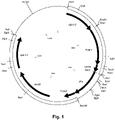
- the constructions contain cbh1 3' and 5' flanking regions for optionally targeting the expression vector into the cbh1 locus ( Figure 1 ).
- Circular expression plasmids were transformed in T. reesei protoplasts.
- the transformants were selected on plates containing acetamide as the sole nitrogen source.
- the host strain used lacks the four major endogenous T. reesei cellulases: CBHI/Cel7A, CBHII/Cel6A, EGI/Cel7B and EGII/Cel5A.
- the transformations were performed according to Penttilä et al., 1987, with the modifications described in Karhunen et al., 1993.
- CRISPR-Cas technology can be used in transformations.
- the transformants were sporulated on potato dextrose agar (PDA) prior to cultivation.
- PDA potato dextrose agar
- the transformants were cultivated on 96-well plates (Havukainen et al., 2020) to analyse the phytase production of the transformants.
- Phytase activity of the recombinant variant phytases was measured from the culture supernatants as release of inorganic phosphate from sodium phytate as described in Example 3. Production of the recombinant protein was also detected from the culture supernatant by sodium dodecyl sulphate polyacrylamide gel electrophoresis (SDS-PAGE).
- transformants produced phytase activity All the transformants produced phytase activity.
- Transformants producing variant phytases with the highest phytase activity and the reference strain producing the parent phytase were purified on selection plates through single conidia prior to sporulating them on PDA.
- the purified, selected transformants were cultivated in shake flasks and/or bioreactors in complex cellulase-inducing medium to obtain material for further characterisation and application tests.
- IP6 Phytase activity was analysed from culture supernatants using IP6 and isolated IP4 form as a substrate as described below.
- IP6 phytic acid dodecasodium salt
- LabChem C 6 H 6 Na 12 O 24 P 6 , EE05501
- Method to generate mainly IP4 specific isomer fraction was performed in 4 steps.
- Quantum Blue phytase was immobilized on 5ml HiTrap NHS-activated sepharose column from General Electric (Boston, USA) as described in Greiner & Konietzky, (1996).
- the immobilized phytase degraded IP6 in 0.1 M Na-acetate buffer pH 5.0 stepwise to lower inositol phosphates.
- the flowrate of 5ml/min achieved the highest portion of IP4.
- the next step was used to remove phosphate from the solution and separate IP4 from other undesired inositol phosphates. Therefore, a manually packed anion exchange column with AG1-x4 resin from Bio-Rad (Hercules, USA) was loaded with the produced inositol phosphate mix and IP 4 was eluted with 0.5 M HCl. In the last step, HCl was removed with a rotating evaporator and IP4 re-dissolved in water.
- Example 2 The activity of samples from the microtiter plate cultivations for transformant selection (Example 2) was screened using Fluent ® automation workstation (Tecan Group Ltd, Gurnnedorf, Switzerland) as follows.
- the samples used in the assay are diluted in a 0.2 M citrate buffer (pH 5.0) containing 0.01 % Tween 20 (Merck 822184). 0.01 % of Tween 20 is added also to the substrate solution.
- the substrate concentration used in this analysis is 12.7 mM. 200 ⁇ l of sample dilution and 200 ⁇ l of substrate are mixed and incubated at 37°C.
- Example 2 The activity from the shake flask and fermentation cultivation samples (Example 2) was analysed using a phytase activity assay (PPU).
- PPU phytase activity assay
- one activity unit is the quantity of enzyme that liberates 1 ⁇ mol of inorganic phosphate per one minute from sodium phytate at pH 4.0 and at 37 °C in a 15 min reaction time.
- the substrate concentration used in this analysis for both IP6 and IP4 form is 12.7 mM.
- the samples used in the assay are diluted in a reaction buffer (0.2 M citrate buffer, pH 4.0) and 1 ml of enzyme solution is used in the analysis.
- 1 ml of substrate is added to the enzyme solution and after incubating the mixture at 37°C for exactly 15 min, the reaction is stopped by adding 2 ml of 15 % (w/v) TCA solution (Trichloroacetic acid, , Merck 807).
- the reaction mixture is cooled to room temperature and after this 1:10 dilution is done by mixing 0.2 ml of the mixture and 1.8 ml of water in a test tube. 2.0 ml of freshly made colour reagent is added to the tube and mixed.
- the colour reagent consists of three volumes of 1 M sulphuric acid (H 2 SO 4 , Merck 731), one volume of 2.5 % (w/v) ammonium molybdate ((NH 4 ) 6 MO 7 O 24 ⁇ 4 H 2 O, Merck 1182) and one volume of 10 % (w/v) ascorbic acid (C 6 H 8 O 6 , AnalaR Normapur 20150).
- the tubes are incubated at 50 °C for 20 min and cooled to room temperature. After this the absorption is measured at 820 nm against the enzyme blank. For the enzyme blank the substrate is added after the TCA and the 15 min incubation is passed. The amount of liberated phosphate is determined via a standard curve of the color reaction with a phosphate solution of known concentration.
- FTU assay The activity for the samples used in gastrointestinal tract test (GIT) (Example 6) was analysed by an internal validated phytase method (FTU assay).
- FTU assay inorganic phosphate released from sodium phytate substrate by the hydrolytic enzymatic action of phytase is detected.
- Colour formation which is measured spectrophotometrically, is the result of molybdate and vanadate ions complexing with inorganic phosphate.
- FTU One phytase unit (FTU) is the quantity of enzyme that liberates 1 ⁇ mol of inorganic phosphate per minute from sodium phytate at 37 °C, pH 5.50, using 60 min incubation time.
- a potassium phosphate standard curve (pH 5.50) is prepared (dried KH 2 PO 4 , Merck 1.04873.1 is used for the standard; drying at 105 °C for 2 hours before weighting).
- the stop solution is prepared as follows (preparation just prior to use): for 100 ml of colour stop solution, 25 ml of stock ammonium heptamolybdate (20 g of (NH 4 ) 6 MO 7 O 24 ⁇ 4H 2 O, Merck 1182 in 180 ml of water, add 2 ml of ammonium hydroxide (NH 4 OH, Sigma-Aldrich 221228 28-30 %), final volume 200 ml) is mixed with 25 ml of stock ammonium vanadate solution (0.47 g of ammonium vanadate (NH 4 VO 3 , Riedel de Haen 31153) in 160 ml of water; once the completely dissolved, 4 ml of 22.75 % nitric acid solution is added, final volume 200 ml).
- Variant code IP4/IP6 SEQ ID NO: 1 1.00 BB70 1.13 BB71 1.56 BB72 1.41 BB73 1.29 BB74 1.10 BB75 1.16 BB76 1.26 BB78 1.32 BB79 1.52 BB80 1.43 BB81 1.21 BB82 1.52 BB83 1.47 BB84 1.49 BB85 1.39
- the inflection point of the unfolding curve also known as the melting temperature (T m ) is determined from the experimental derivative or curve fitting. Protein samples with higher T m tend to be more stable.
- the parent phytase (SEQ ID NO:1) was used as a reference in the analysis.
- phytase samples were added to a wheat-soya bean meal based diet which was conditioned for 30 seconds at temperatures of 90°C and 95°C followed by pelleting through a 3 mm die. The pellets were cooled and analysed for phytase activity.
- the feed contained approximately 65% wheat, 28% soybean meal, 4% soya oil, 1% monocalcium phosphate, 1.4% limestone, 0.4% salt and a premix (0.5%) of vitamins and trace minerals. Part of that feed was used to produce a premix with the phytase, that was added to the total feed amount and mixed in a horizontal mixer for 10 minutes. After taking the mash sample the feed was heated to the target temperatures by adjusting steam addition when passing the cascade mixer before running though the pellet die. For each temperature, a sample was taken 10 minutes after the target conditioning temperature was achieved (as measured in the feed just prior to pelleting).
- Phytases to be tested are added with a defined activity level (500 FTU/kg) to a corn soyabean meal based broiler feed following a three-step continuous in vitro test simulating the animal digestive conditions.
- the reactions were run at 40°C and at corresponding pHs and changes of pH as in the crop, gizzard and small intestine of broilers. Additionally, digestive proteases are added.
- the phytase needs to have a combination of beneficial biochemical properties. It needs to resist and act at different pHs at the temperature of the digestive tract while being resistant to proteases occurring in animals digestive tract. Details of the in vitro test system are described by Sommerfeld et al., 2017.
- inositol phosphates are extracted and phytase removed from the supernatant before analysis of inositol phosphates (IP6 - IP4) using high performance liquid chromatography method (HPLC) according to Blaabjerg et al. 2010.
- the phytase variants described above can be used in animal feeding, alone or in combination with other enzymes, to release phosphorus from myo -inositol 1, 2, 3, 4, 5, 6 hexa-kis phosphate (InP6).
- InsP6 degradation in the animals intestinal tract improves phosphorus digestibility. Additionally, antinutritional properties due to chelates with proteins, minerals and trace minerals of InsP6 and its lower inositol phosphates are reduced by phytases.
- Broiler trial 1 Day old male Cobb 430 broilers were distributed to the different treatments (17 pens x 26 birds each). Phosphorus (P) and calcium (Ca) content of the corn-soybean meal based diet was reduced compared to the breeders recommendation in the diets (available P 1.5 /kg and Ca 8.0 g/kg).
- Phytase SEQ ID NO: 1 or variants BB73, BB78 or BB81 were added with a target activity of 500 FTU/kg feed. At day 21 birds fed the diet added with BB73, BB78 or BB81 achieved higher body weight gain, than birds fed with the same diet added with SEQ ID NO: 1 phytase. Feed efficiency was either the same as in SEQ ID NO: 1 fed birds or improved.
- Broiler trial 2 Day old male Ross 308 broilers were distributed to the different treatments (8 pens x 12 birds each). Phosphorus and calcium content of the corn-soybean-rapeseed meal basal diet was reduced (BD: available P content 1.9 g/kg and Ca 7.5 g/kg, respectively). Phytase SEQ ID NO: 1 or variants BB73, BB78 and BB81 were added with a target activity of 500 FTU/kg feed. At day 21 birds fed the diet added with SEQ ID NO:1; BB73, BB78 or BB81 achieved a 13%, 15%, 16% and 13% higher body weight gain, respectively, than birds fed the unsupplemented basal diet. Feed conversion ratio was either the same as in SEQ ID NO: 1 fed birds or improved.
- Heat-treatment, phytase and fermented liquid feeding affect the presence of inositol phosphates in ileal digesta and phosphorus digestibility in pigs fed a wheat and barley diet. Journal Article 4:876-885 . Greiner R. and U. Konietzny. 1996. Construction of a bioreactor to produce special breakdown products of phytate. Journal of Biotechnology, 48 (1-2): 153-159 .
Landscapes
- Life Sciences & Earth Sciences (AREA)
- Chemical & Material Sciences (AREA)
- Polymers & Plastics (AREA)
- Engineering & Computer Science (AREA)
- Zoology (AREA)
- Food Science & Technology (AREA)
- Animal Husbandry (AREA)
- Health & Medical Sciences (AREA)
- Microbiology (AREA)
- Molecular Biology (AREA)
- Biotechnology (AREA)
- Organic Chemistry (AREA)
- Biochemistry (AREA)
- Genetics & Genomics (AREA)
- Wood Science & Technology (AREA)
- Bioinformatics & Cheminformatics (AREA)
- Biomedical Technology (AREA)
- Physiology (AREA)
- Birds (AREA)
- General Engineering & Computer Science (AREA)
- General Health & Medical Sciences (AREA)
- Proteomics, Peptides & Aminoacids (AREA)
- Medicinal Chemistry (AREA)
- Mycology (AREA)
- Botany (AREA)
- Nutrition Science (AREA)
- Inorganic Chemistry (AREA)
- Insects & Arthropods (AREA)
- Marine Sciences & Fisheries (AREA)
- Micro-Organisms Or Cultivation Processes Thereof (AREA)
- Enzymes And Modification Thereof (AREA)
- Fodder In General (AREA)
- Medicines That Contain Protein Lipid Enzymes And Other Medicines (AREA)
Priority Applications (5)
| Application Number | Priority Date | Filing Date | Title |
|---|---|---|---|
| US18/578,970 US20240327808A1 (en) | 2021-07-16 | 2022-06-23 | Phytase Variants with Improved Stability and IP4 Activity |
| EP22735009.7A EP4370670A1 (de) | 2021-07-16 | 2022-06-23 | Phytasevarianten mit verbesserter stabilität und ip4-aktivität |
| CN202280048616.9A CN117651766A (zh) | 2021-07-16 | 2022-06-23 | 具有改善的稳定性和ip4活性的植酸酶变体 |
| PCT/FI2022/050465 WO2023285737A1 (en) | 2021-07-16 | 2022-06-23 | Phytase variants with improved stability and ip4 activity |
| ARP220101824A AR126435A1 (es) | 2021-07-16 | 2022-07-12 | Variantes de fitasa con estabilidad mejorada y actividad de ip4 |
Applications Claiming Priority (2)
| Application Number | Priority Date | Filing Date | Title |
|---|---|---|---|
| EP21186231.3A EP4119660A1 (de) | 2021-07-16 | 2021-07-16 | Phytasevarianten |
| EP21186223.0A EP4119658A1 (de) | 2021-07-16 | 2021-07-16 | Phytasevarianten |
Publications (1)
| Publication Number | Publication Date |
|---|---|
| EP4119661A1 true EP4119661A1 (de) | 2023-01-18 |
Family
ID=82258552
Family Applications (3)
| Application Number | Title | Priority Date | Filing Date |
|---|---|---|---|
| EP21217370.2A Pending EP4119661A1 (de) | 2021-07-16 | 2021-12-23 | Phytase-varianten mit verbesserter stabilität und ip4-aktivität |
| EP22735008.9A Pending EP4370669A1 (de) | 2021-07-16 | 2022-06-23 | Phytasevarianten |
| EP22734337.3A Pending EP4370667A1 (de) | 2021-07-16 | 2022-06-23 | Phytasevarianten |
Family Applications After (2)
| Application Number | Title | Priority Date | Filing Date |
|---|---|---|---|
| EP22735008.9A Pending EP4370669A1 (de) | 2021-07-16 | 2022-06-23 | Phytasevarianten |
| EP22734337.3A Pending EP4370667A1 (de) | 2021-07-16 | 2022-06-23 | Phytasevarianten |
Country Status (7)
| Country | Link |
|---|---|
| US (2) | US20240336902A1 (de) |
| EP (3) | EP4119661A1 (de) |
| AR (2) | AR126434A1 (de) |
| BR (2) | BR112023026398A2 (de) |
| CA (1) | CA3224676A1 (de) |
| MX (1) | MX2024000528A (de) |
| WO (2) | WO2023285736A1 (de) |
Citations (4)
| Publication number | Priority date | Publication date | Assignee | Title |
|---|---|---|---|---|
| US20130017185A1 (en) * | 2010-03-26 | 2013-01-17 | Novozymes A/S | Thermostable Phytase Variants |
| WO2020168943A1 (zh) * | 2019-02-18 | 2020-08-27 | 青岛蔚蓝生物集团有限公司 | 植酸酶突变体 |
| US20210207112A1 (en) * | 2018-05-30 | 2021-07-08 | Nanjing Bestzyme Bio-Engineering Co., Ltd. | Phytase mutant |
| WO2021233361A1 (zh) * | 2020-05-22 | 2021-11-25 | 青岛蔚蓝生物集团有限公司 | 植酸酶突变体 |
Family Cites Families (3)
| Publication number | Priority date | Publication date | Assignee | Title |
|---|---|---|---|---|
| WO2008017066A2 (en) * | 2006-08-03 | 2008-02-07 | Cornell Research Foundation, Inc. | Phytases with improved thermal stability |
| NZ596459A (en) * | 2009-05-21 | 2013-11-29 | Verenium Corp | Phytases, nucleic acids encoding them and methods for making and using them |
| US10687542B2 (en) * | 2015-09-18 | 2020-06-23 | Agrivida, Inc. | Engineered phytases and methods of using the same |
-
2021
- 2021-12-23 EP EP21217370.2A patent/EP4119661A1/de active Pending
-
2022
- 2022-06-23 WO PCT/FI2022/050464 patent/WO2023285736A1/en not_active Ceased
- 2022-06-23 EP EP22735008.9A patent/EP4370669A1/de active Pending
- 2022-06-23 US US18/578,962 patent/US20240336902A1/en active Pending
- 2022-06-23 MX MX2024000528A patent/MX2024000528A/es unknown
- 2022-06-23 WO PCT/FI2022/050463 patent/WO2023285735A1/en not_active Ceased
- 2022-06-23 EP EP22734337.3A patent/EP4370667A1/de active Pending
- 2022-06-23 CA CA3224676A patent/CA3224676A1/en active Pending
- 2022-06-23 US US18/578,946 patent/US20250000124A1/en active Pending
- 2022-06-23 BR BR112023026398A patent/BR112023026398A2/pt not_active Application Discontinuation
- 2022-06-23 BR BR112023026873A patent/BR112023026873A2/pt unknown
- 2022-07-12 AR ARP220101823A patent/AR126434A1/es unknown
- 2022-07-12 AR ARP220101821A patent/AR126432A1/es unknown
Patent Citations (4)
| Publication number | Priority date | Publication date | Assignee | Title |
|---|---|---|---|---|
| US20130017185A1 (en) * | 2010-03-26 | 2013-01-17 | Novozymes A/S | Thermostable Phytase Variants |
| US20210207112A1 (en) * | 2018-05-30 | 2021-07-08 | Nanjing Bestzyme Bio-Engineering Co., Ltd. | Phytase mutant |
| WO2020168943A1 (zh) * | 2019-02-18 | 2020-08-27 | 青岛蔚蓝生物集团有限公司 | 植酸酶突变体 |
| WO2021233361A1 (zh) * | 2020-05-22 | 2021-11-25 | 青岛蔚蓝生物集团有限公司 | 植酸酶突变体 |
Non-Patent Citations (12)
| Title |
|---|
| ACQUISTAPACE ISABELLA M. ET AL: "Snapshots during the catalytic cycle of a histidine acid phytase reveal an induced-fit structural mechanism", JOURNAL OF BIOLOGICAL CHEMISTRY, vol. 295, no. 51, 1 December 2020 (2020-12-01), US, pages 17724 - 17737, XP055883179, ISSN: 0021-9258, DOI: 10.1074/jbc.RA120.015925 * |
| ARIZA AMOROZ OVBLAGOVA EVTURKENBURG JPWATERMAN JROBERTS SMVIND JSJ HOLM CLASSEN SFDE MARIA L: "Degradation of phytate by the 6-phytase from Hafnia alvei: a combined structural and solution study", PLOS ONE, vol. 8, no. 5, 2013, pages e65062, XP055667422, Retrieved from the Internet <URL:https://doi.org/10.1371/journal.pone.0065062> DOI: 10.1371/journal.pone.0065062 |
| BEDFORD M.R.C.L. WALK.: "Phytate destruction - consequences for precision animal nutrition", 2016, ACADEMIC PUBLISHERS, article "Reduction of phytate to tetrakisphosphate (IP4) to trisphosphate (IP3), or perhaps even lower, does not remove its antinutritive properties", pages: 45 - 52 |
| BLAABJERG, K.H. JORGENSENA. H. TAUSONH. D. POULSEN: "Heat-treatment, phytase and fermented liquid feeding affect the presence of inositol phosphates in ileal digesta and phosphorus digestibility in pigs fed a wheat and barley diet", JOURNAL ARTICLE, vol. 4, 2010, pages 876 - 885 |
| GREINER R.U. KONIETZNY: "Construction of a bioreactor to produce special breakdown products of phytate", JOURNAL OF BIOTECHNOLOGY, vol. 48, no. 1-2, 1996, pages 153 - 159, XP004037045, DOI: 10.1016/0168-1656(96)01505-2 |
| HAVUKAINEN SVALKONEN MKOIVURANTA KLANDOWSKI CP: "Studies on sugar transporter CRT1 reveal new characteristics that are critical for cellulase induction in Trichoderma reesei", BIOTECHNOL. BIOFUELS, vol. 13, 14 September 2020 (2020-09-14), pages 158 |
| KARHUNEN TA MANTYLAKMH NEVALAINENPL SUOMINEN: "High frequency one-step gene replacement in Trichoderma reesei. I. Endoglucanase I overproduction", MOL. GEN. GENET., vol. 241, 1993, pages 515 - 522, XP001073778, DOI: 10.1007/BF00279893 |
| PALOHEIMO MA MANTYLAJ KALLIOP SUOMINEN: "High-yield production of a bacterial xylanase in the filamentous fungus Trichoderma reesei requires a carrier polypeptide with an intact domain structure", APPL. ENV. MICROBIOL., vol. 69, 2003, pages 7073 - 7082, XP002363277, DOI: 10.1128/AEM.69.12.7073-7082.2003 |
| PENTTILA MH NEVALAINENM RATTOE SALMINENJ KNOWLES: "A versatile transformation system for the cellulolytic filamentous fungus Trichoderma reesei", GENE, vol. 61, 1987, pages 155 - 164, XP025705731, DOI: 10.1016/0378-1119(87)90110-7 |
| SIEVERS FA WILMD DINEENTJ GIBSONK KARPLUSWLIR LOPEZH MCWILLIAMM REMMERTJ SODING: "Fast, scalable generation of high-quality protein multiple sequence alignments using Clustal Omega", MOL. SYST. BIOL., vol. 7, 2011, pages 539 |
| SOMMERFELD MSCHOLLENBERGER, L HEMBERLEM RODEHUTSCORD: "Modification and application of an in vitro assay to examine inositol phosphate degradation in the digestive tract of poultry", SCIENCE OF FOOD AND AGICULTURE, vol. 97, no. 12, 2017, pages 4219 - 4226 |
| ZELLER EM SCHOLLENBERGERI KUHNM RODEHUTSCORD: "Hydrolysis of phytate and formation of inositol phosphate isomers without or with supplemented 30 phytases in different segments of the digestive tract of broilers", JOURNAL NUTRITIONAL SCIENCE, vol. 4, no. e1, 2015, pages 1 - 12 |
Also Published As
| Publication number | Publication date |
|---|---|
| WO2023285735A1 (en) | 2023-01-19 |
| WO2023285736A1 (en) | 2023-01-19 |
| BR112023026398A2 (pt) | 2024-03-05 |
| AR126432A1 (es) | 2023-10-11 |
| MX2024000528A (es) | 2024-02-02 |
| CA3224676A1 (en) | 2023-01-19 |
| US20240336902A1 (en) | 2024-10-10 |
| AR126434A1 (es) | 2023-10-11 |
| BR112023026873A2 (pt) | 2024-03-05 |
| US20250000124A1 (en) | 2025-01-02 |
| EP4370667A1 (de) | 2024-05-22 |
| EP4370669A1 (de) | 2024-05-22 |
Similar Documents
| Publication | Publication Date | Title |
|---|---|---|
| DK2421386T3 (en) | Feed grants | |
| EP2650364B1 (de) | Hafnia-Phytasevarianten | |
| JP7275048B2 (ja) | リゾチーム活性を有するポリペプチド、それをコードするポリヌクレオチド並びにその使用及び組成物 | |
| US7320876B2 (en) | Phytase-containing animal food and method | |
| EP2812429B1 (de) | Glycosylierung als stabilisator für phytase | |
| US8420369B2 (en) | Polypeptide having phytase activity and increased temperature resistance of the enzyme activity, and nucleotide sequence coding said polypeptide | |
| US12582141B2 (en) | Polypeptides having phytase activity | |
| MX2007004524A (es) | Polipeptido que tiene actividad de fitasa y secuencia nucleotida que lo codifica. | |
| US20240327808A1 (en) | Phytase Variants with Improved Stability and IP4 Activity | |
| EP4119661A1 (de) | Phytase-varianten mit verbesserter stabilität und ip4-aktivität | |
| EP4119658A1 (de) | Phytasevarianten | |
| EP4119660A1 (de) | Phytasevarianten | |
| US20240254461A1 (en) | Phytase Variants | |
| MXPA04011224A (es) | Fitasas modificadas. | |
| CN117651766A (zh) | 具有改善的稳定性和ip4活性的植酸酶变体 |
Legal Events
| Date | Code | Title | Description |
|---|---|---|---|
| PUAI | Public reference made under article 153(3) epc to a published international application that has entered the european phase |
Free format text: ORIGINAL CODE: 0009012 |
|
| STAA | Information on the status of an ep patent application or granted ep patent |
Free format text: STATUS: THE APPLICATION HAS BEEN PUBLISHED |
|
| AK | Designated contracting states |
Kind code of ref document: A1 Designated state(s): AL AT BE BG CH CY CZ DE DK EE ES FI FR GB GR HR HU IE IS IT LI LT LU LV MC MK MT NL NO PL PT RO RS SE SI SK SM TR |
|
| STAA | Information on the status of an ep patent application or granted ep patent |
Free format text: STATUS: REQUEST FOR EXAMINATION WAS MADE |
|
| 17P | Request for examination filed |
Effective date: 20230614 |
|
| RBV | Designated contracting states (corrected) |
Designated state(s): AL AT BE BG CH CY CZ DE DK EE ES FI FR GB GR HR HU IE IS IT LI LT LU LV MC MK MT NL NO PL PT RO RS SE SI SK SM TR |
|
| RAP1 | Party data changed (applicant data changed or rights of an application transferred) |
Owner name: AB ENZYMES FINLAND OY |