EP4120137A1 - Système et procédé de prédiction de propriété moléculaire utilisant un réseau de neurones de convolution de mappage d'identité conditionné par le bord - Google Patents
Système et procédé de prédiction de propriété moléculaire utilisant un réseau de neurones de convolution de mappage d'identité conditionné par le bord Download PDFInfo
- Publication number
- EP4120137A1 EP4120137A1 EP21201445.0A EP21201445A EP4120137A1 EP 4120137 A1 EP4120137 A1 EP 4120137A1 EP 21201445 A EP21201445 A EP 21201445A EP 4120137 A1 EP4120137 A1 EP 4120137A1
- Authority
- EP
- European Patent Office
- Prior art keywords
- node
- vector
- graph
- molecular
- message
- Prior art date
- Legal status (The legal status is an assumption and is not a legal conclusion. Google has not performed a legal analysis and makes no representation as to the accuracy of the status listed.)
- Pending
Links
Images
Classifications
-
- G—PHYSICS
- G16—INFORMATION AND COMMUNICATION TECHNOLOGY [ICT] SPECIALLY ADAPTED FOR SPECIFIC APPLICATION FIELDS
- G16C—COMPUTATIONAL CHEMISTRY; CHEMOINFORMATICS; COMPUTATIONAL MATERIALS SCIENCE
- G16C20/00—Chemoinformatics, i.e. ICT specially adapted for the handling of physicochemical or structural data of chemical particles, elements, compounds or mixtures
- G16C20/30—Prediction of properties of chemical compounds, compositions or mixtures
-
- G—PHYSICS
- G06—COMPUTING OR CALCULATING; COUNTING
- G06N—COMPUTING ARRANGEMENTS BASED ON SPECIFIC COMPUTATIONAL MODELS
- G06N3/00—Computing arrangements based on biological models
- G06N3/02—Neural networks
- G06N3/04—Architecture, e.g. interconnection topology
-
- G—PHYSICS
- G06—COMPUTING OR CALCULATING; COUNTING
- G06F—ELECTRIC DIGITAL DATA PROCESSING
- G06F18/00—Pattern recognition
- G06F18/20—Analysing
- G06F18/21—Design or setup of recognition systems or techniques; Extraction of features in feature space; Blind source separation
- G06F18/214—Generating training patterns; Bootstrap methods, e.g. bagging or boosting
- G06F18/2155—Generating training patterns; Bootstrap methods, e.g. bagging or boosting characterised by the incorporation of unlabelled data, e.g. multiple instance learning [MIL], semi-supervised techniques using expectation-maximisation [EM] or naïve labelling
-
- G—PHYSICS
- G06—COMPUTING OR CALCULATING; COUNTING
- G06F—ELECTRIC DIGITAL DATA PROCESSING
- G06F9/00—Arrangements for program control, e.g. control units
- G06F9/06—Arrangements for program control, e.g. control units using stored programs, i.e. using an internal store of processing equipment to receive or retain programs
- G06F9/46—Multiprogramming arrangements
- G06F9/50—Allocation of resources, e.g. of the central processing unit [CPU]
- G06F9/5005—Allocation of resources, e.g. of the central processing unit [CPU] to service a request
- G06F9/5027—Allocation of resources, e.g. of the central processing unit [CPU] to service a request the resource being a machine, e.g. CPUs, Servers, Terminals
- G06F9/5044—Allocation of resources, e.g. of the central processing unit [CPU] to service a request the resource being a machine, e.g. CPUs, Servers, Terminals considering hardware capabilities
-
- G—PHYSICS
- G06—COMPUTING OR CALCULATING; COUNTING
- G06F—ELECTRIC DIGITAL DATA PROCESSING
- G06F9/00—Arrangements for program control, e.g. control units
- G06F9/06—Arrangements for program control, e.g. control units using stored programs, i.e. using an internal store of processing equipment to receive or retain programs
- G06F9/46—Multiprogramming arrangements
- G06F9/54—Interprogram communication
- G06F9/546—Message passing systems or structures, e.g. queues
-
- G—PHYSICS
- G06—COMPUTING OR CALCULATING; COUNTING
- G06N—COMPUTING ARRANGEMENTS BASED ON SPECIFIC COMPUTATIONAL MODELS
- G06N3/00—Computing arrangements based on biological models
- G06N3/02—Neural networks
- G06N3/04—Architecture, e.g. interconnection topology
- G06N3/042—Knowledge-based neural networks; Logical representations of neural networks
-
- G—PHYSICS
- G06—COMPUTING OR CALCULATING; COUNTING
- G06N—COMPUTING ARRANGEMENTS BASED ON SPECIFIC COMPUTATIONAL MODELS
- G06N3/00—Computing arrangements based on biological models
- G06N3/02—Neural networks
- G06N3/04—Architecture, e.g. interconnection topology
- G06N3/044—Recurrent networks, e.g. Hopfield networks
- G06N3/0442—Recurrent networks, e.g. Hopfield networks characterised by memory or gating, e.g. long short-term memory [LSTM] or gated recurrent units [GRU]
-
- G—PHYSICS
- G06—COMPUTING OR CALCULATING; COUNTING
- G06N—COMPUTING ARRANGEMENTS BASED ON SPECIFIC COMPUTATIONAL MODELS
- G06N3/00—Computing arrangements based on biological models
- G06N3/02—Neural networks
- G06N3/04—Architecture, e.g. interconnection topology
- G06N3/045—Combinations of networks
-
- G—PHYSICS
- G06—COMPUTING OR CALCULATING; COUNTING
- G06N—COMPUTING ARRANGEMENTS BASED ON SPECIFIC COMPUTATIONAL MODELS
- G06N3/00—Computing arrangements based on biological models
- G06N3/02—Neural networks
- G06N3/04—Architecture, e.g. interconnection topology
- G06N3/0464—Convolutional networks [CNN, ConvNet]
-
- G—PHYSICS
- G06—COMPUTING OR CALCULATING; COUNTING
- G06N—COMPUTING ARRANGEMENTS BASED ON SPECIFIC COMPUTATIONAL MODELS
- G06N3/00—Computing arrangements based on biological models
- G06N3/02—Neural networks
- G06N3/04—Architecture, e.g. interconnection topology
- G06N3/0499—Feedforward networks
-
- G—PHYSICS
- G06—COMPUTING OR CALCULATING; COUNTING
- G06N—COMPUTING ARRANGEMENTS BASED ON SPECIFIC COMPUTATIONAL MODELS
- G06N3/00—Computing arrangements based on biological models
- G06N3/02—Neural networks
- G06N3/08—Learning methods
-
- G—PHYSICS
- G06—COMPUTING OR CALCULATING; COUNTING
- G06N—COMPUTING ARRANGEMENTS BASED ON SPECIFIC COMPUTATIONAL MODELS
- G06N3/00—Computing arrangements based on biological models
- G06N3/02—Neural networks
- G06N3/08—Learning methods
- G06N3/09—Supervised learning
-
- G—PHYSICS
- G16—INFORMATION AND COMMUNICATION TECHNOLOGY [ICT] SPECIALLY ADAPTED FOR SPECIFIC APPLICATION FIELDS
- G16C—COMPUTATIONAL CHEMISTRY; CHEMOINFORMATICS; COMPUTATIONAL MATERIALS SCIENCE
- G16C20/00—Chemoinformatics, i.e. ICT specially adapted for the handling of physicochemical or structural data of chemical particles, elements, compounds or mixtures
- G16C20/70—Machine learning, data mining or chemometrics
Definitions
- the disclosure herein generally relates to molecular property predictions, and, more particularly, to system and method for molecular property prediction using edge conditioned identity mapping convolution neural network.
- the prediction of molecular properties is a fundamental task in the field of drug discovery.
- the prediction can be done by a variety of computational methods that significantly accelerate the overall process of finding better drug candidates in a time and cost-efficient manner.
- Machine learning technique in specific, supervised learning on drug-like potential molecules has remarkable applications for use in more effective drug discovery. It provides substantial prospects in diminishing the computational complexity which is a key desideratum for prognostication of molecular properties and aid in billion price tag cost reduction of developing a potential drug for treatment.
- CNNs Convolution Neural Networks
- its variant structured neural network architectures obtain dimensionality reduction and extract dominant features for molecular properties prediction tasks by performing spatial convolutions on Euclidean domains.
- the CNNs input have a regular and grid-like structure. This restriction hampers the utilization of CNN's to numerous scientific disciplines, where irregular graph structure or manifold data are commonly accessible.
- GNNs graph Neural Networks
- GNNs learn hidden representations of nodes, subgraphs, and the whole input graph by synchronous message-aggregation from node neighborhood by following through computational graph of the nodes. These learned hidden representations are rotation and translation invariant.
- Graph Neural Network (GNN) or its subsequent improvised variants are effective algorithms for learning the discriminative node embeddings of the arbitrary sized, graph-structured data by utilizing the relational inductive biases that are shared across the non-Euclidean graph domain.
- These low-dimensional representations of each node entities serve as feature inputs for graph-pooling, to evaluate the graph-level embeddings and aid in graph based inductive (semi-supervised) or rather for transductive (supervised) learning tasks.
- Each node in the graph sends neural messages to its local-node neighborhood based on its hidden states and overhauls its hidden states established on the aggregated message received from its immediate adjoining neighbors through the edge-type connecting them as overlapping partitions of the original graph.
- Still another study presented a unique and distinct neural message-aggregation and node embeddings update algorithmic approach to evaluate a representation of the entire input complex topology molecular graphs.
- MPNNs message passing neural networks
- Recent advances improvise the performance of GCNs include and not limited to the gating, skip connection, jumping connection, attention mechanism, sampling strategy, hierarchical representation, generative models, adversarial attack and defenses, etc.
- Notable work leveraging GCNs are in social science, knowledge graph, recommendation systems, etc.
- Chemical graph theory treats drug-like organic molecules as static graphs.
- Recent works on drug-generation and property prediction tasks include hierarchical message-passing schemes on molecular graphs, benchmarking platform for molecular generation models, hierarchical generation of chemical graphs, multi-objective molecule generation, organic chemical reaction prediction, and for predicting synthesis routes for molecules generation. It is desired to introduce alternative models in the MPNN foster family set that can complement with a decrease in time complexity, thereby yielding a considerable drop in resource consumption over previous MPNNs for computation of low dimensional node embeddings in comparison with the baselines.
- a method for molecular property prediction using edge conditioned identity mapping convolution neural network includes accessing, via one or more hardware processors, a database comprising a plurality of molecular graphs associated with a plurality of molecules and a plurality of labels indicative of chemical properties of the plurality of the molecular graphs, each molecular graph of the plurality of molecular graphs comprises a plurality of nodes and a plurality of edges connecting the plurality of neighboring nodes.
- the method further includes learning, via the one or more hardware processors, a mapping from the plurality of molecular graphs to the set of labels by a molecular property prediction neural network function to prognosticate the properties of a molecular graph from amongst the plurality of molecular graphs, wherein predicting the properties of the molecular graph comprises computing a graph-level vector representation of the molecular graph using an Edge-Information Fused Message Passing Neural Network (EI-MPNN).
- EI-MPNN Edge-Information Fused Message Passing Neural Network
- Computing the graph-level vector representation for the molecular graph comprises computing an incoming aggregated message vector for each node of the plurality of nodes of the molecular graph, the incoming aggregated message vector for each node is computed based on a plurality of encoded messages received from a set of neighboring nodes of the each node, wherein each encoded message vector is generated by fusing a node information and an connecting edge information of the set of neighboring nodes of the node; computing iteratively an updated hidden state vector of each node in a plurality of pre-determined number of iterations from incoming aggregated message vector and a hidden state of said node, wherein the hidden state of the node is obtained from a previous iteration; and calculating a discriminative graph-level vector representation by pooling the updated hidden state vectors of the plurality of nodes, wherein the graph level vector representation is a characteristic representation of the molecular graph. Furthermore, the method includes applying a linear layer function on discriminative graph-level vector representation to compute the molecular
- a system for molecular property prediction using edge conditioned identity mapping convolution neural network includes a memory storing instructions; one or more communication interfaces; and one or more hardware processors coupled to the memory via the one or more communication interfaces, wherein the one or more hardware processors are configured by the instructions to access a database comprising a plurality of molecular graphs associated with a plurality of molecules and a plurality of labels indicative of chemical properties of the plurality of the molecular graphs, each molecular graph of the plurality of molecular graphs comprises a plurality of nodes and a plurality of edges connecting the plurality of neighboring nodes.
- the one or more hardware processors coupled to the memory via the one or more communication interfaces to learn a mapping from the plurality of molecular graphs to the set of labels by a molecular property prediction neural network function to prognosticate the properties of a molecular graph from amongst the plurality of molecular graphs, wherein predicting the properties of the molecular graph comprises computing a graph-level vector representation of the molecular graph using an Edge-Information Fused Message Passing Neural Network (EI-MPNN).
- EI-MPNN Edge-Information Fused Message Passing Neural Network
- the one or more hardware processors are configured by the instructions to compute an incoming aggregated message vector for each node of the plurality of nodes of the molecular graph, the incoming aggregated message vector for each node is computed based on a plurality of encoded messages received from a set of neighboring nodes of the each node, wherein each encoded message vector is generated by fusing a node information and an connecting edge information of the set of neighboring nodes of the node; compute iteratively an updated hidden state vector of each node in a plurality of predetermined number of iterations from incoming aggregated message vector and a hidden state of said node, wherein the hidden state of the node is obtained from a previous iteration; and calculate a discriminative graph-level vector representation by pooling the updated hidden state vectors of the plurality of nodes, wherein the graph level vector representation is a characteristic representation of the molecular graph.
- the one or more hardware processors coupled to the memory via the one
- a non-transitory computer readable medium for a method for molecular property prediction using edge conditioned identity mapping convolution neural network includes accessing, via one or more hardware processors, a database comprising a plurality of molecular graphs associated with a plurality of molecules and a plurality of labels indicative of chemical properties of the plurality of the molecular graphs, each molecular graph of the plurality of molecular graphs comprises a plurality of nodes and a plurality of edges connecting the plurality of neighboring nodes.
- the method further includes learning, via the one or more hardware processors, a mapping from the plurality of molecular graphs to the set of labels by a molecular property prediction neural network function to prognosticate the properties of a molecular graph from amongst the plurality of molecular graphs, wherein predicting the properties of the molecular graph comprises computing a graph-level vector representation of the molecular graph using an Edge-Information Fused Message Passing Neural Network (EI-MPNN).
- EI-MPNN Edge-Information Fused Message Passing Neural Network
- Computing the graph-level vector representation for the molecular graph comprises computing an incoming aggregated message vector for each node of the plurality of nodes of the molecular graph, the incoming aggregated message vector for each node is computed based on a plurality of encoded messages received from a set of neighboring nodes of the each node, wherein each encoded message vector is generated by fusing a node information and an connecting edge information of the set of neighboring nodes of the node; computing iteratively an updated hidden state vector of each node in a plurality of pre-determined number of iterations from incoming aggregated message vector and a hidden state of said node, wherein the hidden state of the node is obtained from a previous iteration; and calculating a discriminative graph-level vector representation by pooling the updated hidden state vectors of the plurality of nodes, wherein the graph level vector representation is a characteristic representation of the molecular graph. Furthermore, the method includes applying a linear layer function on the discriminative graph-level vector representation to compute the mole
- MPNN Message Passing Neural Networks
- an incident edge in between two neighboring atoms in the chemical compound acts as both arriving and departing edge tagged by the same label (bond type).
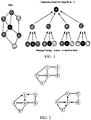
- the MPNNs forward pass consists of two phases - a message passing phase (illustrated in FIG. 1 ) and a readout phase (illustrated in FIG. 2 ).
- the message passing phase generates neural messages and update node representations by aggregating encoded information of node's embeddings from confined graph neighborhood.
- a permutation invariant readout phase is leveraged to perform graph pooling.
- Readout phase function takes an adjacency matrix as input and satisfies the following property, Here, P is a permutation matrix.
- the message propagation utilizes the distinct message generating functions acting on the undirected chemical graph topology M in f and M out f represents the universal function approximator for the generation of neural messages received through a particular edge type and propagated from the same edge-type between the nodes of the chemical graphs, respectively.
- M in f the undirected chemical graph topology
- M out f represents the universal function approximator for the generation of neural messages received through a particular edge type and propagated from the same edge-type between the nodes of the chemical graphs, respectively.
- the MPNNs forward pass communicates messages as described by a computational graph for every target node from the bottom (leaf) node to the top (root) node by iterating for T computational time steps. These outgoing messages are evaluated for every edge by transforming the source node's hidden state according to the edge feature vector.
- Each node in the molecular graph aggregates neural messages (message-pooling operation) from its local T-hop neighbors, as determined from and the received messages are perceived by the target node by performing mathematical computations to update its hidden representation.
- This message-passing scheme assists in learning effective discriminative hidden representations of the nodes in the chemical graphs, by adopting a Back-propagation through time (BPTT) learning algorithm for training the MPNNs framework when solved for graph-based inductive learning tasks.
- BPTT Back-propagation through time
- the MPNNs are synchronous message-passing systems. They update all messages in parallel.
- each edge between the vertices in the chemical graph have messages evaluated in both directions from the source to sink and contrariwise.
- the message passing phase is described by utilizing a message generating function, M f , and node-embedding update neural network function, V f , M f and V f might take possession of diverse in specific to be at variance with function settings.
- ⁇ j ⁇ N (i) depicts the aggregation of neural-information embedded messages over the local one-hop neighborhood of the node, in the chemical graph
- h i is learned with the MPNN model parameters through a representative function of the entire input graph when solved for addressing supervised graph regression tasks such as molecular graph property prediction.
- the readout phase of the MPNN framework performs graph-pooling through set-pooling approach by determining a discriminative graph embedding for the entire input molecular graph by utilizing a differentiable node-reordering invariant neural network function, R f according to, M f , V f and R f are differentiable neural network functions and have learnable parameters.
- ⁇ ⁇ denotes a multilayer perceptron, parameterized by ⁇ .
- the aggregated vector message perceived by the sink node, i is described by
- the MPNN framework message-generating neural-network function is described by,
- the vertex update function is described by, V ⁇ h i t m i t + 1 : GRU h i t m i t + 1 .
- GRU is a known Gated Recurrent Unit.
- the hidden state of the previous state is given by, V ⁇ ⁇ h i t m i t + 1 : GRU h i t m i t + 1 .
- n denotes the total number of nodes in the chemical graphs in a given batch size.
- d m & d h are the characteristic dimension of neural messages and node attributes respectively.
- Algorithm Hypergraph message passing neural network 1: Input Feature Training set: data.x, data.edgeindex, data.edgeattr 2: Input Target Label : data.y 3: da Regularization Term: Apply dropout on data.x, data.edgeindex, & ta.edgeattr 4: Message-Passing Phase 5: for t T do 6: Forward Pass & Vertex Update: Perform HyperGraph Convolution 7: end for 8: Read out Operation: Apply Set2Set Algorithm 9: Linear Layer 10 : Return Graph level output: Predict DFT target properties
- the MPNN however leads to over-smoothing of learnable embeddings for vertices with higher valency.
- Various embodiments described herein provides a method and system for molecular property prediction using MPNN in a manner that can alleviate the expressivity of the GCN by leveraging the edge-information in the graph structure of the molecules. Further, the disclosed method and system preventing over-smoothing of learnable embeddings for vertices with higher valency, as will be explained further in the description below.
- FIG. 3 through 5 where similar reference characters denote corresponding features consistently throughout the figures, there are shown preferred embodiments and these embodiments are described in the context of the following exemplary system and/or method.
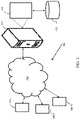
- FIG. 3 illustrates an example network implementation 300 of a system 302 for molecular property prediction using MPNN in accordance with example embodiment of present disclosure.
- the disclosed system provides a supervised learning on drug-like potential molecules for use in effective drug discovery. It provides substantial prospects in diminishing the computational complexity which is a key desideratum for prognostication of molecular properties and aid in billion price tag cost reduction of developing a potential drug for treatment.
- the system 302 enables design variants for injective multi-set neural-network functions for message-generation and message pooling mechanism on local-graph neighborhood following the computational graph of each node in the given molecular graphs of bounded treewidth.
- the term 'local-graph neighborhood' of a node refers to one or more neighboring nodes od said node. Accordingly, the terms 'local-graph neighborhood', 'local- neighborhood', and neighboring nodes may be used interchangeably throughout the description.
- the proposed variants are resilient to noise by learning to adapt to kingpin on the task-relevant fragment of the molecular graphs at varying receptive fields, locality, and depth to augment the discriminative power of node & graph-level embeddings.
- the novel designs of message-passing pipeline variants comprises of message-passing, vertex update and graph-pooling modules and are jointly learned in an end-to-end framework and augment the graph-level prediction tasks accuracy by taking into account the structure of the graph.
- the proposed novel designs of message-passing pipeline variants augment the graph-level prediction tasks accuracy by taking into account the structure of the graph.
- the system 302 may also be implemented in a variety of computing systems 304, such as a laptop computer, a desktop computer, a notebook, a workstation, a cloud-based computing environment and the like. It will be understood that the system 302 may be accessed through one or more devices 306-1, 306-2... 306-N, collectively referred to as devices 306 hereinafter, or applications residing on the devices 306. Examples of the devices 306 may include, but are not limited to, a portable computer, a personal digital assistant, a handheld device, a smartphone, a tablet computer, a workstation and the like. The devices 306 are communicatively coupled to the system 302 through a network 308.
- the network 308 may be a wireless or a wired network, or a combination thereof.
- the network 308 can be implemented as a computer network, as one of the different types of networks, such as virtual private network (VPN), intranet, local area network (LAN), wide area network (WAN), the internet, and such.
- the network 306 may either be a dedicated network or a shared network, which represents an association of the different types of networks that use a variety of protocols, for example, Hypertext Transfer Protocol (HTTP), Transmission Control Protocol/Internet Protocol (TCP/IP), and Wireless Application Protocol (WAP), to communicate with each other.
- the network 308 may include a variety of network devices, including routers, bridges, servers, computing devices, storage devices. The network devices within the network 308 may interact with the system 302 through communication links.
- the system 302 may be implemented in a computing device 304, such as a hand-held device, a laptop or other portable computer, a tablet computer, a mobile phone, a PDA, a smartphone, and a desktop computer.
- the system 302 may also be implemented in a workstation, a mainframe computer, a server, and a network server.
- the system 302 may be coupled to a data repository, for example, a repository 312.
- the repository 312 may store data processed, received, and generated by the system 302.
- the system 302 may include the data repository 312.
- the network implementation 300 supports various connectivity options such as BLUETOOTH ® , USB, ZigBee and other cellular services.
- the network environment enables connection of devices 306 such as Smartphone with the server 304, and accordingly with the database 312 using any communication link including Internet, WAN, MAN, and so on.
- the system 302 is implemented to operate as a stand-alone device. In another embodiment, the system 302 may be implemented to work as a loosely coupled device to a smart computing environment.
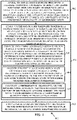
- FIG. 4 illustrates a flow chart of a method 400 for molecular property prediction using edge conditioned identity mapping convolution neural network, in accordance with an example embodiment of present disclosure.
- Operations of the flowchart, and combinations of operation in the flowchart may be implemented by various means, such as hardware, firmware, processor, circuitry and/or other device associated with execution of software including one or more computer program instructions.
- one or more of the procedures described in various embodiments may be embodied by computer program instructions.
- the computer program instructions, which embody the procedures, described in various embodiments may be stored by at least one memory device of a system and executed by at least one processor in the system.
- Any such computer program instructions may be loaded onto a computer or other programmable system (for example, hardware) to produce a machine, such that the resulting computer or other programmable system embody means for implementing the operations specified in the flowchart. It will be noted herein that the operations of the method 400 are described with help of system 102. However, the operations of the method 400 can be described and/or practiced by using any other system.
- a database comprising a plurality of molecular graphs associated with a plurality of molecules is accessed.
- the database further includes a plurality of labels indicative of chemical properties of the plurality of the molecular graphs.
- Each molecular graph of the plurality of molecular graphs includes a plurality of nodes and a plurality of edges connecting a plurality of neighboring nodes from amongst the plurality of nodes.
- the database may include annotated independent and identically distributed molecular graphs,
- the objective of the graph-based molecular property prediction framework is by operating on the topology of the molecular graphs described by a set of node features, and static edge features, is to learn a novel mapping that maps molecular graphs structure to the set of labels. is the learned hidden representation vector of node k.
- the method 400 includes learning a mapping from the plurality of molecular graphs to the set of labels by a molecular property prediction neural network function to prognosticate the properties of a molecular graph from amongst the plurality of molecular graphs using an Edge-Information Fused Message Passing Neural Network (EI-MPNN).
- predicting the properties of the molecular graph includes computing a graph-level vector representation of the molecular graph using the EI-MPNN. The method for computing the graph-level vector representation of the molecular graph using the EI-MPNN is described with reference to steps 406-410.
- Various embodiments of the disclosed method provides variants of differentiable neural-network functions to operate on low tree-width molecular graphs for generation of local graph structure and feature information encoded messages and the vertex update mechanism UPD for learning discriminative node embeddings using EI-MPNN. These learned hidden representations are rotation and translation invariant. These low-dimensional representations of each node entity, serve as feature inputs for graph-pooling.
- the method also includes defining a variant for edge information fused global graph-pooling set-aggregator operator, R f .
- the mathematical function takes as input the set of node and edge attributes, the graph, connectivity, described by the adjacency matrix denotes the message-aggregation mechanism from local-graph neighborhood (or the set of neighboring nodes).
- the method includes a sum-pooling approach for message-aggregation from the set of neighboring nodes. That is, permutation invariance to nodes ordering is obtained by summation of local messages to a message vector at the sink node.
- UPD takes as input the aggregated message from the local-graph neighborhood and the node-level embeddings of the graph at a previous layer (or iteration).
- E represents the aggregated neural message from node, i's local-graph neighborhood, E .
- learnable parameters are shared across the nodes of the graph.
- the message-passing update phase is described below,
- the MPNN pipeline operates on annotated molecular graphs in two subsequent phases, the message passing phase characterized by UPD neural-network functions and the readout phase characterized by global-pooling operator, R f , see algorithm 1.
- R f The selection of a function setting for a set-aggregator, R f is of paramount importance, as it should allow invariance to the MPNN model output to the order of selection of the node-level embeddings.
- the objective of a set pooling function, R f is to map the graph's node-level embeddings to a graph-level embedding which characterizes the entire input graph.
- the graph-level representation is acquired by utilizing a novel variant of set2set algorithm that takes into account the structure of the molecular graph similar to graph clustering or coarsening pooling operations. It leverages recurrent neural networks with extended memory and attention mechanism to pool the abstract, low-level representations of the nodes in the graph.
- ⁇ denotes the attention function & a it represents the attention coefficients of node, i evaluated at each iteration step, t .
- ⁇ is a linear layer
- O t denotes the weighted sum of the low-level abstract representations of the nodes in the chemical graph.
- ⁇ denotes element-wise multiplication.
- the disclosed message-passing pipeline variants in the EI-MPNN foster family are trained by learning end-to-end. They are effective algorithms for learning the discriminative node embeddings of the arbitrary sized, non-linear chemical graph-structured data by utilizing the relational inductive biases that are shared across the non-Euclidean graph domain. These pipeline formalism variants driven by inductive learning tasks are leveraged for the molecular graphs properties prediction.
- the node-level feature information of the undirected molecular graph is described by the real-valued feature matrix, To alleviate overfitting, represent the adjacency matrix with non-zero value entries in the diagonal due to the added value of self-loops.
- the self-loop are added to dwindle the influence of periphery nodes of the molecular graphs and to effectively perform graph convolution by weighing in on the local graph-neighbors feature and structure information. is the symmetric-normalized adjacency matrix accompanied by self-loops.
- the diagonal degree matrix, with the added self-loops, is described by, is the reciprocal of the diagonal matrix, D ⁇ .
- a Graph Convolutional Network performs convolution in the spatial domain, a simple variant of message-passing algorithm utilized for semi-supervised classification task.
- W 0 and W 1 represent the learnable weight matrices.
- W 0 and W 1 represent the learnable weight matrices.
- W 0 and W 1 represent the learnable weight matrices.
- c y denotes the number of classes, a type or category for a node-level based classification task solved by utilizing a negative log-likelihood loss.
- GCN node-wise formulation is described by the below equation.
- h ′ i W ⁇ j ⁇ N i ⁇ i h j d ⁇ j d ⁇ i
- W is the trainable weight parameter.
- the disclosed method utilizes an Edge-Conditioned Graph Convolutional operator, as described with reference to multiple embodiments below.
- the method 400 includes computing an incoming aggregated message vector for each node of the plurality of nodes of the molecular graph.
- the incoming aggregated message vector for each node is computed based on a plurality of encoded messages received from a set of neighboring nodes of each node.
- Each encoded message vector is generated by fusing a node information and a connecting edge information of the set of neighboring nodes of the node.
- the method 300 includes computing iteratively an updated hidden state vector of each node in a plurality of pre-determined number of iterations from incoming aggregated message vector and a hidden state of said node.
- the hidden state of the node for a current iteration is obtained from a previous iteration from amongst the plurality of pre-determined number of iterations.
- the updated hidden state vector h i t + 1 of each node ( i ) is computed by transforming the hidden state vector h i t of previous iteration step of each node ( i ) by using a feed-forward neural-network function ⁇ ⁇ .
- the input to the feed-forward neural-network function includes a summation of a linear transformation of the node (i) hidden state vector h i t with a first trainable weight matrix, ⁇ 1 and the aggregated-message vector from the set of neighboring nodes.
- each of the plurality of encoded messages comprises a normalized neural-message vector.
- the normalized neural-message vector from each neighboring node of the set h j t of neighboring nodes is determined by a ratio of a summation of hidden state vector of each node in the set of neighboring nodes ( j ), and a linearly transformed static edge feature vector altered by a second trainable weight matrix, ⁇ 2 and a square-root of a product of a degree of the node ( i ) and the set of neighboring nodes ( j ) with added self-loops.
- ⁇ 2 a second trainable weight matrix
- h i is the representation vector of node, i at previous layer.
- d i is the degree of a node, i with added self-loop.
- W 0 & W 1 are trainable weight matrices that apply a linear transformation to feature and static edge feature vectors respectively.
- ⁇ ⁇ denotes a neural network, i.e. an MLP parameterized by ⁇ .
- ⁇ denotes the epsilon value, e -7 .
- the EI-MPNN comprises an Edge-Conditioned Identity Mapping Convolution Network (EC-IMCN).
- EC-IMCN aids in inductive learning tasks by incorporating the edge-information of the graph topology and prevents over-smoothing of learnable low-level representations for nodes with higher valency. It prevents diffusion of node embeddings to its local sizeable-graph neighborhood. It is described by,
- the updated hidden state vector h i t + 1 of each node (i) is computed by transforming the previous hidden state vector of the node (i) by performing a summation operation on a linear transformation of the node( i ) hidden state vector with the trainable weight matrix, ⁇ 1 and the aggregated neural-message vector from the set of neighboring nodes.
- the aggregated neural-message vector is determined by computing a product of transformed strength of an identity mapping to allow a gated aggregated neural-information flow from the set of neighboring nodes.
- the gated aggregated neural-information flow is determined by a summation of a weighted product of a less-discriminative aggregated message-vector with (1 - ⁇ ) and a weighted product of an initial residual aggregated neural-message vector with ⁇ (a learnable gating scalar value).
- the less-discriminative and the initial residual aggregated neural-message vector are determined by a sum-message pooling operation.
- the less-discriminative message-vector is determined by a product of the transformed edge-vector with the neighboring node ( j ), hidden state, and is described by
- the initial residual neural-message vector is determined by a product of the transformed edge-vector with the neighboring node j, feature vector, and is described by
- the transformed edge-vector comprises the output of a feed-forward neural network function, ⁇ ⁇ which takes as input the static-edge feature vector,
- W 1 and W 2 are the trainable weight matrices. denotes the static feature vector of the edge connecting the neighboring nodes, ( j, i ) . It describes the edge type and spatial information. h i 0 represents the feature information vector of the node, j .
- ⁇ models the strength of the initial residual aggregated neural-message vector from local-graph neighbors, serves the role as the gating vectors by combining information from the less-discriminative aggregated single message-vector, with the initial residual aggregated neural-message vector.
- ⁇ models the strength of the identity mapping to the corresponding learnable weight matrix, W2.
- ⁇ ⁇ denotes a multi-layer perceptron, parameterized by ⁇ . I is the identity matrix.
- GCN has an inherent limitation to leverage a larger-neighborhood of the graph to bring forth a transformation of abstract representations of the node to embed local-graph neighborhood information.
- the message-pooling mechanism would cause over smoothing of the node embeddings of the graph by operating on a stack of GCN layers. It has lost information of the node feature attributes, despite increment in the receptive field due to deeper graph convolutional networks. It is partly attributed due to the diffusion of the abstract representations of each node with its local-graph neighbors.
- GCN coincides and intersects with the graph's random walk limit distribution as the number of GCN layers in the stack escalate. The limit distribution is a characteristic feature of the entire graph and thereby it does not account for the root node of the random walks.
- a node-ordering invariant aggregation function that maps a set of node-level embeddings to a graph-level embedding or that maps node-level neural-messages to a single message-vector by performing a message-pooling operation, can be approximated by a neural-network architecture by abiding with the universal set pooling function approximator as described by,
- a ⁇ D + I ⁇ 1 3 A + I D + I ⁇ 1 2 is the normalized adjacency matrix.
- A is added with self-loops between a node and itself, and g A ⁇ is the function of .
- the likelihood of teleporting to the root node assists us to retain the root node feature vector obligations and allows to trade-off with the information aggregation from larger local-graph node-adaptive receptive field to learn discriminative node level embeddings.
- the GRU operating on graph topology can be formulated as,
- the ⁇ value is is the degree of node i.
- h i t + 1 is the learnt hidden representation of node
- i . ⁇ 1 , ⁇ 2 and ⁇ 3 are the trainable weight matrices.
- ⁇ ⁇ (0,1] is the teleport (otherwise restart) probability.
- f i and e ji denotes the feature vector of node, i and the static edge-feature vector respectively.
- the updated hidden state vector h i t + 1 of each node (i) of the node i is computed by transforming the hidden state vector of the node ( i ), by adding the weighted (by ⁇ , which controls the information flow), sum-pooled initial hidden state-vector of node, i at each iteration step.
- the initial hidden state vector of node (i) is determined by each node in the set of neighboring nodes ( j ) by taking a product of the feature vector of node ( i ) with a linearly transformed edge-feature vector with a trainable weight parameter ⁇ 1 at each iteration step.
- the gated recurrent neural network is weighted by a factor (1 - ⁇ ).
- a Gated recurrent neural network is leverage and it is weighted by, (1- ⁇ ).
- the gated recurrent neural network takes a previous hidden state of the node ( i ) and the aggregated normalized neural-message vector from the set of neighbor's nodes as inputs.
- the normalized message vector from each local-graph neighbor, j is determined by the ratio of the product of the hidden state of the node, j at previous iteration-step, t and the linearly transformed static edge feature vector by the trainable weight matrix, ⁇ 2 and the square-root of the product of the degree of the sink node, i and the source node, j with the added self-loops respectively.
- a self-added loop for each node comprises an arbitrary edge starting and ending at the node.
- the updated hidden state vectors of the plurality of nodes are pooled to calculate the discriminative graph-level vector representation of the molecular graph at step 410 of method 400.
- the graph-level vector representation is a characteristic representation of the molecular graph.
- the method includes applying a linear layer function on the discriminative graph-level vector representation to compute the molecular properties.
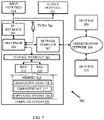
- FIG. 5 is a block diagram of an exemplary computer system 501 for implementing embodiments consistent with the present disclosure.
- the computer system 501 may be implemented in alone or in combination of components of the system 302 ( FIG. 1 ). Variations of computer system 501 may be used for implementing the devices included in this disclosure.
- Computer system 501 may comprise a central processing unit ("CPU” or "hardware processor") 502.
- the hardware processor 502 may comprise at least one data processor for executing program components for executing user- or system-generated requests.
- the processor may include specialized processing units such as integrated system (bus) controllers, memory management control units, floating point units, graphics processing units, digital signal processing units, etc.
- the processor may include a microprocessor, such as AMD Athlon TM , Duron TM or Opteron TM , ARM's application, embedded or secure processors, IBM PowerPC TM , Intel's Core, Itanium TM , Xeon TM , Celeron TM or other line of processors, etc.
- the processor 502 may be implemented using mainframe, distributed processor, multi-core, parallel, grid, or other architectures. Some embodiments may utilize embedded technologies like application specific integrated circuits (ASICs), digital signal processors (DSPs), Field Programmable Gate Arrays (FPGAs), etc.
- the processor 502 may be a multi-core multi-threaded processor.
- I/O Processor 502 may be disposed in communication with one or more input/output (I/O) devices via I/O interface 503.
- the I/O interface 503 may employ communication protocols/methods such as, without limitation, audio, analog, digital, monoaural, RCA, stereo, IEEE-1394, serial bus, universal serial bus (USB), infrared, PS/2, BNC, coaxial, component, composite, digital visual interface (DVI), high-definition multimedia interface (HDMI), RF antennas, S-Video, VGA, IEEE 802.11 a/b/g/n/x, Bluetooth, cellular (e.g., code-division multiple access (CDMA), high-speed packet access (HSPA+), global system for mobile communications (GSM), long-term evolution (LTE), WiMax, or the like), etc.
- CDMA code-division multiple access
- HSPA+ high-speed packet access
- GSM global system for mobile communications
- LTE long-term evolution
- WiMax wireless wide area network
- the computer system 501 may communicate with one or more I/O devices.
- the input device 504 may be an antenna, keyboard, mouse, joystick, (infrared) remote control, camera, card reader, fax machine, dongle, biometric reader, microphone, touch screen, touchpad, trackball, sensor (e.g., accelerometer, light sensor, GPS, gyroscope, proximity sensor, or the like), stylus, scanner, storage device, transceiver, video device/source, visors, etc.
- Output device 505 may be a printer, fax machine, video display (e.g., cathode ray tube (CRT), liquid crystal display (LCD), light-emitting diode (LED), plasma, or the like), audio speaker, etc.
- video display e.g., cathode ray tube (CRT), liquid crystal display (LCD), light-emitting diode (LED), plasma, or the like
- audio speaker etc.
- a transceiver 506 may be disposed in connection with the processor 502. The transceiver may facilitate various types of wireless transmission or reception.
- the transceiver may include an antenna operatively connected to a transceiver chip (e.g., Texas Instruments WiLink WL1283, Broadcom BCM4750IUB8, Infineon Technologies X-Gold 618-PMB9800, or the like), providing IEEE 802.11a/b/g/n, Bluetooth, FM, global positioning system (GPS), 2G/3G HSDPA/HSUPA communications, etc.
- a transceiver chip e.g., Texas Instruments WiLink WL1283, Broadcom BCM4750IUB8, Infineon Technologies X-Gold 618-PMB9800, or the like
- IEEE 802.11a/b/g/n e.g., Texas Instruments WiLink WL1283, Broadcom BCM4750IUB8, Infineon Technologies X-Gold 618-PMB9800, or the like
- IEEE 802.11a/b/g/n e.g., Bluetooth, FM, global positioning system (GPS), 2G/3G HSDPA/HS
- the processor 502 may be disposed in communication with a communication network 508 via a network interface 507.
- the network interface 507 may communicate with the communication network 508.
- the network interface may employ connection protocols including, without limitation, direct connect, Ethernet (e.g., twisted pair 10/100/1000 Base T), transmission control protocol/internet protocol (TCP/IP), token ring, IEEE 802.11a/b/g/n/x, etc.
- the communication network 508 may include, without limitation, a direct interconnection, local area network (LAN), wide area network (WAN), wireless network (e.g., using Wireless Application Protocol), the Internet, etc.
- LAN local area network
- WAN wide area network
- wireless network e.g., using Wireless Application Protocol
- the computer system 501 may communicate with devices 509 and 510.
- These devices may include, without limitation, personal computer(s), server(s), fax machines, printers, scanners, various mobile devices such as cellular telephones, smartphones (e.g., Apple iPhone, Blackberry, Android-based phones, etc.), tablet computers, eBook readers (Amazon Kindle, Nook, etc.), laptop computers, notebooks, gaming consoles (Microsoft Xbox, Nintendo DS, Sony PlayStation, etc.), or the like.
- the computer system 501 may itself embody one or more of these devices.
- the processor 502 may be disposed in communication with one or more memory devices (e.g., RAM 513, ROM 514, etc.) via a storage interface 512.
- the storage interface may connect to memory devices including, without limitation, memory drives, removable disc drives, etc., employing connection protocols such as serial advanced technology attachment (SATA), integrated drive electronics (IDE), IEEE-1394, universal serial bus (USB), fiber channel, small computer systems interface (SCSI), etc.
- the memory drives may further include a drum, magnetic disc drive, magneto-optical drive, optical drive, redundant array of independent discs (RAID), solid-state memory devices, solid-state drives, etc. Variations of memory devices may be used for implementing, for example, any databases utilized in this disclosure.
- the memory devices may store a collection of programs or database components, including, without limitation, an operating system 516, user interface application 517, user/application data 518 (e.g., any data variables or data records discussed in this disclosure), etc.
- the operating system 516 may facilitate resource management and operation of the computer system 501.
- Examples of operating systems include, without limitation, Apple Macintosh OS X, Unix, Unix-like system distributions (e.g., Berkeley Software Distribution (BSD), FreeBSD, NetBSD, OpenBSD, etc.), Linux distributions (e.g., Red Hat, Ubuntu, Kubuntu, etc.), IBM OS/2, Microsoft Windows (XP, Vista/7/8, etc.), Apple iOS, Google Android, Blackberry OS, or the like.
- User interface 517 may facilitate display, execution, interaction, manipulation, or operation of program components through textual or graphical facilities.
- user interfaces may provide computer interaction interface elements on a display system operatively connected to the computer system 501, such as cursors, icons, check boxes, menus, scrollers, windows, widgets, etc.
- Graphical user interfaces may be employed, including, without limitation, Apple Macintosh operating systems' Aqua, IBM OS/2, Microsoft Windows (e.g., Aero, Metro, etc.), Unix X-Windows, web interface libraries (e.g., ActiveX, Java, Javascript, AJAX, HTML, Adobe Flash, etc.), or the like.
- computer system 501 may store user/application data 518, such as the data, variables, records, etc. as described in this disclosure.
- databases may be implemented as fault-tolerant, relational, scalable, secure databases such as Oracle or Sybase.
- databases may be implemented using standardized data structures, such as an array, hash, linked list, structured text file (e.g., XML), table, or as hand-oriented databases (e.g., using HandStore, Poet, Zope, etc.).
- hand-oriented databases e.g., using HandStore, Poet, Zope, etc.
- Such databases may be consolidated or distributed, sometimes among various computer systems discussed above. It is to be understood that the structure and operation of any computer or database component may be combined, consolidated, or distributed in any working combination.
- the server, messaging and instructions transmitted or received may emanate from hardware, including operating system, and program code (i.e., application code) residing in a cloud implementation.
- program code i.e., application code
- one or more of the systems and methods provided herein may be suitable for cloud-based implementation.
- some or all of the data used in the disclosed methods may be sourced from or stored on any cloud computing platform.
- the dataset comprises approximately 134k molecules that cover a comprehensive set of molecules in chemical science. It contains quantum chemical properties of low tree-width molecular graphs.
- the dataset consists of druglike organic chemical compounds and accommodates a total of nine substantial atoms.
- the number of iterations (epochs) is 100 cycles through the full training dataset.
- the beginning learning rate was chosen as 1e-3.
- the learning rate was decayed at 51st epoch by half and maintained it constant in the span of [51; 75] epochs throughout the training and the beginning step size learning rate 1 decayed to a terminating learning rate 2:5e-4, using a decay factor by 4 in the range [76; 100] epochs.
- the QM-9 dataset consists of approximately 134K molecules.
- the validation set comprises 10000 samples.
- the test set is composed of 10000 samples and the remaining are for the training set.
- early stopping is implemented on the validation dataset to prevent the model from over-fitting and for model selection.
- Table 1 Performance comparison of the proposed methods (left) with the baseline MPNN algorithm on validation dataset Disclosed Method Baseline Target Alg-1 enns2s enns2sens5 mu 0.015 0.3 0.2 alpha 0.091 0.92 0.68 HOMO 0.04 0.99 0.74 LUMO 0.048 0.87 0.65 gap 0.058 1.6 1.23 R2 0.025 0.44 0.14 ZPVE 0.022 1.27 1.1 U0 0.064 0.45 0.33 U 0.042 0.45 0.34 H 0.089 0.39 0.3 G 0.045 0.44 0.34 Cv 0.031 0.8 0.62 Omega 0.059 0.19 0.15
- Table 2 Performance comparison of the proposed methods (left) with the baseline MPNN algorithm on test dataset.
- Error Ratio is the metric reported for the graph-based based regression task. It is defined as the fraction of the MAE of the model's performance with the known approximate of chemical accuracy for that target property. Chemical accuracy approximates for every target property is reported in previous works. A model with an error ratio lesser than one has successfully attained chemical accuracy for that particular target property.
- the mean absolute error of the proposed unifying variants of MPNNs models will be computed as (Error Ratio)x(Chemical Accuracy).
- the tables display results of models trained for predicting all the targets in contrast to training a unique and distinct model to predict the targets individually as reported in previous works.
- MAE is the metric reported. It presents the results of six state-of-the-art models, SchNet, PhysNet, provably powerful graph networks, MEGNet, Cormorant, and DimeNet. The state of the art performance on the prediction of all the 13 targets is demonstrated on QM9 dataset. Table 3: Performance comparision of the proposed method (right) with the baseline algorithms on test dataset. MAE is the metric reported.
- the objective of the disclosed embodiments is to predict properties that relate to the electronic properties of the molecules pre-determined by the computational Density Functional Theory (DFT) quantum-mechanical simulations, HOMO, ⁇ HOMO (eV) and LUMO ⁇ LUMO (eV). Then, the electron energy gap ( ⁇ ⁇ (eV)). ⁇ HOMO - ⁇ LUMO is described as the electron energy gap.
- DFT Density Functional Theory
- Neural Finger-print which is a 4-layer convolutional neural network and Embedded Loopy Belief Propagation. It is a recurrent neural network architecture with 4 recurrent iterations. These algorithms are implemented for the given QM9 dataset.
- Table 4 and 5 shows disclosed model sets the benchmark as compared to against various baselines. The proposed models are well-regularized with proper hyperparameter tuning. Table 4: Performance comparison of then proposed methods (left) with the baseline's variants(right) on validation dataset. RMSE is the metrics reported.
- SMILES Sequence (SMILES) based property prediction task: Prior work on drug molecules property prediction task was formulated on a string representation of chemical compounds. In chemo-informatics includes the SMILES representation of molecules. SMILES is an acronym for the Simplified molecular-input line-entry system. These models leverage SMILES representation, a linear string notation to represent the molecular structures. Graph representations of the molecules can be generated using SMILES strings through a deterministic mapping. In natural language processing (NLP), in specific the input to the language model is an ordered list of a solitary letters, strings, or words if given an input sequence of text. The model predicts the probability of each and the predicted output is fed as input to in succession to give rise to the succeeding.
- NLP natural language processing
- DFT property prediction(regression) task several state-of-the-art machine translation algorithms solved together with the DFT property prediction(regression) task.
- the weights of the network are updated with respect to the combined loss of reconstruction accuracy as well as the regression-based MAE loss.
- the algorithms leveraged are VAE-Bahdanau Attention and Seq2Seq-Bidirectional-Bahdanau Attention-Scheduled Sampling-based algorithms. Thereafter an additional feed-forward network is utilized as a property prediction module by operating on the latent space.
- Table 4 Comparison of the disclosed methods (left) on test dataset with sequence based machine translation algorithms. RMSE is the metrics reported.
- Disclosed method Baseline Target Alg-1 VAEBA Seq2Seq-BASS HOMO 0.00217 0.01914 0.02214 LUMO 0.00305 0.02757 0.047 gap 0.00349 0.02697 0.04832
- Such computer-readable storage means contain program-code means for implementation of one or more steps of the method, when the program runs on a server or mobile device or any suitable programmable device.
- the hardware device can be any kind of device which can be programmed including e.g., any kind of computer like a server or a personal computer, or the like, or any combination thereof.
- the device may also include means which could be e.g., hardware means like e.g., an application-specific integrated circuit (ASIC), a field-programmable gate array (FPGA), or a combination of hardware and software means, e.g., an ASIC and an FPGA, or at least one microprocessor and at least one memory with software processing components located therein.
- the means can include both hardware means and software means.
- the method embodiments described herein could be implemented in hardware and software.
- the device may also include software means. Alternatively, the embodiments may be implemented on different hardware devices, e.g., using a plurality of CPUs.
- the embodiments herein can comprise hardware and software elements.
- the embodiments that are implemented in software include but are not limited to, firmware, resident software, microcode, etc.
- the functions performed by various components described herein may be implemented in other components or combinations of other components.
- a computer-usable or computer readable medium can be any apparatus that can comprise, store, communicate, propagate, or transport the program for use by or in connection with the instruction execution system, apparatus, or device.
- a computer-readable storage medium refers to any type of physical memory on which information or data readable by a processor may be stored.
- a computer-readable storage medium may store instructions for execution by one or more processors, including instructions for causing the processor(s) to perform steps or stages consistent with the embodiments described herein.
- the term "computer-readable medium” should be understood to include tangible items and exclude carrier waves and transient signals, i.e., be non-transitory. Examples include random access memory (RAM), read-only memory (ROM), volatile memory, nonvolatile memory, hard drives, CD ROMs, DVDs, flash drives, disks, and any other known physical storage media.
Landscapes
- Engineering & Computer Science (AREA)
- Theoretical Computer Science (AREA)
- Physics & Mathematics (AREA)
- Software Systems (AREA)
- Life Sciences & Earth Sciences (AREA)
- Data Mining & Analysis (AREA)
- Computing Systems (AREA)
- General Physics & Mathematics (AREA)
- General Engineering & Computer Science (AREA)
- Artificial Intelligence (AREA)
- Evolutionary Computation (AREA)
- General Health & Medical Sciences (AREA)
- Health & Medical Sciences (AREA)
- Biomedical Technology (AREA)
- Biophysics (AREA)
- Computational Linguistics (AREA)
- Molecular Biology (AREA)
- Mathematical Physics (AREA)
- Bioinformatics & Computational Biology (AREA)
- Bioinformatics & Cheminformatics (AREA)
- Chemical & Material Sciences (AREA)
- Crystallography & Structural Chemistry (AREA)
- Computer Vision & Pattern Recognition (AREA)
- Medical Informatics (AREA)
- Databases & Information Systems (AREA)
- Evolutionary Biology (AREA)
- Information Retrieval, Db Structures And Fs Structures Therefor (AREA)
- Management, Administration, Business Operations System, And Electronic Commerce (AREA)
Applications Claiming Priority (1)
| Application Number | Priority Date | Filing Date | Title |
|---|---|---|---|
| IN202121032176 | 2021-07-16 |
Publications (1)
| Publication Number | Publication Date |
|---|---|
| EP4120137A1 true EP4120137A1 (fr) | 2023-01-18 |
Family
ID=78085863
Family Applications (1)
| Application Number | Title | Priority Date | Filing Date |
|---|---|---|---|
| EP21201445.0A Pending EP4120137A1 (fr) | 2021-07-16 | 2021-10-07 | Système et procédé de prédiction de propriété moléculaire utilisant un réseau de neurones de convolution de mappage d'identité conditionné par le bord |
Country Status (2)
| Country | Link |
|---|---|
| US (2) | US12387083B2 (fr) |
| EP (1) | EP4120137A1 (fr) |
Cited By (3)
| Publication number | Priority date | Publication date | Assignee | Title |
|---|---|---|---|---|
| CN116304883A (zh) * | 2023-04-25 | 2023-06-23 | 电子科技大学 | 基于量子卷积的分子图分类方法、系统、存储介质及终端 |
| CN116346263A (zh) * | 2023-02-16 | 2023-06-27 | 华中科技大学 | 一种智能信号检测模型的构建方法及应用 |
| CN117877623A (zh) * | 2023-12-13 | 2024-04-12 | 重庆大学 | 一种基于多层级可解释性表征的最优分子子结构选取方法 |
Families Citing this family (21)
| Publication number | Priority date | Publication date | Assignee | Title |
|---|---|---|---|---|
| US11710139B1 (en) * | 2022-02-28 | 2023-07-25 | Microsoft Technology Licensing, Llc | Individual treatment effect estimation under high-order interference in hypergraphs |
| US12452196B2 (en) * | 2023-01-26 | 2025-10-21 | Shopee IP Singapore Private Limited | System and method for determining a response strategy to a set of messages |
| CN118673983A (zh) * | 2023-03-15 | 2024-09-20 | 中国电子科技南湖研究院 | 一种双权重双向预测编码方法及神经网络训练方法 |
| US12587274B2 (en) | 2023-03-28 | 2026-03-24 | Quantum Generative Materials Llc | Satellite optimization management system based on natural language input and artificial intelligence |
| KR102659172B1 (ko) * | 2023-04-27 | 2024-04-22 | 한국과학기술원 | 그래프 및 하이퍼그래프 처리를 위한 등변적 하이퍼그래프 신경망을 갖는 컴퓨터 장치 및 그의 방법 |
| CN116232921B (zh) * | 2023-05-08 | 2023-09-12 | 中国电信股份有限公司四川分公司 | 一种基于超图的确定性网络数据集构建装置及其方法 |
| CN116486937B (zh) * | 2023-05-24 | 2025-09-12 | 电子科技大学 | 一种基于药物社区团的ddi预测方法 |
| CN116861329B (zh) * | 2023-05-26 | 2025-10-17 | 中国电子科技集团公司第三十研究所 | 一种vpn网页浏览加密流量所属请求类型的分类系统及方法 |
| US20250036936A1 (en) * | 2023-07-25 | 2025-01-30 | Adobe Inc. | Hypergraph representation learning |
| CN117725963B (zh) * | 2023-11-08 | 2025-09-02 | 清华大学 | 一种用于Transformer模型推理计算的方法、系统及装置 |
| US12603701B2 (en) | 2023-12-27 | 2026-04-14 | Quantum Generative Materials Llc | Distributed satellite constellation management and control system |
| US12368503B2 (en) | 2023-12-27 | 2025-07-22 | Quantum Generative Materials Llc | Intent-based satellite transmit management based on preexisting historical location and machine learning |
| CN118039003B (zh) * | 2024-01-10 | 2024-09-06 | 浙江大学 | 基于分布与图卷积的高炉数字孪生系统硅含量预测方法 |
| CN117932278B (zh) * | 2024-03-22 | 2024-06-21 | 四川省生态环境科学研究院 | 一种智慧城市环保监控系统及方法 |
| CN118243842B (zh) | 2024-05-28 | 2024-08-27 | 武汉智化科技有限公司 | 不同色谱条件下的液相色谱保留时间预测方法 |
| CN118275371B (zh) * | 2024-06-03 | 2024-08-13 | 成都益清源科技有限公司 | 一种基于神经网络模型的全光谱水体指标检测方法 |
| CN118280482B (zh) * | 2024-06-04 | 2024-08-23 | 浙江大学 | 基于深度学习预测抗氧化分子的方法及系统 |
| WO2026065191A1 (fr) * | 2024-09-29 | 2026-04-02 | Boe Technology Group Co., Ltd. | Procédé mis en œuvre par ordinateur, appareil et produit programme d'ordinateur |
| CN118964626A (zh) * | 2024-10-17 | 2024-11-15 | 烟台大学 | 一种基于量子图联邦学习的数据异常检测方法及系统 |
| CN119578269B (zh) * | 2025-02-08 | 2025-05-16 | 浙江嘉绍跨江大桥投资发展有限公司 | 基于gnn与gru的桥梁结构时变火灾响应预测方法及系统 |
| CN121150159A (zh) * | 2025-10-17 | 2025-12-16 | 安徽泰然信息技术有限公司 | 一种基于源网荷储一体化的虚拟电网构建系统及方法 |
Citations (2)
| Publication number | Priority date | Publication date | Assignee | Title |
|---|---|---|---|---|
| WO2020016579A2 (fr) * | 2018-07-17 | 2020-01-23 | Gtn Ltd | Procédés d'analyse de molécules de type médicament basés sur l'apprentissage automatique |
| US20200285944A1 (en) * | 2019-03-08 | 2020-09-10 | Adobe Inc. | Graph convolutional networks with motif-based attention |
Family Cites Families (11)
| Publication number | Priority date | Publication date | Assignee | Title |
|---|---|---|---|---|
| AU2018236433B2 (en) * | 2017-03-17 | 2022-03-03 | Magic Leap, Inc. | Room layout estimation methods and techniques |
| US20190139622A1 (en) * | 2017-08-03 | 2019-05-09 | Zymergen, Inc. | Graph neural networks for representing microorganisms |
| CN109934706B (zh) * | 2017-12-15 | 2021-10-29 | 创新先进技术有限公司 | 一种基于图结构模型的交易风险控制方法、装置以及设备 |
| US10651955B2 (en) * | 2018-01-19 | 2020-05-12 | Arizona Board Of Regents On Behalf Of Arizona State University | Active sequential xampling receiver for spectrum sensing |
| CN119673318A (zh) * | 2018-03-05 | 2025-03-21 | 斯坦福大学托管董事会 | 用于空间图卷积的系统和方法及其在药物发现和分子模拟中的应用 |
| US20190303535A1 (en) * | 2018-04-03 | 2019-10-03 | International Business Machines Corporation | Interpretable bio-medical link prediction using deep neural representation |
| US12254964B2 (en) * | 2018-11-07 | 2025-03-18 | Kuano Ltd. | Quantum circuit based system configured to model physical or chemical systems |
| US11651194B2 (en) * | 2019-11-27 | 2023-05-16 | Nvidia Corp. | Layout parasitics and device parameter prediction using graph neural networks |
| CN111737474B (zh) * | 2020-07-17 | 2021-01-12 | 支付宝(杭州)信息技术有限公司 | 业务模型的训练和确定文本分类类别的方法及装置 |
| CN112070277B (zh) | 2020-08-17 | 2024-04-09 | 杭州电子科技大学 | 基于超图神经网络的药物-标靶相互作用预测方法 |
| CN112417219B (zh) | 2020-11-16 | 2022-07-01 | 吉林大学 | 基于超图卷积的超边链接预测方法 |
-
2021
- 2021-10-07 EP EP21201445.0A patent/EP4120137A1/fr active Pending
- 2021-10-11 US US17/498,005 patent/US12387083B2/en active Active
- 2021-10-12 US US17/450,666 patent/US20230045690A1/en active Pending
Patent Citations (2)
| Publication number | Priority date | Publication date | Assignee | Title |
|---|---|---|---|---|
| WO2020016579A2 (fr) * | 2018-07-17 | 2020-01-23 | Gtn Ltd | Procédés d'analyse de molécules de type médicament basés sur l'apprentissage automatique |
| US20200285944A1 (en) * | 2019-03-08 | 2020-09-10 | Adobe Inc. | Graph convolutional networks with motif-based attention |
Cited By (3)
| Publication number | Priority date | Publication date | Assignee | Title |
|---|---|---|---|---|
| CN116346263A (zh) * | 2023-02-16 | 2023-06-27 | 华中科技大学 | 一种智能信号检测模型的构建方法及应用 |
| CN116304883A (zh) * | 2023-04-25 | 2023-06-23 | 电子科技大学 | 基于量子卷积的分子图分类方法、系统、存储介质及终端 |
| CN117877623A (zh) * | 2023-12-13 | 2024-04-12 | 重庆大学 | 一种基于多层级可解释性表征的最优分子子结构选取方法 |
Also Published As
| Publication number | Publication date |
|---|---|
| US12387083B2 (en) | 2025-08-12 |
| US20230045690A1 (en) | 2023-02-09 |
| US20230037388A1 (en) | 2023-02-09 |
Similar Documents
| Publication | Publication Date | Title |
|---|---|---|
| EP4120137A1 (fr) | Système et procédé de prédiction de propriété moléculaire utilisant un réseau de neurones de convolution de mappage d'identité conditionné par le bord | |
| EP4120138B1 (fr) | Système et procédé de prédiction de propriété moléculaire utilisant un réseau de neurones de passage de messages hypergraph (hmpnn) | |
| US11809993B2 (en) | Systems and methods for determining graph similarity | |
| EP4163918B1 (fr) | Prédiction de propriétés moléculaires basée sur l'agrégation de voisinage dynamique conditionnée par les bords | |
| US12112538B2 (en) | Systems and methods for improved video understanding | |
| US11205050B2 (en) | Learning property graph representations edge-by-edge | |
| US20190303535A1 (en) | Interpretable bio-medical link prediction using deep neural representation | |
| US20210287067A1 (en) | Edge message passing neural network | |
| EP4163916A1 (fr) | Système et procédé de prédiction de propriétés moléculaires à l'aide d'une propagation hiérarchique par couches d'une couche de regroupement de graphes | |
| US20220237682A1 (en) | Scalable architecture for recommendation | |
| US12468780B2 (en) | Balancing feature distributions using an importance factor | |
| EP4163919A1 (fr) | Système et procédé de prédiction de propriété moléculaire utilisant un réseau neuronal d'attention au graphe conditionné par les bords | |
| US11636308B2 (en) | Differentiable set to increase the memory capacity of recurrent neural net works | |
| US20220366297A1 (en) | Local permutation importance: a stable, linear-time local machine learning feature attributor | |
| US20220108181A1 (en) | Anomaly detection on sequential log data using a residual neural network | |
| US11727274B1 (en) | Deep learning model training system | |
| US20230376743A1 (en) | Trace representation learning | |
| CN114819140A (zh) | 模型剪枝方法、装置和计算机设备 | |
| US20200312432A1 (en) | Computer architecture for labeling documents | |
| US11599797B2 (en) | Optimization of neural network in equivalent class space | |
| US20240037372A1 (en) | Backpropagation-based explainability method for unsupervised anomaly detection models based on autoencoder architectures | |
| EP4163917B1 (fr) | Prédiction de propriétés moléculaires à l'aide d'une fonction de réseau de neurones global à lecture graphique globale fusionnée à des informations de bord | |
| EP4095785A1 (fr) | Classification et prédiction du comportement des utilisateurs en ligne à l'aide de hmm et lstm | |
| CN112732976A (zh) | 一种基于深度哈希编码的短视频多标签快速分类方法 | |
| US20260050833A1 (en) | Subgroup discovery for survival analysis |
Legal Events
| Date | Code | Title | Description |
|---|---|---|---|
| PUAI | Public reference made under article 153(3) epc to a published international application that has entered the european phase |
Free format text: ORIGINAL CODE: 0009012 |
|
| STAA | Information on the status of an ep patent application or granted ep patent |
Free format text: STATUS: REQUEST FOR EXAMINATION WAS MADE |
|
| 17P | Request for examination filed |
Effective date: 20220802 |
|
| AK | Designated contracting states |
Kind code of ref document: A1 Designated state(s): AL AT BE BG CH CY CZ DE DK EE ES FI FR GB GR HR HU IE IS IT LI LT LU LV MC MK MT NL NO PL PT RO RS SE SI SK SM TR |
|
| STAA | Information on the status of an ep patent application or granted ep patent |
Free format text: STATUS: EXAMINATION IS IN PROGRESS |
|
| 17Q | First examination report despatched |
Effective date: 20230816 |