EP4120202A1 - Bildverarbeitungsverfahren und -einrichtung sowie elektronische vorrichtung - Google Patents
Bildverarbeitungsverfahren und -einrichtung sowie elektronische vorrichtung Download PDFInfo
- Publication number
- EP4120202A1 EP4120202A1 EP22154283.0A EP22154283A EP4120202A1 EP 4120202 A1 EP4120202 A1 EP 4120202A1 EP 22154283 A EP22154283 A EP 22154283A EP 4120202 A1 EP4120202 A1 EP 4120202A1
- Authority
- EP
- European Patent Office
- Prior art keywords
- processed
- area
- special effect
- embedded
- effect material
- Prior art date
- Legal status (The legal status is an assumption and is not a legal conclusion. Google has not performed a legal analysis and makes no representation as to the accuracy of the status listed.)
- Pending
Links
Images

Classifications
-
- G—PHYSICS
- G06—COMPUTING OR CALCULATING; COUNTING
- G06T—IMAGE DATA PROCESSING OR GENERATION, IN GENERAL
- G06T17/00—Three-dimensional [3D] modelling for computer graphics
- G06T17/10—Constructive solid geometry [CSG] using solid primitives, e.g. cylinders, cubes
-
- G—PHYSICS
- G06—COMPUTING OR CALCULATING; COUNTING
- G06T—IMAGE DATA PROCESSING OR GENERATION, IN GENERAL
- G06T19/00—Manipulating three-dimensional [3D] models or images for computer graphics
- G06T19/006—Mixed reality
-
- G—PHYSICS
- G06—COMPUTING OR CALCULATING; COUNTING
- G06T—IMAGE DATA PROCESSING OR GENERATION, IN GENERAL
- G06T15/00—Three-dimensional [3D] image rendering
- G06T15/04—Texture mapping
-
- G—PHYSICS
- G06—COMPUTING OR CALCULATING; COUNTING
- G06T—IMAGE DATA PROCESSING OR GENERATION, IN GENERAL
- G06T11/00—Two-dimensional [2D] image generation
- G06T11/40—Filling planar surfaces by adding surface attributes, e.g. adding colours or textures
-
- G—PHYSICS
- G06—COMPUTING OR CALCULATING; COUNTING
- G06T—IMAGE DATA PROCESSING OR GENERATION, IN GENERAL
- G06T19/00—Manipulating three-dimensional [3D] models or images for computer graphics
- G06T19/20—Editing of three-dimensional [3D] images, e.g. changing shapes or colours, aligning objects or positioning parts
-
- G—PHYSICS
- G06—COMPUTING OR CALCULATING; COUNTING
- G06T—IMAGE DATA PROCESSING OR GENERATION, IN GENERAL
- G06T7/00—Image analysis
- G06T7/30—Determination of transform parameters for the alignment of images, i.e. image registration
-
- G—PHYSICS
- G06—COMPUTING OR CALCULATING; COUNTING
- G06T—IMAGE DATA PROCESSING OR GENERATION, IN GENERAL
- G06T2219/00—Indexing scheme for manipulating 3D models or images for computer graphics
- G06T2219/20—Indexing scheme for editing of 3D models
- G06T2219/2004—Aligning objects, relative positioning of parts
Definitions
- the present invention or disclosure relates to the field of computer vision, specifically to the field of Augmented Reality (AR) technology, and more specifically to an image processing method and apparatus, and an electronic device.
- AR Augmented Reality
- AR Augmented Reality
- the present disclosure provides in embodiments an image processing method and apparatus, and an electronic device.
- an image processing method comprising:
- embedding a special effect material to be embedded into the area to be processed according to the space model comprises:
- the method further comprises one or more of the following steps:
- the method further comprises one or more of the following steps:
- a size of the special effect material to be embedded corresponds to a size of the spatial area to be processed or of the area to be processed.
- the method further comprises:
- building a space model according to the image frame to be processed comprises:
- the special effect material to be embedded comprises at least one of:
- an image processing apparatus comprising:
- the special effect embedding module comprises:
- the spatial area determining submodule is further configured to perform one or more of the following:
- the apparatus further comprises: a special effect determining submodule configured to determine one or more of:
- a size of the special effect material to be embedded corresponds to a size of the spatial area to be processed or the area to be processed.
- the apparatus further comprises:
- model building module comprises:
- the special effect material to be embedded comprises at least one of:
- an electronic device comprising:
- a non-transitory computer-readable storage medium having stored therein a computer instruction, wherein the computer instruction causes a computer to implement an image processing method according to any one of embodiments in the first aspect of the present disclosure.
- the similar area to be processed is acquired according to the area label, which achieves tracking of the same area to be processed in different image frames to be processed, thus reducing calculation caused by image processing, and improving efficiency of embedding the special effect to be embedded into the image frame to be processed.
- AR Augmented Reality
- physical information such as visual, sound, and touch information
- superimposing the same into the real world thus presenting the real environment and a virtual object in one frame or space in a real-time manner.
- AR technology involves simulating physical information (such as visual, sound, and touch information) and superimposing the same into the real world, thus presenting the real environment and a virtual object in one frame or space in a real-time manner.
- physical information such as visual, sound, and touch information
- image processing method provided in embodiments of the present disclosure is applicable to processing an image in an album, or to processing image frames as they are captured.
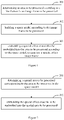
- FIG. 1 is a flow chart illustrating an image processing method according to embodiments of the present disclosure.
- the image processing method may include steps 101, 102 and 103.
- an area to be processed is determined according to a line feature in an image frame to be processed.
- the area to be processed may be selected from one of a building, a window, a guidepost, a road sign, a road and the like, or a combination thereof. These areas to be processed each are encompassed by a definite line feature, so the line feature in the image frame to be processed is acquired to generate the area to be processed.
- an area type (also called building type) of the area to be processed may be selected from one of a building, a window, a guidepost, a road sign, a road and the like, or a combination thereof.
- the image processing method includes setting a label for each area to be processed, and embedding the same special effect material (such as the AR special effect material) into two areas to be processed with a same label, if the area labels of the areas to be processed are same between adjacent image frames to be processed.
- a space model is built according to the image frame to be processed.
- three-dimensional coordinates of the area to be processed are acquired.
- a space model is built according to the line feature in the image frame to be processed, to acquire the three-dimensional coordinates of the area to be processed.
- the method to establish a three-dimensional space model according to a two-dimensional image is numerous and well-known in the art, which is not covered by the protection scope of the present disclosure.
- several reference points are selected on the line, two-dimensional coordinates of individual reference points are acquired, and three-dimensional coordinates of the individual reference points are calibrated.
- a projection matrix is acquired according to the two-dimensional coordinates and the three-dimensional coordinates of the individual reference points, and three-dimensional coordinates corresponding to the pixels on the line are obtained according to the projection matrix. Further, the space model is generated accordingly.
- a special effect material to be embedded is embedded into the area to be processed according to the space model, to generate a special effect image frame.
- three-dimensional coordinates of pixels in the image of the area to be processed may be obtained according to the space model.
- the special effect material to be embedded (such as the AR special effect material) is embedded after homography transformation, into the area to be processed in the space model.
- the homography transformation may be achieved according to a homography matrix.
- the homography transformation is a mapping relationship from one plane to another plane.
- the special effect material to be embedded such as the AR special effect material
- the special effect material to be embedded may be distorted to a certain extent in a vision field of the camera, and the sense of reality of the special effect image frame will be stronger accordingly.
- the image processing method in this embodiment may be applied to processing an image after shooting, for example processing an image (including a dynamic image and a static image) and/or a video in the album, or may be further applied to processing image frames during photographing, such as processing during shooting or photographing.
- Figure 10 is a scene graph illustrating an image frame to be processed according to embodiments of the present disclosure
- Figure 11 a scene graph illustrating a special effect-embedded image frame according to embodiments of the present disclosure.
- the special effect material to be embedded is added to the buildings in the scene graph of the special effect image frame.
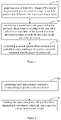
- FIG. 2 is a flow chart illustrating an image processing method according to embodiments of the present disclosure.
- the image processing method includes: steps 201 and 202.
- a spatial area to be processed corresponding to the area to be processed in the space model is determined.
- the spatial area to be processed is a three-dimensional space, if the material to be embedded is a three-dimensional special effect material, and a material to be embedded is embedded into the spatial area to be processed.
- the area to be processed is a two-dimensional space, if the material to be embedded is a two-dimensional special effect material, and the material to be embedded is embedded into the spatial area to be processed.
- the special effect material to be embedded is embedded into the spatial area to be processed.
- An objective plane is determined based on the line feature in the area to be processed, and the spatial area to be processed, which is formed based on the objective plane, is determined according to the objective plane.
- the spatial area to be processed (which is formed based on a building plane) is determined based on the building plane corresponding to the area to be processed (such as a building wall, a road surface, a road sign surface and the like).
- the method further includes one or more of the following steps:
- an area type (also called building type) of the area to be processed may be selected from one of a building, a window, a guidepost, a road sign, a road and the like, or a combination thereof.
- the type of the spatial area to be processed includes a three-dimensional space and a two-dimensional space.
- the spatial area to be processed is a three-dimensional space, if the material to be embedded is a three-dimensional special effect material, and a material to be embedded is embedded into the spatial area to be processed.
- the area to be processed is a two-dimensional space, if the material to be embedded is a two-dimensional special effect material, and the material to be embedded is embedded into the spatial area to be processed.
- an objective plane is determined based on the line feature in the area to be processed, and the spatial area to be processed, which is formed based on the objective plane, is determined according to the objective plane.
- the spatial area to be processed (which is formed based on a building plane) is determined based on the building plane corresponding to the area to be processed (such as a building wall, a road surface, a road sign surface and the like).
- a size of the special effect material to be embedded corresponds to a size of the spatial area to be processed or of the area to be processed.
- the special effect material to be embedded is of a size corresponding to a size of the spatial area to be processed or of the area to be processed.
- the special effect material to be embedded after the processing of homography transformation is of a size corresponding to a size of the spatial area to be processed or of the area to be processed.
- the special effect material to be embedded is embedded to an external surface of the spatial area to be processed.
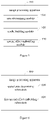
- FIG 3 is a flow chart illustrating an image processing method according to embodiments of the present disclosure.
- the image processing method includes: steps 301, 302 and 303.
- an area label of an image of the area to be processed is acquired, in case a current image frame to be processed is different from a previous image frame.
- the image processing method in this embodiment may be applied to processing an image after shooting, for example processing an image including a dynamic image and/or a video in the album, or may be further applied to processing image frames during photographing, such as processing during shooting or photographing.
- the image processing includes the processing of multiple image frames.
- the image processing method includes setting a label for each area to be processed, and embedding the same special effect material to be embedded (such as the AR special effect material) into two areas to be processed with a same label, if the area labels of the areas to be processed are same between adjacent image frames to be processed.
- a second area to be processed in the previous image frame is identified according to the area label, where the area label of the second area to be processed is identical with the area label of the area to be processed.
- the area label of the area to be processed in the previous image frame is identical to the area label in the current image frame to be processed. If the area label of the area to be processed in the previous image frame is identical to the area label in the current image frame to be processed, the area to be processed in the previous image frame is set as a second area to be processed, and the area to be processed is added with the special effect material to be embedded which is same added to the second area to be processed.
- a second special effect material to be embedded corresponding to the second area to be processed is embedded into the area to be processed.
- This step achieves tracking of the same object, and further achieves tracking of the area to be processed for the special effect material (such as the AR special effect material). If the camera moves, the special effect material (such as the AR special effect material) embedded into the same area to be processed will be unchanged. If there is a moving car in the area to be processed, its corresponding special effect (such as the AR special effect) will follow the moving car all along.
- the special effect material such as the AR special effect material
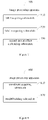
- FIG 4 is a flow chart illustrating an image processing method according to embodiments of the present disclosure.
- the image processing method includes: steps 401 and 402.
- step 401 three-dimensional coordinates corresponding to pixels on the line feature are generated.
- three-dimensional coordinates of the area to be processed are acquired.
- a space model is built according to the line feature in the image frame to be processed, to acquire the three-dimensional coordinates of the area to be processed.
- the method to establish a three-dimensional space model according to a two-dimensional image is numerous and well-known in the art, which is not covered by the protection scope of the present disclosure.
- several reference points are selected on the line, two-dimensional coordinates of individual reference points are acquired, and three-dimensional coordinates of the individual reference points are calibrated.
- a projection matrix is acquired according to the two-dimensional coordinates and the three-dimensional coordinates of the individual reference points, and three-dimensional coordinates corresponding to the pixels on the line are obtained according to the projection matrix. Further, the space model is generated accordingly.
- the space model is built according to the three-dimensional coordinates, where the space model is a three-dimensional model.
- respective three-dimensional coordinates of all pixels in the image of the area to be processed in the space model can be acquired, which is convenient for subsequently embedding the special effect material to be embedded (such as the AR special effect material) into the image of the area to be processed.
- the special effect material to be embedded such as the AR special effect material
- the special effect material to be embedded includes at least one of:
- the two-dimensional special effect material may be embedded into the area to be processed, and the three-dimensional special effect material may be embedded into the spatial area to be processed.
- the material to be embedded is a material including a font interpretation material, a graphic material and the like, which is set in advance.
- image identification and spatial reconstruction are performed first, which include: identifying an image to be processed; building a space model; incorporating the material to be embedded according to x, y and z axes; and brightening a contour (line) of a road, a building or the like, if identifying the same.
- an image tracking is performed, which includes: setting a video tracking point; and attaching the incorporated material to be embedded to the tracking point, where the material to be embedded is bonded to the tracking point along with camera lens moving and translating.
- brightening processing may be to add a brightening special effect on the material to be embedded.
- the material to be embedded is a preset modelling video material that will appear in a video in a dynamic form, and is not limited to two-dimensional dynamics, three-dimensional dynamics, font interpretation and other forms. Different preset modeling materials are added based on a type of previously identified space (i.e. the three-dimensional space) or plane (i.e. the two-dimensional space), and a feature point tracking.
- FIG. 5 is a block diagram illustrating an image processing apparatus according to embodiments of the present disclosure.
- the image processing apparatus 500 may include: an area determining module 510, a model building module 520 and a special effect embedding module 530.
- the area determining module 510 is configured to determine an area to be processed according to a line feature in an image frame to be processed.
- the image frame to be processed is processed in advance to generate an image of the area to be processed.
- the area to be processed may be selected from one of a building, a window, a guidepost, a road sign, a road and the like, or a combination thereof. These areas to be processed each are encompassed by a definite line feature, so the line feature in the image frame to be processed is acquired to generate the area to be processed.
- processing the image includes setting a label for each area to be processed, and embedding the same special effect material (such as the AR special effect material) into two areas to be processed with a same label, if the area labels of the areas to be processed are same between adjacent image frames to be processed.
- the model building module 520 is configured to build a space model according to the image frame to be processed.
- three-dimensional coordinates of the area to be processed are acquired.
- a space model is built according to the line feature in the image frame to be processed, to acquire the three-dimensional coordinates of the area to be processed.
- the method to establish a three-dimensional space model according to a two-dimensional image is numerous and well-known in the art, which is not covered by the protection scope of the present disclosure.
- several reference points are selected on the line, two-dimensional coordinates of individual reference points are acquired, and three-dimensional coordinates of the individual reference points are calibrated.
- a projection matrix is acquired according to the two-dimensional coordinates and the three-dimensional coordinates of the individual reference points, and three-dimensional coordinates corresponding to the pixels on the line are obtained according to the projection matrix. Further, the space model is generated accordingly.
- the special effect embedding module 530 is configured to embed a special effect material to be embedded into the area to be processed according to the space model, to generate a special effect image frame.
- Three-dimensional coordinates of pixels in the image of the area to be processed may be obtained according to the space model.
- the special effect material to be embedded (such as AR special effect material) is embedded after homography transformation, into the area to be processed in the space model.
- the homography transformation may be achieved according to a homography matrix.
- the homography transformation is a mapping relationship from one plane to another plane.
- the special effect material such as the AR special effect material
- the special effect material may be distorted to a certain extent in a vision field of the camera, and the sense of reality of the special effect image frame will be stronger accordingly.
- FIG. 6 is a block diagram illustrating an image processing apparatus according to embodiments of the present disclosure.
- the image processing apparatus 600 includes: a spatial area determining submodule 610 and a first special effect embedding submodule 620.
- the spatial area determining submodule 610 is configured to determine a spatial area to be processed corresponding to the area to be processed in the space model.
- the spatial area to be processed is a three-dimensional space, if the material to be embedded is a three-dimensional special effect material, and a material to be embedded is embedded into the spatial area to be processed.
- the area to be processed is a two-dimensional space, if the material to be embedded is a two-dimensional special effect material, and the material to be embedded is embedded into the spatial area to be processed.
- the first special effect embedding submodule 620 is configured to embed the special effect material to be embedded into the spatial area to be processed.
- An objective plane is determined based on the line feature in the area to be processed, and the spatial area to be processed, which is formed based on the objective plane, is determined according to the objective plane.
- the spatial area to be processed (which is formed based on a building plane) is determined based on the building plane corresponding to the area to be processed (such as a building wall, a road surface, a road sign surface and the like).
- the apparatus further includes: a special effect determining submodule configured to determine one or more of:
- an area type (also called building type) of the area to be processed may be selected from one of a building, a window, a guidepost, a road sign, a road and the like, or a combination thereof.
- the type of the spatial area to be processed includes a three-dimensional space and a two-dimensional space.
- the spatial area to be processed is a three-dimensional space, if the material to be embedded is a three-dimensional special effect material, and a material to be embedded is embedded into the spatial area to be processed.
- the area to be processed is a two-dimensional space, if the material to be embedded is a two-dimensional special effect material, and the material to be embedded is embedded into the spatial area to be processed.
- an objective plane is determined based on the line feature in the area to be processed, and the spatial area to be processed, which is formed based on the objective plane, is determined according to the objective plane.
- the spatial area to be processed (which is formed based on a building plane) is determined based on the building plane corresponding to the area to be processed (such as a building wall, a road surface, a road sign surface and the like).
- a size of the special effect material to be embedded corresponds to a size of the spatial area to be processed or of the area to be processed.
- the size of the special effect material to be embedded is of size corresponding to a size of the spatial area to be processed or of the area to be processed.
- the special effect material to be embedded is embedded to an external surface of the spatial area to be processed.
- FIG. 7 is a block diagram illustrating an image processing apparatus according to embodiments of the present disclosure.
- the image processing apparatus 700 includes: a label acquiring submodule 710, a label comparing submodule 720 and a second special effect embedding submodule 730.
- the label acquiring submodule 710 is configured to acquire an area label of an image of the area to be processed, in case a current image frame to be processed is different from a previous image frame.
- the image processing includes setting a label for each area to be processed, and embedding the same special effect material to be embedded (such as the AR special effect material) into two areas to be processed with a same label, if the area labels of the areas to be processed are same between adjacent image frames to be processed.
- the label comparing submodule 720 is configured to identify a second area to be processed in the previous image frame according to the area label, in which the area label of the second area to be processed is identical with the area label of the area to be processed
- the area label of the area to be processed in the previous image frame is identical to the area label in the current image frame to be processed. If the area label of the area to be processed in the previous image frame is identical to the area label in the current image frame to be processed, the area to be processed in the previous image frame is set as a second area to be processed, and the area to be processed is added with the special effect material to be embedded which is same added to the second area to be processed.
- the second special effect embedding submodule 730 is configured to embed a second special effect material to be embedded corresponding to the second area to be processed into the area to be processed.
- This step achieves tracking of the same object, and further achieves tracking of the area to be processed for the special effect material (such as the AR special effect material). If the camera moves, the special effect material (such as the AR special effect material) embedded into the same area to be processed will be unchanged. If there is a moving car in the area to be processed, its corresponding special effect will follow the moving car all along.
- the special effect material such as the AR special effect material
- FIG 8 is a block diagram illustrating an image processing apparatus according to embodiments of the present disclosure.
- the image processing apparatus 800 includes: a coordinate acquiring submodule 810 and a model building submodule 820.
- the coordinate acquiring submodule 810 is configured to generate three-dimensional coordinates corresponding to pixels on the line feature.
- three-dimensional coordinates of the area to be processed are acquired.
- a space model is built according to the line feature in the image frame to be processed, to acquire the three-dimensional coordinates of the area to be processed.
- the method to establish a three-dimensional space model according to a two-dimensional image is numerous and well-known in the art, which is not covered by the protection scope of the present disclosure.
- several reference points are selected on the line, two-dimensional coordinates of individual reference points are acquired, and three-dimensional coordinates of the individual reference points are calibrated.
- a projection matrix is acquired according to the two-dimensional coordinates and the three-dimensional coordinates of the individual reference points, and three-dimensional coordinates corresponding to the pixels on the line are obtained according to the projection matrix. Further, the space model is generated accordingly.
- the model building submodule 820 is configured to build the space model according to the three-dimensional coordinates, in which the space model is a three-dimensional model.
- respective three-dimensional coordinates of all pixels in the image of the area to be processed in the space model can be acquired, which is convenient for subsequently embedding the special effect material (such as AR special effect material) into the image of the area to be processed.
- the special effect material such as AR special effect material
- the present disclosure further provides in embodiments an electronic device, a computer-readable storage medium and a computer program product.
- Figure 9 is a block diagram illustrating an electronic device 900 according to embodiments of the present disclosure.
- the electronic devices are intended to represent various forms of digital computers, such as a laptop, a desktop, a workstation, a personal digital assistant, a server, a blade server, a mainframe computer, and other suitable computers.
- the electronic devices may also represent various forms of mobile devices, such as a personal digital processor, a cellular phone, a smart phone, a wearable device, and other similar computing devices.
- the components shown herein, their connections and relationships, and their functions are described as examples only, and are not intended to limit implementations of the present disclosure described and/or claimed herein.
- the device 900 includes a computing unit 901 to perform various appropriate actions and processes according to computer program instructions stored in a read only memory (ROM) 902, or loaded from a storage unit 908 into a random access memory (RAM) 903.
- ROM read only memory
- RAM random access memory
- various programs and data for the operation of the storage device 900 can also be stored.
- the computing unit 901, the ROM 902, and the RAM 903 are connected to each other through a bus 904.
- An input/output (I/O) interface 905 is also connected to the bus 904.
- Components in the device 900 are connected to the I/O interface 905, including: an input unit 906, such as a keyboard, a mouse; an output unit 907, such as various types of displays, speakers; a storage unit 908, such as a disk, an optical disk; and a communication unit 909, such as network cards, modems, wireless communication transceivers, and the like.
- the communication unit 909 allows the device 900 to exchange information/data with other devices through a computer network such as the Internet and/or various telecommunication networks.
- the computing unit 901 may be various general-purpose and/or special-purpose processing components with processing and computing capabilities. Some examples of the computing unit 901 include, but are not limited to, a central processing unit (CPU), graphics processing unit (GPU), various specialized artificial intelligence (AI) computing chips, various computing units that run machine learning model algorithms, digital signal processor (DSP), and any suitable processor, controller, microcontroller, etc.
- the computing unit 901 performs various methods and processes described above, such as an image processing method.
- the image processing method may be implemented as computer software programs that are tangibly embodied on a machine-readable medium, such as the storage unit 908.
- part or all of the computer program may be loaded and/or installed on the device 900 via the ROM 902 and/or the communication unit 909.
- a computer program is loaded into the RAM 903 and executed by the computing unit 901, one or more steps of the image processing method described above may be performed.
- the computing unit 901 may be configured to perform the image processing method in any other suitable manner (e.g., by means of firmware).
- Various implementations of the systems and techniques described herein above may be implemented in digital electronic circuitry, integrated circuit systems, field programmable gate arrays (FPGA), application specific integrated circuits (ASIC), application specific standard products (ASSP), system-on-chip (SOC), complex programmable logic device (CPLD), computer hardware, firmware, software, and/or combinations thereof.
- FPGA field programmable gate arrays
- ASIC application specific integrated circuits
- ASSP application specific standard products
- SOC system-on-chip
- CPLD complex programmable logic device
- computer hardware firmware, software, and/or combinations thereof.
- programmable processor may be a special-purpose or general-purpose programmable processor, and may receive data and instructions from a storage system, at least one input device and at least one output device, and may transmit data and instructions to the storage system, the at least one input device, and the at least one output device.
- Program code for implementing the methods of the disclosure may be written in any combination of one or more programming languages. These program codes may be provided to a processor or controller of a general computer, a dedicated computer, or other programmable data processing device, such that the program codes, when executed by the processor or controller, cause the functions and/or operations specified in the flowcharts and/or block diagrams is performed.
- the program code can be executed entirely on the machine, partly on the machine, as a stand-alone software package partly on a machine and partly on a remote machine or entirely on a remote machine or server.
- a machine-readable medium may be a tangible medium that may contain or store a program for use by or in connection with an instruction execution system, apparatus, or device.
- the machine-readable medium may be a machine-readable signal medium or a machine-readable storage medium.
- a machine-readable medium may include, but is not limited to, an electronic, magnetic, optical, electromagnetic, infrared, or semiconductor system, apparatus, or device, or any suitable combination of the foregoing.
- machine-readable storage media include electrical connections based on one or more wires, portable computer disks, hard disks, random access memories (RAM), read-only memories (ROM), erasable programmable read-only memories (EPROM or flash memory), fiber optics, compact disc read-only memories (CD-ROM), optical storage devices, magnetic storage devices, or any suitable combination of the foregoing.
- RAM random access memories
- ROM read-only memories
- EPROM or flash memory erasable programmable read-only memories
- CD-ROM compact disc read-only memories
- optical storage devices magnetic storage devices, or any suitable combination of the foregoing.
- the systems and techniques described herein may be implemented on a computer having a display device (e.g., a cathode ray tube (CRT) or liquid crystal display (LCD)) for displaying information for the user; and a keyboard and pointing device (e.g., a mouse or trackball) through which a user can provide an input to the computer.
- a display device e.g., a cathode ray tube (CRT) or liquid crystal display (LCD)
- LCD liquid crystal display
- keyboard and pointing device e.g., a mouse or trackball
- Other types of devices can also be used to provide interaction with the user, for example, the feedback provided to the user may be any form of sensory feedback (e.g., visual feedback, auditory feedback, or tactile feedback); and may be in any form (including acoustic input, voice input, or tactile input) to receive the input from the user.
- the systems and techniques described herein may be implemented on a computing system that includes back-end components (e.g., as a data server), or a computing system that includes middleware components (e.g., an application server), or a computing system that includes front-end components (e.g., a user computer with a graphical user interface or web browser through which a user can interact with implementations of the systems and techniques described herein), or a computer system including such a backend components, middleware components, front-end components or any combination thereof.
- the components of the system may be interconnected by any form or medium of digital data communication (e.g., a communication network). Examples of the communication network includes: Local Area Networks (LAN), Wide Area Networks (WAN), the Internet and blockchain networks.
- the computer system may include a client and a server.
- the Client and server are generally remote from each other and usually interact through a communication network.
- the relationship of the client and the server is generated by computer programs running on the respective computers and having a client-server relationship with each other.
- the server may be a cloud server, also known as a cloud computing server or a cloud host, which is a host product in the cloud computing service system, and solves the defects of difficult management and weak business expansion in traditional physical hosts and virtual private servers ("VPS" for short).
- the server may also be a server of a distributed system, or a server combined with a blockchain.
Landscapes
- Engineering & Computer Science (AREA)
- Physics & Mathematics (AREA)
- Theoretical Computer Science (AREA)
- General Physics & Mathematics (AREA)
- Computer Graphics (AREA)
- Software Systems (AREA)
- Computer Hardware Design (AREA)
- General Engineering & Computer Science (AREA)
- Architecture (AREA)
- Geometry (AREA)
- Computer Vision & Pattern Recognition (AREA)
- Processing Or Creating Images (AREA)
- Image Processing (AREA)
Applications Claiming Priority (1)
| Application Number | Priority Date | Filing Date | Title |
|---|---|---|---|
| CN202110803231.6A CN115619960A (zh) | 2021-07-15 | 2021-07-15 | 图像处理的方法、装置及电子设备 |
Publications (1)
| Publication Number | Publication Date |
|---|---|
| EP4120202A1 true EP4120202A1 (de) | 2023-01-18 |
Family
ID=80119481
Family Applications (1)
| Application Number | Title | Priority Date | Filing Date |
|---|---|---|---|
| EP22154283.0A Pending EP4120202A1 (de) | 2021-07-15 | 2022-01-31 | Bildverarbeitungsverfahren und -einrichtung sowie elektronische vorrichtung |
Country Status (3)
| Country | Link |
|---|---|
| US (1) | US11741657B2 (de) |
| EP (1) | EP4120202A1 (de) |
| CN (1) | CN115619960A (de) |
Families Citing this family (1)
| Publication number | Priority date | Publication date | Assignee | Title |
|---|---|---|---|---|
| CN117830445A (zh) * | 2024-02-02 | 2024-04-05 | 北京字跳网络技术有限公司 | 用于特效生成的方法、装置、设备和存储介质 |
Citations (2)
| Publication number | Priority date | Publication date | Assignee | Title |
|---|---|---|---|---|
| US20060026628A1 (en) * | 2004-07-30 | 2006-02-02 | Kong Wah Wan | Method and apparatus for insertion of additional content into video |
| US20140168262A1 (en) * | 2012-12-18 | 2014-06-19 | Qualcomm Incorporated | User Interface for Augmented Reality Enabled Devices |
Family Cites Families (13)
| Publication number | Priority date | Publication date | Assignee | Title |
|---|---|---|---|---|
| CN102750685A (zh) * | 2011-12-05 | 2012-10-24 | 深圳市万兴软件有限公司 | 一种图像处理的方法及其装置 |
| US9070216B2 (en) * | 2011-12-14 | 2015-06-30 | The Board Of Trustees Of The University Of Illinois | Four-dimensional augmented reality models for interactive visualization and automated construction progress monitoring |
| KR20170031656A (ko) * | 2014-07-08 | 2017-03-21 | 삼성전자주식회사 | 화상을 이용해 3차원 정보를 처리하는 전자 장치 및 방 |
| US10726599B2 (en) * | 2017-08-17 | 2020-07-28 | Adobe Inc. | Realistic augmentation of images and videos with graphics |
| CN109618183B (zh) * | 2018-11-29 | 2019-10-25 | 北京字节跳动网络技术有限公司 | 一种视频特效添加方法、装置、终端设备及存储介质 |
| CN109525891B (zh) * | 2018-11-29 | 2020-01-21 | 北京字节跳动网络技术有限公司 | 多用户视频特效添加方法、装置、终端设备及存储介质 |
| EP3948840A4 (de) * | 2019-03-18 | 2023-07-19 | Geomagical Labs, Inc. | Virtuelle interaktion mit dreidimensionalem innenraumbildmaterial |
| CN109934914B (zh) * | 2019-03-28 | 2023-05-16 | 东南大学 | 一种嵌入式城市设计场景仿真方法及系统 |
| US11270464B2 (en) * | 2019-07-18 | 2022-03-08 | Microsoft Technology Licensing, Llc | Dynamic detection and correction of light field camera array miscalibration |
| EP4058983A4 (de) * | 2019-11-12 | 2024-08-07 | Geomagical Labs, Inc. | Verfahren und system zur szenenbildmodifikation |
| CN111696176B (zh) * | 2020-06-08 | 2022-08-19 | 北京有竹居网络技术有限公司 | 图像处理方法、装置、电子设备及计算机可读介质 |
| CN112927349B (zh) * | 2021-02-22 | 2024-03-26 | 北京市商汤科技开发有限公司 | 三维虚拟特效的生成方法、装置、计算机设备及存储介质 |
| US12488235B2 (en) * | 2021-02-26 | 2025-12-02 | Nvidia Corporation | Ground truth data generation for deep neural network perception in autonomous driving applications |
-
2021
- 2021-07-15 CN CN202110803231.6A patent/CN115619960A/zh active Pending
-
2022
- 2022-01-28 US US17/588,166 patent/US11741657B2/en active Active
- 2022-01-31 EP EP22154283.0A patent/EP4120202A1/de active Pending
Patent Citations (2)
| Publication number | Priority date | Publication date | Assignee | Title |
|---|---|---|---|---|
| US20060026628A1 (en) * | 2004-07-30 | 2006-02-02 | Kong Wah Wan | Method and apparatus for insertion of additional content into video |
| US20140168262A1 (en) * | 2012-12-18 | 2014-06-19 | Qualcomm Incorporated | User Interface for Augmented Reality Enabled Devices |
Non-Patent Citations (3)
| Title |
|---|
| GILLES SIMON ED - ANONYMOUS: "Automatic online walls detection for immediate use in AR tasks", MIXED AND AUGMENTED REALITY, 2006. ISMAR 2006. IEEE/ACM INTERNATIONAL SYMPOSIUM ON, IEEE, PI, 22 October 2006 (2006-10-22), pages 39 - 42, XP058378961, ISBN: 978-1-4244-0650-0, DOI: 10.1109/ISMAR.2006.297792 * |
| TOBIAS LANGLOTZ ET AL: "Sketching up the world", PERSONAL AND UBIQUITOUS COMPUTING, SPRINGER VERLAG, LONDON, GB, vol. 16, no. 6, 1 August 2012 (2012-08-01), pages 623 - 630, XP058030230, ISSN: 1617-4909, DOI: 10.1007/S00779-011-0430-0 * |
| YANG MING-DER ET AL: "Image-based 3D scene reconstruction and exploration in augmented reality", AUTOMATION IN CONSTRUCTION, vol. 33, 1 August 2013 (2013-08-01), AMSTERDAM, NL, pages 48 - 60, XP055937310, ISSN: 0926-5805, DOI: 10.1016/j.autcon.2012.09.017 * |
Also Published As
| Publication number | Publication date |
|---|---|
| US11741657B2 (en) | 2023-08-29 |
| CN115619960A (zh) | 2023-01-17 |
| US20230017538A1 (en) | 2023-01-19 |
Similar Documents
| Publication | Publication Date | Title |
|---|---|---|
| CN113781653B (zh) | 对象模型生成方法、装置、电子设备及存储介质 | |
| CN112784765B (zh) | 用于识别动作的方法、装置、设备以及存储介质 | |
| CN111652796A (zh) | 图像处理方法、电子设备及计算机可读存储介质 | |
| CN110109535A (zh) | 增强现实生成方法及装置 | |
| EP3876204A2 (de) | Verfahren und vorrichtung zur erzeugung eines dreidimensionalen modells des menschlichen körpers, vorrichtung und speichermedium | |
| CN113327278A (zh) | 三维人脸重建方法、装置、设备以及存储介质 | |
| EP3876197A2 (de) | Verfahren und vorrichtung zur extrahierung von porträts, elektronisches gerät und speichermedium | |
| CN112528707B (zh) | 图像处理方法、装置、设备及存储介质 | |
| JP7277548B2 (ja) | サンプル画像生成方法、装置及び電子機器 | |
| US20220358735A1 (en) | Method for processing image, device and storage medium | |
| CN114186007A (zh) | 高精地图生成方法、装置、电子设备和存储介质 | |
| CN112785524A (zh) | 一种人物图像的修复方法、装置及电子设备 | |
| CN114792355A (zh) | 虚拟形象生成方法、装置、电子设备和存储介质 | |
| CN113570606A (zh) | 目标分割的方法、装置及电子设备 | |
| CN113610856B (zh) | 训练图像分割模型和图像分割的方法和装置 | |
| CN112634366B (zh) | 位置信息的生成方法、相关装置及计算机程序产品 | |
| CN110390724A (zh) | 一种带有实例分割的slam方法 | |
| CN116524165B (zh) | 三维表情模型的迁移方法、装置、设备和存储介质 | |
| CN114266876A (zh) | 定位方法、视觉地图的生成方法及其装置 | |
| EP4120202A1 (de) | Bildverarbeitungsverfahren und -einrichtung sowie elektronische vorrichtung | |
| CN113177466A (zh) | 基于人脸图像的身份识别方法、装置、电子设备及介质 | |
| CN114926484A (zh) | 点云数据的标注方法、装置、设备以及存储介质 | |
| CN115965735B (zh) | 纹理贴图的生成方法和装置 | |
| CN114820908B (zh) | 虚拟形象生成方法、装置、电子设备和存储介质 | |
| CN115861510A (zh) | 对象渲染方法、装置、电子设备、存储介质及程序产品 |
Legal Events
| Date | Code | Title | Description |
|---|---|---|---|
| PUAI | Public reference made under article 153(3) epc to a published international application that has entered the european phase |
Free format text: ORIGINAL CODE: 0009012 |
|
| STAA | Information on the status of an ep patent application or granted ep patent |
Free format text: STATUS: REQUEST FOR EXAMINATION WAS MADE |
|
| 17P | Request for examination filed |
Effective date: 20220131 |
|
| AK | Designated contracting states |
Kind code of ref document: A1 Designated state(s): AL AT BE BG CH CY CZ DE DK EE ES FI FR GB GR HR HU IE IS IT LI LT LU LV MC MK MT NL NO PL PT RO RS SE SI SK SM TR |
|
| STAA | Information on the status of an ep patent application or granted ep patent |
Free format text: STATUS: EXAMINATION IS IN PROGRESS |