EP4122167B1 - Systèmes et procédés pour detécter et résoudre des conflits entre des services internet - Google Patents
Systèmes et procédés pour detécter et résoudre des conflits entre des services internet Download PDFInfo
- Publication number
- EP4122167B1 EP4122167B1 EP21718321.9A EP21718321A EP4122167B1 EP 4122167 B1 EP4122167 B1 EP 4122167B1 EP 21718321 A EP21718321 A EP 21718321A EP 4122167 B1 EP4122167 B1 EP 4122167B1
- Authority
- EP
- European Patent Office
- Prior art keywords
- internet
- package
- requested
- service
- domain
- Prior art date
- Legal status (The legal status is an assumption and is not a legal conclusion. Google has not performed a legal analysis and makes no representation as to the accuracy of the status listed.)
- Active
Links
Images



Classifications
-
- H—ELECTRICITY
- H04—ELECTRIC COMMUNICATION TECHNIQUE
- H04L—TRANSMISSION OF DIGITAL INFORMATION, e.g. TELEGRAPHIC COMMUNICATION
- H04L41/00—Arrangements for maintenance, administration or management of data switching networks, e.g. of packet switching networks
- H04L41/08—Configuration management of networks or network elements
- H04L41/0866—Checking the configuration
- H04L41/0869—Validating the configuration within one network element
-
- H—ELECTRICITY
- H04—ELECTRIC COMMUNICATION TECHNIQUE
- H04L—TRANSMISSION OF DIGITAL INFORMATION, e.g. TELEGRAPHIC COMMUNICATION
- H04L61/00—Network arrangements, protocols or services for addressing or naming
- H04L61/45—Network directories; Name-to-address mapping
- H04L61/4505—Network directories; Name-to-address mapping using standardised directories; using standardised directory access protocols
- H04L61/4511—Network directories; Name-to-address mapping using standardised directories; using standardised directory access protocols using domain name system [DNS]
Definitions
- the technology disclosed relates generally to domain name systems (DNS), and in particular relates to detection and resolution of conflicts between requested internet services and internet services associated with a domain.
- DNS domain name systems
- Administrators or owners of domains in a domain name system can add or remove internet services associated with their domains.
- an email service can be associated with a domain allowing the users of the domain to send and receive emails.
- a disk storage service can also be associated with a domain to allow users to store and access documents and other data.
- Conflicts can arise between internet services associated with a domain and requested internet service due to various reasons. For example, a conflict can arise when an administrator of a domain attempts to connect a new email service with a domain that already has an email service associated with it. Similar conflicts can arise between plugins associated with a domain and a new plugin requested for the domain. Examples include plugins that provide website building functionality.
- the conflicts between internet services, plugins or products can result in disruption of service provided by the domain. The disruption of service can result in poor user experience and possibly loss of revenue for domain owners.
- the administrators need to debug the system to find the cause of the failure, determine the conflict and then manually resolve the conflict.
- conflict detection and resolution system can automatically detect conflicts before association of internet services to domains that can cause disruption of services provided by the domain.
- the conflict detection and resolution system can save maintenance time by automatically resolving the detected conflict or suggesting possible resolution options to an administrator.
- US 2016/0182441 A1 discloses a system and method for modifying domain name system (DNS) templates.
- DNS domain name system
- a host computer sever is configured to receive an electronic signal encoding a request containing a modification to a DNS template from a user, the DNS template being stored in the DNS template database, access the DNS template database to modify the DNS template according to request containing the modification to create a modified DNS template, identify a plurality of domain names using the DNS template, and, for each domain name in the plurality of domain names, access the DNS record database to at least one of modify and create a DNS record for the domain name using the modified DNS template.
- DNS domain name system
- US 2013/0326599 A1 discloses a method for receiving a request from a user to update a pointer record of a DNS in a DNS service including issuing a query from the DNS service to a resource of a first service of the data center from the DNS service using a uniform resource indicator (URI) of the request corresponding to the resource, receiving a list of Internet Protocol (IP) addresses in the DNS service from the first service, determining whether an IP address received in the request corresponds to one of the IP addresses of the list, and if so, enabling the user to update the pointer record.
- URI uniform resource indicator
- US 2015/0067114 A1 discloses a method for managing DNS information, including receiving, in memory, source DNS data from a plurality of DNS systems including at least first source data from a first source system and second source data from a second source system, identifying, by the processor, an inconsistency between the first source data and the second source data, determining a solution to the inconsistency by applying one or more rules from a plurality of inconsistency rules based at least in part on the inconsistency type associated with the inconsistency, and resolving the inconsistency using the determined solution including generating resultant DNS data.
- WO 2009/047784 A2 discloses a method and system for providing a predetermined service to a domain registrant by a TLD registry, through a first service provider.
- the method comprises returning a first DNS result, which comprises one or more DNS records corresponding to one or more servers of the first service provider, in response to a DNS query to a DNS server of the TLD registry.
- the DNS query is a request for a service provider of the predetermined service for the domain name.
- the disclosed technology provides method and conflict detection and resolution system that can automatically detect and resolve conflicts between a requested internet service for example, an email service, a disk storage service or plugins etc. and a package of internet services associated with a domain name system (DNS) domain.
- DNS domain name system
- the system can include one or more processors coupled to memory which is loaded with computer instructions to detect conflicts between a requested internet service and a package of internet services.
- the memory is loaded with computer instructions to resolve by an applications interaction server, a conflict between a requested internet service (sent to a domain), requested by an internet service requesting server (also referred to as host), and a package of internet services.
- the method includes searching a domain name system (DNS) database for DNS records or a DNS server for external domains having attribute fields indicating attributes of the internet services in the package of internet services.
- DNS domain name system
- the method includes comparing attributes of the requested internet service to attribute fields for the internet services in the package of internet services using a set of conflict definitions to identify attributes of the internet service requested, conflicting with attributes of the package of internet services.
- the method includes invoking a resolution process to resolve the conflict whenever conflicting attributes are identified.
- Resolving the conflict further includes at least initiating a request for a selection from one of the three options: (1) removing a conflicting service from the package internet services and adding the internet service requested (2) preserving the internet services in the package and declining the request to add the internet service, and (3) using a subdomain instead of a domain included in the request from the client.
- Resolving the conflict can further include initiating a custom resolution widget application. The method includes receiving a selection and triggering a further process to implement the selection requested.
- Each internet service in the package of services can be assigned a group identified by a service type or a product type. Resolving the conflict further includes, removing internet services in the group when at least one attribute of at least one internet service in the group conflicts with at least one attribute of the requested internet service. All internet services in the group can be removed when one of the internet services in the group is in conflict.
- One or more internet services can be assigned to a dependent group (such as systems group) of internet services.
- Internet services assigned to the dependent group can exist in the package of internet services when internet services assigned to at least one other group are present in the package of internet services.
- the method includes removing all internet services in the dependent group from the package when conflict resolution process results in removal of all other internet services from the package of internet service.
- the method includes invoking a lookup process to locate domain names for the internet services in the package whenever no internet services are found in the database.
- the method includes determining that a payload of the request indicates the request is for a consumer (e.g., host) or a provider (e.g., domain). Whenever the request is for a consumer, the method includes initiating a configuration widget appropriate to the consumer and otherwise at least initiating a configuration widget appropriate to the provider.
- a consumer e.g., host
- a provider e.g., domain
- the method includes initiating a configuration widget appropriate to the consumer and otherwise at least initiating a configuration widget appropriate to the provider.
- One example internet service includes a tool for designing a website.
- the conflicting attributes can be selected from a set of resource records consisting of: an IPv4 address of a domain host. an IPv6 address of a domain host, a canonical name enabling one domain name to map to another domain name. an entail server, a name server record for a domain host, and a record containing information for use outside of a DNS server.
- This set of resource records is presented as an example. It is understood that the system can also compare attributes of resource records not presented in the above example.
- the computer program instructions when executed, implement a method, including sending to an internet service requesting server, a conflict check result message indicating a presence of a conflict between a requested internet service requested by the requesting server and a package of internet services.
- the method includes receiving from the internet service requesting server a response including a selected from one from at least three option: (i) an alternate internet service in the package of internet services to substitute for the requested internet service; (ii) a request to replace an existing connection with a service in the package of internet services with the requested internet service; and (iii) a request to initiate a custom resolution application pointed on by an address or pointer.
- the method includes responsively initiating one of the following actions.
- the method includes substituting the alternate internet service in the package of internet service for the requested internet service. Otherwise, whenever a request to replace an existing connection with a service in the package of internet services with the requested internet service, the method includes, disconnecting the existing connection and connecting the requested internet service and including the connected internet service in the package of interret services. Otherwise, whenever a request to initiate a custom resolution is received, the method includes invoking the custom resolution application using the address or pointer. In one implementation, the request to initiate a custom resolution application further includes one or more resolution options, the method further includes passing the one or more resolution options to the custom resolution application.
- the one or more resolution options initiated by the custom resolution application further include detecting whether a conflict type for the conflict is a domain-side conflict or a host-side conflict wherein domain-side conflicts include a resource record conflict and host-side conflicts include a no-capacity conflict.
- the method includes selecting a custom resolution based upon the conflict type detected and providing the custom resolution to a client.
- the domain-side conflict further includes a pnvate email requested internet service conflicting with a cloud-based email internet service in the package of internet services.
- the host-side conflict further includes, the host not having enough domain slots to connect the requested internet service to the package of internet service.
- the method further includes using a subdomain instead of a selected one by receiving instructions provided by the internet service requesting server using application programming interface or API.
- the method further includes initiating at least one of updating a shared hosting plan to increase capacity; and disconnecting at least one domain already connected and replacing by connecting a new one as requested.
- the method further includes requesting the internet service requesting server respond with a selection selected from the updating a shared hosting plan to increase capacity; and disconnecting at least one domain already connected and replacing by connecting a new one as requested.
- DNS Domain Name System
- IP Internet Protocol
- DNS Servers are computers that run DNS server programs containing DNS database information about the DNS domain tree structure. DNS servers also attempt to resolve client queries. When queried. DNS servers can provide the requested information or provide a pointer to another server that can help resolve the query or respond that it does not have the information or that the information does not exist.
- DNS resolvers are programs that use DNS queries to query for information from servers. Resolvers can either communicate either with remote DNS servers or the DNS server program running on the local computer.
- Resource Records are sets of information in the DNS database that can be used to process client queries.
- Each DNS server contains the resource records it needs to answer queries for the portion of DNS namespace for which it is authoritative.
- a DNS server is authoritative for a contiguous portion of the DNS namespace if it contains information about the portion of the namespace.
- Resource records are used to store data about domain name and IP addresses.
- a resource record specifies information about a domain such as an IP address, a mail server receiving email for the domain, mapping of an alias domain name to a canonical (true) domain name, etc.
- Zones are contiguous portions of the DNS namespace for which the server is authoritative.
- a server can be authoritative for one or more zones.
- Zone files contain resource records for the zones for which the server is authoritative.
- An internet service (or simply a service) can be a product, subscnption or functionality that a user can engage with in order to use a website effectively. Examples of such services include email, disk space or plugins such as EasyWP TM , WebsiteBuilder TM , etc.
- One or more resource records can be generated per service and stored as part of the resource records table for a domain. Conflicts can arise between services when administrators attempt to add new services to a domain. Such conflicts can arise due to multiple reasons.
- a new requested service can be incompatible with one or more of the existing services associated with the domain.
- FIG. 1 is a simplified diagram of one environment 100 of the system in accordance with an implementation. Because FIG. 1 is an architectural diagram, certain details are intentionally omitted to improve the clarity of the description. The discussion of FIG. 1 is organized as follows. First, the elements of the figure are described, followed by their interconnection. Then, the use of the elements in the system is described in greater detail.
- FIG. 1 includes the system 100. This paragraph names labeled parts of the system 100.
- the figure illustrates a server 110, web scrapper 120, internet services (also referred to as digital services or web services) 130.
- DNS records 140 a conflict detector 150.
- a conflict resolver 160 a domain 170, a network(s) 181 and clients 190 .
- the internet services 130 can comprise email services 132, storage services 134, etc.
- the domain 170 can have various associated internet (or digital) services such as an email 172, a disk storage 174, and a plugin 176, associated with it.
- DNS server 110 can store information about zones. We have shown only one server in system 100 for simplifying the illustration. It is understood that more than one server can be used in a distributed manner to respond to queries for resolving domain names. For example, when a DNS server receives a DNS query, it attempts to locate the requested information by retrieving data from its local zone.
- the DNS database namespace (directory) is split into zones and sub-zones.
- a zone is a point of delegation within the DNS tree so that a name server is authoritative for the domains that are grouped within the zone and any sub-zones below it.
- a primary name server is where the zone's domain names and host resource records are loaded manually into the configuration database.
- the secondary name servers populate their databases from the primary DNS server.
- the zones are expressed in the form of resource records. These records can be transferred between DNS servers. DNS servers perform caching, whenever they receive information from other servers, they store the information for a certain amount of time.
- a DNS records database 140 can be used to store resource records.
- the resource records contain information associated with the DNS domain. For example, some resource records map friendly names to IP addresses, others map IP addresses to friendly names, resource records can indicate services, products or plugins associated with a domain name. If the DNS server or the web server cannot find resource records for a domain in the DNS records database 140. it can apply a web scrapper 120 to search external databases for resource records associated to a domain name.
- NsLookUp is an example software tool that can be used to lookup a domain name. The tool can query external DNS databases and retrieve requested resource records that are associated with the domain name. Other types of web scrapping tools can be used to gather resource records from external databases.
- the internet services can include cloud-based or private email, cloud-based disk storage services or other types of services such as plugins for website development, etc.
- Each internet service defines one or more resource records that are associated with the domain.
- Resource records can include attributes for example, an "owner” identifier indicating the name of the host of the DNS domain name to which this resource record belongs: "time to live” (TTL) indicating the length of time that a DNS server or a resolver should cache this record entry before it is discarded, a "type” identifier indicating the type of resource record, a "value" of resource identifiers, etc.
- TTL time to live
- the resource records can also include values for attributes of the internet services.
- the services are associated with a DNS domain via resource records.
- FIG. 1 shows a DNS domain 170 with an email 172. a disk storage 174 and a plugin 176 associated with it. There may be other internet services associated with the DNS domain 170 not shown in the figure.
- the conflict detector 150 includes the logic to detect a possible conflict of the requested internet service with the existing internet services associated with the domain. For example, the administrator may attempt to connect a new email service with the DNS domain 170. As the DNS domain 170 already has an email 172 associated with the domain 170. the conflict detector will detect a conflict between the requested internet service and the existing internet service. The conflict detector 150 can compare attributes of resource records for the requested internet service with attributes of resource records in the package of internet services associated with the domain 170 and use a set of conflict definitions to identify attributes of the requested internet service conflicting with the attributes of the package of internet services. Thus, the conflict detector 150 can prevent any interruptions of the services provided by the DNS domain by detecting conflicts before the requested internet service is associated with the domain. The conflicts can result in expensive debugging and maintenance activities and also result in poor customer experience for the users of the DNS domain.
- the technology disclosed not only detects conflicts of the requested internet service with the package of internet services already associated with the DNS domain but also provides conflict resolution options to owners or administrators of the DNS domain.
- the conflict resolver 160 can also automatically resolve the conflicts using one of the resolution options or present the options to an administrator to select a resolution for the detected conflict.
- a first conflict resolution option can include selecting an alternate internet service in the package of internet services to substitute for the requested internet service.
- a second conflict resolution option can include replacing an existing connection with a service in the package of internet services with the requested internet service.
- a third option for conflict resolution can include initiating a custom resolution application that can include presenting a custom application or a widget to the administrator for this purpose. The administrator can then interact with the widget to resolve the conflict.
- the components of the system 100 are all coupled in communication with the network(s) 181.
- the actual communication path can be point-to-point over public and/or private networks.
- the communications can occur over a variety of networks. e.g., private networks, VPN, MPLS circuit, or Internet, and can use appropriate application programming interfaces (APIs) and data interchange formats, e.g.. Representational State Transfer (REST), JavaScript Object Notation (JSON), Extensible Markup Language (XML), Simple Object Access Protocol (SOAP), Java Message Service (JMS), and/or Java Platform Module System. All of the communications can be encrypted.
- APIs Application programming interfaces
- JSON JavaScript Object Notation
- XML Extensible Markup Language
- SOAP Simple Object Access Protocol
- JMS Java Message Service
- Java Platform Module System Java Platform Module System
- the communication is generally over a network such as the LAN (local area network), WAN (wide area network), telephone network (Public Switched Telephone Network (PSTN), Session Initiation Protocol (SIP), wireless network, point-to-point network, star network, token ring network, hub network, Internet, inclusive of the mobile Internet, via protocols such as EDGE. 3G. 4G LTE, 5G. Wi-Fi and WiMAX.
- the engines or system components of FIG. 1 are implemented by software running on varying types of computing devices. Example devices are a workstation, a server, a computing cluster, a blade server, and a server farm. Additionally, a variety of authorization and authentication techniques, such as username/password, Open Authorization (OAuth), Kerberos. Secured, digital certificates and more, can be used to secure the communications.
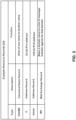
- the canonical name (CNAME) resource record creates an alias (synony mous name) for the specified DNS domain name.
- the CNAME records can hide implementation details of the network from clients that connect with it. For example, suppose we want to put an FTP (file transfer protocol) server named "ftpl.example.com'' on our domain "example.com” and suppose we know that we will move the FTP server to another computer named ftp2 in the future, but we do not want the users of our domain to know about this change.
- FTP file transfer protocol
- the "IN" attribute indicates a network protocol used to locate and connect to computers on the network. Transmission Control Protocol/Internet Protocol or TCP/IP is commonly used for this purpose.
- the second example of resource records in table 210 is an address record or "A" record.
- the A resource record maps the DNS domain name to a 32-bit IPv4 IP address.
- the following "A" resource record maps the domain name of the server to its IP address: example.com IN A 172.16.27.1
- the third example of resource records in the table 210 is an "AAAA" resource record. This is an address record that maps a host to its 128-bit IPv6 address.
- the fourth example of resource records in table 210 is a mail exchange (MX) resource record.
- the MX resource record specifies a mail exchange server for a DNS domain name.
- a mail exchange server is a host that will either process or forward mail for the DNS domain name. Processing the mail means either delivering it to the addressee or passing it to a different type of mail transport. Forwarding the mail means sending it to its final destination server, sending it using Simple Mail Transfer Protocol (SMTP) to another mail exchange server that is closer to the final destination, or queuing it for a specified amount of time.
- SMTP Simple Mail Transfer Protocol
- the first three fields in the above MX resource record example identify the DNS domain name (example.com), class (IN) and type (MX).
- the last field is the address of the mail exchange server associated with the DNS domain.
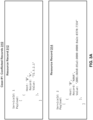
- FIG. 3A presents an example 310 of conflict between a requested internet service and package of internet services associated with a domain.
- a domain “example.com” that has one or more internet services in a package of services associated with it.
- the domain has resource records corresponding to these services associated with it.
- An example resource record 312, is shown in FIG. 3A .
- the resource record 312 is related to service with a service identifier "1".
- Three attributes of the resource record 312 are shown for illustration purposes in the payload portion. The attributes indicate that the name of the host computer is "@" which is also referred to as root host.
- the record type is "A” which is 32-bit IPv4 address of the host.
- the technology disclosed compares the attributes of resource records 312 and 314 and determines that conflict exists between "A" and "AAAA” resource records as both records are attempting to set two different values for the same host "@".
- the conflict detector determines that if requested internet service is connected to the domain and resource record 314 is associated with the domain then existing internet service with a resource record 312 will not be available for use with the domain. As a result, the clients can experience a disruption of services provided by the domain.
- the technology disclosed can present one of the conflict resolution options to the client or automatically apply one of the conflict resolution options.
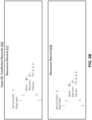
- FIG. 3B illustrates another example of conflicting records.
- the resource record 319 is also an "A" type resource record.
- a conflict is detected between a new service and an existing service due to the same type ("A") of resource records associated with the two services.
- the resource record 319 is attempting to set a new value for "A" type record for the host thus causing the conflict.
- the technology disclosed will detect the conflict and automatically resolve the conflict or present resolution options to the domain administrator or owner.
- FIG. 3C illustrates an example 320 of non-conflicting records of different types.
- the existing resource record 322 includes an "A" type resource record for a subdomain "blog.example.com” of the "exiniple.coin” domain.
- the requested internet service sets a resource record 324.
- the resource record 324 is an "AAAA” type record however, it sets the value for the root ("example.com”) and not the subdomain "blog.example.com”.
- the conflict detection logic determines that the two resource records 322 and 324 are assigned to different domains therefore after integration of the requested internet service both internet services will be available. Thus, no conflict is detected, and the domain administrator is allowed to connect the requested internet service with the domain.
- FIG. 3D presents another example 330 of non-conflicting resource records.
- the existing resource record 332 associated with the domain "example.com” is of record type "A".
- the administrator of the domain requests a new mail service for the domain.
- the requested internet service sets a resource record of type "MX”.
- the "A” record sets a 32-bit IPv4 address for the host.
- the "MX” record sets a value of the mail exchange server associated with the domain.
- Both resource records are associated to the root host ("example.com”). However, the two resource records are related to different types of internet services and have no conflict between them.
- the conflict detection logic determines that there is no conflict between the existing resource record 332 and the resource record 334 for the requested internet service.
- the technology disclosed can also resolve partial conflicts between requested internet service and the package of internet services.
- complex internet services can be associated with a domain.
- Such complex internet services can comprise of more than one services.
- an internet service can include email service, website builder plugins, calendar features, contact management features, disk storage, etc.
- Each one of the constituent services in the complex internet service can set multiple resource records associated with the domain.
- a requested internet service may conflict with one or few of the services in the group of services in the complex internet service associated with the domain. Manual resolution of such conflicts can result in removal of the entire group of internet services even if the conflict of the requested service is with one of the services in the group of services.
- the technology disclosed can apply partial conflict detection to detect the service in the group of internet services with which the requested internet service conflicts.
- the technology disclosed can assign product or service identifiers to services in the group of services. These identifiers can identify a product type or service type for the internet service in the group of internet services.
- the technology disclosed includes logic to resolve the conflict by removing or disabling internet services in the group belonging to a particular product type or service type when at least one attribute of at least one service in that product ty pe or service type conflicts with at least one attribute of the requested internet service. Services belonging to non-conflicting product type or service type are not removed from the package of services associated with the domain.
- FIG. 4 presents an example of partial conflict detection and resolution.
- a table 401 lists some of the existing resource records associated with the domain. The table shows a resource record type for each entry in the table, the host name, a value for the resource record, a connection identifier and a group identifier (groupID).
- groupID is the product type or service type as described above and identifies the product group or service group with which the record is associated.
- the first resource record in the table 401 is related to the "web" product type.
- the second and third resource records are related to "email" service and the fourth resource record is of "system” service type
- a table 411 shows resource records for the requested internet service.
- the requested service is an email service as indicated by the record ty pe field '*MX" in the first column.
- the technology disclosed includes logic to determine a service or product type of the requested internet service by matching the new resource record in table 411 with existing resource records in table 401. The logic results in match of the new resource record with the third resource record in the table 401 due to match of type field values "MX" in both records.
- the conflict detection logic then identifies the service type or product type of the conflicting record by querying the groupID field. The query result indicates that the conflicting service type is an "email" service.
- the conflict resolution logic therefore, removes the resource records belonging to the email service type in table 401 and includes the resource record for the requested internet service.
- the resulting table 421 lists the updated resource records after inclusion of requested internet service and removal of the conflicting email service in the package of services associated with the domain.
- the logic can be implemented using processors programmed using computer programs stored in memory accessible to the digital collaborative workspace system and executable by the processors, by dedicated logic hardware, including field programmable integrated circuits, and by combinations of dedicated logic hardware and computer programs.
- processors programmed using computer programs stored in memory accessible to the digital collaborative workspace system and executable by the processors, by dedicated logic hardware, including field programmable integrated circuits, and by combinations of dedicated logic hardware and computer programs.
- many of the steps can be combined, performed in parallel or performed in a different sequence without affecting the functions achieved.
- a re-arrangement of steps will achieve the same results only if certain other changes are made as well.
- a re-arrangement of steps will achieve the same results only if certain conditions are satisfied.
- the flow chart herein shows only steps that are pertinent to an understanding of the invention, and it will be understood that numerous additional steps for accomplishing other functions can be performed before, after and between those shown.
- FIG. 5 presents conflict detection process in flowchart 500.
- the process starts at a step 501.
- the system processes a request to add a new internet service to a domain.
- the system applies conflict detector 150 to detect conflict between the requested internet service and the package of internet services associated with the domain.
- the conflict detection logic is implemented in conflict resolution layer.
- the system searches DNS databases for DNS records. If the DNS domain is maintained by an external server, the system includes logic to search DNS servers for external domains. As a result of this search the system receives resource records associated with the domain.
- the process includes comparing the DNS resource records for the package of internet services associated with the domain with the resource records of the requested internet service.
- the process includes determining whether the conflicting internet service in the package of internet services belongs to a service type or product type group. If the conflicted service in the package of services belongs of a service type or product type group (step 530 ), the process continues at a step 535 to perform partial conflict resolution 535. Otherwise, the process continues at a step 540 to perform conflict resolution. The process ends at a step 550.
- FIG. 6 presents conflict resolution process flowchart.
- the process starts at a step 601.
- the process determines if there exists an alternate internet service in the package of internet services that can be used in place of the requested internet service. If a service exists (step 610 ) in the package of internet services, then the process continues at a step 615 and selects alternate internet service in the package of services.
- the conflict resolution logic in this resolution option does not add the requested internet service to the package of internet services.
- the process requests the domain administrator to select the requested service and presents the service that will be disconnected from the package of internet services to resolve the conflict with the requested service (step 625 ).
- the process continues to step 640 in which the system applies the selected resolution option and updates the resource records of the package of internet services associated with the domain.
- the system can also present a third resolution option by invoking a custom conflict resolution widget or application (step 630 ).
- the process gets input from the domain administrator to apply the selected resolution option and update DNS records to the package of internet services at a step 640.
- the custom resolution options include selection of a subdomain, increasing the capacity of the shared hosting, etc.
- the process continues at a step 640 in which the system applies the selected resolution option and updates the resource records of the package of internet services associated with the domain.
- the custom conflict resolution logic can include logic to determine if the conflict is on the domain side or the host side and propose respective conflict resolution options. For example, if the conflict is detected on the domain side, the system can propose using a subdomain to resolve the conflict. For “example.com” domain, examples of subdomains can be "blog.example.com”. “shop.example.com”, “site.example.com”, etc. The administrator can select a subdomain for associating the conflicting requested internet service. This can resolve the conflict.
- the system can propose two options for resolving the conflict.
- the administrator can update the shared hosting plan to increase its capacity.
- the administrator can also disconnect one of the already connected domains with the host and connect the new domain with the host.
- Custom resolution can also propose custom conflict resolutions for specific internet services. The process ends at a step 645.
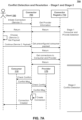
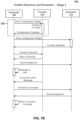
- FIGs. 7A , 7B , and 7C present sequence diagrams for conflict detection and resolution processes.
- FIG. 7A illustrates interaction amongst five actors: a client 190. a connector 705. a connector registry 710. a consumer 110, and a provider 170.
- a client 190 can be an administrator or owner of a DNS domain.
- the client can interact with the actors using a computing device such as desktop or laptop computers, person digital assistants or a mobile computing device, etc.
- the connector 705 is a component of the system that is responsible for creating connection and handling their lifecycle such as disconnection, expiration, etc.
- the connection registry 710 is a persistent storage (such as database) that stores information about connections and their states.
- the consumer 110 can be a server or a host that acts as a product or service consumer in the application interaction flow.
- the provider 170 can be a domain that acts as a product or service provider in the application interaction flow.
- the DNS domain is an example of the provider 170.
- An application interaction service (not shown in FIG. 7A ) can be responsible for message flow amongst different actors presented above. It is the responsibility of this service to manage internet service connection.
- the overall message sequence flow is divided into three stages. Stages 1 and 2 are shown in FIG. 7A . Stage 1 includes selection of consumer and provider. Stage 2 is related to conflict detection.
- the message communication in stage 1 includes three actors: client 190, connector 705 and connector registry 710.
- the process starts with an "initiate connection" message from client 190 to connector 705. This is followed by "get provider information” message from connector 705 to connector registry 710.
- the connection registry returns a message with provider information which is forwarded by connector 705 to client 190.
- the messages listed above identify the first internet service (service 1).
- the client 190 then chooses a second internet service (service 2) and receives the payload.
- the payload can include attributes and values of resource records for an internet service or a product as shown above in FIGs. 3A to 4 .
- the client 190 then sends a "continue" message to connector 705 with information about service 2 and can include payload with this message.
- the connector 705 sends a message to connector registry 710 to "get preconfigured consumer payload”.
- the connector registry 710 sends a return message to the connector.
- the connector 705 sends a message to connector registry 710 to "get connections to consumer and provider”. These connections are also referred to as "hooks”.
- the connection registry 710 sends this information to connector 705 to complete the stage 1 which is also referred to as discovery stage. This stage determines which internet services can be connected to the domain.
- the stage 2 of the process includes conflict detection and resolution.
- the bottom portion of the message sequence diagram 700 presents message sequence flow for conflict detection and resolution.
- client 190 client 190. consumer 110. connector 705. and provider 170.
- the connector 705 sends a "check conflict" message to consumer 110.
- the message can include provider and payload information.
- the consumer 110 sends a "conflict message” to the connector 705.
- the conflict message can indicate if there is a conflict between the selected internet service and package of services associated with the domain.
- the connector 705 then creates a new connection in the database and sends a confirmation message to the client 190 after the connection is created.
- FIG. 7B is a message sequence diagram 750 that presents flow of messages in stage 3 of the conflict detection and resolution process.
- the system creates a connection between a consumer and provider in an asynchronous manner.
- the messages shown in a box 752 are shown in further detail in FIG. 7C .
- These messages are related to custom resolution of conflicts using a configuration widget.
- the provider 170 configures the provider.
- a message "configuration complete" is sent from provider 170 to connector 705.
- the connector 705 sends a show configuration widget message to consumer 110. Following this, the consumer 110 sends a "connect” message to connector 705 that includes payload. The connector 705 then sends a "connect” message to provider 170 with payload. The provider 170 sends a "return” message to the connector 705. Following this, the connector sends an "acknowledgement” message to consumer 110. The connector 705 then displays a "message” (such as "thank you") to the client 190. Following this, the provider 170 sends a "connection done” message to connector 705. The connector 705 sends a "connection complete” message to consumer 110. The consumer 110 sends an "acknowledgement” message to connector 705. Finally, the connector 705 marks the connection as complete.
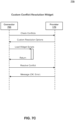
- FIG. 7C presents a message sequence diagram for custom conflict resolution widget.
- the process starts when connector 705 sends a "check conflicts" message to provider 170.
- the message can include information about the requested internet services and the package of internet services associated with the domain.
- the provider 170 sends a "custom resolutions options” message to connector 705.
- the connector 705 "loads widget scripts", thus initiating the custom conflict resolution widget.
- the connector 705 then sends a "resolve conflict” message to the provider 170.
- the provider 170 sends completion message indicating success (OK) or failure (error) of the custom conflict resolution to the connector 705.
- the technology disclosed can be practiced as a system, method, or article of manufacture.
- One or more features of an implementation can be combined with the base implementation. Implementations that are not mutually exclusive are taught to be combinable.
- One or more features of an implementation can be combined with other implementations. This disclosure periodically reminds the user of these options. Omission from some implementations of recitations that repeat these options should not be taken as limiting the combinations taught in the preceding sections - these recitations are hereby incorporated forward by reference into each of the following implementations.
- a method implementation of the technology disclosed includes detecting conflicts between a requested internet service and a package of internet services.
- the method includes receiving a request from a client to add a requested internet service to a package of internet services.
- the method includes searching a domain name system (DNS) database for DNS records or a DNS server for external domains having attribute fields indicating attributes of the internet services in the package of internet services.
- DNS domain name system
- the method includes comparing attributes of the requested internet service to attribute fields for the internet services in the package of internet services using a set of conflict definitions to identify attributes of the internet service requested, conflicting with attributes of the package of internet services.
- the method invokes a resolution process whenever conflicting attributes are identified.
- Resolving the conflict further includes at least initiating a request for a selection from the following three resolution options: (1) the method includes removing a conflicting service from the package internet services and adding the internet service requested. (2) the method includes preserving the internet services in the package and declining the request to add the internet service, and (3) the method includes using a subdomain instead of a domain included in the request from the client. Resolving the conflict further includes at least initiating a custom resolution widget application The method includes receiving a selection and triggering a further process to implement the selection requested.
- each internet service in the package can be assigned a group based on service type or product type. Resolving the conflict can further include removing internet services in the group when at least one attribute of at least one internet service in the group conflicts with at least one attribute of the requested internet service.
- the group of services may be identified by a service type identifier or a product type identifier. In some implementations, all internet services in the group are removed when one of the internet services in the group is in conflict.
- one or more internet services can be assigned to a dependent group (such as systems group) of internet services.
- the internet services assigned to the dependent group can exist in the package of internet services when internet services assigned to at least one other group are present in the package of internet services.
- the method includes removing all internet services in the dependent group from the package when conflict resolution process results in removal of all other internet services from the package of internet service.
- the method includes invoking a lookup process to locate domain names for the internet services in the package whenever no internet services are found in the database.
- Some method implementations include determining that a payload of the request indicates the request is for a consumer or a provider. Whenever the request is for a consumer, at least initiating a configuration widget appropnate to the consumer and otherwise at least initiating a configuration widget appropriate to the provider.
- An example internet service includes a tool for designing a website logo.
- conflicting attributes are selected from a set consisting of: an IPv4 address of a domain host, an IPv6 address of a domain host a canonical name enabling one domain name to map to another domain name, an email server, a name server record for a domain host, and a record containing information for use outside of a DNS server. It is understood that the technology disclosed can detect conflicts for other types of resource records not listed in the above set of examples.
- implementations of the method described in this section can include a non-transitory computer readable storage medium storing instructions executable by a processor to perform any of the methods described above.
- implementations of the method described in this section can include a system including memory and one or more processors operable to execute instructions, stored in the memory, to perform any of the methods described above.
- a method not falling within the scope of the claims includes resolving by an applications interaction server, a conflict between a requested internet service (sent to a domain), requested by an internet service requesting server (also referred to as host), and a package of internet services.
- the method includes, sending to an internet service requesting server, a conflict check result message indicating a presence of a conflict between a requested internet service requested by the requesting server and a package of internet services.
- the method includes receiving from the internet service requesting server a response including a selected from (i) an alternate internet service in the package of internet services to substitute for the requested internet service: (ii) a request to replace an existing connection with a service in the package of internet services with the requested internet service; and (iii) a request to initiate a custom resolution application pointed on by an address or pointer.
- the method includes responsively at least initiating, whenever an alternate internet service has been requested, substituting the alternate internet service in the package of internet service for the requested internet service. Otherwise, whenever a request to replace an existing connection with a service in the package of internet services with the requested internet service, disconnecting the existing connection and connecting the requested internet service and including the connected internet service in the package of internet services. Otherwise, whenever a request to initiate a custom resolution, at least initiating invoking the custom resolution application using the address or pointer.
- the request to initiate a custom resolution application further includes one or more resolution options.
- the method further includes passing one or more resolution options to the custom resolution application.
- One or more resolution options initiated by the custom resolution application further include: detecting whether a conflict type for the conflict is a domain-side conflict or a host-side conflict wherein domain-side conflicts include a resource record conflict and host-side conflicts include a no-capacity conflict, selecting a custom resolution based upon the conflict type detected, and providing the custom resolution to a client.
- the domain-side conflict further includes a private email requested internet service conflicting with a cloud-based email internet service in the package of internet services.
- the host-side conflict further includes the host not having enough domain slots to connect the requested internet service to the package of internet service.
- the conflict detected includes a resource record conflict.
- the method further includes using a subdomain instead of a selected one by receiving instructions provided by the internet service requesting server using API.
- the conflict detected can include not enough domain slots for additional domains in shared hosting.
- the method further includes initiating at least one of updating a shared hosting plan to increase capacity; and disconnecting at least one domain already connected and replacing by connecting a new one as requested.
- the method includes requesting the internet service requesting server respond with a selection selected from the updating a shared hosting plan to increase capacity; and disconnecting at least one domain already connected and replacing by connecting a new one as requested.
- implementations of the method described in this section can include a non-transitory computer readable storage medium storing instructions executable by a processor to perform any of the methods described above.
- implementations of the method described in this section can include a system including memory and one or more processors operable to execute instructions, stored in the memory, to perform any of the methods described above.
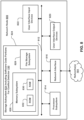
- FIG. 8 is a simplified block diagram of a computer system 800 that can be used to implement conflict detection and resolution logic.
- Computer system 800 includes at least one central processing unit (CPU) as part of the processor subsystem 814 that communicates with a number of peripheral devices via bus subsystem 812. These peripheral devices can include a storage subsystem 824 including, for example, memory devices 826 and a file storage subsystem 828. user interface input devices 822. user interface output devices 820. and a network interface subsystem 816 The input and output devices allow user interaction with computer system 800.
- Network interface subsystem 816 provides an interface to outside networks, including an interface to corresponding interface devices in other computer systems.
- the conflict detector 150 and resolver 160 of FIG . 1 is communicably linked to the storage subsystem 824 and the user interface input devices 822.
- User interface input devices 822 can include a keyboard; pointing devices such as a mouse, trackball, touchpad, or graphics tablet; a scanner; a touch screen incorporated into the display; audio input devices such as voice recognition systems and microphones; and other types of input devices.
- pointing devices such as a mouse, trackball, touchpad, or graphics tablet
- audio input devices such as voice recognition systems and microphones
- use of the term "input device” is intended to include all possible types of devices and ways to input information into computer system 800.
- User interface output devices 820 can include a display subsystem, a printer, a fax machine, or non-visual displays such as audio output devices.
- the display subsystem can include an LED display, a cathode ray tube (CRT), a flat-panel device such as a liquid crystal display (LCD), a projection device, or some other mechanism for creating a visible image.
- the display subsystem can also provide a non-visual display such as audio output devices.
- output device is intended to include all possible types of devices and ways to output information from computer system 800 to the user or to another machine or computer system.
- Storage subsystem 824 stores programming and data constructs that provide the functionality of some or all of the modules and methods described herein.
- the computer system can include graphics processing units (GPUs) or field-programmable gate arrays (FPGAs).
- Memory subsystem 826 used in the storage subsystem 800 can include a number of memories including a main random-access memory (RAM) 830 for storage of instructions and data during program execution and a read only memory (ROM) 832 in which fixed instructions are stored.
- a file storage subsystem 828 can provide persistent storage for program and data files, and can include a hard disk drive, a floppy disk drive along with associated removable media, a CD-ROM drive, an optical drive, or removable media cartridges.
- the modules implementing the functionality of certain implementations can be stored by file storage subsystem 828 in the storage subsystem 824, or in other machines accessible by the processor.
- Bus subsystem 812 provides a mechanism for letting the various components and subsystems of computer system 800 communicate with each other as intended. Although bus subsystem 812 is shown schematically as a single bus, alternative implementations of the bus subsystem can use multiple busses.
- Computer system 800 itself can be of varying types including a personal computer, a portable computer, a workstation, a computer terminal, a network computer, a television, a mainframe, a server farm, a widely distributed set of loosely networked computers, or any other data processing system or user device. Due to the ever-changing nature of computers and networks, the description of computer system 800 depicted in FIG. 8 is intended only as a specific example for purposes of illustrating the preferred embodiments of the present disclosed technology. Many other configurations of computer system 800 are possible having more or less components than the computer system depicted in FIG. 8 .
- the technology disclosed can be implemented in the context of any computer-implemented system including a database system, a multi-tenant environment, or a relational database implementation like an Oracle TM compatible database implementation, an IBM DB2 Enterprise Server TM compatible relational database implementation, a MySQL TM or PostgreSQL TM compatible relational database implementation or a Microsoft SQL Server TM compatible relational database implementation or a NoSQL TM non-relational database implementation such as a Vampire TM compatible non-relational database implementation, an Apache Cassandra TM compatible non-relational database implementation, a BigTable TM compatible non-relational database implementation or an HBase TM or DynamoDB TM compatible non-relational database implementation.
- a relational database implementation like an Oracle TM compatible database implementation, an IBM DB2 Enterprise Server TM compatible relational database implementation, a MySQL TM or PostgreSQL TM compatible relational database implementation or a Microsoft SQL Server TM compatible relational database implementation or a NoSQL TM
- the technology disclosed can be implemented using different programming models like MapReduce TM , bulk synchronous programming. MPI primitives, etc. or different scalable batch and stream management systems like Apache Storm TM , Apache Spark TM , Apache Kafka TM . Apache Flink TM , Truviso TM , Amazon Elasticsearch Service TM , Amazon Web Services TM (AWS). IBM Info-Sphere TM , Borealis TM . and Yahoo! S4 TM .
- a computer-readable storage medium which may be any device or medium that can store code and/or data for use by a computer system.
- ASICs application-specific integrated circuits
- FPGAs field-programmable gate arrays
- CDs compact discs
- DVDs digital versatile discs or digital video discs
Landscapes
- Engineering & Computer Science (AREA)
- Computer Networks & Wireless Communication (AREA)
- Signal Processing (AREA)
- Data Exchanges In Wide-Area Networks (AREA)
Claims (9)
- Procédé de détection de conflits entre un service internet demandé et un ensemble de services internet, le procédé comprenant les étapes suivantes :recevoir une demande d'un client pour ajouter un service internet demandé à un ensemble de services internet ;rechercher dans une base de données du système de noms de domaine, DNS, des enregistrements DNS, ou dans un serveur DNS, des domaines externes ayant des champs d'attributs indiquant les attributs des services internet dans l'ensemble de services internet ;comparer les attributs du service internet demandé aux champs d'attributs des services internet de l'ensemble de services internet à l'aide d'un ensemble de définitions de conflits afin d'identifier les attributs du service internet demandé qui sont en conflit avec les attributs de l'ensemble de services internet ; etlorsque des attributs conflictuels sont identifiés, invoquer un processus de résolution pour résoudre le conflit, la résolution du conflit comprenant au moins les éléments suivants :
initier une demande pour une sélection parmi les services suivants :la suppression d'un service conflictuel de l'ensemble de services internet et l'ajout du service internet demandé, la conservation des services internet dans l'ensemble et le refus de la demande d'ajout du service internet, etl'ajout du service internet demandé à un sous-domaine d'un domaine inclus dans la demande du client au lieu du domaine inclus dans la demande, etla réception d'une sélection et le déclenchement d'un processus supplémentaire pour mettre en œuvre la sélection demandée. - Procédé selon la revendication 1, dans lequel la résolution du conflit comprend en outre au moins le déclenchement d'une application de type widget de résolution personnalisée.
- Procédé selon la revendication 1, comprenant en outre, chaque fois qu'aucun service Internet n'est trouvé dans la base de données, d'invoquer un processus de recherche pour localiser les noms de domaine pour les services Internet dans l'ensemble de services.
- Procédé selon la revendication 1, comprenant en outre les étapes suivantes :déterminer qu'une charge utile de la demande indique que la demande est destinée à un consommateur ou à un fournisseur ; etlorsque la demande est destinée à un consommateur, au moins lancer un widget de configuration adapté au consommateur et, sinon, au moins lancer un widget de configuration adapté au fournisseur.
- Procédé selon la revendication 1, dans lequel au moins un service Internet comprend un outil de conception d'un site Web.
- Procédé selon la revendication 1, dans lequel les attributs conflictuels sont choisis dans un ensemble comprenant :
une adresse IPv4 d'un hôte de domaine :
une adresse IPv6 d'un hôte de domaine :
un nom canonique permettant à un nom de domaine de correspondre à un autre nom de domaine :
un serveur de courrier électronique :un enregistrement de serveur de noms pour un hôte de domaine ; etun enregistrement contenant des informations destinées à être utilisées en dehors d'un serveur DNS. - Système comprenant un ou plusieurs processeurs couplés à une mémoire, la mémoire étant chargée d'instructions informatiques permettant de détecter les conflits entre un service Internet demandé et un ensemble de services Internet, les instructions, lorsqu'elles sont exécutées sur les processeurs, mettant en œuvre des actions comprenant les étapes suivantes :recevoir une demande d'un client pour ajouter un service internet demandé à un ensemble de services internet ;rechercher dans une base de données du système de noms de domaine, DNS, des enregistrements DNS, ou dans un serveur DNS, des domaines externes ayant des champs d'attributs indiquant les attributs des services internet dans l'ensemble de services internet ;comparer les attributs du service internet demandé aux champs d'attributs des services internet de l'ensemble de services internet à l'aide d'un ensemble de définitions de conflits afin d'identifier les attributs du service internet demandé qui sont en conflit avec les attributs de l'ensemble de services internet ; etlorsque des attributs conflictuels sont identifiés, invoquer un processus de résolution pour résoudre le conflit, la résolution du conflit comprenant au moins les éléments suivants :
initier une demande pour une sélection parmi les services suivants :la suppression d'un service conflictuel de l'ensemble de services internet et l'ajout du service internet demandé, la conservation des services internet et le refus de la demande d'ajout du service internet, etl'ajout du service internet demandé à un sous-domaine d'un domaine inclus dans la demande du client au lieu du domaine inclus dans la demande, etla réception d'une sélection et le déclenchement d'un processus supplémentaire pour mettre en œuvre la sélection demandée. - Support de stockage non transitoire, lisible par ordinateur, comprenant des instructions de programme d'ordinateur pour détecter les conflits entre un service Internet demandé et un ensemble de services Internet, les instructions, lorsqu'elles sont exécutées sur un processeur, mettant en œuvre un procédé comprenant les étapes suivantes :recevoir une demande d'un client pour ajouter un service internet demandé à un ensemble de services internet ;rechercher dans une base de données du système de noms de domaine, DNS, des enregistrements DNS, ou dans un serveur DNS, des domaines externes ayant des champs d'attributs indiquant les attributs des services internet dans l'ensemble de services internet ;comparer les attributs du service internet demandé aux champs d'attributs des services internet de l'ensemble de services internet à l'aide d'un ensemble de définitions de conflits afin d'identifier les attributs du service internet demandé qui sont en conflit avec les attributs de l'ensemble de services internet ; etlorsque des attributs conflictuels sont identifiés, invoquer un processus de résolution pour résoudre le conflit, la résolution du conflit comprenant au moins les éléments suivants :
initier une demande pour une sélection parmi les services suivants :la suppression d'un service conflictuel de l'ensemble de services internet et l'ajout du service internet demandé, la conservation des services internet dans l'ensemble et le refus de la demande d'ajout du service internet, etl'ajout du service internet demandé à un sous-domaine d'un domaine dans la demande du client au lieu du domaine inclus dans la demande, etla réception d'une sélection et le déclenchement d'un processus supplémentaire pour mettre en œuvre la sélection demandée. - Support de stockage non transitoire, lisible par ordinateur, de la revendication 8, dans lequel le conflit côté domaine comprend en outre un service internet demandé de messagerie privée en conflit avec un service internet de messagerie basé sur le cloud dans l'ensemble de services internet.
Applications Claiming Priority (3)
| Application Number | Priority Date | Filing Date | Title |
|---|---|---|---|
| US16/823,265 US11038839B1 (en) | 2020-03-18 | 2020-03-18 | Systems and methods for detecting conflicts in internet services |
| US16/823,267 US11038840B1 (en) | 2020-03-18 | 2020-03-18 | Systems and methods for resolving conflicts in internet services |
| PCT/US2021/022866 WO2021188746A1 (fr) | 2020-03-18 | 2021-03-18 | Systèmes et procédés de détection et de résolution de conflits dans des services internet |
Publications (2)
| Publication Number | Publication Date |
|---|---|
| EP4122167A1 EP4122167A1 (fr) | 2023-01-25 |
| EP4122167B1 true EP4122167B1 (fr) | 2025-05-07 |
Family
ID=75478210
Family Applications (1)
| Application Number | Title | Priority Date | Filing Date |
|---|---|---|---|
| EP21718321.9A Active EP4122167B1 (fr) | 2020-03-18 | 2021-03-18 | Systèmes et procédés pour detécter et résoudre des conflits entre des services internet |
Country Status (2)
| Country | Link |
|---|---|
| EP (1) | EP4122167B1 (fr) |
| WO (1) | WO2021188746A1 (fr) |
Families Citing this family (3)
| Publication number | Priority date | Publication date | Assignee | Title |
|---|---|---|---|---|
| US11038839B1 (en) | 2020-03-18 | 2021-06-15 | Namecheap, Inc. | Systems and methods for detecting conflicts in internet services |
| US11038840B1 (en) | 2020-03-18 | 2021-06-15 | Namecheap, Inc. | Systems and methods for resolving conflicts in internet services |
| CN116873003B (zh) * | 2023-06-09 | 2026-01-16 | 通号城市轨道交通技术有限公司 | 车载子系统命令处理方法、装置、设备及存储介质 |
Family Cites Families (4)
| Publication number | Priority date | Publication date | Assignee | Title |
|---|---|---|---|---|
| WO2009047784A2 (fr) * | 2007-06-07 | 2009-04-16 | Bhavin Turakhia | Procédé et système de fourniture d'un service prédéterminé à un titulaire de domaine par un enregistrement de tld |
| US8800011B2 (en) * | 2012-05-31 | 2014-08-05 | Rackspace Us, Inc. | Validating pointer records in a domain name system (DNS) service |
| US9680790B2 (en) * | 2013-08-29 | 2017-06-13 | Mastercard International Incorporated | Systems and methods for resolving data inconsistencies between domain name systems |
| US10659423B2 (en) * | 2014-12-19 | 2020-05-19 | Go Daddy Operating Company, LLC | System and method for modifying a domain name system template |
-
2021
- 2021-03-18 EP EP21718321.9A patent/EP4122167B1/fr active Active
- 2021-03-18 WO PCT/US2021/022866 patent/WO2021188746A1/fr not_active Ceased
Also Published As
| Publication number | Publication date |
|---|---|
| WO2021188746A1 (fr) | 2021-09-23 |
| EP4122167A1 (fr) | 2023-01-25 |
Similar Documents
| Publication | Publication Date | Title |
|---|---|---|
| US12323383B2 (en) | Systems and methods for resolving conflicts in internet services | |
| US12267292B2 (en) | Systems and methods for detecting conflicts in internet services | |
| CN108370391B (zh) | 用于虚拟网络的共享多租户域名系统(dns)服务器 | |
| US10243919B1 (en) | Rule-based automation of DNS service discovery | |
| CN107534671B (zh) | 分布式服务实体和关联的聚合与联合 | |
| JP5555251B2 (ja) | 代替メールボックスの自動発見 | |
| US10931630B2 (en) | System and method for connecting using aliases | |
| US11303606B1 (en) | Hashing name resolution requests according to an identified routing policy | |
| US8990227B2 (en) | Globally unique identification of directory server changelog records | |
| US10972564B2 (en) | System and method for automating actions in distributed computing | |
| US20240121210A1 (en) | Systems and methods for digitally unboxing internet services | |
| WO2021188746A1 (fr) | Systèmes et procédés de détection et de résolution de conflits dans des services internet | |
| US20170163749A1 (en) | Information exchange method and server | |
| CN100390776C (zh) | 集群计算机系统中的组访问专用化的方法、设备和系统 | |
| US10541864B1 (en) | System and method for connection efficiency | |
| US9826110B2 (en) | Address book transfer over a network between printers | |
| US20240015135A1 (en) | Domain management and synchronization system | |
| US20240028346A1 (en) | Linking kubernetes resources with underlying cloud infrastructure | |
| WO2025137184A1 (fr) | Systèmes et procédés de déballage numérique de services internet | |
| US20190294478A1 (en) | Method for validating validity of group member of virtual resource | |
| US8935369B2 (en) | Information technology for exchanging structural organizational information | |
| CN116506282A (zh) | 一种实现openstack nat会话日志的方法及系统 | |
| US10387189B2 (en) | Discovering and identifying resource dependencies | |
| CN116192952A (zh) | 基于域名路由的访问方法、装置、计算机设备和存储介质 |
Legal Events
| Date | Code | Title | Description |
|---|---|---|---|
| STAA | Information on the status of an ep patent application or granted ep patent |
Free format text: STATUS: UNKNOWN |
|
| STAA | Information on the status of an ep patent application or granted ep patent |
Free format text: STATUS: THE INTERNATIONAL PUBLICATION HAS BEEN MADE |
|
| PUAI | Public reference made under article 153(3) epc to a published international application that has entered the european phase |
Free format text: ORIGINAL CODE: 0009012 |
|
| STAA | Information on the status of an ep patent application or granted ep patent |
Free format text: STATUS: REQUEST FOR EXAMINATION WAS MADE |
|
| 17P | Request for examination filed |
Effective date: 20221011 |
|
| AK | Designated contracting states |
Kind code of ref document: A1 Designated state(s): AL AT BE BG CH CY CZ DE DK EE ES FI FR GB GR HR HU IE IS IT LI LT LU LV MC MK MT NL NO PL PT RO RS SE SI SK SM TR |
|
| DAV | Request for validation of the european patent (deleted) | ||
| DAX | Request for extension of the european patent (deleted) | ||
| STAA | Information on the status of an ep patent application or granted ep patent |
Free format text: STATUS: EXAMINATION IS IN PROGRESS |
|
| 17Q | First examination report despatched |
Effective date: 20230913 |
|
| REG | Reference to a national code |
Ref country code: DE Ref legal event code: R079 Free format text: PREVIOUS MAIN CLASS: H04L0012240000 Ipc: H04L0061451100 Ref document number: 602021030429 Country of ref document: DE |
|
| GRAP | Despatch of communication of intention to grant a patent |
Free format text: ORIGINAL CODE: EPIDOSNIGR1 |
|
| STAA | Information on the status of an ep patent application or granted ep patent |
Free format text: STATUS: GRANT OF PATENT IS INTENDED |
|
| RIC1 | Information provided on ipc code assigned before grant |
Ipc: H04L 61/4511 20220101AFI20241015BHEP |
|
| INTG | Intention to grant announced |
Effective date: 20241031 |
|
| GRAS | Grant fee paid |
Free format text: ORIGINAL CODE: EPIDOSNIGR3 |
|
| P01 | Opt-out of the competence of the unified patent court (upc) registered |
Free format text: CASE NUMBER: APP_6174/2025 Effective date: 20250205 |
|
| GRAA | (expected) grant |
Free format text: ORIGINAL CODE: 0009210 |
|
| STAA | Information on the status of an ep patent application or granted ep patent |
Free format text: STATUS: THE PATENT HAS BEEN GRANTED |
|
| AK | Designated contracting states |
Kind code of ref document: B1 Designated state(s): AL AT BE BG CH CY CZ DE DK EE ES FI FR GB GR HR HU IE IS IT LI LT LU LV MC MK MT NL NO PL PT RO RS SE SI SK SM TR |
|
| REG | Reference to a national code |
Ref country code: GB Ref legal event code: FG4D |
|
| REG | Reference to a national code |
Ref country code: CH Ref legal event code: EP |
|
| REG | Reference to a national code |
Ref country code: DE Ref legal event code: R096 Ref document number: 602021030429 Country of ref document: DE |
|
| REG | Reference to a national code |
Ref country code: IE Ref legal event code: FG4D |
|
| REG | Reference to a national code |
Ref country code: NL Ref legal event code: MP Effective date: 20250507 |
|
| PG25 | Lapsed in a contracting state [announced via postgrant information from national office to epo] |
Ref country code: PT Free format text: LAPSE BECAUSE OF FAILURE TO SUBMIT A TRANSLATION OF THE DESCRIPTION OR TO PAY THE FEE WITHIN THE PRESCRIBED TIME-LIMIT Effective date: 20250908 Ref country code: ES Free format text: LAPSE BECAUSE OF FAILURE TO SUBMIT A TRANSLATION OF THE DESCRIPTION OR TO PAY THE FEE WITHIN THE PRESCRIBED TIME-LIMIT Effective date: 20250507 Ref country code: FI Free format text: LAPSE BECAUSE OF FAILURE TO SUBMIT A TRANSLATION OF THE DESCRIPTION OR TO PAY THE FEE WITHIN THE PRESCRIBED TIME-LIMIT Effective date: 20250507 |
|
| REG | Reference to a national code |
Ref country code: LT Ref legal event code: MG9D |
|
| PG25 | Lapsed in a contracting state [announced via postgrant information from national office to epo] |
Ref country code: NO Free format text: LAPSE BECAUSE OF FAILURE TO SUBMIT A TRANSLATION OF THE DESCRIPTION OR TO PAY THE FEE WITHIN THE PRESCRIBED TIME-LIMIT Effective date: 20250807 Ref country code: GR Free format text: LAPSE BECAUSE OF FAILURE TO SUBMIT A TRANSLATION OF THE DESCRIPTION OR TO PAY THE FEE WITHIN THE PRESCRIBED TIME-LIMIT Effective date: 20250808 |
|
| PG25 | Lapsed in a contracting state [announced via postgrant information from national office to epo] |
Ref country code: NL Free format text: LAPSE BECAUSE OF FAILURE TO SUBMIT A TRANSLATION OF THE DESCRIPTION OR TO PAY THE FEE WITHIN THE PRESCRIBED TIME-LIMIT Effective date: 20250507 Ref country code: PL Free format text: LAPSE BECAUSE OF FAILURE TO SUBMIT A TRANSLATION OF THE DESCRIPTION OR TO PAY THE FEE WITHIN THE PRESCRIBED TIME-LIMIT Effective date: 20250507 |
|
| REG | Reference to a national code |
Ref country code: AT Ref legal event code: MK05 Ref document number: 1793751 Country of ref document: AT Kind code of ref document: T Effective date: 20250507 |
|
| PG25 | Lapsed in a contracting state [announced via postgrant information from national office to epo] |
Ref country code: BG Free format text: LAPSE BECAUSE OF FAILURE TO SUBMIT A TRANSLATION OF THE DESCRIPTION OR TO PAY THE FEE WITHIN THE PRESCRIBED TIME-LIMIT Effective date: 20250507 |
|
| PG25 | Lapsed in a contracting state [announced via postgrant information from national office to epo] |
Ref country code: HR Free format text: LAPSE BECAUSE OF FAILURE TO SUBMIT A TRANSLATION OF THE DESCRIPTION OR TO PAY THE FEE WITHIN THE PRESCRIBED TIME-LIMIT Effective date: 20250507 |
|
| PG25 | Lapsed in a contracting state [announced via postgrant information from national office to epo] |
Ref country code: AT Free format text: LAPSE BECAUSE OF FAILURE TO SUBMIT A TRANSLATION OF THE DESCRIPTION OR TO PAY THE FEE WITHIN THE PRESCRIBED TIME-LIMIT Effective date: 20250507 |
|
| PG25 | Lapsed in a contracting state [announced via postgrant information from national office to epo] |
Ref country code: RS Free format text: LAPSE BECAUSE OF FAILURE TO SUBMIT A TRANSLATION OF THE DESCRIPTION OR TO PAY THE FEE WITHIN THE PRESCRIBED TIME-LIMIT Effective date: 20250807 |
|
| PG25 | Lapsed in a contracting state [announced via postgrant information from national office to epo] |
Ref country code: IS Free format text: LAPSE BECAUSE OF FAILURE TO SUBMIT A TRANSLATION OF THE DESCRIPTION OR TO PAY THE FEE WITHIN THE PRESCRIBED TIME-LIMIT Effective date: 20250907 |
|
| PG25 | Lapsed in a contracting state [announced via postgrant information from national office to epo] |
Ref country code: LV Free format text: LAPSE BECAUSE OF FAILURE TO SUBMIT A TRANSLATION OF THE DESCRIPTION OR TO PAY THE FEE WITHIN THE PRESCRIBED TIME-LIMIT Effective date: 20250507 |
|
| PG25 | Lapsed in a contracting state [announced via postgrant information from national office to epo] |
Ref country code: DK Free format text: LAPSE BECAUSE OF FAILURE TO SUBMIT A TRANSLATION OF THE DESCRIPTION OR TO PAY THE FEE WITHIN THE PRESCRIBED TIME-LIMIT Effective date: 20250507 Ref country code: SM Free format text: LAPSE BECAUSE OF FAILURE TO SUBMIT A TRANSLATION OF THE DESCRIPTION OR TO PAY THE FEE WITHIN THE PRESCRIBED TIME-LIMIT Effective date: 20250507 |
|
| PG25 | Lapsed in a contracting state [announced via postgrant information from national office to epo] |
Ref country code: CZ Free format text: LAPSE BECAUSE OF FAILURE TO SUBMIT A TRANSLATION OF THE DESCRIPTION OR TO PAY THE FEE WITHIN THE PRESCRIBED TIME-LIMIT Effective date: 20250507 |
|
| PG25 | Lapsed in a contracting state [announced via postgrant information from national office to epo] |
Ref country code: EE Free format text: LAPSE BECAUSE OF FAILURE TO SUBMIT A TRANSLATION OF THE DESCRIPTION OR TO PAY THE FEE WITHIN THE PRESCRIBED TIME-LIMIT Effective date: 20250507 |
|
| PG25 | Lapsed in a contracting state [announced via postgrant information from national office to epo] |
Ref country code: SK Free format text: LAPSE BECAUSE OF FAILURE TO SUBMIT A TRANSLATION OF THE DESCRIPTION OR TO PAY THE FEE WITHIN THE PRESCRIBED TIME-LIMIT Effective date: 20250507 |
|
| PG25 | Lapsed in a contracting state [announced via postgrant information from national office to epo] |
Ref country code: IT Free format text: LAPSE BECAUSE OF FAILURE TO SUBMIT A TRANSLATION OF THE DESCRIPTION OR TO PAY THE FEE WITHIN THE PRESCRIBED TIME-LIMIT Effective date: 20250507 |
|
| REG | Reference to a national code |
Ref country code: DE Ref legal event code: R097 Ref document number: 602021030429 Country of ref document: DE |
|
| PLBE | No opposition filed within time limit |
Free format text: ORIGINAL CODE: 0009261 |
|
| STAA | Information on the status of an ep patent application or granted ep patent |
Free format text: STATUS: NO OPPOSITION FILED WITHIN TIME LIMIT |
|
| REG | Reference to a national code |
Ref country code: CH Ref legal event code: L10 Free format text: ST27 STATUS EVENT CODE: U-0-0-L10-L00 (AS PROVIDED BY THE NATIONAL OFFICE) Effective date: 20260318 |
|
| PGFP | Annual fee paid to national office [announced via postgrant information from national office to epo] |
Ref country code: GB Payment date: 20260327 Year of fee payment: 6 |
|
| PGFP | Annual fee paid to national office [announced via postgrant information from national office to epo] |
Ref country code: DE Payment date: 20260327 Year of fee payment: 6 |
|
| 26N | No opposition filed |
Effective date: 20260210 |
|
| PGFP | Annual fee paid to national office [announced via postgrant information from national office to epo] |
Ref country code: FR Payment date: 20260325 Year of fee payment: 6 |