EP4122654A1 - Procédé, appareil et système d'apprentissage de modèle de prédiction pour un système industriel - Google Patents
Procédé, appareil et système d'apprentissage de modèle de prédiction pour un système industriel Download PDFInfo
- Publication number
- EP4122654A1 EP4122654A1 EP20928458.7A EP20928458A EP4122654A1 EP 4122654 A1 EP4122654 A1 EP 4122654A1 EP 20928458 A EP20928458 A EP 20928458A EP 4122654 A1 EP4122654 A1 EP 4122654A1
- Authority
- EP
- European Patent Office
- Prior art keywords
- simulation
- values
- industrial system
- parameter
- prediction model
- Prior art date
- Legal status (The legal status is an assumption and is not a legal conclusion. Google has not performed a legal analysis and makes no representation as to the accuracy of the status listed.)
- Granted
Links
Images


Classifications
-
- G—PHYSICS
- G05—CONTROLLING; REGULATING
- G05B—CONTROL OR REGULATING SYSTEMS IN GENERAL; FUNCTIONAL ELEMENTS OF SUCH SYSTEMS; MONITORING OR TESTING ARRANGEMENTS FOR SUCH SYSTEMS OR ELEMENTS
- G05B19/00—Program-control systems
- G05B19/02—Program-control systems electric
- G05B19/418—Total factory control, i.e. centrally controlling a plurality of machines, e.g. direct or distributed numerical control [DNC], flexible manufacturing systems [FMS], integrated manufacturing systems [IMS] or computer integrated manufacturing [CIM]
- G05B19/41885—Total factory control, i.e. centrally controlling a plurality of machines, e.g. direct or distributed numerical control [DNC], flexible manufacturing systems [FMS], integrated manufacturing systems [IMS] or computer integrated manufacturing [CIM] characterised by modeling, simulation of the manufacturing system
-
- G—PHYSICS
- G06—COMPUTING OR CALCULATING; COUNTING
- G06N—COMPUTING ARRANGEMENTS BASED ON SPECIFIC COMPUTATIONAL MODELS
- G06N5/00—Computing arrangements using knowledge-based models
- G06N5/02—Knowledge representation; Symbolic representation
- G06N5/022—Knowledge engineering; Knowledge acquisition
-
- B—PERFORMING OPERATIONS; TRANSPORTING
- B25—HAND TOOLS; PORTABLE POWER-DRIVEN TOOLS; MANIPULATORS
- B25J—MANIPULATORS; CHAMBERS PROVIDED WITH MANIPULATION DEVICES
- B25J9/00—Program-controlled manipulators
- B25J9/16—Program controls
- B25J9/1656—Program controls characterised by programming, planning systems for manipulators
- B25J9/1671—Program controls characterised by programming, planning systems for manipulators characterised by simulation, either to verify existing program or to create and verify new program, CAD/CAM oriented, graphic oriented programming systems
-
- G—PHYSICS
- G05—CONTROLLING; REGULATING
- G05B—CONTROL OR REGULATING SYSTEMS IN GENERAL; FUNCTIONAL ELEMENTS OF SUCH SYSTEMS; MONITORING OR TESTING ARRANGEMENTS FOR SUCH SYSTEMS OR ELEMENTS
- G05B2219/00—Program-control systems
- G05B2219/30—Nc systems
- G05B2219/31—From computer integrated manufacturing till monitoring
- G05B2219/31342—Design of process control system
-
- G—PHYSICS
- G05—CONTROLLING; REGULATING
- G05B—CONTROL OR REGULATING SYSTEMS IN GENERAL; FUNCTIONAL ELEMENTS OF SUCH SYSTEMS; MONITORING OR TESTING ARRANGEMENTS FOR SUCH SYSTEMS OR ELEMENTS
- G05B2219/00—Program-control systems
- G05B2219/30—Nc systems
- G05B2219/40—Robotics, robotics mapping to robotics vision
- G05B2219/40323—Modeling robot environment for sensor based robot system
-
- G—PHYSICS
- G05—CONTROLLING; REGULATING
- G05D—SYSTEMS FOR CONTROLLING OR REGULATING NON-ELECTRIC VARIABLES
- G05D2101/00—Details of software or hardware architectures used for the control of position
- G05D2101/10—Details of software or hardware architectures used for the control of position using artificial intelligence [AI] techniques
- G05D2101/15—Details of software or hardware architectures used for the control of position using artificial intelligence [AI] techniques using machine learning, e.g. neural networks
-
- G—PHYSICS
- G06—COMPUTING OR CALCULATING; COUNTING
- G06N—COMPUTING ARRANGEMENTS BASED ON SPECIFIC COMPUTATIONAL MODELS
- G06N3/00—Computing arrangements based on biological models
- G06N3/02—Neural networks
- G06N3/08—Learning methods
Definitions
- the present invention relates to the industrial automation field, in particular to a prediction model learning method, apparatus and system for an industrial system.
- More and more complicated systems for example, intelligent robots and automatic driving systems, have been applied in the industrial field. Predicting the performance of those complicated systems allows users to take positive action, for example, change system parameters when it is necessary to meet the performance requirement.
- a solution in the prior art is to use the machine learning method to establish training data for refreshing the manipulator, select a prediction model template from a database and debug data based on refreshed data to optimize the prediction model.
- that solution depends on the analysis of the collected real data, instead of the simulation mechanism.
- a prediction template base is required and a template is refined through additional training. The predicted target in that solution is associated with the business, especially the sales volume.
- a further solution in the prior art is to evaluate the credibility.
- the solution provides the complete application of a grey prediction model to qualitatively and quantitatively discover the inherent law of a complicated simulation system from limited test data so as to improve the credibility evaluation of the complicated system.
- the effect of that solution is only limited to the credibility, instead of the performance metrics.
- Still a further solution in the prior is a neural network robot trained in a simulation environment.
- the neural network robot collects comprehensive presentation statistics (bin) from an algorithm supervisor in a pybullet simulator, and then learns the policies of the neural network through the comprehensive data acquired from the simulator.
- the neural network robot controller is also trained based on the trajectory data acquired from the simulator.
- that solution is useful for an intelligent robot system and collected simulation data.
- the key point of the solution lies in training a robot controller, instead of enhancing the simulator for a complicated system and the simulator to obtain a prediction model generator.
- the present invention provides a prediction model learning method, wherein a simulation is performed for the industrial system according to a simulation task on a platform.
- the prediction model learning method for an industrial system comprises the following steps: S1, using statistical metrics to quantify a simulation task of the industrial system so as to extract features of the simulation task; S2, extracting parameter groups from system modules of the industrial system which performs a simulation, adjusting the values of the parameter groups, and triggering a simulation for the industrial system on the simulation platform based on a plurality of parameter groups having different values; S3, recording performance metrics according to the values of the parameter groups after the parameter adjustment; S4, training data by use of a machine learning algorithm based on the features of the simulation task, the corresponding parameter groups having different values and the performance metrics, and generating a prediction model.
- step S2 comprises the following steps: S21, extracting parameter groups from system modules of the industrial system which performs a simulation, and marking adjustable parameter groups; S22, adjusting the values of the adjustable parameter groups according to the corresponding adjustable range of each adjustable parameter group, and triggering a simulation for the industrial system on the simulation platform based on a plurality of parameter groups having different values; S23, synchronizing and recording the combination and values of the parameter groups after the parameter adjustment.
- step S3 comprises the following steps: S31, recording performance metrics according to the values of the parameter groups after the parameter adjustment; S32, recording the values of the performance metrics based on the recorded performance metrics and the simulation result which correspond to each other. Further, the performance metrics are key performance indexes or are determined based on the customer requirements.
- step S4 the method further comprises the following step: querying the prediction model based on the features of the input simulation task and the values of the parameter groups to obtain the values of the performance metrics.
- the industrial system is a context-aware robot, wherein the features of the simulation task include a plurality of metrics of a red-green-blue-depth (RGBD) image, and the metrics include one or more of the following: image resolution, target scale in image, and object mean.
- RGBD red-green-blue-depth
- the context-aware robot is a grasping robot and the system modules thereof include: a vision module, configured to process an input RGBD image, a path planning module, configured to figure out the path along which the manipulator moves to a grasping point according to the grasping point obtained through image recognition, and an action control module, configured to control the movement of the manipulator according to the path planned by the path planning module.
- a vision module configured to process an input RGBD image
- a path planning module configured to figure out the path along which the manipulator moves to a grasping point according to the grasping point obtained through image recognition
- an action control module configured to control the movement of the manipulator according to the path planned by the path planning module.
- the present invention provides a prediction model learning apparatus for an industrial system, wherein a simulation is performed for the industrial system according to a simulation task on a platform.
- the prediction model learning apparatus for an industrial system comprises: a task feature management unit, configured to use statistical metrics to quantify a simulation task of the industrial system so as to extract features of the simulation task, a parameter adjustment management unit, configured to extract parameter groups from system modules of the industrial system which performs a simulation, adjust the values of the parameter groups, and trigger a simulation for the industrial system on the simulation platform based on a plurality of parameter groups having different values, a performance recording unit, configured to record performance metrics according to the values of the parameter groups after the parameter adjustment, a training data management unit, configured to train data by use of a machine learning algorithm based on the features of the simulation task, the corresponding parameter groups having different values and the performance metrics, and a learning management unit, configured to generate a prediction model.
- the parameter adjustment management unit further comprises a parameter feature group recording subunit, configured to extract parameter groups from system modules of the industrial system which performs a simulation, and mark adjustable parameter groups, a parameter adjustment subunit, configured to adjust the values of the adjustable parameter groups according to the corresponding adjustable range of each adjustable parameter group, and trigger a simulation for the industrial system on the simulation platform based on a plurality of parameter groups having different values; and a parameter recording subunit, configured to synchronize and record the combination and values of the parameter groups after the parameter adjustment.
- a parameter feature group recording subunit configured to extract parameter groups from system modules of the industrial system which performs a simulation, and mark adjustable parameter groups
- a parameter adjustment subunit configured to adjust the values of the adjustable parameter groups according to the corresponding adjustable range of each adjustable parameter group, and trigger a simulation for the industrial system on the simulation platform based on a plurality of parameter groups having different values
- a parameter recording subunit configured to synchronize and record the combination and values of the parameter groups after the parameter adjustment.
- the performance recording unit further comprises a performance registration sub-unit, configured to record performance metrics according to the values of the parameter groups after the parameter adjustment, and a performance recording subunit, configured to record the values of the performance metrics based on the recorded performance metrics and the simulation result which correspond to each other.
- the performance metrics are key performance indexes or are determined based on the customer requirements.
- the learning management unit is configured to query the prediction model based on the features of the input simulation task and the values of the parameter groups to obtain the values of the performance metrics.
- the present invention provides a prediction model learning system for an industrial system.
- the prediction model learning system for an industrial system comprises a processor and a memory coupled with the processor, the memory has instructions stored therein, the instructions allow the prediction model learning system for an industrial system to perform actions when executed by the processor, and the actions include: S1, using statistical metrics to quantify a simulation task of the industrial system so as to extract features of the simulation task; S2, extracting parameter groups from system modules of the industrial system which performs a simulation, adjusting the values of the parameter groups, and triggering a simulation for the industrial system on the simulation platform based on a plurality of parameter groups having different values; S3, recording performance metrics according to the values of the parameter groups after the parameter adjustment; S4, training data by use of a machine learning algorithm based on the features of the simulation task, the corresponding parameter groups having different values and the performance metrics, and generating a prediction model.
- action S2 comprises: S21, extracting parameter groups from system modules of the industrial system which performs a simulation, and marking adjustable parameter groups; S22, adjusting the values of the adjustable parameter groups according to the corresponding adjustable range of each adjustable parameter group, and triggering a simulation for the industrial system on the simulation platform based on a plurality of parameter groups having different values; S23, synchronizing and recording the combination and values of the parameter groups after the parameter adjustment.
- action S3 comprises: S31, recording performance metrics according to the values of the parameter groups after the parameter adjustment; S32, recording the values of the performance metrics based on the recorded performance metrics and the simulation result which correspond to each other.
- actions after action S4 include: querying the prediction model based on the features of the input simulation task and the values of the parameter groups to obtain the values of the performance metrics.
- the present invention provides a computer program product, the computer program product is tangibly stored in a computer-readable medium and comprises computer-executable instructions, and the computer-executable instructions allow at least one processor to execute the method according to the first aspect of the present invention when executed.
- the present invention provides a computer-readable medium, computer-executable instructions are stored in the computer-readable medium, and the computer-executable instructions allow at least one processor to execute the method according to the first aspect of the present invention when executed.
- Data in the simulation task is used to train and build a prediction model in the present invention.
- the step of adjusting parameters in the present invention is a systematic and automatic step, allowing a simulation to produce a large amount of various parameters for data training. Parameter adjustments are often manually completed in the prior art, however. Therefore, those system parameters can be structurally explored and tested, avoiding incomplete considerations in manual parameter adjustment mode.
- simulation data can be converted into an online prediction model, which can direct a user to dynamically and more efficiently select a parameter combination and values for a complicated system.
- the present invention may simultaneously help a customer to establish an online prediction system.
- the present invention allows industrial customers to online predict the performance of their systems and dynamically adjust parameters.
- the present invention an extension of the prior simulation platform, can automatically search parameter groups of a complicated system which needs to be simulated, and record major simulation data to learn a latent prediction model for a target industrial system.
- the present invention records data of interest for each system module, builds a scenario and a feature group of adjusted parameters, and finally applies equipment for sampling to generate a prediction model for a simulated system.
- the prediction model By using the prediction model, a user can quickly predict the performance of a complicated system based on a specific scenario and parameters and optimize the system through automatic selections of system parameters, wherein the prediction model is utilized to meet the performance requirement during the automatic selection of system parameters.
- the present invention can help customers to establish an online prediction system for their complicated systems.
- the target system includes an intelligent robot system, a manufacturing unit or a production line.
- the present invention can allow customers to online predict the performance of their systems and automatically adjust parameters .
- the present invention can be applied to a large number of neighbors, especially complicated industrial systems, including industrial context-aware manufacturing system, for example, autonomous equipment, workstations and workshops.
- the present invention is applicable to context-aware devices, for example, the fields of automatic driving, intelligent robots and drones.
- the present invention provides a mechanism for automatically learning a prediction model from a simulation and the present invention is an extension of the function of the simulation platform into online model building.
- the present invention can be easily integrated into a prior simulator.
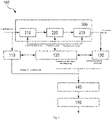
- Fig. 1 shows the structure of the prediction model learning system for an industrial system according to one specific embodiment of the present invention.
- the prediction model learning system 100 for an industrial system comprises a task feature management unit 110, a parameter adjustment management unit 120, a performance recording unit 130, a training data management unit 140 and a learning management unit 150.
- the prediction model learning system 100 for an industrial system provided by the present invention is a function extension of the prior simulation platform 200.
- a simulation task is input into the simulation platform 200 and a simulation result is output.
- the present invention is described in combination with an embodiment where a simulation is performed for a grasping robot serving as an industrial system.
- the present invention provides a prediction model learning method for an industrial system and the method comprises the following steps: Step S1 is first performed.
- the task feature management unit 110 uses statistical metrics to quantify the simulation task of the industrial system so as to extract features of the simulation task.
- the task feature management unit 110 is configured to manage and load the features of the simulation task, namely, use statistical metrics to quantify the features of the input simulation task and provide feature data of the simulation task for the training data management unit 140 after the simulation.
- an industrial system which is a grasping robot, grasps a plurality of parts from a box B' .
- the grasping robot B moves a first joint j 1 , a second joint j 2 and a third joint j 3 according to a planned path so as to grasp a plurality of parts from the box B', and the plurality of parts include a first part p 1 , a second part p 2 and a third part p 3 , for example.
- the simulation platform 200 simulates the above-mentioned process of the grasping robot B, wherein the simulation platform 200 comprises a plurality of system modules of the grasping robot B, including a vision module 210, a path planning module 220 and an action control module 230.
- an image especially, an RGBD image
- the vision module 210 processes an input RGBD image
- the path planning module 220 figures out the path along which the manipulator moves to a grasping point according to the grasping point obtained through image recognition
- the action control module 230 controls the movement of the manipulator according to the path planned by the path planning module 220.
- image data is input into the task feature management unit 110 and the simulation task calculated by the task feature management unit is a statistical metric group of image data.
- the metrics and features can be predefined in the task feature management unit 110 and the task feature management unit can extract the features of a simulation required to be performed in an input simulation task.
- the grasping robot B is a context-aware robot
- the above-mentioned feature values can be figured out from task data based on each specific simulation execution and stipulated by the simulation platform.
- the values of the task feature data are synchronized by the parameter adjustment management unit 120 with the metrics and are saved as a part of a training data set later.
- step S2 is performed.
- the parameter adjustment management unit 120 extracts parameter groups from system modules of the industrial system which performs a simulation, adjusts the values of the parameter groups, and triggers a simulation for the industrial system on the simulation platform based on a plurality of parameter groups having different values 200.
- Step S2 comprises three sub-steps : S21, S22 and S23 .
- the parameter adjustment management unit 120 consists of three subunits, which are a parameter feature group recording subunit 121, a parameter adjustment subunit 122 and a parameter recording subunit 123, respectively.
- the parameter adjustment management unit 120 is further configured to automatically record parameters for a plurality of system modules and the parameter adjustment management unit can systematically produce simulation data for the learning management unit 150.
- the feature group recording subunit 121 extracts parameter groups from system modules of the industrial system which performs a simulation, and marks adjustable parameter groups.
- the feature group recording subunit 121 sends the adjustable parameter groups to the parameter adjustment subunit 122.
- the parameter feature group recording subunit 121 collects adjustable parameter groups from each system module, namely, collects adjustable parameter groups from the vision module 210, the path planning module 220 and the action control module 230.
- the above-mentioned parameters may be marked with "adjustable”. Then, those adjustable parameters and the adjustable ranges are also sent to the parameter adjustment subunit 122 of the parameter adjustment management unit 120 for a subsequent analysis.
- the parameter feature group recording subunit 121 outputs parameter feature values.
- the adjustable parameter groups marked by the parameter feature group recording subunit 121 include: wherein, Perception is an adjustable parameter group extracted from the vision module 210, Path Planner is an adjustable parameter group extracted from the path planning module 220, and Motion Controller is an adjustable parameter group extracted from the action control module 230.
- the adjustable parameter group Perception extracted from the vision module 210 comprises x 1 , x 2 and x 3 , and x 1 , x 2 and x 3 have a value range from x 1min to x 1max , a value range from x 2min to x 2max , and a value range from x 3min to x 3max , respectively.
- the LINEMOD algorithm is used for the parameter feature group recording subunit 121
- x 1 is the similarity of templates
- x 2 is the non-maximum suppression
- x 3 is the contrast ratio.
- the adjustable parameter group Path Planner extracted from the path planning module 220 comprises y 1 and y 2 , and y 1 and y 2 have discrete values defined as y 11 , y 12 and y 13 , and y 21 , y 22 and y 23 , respectively.
- y 1 and y 2 are parameters in terms of route selection and comprise a start point and path points.
- the adjustable parameter group Motion Controller extracted from the action control module 230 comprises z 1 and z 2 , which represent the endpoint velocity and the acceleration of the grasping robot B, respectively, and z 1 and z 2 may be continuous variables or discrete values.
- the parameter adjustment subunit 122 adjusts the values of the adjustable parameter groups according to the corresponding adjustable range of each adjustable parameter group, and trigger a simulation for the industrial system on the simulation platform based on a plurality of parameter groups having different values 200.
- the parameter adjustment subunit 122 sends the values of the parameter groups to the parameter recording subunit 123.
- the parameter adjustment subunit 122 is configured to systematically and automatically select parameter feature values from a parameter feature group, then adjust parameters, send the parameters after the parameter adjustments to the simulation platform 200, and trigger a simulation for the target industrial system to perform corresponding tests for the selected features in the simulation.
- a plurality of policies are applied to a parameter adjustment.
- One policy is that a combination of all possible values in the feature group is used for a parameter adjustment, and another policy is that variable values are selected according to a specific distribution, for example, normal distribution.
- Fig. 4 is a logic diagram of parameter adjustments of the prediction model learning mechanism for an industrial system according to one specific embodiment of the present invention.
- the logic sequence of parameter adjustments is basically as follows: first adjust the parameter x, then adjust the parameter y, and finally adjust the parameter z.
- the initial states of the above-mentioned parameters include:
- the parameters x, y and z after the completion of parameter adjustments are sent to the vision module 210, the path planning module 220 and the action control module 230, respectively.
- the parameter recording subunit 123 synchronizes and records the combination and values of the parameter groups after the parameter adjustment.
- step S3 is performed.
- the performance recording unit 130 records the performance metrics according to the values of the parameter groups after the parameter adjustment, wherein the performance metrics are key performance indexes (KPIs) .
- KPIs key performance indexes
- the performance recording unit 130 and the parameter adjustment management unit 120 cooperate with each other to record the KPIs of the industrial system and keep the KPIs consistent with each value of the parameter feature groups.
- the performance recording unit 130 further comprises a performance registration subunit 131 and a performance recording subunit 132.
- Step S3 comprises sub-step S31 and sub-step S32.
- the performance recording unit 130 further comprises a performance registration subunit 131 and a performance recording subunit 132.
- the performance registration subunit 131 records performance metrics according to the values of the parameter groups after the parameter adjustment.
- the performance registration subunit 131 cooperates with the parameter adjustment management unit 120 to record KPIs according to each value of the performance feature groups.
- the performance registration subunit 131 collects the performance metrics of an industrial system serving as the simulation target, and the performance metrics can be marked in the simulation platform 200.
- the performance metrics are related to the KPIs which customers are interested in .
- a plurality of metrics can be recorded in the performance recording unit 130.
- Another performance metric example is alternatively time t. The time t represents the time it takes a grasping robot B to complete the whole grasping process.
- the performance recording subunit 132 records the values of the performance metrics based on the recorded performance metrics and the simulation result.
- the values of the performance metrics are associated with the metrics in the parameter adjustment management unit 120.
- the performance recording subunit needs to cooperate with the parameter adjustment management unit 120 to complete each round of data recording.
- the combination and values of each parameter group correspond to a simulation result, and each simulation result also corresponds to each performance metric.
- the performance metrics are key performance indexes or are determined based on the customer requirements.
- step S4 is performed to train data by use of a machine learning algorithm based on the features of the simulation task, the corresponding parameter groups having different values and the performance metrics, and generate a prediction model.
- the training data management unit 140 acquires feature data of the simulation task from the task feature management unit 110, acquires the combination and values of the parameter groups from the parameter adjustment management unit 120, and acquires performance metrics and value data from the performance recording unit 130, respectively, and prepare training data for the learning management unit 150.
- the training data management unit 140 is further configured to clean data and pre-process data.
- I is the feature of the simulation task of the grasping robot B acquired from the task feature management unit 110, namely, one feature vector of the image data of the grasping robot B.
- the parameter group value combination comprises x 1 , x 2 , x 3 , y 1 , y 2 , z 1 , z 2 R is a performance metric matrix for different parameter group combinations and values, and r and t are weight vectors of the performance metric R.
- a simulation result and a performance metric matrix R will be obtained after a simulation is performed based on each parameter group combination and the values.
- the training data management unit 140 also executes the data cleaning function, for example, cleans noise of data containing missing data or error data.
- the training data management unit will also apply a specific standard algorithm to preprocess the data to obtain proper training data.
- the learning management unit 150 applies different machine learning algorithms to obtain a prediction model, namely, latent rules. Based on the rules of the prediction model, a user can predict the performance of an industrial system and optimize the parameters of the whole industrial system to keep the system more efficient. Those parameters can be searched as many as possible in a simulation.
- prior data mining and the learning algorithm for example, decision tree C5.0 or artificial neural network (ANN)
- ANN artificial neural network
- prior data mining and the learning algorithm can be embedded into the learning management unit 150 so that the learning management unit can learn patterns and hinted knowledge from simulation data.
- Simulation data is well-marked training data
- the learning target is one rule, which can be used to obtain performance metrics for given task features and parameter group values.
- a user can quickly predict the system performance for a given scenario and given parameters, or can also utilize the prediction model to online adjust the system parameters to meet the performance requirements.
- a decision tree as a learning algorithm to acquire knowledge from the simulation result.
- the decision tree By applying the decision tree to training a data set, we can finally obtain the rule knowledge shown in Fig. 6 .
- R 1 , R 2 ,...R m represent different discrete values of R.
- the performance metric R can directly be obtained from [ I , x 1 , x 2 , x 3 , y 1 , y 2 , z 1 , z 2 ].
- an acceptable or optimal performance metric R can be obtained by selecting specific values of [ I , x 1 , x 2 , x 3 , y 1 , y 2 , z 1 , z 2 ].
- the decision tree is automatically generated by the algorithm. Once data of a customer is entered, the decision tree is automatically used as a prediction model to output a prediction result.
- the decision tree shown in Fig. 6 is generated by the machine learning algorithm which automatically trains data based on the features of the simulation task, the parameter group having different values and the performance metrics in the previous steps.
- the image resolution of the features of the simulation task is divided into a value range greater than 0.92 and a value range less than or equal to 0.92.
- the target scale in the image of the features of the simulation task is divided into a value range greater than 0.7 and a value range less than or equal to 0.7.
- the object mean of the features of the simulation task is divided into a value range greater than 0.851 and a value range less than or equal to 0.851.
- the target scale in an image is greater than 0.7
- the target scale in an image is less than or equal to 0.7
- x 1 is greater than 0.357
- determine z 1 determines 1 .
- z 1 is greater than 0.2078, obtain the performance metric R 2
- z 1 is less than or equal to 0.2078, obtain the performance metric R 3 .
- step S4 the following step is further comprised: querying the prediction model based on the features of the input simulation task and the values of the parameter groups to obtain the values of the performance metrics.
- the customer enters the simulation task feature I and the parameter groups x, y and z. Therefore, when querying the decision tree shown in Fig. 6 , the customer can obtain the values of corresponding performance metrics and the customer make a determination based on the prediction model.
- the present invention provides a prediction model learning apparatus for an industrial system, wherein a simulation is performed for the industrial system according to a simulation task on a platform.
- the prediction model learning apparatus for an industrial system comprises: a task feature management unit, configured to use statistical metrics to quantify a simulation task of the industrial system so as to extract features of the simulation task, a parameter adjustment management unit, configured to extract parameter groups from system modules of the industrial system which performs a simulation, adjust the values of the parameter groups, and trigger a simulation for the industrial system on the simulation platform based on a plurality of parameter groups having different values, a performance recording unit, configured to record performance metrics according to the values of the parameter groups after the parameter adjustment, a training data management unit, configured to train data by use of a machine learning algorithm based on the features of the simulation task, the corresponding parameter groups having different values and the performance metrics, and a learning management unit, configured to generate a prediction model.
- the parameter adjustment management unit further comprises a parameter feature group recording subunit, configured to extract parameter groups from system modules of the industrial system which performs a simulation, and mark adjustable parameter groups, a parameter adjustment subunit, configured to adjust the values of the adjustable parameter groups according to the corresponding adjustable range of each adjustable parameter group, and trigger a simulation for the industrial system on the simulation platform based on a plurality of parameter groups having different values; and a parameter recording subunit, configured to synchronize and record the combination and values of the parameter groups after the parameter adjustment.
- a parameter feature group recording subunit configured to extract parameter groups from system modules of the industrial system which performs a simulation, and mark adjustable parameter groups
- a parameter adjustment subunit configured to adjust the values of the adjustable parameter groups according to the corresponding adjustable range of each adjustable parameter group, and trigger a simulation for the industrial system on the simulation platform based on a plurality of parameter groups having different values
- a parameter recording subunit configured to synchronize and record the combination and values of the parameter groups after the parameter adjustment.
- the performance recording unit further comprises a performance registration sub-unit, configured to record performance metrics according to the values of the parameter groups after the parameter adjustment, and a performance recording subunit, configured to record the values of the performance metrics based on the recorded performance metrics and the simulation result which correspond to each other.
- the performance metrics are key performance indexes or are determined based on the customer requirements.
- the learning management unit is configured to query the prediction model based on the features of the input simulation task and the values of the parameter groups to obtain the values of the performance metrics.
- the present invention provides a prediction model learning system for an industrial system.
- the prediction model learning system for an industrial system comprises a processor and a memory coupled with the processor, the memory has instructions stored therein, the instructions allow the prediction model learning system for an industrial system to perform actions when executed by the processor, and the actions include: S1, using statistical metrics to quantify a simulation task of the industrial system so as to extract features of the simulation task; S2, extracting parameter groups from system modules of the industrial system which performs a simulation, adjusting the values of the parameter groups, and triggering a simulation for the industrial system on the simulation platform based on a plurality of parameter groups having different values; S3, recording performance metrics according to the values of the parameter groups after the parameter adjustment; S4, training data by use of a machine learning algorithm based on the features of the simulation task, the corresponding parameter groups having different values and the performance metrics, and generating a prediction model.
- action S2 further comprises: S21, extracting parameter groups from system modules of the industrial system which performs a simulation, and marking adjustable parameter groups; S22, adjusting the values of the adjustable parameter groups according to the corresponding adjustable range of each adjustable parameter group, and triggering a simulation for the industrial system on the simulation platform based on a plurality of parameter groups having different values; S23, synchronizing and recording the combination and values of the parameter groups after the parameter adjustment.
- action S3 comprises: S31, recording performance metrics according to the values of the parameter groups after the parameter adjustment; S32, recording the values of the performance metrics based on the recorded performance metrics and the simulation result which correspond to each other.
- actions after action S4 include: querying the prediction model based on the features of the input simulation task and the values of the parameter groups to obtain the values of the performance metrics.
- the present invention provides a computer program product, the computer program product is tangibly stored in a computer-readable medium and comprises computer-executable instructions, and the computer-executable instructions allow at least one processor to execute the method according to the first aspect of the present invention when executed.
- the present invention provides a computer-readable medium, computer-executable instructions are stored in the computer-readable medium, and the computer-executable instructions allow at least one processor to execute the method according to the first aspect of the present invention when executed.
- Data in the simulation task is used to train and build a prediction model in the present invention.
- the step of adjusting parameters in the present invention is a systematic and automatic step, allowing a simulation to produce a large amount of various parameters for data training. Parameter adjustments are often manually completed in the prior art, however. Therefore, those system parameters can be structurally explored and tested, avoiding incomplete considerations in manual parameter adjustment mode.
- simulation data can be converted into an online prediction model, which can direct a user to dynamically and more efficiently select a parameter combination and values for a complicated system.
- the present invention may simultaneously help a customer to establish an online prediction system.
- the present invention allows industrial customers to online predict the performance of their systems and dynamically adjust parameters.
Landscapes
- Engineering & Computer Science (AREA)
- General Engineering & Computer Science (AREA)
- Theoretical Computer Science (AREA)
- Physics & Mathematics (AREA)
- General Physics & Mathematics (AREA)
- Manufacturing & Machinery (AREA)
- Data Mining & Analysis (AREA)
- Computing Systems (AREA)
- Evolutionary Computation (AREA)
- Mathematical Physics (AREA)
- Software Systems (AREA)
- Computational Linguistics (AREA)
- Artificial Intelligence (AREA)
- Robotics (AREA)
- Mechanical Engineering (AREA)
- Quality & Reliability (AREA)
- Automation & Control Theory (AREA)
- Management, Administration, Business Operations System, And Electronic Commerce (AREA)
Applications Claiming Priority (1)
| Application Number | Priority Date | Filing Date | Title |
|---|---|---|---|
| PCT/CN2020/082459 WO2021195970A1 (fr) | 2020-03-31 | 2020-03-31 | Procédé, appareil et système d'apprentissage de modèle de prédiction pour un système industriel |
Publications (3)
| Publication Number | Publication Date |
|---|---|
| EP4122654A1 true EP4122654A1 (fr) | 2023-01-25 |
| EP4122654A4 EP4122654A4 (fr) | 2023-11-22 |
| EP4122654B1 EP4122654B1 (fr) | 2026-04-29 |
Family
ID=77927568
Family Applications (1)
| Application Number | Title | Priority Date | Filing Date |
|---|---|---|---|
| EP20928458.7A Active EP4122654B1 (fr) | 2020-03-31 | 2020-03-31 | Procédé, appareil et système d'apprentissage de modèle de prédiction pour un système industriel |
Country Status (4)
| Country | Link |
|---|---|
| US (1) | US20230153640A1 (fr) |
| EP (1) | EP4122654B1 (fr) |
| CN (1) | CN115135463A (fr) |
| WO (1) | WO2021195970A1 (fr) |
Families Citing this family (8)
| Publication number | Priority date | Publication date | Assignee | Title |
|---|---|---|---|---|
| CN115659711A (zh) * | 2022-12-29 | 2023-01-31 | 北京云道智造科技有限公司 | 一种仿真方法、装置、电子设备及存储介质 |
| US12306938B2 (en) | 2023-02-16 | 2025-05-20 | Capital One Services, Llc | Spurious-data-based detection related to malicious activity |
| US12393681B2 (en) | 2023-02-16 | 2025-08-19 | Capital One Services, Llc | Generation of effective spurious data for model degradation |
| US12395529B2 (en) * | 2023-02-16 | 2025-08-19 | Capital One Services, Llc | Layered cybersecurity using spurious data samples |
| CN116100578B (zh) * | 2023-04-13 | 2023-07-14 | 深圳市大族机器人有限公司 | 一种双关节机器人的指令快速响应系统 |
| CN119416413A (zh) * | 2023-07-26 | 2025-02-11 | 深圳引望智能技术有限公司 | 参数优化方法、装置和电子设备 |
| CN117314926B (zh) * | 2023-11-30 | 2024-01-30 | 湖南大学 | 激光改质加工设备维护的确认方法、设备及存储介质 |
| CN118154048B (zh) * | 2024-05-10 | 2024-08-13 | 常熟理工学院 | 一种基于数字孪生的智能制造系统 |
Family Cites Families (14)
| Publication number | Priority date | Publication date | Assignee | Title |
|---|---|---|---|---|
| CN103544351A (zh) * | 2013-10-25 | 2014-01-29 | 北京世纪高通科技有限公司 | 一种对仿真模型调整参数的方法及装置 |
| JP6565185B2 (ja) * | 2014-12-26 | 2019-08-28 | 日本電気株式会社 | 最適化システム、最適化方法および最適化プログラム |
| KR101980603B1 (ko) * | 2016-05-20 | 2019-05-22 | 구글 엘엘씨 | 오브젝트(들)를 캡처하는 이미지(들)에 기초하는 그리고 환경에서의 미래 로봇 움직임에 대한 파라미터(들)에 기초하여 로봇 환경에서의 오브젝트(들)의 모션(들)을 예측하는 것과 관련된 머신 학습 방법들 및 장치 |
| US10773382B2 (en) * | 2017-09-15 | 2020-09-15 | X Development Llc | Machine learning methods and apparatus for robotic manipulation and that utilize multi-task domain adaptation |
| CN110187647B (zh) * | 2018-02-23 | 2024-08-16 | 北京京东尚科信息技术有限公司 | 模型训练方法及系统 |
| US11715001B2 (en) * | 2018-04-02 | 2023-08-01 | International Business Machines Corporation | Water quality prediction |
| US11328219B2 (en) * | 2018-04-12 | 2022-05-10 | Baidu Usa Llc | System and method for training a machine learning model deployed on a simulation platform |
| EP3587045A1 (fr) * | 2018-06-28 | 2020-01-01 | Siemens Aktiengesellschaft | Procédé et appareil de détermination par ordinateur des paramètres de réglage pour une action favorable d'un système technique |
| CN109483534B (zh) * | 2018-11-08 | 2022-08-02 | 腾讯科技(深圳)有限公司 | 一种物体抓取方法、装置和系统 |
| CN109800864B (zh) * | 2019-01-18 | 2023-05-30 | 中山大学 | 一种基于图像输入的机器人主动学习方法 |
| CN110216671A (zh) * | 2019-05-14 | 2019-09-10 | 苏州软体机器人科技有限公司 | 一种基于计算机仿真的机械抓手训练方法及系统 |
| CN110110466B (zh) * | 2019-05-17 | 2023-07-21 | 中冶华天工程技术有限公司 | 一种机器学习和工艺仿真的污水处理目标参数预测方法 |
| CN110450153B (zh) * | 2019-07-08 | 2021-02-19 | 清华大学 | 一种基于深度强化学习的机械臂物品主动拾取方法 |
| CN110647354B (zh) * | 2019-09-30 | 2021-11-05 | 东软医疗系统股份有限公司 | 设备运行控制方法、装置及设备 |
-
2020
- 2020-03-31 CN CN202080096949.XA patent/CN115135463A/zh active Pending
- 2020-03-31 US US17/916,234 patent/US20230153640A1/en active Pending
- 2020-03-31 WO PCT/CN2020/082459 patent/WO2021195970A1/fr not_active Ceased
- 2020-03-31 EP EP20928458.7A patent/EP4122654B1/fr active Active
Also Published As
| Publication number | Publication date |
|---|---|
| CN115135463A (zh) | 2022-09-30 |
| EP4122654B1 (fr) | 2026-04-29 |
| WO2021195970A1 (fr) | 2021-10-07 |
| US20230153640A1 (en) | 2023-05-18 |
| EP4122654A4 (fr) | 2023-11-22 |
Similar Documents
| Publication | Publication Date | Title |
|---|---|---|
| EP4122654B1 (fr) | Procédé, appareil et système d'apprentissage de modèle de prédiction pour un système industriel | |
| TW201835821A (zh) | 工作計劃最佳化裝置及工作計劃最佳化方法 | |
| Casas-Yrurzum et al. | On the objective evaluation of motion cueing in vehicle simulations | |
| Kádár et al. | Discrete event simulation for supporting production planning and scheduling decisions in digital factories | |
| WO2021111936A1 (fr) | Système de prédiction, dispositif de traitement d'informations et programme de traitement d'informations | |
| CN119443259B (zh) | 工业大模型平台及其系统 | |
| KR20230016405A (ko) | 제품 생산을 위한 제조 공정을 최적화하는 장치, 방법 및 컴퓨터 프로그램 | |
| CN120198259A (zh) | 一种人工智能的知识技能教育系统及方法 | |
| KR20220030760A (ko) | 가상현실(vr)/증강현실(ar) 환경에서 협업 딥러닝을 활용한 개인 맞춤형 항공 조종사 훈련시스템 및 그 방법 | |
| Sheptunov et al. | Simulating reliability of the robotic system software on the basis of artificial intelligence | |
| CN119761877A (zh) | 岗位技能评估方法及系统 | |
| CN121458508B (zh) | 一种面向轨道交通智慧运维的工学一体化智能教学系统 | |
| JP2022186422A (ja) | 分類装置、分類方法、及び、分類プログラム | |
| CN116442258A (zh) | 面向元宇宙的“人机-xr-云”设备运维规划方法 | |
| Cacciabue et al. | The development of a model and simulation of an aviation maintenance technician task performance | |
| Xiong | Human-machine adaptation in lean waste elimination for customized building manufacturing systems | |
| CN119625822A (zh) | 基于神经网络的颠球成绩生成方法及系统 | |
| JP5023414B2 (ja) | 生産計画評価方法およびシステム | |
| Susarev et al. | Training simulators development technique for oil and gas industry automation control systems | |
| Alfaro-Viquez et al. | Monitoring human performance through deep learning and computer vision in industry 4.0 | |
| Dobrescu et al. | Hardware-in-loop assessment of control architectures | |
| Sheridan et al. | Supervisory control, mental models and decision aids | |
| Guchuk | Development of information exchange of software and hardware tools of system of test of difficult scientific-technical objects | |
| US20220114493A1 (en) | System and method for optimal drive configuration using machine learning | |
| CN118428827B (zh) | 一种模块化教育机器人的教学质量控制方法及系统 |
Legal Events
| Date | Code | Title | Description |
|---|---|---|---|
| STAA | Information on the status of an ep patent application or granted ep patent |
Free format text: STATUS: THE INTERNATIONAL PUBLICATION HAS BEEN MADE |
|
| PUAI | Public reference made under article 153(3) epc to a published international application that has entered the european phase |
Free format text: ORIGINAL CODE: 0009012 |
|
| STAA | Information on the status of an ep patent application or granted ep patent |
Free format text: STATUS: REQUEST FOR EXAMINATION WAS MADE |
|
| 17P | Request for examination filed |
Effective date: 20221017 |
|
| AK | Designated contracting states |
Kind code of ref document: A1 Designated state(s): AL AT BE BG CH CY CZ DE DK EE ES FI FR GB GR HR HU IE IS IT LI LT LU LV MC MK MT NL NO PL PT RO RS SE SI SK SM TR |
|
| DAV | Request for validation of the european patent (deleted) | ||
| DAX | Request for extension of the european patent (deleted) | ||
| A4 | Supplementary search report drawn up and despatched |
Effective date: 20231024 |
|
| RIC1 | Information provided on ipc code assigned before grant |
Ipc: G05B 19/418 20060101ALI20231018BHEP Ipc: B25J 9/16 20060101AFI20231018BHEP |
|
| GRAP | Despatch of communication of intention to grant a patent |
Free format text: ORIGINAL CODE: EPIDOSNIGR1 |
|
| STAA | Information on the status of an ep patent application or granted ep patent |
Free format text: STATUS: GRANT OF PATENT IS INTENDED |
|
| INTG | Intention to grant announced |
Effective date: 20251120 |
|
| GRAS | Grant fee paid |
Free format text: ORIGINAL CODE: EPIDOSNIGR3 |
|
| GRAA | (expected) grant |
Free format text: ORIGINAL CODE: 0009210 |
|
| STAA | Information on the status of an ep patent application or granted ep patent |
Free format text: STATUS: THE PATENT HAS BEEN GRANTED |
|
| AK | Designated contracting states |
Kind code of ref document: B1 Designated state(s): AL AT BE BG CH CY CZ DE DK EE ES FI FR GB GR HR HU IE IS IT LI LT LU LV MC MK MT NL NO PL PT RO RS SE SI SK SM TR |
|
| REG | Reference to a national code |
Ref country code: CH Ref legal event code: F10 Free format text: ST27 STATUS EVENT CODE: U-0-0-F10-F00 (AS PROVIDED BY THE NATIONAL OFFICE) Effective date: 20260429 |