EP4129295A1 - Composition pharmaceutique pour la prévention ou le traitement des cancers associés à une mutation de kras - Google Patents
Composition pharmaceutique pour la prévention ou le traitement des cancers associés à une mutation de kras Download PDFInfo
- Publication number
- EP4129295A1 EP4129295A1 EP21750667.4A EP21750667A EP4129295A1 EP 4129295 A1 EP4129295 A1 EP 4129295A1 EP 21750667 A EP21750667 A EP 21750667A EP 4129295 A1 EP4129295 A1 EP 4129295A1
- Authority
- EP
- European Patent Office
- Prior art keywords
- oxo
- fluorophenyl
- oxy
- carboxamide
- phenyl
- Prior art date
- Legal status (The legal status is an assumption and is not a legal conclusion. Google has not performed a legal analysis and makes no representation as to the accuracy of the status listed.)
- Withdrawn
Links
Images



Classifications
-
- A—HUMAN NECESSITIES
- A61—MEDICAL OR VETERINARY SCIENCE; HYGIENE
- A61P—SPECIFIC THERAPEUTIC ACTIVITY OF CHEMICAL COMPOUNDS OR MEDICINAL PREPARATIONS
- A61P35/00—Antineoplastic agents
-
- A—HUMAN NECESSITIES
- A61—MEDICAL OR VETERINARY SCIENCE; HYGIENE
- A61K—PREPARATIONS FOR MEDICAL, DENTAL OR TOILETRY PURPOSES
- A61K31/00—Medicinal preparations containing organic active ingredients
- A61K31/33—Heterocyclic compounds
- A61K31/395—Heterocyclic compounds having nitrogen as a ring hetero atom, e.g. guanethidine or rifamycins
- A61K31/435—Heterocyclic compounds having nitrogen as a ring hetero atom, e.g. guanethidine or rifamycins having six-membered rings with one nitrogen as the only ring hetero atom
- A61K31/44—Non condensed pyridines; Hydrogenated derivatives thereof
- A61K31/4427—Non condensed pyridines; Hydrogenated derivatives thereof containing further heterocyclic ring systems
- A61K31/444—Non condensed pyridines; Hydrogenated derivatives thereof containing further heterocyclic ring systems containing a six-membered ring with nitrogen as a ring heteroatom, e.g. amrinone
-
- A—HUMAN NECESSITIES
- A61—MEDICAL OR VETERINARY SCIENCE; HYGIENE
- A61K—PREPARATIONS FOR MEDICAL, DENTAL OR TOILETRY PURPOSES
- A61K31/00—Medicinal preparations containing organic active ingredients
- A61K31/33—Heterocyclic compounds
- A61K31/395—Heterocyclic compounds having nitrogen as a ring hetero atom, e.g. guanethidine or rifamycins
- A61K31/435—Heterocyclic compounds having nitrogen as a ring hetero atom, e.g. guanethidine or rifamycins having six-membered rings with one nitrogen as the only ring hetero atom
- A61K31/47—Quinolines; Isoquinolines
- A61K31/4709—Non-condensed quinolines and containing further heterocyclic rings
-
- A—HUMAN NECESSITIES
- A61—MEDICAL OR VETERINARY SCIENCE; HYGIENE
- A61K—PREPARATIONS FOR MEDICAL, DENTAL OR TOILETRY PURPOSES
- A61K31/00—Medicinal preparations containing organic active ingredients
- A61K31/33—Heterocyclic compounds
- A61K31/395—Heterocyclic compounds having nitrogen as a ring hetero atom, e.g. guanethidine or rifamycins
- A61K31/495—Heterocyclic compounds having nitrogen as a ring hetero atom, e.g. guanethidine or rifamycins having six-membered rings with two or more nitrogen atoms as the only ring heteroatoms, e.g. piperazine or tetrazines
- A61K31/496—Non-condensed piperazines containing further heterocyclic rings, e.g. rifampin, thiothixene or sparfloxacin
-
- A—HUMAN NECESSITIES
- A61—MEDICAL OR VETERINARY SCIENCE; HYGIENE
- A61K—PREPARATIONS FOR MEDICAL, DENTAL OR TOILETRY PURPOSES
- A61K31/00—Medicinal preparations containing organic active ingredients
- A61K31/33—Heterocyclic compounds
- A61K31/395—Heterocyclic compounds having nitrogen as a ring hetero atom, e.g. guanethidine or rifamycins
- A61K31/495—Heterocyclic compounds having nitrogen as a ring hetero atom, e.g. guanethidine or rifamycins having six-membered rings with two or more nitrogen atoms as the only ring heteroatoms, e.g. piperazine or tetrazines
- A61K31/505—Pyrimidines; Hydrogenated pyrimidines, e.g. trimethoprim
- A61K31/517—Pyrimidines; Hydrogenated pyrimidines, e.g. trimethoprim ortho- or peri-condensed with carbocyclic ring systems, e.g. quinazoline, perimidine
-
- A—HUMAN NECESSITIES
- A61—MEDICAL OR VETERINARY SCIENCE; HYGIENE
- A61K—PREPARATIONS FOR MEDICAL, DENTAL OR TOILETRY PURPOSES
- A61K31/00—Medicinal preparations containing organic active ingredients
- A61K31/33—Heterocyclic compounds
- A61K31/395—Heterocyclic compounds having nitrogen as a ring hetero atom, e.g. guanethidine or rifamycins
- A61K31/535—Heterocyclic compounds having nitrogen as a ring hetero atom, e.g. guanethidine or rifamycins having six-membered rings with at least one nitrogen and one oxygen as the ring hetero atoms, e.g. 1,2-oxazines
- A61K31/5375—1,4-Oxazines, e.g. morpholine
- A61K31/5377—1,4-Oxazines, e.g. morpholine not condensed and containing further heterocyclic rings, e.g. timolol
-
- A—HUMAN NECESSITIES
- A61—MEDICAL OR VETERINARY SCIENCE; HYGIENE
- A61K—PREPARATIONS FOR MEDICAL, DENTAL OR TOILETRY PURPOSES
- A61K39/00—Medicinal preparations containing antigens or antibodies
- A61K39/395—Antibodies; Immunoglobulins; Immune serum, e.g. antilymphocytic serum
- A61K39/39533—Antibodies; Immunoglobulins; Immune serum, e.g. antilymphocytic serum against materials from animals
- A61K39/3955—Antibodies; Immunoglobulins; Immune serum, e.g. antilymphocytic serum against materials from animals against proteinaceous materials, e.g. enzymes, hormones, lymphokines
-
- C—CHEMISTRY; METALLURGY
- C12—BIOCHEMISTRY; BEER; SPIRITS; WINE; VINEGAR; MICROBIOLOGY; ENZYMOLOGY; MUTATION OR GENETIC ENGINEERING
- C12Q—MEASURING OR TESTING PROCESSES INVOLVING ENZYMES, NUCLEIC ACIDS OR MICROORGANISMS; COMPOSITIONS OR TEST PAPERS THEREFOR; PROCESSES OF PREPARING SUCH COMPOSITIONS; CONDITION-RESPONSIVE CONTROL IN MICROBIOLOGICAL OR ENZYMOLOGICAL PROCESSES
- C12Q1/00—Measuring or testing processes involving enzymes, nucleic acids or microorganisms; Compositions therefor; Processes of preparing such compositions
- C12Q1/68—Measuring or testing processes involving enzymes, nucleic acids or microorganisms; Compositions therefor; Processes of preparing such compositions involving nucleic acids
- C12Q1/6876—Nucleic acid products used in the analysis of nucleic acids, e.g. primers or probes
- C12Q1/6883—Nucleic acid products used in the analysis of nucleic acids, e.g. primers or probes for diseases caused by alterations of genetic material
- C12Q1/6886—Nucleic acid products used in the analysis of nucleic acids, e.g. primers or probes for diseases caused by alterations of genetic material for cancer
-
- C—CHEMISTRY; METALLURGY
- C12—BIOCHEMISTRY; BEER; SPIRITS; WINE; VINEGAR; MICROBIOLOGY; ENZYMOLOGY; MUTATION OR GENETIC ENGINEERING
- C12Q—MEASURING OR TESTING PROCESSES INVOLVING ENZYMES, NUCLEIC ACIDS OR MICROORGANISMS; COMPOSITIONS OR TEST PAPERS THEREFOR; PROCESSES OF PREPARING SUCH COMPOSITIONS; CONDITION-RESPONSIVE CONTROL IN MICROBIOLOGICAL OR ENZYMOLOGICAL PROCESSES
- C12Q1/00—Measuring or testing processes involving enzymes, nucleic acids or microorganisms; Compositions therefor; Processes of preparing such compositions
- C12Q1/68—Measuring or testing processes involving enzymes, nucleic acids or microorganisms; Compositions therefor; Processes of preparing such compositions involving nucleic acids
- C12Q1/6869—Methods for sequencing
-
- C—CHEMISTRY; METALLURGY
- C12—BIOCHEMISTRY; BEER; SPIRITS; WINE; VINEGAR; MICROBIOLOGY; ENZYMOLOGY; MUTATION OR GENETIC ENGINEERING
- C12Q—MEASURING OR TESTING PROCESSES INVOLVING ENZYMES, NUCLEIC ACIDS OR MICROORGANISMS; COMPOSITIONS OR TEST PAPERS THEREFOR; PROCESSES OF PREPARING SUCH COMPOSITIONS; CONDITION-RESPONSIVE CONTROL IN MICROBIOLOGICAL OR ENZYMOLOGICAL PROCESSES
- C12Q2600/00—Oligonucleotides characterized by their use
- C12Q2600/106—Pharmacogenomics, i.e. genetic variability in individual responses to drugs and drug metabolism
-
- C—CHEMISTRY; METALLURGY
- C12—BIOCHEMISTRY; BEER; SPIRITS; WINE; VINEGAR; MICROBIOLOGY; ENZYMOLOGY; MUTATION OR GENETIC ENGINEERING
- C12Q—MEASURING OR TESTING PROCESSES INVOLVING ENZYMES, NUCLEIC ACIDS OR MICROORGANISMS; COMPOSITIONS OR TEST PAPERS THEREFOR; PROCESSES OF PREPARING SUCH COMPOSITIONS; CONDITION-RESPONSIVE CONTROL IN MICROBIOLOGICAL OR ENZYMOLOGICAL PROCESSES
- C12Q2600/00—Oligonucleotides characterized by their use
- C12Q2600/156—Polymorphic or mutational markers
Definitions
- the present invention relates to a pharmaceutical composition for preventing or treating cancer associated with a KRAS mutation.
- the present invention relates to a pharmaceutical composition comprising a compound for preventing or treating cancer, which is associated with a KRAS mutation and exhibits resistance to an EGFR-targeted therapeutic agent.
- a V-Ki-ras2 Kirsten rat sarcoma viral oncogene homolog (KRAS) gene is one of several genes associated with the development of non-small cell lung cancer, colorectal cancer, pancreatic cancer, and the like, and has been recently considered crucial to determine the effectiveness of anticancer therapy for patients who exhibit resistance to an anticancer drug such as cetuximab.
- Cetuximab is a monoclonal antibody that targets an epidermal growth factor receptor (EGFR), and specifically binds to the EGFR on the cell surface so that proliferation of cancer cells is inhibited.
- EGFR epidermal growth factor receptor
- cetuximab is mainly used for treatment of such diseases.
- cetuximab cannot be used for patients who exhibit resistance to an anticancer drug, and the resistance to such an anticancer drug occurs for several reasons.
- cancer cells with a mutation in certain protein such as KRAS which is located in the EGFR signaling system, exhibit resistance to cetuximab.
- KRAS certain protein
- drug response and survival in patients who exhibit resistance to an anticancer drug may be determined by identifying a mutation of the KRAS gene.
- cetuximab even for colorectal cancer patients who carry a normal KRAS gene, if continuously treated with cetuximab, 60% to 80% of the patients undergo a mutation in the KRAS gene.
- An object of the present invention is to provide a pharmaceutical composition for preventing or treating cancer associated with a KRAS mutation, the composition comrising, as an active ingredient, a compound capable of effectively killing cancer cells having a KRAS mutation which exhibit resistance to an EGFR-targeted therapeutic agent, or a pharmaceutically acceptable salt thereof.
- Another object of the present invention is to provide a method for identifying the KRAS mutation and providing information on an anticancer therapeutic agent suitable therefor.
- the present invention provides a pharmaceutical composition for preventing or treating cancer associated with a V-Ki-ras2 Kirsten rat sarcoma viral oncogene homolog (KRAS) mutation, the composition comprising, as an active ingredient, a compound represented by Formula 1 or Formula 2 below, or a pharmaceutically acceptable salt thereof, wherein the cancer exhibits resistance to an epidermal growth factor receptor (EGFR)-targeted therapeutic agent, and the KRAS mutation is substitution of glycine, an amino acid residue, at position 13 in an amino acid sequence of SEQ ID NO: 1 with aspartic acid:
- EGFR epidermal growth factor receptor
- R 1 to R 7 , and X are the same as defined in the detailed description which will be described later.
- R 1 to R 6 , L, X, and Y are the same as defined in the detailed description which will be described later.
- the present invention provides a method for providing information on an anticancer therapeutic agent, the method comprising: identifying a KRAS mutation in an individual who exhibits resistance to an EGFR-targeted therapeutic agent; and providing information that the compound represented by Formula 1 or Formula 2 as defined above or a pharmaceutically acceptable salt thereof is suitable for anticancer therapy when a KRAS mutation, in which glycine, an amino acid residue, at position 13 in the amino acid sequence of SEQ ID NO: 1 is substituted with aspartic acid, is found.
- the pharmaceutical composition for preventing or treating cancer according to the present invention is applicable to patients with cancer having a KRAS mutation.
- the pharmaceutical composition may be useful for treatment of patients with cancer which has a KRAS G13D mutation and exhibits resistance to cetuximab that is conventionally used for anticancer therapy.
- the method for providing information on an anticancer therapeutic agent according to the present invention may identify the KRAS mutation and provide information on an anticancer therapeutic agent suitable therefor.
- a pharmaceutical composition for preventing or treating cancer associated with a V-Ki-ras2 Kirsten rat sarcoma viral oncogene homolog (KRAS) mutation comprising, as an active ingredient, a compound represented by Formula 1 or Formula 2, or a pharmaceutically acceptable salt thereof.
- the cancer which the pharmaceutical composition of the present invention targets, exhibits resistance to an epidermal growth factor receptor (EGFR)-targeted therapeutic agent.
- EGFR epidermal growth factor receptor
- the meaning of exhibiting resistance to an EGFR-targeted therapeutic agent may be interpreted as having secondary resistance to the drug.
- KRAS is also referred to as K-Ras and refers to a protein that constitutes part of RAS/MAPK, a cell signaling pathway that regulates cell growth, cell maturation, and cell death. Mutated versions of the KRAS are found in various types of solid cancers such as non-small cell lung cancer, colorectal cancer, and pancreatic cancer. In this case, the KRAS may have the amino acid sequence of SEQ ID NO: 1.
- KRAS mutation means that substitution, deletion, or insertion has occurred in some amino acids of KRAS. Specifically, the KRAS mutation may indicate that glycine, an amino acid residue, at position 13 in the amino acid sequence of SEQ ID NO: 1 is substituted with another amino acid. More specifically, the KRAS mutation may indicate that glycine, an amino acid residue, at position 13 in the amino acid sequence of SEQ ID NO: 1 is substituted with aspartic acid.
- the term “resistance” means that a drug in question does not have efficacy because the body does not respond sensitively to the drug.
- EGFR-targeted therapeutic agent refers to an anticancer drug targeting EGFR. Any EGFR-targeted therapeutic agent may be applied as long as the agent exhibits an anticancer effect.
- the EGFR-targeted therapeutic agent may be preferably cetuximab, gefitinib, erlotinib, or panitumumab, and most preferably cetuximab.
- the resistance to an EGFR-targeted therapeutic agent may be associated with a recepteur d'rare nantais (RON) mutation.
- the RON mutation may be RON ⁇ 155 in which exons 5, 6, and 11 are deleted.
- the cDNA of RON ⁇ 155 may have the amino acid sequence of SEQ ID NO: 2.
- the RON refers to a protein receptor belonging to the c-MET family, and is a receptor for macrophage-stimulating protein (MSP), a serum protein, which is secreted by the liver and regulates the action of macrophages.
- MSP macrophage-stimulating protein
- the activity of RON plays an important role in the development, progression, and metastasis of tumors. In particular, overexpression or hyperactivity thereof in colorectal cancer and breast cancer has been reported to contribute to inducing tumor invasion and metastasis and inhibiting apoptosis.
- the cancer may be selected from the group consisting of breast cancer, lung cancer, stomach cancer, prostate cancer, uterine cancer, ovarian cancer, kidney cancer, pancreatic cancer, liver cancer, colorectal cancer, skin cancer, head and neck cancer, and thyroid cancer.
- cancer cells proliferate through a signaling pathway created by binding between epidermal growth factor receptor (EGFR) and epidermal growth factor (EGF).
- EGFR epidermal growth factor receptor
- EGF epidermal growth factor
- KRAS gene is activated, causing karyomitosis of cancer cells.
- Cetuximab is an antibody targeting EGFR and inhibits activation of the KRAS gene by blocking the binding between EGFR and EGF.
- the KRAS gene is activated without the binding between EGFR and EGF, cancer cells proliferate even when cetuximab is administered.
- the KRAS gene is mutated
- treatment is achieved using other targeted therapeutic agents such as crizotinib that is targeted to anaplastic lymphoma kinase (ALK).
- crizotinib that is targeted to anaplastic lymphoma kinase (ALK).
- ALK anaplastic lymphoma kinase
- RON is overexpressed or excessively activated in colorectal cancer or breast cancer.
- the compound or pharmaceutical composition of the present invention can be useful as an alternative anticancer agent in a case where cetuximab cannot be used due to a mutation in the KRAS gene.
- a method for preventing or treating cancer associated with the KRAS mutation comprising administering the compound represented by Formula 1 or Formula 2 or a pharmaceutically acceptable salt thereof to a subject in need thereof.
- prevention refers to any act of inhibiting or delaying occurrence, spread, and recurrence of the disease
- treatment refers to any act of ameliorating or beneficially altering symptoms of the disease by administration of the compound.
- the term "subject” or “individual” refers to any animal, specifically a mammal, such as a monkey, a cow, a horse, a sheep, a pig, a chicken, a turkey, a quail, a cat, a dog, a mouse, a rat, a rabbit, and a guinea pig, including a human (patient), who has or is likely to develop the disease related to protein kinase activity.
- the subject in need thereof may mean a biological sample.
- administration means providing a predetermined substance to a subject in need thereof by any appropriate method, and administration of the compound of the present invention may be achieved via any common route as long as the route allows the substance to reach a target tissue.
- a method for treating a patient with cancer which exhibits resistance to an EGFR-targeted therapeutic agent comprising: identifying whether the patient with cancer which exhibits resistance to an EGFR-targeted therapeutic agent has KRAS G13D mutation; and administering the compound represented by Formula 1 or Formula 2 or a pharmaceutically acceptable salt thereof to the patient with cancer having KRAS G13D mutation and exhibiting resistance to an EGFR-targeted therapeutic agent.
- a method for providing information on an anticancer therapeutic agent comprising: identifying a KRAS mutation in an individual who exhibits resistance to an EGFR-targeted therapeutic agent; and providing information that the compound represented by Formula 1 or Formula 2 or a pharmaceutically acceptable salt thereof is suitable for anticancer therapy when a KRAS mutation, in which glycine, an amino acid residue, at position 13 in the amino acid sequence of SEQ ID NO: 1 is substituted with aspartic acid, is found.
- the meaning of exhibiting resistance to the EGFR-targeted therapeutic agent is as described above.
- the EGFR-targeted therapeutic agent may be cetuximab, gefitinib, erlotinib, or panitumumab.
- the C 1-10 alkyl may include C 1-6 alkyl, C 1-3 alkyl, C 3-10 alkyl, C 3-6 alkyl, C 6-10 alkyl, and the like.
- the C 1-10 alkoxy may include C 1-6 alkoxy, C 1-3 alkoxy, C 3-10 alkoxy, C 3-6 alkoxy, C 6-10 alkoxy, and the like.
- the 4-to 10-membered heterocycle may include 4- to 7-membered heterocycle, 4- to 6-membered heterocycle, 5- to 7-membered heterocycle, 5- or 6-membered heterocycle, and the like.
- R 1 and R 2 are each independently H, halogen, methoxy, or -CF 3 , wherein the halogen may be F, Cl, Br, or I.
- R 3 and R 4 are each independently H, halogen, methyl, methoxy, or ethoxy, wherein the halogen may be F, Cl, Br, or I.
- R 5 is H or halogen, wherein the halogen may be F, Cl, Br, or I.
- R 6 and R 7 taken together with the N atom to which they are bonded, form wherein R a and R b are each independently C 1-3 alkylene, A is -N(-R 9 )- or -O-, and R 9 is C 1-6 alkyl.
- R 6 and R 7 together with the N atom to which they are bonded, may form a heterocycle group such as azetidinyl, diazetidinyl, pyrrolidinyl, pyrrolyl, imidazolidinyl, imidazolyl, pyrazolidinyl, pyrazolyl, oxazolidinyl, oxazolyl, isoxazolidinyl, isoxazolyl, thiazolidinyl, thiazolyl, isothiazolidinyl, isothiazolyl, piperidinyl, pyridinyl, piperazinyl, diazinyl, morpholino, thiomorpholino, azepanyl, and diazepanyl, which is optionally substituted with C 1-6 alkyl.
- azetidinyl diazetidinyl, pyrrolidinyl, pyrrolyl, imidazolidiny
- R a and R b may each independently be -CH 2 -, -C 2 H 4 -, or -C 3 H 6 -.
- R 9 may be methyl, ethyl, n-propyl, i-propyl, n-butyl, i-butyl, t-butyl, n-pentyl, i-pentyl, t-pentyl, sec-pentyl, neopentyl, hexyl, and the like.
- R 1 and R 2 are each independently H, halogen, methoxy, or -CF 3 ;
- R 3 and R 4 are each independently H, halogen, methyl, methoxy, or ethoxy;
- R 5 is H or halogen;
- R 6 is -C 2 H 4 -O-CH 3 and
- R 7 is H, methyl, or t-butoxycarbonyl, or R 6 and R 7 may be bonded together to form a morpholino or methylpiperazinyl group.
- Said halogen may be F, Cl, Br, or I.
- the compound of Formula 1 may be represented by Formula 1a below. wherein R 1 to R 7 are the same as defined in the above Formula 1.
- R 1 and R 2 may each independently be H, halogen, or -CF 3 .
- R 3 and R 4 may each independently be H, halogen, methyl, methoxy, or ethoxy, but are not simultaneously H.
- R 5 may be H or halogen.
- R 1 and R 2 may each independently be H, halogen, or -CF 3 ;
- R 3 and R 4 may each independently be H, halogen, methyl, methoxy, or ethoxy;
- R 5 may be H or halogen;
- R 6 may be -C 2 H 4 -O-CH 3 ; and
- R 7 may be H, methyl, or t-butoxycarbonyl.
- the compound of Formula 1 may be represented by Formula 1b below. wherein R 1 to R 7 are the same as defined in the above Formula 1.
- R 1 and R 2 may each independently be H, halogen, or -CF 3 .
- R 4 may be halogen, methyl, methoxy, or ethoxy.
- R 5 may be H or halogen.
- R 1 and R 2 may each independently be H, halogen, or -CF 3 ;
- R 4 may be halogen, methyl, methoxy, or ethoxy;
- R 5 may be H or halogen;
- R 6 may be -C 2 H 4 -O-CH 3 ; and
- R 7 may be H, methyl, or t-butoxycarbonyl.
- the compound of Formula 1 may be represented by Formula 1c below. wherein R 1 to R 5 are the same as defined in the above Formula 1; R a and R b may each independently be C 1-3 alkylene; A may be -N(-R 9 )-, or -O-; and R 9 may be C 1-6 alkyl.
- R 1 and R 2 may each independently be H, halogen, or -CF 3 .
- R 3 and R 4 may each independently be H, halogen, methyl, methoxy, or ethoxy, but are not simultaneously H.
- R 5 may be H or halogen.
- R a and R b may form a morpholino or methylpiperazinyl group together with N and A to which they are bonded.
- the compound of Formula 1 may be represented by Formula 1d below. wherein R 1 to R 5 are the same as defined in the above Formula 1; R a and R b may each independently be C 1-3 alkylene; A may be -N(-R 9 )- or -O-; and R 9 may be C 1-6 alkyl.
- R 1 and R 2 may each independently be H, halogen, or -CF 3 .
- R 4 may be halogen, methyl, methoxy, or ethoxy.
- R 5 may be H or halogen.
- R a and R b may form a morpholino or methylpiperazinyl group together with N and A to which they are bonded.
- the compounds of Formula 1 may be selected from the group consisting of:
- the compound of Formula 1 above used in the composition according to the present invention may be prepared by a method disclosed in Korean Patent Laid-open Publication No. 2019-0106802 , and by other known methods and/or various methods based on the technology in the field of organic synthesis. Based on the above methods, various derivatives may be synthesized using an appropriate synthesis method according to the type of substituent.
- R 1 to R 4 may each independently be hydrogen, C 1-4 haloalkyl, or halogen.
- the halogen may be F, Cl, Br, or I.
- R 1 may be hydrogen, trifluoromethyl, or fluoro;
- R 2 may be hydrogen;
- R 3 may be fluoro; and
- R 4 may be hydrogen.
- X may be O or -CH(-Rx)-and Rx may be hydrogen or C 1-6 alkyl.
- R 5 and R 6 are each independently hydrogen, amino, halogen, cyano, C 1-6 alkyl, C 1-6 haloalkyl, C 1-6 alkoxy, amino-C 1-6 alkoxy, aminocarbonyl, C 1-6 alkylaminocarbonyl, diC 1-6 alkylcarbonylamino, C 1-6 alkylcarbonylamino, C 1-6 alkylamino, C 1-6 alkylamino-C 1-6 alkoxy, or 5- to 9- membered heteroaryl, wherein R 5 and R 6 may each independently be optionally substituted with C 1-6 alkyl; C 1-6 alkyl or C 1-6 alkylamino-C 1-6 alkyl, substituted with any one of C 1-6 alkoxy-C 1-6 alkylamino, 3- to 9-membered cycloalkyl, and 3- to 9-membered heterocycloalkyl; 3- to 9-membered cycloalkyl; or 3-
- the heteroaryl may be pyridinyl, imidazolyl, or pyrazolyl;
- the heterocycloalkyl may be azetidinyl, pyrrolidinyl, tetrahydropyranyl, morpholino, morpholinyl, dioxidothiomorpholino, piperazinyl, piperidinyl, or oxetanyl;
- the cycloalkyl may be cyclobutyl, cyclopentyl, or cyclohexyl.
- substitution may be made at any one of the N atomic positions.
- R 1 and R 2 are hydrogen, C 1-4 haloalkyl, or halogen; R 3 and R 4 are hydrogen or halogen; X is O or - CH(-Rx)- and Rx is hydrogen or C 1-4 alkyl; A is quinoline, quinazoline, pyridine, pyrimidine, thienopyridine, pyrrolopyridine, pyrazolopyridine, imidazopyridine, pyrrolopyrimidine, dihydropyrrolopyrimidine, furopyridine, pyrazolopyrimidine, purine, or indazole; and R 5 and R 6 are each independently hydrogen, amino, halogen, cyano, C 1-6 alkyl, C 1-6 haloalkyl, C 1-6 alkoxy, amino-C 1-6 alkoxy, aminocarbonyl, C 1-6 alkylaminocarbonyl, diC 1-6 alkylcarbonylamino, C 1-6 alkylcarbonylamino
- R 5 and R 6 are each independently hydrogen, nitro, amino, halogen, hydroxy, cyano, C 1-6 alkyl, C 1-6 haloalkyl, C 1-6 alkoxy, amino-C 1-6 alkoxy, aminocarbonyl, C 1-6 alkylaminocarbonyl, diC 1-6 alkylaminocarbonyl, C 1-6 alkylcarbonylamino, C 1-6 alkylamino, C 1-6 alkylamino-C1- 6 alkoxy, C 6-10 aryl, C 6-10 aryl-C 1-4 alkyl, or 5- to 9-membered heteroaryl, wherein the amino, the alkyl, the alkoxy, the aryl, and the heteroaryl may each independently be optionally substituted with C 1-6 alkyl; C 1-6 alkyl or C 1-6 alkylamino-C 1-6 alkyl, substituted with any one of C 1-6 alkoxy-C 1-6 alkylamino
- R 5 and R 6 may not be, at the same time, C 6-10 aryl, C 6-10 aryl-C 1-4 alkyl, or 5- to 9-membered heteroaryl.
- R 5 and R 6 may not be substituted, at the same time, with C 1-6 alkyl or C 1-6 alkylamino-C 1-6 alkyl, substituted with any one of 3- to 9-membered cycloalkyl and 3- to 9-membered heterocycloalkyl; 3- to 9-membered cycloalkyl; or 3- to 9-membered heterocycloalkyl.
- R 6 may not contain this ring at the same time.
- R 5 is substituted with a group containing a ring such as cycloalkyl or heterocycloalkyl
- R 6 may not be substituted, at the same time, with a group containing this ring.
- R 5 may be C 6-10 aryl, C 6-10 aryl-C 1-4 alkyl, or 5-to 9-membered heteroaryl; and R 6 may be hydrogen, nitro, amino, halogen, hydroxy, cyano, C 1-6 alkyl, C 1-6 haloalkyl, C 1-6 alkoxy, amino-C 1-6 alkoxy, aminocarbonyl, C 1-6 alkylaminocarbonyl, diC 1-6 alkylaminocarbonyl, C 1-6 alkylcarbonylamino, C 1-6 alkylamino, or C 1-6 alkylamino-C 1-6 alkoxy.
- R 5 may be optionally substituted with C 1-6 alkyl; or C 1-6 alkyl or C 1-6 alkylamino-C 1-6 alkyl, substituted with any one of C 1-6 alkoxy-C 1-6 alkylamino, 3- to 9-membered cycloalkyl, and 3- to 9-membered heterocycloalkyl.
- R 6 may be optionally substituted with 3- to 9-membered cycloalkyl or 3- to 9-membered heterocycloalkyl.
- the cycloalkyl or the heterocycloalkyl may optionally have one or more substituents selected from the group consisting of halogen, oxo, cyano, hydroxy, hydroxy-C 1-6 alkyl, amino, diC 1-6 alkylamino, C 1-6 alkyl, C 1-6 alkoxy, and C 1-6 alkoxy-C 1-6 alkyl; and the heteroaryl and the heterocycloalkyl may each independently contain one or more heteroatoms selected from the group consisting of N, O, and S.
- the compound of Formula 2 can be prepared using a method as shown by the following schemes. However, the present invention is not limited to a case where the compound is prepared by this method. In particular, those skilled in the art will be able to fully understand that the compound of Formula 2 of the present invention can be prepared by various methods using techniques well known in the art.
- the compound of Formula 2 may be prepared according to the procedures in Schemes 1 and 2.
- R 1 , R 2 , and X are as defined above in Formula 2.
- a carboxylic acid compound (6a) is prepared using, as a starting material, a lactone-based compound (2) that can be easily obtained commercially or is prepared by a known method.
- step 1 a compound (2), which can be easily obtained commercially, is subjected to formylation reaction using dimethyldimethoxyacetal, to prepare a compound (3).
- the reaction may generally be carried out at a high temperature; however, this is disadvantageous in that a long reaction time is required.
- the reaction is carried out using a microwave reactor.
- a compound (4) is prepared using the formylated lactone compound (3) in step 1 and triethyloxonium tetrafluoroborate which can be easily obtained commercially.
- This reaction is carried out under anhydrous conditions and is preferably carried out using a solvent, which does not adversely affect the reaction, such as N,N-dichloromethane or chloroform.
- the reaction temperature the reaction is generally carried out at room temperature.
- the compound (4) prepared in step 2 is reacted with an ethyl-3-amino-3-oxopropionate compound, which has been prepared by a known method, in the presence of sodium ethoxide, to prepare a cyclized compound (5).
- This reaction is preferably carried out using an ethanol solvent that does not adversely affect the reaction.
- the reaction temperature is not particularly limited.
- the reaction may generally be carried out at a cold to warm temperature, and is preferably carried out at room temperature.
- the lactone-based compound (2) which can be easily obtained commercially and is used as a starting material, may be reacted with an ethyl-3-amino-3-oxopropionate compound, which has been prepared by a known method, in the presence of titanium tetrachloride and pyridine, to prepare compound (6).
- This reaction is preferably carried out using dichloromethane that does not adversely affect the reaction.
- the reaction temperature is not particularly limited; and the reaction may generally be carried out at a cold to room temperature, and preferably starting from a cold temperature up to room temperature.
- step 5 the compound (6) prepared in step 4 is subjected to formylation and cyclization using dimethyldimethoxyacetal, to prepare the compound (5).
- the reaction may be generally carried out at a warm or high temperature, and is preferably carried out at a warm temperature.
- step 6 the cyclized compound (5) prepared in steps 3 and 5 is subjected to hydrolysis, to prepare the carboxylic acid compound (6a).
- the hydrolysis is carried out using a basic aqueous solution such as an aqueous sodium hydroxide solution or an aqueous lithium hydroxide solution.
- This reaction is carried out using a solvent, which does not adversely affect the reaction, such as ethanol, methanol, or tetrahydrofuran, in the presence of an aqueous lithium hydroxide solution that can be used in the hydrolysis.
- the reaction temperature is not particularly limited.
- the reaction may generally be carried out at room temperature or a warm temperature, preferably at a warm temperature, to prepare the carboxylic acid compound (6a).
- R 1 to R 6 , X, and X are as defined in Formula 2, and W is a leaving group.
- Scheme 2 specifically shows each step for preparing a desired compound (10) of the present invention.
- step 1 a monocyclic or bicyclic compound (7), which can be easily obtained commercially or prepared by a known method, is reacted with a nitrophenol compound, which can be easily obtained commercially, in the presence of a base such as potassium carbonate, to obtain a phenoxy compound (8).
- This reaction is generally etherification of a phenol compound and is carried out in the presence of a base that can be used for etherification.
- the base that can be used for this purpose include sodium hydrate (NaH), potassium carbonate, sodium carbonate, cesium carbonate, sodium or potassium alkoxide, and the like.
- the reaction is preferably carried out in the presence of a solvent that does not adversely affect the reaction.
- the reaction is carried out using a solvent such as dichloromethane, chloroform, tetrahydrofuran, diethyl ether, toluene, N,N-dimethylformamide, acetonitrile, or diphenyl ether.
- a solvent such as dichloromethane, chloroform, tetrahydrofuran, diethyl ether, toluene, N,N-dimethylformamide, acetonitrile, or diphenyl ether.
- the reaction temperature is not particularly limited.
- the reaction may generally be carried out at room temperature or a warm temperature, preferably at a warm temperature.
- step 2 the nitrophenol compound (8) prepared in step 1 is subjected to reduction in the presence of iron and ammonium chloride, to prepare an amine compound (9).
- This reaction is generally reduction of a nitro compound to an amine, and may be carried out using various reducing agents such as hydrogen, iron, tin(II) chloride, and zinc.
- a solvent which does not adversely affect the reaction, is used, such as dichloromethane, ethyl acetate, methanol, ethanol, tetrahydrofuran, or N,N-dimethylformamide.
- the reaction is carried out using water as a co-solvent.
- the reaction temperature is not particularly limited. The reaction may generally be carried out at room temperature or a warm temperature, preferably at a warm temperature.
- step 3 a common amidation reaction is carried out, in which the amine compound (9) prepared in step 2 is reacted with the carboxylic acid compound (6a) prepared in Scheme 1 using a coupling reagent, to prepare the desired compound (10).
- a coupling reagent which can be easily obtained commercially, such as 1-(3-dimethylaminopropyl)-3-ethylcarbodiimide (EDC), 1,3-dicyclohexyl carbodiimide (DCC), 1,1-carbonyl diimidazole (CDI), or 1-[bis(dimethylamino)methylene]-1H-1,2,3-triazolo[4,5-b]pyridinium 3-oxide hexafluorophosphate (HATU).
- EDC 1-(3-dimethylaminopropyl)-3-ethylcarbodiimide
- DCC 1,3-dicyclohexyl carbodiimide
- CDI 1,1-carbonyl diimidazole
- This reaction may be carried out without using a base; however, the reaction is carried out using a solvent, which does not adversely affect the reaction, such as acetonitrile, dimethylformamide, or dichloromethane, in the presence of a common base, which can be used for an amidation reaction, such as 4-dimethylaminopyridine, pyridine, triethylamine, diethylisopropylamine, N-methylmorpholine, or dimethylphenylamine.
- the reaction temperature is not particularly limited. The reaction may generally be carried out at room temperature or a warm temperature, preferably at a warm temperature, to prepare the desired compound (10).
- the desired compounds produced in the schemes can be separated and purified using conventional methods, for example, column chromatography, recrystallization, and the like.
- halogen refers to F, Cl, Br, or I unless otherwise stated.
- alkyl refers to a linear or branched saturated hydrocarbon moiety.
- C 1-10 alkyl refers to an alkyl group having a skeleton of 1 to 10 carbon atoms.
- the C 1-10 alkyl may include methyl, ethyl, n-propyl, i-propyl, n-butyl, i-butyl, t-butyl, n-pentyl, i-pentyl, t-pentyl, sec-pentyl, neopentyl, hexyl, heptyl, octyl, nonyl, decyl, and the like.
- haloalkyl refers to an alkyl group substituted with one or more halogen atoms. Specifically, the haloalkyl may be an alkyl group substituted with two or more halogen atoms, the halogen atoms being the same or different.
- alkoxy refers to a group having the formula -O-alkyl, in which the alkyl is an alkyl group as defined above and is attached to a parent compound through an oxygen atom.
- the alkyl portion of the alkoxy group may have 1 to 20 carbon atoms (that is, C 1 -C 20 alkoxy), 1 to 12 carbon atoms (that is, C 1 -C 12 alkoxy), or 1 to 6 carbon atoms (that is, C 1 -C 6 alkoxy).
- alkoxy groups examples include methoxy (-O-CH 3 or -OMe), ethoxy (-OCH 2 CH 3 or -OEt), t-butoxy (-OC(CH 3 ) 3 or -O-tBu), and the like.
- aryl refers to an aromatic hydrocarbon radical derived by the removal of one hydrogen atom from a single carbon atom of a parent aromatic ring system.
- the aryl group may have 6 to 20 carbon atoms, 6 to 14 carbon atoms, or 6 to 10 carbon atoms.
- cycloalkyl refers to a saturated monocycle or polycycle that contains only carbon atoms in the ring.
- the cycloalkyl may have 3 to 7 carbon atoms as a monocycle, 7 to 12 carbon atoms as a bicycle, and up to about 20 carbon atoms as a polycycle.
- heteroaryl refers to an aromatic heterocyclyl having one or more heteroatoms in the ring.
- Non-limiting examples of the heteroaryl include pyridinyl, pyrrolyl, oxazolyl, indolyl, isoindolyl, furinyl, furanyl, thienyl, benzofuranyl, benzothiophenyl, carbazolyl, imidazolyl, thiazolyl, isoxazolyl, pyrazolyl, isothiazolyl, quinolyl, isoquinolyl, pyridazyl, pyrimidyl, pyrazyl, and the like (each of which may have one or more substituents on the ring).
- heterocycle refers to an aromatic or non-aromatic ring having one or more heteroatoms, which may be saturated or unsaturated and may be monocyclic or polycyclic.
- heterocycle refers to a heterocycle having a skeleton of a total of 4 to 10 atoms including at least one heteroatom and carbon atoms.
- examples of the 4- to 10-membered heterocycle may include azetidine, diazetidine, pyrrolidine, pyrrole, imidazolidine, imidazole, pyrazolidine, pyrazole, oxazolidine, oxazole, isoxazolidine, isoxazole, thiazolidine, thiazole, isothiazolidine, isothiazole, piperidine, pyridine, piperazine, diazine, morpholine, thiomorpholine, azepane, diazepane, and the like.
- heterocycloalkyl refers to a non-aromatic heterocyclyl having one or more heteroatoms in the ring.
- the heterocycloalkyl may have one or more carbon-carbon double bonds or carbon-heteroatom double bonds in the ring as long as the ring is not rendered aromatic by their presence.
- heterocycloalkyl examples include azetidinyl, aziridinyl, pyrrolidinyl, piperidinyl, piperazinyl, homopiperazinyl, morpholino, thiomorpholino, tetrahydrofuranyl, tetrahydrothiofuranyl, tetrahydropyranyl, pyranyl, and the like (each of which may have one or more substituents on the ring).
- heteroatom refers to an atom other than carbon (C), and may specifically be a nitrogen (N), oxygen (O), or sulfur (S) atom.
- heteroaryl and heterocycloalkyl contain one or more heteroatoms and may, for example, contain 1, 1 to 2,1 to 3, or 1 to 4 heteroatoms.
- substitution refers to replacement of a hydrogen atom in a molecular structure with a substituent such that a chemically stable compound results from the substitution while not exceeding valence on the designated atom.
- group A is substituted with substituent B" or "group A has substituent B” means that a hydrogen atom bonded to an atom, such as carbon, which constitutes a skeleton of group A, is replaced with substituent B so that the group A and the substituent B form a covalent bond.
- the phamaceutical composition of the present invention may comprise a pharmaceutically acceptable salt of the compound represented by Formula 1 or Formula 2 as an active ingredient.
- the pharmaceutically acceptable salt should have low toxicity to humans and should not have any negative effect on the biological activity and physicochemical properties of its parent compound.
- the pharmaceutically acceptable salt may be an acid addition salt formed with a pharmaceutically acceptable free acid.
- an inorganic acid or an organic acid may be used, wherein the inorganic acid may be hydrochloric acid, sulfuric acid, nitric acid, phosphoric acid, perchloric acid, bromic acid, or the like, and the organic acid may be acetic acid, methane sulfonic acid, ethane sulfonic acid, p-toluenesulfonic acid, fumaric acid, maleic acid, malonic acid, phthalic acid, succinic acid, lactic acid, citric acid, gluconic acid, tartaric acid, salicylic acid, malic acid, oxalic acid, benzoic acid, embonic acid, aspartic acid, glutamic acid, or the like.
- the inorganic acid may be hydrochloric acid, sulfuric acid, nitric acid, phosphoric acid, perchloric acid, bromic acid, or the like
- the organic acid may be acetic acid, methane sulfonic acid, ethane
- the acid addition salt may be prepared by a conventional method, for example, by dissolving the compound of Formula 1 or the compound of Formula 2 in an excess amount of acid aqueous solution, and causing the salt thus formed to precipitate using a water-miscible organic solvent such as methanol, ethanol, acetone, or acetonitrile.
- a water-miscible organic solvent such as methanol, ethanol, acetone, or acetonitrile.
- the pharmaceutically acceptable salt may be an alkali metal salt (such as sodium salt) or an alkaline earth metal salt (such as potassium salt).
- the alkali metal salt or the alkaline earth metal salt may be obtained, for example, by dissolving the compound of Formula 1 or the compound of Formula 2 in an excess amount of alkali metal hydroxide or alkaline earth metal hydroxide solution, filtering the undissolved compound salt, and then evaporating and drying the filtrate.
- the compounds of the present invention may have a chiral carbon center, and thus may exist in the form of R or S isomers, racemic compounds, individual enantiomers or a mixture thereof, or individual diastereomers or a mixture thereof. All such stereoisomers and mixtures thereof may be included in the scope of the present invention.
- the compound of the present invention may include hydrates and solvates of the compound of Formula 1 or the compound of Formula 2.
- the hydrates and the solvates may be prepared using known methods, and are preferably non-toxic and water-soluble.
- the hydrates and the solvates may preferably be those obtained by binding, to the compound, 1 to 5 molecules of water and alcoholic solvent (in particular, ethanol or the like), respectively.
- the phamaceutical composition of the present invention may comprise, as an active ingredient, the compound represented by Formula 1 or Formula 2 or a pharmaceutically acceptable salt thereof in an amount of 0.1% to 90% by weight, specifically 0.5% to 75% by weight, and more specifically 1% to 50% by weight, with respect to a total weight of the composition.
- the phamaceutical composition of the present invention may comprise conventional and non-toxic pharmaceutically acceptable additives which are blended into a preparation according to a conventional method.
- the pharmaceutical composition may further comprise a pharmaceutically acceptable carrier, diluent, or excipient.
- additives used in the composition of the present invention may include sweeteners, binders, solvents, dissolution aids, wetting agents, emulsifiers, isotonic agents, absorbents, disintegrants, antioxidants, preservatives, lubricants, fillers, flavoring agents, and the like.
- the additives may include lactose, dextrose, sucrose, mannitol, sorbitol, cellulose, glycine, silica, talc, stearic acid, stearin, magnesium stearate, magnesium aluminosilicate, starch, gelatin, gum tragacanth, alginic acid, sodium alginate, methylcellulose, sodium carboxymethylcellulose, agar, water, ethanol, polyethylene glycol, polyvinylpyrrolidone, sodium chloride, calcium chloride, orange essence, strawberry essence, vanilla flavor, and the like.
- composition of the present invention may be made into various preparation forms for oral administration (for example, tablets, pills, powders, capsules, syrups, or emulsions) or parenteral administration (for example, intramuscular, intravenous, or subcutaneous injection).
- oral administration for example, tablets, pills, powders, capsules, syrups, or emulsions
- parenteral administration for example, intramuscular, intravenous, or subcutaneous injection.
- the composition of the present invention may be made into a preparation for oral administration, in which additives used may include cellulose, calcium silicate, corn starch, lactose, sucrose, dextrose, calcium phosphate, stearic acid, magnesium stearate, calcium stearate, gelatin, talc, surfactants, suspending agents, emulsifying agents, diluents, and the like.
- additives used may include cellulose, calcium silicate, corn starch, lactose, sucrose, dextrose, calcium phosphate, stearic acid, magnesium stearate, calcium stearate, gelatin, talc, surfactants, suspending agents, emulsifying agents, diluents, and the like.
- solid preparations for oral administration include tablets, pills, powders, granules, capsules, and the like, and such solid preparations can be formulated by mixing the composition with at least one excipient, such as starch, calcium carbonate, sucrose, lactose, and gelatin.
- excipients such as starch, calcium carbonate, sucrose, lactose, and gelatin.
- a lubricant such as magnesium stearate and talc may be used.
- liquid preparations for oral administration suspensions, emulsions, syrups, and the like may be exemplified, in which in addition to water and liquid paraffin which are commonly used simple diluents, various excipients, such as wetting agents, sweeteners, fragrances, and preservatives, may be included therein.
- preparations for parenteral administration include sterilized aqueous solutions, non-aqueous solutions, suspensions, emulsions, lyophilized preparations, and suppositories.
- non-aqueous solution or the suspension propylene glycol, polyethylene glycol, vegetable oil such as olive oil, injectable ester such as ethyl oleate, or the like may be used.
- injectable ester such as ethyl oleate, or the like
- Witepsol, Macrogol, and Tween 61, cocoa butter, laurin fat, glycerogelatin, or the like may be used.
- the injection may comprise conventional additives such as solubilizing agents, isotonic agents, suspending agents, emulsifying agents, stabilizing agents, and preservatives.
- the compound or pharmaceutical composition of the present invention may be administered to a patient in a therapeutically effective amount or a pharmaceutically effective amount.
- the "therapeutically effective amount” or “pharmaceutically effective amount” refers to an amount of a compound or composition effective to prevent or treat a target disease, the amount being sufficient to treat the disease at a reasonable benefit/risk ratio, which is applicable to medical treatment, without causing adverse effects.
- a level of the effective amount may be determined depending on factors, including the patient's health status, disease type, disease severity, drug activity, drug sensitivity, method of administration, time of administration, route of administration and rate of excretion, duration of treatment, and drugs used simultaneously or in combination, and other factors well known in the medical field.
- the compound or pharmaceutical composition of the present invention may be administered as an individual therapeutic agent or administered in combination with other therapeutic agents, may be administered sequentially or simultaneously with a conventional therapeutic agent, and may be administered once or multiple times. It is important to administer an amount such that a maximum effect can be obtained with a minimum amount without adverse effects by taking all of the above-described factors into consideration, and such an amount can be readily determined by those skilled in the art.
- an effective amount of the compound comprised in the pharmaceutical composition may vary depending on the patient's age, sex, and body weight.
- the compound may be administered in an amount of 0.1 mg to 1,000 mg, or 5 mg to 200 mg, per kg body weight, on a daily or every-other-day basis, or once or three times a day.
- the effective amount may increase or decrease depending on route of administration, disease severity, the patient's sex, body weight, and age, and the like.
- the scope of the present invention is not limited thereto.
- the compound or pharmaceutical composition of the present invention may be administered for tumor therapy, in combination with chemotherapy, radiation therapy, immunotherapy, hormone therapy, bone marrow transplantation, stem cell replacement therapy, other biological therapies, surgical intervention, or a combination thereof.
- the compound or composition of the present invention may be used as adjuvant therapy in combination with other long-term treatment strategies, or may be used to maintain the patient's condition after tumor regression is induced or chemoprophylactic therapy is applied in severely ill patients.
- Phamaceutical composition of the present invention may additionally comprise one or more active ingredients, and the additional active ingredient may be, but is not limited to, an anti-proliferative compound such as an aromatase inhibitor, anti-estrogen, a topoisomerase I inhibitor, a topoisomerase II inhibitor, a microtubule active compound, an alkylated compound, a histone deacetylase inhibitor, a compound that induces cell differentiation processes, a cyclooxygenase inhibitor, an MMP inhibitors, an mTOR inhibitor, an anti-neoplastic anti-metabolite, a platinum compound, a compound that targets or decreases protein activity or lipid kinase activity, an anti-angiogenic compound, a compound that targets, decreases, or inhibits protein activity or lipid phosphatase activity, a gonadorelin agonist, anti-androgen, a methionine aminopeptidase inhibitor, bisphosphonate, a biological response modifier, an anti-prolifer
- the additional active ingredient may be a known anticancer agent.
- the anticancer agent include DNA alkylating agents, such as mechlorethamine, chlorambucil, phenylalanine, mustard, cyclophosphamide, ifosfamide, carmustine (BCNU), lomustine (CCNU), streptozotocin, busulfan, thiotepa, cisplatin, and carboplatin; anti-cancer antibiotics, such as dactinomycin (actinomycin D), doxorubicin (adriamycin), daunorubicin, idarubicin, mitoxantrone, plicamycin, mitomycin C, and bleomycin; and plant alkaloids, such as vincristine, vinblastine, paclitaxel, docetaxel, etoposide, teniposide, topotecan, and irinotecan; and the like.
- Step 2 Synthesis of 3-((dimethylamino)methylene)-2-(3H)-dihydrofuranilidene ethyl oxonium tetrafluoroborate
- step 1 The compound (1.085 g, 7.68 mmol) obtained in step 1 was dissolved in 8 ml of chloroform. Then, triethyloxonium tetrafluoroborate (1.729 g, 7.68 mmol) was added thereto and stirred under nitrogen condition at room temperature for 1 day or longer. The reaction mixture was concentrated under reduced pressure. Nuclear magnetic resonance was used to identify that the starting material and the resulting material were produced in a ratio of about 15:85, and the next reaction was performed without purification.
- Step 3 Synthesis of ethyl 5-(4-fluorophenyl)-6-oxo-2,3,5,6-tetrahydrofuro[3,2-c]pyridine-7-carboxylate
- step 2 The crude mixture (1.96 g) obtained in step 2 was dissolved in 10 ml of ethanol. Subsequently, sodium ethoxide (20 wt% solution in ethanol, 2.56 ml, 6.53 mmol) was added thereto in a water bath at 0°C, and then slowly stirred for 30 minutes to room temperature. To the reaction mixture was added ethyl 3-((4-fluorophenyl)amino)-3-oxopropionate (1.47 g, 6.53 mmol), and stirrring was performed at room temperature for 20 hours or longer. The reaction mixture was concentrated under reduced pressure and extracted with water and dichloromethane.
- step 3 The compound (0.9 g, 2.97 mmol) obtained in step 3 was dissolved in 10 ml of ethanol and 5 ml of distilled water, and then lithium hydroxide monohydrate (249 mg, 5.94 mmol) was added thereto. The mixture was heated to a temperature of 50°C and stirred for 4 hours or longer. The reaction mixture was concentrated under reduced pressure and extracted with water and dichloromethane. 1 N hydrochloric acid solution was added to the separated water layer, and then the organic layer was extracted with water and dichloromethane. The separated organic layer was dried over anhydrous magnesium sulfate, filtered, and concentrated under reduced pressure.
- Example 1 4-ethoxy-N-[3-fluoro-4-( ⁇ 2-[5-(morpholinomethyl)pyridine-2-yl]thieno[3,2-b]pyridine-7-yl ⁇ oxy)phenyl]-1-(4-fluorophenyl)-2-oxo-1,2-dihydropyridine-3-carboxamide hydrochloride
- the title compound was synthesized by a method described in Example 31 of Korean Patent Laid-open Publication No. 2019-0106802 .
- the title compound was synthesized by a method described in Example 1 of Korean Patent Laid-open Publication No. 2019-0106802 .
- the title compound was synthesized by a method described in Example 34 of Korean Patent Laid-open Publication No. 2019-0106802 .
- step 1 The compound (310 mg, 0.96 mmol) prepared in step 1 was dissolved in diphenyl ether. Then, anhydrous potassium carbonate (199 mg, 1.44 mmol) and 2-fluoro-4-nitrophenol (302 mg, 1.92 mmol) were sequentially added thereto, and stirred overnight at a temperature of 220°C. Subsequently, the reaction mixture was cooled to room temperature, extracted with ethyl acetate and water, dried over anhydrous sodium sulfate, filtered, and concentrated under reduced pressure. The resulting residue was purified by column chromatography to obtain the title compound (362 mg, yield: 85%, yellow solid).
- step 2 The compound (360 mg, 0.81 mmol) prepared in step 2 was dissolved in ethanol and water. Then, iron (136 mg, 2.43 mmol) and ammonium chloride (433 mg, 8.10 mmol) were sequentially added thereto at room temperature, heated to a temperature of 80°C, and stirred for 4 hours. After completion of the reaction, the reaction mixture was filtered using a celite pad and concentrated under reduced pressure. The resulting residue was extracted with dichloromethane and water. The separated organic layer was dried over anhydrous sodium sulfate, concentrated under reduced pressure, and then filtered with hexane to obtain the title compound (280 mg, yield: 83%, yellow solid).
- Step 4 Synthesis of N-(3-fluoro-4-((6-methoxy-7-(2-morpholinoethoxy)quinolin-4-yl)oxy)phenyl)-5-(4-fluorophenyl)-6-oxo-2,3,5,6-tetrahydrofuro[3,2-c]pyridine-7-carboxamide
- reaction mixture was extracted with ethyl acetate and a saturated aqueous sodium bicarbonate solution, dried over anhydrous sodium sulfate, filtered, and concentrated under reduced pressure.
- the resulting residue was purified by column chromatography to obtain the title compound (170 mg, yield: 70%, white solid).
- the sample obtained after completion of the reaction was centrifuged at 12,000 rpm for 1 minute at 4 °C using a centrifuge, and it was identified that a white RNA pellet has been generated at the bottom of the tube. Then, the supernatant was removed and 1 mL of 75% ethanol was added thereto. Mixing was performed for 10 seconds using a vortex mixer. Then, the mixture was centrifuged at 12,000 rpm for 10 minutes at 4 °C, and it was identified that an RNA pellet has been generated. Then, the supernatant was removed, and the tube was turned over and dried at room temperature until the liquid disappeared.
- the dried RNA pellet was dissolved in 50 ⁇ L to 100 ⁇ L of RNase-free water, and then a concentration of the extracted total RNA was measured using Nano-drop TM from Malcom, Co., Ltd., and 1 ⁇ L of total RNA and 1 ⁇ L of oligo dT were mixed in a new tube. Using a heat block or constant-temperature water bath, reaction was allowed to proceed at 70 °C for 5 minutes. Then, the reaction mixture was immersed in ice for cooling.
- RNA and oligo dT were added to a cDNA synthesis kit tube (AccuPower TM CycleScript RT PreMix, BIONEER CORPORATION), and the final volume was adjusted to 20 ⁇ L with RNase-free water. Then, cDNA was synthesized with a polymerase chain reaction (PCR) instrument by setting the parameter to 60 minutes at 42 °C and 5 minutes at 94 °C.
- PCR polymerase chain reaction
- RT-PCR was performed with a PCR instrument.
- the PCR instrument was set as follows: An initial denaturation step of 5 minutes at 94 °C, an amplification step of 35 cycles of 30 seconds at 94 °C, 30 seconds at 59 °C, and 45 seconds at 72 °C, followed by a final extension step of 10 minutes at 72 °C.
- the PCR instrument was set as follows: An initial denaturation step of 5 minutes at 94 °C, an amplification step of 35 cycles of 30 seconds at 94 °C, 30 seconds at 58 °C, and 45 seconds at 72 °C, followed by a final extension step of 10 minutes at 72 °C.
- 1% to 1.5% agarose was dissolved in 1x TBE buffer (diluted with Milli-Q water), and then completely dissolved by heating in a microwave oven. Subsequently, ethidium bromide was added to become a final concentration of 0.2 ⁇ g/mL, and then the mixture was placed in an agarose gel plate mold and solidified. The solidified agarose gel was poured into an electrophoresis instrument, and then the electrophoresis instrument was filled with 1x TBE buffer. Each well was loaded with 5 ⁇ L of each of the RT-PCR products and was loaded with 3 ⁇ L of DNA size marker (BIONEER 100bp plus DNA ladder, BIONEER CORPORATION). Electrophoresis was performed for 35 minutes at 150 V
- the gel after the electrophoresis was placed on a UV transilluminator and photographed using Gel-Doc.
- the RT-PCR band for each sample on the agarose gel was cut, and then placed in a new 1.5 mL-tube.
- 300 ⁇ L of QG buffer (Qiagen) per 100 ⁇ g of gel weight was added thereto and dissolution was performed in a heat block or constant-temperature water bath at 56 °C.
- 100 ⁇ L of isopropanol per 300 ⁇ L of QG buffer (Qiagen) was mixed and vortexed for 3 seconds.
- the mixture was placed in a DNA extraction column, and centrifuged at 13,000 rpm for 1 minute at room temperature.
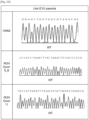
- the liquid exiting the column was removed and 650 ⁇ L of washing buffer (Qiagen) was added. Centrifugation was performed at 13,000 rpm for 1 minute at room temperature. The centrifuged column was placed on a new 1.5 mL-tube, 30 ⁇ L of elusion buffer (Qiagen) was added to the column, and centrifugation was performed at 13,000 rpm for 1 minute at room temperature. The gel-eluted PCR product thus obtained was analyzed by performing Sanger sequencing.
- washing buffer Qiagen
- the parent cell line LIM1215 and the cetuximab-resistant cell line R2 were counted, and each of them was seeded at 3 ⁇ 10 5 cells in a 60 mm dish. After 24 hours, treatment with 1 ⁇ M of each of the compounds of Example 1, Example 2, Example 3, Example 4, Example 5, positive control 1 (BMS-777607), positive control 2 (crizotinib), and positive control 3 (cabozantinib) was performed. After 48 hours had elapsed since the treatment, the cells were collected, resuspended in 1 ⁇ phosphate buffered saline (PBS), and stained with a trypan blue solution. The stained cells were counted using a hemocytometer. Cell counting was performed in duplicate, and the mean and the standard deviation were calculated.
- PBS phosphate buffered saline
- each of the cell lines was treated with the compound of Example 1, and thus a high cell death rate was observed in the cell line R2 exhibiting secondary resistance to cetuximab.
- each of the cell lines was treated with the compound of positive control 1 or positive control 3, cell death was not induced, each of the cell lines was treated with the compound of positive control 2, an increased cell death rate was observed only in the parent cell line, and cell death was not induced in the cell line exhibiting secondary resistance to cetuximab ( FIG. 3 ).
- each cell line was treated with each of the compounds of Example 1, Example 2, Example 3, Example 4, and Example 5, cell death was effectively induced in the cell line R2 exhibiting secondary resistance to cetuximab.
- the compounds of Examples 1 to 5 exhibited remarkably excellent cell death rates in the cell line R2 exhibiting secondary resistance to cetuximab ( FIG. 4 ).
- the parent cell line LIM1215 and the cetuximab-resistant cell line R2 were counted. 2 ⁇ 10 6 cells of each cell line were washed with 1x PBS once and then lysed with 1x RIPA lysis buffer. The cell lysate was reacted on ice for 20 minutes, and then centrifuged at 13,000 rpm for 20 minutes at 4 °C to obtain a supernatant. After proteins in the obtained supernatant were quantified using Bradford method, 20 ⁇ g of the protein was subjected to sodium-polyacrylamide gel electrophoresis (SDS-PAGE).
- the cell line R2 exhibiting secondary resistance to cetuximab was caused to overexpress ⁇ -catenin. Then, treatment with the compound of Example 1 was performed, and cell death induction efficacy was observed. As a result, it was observed that cell death induction efficacy of the compound of Example 1 was reduced ( FIG. 6 ).
- the cell line R2 exhibiting secondary resistance to cetuximab was caused to overexpress ⁇ -catenin.
- treatment with the compound of Example 1 was performed, and expressions of pTyr-mRON, p-ERK, ⁇ -catenin, c-myc, and cleaved caspase-3 were checked.
- expression of pTyr-mRON was decreased by the compound of Example 1 regardless of ⁇ -catenin, and that expressions of p-ERK, ⁇ -catenin, and c-myc were decreased in the cell line transfected with the empty vector and were increased again when ⁇ -catenin was overexpressed.
- cleaved caspase-3 was decreased when ⁇ -catenin was overexpressed ( FIG. 7 ).
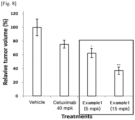
- mice 5-Week-old female BALB/c nude mice were purchased and acclimatized for 1 week. Then, the cell line R2 exhibiting secondary resistance to cetuximab (5 ⁇ 10 6 cells/mice) was diluted in PBS, and injected subcutaneously (100 ⁇ L) into the right dorsal side of the mice. The compound of Example 1 was orally administered when the tumor reached a size of about 100 mm 3 . The compound of Example 1 was administered once a day for 2 weeks, and tumor size and body weight were measured twice a week.
Landscapes
- Health & Medical Sciences (AREA)
- Chemical & Material Sciences (AREA)
- Life Sciences & Earth Sciences (AREA)
- Medicinal Chemistry (AREA)
- General Health & Medical Sciences (AREA)
- Pharmacology & Pharmacy (AREA)
- Animal Behavior & Ethology (AREA)
- Public Health (AREA)
- Veterinary Medicine (AREA)
- Epidemiology (AREA)
- Organic Chemistry (AREA)
- Immunology (AREA)
- Proteomics, Peptides & Aminoacids (AREA)
- Engineering & Computer Science (AREA)
- General Chemical & Material Sciences (AREA)
- Nuclear Medicine, Radiotherapy & Molecular Imaging (AREA)
- Chemical Kinetics & Catalysis (AREA)
- Microbiology (AREA)
- Wood Science & Technology (AREA)
- Zoology (AREA)
- Bioinformatics & Cheminformatics (AREA)
- Analytical Chemistry (AREA)
- Pathology (AREA)
- Genetics & Genomics (AREA)
- Oncology (AREA)
- Endocrinology (AREA)
- Physics & Mathematics (AREA)
- Biophysics (AREA)
- Biotechnology (AREA)
- Molecular Biology (AREA)
- Hospice & Palliative Care (AREA)
- Mycology (AREA)
- Biochemistry (AREA)
- General Engineering & Computer Science (AREA)
- Heterocyclic Carbon Compounds Containing A Hetero Ring Having Oxygen Or Sulfur (AREA)
- Pharmaceuticals Containing Other Organic And Inorganic Compounds (AREA)
Applications Claiming Priority (2)
| Application Number | Priority Date | Filing Date | Title |
|---|---|---|---|
| KR20200014249 | 2020-02-06 | ||
| PCT/KR2021/001566 WO2021158071A1 (fr) | 2020-02-06 | 2021-02-05 | Composition pharmaceutique pour la prévention ou le traitement des cancers associés à une mutation de kras |
Publications (2)
| Publication Number | Publication Date |
|---|---|
| EP4129295A1 true EP4129295A1 (fr) | 2023-02-08 |
| EP4129295A4 EP4129295A4 (fr) | 2023-12-27 |
Family
ID=77200361
Family Applications (1)
| Application Number | Title | Priority Date | Filing Date |
|---|---|---|---|
| EP21750667.4A Withdrawn EP4129295A4 (fr) | 2020-02-06 | 2021-02-05 | Composition pharmaceutique pour la prévention ou le traitement des cancers associés à une mutation de kras |
Country Status (6)
| Country | Link |
|---|---|
| US (1) | US20230346790A1 (fr) |
| EP (1) | EP4129295A4 (fr) |
| JP (1) | JP2023513675A (fr) |
| KR (1) | KR20210100557A (fr) |
| CN (1) | CN115003307A (fr) |
| WO (1) | WO2021158071A1 (fr) |
Cited By (3)
| Publication number | Priority date | Publication date | Assignee | Title |
|---|---|---|---|---|
| EP4154892A4 (fr) * | 2020-05-18 | 2023-12-06 | Wellmarker Bio Co., Ltd. | Composition pharmaceutique pour la prévention ou le traitement du cancer du poumon à petites cellules associé à des mutants de ron et méthode l'utilisant |
| EP4154890A4 (fr) * | 2020-05-18 | 2023-12-06 | Wellmarker Bio Co., Ltd. | Composition pharmaceutique pour la prévention ou le traitement du cancer du pancréas associé à une mutation ron et méthode l'utilisant |
| EP4154891A4 (fr) * | 2020-05-18 | 2023-12-06 | Wellmarker Bio Co., Ltd. | Composition pharmaceutique pour la prévention ou le traitement du cancer du poumon non à petites cellules associé à une mutation ron, et méthode l'utilisant |
Families Citing this family (32)
| Publication number | Priority date | Publication date | Assignee | Title |
|---|---|---|---|---|
| KR20210111711A (ko) * | 2020-03-03 | 2021-09-13 | 웰마커바이오 주식회사 | Kras 돌연변이 및 활성화된 ron이 존재하는 암의 예방 또는 치료용 약학 조성물 |
| US20250195521A1 (en) | 2020-09-03 | 2025-06-19 | Revolution Medicines, Inc. | Use of sos1 inhibitors to treat malignancies with shp2 mutations |
| CA3194067A1 (fr) | 2020-09-15 | 2022-03-24 | Revolution Medicines, Inc. | Derives d'indole servant d'inhibiteurs dans le traitement du cancer |
| TW202309052A (zh) | 2021-05-05 | 2023-03-01 | 美商銳新醫藥公司 | Ras抑制劑 |
| KR20240017811A (ko) | 2021-05-05 | 2024-02-08 | 레볼루션 메디슨즈, 인크. | 암의 치료를 위한 ras 억제제 |
| AR127308A1 (es) | 2021-10-08 | 2024-01-10 | Revolution Medicines Inc | Inhibidores ras |
| CN119212994A (zh) | 2021-12-17 | 2024-12-27 | 建新公司 | 作为shp2抑制剂的吡唑并吡嗪化合物 |
| KR102632547B1 (ko) * | 2021-12-30 | 2024-01-31 | 에스케이온 주식회사 | 리튬 이차 전지용 음극 및 이를 포함하는 리튬 이차 전지 |
| EP4227307A1 (fr) | 2022-02-11 | 2023-08-16 | Genzyme Corporation | Composés pyrazolopyrazine en tant qu'inhibiteurs de shp2 |
| JP2025510572A (ja) | 2022-03-08 | 2025-04-15 | レボリューション メディシンズ インコーポレイテッド | 免疫不応性肺癌を治療するための方法 |
| KR20230144483A (ko) * | 2022-04-06 | 2023-10-16 | 웰마커바이오 주식회사 | Ron 돌연변이와 관련된 두경부암 예방 또는 치료용 약학 조성물 |
| WO2023240263A1 (fr) | 2022-06-10 | 2023-12-14 | Revolution Medicines, Inc. | Inhibiteurs de ras macrocycliques |
| CN120659773A (zh) | 2022-11-09 | 2025-09-16 | 锐新医药公司 | 化合物、复合物以及其制备方法和用途 |
| AU2024241633A1 (en) | 2023-03-30 | 2025-11-06 | Revolution Medicines, Inc. | Compositions for inducing ras gtp hydrolysis and uses thereof |
| AR132338A1 (es) | 2023-04-07 | 2025-06-18 | Revolution Medicines Inc | Inhibidores de ras |
| CR20250420A (es) | 2023-04-07 | 2025-11-20 | Revolution Medicines Inc | Inhibidores macrocíclicos de ras |
| CN121100123A (zh) | 2023-04-14 | 2025-12-09 | 锐新医药公司 | Ras抑制剂的结晶形式 |
| CN121464140A (zh) | 2023-04-14 | 2026-02-03 | 锐新医药公司 | Ras抑制剂的结晶形式、含有其的组合物及其使用方法 |
| TW202508595A (zh) | 2023-05-04 | 2025-03-01 | 美商銳新醫藥公司 | 用於ras相關疾病或病症之組合療法 |
| US20250049810A1 (en) | 2023-08-07 | 2025-02-13 | Revolution Medicines, Inc. | Methods of treating a ras protein-related disease or disorder |
| AU2024360465A1 (en) | 2023-10-12 | 2026-04-09 | Revolution Medicines, Inc. | Macrocyclic ras inhibitors |
| WO2025171296A1 (fr) | 2024-02-09 | 2025-08-14 | Revolution Medicines, Inc. | Inhibiteurs de ras |
| TW202547461A (zh) | 2024-05-17 | 2025-12-16 | 美商銳新醫藥公司 | Ras抑制劑 |
| WO2025255438A1 (fr) | 2024-06-07 | 2025-12-11 | Revolution Medicines, Inc. | Procédés de traitement d'une maladie ou d'un trouble lié à la protéine ras |
| WO2025265060A1 (fr) | 2024-06-21 | 2025-12-26 | Revolution Medicines, Inc. | Compositions thérapeutiques et procédés de gestion d'effets liés au traitement |
| WO2026006747A1 (fr) | 2024-06-28 | 2026-01-02 | Revolution Medicines, Inc. | Inhibiteurs de ras |
| WO2026015801A1 (fr) | 2024-07-12 | 2026-01-15 | Revolution Medicines, Inc. | Méthodes de traitement d'une maladie ou d'un trouble liés à ras |
| WO2026015796A1 (fr) | 2024-07-12 | 2026-01-15 | Revolution Medicines, Inc. | Méthodes de traitement d'une maladie ou d'un trouble lié à ras |
| WO2026015790A1 (fr) | 2024-07-12 | 2026-01-15 | Revolution Medicines, Inc. | Méthodes de traitement d'une maladie ou d'un trouble lié à ras |
| WO2026015825A1 (fr) | 2024-07-12 | 2026-01-15 | Revolution Medicines, Inc. | Utilisation d'un inhibiteur de ras pour traiter le cancer du pancréas |
| WO2026050446A1 (fr) | 2024-08-29 | 2026-03-05 | Revolution Medicines, Inc. | Inhibiteurs de ras |
| WO2026072904A2 (fr) | 2024-09-26 | 2026-04-02 | Revolution Medicines, Inc. | Compositions et méthodes de traitement du cancer du poumon |
Family Cites Families (10)
| Publication number | Priority date | Publication date | Assignee | Title |
|---|---|---|---|---|
| JP2009537632A (ja) * | 2006-05-19 | 2009-10-29 | バイエル・ヘルスケア・アクチェンゲゼルシャフト | 過剰増殖性障害および血管新生障害の処置に有用なピリドンカルボキサミド誘導体 |
| SI2089364T1 (sl) | 2006-11-08 | 2013-10-30 | Bristol-Myers Squibb Company | Spojine piridinona |
| CN102816175B (zh) * | 2011-06-09 | 2015-12-16 | 上海汇伦生命科技有限公司 | 一种杂环并吡啶酮类化合物,其中间体、制备方法和用途 |
| RU2014102935A (ru) | 2011-08-02 | 2015-09-10 | Пфайзер Инк. | Кризотиниб для применения в лечении рака |
| US20140134158A1 (en) * | 2012-05-22 | 2014-05-15 | Alberto Bardelli | Kras mutations and resistance to anti-egfr treatment |
| KR101350006B1 (ko) * | 2012-09-06 | 2014-02-13 | 씨제이제일제당 (주) | 피리돈 유도체를 포함하는 단백질 키나제 억제제 |
| US11564915B2 (en) | 2013-04-04 | 2023-01-31 | Exelixis, Inc. | Cabozantinib dosage form and use in the treatment of cancer |
| US11946934B2 (en) * | 2014-09-03 | 2024-04-02 | Wellmarker Bio Co., Ltd. | Biomarker for predicting the sensitivity to a protein kinase inhibitor and a use thereof |
| WO2019182274A1 (fr) * | 2018-03-08 | 2019-09-26 | Wellmarker Bio Co., Ltd. | Dérivés de thiénopyridine et composition pharmaceutique le comprenant |
| US20220235064A1 (en) * | 2019-08-02 | 2022-07-28 | Wellmarker Bio Co., Ltd. | Oxo-pyridine fusion ring derivative and pharmaceutical composition comprising same |
-
2021
- 2021-02-05 JP JP2022548050A patent/JP2023513675A/ja active Pending
- 2021-02-05 KR KR1020210017066A patent/KR20210100557A/ko active Pending
- 2021-02-05 CN CN202180011346.XA patent/CN115003307A/zh active Pending
- 2021-02-05 WO PCT/KR2021/001566 patent/WO2021158071A1/fr not_active Ceased
- 2021-02-05 EP EP21750667.4A patent/EP4129295A4/fr not_active Withdrawn
- 2021-02-05 US US17/796,513 patent/US20230346790A1/en not_active Abandoned
Cited By (3)
| Publication number | Priority date | Publication date | Assignee | Title |
|---|---|---|---|---|
| EP4154892A4 (fr) * | 2020-05-18 | 2023-12-06 | Wellmarker Bio Co., Ltd. | Composition pharmaceutique pour la prévention ou le traitement du cancer du poumon à petites cellules associé à des mutants de ron et méthode l'utilisant |
| EP4154890A4 (fr) * | 2020-05-18 | 2023-12-06 | Wellmarker Bio Co., Ltd. | Composition pharmaceutique pour la prévention ou le traitement du cancer du pancréas associé à une mutation ron et méthode l'utilisant |
| EP4154891A4 (fr) * | 2020-05-18 | 2023-12-06 | Wellmarker Bio Co., Ltd. | Composition pharmaceutique pour la prévention ou le traitement du cancer du poumon non à petites cellules associé à une mutation ron, et méthode l'utilisant |
Also Published As
| Publication number | Publication date |
|---|---|
| KR20210100557A (ko) | 2021-08-17 |
| WO2021158071A1 (fr) | 2021-08-12 |
| US20230346790A1 (en) | 2023-11-02 |
| EP4129295A4 (fr) | 2023-12-27 |
| JP2023513675A (ja) | 2023-04-03 |
| CN115003307A (zh) | 2022-09-02 |
Similar Documents
| Publication | Publication Date | Title |
|---|---|---|
| EP4129295A1 (fr) | Composition pharmaceutique pour la prévention ou le traitement des cancers associés à une mutation de kras | |
| TWI825637B (zh) | 啶-1,6(2h,7h)-二酮 | |
| EP4115887A1 (fr) | Composition pharmaceutique pour la prévention ou le traitement du cancer présentant une mutation kras et l'activation de ron | |
| TWI694076B (zh) | 三唑并嘧啶化合物及其用途 | |
| RU2686323C2 (ru) | Новые соединения и композиции для ингибирования fasn | |
| JP2024138293A (ja) | バイオマーカー型治療用組成物 | |
| EP4011885A1 (fr) | Dérivé d'oxo-pyridine à cycle condensé et composition pharmaceutique le comprenant | |
| JP2018508563A (ja) | Usp7阻害剤化合物及び使用方法 | |
| US20240343728A1 (en) | Compounds that inhibit pi3k isoform alpha and methods for treating cancer | |
| TR201815685T4 (tr) | Kanser tedavisi için akt ve mek inhibe edici bileşiklerin kombinasyonları. | |
| EP4154891A1 (fr) | Composition pharmaceutique pour la prévention ou le traitement du cancer du poumon non à petites cellules associé à une mutation ron, et méthode l'utilisant | |
| EP4154892A1 (fr) | Composition pharmaceutique pour la prévention ou le traitement du cancer du poumon à petites cellules associé à des mutants de ron et méthode l'utilisant | |
| JP7763538B2 (ja) | Parp7阻害剤及びその使用 | |
| US10173995B2 (en) | Pyridine compounds used as PI3 kinase inhibitors | |
| EP4154890A1 (fr) | Composition pharmaceutique pour la prévention ou le traitement du cancer du pancréas associé à une mutation ron et méthode l'utilisant | |
| KR101777475B1 (ko) | 신규한 디히드로피라노피리미디논 유도체 및 이들의 용도 | |
| KR20230144484A (ko) | 돌연변이형 ron 저해제 및 항-pd-1 항체를 포함하는 암 치료용 약학 조성물 | |
| US20240245692A1 (en) | Pharmaceutical composition for preventing or treating ron-mutation-associated biliary tract cancer | |
| KR20230144483A (ko) | Ron 돌연변이와 관련된 두경부암 예방 또는 치료용 약학 조성물 | |
| EA049995B1 (ru) | Соединения, ингибирующие изоформу альфа pi3k, и способы лечения онкологического заболевания | |
| NZ757707A (en) | Compounds and compositions for treating hematological disorders | |
| NZ757707B2 (en) | Compounds and compositions for treating hematological disorders |
Legal Events
| Date | Code | Title | Description |
|---|---|---|---|
| STAA | Information on the status of an ep patent application or granted ep patent |
Free format text: STATUS: THE INTERNATIONAL PUBLICATION HAS BEEN MADE |
|
| PUAI | Public reference made under article 153(3) epc to a published international application that has entered the european phase |
Free format text: ORIGINAL CODE: 0009012 |
|
| STAA | Information on the status of an ep patent application or granted ep patent |
Free format text: STATUS: REQUEST FOR EXAMINATION WAS MADE |
|
| 17P | Request for examination filed |
Effective date: 20220902 |
|
| AK | Designated contracting states |
Kind code of ref document: A1 Designated state(s): AL AT BE BG CH CY CZ DE DK EE ES FI FR GB GR HR HU IE IS IT LI LT LU LV MC MK MT NL NO PL PT RO RS SE SI SK SM TR |
|
| DAV | Request for validation of the european patent (deleted) | ||
| DAX | Request for extension of the european patent (deleted) | ||
| A4 | Supplementary search report drawn up and despatched |
Effective date: 20231129 |
|
| RIC1 | Information provided on ipc code assigned before grant |
Ipc: A61K 31/444 20060101ALI20231123BHEP Ipc: A61K 31/517 20060101ALI20231123BHEP Ipc: A61K 31/496 20060101ALI20231123BHEP Ipc: A61K 31/4709 20060101ALI20231123BHEP Ipc: A61P 35/00 20060101ALI20231123BHEP Ipc: A61K 31/5377 20060101AFI20231123BHEP |
|
| STAA | Information on the status of an ep patent application or granted ep patent |
Free format text: STATUS: THE APPLICATION HAS BEEN WITHDRAWN |
|
| 18W | Application withdrawn |
Effective date: 20250801 |