EP4131068A1 - Verfahren, system und vorrichtung für die determinierung einer aktion - Google Patents
Verfahren, system und vorrichtung für die determinierung einer aktion Download PDFInfo
- Publication number
- EP4131068A1 EP4131068A1 EP21776443.0A EP21776443A EP4131068A1 EP 4131068 A1 EP4131068 A1 EP 4131068A1 EP 21776443 A EP21776443 A EP 21776443A EP 4131068 A1 EP4131068 A1 EP 4131068A1
- Authority
- EP
- European Patent Office
- Prior art keywords
- event
- target
- group
- time
- events
- Prior art date
- Legal status (The legal status is an assumption and is not a legal conclusion. Google has not performed a legal analysis and makes no representation as to the accuracy of the status listed.)
- Pending
Links
Images


Classifications
-
- G—PHYSICS
- G06—COMPUTING OR CALCULATING; COUNTING
- G06F—ELECTRIC DIGITAL DATA PROCESSING
- G06F18/00—Pattern recognition
- G06F18/20—Analysing
- G06F18/22—Matching criteria, e.g. proximity measures
-
- G—PHYSICS
- G06—COMPUTING OR CALCULATING; COUNTING
- G06V—IMAGE OR VIDEO RECOGNITION OR UNDERSTANDING
- G06V20/00—Scenes; Scene-specific elements
- G06V20/50—Context or environment of the image
- G06V20/52—Surveillance or monitoring of activities, e.g. for recognising suspicious objects
-
- G—PHYSICS
- G06—COMPUTING OR CALCULATING; COUNTING
- G06F—ELECTRIC DIGITAL DATA PROCESSING
- G06F9/00—Arrangements for program control, e.g. control units
- G06F9/06—Arrangements for program control, e.g. control units using stored programs, i.e. using an internal store of processing equipment to receive or retain programs
- G06F9/46—Multiprogramming arrangements
- G06F9/54—Interprogram communication
- G06F9/542—Event management; Broadcasting; Multicasting; Notifications
-
- G—PHYSICS
- G06—COMPUTING OR CALCULATING; COUNTING
- G06V—IMAGE OR VIDEO RECOGNITION OR UNDERSTANDING
- G06V40/00—Recognition of biometric, human-related or animal-related patterns in image or video data
- G06V40/20—Movements or behaviour, e.g. gesture recognition
Definitions
- the present application relates to the technical field of computers, and in particular to an action determination method, system and apparatus.
- a server can determine an action corresponding to an event detected by an event detection device in the scenario according to this event, and trigger another device in the scenario to perform the above action. For example, in a security scenario, after an alarm device detects an alarm event, it reports the alarm event to a server. After the server receives the alarm event, it determines the corresponding action as video recording, and triggers a monitoring device to record.
- the accuracy of the determined action is low. Therefore, there is a requirement of using multiple events to jointly determine the corresponding action, that is, the requirement of using an event group to determine the corresponding action, thereby improving the accuracy of the determined action.
- the recording action is determined directly through the alarm event, but the monitoring device may fail to detect the target object. In this case, the recording action determined through the alarm event is not accurate, but it will still trigger the monitoring device to perform the recording action, which leads to the generation of unnecessary recorded data.
- the purpose of the embodiments of the present application is to provide an action determination method, system, and apparatus, so as to determine a corresponding action jointly through multiple events.
- the specific technical solutions are as follows.
- an action determination method which includes:
- an embodiment of the present application provides an action determination system, which includes a server and at least one event detection device, wherein: the event detection device is configured for detecting a current event that currently occurs, and sending the detected current event to the server;
- the server is configured for receiving the current event, and determining, when there is a target event group that matches an event group in a linkage rule and includes the current event in the obtained events, a target response action corresponding to the target event group from the linkage rule, wherein, an interval between occurrence time of any two events in the target event group does not exceed a preset synchronization fault tolerance duration, and the linkage rule includes a preset correspondence between an event group and a response action.
- an action determination apparatus which includes:
- an embodiment of the present application provides an electronic device, which includes a processor and a memory;
- an embodiment of the present application provides a non-transitory storage medium storing computer programs thereon which, when executed by a processor, cause the processor to implement steps of the action determination method of any one of the first aspect.
- an embodiment of the present application further provides a computer program product including instructions that, when running on a computer, cause the computer to implement steps of the action determination method of any one of the first aspect.
- the action determination when applying the solutions provided by the embodiments of the present application includes: obtaining a current event detected by an event detection device; when there is a target event group that matches an event group in a linkage rule and includes the current event in the obtained events, determining a target response action corresponding to the target event group from the linkage rule. Since the interval between the occurrence time of any two events in the target event group does not exceed a preset synchronization fault tolerance duration, it can be considered that all events in the target event group occur at the same time, and further, an action corresponding to the target event group can be determined in the linkage rule. It can be seen that the corresponding action can be determined jointly through multiple events by applying the action determination solution provided by the embodiments of the present application.
- an embodiment of the present application provides an action determination method.
- the action determination method can be applied to a server included in the action determination system.
- the action determination system further includes at least one event detection device.
- the event detection device is a device for detecting an event that occurs.
- the above-mentioned event detection device may be an alarm device for detecting an alarm event.
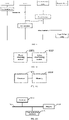
- FIG. 1 is a schematic flow chart of an action determination method according to an embodiment of the present application.
- the action determination method includes the following steps 101 to 102.
- Step 101 obtaining a current event detected by an event detection device.
- the event detection device when it detects an event, it can directly send the detected event to a server, or forward the detected event to a server through another device.
- the event content of any event may include, but is not limited to, the identifier of the event detection device and the identifier of the event.
- the server can obtain information such as the event detection device that detected the event and the type of the event that occurred according to the event content of the received event.
- sending the detected event to a server can be understood as sending the event content of the detected event to the server.
- step 101 of obtaining a current event detected by an event detection device can be understood as obtaining the event content of the current event detected by the event detection device.
- the identifier of the event detection device may be at least one of the serial number, production number, and communication address of the device, and the event detection device that detected the event can be determined through the above identifier.
- the identifier of the event may be an event code obtained by encoding each of possible events in advance, and the event that occurred can be determined through the identifier of the event.
- the above-mentioned event content may further include the identifier of an event occurrence channel.
- the event occurrence channel is a channel in which an event occurs as detected by the event detection device, and the identifier of the event occurrence channel may be the channel number, the serial number of a signal transmission path, and the like.
- the channel in which the event occurred in the event detection device can be determined through the identifier of the event occurrence channel.
- the above-mentioned channel may be an area where events may occur in the scene, such as a vehicle door area, an office entrance area, a road intersection area, and the like.
- the above channel may also be a connection corresponding to an image acquisition device such as a camera, and one camera corresponds to one channel.
- the identifier of an access control device on a vehicle is M1, and the access control device M1 is used to detect events that occur on the left front door, left rear door, right front door, and right rear door of the vehicle, that is, the access control device M1 is used to detect events that occur in 4 channels.
- the identifier of the channel where the left front door is located is L1
- the identifier of the channel where the left rear door is located is L2
- the identifier of the channel where the right front door is located is R1
- the identifier of the channel where the right rear door is located is R2.
- Possible events of the vehicle door include an opening event and a closing event, wherein the identifier of the opening event is OP, and the identifier of the closing event is CL.
- the event with the content "M1-L1-OP" can be sent to a server, and the server can determine, according to the received event content, the access control device identified as M1 has detected that an opening event identified as OP has occurred on the front left door corresponding to the event occurrence channel L1.
- the server can determine the occurrence time of the current event.
- the server may determine time carried in the event content of the current event as the occurrence time of the current event.
- the above-mentioned event content can also carry the occurrence time of the event, and the carried time is the time when the event detection device determines the occurrence of the current event, so that the server can directly determine the occurrence time of the event according to the event content without any need to determine the occurrence time of the event according to its own clock and other information, thereby improving the action determination efficiency.
- there may be errors in time systems of the server and the event detection device and there may be a sending delay due to a network delay during the process of sending events, resulting in errors between the receiving time of the current event received by the server and the actual occurrence time of the current event.
- the time carried in the event content is used as the occurrence time of the event, which can improve the accuracy of the occurrence time, and then can improve the accuracy of event group matching when matching the event group that occurs at the same time in the future, so that the accuracy of determining the target response action according to the event group is higher.
- the server may determine the acquisition time of the current event as the occurrence time of the current event. Specifically, the server can perform time calibration on the event detection device, so that the time system of the server and the time system of the event detection device can be kept consistent, and when the network is good, the sending delay when the event detection device sends events can be ignored. In the above case, the server can take the acquisition time of the obtained event as the occurrence time of the event.
- the above-mentioned action determination system further includes a relay server, wherein, after the event detection device detects the current event, it can send the detected current event to the relay server, and then the relay server receives the current event and sends the current event to the server.
- Step 102 when there is a target event group that matches an event group in a linkage rule and includes the current event in the obtained events, determining a target response action corresponding to the target event group from the linkage rule.
- the interval between the occurrence time of any two events in the target event group does not exceed a preset synchronization fault tolerance duration.
- the synchronization fault tolerance duration can be 2 seconds, 3 seconds, 5 seconds, etc.
- the target event group may include events that occurred earlier and/or later than the current event.
- the value of the above synchronization fault tolerance duration may also be 0. That is, when the occurrence time of the two events coincide, the two events are considered to occur at the same time.
- the interval between the occurrence time of any two events in the target event group does not exceed the preset synchronization fault tolerance duration
- the target event group includes at least the current event.
- the current event is an event processed this time, which is the latest received event.
- the action triggering process has been executed before the current event is processed, and there is no need to repeat the above process. Therefore, the target event group includes at least the current event, which can avoid repeated execution of action triggering steps, thus saving computation resource.
- the above linkage rule is a pre-configured rule including a preset correspondence between an event group and a response action.
- each event group may correspond to one or more response actions, that is, one event group may determine one or more response actions.
- the action content of the response action may include an action identifier.
- the action identifier may be an action code obtained by encoding each of possible actions in advance, and the action can be determined by the action identifier.
- the above actions also vary according to specific application scenarios. For example, the above actions may be video storing, audio storing, object recognition, etc.
- matching an event group in the linkage rule means that the target event group and this event group in the linkage rule contain the same number of events and the same event content.
- the corresponding response action can be determined in the linkage rule.
- the above event content may be described based on an event type and the resource number of the corresponding event detection device.
- the occurrence time of the event may also be considered.
- the target event group is determined to match an event group in the linkage rule only when the occurrence time of the events included in the target event group and included in the event group in the linkage rule also match.
- it can be searched from the received events whether there is a target event group that matches an event group in the linkage rule and includes the current event, and when the target event group is found, a target response action corresponding to the target event group is determined from the linkage rule.
- the linkage rule includes the correspondence between an event group and a response action
- the target event group matches an event group in the linkage rule
- the response action corresponding to the target event group can be determined in the linkage rule, and the determined response action can be taken as a target response action.
- the target response actions respectively corresponding to respective target event groups may be determined in the linkage rule respectively.
- a difference value between the occurrence time and the acquisition time of the current event can also be determined.
- the difference value meets a preset delay allowance condition and there is the target event group matching the event group in the linkage rule and containing the current event in the obtained events
- the target response action corresponding to the target event group can be determined from the linkage rule.
- the occurrence time of the current event is the acquisition time when the server obtains the current event
- the above difference value is 0, in this case, there is no need to determine the difference value between the occurrence time and the acquisition time.
- the above-mentioned delay allowance condition may include that the above-mentioned difference value is not greater than a preset delay allowance duration, or that the above-mentioned difference value is less than a preset duration threshold value.
- the above-mentioned delay allowance duration may be 7 seconds, 8 seconds, 10 seconds, etc., which is not limited in this embodiment of the present application.
- the above-mentioned delay allowance duration may be different from the duration threshold value.
- the target event group can be determined according to the current event.
- the obtained event may be an event whose difference value between the occurrence time and the acquisition time meets the preset delay allowance condition from the cached events detected by the event detection device. That is, in this embodiment, the event which meets the delay allowance condition from the cached events detected by the event detection device is called an obtained event. In this way, events can be screened to remove invalid events, thereby improving the accuracy and efficiency of the target event group determination.
- the occurrence time of the current event is the acquisition time when the server obtains the current event
- the above difference value is 0, in this case, there is no need to determine the difference value between the occurrence time and the acquisition time.
- the obtained event can be cached.
- the difference value between the occurrence time and the acquisition time of the event may be determined, and the event is cached only when the difference value meets the preset delay allowance condition, so that for each of the cached events, the difference value between the occurrence time and the acquisition time meets the preset delay allowance condition. In this way, all the cached events meet the above delay allowance condition, and each time when judging whether to determine a target response action after obtaining the current event, the judgment can be made only for the cached events.
- the obtained event may be an event whose occurrence time is within a second time range from the cached events detected by the event detection device.
- the second time range is the time range determined with the current time as a benchmark and the preset delay allowance duration as an extension duration.
- the obtained event may be cached, and when determining a target event group, the target event group is determined only from the cached events whose occurrence time is within a second time range.
- the obtained events are events, from the cached events whose occurrence time is within the second time range.
- an event whose difference value between the occurrence time and the current time is greater than the preset delay allowance duration can be continuously detected from the cached events; and the detected event is removed from the cached events.
- the above-mentioned obtained event may be not only an event that meets a preset delay allowance condition, but also an event whose occurrence time is within the second time range.
- the delay allowance condition is that the aforementioned difference value is less than the preset duration threshold value, and the aforementioned duration threshold value and the delay allowance duration are different, in this case, the above-mentioned obtained event is the intersection of the second type event and the third type event.
- the second type event is an event whose difference value is less than the duration threshold value
- the third type event is an event whose occurrence time is within the second time range.
- the action determination when applying the solutions provided by the embodiments includes: obtaining a current event detected by an event detection device; when there is a target event group that matches an event group in a linkage rule and includes the current event in the obtained events, determining a target response action corresponding to the target event group from the linkage rule. Since the interval between the occurrence time of any two events in the target event group does not exceed a preset synchronization fault tolerance duration, it can be considered that all events in the target event group occur at the same time, and further a response action corresponding to the target event group can be determined in the linkage rule. It can be seen that the corresponding action can be determined jointly through multiple events by applying the action determination solution provided by the aforementioned embodiments.
- the linkage rule includes an event group 1 and an event group 2, wherein the event group 1 includes a first event and a second event, the event group 2 includes a second event and a third event, the first event indicates that an object is detected, and the second event indicates that infrared rays are reflected, and the third event indicates that a red light is ran.
- the response action corresponding to the event group 1 is recording of camera 1, and the response action corresponding to event group 2 is recording of camera 2.
- the second event is generated.
- the server obtains the second event as the current event.
- the events that the server has obtained include the second event obtained at the 1 st second, the third event obtained at the 3rd second, and the first event obtained at the 8th second.
- a target event group including the first event obtained at 8s and the second event obtained at 10s matches the above event group 1, and the time interval of 2s between 8s and 10s does not exceed the synchronization fault tolerance duration of 20s, the response action corresponding to the event group 1 is recording of camera 1. Therefore, it is determined that the target response action is recording of camera 1, and camera 1 starts recording.
- the action content of the response action may further include the identifier of a response device.
- the response device is a device for executing the determined action.
- the response device may be a hard disk device that executes a video storage action, or the like.
- the identifier of the response device is the identifier of a device for executing a response action, which can be at least one of the serial number, production number, and communication address of the device, and the response device for executing the response action can be determined by the above-mentioned identifier. In this way, not only the action that occurs, but also the response device for executing the action can be determined according to the action content of the response action.
- the above-mentioned action content may further include the identifier of the action response channel.
- the action response channel is an channel operated by the response action in all response channels of the response device.
- the identifier of the action response channel may be the number of the response channel or the like.
- the object operated in response to the action in the response device can be determined through the identifier of the action response channel.
- the identifier of a video storage device in a monitoring system is H1
- the video storage device H1 is used to store the video transmitted by a first signal source, a second signal source, and a third signal source, that is, the video storage device H1 can execute response actions for 3 response channels.
- the identifier of the response channel where the first signal source is located is Y1
- the identifier of the response channel where the second signal source is located is Y2
- the identifier of the response channel where the third signal source is located is Y3
- the response action performed by the video storage device includes an storage action whose identifier is S1.
- the response action is specifically: triggering the video storage device with the response device identifier of H1 to perform the storage action identified as S1 on the video input by the second signal source with the action response channel identifier of Y2, the action content of the response action can be "H1 -Y2-S 1".
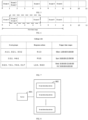
- FIG. 2 is a schematic diagram of a linkage rule according to an embodiment of the present application.
- the linkage rule includes each event group and response actions respectively corresponding to respective event groups.
- the event content of each event in the event group includes the identifier of the event detection device, the identifier of the event occurrence channel, the identifier of the event.
- the action content of each action in the response action includes the identifier of a response device, the identifier of the action response channel, the identifier of the action.
- the triggered linked action can be determined as "P-5-5" according to the shown linkage rule.
- the first letters in “C-2-2" and “H-6-1 ", namely C and H, represent the identifiers of the event detection devices, and the first numbers, namely 2 and 6, represent the identifiers of the event occurrence channels, and the second numbers represent the identifiers of the events; and the letter P in "P-5-5" represents the identifier of the response device, the first number 5 represents the identifier of the corresponding channel of the action, and the second number 5 represents the identifier of the action.
- the above action determination method further includes: triggering, based on the determined target response action, a response device to execute the target response action.
- the server can determine the response device for executing the above target response action according to the action content of the target response action, and send a trigger instruction about the target response action to the above response device.
- the response device determines an object to execute the action according to the identifier of the channel in the action content of the target response action, and implements the target response action for the determined object.
- trigger instructions respectively for the target response actions may be sent to the corresponding response devices respectively, to trigger each response device to execute a corresponding target response action.
- the server in the case that the server includes a server and a relay server, the server may send, after determining the target response action, a trigger instruction about the target response action to the relay server, and then the relay server triggers the corresponding response device to execute the target response action.
- the method may further include the following steps 103-104.
- Step 103 determining a to-be-matched event group(s) containing the current event from the acquired events.
- the interval between the occurrence time of any two events in each of the determined to-be-matched event group(s) does not exceed the synchronization fault tolerance duration.
- the current event can be directly taken as the to-be-matched event group(s).
- the to-be-matched event group(s) only include(s) the current event, and does not include other events in the obtained events.
- the current event can be combined with such type of events to obtain a to-be-matched event group(s) in which the interval of occurrence time of any two events is not larger than the synchronization fault tolerance duration. Since there are multiple combinations of multiple events, multiple to-be-matched event groups can be obtained.
- the to-be-matched event group can also contain only the current event, which is not limited in the embodiment of the present application.
- the received events include E1, E2, E3, and E4, where E3 is the current event, and the interval between the occurrence time of any two events above does not exceed the synchronization fault tolerance duration.
- the determined to-be-matched event groups include: (E3), (E1, E3), (E2, E3), (E4, E3), (E1, E2, E3), (E2, E3, E4), (E1, E3, E4), (E1, E2, E3, E4).
- the number of events included in the to-be-matched event group may be within a preset number range, and the preset number range may be [1, 4], [2, 4], [3, 5], etc.
- the preset number range may be [1, 4], [2, 4], [3, 5], etc.
- the number of events included in the to-be-matched event group may not be greater than the maximum number of events included in each event group in the linkage rule. For example, assuming that the linkage rule contains 5 event groups, the number of events included in each event group is 3, 4, 2, 2, and 3, wherein the maximum number of events included is 4.
- the number of events included in the to-be-matched event group is greater than the above-mentioned maximum number, no corresponding response action can be found in the linkage rule for this to-be-matched event group. Therefore, the number of events included in the to-be-matched event group can be limited to not more than the above maximum number, which can reduce the probability of obtaining an invalid to-be-matched event group, thereby saving computational resources.
- Step 104 determining from the determined to-be-matched event group(s) whether there is a target event group that matches an event group in the linkage rule.
- a target event group that matches an event group in the linkage rule is determined from the determined to-be-matched event group(s).
- the to-be-matched event group can be matched with the event groups in the linkage rule in sequence.
- the to-be-matched event group and an event group in the linkage rule contain the same number of events and the same events, it can be considered that the to-be-matched event group matches this event group in the linkage rule, so it is determined that there is a target event group matching an event group in the linkage rule.
- the linkage rule when searching for a target event group, it is also possible to first search the linkage rule to determine whether there is a comparison event group including the current event. If there is no comparison event group, it means that the current event does not have the possibility of triggering a linked action. If there is the comparison event group, it is judged whether each event included in the comparison event group has occurred within the synchronization fault tolerance duration before and after the occurrence time of the current event. If each event has occurred, the comparison event group can be determined as the target event group. The judgment is made for each comparison event group in turn, until all comparison event groups are traversed.
- FIG. 4 is a schematic flow chart of another action determination method according to an embodiment of the present application.
- the above step 103 of determining a to-be-matched event group(s) may specifically include the following steps 1031-1032.
- Step 1031 adding the current event to an event queue based on the occurrence time of the current event.
- the event queue is a queue in which the obtained events are arranged in the order of occurrence time.
- the above-mentioned order of the occurrence time includes the order of occurrence from early to late and the order of occurrence from late to early.
- the difference value between the occurrence time of the current event and the acquisition time of obtaining the current event can be determined. If the difference value is greater than the preset delay allowance duration, it means that the received event is abnormal, therefore, the current event is not added to the event queue. If the above difference value is not greater than the preset delay allowance duration, the above current event can be added to the event queue at the position corresponding to its occurrence time.
- the acquisition time of the current event is the 15th second, and the preset delay allowance duration is 6 seconds
- the current event is added to the event queue; if the current event occurs at the 5th second, the difference value between the above acquisition time and the occurrence time is greater than the above preset delay allowance duration, so the current event is not added to the event queue.
- the events included in the event queue may be events that occur within a second time range.
- the second time range is a time range determined with the current time as a benchmark and the preset delay allowance duration as an extension duration. For example, assuming that the current time is the time at the 8th second, and the preset delay allowance duration is 5s, then the second time range is the time range between the time at the 3rd second and the time at the 13th second.
- the events cached in the event queue are events whose difference value between the occurrence time and the current time is not greater than the preset delay allowance duration.
- events cached in the event queue are events whose occurrence time is close to the current time, and events that occur too early and are useless are discarded, thereby reducing the length of the event queue and saving cache resources.
- Step 1032 determining the to-be-matched event group(s) including the current event from the event queue by using the synchronization fault tolerance duration.
- each of events can be matched one by one in the event queue by using the synchronization fault tolerance duration to obtain events whose interval of occurrence time does not exceed the synchronization fault tolerance duration, so as to determine the to-be-matched event group according to the obtained events.
- the event queue may include multiple positions, each position corresponds to one time point, and time points respectively corresponding to respective positions in the event queue follow a preset variation rule, and the queue position of each event in the event queue is the position corresponding to the occurrence time of this event.
- the above-mentioned preset variation rule may be a rule that progresses in time order, of course, it is not limited to a progressive rule, for example, it may also be a rule that reverses in time order.
- the position corresponding to the time point can be found in the event queue, and then the event is added to the found position.
- FIG. 5 is a schematic diagram of an event queue according to an embodiment of the present application.
- 0, 1, 2 ... represent the time points respectively
- each position in the event queue is represented by a grid, that is, each time point corresponds to one position, and the time points respectively corresponding to respective positions progress in time order.
- Each event is added to the event queue according to the time point corresponding to the occurrence time. It is assumed that the current event is event 4, and the occurrence time of event 4 is the time at the 4th second, therefore, the above-mentioned event 4 is added to the position corresponding to the 4th second as shown in the figure.
- the time points respectively corresponding to respective positions in the event queue may be time points within the second time range. In this way, all the events cached in the event queue are events whose occurrence time are close to the current time, and events that occur too early and are useless are discarded, thereby reducing the length of the event queue and saving cache resources.
- the to-be-matched event group(s) including the current event are determined from the event queue by performing sequential matching in the event queue through a matching window.
- the above matching window is not a real window, but a virtual window for determining events from the event queue in a certain length.
- the determined event is an event located within the matching window.
- the length of the matching window is the length corresponding to the synchronization fault tolerance duration in the event queue. That is to say, in the case of describing the length of the matching window in terms of duration, the length of the matching window is less than or equal to the synchronization fault tolerance duration, so that the interval between the occurrence time of any two the events in the matching window does not exceed the synchronization fault tolerance duration, therefore, the events in the matching window can be considered as synchronous events. In this way, events obtained through matching in which the interval between the occurrence time of any two events does not exceed the synchronization fault tolerance duration can be avoided, and the matching efficiency can be improved.
- the length of the matching window is equal to the synchronization fault tolerance duration.
- a maximum number of events in which the interval between the occurrence time of any two events does not exceed the synchronization fault tolerance duration can be determined according to the matching window at one time.
- the difference between the length of the matching window and the length of the synchronization fault tolerance duration can be set to be less than a preset length difference.
- the above-mentioned preset length difference may be determined according to the precision of the duration of the event.
- the length of the matching window may also be not less than the length between adjacent positions corresponding to adjacent time points in the event queue.
- the length is hereinafter referred to as an adjacent length.
- the matching window can only contain events that occurred at one time point at the same time, and only the current event may have occurred at one time point, so the obtained to-be-matched event group only contains the current event, it is difficult to determine a response action through multiple events.
- the matching window can contain events that occurred at two or more time points at the same time, so that the probability of multiple events in the to-be-matched event group is high, and it is easier to determine the response action through multiple events. It is worth mentioning that in this case, when obtaining the to-be-matched event group, the interval between the occurrence time of any two events needs to be considered, and events with an interval exceeding the synchronization fault tolerance duration are excluded, so as to ensure that the interval between the occurrence time of any two events in the to-be-matched event group does not exceed the synchronization fault tolerance duration.
- the maximum number of events contained in the to-be-matched event group is related to the length of the matching window.
- the matching window contains more time points. Since each time point corresponds to one position in the event queue, and one or more events may occur in each position, the longer the length of the matching window is, the greater the maximum number of events contained in the to-be-matched event group.
- the matching window there may be multiple events in the matching window including the current event.
- multiple to-be-matched event groups including the current event can be obtained.
- FIG. 6 is a schematic diagram of a matching window according to an embodiment of the present application.
- the length of the matching window is the length between the corresponding positions in the event queue at time points with an interval of 4 seconds.
- the matching window slides to the current position, and the matching window contains event 2, event 3, and event 4.
- the to-be-matched event groups obtained according to the matching window include: (event 4), (event 2, event 4), (event 3, event 4), (event 2, event 3, event 4).
- the to-be-matched event group needs to include the current event
- the current event also needs to be kept within the matching window.
- the sliding range of the matching window is the queue area corresponding to the first time range in the event queue, and the queue area corresponding to the first time range is the area between the start position corresponding to the start time of the first time range and the end position corresponding to the end time of the first time range.
- the first time range is a range with the occurrence time of the current event as a center and the synchronization fault tolerance duration as an extended duration. Specifically, it is the first time range obtained by extending forward and backward respectively with the synchronization fault tolerance duration as the extension duration and the occurrence time of the current event as the center. For example, assuming that the reference time is the time at the 5th second and the synchronization fault tolerance duration is 3 seconds, the first time range is the range from the 2nd second to the 8th second.
- the queue area corresponding to the first time range is an area formed by the queue positions respectively corresponding to respective time points in the first time range. Taking FIG. 5 as an example, assuming that the first time range is from the 0th second to the 4th second, then the queue area corresponding to the first time range is an area composed of 4 positions from the left; assuming that the first time range is from the 0th to the 8th second, the queue area corresponding to the first time range is an area composed of 8 positions from the left.
- the queue area corresponding to the first time range is the area from the position of the 0th second to the position of the 8th second in the event queue, and the matching window needs to slide within the above-mentioned queue area.
- the matching can be sequentially performed from a position corresponding to a start time of a first time range as a start position in the queue area corresponding to the first time range in the event queue by sliding the matching window in a preset sliding step length.
- the to-be-matched event group in the matching window including the current event is determined within the queue area until the matching ends.
- the above-mentioned preset sliding step length may be the length between adjacent positions corresponding to adjacent time points in the event queue, or may be the length between positions corresponding to time ranges separated by multiple time points, or may be a preset set fixed duration.
- the preset sliding step length may be determined according to the precision of the event occurrence time. For example, assuming that the precision of the occurrence time of the event is 1 second, the preset sliding step length can be determined to be the length corresponding to the time interval of 1 second in the event queue; assuming that the precision of the occurrence time of the event is 0.1 second, the preset sliding step length can be determined to be the length corresponding to the time interval of 0.1 seconds in the event queue.
- Events located in the matching window can be combined with the current event to obtain a to-be-matched event group(s) including the current event, until the end of the matching.
- the matching window along the sliding direction of the matching window, if the number of events corresponding to positions from the first position to the second position in the event queue is less than the preset event number, it can indicate the end of the matching, wherein the first position is the position corresponding to the start side of the matching window in the first time range, and the second position is the end position in the first time range.
- the linkage rule includes a correspondence among an event group, a response action, and a triggering time range. That is, for each event group, the response action and the triggering time range corresponding to this event group are recorded in the linkage rule.
- the above-mentioned triggering time range can be understood as an effective time range of the linkage rule.
- the corresponding response action in the linkage rule is determined according to the target event group as the target response action.
- the linkage rule is not considered to be effective, so the corresponding response action in the linkage rule is not determined as the target response action.
- the above-mentioned triggering time range may be preset according to the application scenario. Take the access control device of an company as an example. During the time period of 8:00-17:00 from Monday to Friday, the frequency of company personnel entering and leaving the company is high, which however is low during the other time period. Therefore, the triggering time range of the access control device to open the access control can be set as the period of 8:00-17:00 from Monday to Friday.
- the target triggering time range corresponding to the target event group may be determined from the linkage rule. In case that there is an intersection between the target triggering time range and a third time range, the response action corresponding to the target event group is determined as the target response action.
- the above target triggering time range is a triggering time range recorded in the correspondence for the target event group in the linkage rule.
- the third time range is a range between the earliest occurrence time and the latest occurrence time among the occurrence time of the events included in the target event group. For example, assuming that the events included in the target event group have the earliest occurrence time of 15:00:05 and the latest occurrence time of 15:00:12, the third time range is from 15:00:05 to 15:00:12.
- the target response action is no longer determined.
- FIG. 7 is a schematic diagram of another linkage rule according to an embodiment of the present application.
- the target event group is "A-1-1, B-2-1, D-3-2”
- the third time range corresponding to the target event group is Mon 0:00:56-1:00:02
- the target triggering time range is Mon 1:00:00-5:00:00. It can be seen that there is an intersection between the third time range and the target triggering time range, and it is considered that the rule takes effect. Therefore, "R-1-3" is determined as the target response action.
- FIG. 8 is a schematic structural diagram of an action determination system according to an embodiment of the present application.
- the system includes a server 801 and at least one event detection device 802, wherein: the event detection device 802 is configured for detecting a current event that currently occurs, and sending the detected current event to the server 801;
- the server 801 is configured for receiving the current event, and determining, when there is a target event group that matches an event group in a linkage rule and includes the current event in the obtained events, a target response action corresponding to the target event group from the linkage rule, wherein, an interval between occurrence time of any two events in the target event group does not exceed a preset synchronization fault tolerance duration, and the linkage rule includes a preset correspondence between an event group and a response action.
- the above-mentioned event detection device may include various electronic devices used to detect the occurrence of an event in an application scenario.
- the above-mentioned application scenario may be a shop, a residence, a factory, etc.
- the electronic device in the application scenario may include a video acquisition device, an access control device, a lighting control device, etc.
- the server has a communication interface, through which the server receives the events sent by the event detection device.
- system further includes at least one response device, wherein:
- the alarm device can detect an alarm event and can also send an alarm signal according to the alarm event, so the above-mentioned response device and event detection device can be the same device.
- the above-mentioned system further includes a client, wherein:
- the above-mentioned client may be a mobile device, such as a mobile phone, a tablet computer, or an electronic computer, etc. In this way, it is convenient for users to update the linkage rule through the client at any time.
- the above-mentioned system further includes a relay server, wherein:
- the server may also be configured for sending a trigger instruction about the target response action for at least one response device to the relay server after determining the target response action;
- the relay server may also be configured for receiving the trigger instruction about the target response action for at least one response device, and sending the trigger instruction about the target response action to the at least one response device.
- FIG. 9 is a signaling diagram of an action triggering process according to an embodiment of the present application.
- the client configures the linkage rule and sends the configured linkage rule to the server;
- the response device After receiving the trigger instruction, the response device triggers the linked action according to the received trigger instruction.
- the action determination when applying the solutions provided by the aforementioned embodiments includes: obtaining a current event detected by an event detection device; when there is a target event group that matches an event group in a linkage rule and includes the current event in the obtained events, determining a target response action corresponding to the target event group from the linkage rule. Since the interval between the occurrence time of any two events in the target event group does not exceed a preset synchronization fault tolerance duration, it can be considered that all events in the target event group occur at the same time, and further, an action corresponding to the target event group can be determined in the linkage rule. It can be seen that the corresponding action can be determined jointly through multiple events by applying the action determination solution provided by the aforementioned embodiments.
- FIG. 10 is a schematic structural diagram of an action determination apparatus according to an embodiment of the present application, the apparatus includes:
- the above-mentioned apparatus further includes:
- the to-be-matched event group determination module includes:
- the to-be-matched event group determination unit is specifically configured for performing, from a position corresponding to a start time of a first time range as a start position, the sequential matching in a queue area corresponding to the first time range in the event queue by sliding the matching window in a preset sliding step length, and in the matching process, determining, within the queue area, the to-be-matched event group(s) in the matching window including the current event until the matching ends, wherein the first time range is a range with the occurrence time of the current event as a center and the synchronization fault tolerance duration as an extension duration.
- the apparatus further includes a time difference value determination module, configured for determining, after obtaining the current event detected by the event detection device, a difference value between occurrence time and acquisition time of the current event; the action determination module is configured for determining, when the difference value meets a preset delay allowance condition, and there is the target event group that matches the event group in the linkage rule and includes the current event in the obtained events, the target response action corresponding to the target event group from the linkage rule.
- the linkage rule specifically includes a preset correspondence among an event group, a response action, and a triggering time range
- the action determination module is specifically configured for determining, when there is a target event group that matches an event group in a linkage rule and includes the current event in the obtained events, a target triggering time range corresponding to the target event group from the linkage rule; in case that there is an intersection between a third time range and the target triggering time range, determining a response action corresponding to the target event group as the target response action, wherein the third time range is a range between an earliest occurrence time and a latest occurrence time among occurrence time of events included in the target event group.
- the apparatus further includes an action triggering module, configured for triggering, after determining the target response action corresponding to the target event group from the linkage rule, a response device to execute the determined target response action based on the target response action.
- the event group matching an event group in the linkage rule includes an event group containing the same number of events and the same event content as the event group in the linkage rule, wherein the event content is described based on an event type and a resource number of a corresponding event detection device.
- the apparatus further includes an occurrence time determination module, which is configured for:
- the obtained events are events whose difference values between occurrence time and acquisition time meet a preset delay allowance condition from cached events detected by the event detection device; and/or the obtained events are events whose occurrence time is within a second time range from the cached events detected by the event detection device, and the second time range is a time range determined with a current time as a benchmark and a preset delay allowance duration as an extension duration.
- the apparatus further includes an event removing module, which is configured for: detecting continuously, from the cached events, an event whose difference value between the occurrence time and the current time is greater than the preset delay allowance duration; removing the detected event from the cached events.
- the action determination when applying the solutions provided by the aforementioned embodiments includes: obtaining a current event detected by an event detection device; when there is a target event group that matches an event group in a linkage rule and includes the current event in the obtained events, determining a target response action corresponding to the target event group from the linkage rule. Since the interval between the occurrence time of any two events in the target event group does not exceed a preset synchronization fault tolerance duration, it can be considered that all events in the target event group occur at the same time, and further, an action corresponding to the target event group can be determined in the linkage rule. It can be seen that the corresponding action can be determined jointly through multiple events by applying the action determination solution provided by the aforementioned embodiments.
- the embodiment of the present application also provides an electronic device.
- the electronic device includes a processor 1101 and a memory 1103.
- the memory 1103 is configured for storing computer programs; the processor 1101 is configured for implementing the above-mentioned action determination method when executing the programs stored on the memory 1103.
- the electronic device further includes a communication interface 1002 and a communication bus 1104, wherein the processor 1101, the communication interface 1102 and the memory 1103 communicate with each other via the communication bus 1104.
- the communication bus aforementioned in the electronic device may be a peripheral component interconnect (PCI) bus or an extended industry standard architecture (EISA) bus and the like.
- the communication bus can include an address bus, a data bus, a control bus, or the like. For representation, only one thick line is shown in the figure, which does not mean there is only one communication bus or one type of communication bus.
- the communications interface is configured for communications between the aforementioned electronic device and other devices.
- the memory can include a random access memory (RAM), or can include a non-volatile memory (NVM), for example at least one disk memory.
- RAM random access memory
- NVM non-volatile memory
- the memory can also be at least one storage device located away from the processor described above.
- the aforementioned processor can be a general-purpose processor, such as a central processing unit (CPU), a network processor (NP), or the like. It can also be a digital signal processor (DSP), an application specific integrated circuit (ASIC), a field-programmable gate array (FPGA) or other programmable logic device, a discrete gate or transistor logic device, a discrete hardware component.
- CPU central processing unit
- NP network processor
- DSP digital signal processor
- ASIC application specific integrated circuit
- FPGA field-programmable gate array
- the embodiment of the present application provides a computer readable storage medium storing computer programs which, when executed by a processor, cause the processor to implement steps of any of the action determination method.
- the embodiment of the present application provides a non-transitory storage medium storing computer programs, which when executed by the processor, cause the processor to implement steps of any of the action determination method.
- the non-transitory storage media may be a read-only memory, a random access memory, a read-only optical disk, a magnetic tape, a floppy disk, an optical data storage device, and the like.
- the embodiment of the present application further provides a computer program product including instructions that, when running on a computer, cause the computer to implement any of the action determination method in the above-mentioned embodiments.
- the action determination when applying the solutions provided by the aforementioned embodiments includes: obtaining a current event detected by an event detection device; when there is a target event group that matches an event group in a linkage rule and includes the current event in the obtained events, determining a target response action corresponding to the target event group from the linkage rule. Since the interval between the occurrence time of any two events in the target event group does not exceed a preset synchronization fault tolerance duration, it can be considered that all events in the target event group occur at the same time, and further an action corresponding to the target event group can be determined in the linkage rule. It can be seen that the corresponding action can be determined jointly through multiple events by applying the action determination solution provided by the aforementioned embodiments.
- the aforementioned embodiments it may be implemented in whole or in part by software, hardware, firmware, or any combination thereof.
- software it may be implemented in whole or in part in the form of a computer program product.
- the computer program product includes one or more computer instructions. The processes or functions described in accordance with the embodiments of the present invention is produced in whole or in part, when the computer program instructions are loaded and executed on a computer.
- the computer may be a general-purpose computer, a dedicated computer, a computer network, or other programmable device.
- the computer instructions may be stored in a computer-readable storage medium or may be transmitted from one computer-readable storage medium to another computer-readable storage medium, for example, the computer instructions may be transmitted from a web site, a computer, a server, or a data center to another web site, another computer, another server, or another data center via a wired (such as a coaxial cable, an optical fiber, a digital subscriber line (DSL)) or wireless (such as infrared, wireless, microwave, etc.) connection.
- the computer-readable storage medium may be any available medium that may be accessed by a computer or a data storage device such as a server or a data center containing one or more available medium integrations.
- the available media may be magnetic media (such as floppy disks, hard disks, magnetic tapes), optical media (such as DVDs), or semiconductor media (such as solid state disk (SSD)), etc.
Landscapes
- Engineering & Computer Science (AREA)
- Theoretical Computer Science (AREA)
- General Physics & Mathematics (AREA)
- Physics & Mathematics (AREA)
- Multimedia (AREA)
- Computer Vision & Pattern Recognition (AREA)
- Health & Medical Sciences (AREA)
- General Health & Medical Sciences (AREA)
- Human Computer Interaction (AREA)
- Social Psychology (AREA)
- General Engineering & Computer Science (AREA)
- Psychiatry (AREA)
- Data Mining & Analysis (AREA)
- Software Systems (AREA)
- Life Sciences & Earth Sciences (AREA)
- Artificial Intelligence (AREA)
- Evolutionary Biology (AREA)
- Bioinformatics & Cheminformatics (AREA)
- Bioinformatics & Computational Biology (AREA)
- Evolutionary Computation (AREA)
- Debugging And Monitoring (AREA)
Applications Claiming Priority (2)
| Application Number | Priority Date | Filing Date | Title |
|---|---|---|---|
| CN202010232145.XA CN111461198B (zh) | 2020-03-27 | 2020-03-27 | 一种动作确定方法、系统及装置 |
| PCT/CN2021/079513 WO2021190284A1 (zh) | 2020-03-27 | 2021-03-08 | 一种动作确定方法、系统及装置 |
Publications (2)
| Publication Number | Publication Date |
|---|---|
| EP4131068A1 true EP4131068A1 (de) | 2023-02-08 |
| EP4131068A4 EP4131068A4 (de) | 2023-08-09 |
Family
ID=71683663
Family Applications (1)
| Application Number | Title | Priority Date | Filing Date |
|---|---|---|---|
| EP21776443.0A Pending EP4131068A4 (de) | 2020-03-27 | 2021-03-08 | Verfahren, system und vorrichtung für die determinierung einer aktion |
Country Status (3)
| Country | Link |
|---|---|
| EP (1) | EP4131068A4 (de) |
| CN (1) | CN111461198B (de) |
| WO (1) | WO2021190284A1 (de) |
Families Citing this family (2)
| Publication number | Priority date | Publication date | Assignee | Title |
|---|---|---|---|---|
| CN111461198B (zh) * | 2020-03-27 | 2023-10-13 | 杭州海康威视数字技术股份有限公司 | 一种动作确定方法、系统及装置 |
| CN112069011B (zh) * | 2020-09-08 | 2024-09-13 | 西安万像电子科技有限公司 | 信息获取方法及装置、电子设备 |
Family Cites Families (18)
| Publication number | Priority date | Publication date | Assignee | Title |
|---|---|---|---|---|
| US7801328B2 (en) * | 2005-03-31 | 2010-09-21 | Honeywell International Inc. | Methods for defining, detecting, analyzing, indexing and retrieving events using video image processing |
| WO2009032366A2 (en) * | 2007-05-22 | 2009-03-12 | Vidsys, Inc. | Optimal routing of audio, video, and control data through heterogeneous networks |
| US9413598B2 (en) * | 2009-09-02 | 2016-08-09 | International Business Machines Corporation | Graph structures for event matching |
| US20130239124A1 (en) * | 2012-01-20 | 2013-09-12 | Mentor Graphics Corporation | Event Queue Management For Embedded Systems |
| US9817951B2 (en) * | 2012-04-06 | 2017-11-14 | Comcast Cable Communications, Llc | System and method for analyzing a device |
| US10419457B2 (en) * | 2014-04-30 | 2019-09-17 | Hewlett Packard Enterprise Development Lp | Selecting from computing nodes for correlating events |
| CN105807618B (zh) * | 2014-12-29 | 2019-12-24 | 联想(北京)有限公司 | 一种控制方法及第一中控设备 |
| CN105182777A (zh) * | 2015-09-18 | 2015-12-23 | 小米科技有限责任公司 | 设备控制方法及装置 |
| CN106200427B (zh) * | 2016-06-30 | 2020-07-24 | 联想(北京)有限公司 | 一种处理方法及电子设备 |
| US10073826B2 (en) * | 2016-06-30 | 2018-09-11 | Microsoft Technology Licensing, Llc | Providing action associated with event detected within communication |
| US10915498B2 (en) * | 2017-03-30 | 2021-02-09 | International Business Machines Corporation | Dynamically managing a high speed storage tier of a data storage system |
| CN108733005B (zh) * | 2017-04-21 | 2021-05-25 | 北京京东尚科信息技术有限公司 | 一种控制智能设备联动的方法及装置 |
| CN107729131A (zh) * | 2017-09-25 | 2018-02-23 | 努比亚技术有限公司 | 一种事件处理方法、终端及计算机可读存储介质 |
| CN107908522B (zh) * | 2017-11-15 | 2021-05-04 | 北京小米移动软件有限公司 | 信息展示方法、装置及计算机可读存储介质 |
| CN110532067A (zh) * | 2018-05-25 | 2019-12-03 | 杭州海康威视数字技术股份有限公司 | 事件处理方法、装置、设备及存储介质 |
| CN109039843B (zh) * | 2018-09-20 | 2020-12-29 | 杭州若奇技术有限公司 | 基于事件链联动策略的智能厨房设备的控制方法和装置 |
| CN109493573B (zh) * | 2018-11-21 | 2021-04-23 | 杭州安恒信息技术股份有限公司 | 基于时间滑动窗口的用户自定义事件报警方法及系统 |
| CN111461198B (zh) * | 2020-03-27 | 2023-10-13 | 杭州海康威视数字技术股份有限公司 | 一种动作确定方法、系统及装置 |
-
2020
- 2020-03-27 CN CN202010232145.XA patent/CN111461198B/zh active Active
-
2021
- 2021-03-08 EP EP21776443.0A patent/EP4131068A4/de active Pending
- 2021-03-08 WO PCT/CN2021/079513 patent/WO2021190284A1/zh not_active Ceased
Also Published As
| Publication number | Publication date |
|---|---|
| WO2021190284A1 (zh) | 2021-09-30 |
| EP4131068A4 (de) | 2023-08-09 |
| CN111461198B (zh) | 2023-10-13 |
| CN111461198A (zh) | 2020-07-28 |
Similar Documents
| Publication | Publication Date | Title |
|---|---|---|
| US9237164B2 (en) | Systems and methods for capturing, replaying, or analyzing time-series data | |
| US20220121641A1 (en) | Multi-sensor-based state estimation method and apparatus and terminal device | |
| CN111177165B (zh) | 数据一致性检测的方法、装置及设备 | |
| JP2020501476A (ja) | ネットワークにおけるトラフィックの異常を検出するための方法および装置 | |
| JP2022106926A (ja) | カメラ遮蔽検出方法、装置、電子機器、記憶媒体およびコンピュータプログラム | |
| CN108737333A (zh) | 一种数据检测方法以及装置 | |
| US11206287B2 (en) | Evaluating cyber-risk in synchrophasor systems | |
| WO2020181897A1 (zh) | 终端设备识别方法、系统及存储介质 | |
| CN115296849B (zh) | 关联告警方法及系统、存储介质和电子设备 | |
| WO2021190284A1 (zh) | 一种动作确定方法、系统及装置 | |
| CN121030736A (zh) | 一种基于深度学习的攻击行为分析引擎构建方法 | |
| CN117614696A (zh) | 一种防御DDos攻击的方法、系统及车辆 | |
| CN112035839B (zh) | 一种竞态条件漏洞利用的检测方法及装置 | |
| CN112579820A (zh) | 时间跳变的录像数据处理方法、装置、介质及电子设备 | |
| EP4274160A1 (de) | System und verfahren zur erkennung von schadprogrammen auf der basis von maschinellem lernen | |
| CN110958245B (zh) | 一种攻击的检测方法、装置、设备和存储介质 | |
| CN110830500A (zh) | 网络攻击追踪方法、装置、电子设备及可读存储介质 | |
| JP2017091530A (ja) | 交通事故の検出方法、交通事故の検出装置及び電子機器 | |
| CN115481155A (zh) | 一种告警解析处理方法、装置、设备及介质 | |
| CN111078418B (zh) | 操作同步方法、装置、电子设备及计算机可读存储介质 | |
| CN113923270A (zh) | 一种报文的处理方法、装置、设备及可读存储介质 | |
| CN116506276B (zh) | 一种告警数据关联性的挖掘方法及系统 | |
| RU2805125C1 (ru) | Способ, система и устройство определения действия | |
| CN116702085A (zh) | 目标轨迹融合方法、装置及电子设备、存储介质 | |
| CN110166421B (zh) | 基于日志监控的入侵控制方法、装置及终端设备 |
Legal Events
| Date | Code | Title | Description |
|---|---|---|---|
| STAA | Information on the status of an ep patent application or granted ep patent |
Free format text: STATUS: THE INTERNATIONAL PUBLICATION HAS BEEN MADE |
|
| PUAI | Public reference made under article 153(3) epc to a published international application that has entered the european phase |
Free format text: ORIGINAL CODE: 0009012 |
|
| STAA | Information on the status of an ep patent application or granted ep patent |
Free format text: STATUS: REQUEST FOR EXAMINATION WAS MADE |
|
| 17P | Request for examination filed |
Effective date: 20221024 |
|
| AK | Designated contracting states |
Kind code of ref document: A1 Designated state(s): AL AT BE BG CH CY CZ DE DK EE ES FI FR GB GR HR HU IE IS IT LI LT LU LV MC MK MT NL NO PL PT RO RS SE SI SK SM TR |
|
| REG | Reference to a national code |
Ref country code: DE Ref legal event code: R079 Free format text: PREVIOUS MAIN CLASS: G06K0009620000 Ipc: G06F0009540000 |
|
| DAV | Request for validation of the european patent (deleted) | ||
| DAX | Request for extension of the european patent (deleted) | ||
| A4 | Supplementary search report drawn up and despatched |
Effective date: 20230706 |
|
| RIC1 | Information provided on ipc code assigned before grant |
Ipc: G06F 9/54 20060101AFI20230630BHEP |