EP4131507A1 - Additif supplémentaire au lithium, procédé de préparation s'y rapportant et son application - Google Patents
Additif supplémentaire au lithium, procédé de préparation s'y rapportant et son application Download PDFInfo
- Publication number
- EP4131507A1 EP4131507A1 EP22787438.5A EP22787438A EP4131507A1 EP 4131507 A1 EP4131507 A1 EP 4131507A1 EP 22787438 A EP22787438 A EP 22787438A EP 4131507 A1 EP4131507 A1 EP 4131507A1
- Authority
- EP
- European Patent Office
- Prior art keywords
- lithium
- layer
- capsulation
- capsulation layer
- isolating
- Prior art date
- Legal status (The legal status is an assumption and is not a legal conclusion. Google has not performed a legal analysis and makes no representation as to the accuracy of the status listed.)
- Pending
Links
Images


Classifications
-
- H—ELECTRICITY
- H01—ELECTRIC ELEMENTS
- H01M—PROCESSES OR MEANS, e.g. BATTERIES, FOR THE DIRECT CONVERSION OF CHEMICAL ENERGY INTO ELECTRICAL ENERGY
- H01M10/00—Secondary cells; Manufacture thereof
- H01M10/05—Accumulators with non-aqueous electrolyte
- H01M10/056—Accumulators with non-aqueous electrolyte characterised by the materials used as electrolytes, e.g. mixed inorganic/organic electrolytes
- H01M10/0564—Accumulators with non-aqueous electrolyte characterised by the materials used as electrolytes, e.g. mixed inorganic/organic electrolytes the electrolyte being constituted of organic materials only
- H01M10/0566—Liquid materials
- H01M10/0567—Liquid materials characterised by the additives
-
- H—ELECTRICITY
- H01—ELECTRIC ELEMENTS
- H01M—PROCESSES OR MEANS, e.g. BATTERIES, FOR THE DIRECT CONVERSION OF CHEMICAL ENERGY INTO ELECTRICAL ENERGY
- H01M10/00—Secondary cells; Manufacture thereof
- H01M10/42—Methods or arrangements for servicing or maintenance of secondary cells or secondary half-cells
- H01M10/4235—Safety or regulating additives or arrangements in electrodes, separators or electrolyte
-
- H—ELECTRICITY
- H01—ELECTRIC ELEMENTS
- H01M—PROCESSES OR MEANS, e.g. BATTERIES, FOR THE DIRECT CONVERSION OF CHEMICAL ENERGY INTO ELECTRICAL ENERGY
- H01M4/00—Electrodes
- H01M4/02—Electrodes composed of, or comprising, active material
- H01M4/13—Electrodes for accumulators with non-aqueous electrolyte, e.g. for lithium-accumulators; Processes of manufacture thereof
- H01M4/131—Electrodes based on mixed oxides or hydroxides, or on mixtures of oxides or hydroxides, e.g. LiCoOx
-
- H—ELECTRICITY
- H01—ELECTRIC ELEMENTS
- H01M—PROCESSES OR MEANS, e.g. BATTERIES, FOR THE DIRECT CONVERSION OF CHEMICAL ENERGY INTO ELECTRICAL ENERGY
- H01M4/00—Electrodes
- H01M4/02—Electrodes composed of, or comprising, active material
- H01M4/13—Electrodes for accumulators with non-aqueous electrolyte, e.g. for lithium-accumulators; Processes of manufacture thereof
- H01M4/136—Electrodes based on inorganic compounds other than oxides or hydroxides, e.g. sulfides, selenides, tellurides, halogenides or LiCoFy
-
- H—ELECTRICITY
- H01—ELECTRIC ELEMENTS
- H01M—PROCESSES OR MEANS, e.g. BATTERIES, FOR THE DIRECT CONVERSION OF CHEMICAL ENERGY INTO ELECTRICAL ENERGY
- H01M4/00—Electrodes
- H01M4/02—Electrodes composed of, or comprising, active material
- H01M4/13—Electrodes for accumulators with non-aqueous electrolyte, e.g. for lithium-accumulators; Processes of manufacture thereof
- H01M4/139—Processes of manufacture
- H01M4/1391—Processes of manufacture of electrodes based on mixed oxides or hydroxides, or on mixtures of oxides or hydroxides, e.g. LiCoOx
-
- H—ELECTRICITY
- H01—ELECTRIC ELEMENTS
- H01M—PROCESSES OR MEANS, e.g. BATTERIES, FOR THE DIRECT CONVERSION OF CHEMICAL ENERGY INTO ELECTRICAL ENERGY
- H01M4/00—Electrodes
- H01M4/02—Electrodes composed of, or comprising, active material
- H01M4/36—Selection of substances as active materials, active masses, active liquids
- H01M4/362—Composites
- H01M4/366—Composites as layered products
-
- H—ELECTRICITY
- H01—ELECTRIC ELEMENTS
- H01M—PROCESSES OR MEANS, e.g. BATTERIES, FOR THE DIRECT CONVERSION OF CHEMICAL ENERGY INTO ELECTRICAL ENERGY
- H01M4/00—Electrodes
- H01M4/02—Electrodes composed of, or comprising, active material
- H01M4/36—Selection of substances as active materials, active masses, active liquids
- H01M4/48—Selection of substances as active materials, active masses, active liquids of inorganic oxides or hydroxides
- H01M4/485—Selection of substances as active materials, active masses, active liquids of inorganic oxides or hydroxides of mixed oxides or hydroxides for inserting or intercalating light metals, e.g. LiTi2O4 or LiTi2OxFy
-
- H—ELECTRICITY
- H01—ELECTRIC ELEMENTS
- H01M—PROCESSES OR MEANS, e.g. BATTERIES, FOR THE DIRECT CONVERSION OF CHEMICAL ENERGY INTO ELECTRICAL ENERGY
- H01M4/00—Electrodes
- H01M4/02—Electrodes composed of, or comprising, active material
- H01M4/36—Selection of substances as active materials, active masses, active liquids
- H01M4/48—Selection of substances as active materials, active masses, active liquids of inorganic oxides or hydroxides
- H01M4/50—Selection of substances as active materials, active masses, active liquids of inorganic oxides or hydroxides of manganese
- H01M4/505—Selection of substances as active materials, active masses, active liquids of inorganic oxides or hydroxides of manganese of mixed oxides or hydroxides containing manganese for inserting or intercalating light metals, e.g. LiMn2O4 or LiMn2OxFy
-
- H—ELECTRICITY
- H01—ELECTRIC ELEMENTS
- H01M—PROCESSES OR MEANS, e.g. BATTERIES, FOR THE DIRECT CONVERSION OF CHEMICAL ENERGY INTO ELECTRICAL ENERGY
- H01M4/00—Electrodes
- H01M4/02—Electrodes composed of, or comprising, active material
- H01M4/36—Selection of substances as active materials, active masses, active liquids
- H01M4/48—Selection of substances as active materials, active masses, active liquids of inorganic oxides or hydroxides
- H01M4/52—Selection of substances as active materials, active masses, active liquids of inorganic oxides or hydroxides of nickel, cobalt or iron
- H01M4/525—Selection of substances as active materials, active masses, active liquids of inorganic oxides or hydroxides of nickel, cobalt or iron of mixed oxides or hydroxides containing iron, cobalt or nickel for inserting or intercalating light metals, e.g. LiNiO2, LiCoO2 or LiCoOxFy
-
- H—ELECTRICITY
- H01—ELECTRIC ELEMENTS
- H01M—PROCESSES OR MEANS, e.g. BATTERIES, FOR THE DIRECT CONVERSION OF CHEMICAL ENERGY INTO ELECTRICAL ENERGY
- H01M4/00—Electrodes
- H01M4/02—Electrodes composed of, or comprising, active material
- H01M4/62—Selection of inactive substances as ingredients for active masses, e.g. binders, fillers
-
- H—ELECTRICITY
- H01—ELECTRIC ELEMENTS
- H01M—PROCESSES OR MEANS, e.g. BATTERIES, FOR THE DIRECT CONVERSION OF CHEMICAL ENERGY INTO ELECTRICAL ENERGY
- H01M4/00—Electrodes
- H01M4/02—Electrodes composed of, or comprising, active material
- H01M4/62—Selection of inactive substances as ingredients for active masses, e.g. binders, fillers
- H01M4/624—Electric conductive fillers
-
- H—ELECTRICITY
- H01—ELECTRIC ELEMENTS
- H01M—PROCESSES OR MEANS, e.g. BATTERIES, FOR THE DIRECT CONVERSION OF CHEMICAL ENERGY INTO ELECTRICAL ENERGY
- H01M4/00—Electrodes
- H01M4/02—Electrodes composed of, or comprising, active material
- H01M4/62—Selection of inactive substances as ingredients for active masses, e.g. binders, fillers
- H01M4/624—Electric conductive fillers
- H01M4/625—Carbon or graphite
-
- H—ELECTRICITY
- H01—ELECTRIC ELEMENTS
- H01M—PROCESSES OR MEANS, e.g. BATTERIES, FOR THE DIRECT CONVERSION OF CHEMICAL ENERGY INTO ELECTRICAL ENERGY
- H01M10/00—Secondary cells; Manufacture thereof
- H01M10/05—Accumulators with non-aqueous electrolyte
- H01M10/052—Li-accumulators
- H01M10/0525—Rocking-chair batteries, i.e. batteries with lithium insertion or intercalation in both electrodes; Lithium-ion batteries
-
- Y—GENERAL TAGGING OF NEW TECHNOLOGICAL DEVELOPMENTS; GENERAL TAGGING OF CROSS-SECTIONAL TECHNOLOGIES SPANNING OVER SEVERAL SECTIONS OF THE IPC; TECHNICAL SUBJECTS COVERED BY FORMER USPC CROSS-REFERENCE ART COLLECTIONS [XRACs] AND DIGESTS
- Y02—TECHNOLOGIES OR APPLICATIONS FOR MITIGATION OR ADAPTATION AGAINST CLIMATE CHANGE
- Y02E—REDUCTION OF GREENHOUSE GAS [GHG] EMISSIONS, RELATED TO ENERGY GENERATION, TRANSMISSION OR DISTRIBUTION
- Y02E60/00—Enabling technologies; Technologies with a potential or indirect contribution to GHG emissions mitigation
- Y02E60/10—Energy storage using batteries
Definitions
- the present application relates to the field of lithium-ion batteries, and in particular, relates to a lithium supplement additive, a preparation method thereof and a cathode material and a lithium-ion battery.
- lithium-ion batteries With increasing public awareness of environmental protection and energy crisis, lithium-ion batteries become more and more popular as a green and environmental-friendly energy storage technology. Lithium-ion batteries are widely used because of their high capacity densities, long cycle time, and high stability. With the widespread application of electronic products and the vigorous development of electric vehicles, the lithium-ion batteries market also grows, along with increasing requirements for specific capacity and cycling performance of the lithium-ion batteries.
- a layer of solid electrolyte interface is formed on the surface of the anode, which converts a large amount of active lithium into lithium carbonate, lithium fluoride and alkyl lithium, resulting in lithium loss in the cathode material, thereby reducing the initial coulombic efficiency and capacity of the battery.
- SEI solid electrolyte interface
- pre-lithiation of the cathode and anode is considered as an efficient method.
- the current supplementary lithium additive for the anode has the shortcomings of excessively high activity and a poor stability, thus increasing the operation difficulty and production risk. Therefore, relatively safe and easy-to-operate cathode lithium supplementation processes have received more and more attention.
- the poor conductivity of the conventional anti-fluorite-type cathode lithium supplement material leads to serious polarization during charging, so that the theoretical specific capacity of the cathode lithium supplement material cannot be fully achieved.
- the present application provides a lithium supplement additive and a preparation method thereof.
- Another objective of the present application is to provide a lithium-ion battery, in order to solve the technical problems of unsatisfactory initial coulombic efficiency and battery capacity of the existing lithium-ion batteries.
- the lithium supplement additive has a core-shell structure, which includes a core body and a shell layer coated on the core body.
- the core body is a lithium-source core body for supplying lithium
- the shell layer is a functional capsulation layer
- the functional capsulation layer includes a dense isolating capsulation layer which completely covers the lithium-source core body.
- Another aspect of the present application provides a preparation method of the lithium supplement additive, including:
- Yet another aspect of the present application provides a cathode material, which includes the lithium supplement additive of the present application or a lithium supplement additive prepared by the preparation method of the present application.
- Still yet another aspect of the present application provides a lithium-ion battery, which includes a cathode, the cathode includes a current collector and a cathode active layer bound on a surface of the current collector, and the cathode active layer is doped with the lithium supplement additive of the present application or a lithium supplement additive prepared by the preparation method of the present application.
- the present application has the following beneficial effects compared with the existing technology:
- the core body in the lithium supplement additive of the present application is served as a lithium-source core body, which ensures that the lithium supplement additive provides abundant lithium as a "sacrificing agent" during the first cycle of charging, by releasing as much lithium ions as possible at one time to compensate the irreversible consumption of the lithium ions resulted from the formation of the SEI layer on the anode, so as to maintain the abundance of lithium ions in the battery system and improve the initial coulombic efficiency and overall electrochemical performance of the battery.
- the functional capsulation layer in the lithium supplement additive can effectively protect the lithium-source core body, so that the lithium-source core body is isolated from external moisture and carbon dioxide, thereby ensuring the effectiveness of the lithium-source core body, and ensuring the stability and uniformity of dispersion of the lithium supplement additive in the electrode active paste and active layers as well as a good processing performance.
- the preparation method of the lithium supplement additive in the present application can effectively prepare particles with the core-shell structure, such that the functional capsulation layer effectively covers the core body, thereby ensuring the stability and uniformity of dispersion of the lithium supplement additive in the electrode active paste and active layers as well as a good processing performance. Additionally, the preparation method of the lithium supplement additive can ensure the stability of the structure and the electrochemical performance of the lithium supplement additive prepared, with high efficiency and low production costs.
- the cathode material provided by the present application includes the above-mentioned lithium supplement additive, thus serves as a "sacrificing agent" during the first cycle of charging, by releasing as much lithium ions as possible at one time to compensate the irreversible consumption of the lithium ions resulted from the formation of the SEI layer on the anode, so as to maintain the abundance of lithium ions in the battery system and improve the initial coulombic efficiency and overall electrochemical performance of the battery.
- the lithium supplement additive included can effectively isolate external moisture and carbon dioxide, a stable lithium-supplying performance and a stable performance in application can be achieved by the cathode material of the present application.
- the lithium-ion battery of the present application includes the above-mentioned lithium supplement additive, thus the anode has good cycle performance and low internal resistance, which results in excellent initial coulombic efficiency, good battery capacity and cycle performance, long service life, and stable electrochemical performance in the lithium-ion battery of the present application.
- At least one means one or more, and "a plurality of” means two or more.
- At least one item below” or similar expressions refer to any combination of these items, including any combination of single item or plural items.
- at least one of a, b, or c can mean: a, b, c, a-b (i.e., a and b), a-c, b-c, or a-b-c, where a, b, and c can be singular or plural respectively.
- the weight of the relevant compositions mentioned in the examples of this application can not only refer to the specific content of each composition, but also represent the proportional relationship between the weights of the compositions. It is within the scope disclosed in the embodiments of the present application that the content of the compositions is proportionally scaled up or down.
- the mass described in the description of the embodiments of the present application may be a mass unit known in the chemical field, such as ⁇ g, mg, g and kg.
- first and second are merely used for descriptive purposes to distinguish objects such as substances from each other, and cannot be understood as indicating or implying relative importance or implying the number of indicated technical features.
- the first may also be referred to as “the second”
- the second may also be referred to as “the first”.
- a feature defined as “first” or “second” may expressly or implicitly include one or more of the features.
- an embodiment of the present application provides a lithium supplement additive.
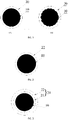
- the lithium supplement additive as shown in FIGS. 1 to 5 is a particulate material having a core-shell structure, which includes a core body 10 and a shell layer 20 coated on the core body 10.
- the core body 10 is served as a lithium-source core body for supplying lithium.
- the lithium-source core body has abundant lithium source, which ensures that the lithium supplement additive in an electrode provides abundant lithium as a "sacrificing agent" during the first cycle of charging.
- the irreversible consumption of the lithium ions resulted from the formation of the SEI layer on the anode is compensated, so as to maintain the abundance of lithium ions in the battery system and improve the initial coulombic efficiency and overall electrochemical performance of the battery.
- the lithium-source core body is Li x A 1-y-4z/3 B y C z O 3/2+x/2 , where A is selected from Fe and Ni, and B and C represents doping metal elements with different valencies, and 1 ⁇ x ⁇ 6, 0 ⁇ y ⁇ 0.5, 0 ⁇ z ⁇ 0.375, and 0 ⁇ 6y+8z ⁇ 3.
- the doped lithium source can provide abundant lithium, and can effectively release lithium during the first cycle of charging, and compensate the irreversible consumption of the lithium ions resulted from the formation of the SEI layer on the anode, so as to enhance the lithium content in the lithium cathode material in the electrode and improve the capacity and cycle performance of the electrode.
- the doping elements B and C in the lithium-source core body can slow the reaction of lithium and metal A with air, thereby inhibiting the formation of residual alkali from the lithium supplement additive, so that the lithium supplement additive exhibits good stability.
- the doping element B includes at least one of Al, Co, Ni, Fe, Ga, and La; in other embodiments, the doping element C includes at least one of Mn, Ge, Sn, Ti, Si, V, and Zr. That is, by controlling the types of the doping elements B and/or C, the above-described effects of the doping elements can be further enhanced.
- the lithium-source core body may be at least one of a primary particle and a secondary particle.
- the primary particle is shown in FIG. 1A
- the secondary particle is shown in FIG. 1B .
- the particle size of the lithium-source core body is between 50 nm and 10 ⁇ m.
- the particle size of the primary particle namely the lithium-source core body
- the particle size of the secondary particle is between 100 nm and 10 ⁇ m.
- the secondary particle is formed by aggregation of one or more primary particles.
- the lithium-source core body in the above-mentioned embodiments exhibits certain colors.
- Table 1 shows the standard color chart of materials in the industry, with fifteen grades from 0 to 14.
- the color of the lithium-source core body in the above-mentioned embodiments falls in the range of the color chart.
- the lithium-source core body in the above-mentioned embodiments such as Li x A 1-y-4z/3 B y C z O 3/2+x/2
- the resultant change in its compositions causes a lower purity, which then results in a change in the color exhibited and thus a higher grade in the color chart.
- the greater the deterioration in its compositions the lower the purity, thereby exhibiting a color with a higher grade. Therefore, in the embodiments, the color exhibited by the lithium-source core body in the above-mentioned embodiments, such as Li x A 1-y-4z/3 B y C z O 3/2+x/2 , is between grades 2 to 6, and further, between grades 2 to 3.
- ambient relative humidity ⁇ 1% namely dew point temperature ⁇ -30°C.
- ambient relative humidity ⁇ 0.1 % namely dew point temperature ⁇ -50°C.
- Carbon dioxide content in the storage environment at 25°C ⁇ 200 ppm Preferably, the carbon dioxide content ⁇ 100 ppm. More preferably, the carbon dioxide content ⁇ 50 ppm.
- the lithium-source core body in the above-mentioned embodiments such as Li x A 1-y-4z/3 B y C z O 3/2+x/2
- the lithium-source core body in the above-mentioned embodiments is rich in lithium, however, it is reactive with water and carbon dioxide. Consequently, the lithium supplying effect of the lithium supplement additives in the embodiments of the present application is reduced, and the processibility thereof or the processibility of materials containing the lithium-source core body like Li x A 1-y-4z/3 B y C z O 3/2+x/2 is hence reduced.
- the viscosity of the material containing the lithium-source core body like Li x A 1-y-4z/3 B y C z O 3/2+x/2 , such as paste is also lowered, such that the fluidity thereof is too low for subsequent processing steps. Therefore, based on the lithium-source core body, such as Li x A 1-y-4z/3 B y C z O 3/2+x/2 , in the above-mentioned embodiments, the shell layer 20 in the lithium supplement additive in the above-mentioned embodiments is configured as a functional capsulation layer.
- the functional capsulation layer includes a dense isolating capsulation layer 22, and the isolating capsulation layer 22 completely covers the lithium-source core body (the core body 10).
- the functional capsulation layer (shell layer 20) includes the dense isolating capsulation layer 22, which completely covers the lithium-source core body, the lithium-source core body is effectively protected from moisture and carbon dioxide in the ambient environment. Therefore, the lithium supplying effect of the lithium-source core body can be ensured, and a good stability and uniform distribution, as well as good processibility, of the lithium supplement additive in the electrode active paste and the electrode active layer can be achieved.
- the functional capsulation layer may be a separate isolating capsulation layer 22, which completely covers and protects the lithium-source core body from water and carbon dioxide in the ambient environment.
- the thickness of the isolating capsulation layer 22 is between 5 nm and 200 nm, and further is between 5 nm and 50 nm.
- the material of the isolating capsulation layer 22 includes at least one of ceramics, high-molecular polymers, and carbon materials.
- the ceramics include at least one of Al 2 O 3 , SiO 2 , boehmite, Si 3 N 4 , SiC, and BN.
- the polymers include at least one of an organic polymer with a structure of [C 6 H 7 O 6 Na] n , an organic polymer with a structure of [C 6 H 7 O 2 (OH) 2 OCH 2 COONa] n , an organic polymer with a structure of [C 3 H 4 O 2 ]n, and an organic polymer with a structure of [C 3 H 3 O 2 Ma] n , an organic polymer with a structure of [C 3 H 3 N] n , an organic polymer containing a structure of -[CH 2 -CF 2 ] n -, an organic polymer containing a structure of -[NHCO]-, an organic polymer containing an imide ring, -[CO-N-CO]-, in the main chain, and polyvinylpyrrolidone, where Ma is a alkali metal element.
- the polymers include at least one of polyvinylidene fluoride, sodium alginate, sodium carboxymethyl cellulose, polyacrylic acid, polyacrylate, polyacrylonitrile, polyamide, polyimide, polyvinylpyrrolidone, polyethylene oxide (PEO), polypyrrole (PPy), polytetrafluoroethylene (PTFE), and polyurethane (PU).
- the polymers include at least one of sodium carboxymethyl cellulose and polyacrylic acid.
- Sodium carboxymethyl cellulose and polyacrylic acid are two-dimensional polymers with good bonding ability, which can effectively coat the core of lithium-rich materials, thereby avoiding the core of lithium-rich materials from air, such that the stability of lithium supplement additive can be improved.
- the molecular weights of the polymers are greater than or equal to 100,000.
- the molecular weights of the polymers can be specifically, but not limited to, 100,000, 150,000, 200,000, 300,000, 500,000, or 1 million. The larger the molecular weight of the polymer, the higher the density and structural strength of the polymer layer, which can provide better protection to the inner core of the lithium-rich material.
- the carbon material includes at least one of graphene, carbon nanotubes, amorphous carbon, graphite, and carbon black.
- the functional capsulation layer further includes at least one of an ionic conductor capsulation layer and an electronic conductor capsulation layer.
- the functional capsulation layer having a composite multi-layer structure is formed by the at least one of the ionic conductor capsulation layer and the electronic conductor capsulation layer with the isolating capsulation layer 22, so as to coat and protect the lithium-source core body.
- the layers are stacked or coated from the core body 10 toward the shell layer 20.
- the sequence of the at least one of the ionic conductor capsulation layer, the electronic conductor capsulation layer and the isolating capsulation layer 22 can be random, and relatively preferably, the composite structure of the functional capsulation layer as in the following embodiments can be adopted.
- the functional capsulation layer includes the isolating capsulation layer 22 and the ionic conductor capsulation layer 21.
- the lithium-source core body is coated with the ionic conductor capsulation layer 21, and the ionic conductor capsulation layer 21 is coated with the isolating capsulation layer 22.
- the functional capsulation layer includes the isolating capsulation layer 22 and the electronic conductor capsulation layer 23.
- the lithium-source core body is coated with the isolating capsulation layer 22, and the isolating capsulation layer 22 is coated with the electronic conductor capsulation layer 23.
- the functional capsulation layer includes the isolating capsulation layer 22, the electronic conductor capsulation layer 23, and the ionic conductor capsulation layer 21.
- the lithium-source core body is coated with the ionic conductor capsulation layer 21, and the ionic conductor capsulation layer 21 is coated with the isolating capsulation layer 22, and the isolating capsulation layer 22 is coated with the electronic conductor capsulation layer 23.
- the ionic conductor capsulation layer 21 in the above-mentioned composite functional capsulation layer can enhance the ionic conductivity of the functional capsulation layer, thereby enhancing the ionic conductivity of the lithium supplement additive, which is beneficial to the outward transport of lithium ions from the lithium-source core body. Meanwhile, after the lithium-source core body releases all the lithium ions as a sacrificing agent, the ionic conductor capsulation layer 21 can also be further exploited to enhance the ion transport inside the electrode. Based on the function of the ionic conductor capsulation layer 21, it may have a dense structure or a porous structure, and it may provide a full coating or partial coating.
- the thickness of the ionic conductor capsulation layer 21 is between 5 nm and 200 nm, and further between 5 nm and 50 nm.
- the material of the ionic conductor capsulation layer 21 includes at least one of perovskite solid-state electrolyte, NaSICON solid-state electrolyte, garnet solid-state electrolyte or polymer solid-state electrolyte.
- the perovskite solid electrolyte includes Li 3x La 2/3-x TiO 3 (LLTO), such as at least one of Li 0.5 La 0.5 TiO 3 , Li 0.33 La 0.57 TiO 3 , Li 0.29 La 0.57 TiO 3 , Li 0.33 Ba 0.25 La 0.39 TiO 3 , (Li 0.33 La 0.56 ) 1.005 Ti 0.99 Al 0.01 O 3 , and Li 0.5 La 0.5 Ti 0.95 Zr 0.05 O 3 .
- the NaSICON solid electrolyte includes, but not limited to, Li 1.4 Al 0.4 Ti 1.6 (PO 4 ) 3 (LATP).
- the garnet solid electrolyte includes at least one of Li 7 La 3 Zr 2 O 12 (LLZO), Li 6.4 La 3 Zr 1.4 Ta 0.6 O 12 , and Li 6.5 La 3 Zr 1.5 Ta 0.5 O 12 .
- the polymer solid electrolyte includes at least one of PEO/PPO/PVDF or the like in which lithium salts are dissolved.
- the ionic conductivity of the ionic conductor capsulation layer 21 can be further improved by adjusting the thickness and material thereof.
- the electronic conductor capsulation layer 23 in the above-mentioned composite functional capsulation layer can enhance the electronic conductivity of the functional capsulation layer, thereby enhancing the electronic conductivity of the lithium supplement additive, which aids in reducing the internal impedance of the electrode. Moreover, after the lithium-source core body releases all the lithium ions as a sacrificing agent, the electronic conductor capsulation layer 23 can be further exploited to act as a conductive agent inside the electrode. Based on the function of the electronic conductor capsulation layer 23, it may have a dense structure or a porous structure, and it may provide a full coating or partial coating.
- the thickness of the electronic conductor capsulation layer 23 is between 5 nm and 200 nm, and further between 5 nm and 50 nm.
- the material of the electronic conductor capsulation layer 23 includes at least one of carbon material, conductive polymer, and conductive oxide.
- the carbon material includes at least one of mesoporous carbon, carbon nanotubes, graphite, carbon black, graphene and the like.
- the conductive polymer may include, but not limited to, the above-mentioned conductive polymers in the isolating capsulation layer 22.
- the conductive oxide includes at least one of In 2 O 3 , ZnO, and SnO 2 .
- the electronic conductivity of the electronic conductor capsulation layer 23 can be further improved by adjusting the thickness thereof.
- the materials of the isolating capsulation layer 22 and the electronic conductor capsulation layer 23 can both be carbon materials, therefore, when both materials are carbon materials, the isolating capsulation layer 22 and the electronic conductor capsulation layer 23 can be configured into an integrated structure. With this configuration, the carbon material coating layer has the above-mentioned functions of the isolating capsulation layer 22 and the electronic conductor capsulation layer 23 at the same time.
- the carbon material is the outermost layer of the functional capsulation layer, referring to the standard greyscale color chart of materials in the industry as demonstrated in Table 2, which has a total of eighteen grades from 0 to 17.
- the apparent greyscale of the lithium supplement additive with the carbon material as the outermost layer of the functional capsulation layer is correlated with the density of the carbon material.
- the density of the carbon coating layer namely the lower the coating coverage
- the greyscale which also represents a worse isolation effect of the functional capsulation layer, and a worse functional of the electronic conductor layer.
- the greater the density of the carbon coating layer that is, the higher the coating coverage, the darker the color, and the greater the greyscale, which represents a better isolation effect, and a better function of the electronic conductor.
- the apparent greyscale of the lithium supplement additive with the carbon material as the outermost layer of the functional capsulation layer is between grades 9 and 17, and further between grades 12 and 16.
- the specific surface area of the lithium supplement additive in the above-mentioned embodiments is in a range of 0.1-5.0 m 2 /g.
- the specific surface area of the lithium supplement additive is controlled within this range, as a smaller specific surface area can reduce the contact area between the lithium supplement additive and the air, thereby reducing the sensitivity of the material to the ambient environment, and can also reduce the overall viscosity of the electrode paste to improve processability.
- the dispersion of the lithium supplement additive is alkaline, and in an embodiment, the pH of the aqueous dispersion of the lithium supplement additive is 7-14 when the concentration thereof is 0.1 g/50 mL.
- the testing method of the pH of the dispersion of the lithium supplement additive is as follows: dispersing 0.1 g of the sealed lithium supplement additive material in 50 mL of distilled water at the room temperature of 25°C, and stirring for 30 seconds.
- the alkalinity of the lithium supplement additive in the above-mentioned embodiments cannot be altered, and that the strong alkalinity leads to an increase in the viscosity of the cathode paste containing the lithium supplement additives, and even loss of fluidity.
- the cathode paste containing the lithium supplement additive cannot be used for electrode coating and subsequent production processes, which increases the difficulty of the preparation process of cathode paste. Therefore, a lithium supplement additive with a lower alkalinity is desired in the embodiments of the present application. Therefore, in the above-mentioned embodiments, the pH of the aqueous dispersion of the lithium supplement additive is 7-14, and further, pH ⁇ 12, when the concentration thereof is 0.1 g/50 mL.
- an ideal storage condition is that the relative humidity of the environment at 25°C ⁇ 50%, that is, the dew point temperature ⁇ 15°C.
- the ambient relative humidity ⁇ 20% that is, the dew point temperature ⁇ 0°C.
- the ambient relative humidity ⁇ 10% that is, the dew point temperature ⁇ -10°C.
- the carbon dioxide content in the storage environment at 25°C ⁇ 500 ppm preferably, the carbon dioxide content ⁇ 400 ppm.
- an embodiment of the present application also provides a preparation method of the above-mentioned lithium supplement additive.
- the preparation method includes the following steps:
- the lithium-source particulate material in the step S01 is the core body 10, that is, the lithium-source core body of the lithium supplement additive in the above-mentioned embodiments.
- the functional capsulation layer in step S02 is the shell layer 20, that is, the functional capsulation layer of the lithium supplement additive in the above-mentioned embodiments. Therefore, for the briefness of description, the lithium-source particulate material in step S01 and the functional capsulation layer in step S02 are not repeated herein.
- the lithium-source particulate material may be prepared according to existing methods for preparing a lithium additive material that is rich in lithium.
- the preparation method may be an existing method for preparing Li x A 1-y-4z/3 B y C z O 3/2+x/2 , when the lithium supplement additive is Li x A 1-y-4z/3 B y C z O 3/2+x/2 as described above.
- the prepared lithium-source particulate material is stored under the following conditions, so as to improve the stability of the lithium-supplying performance and the like of the lithium-source particulate material:
- the carbon dioxide content in the storage environment at 25°C ⁇ 200 ppm preferably, the carbon dioxide content ⁇ 100 ppm, more preferably, the carbon dioxide content ⁇ 50 ppm.
- the method for forming the functional capsulation layer in the step S02 can be arranged according to the structure of the functional capsulation layer in the lithium supplement additive in the above-mentioned embodiments.
- the functional capsulation layer is the isolating capsulation layer 22 as shown in FIG. 2
- a dense full-covering isolating capsulation layer 22 is formed on the surface of the lithium-source particulate material according to the method for forming an isolating capsulation layer, where the method includes the following steps: forming an isolating capsulation layer 22 coating the lithium-source particles on the surface of the lithium-source particles, and the isolating capsulation layer 22 includes at least one of ceramics, high-molecular polymers and carbon materials.
- the ceramic isolating capsulation layer 22 may be deposited by sputtering a ceramic target on the surface of the lithium-source particles by means of, but not limited to, magnetron sputtering.
- the conditions of magnetron sputtering can be adjusted according to the specific properties of the target.
- the method for forming the high-molecular polymer isolating capsulation layer 22 includes the following steps: dispersing the lithium-source particulate material in a solution containing a high-molecular polymer, and then vacuum-drying to form a dense polymer isolating capsulation layer 22 on the surface of the lithium-source particles.
- the solvent of the solution is a solvent capable of uniformly dispersing or dissolving the high-molecular polymer, including such as one or more of N-methyl pyrrolidone, methanol, ethanol, isopropanol, acetone, tetrahydrofuran and diethyl ether.
- the method for forming the carbon material isolating capsulation layer 22 includes the following steps: dispersing the lithium source particle material in a solution containing a carbon source, and performing carbonization treatment after drying to form a dense carbon isolating capsulation layer 22 on the surface of the lithium source particles.
- the carbon source may be, but not limited to, PEO, and may be other carbon sources, as long as being capable to form a carbon coating layer on the surface of the lithium-source particles.
- the lithium-source particulate material is uniformly mixed with PEO, and the surface of the lithium-source particles is uniformly coated at the melting point of the PEO of 300°C, and then the coated material is sintered in the presence of inert gas at 600°C for 16 hours. A dense carbon layer is formed after sintering.
- the method for forming the functional capsulation layer on the surface of the lithium-source particulate material includes the following steps: forming an ionic conductor capsulation layer 21 on the surface of the lithium-source particulate material, and then forming the above-mentioned isolating capsulation layer 22 on an outer surface of the ionic conductor capsulation layer 21 which covers the ionic conductor capsulation layer 21.
- a precursor material for forming the ionic conductor capsulation layer 21 is mixed with the lithium-source particulate material, and the ionic conductor capsulation layer 21 is formed on the surface of the lithium-source particulate material according to the method for forming the ionic conductor capsulation layer. Then, the above-mentioned isolating capsulation layer 22 is formed on the outer surface of the ionic conductor capsulation layer 21 and covers the ionic conductor capsulation layer 21.
- the precursor material for forming the ionic conductor capsulation layer 21 includes the precursor of the perovskite solid-state electrolyte, NaSICON solid-state electrolyte, garnet solid-state electrolyte or polymer solid-state electrolyte, and the method and conditions for forming the ionic conductor capsulation layer 21 are arranged according to the method for forming the perovskite solid-state electrolyte, NaSICON solid-state electrolyte, garnet solid-state electrolyte or polymer solid-state electrolyte.
- the method for forming the functional capsulation layer on the surface of the lithium-source particulate material includes the following steps: forming the above-mentioned isolating capsulation layer 22 covering the lithium-source particles on the surface of the lithium-source particles, and then forming the electronic conductor capsulation layer 23 on the outer surface of the isolating capsulation layer 22.
- the above-mentioned isolating capsulation layer 22 covering the lithium-source particles is formed on the surface of the lithium-source particles, then the precursor material for forming the electronic conductor capsulation layer 23 and the lithium-source particulate material coated with the isolating capsulation layer 22 is mixed, the electronic conductor capsulation layer 23 is formed on the outer surface of the isolating capsulation layer 22 according to the method for forming the electronic conductor capsulation layer 23.
- the precursor material for forming the electronic conductor capsulation layer 23 includes a precursor material of the carbon materials, the conductive polymers or the conductive oxides.
- the carbon materials, conductive polymers, and conductive oxides are the same as the materials of the above-mentioned electronic conductor capsulation layer 23 in the lithium supplement additive.
- the precursor materials of the carbon materials, the conductive polymers or the conductive oxides are also the precursor materials for forming the above-mentioned carbon materials, conductive polymers or conductive oxides, respectively.
- the method and conditions of forming the electronic conductor capsulation layer 23 made of carbon materials, conductive polymers and conductive oxides are arranged according to the method and conditions of forming the carbon materials, the conductive polymers or the conductive oxides.
- the method of forming the functional capsulation layer on the surface of the lithium-source particulate material includes the following steps: forming an ionic conductor capsulation layer 21 on the surface of the lithium-source particulate material, then forming an isolating capsulation layer 22 covering the ionic conductor capsulation layer 21 on the outer surface of the ionic conductor capsulation layer 21, and forming an electronic conductor capsulation layer 23 on the outer surface of the isolating capsulation layer 22.
- the precursor material for forming the ionic conductor capsulation layer 21 is mixed with the lithium-source particulate material, and the ionic conductor capsulation layer 21 is formed on the surface of the lithium-source particulate material according to the method for forming the ionic conductor capsulation layer 21.
- the isolating capsulation layer 22 is formed on the outer surface of the ionic conductor capsulation layer 21, then the precursor material forming the electronic conductor capsulation layer 23 is mixed with the lithium-source particulate material having the isolating capsulation layer 22 formed on the surface thereof, and the electronic conductor capsulation layer 23 is formed on the outer surface of the isolating capsulation layer 22 according to the method for forming the electronic conductor capsulation layer 23.
- the methods and materials for forming the ionic conductor capsulation layer 21, the isolating capsulation layer 22 and the electronic conductor capsulation layer 23 can be arranged according to the respective method and materials for forming the ionic conductor capsulation layer 21, the isolating capsulation layer 22 and the electronic conductor capsulation layer 23.
- an ideal environment for storing the prepared lithium supplement additive is as follows: the relative humidity of the environment at 25°C ⁇ 50%, that is, the dew point temperature ⁇ 15°C.
- the ambient relative humidity ⁇ 20% that is, the dew point temperature ⁇ 0°C, more preferably, the ambient relative humidity ⁇ 10%, that is, the dew point temperature ⁇ -10°C.
- the above-mentioned preparation method of the lithium supplement additive can effectively prepare particles with a core-shell structure, and the functional capsulation layer can effectively coat the core body, thereby ensuring the stability of the prepared lithium supplement additive in the electrode active paste and the electrode active layer, as well as the uniform distribution and good processibility thereof.
- the properties of the prepared lithium supplement additive can be optimized by controlling the materials and processing conditions of the core body 10 and the shell layer 20.
- the preparation method of the lithium supplement additive can ensure the stability of the structure and electrochemical performance of the prepared lithium supplement additive, with high efficiency and low production costs.
- Another aspect of the present application provides a cathode material, a cathode, and a lithium-ion battery including the cathode.
- the cathode material includes the lithium supplement additive of the above-mentioned embodiments.
- the cathode material may include other cathode materials in the technical field of lithium-ion battery.
- the cathode material provided by the present embodiment includes the above-mentioned lithium supplement additive, thus the lithium supplement additive in the cathode material serves as a "sacrificing agent" during the charging and discharging processes, in order to compensate the irreversible consumption of the lithium ions resulted from the formation of the SEI layer on the anode. Therefore, the abundance of lithium ions in the battery system can be maintained and the initial coulombic efficiency and overall electrochemical performance of the battery can be improved.
- the lithium supplement additive in the cathode material can effectively isolate external moisture and carbon dioxide, a stable lithium-supplying performance and a stable application performance can be achieved by the cathode material.
- the cathode may be a conventional cathode of a lithium-ion battery, such as including a current collector and a cathode active layer bound on the surface of the current collector.
- the cathode current collector includes, but not limited to, either one of copper foil and aluminum foil.
- the cathode active layer includes the lithium supplement additive in the above-mentioned embodiments.
- the mass content of the above-mentioned lithium supplement additive in the cathode active layer is in a range of 0.1-50%, and preferably, 0.5-20%, more preferably, 1-10%.
- the cathode active layer also includes an electrode active material, a binder and a conductive agent in addition to the lithium supplement additive.
- the binder includes one or more of polyvinylidene chloride, soluble polytetrafluoroethylene, styrene-butadiene rubber, Hypromellose, methyl cellulose, carboxymethyl cellulose, polyvinyl alcohol, acrylonitrile copolymer, sodium alginate, chitosan and chitosan derivatives.
- the conductive agent includes one or more of graphite, carbon black, acetylene black, graphene, carbon fiber, C60 and carbon nanotubes.
- Electrode active material includes one or more of lithium cobalt oxide, lithium manganate, lithium iron phosphate, lithium vanadium phosphate, lithium vanadium oxide phosphate, lithium vanadium fluorophosphate, lithium titanate, lithium nickel cobalt manganate, and lithium nickel cobalt aluminate.
- the preparation of the cathode is as follows: obtaining an electrode paste by mixing the electrode active material, the lithium supplement additive, the conductive agent and the binder, coating the current collector with the electrode paste, which is then followed by drying, rolling, die-cutting and the like.
- a lithium-ion battery of the embodiments of the present application includes the cathode.
- the lithium-ion battery in the embodiment of the present application also includes necessary components for a lithium-ion battery such as an anode, a separator, an electrolyte and the like.
- the cathode material includes the above-mentioned lithium supplement additive, thus serves as a "sacrificing agent" during the first cycle of charging of the lithium-ion battery, by releasing as much lithium ions as possible at one time to compensate the irreversible consumption of the lithium ions resulted from the formation of the SEI layer on the anode Therefore, the abundance of lithium ions in the battery system can be maintained, and the initial coulombic efficiency and overall electrochemical performance such as capacity and cycling performance of the lithium-ion battery of the present embodiment can be improved.
- the cathode includes at least one of the above-mentioned ionic conductor capsulation layer 21 and the above-mentioned electronic conductor capsulation layer 23, the functional capsulation layer can be further exploited to enhance ionic and electronic conductivity of the electrode, after the lithium supplement additive as the sacrificing agent in the cathode releases all lithium ions.
- This example provides a lithium supplement additive and a preparation method thereof.
- the structure of the lithium supplement additive is shown in FIG. 1 , which includes an LFO core 1 and a functional capsulation layer 20 made of a dense carbon layer coated on the surface of the LFO core body 10.
- the average particle size of the LFO core body 10 is 1.2 ⁇ m, and the thickness of the dense carbon layer is 200-300 nm.
- the preparation method of the lithium supplement additive of the present example includes the following steps: S1: preparing the LFO core body 1.
- Fe 2 O 3 and LiOH are used as an iron source a lithium source for the synthesis of Li4FeO4, respectively.
- the raw materials are ball-milled and mixed, with the molar ratio between Fe (and doping elements) and Li of 1:5.
- the mixture is sintered as follows: 1. heating from the room temperature to 850°C at a heating rate of 5 K/min; 2. maintaining the temperature at 850°C for 24 hours; and 3. cooling to the room temperature.
- the sintering process is carried out in the presence of argon gas, and the material of the LFO core is obtained.
- PVDF is dissolved in NMP, and the mass fraction of PVDF is controlled to be 2.5%.
- 1 g of LFO material is added into 10 mL of the solution, and the mixture is stirred at a rate of 600 rpm at 40°C for 24 hours.
- the stirring process is conducted in a glove box filled with argon.
- the mixture is then filtered, and the drained residue is sintered as follows: 1. heating from the room temperature to 400°C at a heating rate of 5 K/min; 2. maintaining the temperature at 400°C for 10 hours; and 3. cooling to the room temperature.
- the sintering process is carried out in the presence of argon gas, and the LFO fully covered with a dense carbon coating is obtained.
- This example provides a lithium supplement additive and a preparation method thereof.
- the structure of the lithium supplement additive is shown in FIG. 2 or 5 , which includes an LFO core 10, an LATP ionic conductor layer coated on the LFO core body 10, and a dense carbon layer fully covering the LATP ionic conductor layer.
- a functional capsulation layer 20 is formed by the LATP ionic conductor layer and the dense carbon layer.
- the preparation method of the lithium supplement additive of the present example includes the following method:
- the powder of the LFO core material and the powder of the ionic conductor material LATP is ball-milled and mixed with a mass ratio between the core material and the ionic conductor material LATP of 19:1, so that the LATP particles are attached uniformly on the surface of the LFO core material.
- the above composite material is dissolved in an appropriate amount of PVDF solution in NMP, and is stirred evenly, and the mixture is dried to evaporate the solvent to obtain a composite material further coated with PCDF.
- the composite material is sintered in argon gas to obtain a material with a functional capsulation layer containing LFO/LATP/C, where the LATP layer is an ionic conductor layer, the C layer is an isolating capsulation layer and also an electronic conductor capsulation layer.
- This example provides a lithium supplement additive and a preparation method thereof.
- the structure of the lithium supplement additive is shown in FIG. 2 or 5 , which includes an LFO core 10, an LLTO ionic conductor layer coated on the LFO core body 10, a dense Al 2 O 3 isolating capsulation layer fully covering the LLTO ionic conductor layer, and a polypyrrole electronic conductor capsulation layer formed on the surface of the dense Al 2 O 3 isolating capsulation layer.
- a functional capsulation layer 20 is formed by the LLTO ionic conductor layer, the dense Al 2 O 3 isolating capsulation layer, and the polypyrrole electronic conductor capsulation layer.
- the preparation method of the lithium supplement additive of the present example includes the following method:
- the powder of the LFO core material and the powder of the ionic conductor material LLTO is ball-milled and mixed with a mass ratio between the core material and the ionic conductor material LLTO of 19:1, so that the LLTO particles are attached uniformly on the surface of the LFO core material.
- the mixture is then sintered, and a dense Al 2 O 3 layer is deposited on the surface of the LLTO layer by magnetron sputtering.
- the polypyrrole solution is fully mixed with the particles coated with the Al 2 O 3 layer, and then is dried.
- Example 1 An LFO material prepared according to the Example 1 is provided. That is, the LFO material in the Comparison example 1 does not contain the dense carbon functional capsulation layer as in the Example 1.
- the lithium supplement additive provided in the above-mentioned Examples 1 to 3 and the lithium supplement additive provided in the comparative example are assembled into a cathode and a lithium-ion battery according to the following methods:
- the button battery is assembled in glove box filled with an inert gas, following the order of anode casing-stainless steel gasket-lithium metal plate-diaphragm-electrolyte-cathode plate-cathode casing.
- the model of the button battery casing (including anode casing, the stainless steel gasket and cathode casing) is CR2032, manufactured by Canrd.
- the lithium metal plate has a diameter of 16 mm and is manufactured by Tianjin China Energy Lithium.
- the electrolyte is a LiPF6 solution with a concentration of 1 mol/L, and the solvent is composed of EC (ethylene carbonate) and DEC (diethyl carbonate) at a volume ratio of 1:1.
- the diaphragm is a PE diaphragm manufactured by Shanghai Semcorp.
- the lithium supplement additives of Examples 1 to 3 are observed with SEM.
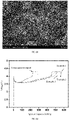
- the SEM image of the LFO core body 1 in Example 1 is shown in FIG. 9
- the SEM image of the lithium supplement additive with a dense carbon layer of functional capsulation layer 2 in Example 1 is shown in FIG. 10 .
- the dense carbon layer on the surface of the LFO core material of the lithium supplement additive in Example 1 acts both as an isolating capsulation layer and an electronic conductor capsulation layer, which prevents the core material from water and carbon dioxide. Therefore, the electronic conductivity of the material is improved, and the internal impedance of the electrode is reduced.
- the electronic conductor capsulation layer can be further exploited to act as a conductive agent inside the electrode.
- the electronic conductor capsulation layer can be further exploited to act as a conductive agent inside the electrode.
- the outward transport of lithium ions from the LFO material is promoted for more sufficient release of lithium.
- the specific capacities in the first-time charging process of the lithium-ion batteries including the lithium supplement additives of Examples 1 to 3 and the lithium-ion battery including the LFO of Comparative example 1 are respectively tested according to the following methods: charging at 0.05 C to 4.3 V, maintaining a constant voltage of 4.3 V until the current is less than 0.01 C, and testing the specific capacity during the first-time charging process.
- the testing is conducted by the battery testing cabinet LANHE-CT3001 produced by Wuhan Landian Electronics Co., Ltd.
- the specific capacities in the first-time charging process of the lithium-ion batteries including the lithium supplement additives of Examples 1 to 3 and the lithium-ion battery including the LFO without capsulation layer of Comparative example 1 are shown in FIG. 11 . It can be seen from FIG. 11 , when charging at 4.3 V, the specific capacity of the lithium-ion battery including the lithium supplement additive of Example 1 reaches above 500 mAh/g, while the specific capacity of the lithium-ion battery including the LFO without capsulation layer of Comparative example 1 is about 250 mAh/g, which indicates that, with the capsulation layer, the capacity of LFO is increased by 100%.
- the specific capacity of the lithium-ion battery including the lithium supplement additive having a functional capsulation layer of Example 2 is above 550 mAh/g when charging at 4.3 V, and the specific capacity of the lithium-ion battery of Example 3 is higher than that of the lithium-ion battery of Example 2.
- the lithium supplement additive provided by embodiments of the present application can ensure the amount of lithium ions in the lithium-ion battery system, and enhance the first coulombic efficiency, as well as the capacity and cycling performance, of the lithium-ion battery of the present application.
Landscapes
- Chemical & Material Sciences (AREA)
- Chemical Kinetics & Catalysis (AREA)
- Electrochemistry (AREA)
- General Chemical & Material Sciences (AREA)
- Engineering & Computer Science (AREA)
- Inorganic Chemistry (AREA)
- Materials Engineering (AREA)
- Manufacturing & Machinery (AREA)
- Composite Materials (AREA)
- Physics & Mathematics (AREA)
- Condensed Matter Physics & Semiconductors (AREA)
- General Physics & Mathematics (AREA)
- Battery Electrode And Active Subsutance (AREA)
Applications Claiming Priority (2)
| Application Number | Priority Date | Filing Date | Title |
|---|---|---|---|
| CN202110387946.8A CN115188957A (zh) | 2021-04-12 | 2021-04-12 | 补锂添加剂及其制备方法与应用 |
| PCT/CN2022/085708 WO2022218212A1 (fr) | 2021-04-12 | 2022-04-08 | Additif supplémentaire au lithium, procédé de préparation s'y rapportant et son application |
Publications (2)
| Publication Number | Publication Date |
|---|---|
| EP4131507A1 true EP4131507A1 (fr) | 2023-02-08 |
| EP4131507A4 EP4131507A4 (fr) | 2025-07-09 |
Family
ID=83511450
Family Applications (1)
| Application Number | Title | Priority Date | Filing Date |
|---|---|---|---|
| EP22787438.5A Pending EP4131507A4 (fr) | 2021-04-12 | 2022-04-08 | Additif supplémentaire au lithium, procédé de préparation s'y rapportant et son application |
Country Status (4)
| Country | Link |
|---|---|
| US (1) | US20250070244A1 (fr) |
| EP (1) | EP4131507A4 (fr) |
| CN (1) | CN115188957A (fr) |
| WO (1) | WO2022218212A1 (fr) |
Cited By (2)
| Publication number | Priority date | Publication date | Assignee | Title |
|---|---|---|---|---|
| EP4435901A1 (fr) * | 2023-03-24 | 2024-09-25 | Samsung SDI Co., Ltd. | Matériau actif de cathode composite, cathode et batterie au lithium comprenant le matériau actif de cathode composite et procédé de préparation du matériau actif de cathode composite |
| EP4425614A4 (fr) * | 2021-10-26 | 2025-07-30 | Shenzhen Innovazone Tech Co Ltd | Additif de supplémentation en lithium pour électrode positive, son procédé de préparation et son utilisation |
Families Citing this family (18)
| Publication number | Priority date | Publication date | Assignee | Title |
|---|---|---|---|---|
| CN116072991B (zh) * | 2021-10-29 | 2026-04-17 | 深圳市德方创域新能源科技有限公司 | 补锂添加剂及其制备方法和应用 |
| CN114914434A (zh) * | 2022-06-30 | 2022-08-16 | 广州博粤新材料科技有限公司 | 一种含补锂剂的正极材料及其制备方法 |
| CN118202504A (zh) * | 2022-10-14 | 2024-06-14 | 宁德时代新能源科技股份有限公司 | 正极补锂材料及制备方法、正极片、二次电池和用电装置 |
| CN115911606A (zh) * | 2022-11-09 | 2023-04-04 | 深圳市德方创域新能源科技有限公司 | 补锂材料及其制备方法和应用 |
| CN115881961B (zh) * | 2022-11-16 | 2024-09-10 | 湖北亿纬动力有限公司 | 一种具有核壳结构的复合锂硅合金补锂剂及其制备方法和应用 |
| CN115995559A (zh) * | 2022-11-24 | 2023-04-21 | 楚能新能源股份有限公司 | 正极补锂材料及其制备方法和锂离子电池 |
| CN115764013A (zh) * | 2022-11-25 | 2023-03-07 | 楚能新能源股份有限公司 | 一种正极补锂材料、制备方法及其应用 |
| CN116525825A (zh) * | 2023-04-21 | 2023-08-01 | 深圳市德方创域新能源科技有限公司 | 补锂材料及其制备方法、正极极片和二次电池 |
| CN116779803B (zh) * | 2023-06-05 | 2024-09-10 | 深圳市德方创域新能源科技有限公司 | 复合正极材料及其制备方法和应用 |
| CN116565209B (zh) * | 2023-07-07 | 2023-10-13 | 深圳海辰储能控制技术有限公司 | 极片及其制备方法、电池和用电装置 |
| CN117133918A (zh) * | 2023-07-21 | 2023-11-28 | 深圳市德方创域新能源科技有限公司 | 补锂剂及其制备方法、正极极片及二次电池 |
| CN117117185B (zh) * | 2023-08-01 | 2024-06-18 | 深圳市德方创域新能源科技有限公司 | 一种富锂复合材料及其制备方法和应用 |
| CN119627115A (zh) * | 2023-09-12 | 2025-03-14 | 江阴纳力新材料科技有限公司 | 涂碳集流体、含补锂涂层材料的制备方法及涂碳集流体 |
| CN119864381A (zh) * | 2023-10-20 | 2025-04-22 | 江苏海四达电源有限公司 | 正极补锂添加剂及其制备方法和正极片和锂离子电池 |
| CN117154003A (zh) * | 2023-10-31 | 2023-12-01 | 宁德时代新能源科技股份有限公司 | 一种正极极片、制备方法、钠二次电池和用电装置 |
| CN117936781B (zh) * | 2023-12-05 | 2024-11-15 | 深圳市德方创域新能源科技有限公司 | 补锂添加剂及其制备方法与应用 |
| CN117650246B (zh) * | 2024-01-30 | 2024-05-28 | 深圳海辰储能科技有限公司 | 补锂材料及其制备方法和应用 |
| CN121331832B (zh) * | 2025-12-15 | 2026-03-20 | 威尔能环保科技(苏州)有限公司 | 富锂材料及其制备方法以及包含该富锂材料的正极极片、二次电池及用电装置 |
Family Cites Families (18)
| Publication number | Priority date | Publication date | Assignee | Title |
|---|---|---|---|---|
| KR100595362B1 (ko) * | 2004-07-21 | 2006-06-30 | 제일모직주식회사 | 비수계 전해질 2차 전지 양극 활물질용 리튬-니켈 복합산화물, 그 제조방법 및 그를 포함하는 양극 활물질 |
| US9843033B2 (en) * | 2013-02-28 | 2017-12-12 | Nissan Motor Co., Ltd. | Positive electrode active substance, positive electrode material, positive electrode, and non-aqueous electrolyte secondary battery |
| CN105098188B (zh) * | 2014-04-28 | 2017-09-01 | 比亚迪股份有限公司 | 一种锂离子电池正极材料添加剂及其制备方法、含有该添加剂的正极材料和锂离子电池 |
| CN107706351A (zh) * | 2017-09-30 | 2018-02-16 | 深圳市贝特瑞纳米科技有限公司 | 一种正极片、制备方法及包含其的锂离子电池 |
| CN108232138A (zh) * | 2017-12-20 | 2018-06-29 | 中国科学院青岛生物能源与过程研究所 | 一种固态锂电池用低内阻正极材料及其制备方法 |
| JP6988502B2 (ja) * | 2018-01-17 | 2022-01-05 | トヨタ自動車株式会社 | 全固体電池用正極合剤、全固体電池用正極、全固体電池及びこれらの製造方法 |
| CN110299496B (zh) * | 2018-03-23 | 2021-09-21 | 比亚迪股份有限公司 | 一种电池隔膜、动力电池和车辆 |
| CN110729451B (zh) * | 2018-07-17 | 2021-12-10 | 惠州比亚迪电池有限公司 | 正极片及其制备方法、锂离子电池和车辆 |
| CN110970613B (zh) * | 2018-09-29 | 2021-06-15 | 宁德时代新能源科技股份有限公司 | 一种正极极片以及使用该正极极片的锂离子电池 |
| KR102797282B1 (ko) * | 2018-12-21 | 2025-04-21 | 에이일이삼 시스템즈 엘엘씨 | 사전 리튬화 코팅을 갖는 캐소드 및 조제 및 사용 방법 |
| US10957910B2 (en) * | 2019-05-01 | 2021-03-23 | Global Graphene Group, Inc. | Particulates of conducting polymer network-protected cathode active material particles for lithium batteries |
| CN112490415B (zh) * | 2019-09-12 | 2022-06-28 | 巴斯夫杉杉电池材料有限公司 | 一种锂离子正极材料补锂添加剂及其制备方法 |
| CN112542589B (zh) * | 2019-09-20 | 2021-10-08 | 华中科技大学 | 一种正极预锂化材料的制备方法、产物及应用 |
| CN110867584B (zh) * | 2019-11-04 | 2021-09-21 | 宁德新能源科技有限公司 | 补锂材料及包括其的正极 |
| CN111490247B (zh) * | 2019-12-16 | 2022-11-29 | 电子科技大学 | 一种锂电池正极结构、全固态薄膜锂电池结构 |
| CN111682181A (zh) * | 2020-06-19 | 2020-09-18 | 北京物科清能科技有限公司 | 一种具有核壳结构的正极补锂材料及其制备与应用 |
| CN112820873B (zh) * | 2020-12-31 | 2022-07-05 | 深圳市德方创域新能源科技有限公司 | 一种聚合物包覆锂电池正极材料及其制备方法 |
| CN113036106A (zh) * | 2021-03-09 | 2021-06-25 | 昆山宝创新能源科技有限公司 | 一种复合补锂添加剂及其制备方法和应用 |
-
2021
- 2021-04-12 CN CN202110387946.8A patent/CN115188957A/zh active Pending
-
2022
- 2022-04-08 EP EP22787438.5A patent/EP4131507A4/fr active Pending
- 2022-04-08 WO PCT/CN2022/085708 patent/WO2022218212A1/fr not_active Ceased
- 2022-04-08 US US17/917,396 patent/US20250070244A1/en active Pending
Cited By (3)
| Publication number | Priority date | Publication date | Assignee | Title |
|---|---|---|---|---|
| EP4425614A4 (fr) * | 2021-10-26 | 2025-07-30 | Shenzhen Innovazone Tech Co Ltd | Additif de supplémentation en lithium pour électrode positive, son procédé de préparation et son utilisation |
| EP4435901A1 (fr) * | 2023-03-24 | 2024-09-25 | Samsung SDI Co., Ltd. | Matériau actif de cathode composite, cathode et batterie au lithium comprenant le matériau actif de cathode composite et procédé de préparation du matériau actif de cathode composite |
| KR20240143521A (ko) * | 2023-03-24 | 2024-10-02 | 삼성에스디아이 주식회사 | 복합양극활물질, 이를 채용한 양극과 리튬전지 및 그 제조방법 |
Also Published As
| Publication number | Publication date |
|---|---|
| CN115188957A (zh) | 2022-10-14 |
| US20250070244A1 (en) | 2025-02-27 |
| WO2022218212A1 (fr) | 2022-10-20 |
| EP4131507A4 (fr) | 2025-07-09 |
Similar Documents
| Publication | Publication Date | Title |
|---|---|---|
| EP4131507A1 (fr) | Additif supplémentaire au lithium, procédé de préparation s'y rapportant et son application | |
| CN111384377B (zh) | 一种正极材料及其制备方法和用途 | |
| CN115312768B (zh) | 正极补锂复合添加剂及其制备方法和应用 | |
| KR100674011B1 (ko) | 전자 전도성 물질로 피복된 전극 첨가제 및 이를 포함하는리튬 이차전지 | |
| WO2023151459A1 (fr) | Additif de supplémentation en lithium, son procédé de préparation et son utilisation | |
| US8293406B2 (en) | Positive electrode active material for non-aqueous electrolyte secondary battery, process for preparing the same, and positive electrode for non-aqueous electrolyte secondary battery and non-aqueous electrolyte secondary battery | |
| CN116014220B (zh) | 正极补锂添加剂及其制备方法、正极片、二次电池 | |
| US20250253346A1 (en) | Lithium supplementing additive, preparation method therefor and application thereof | |
| US20250132349A1 (en) | Cathode lithium-supplementing additive and preparation method and application thereof | |
| US20250323270A1 (en) | Composite cathode lithium-supplementing additive and preparation method and application thereof | |
| CN115699357A (zh) | 包含硅(Si)作为负极活性材料的全固态电池 | |
| US20240208837A1 (en) | Lithium-supplementing additive, preparation method and application thereof | |
| CN115347254A (zh) | 复合正极补锂添加剂及其制备方法和应用 | |
| CN118315577A (zh) | 补锂材料、正极、电化学装置和用电设备 | |
| KR20100062744A (ko) | 이차전지용 ncm계 양극 활물질 조성물 및 이를 포함하는이차전지 | |
| CN115295771A (zh) | 正极复合材料及其制备方法、正极片、二次电池 | |
| JP2023015188A (ja) | 非水電解質二次電池用正極活物質の製造方法 | |
| US9190647B2 (en) | Nonaqueous electrolyte secondary battery with high temperature and storage characteristics | |
| JPWO2020174937A1 (ja) | 非水電解質二次電池用正極活物質の製造方法 | |
| CN111952584B (zh) | 一种锂电池 | |
| CN115513424B (zh) | 复合电极材料及其制备方法和应用 | |
| CN115304104B (zh) | 锰系补锂添加剂及其制备方法和应用 | |
| CN116230908A (zh) | 补锂剂、正极极片、电化学装置及补锂剂的制备方法 | |
| CN112018345A (zh) | 高镍复合正极材料及其制备方法和应用 | |
| CN114467201B (zh) | 锂二次电池正极活性材料及包含其的锂二次电池 |
Legal Events
| Date | Code | Title | Description |
|---|---|---|---|
| STAA | Information on the status of an ep patent application or granted ep patent |
Free format text: STATUS: THE INTERNATIONAL PUBLICATION HAS BEEN MADE |
|
| PUAI | Public reference made under article 153(3) epc to a published international application that has entered the european phase |
Free format text: ORIGINAL CODE: 0009012 |
|
| STAA | Information on the status of an ep patent application or granted ep patent |
Free format text: STATUS: REQUEST FOR EXAMINATION WAS MADE |
|
| 17P | Request for examination filed |
Effective date: 20221024 |
|
| AK | Designated contracting states |
Kind code of ref document: A1 Designated state(s): AL AT BE BG CH CY CZ DE DK EE ES FI FR GB GR HR HU IE IS IT LI LT LU LV MC MK MT NL NO PL PT RO RS SE SI SK SM TR |
|
| DAV | Request for validation of the european patent (deleted) | ||
| DAX | Request for extension of the european patent (deleted) | ||
| A4 | Supplementary search report drawn up and despatched |
Effective date: 20250605 |
|
| RIC1 | Information provided on ipc code assigned before grant |
Ipc: H01M 4/1391 20100101ALI20250530BHEP Ipc: H01M 4/131 20100101ALI20250530BHEP Ipc: H01M 10/42 20060101ALI20250530BHEP Ipc: H01M 4/36 20060101ALI20250530BHEP Ipc: H01M 10/0525 20100101ALI20250530BHEP Ipc: H01M 4/525 20100101ALI20250530BHEP Ipc: H01M 4/62 20060101AFI20250530BHEP |
|
| STAA | Information on the status of an ep patent application or granted ep patent |
Free format text: STATUS: EXAMINATION IS IN PROGRESS |