EP4131696A2 - Dispositif de commande de rétroaction multiple en cascade - Google Patents
Dispositif de commande de rétroaction multiple en cascade Download PDFInfo
- Publication number
- EP4131696A2 EP4131696A2 EP22186080.2A EP22186080A EP4131696A2 EP 4131696 A2 EP4131696 A2 EP 4131696A2 EP 22186080 A EP22186080 A EP 22186080A EP 4131696 A2 EP4131696 A2 EP 4131696A2
- Authority
- EP
- European Patent Office
- Prior art keywords
- voltage
- generator
- sensing device
- voltage signal
- regulation
- Prior art date
- Legal status (The legal status is an assumption and is not a legal conclusion. Google has not performed a legal analysis and makes no representation as to the accuracy of the status listed.)
- Pending
Links
Images

Classifications
-
- H—ELECTRICITY
- H03—ELECTRONIC CIRCUITRY
- H03K—PULSE TECHNIQUE
- H03K5/00—Manipulating of pulses not covered by one of the other main groups of this subclass
- H03K5/22—Circuits having more than one input and one output for comparing pulses or pulse trains with each other according to input signal characteristics, e.g. slope, integral
- H03K5/24—Circuits having more than one input and one output for comparing pulses or pulse trains with each other according to input signal characteristics, e.g. slope, integral the characteristic being amplitude
-
- H—ELECTRICITY
- H02—GENERATION; CONVERSION OR DISTRIBUTION OF ELECTRIC POWER
- H02P—CONTROL OR REGULATION OF ELECTRIC MOTORS, ELECTRIC GENERATORS OR DYNAMO-ELECTRIC CONVERTERS; CONTROLLING TRANSFORMERS, REACTORS OR CHOKE COILS
- H02P9/00—Arrangements for controlling electric generators for the purpose of obtaining a desired output
- H02P9/10—Control effected upon generator excitation circuit to reduce harmful effects of overloads or transients, e.g. sudden application of load, sudden removal of load, sudden change of load
-
- B—PERFORMING OPERATIONS; TRANSPORTING
- B64—AIRCRAFT; AVIATION; COSMONAUTICS
- B64F—GROUND OR AIRCRAFT-CARRIER-DECK INSTALLATIONS SPECIALLY ADAPTED FOR USE IN CONNECTION WITH AIRCRAFT; DESIGNING, MANUFACTURING, ASSEMBLING, CLEANING, MAINTAINING OR REPAIRING AIRCRAFT, NOT OTHERWISE PROVIDED FOR; HANDLING, TRANSPORTING, TESTING OR INSPECTING AIRCRAFT COMPONENTS, NOT OTHERWISE PROVIDED FOR
- B64F5/00—Designing, manufacturing, assembling, cleaning, maintaining or repairing aircraft, not otherwise provided for; Handling, transporting, testing or inspecting aircraft components, not otherwise provided for
- B64F5/60—Testing or inspecting aircraft components or systems
-
- H—ELECTRICITY
- H02—GENERATION; CONVERSION OR DISTRIBUTION OF ELECTRIC POWER
- H02J—ELECTRIC POWER NETWORKS; CIRCUIT ARRANGEMENTS OR SYSTEMS FOR SUPPLYING OR DISTRIBUTING ELECTRIC POWER; SYSTEMS FOR STORING ELECTRIC ENERGY
- H02J1/00—Circuit arrangements for DC mains or DC distribution networks
- H02J1/08—Three-wire DC power distribution systems; Systems having more than three wires
-
- H—ELECTRICITY
- H02—GENERATION; CONVERSION OR DISTRIBUTION OF ELECTRIC POWER
- H02J—ELECTRIC POWER NETWORKS; CIRCUIT ARRANGEMENTS OR SYSTEMS FOR SUPPLYING OR DISTRIBUTING ELECTRIC POWER; SYSTEMS FOR STORING ELECTRIC ENERGY
- H02J1/00—Circuit arrangements for DC mains or DC distribution networks
- H02J1/10—Parallel operation of DC sources
-
- H—ELECTRICITY
- H02—GENERATION; CONVERSION OR DISTRIBUTION OF ELECTRIC POWER
- H02J—ELECTRIC POWER NETWORKS; CIRCUIT ARRANGEMENTS OR SYSTEMS FOR SUPPLYING OR DISTRIBUTING ELECTRIC POWER; SYSTEMS FOR STORING ELECTRIC ENERGY
- H02J1/00—Circuit arrangements for DC mains or DC distribution networks
- H02J1/14—Balancing load and power generation in DC networks
-
- H—ELECTRICITY
- H02—GENERATION; CONVERSION OR DISTRIBUTION OF ELECTRIC POWER
- H02M—APPARATUS FOR CONVERSION BETWEEN AC AND AC, BETWEEN AC AND DC, OR BETWEEN DC AND DC, AND FOR USE WITH MAINS OR SIMILAR POWER SUPPLY SYSTEMS; CONVERSION OF DC OR AC INPUT POWER INTO SURGE OUTPUT POWER; CONTROL OR REGULATION THEREOF
- H02M7/00—Conversion of AC power input into DC power output; Conversion of DC power input into AC power output
- H02M7/02—Conversion of AC power input into DC power output without possibility of reversal
- H02M7/04—Conversion of AC power input into DC power output without possibility of reversal by static converters
- H02M7/06—Conversion of AC power input into DC power output without possibility of reversal by static converters using discharge tubes without control electrode or semiconductor devices without control electrode
-
- B—PERFORMING OPERATIONS; TRANSPORTING
- B64—AIRCRAFT; AVIATION; COSMONAUTICS
- B64D—EQUIPMENT FOR FITTING IN OR TO AIRCRAFT; FLIGHT SUITS; PARACHUTES; ARRANGEMENT OR MOUNTING OF POWER PLANTS OR PROPULSION TRANSMISSIONS IN AIRCRAFT
- B64D2221/00—Electric power distribution systems onboard aircraft
-
- H—ELECTRICITY
- H02—GENERATION; CONVERSION OR DISTRIBUTION OF ELECTRIC POWER
- H02J—ELECTRIC POWER NETWORKS; CIRCUIT ARRANGEMENTS OR SYSTEMS FOR SUPPLYING OR DISTRIBUTING ELECTRIC POWER; SYSTEMS FOR STORING ELECTRIC ENERGY
- H02J2105/00—Networks for supplying or distributing electric power characterised by their spatial reach or by the load
- H02J2105/30—Networks for supplying or distributing electric power characterised by their spatial reach or by the load the load networks being external to vehicles, i.e. exchanging power with vehicles
- H02J2105/32—Networks for supplying or distributing electric power characterised by their spatial reach or by the load the load networks being external to vehicles, i.e. exchanging power with vehicles for aircrafts
-
- H—ELECTRICITY
- H02—GENERATION; CONVERSION OR DISTRIBUTION OF ELECTRIC POWER
- H02P—CONTROL OR REGULATION OF ELECTRIC MOTORS, ELECTRIC GENERATORS OR DYNAMO-ELECTRIC CONVERTERS; CONTROLLING TRANSFORMERS, REACTORS OR CHOKE COILS
- H02P2101/00—Special adaptation of control arrangements for generators
- H02P2101/30—Special adaptation of control arrangements for generators for aircraft
Definitions
- the present invention generally relates to electrical power generation systems, and more specifically, to cascaded multiple feedback controllers in electrical power generation systems.
- Aircraft require electrical power to operate many parts of the aircraft system, including on-board flight control systems, lighting, air conditioning etc.
- the current and future generations of aircraft use more and more electrical control in place of conventional hydraulic, pneumatic etc. control.
- Such more electric aircraft have advantages in terms of the size and weight of the controls and power systems as well as in terms of maintenance and reliability.
- HVDC high voltage dc
- voltage is provided on board an aircraft in one of two (or more) ways.
- power comes from an external ground generator supplying, say 115 V ac at 400 Hz.
- the power comes from a multi-phase ac generator which is mounted on the aircraft engine or auxiliary power unit (APU) that could then be rectified.
- the produced AC voltage is then rectified using passive or active rectification techniques.
- the rectified power is provided to a so-called DC bus.
- Embodiments of the present invention are directed to a system.
- a nonlimiting example of the system includes a direct current (DC) power supply comprising a generator and a rectifier circuit connected to a load, a first voltage sensing device coupled to a first point of regulation, a second voltage sensing device coupled to a second point of regulation, a generator controller configured to receive a first voltage signal from the first voltage sensing device, receive a second voltage signal from the second voltage sensing device, determine an adjustment for the generator, the adjustment comprising a transient performance response and a voltage droop response, wherein the transient performance response is determined based on the first voltage signal, and wherein the voltage droop response is determined based on the second voltage signal, and operate the generator based on the adjustment for the generator.
- DC direct current
- the system is determining the voltage droop response comprises comparing the second voltage signal to a reference voltage to determine a voltage droop on the load.
- the system is the first point of regulation is located at an output of the rectifier.
- the system is the second point of regulation is located at an input to the load.
- the system also includes a generator line contactor coupled between the rectifier circuit and the second voltage sensing device.
- the system also includes the controller that is further configured to compare the second voltage signal to a reference voltage to determine a voltage difference, compare the voltage difference to a threshold voltage difference, and enact an action based on the voltage difference exceeding the threshold voltage difference.
- the system is the action comprises opening the generator line contactor.
- the system also includes a state and saturation filter, wherein the state and saturation filter limits the bandwidth of the second voltage signal.
- the system also includes a prognosis and health monitoring (PHM) system for an aircraft.
- PLM prognosis and health monitoring
- Embodiments of the present invention are directed to a system.
- a nonlimiting example of the system includes an alternating current (AC) power supply comprising a generator, wherein the generator is connected to a load, a first voltage sensing device coupled to a first point of regulation, a second voltage sensing device coupled to a second point of regulation, a generator controller configured to receive a first voltage signal from the first voltage sensing device, receive a second voltage signal from the second voltage sensing device, determine an adjustment for the generator, the adjustment comprising a transient performance response and a voltage droop response, wherein the transient performance response is determined based on the first voltage signal, and wherein the voltage droop response is determined based on the second voltage signal, and operate the generator based on the adjustment for the generator.
- AC alternating current
- the system is determining the voltage droop response comprises comparing the second voltage signal to a reference voltage to determine a voltage droop on the load.
- the system is determining the voltage droop response comprises comparing the second voltage signal to the first voltage signal to determine a voltage droop on the load.
- the system is the first point of regulation is located at an output of the generator.
- the system is the second point of regulation is located at an input to the load.
- the system also includes the controller that is further configured to compare the second voltage signal to a reference voltage to determine a voltage difference, compare the voltage difference to a threshold voltage difference, and enact an action based on the voltage difference exceeding the threshold voltage difference.
- the system is the action comprises generating an alert.
- the system is the action comprises opening the generator line contactor.
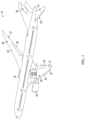
- FIG. 1 illustrates an example of a commercial aircraft 10 having aircraft engines 20 that may embody aspects of the teachings of this disclosure.
- the aircraft 10 includes two wings 22 that each include one or more slats 24 and one or more flaps 26.
- the aircraft further includes ailerons 27, spoilers 28, horizontal stabilizer trim tabs 29, rudder 30 and horizontal stabilizer 31.
- control surface used herein includes but is not limited to either a slat or a flap or any of the above described. It will be understood that the slats 24 and/or the flaps 26 can include one or more slat/flap panels that move together.
- the aircraft 10 also includes a electric power generation systems (EPGS) 300/400 (described in greater detail in FIG.
- EGS electric power generation systems
- the EPGS can supply power to a DC and/or AC bus that provides power for a variety of power applications on the aircraft.
- the aircraft 10 is exemplary and is not intended to limit any application of the EPGS 300/400.
- the EPGS 300/400 can be utilized in a variety of applications including, but not limited to, rotorcrafts.
- an electric power generating system which typically includes one or more generators.
- the one or more generators receive mechanical power from an engine attached to an engine accessory gearbox.
- a generator controller for a wound-field synchronous generator is typical for aircraft power generation.
- the generator controller regulates generator voltage output by detecting the output voltage at a point of regulation (POR) and adjust the generator output voltage by controlling the current used to excite the main field in the generator.
- POR point of regulation
- the POR is determined by a directly by the GCU via a wired analog connection to the sensing point.
- the POR voltage sensing can be performed by an external sensor independent from the GCU.
- This external sensor may have its own sensing tolerances and sensing latencies that need to be considered in the GCU voltage regulation control loop.
- the data from these external sensors could be analog voltages or a digital signal provided over a communication bus.
- These sensing tolerances and latencies can impact signal processing which may induce some latencies in the information received by the generator controller control loop.
- This type of implementation can result in reduced system voltage margin to requirements and reduced transient performance due to any additional delays and signal processing.
- FIG. 2 depicts a direct current electrical power generation system (EPGS) with an external DC point of regulation according to one or more embodiments.
- the EPGS 200 includes a generator controller 202, a generator 204, a rectifier 206, and a filter circuit 208.
- the EPGS 200 includes DC feedback processing 240 which supplies a feedback signal to a comparator 216 which compares the feedback signal to a DC reference voltage 218 for input to the generator controller 202.
- the EPGS 200 connects to a DC load 220 through a feeder 222 and generator line contactor (GLC) 224.
- the feeder 222 is a generic representation of impedance on the wires connecting the EPGS 200 to the DC load 220.
- the EPGS 200 can receive a sensed voltage feedback signal from a point of regulation (POR) 210 which is taken at the connection to the DC load 220.
- the sensed voltage feedback signal from the POR 210 can be processed using signal processing 230 logic and hardware to provide an external point of regulation voltage (VPORe) to the DC feedback processing 240 logic and hardware.
- the signal processing 230 can be external to the EPGS 200 and designed by an airframe design team that is not in coordination with the EPGS 200 design team. In this scenario, the signal processing 230 may be too degraded for high performance and may not meet transient performance requirements.
- Aircraft electrical systems typically have power quality requirements that ensure compatibility between the aircraft electrical generation sources and the various aircraft user equipment which consumes electrical power, such as motors, pumps, galley equipment, etc.
- MIL-STD-704F is an example for military systems
- DO-160G Sec 16 is a typical example for commercial systems.
- the power quality requirements determine how tightly the generating sources must regulate power during steady state operation, or in the case of load transients (large applications or removals of electrical load) how far and for how long the voltage can deviate from normal steady state values. If the Point of Regulation voltage sense used for dc or ac voltage control has heavy signal processing, this could lead to latencies in the signal which would negatively impact the controllers ability to meet the time sensitive transient performance requirements for voltage regulation/power quality.
- This design requires coordination across the design of the aircraft as the signal processing 230 logic and hardware is customer specific for an aircraft and can add latency to the feedback signal from the POR.
- aspects described herein address the transient performance requirements by providing a cascaded multiple feedback controller for an electric power generation system (EPGS).
- EPGS utilizes multiple feedback signals to ensure adequate generator response with minimal signal processing in a cascaded topology.
- a higher bandwidth inner feedback loop is tuned for desired transient performance and a lower bandwidth outer loop is used to compensate for any voltage droop.
- monitoring of feeder voltage droop can provide for prognostics and health monitoring (PHM) of components between the feedback signals.
- PLM health monitoring
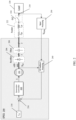
- FIG. 3 depicts a DC EPGS using a cascaded multiple feedback controller according to one or more embodiments.
- the EPGS 300 includes a generator controller 302 in communication with a generator 304 that supplies an AC voltage through a rectifier 306 and filter 308 to produce a rectified DC voltage to a bus.
- the EPGS 300 connects to a DC load 320 through a feeder 322 and generator line contactor (GLC) 324.
- the EPGS 300 utilizes two feedback signals from two points of regulation (POR).
- the first point of regulation (POR) 310 is at the connection to the GLC 324.
- the second POR 312 is at the connection between the filter 308 and the feeder 322.
- the feeder 322 is a generic representation of impedance on the wires connecting the EPGS 300 to the DC load 320.
- the voltage sensed at the first POR 310 is external to the EPGS 300 and thus can have external signal processing 330 on the voltage prior to be fed back to the EPGS 300. This voltage can be referred to as the external POR voltage (VPORe).
- the signal processing 330 can be customer specific and may not meet the requirements for high performance due to latency and other considerations.
- the voltage sensed at the second POR 312 is internal to the EPGS 300 and can be referred to as the internal POR voltage (VPORi).
- the external POR voltage can be fed back into the EPGS 300 where it is compared at comparator 314 with either a reference voltage (VDC) or the internal POR voltage (VPORi).
- VDC reference voltage
- VPORi internal POR voltage
- the difference in the voltage (voltage droop) between the external POR voltage and the reference voltage or internal POR voltage is then fed through the state filter and saturation 350 logic and hardware.
- the state filter and saturation 350 logic and hardware can saturate the difference (delta) voltage by setting a limit on the voltage supplied to the second comparator 316. This limit on the voltage can account for events such as a short circuit so that the comparator 316 does not bias the voltage too high.
- the second comparator biases the voltage based on the voltage droop (delta V) to account for voltage droop from the external POR voltage.
- the voltage signal is fed into a third comparator 317 which receives an inner loop voltage taken from the internal POR 312 and fed through the DC feedback processing 340 logic and hardware.
- This comparator 317 provides the feedback voltage to the generator controller 302 to regulate the generator 304.
- the generator controller 302 adjusts excitation current to control voltage, based on the combined inner and outer loop control mechanisms.
- the outer detecting loop is ensuring accuracy of the POR steady state voltage level at the load, while the inner loop is higher bandwidth along for faster transient voltage response during large changes in the load.
- the bandwidth of the outer loop may be slower than the inner loop (based on the tuning of the filtering). This allows the voltage regulator to respond to the transients of the inner feedback loop with the outer loop compensating for any overall bias/droop out to the external POR 310
- the state filter and saturation 350 logic and hardware also sets (limits) the bandwidth for this outer loop feedback so that it is slower than the inner loop feedback.
- the voltage droop (delta V) can be sent to a protection health monitoring system 360 that can be utilized to collect data on the overall system.
- PHM serves to predict wear and notify aircraft maintenance personnel of impeding component failure to allow for maintenance to be scheduled in advance and reduce unscheduled maintenance costs for aircraft.
- the generator controller can enact an action based on the voltage droop exceeding a threshold. This action can be to open the GLC 324 to separate the EPGS 300 from the load 320.
- the internal point of regulation 312 and the external point of regulation 310 voltages can be sensed by any voltage sensing device.
- the current at these PORs 310, 312 can be sensed by any current sensing device.
- the sampling rate of the voltages and/or currents can be set by the generator controller 302 or by any other means.
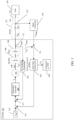
- FIG. 4 depicts an AC EPGS using a cascaded multiple feedback controller according to one or more embodiments.
- the EPGS 400 includes a generator controller 402 in communication with a generator 404 that supplies an AC voltage to an AC load 420 through a feeder 422 and GLC 424. Similar to the EPGS 300 from FIG. 3 , the EPGS 400 utilizes two feedback signals from two points of regulation (POR).
- the first point of regulation (POR) 410 is at the connection to the GLC 424.
- the second POR 412 is at the connection between the generator 404 and the feeder 422. Similar to the above, the feeder 422 is a generic representation of impedance on the wires connecting the EPGS 400 to the AC load 420.
- the voltage sensed at the first POR 410 is external to the EPGS 400 and thus can have external signal processing 430 on the voltage prior to be fed back to the EPGS 400.
- This voltage can be referred to as the external POR voltage (VPORe).
- the signal processing 430 can be customer specific and may not meet the requirements for high performance due to latency and other considerations.
- the voltage sensed at the second POR 412 is internal to the EPGS 400 and can be referred to as the internal POR voltage (VPORi).
- the external POR voltage can be fed back into the EPGS 400 where it is compared at comparator 414 with either a reference voltage (VDC) or the internal POR voltage (VPORi).
- the difference in the voltage (voltage droop) between the external POR voltage and the reference voltage or internal POR voltage is then fed through the state filter and saturation 450 logic and hardware.
- the state filter and saturation 450 logic and hardware can saturate the difference (delta) voltage by setting a limit on the voltage supplied to the second comparator 416. This limit on the voltage can account for events such as a short circuit so that the comparator 416 does not bias the voltage too high.
- the second comparator biases the voltage based on the voltage droop (delta V) to account for voltage droop from the external POR voltage.
- the voltage signal is fed into a third comparator 417 which receives an inner loop voltage taken from the internal POR 412 and fed through the AC feedback processing 440 logic and hardware.
- This comparator 417 provides the feedback voltage to the generator controller 402 to regulate the generator 404.
- the state filter and saturation 450 logic and hardware also sets the bandwidth for this outer loop feedback so that it is slower than the inner loop feedback.
- the voltage droop (delta V) can be sent to a protection health management system 460 that can be utilized to collect data on the overall system.
- the generator controller 402 can enact an action based on the voltage droop exceeding a threshold. This action can be to open the GLC 424 to separate the EPGS 400 from the load 420.
- the internal point of regulation 412 and the external point of regulation 410 voltages can be sensed by any voltage sensing device.
- the current at these PORs 410, 412 can be sensed by any current sensing device.
- the sampling rate of the voltages and/or currents can be set by the generator controller 402 or by any other means.
- the generator controllers 202, 302, and 402 or any of the hardware referenced in the systems 200, 300, and 400 can be implemented by executable instructions and/or circuitry such as a processing circuit and memory.
- the processing circuit can be embodied in any type of central processing unit (CPU), including a microprocessor, a digital signal processor (DSP), a microcontroller, an application specific integrated circuit (ASIC), a field programmable gate array (FPGA), or the like.
- the memory may include random access memory (RAM), read only memory (ROM), or other electronic, optical, magnetic, or any other computer readable medium onto which is stored data and algorithms as executable instructions in a non-transitory form.
- exemplary is used herein to mean “serving as an example, instance or illustration.” Any embodiment or design described herein as “exemplary” is not necessarily to be construed as preferred or advantageous over other embodiments or designs.
- the terms “at least one” and “one or more” may be understood to include any integer number greater than or equal to one, i.e. one, two, three, four, etc.
- the terms “a plurality” may be understood to include any integer number greater than or equal to two, i.e. two, three, four, five, etc.
- connection may include both an indirect “connection” and a direct “connection.”
Landscapes
- Engineering & Computer Science (AREA)
- Power Engineering (AREA)
- Physics & Mathematics (AREA)
- Nonlinear Science (AREA)
- Manufacturing & Machinery (AREA)
- Transportation (AREA)
- Aviation & Aerospace Engineering (AREA)
- Control Of Eletrric Generators (AREA)
Applications Claiming Priority (1)
| Application Number | Priority Date | Filing Date | Title |
|---|---|---|---|
| US17/391,123 US11482957B1 (en) | 2021-08-02 | 2021-08-02 | Cascaded multiple feedback controller |
Publications (2)
| Publication Number | Publication Date |
|---|---|
| EP4131696A2 true EP4131696A2 (fr) | 2023-02-08 |
| EP4131696A3 EP4131696A3 (fr) | 2023-03-01 |
Family
ID=82656695
Family Applications (1)
| Application Number | Title | Priority Date | Filing Date |
|---|---|---|---|
| EP22186080.2A Pending EP4131696A3 (fr) | 2021-08-02 | 2022-07-20 | Dispositif de commande de rétroaction multiple en cascade |
Country Status (2)
| Country | Link |
|---|---|
| US (1) | US11482957B1 (fr) |
| EP (1) | EP4131696A3 (fr) |
Families Citing this family (1)
| Publication number | Priority date | Publication date | Assignee | Title |
|---|---|---|---|---|
| US20240351701A1 (en) * | 2023-04-20 | 2024-10-24 | Honeywell International Inc. | Electric hybrid emergency power unit |
Family Cites Families (7)
| Publication number | Priority date | Publication date | Assignee | Title |
|---|---|---|---|---|
| US7852646B2 (en) | 2008-01-04 | 2010-12-14 | Honeywell International Inc. | Instantaneous load current control scheme for voltage fed DC to AC inverter supplying resistive-inductive load |
| US10003186B2 (en) * | 2016-06-15 | 2018-06-19 | Hamilton Sundstrand Corporation | Variable-speed constant-frequency power control |
| GB2574028B (en) | 2018-05-23 | 2022-03-16 | Safran Electrical & Power | An aircraft electrical system |
| US11183941B2 (en) * | 2018-11-06 | 2021-11-23 | Hamilton Sundstrand Corporation | Method to reduce variable speed constant frequency power converter losses during abnormal overloads |
| US10715029B1 (en) * | 2019-02-08 | 2020-07-14 | Hamilton Sundstrand Corporation | Generator systems and controllers |
| US11671038B2 (en) | 2019-08-09 | 2023-06-06 | Hamilton Sundstrand Corporation | Control of a wound field synchronous generator for transient load response |
| US11108235B1 (en) * | 2020-02-11 | 2021-08-31 | North Carolina State University | Double synchronous unified virtual oscillator control for grid-forming and grid-following power electronic converters |
-
2021
- 2021-08-02 US US17/391,123 patent/US11482957B1/en active Active
-
2022
- 2022-07-20 EP EP22186080.2A patent/EP4131696A3/fr active Pending
Also Published As
| Publication number | Publication date |
|---|---|
| US11482957B1 (en) | 2022-10-25 |
| EP4131696A3 (fr) | 2023-03-01 |
Similar Documents
| Publication | Publication Date | Title |
|---|---|---|
| US11355929B1 (en) | Power sharing coordination of paralleled sources | |
| US11008110B2 (en) | Hybrid power system for an aircraft | |
| US6809678B2 (en) | Data processor controlled DC to DC converter system and method of operation | |
| US4554501A (en) | Variable speed constant frequency power system with auxiliary DC output | |
| Nya et al. | Benefits of higher voltage levels in aircraft electrical power systems | |
| JP6378479B2 (ja) | 発電機同士の間の電力を割り当てるための回路および方法 | |
| US8687394B2 (en) | Aircraft power supply and method of operating the same | |
| EP3258587B1 (fr) | Commande de puissance à fréquence constante et à vitesse variable | |
| US7573243B2 (en) | Generator control arrangement | |
| EP4131696A2 (fr) | Dispositif de commande de rétroaction multiple en cascade | |
| US10913544B2 (en) | Method and a system for powering an electrical load in an aircraft | |
| US5550455A (en) | Standby generator pulse excitation system and electric power generating system for use therein | |
| CN106575869A (zh) | 用于飞行器的高压直流供电系统 | |
| EP4472005A1 (fr) | Contrôle des sources de tension c.c. connectées en parallèle | |
| US11905029B2 (en) | Passive power sharing of paralleled sources | |
| KR102693226B1 (ko) | 온보드 가정용 네트워크를 위한 전력 공급 방법 및 아키텍처 | |
| US7969038B2 (en) | Power regeneration management system | |
| EP3703239A1 (fr) | Système d'alimentation électrique pour charges pulsées comprenant un redresseur actif | |
| CN119341168B (zh) | 一种电流自动均衡控制方法、故障控制方法及系统 | |
| US11873112B2 (en) | System for synchronising energy sources coupled to an aircraft | |
| EP2658107B1 (fr) | Correction du facteur de puissance utilisant une mise en correspondance de tension/courant | |
| CN103650329A (zh) | 永磁发电机电压调节 | |
| CA1115344A (fr) | Regulateur de tension pour alternateur | |
| Brombach et al. | Influence of small constant-power-loads on the power supply system of an aircraft | |
| CN111953024A (zh) | 高压直流发电机稳定输出的调压控制电路及调压控制方法 |
Legal Events
| Date | Code | Title | Description |
|---|---|---|---|
| PUAI | Public reference made under article 153(3) epc to a published international application that has entered the european phase |
Free format text: ORIGINAL CODE: 0009012 |
|
| STAA | Information on the status of an ep patent application or granted ep patent |
Free format text: STATUS: THE APPLICATION HAS BEEN PUBLISHED |
|
| PUAL | Search report despatched |
Free format text: ORIGINAL CODE: 0009013 |
|
| AK | Designated contracting states |
Kind code of ref document: A2 Designated state(s): AL AT BE BG CH CY CZ DE DK EE ES FI FR GB GR HR HU IE IS IT LI LT LU LV MC MK MT NL NO PL PT RO RS SE SI SK SM TR |
|
| AK | Designated contracting states |
Kind code of ref document: A3 Designated state(s): AL AT BE BG CH CY CZ DE DK EE ES FI FR GB GR HR HU IE IS IT LI LT LU LV MC MK MT NL NO PL PT RO RS SE SI SK SM TR |
|
| RIC1 | Information provided on ipc code assigned before grant |
Ipc: H03K 5/24 20060101ALI20230123BHEP Ipc: H02J 1/14 20060101ALI20230123BHEP Ipc: H02J 1/10 20060101ALI20230123BHEP Ipc: H02J 1/08 20060101AFI20230123BHEP |
|
| STAA | Information on the status of an ep patent application or granted ep patent |
Free format text: STATUS: REQUEST FOR EXAMINATION WAS MADE |
|
| 17P | Request for examination filed |
Effective date: 20230901 |
|
| RBV | Designated contracting states (corrected) |
Designated state(s): AL AT BE BG CH CY CZ DE DK EE ES FI FR GB GR HR HU IE IS IT LI LT LU LV MC MK MT NL NO PL PT RO RS SE SI SK SM TR |