EP4131871A1 - Verfahren und vorrichtung zur erzeugung einer netzwerktopologie - Google Patents
Verfahren und vorrichtung zur erzeugung einer netzwerktopologie Download PDFInfo
- Publication number
- EP4131871A1 EP4131871A1 EP21776884.5A EP21776884A EP4131871A1 EP 4131871 A1 EP4131871 A1 EP 4131871A1 EP 21776884 A EP21776884 A EP 21776884A EP 4131871 A1 EP4131871 A1 EP 4131871A1
- Authority
- EP
- European Patent Office
- Prior art keywords
- devices
- designated
- designated devices
- accessible
- level
- Prior art date
- Legal status (The legal status is an assumption and is not a legal conclusion. Google has not performed a legal analysis and makes no representation as to the accuracy of the status listed.)
- Pending
Links
Images


Classifications
-
- H—ELECTRICITY
- H04—ELECTRIC COMMUNICATION TECHNIQUE
- H04L—TRANSMISSION OF DIGITAL INFORMATION, e.g. TELEGRAPHIC COMMUNICATION
- H04L41/00—Arrangements for maintenance, administration or management of data switching networks, e.g. of packet switching networks
- H04L41/12—Discovery or management of network topologies
-
- H—ELECTRICITY
- H04—ELECTRIC COMMUNICATION TECHNIQUE
- H04L—TRANSMISSION OF DIGITAL INFORMATION, e.g. TELEGRAPHIC COMMUNICATION
- H04L12/00—Data switching networks
- H04L12/28—Data switching networks characterised by path configuration, e.g. LAN [Local Area Networks] or WAN [Wide Area Networks]
- H04L12/44—Star or tree networks
-
- H—ELECTRICITY
- H04—ELECTRIC COMMUNICATION TECHNIQUE
- H04L—TRANSMISSION OF DIGITAL INFORMATION, e.g. TELEGRAPHIC COMMUNICATION
- H04L45/00—Routing or path finding of packets in data switching networks
- H04L45/02—Topology update or discovery
-
- H—ELECTRICITY
- H04—ELECTRIC COMMUNICATION TECHNIQUE
- H04L—TRANSMISSION OF DIGITAL INFORMATION, e.g. TELEGRAPHIC COMMUNICATION
- H04L45/00—Routing or path finding of packets in data switching networks
- H04L45/40—Wormhole routing
Definitions
- the present application relates to the field of communication network technology, in particular to a method and apparatus for generating network topology.
- Network topology refers to the physical composition mode of nodes and lines formed by devices and transmission media in the network, which reflects the distribution and connection status of each device in the whole network.
- embodiments of the present application provide a method, apparatus, electronic device, computer-readable storage medium, and computer program product for generating a network topology, which can automatically generate the topology of multiple designated devices in a network, which is simple and efficient.
- an embodiment of the present application provides a method for generating a network topology, includes: determining multiple designated devices in a network; wherein the designated devices are directly or indirectly connected through ports; determining, among the multiple designated devices, accessible devices corresponding to the ports of the designated devices, wherein any accessible device corresponding to a port of a designated device is directly or indirectly connected to the designated device through the port; determining a root node device among the multiple designated devices according to the number of accessible devices corresponding to the ports of a designated device(s); determining, according to the accessible devices corresponding to the ports of the designated devices, designated devices that are directly connected, among the multiple designated devices; generating a topology of the multiple designated devices in the network according to the root node device and the designated devices that are directly connected among the multiple designated devices.
- an embodiment of the present application provides a method for determining a root node devices, including: determining multiple designated devices in a network; wherein the designated devices are directly or indirectly connected through ports; determining, among the multiple designated devices, accessible devices corresponding to the ports of the designated devices, wherein any accessible device corresponding to a port of a designated device is directly or indirectly connected to the designated device through the port; and determining a root node device among the multiple designated devices according to the number of accessible devices corresponding to the ports of a designated device(s).
- an embodiment of the present application provides an apparatus for generating a network topology, comprises: a first determination module, configured for determining multiple designated devices in a network; wherein the designated devices are directly or indirectly connected through ports; a second determination module, configured for determining, among the multiple designated devices, accessible devices corresponding to the ports of the designated devices, wherein any accessible device corresponding to a port of a designated device is directly or indirectly connected to the designated device through the port; a third determination module, configured for determining a root node device among the multiple designated devices according to the number of accessible devices corresponding to the ports of a designated devices; a fourth determination module, configured for determining, according to the accessible devices corresponding to the ports of the designated devices, designated devices that are directly connected, among the multiple designated devices; and a generation module, configured for generating a topology of the multiple designated devices in the network according to the root node device and the designated devices that are directly connected among the multiple designated devices.
- an embodiment of the present application provides an apparatus for determining a root node device, comprising: a fifth determination module, configured for determining multiple designated devices in a network; wherein the multiple designated devices are directly or indirectly connected through ports; a sixth determination module, configured for determining, among the multiple designated devices, accessible devices corresponding to the ports of the designated devices, wherein any accessible device corresponding to a port of a designated device is directly or indirectly connected to the designated device through the port; and a seventh determination module, configured for determining a root node device among the multiple designated devices according to the number of accessible devices corresponding to the ports of a designated devices.
- an embodiment of the present application provides an electronic device, comprising: a memory and a processor; wherein the memory stores a computer program executable by the processor, which when executed by the processor, causes the processor to implement the method for generating a network topology as described above.
- an embodiment of the present application provides an electronic device, comprising: a memory and a processor; wherein the memory stores a computer program executable by the processor, which when executed by the processor, causes the processor to implement the method for determining a root node device as described above.
- an embodiment of the present application provides a non-transitory computer-readable storage medium, wherein a computer program is stored thereon, and when executed by a processor, causes the processor to implement the method for generating a network topology as described above.
- an embodiment of the present application provides a non-transitory computer-readable storage medium, wherein a computer program is stored thereon, and when executed by a processor, causes the processor to implement the method for determining a root node device as described above.
- an embodiment of the present application provides a computer program product, which implements the method for generating a network topology as described above when instructions in the computer program product are executed by a processor.
- an embodiment of the present application provides a computer program product, which implements the method for determining a root node device as described above when instructions in the computer program product are executed by a processor.
- an embodiment of the present application provides a computer program code, the computer program code is configured to be executed to execute the method for generating a network topology as described above.
- an embodiment of the present application provides a computer program code, the computer program code is configured to be executed to execute the method for determining a root node device as described above.
- the embodiments of the present application automatically generate the topology of multiple designated devices in the network according to the accessible devices corresponding to the ports of the multiple designated devices in the network, which is simple, efficient and accurate.
- first, second, third, etc. may be used to describe the preset range and the like in the embodiments of the present application, these preset ranges should not be limited to these terms. These terms are only used to distinguish the preset ranges from each other.
- the first preset range may also be referred to as the second preset range.
- the second preset range may also be referred to as the first preset range.
- the word “if” as used herein can be interpreted as “in case that” or “when” or “in response to determination” or “in response to detection”.
- the phrases “if determined” or “if detected (stated condition or event)” can be interpreted as “when determined” or “in response to determined” or “when detected (stated condition or event)” or “in response to detected (stated condition or event)”.
- embodiments of the present application provides a method for generating a network topology.
- Network topology refers to the physical layout of various devices interconnected by transmission media. In order to realize the interconnection, computers and other devices in the communication network need to be connected in a certain structural way, this connection method is called "topology". In general, it is how these network devices are connected together.
- the common network topology mainly comprises bus type structure, ring-type structure, star-type structure, tree-type structure and mesh type structure, etc.
- the bus type structure uses a single communication line (bus) as a common transmission channel, and all nodes are directly connected to the bus through corresponding interfaces and conduct data transmission through the bus.
- bus type structure uses a single communication line (bus) as a common transmission channel, and all nodes are directly connected to the bus through corresponding interfaces and conduct data transmission through the bus.
- bus single communication line
- ring-type structure each device has the same status and is connected in order to form a closed ring.
- the star-type structure has a central node device, and each other node device is connected to the central node device through a point-to-point link.
- the tree-type structure has a root node device, and other node devices in the network are directly or indirectly connected to the root node device.
- each device is connected to form a mesh type structure. There is no master node device, and there is no level.
- the tree-type structure has the advantages of easy expansion, easy fault isolation and high reliability.
- the embodiments of the present application are mainly used for automatically generating a topology diagram of the network after automatically determining the root node in a tree-type network structure, and intuitively displaying the topology of the entire network, which is simple, efficient, and highly accurate.
- FIG. 1 is a diagram of a tree-type network structure.
- a node device When a node device is located in the network, it can be regarded as a node of the network structure.
- a root node device A As shown in FIG. 1 , in the tree-type network structure, it comprises a root node device A.
- a first level node device B and a first level node device C are directly connected to the root node device A
- a second level node device D and a second level node device E are directly connected to the first level node device B and indirectly connected to the root node device A through the first level node device B
- a second level node device F and a second level node device G are directly connected to the first level node device C and are indirectly connected to the root node device A through the first level node device C, that is, the first level node device B, the first level node device C, the second level node device D, the second level node device E, the second level node device F, and the second level node device G are directly or indirectly connected to the root node device A.
- a port for data transmission with an upper level node device is an uplink port of the node device
- a port for data transmission with a lower level node device is a downlink port of the node device.
- the port for data transmission between the root node device A and the first level node device B, the first level node device C is the downlink port of the root node device A
- the port for data transmission between the first level node device B and the root node device A is the uplink port of the first level node device B.
- Accessible devices of the uplink port comprise the root node device, and the accessible devices of the downlink port do not comprise the root node device.
- the execution subject of the embodiments of the present application may be any electronic device, which may be a device inside the network or a device outside the network, and the electronic device may interact with the user.
- the root node devices in the network can be determined first, and then the network topology can be generated in combined with the connection relationship between the devices in the network.
- the topology can be generated for an existing real network, or the network topology can be generated according to the actual requirement when no real network exists. For example, in a case, new devices are continuously added to the existing real network, making the network structure more and more complex. In this case, the embodiments of the present application can be applied to generate the topology of the network, so as to facilitate the maintenance of the network by relevant personnel. For another example, in another case, there is no real network, but a real network needs to be built according to the actual needs. In the case that each device existing in the network to be built and the connection relationship between each device needs to be built is known, the embodiments of the present application can be applied to generate the network topology to facilitate the relevant personnel to build the network according to the generated network topology.
- FIG. 2 is a flow diagram of the method for generating a network topology provided by an embodiment of the present application. As shown in FIG. 2 , the method includes: Step S101: determining multiple designated devices in a network. wherein the multiple designated devices are connected directly or indirectly through ports.
- the designated device in the embodiment of the present application may be a manually selected device. For example, in the process of network operation and maintenance, sometimes it is necessary to generate the network topology of all devices in the network, and sometimes it is necessary to only generate the network topology of some of devices in the network. Based on this, the embodiments of the present application allow the network operation and maintenance personnel to select all or some of the devices as the designated devices according to the actual requirements, and then generate the network topology of multiple designated devices. Or, the designated devices may be randomly selected, or the designated devices may be selected according to the identification of the devices. The specific manner of selecting the designated devices is not limited.
- Step S102 determining, among the multiple designated devices, accessible devices corresponding to the ports of the designated devices.
- Any accessible device corresponding to a port of a designated device is directly or indirectly connected to the designated device through the port.
- An accessible device corresponding to a port of the designated devices in the embodiment of the present application belongs to one of the multiple designated devices. That is, for an accessible device corresponding to the port that does not belong to the designated devices, it is irrelevant to generate a network topology of multiple designated devices.
- the communication between devices in the network requires data transmission through the ports of the devices. That is, the connection between the devices is based on the connection between the ports of the devices, so an accessible device of the designated devices corresponds to a port of the designated devices. That is, in the present application, all accessible devices of the designated devices are respectively corresponding to the ports of the designated devices, so that the accessible devices of the designated devices are grouped according to different ports.
- the information of accessible devices corresponding to ports of the designated devices may be stored in the designated devices and may be stored in the form of a list of accessible devices.
- FIG. 3 is a schematic diagram of the packet of the accessible device information corresponding to the port of the designated device.
- the packet can be sent through protocol concurrency, and the accessible device information corresponding to the port of each designated device can be obtained according to the packet, wherein the packet format is j son format.
- SwitchTopologyList indicates the list related to the network structure of the designated device. SwitchTopology stores the network structure information of the designated device, id is the port number of the designated device. Integer is the integer number.
- PortMacList stores the accessible device list of the port. Each PortMac corresponds to one accessible device.
- the accessible device information includes the MAC address and the device serial number (seq: short for sequence) of the accessible device. String is the string-type.
- Step S 103 determining a root node device among the multiple designated devices according to the number of accessible devices corresponding to the ports of a designated device(s).
- the root node device is the core node of the entire tree-type network.
- Other node devices take the root node device as the core and extend outward.
- the root node device among the multiple designated devices can be first determined.
- the network topology can be generated without an existing real network.
- the root node device in the generated network topology can be located at the center of the network topology, which can make the generated network topology more symmetrical and beautiful.
- the network topology can be generated with an existing real network.
- the distribution of root node device in the existing real network is generally balanced, so the probability that a device located in the center of the network is the root node device is large; on the other hand, in order to make the topology generated based on the real network more symmetrical and beautiful, the root node device should be located at the center of the topology as much as possible; From these, it can be seen that the device closer to the center of the network is more likely to be the root node device, so the root node device can be determined based on this.
- the root node device can be selected according to the number of accessible devices corresponding to the ports of the designated devices, that is, step S 103 may include: calculating, for any designated device of the designated devices, a mean square deviation of the number of accessible devices corresponding to all the ports of the designated device for connecting the accessible devices; and determining the root node device among the multiple designated devices according to the mean square deviation(s) corresponding to the designated device(s).
- the value of the mean square deviation can reflect the degree of dispersion of a data set. Therefore, the smaller the value of the mean square deviation of the number of all accessible devices corresponding to ports used to connect to accessible devices of a designated device, the more balanced the number of accessible devices corresponding to different ports of the designated device. That is, the closer the designated device is to the center of the network, the greater the probability that the designated device is a root node device.
- a designated device with only one port connected to an accessible device cannot be used as a root node device in general, it is not necessary to calculate the corresponding mean square deviation. Therefore, it is possible to calculate the mean square deviation corresponding to the designated devices with the number of ports connected to the accessible devices is not 1 among the multiple designated devices, and determine the root node device among the multiple designated devices according to the calculated value of the mean square deviation corresponding to the designated devices.
- the embodiments of the present application provide two specific methods for determining a root node device:
- the first possible implementation is that, in the designated devices whose number of ports for connecting the accessible devices being not 1, taking a designated device with a smallest mean square deviation as the root node device among the multiple designated devices.
- the designated device with the mean square deviation value of zero can be directly determined as the root node device when the mean square deviation value calculated for designated devices with the number of ports connected to the accessible device not being 1 is zero, and there is no need to continue the subsequent calculation for other designated devices.
- the value of the corresponding mean square deviation is calculated for each designated device with the number of ports used to connect to accessible devices not being 1, and a designated device with the smallest mean square deviation is used as the root node device among the multiple designated devices according to the value of the mean square deviation corresponding to each designated device.
- the number of accessible devices corresponding to the N ports of the designated device can be recorded as t l ... t n ... t N
- the node device A comprises two ports used to connect to accessible devices, wherein the number of accessible devices corresponding to one port is 3, the number of accessible devices corresponding to the other port is 3, and the value of the corresponding mean square deviation is 0.
- the value of the mean square deviation corresponding to node device B is 6
- the value of the mean square deviation corresponding to node device C is 6 .
- Node device D, node device E, node device F, and node device G all have only one port, which cannot be used as the root node device and can be directly excluded. Therefore, the node device A is the root node device.
- the probability that the root node device is located at the center of the network topology is large.
- a designated device with the smallest mean square deviation is taken as the root node device among the multiple designated devices, and the root node device can be determined more accurately.
- the second possible implementation is to consider that in special cases, for example, the mean square deviations corresponding to multiple designated devices are all small, that is, there is no unique and smallest mean square deviation.
- the embodiments of the present application determine the root node device among the multiple designated devices according to the mean square deviations corresponding to the designated device and the port bandwidths of the designated devices. For example, among multiple designated devices that need to calculate the mean square deviations, some of designated devices whose corresponding mean square deviation and the calculated minimum mean square deviation difference are within the preset range are first determined, and then the root node device is determined from some of designated devices according to the port bandwidths. Generally speaking, a device with a higher level in the network has a larger port bandwidth. Therefore, the device with the largest port bandwidth can be selected as the root node device from the designated devices according to the port bandwidth.
- a designated device with the largest port bandwidth is selected as the root node device.
- FIG. 4 is another diagram of a tree-type network structure.
- the number of accessible devices corresponding to the first port of node device A is 5 (node device B, node device E, node device F, node device I and node device J)
- the number of accessible devices corresponding to the second port is 2 (node device C and node device G)
- the number of accessible devices corresponding to the third port is 2 (node device D and node device H).
- the corresponding mean square deviation is 2 .
- the number of accessible devices corresponding to the first port of node device B is 2 (node device E and node device I), the number of accessible devices corresponding to the second port is 2 (node device F and node device J), and the number of accessible devices corresponding to the third port is 5 (node device A, node device C, node device G, node device D and node device H).
- the corresponding mean square deviation is 2 .
- the mean square deviations corresponding to node device A and node device B are the same, and the bandwidth of the port of node device A is larger than that of node device B. Therefore, node device A is determined to be the root node device.
- the embodiments of the present application can generate a network topology that meets the use requirements of network operation and maintenance personnel, so the user can manually select a root node device among multiple designated devices.
- Step S104 determining, according to the accessible devices corresponding to the ports of the designated devices, designated devices that are directly connected, among the multiple designated devices.
- the accessible devices corresponding to the ports of the designated devices are determined among the multiple designated devices.
- Accessible devices refer to devices directly or indirectly connected to the designated devices, but the accessible devices are not differentiated to determine which accessible devices are directly connected to the designated device and which accessible devices are indirectly connected to the designated device.
- For generating the network topology it is necessary to determine other designated devices directly connected to the ports of the designated devices from all accessible devices corresponding to the ports of the designated devices, and then determine the designated devices directly connected among the multiple designated devices.
- the first possible implementation is to determine the designated devices directly connected among the multiple designated devices according to the accessible devices corresponding to the ports of the designated devices. Specifically, for any two of the multiple designated devices, the step of determining whether a first device and a second device are designated devices that are directly connected according to the accessible devices corresponding to a first port of the first device and the accessible devices corresponding to a second port of the second device is performed until all designated devices that are directly connected among the multiple designated devices are determined.
- the first device and the second device are the any two of the multiple designated devices
- the first port is any port of the first device
- the second port is any port of the second device.
- the accessible devices corresponding to the first port of the first device include the second device
- the accessible devices corresponding to the second port of the second device include the first device
- there is no intersection between the accessible devices corresponding to the first port of the first device and the accessible devices corresponding to the second port of the second device it is determined that the first device and the second device are directly connected.
- the first port is an uplink port of the first device
- the second port is a downlink port of the second device.
- the accessible devices corresponding to the uplink port of the first device comprise the second device
- the accessible devices corresponding to the downlink port of the second device comprise the first device
- there is no intersection between the accessible devices corresponding to the uplink port of the first device and the accessible devices corresponding to the downlink port of the second device it is determined that the first device and the second device are directly connected.
- accessible devices corresponding to one port of node device A comprise node device B, node device D, and node device E
- accessible devices corresponding to one port of node device B comprise node device A, node device C, node device F, and node device G.
- the accessible devices corresponding to one port of node device A comprise node device B
- the accessible devices corresponding to one port of node device B comprise node device A
- the accessible devices corresponding to the port of node device A do not intersect with the accessible devices corresponding to the port of node device B, thereby determining that node device A and node device B are directly connected.
- the accessible devices corresponding to the first port of the first device comprise the second device
- the accessible devices corresponding to the second port of the second device comprise the first device
- the first device and the second device are directly or indirectly connected.
- the accessible devices corresponding to the first port of the first device comprise the third device
- the accessible devices corresponding to the second port of the second device should also comprise a third device. That is, the accessible devices corresponding to the first port of the first device and the accessible devices corresponding to the second port of the second device both have a third device.
- the accessible devices corresponding to the first port of the first device comprise the second device
- the accessible devices corresponding to the second port of the second device comprise the first device
- there is no intersection between the accessible devices corresponding to the first port of the first device and the accessible devices corresponding to the second port of the second device it is determined that the first device and the second device are directly connected.
- the second possible implementation is to determine types of the ports of the designated devices according to the accessible devices corresponding to the root node device among the multiple designated devices and the accessible devices corresponding to the ports of the designated devices.
- the types of the ports comprise uplink ports and downlink ports.
- the designated devices that are directly connected among the multiple designated devices are determined according to the types of the ports of the designated devices and the accessible devices corresponding to the ports of the designated devices.
- the types of ports are divided into uplink ports and downlink ports.
- the ports for data transmission with the upper level node devices are uplink ports
- the ports for data transmission with the lower level node devices are downlink ports.
- Each device in the tree-type network needs to transmit data with the root node device. Therefore, after determining the root node device and obtaining the accessible devices of the port of each device, the port of the accessible devices including the root node device can be used as the uplink port, and the port of the accessible devices that do not include the root node device can be used as the downlink port.
- the connection mode of two directly connected devices is that the uplink port of one device is connected with the downlink port of the other device.
- the network topology shown in FIG. 1 is still used for description.
- the node device B and the node device C can be determined as the first level node device
- the node device D, the node device e, the node device F and the node device G can be determined as the second level node devices.
- a port for data transmission with the root node device A is the uplink port
- a port for data transmission with the second level node device D and the second level node device E is the downlink port
- the root node device A is directly connected with the uplink port of the node device B through the downlink port.
- the types of the ports of the designated devices can be determined based on the root node device, and the directly connected designated device among the multiple designated devices can be determined to reduce the workload of data processing.
- the types of the ports of the designated devices can be determined according to whether the accessible devices corresponding to the ports of the designated devices comprise the root node device, and the ports of the designated devices can be divided into uplink ports and downlink ports.
- the accessible devices corresponding to each uplink port and the accessible devices corresponding to each downlink port can be determined.
- the step of determining whether the first device and the second device are designated devices that are directly connected according to the accessible devices corresponding to the uplink port of the first device and the accessible devices corresponding to the downlink port of the second device is performed until all designated devices that are directly connected among the multiple designated devices are determined.
- the first device and the second device are any two of the multiple designated devices.
- the accessible devices corresponding to the uplink port of the first device include the second device
- the accessible devices corresponding to the downlink port of the second device include the first device
- there is no intersection between the accessible devices corresponding to the uplink port of the first device and the accessible devices corresponding to the downlink port of the second device it is determined that the first device and the second device are directly connected.
- a list of accessible devices corresponding to downlink port of node device A includes node device B, node device D, and node device E
- a list of accessible devices corresponding to uplink port of node device B includes node device A, node device C, node device F, and node device G.
- a list of accessible devices corresponding to downlink port of node device A includes node device B, a list of accessible devices corresponding to uplink port of node device B includes node device A, and the list of accessible devices corresponding to downlink port of node device A does not intersect with the list of accessible devices corresponding to uplink port of node device B, it is determined that node device A and node device B are directly connected.
- Step S105 generating a topology of the multiple designated devices in the network according to the root node devices and the designated devices that are directly connected among the multiple designated devices.
- levels corresponding to the multiple designated devices are determined according to the root node device and the designated devices that are directly connected among the multiple designated devices.
- a topology of multiple designated devices in the network is generated according to the levels corresponding to the multiple designated devices.
- designated devices that are directly connected to the root node device can be determined as the first level node devices, and then designated devices directly connected to the first level node devices can be determined from the remaining designated devices as the second level node devices, and so on until the network topology is generated.
- the method for generating a network topology determines multiple designated devices in a network, wherein the multiple designated devices are directly or indirectly connected through ports.
- the accessible devices corresponding to the ports of the designated devices among the multiple designated devices are determined, wherein any accessible device corresponding to a port of a designated device is directly or indirectly connected to the designated device through the port.
- the root node device among the multiple designated devices is determined according to the number of accessible devices corresponding to the ports of the designated devices.
- the designated devices that are directly connected among the multiple designated devices are determined according to the accessible devices corresponding to the ports of the designated devices.
- the topology of the multiple designated devices in the network is generated according to the root node device and the designated devices that are directly connected among the multiple designated devices. Thereby, the topology of the multiple designated devices in the network is automatically generated according to the accessible devices corresponding to the ports of the multiple designated devices in the network, which is simple, efficient, and highly accurate.
- the network topology diagram can be further generated to facilitate the network operation and maintenance personnel to intuitively understand the network topology.
- Figure 5a is a diagram of the network topology when the network is normal.
- Figure 5b is a diagram of the network topology when the network is abnormal.
- the network operation and maintenance personnel can automatically generate the network topology diagram through the client software on the terminal.
- the generated network topology is shown in Figure 5b .
- the network operation and maintenance personnel can determine that the first level node device C is abnormal by comparing Figure 5a and Figure 5b , and then process the first level node device C.
- the method for generating the network topology diagram is: setting a horizontal distance between adjacent designated devices of each of the levels and ordinates of respective designated devices in each of the levels; wherein abscissae of the respective designated devices in the same level are different, and the ordinates of the respective designated devices in the same level are the same;
- the abscissa of each level is dynamically adjusted from top to bottom.
- the abscissa in the adjustment process is called the candidate abscissa
- the abscissa after the final adjustment is called the target abscissa.
- horizontal distances between adjacent designated devices in different levels may be the same or different, and differences between the ordinates of designated devices in different levels may be the same or different.
- the node devices in the network can be classified into levels.
- the level of node device A is 1, the level of node device B and C is 2, and the level of node device D, E, F and G is 3.
- the height difference between two adjacent levels is H, and the distance between two adjacent nodes is W.
- the ordinate of node device A is H
- the ordinate of node devices B and C is 2H
- the ordinate of nodes D, E, F and G is 3H.
- an abscissa of a first level node device is Xi.
- an abscissa of a node device with a higher level than the first level node device is shifted by X 2 , for a node device on the right side of this node device in the first level of node devices, the abscissa is shifted by 2X 2 .
- the abscissa is first set as 0 and the ordinate as H. Since node device A has two child node devices B and C, the abscissa of node device A becomes w/2, the abscissa of node device C is W and the ordinate is 2H, the abscissa of node device B is 0 and the ordinate is 2H.
- Node device B has two child node devices D and E, then the abscissa of node device B becomes W/2, the abscissa of node device E becomes W and the ordinate is 3H, the abscissa of node device D is 0 and the ordinate is 3H, node device A is the parent node of node device B and abscissa thereof becomes W, and node device C is the peer node of node device B and the abscissa becomes 2W. Node device C has two child node devices F and G.
- the abscissa of node device G is 3W and the ordinate is 3H
- the abscissa of node device F is 2W and the ordinate is 3H
- the abscissa of node C becomes 5W/2
- the abscissa of node A becomes 3W/2.
- Figure 6 is a diagram of the network topology.
- the network in the embodiment of the present application may comprise various devices such as node devices, switch devices, IPC (IP camera).
- IPC IP camera
- node devices in the network topology generated in the embodiments of the present application can be deployed and contracted for ease of use.
- all the child node devices of the node devices can be hidden, and it can recalculate using the aforementioned coordinate calculation method.
- the hidden nodes do not participate in coordinate calculation and generate the contracted network topology.
- the deployed nodes can be comprised in the aforementioned coordinate calculation formula for recalculation to generate the deployed network topology.
- a device to be hidden in the topology is determined; multiple designated devices in the network are re-determined based on the device to be hidden, wherein the designated devices do not include the device to be hidden; a contracted network topology is generated according to the levels corresponding to the re-determined multiple designated devices and the designated devices that are directly connected among the re-determined multiple designated devices.
- the user clicks the first level node B and wishes to hide the child nodes of the first level node B it is determined that the devices to be hidden in the topology comprise the second level nodes E and F, and the third level nodes I and J. It is re-determined that the designated devices in the network include root node A, first level nodes B, C and D, and second level nodes G and H, and then the contracted network topology is regenerated based on the levels corresponding to these designated devices.
- the device to be deployed in the topology can be determined; multiple designated devices in the network are re-determined based on the device to be deployed, wherein the designated devices include the device to be deployed; and a deployed network topology is generated according to the levels corresponding to the re-determined multiple designated devices and the designated devices that are directly connected among the re-determined multiple designated devices.
- the devices to be deployed in the topology comprise the second level nodes E and F, and the third level nodes I and J. It is re-determined that the designated devices in the network include root node A, first level nodes B, C and D, and second level nodes E, F, G and H, third level nodes I and J, and then the deployed network topology is regenerated based on the levels corresponding to these designated devices.
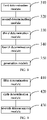
- FIG. 7 is a schematic flow diagram of the method for determining a root node device in the present application. As shown in Figure 7 , the method comprises:
- the accessible devices corresponding to the ports of the designated devices are directly or indirectly connected to the designated devices through the ports.
- Step S203 determining a root node device among the multiple designated devices according to the number of accessible devices corresponding to the ports of the designated device(s).
- steps S201-S203 can refer to those of steps S101-S103.
- the method for determining a root node device determines multiple designated devices in a network, wherein the multiple designated devices are directly or indirectly connected through ports.
- the accessible devices corresponding to the ports of the designated devices among the multiple designated devices are determined, wherein any accessible device corresponding to a port of a designated device is directly or indirectly connected to the designated device through the port.
- the root node device among the multiple designated devices is determined according to the number of accessible devices corresponding to the ports of the designated device(s). Therefore, the root node device of the multiple designated devices in the network is automatically determined according to the number of accessible devices corresponding to the ports of the multiple designated devices in the network, which is simple, efficient, and highly accurate.
- FIG. 8 is a structural diagram of the apparatus for generating a network topology provided by an embodiment of the present application. As shown in Figure 8 , the apparatus includes a first determination module 310, a second determination module 320, a third determination module 330, a fourth determination module 340, and a generation module 350.
- the first determination module 310 is configured to determine multiple designated devices in the network, wherein the multiple designated devices are connected directly or indirectly through ports.
- the second determination module 320 is configured to determining, among the multiple designated devices, accessible devices corresponding to the ports of the designated devices, wherein any accessible device corresponding to a port of a designated device is directly or indirectly connected to the designated device through the port,
- the third determination module 330 is configured to determine a root node device among the multiple designated devices according to the number of accessible devices corresponding to the ports of the designated device(s).
- the fourth determination module 340 is configured to determining, according to the accessible devices corresponding to the ports of the designated devices, designated devices that are directly connected, among the multiple designated devices.
- the generation module 350 is configured to generate a topology of the multiple designated devices in the network according to the root node device and the designated devices that are directly connected among the multiple designated devices.
- the third determination module 330 includes a first calculation sub module and a first determination sub module (not shown in the figure), wherein,
- the first calculation sub module is configured to calculate, for any designated device of the designated devices, a mean square deviation of the number of accessible devices corresponding to all the ports of the designated device for connecting the accessible devices.
- the first determining sub module is configured to determine the root node device among the multiple designated devices according to the mean square deviations corresponding to the designated device(s).
- the first determination sub module is specifically configured for, in the designated devices whose number of ports for connecting the accessible devices being not 1, taking a designated device with a smallest mean square deviation as the root node device among the multiple designated devices, or, determining the root node device among the multiple designated devices according to the mean square deviation(s) corresponding to the designated device(s) and port bandwidth(s) of the designated device(s).
- the fourth determination module 340 includes a second determination sub module and a third determination sub module (not shown in the figure), wherein, the second determination sub module is configured to determine types of the ports of the designated devices according to the root node device among the multiple designated devices and the accessible devices corresponding to the ports of the designated devices; wherein the types of the ports comprise uplink ports and downlink ports.
- the third determination sub module is configured to determine the designated devices that are directly connected among the multiple designated devices according to the types of the ports of the designated devices and the accessible devices corresponding to the ports of the designated devices.
- the third determination sub module comprises a determination unit and an execution unit (not shown in the figure), wherein, the determination unit is configured to determine accessible devices corresponding to each uplink port and accessible devices corresponding to each downlink port, the execution unit is configured to, for any two of the multiple designated devices, perform an operation of determining whether the first device and the second device are designated devices that are directly connected according to the accessible devices corresponding to the uplink port of the first device and the accessible devices corresponding to the downlink port of the second device until all designated devices that are directly connected among the multiple designated devices are determined.
- the first device and the second device are any two of the multiple designated devices.
- the execution unit is specifically configured to, when the accessible devices corresponding to the uplink port of the first device include the second device, the accessible devices corresponding to the downlink port of the second device include the first device, and there is no intersection between the accessible devices corresponding to the uplink port of the first device and the accessible devices corresponding to the downlink port of the second device, determine that the first device and the second device are directly connected.
- the generation module 350 includes a fourth determination sub module and a generation sub module (not shown in the figure), wherein, the fourth determination sub module is configured to determine levels corresponding to the multiple designated devices according to the root node device and the designated devices that are directly connected among the designated device, the generation sub module is configured to generate the topology of multiple designated devices in the network according to the levels corresponding to the multiple designated devices.
- the fourth determination module 340 may be specifically configured to:
- the first port is an uplink port
- the second port is a downlink port
- accessible devices of the uplink port comprise the root node device
- accessible devices of the downlink port do not comprise the root node device.
- the fourth determination module 340 may be also configured to: when the accessible devices corresponding to the uplink port of the first device include the second device, the accessible devices corresponding to the downlink port of the second device include the first device, and there is no intersection between the accessible devices corresponding to the uplink port of the first device and the accessible devices corresponding to the downlink port of the second device, it is determined that the first device and the second device are directly connected.
- the generation sub module is specifically configures for:
- the apparatus further includes an eighth determination module and a ninth determination module (not shown in the figure), wherein,
- the apparatus further includes a tenth determination module and an eleventh determination module (not shown in the figure), wherein,
- the apparatus for generating a network topology determines multiple designated devices in a network when generating network topology, wherein the multiple designated devices are directly or indirectly connected through ports.
- the accessible devices corresponding to the ports of the designated devices among the multiple designated devices are determined, wherein any accessible device corresponding to a port of a designated device is directly or indirectly connected to the designated device through the port.
- the root node device among the multiple designated devices is determined according to the number of accessible devices corresponding to the ports of the designated devices.
- the designated devices that are directly connected among the multiple designated devices are determined according to the accessible devices corresponding to the ports of the designated devices.
- the topology of the multiple designated devices in the network is generated according to the root node device and the designated devices that are directly connected among the multiple designated devices. Thereby, the topology of the multiple designated devices in the network is automatically generated according to the accessible devices corresponding to the ports of the multiple designated devices in the network, which is simple, efficient, and highly accurate.
- an embodiment of the present application further provides an apparatus for determining a root node device.
- Figure 9 is a structural diagram of the apparatus for determining a root node device according to an embodiment of the present application. As shown in Figure 9 , the apparatus includes a fifth determination module 410, a sixth determination module 420, and a seventh determination module 430.
- the fifth determination module 410 is configured to determine multiple designated devices in the network, wherein the multiple designated devices are connected directly or indirectly through ports.
- the sixth determination module 420 is configured to determine, among the multiple designated devices, accessible devices corresponding to the ports of the designated devices, wherein any accessible device corresponding to a port of a designated device is directly or indirectly connected to the designated device through the port,
- the seventh determination module 430 is configured to determine a root node device among the multiple designated devices according to the number of accessible devices corresponding to the ports of the designated devices.
- the seventh determination module 430 includes a second calculation sub module and a fifth determination sub module (not shown in the figure), wherein,
- the fifth determining sub module is specifically configured to:
- the apparatus for determining a root node device determines multiple designated devices in a network when the root node device is determined, wherein the multiple designated devices are directly or indirectly connected through ports.
- the accessible devices corresponding to the ports of the designated devices among the multiple designated devices are determined, wherein any accessible device corresponding to a port of a designated device is directly or indirectly connected to the designated device through the port.
- the root node device among the multiple designated devices is determined according to the number of accessible devices corresponding to the ports of the designated device(s). Therefore, the root node device of the multiple designated devices in the network is automatically determined according to the number of accessible devices corresponding to the ports of the multiple designated devices in the network, which is simple, efficient, and highly accurate.
- the present application also proposes an electronic device, comprising a memory and a processor; wherein the memory stores a computer program executable by the processor, which when executed by the processor, causes the processor to implement the method for generating a network topology as described above.
- the present application also proposes an electronic device, comprising a memory and a processor; wherein the memory stores a computer program executable by the processor, which when executed by the processor, causes the processor to implement the method for determining the root node device as described above.
- a non-transitory computer-readable storage medium wherein a computer program is stored thereon, and when executed by a processor, causes the processor to implement the method for generating a network topology as described above.
- a non-transitory computer-readable storage medium wherein a computer program is stored thereon, and when executed by a processor, causes the processor to implement the method for determining a root node device as described above.
- a computer program product which implements the method for generating a network topology as described above when instructions in the computer program product are executed by a processor.
- a computer program product which implements the method for determining a root node device as described above when instructions in the computer program product are executed by a processor.
- a computer program code is provided, the computer program code is configured to be executed to execute the method for generating a network topology as described above.
- a computer program code is provided, the computer program code is configured to be executed to execute the method for determining a root node device as described above.
- the disclosed apparatus electronic device, computer-readable storage medium, computer program products and methods can be realized in other ways.
- the apparatus embodiments described above are merely illustrative.
- the apparatus can be divided into units only according to the logical functions, however, in practice, the apparatus can be divided in other ways.
- a plurality of units or components can be combined or integrated into another system, or some features can be ignored or not executed.
- the direct coupling or communication connections between the interfaces, devices or units shown or described above can be indirect coupling or communication connections, or electrical or mechanical connections or other forms of connections.
- the units illustrated as separate components may or may not be physically separated.
- the components shown as units may or may not be physical units, and can be located on one unit or can be distributed on a plurality of network units. Some or all of the units can be selected from the units above according to actual needs to achieve the objective of the solution of the embodiments.
- all the functional units in the embodiments of the present application can be integrated in one processing unit, or each of the units can be an individual unit, or two or more units can be integrated in one unit.
- the integrated unit described above can be implemented as hardware or can be implemented as a hardware plus software function unit.
- the integrated unit implemented in the form of software functional unit can be stored in a computer readable storage medium.
- the above software functional unit is stored in a storage medium, and comprises several instructions for causing a computer device (which may be a personal computer, a server, or a network apparatus) or a processor to execute some steps of the methods of the embodiments of the present application.
- the storage medium comprises medium capable of storing program code, such as a USB flash disk, a mobile hard disk, a Read Only Memory (ROM), a Random Access Memory (RAM), a magnetic disk, or an optical disk.
Landscapes
- Engineering & Computer Science (AREA)
- Computer Networks & Wireless Communication (AREA)
- Signal Processing (AREA)
- Small-Scale Networks (AREA)
- Data Exchanges In Wide-Area Networks (AREA)
Applications Claiming Priority (2)
| Application Number | Priority Date | Filing Date | Title |
|---|---|---|---|
| CN202010230987.1A CN111464450B (zh) | 2020-03-27 | 2020-03-27 | 网络拓扑结构的生成方法及装置 |
| PCT/CN2021/082402 WO2021190503A1 (zh) | 2020-03-27 | 2021-03-23 | 网络拓扑结构的生成方法及装置 |
Publications (2)
| Publication Number | Publication Date |
|---|---|
| EP4131871A1 true EP4131871A1 (de) | 2023-02-08 |
| EP4131871A4 EP4131871A4 (de) | 2023-09-06 |
Family
ID=71680217
Family Applications (1)
| Application Number | Title | Priority Date | Filing Date |
|---|---|---|---|
| EP21776884.5A Pending EP4131871A4 (de) | 2020-03-27 | 2021-03-23 | Verfahren und vorrichtung zur erzeugung einer netzwerktopologie |
Country Status (4)
| Country | Link |
|---|---|
| US (1) | US20230155892A1 (de) |
| EP (1) | EP4131871A4 (de) |
| CN (1) | CN111464450B (de) |
| WO (1) | WO2021190503A1 (de) |
Families Citing this family (5)
| Publication number | Priority date | Publication date | Assignee | Title |
|---|---|---|---|---|
| CN111464450B (zh) * | 2020-03-27 | 2022-03-25 | 杭州海康威视数字技术股份有限公司 | 网络拓扑结构的生成方法及装置 |
| CN113328890B (zh) * | 2021-06-07 | 2021-11-23 | 北京中电兴发科技有限公司 | 一种基于分布式系统的网络通信模型构建方法 |
| CN116155739A (zh) * | 2021-11-23 | 2023-05-23 | 华为技术有限公司 | 网络拓扑的还原方法及装置 |
| CN113992498B (zh) * | 2021-12-24 | 2022-04-08 | 深圳市明源云科技有限公司 | 系统架构展示方法、装置、设备及计算机可读存储介质 |
| CN120050182B (zh) * | 2025-04-22 | 2025-07-04 | 浙江大华技术股份有限公司 | 网络拓扑结构生成方法、电子设备及计算机可读存储介质 |
Family Cites Families (15)
| Publication number | Priority date | Publication date | Assignee | Title |
|---|---|---|---|---|
| CN101534215A (zh) * | 2009-04-16 | 2009-09-16 | 杭州华三通信技术有限公司 | 一种网络拓扑发现方法和装置 |
| EP2730060A4 (de) * | 2011-07-06 | 2014-12-03 | Ericsson Telefon Ab L M | Dynamische aktualisierung eines label switched path |
| CN103248512B (zh) * | 2012-02-14 | 2015-12-16 | 腾讯科技(深圳)有限公司 | 通信网络中应用层拓扑结构的生成方法和系统 |
| US9608900B2 (en) * | 2012-08-08 | 2017-03-28 | Cisco Technology, Inc. | Techniques for flooding optimization for link state protocols in a network topology |
| US9544220B2 (en) * | 2013-02-05 | 2017-01-10 | Cisco Technology, Inc. | Binary search-based approach in routing-metric agnostic topologies for node selection to enable effective learning machine mechanisms |
| US20150091909A1 (en) * | 2013-09-30 | 2015-04-02 | Alcatel Lucent | Systems And Methods For Distance Approximation In Graphs |
| CN103974310B (zh) * | 2014-05-08 | 2017-06-06 | 江苏中科羿链通信技术有限公司 | 无线通信多跳网络设备的树状拓扑构建方法、装置和系统 |
| EP3139539A1 (de) * | 2015-09-03 | 2017-03-08 | Alcatel Lucent | Verfahren und vorrichtung zum konfigurieren von netzwerkelementen |
| CN105554888B (zh) * | 2015-12-10 | 2019-04-16 | 国网四川省电力公司电力科学研究院 | 基于链路多速率的多射频多信道无线Mesh网络信道分配算法 |
| CN106452827A (zh) * | 2016-07-29 | 2017-02-22 | 杭州优云软件有限公司 | 一种混合cdp、lldp与fdb数据的网络拓扑计算方法 |
| US11671329B2 (en) * | 2018-04-04 | 2023-06-06 | Arista Networks, Inc. | Computation of network flooding topologies |
| CN110545194B (zh) * | 2018-05-28 | 2021-06-01 | 华为技术有限公司 | 网络拓扑的生成方法及装置 |
| CN109257225B (zh) * | 2018-10-12 | 2021-08-10 | 北京信研汇智信息技术有限公司 | 生成网络拓扑的方法、装置、存储介质和处理器 |
| CN109309944B (zh) * | 2018-10-15 | 2019-08-09 | 西北工业大学 | 一种无线多跳网络拓扑发现方法 |
| CN111464450B (zh) * | 2020-03-27 | 2022-03-25 | 杭州海康威视数字技术股份有限公司 | 网络拓扑结构的生成方法及装置 |
-
2020
- 2020-03-27 CN CN202010230987.1A patent/CN111464450B/zh active Active
-
2021
- 2021-03-23 EP EP21776884.5A patent/EP4131871A4/de active Pending
- 2021-03-23 US US17/914,987 patent/US20230155892A1/en not_active Abandoned
- 2021-03-23 WO PCT/CN2021/082402 patent/WO2021190503A1/zh not_active Ceased
Also Published As
| Publication number | Publication date |
|---|---|
| CN111464450B (zh) | 2022-03-25 |
| US20230155892A1 (en) | 2023-05-18 |
| WO2021190503A1 (zh) | 2021-09-30 |
| EP4131871A4 (de) | 2023-09-06 |
| CN111464450A (zh) | 2020-07-28 |
Similar Documents
| Publication | Publication Date | Title |
|---|---|---|
| EP4131871A1 (de) | Verfahren und vorrichtung zur erzeugung einer netzwerktopologie | |
| CN109561104A (zh) | 一种通信协议转换方法及装置 | |
| US20110289119A1 (en) | Methods and systems for monitoring server cloud topology and resources | |
| US20140160980A1 (en) | Assigning Telecommunications Nodes to Community of Interest Clusters | |
| CN101276258A (zh) | 存储设备及其控制方法 | |
| CN113568860A (zh) | 基于深度学习的拓扑映射方法、装置、介质及程序产品 | |
| US11863439B2 (en) | Method, apparatus and storage medium for application identification | |
| JP7689541B2 (ja) | 情報処理方法、モデルトレーニング方法、装置、機器、媒体及びプログラム製品 | |
| CN113114491A (zh) | 一种网络拓扑的构建方法、装置和设备 | |
| CN110581848B (zh) | 一种云桌面多网隔离系统和方法 | |
| WO2025112353A1 (zh) | 一种逆向筛选衍生特征的安全交互方法及装置 | |
| CN104243360B (zh) | 一种转发链路的配置方法和装置 | |
| EP2620876B1 (de) | Verfahren und vorrichtung zur datenverarbeitung, pci-e-bussystem und server | |
| CN115022411B (zh) | 基于WebRTC的媒体服务器调度系统、方法及装置 | |
| CN110620691A (zh) | 664航电网络的物理拓扑结构生成算法 | |
| CN113037489A (zh) | 数据处理方法、装置、设备和存储介质 | |
| US20210126855A1 (en) | Control packet transmission system | |
| CN113608992B (zh) | 一种边缘服务器的远程调试系统及方法 | |
| US10333837B2 (en) | Virtual network switch system and method of constructing the same | |
| CN206270948U (zh) | 一种电脑与电脑之间的数据传输装置 | |
| CN109857563A (zh) | 任务执行方法、装置和任务执行系统 | |
| CN115297015A (zh) | 边缘节点接入方法及装置、存储介质和电子设备 | |
| CN114500413A (zh) | 设备连接方法及装置、设备连接芯片 | |
| CN113641688A (zh) | 节点更新方法、相关装置及计算机程序产品 | |
| US10728155B2 (en) | Inter-datacenter multicast system |
Legal Events
| Date | Code | Title | Description |
|---|---|---|---|
| STAA | Information on the status of an ep patent application or granted ep patent |
Free format text: STATUS: THE INTERNATIONAL PUBLICATION HAS BEEN MADE |
|
| PUAI | Public reference made under article 153(3) epc to a published international application that has entered the european phase |
Free format text: ORIGINAL CODE: 0009012 |
|
| STAA | Information on the status of an ep patent application or granted ep patent |
Free format text: STATUS: REQUEST FOR EXAMINATION WAS MADE |
|
| 17P | Request for examination filed |
Effective date: 20221020 |
|
| AK | Designated contracting states |
Kind code of ref document: A1 Designated state(s): AL AT BE BG CH CY CZ DE DK EE ES FI FR GB GR HR HU IE IS IT LI LT LU LV MC MK MT NL NO PL PT RO RS SE SI SK SM TR |
|
| DAV | Request for validation of the european patent (deleted) | ||
| DAX | Request for extension of the european patent (deleted) | ||
| REG | Reference to a national code |
Ref country code: DE Ref legal event code: R079 Free format text: PREVIOUS MAIN CLASS: H04L0012751000 Ipc: H04L0012440000 |
|
| A4 | Supplementary search report drawn up and despatched |
Effective date: 20230807 |
|
| RIC1 | Information provided on ipc code assigned before grant |
Ipc: H04L 45/02 20220101ALI20230801BHEP Ipc: H04L 45/00 20220101ALI20230801BHEP Ipc: H04L 41/12 20220101ALI20230801BHEP Ipc: H04L 12/44 20060101AFI20230801BHEP |
|
| STAA | Information on the status of an ep patent application or granted ep patent |
Free format text: STATUS: EXAMINATION IS IN PROGRESS |
|
| 17Q | First examination report despatched |
Effective date: 20251222 |