EP4131885A1 - Système de communication - Google Patents
Système de communication Download PDFInfo
- Publication number
- EP4131885A1 EP4131885A1 EP21776242.6A EP21776242A EP4131885A1 EP 4131885 A1 EP4131885 A1 EP 4131885A1 EP 21776242 A EP21776242 A EP 21776242A EP 4131885 A1 EP4131885 A1 EP 4131885A1
- Authority
- EP
- European Patent Office
- Prior art keywords
- command
- communication
- external device
- communication processing
- communication device
- Prior art date
- Legal status (The legal status is an assumption and is not a legal conclusion. Google has not performed a legal analysis and makes no representation as to the accuracy of the status listed.)
- Granted
Links
Images












Classifications
-
- H—ELECTRICITY
- H04—ELECTRIC COMMUNICATION TECHNIQUE
- H04L—TRANSMISSION OF DIGITAL INFORMATION, e.g. TELEGRAPHIC COMMUNICATION
- H04L69/00—Network arrangements, protocols or services independent of the application payload and not provided for in the other groups of this subclass
- H04L69/28—Timers or timing mechanisms used in protocols
-
- H—ELECTRICITY
- H04—ELECTRIC COMMUNICATION TECHNIQUE
- H04L—TRANSMISSION OF DIGITAL INFORMATION, e.g. TELEGRAPHIC COMMUNICATION
- H04L41/00—Arrangements for maintenance, administration or management of data switching networks, e.g. of packet switching networks
- H04L41/16—Arrangements for maintenance, administration or management of data switching networks, e.g. of packet switching networks using machine learning or artificial intelligence
-
- H—ELECTRICITY
- H04—ELECTRIC COMMUNICATION TECHNIQUE
- H04L—TRANSMISSION OF DIGITAL INFORMATION, e.g. TELEGRAPHIC COMMUNICATION
- H04L45/00—Routing or path finding of packets in data switching networks
- H04L45/74—Address processing for routing
-
- H—ELECTRICITY
- H04—ELECTRIC COMMUNICATION TECHNIQUE
- H04L—TRANSMISSION OF DIGITAL INFORMATION, e.g. TELEGRAPHIC COMMUNICATION
- H04L47/00—Traffic control in data switching networks
- H04L47/10—Flow control; Congestion control
- H04L47/28—Flow control; Congestion control in relation to timing considerations
-
- H—ELECTRICITY
- H04—ELECTRIC COMMUNICATION TECHNIQUE
- H04L—TRANSMISSION OF DIGITAL INFORMATION, e.g. TELEGRAPHIC COMMUNICATION
- H04L67/00—Network arrangements or protocols for supporting network services or applications
- H04L67/2866—Architectures; Arrangements
- H04L67/2876—Pairs of inter-processing entities at each side of the network, e.g. split proxies
Definitions
- the present disclosure relates to a communication system, and particularly to command transmission.
- a low-speed bus to which a legacy device is connected sometimes has no choice but to further slow down due to latency of the packet-switched network.
- 1 us is one clock, and the bus sometimes return a response at 1 us.
- latency is not fixed, but becomes about 10 us when communication is possible at 1 Gbps.
- the latency of the packet-switched network becomes 10 times 1 us, which is the response time of the bus, it is necessary to coincide with the clock of the bus to 10 us in accordance with the latency of the packet-switched network. Then, the operation clock of the bus decreases to about 100 kHz, and it has been necessary to further reduce the low transfer speed that is originally lower than that in the packet-switched network.
- Patent Literature 1 PTL1
- PTL2 PTL2
- NPL1 Non Patent Literature 1
- the inventor has studied a transmission method of a command via a network and has found various problems. Specifically, for example, in a system where a first device connected to a network transmits a command, when the latency of the connected network is large, there is a possibility that a second device to which the command is transmitted cannot respond to the command within the response time of the device that has transmitted the command.
- One objective that the example embodiments disclosed herein to achieve is to reduce latency of communications via the network. It should be noted that this object is merely one of a plurality of objects to be achieved by the plurality of example embodiments disclosed herein. Other objects or problems and novel features will be made apparent from the description of the present description or the accompanying drawings.
- a communication system in a first aspect, includes a first external device, a second external device, a first communication device, and a second communication device.
- the first communication device includes a command prediction unit and a first communication processing unit.
- the command prediction unit is configured to predict an address and instruction content in a first command from a part of the first command having been input from the first external device, output, as a second command, the address and the instruction content having been predicted, and output first flag information indicating whether the second communication device needs to wait for transmission of the second command.
- the first communication processing unit is configured to transmit the second command and the first flag information to the second communication device.
- the second communication device includes a second communication processing unit.
- the second communication processing unit is configured to receive the second command and the first flag information, and transmit the second command to the second external device when the first flag information indicates that the second communication device does not need to wait for transmission of the second command.
- the example embodiments described below can be implemented independently, or can be implemented in appropriate combination.
- the plurality of example embodiments have novel features different from one another. Therefore, the plurality of example embodiments contribute to different objects or solving problems, and contribute to achieving effects different from one another.
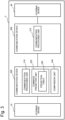
- Fig. 1 illustrates a configuration example of a communication system 1 according to the present example embodiment.
- Each of the elements shown in Fig. 1 is a network function.
- Each of the elements shown in Fig. 1 can be implemented, for example, as dedicated hardware, as software running on dedicated hardware, or as a virtualization function instantiated on an application platform running on general-purpose hardware.
- the communication system 1 includes an external device 10, a communication device 20, a communication device 30, and an external device 40.
- the communication device 20 includes a communication processing unit 21 and a command prediction unit 22, and the communication device 30 includes a communication processing unit 31.
- Examples of the external device include, but are not limited to, a communication apparatus such as a computer present on a network, and various registers or the like present in the apparatus.
- the communication device is an apparatus directly connected to a network, and examples the communication device include, but are not limited to, a router device, a hub device, a network interface card, a computer present or the like on the network.
- the external devices and the communication devices described in the present example embodiment may be connected via a packet-switched network or may be directly connected by a communication cable or the like.
- connection method to the packet-switched network and the direct connection method of the external devices and the communication devices include, but are not limited to, wireless communication connection and wired communication connection.
- the communication processing unit 21 is connected to the external device 10 and the communication device 30 via the network.
- the communication processing unit 21 receives a command for the external device 10 and transmits a command and first flag information to other devices including the external device 40.
- the communication processing unit 31 is connected to the external device 40 and the communication device 20 via the network.
- the communication processing unit 31 receives a command for the external device 40 and the first flag information. In a case where the first flag information indicates that it is not necessary to wait for transmission of the command to the external device 40, the communication processing unit 31 transmits the command to the external device 40.
- the command in the present example embodiment includes instruction content to the device and an address indicating a transmission destination of the instruction content.
- Examples of the description format of the address include Internet Protocol version 4 (IPv4), Internet Protocol version 6 (IPv6) or the like, but are not limited to as long as the communication device or the external device to which the command is transmitted can be specified.
- the instruction content include, but are not limited to, Read, Write and the like.
- the command prediction unit 22 predicts the instruction content and the address in the first command from a part of the first command having been input from the external device 10, and outputs, as the second command, the instruction content and the address having been predicted.
- the first command in the present example embodiment is a command that is actually output from the external device 10 and includes the instruction content to the external device and the address of the external device.
- the second command in the present example embodiment is a command that the communication device 20 predicts from a part of the first command and outputs.
- the command prediction unit 22 also outputs the first flag information.
- the first flag information indicates whether the communication device 30 needs to wait for transmission of the second command to the external device 40. More specifically, in a case where it is necessary for the communication device 30 to wait for transmission of the second command to the external device 40, the first flag information is given 1. For the second command in which the first flag information is not given 1, the first flag information is given 0.
- the first flag information is given 1 for the command.
- the address refers to a power control register of an apparatus and a command including an instruction indicating Write is transmitted to the address
- the first flag information is given 1.
- the reference for giving 1 to the first flag information does not depend only on the instruction content included in the command. For example, for a command including an instruction indicating Read with respect to an address associated with a register that records the state of an apparatus, the register is not greatly affected. Therefore, for the command, the first flag information is given 0. However, even if an instruction indicating the same Read is included, the first flag information is sometimes given 1 depending on the external device indicated by the address. For example, there is a register such as a Read & Clear register in which contents are erased after a Read instruction is executed. For the second command including a Read instruction for such register, the first flag information is given 1.
- the communication device 20 predicts the second command from a part of the first command (S101) input from the external device 10 (S102), and transmits the second command together with the first flag information to the communication device 30 (S103).
- the communication device 30 receives the second command and the first flag information (S104), and transmits the second command to the external device 40 when it is not necessary to wait for transmission of the second command to the external device 30 (S105).
- Fig. 3 illustrates a configuration example of a communication system 2 according to the present example embodiment.
- a communication device 200 includes a communication processing unit 210, a command prediction unit 220, and a comparison unit 240.
- the communication processing unit 210 is connected to the external device 10 and a communication device 300, similarly to the communication processing unit 21 in the first example embodiment.
- the communication processing unit 210 receives a command for the external device 40 and transmits the command, the first flag information, and the comparison result to other devices including the communication device 300.
- the command prediction unit 220 holds a prediction table 230 illustrated in Fig. 4 or a prediction table 250 illustrated in Fig. 5 .
- the command prediction unit 220 predicts a command similarly to the command prediction unit 22 in the first example embodiment, and outputs the predicted command as a second command.
- the command prediction unit 220 outputs the first flag information, similarly to the command prediction unit 22 in the first example embodiment.
- the first flag information indicates whether the communication device 300 needs to wait for transmission of the second command to the external device 40. More specifically, in a case where it is necessary for the communication device 300 to wait for transmission of the second command to the external device 40, the first flag information is given 1. For the second command in which the first flag information is not given 1, the first flag information is given 0.
- the first flag information indicates whether the second command greatly affects the external device 40.
- the transmission destination is the Read & Clear register illustrated in the first example embodiment
- the instruction content in the second command is Read
- the prediction of the first command is wrong (in a case where the first command and the second command do not match)
- unintended data erasure is performed when the command is transmitted to the register.
- the second command greatly affects the external device 40
- the first flag information in the second command is given 1.
- the comparison unit 240 compares the first command with the second command and outputs a comparison result.
- the first command is a command that is actually output from the external device 10 and includes the instruction content to the external device and the address of the external device.
- the second command is a command that the communication device 20 predicts from a part of the first command and outputs.
- the comparison unit 240 compares the instruction content described in the first command and the address indicating the transmission destination of the instruction content with the instruction content described in the second command and the address indicating the transmission destination of the instruction content. In addition, the comparison unit 240 outputs a comparison result.
- the communication device 300 in the present example embodiment includes a communication processing unit 310.
- the communication processing unit 310 is connected to the external device 40 and the communication device 200 similarly to the communication processing unit 31 in the first example embodiment.
- the communication processing unit 310 receives the command for the external device 40, the first flag information, and the comparison result from the communication device 200. In a case where the first flag information indicates 0 (it is not necessary to wait for transmission of the second command), the communication processing unit 310 transmits a command to the external device 40. In a case where the first flag information indicates 1 (it is necessary to wait for transmission of the second command), the communication processing unit 310 waits for transmission of the command to the external device 40 until the comparison result is received.
- the prediction table 230 included in command prediction unit 220 will be described with reference to Fig. 4 .
- the prediction table 230 includes an entry number, an address to which the instruction content of the second command is transmitted, the instruction content of the second command, and the first flag information.
- the address described in the prediction table 230 may be compressed by the appearance probability of the address. Examples of the compression method include, but are not limited to, Huffman encoding.
- the prediction table 230 may be updated by various means as necessary.
- Huffman encoding is one of the methods for compressing in such a way that the higher the frequency of the command to be executed is, the shorter the bit strings with which identification can be performed is.
- the prediction table 250 illustrated in Fig. 5 the smaller the entry number of the command is, the higher the probability that the external device 10 transmits is. Therefore, the command whose entry number is 1 is given 0 to the first bit. It is assumed that the command execution rate per unit time is calculated and the total of the execution probabilities of the entry numbers 1 to 3 is 98%. In this case, the second command output at the time point of receiving up to the head 3 bits of the address matches the first command with a probability of 98%.
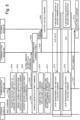
- Figs. 6 to 8 illustrate the operation in a case where the communication processing unit 310 does not need to wait for transmission of a command to the external device 40 (a case where the received first flag information indicates 0).
- the external device 10 transmits the first command from the address portion to the communication device 200 (S201).
- the communication device 200 starts receiving the first command from the external device 10 using the communication processing unit 210. Every time 1 bit is received, the communication processing unit 210 transfers the received address to the command prediction unit 220 bit by bit (S202).
- the command prediction unit 220 predicts the first command using the prediction table 230 or the prediction table 250 (S203). Here, the address and the instruction content are predicted from the head few bits of the address.
- the command prediction unit 220 outputs the predicted command as the second command to the communication processing unit 210 (S204).
- the command prediction unit 220 outputs the first flag information to the communication processing unit 210 (S204).
- the command prediction unit 220 outputs the predicted command to the communication processing unit 210 as a second command, and also outputs, to the communication processing unit 210, the first flag information associated to the second command.
- the communication processing unit 210 transmits the second command and the first flag information to the communication device 300 (S205).
- the communication processing unit 310 in the communication device 300 receives the second command and the first flag information from the communication device 200.
- the communication device 300 confirms the first flag information (S206). In a case where the first flag information indicates 0 (it is not necessary to wait for transmission of the second command), the communication device 300 transmits the second command to the external device 40 (S207). The operation in a case where the first flag information indicates 1 (in a case where it is necessary to wait for transmission of the second command) will be described later.
- the external device 40 receives the second command from the communication device 300 and executes the instruction content included in the second command (S208).
- the communication processing unit 210 in the communication device 200 transfers the first command and the second command to the comparison unit 240.
- the comparison unit 240 compares the first command with the second command (S210).
- the communication processing unit 210 performs transfer of a response signal (ACK) to the second command and transfer of data to be transmitted and received between the external device 10 and the external device 40 based on the second command (S212).
- ACK response signal
- the communication system 2 can prevent the external device 10 from giving an unintended influence to the external device 40 by the second command, and can reduce the latency of the response to the command transmitted by the external device 10.
- the operations from S201 to S210 are the same as the above-described operations.
- the comparison unit 240 of the communication device 200 determines that the addresses of the first command and the second command do not match (S213). Since the second command has already been transmitted to the external device 40 in S207, the communication processing unit 210 executes the same operation as in S212.
- the communication processing unit 210 transmits the first command to the address described in the first command (S214).
- S214 a case where the address described in the first command indicates a communication device different from the communication device 300 will be described.
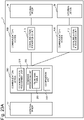
- the communication system in Fig. 23A includes the external device 10, the communication device 200, the communication device 300, and the external device 40, similarly to Fig. 3 .
- the communication system in Fig. 23A includes a communication device 400 and an external device 50.
- the communication device 400 includes a communication processing unit 410.
- the communication processing unit 210 transmits the first command to the external device 50 via the communication device 400.
- the external device 50 executes the first command.
- Figs. 6 and 7 are examples in a case where the instruction content in the second command is Read or Write, but the second command is not limited to them.
- the communication device 200 even when a command is transmitted to a wrong address in command prediction, the communication device 200 does not perform cancellation of the command. Therefore, by preventing unnecessary cancellation, it is possible to prevent waste of communication resources.
- the operations from S201 to S210 are the same as the above-described operations.
- the comparison unit 240 determines that the instruction contents of the first command and the second command do not match (S215).
- the communication processing unit 210 stops the transfer of the ACK for the second command and the transfer of the data transmitted and received between the external device 10 and the external device 40 based on the second command (S216).
- the communication processing unit 210 transmits the first command to the communication device 300 (S217).
- the communication device 300 transmits the first command to the external device 40 (S217).
- the external device 40 executes the first command (S218).
- the above operation makes it possible to, in the communication system 2, prevent a wrong command from consuming various resources of the communication device 200.
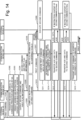
- Fig. 9 illustrates the operation in a case where the communication processing unit 310 needs to wait for transmission of the second command (in a case where the first flag information indicates 1) and the comparison result between the first command and the second command indicates that the address of the first command and the address of the second command match.
- the operations from S201 to S205 are the same as the above-described operations.
- the communication device 300 does not transmit the received second command to the external device 40, and waits for a comparison result between the first command and the second command (S220).
- the operations from S209 to 211 in the communication device 200 are the same as the above-described operations.
- the communication processing unit 210 transmits the comparison result to the communication device 300 (S221). Since the comparison result between the first command and the second command indicates that the first command and the second command match, the communication processing unit 310 transmits the second command to the external device 40 (S222). The operation in a case where the comparison result output by the comparison unit 240 indicates that the first command and the second command are different will be described later.
- the external device 40 executes the second command in the same manner as in S208.
- the communication system 2 can prevent the external device 10 from giving an unintended influence to the external device 40 by the second command, and can reduce the latency of the response to the command transmitted by the external device 10.
- the communication processing unit 310 transmits, to the communication device 200, a message indicating that the communication processing unit 310 does not transmit the second command to the external device 40 (S223). Operations other than S223 are as described above.
- the communication processing unit 210 may execute the operation of S214 immediately after determining that the address of the first command and the address of the second command do not match in S213. In this case, the operations of S221 and S223 become unnecessary.
- the configuration for executing such operation will be described.
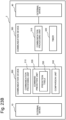
- Fig. 23B is a view illustrating another configuration example of the communication system according to an example embodiment.
- the communication system in Fig. 23B includes the external device 10, the communication device 200, the communication device 300, and the external device 40, similarly to Fig. 6 .
- the communication device 300 in Fig. 23B includes the communication processing unit 310 and a timer 320. That is, the communication device 300 includes the timer 320, and the timer 320 sets a discretionary time and starts countdown after executing the operation of S220. When the count becomes 0, the communication device 300 stops waiting for the comparison result and discards the second command.
- the communication system 2 in a case where the predicted command (second command) has a large influence on the external device 40, it is possible to prevent the external device 10 from giving an unintended large influence to the external device 40 by the second command, and transmit the first command to an intended communication device.
- each operation is the same as that described above.
- the predicted command (second command) has a large influence on the external device 40, it is possible to prevent the external device 10 from giving an unintended large influence to the external device 40 by the second command, and transmit the first command to the communication device 300.
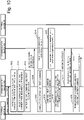
- Fig. 12 illustrates a configuration example of a communication system 3 according to the present example embodiment.
- the communication device 201 includes a communication processing unit 211 and the command prediction unit 220.
- the communication processing unit 211 is connected to the external device 10 and the communication device 301, similarly to the communication processing unit 21 in the first example embodiment.
- the communication processing unit 211 receives a command for the external device 40 and transmits the command and the first flag information to other devices including the communication device 301.
- the command prediction unit 220 holds a prediction table 230 illustrated in Fig. 4 or a prediction table 250 illustrated in Fig. 5 .
- the command prediction unit 220 predicts a command similarly to the operation of the command prediction unit 220 in the second example embodiment, and outputs the predicted command as the second command.
- the command prediction unit 220 outputs the first flag information, similarly to the command prediction unit 22 in the first example embodiment.
- the first flag information indicates whether the communication device 301 needs to wait for transmission of the second command to the external device 40. More specifically, in a case where it is necessary for the communication device 301 to wait for transmission of the second command to the external device 40, the first flag information is given 1. For the second command in which the first flag information is not given 1, the first flag information is given 0. In other words, the first flag information indicates whether the second command greatly affects the external device 40. For example, in a case where the transmission destination is the Read & Clear register illustrated in the first example embodiment and the instruction content in the second command includes Read, and in a case where the prediction of the first command is wrong (in a case where the first command and the second command do not match), unintended data erasure is performed when the command is transmitted to the register. In such a case, there is a possibility that the second command greatly affects the external device 40, and the first flag information in the second command is given 1.
- the communication device 301 in the present example embodiment includes a communication processing unit 311 and a comparison unit 321.
- the communication processing unit 311 is connected to the external device 40 and the communication device 201, similarly to the communication processing unit 31 in the first example embodiment.
- the communication processing unit 311 receives the command to the external device 40 and the first flag information.
- the communication processing unit 311 determines whether to transmit the second command to the external device based on the first flag information.
- the comparison unit 321 compares the first command with the second command and outputs a comparison result.
- the first command is a command that is actually output from the external device 10 and includes the instruction content to the external device and the address of the external device.
- the second command is a command that the communication device 20 predicts from a part of the first command and outputs.
- Figs. 13 to 15 illustrate the operation in a case where the first flag information received by the communication device 301 indicates 0 (it is not necessary to wait for transmission of the second command).
- the external device 10 transmits the first command from the address portion to the communication device 201 (S301).
- the communication device 201 starts receiving the first command from the external device 10 using the communication processing unit 211. Every time 1 bit is received, the communication processing unit 211 transfers the received address to the command prediction unit 220 bit by bit (S302).
- the command prediction unit 220 predicts the first command using the prediction table 230 or the prediction table 250 (S303). Here, the address and the instruction content are predicted from the head few bits of the address.
- the command prediction unit 220 outputs the predicted command as the second command to the communication processing unit 211 (S304).
- the command prediction unit 220 outputs the first flag information to the communication processing unit 211 (S304).
- the command prediction unit 220 outputs the predicted command to the communication processing unit 211 as a second command, and also outputs, to the communication processing unit 211, the first flag information associated to the second command.
- the communication processing unit 211 transmits the second command and the first flag information to the communication device 301 (S305).
- the communication processing unit 311 in the communication device 301 receives the second command and the first flag information from the communication device 201.
- the communication device 301 confirms the first flag information (S306).
- the communication processing unit 311 transmits the second command to the external device 40 (S307).
- the operation when the first flag information indicates 1 (it is necessary to wait for transmission of the second command) will be described later.
- the external device 40 receives the second command from the communication device 301 and executes the instruction content included in the second command (S308).
- the communication processing unit 211 in the communication device 201 transfers the first command and the second command to the communication device 301 (S310).
- the comparison unit 321 compares the first command with the second command (S311). When the first command and the second command match (S312), the communication processing unit 311 performs transfer of a response signal (ACK) to the second command and transfer of data to be transmitted and received between the external device 10 and the external device 40 based on the second command (S313). The operation when the first command and the second command do not match will be described later.
- the communication system 3 according to the present example embodiment can prevent the external device 10 from giving an unintended influence to the external device 40 by the second command, and can reduce the latency of the response to the command transmitted by the external device 10.
- the operations from S301 to S310 are the same as the above-described operations.
- the comparison unit 321 of the communication device 301 determines that the addresses of the first command and the second command do not match (S314). Since the second command has already been transmitted to the external device 40 in S307, the communication processing unit 311 executes the same operation as in S313.
- the communication processing unit 311 transmits the first command to the address described in the first command (S315).
- a case where the address described in the first command indicates a communication device different from the communication device 301 will be described.
- the communication system in Fig. 23C includes the external device 10, the communication device 201, the communication device 301, and the external device 40.
- the communication system in Fig. 23C includes a communication device 401 and the external device 50.
- the communication device 401 includes a communication processing unit 411.
- the communication processing unit 311 transmits the first command to the external device 50 via the communication device 401.
- the external device 50 executes the first command.
- S313 in Figs. 13 and 14 is an example in a case where the instruction content in the second command is Read or Write, but the second command is not limited to them.
- the communication device 301 does not perform cancellation of the command. Therefore, by preventing unnecessary cancellation, it is possible to prevent waste of communication resources.
- the comparison unit 321 determines that the instruction contents of the first command and the second command do not match (S3 16).
- the communication processing unit 311 stops the transfer of the ACK for the second command and the transfer of the data transmitted and received between the external device 10 and the external device 40 based on the second command (S317).
- the communication processing unit 311 transmits the first command to the external device 40 (S318).
- the external device 40 executes the first command (S319). Due to this, in the communication system 3 according to the present example embodiment, similarly to the second example embodiment, the communication system 3 can prevent a wrong command from consuming various resources of the communication device 301 and the like.
- the operations from S301 to S305 are the same as the above-described operations.
- the communication device 301 waits for the first command without transmitting the received second command to the external device 40 (S321).
- the operations from S309 to S312 are the same as the above-described operations.
- the communication device 301 transmits the first command or the second command to the external device 40 (S322).
- the external device 40 executes the first command or the second command (S323).
- the communication system 3 can prevent an unintended large influence from being given to the external device 40.
- the communication processing unit 311 transmits, to the communication device 201, a message indicating that the communication processing unit 311 does not transmit the second command to the external device 40 (S324).
- the communication processing unit 211 executes the operation of S3 15 triggered by the reception of the message indicating that the communication processing unit 311 does not transmit the second command to the external device 40. Operations other than S324 are as described above.
- the communication system 3 can prevent an unintended large influence from being given to the external device 40, and transmit the first command to an intended communication device.
- the communication system 3 in a case where the predicted command (second command) has a large influence on the external device 40, the communication system 3 according to the present example embodiment can prevent an unintended large influence from being given to the external device 40, and transmit the first command to the external device 40.
- Fig. 19 illustrates a configuration example of a communication system 4 according to the present example embodiment.
- a communication device 202 includes a communication processing unit 212 and the command prediction unit 220.
- the communication processing unit 212 is connected to the external device 10 and a communication device 302, similarly to the communication processing unit 21 in the first example embodiment.
- the communication processing unit 212 receives a command for the external device 40 and transmits the command, the first flag information, and the second flag information to other devices including the communication device 302.
- the communication processing unit 212 outputs the second flag information, and transmits the second flag information to other devices including the communication device 302.
- the second flag information indicates that the first command transmitted by the communication device 202 is an actual command transmitted by the external device 10.
- the command prediction unit 220 holds a prediction table 230 illustrated in Fig. 4 or a prediction table 250 illustrated in Fig. 5 .
- the command prediction unit 220 predicts a command similarly to the command prediction unit 22 in the first example embodiment, and outputs the predicted command as a second command.
- the command prediction unit 220 outputs the first flag information, similarly to the command prediction unit 22 in the first example embodiment.
- the first flag information indicates whether the communication device 302 needs to wait for transmission of the second command to the external device 40. More specifically, in a case where it is necessary for the communication device 302 to wait for transmission of the second command to the external device 40, the first flag information is given 1. For the second command in which the first flag information is not given 1, the first flag information is given 0.
- the first flag information indicates whether the second command greatly affects the external device 40.
- the transmission destination is the Read & Clear register illustrated in the first example embodiment
- the instruction content in the second command is Read
- the prediction of the first command is wrong (in a case where the first command and the second command do not match)
- unintended data erasure is performed when the command is transmitted to the register.
- the second command greatly affects the external device 40
- the first flag information in the second command is given 1.
- the condition in which the first flag information is given 1 is specifically that a large influence is given to the external device when the second command is executed by the external device.
- the condition in which the first flag information is given 0 is that the first flag information is not given 1.
- the communication device 302 in the present example embodiment includes a communication processing unit 312.
- the communication processing unit 312 is connected to the external device 40 and the communication device 202 similarly to the communication processing unit 31 in the first example embodiment.
- the communication processing unit 312 receives the command for the external device 40, the first flag information, and the comparison result from the communication device 202. In a case where the first flag information indicates 0 (it is not necessary to wait for transmission of the second command), the communication processing unit 312 transmits a command to the external device 40. In a case where the first flag information indicates 1 (it is necessary to wait for transmission of the second command), the communication processing unit 312 waits for transmission of the command to the external device 40 until the comparison result is received.
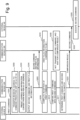
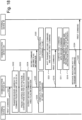
- Fig. 20 illustrates the operation in a case where communication processing unit 312 needs to wait for transmission of a command to the external device 40 (a case where the received first flag information indicates 1).
- the external device 10 transmits the first command from the address portion to the communication device 202 (S401).
- the communication device 202 starts receiving the first command from the external device 10 using the communication processing unit 212. Every time 1 bit is received, the communication processing unit 212 transfers the received address to the command prediction unit 220 bit by bit (S402).
- the command prediction unit 220 predicts the first command using the prediction table 230 or the prediction table 250 (S403).
- the address and the instruction content are predicted from the head few bits of the address.
- the command prediction unit 220 outputs the predicted command as the second command to the communication processing unit 212 (S404).
- the command prediction unit 220 outputs the first flag information to the communication processing unit 212 (S404). For example, in a case where the transmission destination of the address and the instruction content can be predicted by the head 3 bits of the received address, the command prediction unit 220 outputs the predicted command to the communication processing unit 212 as a second command, and also outputs, to the communication processing unit 212, the first flag information associated to the second command.
- the communication processing unit 212 transmits the second command and the first flag information to the communication device 302 (S405).
- the communication device 302 waits for the first command without transmitting the received second command to the external device 40 (S407).
- the communication processing unit 212 in the communication device 202 completes the reception of the first command (S408), the communication device 202 outputs the second flag information (S409).
- the communication processing unit 212 transmits the first command and the second flag information to the communication device 302 (S410).
- the communication processing unit 312 transmits the first command to the external device 40 (S412).
- the external device 40 executes the first command (S413).
- the communication system 4 according to the present example embodiment can prevent the external device 10 from giving an unintended influence to the external device 40 by the second command, and can reduce the latency of the response to the command transmitted by the external device 10.
- the communication system 4 according to the present example embodiment can achieve the above-described effects without including the comparison unit as described in the second example embodiment and the third example embodiment.
- Fig. 21 is a configuration example of the external device according to the plurality of example embodiments described above.
- the external device according to the plurality of example embodiments described above includes, for example, a network interface 1001, a processor 1002, and a memory 1003.
- the network interface 1001 is used for communicating with the external device and the communication device according to the plurality of example embodiments described above, for example.
- the network interface may include, for example, a network interface card and a bus device.
- the processor 1002 may include, for example, a microprocessor, a micro processing unit (MPU), or a central processing unit (CPU).
- the processor 1002 may include a plurality of processors.
- the memory 1003 includes a volatile memory and a nonvolatile memory.
- the memory 1003 may include a plurality of physically independent memory devices.
- the volatile memory is, for example, a static random access memory (SRAM) or a dynamic RAM (DRAM), or a discretionary combination of these.
- the nonvolatile memory is a mask read only memory (MROM), an electrically erasable programmable ROM (EEPROM), a flash memory, or a hard disk drive, or a discretionary combination of these.
- the memory 1003 may include a storage disposed away from the processor 1002. In this case, the processor 1002 may access the memory 1003 via the network interface 1001 or an I/O interface (not illustrated).
- the memory 1003 may store one or more software modules (computer programs) 1004 including orders and data for performing processing by the external device described in the plurality of example embodiments described above.
- the processor 1002 may be configured to perform the processing of the external device described in the example embodiments described above by reading and executing the software module 1004 from the memory 1003.
- Fig. 22 is a configuration example of the communication device according to the plurality of example embodiments described above.
- the external device according to the plurality of example embodiments described above includes, for example, a network interface 2001, a processor 2002, and a memory 2003.
- the network interface 2001 is used for communicating with the external device and the communication device according to the plurality of example embodiments described above, for example.
- the network interface may include, for example, a network interface card and a bus device.
- the processor 2002 may include, for example, a microprocessor, a micro processing unit (MPU), or a central processing unit (CPU).
- the processor 2002 may include a plurality of processors.
- the memory 2003 includes a volatile memory and a nonvolatile memory.
- the memory 2003 may include a plurality of physically independent memory devices.
- the volatile memory is, for example, a static random access memory (SRAM) or a dynamic RAM (DRAM), or a discretionary combination of these.
- the nonvolatile memory is a mask read only memory (MROM), an electrically erasable programmable ROM (EEPROM), a flash memory, or a hard disk drive, or a discretionary combination of these.
- the memory 2003 may include a storage disposed away from the processor 2002. In this case, the processor 2002 may access the memory 2003 via the network interface 2001 or an I/O interface (not illustrated).
- the memory 2003 may store one or more software modules (computer programs) 2004 including orders and data for performing processing by the external device described in the plurality of example embodiments described above.
- the processor 2002 may be configured to perform the processing of the external device described in the example embodiments described above by reading and executing the software module 2004 from the memory 2003.
- the processing of the external device described in the above-described example embodiments includes, for example, the communication processing unit, the command prediction unit, the prediction table, and the comparison unit described in the plurality of example embodiments described above.
- the prediction table 230 or the prediction table 250 described in the plurality of example embodiments described above may include third flag information allocated for each second command.
- the third flag information indicates whether the second command described in the prediction table 230 is valid.
- the command prediction unit 220 may confirm the third flag information when the second command is output, and, only when the third flag information, the second command is valid, may output to the communication processing unit described in the plurality of example embodiments described above.
- the external device or the communication device described in the plurality of example embodiments described above may include an administrative interface 5.
- Fig. 23D is a configuration example including the administrative interface 5, and is a view illustrating another configuration example of the communication system according to an example embodiment.
- the communication system in Fig. 23D includes the external device 10, the communication device 200, the communication device 300, and the external device 40, similarly to the communication system of Fig. 3 .
- the communication device 200 in Fig. 23D includes the communication processing unit 210, the command prediction unit 220, and the comparison unit 240, and the communication device 300 includes the communication processing unit 310.
- the communication system in Fig. 23A includes the administrative interface 5.
- the administrative interface 5 transmits and receives an administrative command between the external device described in the plurality of example embodiments described above and the communication device described in the plurality of example embodiments described above.
- the communication device described in the plurality of example embodiments writes data into the prediction table 230 or the prediction table 250 in accordance with the administrative command.
- a communication system including: a first external device; a second external device; a first communication device; and a second communication device, in which
Landscapes
- Engineering & Computer Science (AREA)
- Computer Networks & Wireless Communication (AREA)
- Signal Processing (AREA)
- Computer Security & Cryptography (AREA)
- Artificial Intelligence (AREA)
- Computer Vision & Pattern Recognition (AREA)
- Databases & Information Systems (AREA)
- Evolutionary Computation (AREA)
- Medical Informatics (AREA)
- Software Systems (AREA)
- Computer And Data Communications (AREA)
- Communication Control (AREA)
Applications Claiming Priority (2)
| Application Number | Priority Date | Filing Date | Title |
|---|---|---|---|
| JP2020057408 | 2020-03-27 | ||
| PCT/JP2021/011731 WO2021193542A1 (fr) | 2020-03-27 | 2021-03-22 | Système de communication |
Publications (3)
| Publication Number | Publication Date |
|---|---|
| EP4131885A1 true EP4131885A1 (fr) | 2023-02-08 |
| EP4131885A4 EP4131885A4 (fr) | 2023-10-04 |
| EP4131885B1 EP4131885B1 (fr) | 2025-03-05 |
Family
ID=77892137
Family Applications (1)
| Application Number | Title | Priority Date | Filing Date |
|---|---|---|---|
| EP21776242.6A Active EP4131885B1 (fr) | 2020-03-27 | 2021-03-22 | Système de communication |
Country Status (4)
| Country | Link |
|---|---|
| US (1) | US12068925B2 (fr) |
| EP (1) | EP4131885B1 (fr) |
| JP (1) | JP7416211B2 (fr) |
| WO (1) | WO2021193542A1 (fr) |
Family Cites Families (12)
| Publication number | Priority date | Publication date | Assignee | Title |
|---|---|---|---|---|
| US5172228A (en) * | 1991-11-19 | 1992-12-15 | Utah State University Foundation | Image compression method and apparatus employing distortion adaptive tree search vector quantization |
| US6795848B1 (en) * | 2000-11-08 | 2004-09-21 | Hughes Electronics Corporation | System and method of reading ahead of objects for delivery to an HTTP proxy server |
| JP4067887B2 (ja) * | 2002-06-28 | 2008-03-26 | 富士通株式会社 | プリフェッチを行う演算処理装置、情報処理装置及びそれらの制御方法 |
| JP4205975B2 (ja) | 2003-03-18 | 2009-01-07 | パナソニック株式会社 | バスブリッジ装置およびデータ転送制御方法 |
| JP4779010B2 (ja) | 2006-02-27 | 2011-09-21 | 富士通株式会社 | バッファリング装置およびバッファリング方法 |
| EP2642702B1 (fr) * | 2010-11-16 | 2019-04-03 | Hitachi, Ltd. | Appareil de communication et système de communication |
| EP2596658B1 (fr) * | 2010-11-22 | 2018-05-09 | Seven Networks, LLC | Alignement de transfert de données pour optimiser des connexions établies pour transmission sur réseau sans fil |
| JP2015032985A (ja) * | 2013-08-02 | 2015-02-16 | 株式会社日立ハイテクノロジーズ | 通信制御装置、通信制御方法、および通信制御システム |
| JP2016031547A (ja) * | 2014-07-25 | 2016-03-07 | 株式会社リコー | 信号転送装置及び信号転送装置の制御方法 |
| JP6931174B2 (ja) | 2016-11-30 | 2021-09-01 | キヤノンマーケティングジャパン株式会社 | 表示制御装置、その制御方法、及びプログラム |
| JP7069936B2 (ja) | 2018-03-27 | 2022-05-18 | 富士通株式会社 | 送受信システム、データ受信装置、およびデータ受信方法 |
| RU2740605C1 (ru) * | 2019-07-17 | 2021-01-15 | Акционерное общество "Лаборатория Касперского" | Способ передачи данных пользователя от доверенной стороны к третьей стороне и реализующая его система |
-
2021
- 2021-03-22 JP JP2022510487A patent/JP7416211B2/ja active Active
- 2021-03-22 US US17/914,866 patent/US12068925B2/en active Active
- 2021-03-22 WO PCT/JP2021/011731 patent/WO2021193542A1/fr not_active Ceased
- 2021-03-22 EP EP21776242.6A patent/EP4131885B1/fr active Active
Also Published As
| Publication number | Publication date |
|---|---|
| WO2021193542A1 (fr) | 2021-09-30 |
| US20230145589A1 (en) | 2023-05-11 |
| JPWO2021193542A1 (fr) | 2021-09-30 |
| EP4131885B1 (fr) | 2025-03-05 |
| US12068925B2 (en) | 2024-08-20 |
| JP7416211B2 (ja) | 2024-01-17 |
| EP4131885A4 (fr) | 2023-10-04 |
Similar Documents
| Publication | Publication Date | Title |
|---|---|---|
| US8793424B2 (en) | Switch apparatus | |
| CN107967225B (zh) | 数据传输方法、装置、计算机可读存储介质和终端设备 | |
| EP3211530B1 (fr) | Procédé de gestion de mémoire de machine virtuelle, machine principale physique, dispositif pcie et son procédé de configuration, et dispositif de gestion de migration | |
| US20030188054A1 (en) | Data transfer apparatus and method | |
| EP3734455A1 (fr) | Technologie permettant de fournir une télémétrie de processeur hors bande | |
| CN112650558B (zh) | 数据处理方法、装置、可读介质和电子设备 | |
| KR102538222B1 (ko) | 스토리지 장치, 스토리지 장치를 포함하는 스토리지 시스템, 그리고 스토리지 장치를 액세스하는 방법 | |
| US11803490B2 (en) | Apparatus and method for data transmission and readable storage medium | |
| JP2004127291A (ja) | 連続したメモリ・アドレスを提供する方法、システムおよびコンピュータ・ソフトウェア | |
| US12229059B1 (en) | Request processing method and apparatus, device, and medium | |
| CN115904259B (zh) | 非易失性存储器标准NVMe指令的处理方法及相关装置 | |
| CN113434089B (zh) | 数据搬移方法、装置及pcie系统 | |
| CN113010470A (zh) | 边缘节点远程控制系统、方法、设备及存储介质 | |
| CN112615916A (zh) | 文件部署方法、装置、电子设备以及存储介质 | |
| US20240345774A1 (en) | Information processing system | |
| EP4131885B1 (fr) | Système de communication | |
| JP2004021351A (ja) | Icカード及びその制御方法 | |
| CN111581139B (zh) | PCIe设备的兼容处理方法、装置、设备及存储介质 | |
| WO2025044585A1 (fr) | Procédé d'interaction de données basé sur une mémoire, processeur, dispositif et support | |
| CN118069555A (zh) | 数据传输方法、装置、电子设备及存储介质 | |
| US7451240B2 (en) | Method and related circuit for increasing network transmission efficiency by increasing a data updating rate of a memory | |
| CN117176837A (zh) | 数据传输方法、装置、设备及介质 | |
| WO2006134804A1 (fr) | Dispositif d’accès à un dispositif externe | |
| CN115904677A (zh) | 内存分配方法、装置、计算机可读存储介质和程序产品 | |
| EP4618507A1 (fr) | Dispositif de communication et procédé de traitement de données de réception dans un dispositif de communication |
Legal Events
| Date | Code | Title | Description |
|---|---|---|---|
| STAA | Information on the status of an ep patent application or granted ep patent |
Free format text: STATUS: THE INTERNATIONAL PUBLICATION HAS BEEN MADE |
|
| PUAI | Public reference made under article 153(3) epc to a published international application that has entered the european phase |
Free format text: ORIGINAL CODE: 0009012 |
|
| STAA | Information on the status of an ep patent application or granted ep patent |
Free format text: STATUS: REQUEST FOR EXAMINATION WAS MADE |
|
| 17P | Request for examination filed |
Effective date: 20221027 |
|
| AK | Designated contracting states |
Kind code of ref document: A1 Designated state(s): AL AT BE BG CH CY CZ DE DK EE ES FI FR GB GR HR HU IE IS IT LI LT LU LV MC MK MT NL NO PL PT RO RS SE SI SK SM TR |
|
| DAV | Request for validation of the european patent (deleted) | ||
| DAX | Request for extension of the european patent (deleted) | ||
| REG | Reference to a national code |
Ref country code: DE Ref legal event code: R079 Free format text: PREVIOUS MAIN CLASS: H04L0029080000 Ipc: H04L0069280000 Ref country code: DE Ref legal event code: R079 Ref document number: 602021027222 Country of ref document: DE Free format text: PREVIOUS MAIN CLASS: H04L0029080000 Ipc: H04L0069280000 |
|
| A4 | Supplementary search report drawn up and despatched |
Effective date: 20230904 |
|
| RIC1 | Information provided on ipc code assigned before grant |
Ipc: H04L 67/2876 20220101ALI20230829BHEP Ipc: H04L 69/28 20220101AFI20230829BHEP |
|
| GRAP | Despatch of communication of intention to grant a patent |
Free format text: ORIGINAL CODE: EPIDOSNIGR1 |
|
| STAA | Information on the status of an ep patent application or granted ep patent |
Free format text: STATUS: GRANT OF PATENT IS INTENDED |
|
| INTG | Intention to grant announced |
Effective date: 20241011 |
|
| GRAS | Grant fee paid |
Free format text: ORIGINAL CODE: EPIDOSNIGR3 |
|
| GRAA | (expected) grant |
Free format text: ORIGINAL CODE: 0009210 |
|
| STAA | Information on the status of an ep patent application or granted ep patent |
Free format text: STATUS: THE PATENT HAS BEEN GRANTED |
|
| AK | Designated contracting states |
Kind code of ref document: B1 Designated state(s): AL AT BE BG CH CY CZ DE DK EE ES FI FR GB GR HR HU IE IS IT LI LT LU LV MC MK MT NL NO PL PT RO RS SE SI SK SM TR |
|
| REG | Reference to a national code |
Ref country code: GB Ref legal event code: FG4D |
|
| REG | Reference to a national code |
Ref country code: CH Ref legal event code: EP |
|
| REG | Reference to a national code |
Ref country code: DE Ref legal event code: R096 Ref document number: 602021027222 Country of ref document: DE |
|
| REG | Reference to a national code |
Ref country code: IE Ref legal event code: FG4D |
|
| PGFP | Annual fee paid to national office [announced via postgrant information from national office to epo] |
Ref country code: AT Payment date: 20250417 Year of fee payment: 5 |
|
| PG25 | Lapsed in a contracting state [announced via postgrant information from national office to epo] |
Ref country code: RS Free format text: LAPSE BECAUSE OF FAILURE TO SUBMIT A TRANSLATION OF THE DESCRIPTION OR TO PAY THE FEE WITHIN THE PRESCRIBED TIME-LIMIT Effective date: 20250605 |
|
| PG25 | Lapsed in a contracting state [announced via postgrant information from national office to epo] |
Ref country code: FI Free format text: LAPSE BECAUSE OF FAILURE TO SUBMIT A TRANSLATION OF THE DESCRIPTION OR TO PAY THE FEE WITHIN THE PRESCRIBED TIME-LIMIT Effective date: 20250305 |
|
| REG | Reference to a national code |
Ref country code: NL Ref legal event code: MP Effective date: 20250305 |
|
| PG25 | Lapsed in a contracting state [announced via postgrant information from national office to epo] |
Ref country code: ES Free format text: LAPSE BECAUSE OF FAILURE TO SUBMIT A TRANSLATION OF THE DESCRIPTION OR TO PAY THE FEE WITHIN THE PRESCRIBED TIME-LIMIT Effective date: 20250305 |
|
| REG | Reference to a national code |
Ref country code: LT Ref legal event code: MG9D |
|
| PG25 | Lapsed in a contracting state [announced via postgrant information from national office to epo] |
Ref country code: NO Free format text: LAPSE BECAUSE OF FAILURE TO SUBMIT A TRANSLATION OF THE DESCRIPTION OR TO PAY THE FEE WITHIN THE PRESCRIBED TIME-LIMIT Effective date: 20250605 |
|
| PG25 | Lapsed in a contracting state [announced via postgrant information from national office to epo] |
Ref country code: HR Free format text: LAPSE BECAUSE OF FAILURE TO SUBMIT A TRANSLATION OF THE DESCRIPTION OR TO PAY THE FEE WITHIN THE PRESCRIBED TIME-LIMIT Effective date: 20250305 |
|
| PG25 | Lapsed in a contracting state [announced via postgrant information from national office to epo] |
Ref country code: LV Free format text: LAPSE BECAUSE OF FAILURE TO SUBMIT A TRANSLATION OF THE DESCRIPTION OR TO PAY THE FEE WITHIN THE PRESCRIBED TIME-LIMIT Effective date: 20250305 |
|
| PG25 | Lapsed in a contracting state [announced via postgrant information from national office to epo] |
Ref country code: BG Free format text: LAPSE BECAUSE OF FAILURE TO SUBMIT A TRANSLATION OF THE DESCRIPTION OR TO PAY THE FEE WITHIN THE PRESCRIBED TIME-LIMIT Effective date: 20250305 Ref country code: GR Free format text: LAPSE BECAUSE OF FAILURE TO SUBMIT A TRANSLATION OF THE DESCRIPTION OR TO PAY THE FEE WITHIN THE PRESCRIBED TIME-LIMIT Effective date: 20250606 |
|
| REG | Reference to a national code |
Ref country code: AT Ref legal event code: MK05 Ref document number: 1774004 Country of ref document: AT Kind code of ref document: T Effective date: 20250305 |
|
| PG25 | Lapsed in a contracting state [announced via postgrant information from national office to epo] |
Ref country code: NL Free format text: LAPSE BECAUSE OF FAILURE TO SUBMIT A TRANSLATION OF THE DESCRIPTION OR TO PAY THE FEE WITHIN THE PRESCRIBED TIME-LIMIT Effective date: 20250305 |
|
| PG25 | Lapsed in a contracting state [announced via postgrant information from national office to epo] |
Ref country code: SE Free format text: LAPSE BECAUSE OF FAILURE TO SUBMIT A TRANSLATION OF THE DESCRIPTION OR TO PAY THE FEE WITHIN THE PRESCRIBED TIME-LIMIT Effective date: 20250305 |
|
| PG25 | Lapsed in a contracting state [announced via postgrant information from national office to epo] |
Ref country code: SM Free format text: LAPSE BECAUSE OF FAILURE TO SUBMIT A TRANSLATION OF THE DESCRIPTION OR TO PAY THE FEE WITHIN THE PRESCRIBED TIME-LIMIT Effective date: 20250305 |
|
| PG25 | Lapsed in a contracting state [announced via postgrant information from national office to epo] |
Ref country code: PT Free format text: LAPSE BECAUSE OF FAILURE TO SUBMIT A TRANSLATION OF THE DESCRIPTION OR TO PAY THE FEE WITHIN THE PRESCRIBED TIME-LIMIT Effective date: 20250707 |
|
| PG25 | Lapsed in a contracting state [announced via postgrant information from national office to epo] |
Ref country code: IT Free format text: LAPSE BECAUSE OF FAILURE TO SUBMIT A TRANSLATION OF THE DESCRIPTION OR TO PAY THE FEE WITHIN THE PRESCRIBED TIME-LIMIT Effective date: 20250305 Ref country code: PL Free format text: LAPSE BECAUSE OF FAILURE TO SUBMIT A TRANSLATION OF THE DESCRIPTION OR TO PAY THE FEE WITHIN THE PRESCRIBED TIME-LIMIT Effective date: 20250305 |
|
| PG25 | Lapsed in a contracting state [announced via postgrant information from national office to epo] |
Ref country code: AT Free format text: LAPSE BECAUSE OF FAILURE TO SUBMIT A TRANSLATION OF THE DESCRIPTION OR TO PAY THE FEE WITHIN THE PRESCRIBED TIME-LIMIT Effective date: 20250305 |
|
| PG25 | Lapsed in a contracting state [announced via postgrant information from national office to epo] |
Ref country code: CZ Free format text: LAPSE BECAUSE OF FAILURE TO SUBMIT A TRANSLATION OF THE DESCRIPTION OR TO PAY THE FEE WITHIN THE PRESCRIBED TIME-LIMIT Effective date: 20250305 Ref country code: EE Free format text: LAPSE BECAUSE OF FAILURE TO SUBMIT A TRANSLATION OF THE DESCRIPTION OR TO PAY THE FEE WITHIN THE PRESCRIBED TIME-LIMIT Effective date: 20250305 |
|
| REG | Reference to a national code |
Ref country code: CH Ref legal event code: H13 Free format text: ST27 STATUS EVENT CODE: U-0-0-H10-H13 (AS PROVIDED BY THE NATIONAL OFFICE) Effective date: 20251023 |
|
| PG25 | Lapsed in a contracting state [announced via postgrant information from national office to epo] |
Ref country code: RO Free format text: LAPSE BECAUSE OF FAILURE TO SUBMIT A TRANSLATION OF THE DESCRIPTION OR TO PAY THE FEE WITHIN THE PRESCRIBED TIME-LIMIT Effective date: 20250305 |
|
| PG25 | Lapsed in a contracting state [announced via postgrant information from national office to epo] |
Ref country code: SK Free format text: LAPSE BECAUSE OF FAILURE TO SUBMIT A TRANSLATION OF THE DESCRIPTION OR TO PAY THE FEE WITHIN THE PRESCRIBED TIME-LIMIT Effective date: 20250305 |
|
| PG25 | Lapsed in a contracting state [announced via postgrant information from national office to epo] |
Ref country code: IS Free format text: LAPSE BECAUSE OF FAILURE TO SUBMIT A TRANSLATION OF THE DESCRIPTION OR TO PAY THE FEE WITHIN THE PRESCRIBED TIME-LIMIT Effective date: 20250705 |
|
| PG25 | Lapsed in a contracting state [announced via postgrant information from national office to epo] |
Ref country code: LU Free format text: LAPSE BECAUSE OF NON-PAYMENT OF DUE FEES Effective date: 20250322 |
|
| REG | Reference to a national code |
Ref country code: DE Ref legal event code: R097 Ref document number: 602021027222 Country of ref document: DE |
|
| REG | Reference to a national code |
Ref country code: BE Ref legal event code: MM Effective date: 20250331 |
|
| PG25 | Lapsed in a contracting state [announced via postgrant information from national office to epo] |
Ref country code: MC Free format text: LAPSE BECAUSE OF FAILURE TO SUBMIT A TRANSLATION OF THE DESCRIPTION OR TO PAY THE FEE WITHIN THE PRESCRIBED TIME-LIMIT Effective date: 20250305 |
|
| PLBE | No opposition filed within time limit |
Free format text: ORIGINAL CODE: 0009261 |
|
| STAA | Information on the status of an ep patent application or granted ep patent |
Free format text: STATUS: NO OPPOSITION FILED WITHIN TIME LIMIT |
|
| PG25 | Lapsed in a contracting state [announced via postgrant information from national office to epo] |
Ref country code: DK Free format text: LAPSE BECAUSE OF FAILURE TO SUBMIT A TRANSLATION OF THE DESCRIPTION OR TO PAY THE FEE WITHIN THE PRESCRIBED TIME-LIMIT Effective date: 20250305 |
|
| REG | Reference to a national code |
Ref country code: CH Ref legal event code: L10 Free format text: ST27 STATUS EVENT CODE: U-0-0-L10-L00 (AS PROVIDED BY THE NATIONAL OFFICE) Effective date: 20260114 |
|
| PG25 | Lapsed in a contracting state [announced via postgrant information from national office to epo] |
Ref country code: BE Free format text: LAPSE BECAUSE OF NON-PAYMENT OF DUE FEES Effective date: 20250331 |
|
| PG25 | Lapsed in a contracting state [announced via postgrant information from national office to epo] |
Ref country code: CH Free format text: LAPSE BECAUSE OF NON-PAYMENT OF DUE FEES Effective date: 20250331 |
|
| PG25 | Lapsed in a contracting state [announced via postgrant information from national office to epo] |
Ref country code: IE Free format text: LAPSE BECAUSE OF NON-PAYMENT OF DUE FEES Effective date: 20250322 |
|
| 26N | No opposition filed |
Effective date: 20251208 |
|
| GBPC | Gb: european patent ceased through non-payment of renewal fee |
Effective date: 20250605 |
|
| PG25 | Lapsed in a contracting state [announced via postgrant information from national office to epo] |
Ref country code: GB Free format text: LAPSE BECAUSE OF NON-PAYMENT OF DUE FEES Effective date: 20250605 |
|
| PGFP | Annual fee paid to national office [announced via postgrant information from national office to epo] |
Ref country code: DE Payment date: 20260319 Year of fee payment: 6 |
|
| PG25 | Lapsed in a contracting state [announced via postgrant information from national office to epo] |
Ref country code: FR Free format text: LAPSE BECAUSE OF NON-PAYMENT OF DUE FEES Effective date: 20250505 |
|
| PG25 | Lapsed in a contracting state [announced via postgrant information from national office to epo] |
Ref country code: CY Free format text: LAPSE BECAUSE OF FAILURE TO SUBMIT A TRANSLATION OF THE DESCRIPTION OR TO PAY THE FEE WITHIN THE PRESCRIBED TIME-LIMIT Effective date: 20250305 |
|
| PG25 | Lapsed in a contracting state [announced via postgrant information from national office to epo] |
Ref country code: LT Free format text: LAPSE BECAUSE OF FAILURE TO SUBMIT A TRANSLATION OF THE DESCRIPTION OR TO PAY THE FEE WITHIN THE PRESCRIBED TIME-LIMIT Effective date: 20250305 |
|
| PG25 | Lapsed in a contracting state [announced via postgrant information from national office to epo] |
Ref country code: TR Free format text: LAPSE BECAUSE OF FAILURE TO SUBMIT A TRANSLATION OF THE DESCRIPTION OR TO PAY THE FEE WITHIN THE PRESCRIBED TIME-LIMIT Effective date: 20250305 |