EP4132047A1 - Vorrichtungsbindeverfahren und endgerätevorrichtung - Google Patents
Vorrichtungsbindeverfahren und endgerätevorrichtung Download PDFInfo
- Publication number
- EP4132047A1 EP4132047A1 EP21787705.9A EP21787705A EP4132047A1 EP 4132047 A1 EP4132047 A1 EP 4132047A1 EP 21787705 A EP21787705 A EP 21787705A EP 4132047 A1 EP4132047 A1 EP 4132047A1
- Authority
- EP
- European Patent Office
- Prior art keywords
- account
- intelligent terminal
- signal fingerprint
- signal
- configuration information
- Prior art date
- Legal status (The legal status is an assumption and is not a legal conclusion. Google has not performed a legal analysis and makes no representation as to the accuracy of the status listed.)
- Granted
Links
Images



Classifications
-
- H—ELECTRICITY
- H04—ELECTRIC COMMUNICATION TECHNIQUE
- H04L—TRANSMISSION OF DIGITAL INFORMATION, e.g. TELEGRAPHIC COMMUNICATION
- H04L65/00—Network arrangements, protocols or services for supporting real-time applications in data packet communication
- H04L65/10—Architectures or entities
- H04L65/1046—Call controllers; Call servers
-
- H—ELECTRICITY
- H04—ELECTRIC COMMUNICATION TECHNIQUE
- H04L—TRANSMISSION OF DIGITAL INFORMATION, e.g. TELEGRAPHIC COMMUNICATION
- H04L41/00—Arrangements for maintenance, administration or management of data switching networks, e.g. of packet switching networks
- H04L41/08—Configuration management of networks or network elements
- H04L41/0803—Configuration setting
- H04L41/0806—Configuration setting for initial configuration or provisioning, e.g. plug-and-play
-
- H—ELECTRICITY
- H04—ELECTRIC COMMUNICATION TECHNIQUE
- H04L—TRANSMISSION OF DIGITAL INFORMATION, e.g. TELEGRAPHIC COMMUNICATION
- H04L63/00—Network architectures or network communication protocols for network security
- H04L63/08—Network architectures or network communication protocols for network security for authentication of entities
- H04L63/0876—Network architectures or network communication protocols for network security for authentication of entities based on the identity of the terminal or configuration, e.g. MAC address, hardware or software configuration or device fingerprint
-
- H—ELECTRICITY
- H04—ELECTRIC COMMUNICATION TECHNIQUE
- H04L—TRANSMISSION OF DIGITAL INFORMATION, e.g. TELEGRAPHIC COMMUNICATION
- H04L65/00—Network arrangements, protocols or services for supporting real-time applications in data packet communication
- H04L65/10—Architectures or entities
- H04L65/102—Gateways
- H04L65/1033—Signalling gateways
-
- H—ELECTRICITY
- H04—ELECTRIC COMMUNICATION TECHNIQUE
- H04L—TRANSMISSION OF DIGITAL INFORMATION, e.g. TELEGRAPHIC COMMUNICATION
- H04L65/00—Network arrangements, protocols or services for supporting real-time applications in data packet communication
- H04L65/1066—Session management
- H04L65/1069—Session establishment or de-establishment
-
- H—ELECTRICITY
- H04—ELECTRIC COMMUNICATION TECHNIQUE
- H04L—TRANSMISSION OF DIGITAL INFORMATION, e.g. TELEGRAPHIC COMMUNICATION
- H04L65/00—Network arrangements, protocols or services for supporting real-time applications in data packet communication
- H04L65/1066—Session management
- H04L65/1073—Registration or de-registration
-
- H—ELECTRICITY
- H04—ELECTRIC COMMUNICATION TECHNIQUE
- H04L—TRANSMISSION OF DIGITAL INFORMATION, e.g. TELEGRAPHIC COMMUNICATION
- H04L67/00—Network arrangements or protocols for supporting network services or applications
- H04L67/01—Protocols
- H04L67/12—Protocols specially adapted for proprietary or special-purpose networking environments, e.g. medical networks, sensor networks, networks in vehicles or remote metering networks
-
- H—ELECTRICITY
- H04—ELECTRIC COMMUNICATION TECHNIQUE
- H04W—WIRELESS COMMUNICATION NETWORKS
- H04W12/00—Security arrangements; Authentication; Protecting privacy or anonymity
- H04W12/06—Authentication
-
- H—ELECTRICITY
- H04—ELECTRIC COMMUNICATION TECHNIQUE
- H04W—WIRELESS COMMUNICATION NETWORKS
- H04W12/00—Security arrangements; Authentication; Protecting privacy or anonymity
- H04W12/06—Authentication
- H04W12/062—Pre-authentication
-
- H—ELECTRICITY
- H04—ELECTRIC COMMUNICATION TECHNIQUE
- H04W—WIRELESS COMMUNICATION NETWORKS
- H04W12/00—Security arrangements; Authentication; Protecting privacy or anonymity
- H04W12/08—Access security
-
- H—ELECTRICITY
- H04—ELECTRIC COMMUNICATION TECHNIQUE
- H04W—WIRELESS COMMUNICATION NETWORKS
- H04W12/00—Security arrangements; Authentication; Protecting privacy or anonymity
- H04W12/60—Context-dependent security
- H04W12/63—Location-dependent; Proximity-dependent
-
- H—ELECTRICITY
- H04—ELECTRIC COMMUNICATION TECHNIQUE
- H04W—WIRELESS COMMUNICATION NETWORKS
- H04W12/00—Security arrangements; Authentication; Protecting privacy or anonymity
- H04W12/60—Context-dependent security
- H04W12/69—Identity-dependent
- H04W12/79—Radio fingerprint
Definitions
- This application relates to the field of smart appliances, and in particular, to a device binding method and a terminal device.
- a smart home system uses advanced network, communication, and automatic control technologies to make modem home life more secure, convenient, efficient, fast, intelligent, and personalized, greatly improving modem human life.
- a user needs to perform various complex configuration processes on a user terminal, to generate a binding relationship between the intelligent terminal and a user account, so that the intelligent terminal is visible on the user terminal logging in to the user account, and the user can control and listen to the intelligent terminal by using the user terminal.
- This application provides a device binding method and a terminal device, to overcome a problem that a process of binding an intelligent terminal to a user account is complex and time-consuming.
- this application provides a device binding method, including: A user terminal collects a signal at a collection position, and generates a first signal fingerprint. The user terminal sends the first signal fingerprint and a corresponding first account to a server. An intelligent terminal collects a signal at a set position, and generates a second signal fingerprint. The intelligent terminal sends the second signal fingerprint and a corresponding device identifier of the intelligent terminal to the server. The server determines that the second signal fingerprint matches the first signal fingerprint, to determine that the second signal fingerprint is corresponding to the first account. The server binds the intelligent terminal to the first account based on a correspondence between the second signal fingerprint and the device identifier of the intelligent terminal.
- the user terminal collects the signal at the collection position, generates the first signal fingerprint, and sends the first signal fingerprint and the corresponding first account to the server.
- the intelligent terminal collects the signal at the set position, generates the second signal fingerprint, and sends the second signal fingerprint and the corresponding device identifier of the intelligent terminal to the server. After determining that the second signal fingerprint matches the first signal fingerprint, the server determines that the second signal fingerprint is corresponding to the first account, to bind the intelligent terminal to the first account based on the correspondence between the second signal fingerprint and the device identifier of the intelligent terminal, so that the intelligent terminal is bound to an account to which the intelligent terminal belongs.
- the first account corresponding to the intelligent terminal can be determined only through matching of signal fingerprints, so as to implement binding between the intelligent terminal and the corresponding first account.
- a binding step is simple and easy to perform.
- determining of the account (that is, the first account) to which the intelligent terminal belongs is related to the second signal fingerprint corresponding to the set position of the intelligent terminal and the first signal fingerprint corresponding to the collection position, and is irrelevant to an account for purchasing the intelligent terminal, accurate binding of the intelligent terminal can be implemented.
- the method further includes: When sending the first signal fingerprint and the corresponding first account to the server, the user terminal further sends a first area identifier corresponding to the first signal fingerprint to the server.
- the server determines that the second signal fingerprint matches the first signal fingerprint, to determine that the second signal fingerprint is corresponding to the first area identifier
- the server marks the intelligent terminal by using the first area identifier based on the correspondence between the second signal fingerprint and the device identifier of the intelligent terminal.
- the user terminal sends the first area identifier corresponding to the first signal fingerprint to the server, so that after determining that the second signal fingerprint matches the first signal fingerprint, the server determines that the second signal fingerprint is corresponding to the first area identifier, and marks the intelligent terminal by using the first area identifier based on the correspondence between the second signal fingerprint and the device identifier of the intelligent terminal.
- This implements determining of an area to which the set position of the intelligent terminal belongs. Compared with the conventional technology, in this manner, various complex configuration processes are not required, so that area determining efficiency is improved, area determining time is shortened, and user experience is improved.
- the area to which the set position of the intelligent terminal belongs can be determined only through matching of signal fingerprints. An area determining step is simple and easy to perform.
- that the intelligent terminal sends the second signal fingerprint and a corresponding device identifier of the intelligent terminal to the server includes: The intelligent terminal sends the second signal fingerprint and the corresponding device identifier of the intelligent terminal to the server by using a central device. Alternatively, the intelligent terminal sends the second signal fingerprint and the corresponding device identifier of the intelligent terminal to the server by using a virtual SIM card.
- this application provides a device binding method for a server, including: receiving a first signal fingerprint and a corresponding first account that are sent by a user terminal, where the first signal fingerprint is generated by a signal collected by the user terminal at a collection position; receiving a second signal fingerprint and a corresponding device identifier of an intelligent terminal that are sent by the intelligent terminal, where the second signal fingerprint is generated by a signal collected by the intelligent terminal at a set position; determining that the second signal fingerprint matches the first signal fingerprint, to determine that the second signal fingerprint is corresponding to the first account; and binding the intelligent terminal to the first account based on a correspondence between the second signal fingerprint and the device identifier of the intelligent terminal.
- the method further includes: when receiving the first signal fingerprint and the corresponding first account that are sent by the user terminal, further receiving a first area identifier that is corresponding to the first signal fingerprint and sent by the user terminal; determining that the second signal fingerprint matches the first signal fingerprint, to determine that the second signal fingerprint is corresponding to the first area identifier; and marking the intelligent terminal by using the first area identifier based on the correspondence between the second signal fingerprint and the device identifier of the intelligent terminal.
- the method further includes: sending first configuration information to the user terminal, where the first configuration information includes the device identifier of the intelligent terminal and the first area identifier, so that the user terminal sets an operation control of the intelligent terminal based on the first configuration information.
- the method further includes: sending second configuration information to the intelligent terminal, where the second configuration information includes the first account and the first area identifier, so that the intelligent terminal determines, based on the second configuration information, an account and an area to which the intelligent terminal belongs.
- the method further includes: receiving a third signal fingerprint sent by the intelligent terminal, where the third signal fingerprint is generated by the signal collected by the intelligent terminal at the set position; and updating the first signal fingerprint by using the third signal fingerprint.
- the method further includes: sending third configuration information to the intelligent terminal, where the third configuration information is used to indicate device configuration information of the intelligent terminal that is disposed in an area indicated by the first area identifier, so that the intelligent terminal performs device configuration based on the third configuration information.
- the method further includes: binding the intelligent terminal to a second account, where the second account is associated with the first account.
- the method further includes: receiving fourth configuration information sent by the user terminal, where the fourth configuration information includes operation permission of the first account for the intelligent terminal and operation permission of the second account for the intelligent terminal; and sending the fourth configuration information to the intelligent terminal, so that the intelligent terminal determines the operation permission of the first account and the operation permission of the second account based on the fourth configuration information.
- the method further includes: receiving network configuration information that is corresponding to the first account and sent by the user terminal; and sending, to the intelligent terminal, the network configuration information corresponding to the first account, so that the intelligent terminal connects to an access network based on the network configuration information corresponding to the first account.
- the receiving a second signal fingerprint and a corresponding device identifier of an intelligent terminal that are sent by the intelligent terminal includes: receiving, by using a central device or a virtual SIM card, the second signal fingerprint and the corresponding device identifier of the intelligent terminal that are sent by the intelligent terminal.
- this application provides a device binding method for a user terminal, including: collecting a signal at a collection position, and generating a first signal fingerprint; and sending the first signal fingerprint and a corresponding first account to a server, so that after determining that a second signal fingerprint that is sent by an intelligent terminal and that is at a set location matches the first signal fingerprint, the server binds the intelligent terminal to the first account.
- the method further includes: when sending the first signal fingerprint and the corresponding first account to the server, further sending a first area identifier corresponding to the first signal fingerprint to the server, so that after determining that the second signal fingerprint that is sent by the intelligent terminal and that is at the set location matches the first signal fingerprint, the server marks the intelligent terminal by using the first area identifier.
- the method further includes: receiving first configuration information sent by the server, where the first configuration information includes a device identifier of the intelligent terminal and the first area identifier; and setting an operation control of the intelligent terminal based on the first configuration information.
- the method further includes: sending fourth configuration information to the server, where the fourth configuration information includes operation permission of the first account for the intelligent terminal and operation permission of a second account for the intelligent terminal, and the second account is associated with the first account, so that the server determines the operation permission of the first account and the operation permission of the second account based on the fourth configuration information.
- the method further includes: sending, to the server, network configuration information corresponding to the first account.
- this application provides a device binding method for an intelligent terminal, including: collecting a signal at a set position, and generating a second signal fingerprint; and sending the second signal fingerprint and a corresponding device identifier of the intelligent terminal to a server, so that after determining that the second signal fingerprint matches a first signal fingerprint sent by a user terminal, the server binds the intelligent terminal to a first account corresponding to the first signal fingerprint.
- the method includes: receiving second configuration information sent by the server, where the second configuration information includes the first account and a first area identifier, and the first area identifier corresponds to the first signal fingerprint; and determining, based on the second configuration information, an account and an area to which the intelligent terminal belongs.
- the method further includes: collecting a signal at the set position, and generating a third signal fingerprint; and sending the third signal fingerprint to the server, so that the server updates the first signal fingerprint by using the third signal fingerprint.
- the method includes: receiving third configuration information sent by the server, where the third configuration information is used to indicate device configuration information of the intelligent terminal that is disposed in an area indicated by the first area identifier, and the first area identifier corresponds to the first signal fingerprint; and performing device configuration based on the third configuration information.
- the method further includes: receiving fourth configuration information sent by the server, where the fourth configuration information includes operation permission of the first account for the intelligent terminal and operation permission of a second account for the intelligent terminal, and the second account is associated with the first account; and determining the operation permission of the first account and the operation permission of the second account based on the fourth configuration information.
- the method further includes: receiving network configuration information that is corresponding to the first account and sent by the server; and connecting to an access network based on the network configuration information corresponding to the first account.
- the sending the second signal fingerprint and a corresponding device identifier of the intelligent terminal to a server includes: sending the second signal fingerprint and the corresponding device identifier of the intelligent terminal to the server by using a central device or a virtual SIM card.
- this application provides a terminal device, including: a communication module, configured to communicate with another device; one or more memories, configured to store one or more computer programs; and one or more processors, configured to execute the one or more computer programs, so that the terminal device performs the method according to any implementation of the second aspect.
- this application provides a terminal device, including: a communication module, configured to communicate with another device; one or more memories, configured to store one or more computer programs; and one or more processors, configured to execute the one or more computer programs, so that the terminal device performs the method according to any implementation of the third aspect.
- this application provides a terminal device, including: a communication module, configured to communicate with another device; one or more memories, configured to store one or more computer programs; and one or more processors, configured to execute the one or more computer programs, so that the terminal device performs the method according to any implementation of the fourth aspect.
- this application provides a computer-readable storage medium, including a computer program.
- the computer program When the computer program is executed on a computer, the computer is enabled to perform the method according to any one of the second aspect to the fourth aspect.
- this application provides a computer program.
- the computer program When the computer program is executed by a computer, the computer program is used to perform the method according to any one of the second aspect to the fourth aspect.
- this application provides a chip, including a processor and a memory.
- the memory is configured to store a computer program
- the processor is configured to invoke and run the computer program stored in the memory, to perform the method according to any one of the second aspect to the fourth aspect.
- At least one (item) refers to one or more and "a plurality of” refers to two or more.
- the term “and/or” is used for describing an association relationship between associated objects, and represents that three relationships may exist.
- a and/or B may represent the following three cases: Only A exists, only B exists, and both A and B exist, where A and B may be singular or plural.
- the character “/” generally indicates an "or” relationship between the associated objects.
- at least one of the following items (pieces) or a similar expression thereof means any combination of these items, including a single item (piece) or any combination of a plurality of items (pieces).
- At least one (piece) of a, b, or c may indicate a, b, c, a and b, a and c, b and c, or a, b, and c, where a, b, and c may be singular or plural.
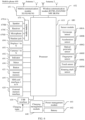
- FIG. 1 is a schematic diagram of an application scenario of a device binding method.
- the application scenario may include: at least one user terminal 10, a server 11, at least one of intelligent terminals 12 to 16, and at least one of central devices 17 and 18.
- the user terminal 10 may be, for example, a terminal device having a man-machine interaction function, such as a mobile phone or a tablet computer.
- the user terminal may interact with the server 11 by using a network service provided by a mobile operator; or may be connected to a wireless local area network (for example, a home gateway), and interact with the server 11 by using the wireless local area network.
- a network service provided by a mobile operator
- a wireless local area network for example, a home gateway
- the server 11 may be, for example, a physical server, or may be a cloud server. This is not specially limited herein.
- the intelligent terminals 12 to 16 may be, for example, a lamp, a socket, a refrigerator, a washing machine, an air conditioner, an oven, a rice cooker, a television set, or a floor sweeping robot. This is not specially limited herein.
- the central devices 17 and 18 may be, for example, a home gateway, a smart sound box, or a television set-top box. The central devices 17 and 18 are all connected to a network, to implement interaction between the central device and the server 11.
- the central devices 17 and 18 may be divided into a central device having a man-machine interaction function and a central device having no man-machine interaction function.
- the central device having the man-machine interaction function may be, for example, the smart sound box, and the central device having no human-computer interaction function may be, for example, the home gateway or the television set-top box.
- a restricted network is disposed on the central devices 17 and 18, and the restricted network is specially configured to provide a network service for the intelligent terminals 12 to 16 that are not connected to a network.
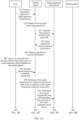
- FIG. 2A and FIG. 2B are a schematic flowchart of a refrigerator binding method according to an embodiment of this application.
- an intelligent terminal set by a user is a refrigerator
- the refrigerator is one of the at least one intelligent terminal in FIG.
- a user terminal used by the user is a mobile phone
- the mobile phone is one of the at least one user terminal in FIG. 1
- a central device is a home gateway
- the home gateway is one of the at least one central device in FIG. 1
- a server is a smart appliance cloud server
- the refrigerator binding method may include the following steps: 201: The user initiates a registration request for a smart appliance cloud service to the mobile phone.
- the user may initiate the registration request for the smart appliance cloud service to the mobile phone by starting a smart appliance client installed on the mobile phone and tapping a registration control on a display interface of the smart appliance client.
- the mobile phone receives the registration request and obtains a first account and a login password in response to the registration request, where the first account is an account used by the user to log in to the smart appliance client. Specifically, the mobile phone receives and responds to the registration request, so that the smart appliance client provides an account registration interface on the display interface. The user may enter the first account and the login password on the account registration interface, so that the mobile phone obtains the first account and the login password.
- the mobile phone sends the first account and the login password to the smart appliance cloud server.
- the smart appliance cloud server receives the first account and the login password, determines whether an account that is the same as the first account exists in accounts stored in the smart appliance cloud server, and if the account does not exist, sends registration success response information to the mobile phone.
- the mobile phone receives the registration success response information, and displays registration success information, to notify the user that the account is successfully registered, and the user can log in to the smart appliance client by using the first account and the login password.
- the smart appliance cloud server stores the account that is the same as the first account, an indication for re-obtaining the first account and the login password needs to be sent to the mobile phone until registration succeeds.
- the user logs in, by using the first account and the login password, to the smart appliance client installed on the mobile phone.
- the user walks in different rooms in the house while holding the mobile phone, and initiates a signal fingerprint collection instruction to the mobile phone each time the user walks to a collection position in a room.
- the mobile phone receives and responds to the signal fingerprint collection instruction, collects a signal at a collection position in each room, and generates a first signal fingerprint at the collection position in each room based on the signal collected at the collection position in each room, where a quantity of first signal fingerprints is the same as a quantity of collection positions, and one collection position is corresponding to one first signal fingerprint.
- a process of collecting a signal at a collection position and generating a first signal fingerprint at the collection position includes: first driving a signal collection program, detecting a signal at the collection position, collecting identification information and signal strength of each detected signal, and packaging identification information and signal strength of all detected signals to obtain the first signal fingerprint at the collection position.
- one collection position may be selected in each of the living room and the two bedrooms.
- three collection positions and three first signal fingerprints are obtained.
- the three collection positions are in a one-to-one correspondence with the three first signal fingerprints.
- the three collection positions are respectively a first collection position to a third collection position, the first collection position is in the living room, the second collection position is in a first room, and the third collection position is in a second room.
- the first signal fingerprint at the first collection position is shown in Table 1.
- the first signal fingerprint at the first collection position includes five signals, and all the five signals are Wi-Fi signals.
- Identification information SSID of each Wi-Fi signal and signal strength RSSI of each Wi-Fi signal are shown in Table 1.
- the first signal fingerprint at the second collection position is shown in Table 2.
- the first signal fingerprint at the second collection position includes four signals, and all the four signals are Wi-Fi signals.
- Identification information SSID of each Wi-Fi signal and signal strength RSSI of each Wi-Fi signal are shown in Table 2.
- the first signal fingerprint at the third collection position is shown in Table 3.
- the first signal fingerprint at the third collection position includes five signals, and all the five signals are Wi-Fi signals.
- Identification information SSID of each Wi-Fi signal and signal strength RSSI of each Wi-Fi signal are shown in Table 3.
- a signal class includes a Wi-Fi signal, a Bluetooth signal, a UWB signal, and the like.
- the signal class includes a Wi-Fi signal, a Bluetooth signal, a UWB signal, and the like.
- the mobile phone After generating the first signal fingerprint corresponding to each collection position, the mobile phone sends the foregoing three first signal fingerprints and corresponding first accounts to the smart appliance cloud server 210:
- the smart appliance cloud server receives the three first signal fingerprints and the corresponding first accounts that are sent by the mobile phone, and stores the three first signal fingerprints and the corresponding first accounts in an associated manner.
- the signal is collected at the collection position, the first signal fingerprint is generated, and the first signal fingerprint and the corresponding first account are sent to the smart appliance cloud server, to provide a data basis for the smart appliance cloud server to determine an account to which the refrigerator belongs.
- the user After purchasing the refrigerator, the user places the refrigerator at a set position (for example, a position in the living room) to power on the refrigerator.
- a set position for example, a position in the living room
- the refrigerator After being powered on, the refrigerator collects a signal at the set position, and generates a second signal fingerprint. That is, the refrigerator drives a signal collection program, detects a signal at the set position, collects identification information and signal strength of each detected signal, and packs identification information and signal strength of all detected signals to obtain the second signal fingerprint.
- the second signal fingerprint is shown in Table 4.
- the second signal fingerprint includes five signals, and all the five signals are Wi-Fi signals.
- Identification information SSID of each Wi-Fi signal and signal strength RSSI of each Wi-Fi signal are shown in Table 4.
- Table 4 SSID RSSI AP 1 85 AP 2 115 AP 3 45 AP 4 30 AP 5 60
- a signal class includes a Wi-Fi signal, a Bluetooth signal, a UWB signal, and the like.
- the signal class includes a Wi-Fi signal, a Bluetooth signal, a UWB signal, and the like.
- the refrigerator sends the second signal fingerprint and a corresponding device identifier of the refrigerator to the smart appliance cloud server by using the home gateway.
- the refrigerator is connected to the home gateway by using the configured access information of the restricted network, and sends the second signal fingerprint and the corresponding device identifier of the refrigerator to the home gateway.
- the home gateway receives the second signal fingerprint and the corresponding device identifier of the refrigerator, and sends the second signal fingerprint and the corresponding device identifier of the refrigerator to the smart appliance cloud server.
- the home gateway is a central device selected by the refrigerator from central devices that can be detected by the refrigerator
- the home gateway may be a home gateway set by the user, or may be a home gateway set by a neighbor of the user. Based on this, before the refrigerator sends the second signal fingerprint and the corresponding device identifier of the refrigerator by using the home gateway, the refrigerator needs to select a central device (that is, the home gateway) from the central devices that can be detected by the refrigerator, and then the refrigerator sends the second signal fingerprint and the corresponding device identifier of the refrigerator by using the selected central device (that is, the home gateway).
- a central device that is, the home gateway
- the refrigerator may further send the second signal fingerprint and the corresponding device identifier of the refrigerator to the smart appliance cloud server by using a virtual SIM card. That is, when the refrigerator is delivered from a factory, a virtual SIM card is disposed in the refrigerator, and the refrigerator is connected to a network by using the virtual SIM card, so that the second signal fingerprint and the device identifier of the refrigerator are sent to the smart appliance cloud server by using the virtual SIM card.
- the refrigerator collects the signal at the set position, generates the second signal fingerprint, and sends the second signal fingerprint and the corresponding device identifier of the refrigerator to the smart appliance cloud server, so that the smart appliance cloud server determines, based on the second signal fingerprint, the account to which the refrigerator belongs, to implement automatic binding between the refrigerator and the account to which the refrigerator belongs.
- the smart appliance cloud server receives the second signal fingerprint and the corresponding device identifier of the refrigerator that are sent by the refrigerator, and determines a first account corresponding to the second signal fingerprint.
- each user when using the smart appliance cloud service, each user sends a first account of the user and a first signal fingerprint corresponding to the first account to the smart appliance cloud server, that is, the smart appliance cloud server stores at least one first account and a first signal fingerprint corresponding to each first account.
- the determining the first account corresponding to the second signal fingerprint includes: matching the second signal fingerprint with each first signal fingerprint stored in the smart appliance cloud server, and if the first signal fingerprint matches the second signal fingerprint, determining that the first account corresponding to the first signal fingerprint is the first account corresponding to the second signal fingerprint, that is, the second signal fingerprint corresponds to the first account corresponding to the first signal fingerprint.
- a matching principle of signal fingerprints is as follows: calculating a similarity between the second signal fingerprint and each first signal fingerprint, determining a maximum similarity based on the similarity between the second signal fingerprint and each first signal fingerprint, determining whether the maximum similarity is greater than a preset similarity, and if the maximum similarity is greater than the preset similarity, matching a first signal fingerprint corresponding to the maximum similarity with the second signal fingerprint.
- a similarity between the second signal fingerprint and a first signal fingerprint may be calculated in the following two manners: In a first manner, a union set of signals in the second signal fingerprint and the first signal fingerprint is determined based on identification information of each signal in the second signal fingerprint and identification information of each signal in the first signal fingerprint.
- a difference between signal strength of each signal in the union set in the second signal fingerprint and signal strength of each signal in the first signal fingerprint is separately calculated, to obtain a signal strength difference of each signal. It should be noted that if a signal in the union set exists only in one of the second signal fingerprint and the first signal fingerprint, signal strength of the signal in a signal fingerprint in which the signal does not exist is set to 0.
- a square of the signal strength difference of each signal in the union set is separately calculated, squares of signal strength differences of the signals in the union set are summed up, and a ratio of a summation result to a total quantity of the signals in the union set is determined as the similarity between the second signal fingerprint and the first signal fingerprint.
- an intersection set between signals in the second signal fingerprint and the first signal fingerprint is determined based on identification information of each signal in the second signal fingerprint and identification information of each signal in the first signal fingerprint.
- a difference between signal strength of each signal in the intersection in the second signal fingerprint and signal strength of each signal in the first signal fingerprint is separately calculated, to obtain a signal strength difference of each signal.
- a square of the signal strength difference of each signal in the intersection set is separately calculated, squares of signal strength differences of the signals in the intersection set are summed up, and a ratio of a summation result to a total quantity of the signals in the intersection set is determined as the similarity between the second signal fingerprint and the first signal fingerprint.
- a similarity between the second signal fingerprint and the first signal fingerprint indicated in Table 1 is the greatest and is greater than the preset similarity. Therefore, the first account corresponding to the first signal fingerprint indicated in Table 1 is determined as the account to which the second signal fingerprint belongs, that is, the second signal fingerprint corresponds to the first account corresponding to the first signal fingerprint indicated in Table 1.
- the first signal fingerprint and the second signal fingerprint further include another parameter, for example, at least one of a signal class, a signal timestamp, a change speed of signal strength, or other detectable signal-related public information, in addition to the identification information and the signal strength of the signal, a principle of calculating the similarity between the second signal fingerprint and the first signal fingerprint is the same as that described above. Details are not described herein again.
- another parameter for example, at least one of a signal class, a signal timestamp, a change speed of signal strength, or other detectable signal-related public information
- the refrigerator Before the first account corresponding to the second signal fingerprint is determined, whether the refrigerator is a device authenticated by the smart appliance cloud service may be further verified first. If the refrigerator is a device authenticated by the smart appliance cloud service, the first account corresponding to the second signal fingerprint is determined. If the refrigerator is not a device authenticated by the smart appliance cloud service, the first account corresponding to the second signal fingerprint is not determined.
- a process of verifying whether the refrigerator is a device authenticated by the smart appliance cloud service includes:
- the smart appliance cloud server may authenticate a supplier qualification, protocol content, and the like of the refrigerator.
- the smart appliance cloud server stores the device identifier (for example, a serial number) and an initial key of the refrigerator, and the refrigerator stores the device identifier and the initial key of the refrigerator.
- the refrigerator sends the second signal fingerprint, and the device identifier and the initial key of the refrigerator to the smart appliance cloud server.
- the smart appliance cloud server receives the second signal fingerprint, and the device identifier and the initial key of the refrigerator; determines whether the received device identifier and initial key of the refrigerator are the same as the device identifier and the initial key of the refrigerator that are stored in the smart appliance cloud server; and if the received device identifier and initial key of the refrigerator are the same as the device identifier and the initial key of the refrigerator that are stored in the smart appliance cloud server, determines that the refrigerator is the device authenticated by the smart appliance cloud service, matches the second signal fingerprint with each first signal fingerprint stored in the smart appliance cloud server, and determines that a first account corresponding to the first signal fingerprint matching the second signal fingerprint is the first account corresponding to the second signal fingerprint.
- response information indicating that the matching fails is sent to the mobile phone.
- the mobile phone After receiving the response information, the mobile phone prompts, in response to the response information, the user that the first signal fingerprint needs to be recollected.
- the user repeats the foregoing step of collecting the first signal fingerprint, and sends a recollected first signal fingerprint and a corresponding first account to the smart appliance cloud server, so as to determine, based on the recollected first signal fingerprint, the first account corresponding to the second signal fingerprint.
- the smart appliance cloud server binds, based on a correspondence between the second signal fingerprint and the device identifier of the refrigerator, the refrigerator to the first account corresponding to the second signal fingerprint. That is, the first account corresponding to the second signal fingerprint is determined as the account to which the refrigerator belongs, and the refrigerator is bound to the first account. This implements binding between the refrigerator and the account to which the refrigerator belongs.
- the smart appliance cloud server matches the second signal fingerprint collected and generated by the refrigerator with the first signal fingerprint, to determine the first account corresponding to the second signal fingerprint, so as to determine, based on the correspondence between the second signal fingerprint and the device identifier of the refrigerator, that the first account corresponding to the second signal fingerprint is the account to which the refrigerator belongs, and bind the refrigerator to the first account corresponding to the second signal fingerprint.
- This implements binding between the refrigerator and the account to which the refrigerator belongs.
- the binding step is simple and easy to perform, and various complex configuration processes are not required, so that binding efficiency is high, binding time is short, and user experience is good.
- the smart appliance cloud server may further send, to the mobile phone, a query request about whether to perform binding.
- the mobile phone displays the query request.
- the user sends response information to the mobile phone based on the query request.
- the mobile phone sends the response information to the smart appliance cloud server.
- the smart appliance cloud server receives the response information. If the response information is acknowledgment information, step 215 is performed. If the response information is negative acknowledgment information, the binding between the refrigerator and the first account is abandoned.
- the smart appliance cloud server may further synchronize first configuration information to the mobile phone.
- the first configuration information includes the device identifier of the refrigerator, and the like. Therefore, after the user logs in to the smart appliance client in the mobile phone by using the first account and the login password, the smart appliance client in the mobile phone adds an operation control of the refrigerator to an interface of the smart appliance client based on the device identifier of the refrigerator in the first configuration information, so that the user controls the refrigerator based on the operation control.
- the refrigerator may determine, based on an account carried in the control instruction, whether the control instruction is a control instruction sent by the account to which the refrigerator belongs, to ensure security of refrigerator control, the smart appliance cloud server may send second configuration information to the refrigerator by using the home gateway.
- the second configuration information includes the first account.
- the refrigerator receives and stores the second configuration information. In this way, after receiving the control instruction, the refrigerator compares the account carried in the control instruction with the first account stored in the refrigerator. If the accounts are consistent, the control instruction is sent by the account to which the refrigerator belongs, and the refrigerator executes the control instruction. If the accounts are inconsistent, the control instruction is not sent by the account to which the refrigerator belongs, and the refrigerator does not execute the control instruction.
- a placement position of a home appliance of the user changes, or a deployment position of Wi-Fi, Bluetooth, or the like of the user changes, or a deployment position of Wi-Fi, Bluetooth, or the like of next door, upstairs, or downstairs changes, or a placement position of a home appliance of next door, upstairs, or downstairs changes, or a signal identifier of upstairs, next door, downstairs, or the home of the user is modified, signal strength and/or signal identifier information collected at a same collection position changes. Consequently, a first signal fingerprint corresponding to the same collection position changes.
- the refrigerator may further collect a signal at the set position, generate a third signal fingerprint, and send the third signal fingerprint to the smart appliance cloud server by using the home gateway.
- the smart appliance cloud server receives the third signal fingerprint, and updates the first signal fingerprint (that is, the first signal fingerprint matching the second signal fingerprint) by using the third signal fingerprint.
- a frequency or an occasion at which the refrigerator collects the signal at the set location and generates the third signal fingerprint may be set according to an application scenario, and is not specially limited herein.
- the smart appliance cloud server sends third configuration information to the refrigerator by using the home gateway.
- the third configuration information is used to indicate device configuration information of the refrigerator.
- the refrigerator After receiving the third configuration information, the refrigerator performs device configuration based on the third configuration information, so that the refrigerator runs based on content configured by using the third configuration information.
- the third configuration information may include configuration information, for example, an access interface, an information reporting frequency, a data format, and a used protocol, required by the refrigerator in a proper running process. There may be more than one person living in a family, or there may be more than one person working in an office area.
- the user may further send an associated account (that is, a second account) of the first account to the smart appliance cloud server in advance by using the mobile phone.
- the smart appliance cloud server receives the second account. Based on this, after binding the first account to the refrigerator, the smart appliance cloud server binds the refrigerator to the second account.
- the smart appliance cloud server sends the first configuration information to the user terminal of the associated user.
- the first configuration information includes the device identifier of the refrigerator.
- the user terminal of the associated user receives the first configuration information, and adds the operation control of the refrigerator on the interface of the smart appliance client based on the device identifier of the refrigerator in the first configuration information, so that the associated user can control the refrigerator based on the operation control.
- the refrigerator may determine, based on an account carried in the control instruction, whether the control instruction is a control instruction sent by the second account, to ensure security of refrigerator control, the smart appliance cloud server sends the second account to the refrigerator.
- the refrigerator receives and stores the second account, to determine, after receiving the control instruction, based on a result of matching between the account carried in the control instruction and the second account, whether the control instruction is a control instruction sent by the second account.
- the user sends fourth configuration information to the smart appliance cloud server by using the mobile phone.
- the fourth configuration information includes the operation permission of the first account on the refrigerator and the operation permission of the second account on the refrigerator.
- the first account has read/write permission on the refrigerator
- the second account has read permission on the refrigerator.
- the smart appliance cloud server receives the fourth configuration information sent by the mobile phone.
- the smart appliance cloud server may determine, based on the fourth configuration information and the account and instruction information carried in the control instruction, whether the user has permission to send the control instruction to the refrigerator, and if the user has permission to send the control instruction to the refrigerator, send the control instruction to the refrigerator, or if the user does not have permission to send the control instruction to the refrigerator, return, to the user, prompt information indicating that the operation exceeds the limit.
- the smart appliance cloud server may send the fourth configuration information to the refrigerator by using the home gateway.
- the refrigerator receives the fourth configuration information, and configures permission configuration information of the refrigerator based on the fourth configuration information.
- the refrigerator determines, based on the account and instruction information carried in the control instruction and the permission information in the fourth configuration information, whether to execute the instruction.
- the associated user may also collect the first signal fingerprint by using the user terminal, and send the first signal fingerprint and the corresponding second account to the smart appliance cloud server.
- the smart appliance cloud server After receiving the first signal fingerprint and the corresponding second account that are sent by the user terminal of the associated user, the smart appliance cloud server stores the first signal fingerprint corresponding to the second account and the first signal fingerprint corresponding to the first account together, that is, stores first signal fingerprints collected by the user and the associated user together. In this way, a quantity of first signal fingerprints is increased, the first signal fingerprint is enriched, so that a result of matching between the second signal fingerprint and the first signal fingerprint is more accurate.
- the user may further send, to the smart appliance cloud server by using the mobile phone, network configuration information corresponding to the first account, and the smart appliance cloud server receives the network configuration information corresponding to the first account.
- the smart appliance cloud server sends, to the refrigerator by using the home gateway, the network configuration information corresponding to the first account, so that the refrigerator accesses the network based on the network configuration information corresponding to the first account.
- the refrigerator is connected to the router based on the account and the password of the router, and is further connected to the network, so that the smart appliance cloud server can directly interact with the refrigerator by using the network instead of interacting with the refrigerator by using the restricted network of the home gateway.
- various configuration information delivered by the smart appliance cloud server to the refrigerator, various information sent by the refrigerator to the smart appliance cloud server, and the like may be further forwarded by using the virtual SIM card, that is, information exchange between the smart appliance cloud server and the refrigerator is implemented by using the virtual SIM card.
- information exchange between the smart appliance cloud server and the refrigerator is implemented by using the network without the central device and the virtual SIM card.
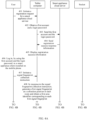
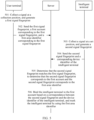
- FIG. 3 is a schematic flowchart 1 of a device binding method according to an embodiment of this application. As shown in FIG. 3 , the device binding method includes the following steps:
- the intelligent terminal sends the second signal fingerprint and a corresponding device identifier of the intelligent terminal to the server.
- the server determines that the second signal fingerprint matches the first signal fingerprint, to determine that the second signal fingerprint is corresponding to the first account. That is, the server matches the second signal fingerprint with each first signal fingerprint; and if the first signal fingerprint matches the second signal fingerprint, determines that the first account corresponding to the first signal fingerprint is the first account corresponding to the second signal fingerprint, that is, the second signal fingerprint corresponds to the first account corresponding to the first signal fingerprint. Because a specific matching process of signal fingerprints has been described above, details are not described herein again.
- the server binds the intelligent terminal to the first account based on a correspondence between the second signal fingerprint and the device identifier of the intelligent terminal. That is, the first account is determined as an account to which the intelligent terminal belongs, and the intelligent terminal is bound to the first account. This implements binding between the intelligent terminal and the account to which the intelligent terminal belongs.
- the user terminal collects the signal at the collection position, generates the first signal fingerprint, and sends the first signal fingerprint and the corresponding first account to the server.
- the intelligent terminal collects the signal at the set position, generates the second signal fingerprint, and sends the second signal fingerprint and the corresponding device identifier of the intelligent terminal to the server.
- the server determines that the second signal fingerprint matches the first signal fingerprint, the server determines that the second signal fingerprint is corresponding to the first account, to bind the intelligent terminal to the first account based on the correspondence between the second signal fingerprint and the device identifier of the intelligent terminal, so that the intelligent terminal is bound to the account to which the intelligent terminal belongs.
- the account to which the intelligent terminal belongs can be determined only through matching of signal fingerprints, so as to implement binding between the intelligent terminal and the account to which the intelligent terminal belongs.
- a binding step is simple and easy to perform.
- a device binding method is provided.
- An implementation process of the device binding method is as follows: A user registers an account on a platform, and purchases an intelligent terminal by using the account. When purchasing the intelligent terminal, a server binds the account to the purchased intelligent terminal. In this way, after the intelligent terminal is purchased home and powered on, the server determines, based on a binding relationship between the account and the intelligent terminal when the intelligent terminal is purchased, the account for purchasing the intelligent terminal as an account to which the intelligent terminal belongs, and binds the account for purchasing the intelligent terminal to the intelligent terminal, so that the user controls the intelligent terminal by using the account for purchasing the intelligent terminal.
- the intelligent terminal purchased by the user is bound to the account of the user for purchasing the intelligent terminal. That is, the intelligent terminal is bound to the account of the user, but cannot be bound to an account of the parent of the user. As a result, a binding error occurs, and the parent of the user cannot control the intelligent terminal by using the account of the parent.
- determining of the account (that is, the first account) to which the intelligent terminal belongs is related to the second signal fingerprint corresponding to the set position of the intelligent terminal and the first signal fingerprint corresponding to the collection position, and is irrelevant to an account for purchasing the intelligent terminal, accurate binding of the intelligent terminal can be implemented.
- the server may further send first configuration information to the user terminal.
- the first configuration information includes the device identifier of the intelligent terminal and the like, so that an operation control of the intelligent terminal is added to the user terminal based on the device identifier of the intelligent terminal in the first configuration information, and the user controls the intelligent terminal based on the operation control.
- the intelligent terminal may determine, based on an account carried in the control instruction, whether the control instruction is a control instruction sent by the account to which the intelligent terminal belongs, to ensure security of intelligent terminal control, the server may send second configuration information to the intelligent terminal.
- the second configuration information includes the first account.
- the intelligent terminal receives and stores the second configuration information. In this way, after receiving the control instruction, the intelligent terminal compares the account carried in the control instruction with the first account stored in the intelligent terminal. If the accounts are consistent, the control instruction is sent by the account to which the intelligent terminal belongs, and the intelligent terminal executes the control instruction.
- the control instruction is not sent by the account to which the intelligent terminal belongs, and the intelligent terminal does not execute the control instruction.
- a placement position of a home appliance of the user changes, or a deployment position of Wi-Fi, Bluetooth, or the like of the user changes, or a deployment position of Wi-Fi, Bluetooth, or the like of next door, upstairs, or downstairs changes, or a placement position of a home appliance of next door, upstairs, or downstairs changes, or a signal identifier of upstairs, next door, downstairs, or the home of the user is modified
- signal strength and/or signal identifier information of a signal collected at a same collection position changes. Consequently, a first signal fingerprint corresponding to the same collection position changes.
- the intelligent terminal may further collect a signal at the set position, generate a third signal fingerprint, and send the third signal fingerprint to the server.
- the server receives the third signal fingerprint, and updates the first signal fingerprint (that is, the first signal fingerprint matching the second signal fingerprint) by using the third signal fingerprint.
- the server sends third configuration information to the intelligent terminal.
- the third configuration information is used to indicate device configuration information of the intelligent terminal.
- the intelligent terminal After receiving the third configuration information, the intelligent terminal performs device configuration based on the third configuration information, so that the intelligent terminal runs based on content configured by using the third configuration information.
- the third configuration information may include configuration information, for example, an access interface, an information reporting frequency, a data format, and a used protocol, required by the intelligent terminal in a proper running process.
- the user may further send an associated account (that is, a second account) of the first account to the server in advance by using the user terminal.
- the server receives the second account.
- the server binds the intelligent terminal to the second account.
- the server sends the first configuration information to the user terminal being used by the associated user.
- the first configuration information includes the device identifier of the intelligent terminal.
- the user terminal being used by the associated user receives the first configuration information, and adds the operation control of the intelligent terminal based on the device identifier of the intelligent terminal in the first configuration information, so that the associated user can control the intelligent terminal based on the operation control.
- the intelligent terminal may determine, based on the account carried in the control instruction, whether the control instruction is the control instruction sent by the second account, so as to ensure control security of the intelligent terminal, the server sends the second account to the intelligent terminal.
- the intelligent terminal receives and stores the second account.
- the user sends fourth configuration information to the server by using the user terminal.
- the fourth configuration information includes the operation permission of the first account on the intelligent terminal and the operation permission of the second account on the intelligent terminal.
- the server may determine, based on the fourth configuration information and the account and instruction information carried in the control instruction, whether the user has permission to send the instruction to the intelligent terminal, and if the user has permission to send the instruction to the intelligent terminal, send the control instruction to the intelligent terminal, or if the user does not have permission to send the instruction to the intelligent terminal, return, to the user, prompt information indicating that the operation exceeds the limit.
- the server may send the fourth configuration information to the intelligent terminal.
- the intelligent terminal receives the fourth configuration information, and configures permission configuration information of the intelligent terminal based on the fourth configuration information. In this way, after receiving the control instruction of the user for the intelligent terminal, the intelligent terminal determines, based on the account and the instruction information carried in the instruction, whether to execute the instruction.
- the user may further send, to the server by using the user terminal, network configuration information corresponding to the first account, and the server receives the network configuration information corresponding to the first account.
- the server sends, to the intelligent terminal, the network configuration information corresponding to the first account, so that the intelligent terminal accesses the network based on the network configuration information corresponding to the first account.
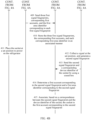
- FIG. 4A and FIG. 4B are a schematic flowchart of a socket binding method according to an embodiment of this application.
- an intelligent terminal set by a user is a socket
- the socket is one of the at least one intelligent terminal in FIG. 1
- a user terminal used by the user is a tablet computer
- the tablet computer is one of the at least one user terminal in FIG. 1
- a central device is a sound box
- the sound box is one of the at least one central device in FIG. 1
- a server is a smart appliance cloud server
- the user disposes the socket in a house of the user and the house has two bedrooms and one living room.
- the socket binding method may include the following steps: 401: The user initiates a registration request for a smart appliance cloud service to the tablet computer.
- the user may initiate the registration request for the smart appliance cloud service to the tablet computer by starting a smart appliance client installed on the tablet computer and tapping a registration control on a display interface of the smart appliance client.
- the tablet computer receives the registration request and obtains a first account and a login password in response to the registration request, where the first account is an account used by the user to log in to the smart appliance client. Specifically, the tablet computer receives and responds to the registration request, so that the smart appliance client provides an account registration interface on the display interface. The user may enter the first account and the login password on the account registration interface, so that the tablet computer obtains the first account and the login password.
- the tablet computer sends the first account and the login password to the smart appliance cloud server 404:
- the smart appliance cloud server receives the first account and the login password, determines whether an account that is the same as the first account exists in accounts stored in the smart appliance cloud server, and if the account does not exist, sends registration success response information to the tablet computer.
- the tablet computer receives the registration success response information, and displays registration success information, to notify the user that the account is successfully registered, and the user can log in to the smart appliance client by using the first account and the login password.
- the user logs in, by using the first account and the login password, to the smart appliance client installed on the tablet computer.
- the user walks in different rooms in the house while holding the tablet computer, and initiates a signal fingerprint collection instruction to the tablet computer each time the user walks to a collection position in a room.
- the tablet computer receives and responds to the signal fingerprint collection instruction, collects a signal at a collection position in each room, generates a first signal fingerprint at the collection position in each room based on the signal collected at the collection position in each room, and obtains a first area identifier corresponding to each first signal fingerprint, where a quantity of first signal fingerprints is the same as a quantity of collection positions, one collection position corresponds to one first signal fingerprint, and the first area identifier corresponding to the first signal fingerprint is an identifier of an area to which the collection position corresponding to the first signal fingerprint belongs.
- a process of collecting a signal at a collection position and generating a first signal fingerprint at the collection position includes: first driving a signal collection program, detecting a signal at the collection position, collecting identification information and signal strength of each detected signal, and packaging identification information and signal strength of all detected signals to obtain the first signal fingerprint at the collection position.
- a manner of obtaining the first area identifier corresponding to the first signal fingerprint is: obtaining the first area identifier corresponding to the first signal fingerprint by querying the user. For example, when the user moves to a collection position, the tablet computer initiates a query request to the user to query an identifier of an area to which the collection position belongs, obtains, based on an answer of the user, the identifier of the area to which the collection position belongs, and sets the identifier of the area to which the collection position belongs to the first area identifier corresponding to the first signal fingerprint at the collection position.
- one collection position may be selected in each of the living room and the two bedrooms.
- three collection positions and three first signal fingerprints are obtained.
- the three collection positions are in a one-to-one correspondence with the three first signal fingerprints.
- the three collection positions are respectively a first collection position to a third collection position, the first collection position is in the living room, the second collection position is in a first room, and the third collection position is in a second room.
- the first signal fingerprint at the first collection position is shown in Table 5.
- the first signal fingerprint at the first collection position includes five signals, and all the five signals are Wi-Fi signals.
- Identification information SSID of each Wi-Fi signal and signal strength RSSI of each Wi-Fi signal are shown in Table 5, and a first area identifier corresponding to the first signal fingerprint in Table 5 is the living room.
- Table 5 SSID RSSI AP 1 20 AP 2 100 AP 3 78 AP 4 63 AP 5 59
- the first signal fingerprint at the second collection position is shown in Table 6.
- the first signal fingerprint at the second collection position includes five signals, and all the five signals are Wi-Fi signals.
- Identification information SSID of each Wi-Fi signal and signal strength RSSI of each Wi-Fi signal are shown in Table 6, and a first area identifier corresponding to the first signal fingerprint in Table 6 is the first room.
- Table 6 SSID RSSI AP 1 50 AP 2 89 AP 3 128 AP 4 89 AP 5 30
- the first signal fingerprint at the third collection position is shown in Table 7.
- the first signal fingerprint at the third collection position includes five signals, and all the five signals are Wi-Fi signals.
- Identification information SSID of each Wi-Fi signal and signal strength RSSI of each Wi-Fi signal are shown in Table 7, and a first area identifier corresponding to the first signal fingerprint in Table 7 is the second room.
- a signal class includes a Wi-Fi signal, a Bluetooth signal, a UWB signal, and the like.
- the signal class includes a Wi-Fi signal, a Bluetooth signal, a UWB signal, and the like.
- the tablet computer After generating the first signal fingerprint corresponding to each collection position, the tablet computer sends the foregoing three first signal fingerprints, first accounts corresponding to the three first signal fingerprints, and the first area identifier corresponding to each first signal fingerprint to the smart appliance cloud server
- the smart appliance cloud server receives the three first signal fingerprints, the first accounts corresponding to the three first signal fingerprints, and the first area identifier corresponding to each first signal fingerprint that are sent by the tablet computer, and stores the three first signal fingerprints, the corresponding first accounts, and the corresponding first area identifier in an associated manner.
- the signal is collected at the collection position, the first signal fingerprint is generated, and the first signal fingerprint, the corresponding first account, and the first area identifier corresponding to the first signal fingerprint are sent to the smart appliance cloud server, to provide a data basis for the smart appliance cloud server to determine an account to which the socket belongs.
- the user After purchasing the socket, the user disposes the socket at a set position (for example, a position in the first room) to power on the socket.
- a set position for example, a position in the first room
- the socket After being powered on, the socket collects a signal at the set position, and generates a second signal fingerprint. That is, the socket starts a signal collection program, detects a signal at the set position, collects identification information and signal strength of each detected signal, and packs identification information and signal strength of all detected signals to obtain the second signal fingerprint.
- the second signal fingerprint is shown in Table 8.
- the second signal fingerprint includes five signals, and all the five signals are Wi-Fi signals.
- Identification information SSID of each Wi-Fi signal and signal strength RSSI of each Wi-Fi signal are shown in Table 8.
- Table 8 SSID RSSI AP 1 53 AP 2 83 AP 3 132 AP 4 80 AP 5 37
- a signal class includes a Wi-Fi signal, a Bluetooth signal, a UWB signal, and the like.
- the signal class includes a Wi-Fi signal, a Bluetooth signal, a UWB signal, and the like.
- the socket sends the second signal fingerprint and a corresponding device identifier of the socket to the smart appliance cloud server by using the sound box, where the sound box is in a network connected state.
- the socket is connected to the sound box by using a configured access information of a restricted network, and sends the second signal fingerprint and the corresponding device identifier of the socket to the sound box.
- the sound box receives the second signal fingerprint and the corresponding identification information of the socket, and sends the second signal fingerprint and the corresponding device identifier of the socket to the smart appliance cloud server.
- the sound box is a central device selected by the socket from central devices that can be detected by the socket
- the sound box may be a sound box set by the user, or may be a sound box set by a neighbor of the user. Based on this, before the socket sends the second signal fingerprint and the corresponding device identifier of the socket by using the sound box, the socket needs to select a central device (that is, the sound box) from the central devices that can be detected by the socket, and then the socket sends the second signal fingerprint and the corresponding device identifier of the socket by using the selected central device (that is, the sound box).
- a central device that is, the sound box
- the socket may further send the second signal fingerprint and the corresponding device identifier of the socket to the smart appliance cloud server by using a virtual SIM card. That is, when the socket is delivered from a factory, a virtual SIM card is disposed in the socket, and the socket is connected to a network by using the virtual SIM card, so that the second signal fingerprint and the device identifier of the socket are sent to the smart appliance cloud server by using the virtual SIM card.
- the socket collects the signal at the set position, generates the second signal fingerprint, and sends the second signal fingerprint and the corresponding device identifier of the socket to the smart appliance cloud server, so that the smart appliance cloud server determines, based on the second signal fingerprint, the account to which the socket belongs, to implement automatic binding between the socket and the account to which the socket belongs.
- the smart appliance cloud server receives the second signal fingerprint and the corresponding device identifier of the socket that are sent by the socket, and determines a first account corresponding to the second signal fingerprint and a first area identifier corresponding to the second signal fingerprint.
- each user when using the smart appliance cloud service, each user sends a first account of the user, a first signal fingerprint corresponding to the first account, and a first area identifier corresponding to the first signal fingerprint to the smart appliance cloud server, that is, the smart appliance cloud server stores at least one first account, a first signal fingerprint corresponding to each first account, and a first area identifier corresponding to each first signal fingerprint.
- a process of determining the first account and the first area identifier that correspond to the second signal fingerprint includes: matching the second signal fingerprint with each first signal fingerprint stored in the smart appliance cloud server, if one first signal fingerprint matches the second signal fingerprint, determining that the first account corresponding to the first signal fingerprint is the first account corresponding to the second signal fingerprint, that is, the second signal fingerprint corresponds to the first account corresponding to the first signal fingerprint, and determining that the first area identifier corresponding to the first signal fingerprint is the first area identifier corresponding to the second signal fingerprint, that is, the second signal fingerprint corresponds to the first area identifier corresponding to the first signal fingerprint.
- a matching principle of signal fingerprints is as follows: calculating a similarity between the second signal fingerprint and each first signal fingerprint, determining a maximum similarity based on the similarity between the second signal fingerprint and each first signal fingerprint, determining whether the maximum similarity is greater than a preset similarity, and if the maximum similarity is greater than the preset similarity, matching a first signal fingerprint corresponding to the maximum similarity with the second signal fingerprint.
- a similarity between the second signal fingerprint and the first signal fingerprint indicated in Table 6 is the greatest and is greater than the preset similarity. Therefore, the first account corresponding to the first signal fingerprint indicated in Table 6 is determined as the account to which the second signal fingerprint belongs. That is, the second signal fingerprint corresponds to the first account corresponding to the first signal fingerprint indicated in Table 6.
- the first area identifier (that is, the first room) corresponding to the first signal fingerprint indicated in Table 6 is determined as the first area identifier corresponding to the second signal fingerprint.
- the socket is a device authenticated by the smart appliance cloud service. If the socket is a device authenticated by the smart appliance cloud service, the first account and the first area identifier that correspond to the socket are determined; or if the socket is not a device authenticated by the smart appliance cloud service, the first account and the first area identifier that correspond to the socket are not determined.
- a principle of verifying whether the socket is the device authenticated by the smart appliance cloud service is the same as the foregoing principle of verifying whether the refrigerator is the device authenticated by the smart appliance cloud service. Therefore, this is not specifically limited herein.
- the smart appliance cloud server binds, based on a correspondence between the second signal fingerprint and the device identifier of the socket, the socket to the first account corresponding to the second signal fingerprint, and marks the socket by using the first area identifier (the first room) corresponding to the second signal fingerprint. That is, the first account corresponding to the second signal fingerprint is determined as the account to which the socket belongs, and the socket is bound to the first account. This implements binding between the socket and the account to which the socket belongs.
- the first area identifier corresponding to the second signal fingerprint is determined as the first area identifier corresponding to the socket. This implements determining of an area to which a set position of the socket belongs.
- the smart appliance cloud server matches the second signal fingerprint collected and generated by the socket with the first signal fingerprint, to determine the first account and the first area identifier that correspond to the second signal fingerprint, so as to determine, based on the correspondence between the second signal fingerprint and the device identifier of the socket, that the first account corresponding to the second signal fingerprint is the account to which the socket belongs, determine that an area indicated by the first area identifier corresponding to the second signal fingerprint is the area to which the set position of the socket belongs, bind the socket to the first account corresponding to the second signal fingerprint, and mark the socket by using the first area identifier corresponding to the second signal fingerprint.
- binding and area determining steps are simple and easy to perform, and various complex configuration processes are not required, so that binding and area determining efficiency is high, binding and area determining time is short, and user experience is good.
- the smart appliance cloud server may further send, to the tablet computer, a query request about whether to perform binding.
- the tablet computer displays the query request.
- the user sends response information to the tablet computer based on the query request.
- the tablet computer sends the response information to the smart appliance cloud server.
- the smart appliance cloud server receives the response information. If the response information is acknowledgment information, step 415 is performed. If the response information is negative acknowledgment information, the binding between the socket and the first account and the determining of the area to which the set position of the socket belongs are abandoned.
- the smart appliance cloud server may further synchronize first configuration information to the tablet computer.
- the first configuration information includes the device identifier and the first area identifier of the socket, and the like. Therefore, after the user logs in to the smart appliance client in the tablet computer by using the first account and the login password, the smart appliance client in the tablet computer adds an operation control of the socket to an interface of the smart appliance client based on the device identifier and the first area identifier of the socket in the first configuration information, so that the user controls, based on the operation control, the socket located in the area indicated by the first area identifier.
- the socket may determine, based on an account and an area identifier that are carried in the control instruction, whether the control instruction is a control instruction that is sent by the account to which the socket belongs to the socket located in the area indicated by the first area identifier, to ensure security of socket control, the smart appliance cloud server may send second configuration information to the socket by using the sound box.
- the second configuration information includes the first account and the first area identifier
- the socket receives and stores the second configuration information.
- the socket compares the account carried in the control instruction with the first account stored in the socket, and compares the area identifier carried in the control instruction with the first area identifier stored in the socket. If the accounts and area identifiers are consistent, the control instruction is sent by the account to which the socket belongs to the socket located in the area indicated by the first area identifier, and the socket executes the control instruction. If the accounts and area identifiers are inconsistent, the control instruction is not sent by the account to which the socket belongs to the socket located in the area indicated by the first area identifier, and the socket does not execute the control instruction.
- a placement position of a home appliance of the user changes, or a deployment position of Wi-Fi, Bluetooth, or the like of the user changes, or a deployment position of Wi-Fi, Bluetooth, or the like of next door, upstairs, or downstairs changes, or a placement position of a home appliance of next door, upstairs, or downstairs changes, or a signal identifier of upstairs, next door, downstairs, or the home of the user is modified, signal strength and/or signal identifier information collected at a same collection position changes. Consequently, a first signal fingerprint corresponding to the same collection position changes.
- the socket may further collect a signal at the set position, generate a third signal fingerprint, and send the third signal fingerprint to the smart appliance cloud server by using the sound box.
- the smart appliance cloud server receives the third signal fingerprint, and updates the first signal fingerprint (that is, the first signal fingerprint matching the second signal fingerprint) by using the third signal fingerprint. It should be noted that a principle of generating the third signal fingerprint is the same as that of generating the second signal fingerprint. Therefore, details are not described herein again.
- the smart appliance cloud server sends third configuration information to the socket by using the sound box.
- the third configuration information is used to indicate device configuration information of the socket disposed in the area indicated by the first area identifier.
- the socket After receiving the third configuration information, the socket performs device configuration based on the third configuration information, so that the socket runs based on content configured by using the third configuration information.
- the third configuration information may include configuration information, for example, an access interface, an information reporting frequency, a data format, and a used protocol, required by the socket located in the area indicated by the first area identifier in a proper running process.
- the user may further send an associated account (that is, a second account) of the first account to the smart appliance cloud server in advance by using the tablet computer.
- the smart appliance cloud server receives the second account. Based on this, after binding the first account to the socket, the smart appliance cloud server binds the socket to the second account.
- the smart appliance cloud server sends the first configuration information to the user terminal of the associated user.
- the first configuration information includes the device identifier of the socket and the first area identifier.
- the user terminal of the associated user receives the first configuration information, and adds, on the interface of the smart appliance client based on the device identifier of the socket and the first area identifier in the first configuration information, the operation control of the socket located in the area indicated by the first area identifier, so that the associated user can control, based on the operation control, the socket located in the area indicated by the first area identifier.
- the socket may determine, based on an account carried in the control instruction, whether the control instruction is a control instruction sent by the second account, to ensure security of socket control, the smart appliance cloud server sends the second account to the socket.
- the socket receives and stores the second account, to determine, after receiving the control instruction, based on a result of matching between the account carried in the control instruction and the second account, whether the control instruction is a control instruction sent by the second account.
- the user sends fourth configuration information to the smart appliance cloud server by using the tablet computer.
- the fourth configuration information includes the operation permission of the first account on the socket and the operation permission of the second account on the socket.
- the first account has read/write permission on the socket
- the second account has read permission on the socket.
- the smart appliance cloud server receives the fourth configuration information sent by the tablet computer.
- the smart appliance cloud server may determine, based on the fourth configuration information and the account and instruction information carried in the control instruction, whether the user has permission to send the control instruction to the socket, and if the user has permission to send the control instruction to the socket, send the control instruction to the socket, or if the user does not have permission to send the control instruction to the socket, return, to the user, prompt information indicating that the operation exceeds the limit.
- the smart appliance cloud server may send the fourth configuration information to the socket by using the sound box.
- the socket receives the fourth configuration information, and configures permission configuration information of the socket based on the fourth configuration information.
- the socket determines, based on the account and the instruction information carried in the instruction, whether to execute the instruction.
- the associated user may also collect the first signal fingerprint by using the user terminal, and send the first signal fingerprint and the corresponding second account to the smart appliance cloud server.
- the smart appliance cloud server After receiving the first signal fingerprint and the corresponding second account that are sent by the user terminal of the associated user, the smart appliance cloud server stores the first signal fingerprint corresponding to the second account and the first signal fingerprint corresponding to the first account together, that is, stores first signal fingerprints collected by the user and the associated user together. In this way, a quantity of first signal fingerprints is increased, the first signal fingerprint is enriched, so that a result of matching between the second signal fingerprint and the first signal fingerprint is more accurate.
- the user may further send, to the smart appliance cloud server by using the tablet computer, network configuration information corresponding to the first account, and the smart appliance cloud server receives the network configuration information corresponding to the first account.
- the smart appliance cloud server sends, to the socket by using the sound box, the network configuration information corresponding to the first account, so that the socket accesses the network based on the network configuration information corresponding to the first account.
- the socket is connected to the router based on the account and the password of the router, and is further connected to the network, so that the smart appliance cloud server can directly interact with the socket by using the network instead of interacting with the socket by using the restricted network of the sound box.
- FIG. 5 is a schematic flowchart 2 of a device binding method according to an embodiment of this application. As shown in FIG. 5 , the device binding method includes the following steps:
- the intelligent terminal sends the second signal fingerprint and a corresponding device identifier of the intelligent terminal to the server.
- the server determines that the second signal fingerprint matches the first signal fingerprint, to determine that the second signal fingerprint is corresponding to the first account and the second signal fingerprint is corresponding to the first area identifier. That is, the server matches the second signal fingerprint with each first signal fingerprint; if one first signal fingerprint matches the second signal fingerprint, determines that the first account corresponding to the first signal fingerprint is the first account corresponding to the second signal fingerprint, that is, the second signal fingerprint corresponds to the first account corresponding to the first signal fingerprint; and determines that the first area identifier corresponding to the first signal fingerprint is the first area identifier corresponding to the second signal. Because a specific matching process of signal fingerprints has been described above, details are not described herein again.
- the server binds the intelligent terminal to the first account based on a correspondence between the second signal fingerprint and the device identifier of the intelligent terminal, and marks the intelligent terminal by using the first area identifier. That is, the first account is determined as an account to which the intelligent terminal belongs, and the intelligent terminal is bound to the first account. This implements binding between the intelligent terminal and the account to which the intelligent terminal belongs, and an area indicated by the first area identifier is determined as an area to which the set position of the intelligent terminal belongs.
- the user terminal collects the signal at the collection position, generates the first signal fingerprint, and sends, to the server, the first signal fingerprint, the corresponding first account, and the first area identifier corresponding to the first signal fingerprint, so that the server stores the first signal fingerprint, the corresponding first account, and the first area identifier corresponding to the first signal fingerprint.
- the intelligent terminal collects the signal at the set position, generates the second signal fingerprint, and sends the second signal fingerprint and the corresponding device identifier of the intelligent terminal to the server, so that after determining that the second signal fingerprint matches the first signal fingerprint, the server determines that the second signal fingerprint is corresponding to the first account and the second signal fingerprint is corresponding to the first area identifier, to bind the intelligent terminal to the first account based on the correspondence between the second signal fingerprint and the device identifier of the intelligent terminal, and mark the intelligent terminal by using the first area identifier.
- This implements binding between the intelligent terminal and the account to which the intelligent terminal belongs and determining of the area to which the set position of the intelligent terminal belongs.
- the account to which the intelligent terminal belongs and the area to which the set position belongs can be determined only through matching of signal fingerprints, so as to implement the binding between the intelligent terminal and the account to which the intelligent terminal belongs and the determining of the area to which the set position belongs.
- a binding step and an area determining step are simple and easy to perform.
- a device binding method is provided.
- An implementation process of the device binding method is as follows: A user registers an account on a platform, and purchases an intelligent terminal by using the account. When purchasing the intelligent terminal, a server binds the account to the purchased intelligent terminal. In this way, after the intelligent terminal is purchased home and powered on, the server determines, based on a binding relationship between the account and the intelligent terminal when the intelligent terminal is purchased, the account for purchasing the intelligent terminal as an account to which the intelligent terminal belongs, and binds the account for purchasing the intelligent terminal to the intelligent terminal, so that the user controls the intelligent terminal by using the account for purchasing the intelligent terminal.
- the intelligent terminal purchased by the user is bound to the account of the user for purchasing the intelligent terminal. That is, the intelligent terminal is bound to the account of the user, but cannot be bound to an account of the parent of the user. As a result, a binding error occurs, and the parent of the user cannot control the intelligent terminal by using the account of the parent.
- determining of the account (that is, the first account) to which the intelligent terminal belongs is related to the second signal fingerprint corresponding to the set position of the intelligent terminal and the first signal fingerprint corresponding to the collection position, and is irrelevant to an account for purchasing the intelligent terminal, accurate binding of the intelligent terminal can be implemented.
- the server may further send first configuration information to the user terminal.
- the first configuration information includes the device identifier and the first area identifier of the intelligent terminal and the like, so that an operation control of the intelligent terminal is added to the user terminal based on the device identifier and the first area identifier of the intelligent terminal in the first configuration information, and the user controls, based on the operation control, the intelligent terminal disposed in the area indicated by the first area identifier.
- the intelligent terminal may determine, based on an account and an area identifier that are carried in the control instruction, whether the control instruction is a control instruction that is sent by the account to which the intelligent terminal belongs to the intelligent terminal located in the area indicated by the first area identifier, to ensure security of intelligent terminal control, the server may send second configuration information to the intelligent terminal.
- the second configuration information includes the first account and the first area identifier. The intelligent terminal receives and stores the second configuration information.
- the intelligent terminal compares the account carried in the control instruction with the first account stored in the intelligent terminal, and compares the area identifier carried in the control instruction with the first area identifier stored in the intelligent terminal. If the accounts and area identifiers are consistent, the control instruction is sent by the account to which the intelligent terminal belongs to the intelligent terminal disposed in the area indicated by the first area identifier, and the intelligent terminal executes the control instruction. If the accounts and area identifiers are inconsistent, the control instruction is not sent by the account to which the intelligent terminal belongs to the intelligent terminal disposed in the area indicated by the first area identifier, and the intelligent terminal does not execute the control instruction.
- a placement position of a home appliance of the user changes, or a deployment position of Wi-Fi, Bluetooth, or the like of the user changes, or a deployment position of Wi-Fi, Bluetooth, or the like of next door, upstairs, or downstairs changes, or a placement position of a home appliance of next door, upstairs, or downstairs changes, or a signal identifier of upstairs, next door, downstairs, or the home of the user is modified, signal strength and/or signal identifier information of a signal collected at a same collection position changes. Consequently, a first signal fingerprint corresponding to the same collection position changes.
- the intelligent terminal may further collect a signal at the set position, generate a third signal fingerprint, and send the third signal fingerprint to the server.
- the server receives the third signal fingerprint, and updates the first signal fingerprint (that is, the first signal fingerprint matching the second signal fingerprint) by using the third signal fingerprint.
- the server sends third configuration information to the intelligent terminal.
- the third configuration information is used to indicate device configuration information of the intelligent terminal disposed in the area indicated by the first area identifier.
- the intelligent terminal After receiving the third configuration information, the intelligent terminal performs device configuration based on the third configuration information, so that the intelligent terminal runs based on content configured by using the third configuration information.
- the third configuration information may include configuration information, for example, an access interface, an information reporting frequency, a data format, and a used protocol, required by the intelligent terminal located in the area indicated by the first area identifier in a proper running process.
- the user may further send an associated account (that is, a second account) of the first account to the server in advance by using the user terminal.
- the server receives the second account. Based on this, after binding the first account to the intelligent terminal, the server binds the intelligent terminal to the second account.
- the smart appliance cloud server sends the first configuration information to the user terminal of the associated user.
- the first configuration information includes the device identifier of the intelligent terminal and the first area identifier.
- the user terminal of the associated user receives the first configuration information, and adds, on the interface of the smart appliance client based on the device identifier of the intelligent terminal and the first area identifier in the first configuration information, the operation control of the intelligent terminal located in the area indicated by the first area identifier, so that the associated user can control, based on the operation control, the intelligent terminal located in the area indicated by the first area identifier.
- the intelligent terminal may determine, based on the account carried in the control instruction, whether the control instruction is the control instruction sent by the second account, so as to ensure control security of the intelligent terminal, the server sends the second account to the intelligent terminal.
- the intelligent terminal receives and stores the second account, to determine, after receiving the control instruction, based on a result of matching between the account carried in the control instruction and the second account, whether the control instruction is a control instruction sent by the second account.
- the user sends fourth configuration information to the server by using the user terminal.
- the fourth configuration information includes the operation permission of the first account on the intelligent terminal and the operation permission of the second account on the intelligent terminal.
- the server may determine, based on the fourth configuration information and the account and instruction information carried in the control instruction, whether the user has permission to send the instruction to the intelligent terminal, and if the user has permission to send the instruction to the intelligent terminal, send the control instruction to the intelligent terminal, or if the user does not have permission to send the instruction to the intelligent terminal, return, to the user, prompt information indicating that the operation exceeds the limit.
- the server may send the fourth configuration information to the intelligent terminal.
- the intelligent terminal receives the fourth configuration information, and configures permission configuration information of the intelligent terminal based on the fourth configuration information. In this way, after receiving the control instruction of the user for the intelligent terminal, the intelligent terminal determines, based on the account and the instruction information carried in the instruction, whether to execute the instruction.
- the associated user may also collect the first signal fingerprint by using the user terminal, and send, to the server, the first signal fingerprint, the corresponding second account, and the first area identifier corresponding to the first signal fingerprint.
- the smart appliance cloud server After receiving the first signal fingerprint, the corresponding second account, and the first area identifier corresponding to the first signal fingerprint that are sent by the user terminal of the associated user, the smart appliance cloud server stores the first signal fingerprint corresponding to the second account and the first signal fingerprint corresponding to the first account together, that is, stores first signal fingerprints collected by the user and the associated user together. In this way, a quantity of first signal fingerprints is increased, the first signal fingerprint is enriched, so that a result of matching between the second signal fingerprint and the first signal fingerprint is more accurate.
- the user may further send, to the server by using the user terminal, network configuration information corresponding to the first account, and the server receives the network configuration information corresponding to the first account.
- the server sends, to the intelligent terminal, the network configuration information corresponding to the first account, so that the intelligent terminal accesses the network based on the network configuration information corresponding to the first account.
- interaction between the intelligent terminal and the server may be implemented by using the central device or the virtual SIM card.
- interaction between the intelligent terminal and the server is directly implemented by using the network without the central device and the virtual SIM card.
- An embodiment of this application further provides a terminal device.
- the terminal device includes a communication module, one or more memories, and one or more processors.
- the communication module is configured to communicate with another device.
- the one or more memories are configured to store one or more computer programs.
- the one or more processors are configured to execute the one or more computer programs, so that the terminal device performs the method according to any one of the foregoing user terminals.
- the terminal device herein refers to a user terminal
- the user terminal may be, for example, a terminal device having a man-machine interaction function, such as a mobile phone or a tablet computer.
- a man-machine interaction function such as a mobile phone or a tablet computer.
- the following describes a structure of the user terminal by using an example in which the user terminal is a mobile phone.
- FIG. 6 is a schematic diagram of a structure of a mobile phone according to an embodiment of this application.
- the mobile phone 600 may include a processor 610, an external memory interface 620, an internal memory 621, a USB interface 630, a charging management module 640, a power management module 641, a battery 642, an antenna 1, an antenna 2, a mobile communication module 651, a wireless communication module 652, an audio module 670, a speaker 670A, a receiver 670B, a microphone 670C, a headset jack 670D, a sensor module 680, a button 690, a motor 691, an indicator 692, a camera 693, a display 694, a SIM card interface 695, and the like.
- the sensor module 680 may include a gyroscope sensor 680A, an acceleration sensor 680B, an optical proximity sensor 680G, a fingerprint sensor 680H, a touch sensor 680K, and a rotating shaft sensor 680M (certainly, the mobile phone 600 may further include another sensor, for example, a temperature sensor, a pressure sensor, a distance sensor, a magnetic sensor, an ambient light sensor, a barometric pressure sensor, or a bone conduction sensor, which is not shown in the figure).
- a temperature sensor for example, a temperature sensor, a pressure sensor, a distance sensor, a magnetic sensor, an ambient light sensor, a barometric pressure sensor, or a bone conduction sensor, which is not shown in the figure.
- the structure illustrated in this embodiment of this application does not constitute a specific limitation on the mobile phone 600.
- the mobile phone 600 may include more or fewer components than those shown in the figure, or combine some components, or split some components, or have different component arrangements.
- the components shown in the figure may be implemented by hardware, software, or a combination of software and hardware.
- the processor 610 may include one or more processing units.
- the processor 610 may include an application processor (application processor, AP), a modem processor, a graphics processing unit (graphics processing unit, GPU), an image signal processor (image signal processor, ISP), a controller, a memory, a video codec, a digital signal processor (digital signal processor, DSP), a baseband processor, and/or a neural-network processing unit (Neural-network Processing Unit, NPU).
- Different processing units may be independent components, or may be integrated into one or more processors.
- the controller may be a nerve center and a command center of the mobile phone 600. The controller may generate an operation control signal based on an instruction operation code and a time sequence signal, to complete control of instruction reading and instruction execution.
- a memory may be further disposed in the processor 610, and is configured to store instructions and data.
- the memory in the processor 610 is a cache.
- the memory may store instructions or data just used or cyclically used by the processor 610. If the processor 610 needs to use the instructions or the data again, the processor may directly invoke the instructions or the data from the memory. This avoids repeated access, reduces waiting time of the processor 610, and improves system efficiency.
- the processor 610 may run the execution method of the user terminal provided in this application, collect a first signal fingerprint corresponding to a first account, and send the first account and the first signal fingerprint corresponding to the first account to a server, to provide data support for binding between an intelligent terminal and an account to which the intelligent terminal belongs.
- a CPU and a GPU are integrated, the CPU and the GPU may cooperate to perform the processing method provided in embodiments of this application. For example, in the processing method, some algorithms are performed by the CPU, and the other algorithms are performed by the GPU, to obtain relatively fast processing efficiency.
- the display 694 is configured to display an image, a video, and the like.
- the display 694 includes a display panel.
- the display panel may be a liquid crystal display (liquid crystal display, LCD), an organic light-emitting diode (organic light-emitting diode, OLED), an active-matrix organic light emitting diode (active-matrix organic light emitting diode, AMOLED), a flexible light-emitting diode (flex light-emitting diode, FLED), a mini-LED, a micro-LED, a micro-OLED, a quantum dot light emitting diode (quantum dot light emitting diodes, QLED), or the like.
- the mobile phone 600 may include one or N displays 694, where N is a positive integer greater than 1.
- the camera 693 (which may be a front-facing camera or a rear-facing camera, or one camera may serve as either a front-facing camera or a rear-facing camera) is used to capture a static image or video.
- the camera 693 may include a photosensitive element such as a lens group and an image sensor.
- the lens group includes a plurality of lenses (convex lenses or concave lenses), and is configured to collect an optical signal reflected by a to-be-photographed object and transmit the collected optical signal to the image sensor.
- the image sensor generates an original image of the to-be-photographed object based on the optical signal.
- the internal memory 621 may be configured to store computer-executable program code.
- the executable program code includes instructions.
- the processor 610 runs the instructions stored in the internal memory 621, to perform various function applications of the mobile phone 600 and signal processing.
- the internal memory 621 may include a program storage area and a data storage area.
- the program storage area may store code of an operating system, an application (for example, a camera application or a WeChat application), and the like.
- the data storage area may store data (for example, an image or video captured by the camera application) created during use of the mobile phone 600, and the like.
- the internal memory 621 may further store code of an anti-accidental touch algorithm.
- code of the anti-accidental touch algorithm stored in the internal memory 621 is run by the processor 610, a touch operation in a folding or unfolding process may be shielded.
- the internal memory 621 may include a high-speed random access memory, or may include a nonvolatile memory, for example, at least one magnetic disk storage device, a flash memory, or a universal flash storage (universal flash storage, UFS).
- a nonvolatile memory for example, at least one magnetic disk storage device, a flash memory, or a universal flash storage (universal flash storage, UFS).
- code of an algorithm for implementing device binding may alternatively be stored in an external memory.
- the processor 610 may run, by using the external memory interface 620, the code of the algorithm stored in the external memory, to implement device binding.
- the following describes functions of the sensor module 680.
- the gyroscope sensor 680A may be configured to determine a motion posture of the mobile phone 600. In some embodiments, the gyroscope sensor 680A may be used to determine angular velocities of the mobile phone 600 around three axes (namely, x, y, and z axes). In other words, the gyroscope sensor 680A may be configured to detect a current motion status of the mobile phone 600, for example, a shaken or static state.
- the acceleration sensor 680B may detect values of acceleration in various directions (usually on three axes) of the mobile phone 600.
- the gyroscope sensor 680A may be configured to detect a current motion status of the mobile phone 600, for example, a shaken or static state.
- the optical proximity sensor 680G may include, for example, a light emitting diode (LED) and an optical detector, for example, a photodiode.
- the light emitting diode may be an infrared light emitting diode.
- the mobile phone emits infrared light by using the light emitting diode.
- the mobile phone detects infrared reflected light from a nearby object by using the photodiode. When sufficient reflected light is detected, the mobile phone may determine that there is an object near the mobile phone. When insufficient reflected light is detected, the mobile phone may determine that there is no object near the mobile phone.
- the gyroscope sensor 680A (or the acceleration sensor 680B) may send detected motion status information (for example, an angular velocity) to the processor 610.
- the processor 610 determines, based on the motion status information, whether the mobile phone is currently in a handheld state or a tripod state (for example, when the angular velocity is not 0, it indicates that the mobile phone 600 is in the handheld state).
- the fingerprint sensor 680H is configured to collect a fingerprint.
- the mobile phone 600 may use a feature of the collected fingerprint to implement fingerprint-based unlocking, application access locking, fingerprint-based photographing, fingerprint-based call answering, and the like.
- the touch sensor 680K is also referred to as a "touch panel”.
- the touch sensor 680K may be disposed on the display 694, and the touch sensor 680K and the display 694 form a touchscreen, which is also referred to as a "touch screen”.
- the touch sensor 680K is configured to detect a touch operation performed on or near the touch sensor.
- the touch sensor may transfer the detected touch operation to the application processor to determine a type of the touch event.
- a visual output related to the touch operation may be provided through the display 694.
- the touch sensor 680K may alternatively be disposed on a surface of the mobile phone 600, and is located on a position different from that of the display 694.
- the display 694 of the mobile phone 600 displays a home screen, and the home screen includes icons of a plurality of applications (for example, the camera application and the WeChat application).
- a user taps the icon of the camera application on the home screen by using the touch sensor 680K, to trigger the processor 610 to enable the camera application and turn on the camera 693.
- the display 694 displays an interface of the camera application, for example, a viewfinder interface.
- a wireless communication function of the mobile phone 600 may be implemented through the antenna 1, the antenna 2, the mobile communication module 651, the wireless communication module 652, the modem processor, the baseband processor, and the like.
- the antenna 1 and the antenna 2 are configured to transmit and receive an electromagnetic wave signal.
- Each antenna in the mobile phone 600 may be configured to cover one or more communication bands. Different antennas may be further multiplexed, to improve antenna utilization.
- the antenna 1 may be multiplexed as a diversity antenna of a wireless local area network. In some other embodiments, the antenna may be used in combination with a tuning switch.
- the mobile communication module 651 may provide a solution to wireless communication such as 2G/3G/4G/5G applied to the mobile phone 600.
- the mobile communication module 651 may include at least one filter, a switch, a power amplifier, a low noise amplifier (low noise amplifier, LNA), and the like.
- the mobile communication module 651 may receive an electromagnetic wave through the antenna 1, perform processing such as filtering or amplification on the received electromagnetic wave, and transmit the electromagnetic wave to the modem processor for demodulation.
- the mobile communication module 651 may further amplify a signal modulated by the modem processor, and convert the signal into an electromagnetic wave for radiation through the antenna 1.
- at least some function modules in the mobile communication module 651 may be disposed in the processor 610.
- at least some function modules of the mobile communication module 651 may be disposed in a same device as at least some modules of the processor 610.
- the modem processor may include a modulator and a demodulator.
- the modulator is configured to modulate a to-be-sent low-frequency baseband signal into a medium-high frequency signal.
- the demodulator is configured to demodulate a received electromagnetic wave signal into a low-frequency baseband signal. Then, the demodulator transmits the low-frequency baseband signal obtained through demodulation to the baseband processor for processing.
- the low-frequency baseband signal is processed by the baseband processor and then transmitted to the application processor.
- the application processor outputs a sound signal by using an audio device (which is not limited to the speaker 670A, the receiver 670B, or the like), or displays an image or a video by using the display 694.
- the modem processor may be an independent component.
- the modem processor may be independent of the processor 610, and is disposed in a same device as the mobile communication module 651 or another function module.
- the wireless communication module 652 may provide a solution to wireless communication applied to the mobile phone 600, for example, a wireless local area network (wireless local area networks, WLAN) (for example, a wireless fidelity (wireless fidelity, Wi-Fi) network), Bluetooth (bluetooth, BT), a global navigation satellite system (global navigation satellite system, GNSS), frequency modulation (frequency modulation, FM), near field communication (near field communication, NFC), and an infrared (infrared, IR) technology.
- the wireless communication module 652 may be one or more components integrating at least one communication processor module.
- the wireless communication module 652 receives an electromagnetic wave through the antenna 2, performs frequency modulation and filtering processing on an electromagnetic wave signal, and sends a processed signal to the processor 610.
- the wireless communication module 652 may further receive a to-be-sent signal from the processor 610, perform frequency modulation and amplification on the signal, and convert the signal into an electromagnetic wave for radiation through the antenna 2.
- the antenna 1 and the mobile communication module 651 are coupled, and the antenna 2 and the wireless communication module 652 are coupled, so that the mobile phone 600 can communicate with a network and another device by using a wireless communication technology.
- the wireless communication technology may include a global system for mobile communications (global system for mobile communications, GSM), a general packet radio service (general packet radio service, GPRS), code division multiple access (code division multiple access, CDMA), wideband code division multiple access (wideband code division multiple access, WCDMA), time-division code division multiple access (time-division code division multiple access, TD-SCDMA), long term evolution (long term evolution, LTE), BT, a GNSS, a WLAN, NFC, FM, an IR technology, and/or the like.
- GSM global system for mobile communications
- GPRS general packet radio service
- code division multiple access code division multiple access
- CDMA wideband code division multiple access
- WCDMA wideband code division multiple access
- time-division code division multiple access time-di
- the GNSS may include a global positioning system (global positioning system, GPS), a global navigation satellite system (global navigation satellite system, GLONASS), a BeiDou navigation satellite system (beidou navigation satellite system, BDS), a quasi-zenith satellite system (quasi-zenith satellite system, QZSS), and/or a satellite based augmentation system (satellite based augmentation systems, SBAS).
- GPS global positioning system
- GLONASS global navigation satellite system
- BeiDou navigation satellite system beidou navigation satellite system
- BDS BeiDou navigation satellite system
- QZSS quasi-zenith satellite system
- SBAS satellite based augmentation system
- the mobile phone 600 may implement an audio function such as music playing or recording through the audio module 670, the speaker 670A, the receiver 670B, the microphone 670C, the headset jack 670D, the application processor, and the like.
- the mobile phone 600 may receive an input from the button 690, and generate a button signal input related to a user setting and function control of the mobile phone 600.
- the mobile phone 600 may generate a vibration prompt (for example, an incoming call vibration prompt) by using the motor 691.
- the indicator 692 in the mobile phone 600 may be an indicator light, and may be configured to indicate a charging status and a power change, or may be configured to indicate a message, a missed call, a notification, and the like.
- the SIM card interface 695 in the mobile phone 600 is configured to connect to a SIM card.
- the SIM card may be inserted into the SIM card interface 695 or removed from the SIM card interface 695, to implement contact with or separation from the mobile phone 600.
- the mobile phone 600 may include more or fewer components than components shown in FIG. 6 . This is not limited in this embodiment of this application.
- An embodiment of this application further provides a terminal device.
- the terminal device includes a communication module, one or more memories, and one or more processors.
- the communication module is configured to communicate with another device.
- the one or more memories are configured to store one or more computer programs.
- the one or more processors are configured to execute the one or more computer programs, so that the terminal device performs the method according to any one of the foregoing intelligent terminals.
- the terminal device herein refers to an intelligent terminal.
- the intelligent terminal may be, for example, a lamp, a socket, a refrigerator, a washing machine, an air conditioner, an oven, a rice cooker, a television set, or a floor sweeping robot. This is not specially limited herein.
- the following describes a structure of the intelligent terminal by using an example in which the intelligent terminal is a refrigerator
- FIG. 7 is a schematic diagram of a structure of a refrigerator according to an embodiment of this application.
- the refrigerator 700 may include a processor 710, an external memory interface 720, an internal memory 730, a power management module 740, a wireless communication module 750, an antenna 1, a sensor module 760, a display 770, at least one storage structure (not shown in the figure), a temperature control module 780, a pressure control module 790, and the like.
- the sensor module 760 may include a touch sensor 761, a temperature sensor 762, a barometric pressure sensor 763, and the like.
- the structure illustrated in this embodiment of this application does not constitute a specific limitation on the refrigerator 700.
- the refrigerator 700 may include more or fewer components than those shown in the figure, or combine some components, or split some components, or have different component arrangements.
- the components shown in the figure may be implemented by hardware, software, or a combination of software and hardware.
- the processor 710 may include one or more processing units.
- the processor 710 may include an application processor (application processor, AP), a modem processor, a graphics processing unit (graphics processing unit, GPU), an image signal processor (image signal processor, ISP), a controller, a memory, a video codec, a digital signal processor (digital signal processor, DSP), a baseband processor, and/or a neural-network processing unit (Neural-network Processing Unit, NPU).
- Different processing units may be independent components, or may be integrated into one or more processors.
- the controller may be a nerve center and a command center of the refrigerator 700. The controller may generate an operation control signal based on an instruction operation code and a time sequence signal, to complete control of instruction reading and instruction execution.
- a memory may be further disposed in the processor 710, and is configured to store instructions and data.
- the memory in the processor 710 is a cache.
- the memory may store instructions or data just used or cyclically used by the processor 710. If the processor 710 needs to use the instructions or the data again, the processor may directly invoke the instructions or the data from the memory. This avoids repeated access, reduces waiting time of the processor 710, and improves system efficiency.
- the processor 710 may run the method performed by the intelligent terminal provided in this application, collect a second signal fingerprint, and send the second signal fingerprint and a device identifier of the refrigerator to a server, so that the server can determine, based on the second signal fingerprint, an account to which the refrigerator belongs, to bind the refrigerator to the account to which the refrigerator belongs.
- a CPU and a GPU may cooperate to perform the processing method provided in embodiments of this application. For example, in the processing method, some algorithms are performed by the CPU, and the other algorithms are performed by the GPU, to obtain relatively fast processing efficiency.
- the display 770 is configured to display an image, a video, and the like.
- the display 570 includes a display panel.
- the display panel may be a liquid crystal display (liquid crystal display, LCD), an organic light-emitting diode (organic light-emitting diode, OLED), an active-matrix organic light emitting diode (active-matrix organic light emitting diode, AMOLED), a flexible light-emitting diode (flex light-emitting diode, FLED), a mini-LED, a micro-LED, a micro-OLED, a quantum dot light emitting diode (quantum dot light emitting diodes, QLED), or the like.
- the refrigerator 700 may include one or N displays 770, where N is a positive integer greater than 1.
- the internal memory 730 may be configured to store computer-executable program code.
- the executable program code includes instructions.
- the processor 710 runs the instructions stored in the internal memory 730, to perform various function applications of the refrigerator 700 and signal processing.
- the internal memory 730 may include a program storage area and a data storage area.
- the program storage area may store code of an operating system, an application (for example, a camera application or a WeChat application), and the like.
- the data storage area may store data created during use of the refrigerator 700.
- the internal memory 730 may further store code of an anti-accidental touch algorithm.
- code of the anti-accidental touch algorithm stored in the internal memory 730 is run by the processor 710, a touch operation in a folding or unfolding process may be shielded.
- the internal memory 730 may include a high-speed random access memory, or may include a nonvolatile memory, for example, at least one magnetic disk storage device, a flash memory, or a universal flash storage (universal flash storage, UFS).
- a nonvolatile memory for example, at least one magnetic disk storage device, a flash memory, or a universal flash storage (universal flash storage, UFS).
- code of an algorithm for implementing device binding may alternatively be stored in an external memory.
- the processor 710 may run, by using the external memory interface 720, the code of the algorithm stored in the external memory, to implement device binding.
- the following describes functions of the sensor module 760.
- the touch sensor 761 is also referred to as a "touch panel”.
- the touch sensor 761 may be disposed on the display 770, and the touch sensor 761 and the display 770 form a touchscreen, which is also referred to as a "touch screen”.
- the touch sensor 770 is configured to detect a touch operation performed on or near the touch sensor.
- the touch sensor may transfer the detected touch operation to the application processor to determine a type of the touch event.
- a visual output related to the touch operation may be provided through the display 770.
- the touch sensor 761 may alternatively be disposed on a surface of the refrigerator 700, and is located on a position different from that of the display 770.
- the temperature sensor 762 is disposed inside the refrigerator 700, and is configured to detect a temperature in the refrigerator 700 and send the detected temperature to the processor 710, so that the processor 710 determines, based on the temperature detected by the temperature sensor 762, whether the temperature in the refrigerator 700 is normal, and if the temperature in the refrigerator 700 is abnormal, generates a temperature adjustment solution, and sends a temperature adjustment method to the temperature control module 780, so that the temperature control module 580 adjusts the temperature in the refrigerator 700 according to the temperature adjustment method.
- the barometric pressure sensor 763 is disposed inside the refrigerator 700, and is configured to detect barometric pressure in the refrigerator 700 and send the detected barometric pressure to the processor 710, so that the processor 710 determines, based on the barometric pressure detected by the barometric pressure sensor 763, whether the barometric pressure in the refrigerator 700 is normal. If the barometric pressure in the refrigerator 700 is abnormal, the processor 710 generates a barometric pressure adjustment solution, and sends a barometric pressure adjustment method to the pressure control module 790, so that the pressure control module 790 adjusts the barometric pressure in the refrigerator 700 according to the barometric pressure adjustment method.
- the display 770 of the refrigerator 700 displays a home screen, and the home screen includes icons of a plurality of applications (for example, recipes and home tips).
- a user taps the icon of the recipe application on the home screen by using the touch sensor 761, to trigger the processor 710 to enable the recipe application and open the recipe.
- the display 770 displays a display interface of the recipe.
- a wireless communication function of the refrigerator 700 may be implemented through the antenna 1, the wireless communication module 750, the modem processor, the baseband processor, and the like.
- the antenna 1 is configured to transmit and receive an electromagnetic wave signal.
- Antennas in the refrigerator 700 may be configured to cover one or more communication bands.
- the wireless communication module 750 may provide a wireless communication solution that includes a wireless local area network (wireless local area networks, WLAN) (for example, a wireless fidelity (wireless fidelity, Wi-Fi) network), Bluetooth (bluetooth, BT), and the like and that is applied to the refrigerator 700.
- the wireless communication module 750 may be one or more components integrating at least one communication processor module.
- the wireless communication module 750 receives an electromagnetic wave by using the antenna 1, performs frequency modulation and filtering processing on an electromagnetic wave signal, and sends a processed signal to the processor 710.
- the wireless communication module 750 may further receive a to-be-sent signal from the processor 710, perform frequency modulation and amplification on the signal, and convert the signal into an electromagnetic wave for radiation through the antenna 1.
- the refrigerator 700 may include more or fewer components than components shown in FIG. 7 . This is not limited in this embodiment of this application.
- An embodiment of this application further provides a terminal device.
- the terminal device includes a communication module, one or more memories, and one or more processors.
- the communication module is configured to communicate with another device.
- the one or more memories are configured to store one or more computer programs.
- the one or more processors are configured to execute the one or more computer programs, so that the terminal device performs the method according to any one of the foregoing servers.
- the terminal device herein refers to a server, and the server may be a physical server or a cloud server.
- the server may be a physical server or a cloud server.
- the following describes a structure of a server by using an example in which the server is a physical server.
- FIG. 8 is a schematic diagram of a structure of a physical server according to an embodiment of this application.
- the physical server 800 shown in FIG. 8 is merely an example, and shall not constitute any limitation on a function and an application scope of this embodiment of the present invention.
- components of the physical server 800 may include but are not limited to the foregoing at least one processor 810, at least one memory 820, and a bus 830 that connects different system components (including the memory 820 and the processor 810).
- the memory 820 stores a computer program, and the computer program may be executed by the processor 810, so that the processor 810 performs the steps performed by the server described in this specification.
- the memory 820 may include a volatile memory, for example, a random access memory (RAM) 8201 and/or a cache memory 8202, and may further include a read-only memory (ROM) 8203.
- RAM random access memory
- ROM read-only memory
- the memory 820 may further include a program/utility tool 8204 with a set of (at least one) program modules 8205.
- program module 8205 includes but is not limited to an operating system, one or more application programs, and another program module and program data. Each or a combination of these examples may include implementation of a network environment.
- the bus 830 may include a data bus, an address bus, and a control bus.
- the physical server 800 may also communicate with one or more external devices 860 (for example, a keyboard, a pointing device, or a Bluetooth device). Such communication may be performed by using an input/output (I/O) interface 840.
- the physical server 800 may further communicate with one or more networks (for example, a local area network (LAN), a wide area network (WAN), and/or a public network such as the Internet) by using a network adapter 850. As shown in the figure, the network adapter 850 communicates with another module of the physical server 800 through the bus 830.
- LAN local area network
- WAN wide area network
- public network such as the Internet
- This application further provides a computer-readable storage medium, including a computer program.
- the computer program When the computer program is executed on a computer, the computer is enabled to perform any method performed by the user terminal, any method performed by the server, or any method performed by the intelligent terminal.
- This application further provides a computer program.
- the computer program When the computer program is executed by a computer, the computer program is configured to perform any method performed by the user terminal, any method performed by the server, or any method performed by the intelligent terminal.
- This application further provides a chip, including a processor and a memory.
- the memory is configured to store a computer program.
- the processor is configured to invoke and run the computer program stored in the memory, to perform any method performed by the user terminal, any method performed by the server, or any method performed by the intelligent terminal.
- the chip may include a memory and a communication interface.
- the communication interface may be an input/output interface, a pin, an input/output circuit, or the like.
- the processor may be a general-purpose processor, a digital signal processor (digital signal processor, DSP), an application-specific integrated circuit (application-specific integrated circuit, ASIC), a field programmable gate array (field programmable gate array, FPGA) or another programmable logic device, a discrete gate or transistor logic device, or a discrete hardware component.
- DSP digital signal processor
- ASIC application-specific integrated circuit
- FPGA field programmable gate array
- the general-purpose processor may be a microprocessor, or the processor may be any conventional processor or the like.
- a software module may be located in a mature storage medium in the art, such as a random access memory, a flash memory, a read-only memory, a programmable read-only memory, an electrically erasable programmable memory, or a register.
- the storage medium is located in the memory, and a processor reads information in the memory and completes the steps in the foregoing methods in combination with hardware of the processor.
- the memory in the foregoing embodiments may be a volatile memory or a nonvolatile memory, or may include both a volatile memory and a nonvolatile memory.
- the nonvolatile memory may be a read-only memory (read-only memory, ROM), a programmable read-only memory (programmable ROM, PROM), an erasable programmable read-only memory (erasable PROM, EPROM), an electrically erasable programmable read-only memory (electrically EPROM, EEPROM), or a flash memory.
- the volatile memory may be a random access memory (random access memory, RAM), used as an external cache.
- RAMs may be used, for example, a static random access memory (static RAM, SRAM), a dynamic random access memory (dynamic RAM, DRAM), a synchronous dynamic random access memory (synchronous DRAM, SDRAM), a double data rate synchronous dynamic random access memory (double data rate SDRAM, DDR SDRAM), an enhanced synchronous dynamic random access memory (enhanced SDRAM, ESDRAM), a synchlink dynamic random access memory (synchlink DRAM, SLDRAM), and a direct rambus dynamic random access memory (direct rambus RAM, DR RAM).
- static random access memory static random access memory
- DRAM dynamic random access memory
- DRAM dynamic random access memory
- SDRAM synchronous dynamic random access memory
- double data rate SDRAM double data rate SDRAM
- DDR SDRAM double data rate SDRAM
- ESDRAM enhanced synchronous dynamic random access memory
- synchlink dynamic random access memory synchlink dynamic random access memory
- direct rambus RAM direct rambus RAM
- the disclosed system, apparatus, and method may be implemented in other manners.
- the described apparatus embodiment is merely an example.
- division into the units is merely logical function division and may be other division in actual implementation.
- a plurality of units or components may be combined or integrated into another system, or some features may be ignored or not performed.
- the displayed or discussed mutual couplings or direct couplings or communication connections may be implemented through some interfaces.
- the indirect couplings or communication connections between the apparatuses or units may be implemented in electronic, mechanical, or other forms.
- the units described as separate parts may or may not be physically separate, and parts displayed as units may or may not be physical units, may be located in one position, or may be distributed on a plurality of network units. Some or all of the units may be selected based on actual requirements to achieve the objectives of the solutions of embodiments.
- function units in embodiments of this application may be integrated into one processing unit, or each of the units may exist alone physically, or two or more units are integrated into one unit.
- the functions When the functions are implemented in the form of a software function unit and sold or used as an independent product, the functions may be stored in a computer-readable storage medium. Based on such an understanding, the technical solutions of this application essentially, or the part contributing to the conventional technology, or some of the technical solutions may be implemented in a form of a software product.
- the computer software product is stored in a storage medium, and includes several instructions to enable a computer device (which may be a personal computer, a server, a network device, or the like) to perform all or some of the steps of the method described in embodiments of this application.
- the foregoing storage medium includes any medium that can store program code, such as a USB flash drive, a removable hard disk, a read-only memory (read-only memory, ROM), a random access memory (random access memory, RAM), a magnetic disk, or an optical disc.
- program code such as a USB flash drive, a removable hard disk, a read-only memory (read-only memory, ROM), a random access memory (random access memory, RAM), a magnetic disk, or an optical disc.
Landscapes
- Engineering & Computer Science (AREA)
- Signal Processing (AREA)
- Computer Networks & Wireless Communication (AREA)
- Computer Security & Cryptography (AREA)
- Multimedia (AREA)
- Computing Systems (AREA)
- Health & Medical Sciences (AREA)
- General Health & Medical Sciences (AREA)
- Medical Informatics (AREA)
- Business, Economics & Management (AREA)
- General Business, Economics & Management (AREA)
- General Engineering & Computer Science (AREA)
- Computer Hardware Design (AREA)
- Power Engineering (AREA)
- Telephonic Communication Services (AREA)
Applications Claiming Priority (2)
| Application Number | Priority Date | Filing Date | Title |
|---|---|---|---|
| CN202010307428.6A CN113613247B (zh) | 2020-04-17 | 2020-04-17 | 设备绑定方法和终端设备 |
| PCT/CN2021/079519 WO2021208634A1 (zh) | 2020-04-17 | 2021-03-08 | 设备绑定方法和终端设备 |
Publications (3)
| Publication Number | Publication Date |
|---|---|
| EP4132047A1 true EP4132047A1 (de) | 2023-02-08 |
| EP4132047A4 EP4132047A4 (de) | 2023-03-22 |
| EP4132047B1 EP4132047B1 (de) | 2026-05-06 |
Family
ID=78085031
Family Applications (1)
| Application Number | Title | Priority Date | Filing Date |
|---|---|---|---|
| EP21787705.9A Active EP4132047B1 (de) | 2020-04-17 | 2021-03-08 | Vorrichtungsbindeverfahren und endgerätevorrichtung |
Country Status (4)
| Country | Link |
|---|---|
| US (1) | US11996978B2 (de) |
| EP (1) | EP4132047B1 (de) |
| CN (2) | CN113613247B (de) |
| WO (1) | WO2021208634A1 (de) |
Families Citing this family (4)
| Publication number | Priority date | Publication date | Assignee | Title |
|---|---|---|---|---|
| CN114205227A (zh) * | 2021-12-10 | 2022-03-18 | 珠海格力电器股份有限公司 | 设备的同步方法和装置、存储介质、电子装置 |
| CN114501425B (zh) * | 2022-01-24 | 2023-10-10 | 珠海格力电器股份有限公司 | 设备绑定方法、装置、电子设备及存储介质 |
| CN115086322A (zh) * | 2022-06-15 | 2022-09-20 | 南京林业大学 | 一种基于云服务的智能视觉家居系统 |
| CN121692452A (zh) * | 2024-09-14 | 2026-03-17 | 腾讯科技(深圳)有限公司 | 对象信息关联的方法、对象信息的关联处理系统、装置和计算机设备 |
Family Cites Families (21)
| Publication number | Priority date | Publication date | Assignee | Title |
|---|---|---|---|---|
| CN102547556B (zh) * | 2010-12-27 | 2015-02-04 | 腾讯科技(深圳)有限公司 | 一种用户关联关系添加方法、终端和服务器 |
| CN104639498B (zh) * | 2013-11-06 | 2017-12-29 | 阿里巴巴集团控股有限公司 | 一种指纹匹配的方法、装置及系统 |
| US11799573B2 (en) * | 2014-06-10 | 2023-10-24 | PB, Inc. | Radiobeacon data sharing by forwarding low energy transmissions to a cloud host |
| US9813505B2 (en) * | 2014-10-15 | 2017-11-07 | Ayla Networks, Inc. | Devices in a flexible registration framework |
| US9648055B2 (en) * | 2014-10-15 | 2017-05-09 | Ayla Networks, Inc. | Applications in a flexible registration framework |
| CN104936304B (zh) * | 2015-06-01 | 2018-09-18 | 小米科技有限责任公司 | 智能设备绑定方法、智能设备及服务器 |
| US9849364B2 (en) * | 2016-02-02 | 2017-12-26 | Bao Tran | Smart device |
| CN106211264B (zh) | 2016-07-11 | 2018-07-31 | 九阳股份有限公司 | 一种家电配网方法及装置 |
| CN106102184B (zh) * | 2016-07-15 | 2020-05-22 | 杭州赫智电子科技有限公司 | 一种用于管理蓝牙设备绑定连接的系统及方法 |
| CN106385352A (zh) * | 2016-10-20 | 2017-02-08 | 北京小米移动软件有限公司 | 设备绑定方法及装置 |
| CN106549977B (zh) * | 2016-12-09 | 2019-08-30 | 北京小米移动软件有限公司 | 一种建立账户与设备的绑定关系方法、装置和系统 |
| US11134386B2 (en) * | 2016-12-13 | 2021-09-28 | Zscaler, Inc. | Device identification for management and policy in the cloud |
| CN107071862B (zh) * | 2017-03-28 | 2020-06-02 | 北京小米移动软件有限公司 | 账号绑定方法及装置和智能设备 |
| CN107659489A (zh) * | 2017-09-18 | 2018-02-02 | 北京小米移动软件有限公司 | 一种发送信息的方法和装置 |
| US11243983B2 (en) | 2017-10-30 | 2022-02-08 | Qualcomm Incorporated | System and method for compact storage and efficient retrieval of access point information for detecting rogue access points |
| CN108063704A (zh) | 2017-11-27 | 2018-05-22 | 海尔优家智能科技(北京)有限公司 | 一种网络接入方法和系统 |
| CN108541078B (zh) * | 2017-12-28 | 2021-07-06 | Tcl家用电器(合肥)有限公司 | 终端绑定方法、系统、终端和服务器 |
| CN109600252B (zh) | 2018-11-21 | 2021-11-19 | 广东美的制冷设备有限公司 | 设备配网方法、装置和家电设备 |
| CN110308660B (zh) * | 2019-06-06 | 2020-12-22 | 美的集团股份有限公司 | 智能设备控制方法及装置 |
| US12114150B2 (en) * | 2020-12-23 | 2024-10-08 | Prove Identity, Inc. | Authenticated communications device to tie real-world and digital identities |
| US12003660B2 (en) * | 2021-12-31 | 2024-06-04 | Avila Technology, LLC | Method and system to implement secure real time communications (SRTC) between WebRTC and the internet of things (IoT) |
-
2020
- 2020-04-17 CN CN202010307428.6A patent/CN113613247B/zh active Active
- 2020-04-17 CN CN202310026289.3A patent/CN116528247A/zh active Pending
-
2021
- 2021-03-08 US US17/919,199 patent/US11996978B2/en active Active
- 2021-03-08 WO PCT/CN2021/079519 patent/WO2021208634A1/zh not_active Ceased
- 2021-03-08 EP EP21787705.9A patent/EP4132047B1/de active Active
Also Published As
| Publication number | Publication date |
|---|---|
| EP4132047A4 (de) | 2023-03-22 |
| CN116528247A (zh) | 2023-08-01 |
| US20230179473A1 (en) | 2023-06-08 |
| EP4132047B1 (de) | 2026-05-06 |
| US11996978B2 (en) | 2024-05-28 |
| CN113613247B (zh) | 2023-01-06 |
| CN113613247A (zh) | 2021-11-05 |
| WO2021208634A1 (zh) | 2021-10-21 |
Similar Documents
| Publication | Publication Date | Title |
|---|---|---|
| EP4132047B1 (de) | Vorrichtungsbindeverfahren und endgerätevorrichtung | |
| US11271806B2 (en) | Network configuration method of Internet of Things devices and related devices | |
| EP3582530B1 (de) | Verfahren zur verbindung mit einem netzwerk, mobiles endgerät, elektronische vorrichtung und grafische benutzeroberfläche | |
| KR102716152B1 (ko) | 모듈형 가정용 로봇 | |
| EP3709612B1 (de) | Verfahren zur auswahl einer emulierten karte und mobile vorrichtung | |
| EP3663903B1 (de) | Anzeigeverfahren und -vorrichtung | |
| EP3624404B1 (de) | Verfahren und vorrichtung zur herstellung einer drahtloskommunikationsverbindung | |
| EP3664491B1 (de) | Verfahren und endgerät zur verbindung von wi-fi-hotspots | |
| US11671253B2 (en) | Data processing method and device for safe data communication and processing in IoT environments | |
| CN110568767A (zh) | 一种智能家居设备选择方法及终端 | |
| JP6448158B2 (ja) | 車載インフォテインメントとデータを交換するための方法、サーバ、モバイル端末、及び装置 | |
| WO2017148082A1 (zh) | 一种控制设备接入的方法、相关设备及系统 | |
| EP3499918B1 (de) | Dateiteilungsverfahren und -endgerät | |
| KR102375847B1 (ko) | AP(access point)에 대한 정보를 제공하는 전자장치 및 방법 | |
| KR101618783B1 (ko) | 이동 단말기, 이동 단말기의 제어방법, 그리고, 이동 단말기를 포함하는 제어시스템 | |
| KR102545375B1 (ko) | 액세서리를 이용하여 인증을 수행하는 전자 장치 및 전자 장치의 동작 방법 | |
| JP2017537554A (ja) | 赤外線遠隔操作機能を有する端末及び赤外線遠隔操作に関するペアリング方法 | |
| CN106936676A (zh) | 家居设备控制方法及装置 | |
| WO2018049886A1 (zh) | 建立热点的方法及终端设备 | |
| KR101549027B1 (ko) | 이동 단말기 및 이동 단말기의 제어방법 | |
| CN113099450A (zh) | 智能设备及其配网方法、移动终端及配网系统 | |
| CN107734319B (zh) | 图像白平衡处理方法和装置、存储介质和电子设备 | |
| KR20160011419A (ko) | 이동 단말기, 이동 단말기의 제어방법, 그리고, 제어시스템과 그 제어방법 | |
| KR20160020763A (ko) | 이동 단말기 및 그의 동작 방법 | |
| CN107750055A (zh) | Wi‑Fi控制方法、移动终端及计算机可读存储介质 |
Legal Events
| Date | Code | Title | Description |
|---|---|---|---|
| STAA | Information on the status of an ep patent application or granted ep patent |
Free format text: STATUS: THE INTERNATIONAL PUBLICATION HAS BEEN MADE |
|
| PUAI | Public reference made under article 153(3) epc to a published international application that has entered the european phase |
Free format text: ORIGINAL CODE: 0009012 |
|
| STAA | Information on the status of an ep patent application or granted ep patent |
Free format text: STATUS: REQUEST FOR EXAMINATION WAS MADE |
|
| 17P | Request for examination filed |
Effective date: 20221026 |
|
| AK | Designated contracting states |
Kind code of ref document: A1 Designated state(s): AL AT BE BG CH CY CZ DE DK EE ES FI FR GB GR HR HU IE IS IT LI LT LU LV MC MK MT NL NO PL PT RO RS SE SI SK SM TR |
|
| REG | Reference to a national code |
Ref country code: DE Ipc: H04W0012000000 Ref country code: DE Ref legal event code: R079 Ref document number: 602021053886 Country of ref document: DE Free format text: PREVIOUS MAIN CLASS: H04W0012060000 Ipc: H04W0012000000 |
|
| A4 | Supplementary search report drawn up and despatched |
Effective date: 20230221 |
|
| RIC1 | Information provided on ipc code assigned before grant |
Ipc: H04W 12/06 20090101ALI20230215BHEP Ipc: H04W 12/63 20210101ALI20230215BHEP Ipc: H04L 65/40 20220101ALI20230215BHEP Ipc: H04W 12/00 20090101AFI20230215BHEP |
|
| DAV | Request for validation of the european patent (deleted) | ||
| DAX | Request for extension of the european patent (deleted) | ||
| GRAP | Despatch of communication of intention to grant a patent |
Free format text: ORIGINAL CODE: EPIDOSNIGR1 |
|
| STAA | Information on the status of an ep patent application or granted ep patent |
Free format text: STATUS: GRANT OF PATENT IS INTENDED |
|
| RIC1 | Information provided on ipc code assigned before grant |
Ipc: H04W 12/00 20210101AFI20251017BHEP Ipc: H04L 65/40 20220101ALI20251017BHEP Ipc: H04W 12/63 20210101ALI20251017BHEP Ipc: H04W 12/06 20210101ALI20251017BHEP Ipc: H04L 65/1033 20220101ALI20251017BHEP Ipc: H04L 65/1046 20220101ALI20251017BHEP Ipc: H04L 65/1069 20220101ALI20251017BHEP Ipc: H04L 65/1073 20220101ALI20251017BHEP Ipc: H04L 67/12 20220101ALI20251017BHEP Ipc: H04W 12/79 20210101ALI20251017BHEP |
|
| INTG | Intention to grant announced |
Effective date: 20251107 |
|
| GRAS | Grant fee paid |
Free format text: ORIGINAL CODE: EPIDOSNIGR3 |
|
| GRAA | (expected) grant |
Free format text: ORIGINAL CODE: 0009210 |
|
| STAA | Information on the status of an ep patent application or granted ep patent |
Free format text: STATUS: THE PATENT HAS BEEN GRANTED |
|
| AK | Designated contracting states |
Kind code of ref document: B1 Designated state(s): AL AT BE BG CH CY CZ DE DK EE ES FI FR GB GR HR HU IE IS IT LI LT LU LV MC MK MT NL NO PL PT RO RS SE SI SK SM TR |
|
| REG | Reference to a national code |
Ref country code: CH Ref legal event code: F10 Free format text: ST27 STATUS EVENT CODE: U-0-0-F10-F00 (AS PROVIDED BY THE NATIONAL OFFICE) Effective date: 20260506 Ref country code: GB Ref legal event code: FG4D |